Invited Talks
The Challenges of Human-Centered AI and Robotics: What We Want, Need, and are Getting From Human-Machine Interaction
Language-based AI is now ubiquitous, and user expectations for intelligent machines are scaling along with it: we expect machines to understand us, predict our needs and wants, do what we enjoy and prefer, and adapt as we change our moods and minds, learn, grow, and age. Physical AI, in the form of robotics, is the next major AI challenge, and it is not ready to leap into our daily lives yet. While massive investment is focused on functional behavior of humanoid robots (perceiving the world, moving around, and manipulating objects), human-robot interaction (HRI) is relegated to an afterthought. It is assumed that once a robot can move around and do things, it will be useful and wanted, yet over 25 years of research in HRI tells us otherwise. While the needs for human-centered services continue to grow, research and development is minimal. This talk will discuss how bringing together robotics, AI, and machine learning for long-term user modeling, real-time multimodal behavioral signal processing, and affective computing is enabling machines to understand, interact, and adapt to users’ specific and ever-changing needs. We will overview methods and challenges of sparse and noisy heterogeneous, multi-modal, personal interaction data and of creating expressive agent and robot behavior toward understanding, coaching, motivating, and supporting a wide variety of user populations across the age span (infants, children, adults, elderly), ability span (typically developing, autism, anxiety, stroke, dementia), contexts (schools, therapy centers, homes), and deployment durations (from weeks to 6 months) through socially assistive robotics. We will discuss the challenges of understanding what we humans want from interactions with machines vs. what we need vs. what we are getting, and how those distinctions are shaping the future of not just AI and ML but society at large.
Speaker
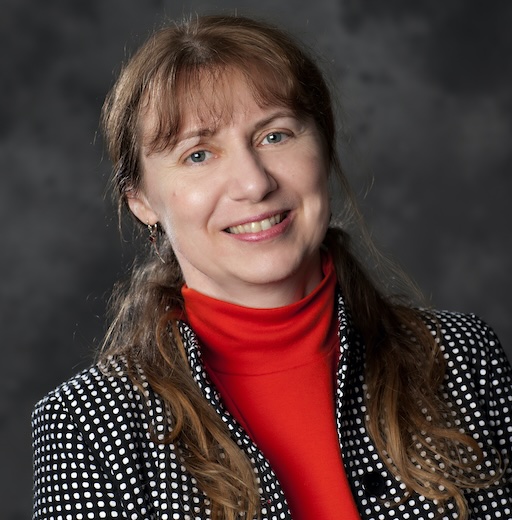
Maja Matarić
Maja Matarić is a Chaired and Distinguished Professor of Computer Science, (with appointments in Neuroscience and Pediatrics) at the University of Southern California, and Principal Scientist at Google DeepMind. Her PhD and MS in Computer Science and AI are from MIT, and her BS in Computer Science is from the University of Kansas. She is a member of the National Academy of Engineering and the American Academy of Arts and Sciences, fellow of AAAS, IEEE, AAAI, and ACM, recipient of the Presidential Award for Excellence in Science, Mathematics & Engineering Mentoring (from President Obama), Anita Borg Institute Women of Vision, ACM Athena Lecture, ACM Eugene Lawler, Mass Robotics Medal, NSF Career, MIT TR35 Innovation, and IEEE RAS Early Career Awards, and authored "The Robotics Primer" (MIT Press). She led the USC Viterbi K-12 STEM Center and actively mentors and empowers K-12 students, women, and other groups toward pursuing STEM careers. A pioneer of the field of socially assistive robotics, her research is developing human-machine interaction methods for personalized support for users with challenges, including autism, stroke, Alzheimer’s disease and other forms of dementia, anxiety, and other major health and wellness challenges. Her research group has conducted many of the first and still largest real-world studies in complex environments--including schools, nursing homes, retirement centers, and homes—to produce deep insights into complex human-machine interaction challenges with real-world users in situ.
Invited Talk - Max Welling
Speaker
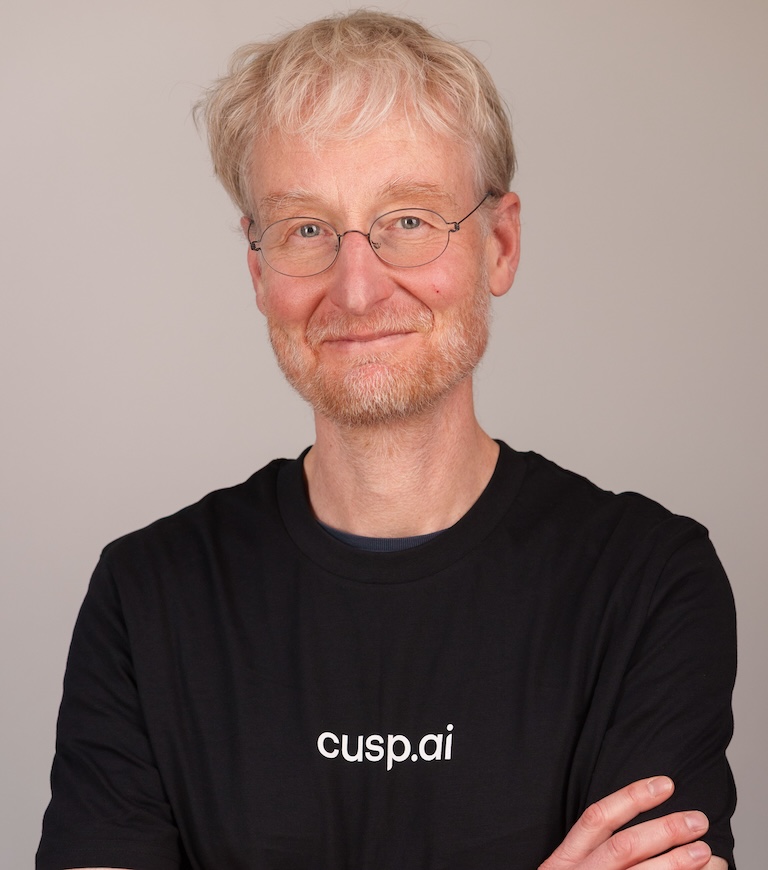
Max Welling
Prof. Dr. Max Welling is a full professor and research chair in machine learning at the University of Amsterdam and a Merkin distinguished visiting professor at Caltech. He is co-founder and CTO of the startup CuspAI in Materials Design. He is a member of the Royal Dutch Academy of Sciences, a fellow at the Canadian Institute for Advanced Research (CIFAR) and the European Lab for Learning and Intelligent Systems (ELLIS) where he served on the founding board. His previous appointments include Partner and VP at Microsoft Research, VP at Qualcomm Technologies, professor at UC Irvine. He finished his PhD in theoretical high energy physics under supervision of Nobel laureate prof. Gerard ‘t Hooft. He then switched fields to focus on machine learning, first as a postdoc at Caltech under supervision of prof. Pietro Perona and then as postdoc under supervision of Nobel laureate prof. Geoffrey Hinton at UCL & U. Toronto. Max Welling has served as associate editor in chief of IEEE TPAMI from 2011-2015, he serves on the advisory board of the Neurips foundation since 2015, he is co-founder of the European Lab for Learning and Intelligence Systems (ELLIS) and served on its founding board until 2021, he has been program chair and general chair of Neurips in 2013 and 2014 respectively. He was also program chair of AISTATS in 2009 and ECCV in 2016 and general chair and co-founder of MIDL 2018. Max Welling is recipient of the ECCV Koenderink Prize in 2010, and the 10 year Test of Time awards at ICML in 2021 and ICLR in 2024 as well as the inaugural ELIAS Alliance Science-Entrepreneur Award and the Dutch AI Award in 2026.
Marin: Open Development of Frontier AI
As AI capabilities skyrocket, openness plummets: the scientific community and broader public knows little of how frontier models (including open-weight models) are trained. I will describe Marin, a radically new way of doing model development, inspired by true open-source software. Every experiment is done in the open, and anyone can suggest ideas, review, and even run experiments through GitHub, providing a better way of doing science that improves on preregistration, reproducibility, and peer review. I will discuss a selection of scientific results that have emerged from Marin, including new optimizers and scaling laws. We hope that Marin will be a platform for the community to participate in the development of frontier AI.
Speaker
Percy Liang
Percy Liang is a Professor of Computer Science at Stanford University, co-founder of Together AI and Simile AI, and the creator of Marin, a platform for developing foundation models fully in the open. He has made a number of contributions in AI, including the SQuAD question answering dataset, the HELM benchmarking framework, generative agents, prefix tuning, and coining the term "foundation models". His awards include the Presidential Early Career Award for Scientists and Engineers (2019), IJCAI Computers and Thought Award (2016), an NSF CAREER Award (2016), a Sloan Research Fellowship (2015), a Microsoft Research Faculty Fellowship (2014), and paper awards at ACL, EMNLP, ICML, COLT, ISMIR, CHI, UIST, and RSS.
Learning while developing: How infants acquire intelligent behavior
Behavior is everything we do. With age and experience, infant behavior becomes more flexible, adaptive, and functional. More intelligent. How do infants acquire intelligent behavior? Babies are learning while developing. Advances in motor skills expand infants’ interactions with the environment—the parts of the environment they “touch” with eyes, hands, and body. In the course of everyday activity, infants acquire immense amounts of time-distributed, variable, error-filled practice for every type of foundational behavior that researchers study. Practice is largely spontaneous, self-motivated, and frequently not goal directed. Formal robot models suggest that infants’ natural practice regimen—replete with variability and errors—is optimally suited for building an intelligent behavioral system that responds adaptively to the constraints and opportunities of continually changing bodies and skills in an ever-changing world. I propose that open video sharing will speed progress toward understanding behavior and its development.
Speaker
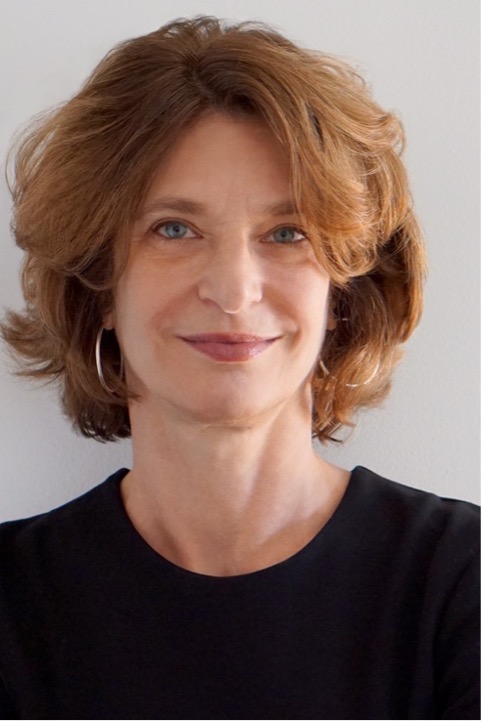
Karen E. Adolph
KAREN ADOLPH is Julius Silver Professor of Psychology and Neuroscience and Professor of Applied Psychology and Child and Adolescent Psychiatry at NYU. She uses observable motor behaviors to study developmental processes. Adolph directs the Databrary.org video library and PLAY-project.org, and maintains the Datavyu.org video-annotation tool. She is an APA, APS, and AAAS Fellow and Past-President of ICIS. She received the Kurt Koffka Medal, Cattell Sabbatical Award, APF Fantz Memorial Award, APA Boyd McCandless Award, ICIS Young Investigator Award, FIRST and MERIT awards from NICHD, and five teaching awards from NYU.
Artificial Intelligence for Open Science
I will present our latest research on Artificial Intelligence for Open Science at the Center for AI at the Universidad de los Andes, Colombia (CinfonIA). We will focus on our ongoing collaborative projects in scientific disciplines such as robotic surgery, spatial transcriptomics, drug discovery, geology, and nature conservation.
Speaker
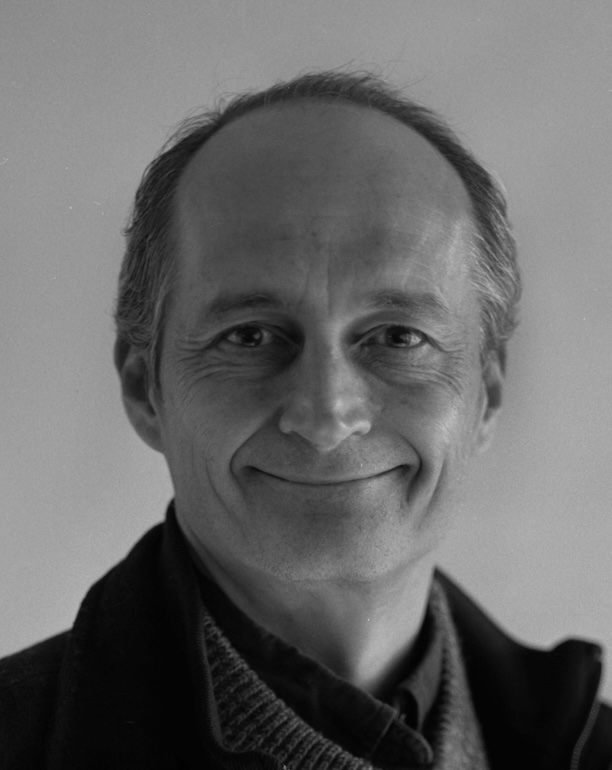
Pablo Arbelaez
Pablo Arbeláez obtained his Ph.D. in Applied Mathematics with honors from Paris-Dauphine University in 2005. From 2007 to 2014, he served as a senior research scientist with the Computer Vision Group at the University of California, Berkeley. In 2014, Pablo Arbeláez joined the faculty of the Department of Biomedical Engineering at Universidad de los Andes. Since 2020, he has been the director of the Center for Research and Formation in Artificial Intelligence (CinfonIA) at Universidad de los Andes, the first AI-focused academic center in Latin America, underscoring his commitment to transformative AI solutions and to empowering Latin American talent in the global AI community. He has made significant contributions to fundamental problems in Computer Vision, and his main research focus is on applications of Artificial Intelligence for Social Good.
No Events Found
Try adjusting your search terms
Successful Page Load