
Poster Session
Poster Session 4 Pavilion 3
On the identifiability of causal graphs with multiple environments
Francesco Montagna
Causal discovery from i.i.d. observational data is known to be generally ill-posed. We demonstrate that if we have access to the distribution induced by a structural causal model, and additional data from (in the best case) only two environments that sufficiently differ in the noise statistics, the unique causal graph is identifiable. Notably, this is the first result in the literature that guarantees the entire causal graph recovery with a constant number of environments and arbitrary nonlinear mechanisms. Our only constraint is the Gaussianity of the noise terms; however, we propose potential ways to relax this requirement. Of interest on its own, we expand on the well-known duality between independent component analysis (ICA) and causal discovery; recent advancements have shown that nonlinear ICA can be solved from multiple environments, at least as many as the number of sources: we show that the same can be achieved for causal discovery while having access to much less auxiliary information.
Embracing Discrete Search: A Reasonable Approach to Causal Structure Learning
Marcel Wienöbst ⋅ Leonard Henckel ⋅ Sebastian Weichwald
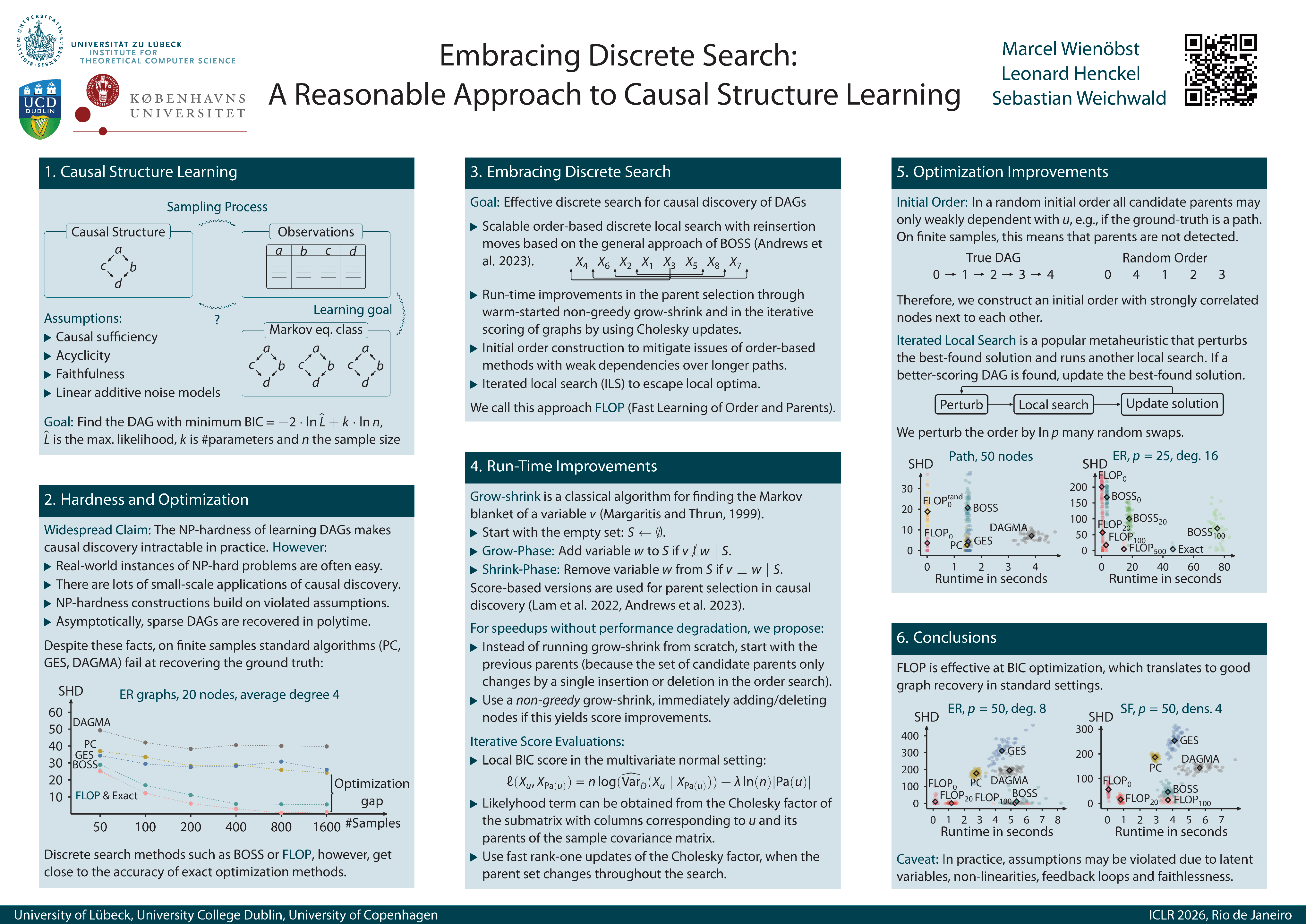
We present FLOP (Fast Learning of Order and Parents), a score-based causal discovery algorithm for linear models. It pairs fast parent selection with iterative Cholesky-based score updates, cutting run-times over prior algorithms. This makes it feasible to fully embrace discrete search, enabling iterated local search with principled order initialization to find graphs with scores at or close to the global optimum. The resulting structures are highly accurate across benchmarks, with near-perfect recovery in standard settings. This performance calls for revisiting discrete search over graphs as a reasonable approach to causal discovery.
Causal reasoning lies at the heart of robust and generalizable decision-making, and the *Pearl Causal Hierarchy* provides a formal language for distinguishing between observational ($\mathcal{L}_1$), interventional ($\mathcal{L}_2$), and counterfactual ($\mathcal{L}_3$) levels of reasoning. Existing bandit algorithms that leverage causal knowledge have primarily operated within the $\mathcal{L}_1$ and $\mathcal{L}_2$ regimes, treating each realizable and physical intervention as a distinct arm. That is, they have largely excluded counterfactual quantities due to their perceived inaccessibility. In this paper, we introduce a *counterfactual structural causal bandit* (ctf-SCB) framework which expands the agent's feasible action space beyond conventional observational and interventional arms to include a class of realizable counterfactual actions. Our framework offers a principled extension of structural causal bandits and paves the way for integrating counterfactual reasoning into sequential decision-making.
IGC-Net for conditional average potential outcome estimation over time
Konstantin Hess ⋅ Dennis Frauen ⋅ Valentyn Melnychuk ⋅ Stefan Feuerriegel
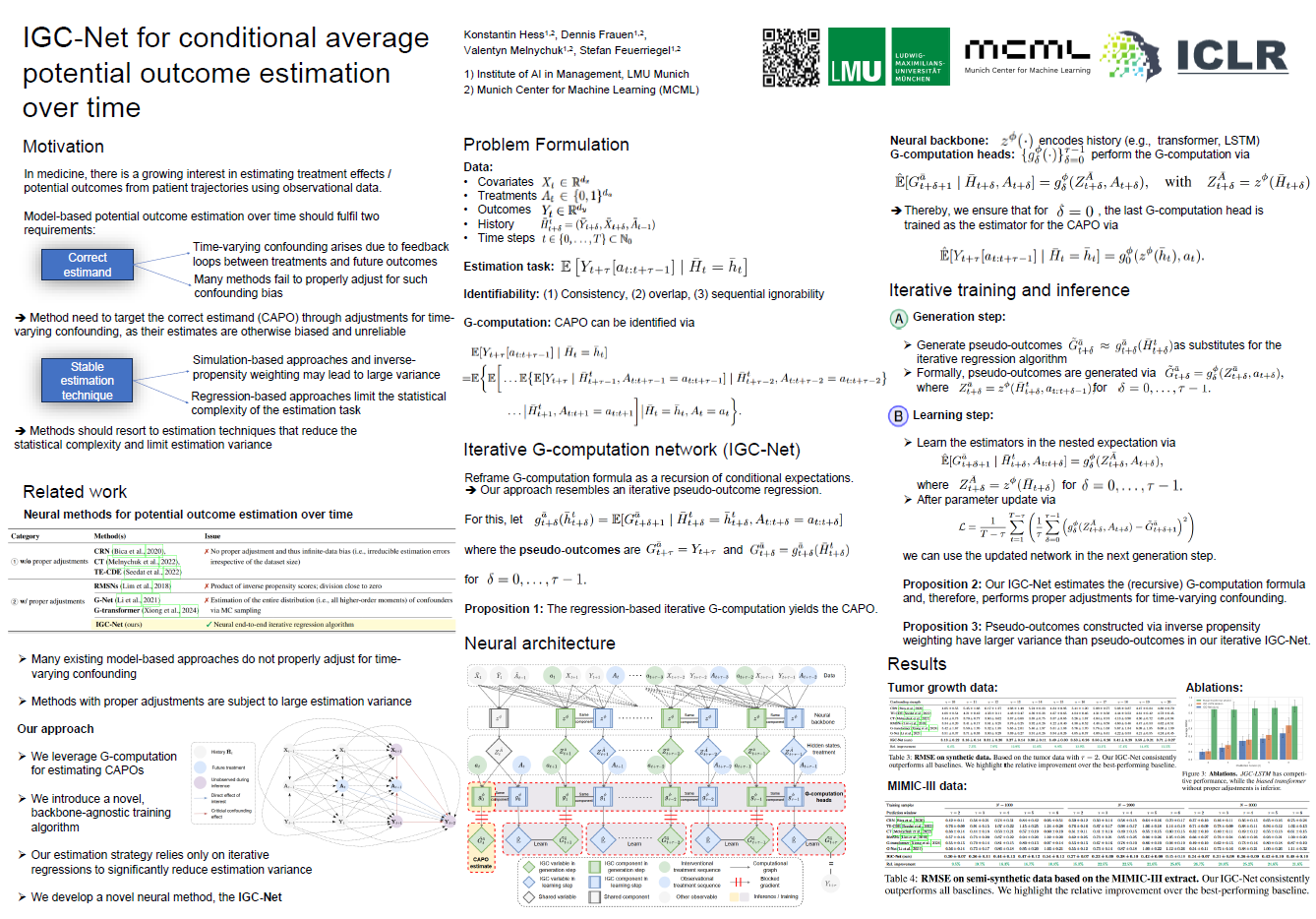
Estimating potential outcomes for treatments over time based on observational data is important for personalized decision-making in medicine. However, many existing methods for this task fail to properly adjust for time-varying confounding and thus yield biased estimates. There are only a few neural methods with proper adjustments, but these have inherent limitations (e.g., division by propensity scores that are often close to zero), which result in poor performance. As a remedy, we introduce the iterative G-computation network (IGC-Net). Our IGC-Net is a novel, neural end-to-end model which adjusts for time-varying confounding in order to estimate conditional average potential outcomes (CAPOs) over time. Specifically, our IGC-Net is the first neural model to perform fully regression-based iterative G-computation for CAPOs in the time-varying setting. We evaluate the effectiveness of our IGC-Net across various experiments. In sum, this work represents a significant step towards personalized decision-making from electronic health records.
Exploratory Causal Inference in SAEnce
Tommaso Mencattini ⋅ Riccardo Cadei ⋅ Francesco Locatello
Randomized Controlled Trials are one of the pillars of science; nevertheless, they rely on hand-crafted hypotheses and expensive analysis. Such constraints prevent causal effect estimation at scale, potentially anchoring on popular yet incomplete hypotheses. We propose to discover the unknown effects of a treatment directly from data. For this, we turn unstructured data from a trial into meaningful representations via pretrained foundation models and interpret them via a Sparse Auto Encoder. However, discovering significant causal effects at the neural level is not trivial due to multiple-testing issues and effects entanglement. To address these challenges, we introduce Neural Effect Search, a novel recursive procedure solving both issues by progressive stratification. After assessing the robustness of our algorithm on semi-synthetic experiments, we showcase, in the context of experimental ecology, the first successful unsupervised causal effect identification on a real-world scientific trial.
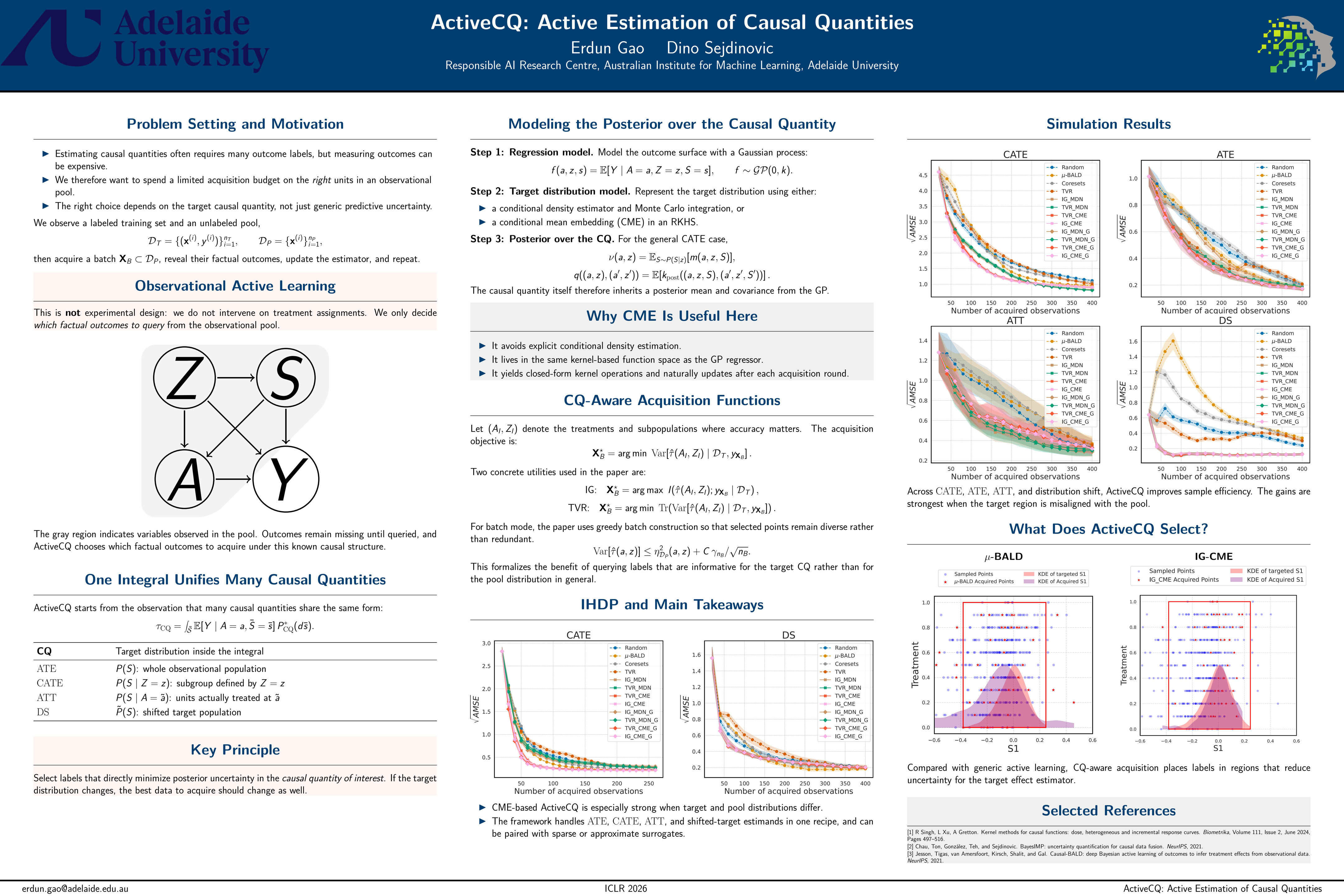
Estimating causal quantities (CQs) typically requires large datasets, which can be expensive to obtain, especially when measuring individual outcomes is costly. This challenge highlights the importance of sample-efficient active learning strategies. To address the narrow focus of prior work on the conditional average treatment effect, we formalize the broader task of Active Estimation of Causal Quantities (ActiveCQ) and propose a unified framework for this general problem. Built upon the insight that many CQs are integrals of regression functions, our framework models the regression function with a Gaussian process. For the distribution component, we explore both a baseline using explicit density estimators and a more integrated method using conditional mean embeddings in a reproducing kernel Hilbert space. This latter approach offers key advantages: it bypasses explicit density estimation, operates within the same function space as the GP, and adaptively refines the distributional model after each update. Our framework enables the principled derivation of acquisition strategies from the CQ's posterior uncertainty; we instantiate this principle with two utility functions based on information gain and total variance reduction. A range of simulated and semi-synthetic experiments demonstrate that our proposed framework significantly outperforms relevant baselines, achieving substantial gains in sample efficiency across a variety of CQs.
Efficient and Sharp Off-Policy Learning under Unobserved Confounding
Konstantin Hess ⋅ Dennis Frauen ⋅ Valentyn Melnychuk ⋅ Stefan Feuerriegel
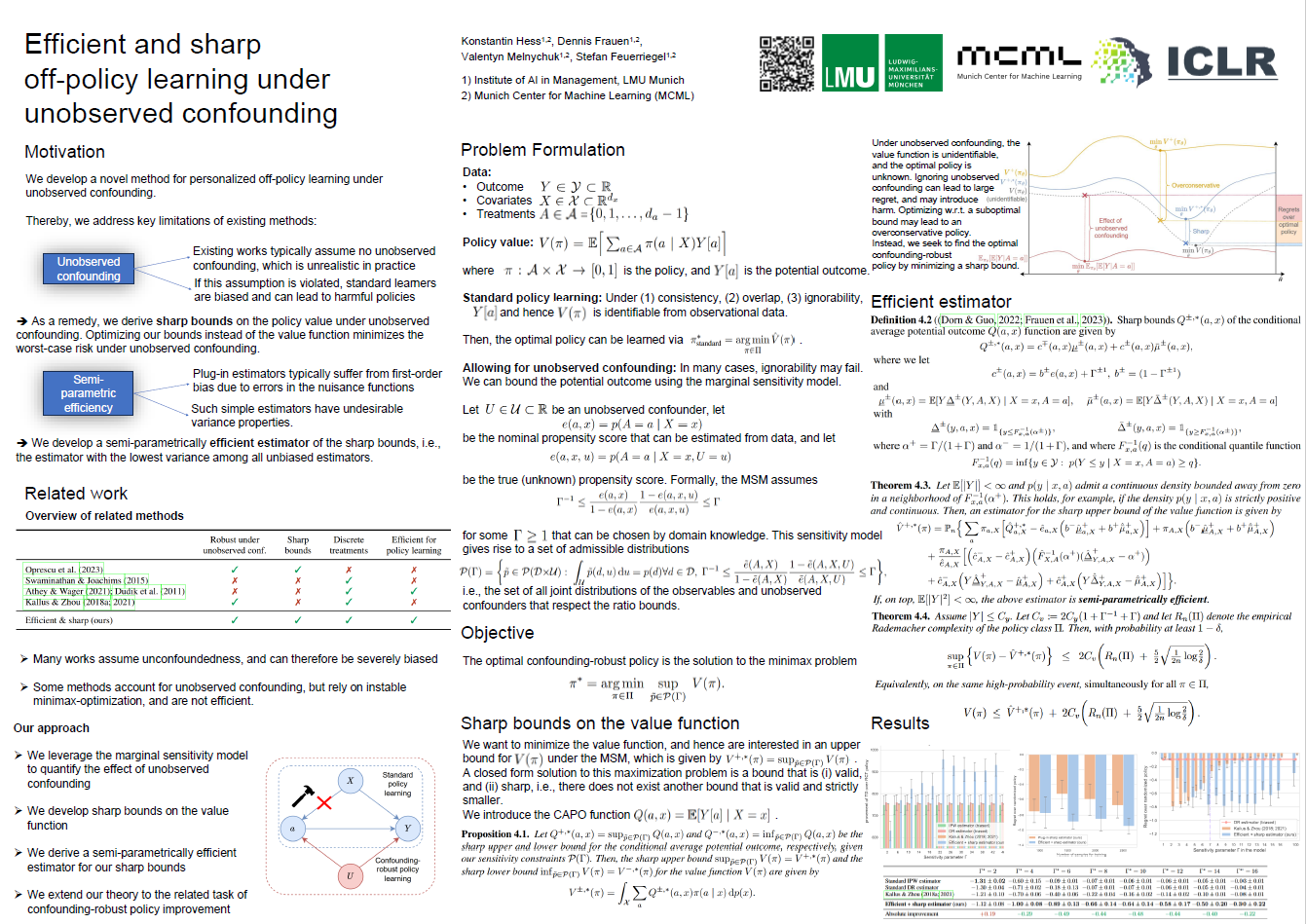
We develop a novel method for personalized off-policy learning in scenarios with unobserved confounding. Thereby, we address a key limitation of standard policy learning: standard policy learning assumes unconfoundedness, meaning that no unobserved factors influence both treatment assignment and outcomes. However, this assumption is often violated, because of which standard policy learning produces biased estimates and thus leads to policies that can be harmful. To address this limitation, we employ causal sensitivity analysis and derive a semi-parametrically efficient estimator for a sharp bound on the value function under unobserved confounding. Our estimator has three advantages: (1) Unlike existing works, our estimator avoids unstable minimax optimization based on inverse propensity weighted outcomes. (2) Our estimator is semi-parametrically efficient. (3) We prove that our estimator leads to the optimal confounding-robust policy. Finally, we extend our theory to the related task of policy improvement under unobserved confounding, i.e., when a baseline policy such as the standard of care is available. We show in experiments with synthetic and real-world data that our method outperforms simple plug-in approaches and existing baselines. Our method is highly relevant for decision-making where unobserved confounding can be problematic, such as in healthcare and public policy.
Multiverse Mechanica: A Testbed for Learning Game Mechanics via Counterfactual Worlds
Robert Ness ⋅ Ricardo Cannizzaro ⋅ Yunshu Wu ⋅ Lars Kunze
We study how generative world models trained on video games can go beyond mere reproduction of gameplay visuals to learning game mechanics—the modular rules that causally govern gameplay. We introduce a formalization of the concept of game mechanics that operationalizes mechanic-learning as a causal counterfactual inference task and uses the causal consistency principle to address the challenge of generating gameplay with world models that do not violate game rules. We present Multiverse Mechanica, a playable video game testbed that implements a set of ground truth game mechanics based on our causal formalism. The game natively emits training data, where each training example is paired with a set of causal DAGs that encode causality, consistency, and counterfactual dependence specific to the mechanic that is in play—these provide additional artifacts that could be leveraged in mechanic-learning experiments. We provide a proof-of-concept that demonstrates fine-tuning a pre-trained model that targets mechanic learning. Multiverse Mechanica is a testbed that provides a reproducible, low-cost path for studying and comparing methods that aim to learn game mechanics—not just pixels.
Multi-ReduNet: Interpretable Class-Wise Decomposition of ReduNet
Fengrong Li ⋅ Delin Chu
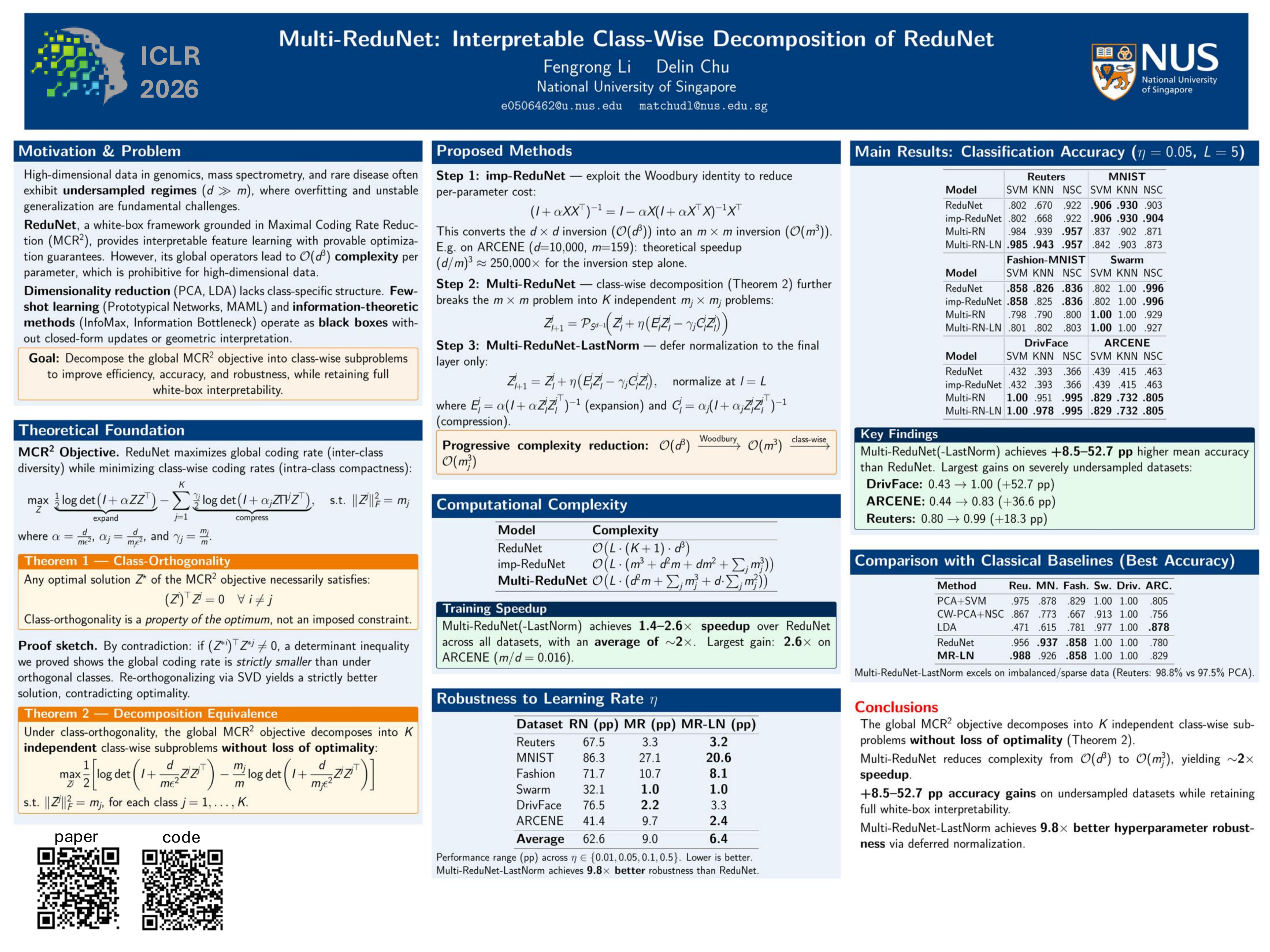
ReduNet has emerged as a promising white-box neural architecture grounded in the principle of maximal coding rate reduction, offering interpretability in deep feature learning. However, its practical applicability is hindered by computational complexity and limited ability to exploit class-specific structures, especially in undersampled regimes. In this work, we propose Multi-ReduNet and its variant Multi-ReduNet-LastNorm, which decompose the global learning objective into class-wise subproblems. These extensions preserve the theoretical foundation of ReduNet while improving training efficiency by reducing matrix inversion costs and enhancing feature separability. We provide a concise theoretical justification for the class-wise decomposition and show through experiments on diverse datasets that our models retain interpretability while achieving superior efficiency and discriminative power under limited supervision. Our findings suggest that class-wise extensions of ReduNet broaden its applicability, bridging the gap between interpretability and practical scalability in deep learning.
LightRetriever: A LLM-based Text Retrieval Architecture with Extremely Faster Query Inference
Guangyuan Ma ⋅ Yongliang Ma ⋅ Xuanrui Gou ⋅ Zhenpeng Su ⋅ Ming Zhou ⋅ Songlin Hu
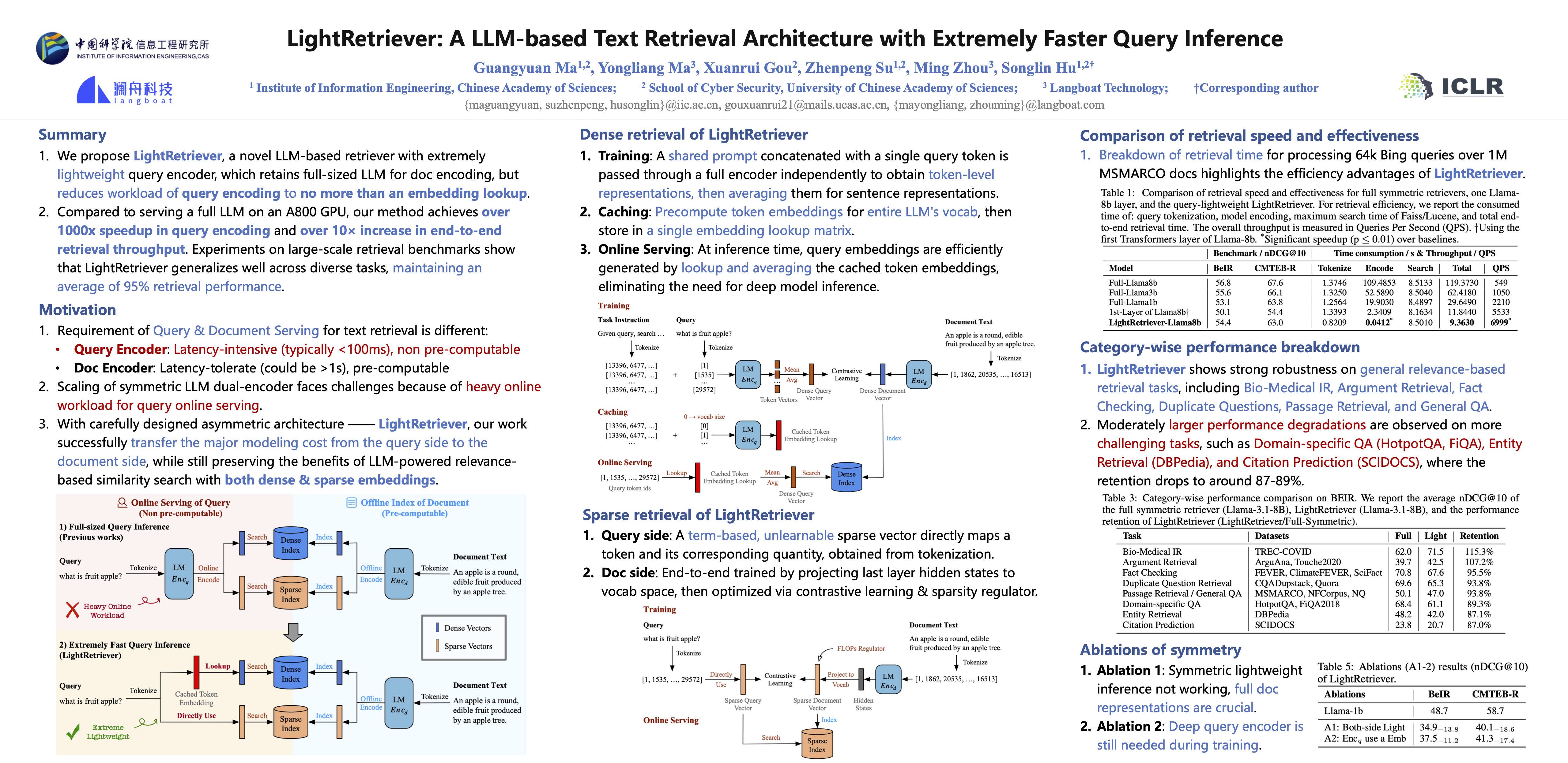
Large Language Models (LLMs)-based text retrieval retrieves documents relevant to search queries based on vector similarities. Documents are pre-encoded offline, while queries arrive in real-time, necessitating an efficient online query encoder. Although LLMs significantly enhance retrieval capabilities, serving deeply parameterized LLMs slows down query inference throughput and increases demands for online deployment resources. In this paper, we propose LightRetriever, a novel LLM-based retriever with extremely lightweight query encoders. Our method retains a full-sized LLM for document encoding, but reduces the workload of query encoding to no more than an embedding lookup. Compared to serving a full LLM on an A800 GPU, our method achieves over a thousand times of speedup in query encoding and over 10× increase in end-to-end retrieval throughput. Extensive experiments on large-scale retrieval benchmarks show that LightRetriever generalizes well across diverse tasks, maintaining an average of 95% retrieval performance.
Relationship Alignment for View-aware Multi-view Clustering
Shuangmei Peng ⋅ Zhe Chen ⋅ Tianyang Xu ⋅ Xiaojun Wu
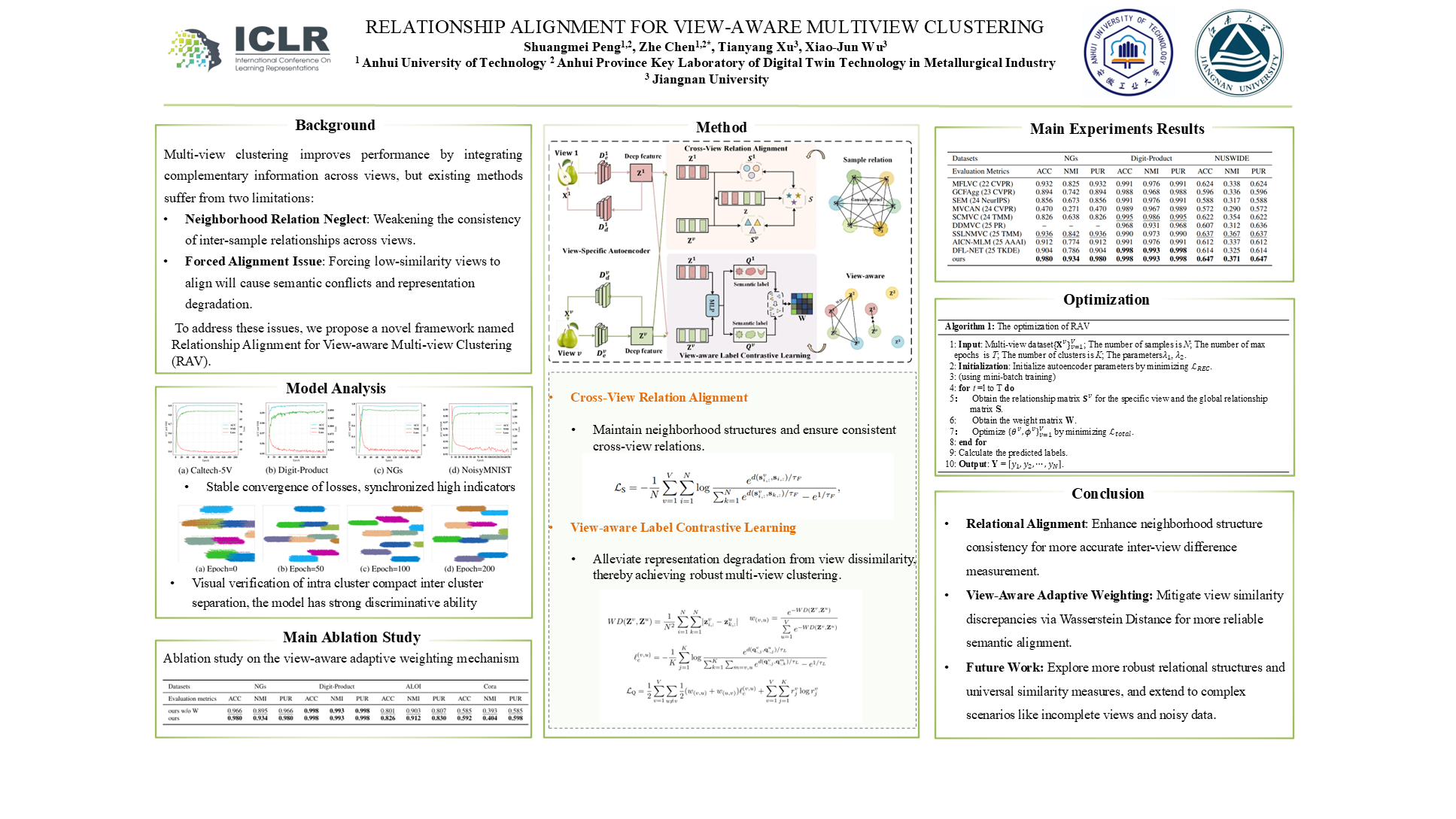
Multi-view clustering improves clustering performance by integrating complementary information from multiple views. However, existing methods often suffer from two limitations: i) the neglect of preserving sample neighborhood structures, which weakens the consistency of inter-sample relationships across views; and ii) inability to adaptively utilize inter-view similarity, resulting in representation conflicts and semantic degradation. To address these issues, we propose a novel framework named Relationship Alignment for View-aware Multi-view Clustering (RAV). Our approach first constructs view-specific sample relationship matrices from deep features and aligns them with the global relationship matrix to enhance cross-view neighborhood consistency and facilitate accurate measurement of inter-view similarity. Simultaneously, we introduce a view-aware adaptive weighting mechanism for label contrastive learning that dynamically adjusts the contrastive intensity between view pairs based on deep-feature similarity: higher-similarity views lead to stronger label alignment, while lower-similarity views reduce the weighting to prevent enforcing agreement. This strategy promotes cluster-level semantic consistency while preserving natural inter-view relationships. Extensive experiments demonstrate that our method consistently outperforms state-of-the-art approaches on multiple benchmark datasets. Project website: https://github.com/chenzhe207/RAV.
Token Distillation: Attention-Aware Input Embeddings for New Tokens
Konstantin Dobler ⋅ Desmond Elliott ⋅ Gerard de Melo
Current language models rely on static vocabularies determined at pretraining time, which can lead to decreased performance and increased computational cost for domains underrepresented in the original vocabulary. New tokens can be added to solve this problem, when coupled with a good initialization for their new embeddings. However, existing embedding initialization methods require expensive further training or pretraining of additional modules. In this paper, we propose Token Distillation and show that by distilling representations obtained using the original tokenization, we can quickly learn high-quality input embeddings for new tokens. Experimental results with a wide range of open-weight models show that Token Distillation outperforms even strong baselines.
BIRD: Behavior Induction via Representation-structure Distillation
Galen Pogoncheff ⋅ Michael Beyeler
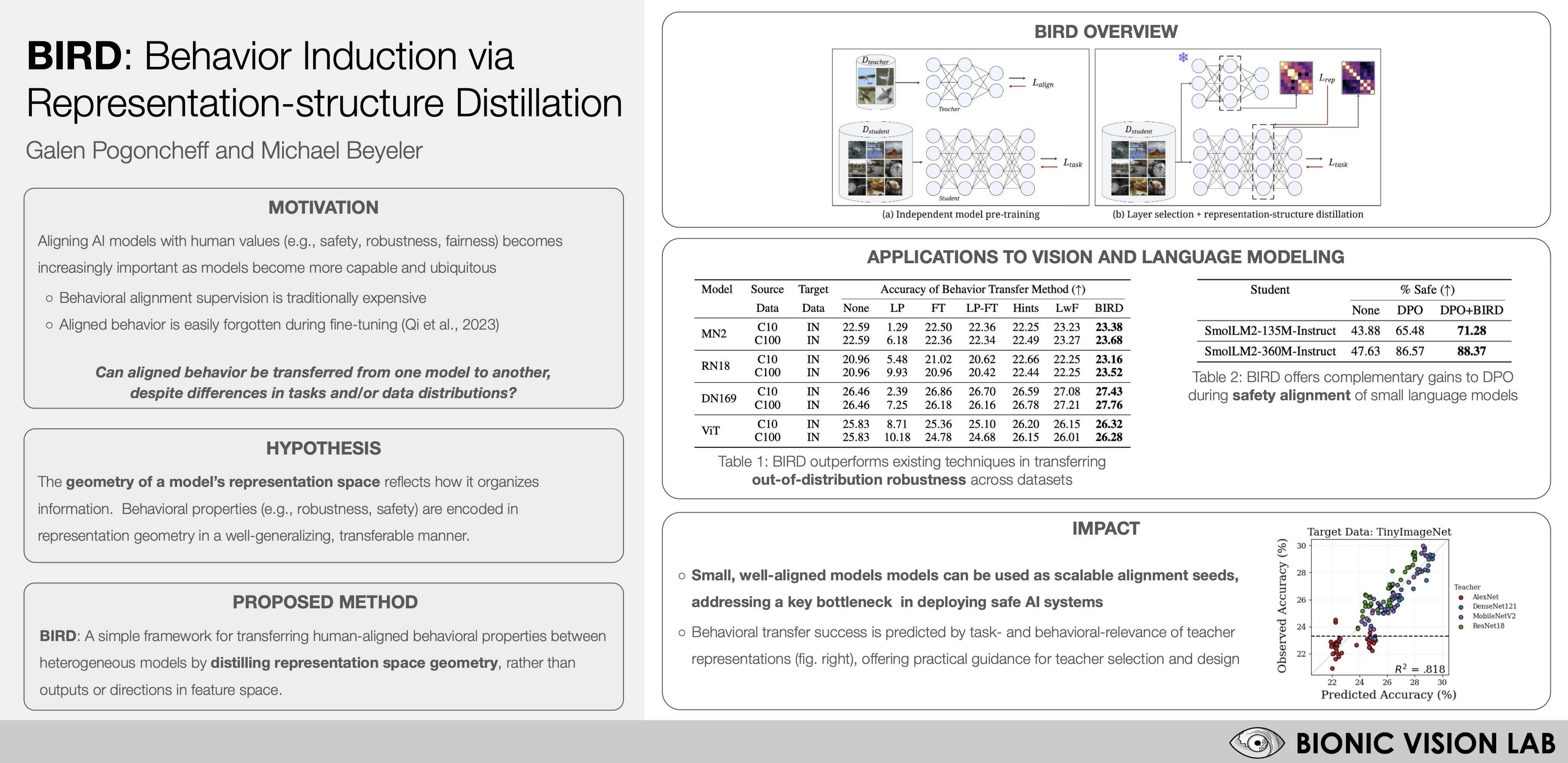
Human-aligned deep learning models exhibit behaviors consistent with human values, such as robustness, safety, and fairness. Transferring these behavioral properties to models trained on different tasks or data distributions remains challenging: aligned behavior is easily forgotten during fine-tuning, and collecting task-specific data that preserves this behavior can be prohibitively costly. We introduce BIRD, a flexible framework for transferring aligned behavior by matching the internal representation structure of a student model to that of a teacher. Applied to out-of-distribution robustness in image classification, BIRD outperforms fine-tuning, transfer learning, and continual learning methods, improving robust accuracy by up to 18\% over the next strongest baseline. It remains effective even when the teacher is trained on a much simpler dataset and is $25\times$ smaller in parameter count than the student. In a large-scale study of over 400 teacher-student pairs, we show that three interpretable and computable properties of the teacher's representations explain up to 85\% of the variance in transfer success, offering practical guidance for teacher selection and design. We further show that BIRD generalizes beyond applications in vision by enhancing safety alignment in language models when paired with Direct Preference Optimization and improving weak-to-strong generalization when combined with soft-label distillation. BIRD turns small, well-aligned models into scalable alignment seeds, mitigating challenges from key bottlenecks in deploying safe AI systems.
Dual Perspectives on Non-Contrastive Self-Supervised Learning
Jean Ponce ⋅ Basile Terver ⋅ Martial Hebert ⋅ Michael Arbel
The {\em stop gradient} and {\em exponential moving average} iterative procedures are commonly used in non-contrastive approaches to self-supervised learning to avoid representation collapse, with excellent performance in downstream applications in practice. This presentation investigates these procedures from the dual viewpoints of optimization and dynamical systems. We show that, in general, although they {\em do not} optimize the original objective, or {\em any} other smooth function, they {\em do} avoid collapse. Following [Tian et al. 2021], but without any of the extra assumptions used in their proofs, we then show using a dynamical system perspective that, in the linear case, minimizing the original objective function without the use of a stop gradient or exponential moving average {\em always} leads to collapse. Conversely, we characterize explicitly the equilibria of the dynamical systems associated with these two procedures in this linear setting as algebraic varieties in their parameter space, and show that they are, in general, {\em asymptotically stable}. Our theoretical findings are illustrated by empirical experiments with real and synthetic data.
Symmetric Space Learning for Combinatorial Generalization
Jaehyeong Jeong ⋅ Hee-Jun Jung ⋅ Kangil Kim
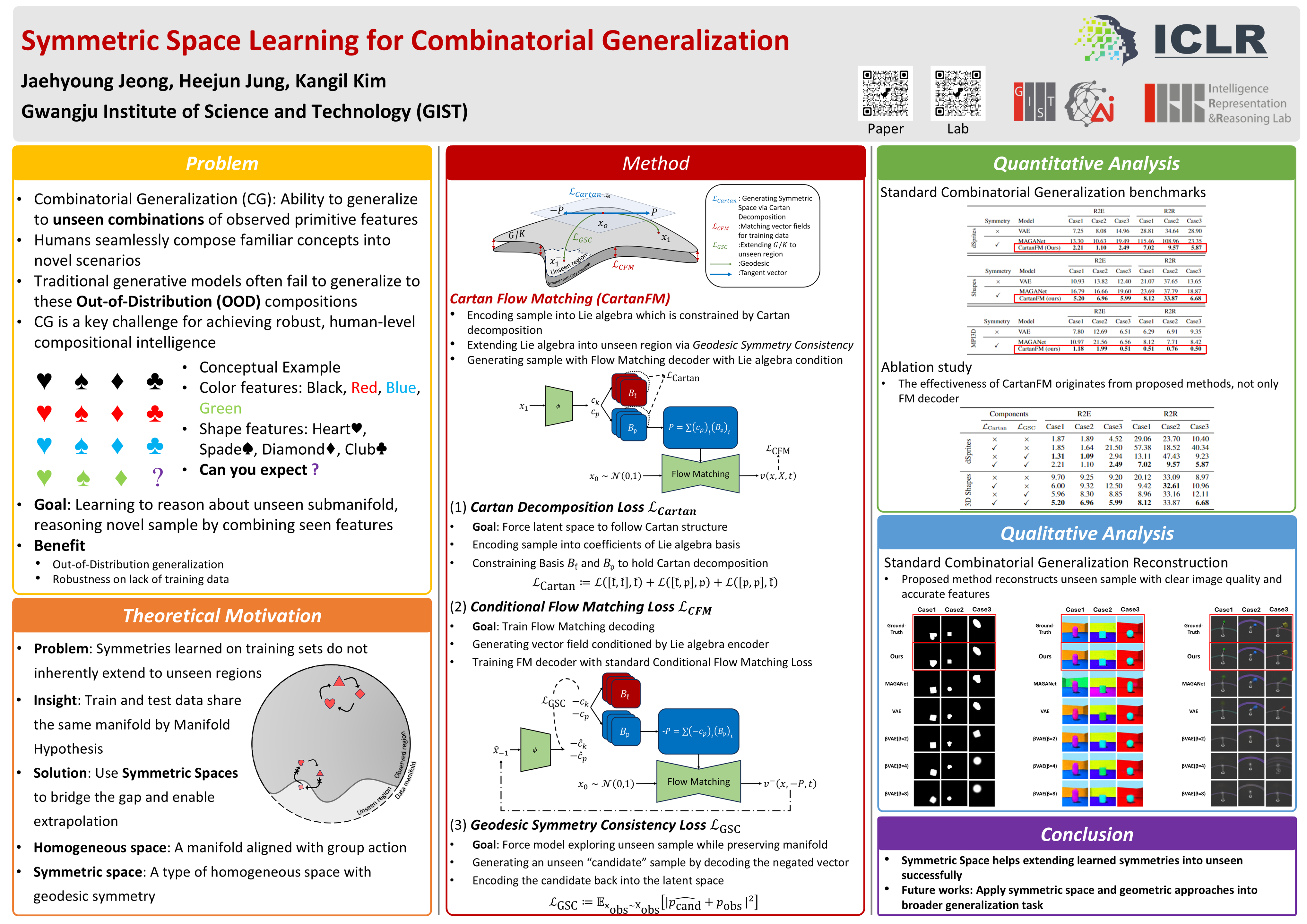
Combinatorial generalization (CG)—generalizing to unseen combinations of known semantic factors—remains a grand challenge in machine learning. While symmetry-based methods are promising, they learn from observed data and thus fail at what we term $\textbf{symmetry generalization}$: extending learned symmetries to novel data. We tackle this by proposing a novel framework that endows the latent space with the structure of a $\textbf{symmetric space}$, a class of manifolds whose geometric properties provide a principled way to extend these symmetries. Our method operates in two steps: first, it imposes this structure by learning the underlying algebraic properties via the $\textbf{Cartan decomposition}$ of a learnable Lie algebra. Second, it uses $\textbf{geodesic symmetry}$ as a powerful self-supervisory signal to ensure this learned structure extrapolates from observed samples to unseen ones. A detailed analysis on a synthetic dataset validates our geometric claims, and experiments on standard CG benchmarks show our method significantly outperforms existing approaches.
EchoMotion: Unified Human Video and Motion Generation via Dual-Modality Diffusion Transformer
Yuxiao Yang ⋅ Hualian Sheng ⋅ Sijia Cai ⋅ Jing Lin ⋅ Jiahao Wang ⋅ Bing Deng ⋅ Junzhe Lu ⋅ Haoqian Wang ⋅ Jieping Ye
Video generation models have advanced significantly, yet they still struggle to synthesize complex human movements due to the high degrees of freedom in human articulation. This limitation stems from the intrinsic constraints of pixel-only training objectives, which inherently bias models toward appearance fidelity at the expense of learning underlying kinematic principles. To address this, we introduce EchoMotion, a framework designed to model the joint distribution of appearance and human motion, thereby improving the quality of complex human action video generation. EchoMotion extends the DiT (Diffusion Transformer) framework with a dual-branch architecture that jointly processes tokens concatenated from different modalities. Furthermore, we propose MVS-RoPE (Motion-Video Syncronized RoPE), which offers unified 3D positional encoding for both video and motion tokens. By providing a synchronized coordinate system for the dual-modal latent sequence, MVS-RoPE establishes an inductive bias that fosters temporal alignment between the two modalities. We also propose a Motion-Video Two-Stage Training Strategy. This strategy enables the model to perform both the joint generation of complex human action videos and their corresponding motion sequences, as well as versatile cross-modal conditional generation tasks. To facilitate the training of a model with these capabilities, we construct \textit{HuMoVe}, a large-scale dataset of approximately 80,000 high-quality, human-centric video-motion pairs. Our findings reveal that explicitly representing human motion is complementary to appearance, significantly boosting the coherence and plausibility of human-centric video generation. Project page at: https://yuxiaoyang23.github.io/EchoMotion-webpage/.
MILR: Improving Multimodal Image Generation via Test-Time Latent Reasoning
Yapeng Mi ⋅ Yanpeng Zhao ⋅ Henry Li ⋅ Chenxi Li ⋅ Huimin Wu ⋅ Xiaojian Ma ⋅ Song-Chun Zhu ⋅ Yingnian Wu ⋅ Qing Li
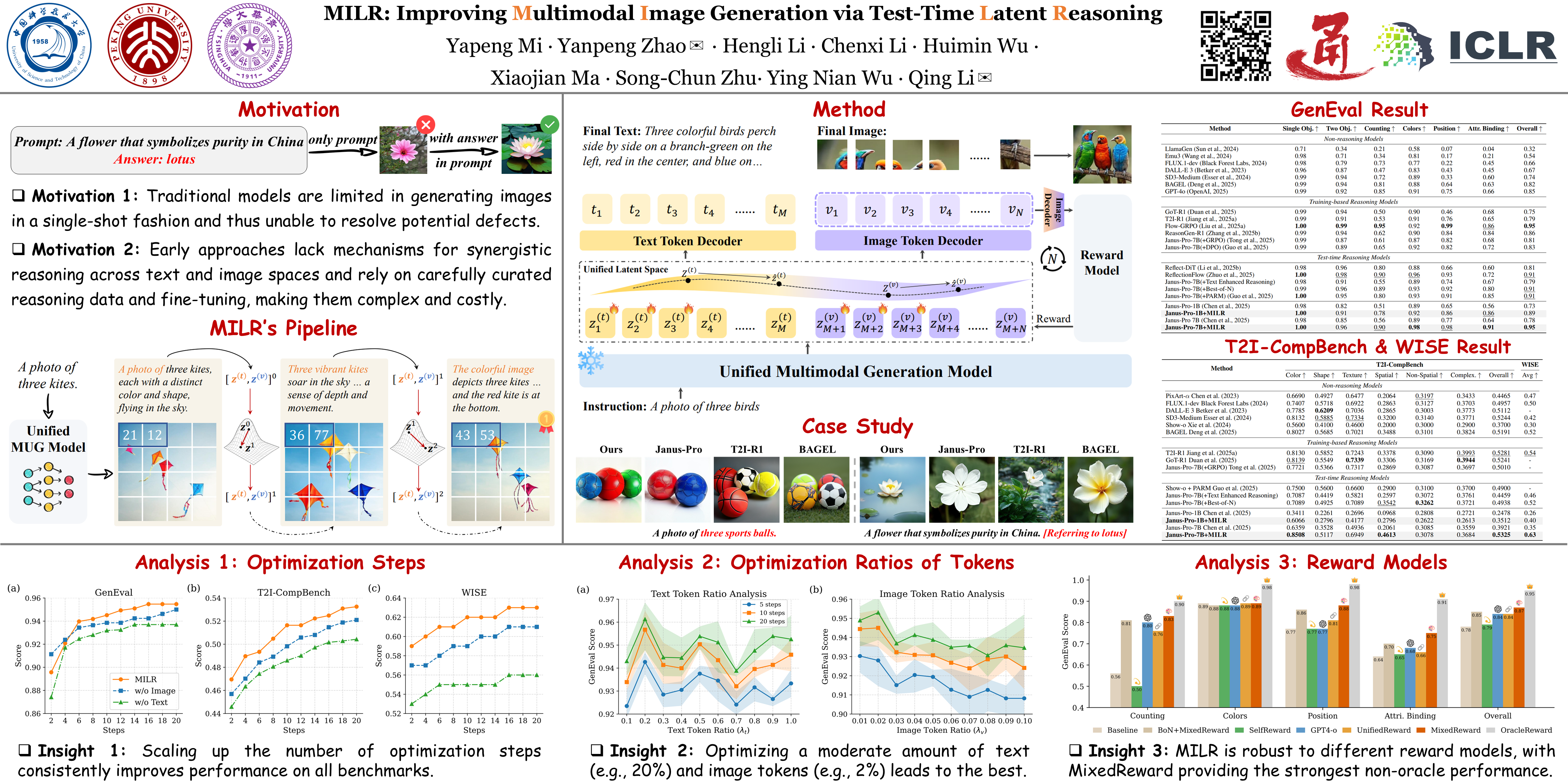
Reasoning-augmented machine learning systems have shown improved performance in various domains, including image generation. However, existing reasoning-based methods for image generation either restrict reasoning to a single modality (image or text) or rely on high-quality reasoning data for fine-tuning. To tackle these limitations, we propose MILR, a test-time method that jointly reasons over image and text in a unified latent vector space. Reasoning in MILR is performed by searching through vector representations of discrete image and text tokens. Practically, this is implemented via the policy gradient method, guided by an image quality critic. We instantiate MILR within the unified multimodal understanding and generation (MUG) framework that natively supports language reasoning before image synthesis and thus facilitates cross-modal reasoning. The intermediate model outputs, which are to be optimized, serve as the unified latent space, enabling MILR to operate entirely at test time. We evaluate MILR on GenEval, T2I-CompBench, and WISE, achieving state-of-the-art results on all benchmarks. Notably, on knowledge-intensive WISE, MILR attains an overall score of 0.63, improving over the baseline by 80%. Our further analysis indicates that joint reasoning in the unified latent space is the key to its strong performance. Moreover, our qualitative studies reveal MILR's non-trivial ability in temporal and cultural reasoning, highlighting the efficacy of our reasoning method.
Confident Block Diagonal Structure-Aware Invariable Graph Completion for Incomplete Multi-view Clustering
Shuping Zhao ⋅ Chen Yulong ⋅ Jie Wen ⋅ Lunke Fei ⋅ Jinrong Cui ⋅ Tingting Chai
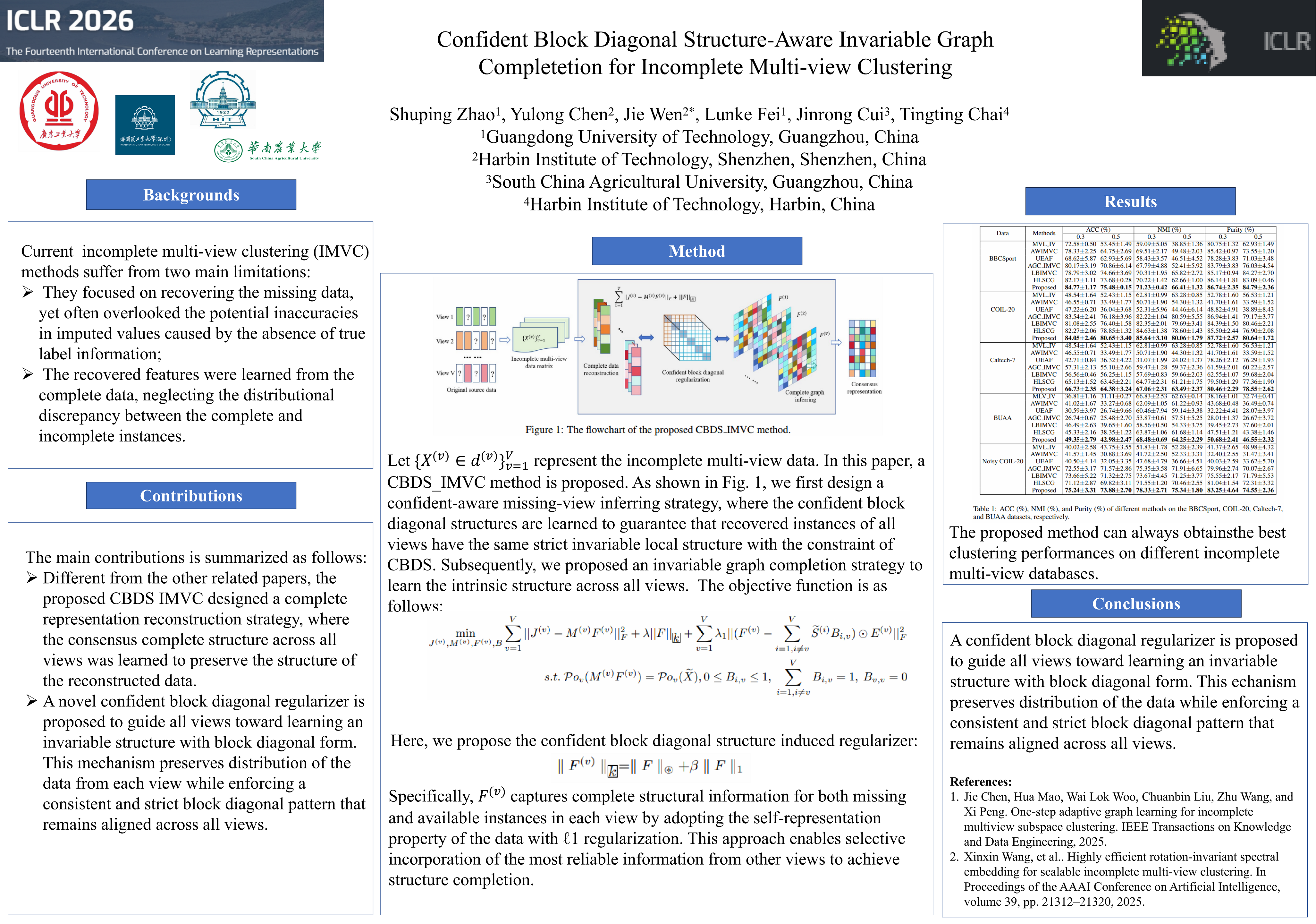
Multi-view clustering (MVC) adopts complementary information from multiple views to reveal the underlying structure of the data. However, the conventional MVC-based methods remain a crucial challenge on the incomplete multi-view clustering (IMVC) tasks, when some views of the multi-view data are missing. Particularly, current IMVC methods suffer from two main limitations: 1) they focused on recovering the missing data, yet often overlooked the potential inaccuracies in imputed values caused by the absence of true label information; 2) the recovered features were learned from the complete data, neglecting the distributional discrepancy between the complete and incomplete instances. In order to tackle these issues, in this paper, a confident block diagonal structure-aware invariable graph completion-based incomplete multi-view clustering method (CBDSIMVC) is proposed. Specifically, we first design a confident-aware missing-view inferring strategy, where the confident block diagonal structures (CBDS) are learned to guarantee that recovered instances of all views have the same strict invariable local structure with the constraint of CBDS. Subsequently, we proposed an invariable graph completion strategy to learn the intrinsic structure across all views. Each parts are jointly trained, complementing and promoting each other to achieve the optimum together. Compared to other state-of-the-art methods, the proposed CBDSIMVC demonstrates superior performance across multiple benchmark datasets.
Rethinking LLM-as-a-Judge: Representation-as-a-Judge with Small Language Models via Semantic Capacity Asymmetry
Zhuochun Li ⋅ Yong Zhang ⋅ Ming Li ⋅ Yuelyu Ji ⋅ Yiming Zeng ⋅ ning Cheng ⋅ Yun Zhu ⋅ Yanmeng Wang ⋅ Shaojun Wang ⋅ Jing Xiao ⋅ Daqing He
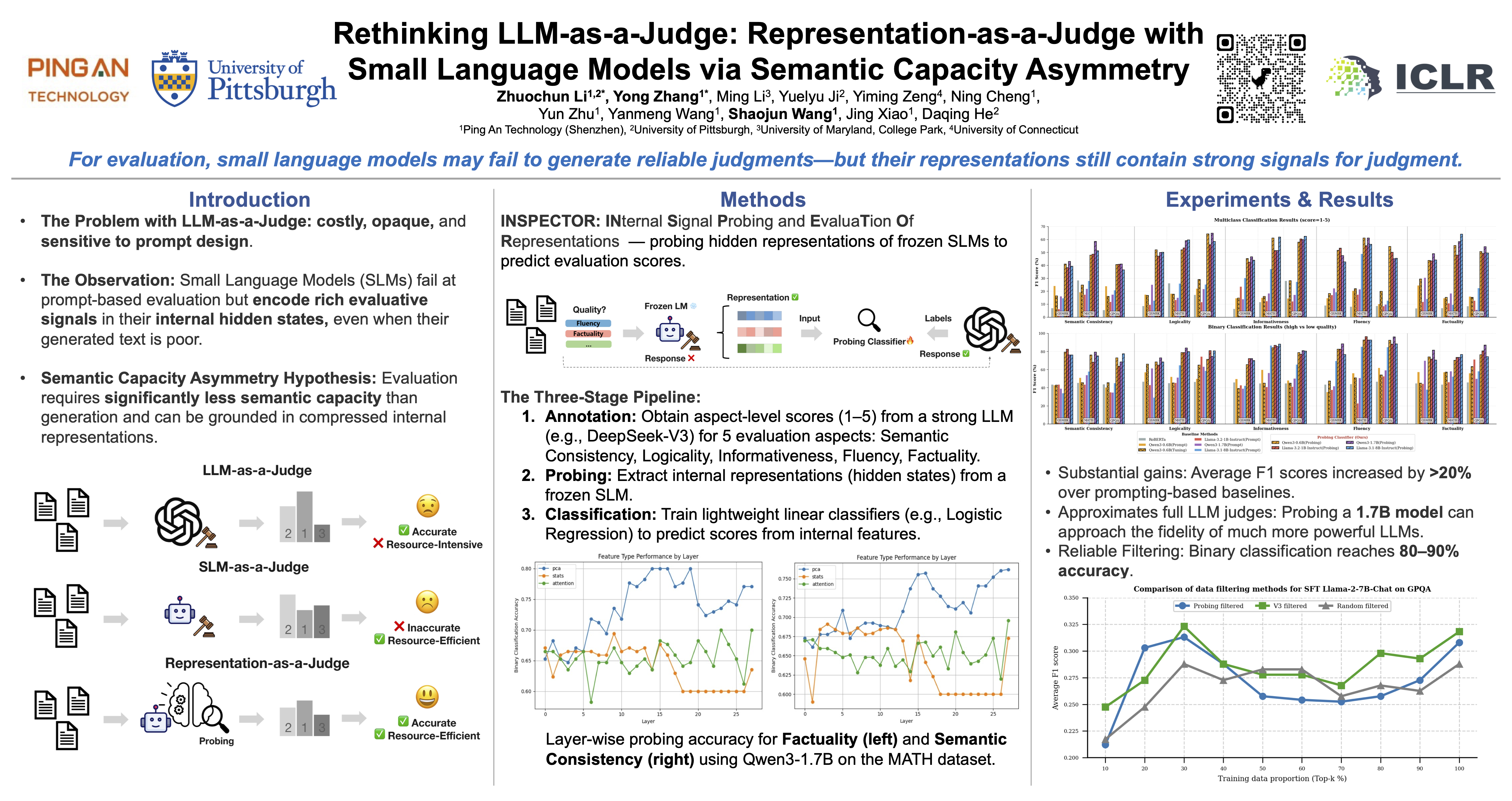
Large language models (LLMs) are widely used as reference-free evaluators via prompting, but this “LLM-as-a-Judge” paradigm is costly, opaque, and sensitive to prompt design. In this work, we investigate whether smaller models can serve as efficient evaluators by leveraging internal representations instead of surface generation. We uncover a consistent empirical pattern: small LMs, despite with weak generative ability, encode rich evaluative signals in their hidden states. This motivates us to propose the Semantic Capacity Asymmetry Hypothesis: evaluation requires significantly less semantic capacity than generation and can be grounded in intermediate representations, suggesting that evaluation does not necessarily need to rely on large-scale generative models but can instead leverage latent features from smaller ones. Our findings motivate a paradigm shift from LLM-as-a-Judge to Representation-as-a-Judge, a decoding-free evaluation strategy that probes internal model structure rather than relying on prompted output. We instantiate this paradigm through INSPECTOR, a probing-based framework that predicts aspect-level evaluation scores from small model representations. Experiments on reasoning benchmarks (GSM8K, MATH, GPQA) show that INSPECTOR substantially outperforms prompting-based small LMs and closely approximates full LLM judges, while offering a more efficient, reliable, and interpretable alternative for scalable evaluation. The code and data are available at: https://github.com/zhuochunli/Representation-as-a-judge
HARP: Hallucination Detection via Reasoning Subspace Projection
Junjie Hu ⋅ Gang Tu ⋅ Cheng Shengyu ⋅ JinXin Li ⋅ Jinting Wang ⋅ Rui Chen ⋅ Zhilong Zhou ⋅ Dongbo Shan
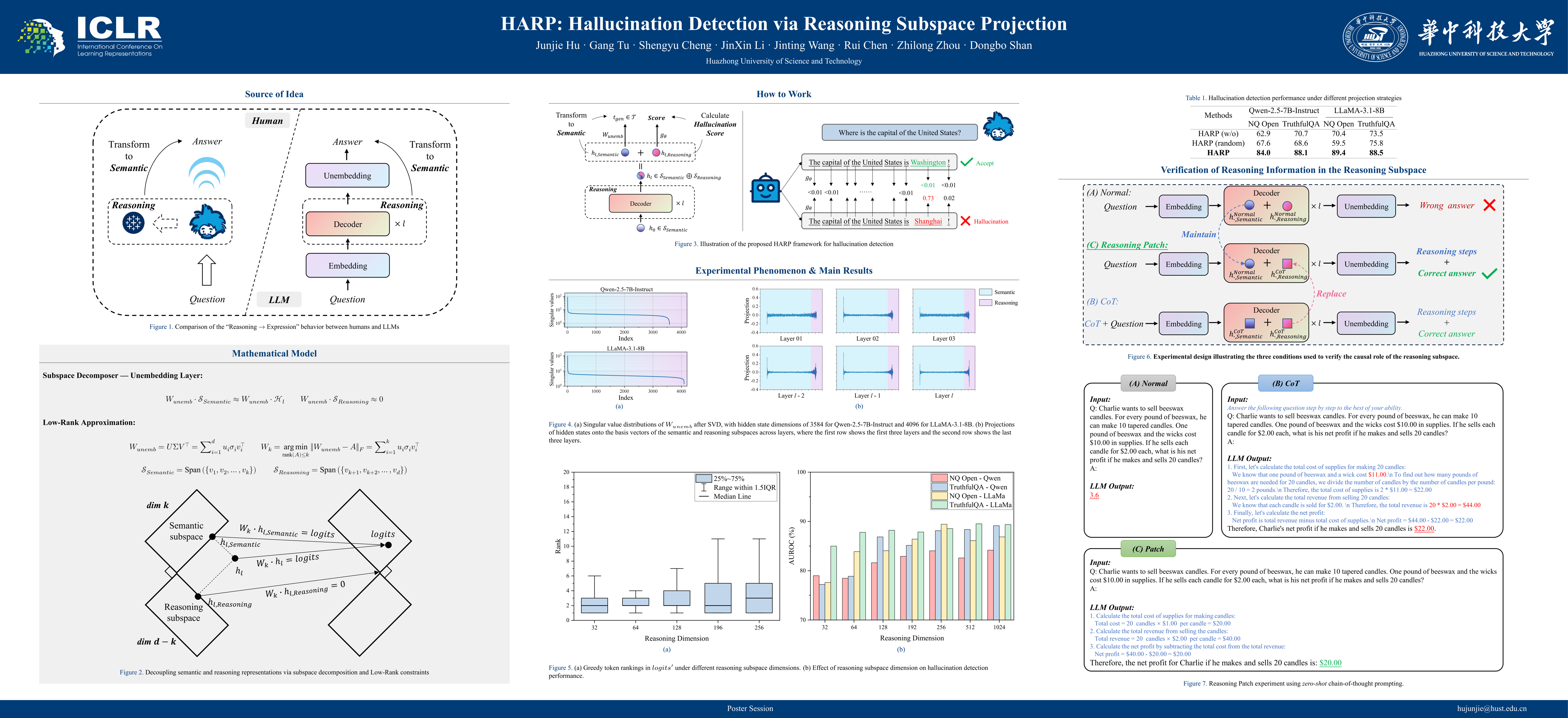
Hallucinations in Large Language Models (LLMs) pose a major barrier to their reliable use in critical decision-making. Although existing hallucination detection methods have improved accuracy, they still struggle with disentangling semantic and reasoning information and maintaining robustness. To address these challenges, we propose HARP (Hallucination detection via reasoning subspace projection), a novel hallucination detection framework. HARP establishes that the hidden state space of LLMs can be decomposed into a direct sum of a semantic subspace and a reasoning subspace, where the former encodes linguistic expression and the latter captures internal reasoning processes. Moreover, we demonstrate that the Unembedding layer can disentangle these subspaces, and by applying Singular Value Decomposition (SVD) to its parameters, the basis vectors spanning the semantic and reasoning subspaces are obtained. Finally, HARP projects hidden states onto the basis vectors of the reasoning subspace, and the resulting projections are then used as input features for hallucination detection in LLMs. By using these projections, HARP reduces the dimension of the feature to approximately 5% of the original, filters out most noise, and achieves enhanced robustness. Experiments across multiple datasets show that HARP achieves state-of-the-art hallucination detection performance; in particular, it achieves an AUROC of 92.8% on TriviaQA, outperforming the previous best method by 7.5%.
CSRv2: Unlocking Ultra-Sparse Embeddings
Lixuan Guo ⋅ Yifei Wang ⋅ Tiansheng Wen ⋅ Yifan Wang ⋅ Aosong Feng ⋅ Bo Chen ⋅ Stefanie Jegelka ⋅ Chenyu You
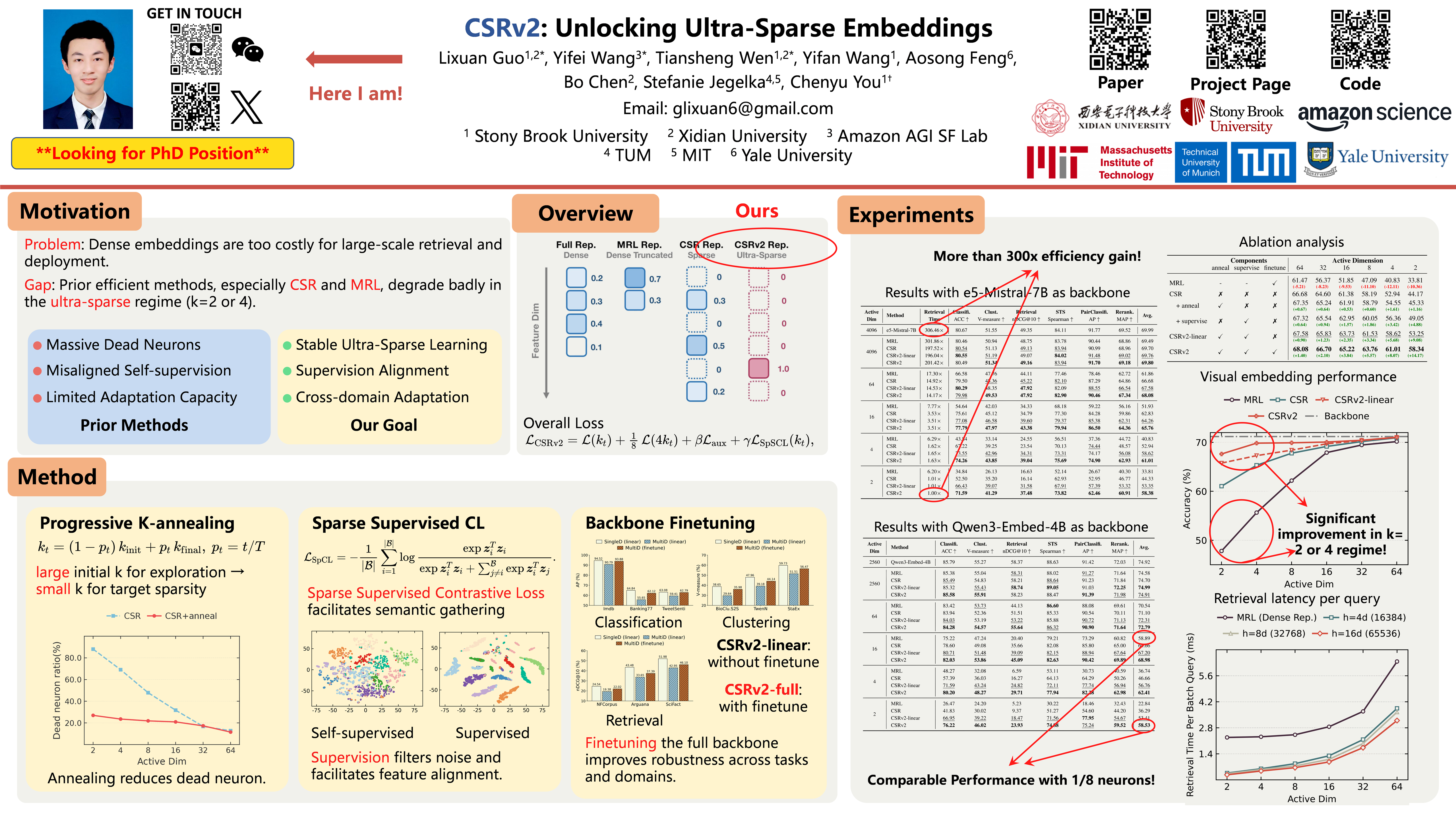
In the era of large foundation models, the quality of embeddings has become a central determinant of downstream task performance and overall system capability. Yet widely used dense embeddings are often extremely high-dimensional (e.g., 4096), incurring substantial costs in storage, memory, and inference latency. To address these, Contrastive Sparse Representation (CSR) is recently proposed as a promising direction, mapping dense embeddings into high-dimensional but $k$-sparse vectors, in contrast to compact dense embeddings such as Matryoshka Representation Learning (MRL). Despite its promise, CSR suffers severe degradation in the ultra-sparse regime (e.g., $k \leq 4$), where over 80\% of neurons remain inactive, leaving much of its efficiency potential unrealized. In this paper, we introduce CSRv2, a principled training approach designed to make ultra-sparse embeddings viable. CSRv2 stabilizes sparsity learning through progressive $k$-annealing, enhances representational quality via supervised contrastive objectives, and ensures end-to-end adaptability with full backbone finetuning. CSRv2 reduces dead neurons from 80\% to 20\% and delivers a 14\% accuracy gain at $k=2$, bringing ultra-sparse embeddings on par with CSR at $k=8$ and MRL at 32 dimensions, all with only two active features. While maintaining comparable performance, CSRv2 delivers a 7$\times$ speedup over MRL, and yields up to 300$\times$ improvements in compute and memory efficiency relative to dense embeddings in e5-mistral-7b-instruct-based text representation. Extensive experiments across text (MTEB, multiple state-of-the-art LLM embeddings (Qwen and e5-Mistral-7B), SPLADEv3, GraphRAG) and vision (ImageNet-1k) demonstrate that CSRv2 makes ultra-sparse embeddings practical without compromising performance, where CSRv2 achieves 7\%/4\% improvement over CSR when $k=4$ and further increases this gap to 14\%/6\% when $k=2$ in text/vision representation. By making extreme sparsity viable, CSRv2 broadens the design space for large-scale, real-time, and edge-deployable AI systems where both embedding quality and efficiency are critical. Code is available at https://github.com/Y-Research-SBU/CSRv2.
UniCon: Unified Framework for Efficient Contrastive Alignment via Kernels
Hangke Sui ⋅ Yuqing Wang ⋅ Minh Do
Contrastive objectives power state-of-the-art multimodal models, but their training remains slow, relying on long stochastic optimization. We propose a Unified Framework for Efficient Contrastive Alignment via Kernels (UniCon), which spans linear and nonlinear encoders as well as one-to-one and many-to-many alignments. At its core, UniCon introduces the contrastive similarity weight matrix $S(\gamma)$, which enables closed-form global solutions that provably replace minibatch back-propagation with exact updates. Through the lens of reproducing kernel Hilbert spaces (RKHS), UniCon provides a kernelized perspective that unifies contrastive alignment and reveals its connection to spectral methods. To validate the theory, we conduct experiments on synthetic, unimodal, multimodal, and zero-shot tasks, demonstrating that UniCon achieves substantial efficiency gains while preserving generality and strong empirical performance.
Fast and Stable Riemannian Metrics on SPD Manifolds via Cholesky Product Geometry
Ziheng Chen ⋅ Yue Song ⋅ Xiaojun Wu ⋅ Nicu Sebe
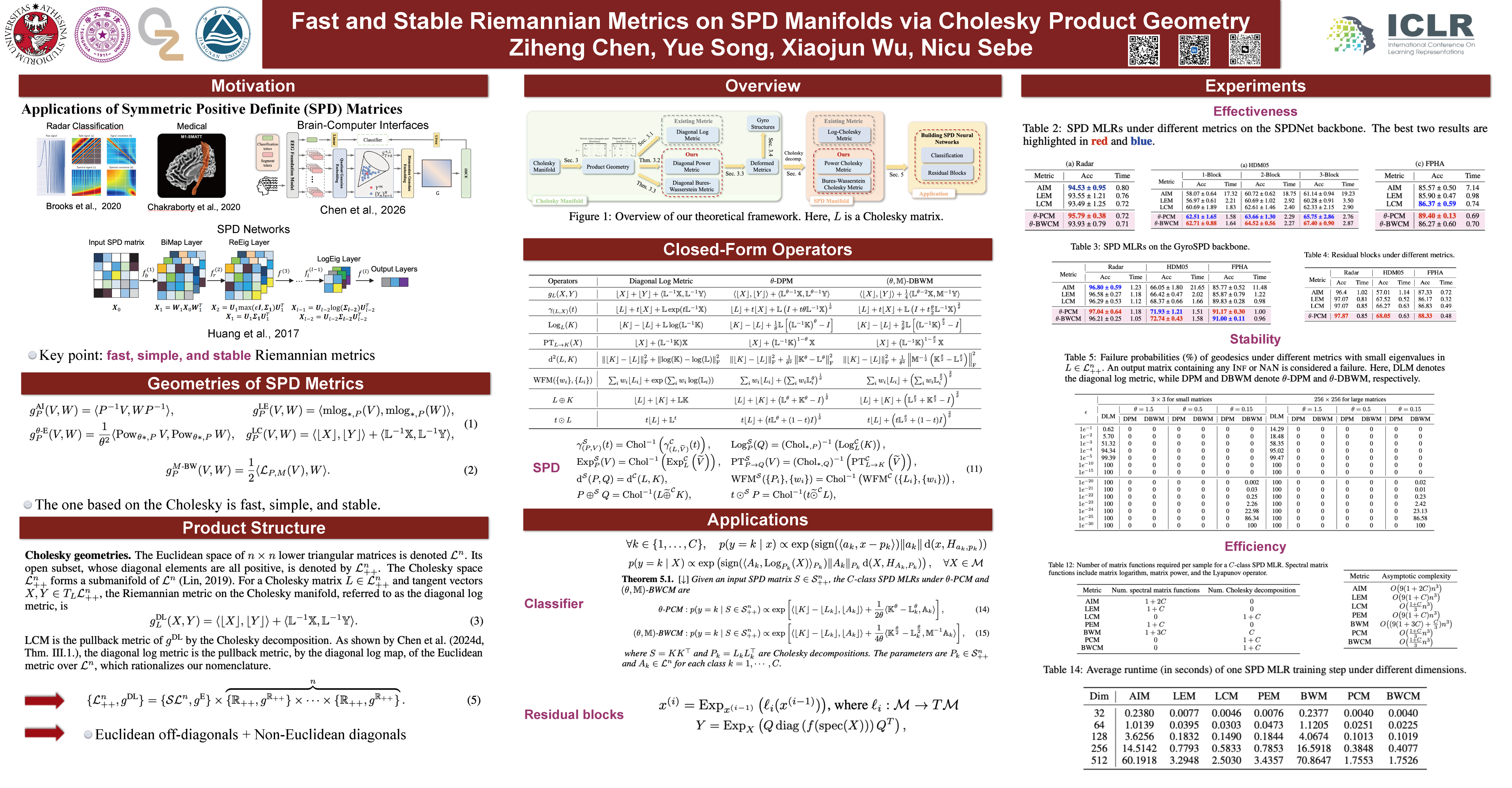
Recent advances in Symmetric Positive Definite (SPD) matrix learning show that Riemannian metrics are fundamental to effective SPD neural networks. Motivated by this, we revisit the geometry of the Cholesky factors and uncover a simple product structure that enables convenient metric design. Building on this insight, we propose two fast and stable SPD metrics, Power--Cholesky Metric (PCM) and Bures--Wasserstein--Cholesky Metric (BWCM), derived via Cholesky decomposition. Compared with existing SPD metrics, the proposed metrics provide closed-form operators, computational efficiency, and improved numerical stability. We further apply our metrics to construct Riemannian Multinomial Logistic Regression (MLR) classifiers and residual blocks for SPD neural networks. Experiments on SPD deep learning, numerical stability analyses, and tensor interpolation demonstrate the effectiveness, efficiency, and robustness of our metrics. The code is available at https://github.com/GitZH-Chen/PCM_BWCM.
LCA: Local Classifier Alignment for Continual Learning
Tung Tran ⋅ Danilo Vasconcellos Vargas ⋅ Khoat Than
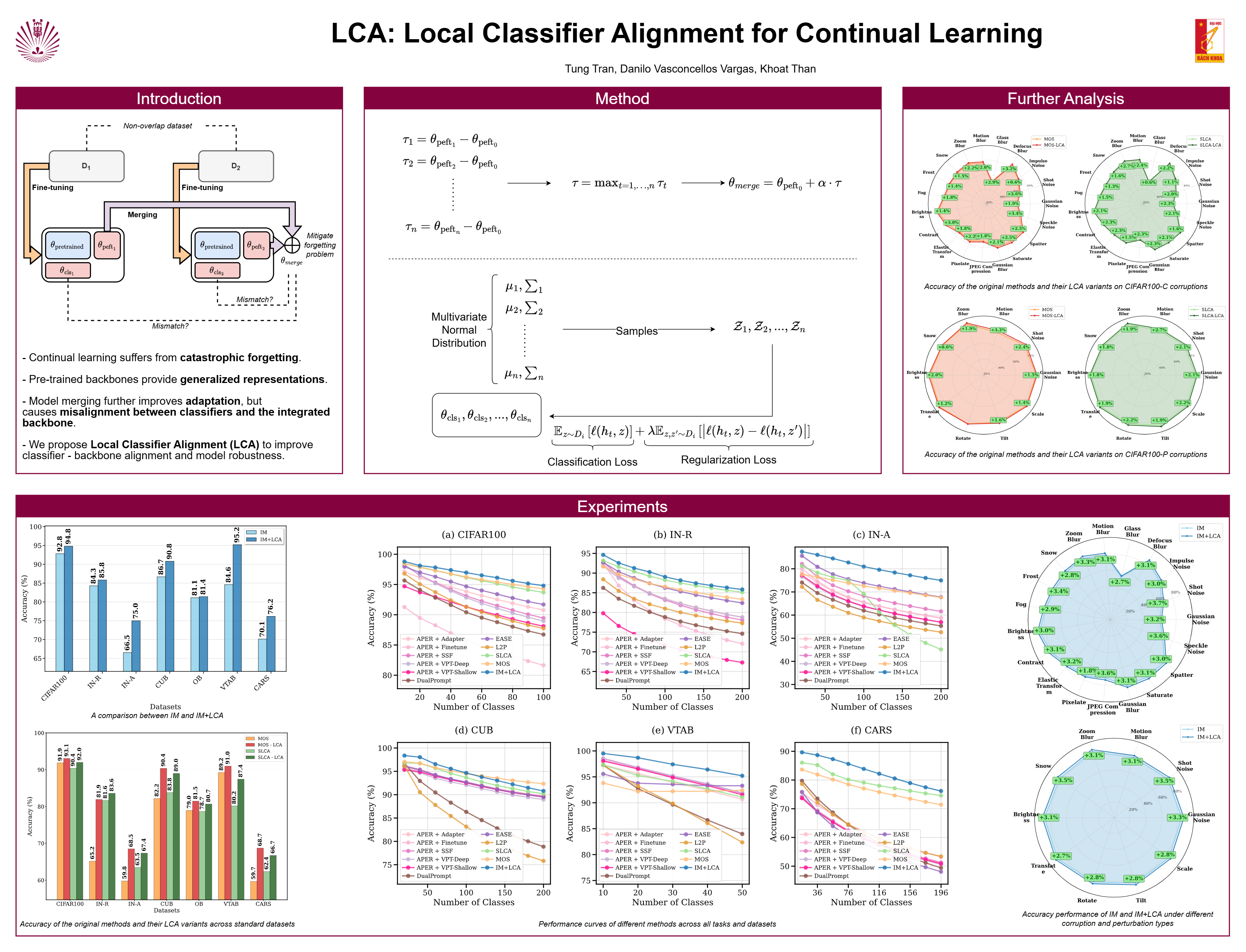
A fundamental requirement for intelligent systems is the ability to learn continuously under changing environments. However, models trained in this regime often suffer from catastrophic forgetting. Leveraging pre-trained models has recently emerged as a promising solution, since their generalized feature extractors enable faster and more robust adaptation. While some earlier works mitigate forgetting by fine-tuning only on the first task, this approach quickly deteriorates as the number of tasks grows and the data distributions diverge. More recent research instead seeks to consolidate task knowledge into a unified backbone, or adapting the backbone as new tasks arrive. However, such approaches may create a (potential) \textit{mismatch} between task-specific classifiers and the adapted backbone. To address this issue, we propose a novel \textit{Local Classifier Alignment} (LCA) loss to better align the classifier with backbone. Theoretically, we show that this LCA loss can enable the classifier to not only generalize well for all observed tasks, but also improve robustness. Furthermore, we develop a complete solution for continual learning, following the model merging approach and using LCA. Extensive experiments on several standard benchmarks demonstrate that our method often achieves leading performance, sometimes surpasses the state-of-the-art methods with a large margin.
CLAP: Unsupervised 3D Representation Learning for Fusion 3D Perception via Curvature Sampling and Prototype Learning
Runjian Chen ⋅ Hang Zhang ⋅ Avinash Ravichandran ⋅ Hyoungseob Park ⋅ Wenqi Shao ⋅ Alex Wong ⋅ Ping Luo
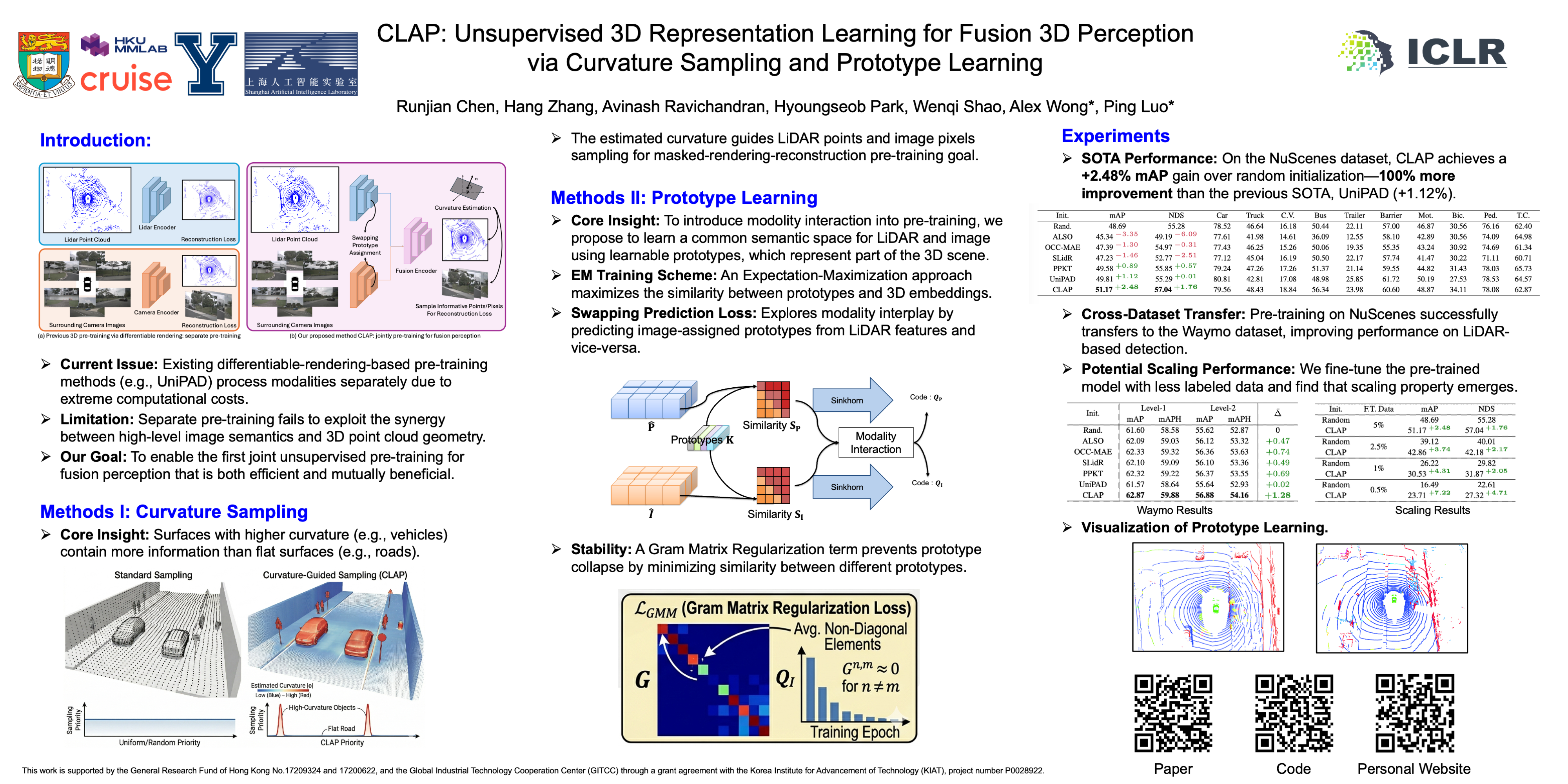
Unsupervised 3D representation learning reduces the burden of labeling multimodal 3D data for fusion perception tasks. Among different pre-training paradigms, differentiable-rendering-based methods have shown most promise. However, existing works separately conduct pre-training for each modalities due to computational costs of processing large point clouds with images. As such, mutual benefit of high-level semantics (from image) and 3D structure (from point cloud) has not been exploited. To address this gap, we propose a joint unsupervised differentiable-rendering-based pre-training method for images and point clouds, termed CLAP, short for Curvature sampLing and leArnable Prototype. Specifically, our method overcomes the computational hurdle by Curvature Sampling to select the more informative points/pixels for pre-training. To uncover the performance benefits brought by their complementarity, we propose to use learnable prototypes to represent parts of the 3D scenes in a common feature space and an Expectation-Maximization training scheme to associate embeddings of each modality to prototypes. We further propose a swapping prediction loss that explores their interplay through prototypes along with a Gram Matrix Regularization term to maintain training stability. Experiments on NuScenes and Waymo datasets show that CLAP achieves up to 100% more performance gain as compared to previous SOTA pre-training methods. Codes and models will be released.
Latent Thinking Optimization: Your Latent Reasoning Language Model Secretly Encodes Reward Signals in Its Latent Thoughts
Hanwen Du ⋅ Yuxin Dong ⋅ Xia Ning
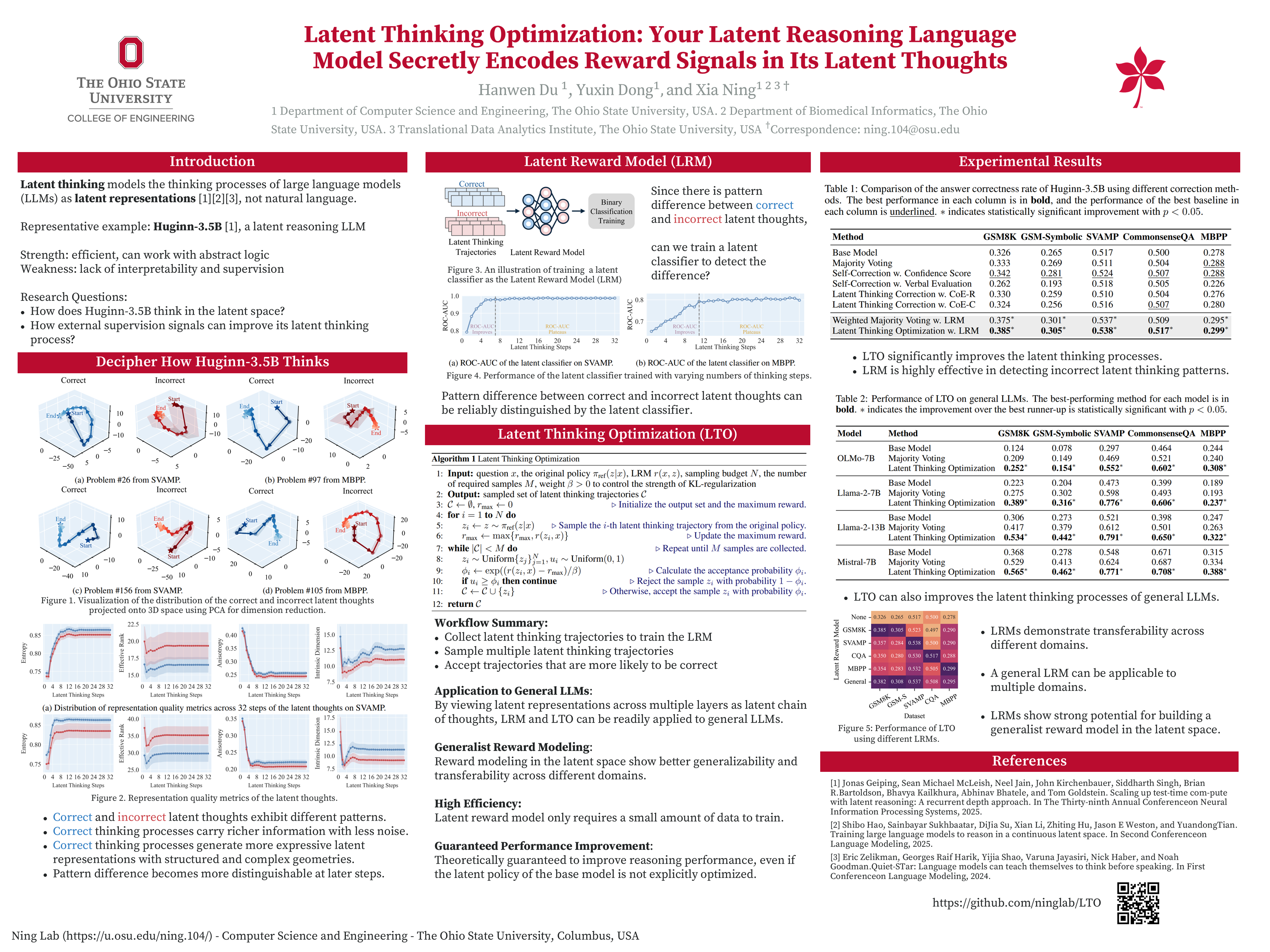
Large Language Models (LLMs) excel at problem solving by generating chain of thoughts in natural language, but such verbal thinking is computationally costly and prone to overthinking. A recent work instead proposes a latent thinking architecture, Huginn-3.5B, which represents intermediate reasoning steps as a sequence of latent representations. However, latent thoughts lack interpretability and are difficult to supervise, raising concerns about the correctness and reliability of the model's latent thinking processes. In this paper, we provide a systematic study of how Huginn-3.5B thinks in the latent space and how external supervision signals can improve its latent thinking processes. We show that latent thoughts leading to correct versus incorrect answers exhibit highly distinguishable patterns, and that a latent classifier can reliably predict answer correctness directly from latent thoughts. Leveraging these insights, we propose Latent Thinking Optimization (LTO), a probabilistic algorithm that employs the latent classifier as a Latent Reward Model (LRM) to optimize the latent thinking processes. Extensive experiments across diverse reasoning tasks demonstrate that LRM is highly effective in detecting incorrect latent thinking patterns, and LTO can significantly improve the latent thinking processes. Furthermore, we show that LRM can generalize across diverse domains, and LTO can be seamlessly applied to general LLMs to improve their thinking processes. In contrast to verbal thinking, our method demonstrates that reward modeling and scaling test-time thinking with supervision can be performed directly in the latent space, highlighting its potential as a general, efficient, and domain-agnostic approach to improving the thinking processes of LLMs.
Artistic Style and the Play of Neural Style Representations
Abhishek Dangeti ⋅ Pavan Gajula ⋅ Vikram Jamwal ⋅ Vivek Srivastava
How do neural networks perceive the complex human construct of artistic style? We explore the dynamic interplay between diverse machine representations of style and style definitions. We reveal a profound divergence where models often reject established historical narratives in favor of their own perceptual truths.
Prompt-MII: Meta-Learning Instruction Induction for LLMs
Emily Xiao ⋅ Yixiao Zeng ⋅ Ada Chen ⋅ Chin-Jou Li ⋅ Amanda Bertsch ⋅ Graham Neubig
A popular method to adapt large language models (LLMs) to new tasks is in-context learning (ICL), which is effective but incurs high inference costs as context length grows. In this paper we propose a method to perform instruction induction, where we take training examples and reduce them to a compact but descriptive prompt that can achieve performance comparable to ICL over the full training set. Specifically, we propose Prompt-MII, a reinforcement learning (RL) based framework to meta-learn an instruction induction model that can generate compact instructions on the fly for an arbitrary new dataset. We train on over 3,000 diverse classification datasets from the HuggingFace hub, and evaluate on 90 unseen tasks. Prompt-MII improves downstream model quality by 4-9 F1 points (10-20\% relative), matching ICL performance while requiring 3-13x fewer tokens.
DeepAFL: Deep Analytic Federated Learning
Jianheng Tang ⋅ Yajiang Huang ⋅ Kejia Fan ⋅ Feijiang Han ⋅ Jiaxu Li ⋅ Jinfeng Xu ⋅ Run He ⋅ Anfeng Liu ⋅ Houbing Song ⋅ Huiping Zhuang ⋅ Yunhuai Liu
Federated Learning (FL) is a popular distributed learning paradigm to break down data silo. Traditional FL approaches largely rely on gradient-based updates, facing significant issues about heterogeneity, scalability, convergence, and overhead, etc. Recently, some analytic-learning-based work has attempted to handle these issues by eliminating gradient-based updates via analytical (i.e., closed-form) solutions. Despite achieving superior invariance to data heterogeneity, these approaches are fundamentally limited by their single-layer linear model with a frozen pre-trained backbone. As a result, they can only achieve suboptimal performance due to their lack of representation learning capabilities. In this paper, to enable representable analytic models while preserving the ideal invariance to data heterogeneity for FL, we propose our Deep Analytic Federated Learning approach, named DeepAFL. Drawing inspiration from the great success of ResNet in gradient-based learning, we design gradient-free residual blocks in our DeepAFL with analytical solutions. We introduce an efficient layer-wise protocol for training our deep analytic models layer by layer in FL through least squares. Both theoretical analyses and empirical evaluations validate our DeepAFL's superior performance with its dual advantages in heterogeneity invariance and representation learning, outperforming state-of-the-art baselines by up to 5.68%-8.42% across three benchmark datasets. Related code is available at https://github.com/tangent-heng/DeepAFL.
KeepLoRA: Continual Learning with Residual Gradient Adaptation
Mao-Lin Luo ⋅ Zi-Hao Zhou ⋅ Yi-Lin Zhang ⋅ Yuanyu Wan ⋅ Min-Ling Zhang ⋅ Tong Wei
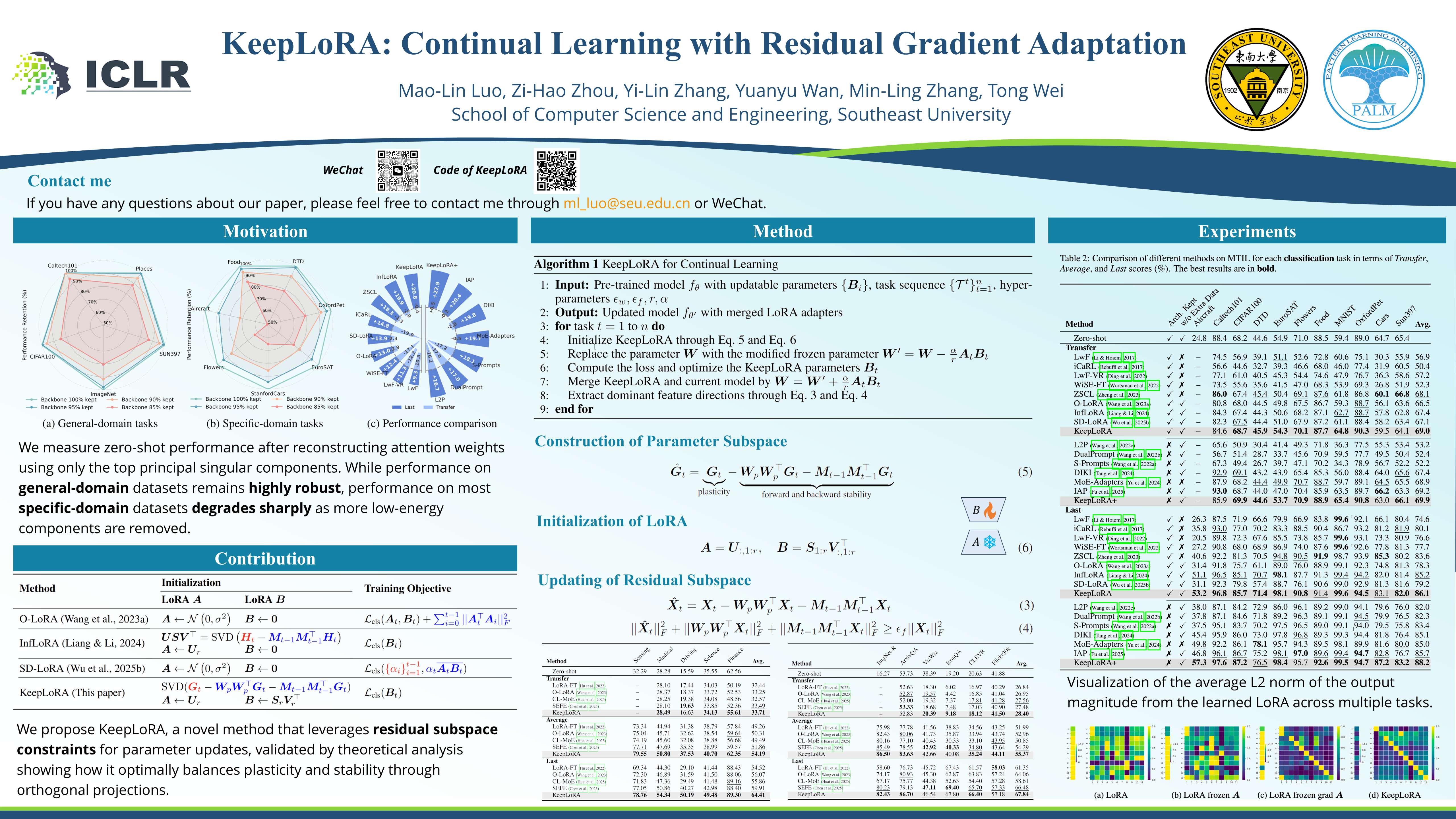
Continual learning for pre-trained vision-language models requires balancing three competing objectives: retaining pre-trained knowledge, preserving knowledge from a sequence of learned tasks, and maintaining the plasticity to acquire new knowledge. This paper presents a simple but effective approach called KeepLoRA to effectively balance these objectives. We first analyze the knowledge retention mechanism within the model parameter space and find that general knowledge is mainly encoded in the principal subspace, while task-specific knowledge is encoded in the residual subspace. Motivated by this finding, KeepLoRA learns new tasks by restricting LoRA parameter updates in the residual subspace to prevent interfering with previously learned capabilities. Specifically, we infuse knowledge for a new task by projecting its gradient onto a subspace orthogonal to both the principal subspace of pre-trained model and the dominant directions of previous task features. Our theoretical and empirical analyses confirm that KeepLoRA balances the three objectives and achieves state-of-the-art performance. The implementation code is available at https://github.com/MaolinLuo/KeepLoRA.
Ensemble Prediction of Task Affinity for Efficient Multi-Task Learning
Afiya Ayman ⋅ Ayan Mukhopadhyay ⋅ Aron Laszka
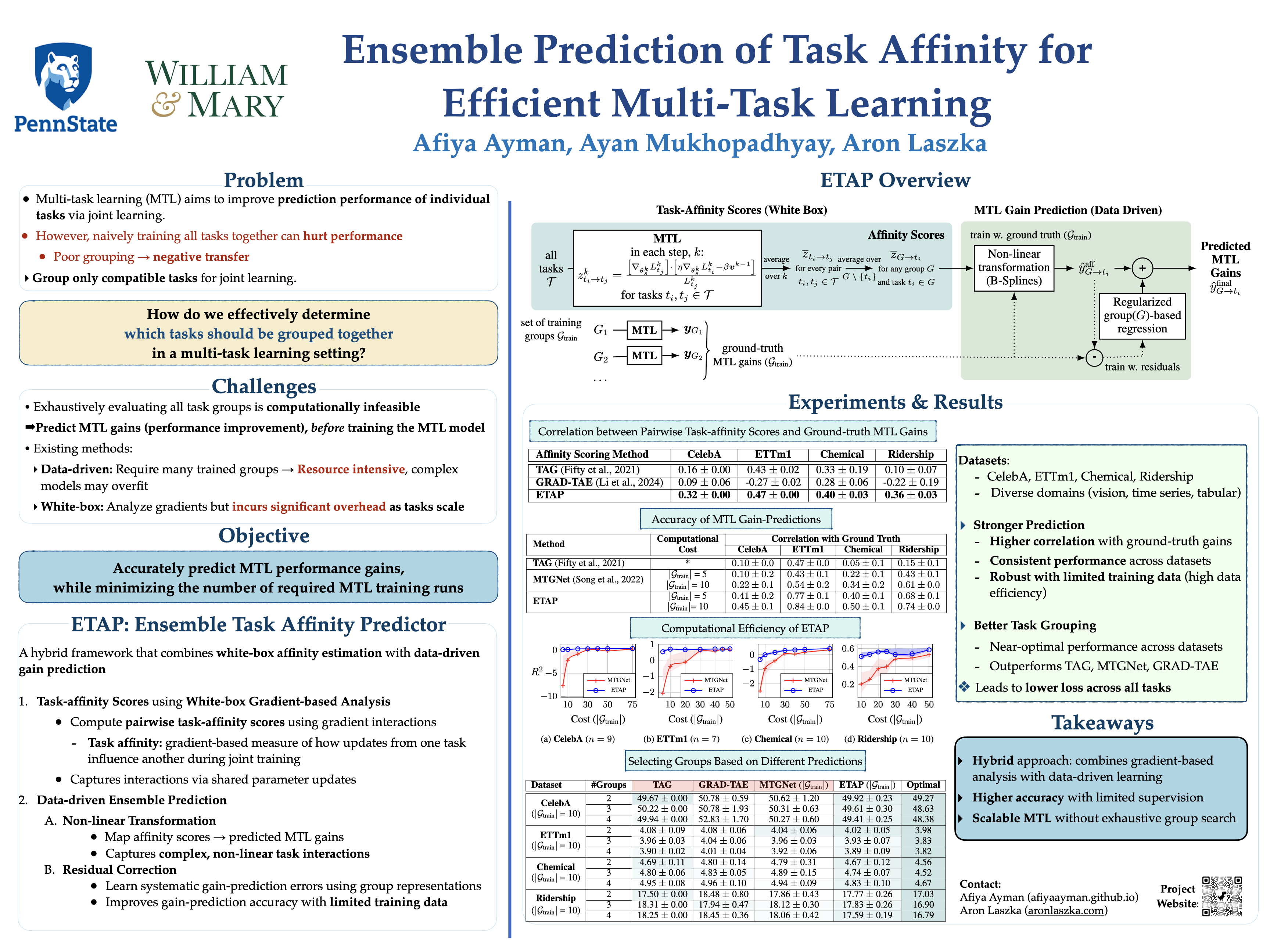
A fundamental problem in multi-task learning (MTL) is identifying groups of tasks that should be learned together. Since training MTL models for all possible combinations of tasks is prohibitively expensive for large task sets, a crucial component of efficient and effective task grouping is predicting whether a group of tasks would benefit from learning together, measured as per-task performance gain over single-task learning. In this paper, we propose ETAP (Ensemble Task Affinity Predictor), a scalable framework that integrates principled and data-driven estimators to predict MTL performance gains. First, we consider the gradient-based updates of shared parameters in an MTL model to measure the affinity between a pair of tasks as the similarity between the parameter updates based on these tasks. This linear estimator, which we call affinity score, naturally extends to estimating affinity within a group of tasks. Second, to refine these estimates, we train predictors that apply non-linear transformations and correct residual errors, capturing complex and non-linear task relationships. We train these predictors on a limited number of task groups for which we obtain ground-truth gain values via multi-task learning for each group. We demonstrate on benchmark datasets that ETAP improves MTL gain prediction and enables more effective task grouping, outperforming state-of-the-art baselines across diverse application domains.
OptMerge: Unifying Multimodal LLM Capabilities and Modalities via Model Merging
Yongxian Wei ⋅ Runxi Cheng ⋅ Weike Jin ⋅ Enneng Yang ⋅ Li Shen ⋅ LU HOU ⋅ SiNan Du ⋅ Chun Yuan ⋅ Xiaochun Cao ⋅ Dacheng Tao
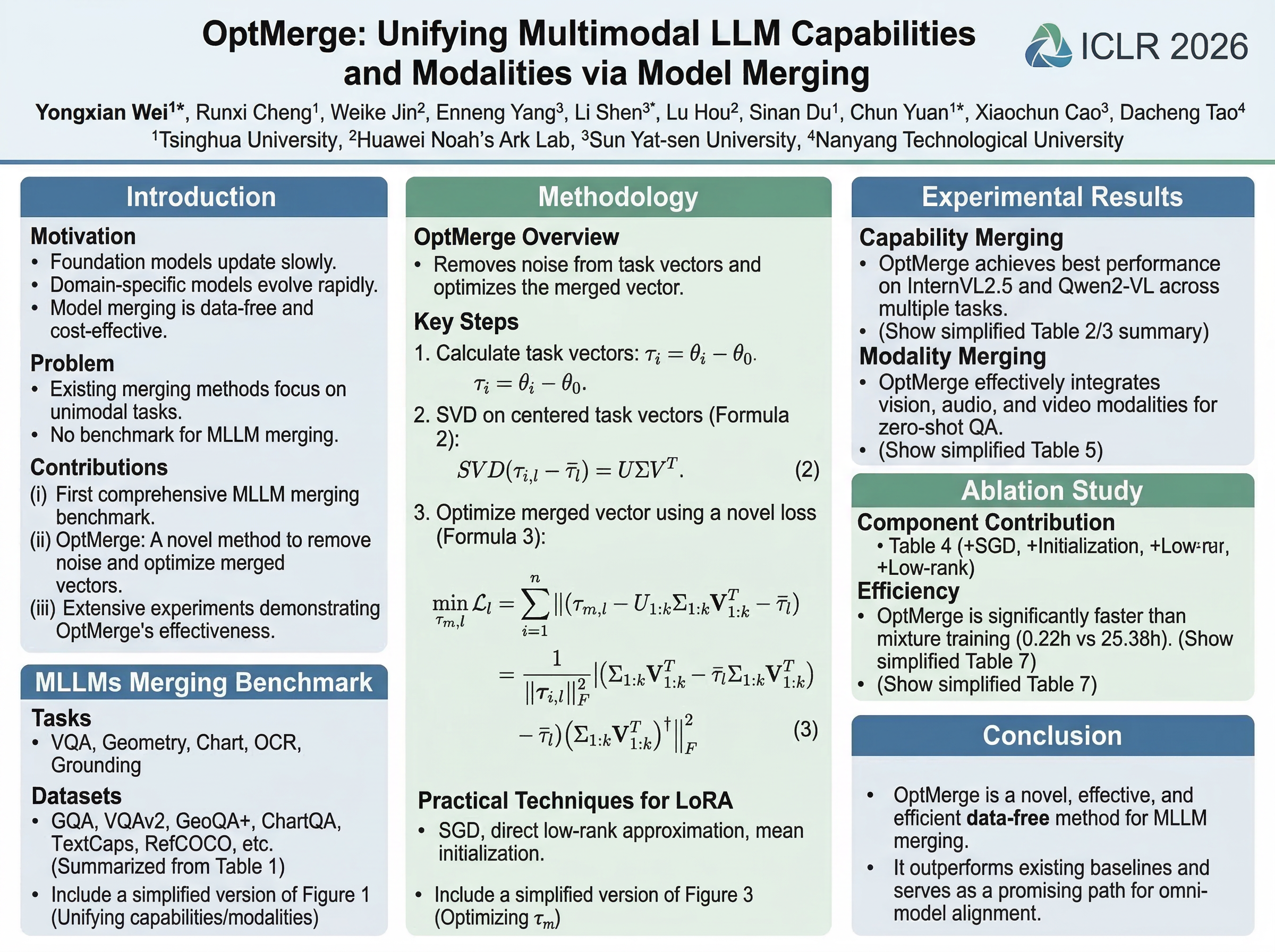
Foundation models update slowly due to resource-intensive training, whereas domain-specific models evolve rapidly between releases. Model merging seeks to combine multiple expert models into a single, more capable model, reducing storage and serving costs while supporting decentralized development. Despite its potential, previous studies have primarily focused on merging visual classification models or Large Language Models (LLMs) for code and math tasks. Recently, Multimodal LLMs (MLLMs) that extend LLMs through large-scale multimodal training have gained traction. However, no benchmark exists for model merging research that clearly divides the tasks of MLLM training and evaluation. In this paper, $(i)$ we introduce a model merging benchmark for MLLMs, which includes multiple tasks such as VQA, Geometry, Chart, OCR, and Grounding, studying both LoRA and full fine-tuning models. Moreover, we explore how model merging can combine different modalities (e.g., vision-language, audio-language, and video-language models), moving toward the Omni-language model. $(ii)$ We implement 10 model merging algorithms on the benchmark. Furthermore, we propose a novel method that removes noise from task vectors and robustly optimizes the merged vector based on a loss defined over task vector interactions, achieving an average performance gain of 2.48\%. $(iii)$ We find that model merging offers a promising way for building improved MLLMs without requiring training data. Our results also demonstrate that the complementarity among multiple modalities outperforms individual modalities.
Scalable Multi-Task Low-Rank Model Adaptation
Zichen Tian ⋅ Antoine Ledent ⋅ Qianru Sun
Scaling multi-task low-rank adaptation (LoRA) to a large number of tasks induces catastrophic performance degradation, such as an accuracy drop from 88.2% to 2.0% on DOTA when scaling from 5 to 15 tasks. This failure is due to parameter and representation misalignment. We find that existing solutions, like regularization and dynamic routing, fail at scale because they are constrained by a fundamental trade-off: strengthening regularization to reduce inter-task conflict inadvertently suppresses the essential feature discrimination required for effective routing. In this work, we identify two root causes for this trade-off. First, uniform regularization disrupts inter-task knowledge sharing: shared underlying knowledge concentrates in high-SV components (89% alignment on Flanv2→BBH). Uniform regularization forces high-SV components to update in orthogonal directions, directly disrupting the shared knowledge. Second, Conflict Amplification: Applying LoRA at the component-level (*e.g.*, $W_q, W_v$) amplifies gradient conflicts; we show block-level adaptation reduces this conflict with only 50% parameters. Based on these insights, we propose mtLoRA, a scalable solution with three novel designs: 1) Spectral-Aware Regularization to selectively orthogonalize low-SV components while preserving high-SV shared knowledge, 2) Block-Level Adaptation to mitigate conflict amplification and largely improve parameter efficiency, and 3) Fine-Grained Routing using dimension-specific weights for superior expressive power. On four large-scale (15-25 tasks) vision (DOTA and iNat2018) and NLP (Dolly-15k and BBH) benchmarks, mtLoRA achieves 91.7%, 81.5%, 44.5% and 38.5% accuracy on DOTA, iNat2018, Dolly-15k and BBH respectively, outperforming the state-of-the-art by 2.3% on average while using 47% fewer parameters and 24% less training time.
A Study on PAVE Specification for Learnware
Hao-Yu Shi ⋅ Zhi-Hao Tan ⋅ Zi-Chen Zhao ⋅ Yang Yu ⋅ Zhi-Hua Zhou
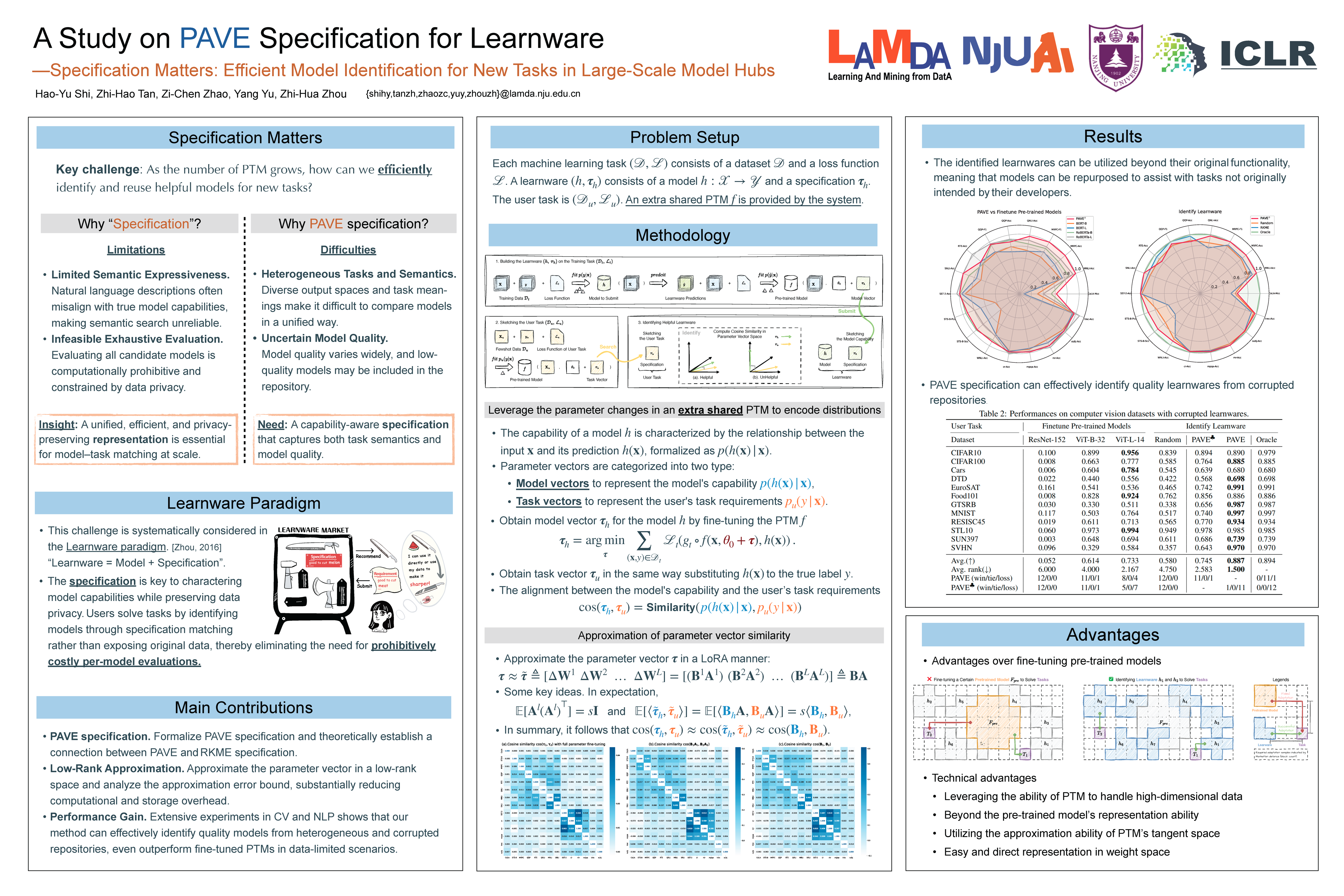
``Learnware = Model + Specification''. A learnware comprises a submitted model paired with a specification sketching its capabilities. For a Learnware Dock System (LDS) which accommodates numerous models, these specifications are essential to enabling users to identify helpful models, eliminating the requirement for prohibitively costly per-model evaluations. Recently, Parameter Vector (PAVE) specification, which utilizes the changes in pre-trained model parameters to inherently encode the model capability and task requirements, shows promising capabilities in enabling identifying useful learnwares for high-dimensional, unstructured text data. In this paper, we present a comprehensive study of PAVE specification for learnware identification. Theoretically, from the neural tangent kernel perspective, we establish a tight connection between PAVE and prior specifications, providing a theoretical explanation for their shared underlying principles. We further approximate PAVE in a low-rank space and analyze the approximation error bound, highly reducing the computational and storage overhead. Extensive empirical studies demonstrate that PAVE specification excels at identifying CV and NLP learnwares even from heterogeneous learnware repository with corrupted model quality. Reusing identified learnware to solve user tasks can even outperform user-fine-tuned pre-trained models in data-limited scenarios.
Dataset distillation aims to find a small synthetic training set, such that training on the synthetic data achieves similar performance to training on a larger training dataset. Early methods solve this by interpreting the distillation problem as a bi-level optimization problem. On the other hand, disentangled methods bypass pixel-space optimization by matching data distributions and using generative techniques, leading to better computational complexity in terms of size of both training and distilled datasets. We demonstrate that by using latent spaces, the empirically successful disentangled methods can be reformulated as an optimal quantization problem, where a finite set of points is found to approximate the underlying probability measure. In particular, we link disentangled dataset distillation methods to the classical problem of optimal quantization, and are the first to demonstrate consistency of distilled datasets for diffusion-based generative priors. We propose Dataset Distillation by Optimal Quantization (DDOQ), based on clustering in the latent space of latent diffusion models. Compared to a similar clustering method D4M, we achieve better performance and inter-model generalization on the ImageNet-1K dataset using the same model and with trivial additional computation, achieving SOTA performance in higher image-per-class settings. Using the distilled noise initializations in a stronger diffusion transformer model, we obtain competitive or SOTA distillation performance on ImageNet-1K and its subsets, outperforming recent diffusion guidance methods.
Energy-Regularized Sequential Model Editing on Hyperspheres
Qingyuan Liu ⋅ Jia-Chen Gu ⋅ Yunzhi Yao ⋅ Hong Wang ⋅ Nanyun (Violet) Peng
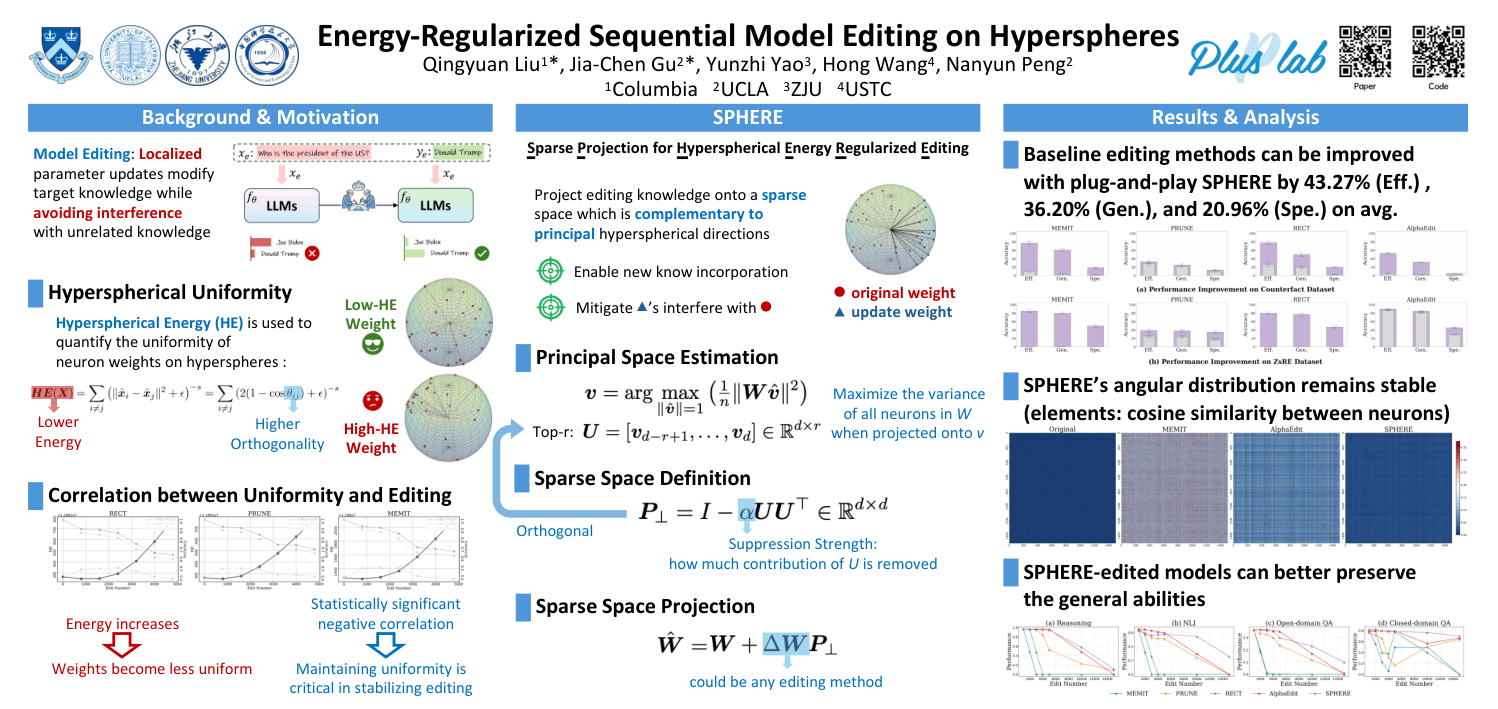
Large language models (LLMs) require constant updates to remain aligned with evolving real-world knowledge. Model editing offers a lightweight alternative to retraining, but sequential editing that updates the LLM knowledge through multiple successive edits often destabilizes representations and induces catastrophic forgetting. In this work, we seek to better understand and mitigate performance degradation caused by sequential editing. We hypothesize that hyperspherical uniformity, a property that maintains uniform distribution of neuron weights on a hypersphere, helps the model remain stable, retain prior knowledge, while still accommodate new updates. We use Hyperspherical Energy (HE) to quantify neuron uniformity during editing, and examine its correlation with editing performance. Empirical studies across widely used editing methods reveals a strong correlation between HE dynamics and editing performance, with editing failures consistently coinciding with uncontrolled HE fluctuations. We further theoretically prove that HE dynamics impose a lower bound on the degradation of pretrained knowledge, highlighting why HE stability is crucial for knowledge retention. Motivated by these insights, we propose SPHERE (Sparse Projection for Hyperspherical Energy-Regularized Editing), an HE-driven regularization strategy that stabilizes neuron weight distributions, ultimately preserving prior knowledge while enabling reliable sequential updates. Specifically, SPHERE identifies a sparse space complementary to the principal hyperspherical directions of the pretrained weight matrices and projects new knowledge onto it, attenuating perturbations on the principal directions. Extensive experiments on LLaMA3 (8B) and Qwen2.5 (7B) show that SPHERE outperforms the best baseline in editing capability by an average of 16.41%, while most faithfully preserving general model performance, thereby offering a principled path toward reliable large-scale knowledge editing.
Exploring Knowledge Purification in Multi-Teacher Knowledge Distillation for LLMs
Ruihan Jin ⋅ Pengpeng Shao ⋅ Zhengqi Wen ⋅ Jinyang Wu ⋅ Mingkuan Feng ⋅ Shuo Yang ⋅ Chu Yuan Zhang ⋅ Jianhua Tao
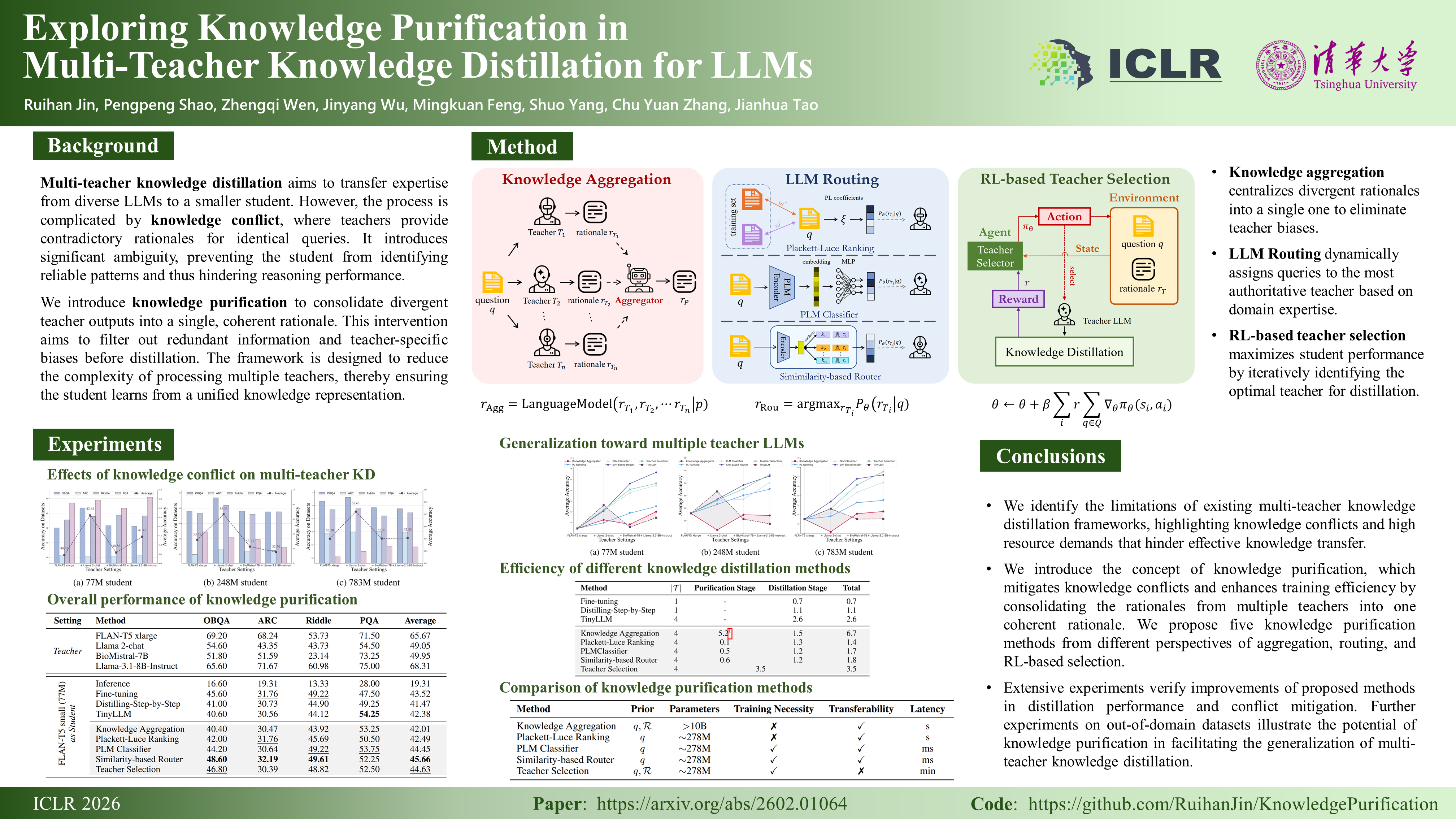
Knowledge distillation has emerged as a pivotal technique for transferring knowledge from stronger large language models (LLMs) to smaller, more efficient models. However, traditional distillation approaches face challenges related to knowledge conflicts and high resource demands, particularly when leveraging multiple teacher models. In this paper, we introduce the concept of Knowledge Purification, which consolidates the rationales from multiple teacher LLMs into a single rationale, thereby mitigating conflicts and enhancing efficiency. To investigate the effectiveness of knowledge purification, we further propose five purification methods from various perspectives. Our experiments demonstrate that these methods not only improve the performance of the distilled model but also effectively alleviate knowledge conflicts. Moreover, router-based methods exhibit robust generalization capabilities, underscoring the potential of innovative purification techniques in optimizing multi-teacher distillation and facilitating the practical deployment of powerful yet lightweight models.
MULTIMODALITY AS SUPERVISION: SELF-SUPERVISED SPECIALIZATION TO THE TEST ENVIRONMENT VIA MULTIMODALITY
Kunal Pratap Singh ⋅ Ali Garjani ⋅ Rishubh Singh ⋅ Muhammad Uzair Khattak ⋅ Jason Toskov ⋅ Efe Tarhan ⋅ Andrei Atanov ⋅ Oğuzhan Kar ⋅ Amir Zamir
The common approach for developing a vision model is generalism, which involves training on a large diverse dataset to cover the varied deployment environments and leads to a model that is expected to solve the problem everywhere. However, many practical applications need to operate in a specific test space, e.g., a robot deployed in a single house, and do not necessarily need to generalize to novel environments. In this work, we explore whether we can use rich multimodal data only from the test environment to pre-train a representation in a self-supervised way, without access to any external data. We find that this approach can match and, in most cases, outperform generalists pre-trained on large-scale Internet datasets, including popular off-the-shelf models, CLIP and DINOv2. We study the effectiveness of this approach by evaluating the models on various datasets and downstream tasks, such as semantic segmentation, captioning, and object detection, as well as a set of ablations and analyses to extract insights. This approach raises intriguing points on substituting data with (multi)modality, enabling an alternative scenario where the need for external Internet-scale datasets for pre-training models is reduced. It also shows that merely benefiting from test-space data was insufficient for achieving competitive results, and multimodality was essential for that purpose.
Amortized Inference of Causal Models via Conditional Fixed-Point Iterations
Divyat Mahajan · Jannes Gladrow · Agrin Hilmkil · Cheng Zhang · Meyer Scetbon
Structural Causal Models (SCMs) offer a principled framework to reason about interventions and support out-of-distribution generalization, which are key goals in scientific discovery. However, the task of learning SCMs from observed data poses formidable challenges, and often requires training a separate model for each dataset. In this work, we propose an amortized inference framework that trains a single model to predict the causal mechanisms of SCMs conditioned on their observational data and causal graph. We first use a transformer-based architecture for amortized learning of dataset embeddings, and then extend the Fixed-Point Approach (FiP) to infer the causal mechanisms conditionally on their dataset embeddings. As a byproduct, our method can generate observational and interventional data from novel SCMs at inference time, without updating parameters. Empirical results show that our amortized procedure performs on par with baselines trained specifically for each dataset on both in and out-of-distribution problems, and also outperforms them in scare data regimes.
Diffusion Bridge Variational Inference for Deep Gaussian Processes
Jian Xu ⋅ Delu Zeng ⋅ Qibin Zhao ⋅ John Paisley
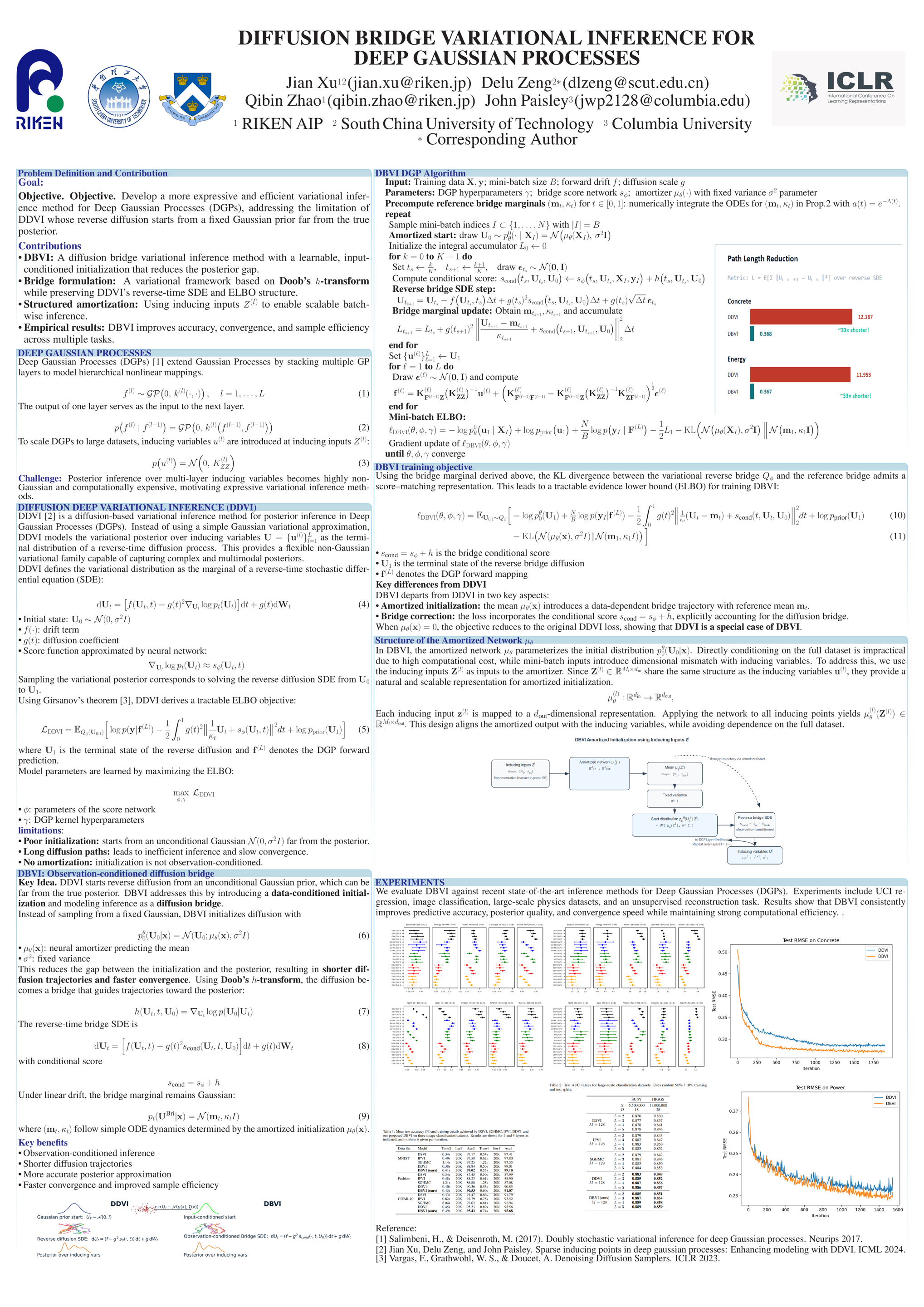
Deep Gaussian processes (DGPs) enable expressive hierarchical Bayesian modeling but pose substantial challenges for posterior inference, especially over inducing variables. Denoising diffusion variational inference (DDVI) addresses this by modeling the posterior as a time-reversed diffusion from a simple Gaussian prior. However, DDVI’s fixed unconditional starting distribution remains far from the complex true posterior, resulting in inefficient inference trajectories and slow convergence. In this work, we propose Diffusion Bridge Variational Inference (DBVI), a principled extension of DDVI that initiates the reverse diffusion from a learnable, data-dependent initial distribution. This initialization is parameterized via an amortized neural network and progressively adapted using gradients from the ELBO objective, reducing the posterior gap and improving sample efficiency. To enable scalable amortization, we design the network to operate on the inducing inputs $\mathbf{Z}^{(l)}$, which serve as structured, low-dimensional summaries of the dataset and naturally align with the inducing variables' shape. DBVI retains the mathematical elegance of DDVI—including Girsanov-based ELBOs and reverse-time SDEs—while reinterpreting the prior via a Doob-bridged diffusion process. We derive a tractable training objective under this formulation and implement DBVI for scalable inference in large-scale DGPs. Across regression, classification, and image reconstruction tasks, DBVI consistently outperforms DDVI and other variational baselines in predictive accuracy, convergence speed, and posterior quality.
A Minimum Variance Path Principle for Accurate and Stable Score-Based Density Ratio Estimation
Wei Chen ⋅ Jiacheng Li ⋅ Shigui Li ⋅ Zhiqi Lin ⋅ Junmei Yang ⋅ John Paisley ⋅ Delu Zeng
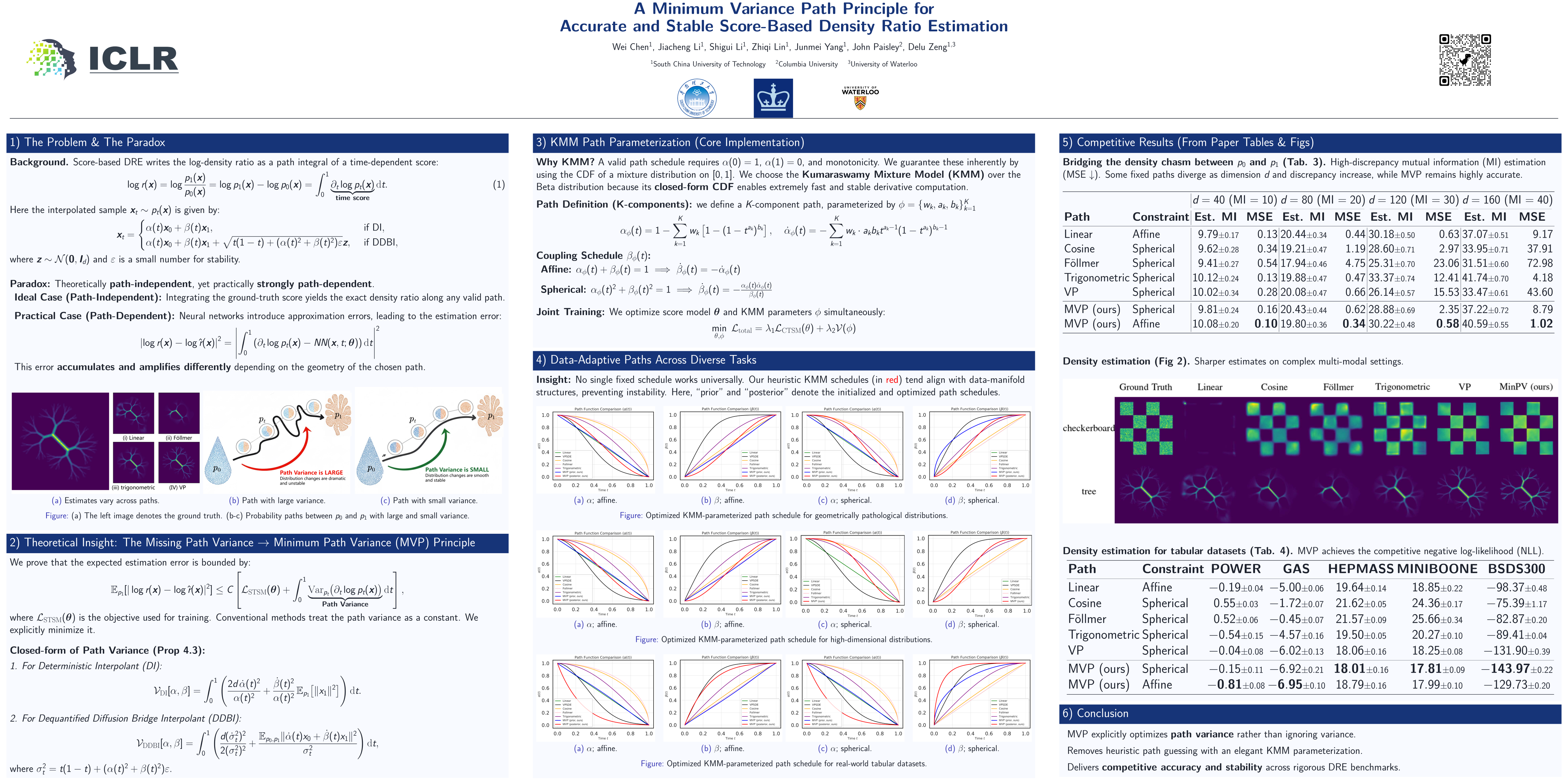
Score-based methods are powerful across machine learning, but they face a paradox: theoretically path-independent, yet practically path-dependent. We resolve this by proving that practical training objectives differ from the ideal, ground-truth objective by a crucial, overlooked term: the path variance of the score function. We propose the MVP (Mimum Variance Path) Principle to minimize this path variance. Our key contribution is deriving a closed-form expression for the variance, making optimization tractable. By parameterizing the path with a flexible Kumaraswamy Mixture Model, our method learns data-adaptive, low-variance paths without heuristic manual selection. This principled optimization of the complete objective yields more accurate and stable estimators, establishing new state-of-the-art results on challenging benchmarks and providing a general framework for optimizing score-based interpolation.
Source-Guided Flow Matching
Zifan Wang ⋅ Alice Harting ⋅ Matthieu Barreau ⋅ Michael Zavlanos ⋅ Karl H. Johansson
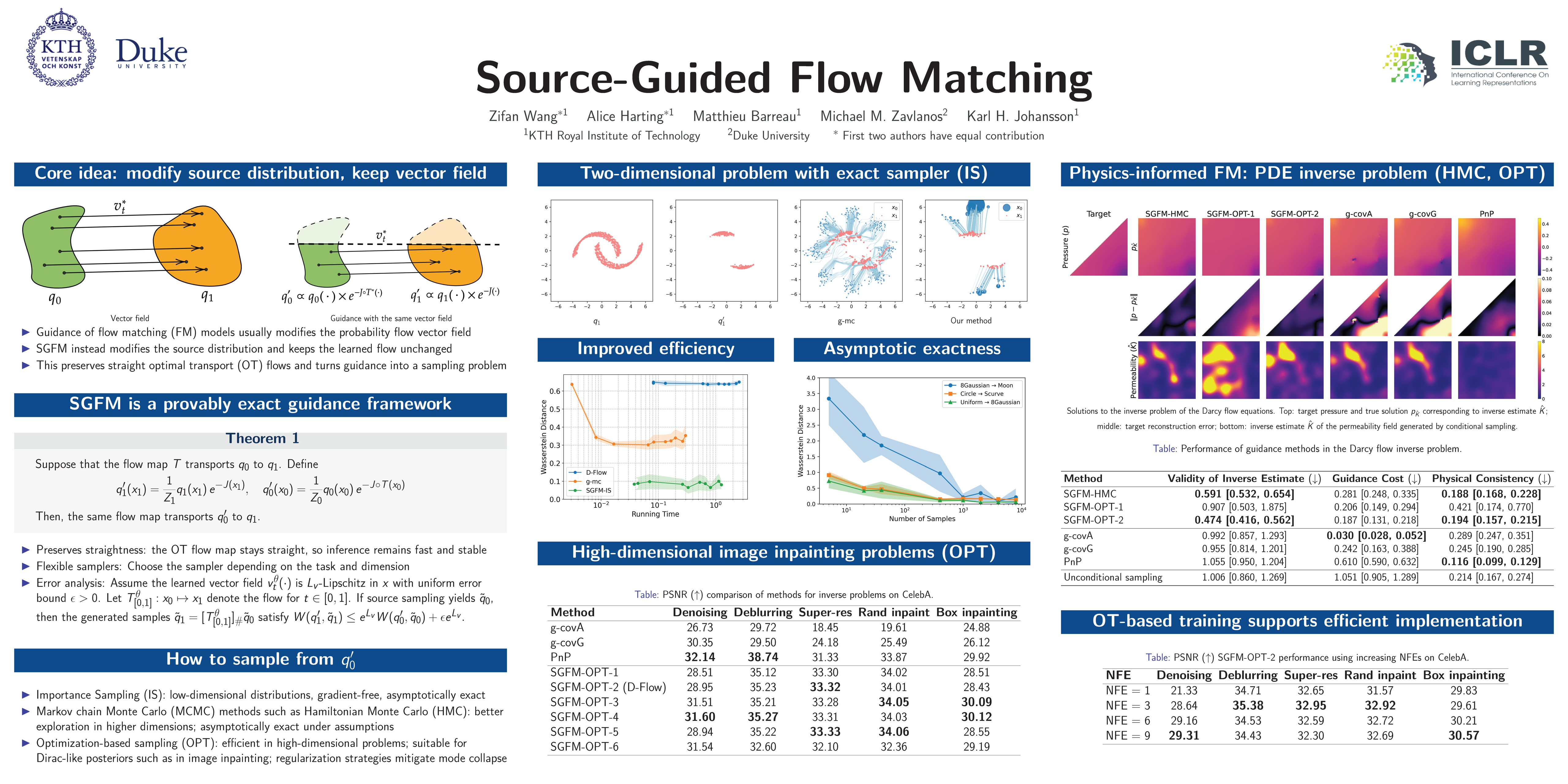
Guidance of generative models is typically achieved by modifying the probability flow vector field through the addition of a guidance field. In this paper, we instead propose the Source-Guided Flow Matching (SGFM) framework, which modifies the source distribution directly while keeping the pre-trained vector field intact. This reduces the guidance problem to a well-defined problem of sampling from the source distribution. We theoretically show that SGFM recovers the desired target distribution exactly. Furthermore, we provide bounds on the Wasserstein error for the generated distribution when using an approximate sampler of the source distribution and an approximate vector field. The key benefit of our approach is that it allows the user to flexibly choose the sampling method depending on their specific problem. To illustrate this, we systematically compare different sampling methods and discuss conditions for asymptotically exact guidance. Moreover, our framework integrates well with optimal flow matching models since the straight transport map generated by the vector field is preserved. Experimental results on synthetic 2D benchmarks, physics-informed generative tasks, and imaging inverse problems demonstrate the effectiveness and flexibility of the proposed framework.
Diffusion and Flow-based Copulas: Forgetting and Remembering Dependencies
David Huk ⋅ Theodoros Damoulas
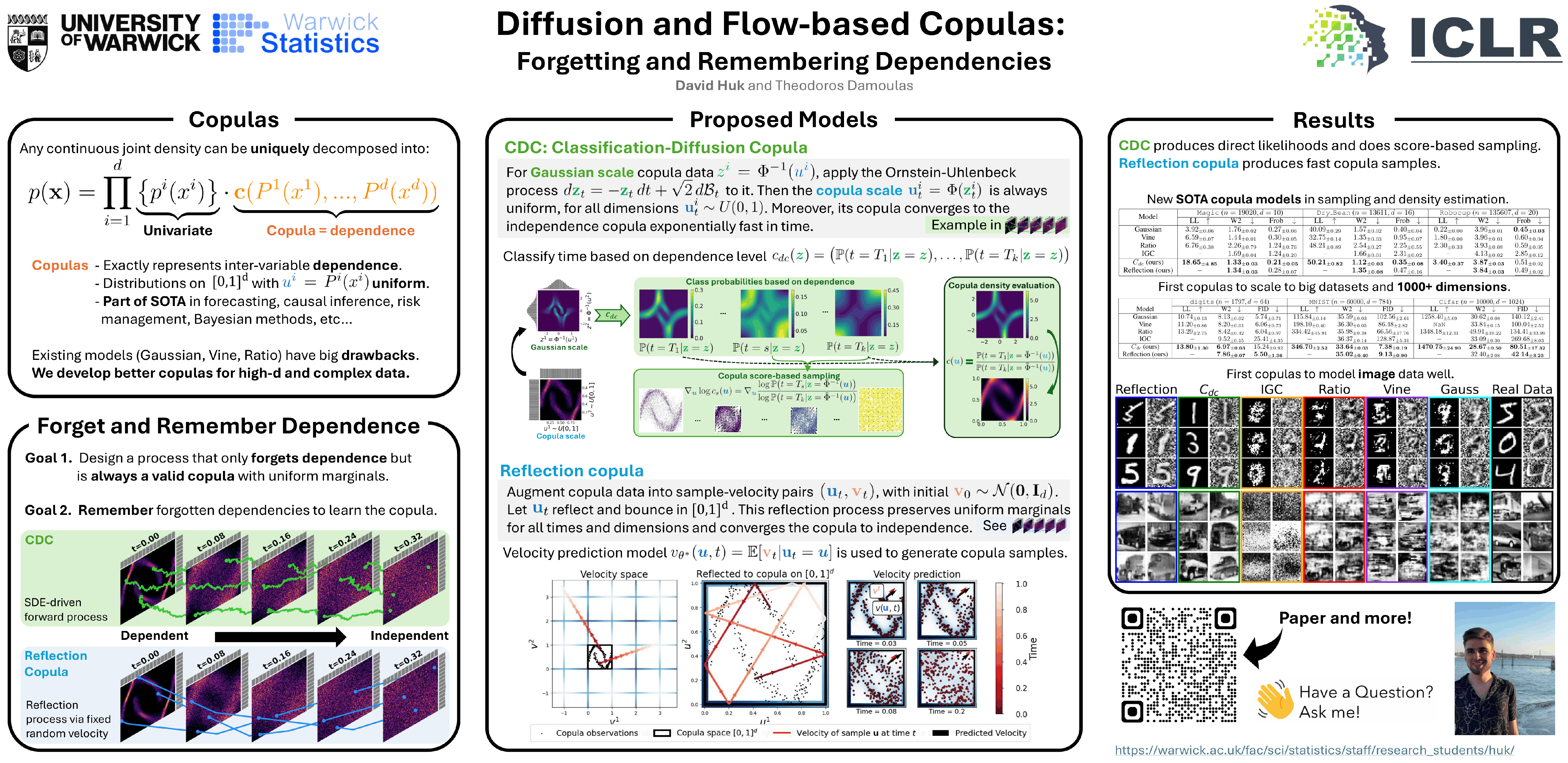
Copulas are a fundamental tool for modelling multivariate dependencies in data, forming the method of choice in diverse fields and applications. However, the adoption of existing models for multimodal and high-dimensional dependencies is hindered by restrictive assumptions and poor scaling. In this work, we present methods for modelling copulas based on the principles of diffusions and flows. We design two processes that progressively forget inter-variable dependencies while leaving dimension-wise distributions unaffected, provably defining valid copulas at all times. We show how to obtain copula models by learning to remember the forgotten dependencies from each process, theoretically recovering the true copula at optimality. The first instantiation of our framework focuses on direct density estimation, while the second specialises in expedient sampling. Empirically, we demonstrate the superior performance of our proposed methods over state-of-the-art copula approaches in modelling complex and high-dimensional dependencies from scientific datasets and images. Our work enhances the representational power of copula models, empowering applications and paving the way for their adoption on larger scales and more challenging domains.
Beyond Aggregation: Guiding Clients in Heterogeneous Federated Learning
Zijian Wang ⋅ Xiaofei Zhang ⋅ Xin Zhang ⋅ Yukun Liu ⋅ Qiong Zhang
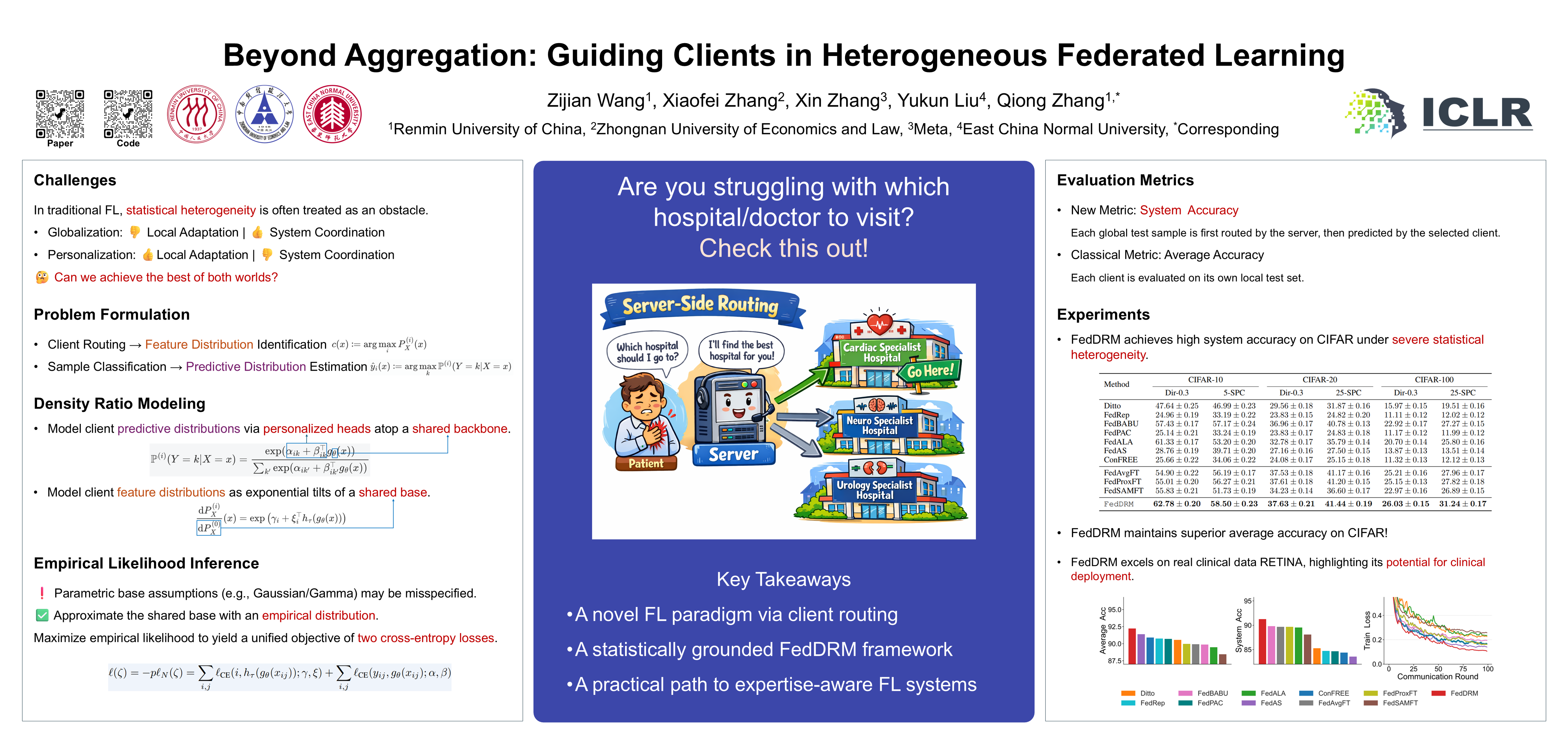
Federated learning (FL) is increasingly adopted in domains like healthcare, where data privacy is paramount. A fundamental challenge in these systems is statistical heterogeneity—the fact that data distributions vary significantly across clients (e.g., different hospitals may treat distinct patient demographics). While current FL algorithms focus on aggregating model updates from these heterogeneous clients, the potential of the central server remains under-explored. This paper is motivated by a healthcare scenario: could a central server not only coordinate model training but also guide a new patient to the hospital best equipped for their specific condition? We generalize this idea to propose a novel paradigm for FL systems where the server actively guides the allocation of new tasks or queries to the most appropriate client. To enable this, we introduce a density ratio model and empirical likelihood-based framework that simultaneously addresses two goals: (1) learning effective local models on each client, and (2) finding the best matching client for a new query. Empirical results demonstrate the framework's effectiveness on benchmark datasets, showing improvements in both model accuracy and the precision of client guidance compared to standard FL approaches. This work opens a new direction for building more intelligent and resource-efficient FL systems that leverage heterogeneity as a feature, not just a bug.
Addressing Pitfalls in the Evaluation of Uncertainty Estimation Methods for Natural Language Generation
Mykyta Ielanskyi ⋅ Kajetan Schweighofer ⋅ Lukas Aichberger ⋅ Sepp Hochreiter
Hallucinations are a common issue that undermine the reliability of large language models (LLMs). Recent studies have identified a specific subset of hallucinations, known as confabulations, which arise due to predictive uncertainty of LLMs. To detect confabulations, various methods for estimating predictive uncertainty in natural language generation (NLG) have been developed. These methods are typically evaluated by correlating uncertainty estimates with the correctness of generated text, with question-answering (QA) datasets serving as the standard benchmark. However, commonly used approximate correctness functions have substantial disagreement between each other and, consequently, in the ranking of the uncertainty estimation methods. This allows one to inflate the apparent performance of uncertainty estimation methods. We propose using several alternative risk indicators for risk correlation experiments that improve robustness of empirical assessment of UE algorithms for NLG. For QA tasks, we show that marginalizing over multiple LLM-as-a-judge variants leads to reducing the evaluation biases. Furthermore, we explore structured tasks as well as out of distribution and perturbation detection tasks which provide robust and controllable risk indicators. Finally, we propose to use an Elo rating of uncertainty estimation methods to give an objective summarization over extensive evaluation settings.
Federated ADMM from Bayesian Duality
Thomas Möllenhoff ⋅ Siddharth Swaroop ⋅ Finale Doshi-Velez ⋅ Mohammad Emtiyaz Khan
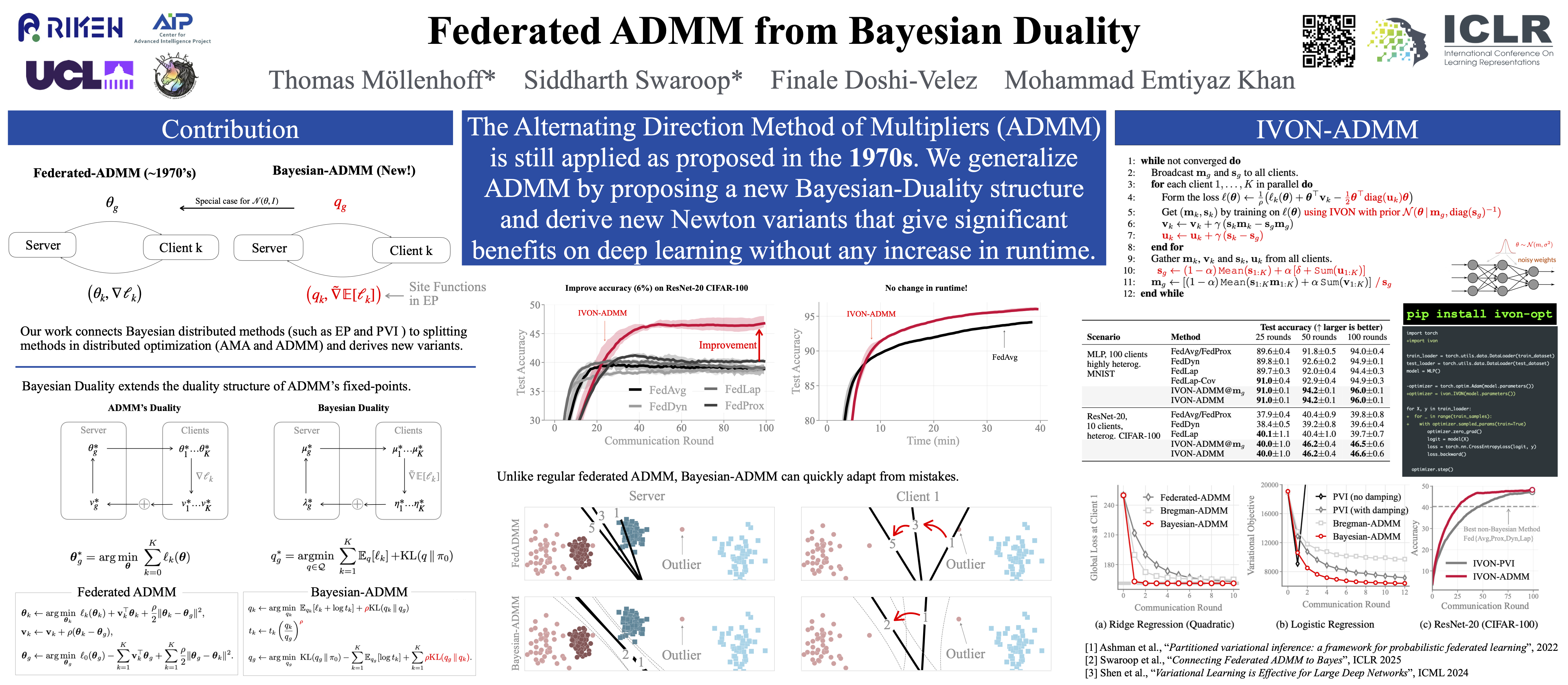
We propose a new Bayesian approach to generalize the federated Alternating Direction Method of Multipliers (ADMM). We show that the solutions of variational-Bayesian (VB) objectives are associated with a duality structure that not only resembles the structure of ADMM's fixed-points but also generalizes it. For example, ADMM-like updates are recovered when the VB objective is optimized over the isotropic-Gaussian family, and new non-trivial extensions are obtained for other exponential-family distributions. These extensions include a Newton-like variant that converges in one step on quadratic objectives and an Adam-like variant that yields up to 7% accuracy boosts for deep heterogeneous cases. Our work opens a new Bayesian way to generalize ADMM and other primal-dual methods.
Multilevel Control Functional
Kaiyu Li ⋅ Yiming Yang ⋅ Xiaoyuan Cheng ⋅ Yi He ⋅ Zhuo Sun
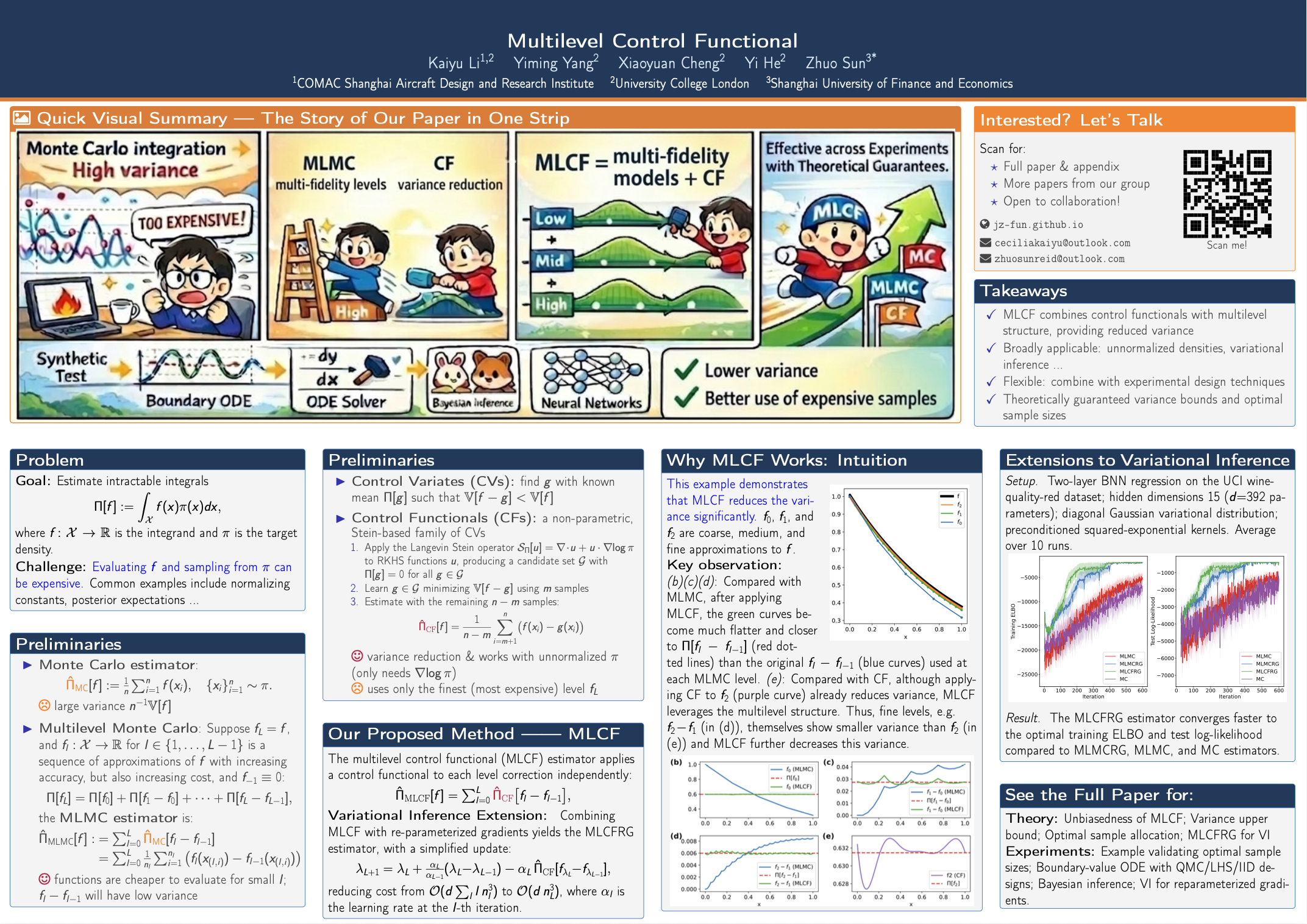
Control variates are variance reduction techniques for Monte Carlo estimators. They play a critical role in improving Monte Carlo estimators in scientific and machine learning applications that involve computationally expensive integrals. We introduce \emph{multilevel control functionals} (MLCFs), a novel and widely applicable extension of control variates that combines non-parametric Stein-based control variates with multi-fidelity methods. We show that when the integrand and the density are smooth, and when the dimensionality is not very high, MLCFs enjoy a faster convergence rate. We provide both theoretical analysis and empirical assessments on differential equation examples, including Bayesian inference for ecological models, to demonstrate the effectiveness of our proposed approach. Furthermore, we extend MLCFs for variational inference, and demonstrate improved performance empirically through Bayesian neural network examples.
What is the Relationship between Tensor Factorizations and Circuits (and How Can We Exploit it)?
Lorenzo Loconte · Antonio Mari · Gennaro Gala · Robert Peharz · Cassio de Campos · Erik Quaeghebeur · Gennaro Vessio · Antonio Vergari
This paper establishes a rigorous connection between circuit representations and tensor factorizations, two seemingly distinct yet fundamentally related areas. By connecting these fields, we highlight a series of opportunities that can benefit both communities. Our work generalizes popular tensor factorizations within the circuit language, and unifies various circuit learning algorithms under a single, generalized hierarchical factorization framework. Specifically, we introduce a modular “Lego block” approach to build tensorized circuit architectures. This, in turn, allows us to systematically construct and explore various circuit and tensor factorization models while maintaining tractability. This connection not only clarifies similarities and differences in existing models, but also enables the development of a comprehensive pipeline for building and optimizing new circuit/tensor factorization architectures. We show the effectiveness of our framework through extensive empirical evaluations, and highlight new research opportunities for tensor factorizations in probabilistic modeling.
Stop Wasting Your Tokens: Towards Efficient Runtime Multi-Agent Systems
Fulin Lin ⋅ shaowen chen ⋅ Ruishan Fang ⋅ Hongwei Wang ⋅ Tao Lin
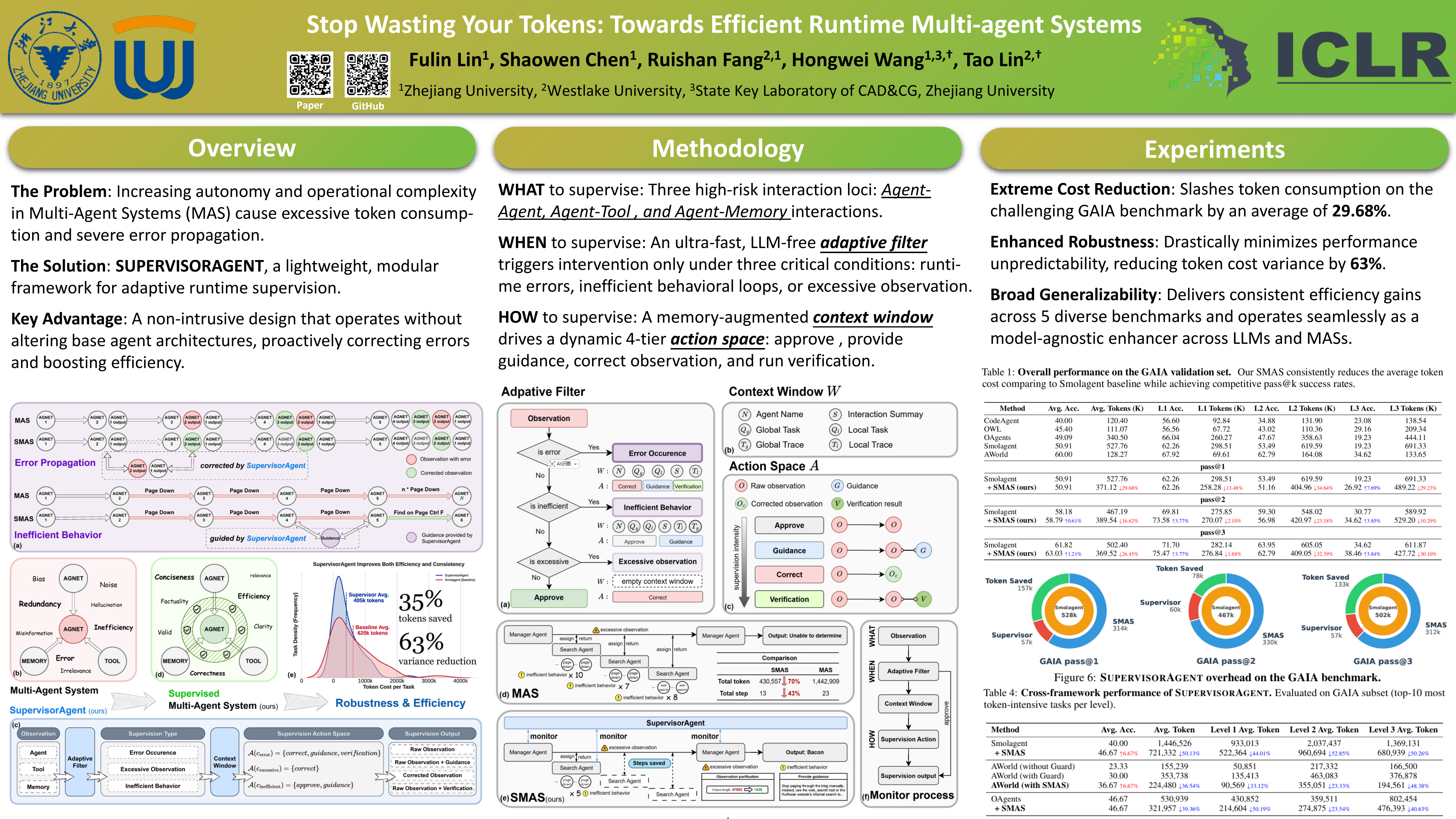
While Multi-Agent Systems (MAS) excel at complex tasks, their growing autonomy with operational complexity often leads to critical inefficiencies, such as excessive token consumption and failures arising from misinformation. Existing methods primarily focus on post-hoc failure attribution, lacking proactive, real-time interventions to enhance robustness and efficiency. To this end, we introduce SupervisorAgent, a lightweight and modular framework for runtime, adaptive supervision that operates without altering the base agent's architecture. Triggered by an LLM-free context filter, SupervisorAgent intervenes at critical junctures to proactively correct errors, guide inefficient behaviors, and purify observations. On the challenging GAIA benchmark, SupervisorAgent reduces the token consumption of the Smolagent framework by an average of 29.68% without compromising its success rate. Extensive experiments across five additional benchmarks (math reasoning, code generation, and question answering) and various SoTA foundation models validate the broad applicability and robustness of our approach.
Fast Estimation of Wasserstein Distances via Regression on Sliced Wasserstein Distances
Khai Nguyen ⋅ Hai Nguyen ⋅ Nhat Ho
We address the problem of efficiently computing Wasserstein distances for multiple pairs of distributions drawn from a meta-distribution. To this end, we propose a fast estimation method based on regressing Wasserstein distance on sliced Wasserstein (SW) distances. Specifically, we leverage both standard SW distances, which provide lower bounds, and lifted SW distances, which provide upper bounds, as predictors of the true Wasserstein distance. To ensure parsimony, we introduce two linear models: an unconstrained model with a closed-form least-squares solution, and a constrained model that uses only half as many parameters. We show that accurate models can be learned from a small number of distribution pairs. Once estimated, the model can predict the Wasserstein distance for any pair of distributions via a linear combination of SW distances, making it highly efficient. Empirically, we validate our approach on diverse tasks, including Gaussian mixtures, point-cloud classification, and Wasserstein-space visualizations for 3D point clouds. Across various datasets such as MNIST point clouds, ShapeNetV2, MERFISH Cell Niches, and scRNA-seq, our method consistently provides a better approximation of Wasserstein than the state-of-the-art method, Wasserstein Wormhole, and classical methods, particularly in low-data regimes. To illustrate its robustness, we also experiment the method with intra- and inter-class settings. Finally, we demonstrate that \emph{RG} can accelerate Wasserstein Wormhole training, yielding \emph{RG-Wormhole}.
Evaluating Language Models' Evaluations of Games
Katherine Collins ⋅ Cedegao Zhang ⋅ Graham Todd ⋅ Lance Ying ⋅ Mauricio da Costa ⋅ Ryan Liu ⋅ Prafull Sharma ⋅ Adrian Weller ⋅ Ionatan Kuperwajs ⋅ Lio Wong ⋅ Joshua B Tenenbaum ⋅ Thomas L. Griffiths
Reasoning is not just about solving problems---it is also about evaluating which problems are worth solving at all. Evaluations of artificial intelligence (AI) systems primarily focused on problem solving, historically by studying how models play games such as chess and Go. In this paper, we advocate for a new paradigm that assesses AI systems' evaluation of games. First, we introduce a formalism for evaluating such evaluations. We then leverage a large-scale dataset of over 100 novel board games and over 450 human judgments to compare evaluations produced by modern language and reasoning models against those of people and symbolic computational agents. We consider two kinds of evaluative queries: assessing the payoff (or fairness) and the funness of games. These queries span two dimensions relevant to the design of evaluations of AI evaluations: how complex a query is to compute and how difficult a query is to quantify. Our results show that reasoning models are generally more aligned to people in their evaluations of games than non-reasoning language models. However, we observe a non-monotonic relationship: as models get closer to game-theoretic optimal, their fit to human data weakens. We also observe more "jaggedness" across models for assessing funness, in line with the greater difficulty of quantifying this query. Across queries and games, reasoning models show highly variable and unpredictable resource usage when assessing queries, pointing to the importance of imbuing more resource-rational meta-reasoning in language and reasoning models.
Convergence Analysis of Tsetlin Machines under Noise-Free and Noisy Training Conditions: From $2$ Bits to $k$ Bits
Xuan Zhang ⋅ Lei Jiao ⋅ Ole-Christoffer Granmo
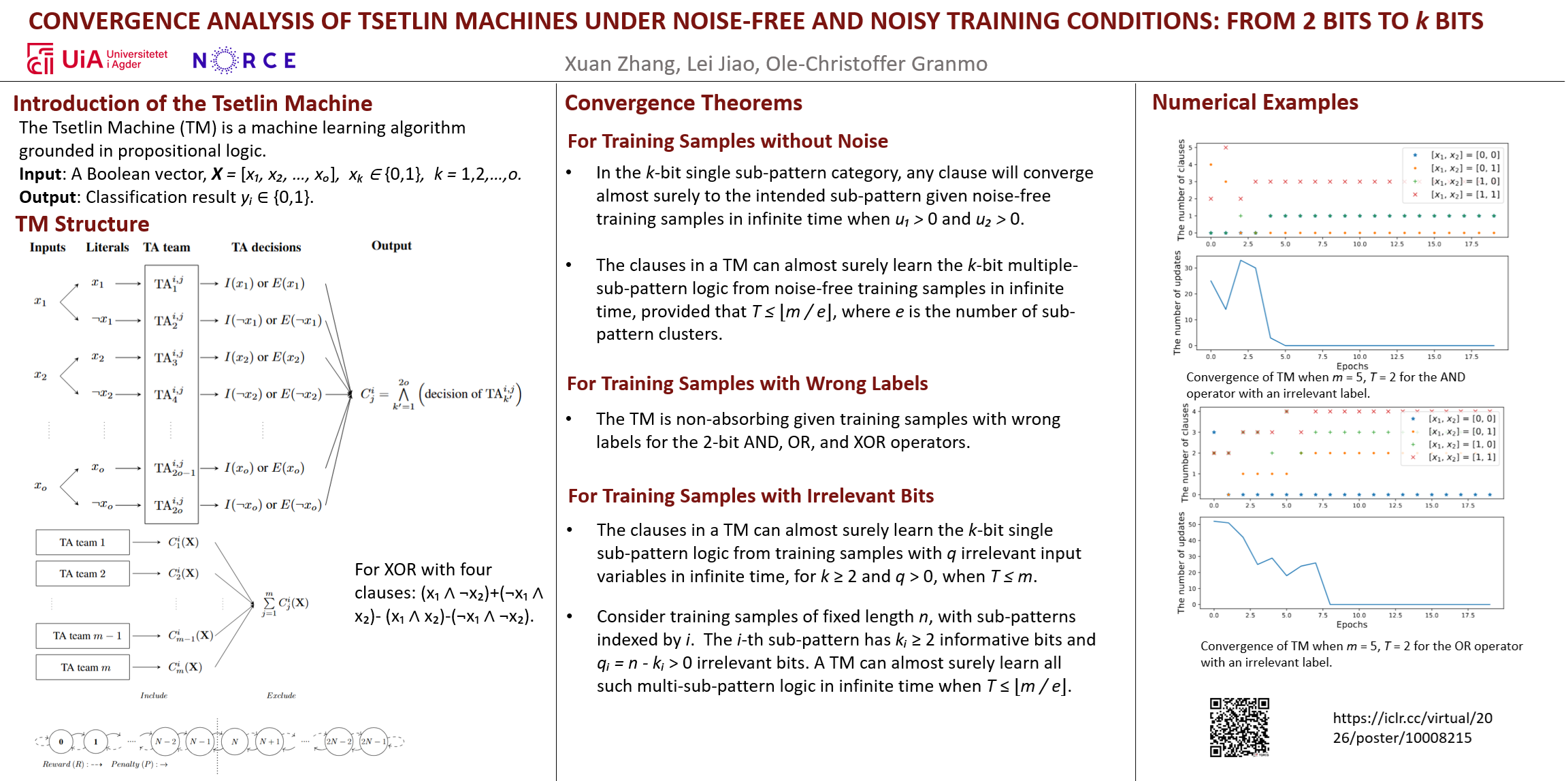
The Tsetlin Machine (TM) is an innovative machine learning algorithm grounded in propositional logic, achieving state-of-the-art performance across a variety of pattern recognition tasks. Prior theoretical work has established convergence results for the 1-bit operator under both noisy and noise-free conditions, and for the 2-bit XOR operator under noise-free conditions. This paper first extends the analysis to the 2-bit AND and OR operators. We show that the TM converges almost surely to the correct 2-bit AND and OR operators under the noise-free training condition, and we identify a distinctive property of the 2-bit OR operator, where a single clause can jointly represent two sub-patterns, in contrast to the XOR operator. We further investigate noisy training scenarios, demonstrating that mislabelled samples prevent exact convergence but still permit efficient learning, whereas irrelevant variables do not prevent almost-sure convergence. Building on the 2-bit analysis, we then generalize the results to the $k$-bit setting ($k>2$), providing a unified theoretical treatment applicable to general scenarios. Together, these findings provide a robust and comprehensive theoretical foundation for analyzing TM convergence.
Pre-training Limited Memory Language Models with Internal and External Knowledge
Linxi Zhao ⋅ Sofian Zalouk ⋅ Christian Belardi ⋅ Justin Lovelace ⋅ Jin Zhou ⋅ Ryan Noonan ⋅ Dongyoung Go ⋅ Kilian Weinberger ⋅ Yoav Artzi ⋅ Jennifer Sun
Neural language models are black-boxes--both linguistic patterns and factual knowledge are distributed across billions of opaque parameters. This entangled encoding makes it difficult to reliably inspect, verify, or update specific facts. We introduce Limited Memory Language Models (LMLM), a new class of language models that externalizes factual knowledge to external database during pre-training rather than memorizing them. Our pre-training approach strategically masks externally retrieved factual values from the training loss, thereby teaching the model to perform targeted lookups rather than relying on memorization in model weights. Our experiments demonstrate that LMLMs achieve competitive performance compared to significantly larger LLMs on standard benchmarks, while offering the advantages of explicit, editable, and verifiable knowledge bases.
Gradient-Based Diversity Optimization with Differentiable Top-$k$ Objective
Tianyi Zhou ⋅ Sebastian Dalleiger ⋅ Ece Calikus ⋅ Aristides Gionis
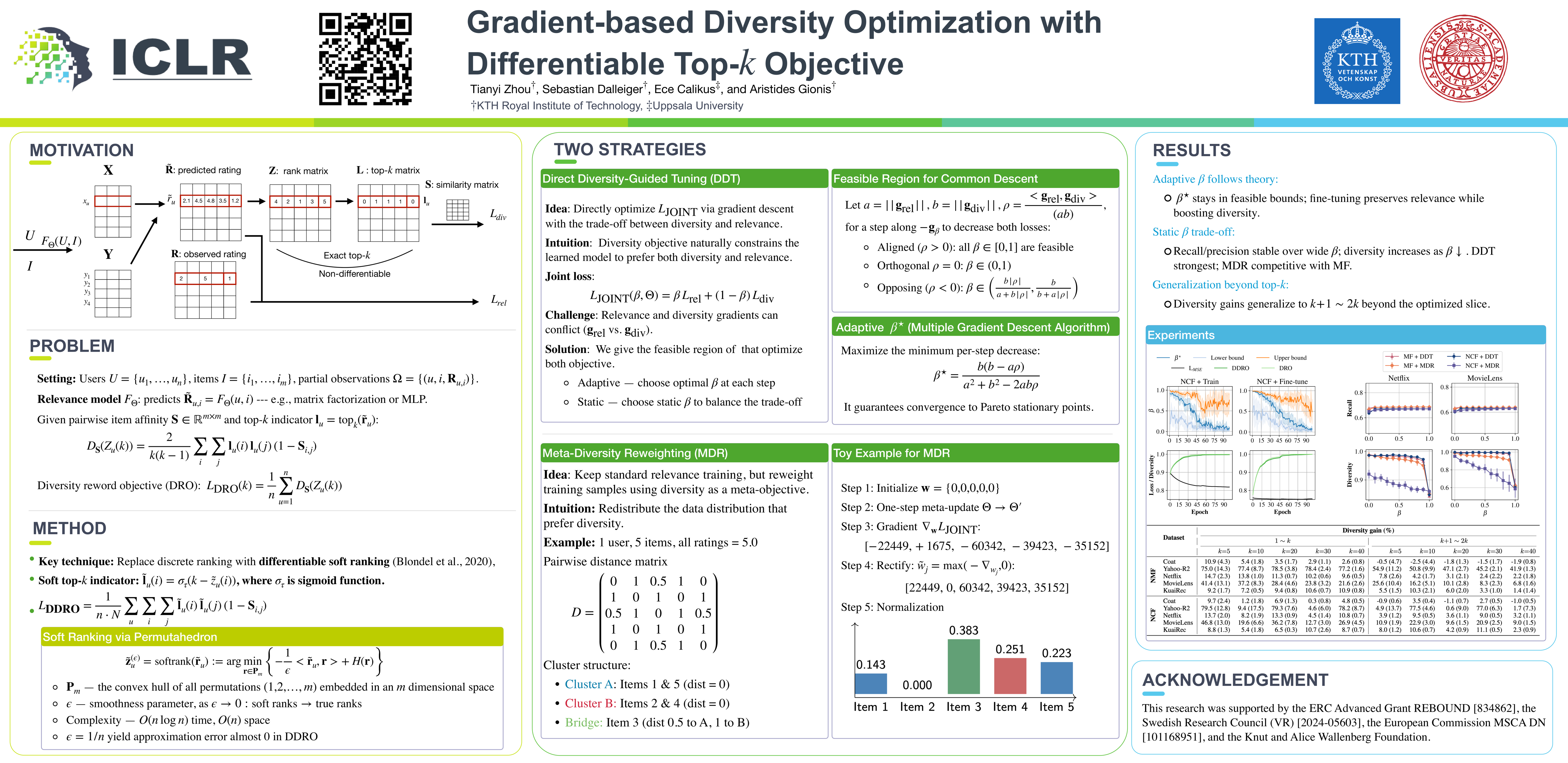
Predicting relevance is a pervasive problem across digital platforms, covering social media, entertainment, and commerce. However, when optimized solely for relevance and engagement, many machine-learning models amplify data biases and produce homogeneous outputs, reinforcing filter bubbles and content uniformity. To address this issue, we introduce a pairwise top-k diversity objective with a differentiable smooth-ranking approximation, providing a model-agnostic way to incorporate diversity optimization directly into standard gradient-based learning. Building on this objective, we cast relevance and diversity as a joint optimization problem, we analyze the resulting gradient trade-offs, and propose two complementary strategies: direct optimization, which modifies the learning objective, and indirect optimization, which reweights training data. Both strategies can be applied either when training models from scratch or when fine-tuning existing relevance-optimized models. We use recommendation as a natural evaluation setting where scalability and diversity are critical, and show through extensive experiments that our methods consistently improve diversity with negligible accuracy loss. Notably, fine-tuning with our objective is especially efficient, requiring only a few gradient steps to encode diversity at scale.
HalluGuard: Demystifying Data-Driven and Reasoning-Driven Hallucinations in LLMs
Xinyue Zeng ⋅ Junhong Lin ⋅ Yujun Yan ⋅ Feng Guo ⋅ Liang Shi ⋅ Jun Wu ⋅ Dawei Zhou
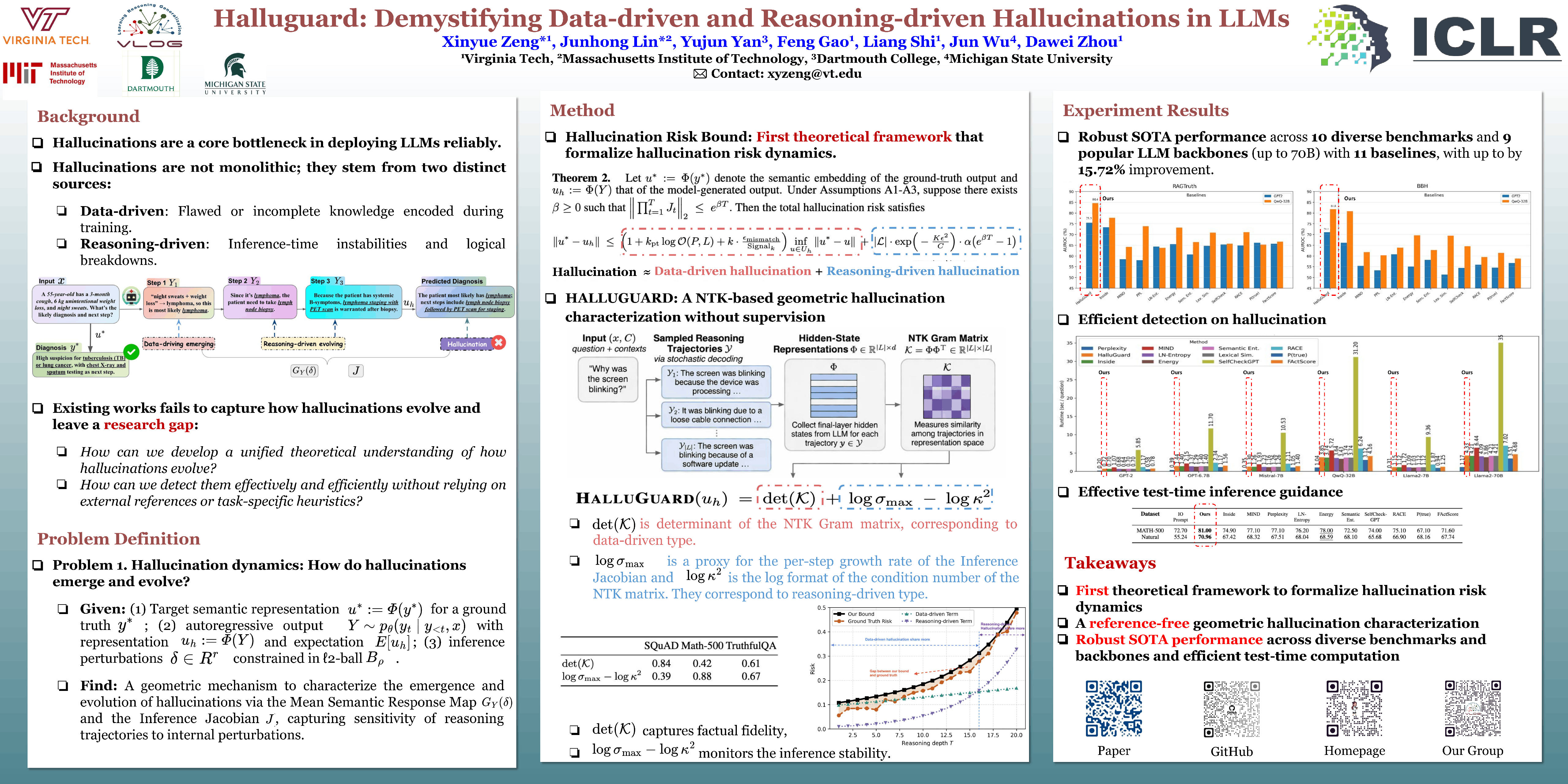
The reliability of Large Language Models (LLMs) in high-stakes domains such as healthcare, law, and scientific discovery is often compromised by hallucinations. These failures typically stem from two sources: data-driven hallucinations and reasoning-driven hallucinations. However, existing detection methods usually address only one source and rely on task-specific heuristics, limiting their generalization to complex scenarios. To overcome these limitations, we introduce the Hallucination Risk Bound, a unified theoretical framework that formally decomposes hallucination risk into data-driven and reasoning-driven components, linked respectively to training-time mismatches and inference-time instabilities. This provides a principled foundation for analyzing how hallucinations emerge and evolve. Building on this foundation, we introduce HalluGuard, an NTK-based score that leverages the induced geometry and captured representations of the NTK to jointly identify data-driven and reasoning-driven hallucinations. We evaluate HalluGuard on 10 diverse benchmarks, 11 competitive baselines, and 9 popular LLM backbones, consistently achieving state-of-the-art performance in detecting diverse forms of LLM hallucinations. We open-source our proposed \model{} model at https://github.com/Susan571/HalluGuard-ICLR2026.
Robustness of Probabilistic Models to Low-Quality Data: A Multi-Perspective Analysis
Liu Peng ⋅ Yaochu Jin
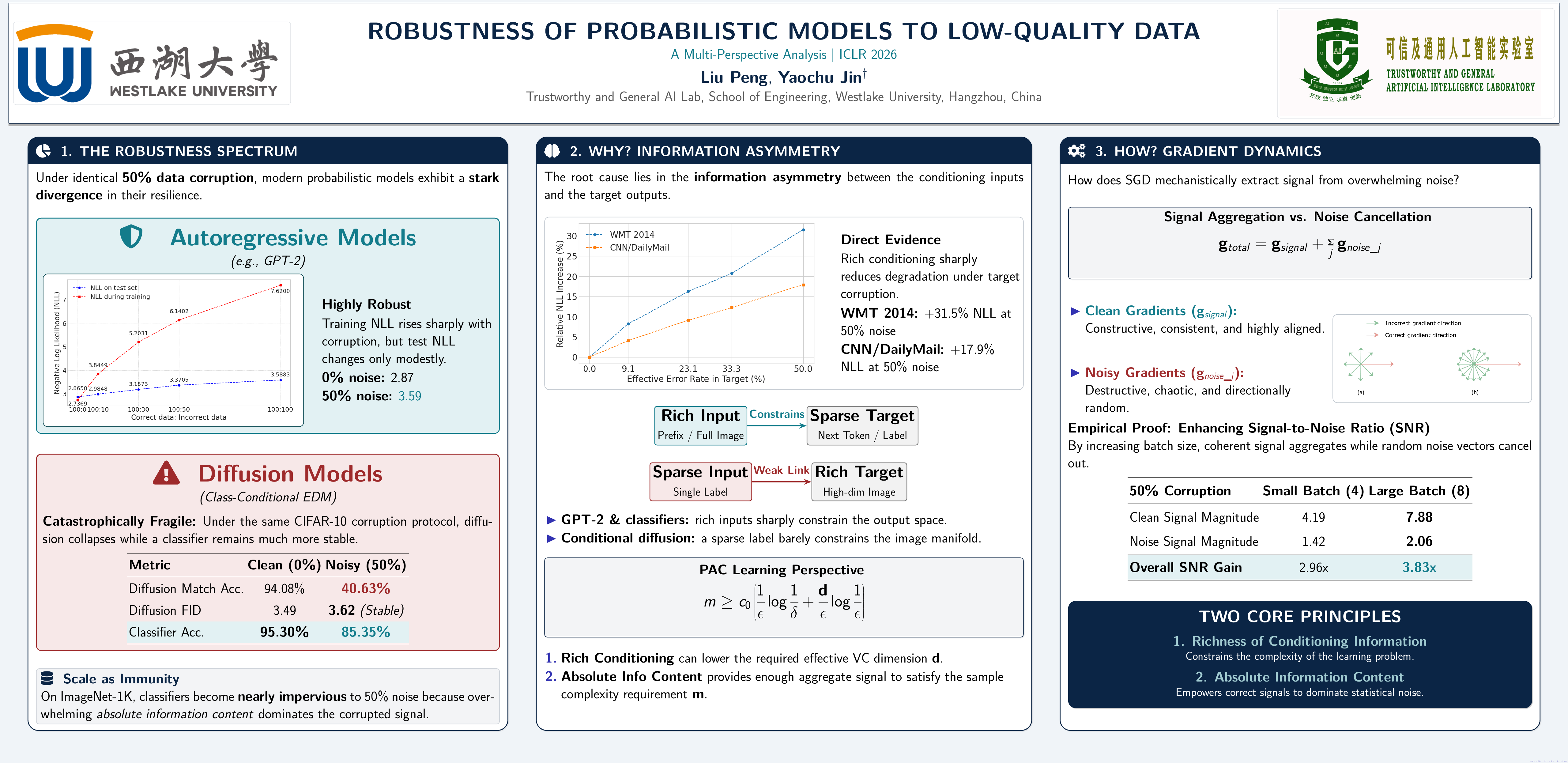
This paper investigates a critical challenge in modern machine learning: how different probabilistic models withstand low-quality training data. Through a systematic, comparative investigation, we reveal a stark spectrum of robustness. Empirically, we find that autoregressive language models exhibit remarkable resilience against both token-level noise and structural corruption (for GPT-2, test NLL increases modestly from 2.87 to 3.59 despite 50\% corruption). By sharp contrast, class-conditional diffusion models degrade catastrophically under identical noise levels (image-label consistency plummets by 56.81\%), while image classifiers show a moderate vulnerability that diminishes with dataset scale. To explain these discrepancies, we analyze the results through a multi-perspective lens integrating information theory, PAC learning, and gradient dynamics. This framework identifies what informational properties drive robustness, why they are required for generalization, and how the optimization process achieves this resilience. These analyses suggest that robustness is heavily influenced by two key principles: the richness of conditioning information, which constrains the learning problem, and the absolute information content of the training data, which allows the signal from correct information to dominate statistical noise.
Know When to Abstain: Optimal Selective Classification with Likelihood Ratios
Alvin Heng ⋅ Harold Soh
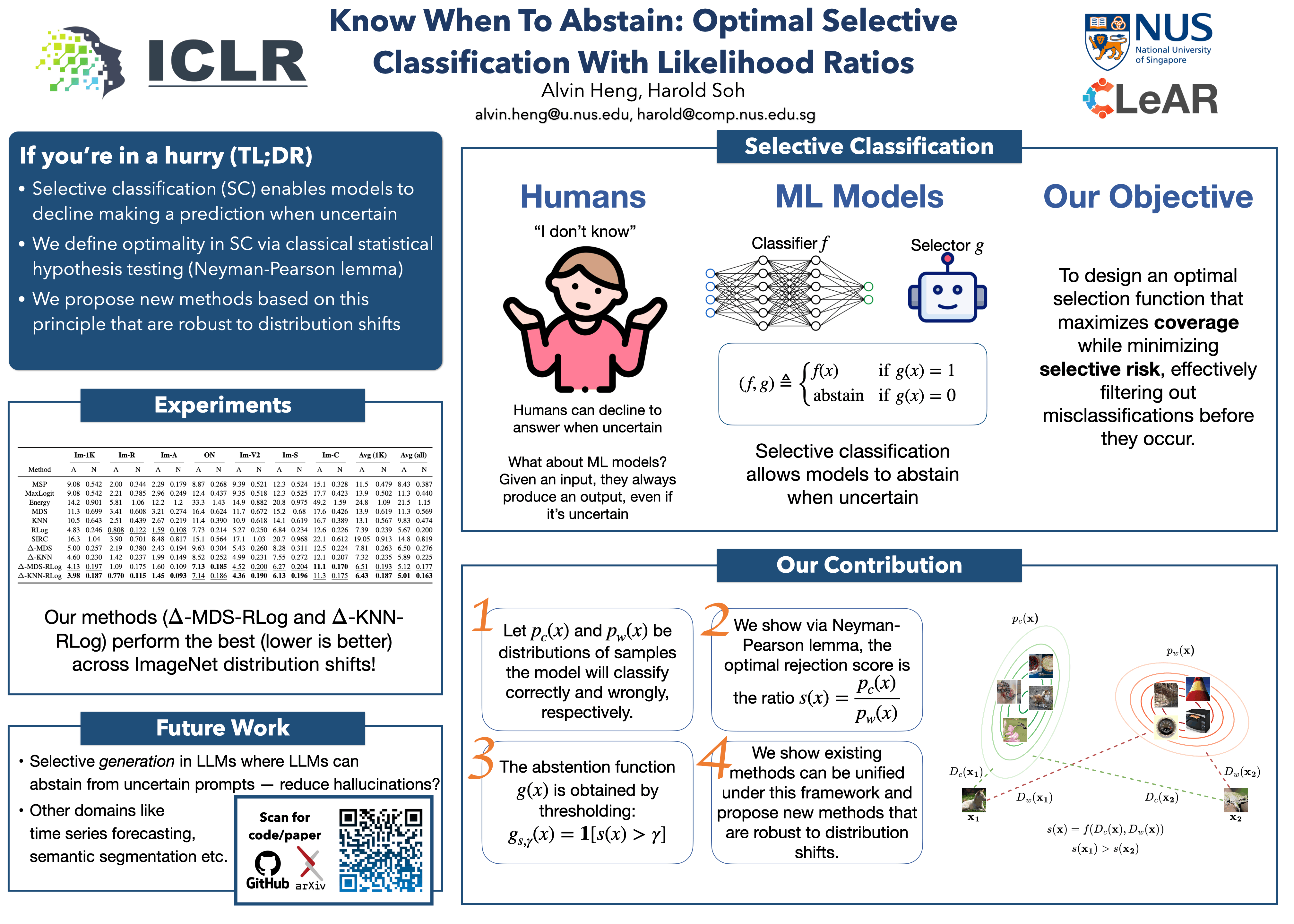
Selective classification enhances the reliability of predictive models by allowing them to abstain from making uncertain predictions. In this work, we revisit the design of optimal selection functions through the lens of the Neyman–Pearson lemma, a classical result in statistics that characterizes the optimal rejection rule as a likelihood ratio test. We show that this perspective not only unifies the behavior of several post-hoc selection baselines, but also motivates new approaches to selective classification which we propose here. A central focus of our work is the setting of covariate shift, where the input distribution at test time differs from that at training. This realistic and challenging scenario remains relatively underexplored in the context of selective classification. We evaluate our proposed methods across a range of vision and language tasks, including both supervised learning and vision-language models. Our experiments demonstrate that our Neyman-Pearson-informed methods consistently outperform existing baselines, indicating that likelihood ratio-based selection offers a robust mechanism for improving selective classification under covariate shifts.
Generalization in LLM Problem Solving: The Case of the Shortest Path
Yao Tong ⋅ Jiayuan Ye ⋅ Anastasia Borovykh ⋅ Reza Shokri
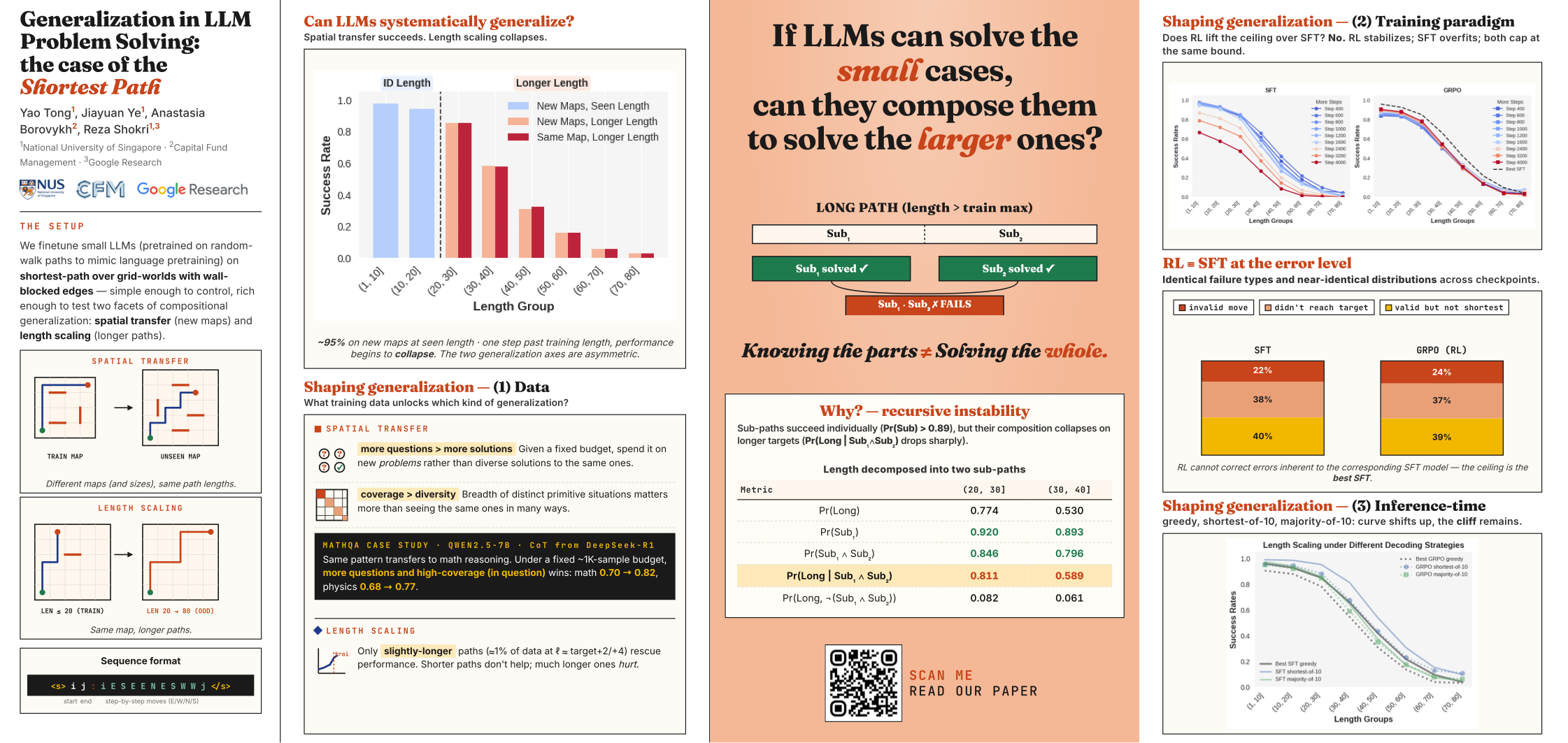
Whether language models can systematically generalize remains actively debated. Yet empirical performance is jointly shaped by multiple factors such as training data, training paradigms, and inference-time strategies, making failures difficult to interpret. We introduce a controlled synthetic environment based on shortest-path planning, a canonical composable sequential optimization problem. The setup enables clean separation of these factors and supports two orthogonal axes of generalization: spatial transfer to unseen maps and length scaling to longer-horizon problems. We find that models exhibit strong spatial transfer but consistently fail under length scaling due to recursive instability. We further analyze how distinct stages of the learning pipeline influence systematic problem-solving: for example, data coverage sets capability limits; reinforcement learning improves training stability but does not expand those limits; and inference-time scaling enhances performance but cannot rescue length-scaling failures.
It's All Just Vectorization: einx, a Universal Notation for Tensor Operations
Florian Fervers ⋅ Sebastian Bullinger ⋅ Christoph Bodensteiner ⋅ Michael Arens
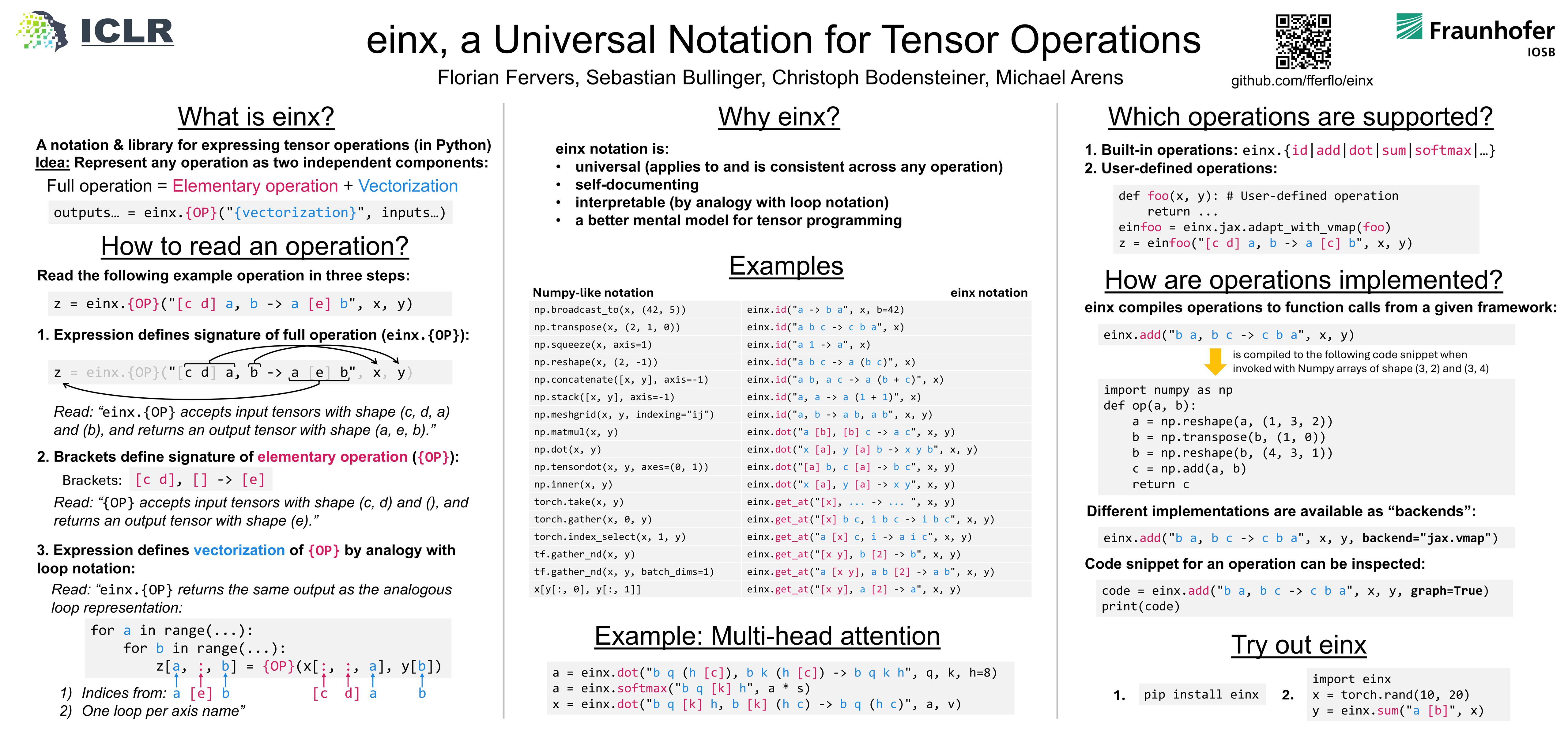
Tensor operations represent a cornerstone of modern scientific computing. However, the Numpy-like notation adopted by predominant tensor frameworks is often difficult to read and write and prone to so-called shape errors, i.a., due to following inconsistent rules across a large, complex collection of operations. Alternatives like einsum and einops have gained popularity, but are inherently restricted to few operations and lack the generality required for a universal model of tensor programming. To derive a better paradigm, we revisit vectorization as a function for transforming tensor operations, and use it to both lift lower-order operations to higher-order operations, and conceptually decompose higher-order operations to lower-order operations and their vectorization. Building on the universal nature of vectorization, we introduce einx, a universal notation for tensor operations. It uses declarative, pointful expressions that are defined by analogy with loop notation and represent the vectorization of tensor operations. The notation reduces the large APIs of existing frameworks to a small set of elementary operations, applies consistent rules across all operations, and enables a clean, readable and writable representation in code. We provide an implementation of einx that is embedded in Python and integrates seamlessly with existing tensor frameworks: https://github.com/fferflo/einx
On Code-Induced Reasoning in LLMs
Abdul Waheed ⋅ Zhen Wu ⋅ Carolyn Rose ⋅ Daphne Ippolito
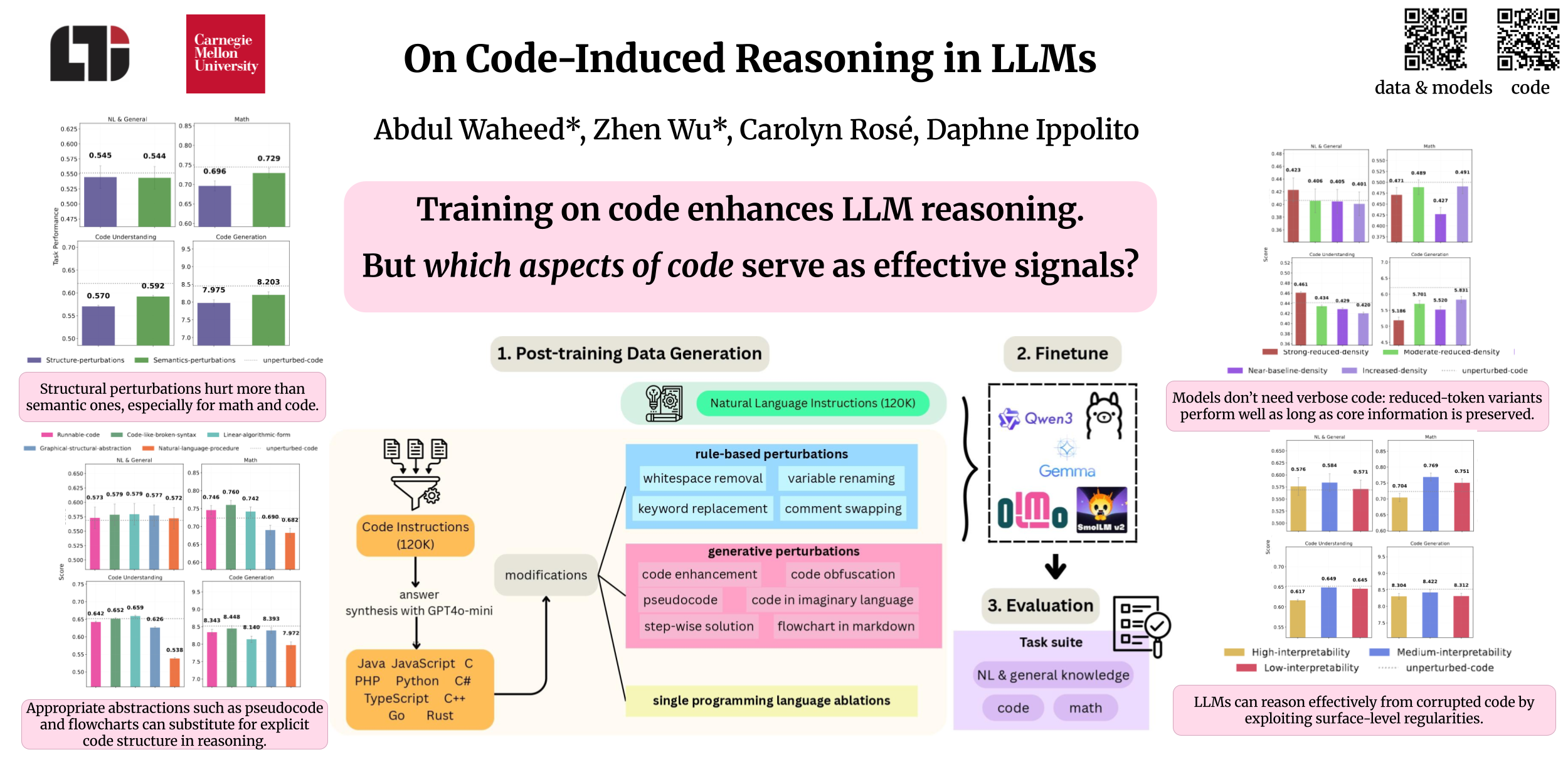
Code data has been shown to enhance the reasoning capabilities of large language models (LLMs), but it remains unclear which aspects of code are most responsible. We investigate this question with a systematic, data-centric framework. We construct parallel instruction datasets across ten programming languages and introduce controlled perturbations that selectively disrupt structural and semantic properties of code. We then fine-tune LLMs from five model families and eight scales on each variant and evaluate their performance on natural language, math, and code tasks. Across 3,331 experiments, our results show that LLMs are more vulnerable to structural perturbations than semantic ones, particularly on math and code tasks. Appropriate abstractions like pseudocode and flowcharts can be as effective as code, while encoding the same information with fewer tokens without adhering to original syntax can often retain or even improve performance. Notably, even corrupted code with misleading signals remains competitive when surface-level regularities persist. Finally, syntactic styles also shape task-specific gains, with Python favoring natural language reasoning and lower-level languages such as Java and Rust favoring math. Through our systematic framework, we provide a fine-grained analysis of how different aspects of code influence reasoning and inform the design of training data for enhancing LLM reasoning capabilities.
Incomplete Multi-View Multi-Label Classification via Shared Codebook and Fused-Teacher Self-Distillation
Xu Yan ⋅ Jun Yin ⋅ Shiliang Sun ⋅ Minghua Wan
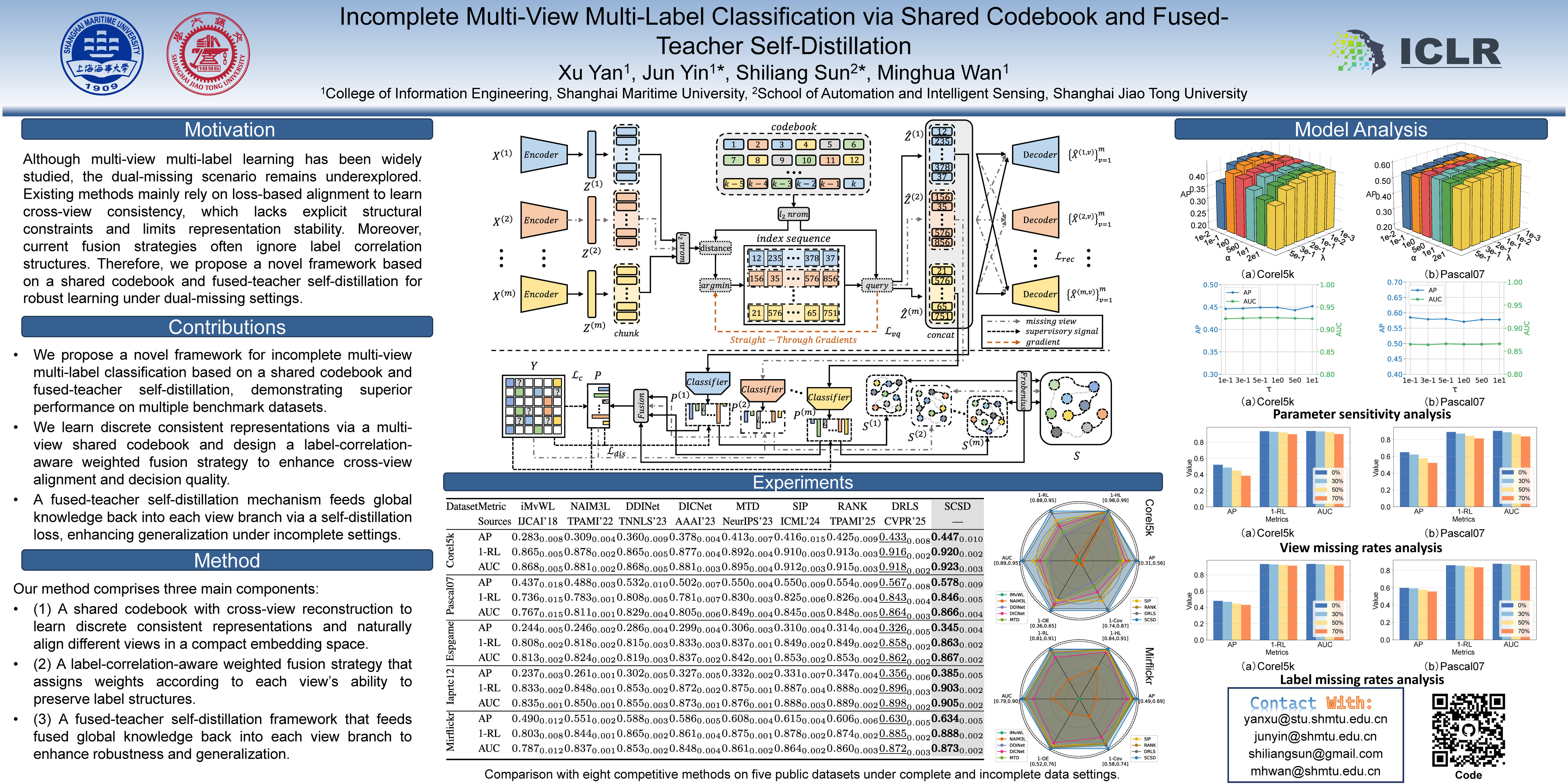
Although multi-view multi-label learning has been extensively studied, research on the dual-missing scenario, where both views and labels are incomplete, remains largely unexplored. Existing methods mainly rely on contrastive learning or information bottleneck theory to learn consistent representations under missing-view conditions, but loss-based alignment without explicit structural constraints limits the ability to capture stable and discriminative shared semantics. To address this issue, we introduce a more structured mechanism for consistent representation learning: we learn discrete consistent representations through a multi-view shared codebook and cross-view reconstruction, which naturally align different views within the limited shared codebook embeddings and reduce feature redundancy. At the decision level, we design a weight estimation method that evaluates the ability of each view to preserve label correlation structures, assigning weights accordingly to enhance the quality of the fused prediction. In addition, we introduce a fused-teacher self-distillation framework, where the fused prediction guides the training of view-specific classifiers and feeds the global knowledge back into the single-view branches, thereby enhancing the generalization ability of the model under missing-label conditions. The effectiveness of our proposed method is thoroughly demonstrated through extensive comparative experiments with advanced methods on five benchmark datasets. Code is available at https://github.com/xuy11/SCSD.
Rethinking Consistent Multi-Label Classification Under Inexact Supervision
Wei Wang ⋅ Tianhao Ma ⋅ Ming-Kun Xie ⋅ Gang Niu ⋅ Masashi Sugiyama
Partial multi-label learning and complementary multi-label learning are two popular weakly supervised multi-label classification paradigms that aim to alleviate the high annotation costs of collecting precisely annotated multi-label data. In partial multi-label learning, each instance is annotated with a candidate label set, among which only some labels are relevant; in complementary multi-label learning, each instance is annotated with complementary labels indicating the classes to which the instance does not belong. Existing consistent approaches for the two paradigms either require accurate estimation of the generation process of candidate or complementary labels or assume a uniform distribution to eliminate the estimation problem. However, both conditions are usually difficult to satisfy in real-world scenarios. In this paper, we propose consistent approaches that do not rely on the aforementioned conditions to handle both problems in a unified way. Specifically, we propose two risk estimators based on first- and second-order strategies. Theoretically, we prove consistency w.r.t. two widely used multi-label classification evaluation metrics and derive convergence rates for the estimation errors of the proposed risk estimators. Empirically, extensive experimental results on both real-world and synthetic datasets validate the effectiveness of our proposed approaches against state-of-the-art methods.
Multi-Agent Debate with Memory Masking
Hongduan Tian ⋅ Xiao Feng ⋅ Ziyuan ZHAO ⋅ XiangyuZhu ⋅ Rolan Yan ⋅ Bo Han
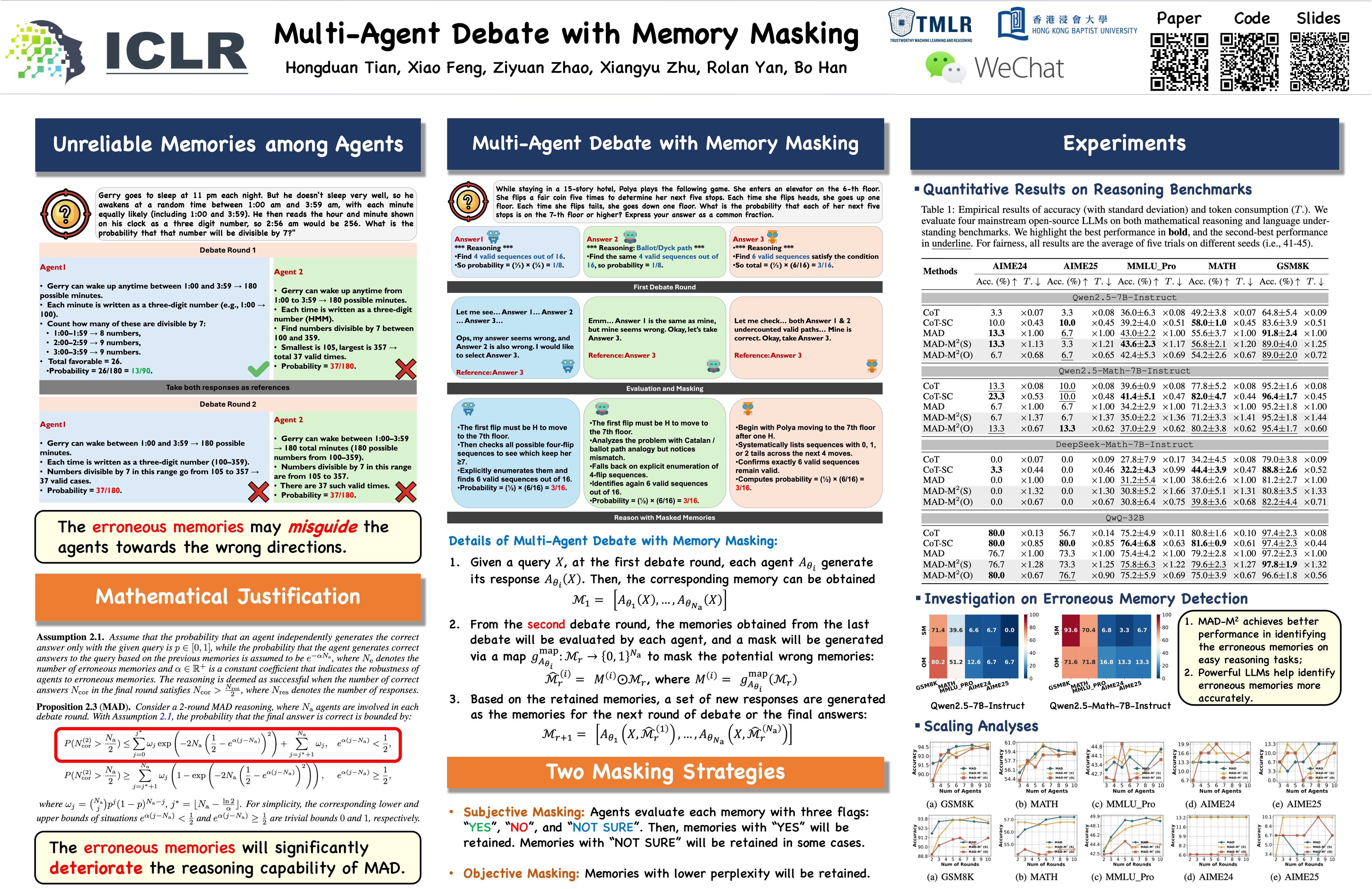
Large language models (LLMs) have recently demonstrated impressive capabilities in reasoning tasks. Currently, mainstream LLM reasoning frameworks predominantly focus on scaling up inference-time sampling to enhance performance. In particular, among all LLM reasoning frameworks, *multi-agent debate* (MAD), which employs multiple LLMs as agents to perform reasoning in the way of multi-round debate, has emerged as a powerful reasoning paradigm since it allows agents to access previous memories to alleviate fallacious content and refine their reasoning iteratively in each debate round. However, although MAD significantly improves the reasoning capabilities of LLMs, in this paper, we observe that there remain erroneous memories, and LLM agents are vulnerable to these erroneous memories. To explore this phenomenon, we provide a theoretical insight that the performance of MAD is highly dependent on the quality of memories derived from the previous debate, indicating that the existence of erroneous memories poses a threat to the performance of MAD. To address this problem, we introduce a simple yet effective multi-agent debate framework, *multi-agent debate with memory masking* (MAD-M$^2$), to improve the robustness of MAD by allowing LLM agents to mask erroneous memories from the previous debate round at the beginning of each debate round. In this way, MAD-M$^2$ can polish the contextual information before each debate round by preserving informative and meaningful memories while discarding the erroneous memories. Extensive experiments and analyses on mainstream mathematical and logical reasoning benchmarks demonstrate that MAD-M$^2$ can identify the erroneous memories and achieve better performance in reasoning than MAD.
SSD-GS: Scattering and Shadow Decomposition for Relightable 3D Gaussian Splatting
Iris Zheng ⋅ Guojun Tang ⋅ Alexander Doronin ⋅ Paul Teal ⋅ Fang-Lue Zhang
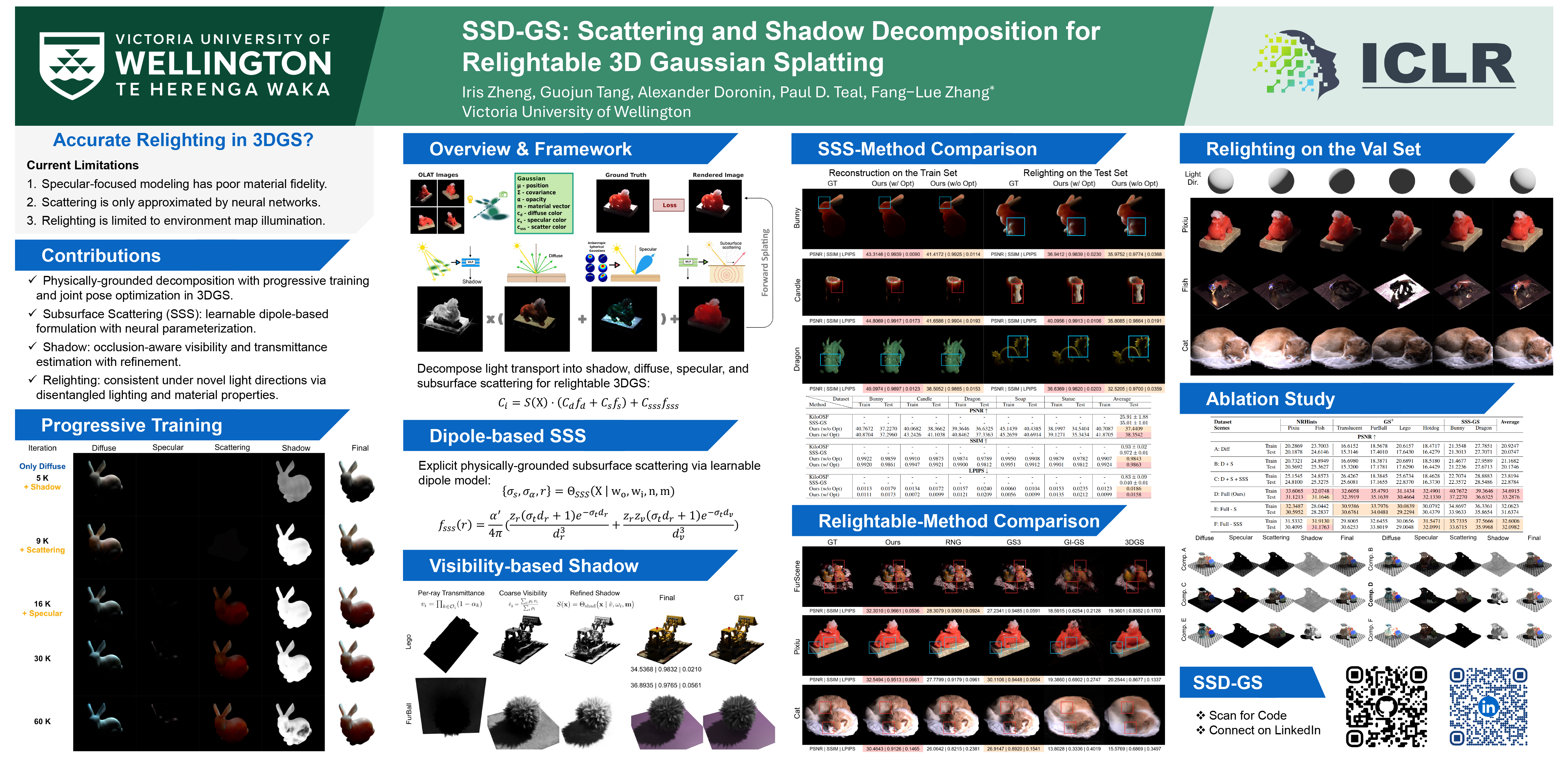
We present SSD-GS, a physically-based relighting framework built upon 3D Gaussian Splatting (3DGS) that achieves high-quality reconstruction and photorealistic relighting under novel lighting conditions. In physically-based relighting, accurately modeling light-material interactions is essential for faithful appearance reproduction. However, existing 3DGS-based relighting methods adopt coarse shading decompositions, either modeling only diffuse and specular reflections or relying on neural networks to approximate shadows and scattering. This leads to limited fidelity and poor physical interpretability, particularly for anisotropic metals and translucent materials. To address these limitations, SSD-GS decomposes reflectance into four components: diffuse, specular, shadow, and subsurface scattering. We introduce a learnable dipole-based scattering module for subsurface transport, an occlusion-aware shadow formulation that integrates visibility estimates with a refinement network, and an enhanced specular component with an anisotropic Fresnel-based model. Through progressive integration of all components during training, SSD-GS effectively disentangles lighting and material properties, even for unseen illumination conditions, as demonstrated on the challenging OLAT dataset. Experiments demonstrate superior quantitative and perceptual relighting quality compared to prior methods and pave the way for downstream tasks including controllable light source editing and interactive scene relighting. The source code is available at: https://github.com/irisfreesiri/SSD-GS.
Divide, Conquer, and Standardize — A Recursive Architecture for Multi-Agent Systems (MAS)
Ronaldinho Vega Centeno Olivera ⋅ Allan M. de Souza ⋅ JULIO DOS REIS ⋅ Mateus da Silveira ⋅ Alejandro Núñez Arroyo
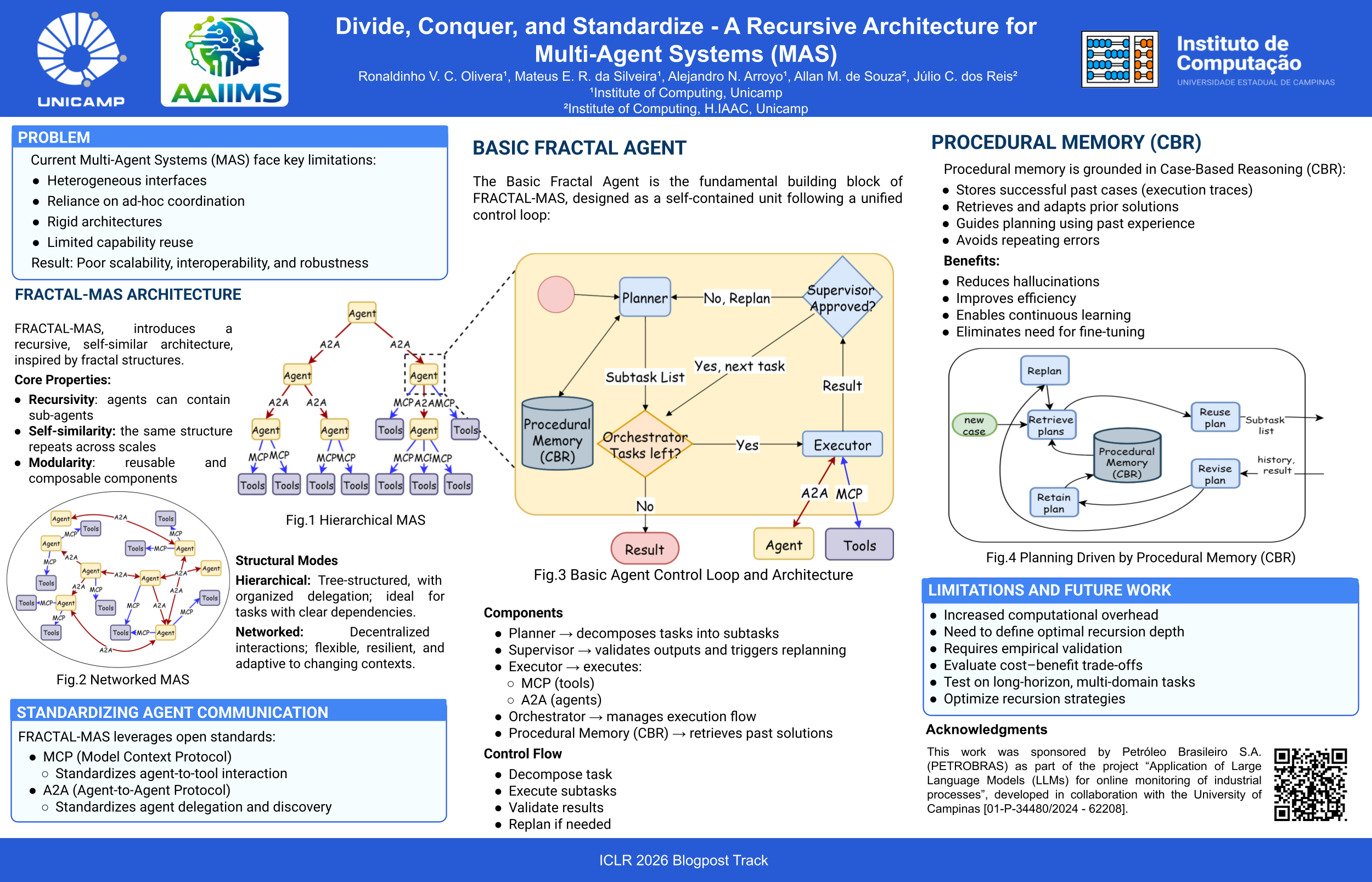
The scalability and robustness of current Multi-Agent Systems (MAS) are severely constrained by the heterogeneity of communication interfaces and a reliance on fragile ad-hoc integrations. We introduce FRACTAL-MAS, a recursive architecture that standardizes orchestration through the convergence of MCP and A2A protocols, integrating a unified control loop with procedural memory grounded in Case-Based Reasoning (CBR). This design allows for continuous adaptation without fine-tuning and enables a seamless transition from rigid hierarchical structures to decentralized networks, providing a reference architecture for the robust and scalable construction of MAS.
A Case for Library-Level k-Means Binning in Histogram Gradient-Boosted Trees
Asher Labovich
Modern Gradient Boosted Decision Trees (GBDTs) accelerate split finding with histogram-based binning, which reduces complexity from $O(N\log N)$ to $O(N)$ by aggregating gradients into fixed-size bins. However, the predominant quantile binning strategy—designed to distribute data points evenly among bins—may overlook critical boundary values that could enhance predictive performance. In this work, we consider a novel approach that replaces quantile binning with a $k$-means discretizer initialized with quantile bins, and justify the swap with a proof showing how, for any $L$-Lipschitz function, k-means maximizes the worst-case explained variance of Y obtained when treating all values in a given bin as equivalent. We test this swap against quantile and uniform binning on 33 OpenML datasets plus synthetics that control for modality, skew, and bin budget. Across 18 regression datasets, k-means shows no statistically significant losses at the 5% level and wins in three cases—most strikingly a 55% MSE drop on one particularly skewed dataset—even though k-means' mean reciprocal rank (MRR) is slightly lower (0.65 vs 0.72). On the 15 classification datasets the two methods are statistically tied (MRR 0.70 vs 0.68) with gaps $\leq$0.2 pp. Synthetic experiments confirm consistently large MSE gains—typically $>$20% and rising to 90% as outlier magnitude increases or bin budget drops. We find that k-means keeps error on par with exhaustive (no-binning) splitting when extra cuts add little value, yet still recovers key split points that quantile overlooks. As such, we advocate for a built-in bin_method=$k$-means flag, especially in regression tasks and in tight-budget settings such as the 32–64-bin GPU regime—because it is a "safe default" with large upside, yet adds only a one-off, cacheable overhead ($\approx$ 3.5s per feature to bin 10M rows on one Apple M1 thread).
An Expanded Benchmark that Rediscovers and Affirms the Edge of Uncertainty Sampling for Active Learning in Tabular Datasets
Po-Yi Lu · Yi-Jie Cheng · Chun-Liang Li · Hsuan-Tien Lin
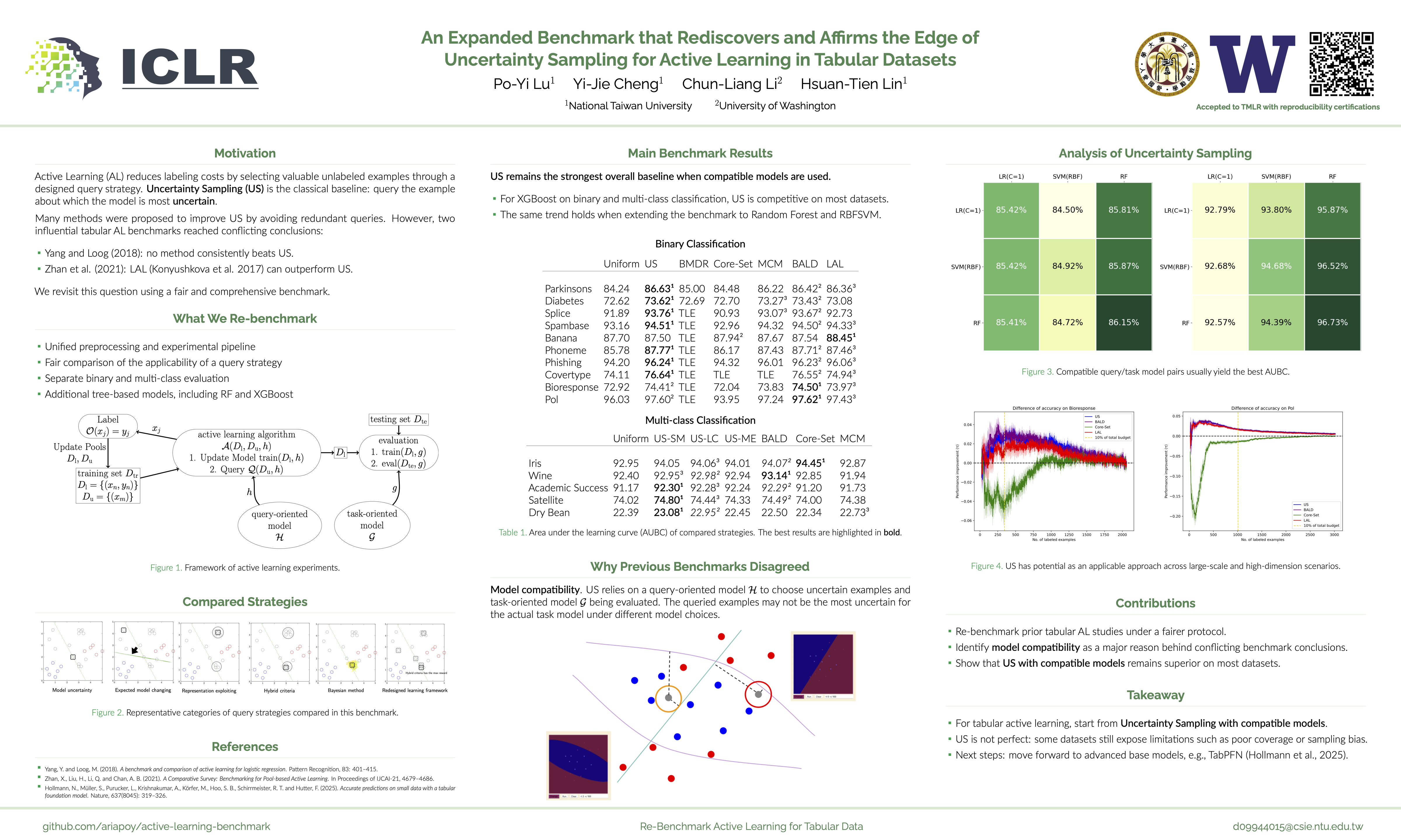
Active Learning (AL) addresses the crucial challenge of enabling machines to efficiently gather labeled examples through strategic queries. Among the many AL strategies, Uncertainty Sampling (US) stands out as one of the most widely adopted. US queries the example(s) that the current model finds uncertain, proving to be both straightforward and effective. Despite claims in the literature suggesting superior alternatives to US, community-wide acceptance remains elusive. In fact, existing benchmarks for tabular datasets present conflicting conclusions on the continued competitiveness of US. In this study, we review the literature on AL strategies in the last decade and build the most comprehensive open-source AL benchmark to date to understand the relative merits of different AL strategies. The benchmark surpasses existing ones by encompassing a broader coverage of strategies, models, and data. Through our investigation of the conflicting conclusions in existing tabular AL benchmarks by evaluation under broad AL experimental settings, we uncover fresh insights into the often-overlooked issue of using machine learning models--model compatibility in the context of US. Specifically, we notice that adopting the different models for the querying unlabeled examples and learning tasks would degrade US's effectiveness. Notably, our findings affirm that US maintains a competitive edge over other strategies when paired with compatible models. These findings have practical implications and provide a concrete recipe for AL practitioners, empowering them to make informed decisions when working with tabular classifications with limited labeled data. The code for this project is available on https://github.com/ariapoy/active-learning-benchmark.
Taming Momentum: Rethinking Optimizer States Through Low-Rank Approximation
Zhengbo Wang ⋅ Jian Liang ⋅ Ran He ⋅ Zilei Wang ⋅ Tieniu Tan
Modern optimizers like Adam and Muon are central to training large language models, but their reliance on first- and second-order momenta introduces significant memory overhead, which constrains scalability and computational efficiency. In this work, we reframe the exponential moving average (EMA) used in these momenta as the training of a linear regressor via online gradient flow. Building on this equivalence, we introduce LoRA-Pre, a novel low-rank optimizer designed for efficient pre-training. Specifically, LoRA-Pre reduces the optimizer's memory footprint by decomposing the full momentum matrix into a compact low-rank subspace within the online linear learner, thereby maintaining optimization performance while improving memory efficiency. We empirically validate LoRA-Pre's efficacy by pre-training models from the Llama architecture family, scaling from 60M to 1B parameters. LoRA-Pre achieves the highest performance across all model sizes. Notably, LoRA-Pre demonstrates remarkable rank efficiency, achieving comparable or superior results using only 1/8 the rank of baseline methods. Beyond pre-training, we evaluate LoRA-Pre's effectiveness in fine-tuning scenarios. With the same rank, LoRA-Pre consistently outperforms all efficient fine-tuning baselines. Specifically, compared to standard LoRA, LoRA-Pre achieves substantial improvements of 3.14 points on Llama-3.1-8B and 6.17 points on Llama-2-7B, validating our approach's effectiveness across both pre-training and fine-tuning paradigms. Our code is publicly available at https://github.com/mrflogs/LoRA-Pre.
Expertise Can Be Helpful for Reinforcement Learning-based Macro Placement
Chengrui Gao ⋅ Yunqi Shi ⋅ Ke Xue ⋅ Ruo-Tong Chen ⋅ Siyuan Xu ⋅ Mingxuan Yuan ⋅ Chao Qian ⋅ Zhi-Hua Zhou
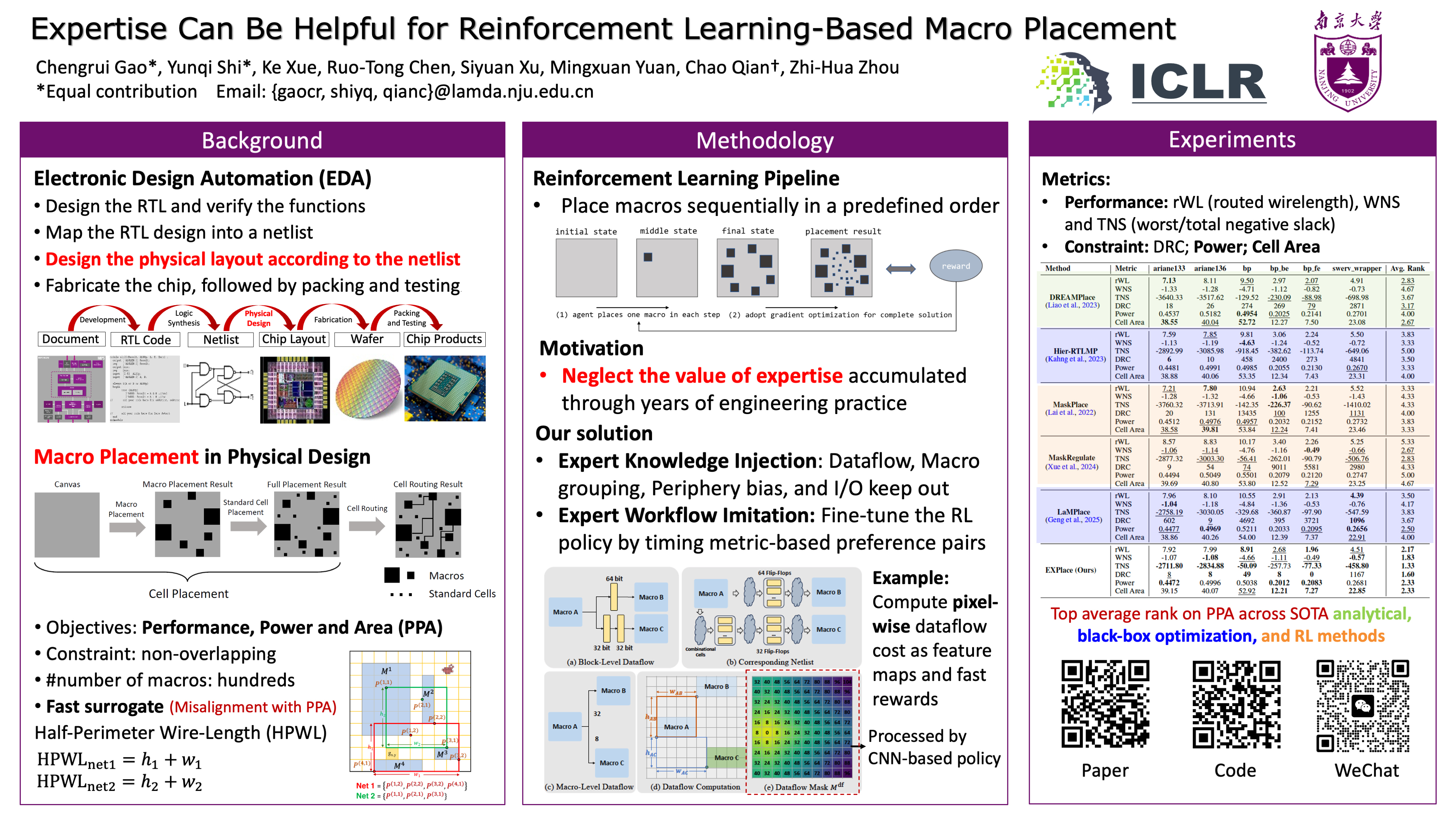
Chip placement determines the locations of electronic components on a chip layout, which directly impacts performance, power, and area (PPA) metrics, and thus is a critical step in electronic design automation (EDA). As modern chips scale to accommodate millions of components, manual placement by human experts becomes infeasible, necessitating the use of automated algorithms. Recently, reinforcement learning (RL) has emerged as a promising approach for automating macro placement, owing to its high optimization efficiency and potential for generalization. Despite their promise, existing RL-based methods often neglect the value of expert knowledge accumulated through years of engineering practice. They tend to optimize oversimplified proxy objectives, resulting in suboptimal placements that deviate significantly from expert-designed solutions. To bridge this gap, we propose a novel RL-based placement framework that integrates EDA domain expertise from two complementary perspectives: (1) Expert Knowledge Injection: Incorporating well-established placement knowledge, such as dataflow guidance, periphery bias, macro grouping, and I/O keepout constraints, to guide the learning process toward human-level solutions. (2) Expert Workflow Imitation: Emulating the post-refinement process of human experts (i.e., updating the design iteratively based on backend PPA feedback) to progressively optimize timing metrics by employing preference optimization. Experiments on the ICCAD 2015 and OpenROAD benchmarks demonstrate that our method achieves substantial improvements in PPA metrics (e.g., 32.53\% in total negative slack and 7.74\% in worst negative slack compared to the runner-up method on average), outperforming advanced analytical, black-box optimization, and RL-based methods.
FMIP: Joint Continuous-Integer Flow For Mixed-Integer Linear Programming
Hongpei Li ⋅ Hui Yuan ⋅ Han Zhang ⋅ Jianghao Lin ⋅ Dongdong Ge ⋅ Mengdi Wang ⋅ Yinyu Ye
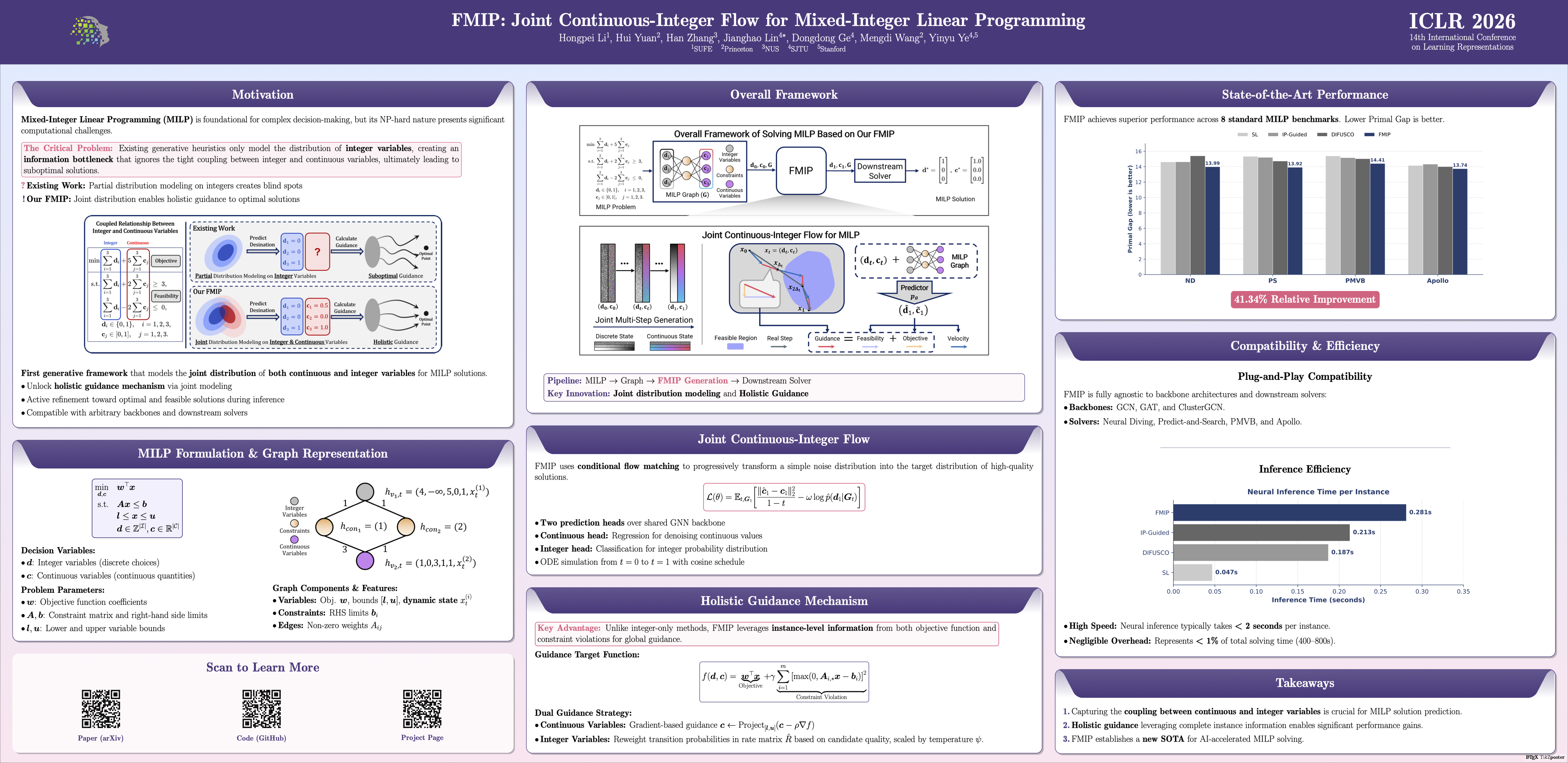
Mixed-Integer Linear Programming (MILP) is a foundational tool for complex decision-making problems. However, the NP-hard nature of MILP presents a significant computational challenge, motivating the development of machine learning-based heuristic solutions to accelerate downstream solvers. While recent generative models have shown promise in learning powerful heuristics, they suffer from a critical limitation. That is, they model the distribution of only the integer variables and fail to capture the intricate coupling between integer and continuous variables, creating an information bottleneck and ultimately leading to suboptimal solutions. To this end, we propose Joint Continuous-Integer Flow for Mixed-Integer Linear Programming (FMIP), which is the first generative framework that models the joint distribution of both integer and continuous variables for MILP solutions. Built upon the joint modeling paradigm, a holistic guidance mechanism is designed to steer the generative trajectory, actively refining solutions toward optimality and feasibility during the inference process. Extensive experiments on eight standard MILP benchmarks demonstrate the superior performance of FMIP against existing baselines, reducing the primal gap by 41.34% on average. Moreover, we show that FMIP is fully compatible with arbitrary backbone networks and various downstream solvers, making it well-suited for a broad range of real-world MILP applications.
Gen-DFL: Decision-Focused Generative Learning for Robust Decision Making
Prince Wang ⋅ Shuyi Chen ⋅ Jinhao Liang ⋅ Ferdinando Fioretto ⋅ Shixiang Zhu
Decision-focused learning (DFL) integrates predictive models with downstream optimization, directly training machine learning models to minimize decision errors. While DFL has been shown to provide substantial advantages when compared to a counterpart that treats the predictive and prescriptive models separately, it has also been shown to struggle in high-dimensional and risk-sensitive settings, limiting its applicability in real-world settings. To address this limitation, this paper introduces Decision-Focused Generative Learning (Gen-DFL), a novel framework that leverages generative models to adaptively model uncertainty and improve decision quality. Instead of relying on fixed uncertainty sets, Gen-DFL learns a structured representation of the optimization parameters and samples from the tail regions of the learned distribution to enhance robustness against worst-case scenarios. This approach mitigates over-conservatism while capturing complex dependencies in the parameter space. The paper shows, theoretically, that Gen-DFL achieves improved worst-case performance bounds compared to traditional DFL. Empirically, it evaluates Gen-DFL on various scheduling and logistics problems, demonstrating its strong performance against existing DFL methods.
Linking Process to Outcome: Conditional Reward Modeling for LLM Reasoning
Zheng Zhang ⋅ Ziwei Shan ⋅ Kaitao Song ⋅ Yexin Li ⋅ Kan Ren
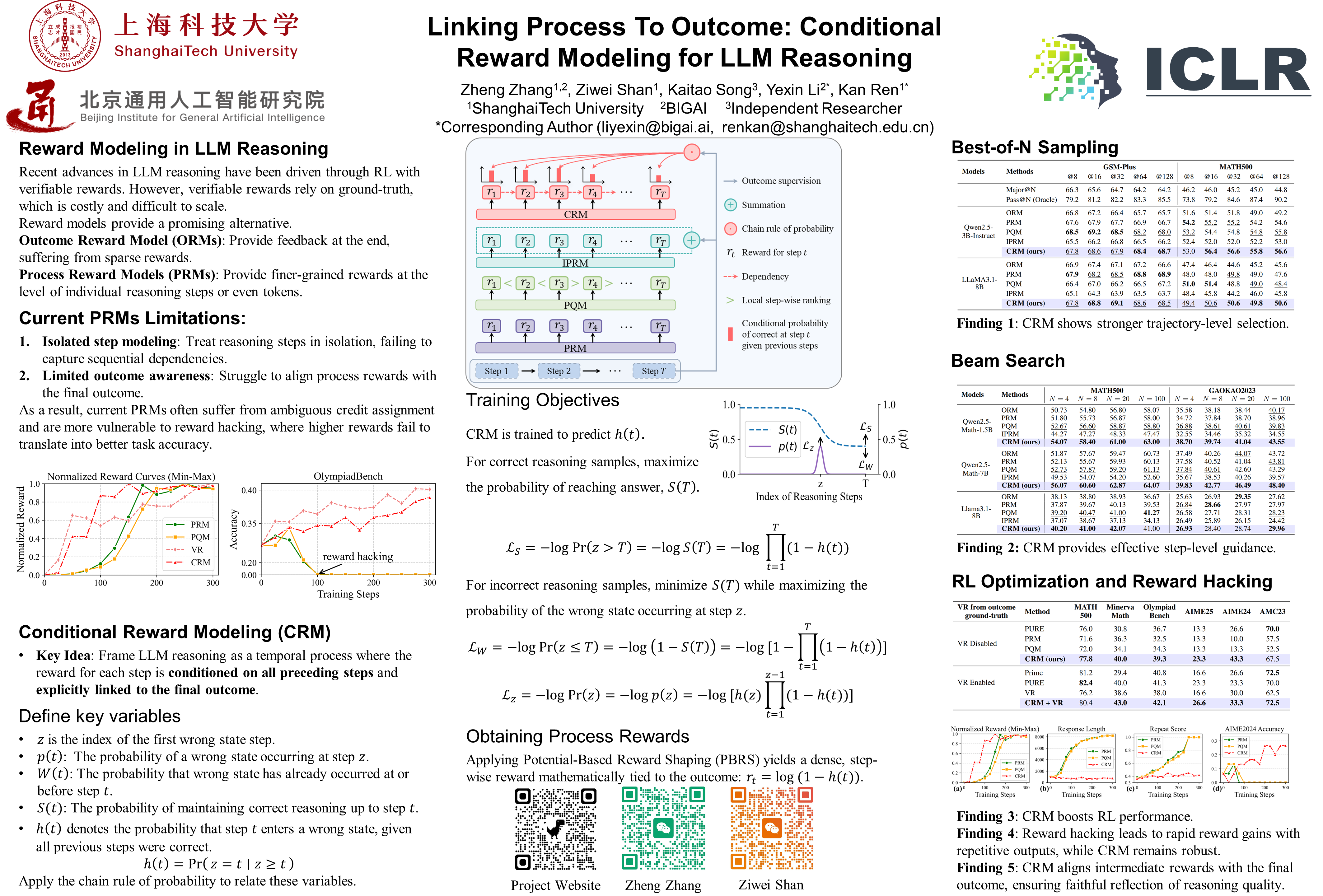
Process Reward Models (PRMs) have emerged as a promising approach to enhance the reasoning capabilities of large language models (LLMs) by guiding their step-by-step reasoning toward a final answer. However, existing PRMs either treat each reasoning step in isolation, failing to capture inter-step dependencies, or struggle to align process rewards with the final outcome. Consequently, the reward signal fails to respect temporal causality in sequential reasoning and faces ambiguous credit assignment. These limitations make downstream models vulnerable to reward hacking and lead to suboptimal performance. In this work, we propose Conditional Reward Modeling (CRM) that frames LLM reasoning as a temporal process leading to a correct answer. The reward of each reasoning step is not only conditioned on the preceding steps but also explicitly linked to the final outcome of the reasoning trajectory. By enforcing conditional probability rules, our design captures the causal relationships among reasoning steps, with the link to the outcome allowing precise attribution of each intermediate step, thereby resolving credit assignment ambiguity. Further, through this consistent probabilistic modeling, the rewards produced by CRM enable more reliable cross-sample comparison. Experiments across Best-of-N sampling, beam search and reinforcement learning demonstrate that CRM consistently outperforms existing reward models, offering a principled framework for enhancing LLM reasoning. In particular, CRM is more robust to reward hacking and delivers stable downstream improvements without relying on verifiable rewards derived from ground truth.
Predictive Differential Training Guided by Training Dynamics
Fanqi Wang ⋅ Weisheng Tang ⋅ Landon Harris ⋅ Hairong Qi ⋅ Dan Wilson ⋅ Igor Mezic
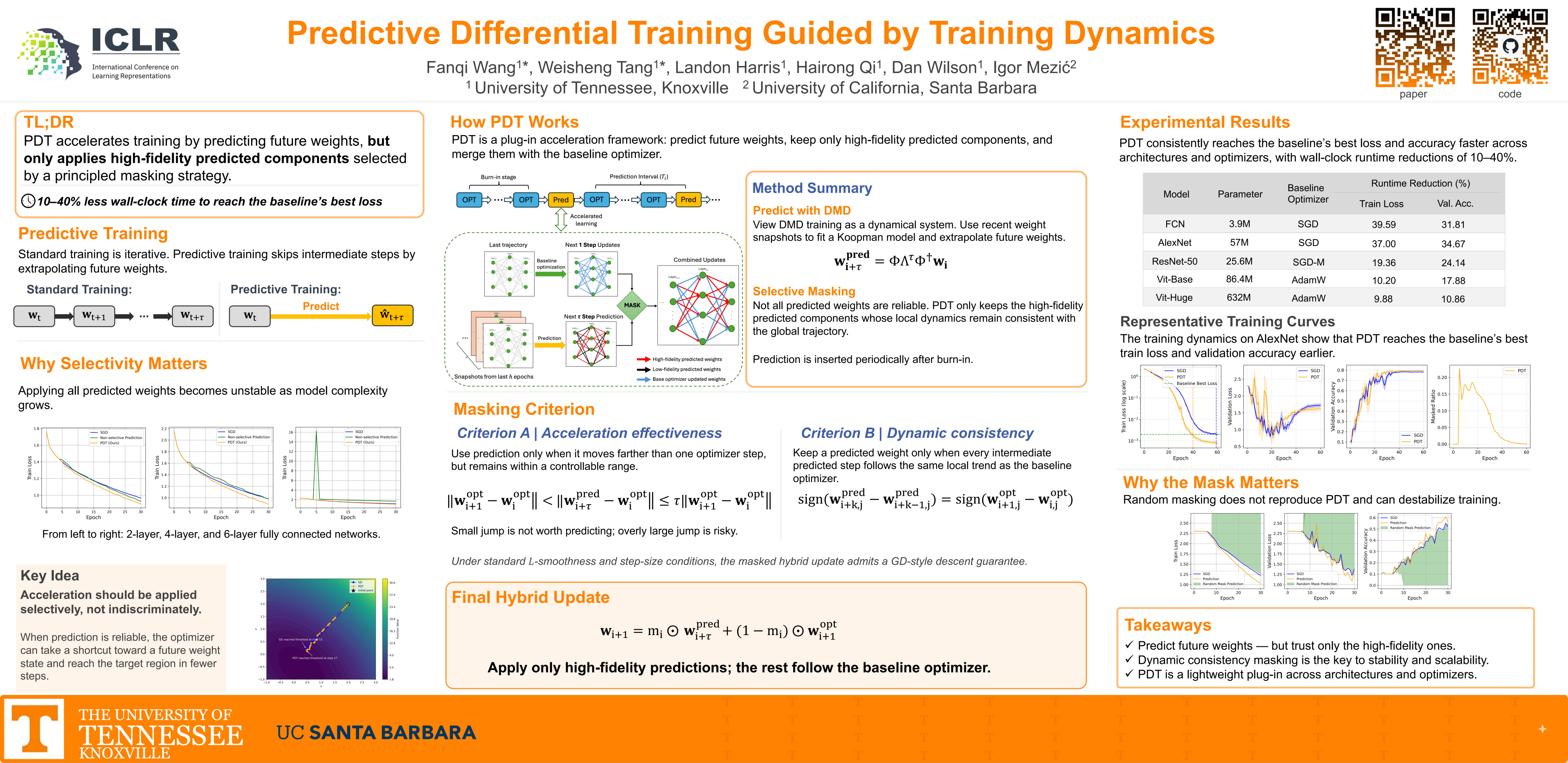
This paper centers around a novel concept proposed recently by researchers from the control community where the training process of a deep neural network can be considered a nonlinear dynamical system acting upon the high-dimensional weight space. Koopman operator theory (KOT), a data-driven dynamical system analysis framework, can then be deployed to discover the otherwise non-intuitive training dynamics. Taking advantage of the predictive power of KOT, the time-consuming Stochastic Gradient Descent (SGD) iterations can be then bypassed by directly predicting network weights a few epochs later. This "predictive training" framework, however, often suffers from gradient explosion especially for more extensive and complex models. In this paper, we incorporate the idea of "differential learning" into the predictive training framework and propose the so-called "predictive differential training" (PDT) for accelerated learning even for complex network structures. The key contribution is the design of an effective masking strategy based on a dynamic consistency analysis, which selects only those predicted weights whose local training dynamics align with the global dynamics. We refer to these predicted weights as high-fidelity predictions. DT also includes the design of an acceleration scheduler to adjust the prediction interval and rectify deviations from off-predictions. We demonstrate that PDT can be seamlessly integrated as a plug-in with a diverse array of existing optimizers (SGD, Adam, RMSprop, LAMB, etc.). The experimental results show consistent performance improvement across different network architectures and various datasets, in terms of faster convergence and reduced training time (10-40%) to achieve the baseline's best loss, while maintaining (if not improving) final model accuracy. As the idiom goes, a rising tide lifts all boats; in our context, a subset of high-fidelity predicted weights can accelerate the training of the entire network!
Dual Optimistic Ascent (PI Control) is the Augmented Lagrangian Method in Disguise
Juan Ramirez ⋅ Simon Lacoste-Julien
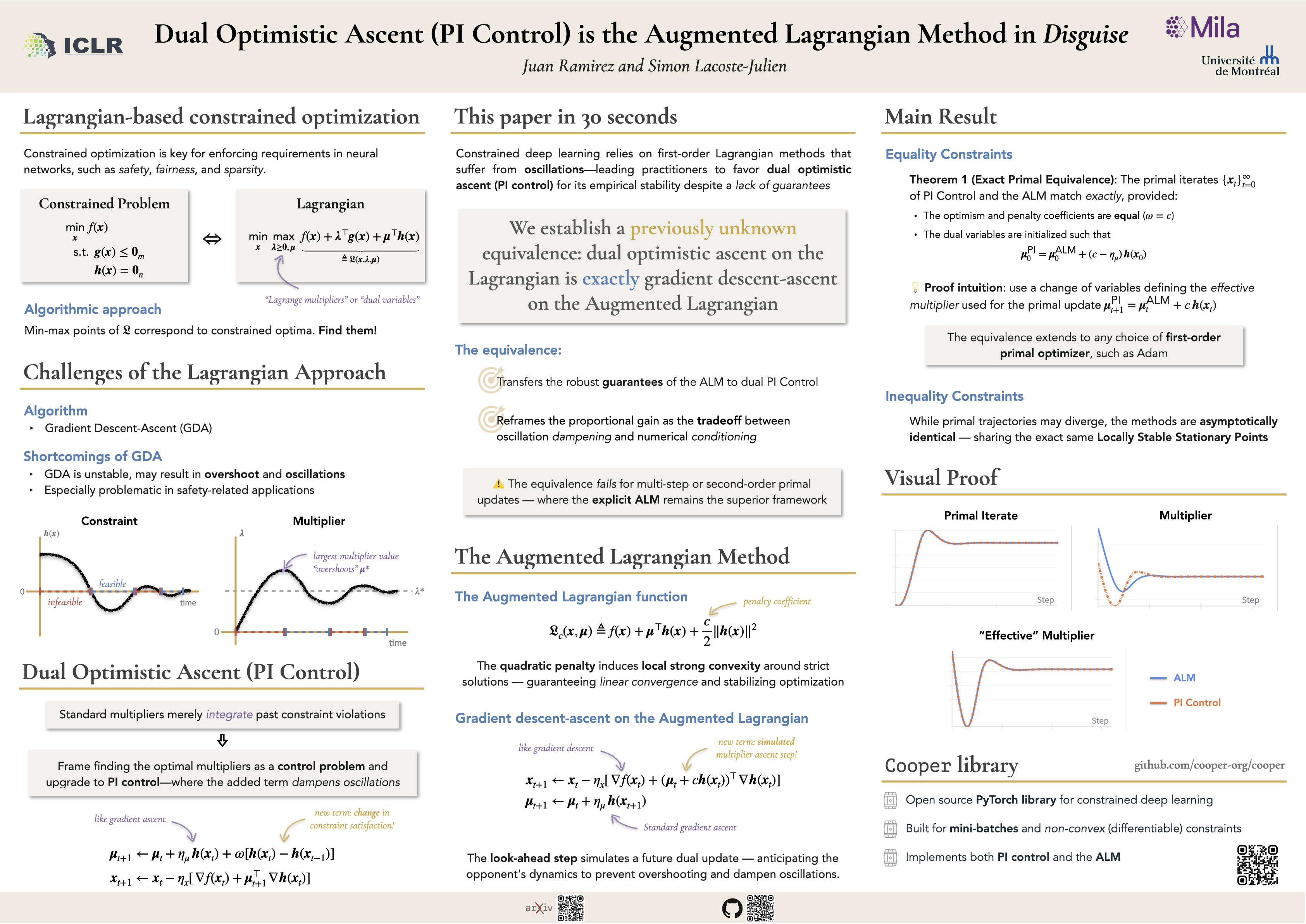
Constrained optimization is a powerful framework for enforcing requirements on neural networks. These constrained deep learning problems are typically solved using first-order methods on their min-max Lagrangian formulation, but such approaches often suffer from oscillations and can fail to find all local solutions. While the Augmented Lagrangian method (ALM) addresses these issues, practitioners often favor dual optimistic ascent schemes (PI control) on the standard Lagrangian, which perform well empirically but lack formal guarantees. In this paper, we establish a previously unknown equivalence between these approaches: dual optimistic ascent on the Lagrangian is equivalent to gradient descent-ascent on the Augmented Lagrangian. This finding allows us to transfer the robust theoretical guarantees of the ALM to the dual optimistic setting, proving it converges linearly to all local solutions. Furthermore, the equivalence provides principled guidance for tuning the optimism hyper-parameter. Our work closes a critical gap between the empirical success of dual optimistic methods and their theoretical foundation in the single-step, first-order regime commonly used in constrained deep learning.
Fast Frank–Wolfe Algorithms with Adaptive Bregman Step-Size for Weakly Convex Functions
Shota Takahashi ⋅ Sebastian Pokutta ⋅ Akiko Takeda
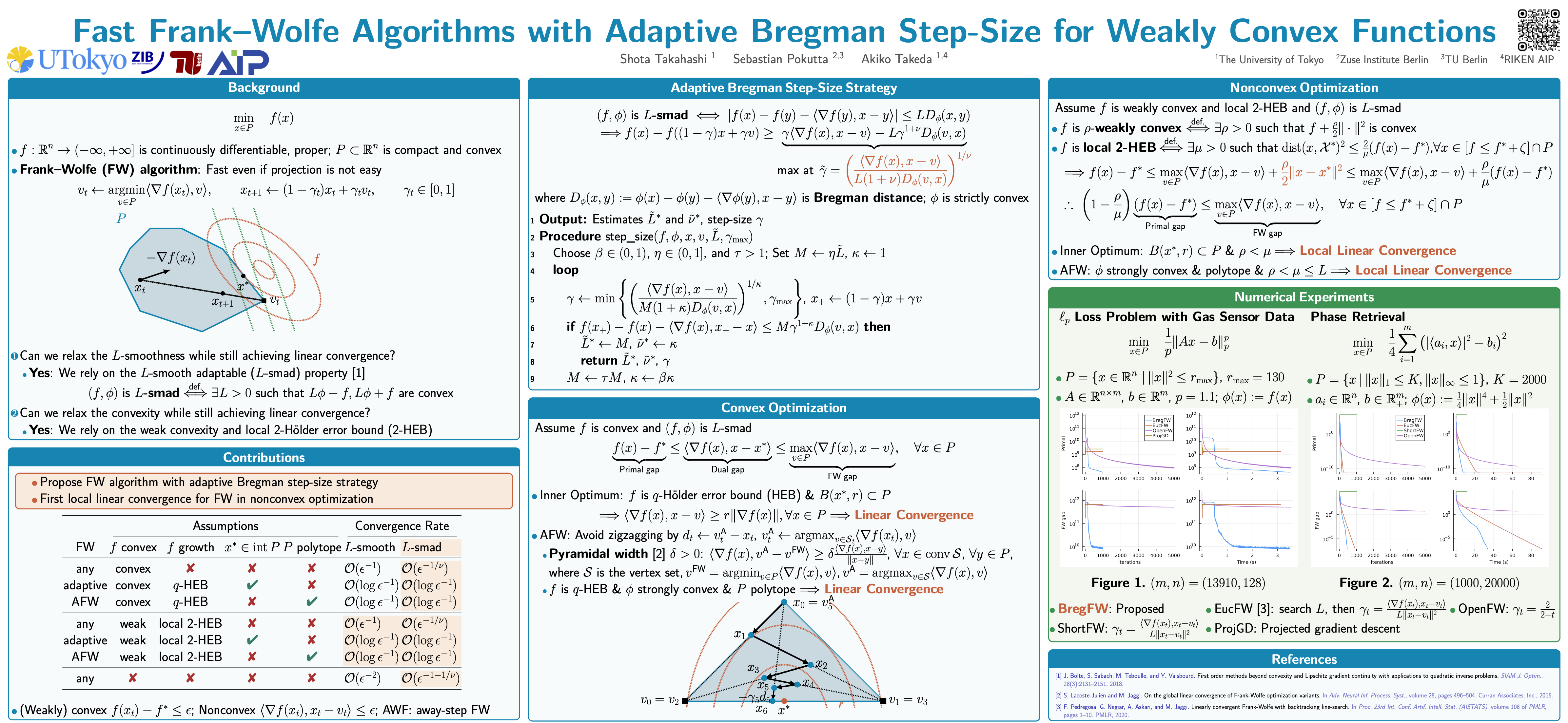
We propose Frank–Wolfe (FW) algorithms with an adaptive Bregman step-size strategy for smooth adaptable (also called: relatively smooth) (weakly-) convex functions. This means that the gradient of the objective function is not necessarily Lipschitz continuous, and we only require the smooth adaptable property. Compared with existing FW algorithms, our assumptions are less restrictive. We establish convergence guarantees in various settings, including convergence rates ranging from sublinear to linear, depending on the assumptions for convex and nonconvex objective functions. Assuming that the objective function is weakly convex and satisfies the local quadratic growth condition, we provide both local sublinear and local linear convergence with respect to the primal gap. We also propose a variant of the away-step FW algorithm using Bregman distances over polytopes. We establish faster global convergence (up to a linear rate) for convex optimization under the Hölder error bound condition and local linear convergence for nonconvex optimization under the local quadratic growth condition. Numerical experiments demonstrate that our proposed FW algorithms outperform existing methods.
Non-Asymptotic Analysis of Efficiency in Conformalized Regression
Yunzhen Yao ⋅ Lie He ⋅ Michael Gastpar
Conformal prediction provides prediction sets with coverage guarantees. The informativeness of conformal prediction depends on its efficiency, typically quantified by the expected size of the prediction set. Prior work on the efficiency of conformalized regression commonly treats the miscoverage level $\alpha$ as a fixed constant. In this work, we establish non-asymptotic bounds on the deviation of the prediction set length from the oracle interval length for conformalized quantile and median regression trained via SGD, under mild assumptions on the data distribution. Our bounds of order $\mathcal{O}(1/\sqrt{n} + 1/(\alpha^2 n) + 1/\sqrt{m} + \exp(-\alpha^2 m))$ capture the joint dependence of efficiency on the proper training set size $n$, the calibration set size $m$, and the miscoverage level $\alpha$. The results identify phase transitions in convergence rates across different regimes of $\alpha$, offering guidance for allocating data to control excess prediction set length. Empirical results are consistent with our theoretical findings.
Online Decision-Focused Learning
Aymeric Capitaine ⋅ Maxime Haddouche ⋅ Eric Moulines ⋅ Michael Jordan ⋅ Etienne Boursier ⋅ Alain Oliviero Durmus
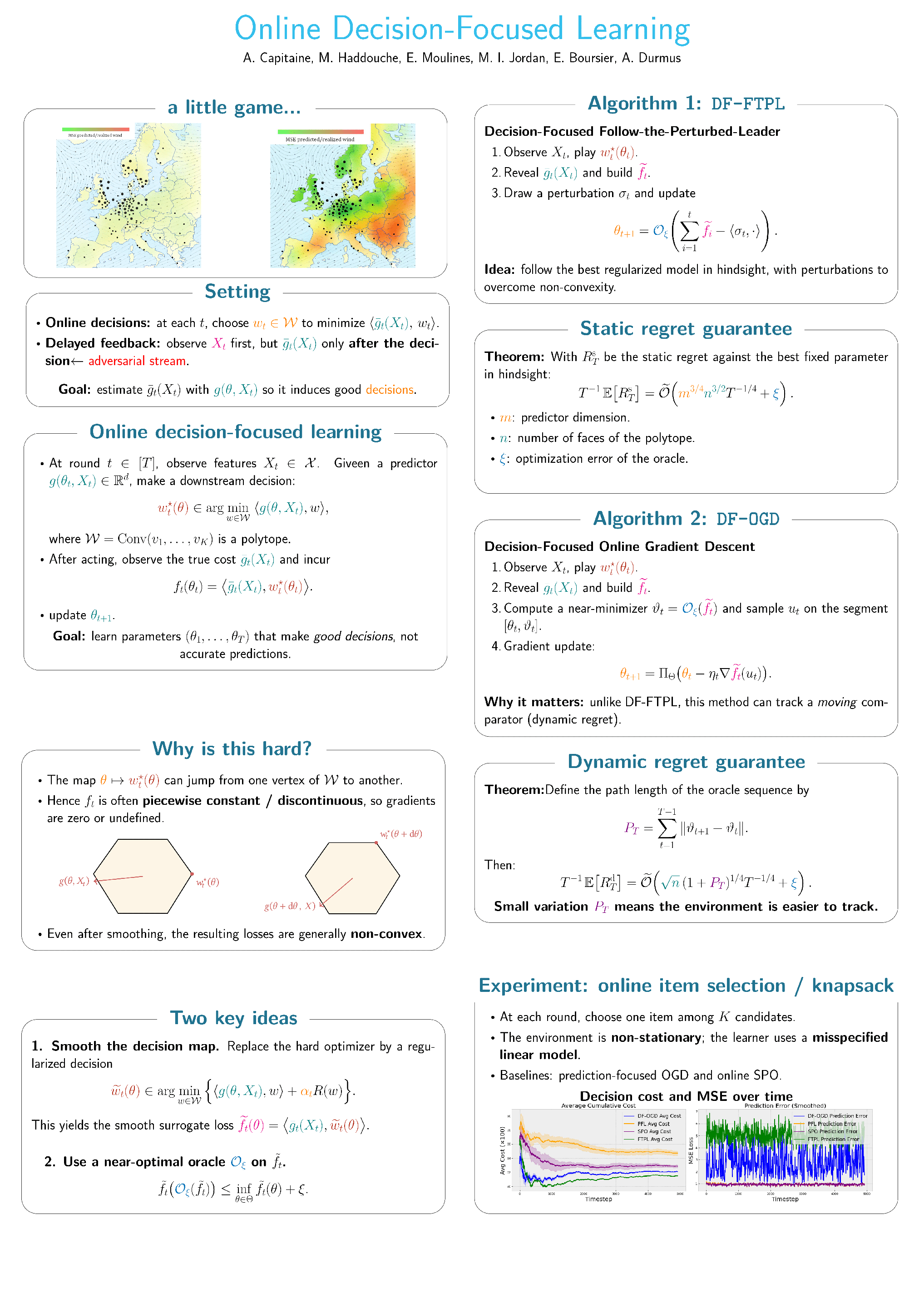
Decision-focused learning (DFL) is an increasingly popular paradigm for training predictive models whose outputs are used in decision-making tasks. Instead of merely optimizing for predictive accuracy, DFL trains models to directly minimize the loss associated with downstream decisions. However, existing studies focus solely on scenarios where a fixed batch of data is available and the objective function does not change over time. We instead investigate DFL in dynamic environments where the objective function and data distribution evolve over time. This setting is challenging for online learning because the objective function has zero or undefined gradients, which prevents the use of standard first-order optimization methods, and is generally non-convex. To address these difficulties, we (i) regularize the objective to make it differentiable and (ii) use perturbation techniques along with a near-optimal oracle to overcome non-convexity. Combining those techniques yields two original online algorithms tailored for DFL, for which we establish respectively static and dynamic regret bounds. These are the first provable guarantees for the online decision-focused problem. Finally, we showcase the effectiveness of our algorithms on a knapsack experiment, where they outperform two standard benchmarks.
Antislop: A Comprehensive Framework for Identifying and Eliminating Repetitive Patterns in Language Models
Sam Paech ⋅ Allen Roush ⋅ Judah Goldfeder ⋅ Ravid Shwartz-Ziv
Repetitive lexical patterns in LLM output, termed "slop," degrade writing quality through over-use and make AI-generated text immediately recognizable. We present Antislop, a comprehensive framework providing tools to both detect and eliminate these overused patterns. Our approach combines three innovations: (1) The Antislop Sampler, which uses backtracking to suppress unwanted strings at inference time without destroying vocabulary. (2) An automated pipeline that profiles model-specific slop against human baselines and generates training data. and, (3) Final Token Preference Optimization (FTPO), a novel fine-tuning method that operates in logit-space on individual tokens, surgically adjusting logits wherever a banned pattern has appeared in an inference trace. We demonstrate that some slop patterns appear over 1,000 times more frequently in LLM output than human text. The Antislop Sampler successfully suppresses 8,000+ patterns while maintaining quality, whereas token banning becomes unusable at just 2,000. Most importantly, FTPO achieves 90% slop reduction while maintaining or improving performance in cross-domain evals including GSM8K, MMLU, and creative writing tasks. In contrast, DPO suffers significant degradation in writing quality and lexical diversity despite achieving weaker suppression. We release all code and results datasets under MIT license.
Neural Hamilton--Jacobi Characteristic Flows for Optimal Transport
Yesom Park ⋅ Shu Liu ⋅ Mo Zhou ⋅ Stanley J Osher
We present a novel framework for solving optimal transport (OT) problems based on the Hamilton--Jacobi (HJ) equation, whose viscosity solution uniquely characterizes the OT map. By leveraging the method of characteristics, we derive closed-form, bidirectional transport maps, thereby eliminating the need for numerical integration. The proposed method adopts a pure minimization framework: a single neural network is trained with a loss function derived from the method of characteristics of the HJ equation. This design guarantees convergence to the optimal map while eliminating adversarial training stages, thereby substantially reducing computational complexity. Furthermore, the framework naturally extends to a wide class of cost functions and supports class-conditional transport. Extensive experiments on diverse datasets demonstrate the accuracy, scalability, and efficiency of the proposed method, establishing it as a principled and versatile tool for OT applications with provable optimality.
Shuffling the Data, Extrapolating the Step: Sharper Bias In Constant Step-Size SGD
Konstantinos Emmanouilidis ⋅ Emmanouil-Vasileios Vlatakis-Gkaragkounis ⋅ Rene Vidal
From adversarial robustness to multi-agent learning, many machine learning tasks can be cast as finite-sum min–max optimization or, more generally, as variational inequality problems (VIPs). Owing to their simplicity and scalability, stochastic gradient methods with constant step size are widely used, despite the fact that they converge only up to a constant term. Among the many heuristics adopted in practice, two classical techniques have recently attracted attention to mitigate this issue: Random Reshuffling of data and Richardson–Romberg extrapolation across iterates. Random Reshuffling sharpens the mean-squared error (MSE) of the estimated solution, while Richardson-Romberg extrapolation acts orthogonally, providing a second order reduction in its bias. In this work, we show that their composition is strictly better than both, not only maintaining the enhanced MSE guarantees but also yielding an even greater cubic refinement in the bias. To the best of our knowledge, our work provides the first theoretical guarantees for such a synergy in structured non-monotone VIPs. Our analysis proceeds in two steps: (i) we smooth the discrete noise induced by reshuffling and leverage tools from continuous-state Markov chain theory to establish a novel law of large numbers and a central limit theorem for its iterates; and (ii) we employ spectral tensor techniques to prove that extrapolation debiases and sharpens the asymptotic behavior even under the biased gradient oracle induced by reshuffling. Finally, extensive experiments validate our theory, consistently demonstrating substantial speedups in practice.
Scalable Second-order Riemannian Optimization for $K$-means Clustering
Peng Xu ⋅ Chun Ying Hou ⋅ Xiaohui Chen ⋅ Richard Zhang
Clustering is a hard discrete optimization problem. Nonconvex approaches such as low-rank semidefinite programming (SDP) have recently demonstrated promising statistical and local algorithmic guarantees for cluster recovery. Due to the combinatorial structure of the $K$-means clustering problem, current relaxation algorithms struggle to balance their constraint feasibility and objective optimality, presenting tremendous challenges in computing the second-order critical points with rigorous guarantees. In this paper, we provide a new formulation of the $K$-means problem as a smooth unconstrained optimization over a submanifold and characterize its Riemannian structures to allow it to be solved using a second-order cubic-regularized Riemannian Newton algorithm. By factorizing the $K$-means manifold into a product manifold, we show how each Newton subproblem can be solved in linear time. Our numerical experiments show that the proposed method converges significantly faster than the state-of-the-art first-order nonnegative low-rank factorization method, while achieving similarly optimal statistical accuracy.
This study introduces a novel method for performing Maximum A Posteriori (MAP) estimation on Markov Random Fields (MRFs) that are defined on locally and sparsely connected graphs, broadly existing in real-world applications. We address this long-standing challenge by sampling uniform random spanning trees(SPT) from the associated graph. Such a sampling procedure effectively breaks the cycles and decomposes the original MAP inference problem into overlapping sub-problems on trees, which can be solved exactly and efficiently. We demonstrate the effectiveness of our approach on various types of graphical models, including grids, cellular/cell networks, and Erdős–Rényi graphs. Our algorithm outperforms various baselines on synthetic, UAI inference competition, and real-world PCI problems, specifically in cases involving locally and sparsely connected graphs. Furthermore, our method achieves comparable results to these methods in other scenarios. The code of our model can be accessed at \url{https://github.com/LOGO-CUHKSZ/From-fields-to-random-trees.git}.
GEPA: Reflective Prompt Evolution Can Outperform Reinforcement Learning
Lakshya A Agrawal ⋅ Shangyin Tan ⋅ Dilara Soylu ⋅ Noah Ziems ⋅ Rishi Khare ⋅ Krista Opsahl-Ong ⋅ Arnav Singhvi ⋅ Herumb Shandilya ⋅ Michael J Ryan ⋅ Meng Jiang ⋅ Christopher Potts ⋅ Koushik Sen ⋅ Alex Dimakis ⋅ Ion Stoica ⋅ Dan Klein ⋅ Matei Zaharia ⋅ Omar Khattab
Large language models (LLMs) are increasingly adapted to downstream tasks via reinforcement learning (RL) methods like Group Relative Policy Optimization (GRPO), which often require thousands of rollouts to learn new tasks. We argue that the interpretable nature of language often provides a much richer learning medium for LLMs, compared to policy gradients derived from sparse, scalar rewards. To test this, we introduce GEPA (Genetic-Pareto), a prompt optimizer that thoroughly incorporates natural language reflection to learn high-level rules from trial and error. Given any AI system containing one or more LLM prompts, GEPA samples trajectories (e.g., reasoning, tool calls, and tool outputs) and reflects on them in natural language to diagnose problems, propose and test prompt updates, and combine complementary lessons from the Pareto frontier of its own attempts. As a result of GEPA's design, it can often turn even just a few rollouts into a large quality gain. Across six tasks, GEPA outperforms GRPO by 6 percentage points on average and by up to 19pp, while using up to 35x fewer rollouts. GEPA also outperforms the leading prompt optimizer, MIPROv2, by over 10 percentage points (e.g., +12pp on AIME-2025), and demonstrates promising results as an inference-time search strategy for code optimization. We release our code at https://github.com/gepa-ai/gepa.
Unlocking the Potential of Weighting Methods in Federated Learning Through Communication Compression
Valerii Parfenov ⋅ Nail Bashirov ⋅ Daniil Medyakov ⋅ Dmitry Bylinkin ⋅ Aleksandr Beznosikov
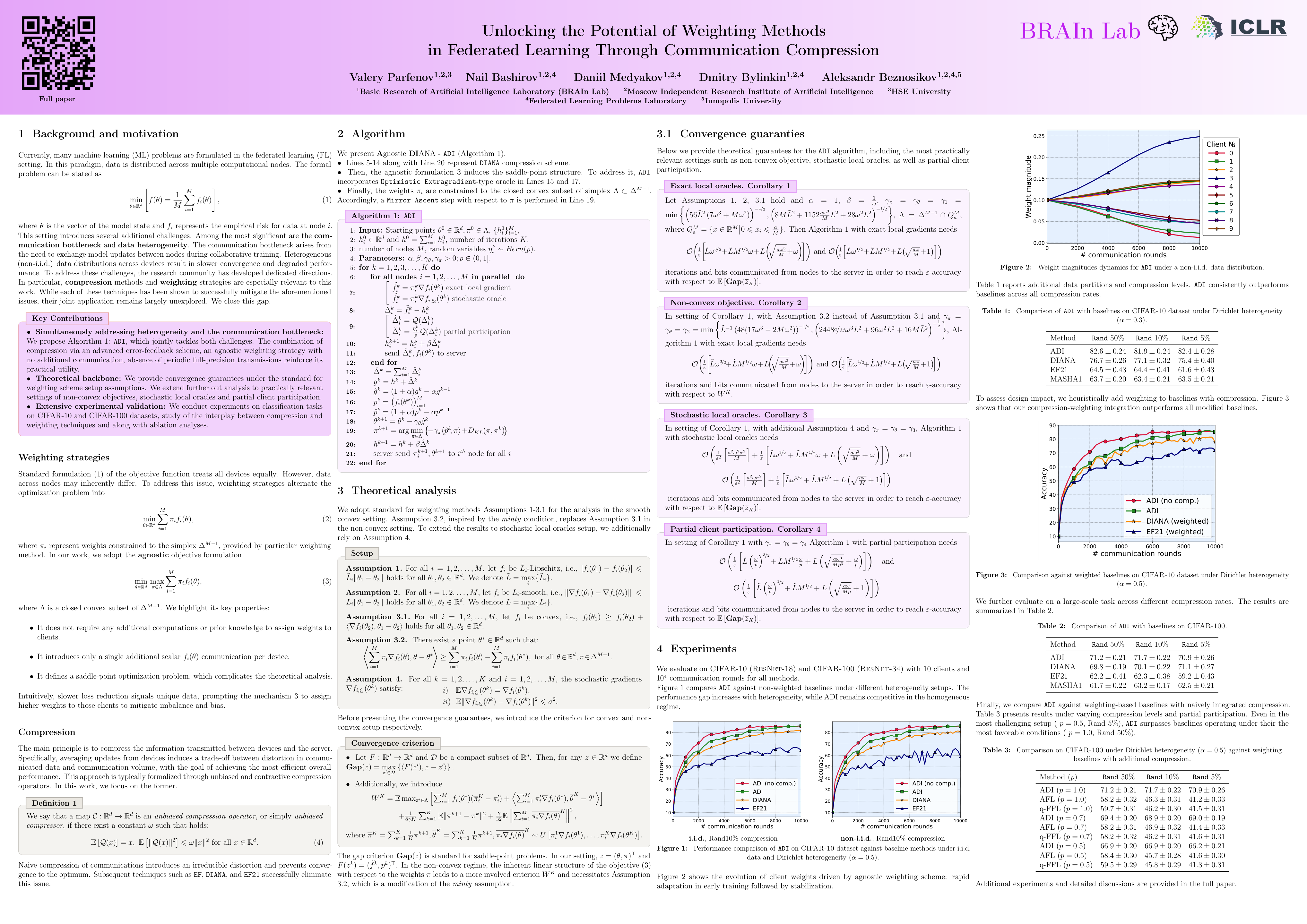
Modern machine learning problems are frequently formulated in federated learning domain and incorporate inherently heterogeneous data. Weighting methods operate efficiently in terms of iteration complexity and represent a common direction in this setting. At the same time, they do not address directly the main obstacle in federated and distributed learning -- communication bottleneck. We tackle this issue by incorporating compression into the weighting scheme. We establish the convergence under a convexity assumption, considering both exact and stochastic oracles. Finally, we evaluate the practical performance of the proposed method on real-world problems.
DualMap: Enabling Both Cache Affinity and Load Balancing for Distributed LLM Serving
Ying Yuan ⋅ Pengfei Zuo ⋅ Bo Wang ⋅ Zhangyu Chen ⋅ Zhipeng Tan ⋅ Zhou Yu
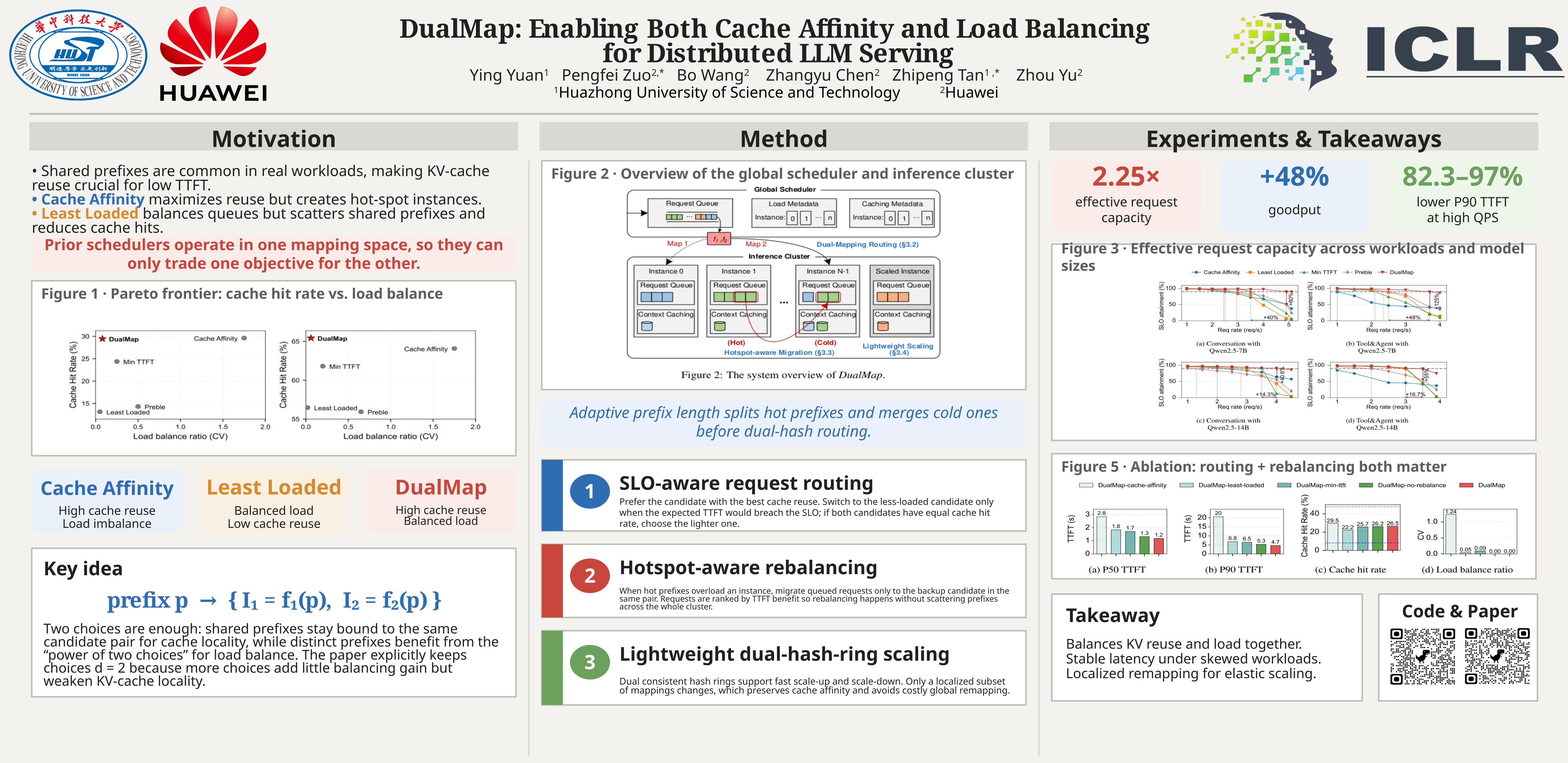
In large language model (LLM) serving, reusing the key-value (KV) cache of prompts across requests is a key technique for reducing time-to-first-token (TTFT) and lowering serving costs. Cache-affinity scheduling, which co-locates requests with the same prompt prefix to maximize KV cache reuse, often conflicts with load-balancing scheduling, which aims to distribute requests evenly across compute instances. Existing schedulers struggle to reconcile this trade-off, as they operate within a single mapping space, typically applying cache-affinity routing to a subset of requests and load-balanced routing to the rest, without a unified solution to achieve both goals. To overcome this limitation, we propose DualMap, a dual-mapping scheduling strategy for distributed LLM serving that simultaneously enables cache affinity and load balancing. The key idea of DualMap is to map each request to two candidate instances using two independent hash functions based on the request prompt, and then intelligently select the better candidate based on current system states. This design increases the likelihood that requests with shared prefixes are co-located, while evenly dispersing distinct prefixes across the cluster via ``the power of two choices''. To make DualMap robust under dynamic and skewed real-world workloads, we incorporate three techniques: 1) SLO-aware request routing, which prioritizes cache affinity but switches to load-aware scheduling when TTFT exceeds the SLO, enhancing load balance without sacrificing cache reuse; 2) hotspot-aware rebalancing, which dynamically migrates requests from overloaded to underloaded instances, mitigating hotspots and rebalancing the system; 3) lightweight dual-hash-ring scaling, which leverages a dual-hash-ring mapping to support fast and low-overhead instance scaling without costly global remapping. Experiments on real-world workloads show that DualMap improves effective request capacity by up to 2.25$\times$ under the same TTFT SLO constraints, compared with the state-of-the-art work.
Bridging Generalization Gap of Heterogeneous Federated Clients Using Generative Models
Ziru Niu ⋅ Hai Dong ⋅ A. K. Qin
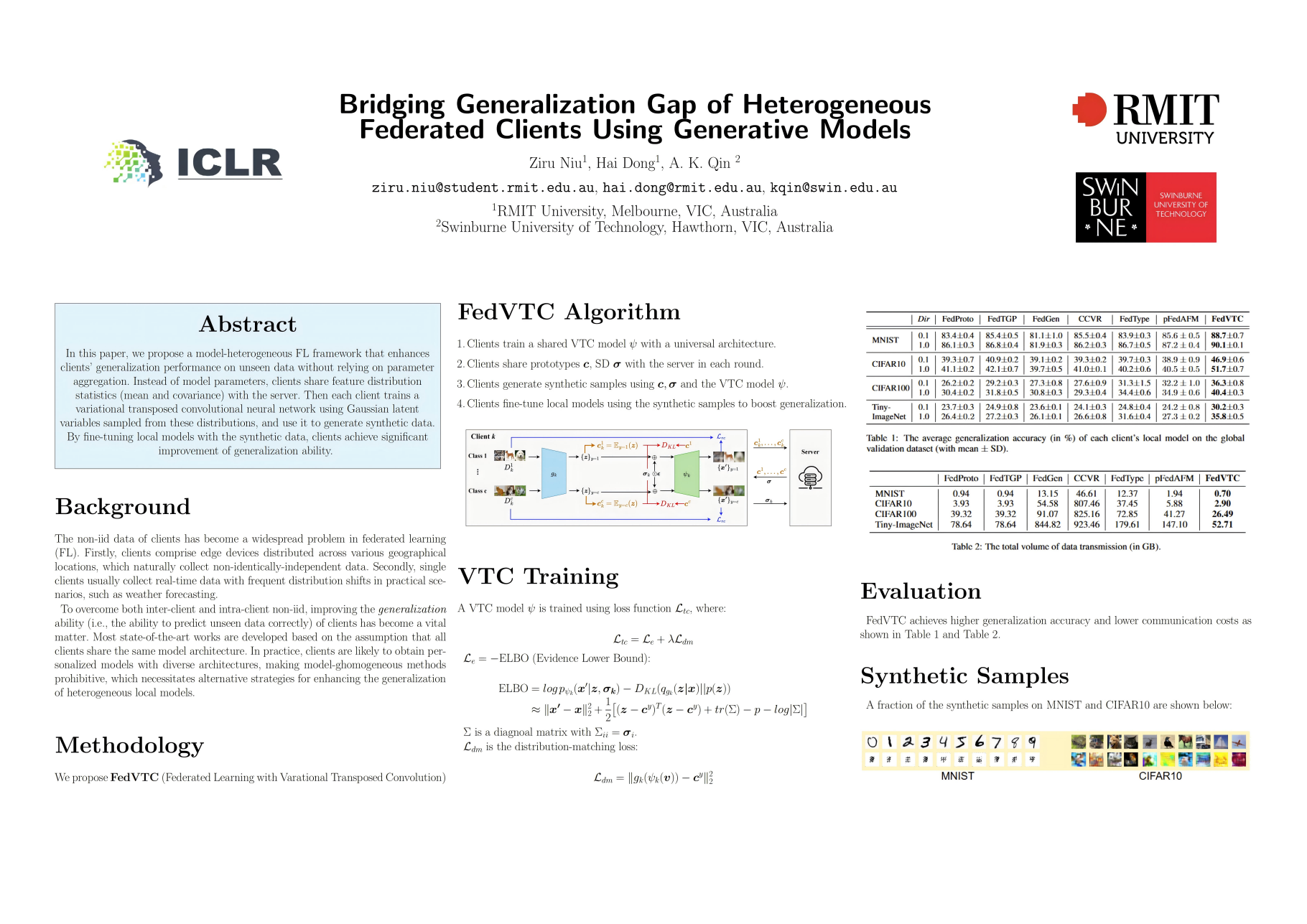
Federated Learning (FL) is a privacy-preserving machine learning framework facilitating collaborative training across distributed clients. However, its performance is often compromised by data heterogeneity among participants, which can result in local models with limited generalization capability. Traditional model-homogeneous approaches address this issue primarily by regularizing local training procedures or dynamically adjusting client weights during aggregation. Nevertheless, these methods become unsuitable in scenarios involving clients with heterogeneous model architectures. In this paper, we propose a model-heterogeneous FL framework that enhances clients’ generalization performance on unseen data without relying on parameter aggregation. Instead of model parameters, clients share feature distribution statistics (mean and covariance) with the server. Then each client trains a variational transposed convolutional neural network using Gaussian latent variables sampled from these distributions, and use it to generate synthetic data. By fine-tuning local models with the synthetic data, clients achieve significant improvement of generalization ability. Experimental results demonstrate that our approach not only attains higher generalization accuracy compared to existing model-heterogeneous FL frameworks, but also reduces communication costs and memory consumption.
On Coreset for LASSO Regression Problem with Sensitivity Sampling
Yuanbin Zou ⋅ Junyu Huang ⋅ Jianxin Wang ⋅ Qilong Feng
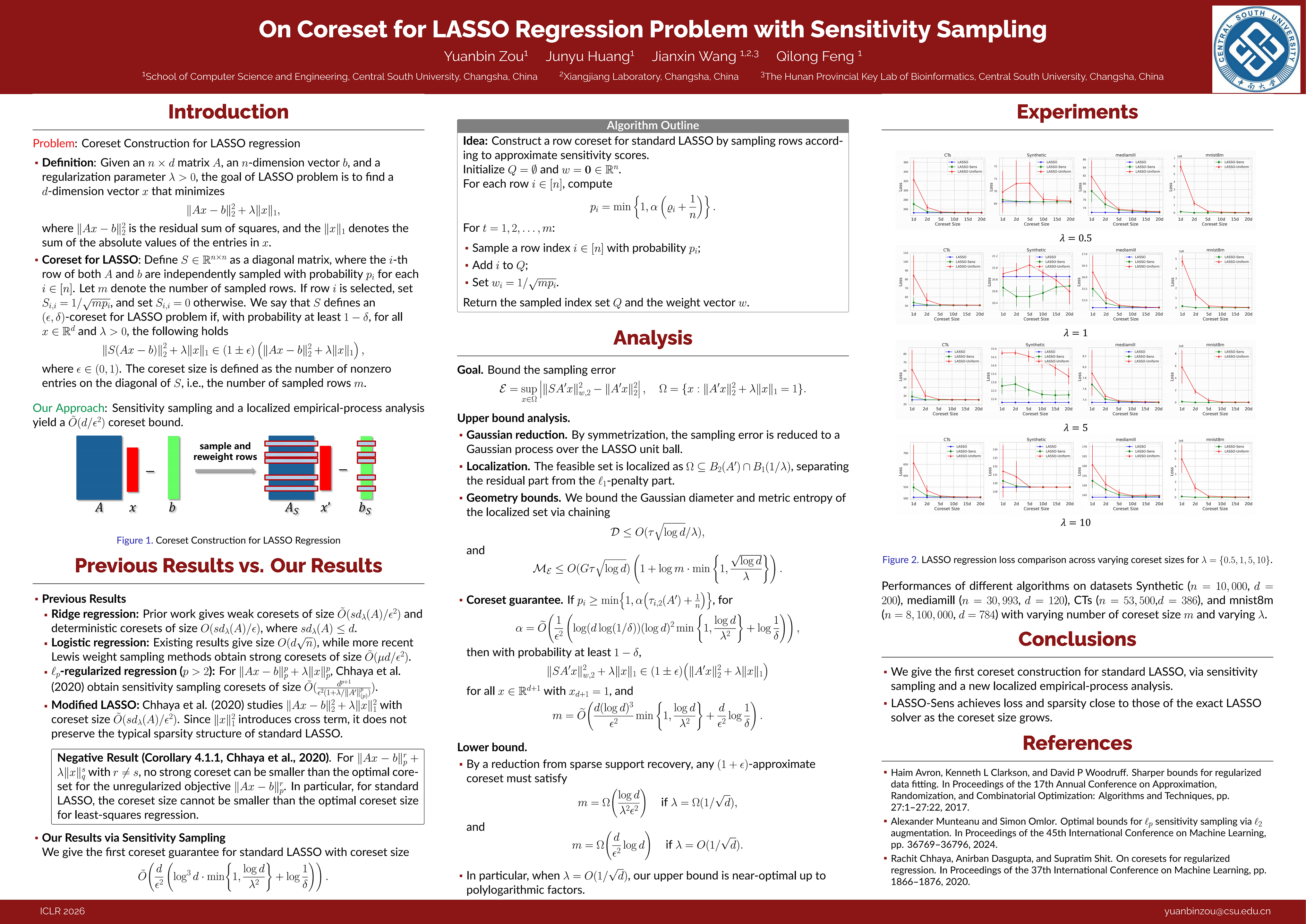
In this paper, we study coreset construction for LASSO regression, where a coreset is a small, weighted subset of the data that approximates the original problem with provable guarantees. For unregularized regression problems, sensitivity sampling is a successful and widely applied technique for constructing coresets. However, extending these methods to LASSO typically requires coreset size to scale with O(\mathcal{G}d), where d is the VC dimension and \mathcal{G} is the total sensitivity, following existing generalization bounds. A key challenge in improving upon this general bound lies in the difficulty of capturing the sparse and localized structure of the function space induced by the \ell_1 penalty in LASSO objective. To address this, we first provide an empirical process-based method of sensitivity sampling for LASSO, localizing the procedure by decomposing the functional space into separate components, which leads to tighter estimation error. By carefully leveraging the geometric properties of these localized spaces, we establish tight empirical process bounds on the required coreset size. These techniques enable us to achieve a coreset of size \tilde{O}(\epsilon^{-2}d\cdot(\log^3 d\cdot\min{1,\log d/\lambda^2}+\log(1/\delta))), which ensures a (1\pm\epsilon)-approximation for any \epsilon,\delta\in(0,1) and \lambda > 0. Furthermore, we give a lower bound showing that any algorithm achieving a (1+\epsilon)-approximation must select at least $Omega(\frac{d\log{d}}{\epsilon^2}) rows in the regime where \lambda=O(d^{-1/2}). Empirical experiments show that our proposed algorithm is at least 4 times faster than the existing LASSO solver and more than 9 times faster on half of the datasets, while ensuring high solution quality and sparsity.
Randomization Boosts KV Caching, Learning Balances Query Load: A Joint Perspective
Fangzhou Wu ⋅ Sandeep Silwal ⋅ Qiuyi (Richard) Zhang
KV caching is a fundamental technique for accelerating Large Language Model (LLM) inference by reusing key-value (KV) pairs from previous queries, but its effectiveness under limited memory is highly sensitive to the eviction policy. The default Least Recently Used (LRU) eviction algorithm struggles with dynamic online query arrivals, especially in multi-LLM serving scenarios, where balancing query load across workers and maximizing cache hit rate of each worker are inherently conflicting objectives. We give the first unified mathematical model that captures the core trade-offs between KV cache eviction and query routing. Our analysis reveals the theoretical limitations of existing methods and leads to principled algorithms that integrate provably competitive randomized KV cache eviction with learning-based methods to adaptively route queries with evolving patterns, thus balancing query load and cache hit rate. Our theoretical results are validated by extensive experiments across 4 benchmarks and 3 prefix-sharing settings, demonstrating improvements of up to **6.92$\times$** in cache hit rate, **11.96$\times$** reduction in latency, **14.06$\times$** reduction in time-to-first-token (TTFT), and **77.4%** increase in throughput over the state-of-the-art methods. Our code is available at https://github.com/fzwark/KVRouting.
Weight Decay may matter more than µP for Learning Rate Transfer in Practice
Atli Kosson ⋅ Jeremy Welborn ⋅ Yang Liu ⋅ Martin Jaggi ⋅ Xi Chen
Transferring the optimal learning rate from small to large neural networks can enable efficient training at scales where hyperparameter tuning is otherwise prohibitively expensive. To this end, the Maximal Update Parameterization (µP) proposes a learning rate scaling designed to keep the update dynamics of internal representations stable across different model widths. However, the scaling rules of µP rely on strong assumptions, particularly about the geometric alignment of a layer’s inputs with both its weights and gradient updates. In this large-scale empirical investigation, we show that these assumptions hold only briefly at the start of training in the practical setups where learning rate transfer is most valuable, such as LLM training. For the remainder of training it is weight decay rather than µP that correctly stabilizes the update dynamics of internal representations across widths, facilitating learning rate transfer. This suggests µP's scaling primarily acts as a form of implicit learning rate warmup, allowing us to largely replace it with modified warmup schedules. Together these findings fundamentally challenge prevailing beliefs about learning rate transfer and can explain empirical observations such as why µP requires the independent weight decay variant for good transfer.
Speculative Actions: A Lossless Framework for Faster AI Agents
Naimeng Ye ⋅ Arnav Ahuja ⋅ Georgios Liargkovas ⋅ Yunan Lu ⋅ Kostis Kaffes ⋅ Tianyi Peng
AI agents are increasingly deployed in complex, interactive environments, yet their runtime remains a major bottleneck for training, evaluation, and real-world use. Typical agent behavior unfolds sequentially, where each action requires an API call that can incur substantial latency. For example, a game of chess between two state-of-the-art agents can take hours. We introduce speculative actions, a lossless acceleration framework for general agentic systems. Inspired by speculative execution in microprocessors and speculative decoding in LLM inference, our method uses faster models to predict likely future actions and executes them in parallel, committing only when predictions match. We evaluate speculative actions across gaming, e-commerce, and web search environments, and additionally study a lossy extension in an operating systems setting. Across domains, we achieve up to 55% next-action prediction accuracy, translating into substantial latency reductions. Finally, we present a cost–latency analysis that formalizes the tradeoff between speculative breadth and time savings. This analysis enables principled tuning and selective branch launching, to ensure multi-branch speculation delivers practical speedups without prohibitive cost growth.
The Polar Express: Optimal Matrix Sign Methods and their Application to the Muon Algorithm
Noah Amsel ⋅ David Persson ⋅ Christopher Musco ⋅ Robert M. Gower
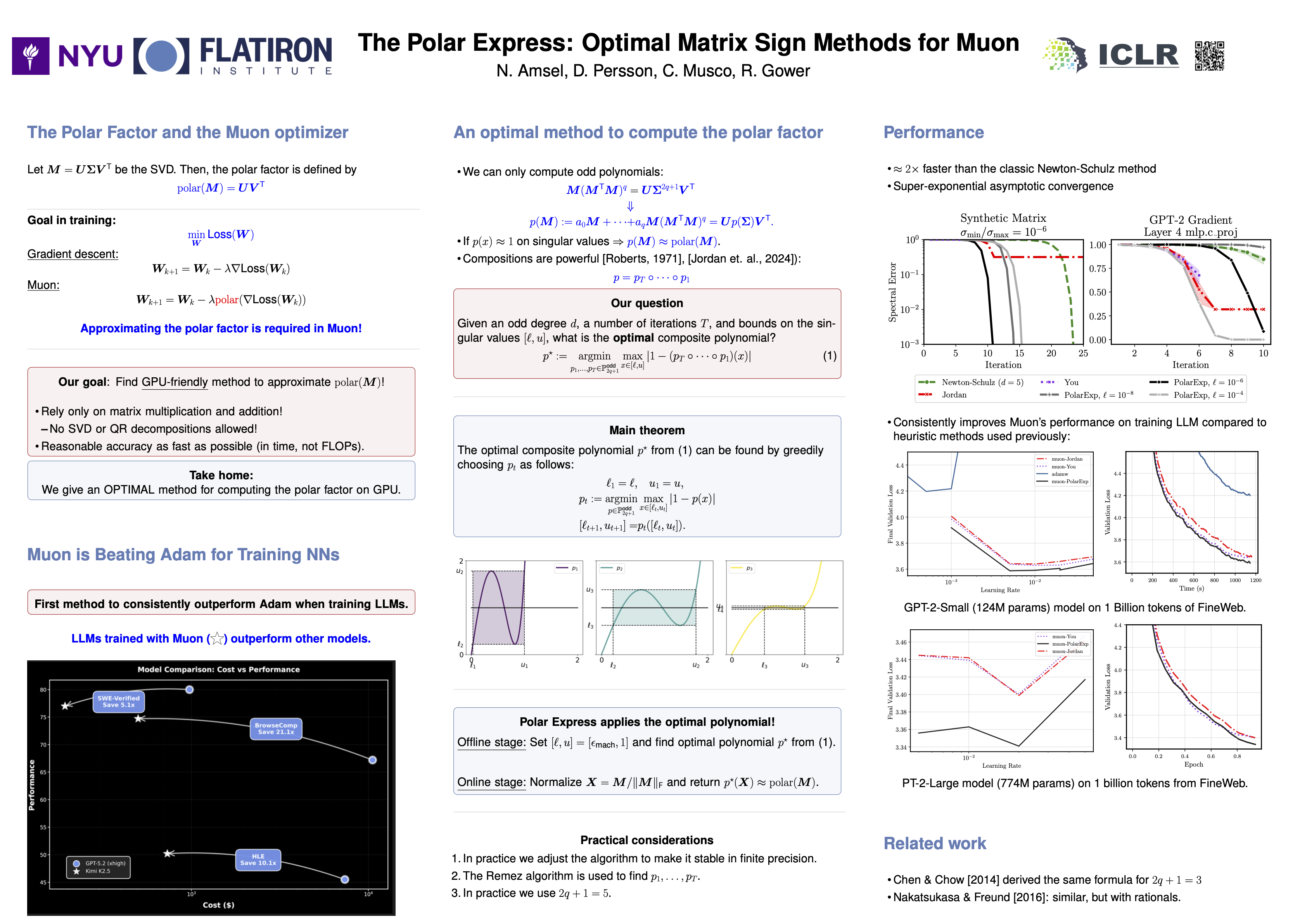
Computing the polar decomposition and the related matrix sign function has been a well-studied problem in numerical analysis for decades. Recently, it has emerged as an important subroutine within the Muon algorithm for training deep neural networks. However, the requirements of this application differ sharply from classical settings: deep learning demands GPU-friendly algorithms that prioritize high throughput over high precision. We introduce Polar Express, a new method for computing the polar decomposition. Like Newton–Schulz and other classical polynomial methods, our approach uses only matrix-matrix multiplications, making it very efficient on GPUs. Inspired by earlier work of Chen & Chow and Nakatsukasa & Freund, Polar Express adapts the update rule at each iteration by solving a minimax optimization problem. We prove that this strategy minimizes error in a worst-case sense, allowing Polar Express to converge as rapidly as possible both in the early iterations and asymptotically. We also address finite-precision issues, making it practical to use in bfloat16. When integrated into Muon, our method yields consistent improvements in validation loss for a GPT-2 model on one to ten billion tokens from the FineWeb dataset, outperforming recent alternatives across a range of learning rates.
When Large Multimodal Models Confront Evolving Knowledge: Challenges and Explorations
Kailin Jiang ⋅ yuntao du ⋅ Yukai Ding ⋅ Yuchen Ren ⋅ Ning Jiang ⋅ Zhi Gao ⋅ Zilong Zheng ⋅ Lei Liu ⋅ Bin Li ⋅ Qing Li
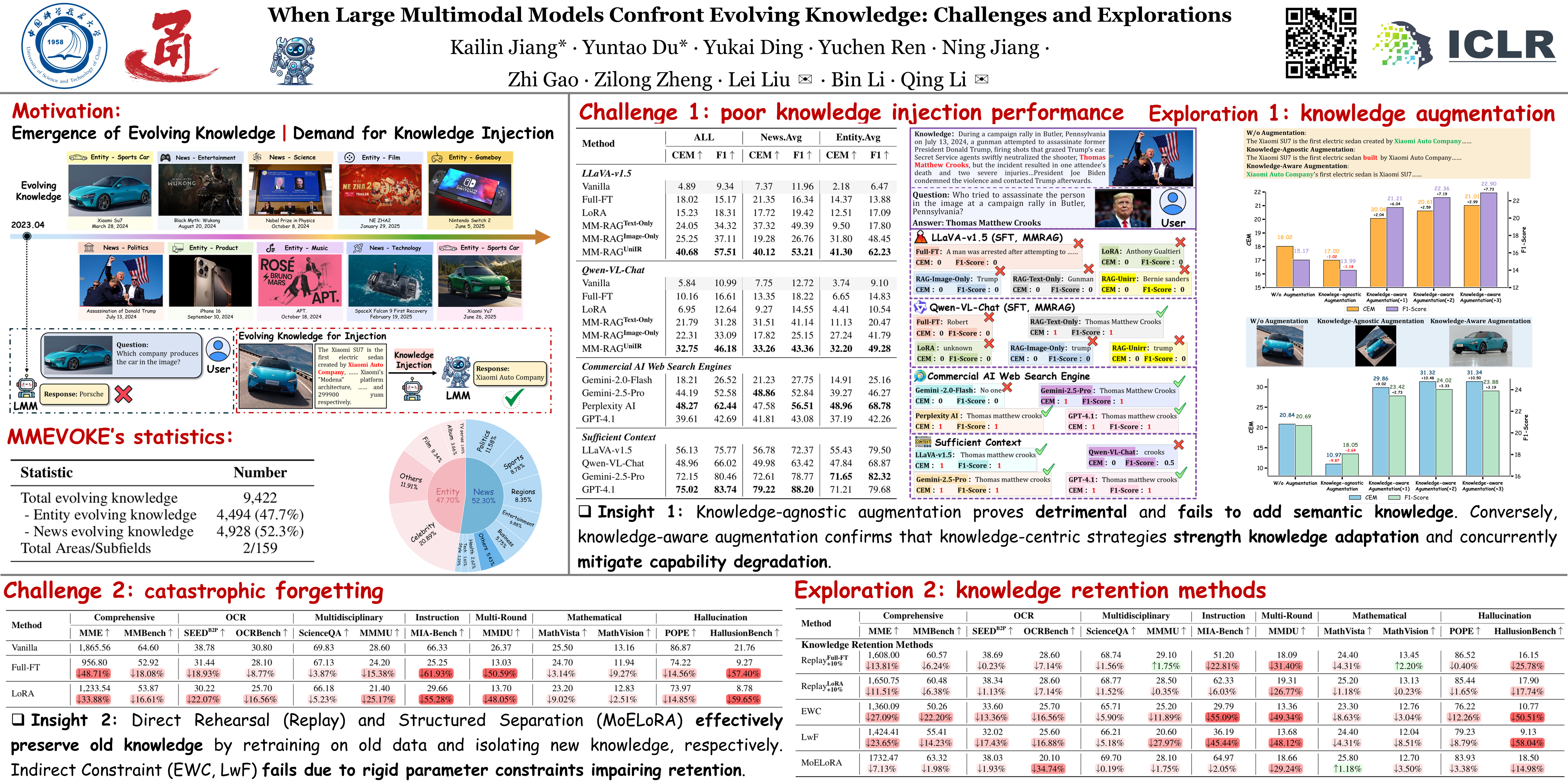
Large Multimodal Models (LMMs) store vast amounts of pretrained knowledge but struggle to remain aligned with real-world updates, making it difficult to avoid capability degradation when acquiring evolving knowledge. Furthermore, most current work focuses on exploring static textual knowledge injection, neglecting dynamic multimodal evolving knowledge injection, leaving the potential of LMMs for multimodal knowledge injection as an open question. To address this, we first propose a pipeline to construct MMEVOKE, a benchmark for evaluating LMMs' ability in multimodal evolving knowledge injection. MMEVOKE contains 9,422 samples spanning 159 subtypes. Then, based on extensive experiments with MMEVOKE, we reveal challenges such as poor injection performance and capability degradation in existing knowledge injection methods through knowledge injection tests and general capability tests. Finally, to tackle these challenges, we introduce knowledge augmentation and knowledge retention methods, finding that knowledge-aware augmentation strengthens knowledge injection performance, and that Data Replay and MoE methods effectively mitigate capability degradation.
Teaching Metric Distance to Discrete Autoregressive Language Models
Jiwan Chung ⋅ SAEJIN KIM ⋅ Yongrae Jo ⋅ Jaewoo Park ⋅ Dongjun Min ⋅ Youngjae Yu
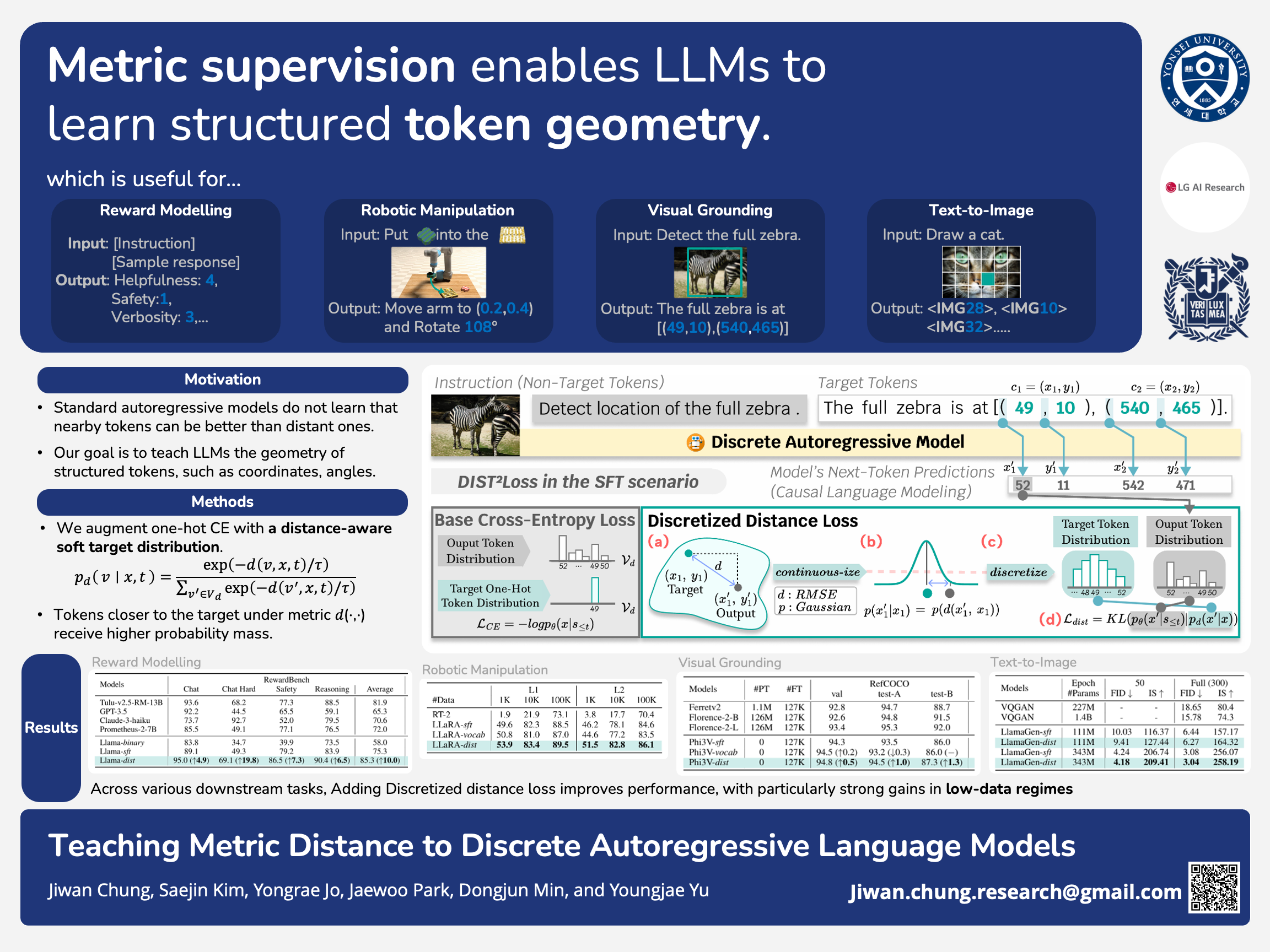
Large language models (LLMs) operate as autoregressive predictors over discrete token vocabularies, a formulation that has enabled their adaptation far beyond natural language to vision, robotics, and multimodal reasoning. However, training against one-hot targets disregards metric relationships between tokens and limits effectiveness on tasks where distance is meaningful, such as numerical values, spatial coordinates, or quantized embeddings. We introduce DIST2Loss, a distance-aware objective for discrete autoregressive models that replaces one-hot targets with reward-weighted distributions derived from predefined token distances. DIST2Loss can be interpreted as the closed-form solution to entropy-regularized policy optimization with known per-token rewards, retaining the core mechanism of reinforcement learning while avoiding sampling, rollouts, and instability. Our experiments show that DIST2Loss improves data efficiency and downstream performance across diverse domains. It yields tighter bounding boxes in visual grounding, accelerates robotic manipulation by improving action learning, enhances reward modeling for LLM alignment, and strengthens vector-quantized image generation. These results demonstrate that distance-aware supervision offers a simple and general alternative to one-hot supervision for discrete autoregressive models.
Through the Lens of Contrast: Self-Improving Visual Reasoning in VLMs
Zhiyu Pan ⋅ Yizheng Wu ⋅ Jiashen Hua ⋅ Junyi Feng ⋅ Shaotian Yan ⋅ Bing Deng ⋅ Zhiguo Cao ⋅ Jieping Ye
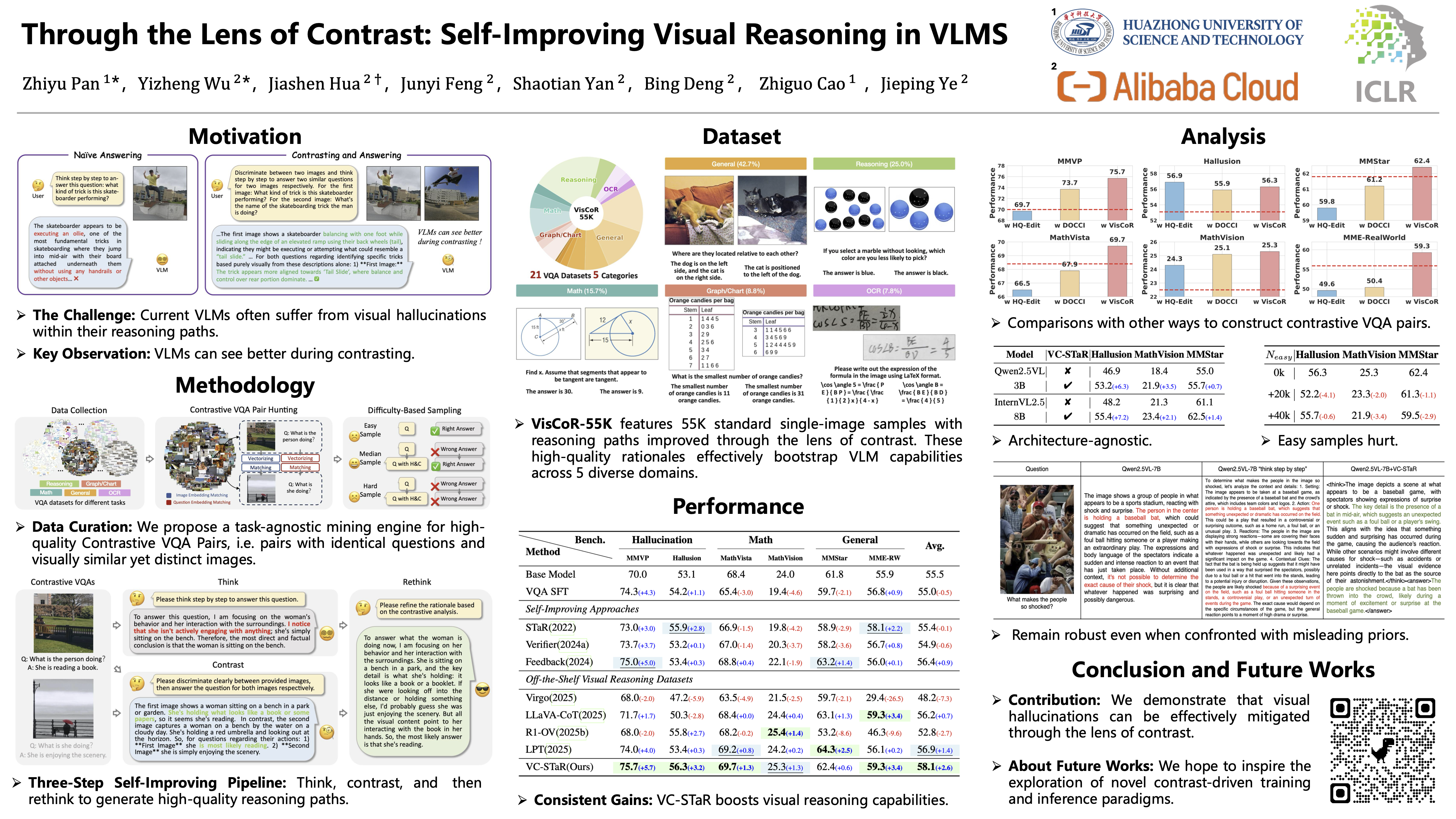
Reasoning has emerged as a key capability of large language models. In linguistic tasks, this capability can be enhanced by self-improving techniques that refine reasoning paths for subsequent fine-tuning. However, extending these language-based self-improving approaches to vision language models (VLMs) presents a unique challenge: visual hallucinations in reasoning paths cannot be effectively verified or rectified. Our solution starts with a key observation about visual contrast: when presented with a contrastive VQA pair, i.e., two visually similar images with synonymous questions, VLMs identify relevant visual cues more precisely compared with when given a single VQA sample. Motivated by this observation, we propose Visual Contrastive Self-Taught Reasoner (VC-STaR), a novel self-improving framework that leverages visual contrast to mitigate hallucinations in model-generated rationales. We collect a diverse suite of VQA datasets, curate contrastive pairs according to multi-modal similarity, and generate rationales using VC-STaR. Consequently, we obtain a new visual reasoning dataset, VisCoR-$55$K, which is then used to boost the reasoning capability of various VLMs through supervised finetuning. Extensive experiments show that VC-STaR not only outperforms existing self-improving approaches but also surpasses models finetuned on the SoTA visual reasoning datasets, demonstrating that the inherent contrastive ability of VLMs can bootstrap their own visual reasoning. The code, dataset and trained models will be released upon acceptance.
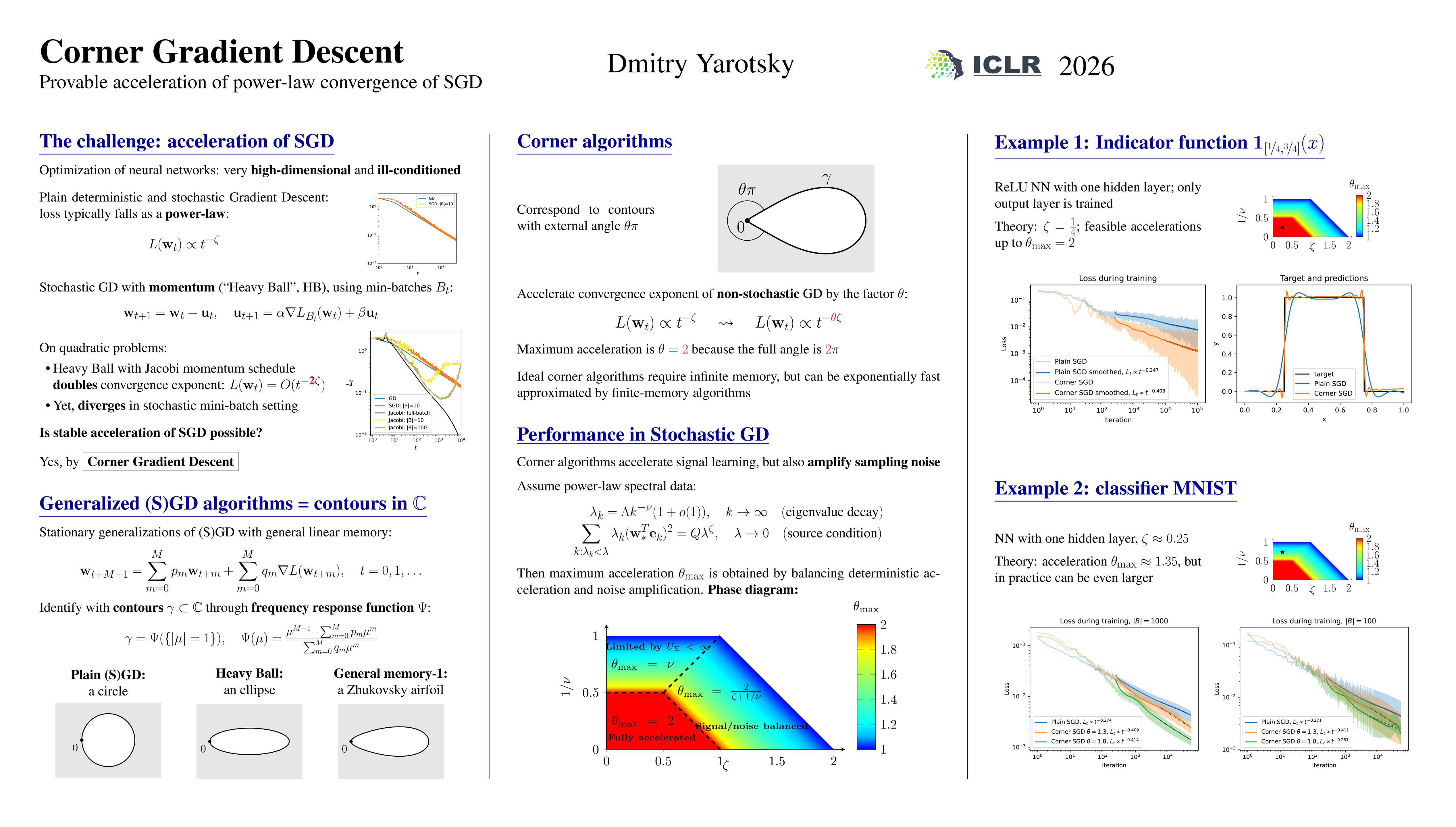
We consider SGD-type optimization on infinite-dimensional quadratic problems with power law spectral conditions. It is well-known that on such problems deterministic GD has loss convergence rates $L_t=O(t^{-\zeta})$, which can be improved to $L_t=O(t^{-2\zeta})$ by using Heavy Ball with a non-stationary Jacobi-based schedule (and the latter rate is optimal among fixed schedules). However, in the mini-batch Stochastic GD setting, the sampling noise causes the Jacobi HB to diverge; accordingly no $O(t^{-2\zeta})$ algorithm is known. In this paper we show that rates up to $O(t^{-2\zeta})$ can be achieved by a generalized stationary SGD with infinite memory. We start by identifying generalized (S)GD algorithms with contours in the complex plane. We then show that contours that have a corner with external angle $\theta\pi$ accelerate the plain GD rate $O(t^{-\zeta})$ to $O(t^{-\theta\zeta})$. For deterministic GD, increasing $\theta$ allows to achieve rates arbitrarily close to $O(t^{-2\zeta})$. However, in Stochastic GD, increasing $\theta$ also amplifies the sampling noise, so in general $\theta$ needs to be optimized by balancing the acceleration and noise effects. We prove that the optimal rate is given by $\theta_{\max}=\min(2,\nu,\tfrac{2}{\zeta+1/\nu})$, where $\nu,\zeta$ are the exponents appearing in the capacity and source spectral conditions. Furthermore, using fast rational approximations of the power functions, we show that ideal corner algorithms can be efficiently approximated by practical finite-memory algorithms.
GlowQ: Group-Shared LOw-Rank Approximation for Quantized LLMs
Selim An ⋅ Il Suh ⋅ Yeseong Kim
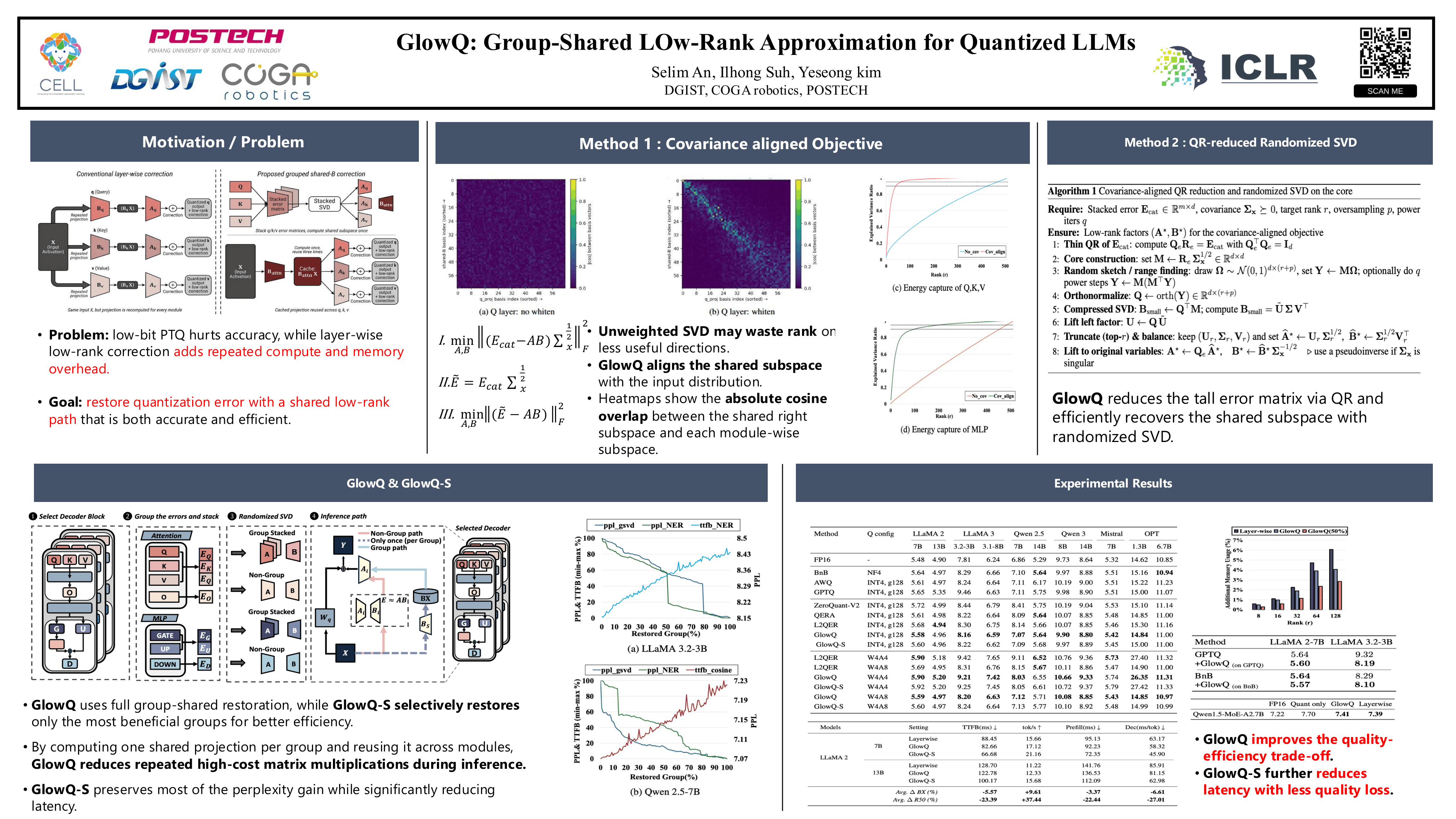
Quantization techniques such as BitsAndBytes, AWQ, and GPTQ are widely used as a standard method in deploying large language models but often degrades accuracy when using low-bit representations, e.g., 4 bits. Low-rank correction methods (e.g., LQER, QERA, ASER) has been proposed to mitigate this issue, however, they restore all layers and insert error-correction modules into every decoder block, which increases latency and memory overhead. To address this limitation, we propose GlowQ, a group-shared low-rank approximation for quantized LLMs that caches a single shared right factor per input-sharing group and restores only the groups or layers that yield the highest accuracy benefit. GlowQ computes the high-precision projection once per input-sharing group and reuses it across its modules, reducing parameter and memory overhead, and retaining the expressivity of layer-specific corrections. We also propose a selective variant, GlowQ-S, that applies the cached shared module only where it provides the largest benefit. Compared with strong baselines, our approach reduces TTFB by (5.6\%) and increases throughput by (9.6\%) on average, while reducing perplexity on WikiText-2 by (0.17\%) and increasing downstream accuracy by 0.42 percentage points. The selective model GlowQ-S further reduces latency, cutting TTFB by (23.4\%) and increasing throughput by (37.4\%), while maintaining accuracy within 0.2 percentage points on average.
Completed Hyperparameter Transfer across Modules, Width, Depth, Batch and Duration
Bruno Mlodozeniec ⋅ Pierre Ablin ⋅ Louis Béthune ⋅ Dan Busbridge ⋅ Michal Klein ⋅ Jason Ramapuram ⋅ marco cuturi
Hyperparameter tuning can dramatically impact training stability of large-scale models. Recent works on neural network parameterisations, such as μP, have shown that layer types and sizes should dictate how global hyperparameters should be rescaled in order to achieve efficient transfer across model sizes. On the other hand, the established practice for hyperparameter optimisation search is to look for optimal global base values that apply at some fixed model scale. We transfer hyperparameters across all scaling axes: width and depth, using an extension of CompleteP (Dey et al., 2025), training horizon, and batch size. Our study covers all optimisation hyperparameters of modern models: learning rates, Adam parameters, weight decay, initialisation scales, and residual block multipliers. Lastly, we demonstrate that hyperparameter transfer holds even in the per-layer hyperparameter regime. We characterise the empirical challenges of navigating the high-dimensional hyperparameter landscape, and propose practical guidelines for tackling this optimisation problem. We suggest a simplified parameterisation of the hyperparameter space that reduces the dimensionality of the search-space at no performance cost. Our experiments demonstrate training speed improvements when applying transferred hyperparameters to Large Language Models.
Training Dynamics Impact Post-Training Quantization Robustness
Albert Catalan-Tatjer ⋅ Niccolò Ajroldi ⋅ Jonas Geiping
While post-training quantization is widely adopted for efficient deployment of large language models, the mechanisms underlying quantization robustness remain unclear. We conduct a comprehensive analysis of quantization degradation across open-source language model training trajectories up to 32B parameters and 15T training tokens to accurately assess the relationship between training dynamics and quantization performance. Our key finding is that quantization errors in large-scale training runs are driven by a complex interplay between learning rate and other training hyperparameters. Specifically, once learning rates decay, validation loss and quantization error diverge, largely independent of training data scale. To investigate interventions on the training dynamics and identify specific configurations that can modulate quantization robustness favorably, we train our own models in controlled experiments up to 100B tokens. Our results challenge the assumption that increasing dataset scale inherently compromises quantization effectiveness, demonstrating instead that strategic training hyperparameter interventions can improve quantization quality at scale.
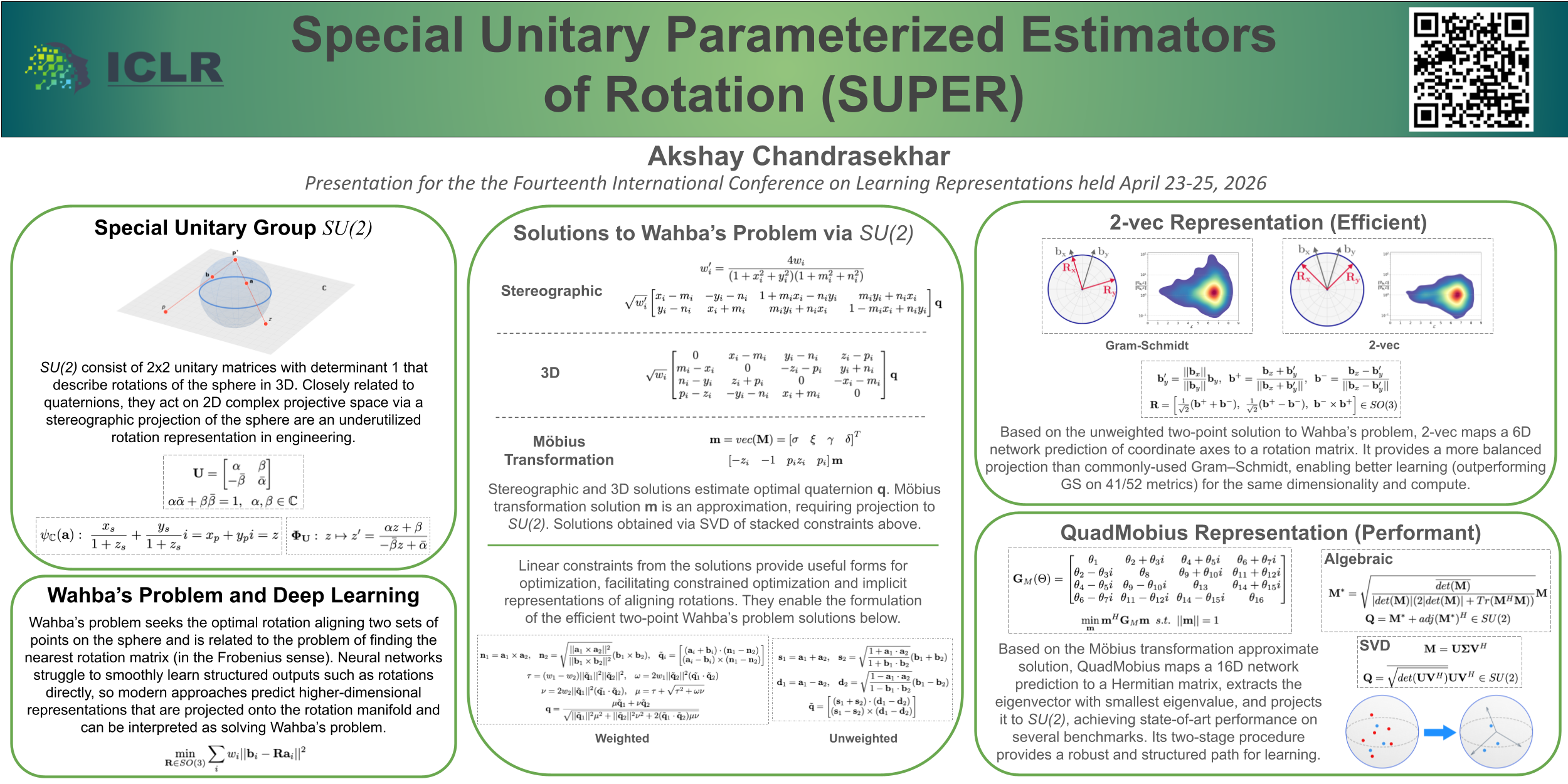
This paper revisits the topic of rotation estimation through the lens of special unitary matrices. We begin by reformulating Wahba’s problem using $SU(2)$ to derive multiple solutions that yield linear constraints on corresponding quaternion parameters. We then explore applications of these constraints by formulating efficient methods for related problems. Finally, from this theoretical foundation, we propose two novel continuous representations for learning rotations in neural networks. Extensive experiments validate the effectiveness of the proposed methods.
Adaptive Regularization for Large-Scale Sparse Feature Embedding Models
Mang Li ⋅ Wei Lyu
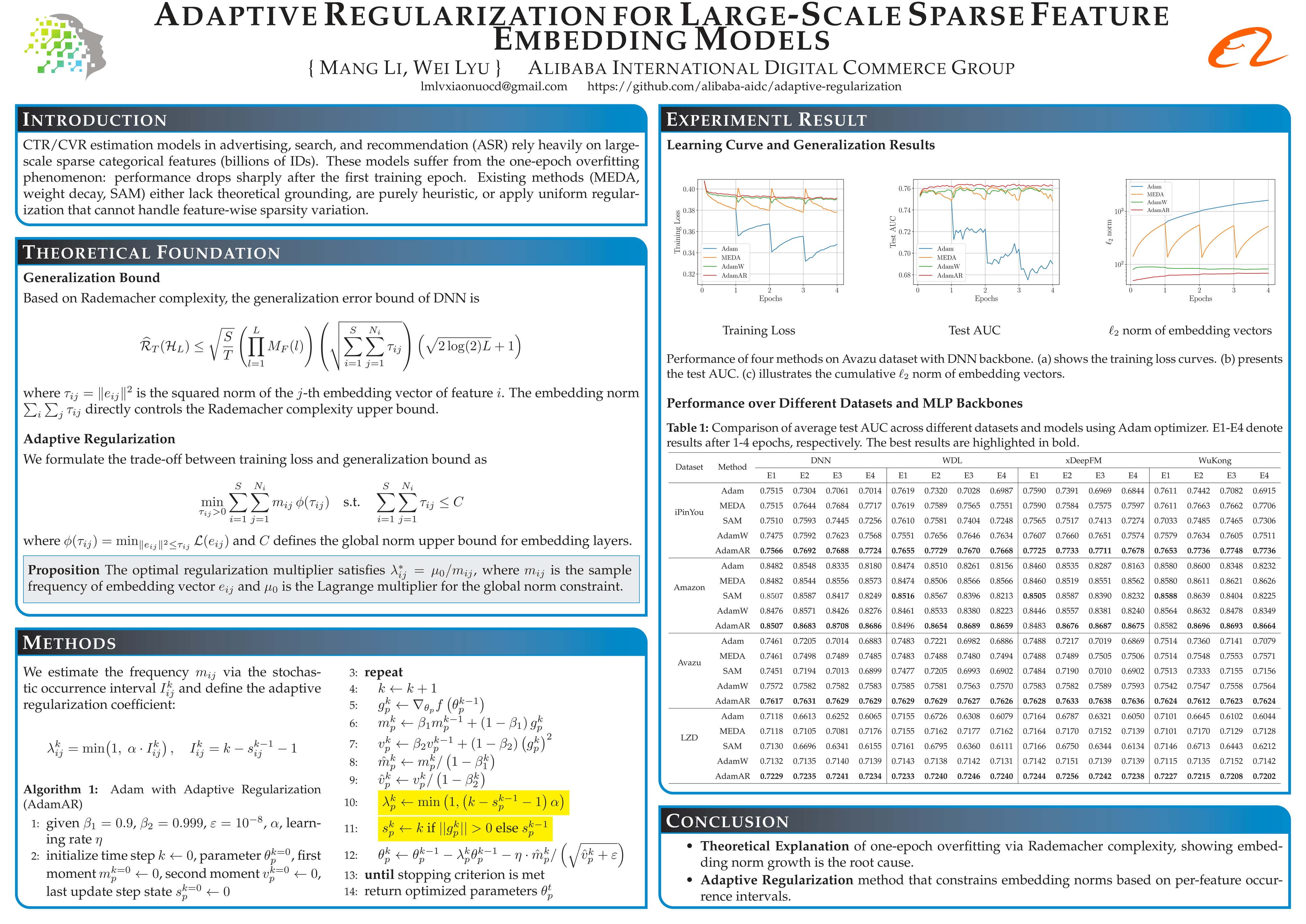
The one-epoch overfitting problem has drawn widespread attention, especially in CTR and CVR estimation models in search, advertising, and recommendation domains. These models which rely heavily on large-scale sparse categorical features, often suffer a significant decline in performance when trained for multiple epochs. Although recent studies have proposed heuristic solutions, the fundamental cause of this phenomenon remains unclear. In this work, we present a theoretical explanation grounded in Rademacher complexity, supported by empirical experiments, to explain why overfitting occurs in models with large-scale sparse categorical features. Based on this analysis, we propose a regularization method that constrains the norm budget of embedding layers adaptively. Our approach not only prevents the severe performance degradation observed during multi-epoch training, but also improves model performance within a single epoch. This method has already been deployed in online production systems.
Clipped Gradient Methods for Nonsmooth Convex Optimization under Heavy-Tailed Noise: A Refined Analysis
Zijian Liu
Optimization under heavy-tailed noise has become popular recently, since it better fits many modern machine learning tasks, as captured by empirical observations. Concretely, instead of a finite second moment on gradient noise, a bounded $\mathfrak{p}$-th moment where $\mathfrak{p}\in(1,2]$ has been recognized to be more realistic (say being upper bounded by $\sigma_{\mathfrak{l}}^{\mathfrak{p}}$ for some $\sigma_{\mathfrak{l}}\geq0$). A simple yet effective operation, gradient clipping, is known to handle this new challenge successfully. Specifically, Clipped Stochastic Gradient Descent (Clipped SGD) guarantees a high-probability rate $\mathcal{O}(\sigma_{\mathfrak{l}}\ln(1/\delta)T^{\frac{1}{\mathfrak{p}}-1})$ (resp. $\mathcal{O}(\sigma_{\mathfrak{l}}^{2}\ln^{2}(1/\delta)T^{\frac{2}{\mathfrak{p}}-2})$) for nonsmooth convex (resp. strongly convex) problems, where $\delta\in(0,1]$ is the failure probability and $T\in\mathbb{N}$ is the time horizon. In this work, we provide a refined analysis for Clipped SGD and offer two faster rates, $\mathcal{O}(\sigma_{\mathfrak{l}}d_{\mathrm{eff}}^{-\frac{1}{2\mathfrak{p}}}\ln^{1-\frac{1}{\mathfrak{p}}}(1/\delta)T^{\frac{1}{\mathfrak{p}}-1})$ and $\mathcal{O}(\sigma_{\mathfrak{l}}^{2}d_{\mathrm{eff}}^{-\frac{1}{\mathfrak{p}}}\ln^{2-\frac{2}{\mathfrak{p}}}(1/\delta)T^{\frac{2}{\mathfrak{p}}-2})$, than the aforementioned best results, where $d_{\mathrm{eff}}\geq1$ is a quantity we call the generalized effective dimension. Our analysis improves upon the existing approach in two respects: better utilization of Freedman's inequality and finer bounds for clipping error under heavy-tailed noise. In addition, we extend the refined analysis to convergence in expectation and obtain new rates that break the known lower bounds. Lastly, to complement the study, we establish new lower bounds for both high-probability and in-expectation convergence. Notably, the in-expectation lower bounds match our new upper bounds, indicating the optimality of our refined analysis for convergence in expectation.
Why Low-Precision Transformer Training Fails: An Analysis on Flash Attention
Haiquan Qiu ⋅ Quanming Yao
The pursuit of computational efficiency has driven the adoption of low-precision formats for training transformer models. However, this progress is often hindered by notorious training instabilities. This paper provides the first mechanistic explanation for a long-standing and unresolved failure case where training with flash attention in low-precision settings leads to catastrophic loss explosion. Our in-depth analysis reveals that the failure is not a random artifact but caused by two intertwined phenomena: the emergence of similar low-rank representations within the attention mechanism and the compounding effect of biased rounding errors inherent in low-precision arithmetic. We demonstrate how these factors create a vicious cycle of error accumulation that corrupts weight updates, ultimately derailing the training dynamics. To validate our findings, we introduce a minimal modification to the flash attention that mitigates the bias in rounding errors. This simple change stabilizes the training process, confirming our analysis and offering a practical solution to this persistent problem. Code is available at https://github.com/ucker/why-low-precision-training-fails.
The 99% Success Paradox: When Near-Perfect Retrieval Equals Random Selection
Vyzantinos Repantis ⋅ Harshvardhan Singh ⋅ Tony Joseph ⋅ Cien Zhang ⋅ Akash Vishwakarma ⋅ Svetlana Karslioglu ⋅ Michael Thot ⋅ Ameya Gawde
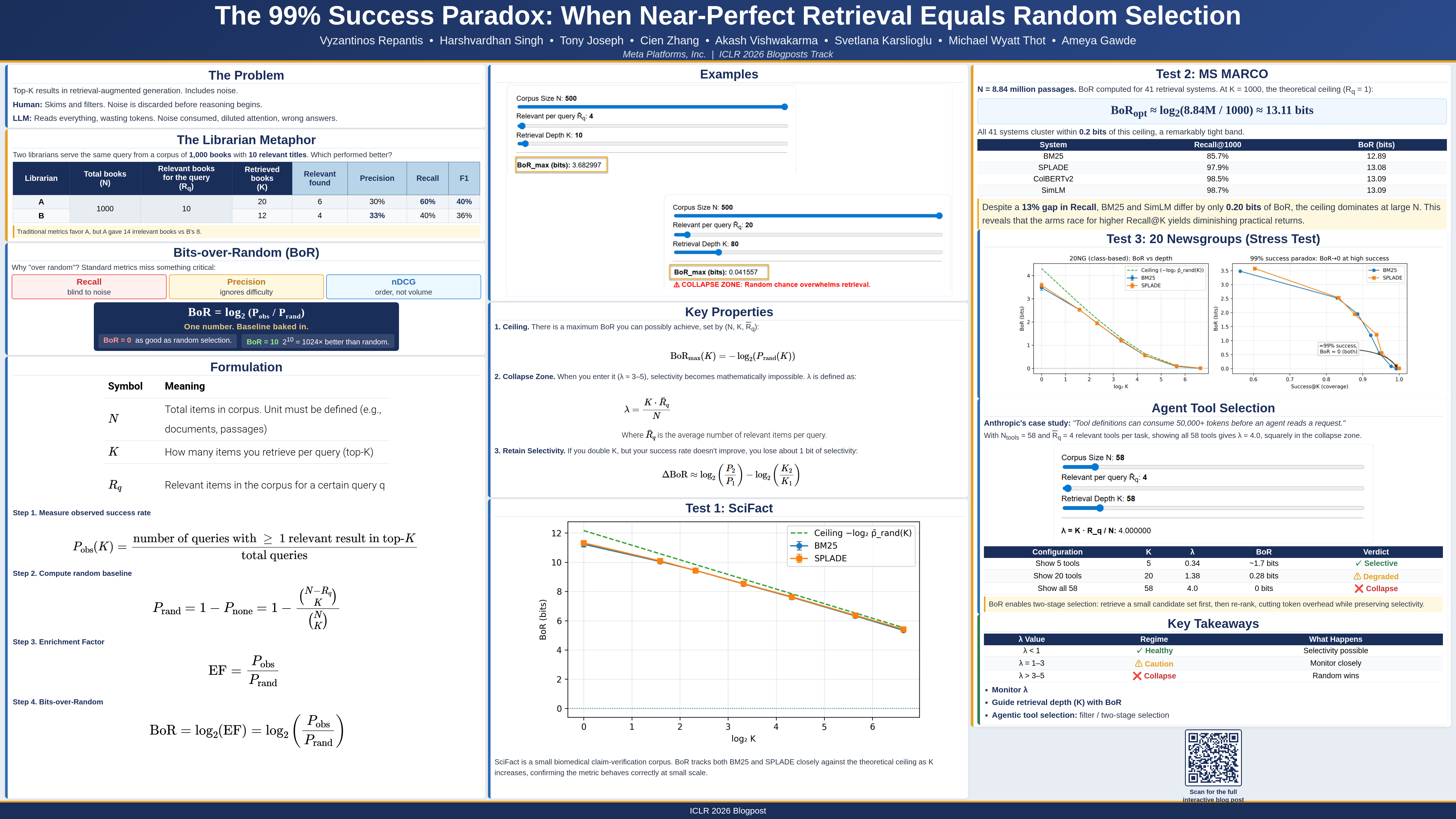
For most of information retrieval's history, search results were designed for human consumers who could scan, filter, and discard irrelevant content. This shaped retrieval systems to optimize for finding and ranking relevant documents, but not for minimizing noise, because humans served as the final filter. Retrieval-augmented generation (RAG) and tool-using agents flip these assumptions. Now the consumer is often an LLM, not a person, and the model does not skim. In practice, introducing excessive or irrelevant context into the input can dilute the model's ability to identify and focus on the most critical information. We define selectivity as the ability of a retrieval system to surface relevant items while excluding irrelevant ones. It is measured relative to random chance. We introduce Bits-over-Random (BoR), a measure of retrieval selectivity that reveals when high success rates mask random-level performance. A system with high selectivity finds needles without bringing along the haystack items. BoR uses a logarithmic scale where each bit represents a doubling in selectivity. This framework is grounded in information theory: $\text{BoR} = \log_2(P_{\text{obs}}/P_{\text{rand}})$, where $P_{\text{obs}}$ is the observed success rate (we use Success@K). $P_{\text{rand}}$ represents the expected success rate of random selection. BoR is measured in bits. By studying reported system performance in the literature for the MS MARCO dataset and by testing two datasets (BIER SciFact and 20 Newsgroups classification), we demonstrate how to measure selectivity in retrieval and LLM-based systems. On MS MARCO at $K=1000$, we analyzed reported performance of 41 different retrieval systems spanning three decades of retrieval technology. BM25 baseline (85.7% recall) achieves 12.89 bits, while state-of-the-art SimLM (98.7% recall) achieves 13.09 bits. This is a difference of only 0.20 bits despite a 13-point recall gap. All 41 systems clustered close to the theoretical ceiling of 13.11 bits, suggesting diminishing returns from retriever improvements alone for this dataset, and at this scale and depth. We see similar results on BIER SciFact. In our 20 Newsgroups retrieval task, each query has over 500 relevant items on average. We perform this stress test because there are many similarities to agentic tool selection setups. Increasing retrieval depth from $K=10$ to $K=100$ raises Success@K to 100%, indicating near-perfect retrieval. However, LLM classification accuracy drops by 10-16%, and token costs increase tenfold. Traditional metrics fail to detect this failure, which resembles random chance retrieval. BoR clearly reveals the issue by dropping to nearly zero at this task and depth. The "collapse zone" is where meaningful selectivity becomes mathematically impossible regardless of system quality. This occurs when $\lambda = \frac{K \cdot \bar{R}_q}{N}$ reaches 3-5, where $K$ is retrieval depth, $\bar{R}_q$ is average relevant items per query, and $N$ is corpus size. When $\lambda$ exceeds this threshold, even perfect systems achieve near-zero BoR because random selection already succeeds most of the time. The collapse boundary reveals critical implications for LLM agent tool selection. Industry-reported case studies outline examples where systems present their full suite of tools to an LLM (for example, $N=58$, $K=58$, $R_q \approx 4$). This means that such a system operates at high $\lambda$ ($\lambda \approx 4.0$), deep into the collapse zone. Through the lens of BoR, we analyze such cases and conclude that even a perfect tool selector achieves low selectivity over random chance (in one case, only ~0.02 bits). This explains why "wrong tool selection" is the most common failure mode for tool agentic systems. This pattern also affects any selection problem with a small $N$ and relatively high $K$ and $R_q$, including API endpoints, agent skills, or multi-hop retrieval chains. We also establish the "doubling rule": when retrieval depth plateaus in success rate, doubling $K$ loses approximately 1 bit of selectivity, while $10\times$ increase loses ~3.3 bits. This quantifies the hidden cost of "just retrieve more", a common but potentially harmful strategy in LLM systems. BoR can work with various success conditions (Success@K, Recall@K, and rules requiring multiple relevant items). Our work reveals three critical insights: 1. Performance ceilings exist even for perfect systems, determined entirely by the random baseline. 2. The collapse zone makes selectivity impossible when $\lambda$ reaches 3-5. 3. Depth-selectivity trade-offs become explicit through measuring differences ($\Delta\text{BoR}$) between different depths. For practitioners, BoR offers operational guidance: monitor $\lambda$ to avoid the collapse zone, stop increasing $K$ when $\text{BoR}_{\text{max}}$ drops below ~0.1 bits, and use aggressive filtering for tool-based agents where small $N$ makes collapse inevitable.
WSVD: Weighted Low-Rank Approximation for Fast and Efficient Execution of Low-Precision Vision-Language Models
Haiyu Wang ⋅ Yutong Wang ⋅ Jack Jiang ⋅ Sai Qian Zhang
Singular Value Decomposition (SVD) has become an important technique for reducing the computational burden of Vision Language Models (VLMs), which play a central role in tasks such as image captioning and visual question answering. Although multiple prior works have proposed efficient SVD variants to enable low-rank operations, we find that in practice it remains difficult to achieve substantial latency reduction during model execution. To address this limitation, we introduce a new computational pattern and apply SVD at a finer granularity, enabling real and measurable improvements in execution latency. Furthermore, recognizing that weight elements differ in their relative importance, we adaptively allocate relative importance to each element during SVD process to better preserve accuracy, then extend this framework with quantization applied to both weights and activations, resulting in a highly efficient VLM. Collectively, we introduce Weighted SVD (WSVD), which outperforms other approaches by achieving over $1.8\times$ decoding speedup while preserving accuracy. We open source our code at: https://github.com/SAI-Lab-NYU/WSVD.
Translate Policy to Language: Flow Matching Generated Rewards for LLM Explanations
Xinyi Yang ⋅ Liang Zeng ⋅ Heng Dong ⋅ Chao Yu ⋅ Xiaoran Wu ⋅ Huazhong Yang ⋅ Yu Wang ⋅ Milind Tambe ⋅ Tonghan Wang
As humans increasingly share environments with diverse agents powered by RL, LLMs, and beyond, the ability to explain agent policies in natural language is vital for reliable coexistence. We introduce a general-purpose framework that trains explanation-generating LLMs via reinforcement learning from AI feedback, with distributional rewards generated by generative continuous normalizing flows (CNFs). CNFs capture the pluralistic and probabilistic nature of human judgments about explanations. Moreover, under mild assumptions, CNFs provably bound deviations from true human reward distributions when trained on noisy proxy rewards from LLMs. We design a specialized CNF architecture that selectively attends to linguistic cues in decision context and explanations when generating rewards. Human and LLM evaluators find that our method delivers explanations that enable more accurate predictions of true agent decisions, exhibit greater logical soundness and actionability, and impose lower cognitive load than explanations trained with proxy LLM rewards or state-of-the-art RLHF and RLAIF baselines.
Programming by Backprop: An Instruction is Worth 100 Examples When Finetuning LLMs
Jonathan Cook ⋅ Silvia Sapora ⋅ Arash Ahmadian ⋅ Akbir Khan ⋅ Tim Rocktaeschel ⋅ Jakob Foerster ⋅ Laura Ruis
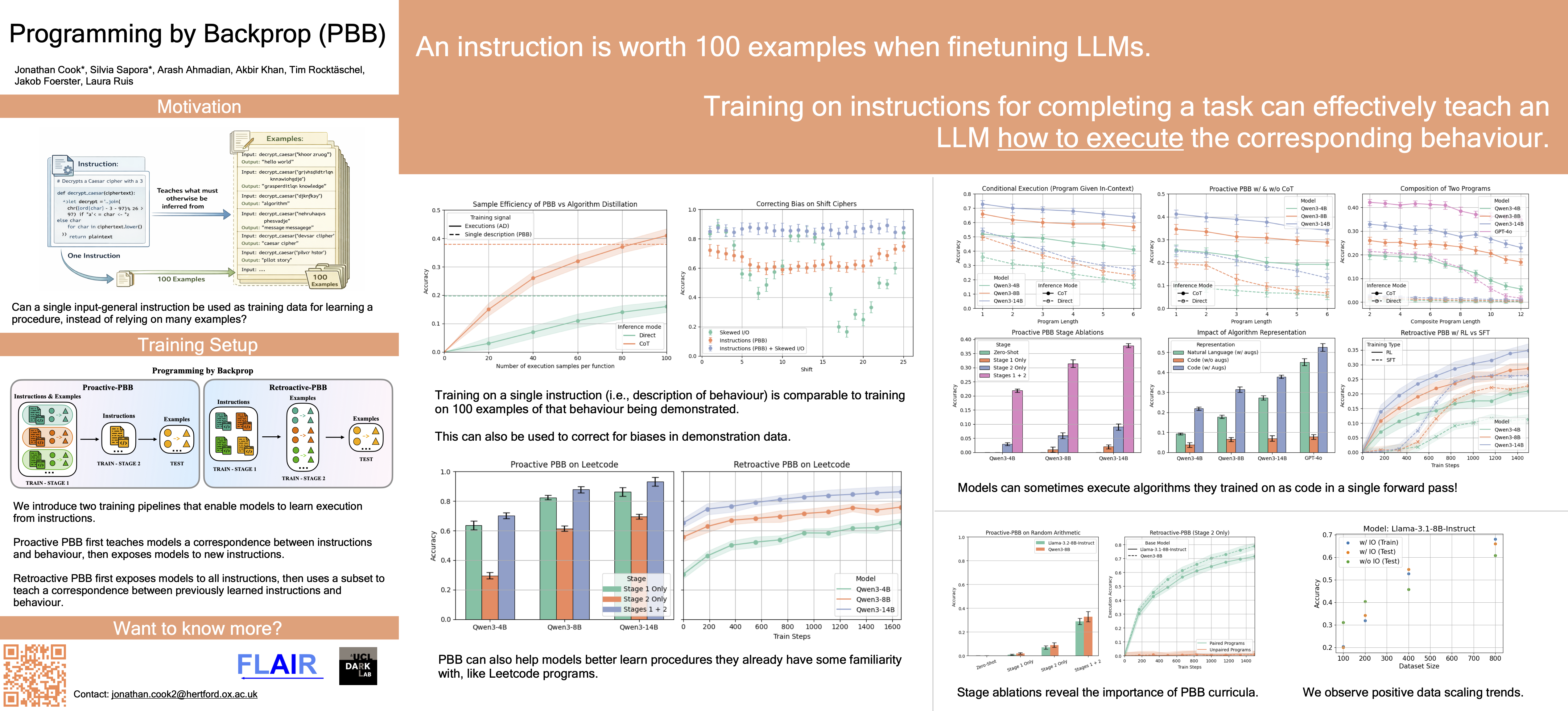
Large language models (LLMs) are typically trained to acquire behaviours from demonstrations or experience, yet much of their training data is declarative: instructions, rules, and descriptions that specify behaviours without showing how to execute them. We introduce Programming by Backprop (PBB): a training regime that enables LLMs to acquire procedural knowledge (i.e., reusable behaviours) from declarative instructions encountered during training. With PBB, instructions in training data provide an opportunity to "program" specific behaviours into model weights. The core principle underpinning PBB is the separation of learning how instructions map to behaviour from internalising new instructions. We devise two distinct PBB curricula that leverage this principle. Through controlled experiments across two domains (algorithmic execution from Python source code and text generation from context-free grammars), we demonstrate the benefit of these curricula over training on a homogeneous data mixture. Crucially, PBB is highly sample efficient, with a single instruction substituting for up to 100 execution examples. Though execution of instructions in training data remains less reliable than when instructions are given in-context, our results demonstrate that procedural knowledge can be noisily `programmed' into LLMs through PBB, with important implications for data curation and safety.
Text summarization via global structure awareness
Jiaquan Zhang ⋅ Chaoning Zhang ⋅ Shuxu Chen ⋅ Yibei Liu ⋅ Chenghao Li ⋅ Qigan Sun ⋅ Shuai Yuan ⋅ Fachrina Puspitasari ⋅ Dongshen Han ⋅ Guoqing Wang ⋅ Sung-Ho Bae ⋅ Yang Yang
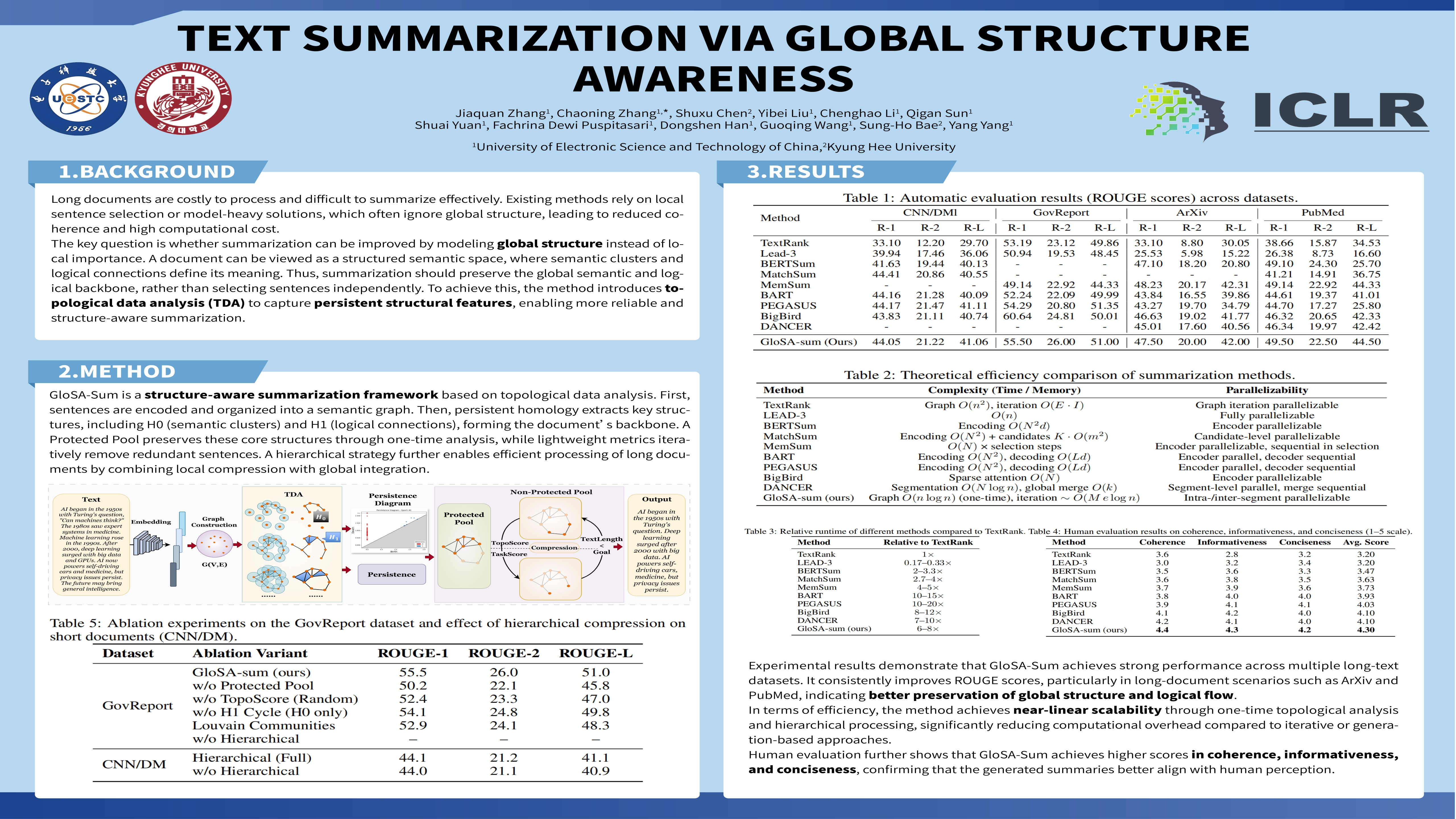
With the explosive growth of information, the volume of long documents has surged, and the cost of processing them continues to rise, making text summarization increasingly important. Existing studies primarily focus on model enhancements and sentence-level pruning based on contextual dependencies and semantic patterns. Although some approaches leverage large language models (LLMs) for text summarization and achieve higher accuracy, they incur substantial computational costs and often overlook global structural modeling. Consequently, summarized texts may lose critical logical chains, disrupting coherence and weakening downstream task performance. To address these issues, we propose GloSA-Sum, a novel text summarization framework that performs global structural analysis of texts via topological data analysis (TDA), enabling efficient summarization while preserving semantic cores and logical dependencies. Specifically, we construct a semantic-weighted graph from sentence embeddings, where persistent homology identifies core semantics and logical structures, preserved in a ``protection pool'' as the backbone for summarization. We design a topology-guided iterative strategy, where lightweight proxy metrics approximate sentence importance to avoid repeated high-cost computations, thus preserving structural integrity while improving efficiency. To further enhance long-text processing, we propose a hierarchical strategy that integrates segment-level and global summarization. Experiments on multiple datasets demonstrate that GloSA-sum reduces redundancy while preserving semantic and logical integrity, striking a balance between accuracy and efficiency, and further benefits LLM downstream tasks by shortening contexts while retaining essential reasoning chains.
Reasoning Models Can be Accurately Pruned Via Chain-of-Thought Reconstruction
Ryan Lucas ⋅ Kayhan Behdin ⋅ Zhipeng Wang ⋅ Qingquan Song ⋅ shao tang ⋅ Rahul Mazumder
Reasoning language models such as DeepSeek-R1 produce long chain-of-thought traces during inference time which make them costly to deploy at scale. We show that using compression techniques such as neural network pruning produces greater performance loss than in typical language modeling tasks, and in some cases can make the model slower since they cause the model to produce more thinking tokens but with worse performance. We show that this is partly due to the fact that standard LLM pruning methods often focus on input reconstruction, whereas reasoning is a decode-dominated task. We introduce a simple, drop-in fix: during pruning we jointly reconstruct activations from the input and the model’s on-policy chain-of-thought traces. This “Reasoning-Aware Compression” (RAC) integrates seamlessly into existing pruning workflows such as SparseGPT, and boosts their performance significantly. Anonymized code can be found at: https://github.com/RyanLucas3/Reasoning-Aware-Compression
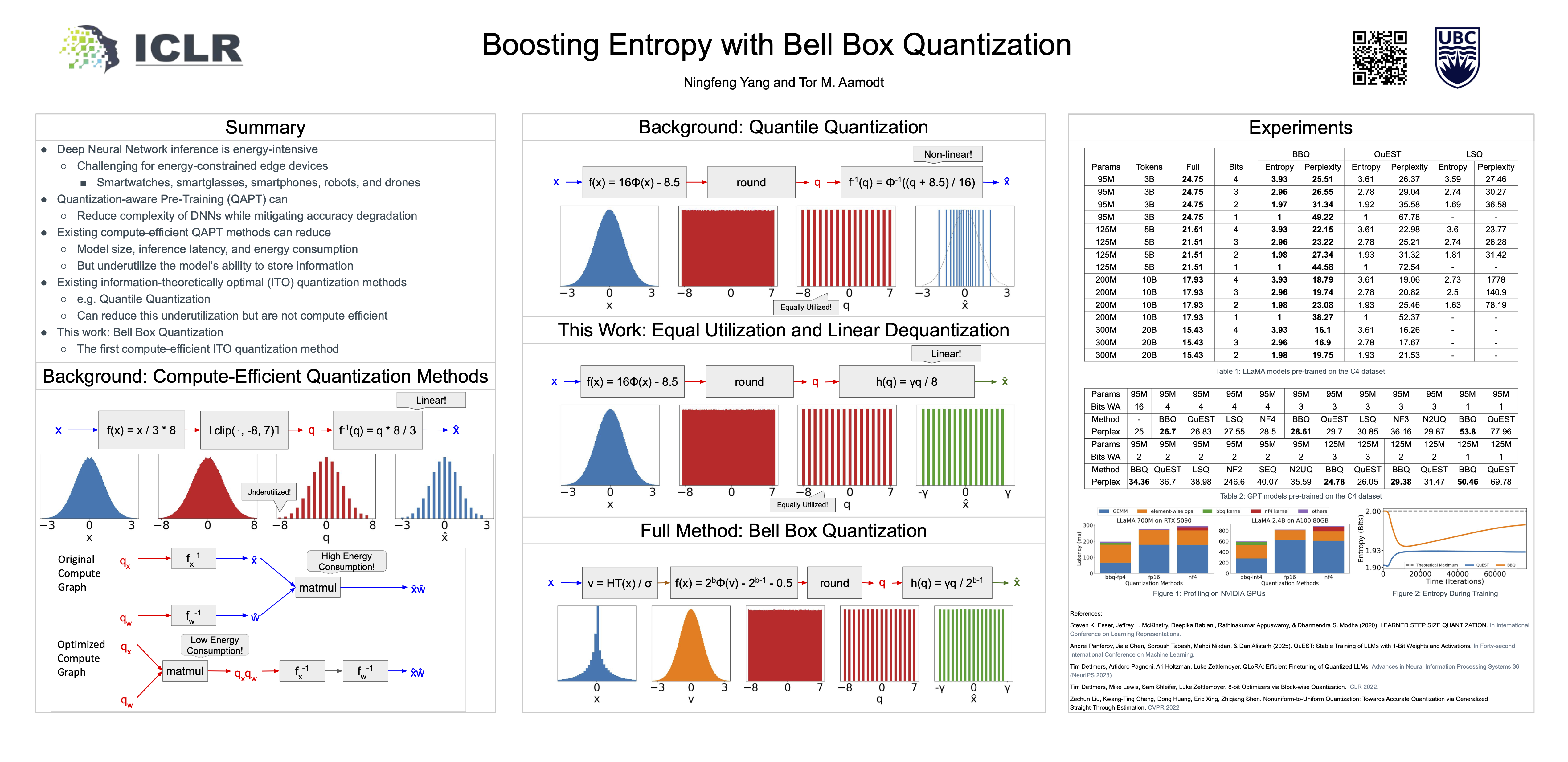
Quantization-Aware Pre-Training (QAPT) is an effective technique to reduce the compute and memory overhead of Deep Neural Networks while improving their energy efficiency on edge devices. Existing QAPT methods produce models stored in compute-efficient data types (e.g. integers) that are not information theoretically optimal (ITO). On the other hand, existing ITO data types (e.g. Quantile/NormalFloat Quantization) are not compute-efficient. We propose BBQ, the first ITO quantization method that is also compute-efficient. BBQ builds on our key insight that since learning is domain-agnostic, the output of a quantizer does not need to reside in the same domain as its input. BBQ performs ITO quantization in its input domain, and returns its output in a compute-efficient domain where ITO data types are mapped to compute-efficient data types. Without sacrificing compute efficiency, BBQ outperforms prior SOTA QAPT methods by a perplexity reduction of up to 2 points for 4-bit models, up to 4 points for 3-bit models, up to 5 points for 2-bit models, and up to 18 points for 1-bit models. Code is available at https://github.com/1733116199/bbq.
Stochastic Self-Organization in Multi-Agent Systems
Nurbek Tastan ⋅ Samuel Horváth ⋅ Karthik Nandakumar
Large Language Models (LLMs) have enabled multi-agent systems (MAS) where agents collaborate to solve tasks beyond the reach of a single model. Yet most existing approaches rely on fixed topologies, pretrained graph generators, optimization over edges, or external LLM judges, thereby adding complexity. We introduce a response-conditioned framework that adapts communication on the fly. Agents independently generate answers and assess peer contributions using a Shapley~value-inspired approximation. A directed acyclic graph (DAG) is then constructed to route information from high-contribution agents to others, ensuring stable and efficient message passing without the need for additional supervision or training. We provide a theoretical analysis showing that multiple agents increase the chance of correctness and that the correct answers naturally dominate information flow. Experiments with both strong and weak LLM backends demonstrate robust performance, with significant gains in the weak regime where prior methods collapse.
Making, Not Taking, the Best of N
Ammar Khairi ⋅ Daniel Dsouza ⋅ Marzieh Fadaee ⋅ Julia Kreutzer
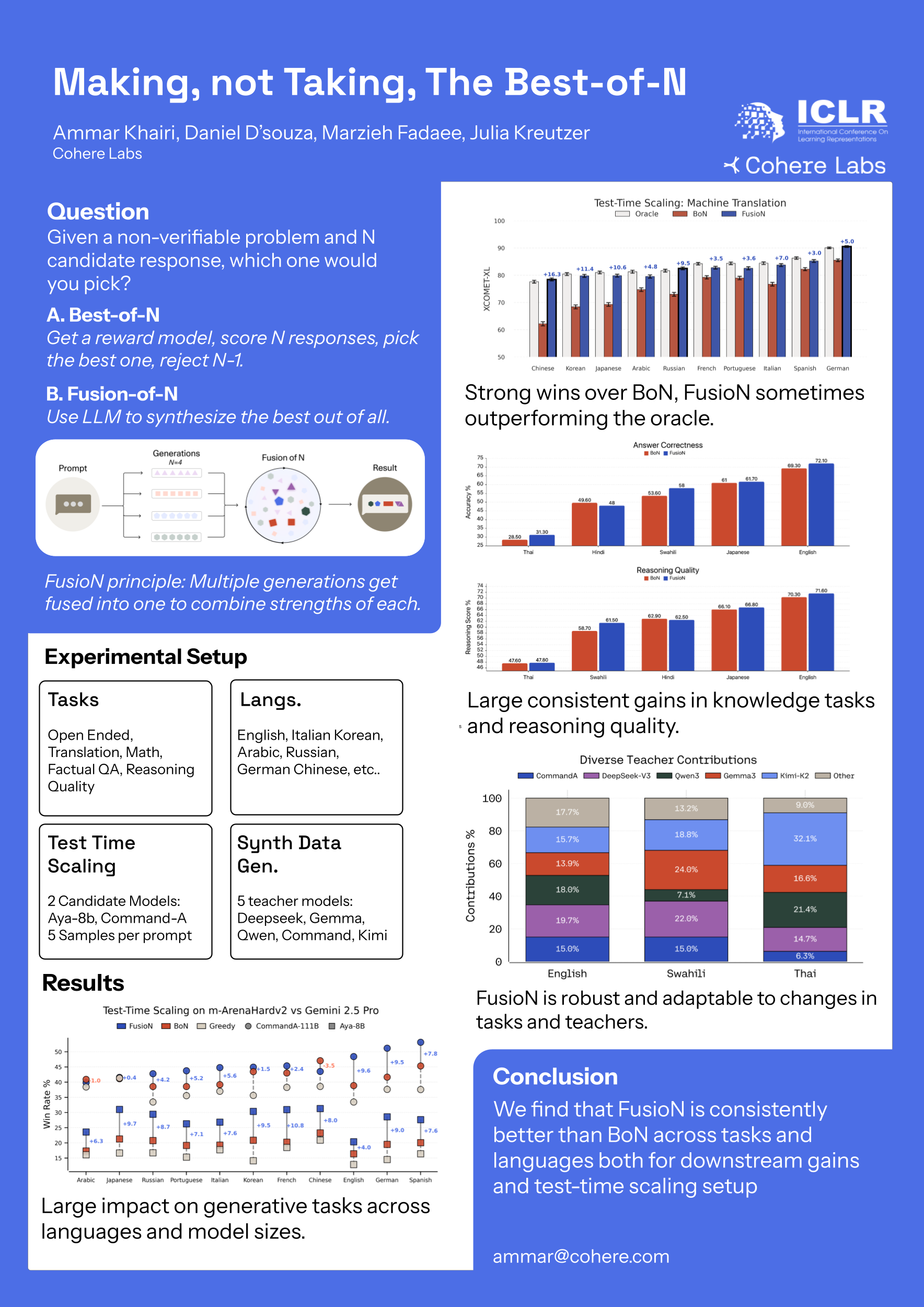
Obtaining high-quality generations in modern LLMs has largely been framed as a selection problem: identifying a single winning generation from a diverse pool of $N$ samples, the Best-of-$N$ (BoN). Yet, this approach is inherently zero-sum, discarding diverse and potentially useful information from the pool. Instead, we explore a collaborative setup, where all candidates can potentially contribute to the final winning generation. To this end, we propose Fusion-of-$N$ (FusioN): a method that uses a general LLM judge to synthesize the most informative elements of each sample into a single final answer. We compare FusioN to BoN in two settings, (i) test-time scaling, where we sample and aggregate from a single model at test-time (ii) synthetic data generation, where we fuse samples from a pool of diverse teachers to improve a student model. We extensively benchmark both setups across 11 languages, 3 diverse benchmarks and varying model scales. Across the bench, FusionN consistently outperforms BoN showing versatility and robustness both in test-time scaling and in downstream gains from synthetic data generation. We also perform extensive analysis on FusioN, where it shows surprising strengths and robustness under challenging settings. These results show that we should shift how we think about evaluating and utilizing LLM generations from a monolithic measure of quality, to embracing their polylithic nature. This shift allows us to integrate diverse strengths, unlock latent potential, and achieve improvements that were previously inaccessible through selection alone.
Universal Model Routing for Efficient LLM Inference
Wittawat Jitkrittum ⋅ Harikrishna Narasimhan ⋅ Ankit Singh Rawat ⋅ Jeevesh Juneja ⋅ Congchao Wang ⋅ Zifeng Wang ⋅ Alec Go ⋅ Chen-Yu Lee ⋅ Pradeep Shenoy ⋅ Rina Panigrahy ⋅ Aditya Krishna Menon ⋅ Sanjiv Kumar
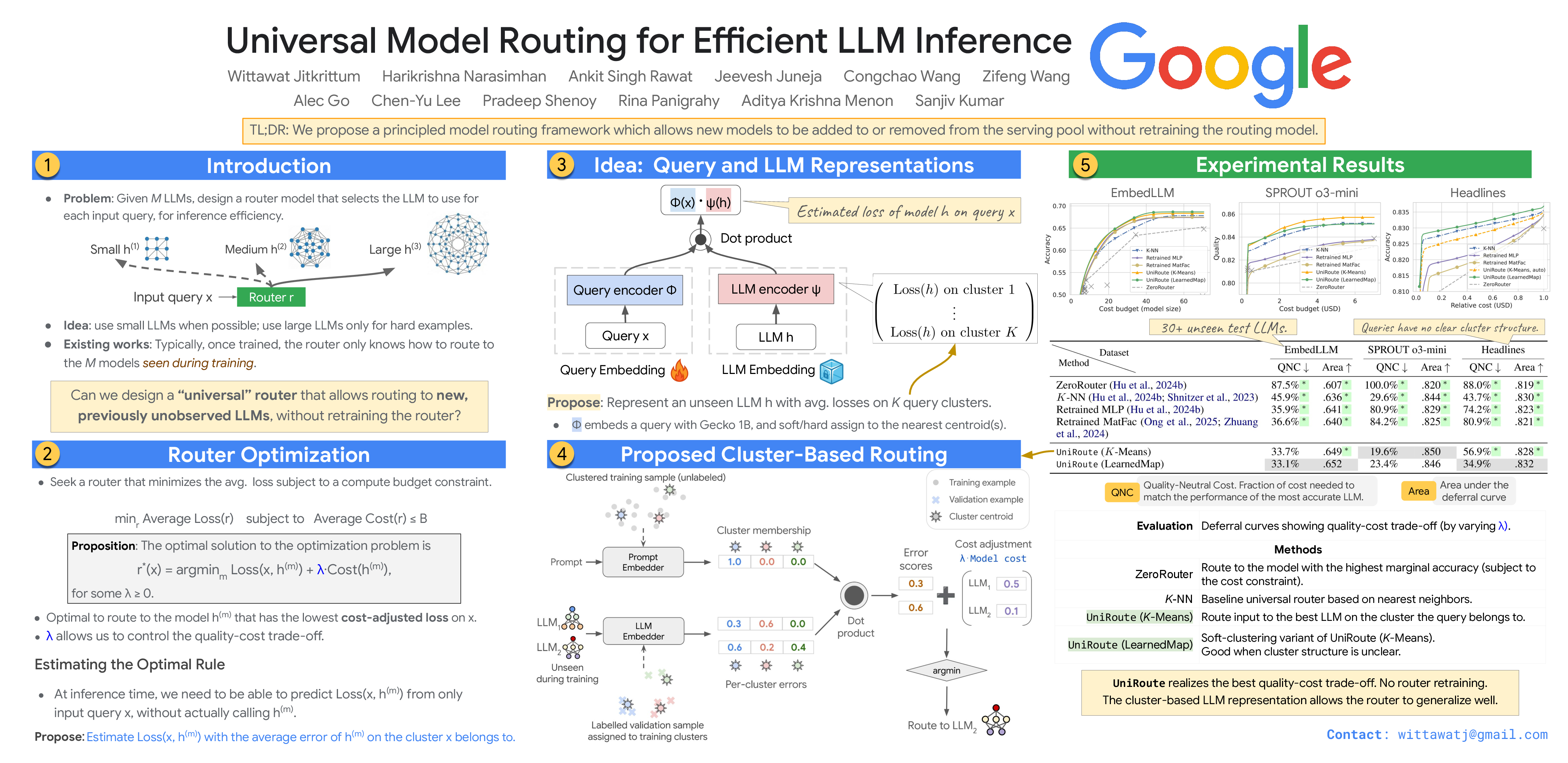
Model routing is a simple technique for reducing the inference cost of large language models (LLMs), wherein one maintains a pool of candidate LLMs, and learns to route each prompt to the smallest feasible LLM. Existing works focus on learning a router for a fixed pool of LLMs. In this paper, we consider the problem of dynamic routing, where new, previously unobserved LLMs are available at test time. We propose UniRoute, a new approach to this problem that relies on representing each LLM as afeature vector, derived based on predictions on a set of representative prompts. Based on this, we detail two effective instantiations of UniRoute, relying on cluster-based routing and a learned cluster map respectively. We show that these are estimates of a theoretically optimal routing rule, and quantify their errors via an excess risk bound. Experiments on a range of public benchmarks show the effectiveness of UniRoute in routing amongst more than 30 unseen LLMs.
GPG: A Simple and Strong Reinforcement Learning Baseline for Model Reasoning
Xiangxiang Chu ⋅ Hailang Huang ⋅ Xiao Zhang ⋅ Fei Wei ⋅ Yong Wang
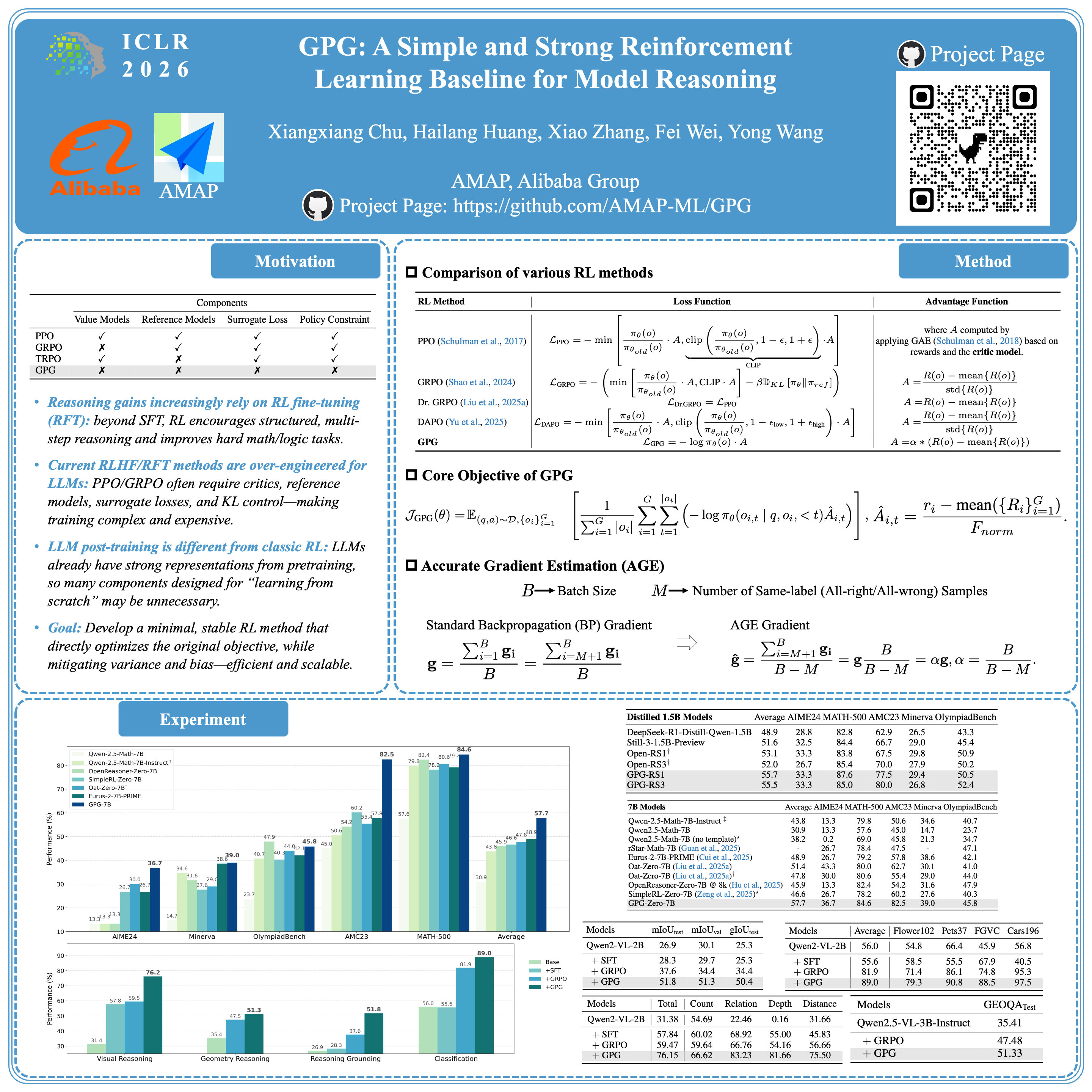
Reinforcement Learning (RL) can directly enhance the reasoning capabilities of large language models without extensive reliance on Supervised Fine-Tuning (SFT). In this work, we revisit the traditional Policy Gradient (PG) mechanism and propose a minimalist RL approach termed Group Policy Gradient (GPG). Unlike conventional methods, GPG directly optimizes the original RL objective, thus obviating the need for surrogate loss functions. By eliminating the critic and reference models, avoiding KL divergence constraints, and addressing the advantage and gradient estimation bias, our approach significantly simplifies the training process compared to Group Relative Policy Optimization (GRPO). Our approach achieves superior performance without relying on auxiliary techniques or adjustments. As illustrated in Figure 1, extensive experiments demonstrate that our method not only reduces computational costs but also consistently outperforms GRPO across various unimodal and multimodal tasks.
Pre-training under infinite compute
Konwoo Kim ⋅ Suhas Kotha ⋅ Percy Liang ⋅ Tatsunori Hashimoto
Since compute grows much faster than web text available for language model pre-training, we ask how one should approach pre-training under fixed data and no compute constraints. We first show that existing data-constrained approaches of increasing epoch count and parameter count overfit, and we improve upon such recipes by tuning regularization, finding that the optimal weight decay is $30\times$ larger than standard practice. Since our regularized recipe monotonically decreases loss following a power law in parameter count, we estimate its best possible performance via the \textbf{asymptote} of its scaling law rather than the performance at a fixed compute budget. We then identify that ensembling independently trained models achieves a significantly lower loss asymptote than the regularized recipe. Our best intervention combining epoching, regularization, parameter scaling, and ensemble scaling achieves an asymptote at 200M tokens using $5.17\times$ less data than our baseline, and our data scaling laws predict that this improvement persists at higher token budgets. We find that our data efficiency gains can be realized at smaller parameter counts as we can distill an ensemble into a student model that is 8$\times$ smaller and retains $83$% of the ensembling benefit. Finally, our interventions designed for validation loss generalize to downstream benchmarks, achieving a $9$% improvement for pre-training evals. Our results show that simple algorithmic improvements can enable significantly more data-efficient pre-training in a compute-rich future.
RECON: Robust symmetry discovery via Explicit Canonical Orientation Normalization
Alonso Urbano ⋅ David Wilson Romero ⋅ Max Zimmer ⋅ Sebastian Pokutta
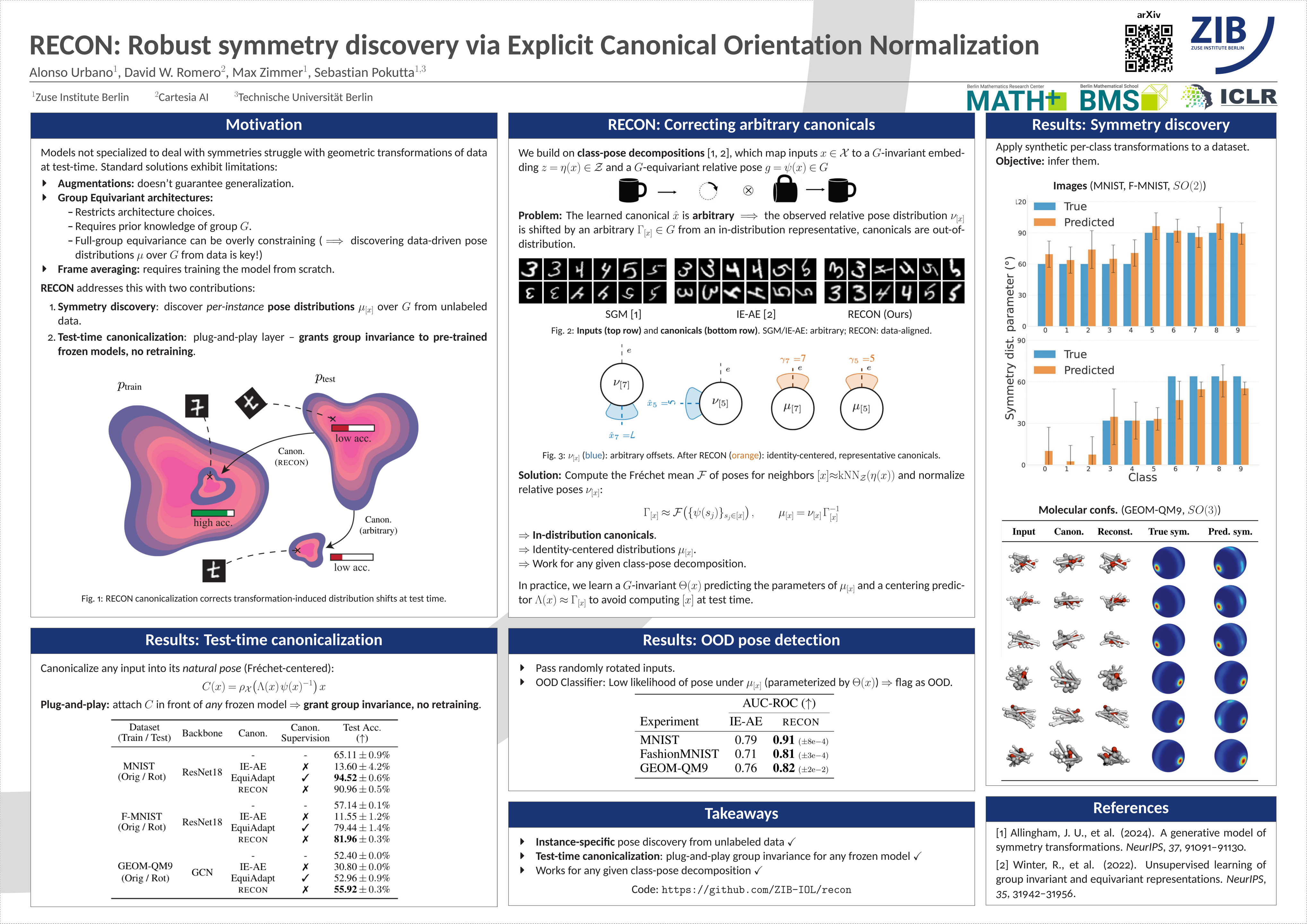
Real world data often exhibits unknown, instance-specific symmetries that rarely exactly match a transformation group $G$ fixed a priori. Class-pose decompositions aim to create disentangled representations by factoring inputs into invariant features and a pose $g\in G$ defined relative to a training-dependent, \emph{arbitrary} canonical representation. We introduce RECON, a class-pose agnostic \emph{canonical orientation normalization} that corrects arbitrary canonicals via a simple right translation, yielding \emph{natural}, data-aligned canonicalizations. This enables (i) unsupervised discovery of instance-specific pose distributions, (ii) detection of out-of-distribution poses and (iii) a plug-and-play \emph{test-time canonicalization layer}. This layer can be attached on top of any pre-trained model to infuse group invariance, improving its performance without retraining. We validate on 2D (images) and 3D (molecular ensembles), demonstrating fine-grained, accurate pose discovery, and matching or outperforming label-supervised canonicalizations in downstream classification.
Contextual Similarity Distillation: Ensemble Uncertainties with a Single Model
Moritz Akiya Zanger ⋅ Pascal R Van der Vaart ⋅ Wendelin Boehmer ⋅ Matthijs T. J. Spaan
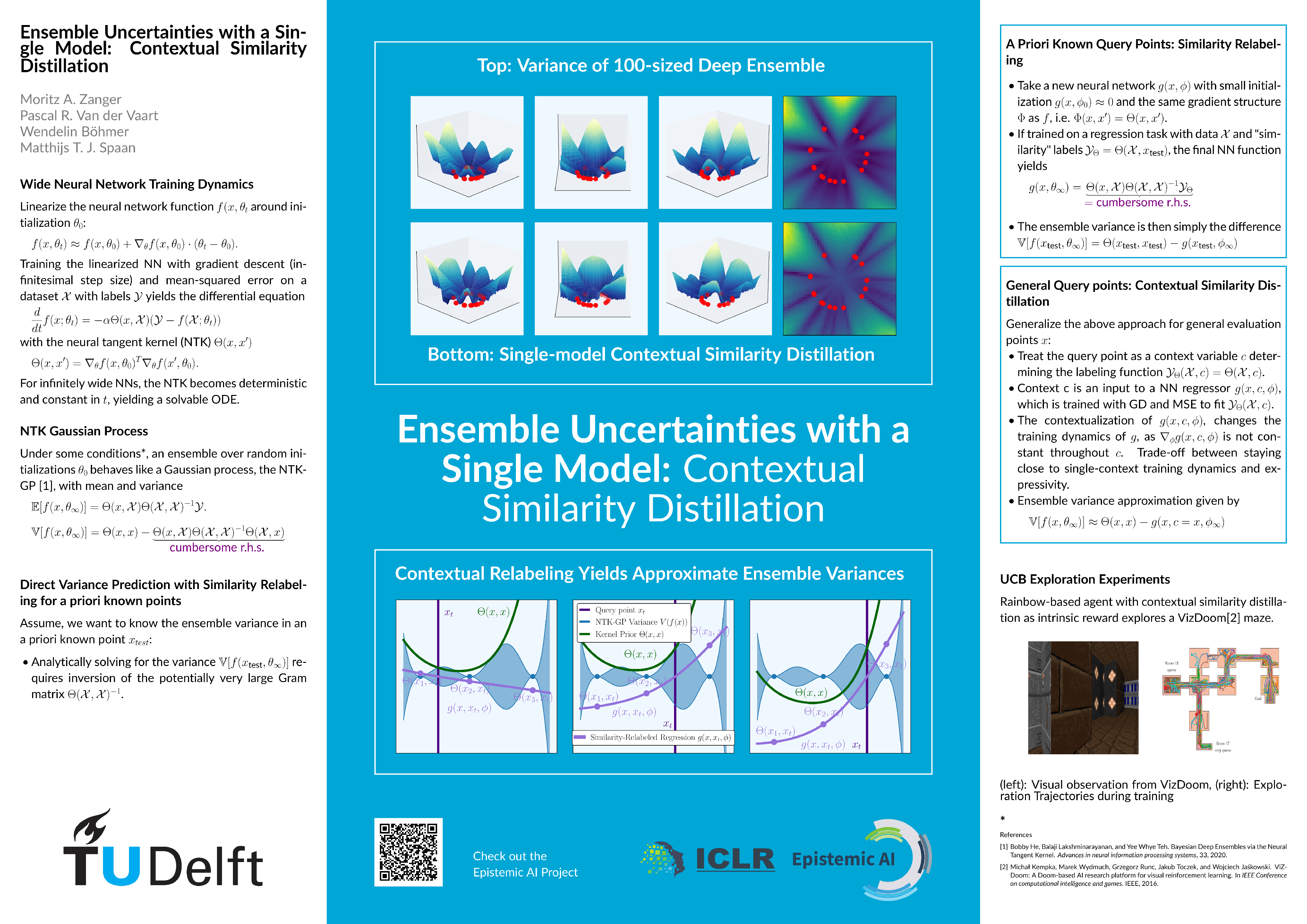
Uncertainty quantification is a critical aspect of reinforcement learning and deep learning, with numerous applications ranging from efficient exploration and stable offline reinforcement learning to outlier detection in medical diagnostics. The scale of modern neural networks, however, complicates the use of many theoretically well-motivated approaches such as full Bayesian inference. Approximate methods like deep ensembles can provide reliable uncertainty estimates but still remain computationally expensive. In this work, we propose contextual similarity distillation, a novel approach that explicitly estimates the variance of an ensemble of deep neural networks with a single model, without ever learning or evaluating such an ensemble in the first place. Our method builds on the predictable learning dynamics of wide neural networks, governed by the neural tangent kernel, to derive an efficient approximation of the predictive variance of an infinite ensemble. Specifically, we reinterpret the computation of ensemble variance as a supervised regression problem with kernel similarities as regression targets. The resulting model can estimate predictive variance at inference time with a single forward pass, and can make use of unlabeled target-domain data or data augmentations to refine its uncertainty estimates. We empirically validate our method across a variety of out-of-distribution detection benchmarks and sparse-reward reinforcement learning environments. We find that our single-model method performs competitively and sometimes superior to ensemble-based baselines and serves as a reliable signal for efficient exploration. These results, we believe, position contextual similarity distillation as a principled and scalable alternative for uncertainty quantification in reinforcement learning and general deep learning.
Inconsistency Biases in Dynamic Data Pruning
Qing Zhou ⋅ Tao Yang ⋅ Bingxuan Zhao ⋅ Hongyuan Zhang ⋅ Junyu Gao ⋅ Qi Wang
Dynamic data pruning accelerates training by focusing on informative samples. However, comparing importance scores across different model states introduces inconsistency (score context drift), and variable selection rates bias gradient dynamics over time (temporal gradient bias). We introduce RePB (Resolving Pruning Biases), a framework addressing these issues. RePB performs pruning decisions within local windows (short sequences of batches) during training, using loss scores computed with a near-constant model state within each window to ensure valid comparisons. These decisions determine the data subset used in the subsequent training phase. To counteract temporal gradient bias arising from non-uniform sample inclusion, cumulative temporal rescaling reweights sample losses during training based on their historical selection frequency. We provide theoretical grounding for RePB's consistency in score comparison and gradient alignment. Experiments show RePB achieves near-full-dataset accuracy using reduced data (most above 30%) across 16 datasets, 17 models and 13 tasks, offering a robust and scalable approach to efficient deep learning. Code is available at https://github.com/mrazhou/RePB.
Hierarchy Decoding: A Training-free Parallel Decoding Strategy for Diffusion Large Language Models
Xiaojing Qi ⋅ Lun Du ⋅ Xinyuan Zhang ⋅ Lanning Wei ⋅ Tao Jin ⋅ Da Zheng
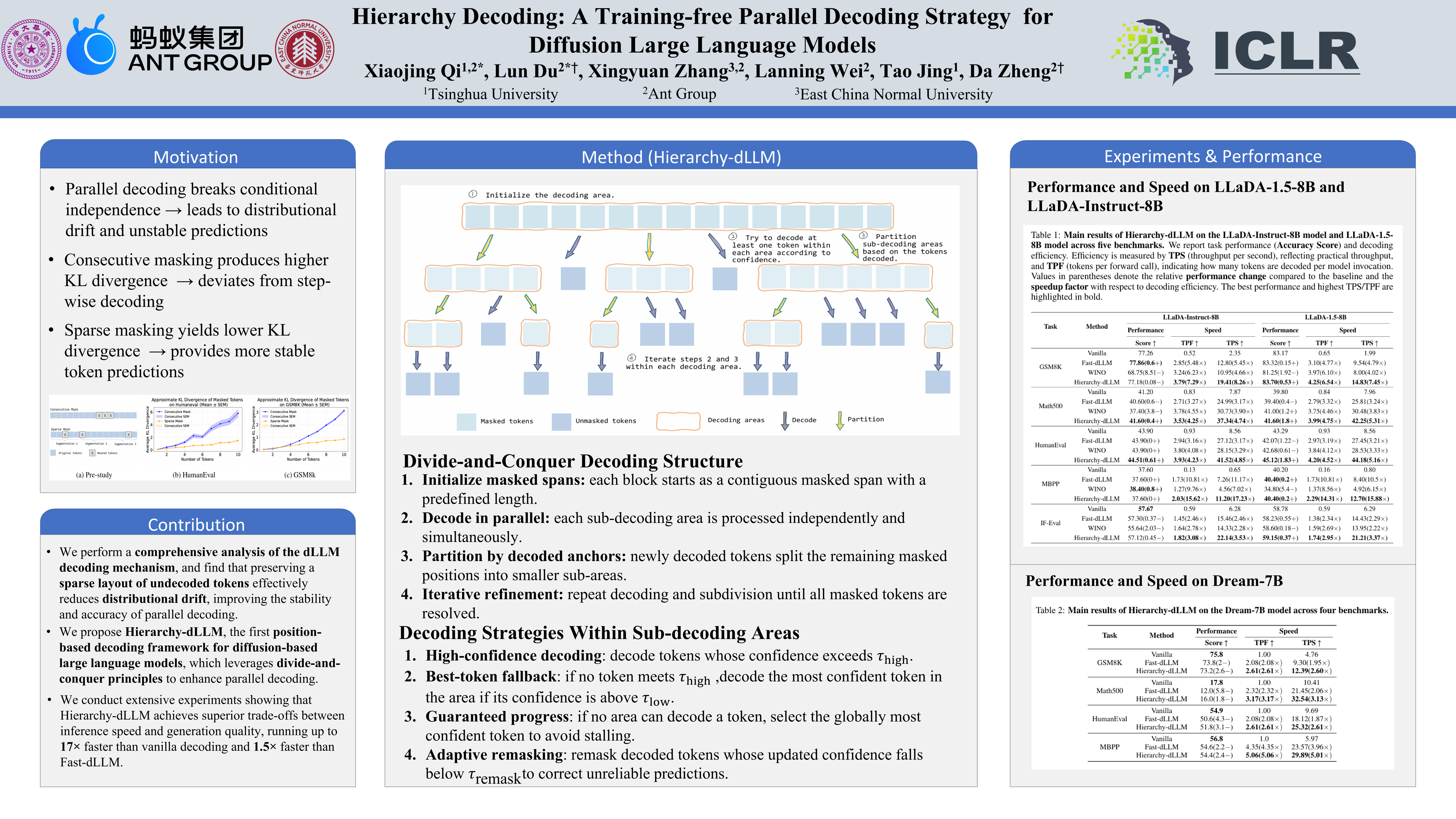
The utilization of large language models (LLMs) has become increasingly widespread, and has attracted considerable attention. Although the emergence of discrete diffusion large language models (dLLMs) mitigates the inference latency inherent in autoregressive LLM decoding, its computational overhead remains substantial. To address this challenge, we propose Hierarchy-dLLM, a hierarchical decoding framework inspired by the divide-and-conquer principle. Our method recursively partitions masked spans into smaller sub-decoding areas and decodes tokens according to their confidence, which substantially increases the number of tokens generated per forward pass and improves information utilization. Extensive experiments conducted on multiple benchmarks demonstrate that Hierarchy-dLLM achieves accuracy comparable to or even surpassing existing baselines. Meanwhile, it is up to 17× faster than vanilla decoding and about 1.5× faster than the Fast-dLLM. These results establish hierarchical decoding as a practical solution for efficient dLLMs inference.
Improving Block-Wise LLM Quantization by 4-bit Block-Wise Optimal Float (BOF4): Analysis and Variations
Patrick Blumenberg ⋅ Thomas Graave ⋅ Tim Fingscheidt
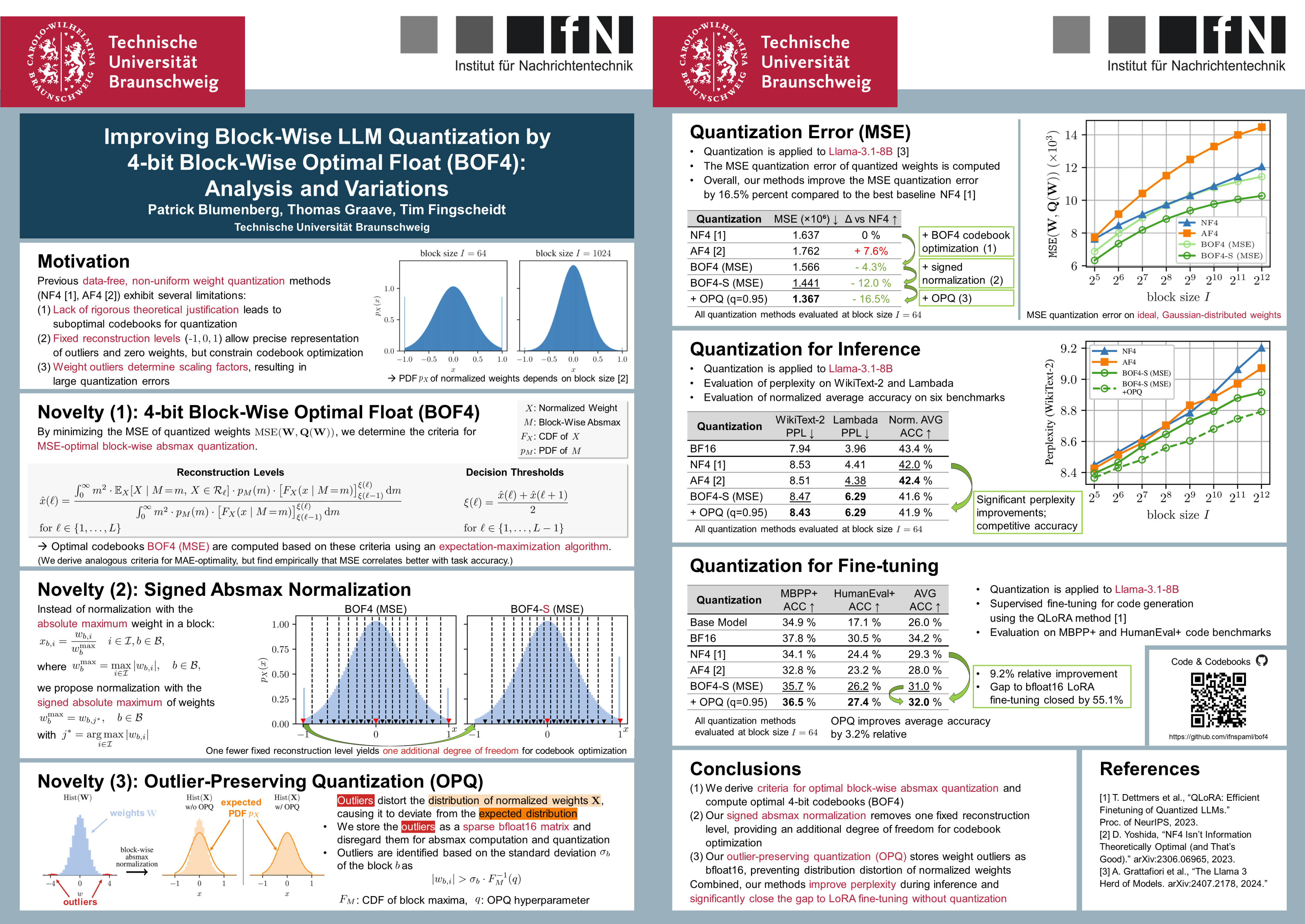
Large language models (LLMs) demand extensive memory capacity during both fine-tuning and inference. To enable memory-efficient fine-tuning, existing methods apply block-wise quantization techniques, such as NF4 and AF4, to the network weights. We show that these quantization techniques incur suboptimal quantization errors. Therefore, as a first novelty, we propose an optimization approach for block-wise quantization. Using this method, we design a family of quantizers named 4-bit block-wise optimal float (BOF4), which consistently reduces the quantization error compared to both baseline methods. We provide both a theoretical and a data-driven solution for the optimization process and prove their practical equivalence. Secondly, we propose a modification to the employed normalization method based on the signed absolute block maximum (BOF4-S), enabling further reduction of the quantization error and empirically achieving less degradation in language modeling performance. Thirdly, we explore additional variations of block-wise quantization methods applied to LLMs through an experimental study on the importance of accurately representing zero and large-amplitude weights on the one hand, and optimization towards various error metrics on the other hand. Lastly, we introduce a mixed-precision quantization strategy dubbed outlier-preserving quantization (OPQ) to address the distributional mismatch induced by outlier weights in block-wise quantization. By storing outlier weights in 16-bit precision (OPQ) while applying BOF4-S, we achieve top performance among 4-bit block-wise quantization techniques w.r.t. perplexity.
How Learning Rate Decay Wastes Your Best Data in Curriculum-Based LLM Pretraining
Kairong Luo ⋅ Zhenbo Sun ⋅ Haodong Wen ⋅ Xinyu Shi ⋅ Jiarui Cui ⋅ Chenyi Dang ⋅ Kaifeng Lyu ⋅ Wenguang Chen
Due to the scarcity of high-quality data, large language models (LLMs) are often trained on mixtures of data with varying quality levels, even after sophisticated data curation. A natural approach to better leverage high-quality data is curriculum-based pretraining, where the model is trained on data sorted in ascending order of quality as determined by a quality metric. However, prior studies have reported limited improvements from such curriculum-based pretraining strategies. This work identifies a critical factor constraining these methods: the incompatibility between the ascending data quality order and the decaying learning rate (LR) schedule. We find that while curriculum-based training substantially outperforms random shuffling when using a constant LR, its advantage diminishes under standard LR decay schedules. Our experiments show this incompatibility can be mitigated by two simple strategies: (1) employing a more moderate LR decay schedule, where the final LR is only moderately smaller than the peak LR, and (2) replacing LR decay with model averaging, i.e., computing a weighted average of the final few checkpoints. By combining these strategies, we improve the average score on a suite of standard benchmarks by 1.64% over random shuffling, without additional data refinement. Validated on 1.5B-parameter models trained over 30B tokens with various data-quality metrics, our findings call for a re-evaluation of curriculum-based LLM pretraining and underscore the potential of co-designing data curricula with optimization methods.
Understanding the Mixture-of-Experts with Nadaraya-Watson Kernel
Chuanyang Zheng ⋅ Jiankai Sun ⋅ Yihang Gao ⋅ Enze Xie ⋅ Yuehao Wang ⋅ Peihao Wang ⋅ Ting Xu ⋅ Matthew Chang ⋅ Liliang Ren ⋅ Jingyao Li ⋅ Jing Xiong ⋅ Kashif Rasul ⋅ Mac Schwager ⋅ Anderson Schneider ⋅ Zhangyang Wang ⋅ Yuriy Nevmyvaka
Mixture-of-Experts (MoE) has become a cornerstone in recent state-of-the-art large language models (LLMs). Traditionally, MoE relies on $\mathrm{Softmax}$ as the router score function to aggregate expert output, a designed choice that has persisted from the earliest MoE models to modern LLMs, and is now widely regarded as standard practice. However, the necessity of using $\mathrm{Softmax}$ to project router weights into a probability simplex remains an unchallenged assumption rather than a principled design choice. In this work, we first revisit the classical Nadaraya–Watson regression and observe that MoE shares the same mathematical formulation as Nadaraya–Watson regression. Furthermore, we show that both feed-forward neural network (FFN) and Mixture-of-Experts (MoE) can be interpreted as a special case of Nadaraya–Watson regression, where the kernel function corresponds to the input neurons of the output layer. Motivated by these insights, we propose the **zero-additional-cost** Kernel Inspired Router with Normalization ($\mathrm{KERN}$), an FFN-style router function, as an alternative to $\mathrm{Softmax}$. We demonstrate that this router generalizes both $\mathrm{Sigmoid}$- and $\mathrm{Softmax}$-based routers. **Based on empirical observations and established practices in FFN implementation, we recommend the use of $\mathrm{ReLU}$ activation and $\ell_2$-normalization in $\mathrm{KERN}$ router function.** Comprehensive experiments in MoE and LLM validate the effectiveness of the proposed FFN-style router function $\mathrm{KERN}$.
WSM: Decay-Free Learning Rate Schedule via Checkpoint Merging for LLM Pre-training
Changxin Tian ⋅ Jiapeng Wang ⋅ Qian Zhao ⋅ Kunlong Chen ⋅ Jia Liu ⋅ Ziqi Liu ⋅ Jiaxin Mao ⋅ Xin Zhao ⋅ Zhiqiang Zhang ⋅ JUN ZHOU
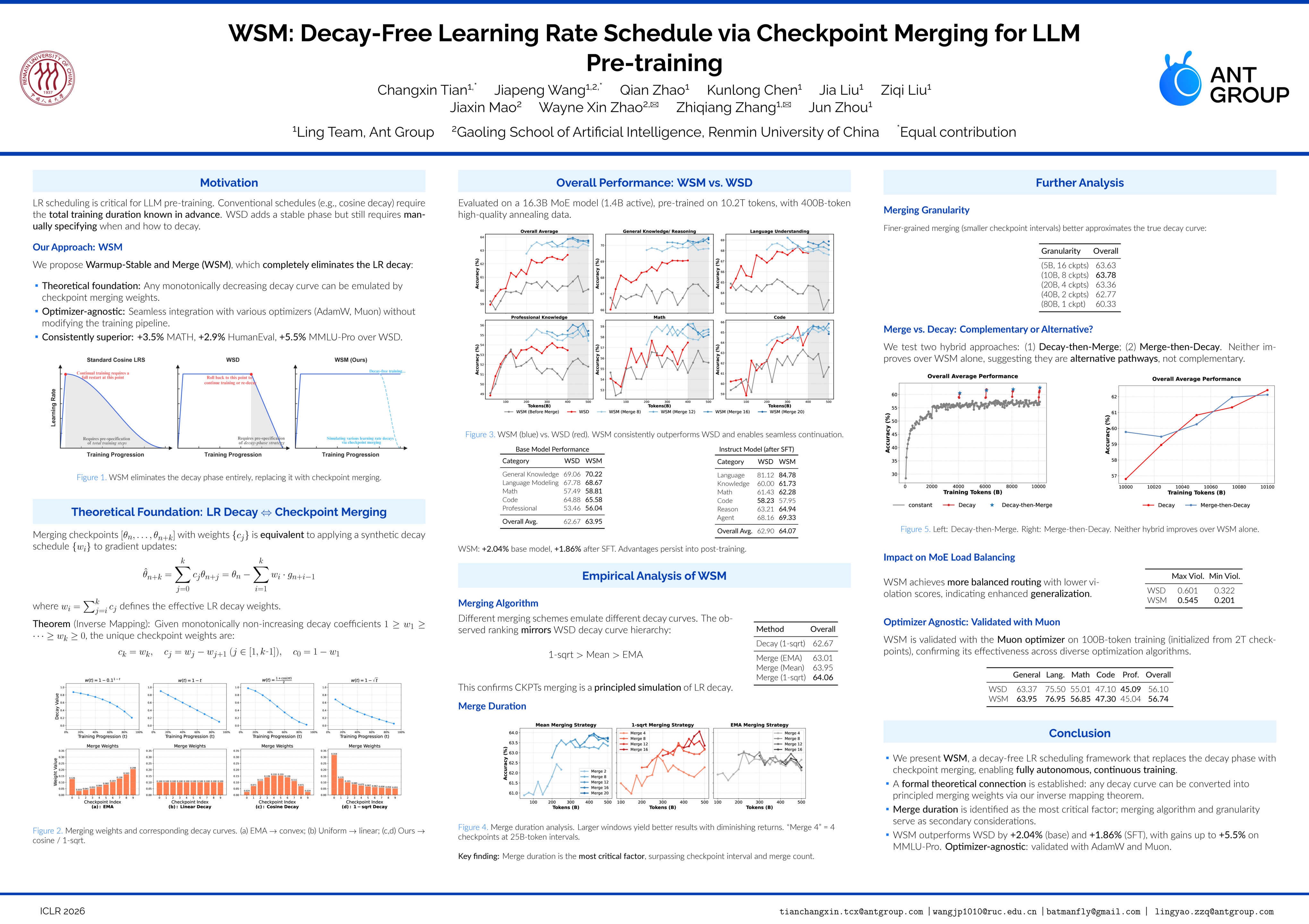
Recent advances in learning rate~(LR) scheduling have demonstrated the effectiveness of decay-free approaches that eliminate the traditional decay phase while maintaining competitive performance. Model merging techniques have emerged as particularly promising solutions in this domain. We present Warmup-Stable and Merge (WSM), a general framework that establishes a formal connection between learning rate decay and model merging. WSM provides a unified theoretical foundation for emulating various decay strategies—including cosine decay, linear decay and inverse square root decay—as principled model averaging schemes, while remaining fully compatible with diverse optimization methods. Through extensive experiments, we identify merge duration—the training window for checkpoint aggregation—as the most critical factor influencing model performance, surpassing the importance of both checkpoint interval and merge quantity. With the high-quality annealing data, our framework consistently outperforms the widely-adopted Warmup-Stable-Decay (WSD) approach across multiple benchmarks, achieving significant improvements of +3.5\% on MATH, +2.9\% on HumanEval, and +5.5\% on MMLU-Pro. The performance advantages extend to supervised fine-tuning scenarios, highlighting WSM's potential for long-term model refinement.
LoRA-Mixer: Coordinate Modular LoRA Experts Through Serial Attention Routing
Wenbing Li ⋅ Zikai Song ⋅ Hang Zhou ⋅ Junqing Yu ⋅ Yunyao Zhang ⋅ Wei Yang
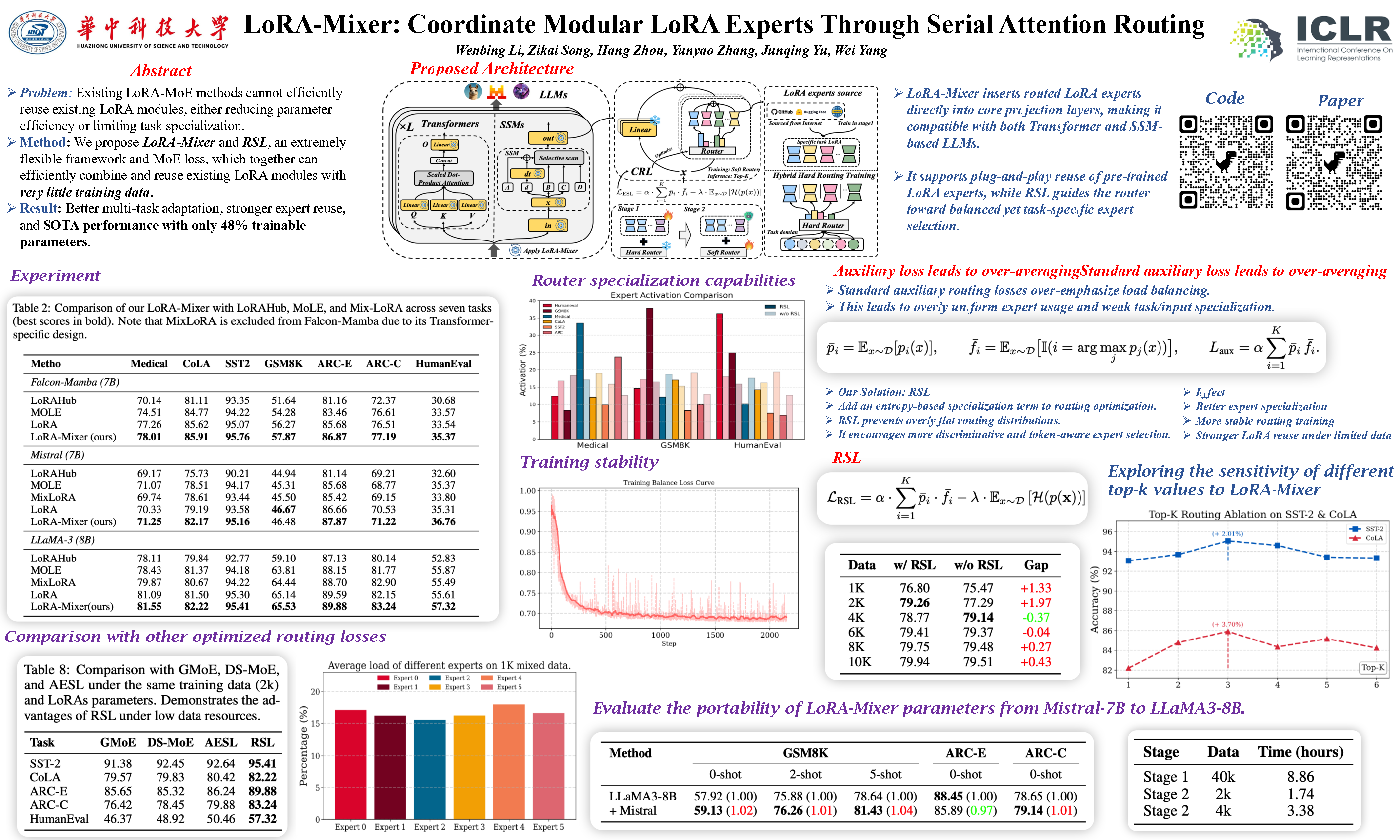
Recent attempts to combine low-rank adaptation (LoRA) with mixture-of-experts (MoE) for multi-task adaptation of Large Language Models (LLMs) often replace whole attention/FFN layers with switch experts or append parallel expert branches, undermining parameter efficiency and limiting task specialization. We introduce LoRA-Mixer, a modular MoE framework that routes task-specific LoRA experts into the core projection matrices of the attention module (input/output linear layers), rather than primarily targeting FFN blocks. The design delivers fine-grained token-level specialization by fully exploiting the attention mechanism, while remaining drop-in compatible with Transformers and state-space models (SSMs) as the linear projection layers are ubiquitous. To train robust routers from limited data while promoting stable, selective decisions and high expert reuse, LoRA-Mixer employs an adaptive Routing Specialization Loss (RSL) that jointly enforces global load balance and input-aware specialization via an entropy-shaping objective. The framework supports two regimes: (i) joint optimization of adapters and router with a differentiable hard–soft top-k routing scheme, and (ii) plug-and-play routing over frozen, pre-trained LoRA modules sourced from public repositories. Across 15 benchmarks—including MedQA, GSM8K, HumanEval, and GLUE—RSL-optimized LoRA-Mixer outperforms state-of-the-art routing and LoRA-MoE baselines while using 48% of their trainable parameters, with gains of +3.79%, +2.90%, and +3.95% on GSM8K, CoLA, and ARC-C, respectively. Cross-model transfer and adapter reuse experiments further demonstrate the approach’s versatility and data efficiency.
TS$^2$: Training with Sparsemax+, Testing with Softmax for Accurate and Diverse LLM Fine-Tuning
Ziyang Xu ⋅ Ananthu Rajendran Pillai ⋅ Yinghua Yao ⋅ Yuangang Pan
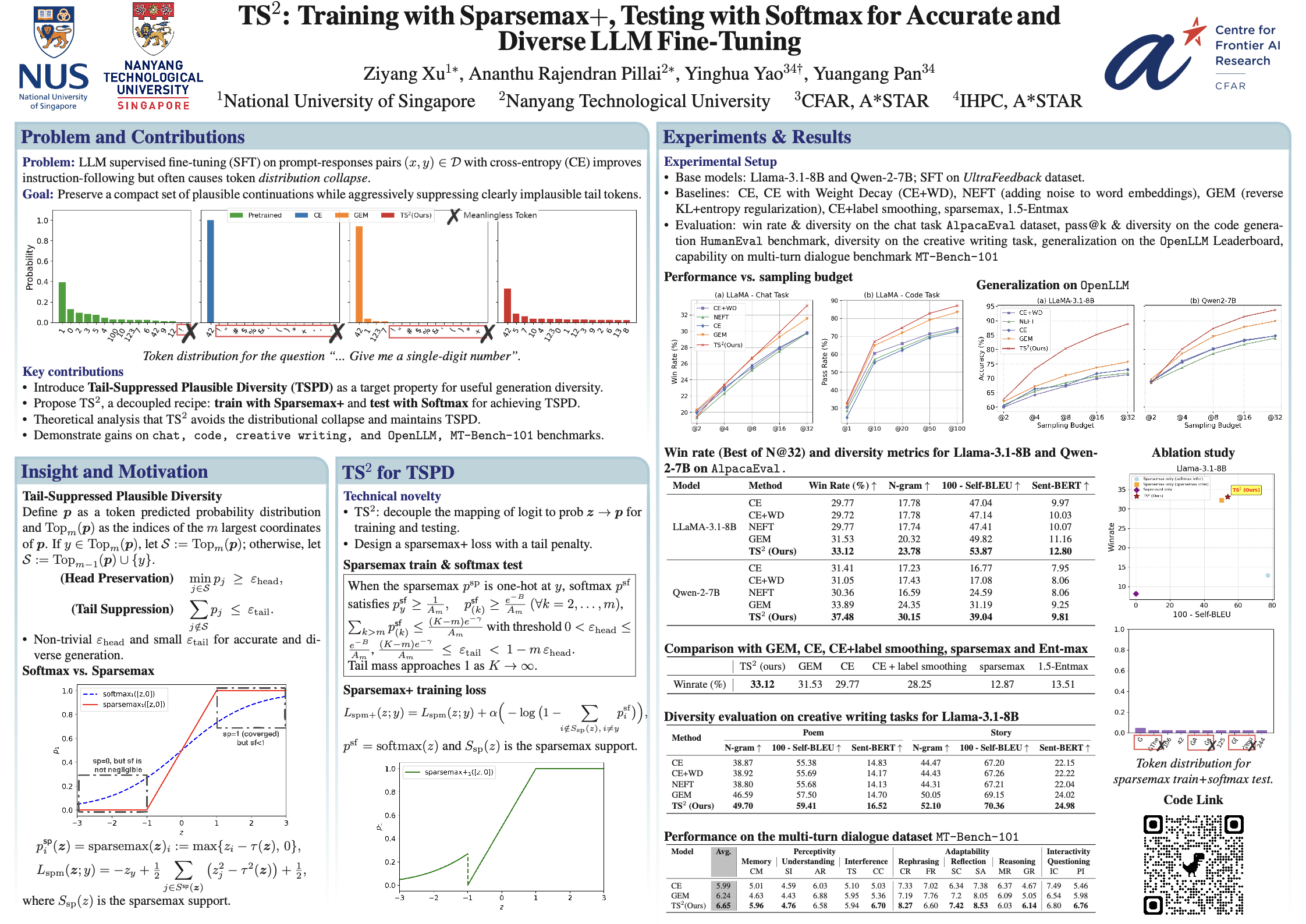
Large Language Models typically rely on Supervised Fine-Tuning (SFT) with Cross-Entropy (CE) loss to specialize in downstream tasks. However, CE forces the distribution toward one-hot targets and ignores alternative continuations, thereby limiting output diversity, a key drawback for generative applications that rely on sampling-based exploration. In this paper, we propose ``Training with Sparsemax$+$, Testing with Softmax (TS$^2$)''. Intuitively, sparsemax and its tailored loss mask the gradients of probabilities outside the support set, leaving excessive probability mass on irrelevant tail classes when evaluating with softmax. To address this issue, we propose an improved variant, Sparsemax$+$, for training, which augments the sparsemax loss with a suppression term that penalizes the out-of-support probabilities. At testing, we decode with softmax, yielding calibrated, non-degenerate probabilities where plausible near-ties survive. We fine-tuned Llama-3.1-8B and Qwen-2.5-7B with TS$^2$, achieving consistent improvements in accuracy and output diversity across chat, code, and open-domain benchmarks. Together, these results demonstrate that TS$^2$ provides a practical, drop-in solution for fine-tuning LLMs that are both more accurate and more creative. The code is available at https://github.com/xzy-bit/TS-2-ICLR-2026.
Learning Global Hypothesis Space for Enhancing Synergistic Reasoning Chain
Jiaquan Zhang ⋅ Chaoning Zhang ⋅ Shuxu Chen ⋅ Xudong Wang ⋅ Zhenzhen Huang ⋅ Pengcheng Zheng ⋅ Shuai Yuan ⋅ Sheng Zheng ⋅ Qigan Sun ⋅ Jie Zou ⋅ LIK-HANG LEE ⋅ Yang Yang
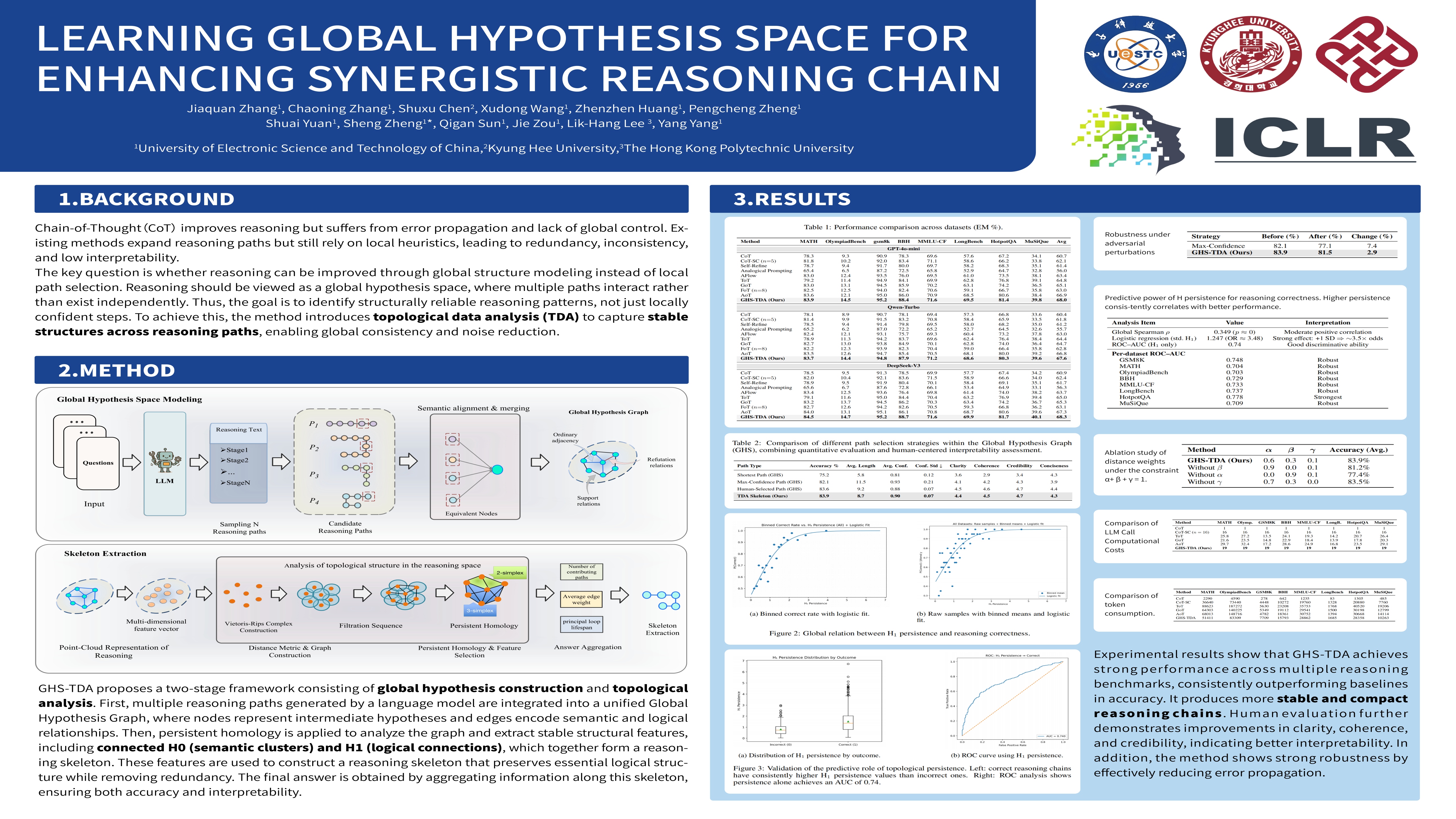
Chain-of-Thought (CoT) has been shown to significantly improve the reasoning accuracy of large language models (LLMs) on complex tasks. However, due to the autoregressive, step-by-step generation paradigm, existing CoT methods suffer from two fundamental limitations. First, the reasoning process is highly susceptible to early-stage errors, which tend to propagate and amplify without a global coordination and correction mechanism, thereby distorting the overall reasoning chain. Second, current CoT methods lack structured analytical frameworks for pruning redundant reasoning and identifying critical reasoning features, resulting in instability and reduced interpretability. To address these issues, we propose Global Hypothesis Structure via Topological Data Analysis (GHS-TDA), which constructs a semantically enriched global hypothesis graph that integrates and coordinates multiple candidate reasoning paths, thereby supporting global consistency refinement and error mitigation. GHS-TDA applies persistent homology-based topological data analysis to capture stable multi-scale structures, remove redundancy and inconsistencies, and extract a more reliable reasoning skeleton. By jointly leveraging reasoning diversity and topological stability, GHS-TDA achieves self-adaptive convergence, produces high-confidence and interpretable reasoning paths, and consistently outperforms strong baselines in terms of both accuracy and robustness across multiple reasoning benchmarks.
Exposing Mixture and Annotating Confusion for Active Universal Test-Time Adaptation
Jiayao Tan ⋅ Fan Lyu ⋅ Chenggong Ni ⋅ Fuyuan Hu ⋅ Wei Feng ⋅ Rui Yao
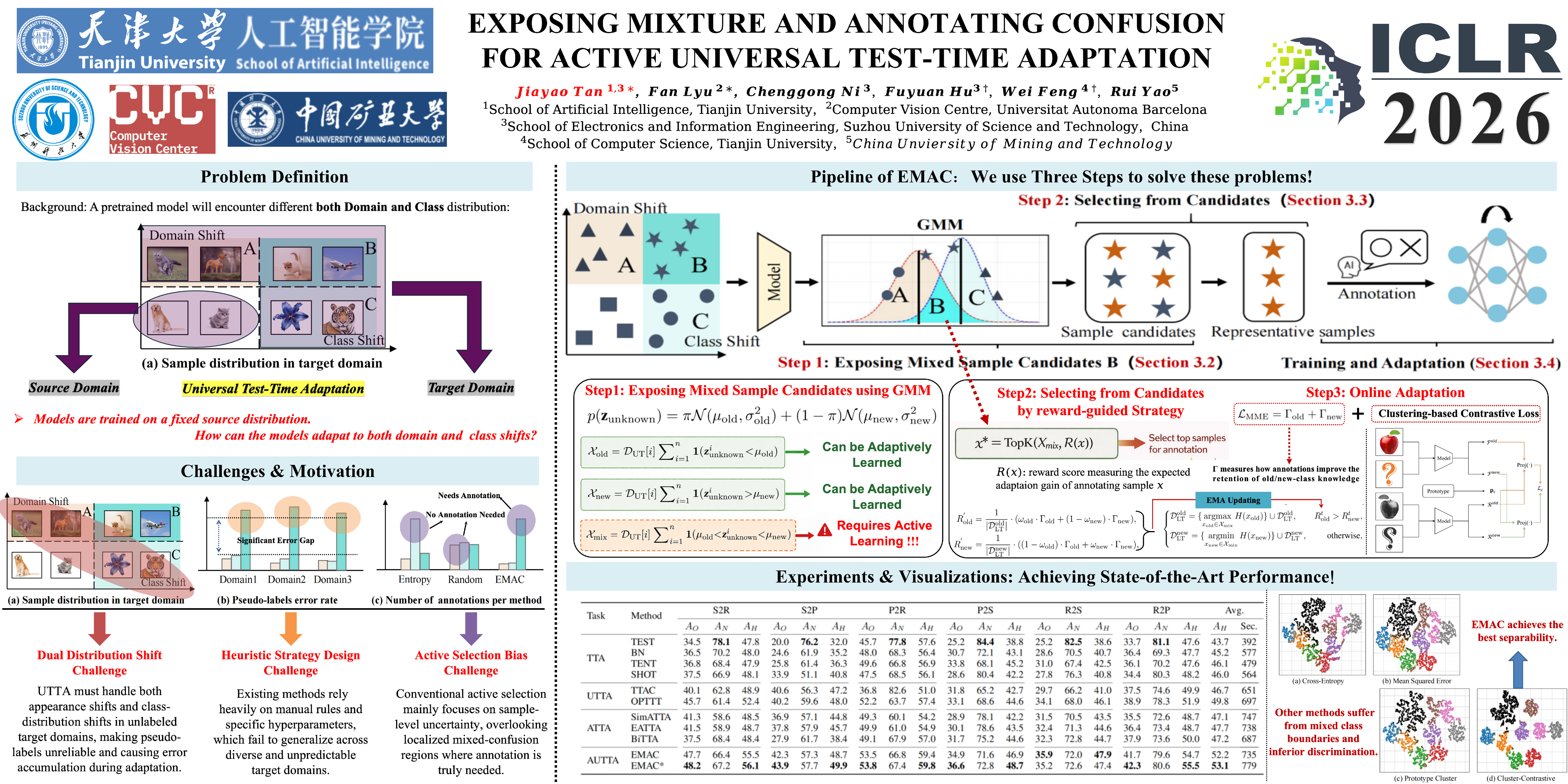
Universal Test-Time Adaptation (UTTA) tackles the challenge of handling both class and domain shifts in unsupervised settings with stream testing data. Currently, most UTTA methods can only deal with minor shifts and heavily rely on heuristic approaches. To advance UTTA under dual shifts, we propose a novel Active Universal Test-Time Adaptation (AUTTA) framework, Exposing Mixture and Annotating Confusion (EMAC), which incorporates active human annotation into the UTTA setting. To select appropriate samples for annotation in AUTTA, we first identify the mixed regions of target domain samples under dual shifts, highlighting potential candidate samples. We then design a reward-guided active selection strategy to prioritize annotating the most representative samples within this set, maximizing annotation effectiveness. Additionally, to balance the use of pseudo-labels with the limited number of annotations, we propose an adaptation objective designed to address the adaptation imbalance caused by annotation scarcity. Extensive experiments show that the proposed AUTTA approach significantly improves performance and achieves state-of-the-art.
CFT-RAG: An Entity Tree Based Retrieval Augmented Generation Algorithm With Cuckoo Filter
Zihang Li ⋅ Yangdong Ruan ⋅ Wenjun Liu ⋅ Zhengyang Wang ⋅ Tong Yang
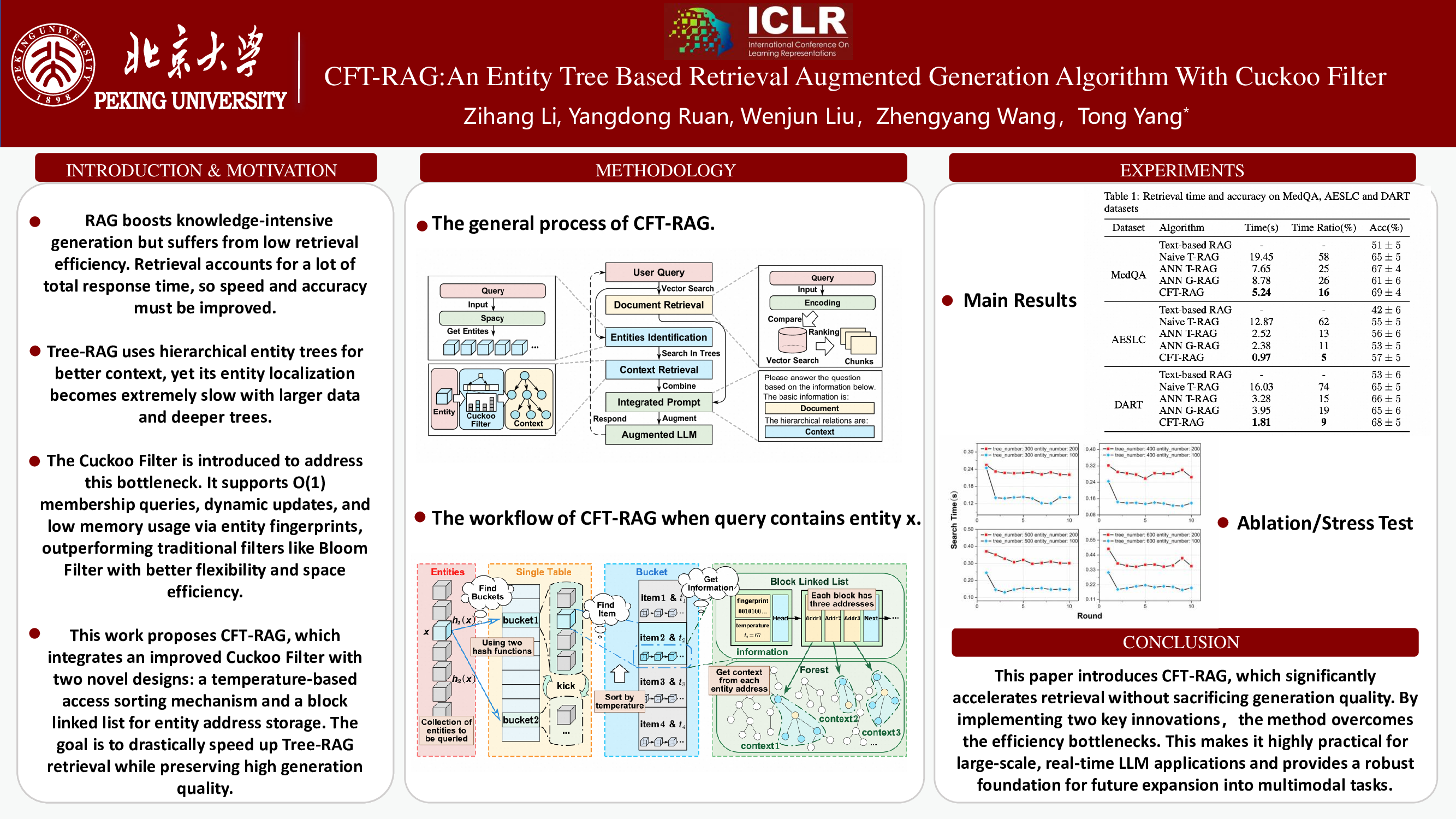
Although retrieval-augmented generation(RAG) significantly improves generation quality by retrieving external knowledge bases and integrating generated content, it faces computational efficiency bottlenecks, particularly in knowledge retrieval tasks involving hierarchical structures for Tree-RAG. This paper proposes a Tree-RAG acceleration method based on the improved Cuckoo Filter, which optimizes entity localization during the retrieval process to achieve significant performance improvements. Tree-RAG effectively organizes entities through the introduction of a hierarchical tree structure, while the Cuckoo Filter serves as an efficient data structure that supports rapid membership queries and dynamic updates. The experiment results demonstrate that our method is much faster than baseline methods while maintaining high levels of generative quality. For instance, our method is more than 800% faster than naive Tree-RAG on DART dataset. Our work is available at https://github.com/TUPYP7180/CFT-RAG-2025.
Mini-cluster Guided Long-tailed Deep Clustering
Zhixin Li ⋅ Yuheng Jia ⋅ Guanliang Chen ⋅ Hui LIU ⋅ Junhui Hou
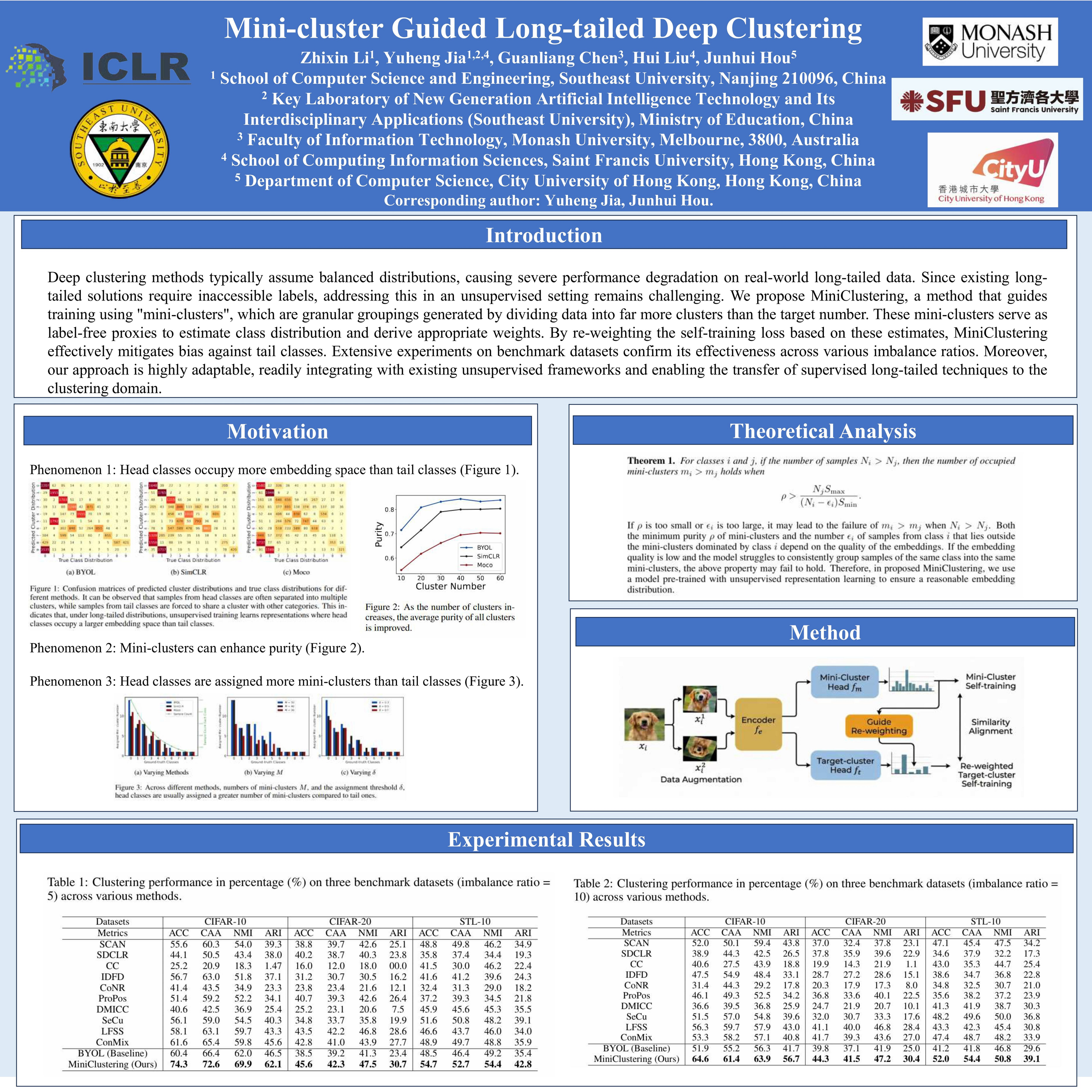
As an important branch of unsupervised learning, deep clustering has seen substantial progress in recent years. However, the majority of current deep clustering methods operate under the assumption of balanced or near-balanced cluster distributions. This assumption contradicts the common long-tailed class distributions in real-world data, leading to severe performance degradation in deep clustering. Although many long-tailed learning methods have been proposed, these approaches typically rely on label information to differentiate treatment across different classes, which renders them inapplicable to deep clustering scenarios. How to re-weight the training of deep clustering models in an unsupervised setting remains an open challenge. To address this, we propose a mini-cluster guided long-tailed deep clustering method, termed MiniClustering. We introduce a specialized clustering head that divide data into much more clusters than the target number of clusters. These predicted clusters are referred to as mini-clusters. The mini-cluster-level predictions serve as the guide for estimating the appropriate weights for classes with varying degrees of long-tailedness. The weights are then incorporated to re-weight the self-training loss in model training. In this way, we can mitigate model bias by re-weighting gradients from different classes. We evaluate our method on multiple benchmark datasets with different imbalance ratios to demonstrate its effectiveness. Further, our method can be readily applied to the downstream of existing unsupervised representation learning frameworks for long-tailed deep clustering. It can also adapt label-dependent long-tailed learning methods to unsupervised clustering tasks by leveraging the estimated weights. The code is available at https://github.com/LZX-001/MiniClustering.
Agentic Context Engineering: Evolving Contexts for Self-Improving Language Models
Qizheng Zhang ⋅ Changran Hu ⋅ Shubhangi Upasani ⋅ Boyuan Ma ⋅ Fenglu Hong ⋅ Vamsidhar Kamanuru ⋅ Jay Rainton ⋅ Chen Wu ⋅ Mengmeng Ji ⋅ Hanchen Li ⋅ Urmish Thakker ⋅ James Y Zou ⋅ Kunle Olukotun
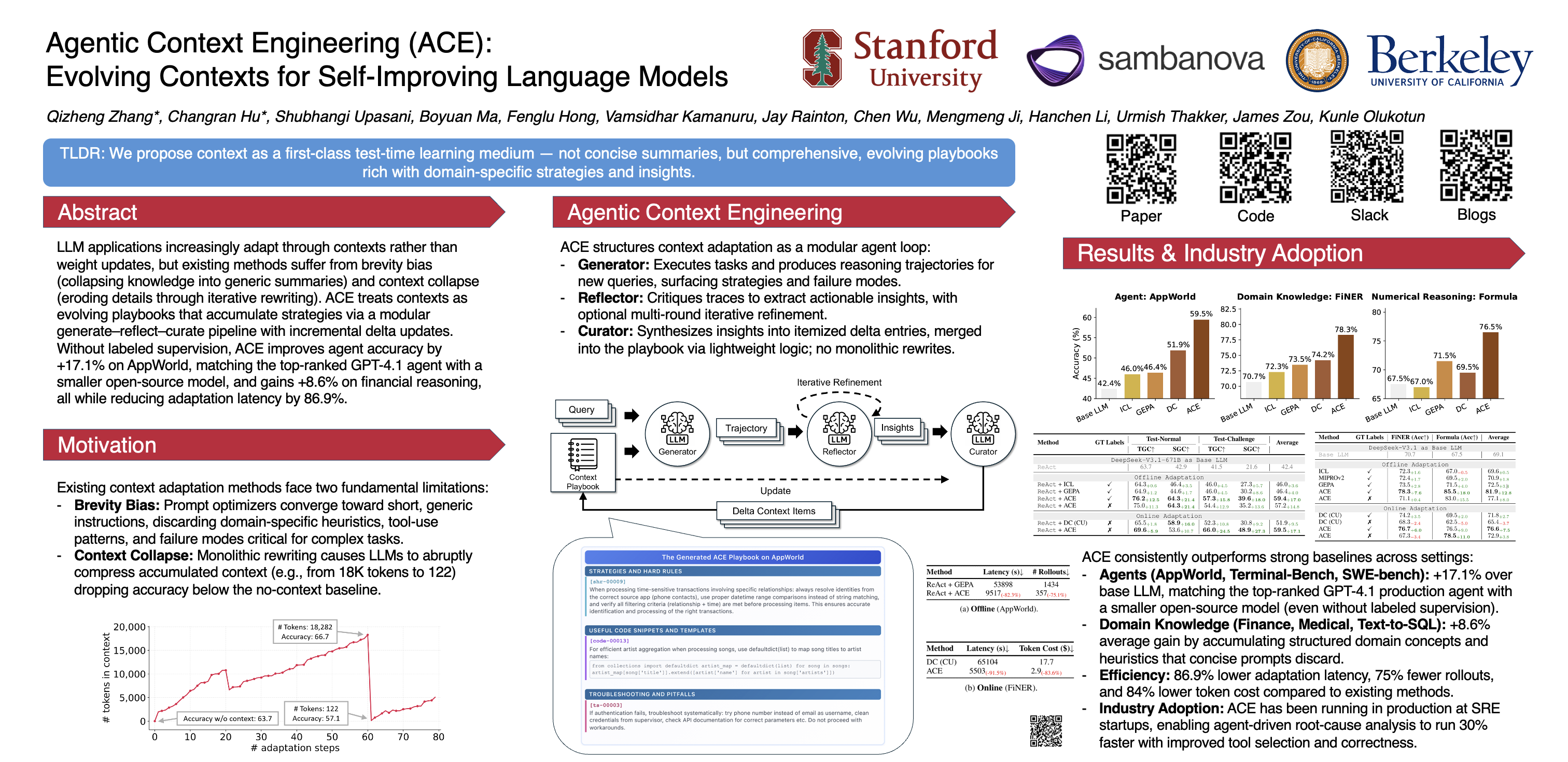
Large language model (LLM) applications such as agents and domain-specific reasoning increasingly rely on context adaptation: modifying inputs with instructions, strategies, or evidence, rather than weight updates. Prior approaches improve usability but often suffer from brevity bias, which drops domain insights for concise summaries, and from context collapse, where iterative rewriting erodes details over time. We introduce ACE (Agentic Context Engineering), a framework that treats contexts as evolving playbooks that accumulate, refine, and organize strategies through a modular process of generation, reflection, and curation. ACE prevents collapse with structured, incremental updates that preserve detailed knowledge and scale with long-context models. Across agent and domain-specific benchmarks, ACE optimizes contexts both offline (e.g., system prompts) and online (e.g., agent memory), consistently outperforming strong baselines: +10.6\% on agents and +8.6\% on finance, while significantly reducing adaptation latency and rollout cost. Notably, ACE could adapt effectively without labeled supervision and instead by leveraging natural execution feedback. On the AppWorld leaderboard, ACE matches the top-ranked production-level agent on the overall average and surpasses it on the harder test-challenge split, despite using a smaller open-source model. These results show that comprehensive, evolving contexts enable scalable, efficient, and self-improving LLM systems with low overhead.
Efficient Resource-Constrained Training of Transformers via Subspace Optimization
Le-Trung Nguyen ⋅ Enzo Tartaglione ⋅ Van-Tam Nguyen
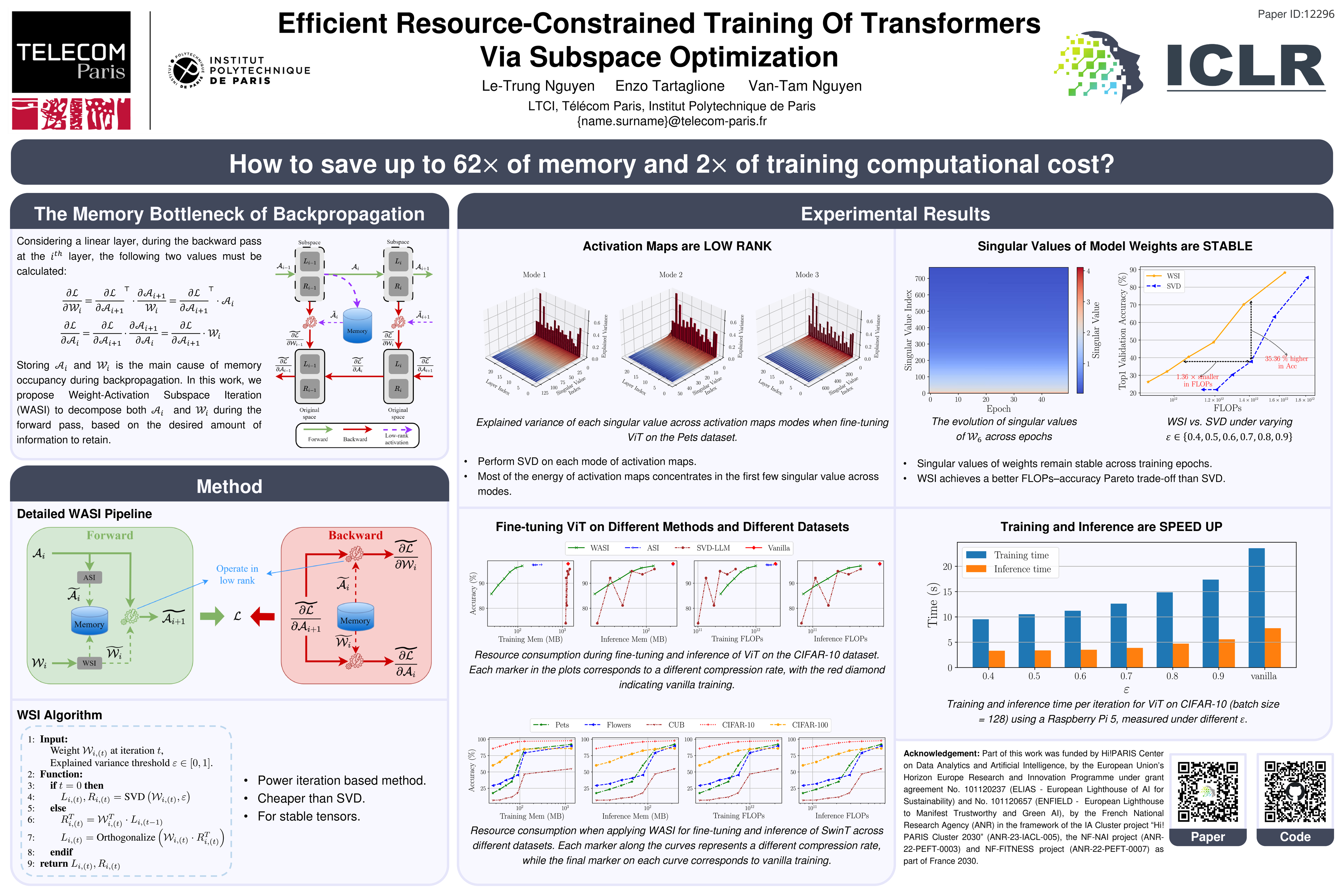
As AI increasingly shapes daily life, energy consumption and data privacy have become pressing concerns. On-device learning trains models directly on edge devices, cutting energy consumption and safeguarding data privacy. However, the expanding scale of modern neural networks creates a major obstacle for on-device training. Although prior work has concentrated on compact convolutional architectures, we instead apply subspace-based training to transformer models. Motivated by the idea that a model's essential information lies in a fixed subspace, we introduce Weight-Activation Subspace Iteration (WASI), a method that mitigates the memory bottleneck of backpropagation and boosts inference efficiency in transformer models by restricting training to this subspace. Our results demonstrate that WASI maintains accuracy comparable to vanilla training while reducing memory usage by up to $62\times$ and computational cost (FLOPs) by up to $2\times$. On a Raspberry Pi 5, WASI achieves roughly $1.4\times$ faster training and inference than vanilla training. The code is available at https://github.com/Le-TrungNguyen/ICLR2026-WASI.git.
FlashAttention on a Napkin: A Diagrammatic Approach to Deep Learning IO-Awareness
Vincent Abbott · Gioele Zardini
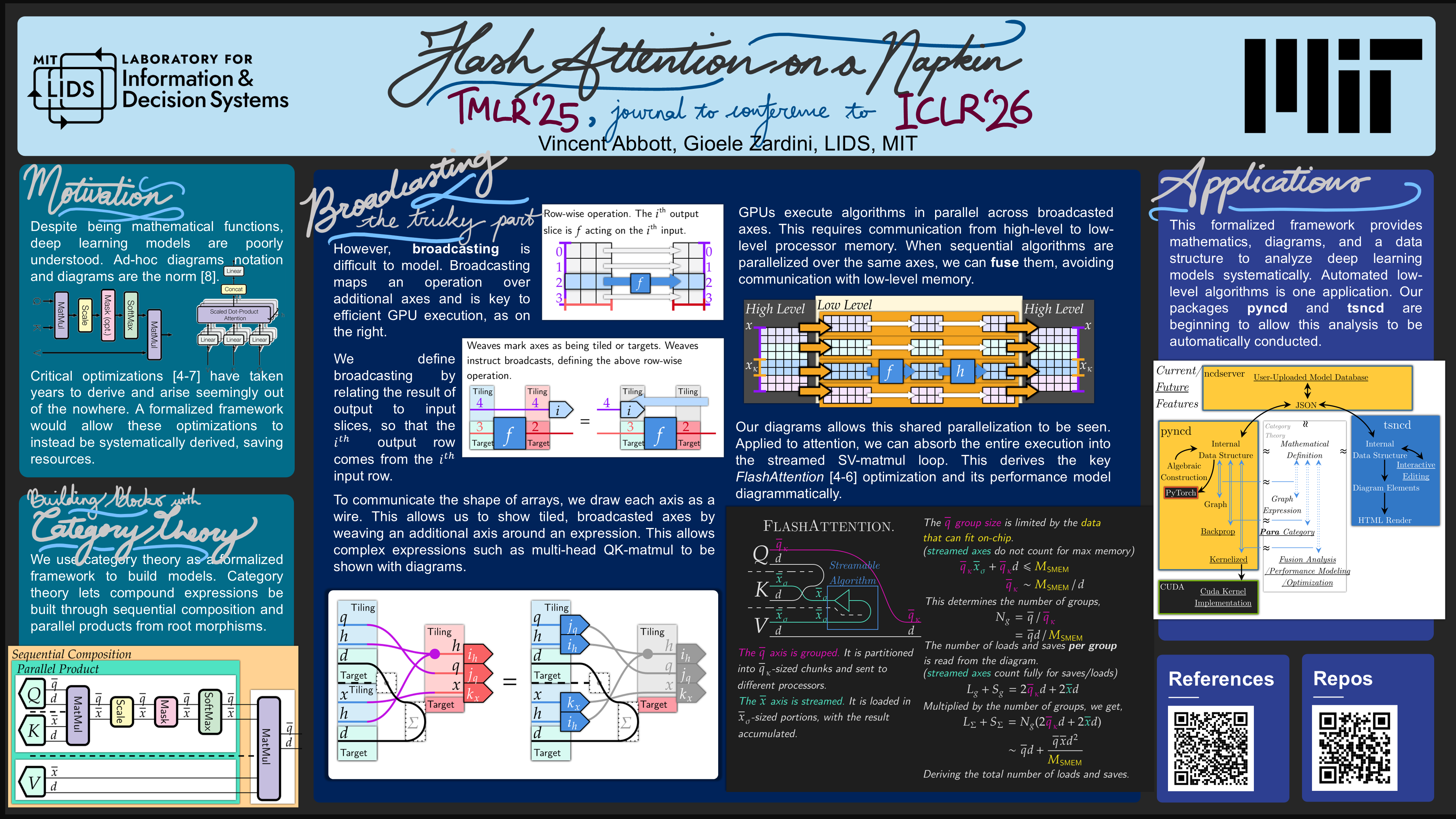
Optimizing deep learning algorithms currently requires slow, manual derivation, potentially leaving much performance untapped. Methods like FlashAttention have achieved a x6 performance improvement over native PyTorch by avoiding unnecessary data transfers, but required three iterations over three years to be developed. Automated compiled methods have consistently lagged behind. This paper extends Neural Circuit Diagrams for deep learning models to consider resource usage and the distribution of tasks across a GPU hierarchy. We show how diagrams can use simple relabellings to derive high-level streaming and tiling optimization strategies along with performance models. We show how this high-level performance model allows the effects of quantization and multi-level GPU hierarchies to be readily considered. We develop a methodology for representing intermediate-level pseudocode with diagrams, allowing hardware-aware algorithms to be derived step-by-step. Finally, we show how our methodology can be used to better understand existing techniques like FlashAttention. This work uses a theoretical framework to link assumptions about GPU behaviour to claims about performance. We aim to lay the groundwork for a scientific approach to GPU optimization where experiments can address clear hypotheses rather than post-hoc rationalizations.
Multi-Head Low-Rank Attention
Songtao Liu ⋅ Hongwu Peng ⋅ Zhiwei Zhang ⋅ Zhengyu Chen ⋅ Yue Guo
Long-context inference in large language models is bottlenecked by Key--Value (KV) cache loading during the decoding stage, where the sequential nature of generation requires repeatedly transferring the KV cache from off-chip High-Bandwidth Memory (HBM) to on-chip Static Random-Access Memory (SRAM) at each step. While Multi-Head Latent Attention (MLA) significantly reduces the total KV cache size, it suffers from a sharding bottleneck during distributed decoding via Tensor Parallelism (TP). Since its single latent head cannot be partitioned, each device is forced to redundantly load the complete KV cache for every token, consuming excessive memory traffic and diminishing TP benefits like weight sharding. In this work, we propose Multi-Head Low-Rank Attention (MLRA), which enables partitionable latent states for efficient 4-way TP decoding. Extensive experiments show that MLRA achieves state-of-the-art perplexity and downstream task performance, while also delivering a 2.8$\times$ decoding speedup over MLA. Code is available at https://github.com/SongtaoLiu0823/MLRA. Pretrained weights, along with the training and evaluation data, are available at https://huggingface.co/Soughing/MLRA.
IA2: Alignment with ICL Activations improves Supervised Fine-Tuning
Aayush Mishra ⋅ Daniel Khashabi ⋅ Anqi Liu
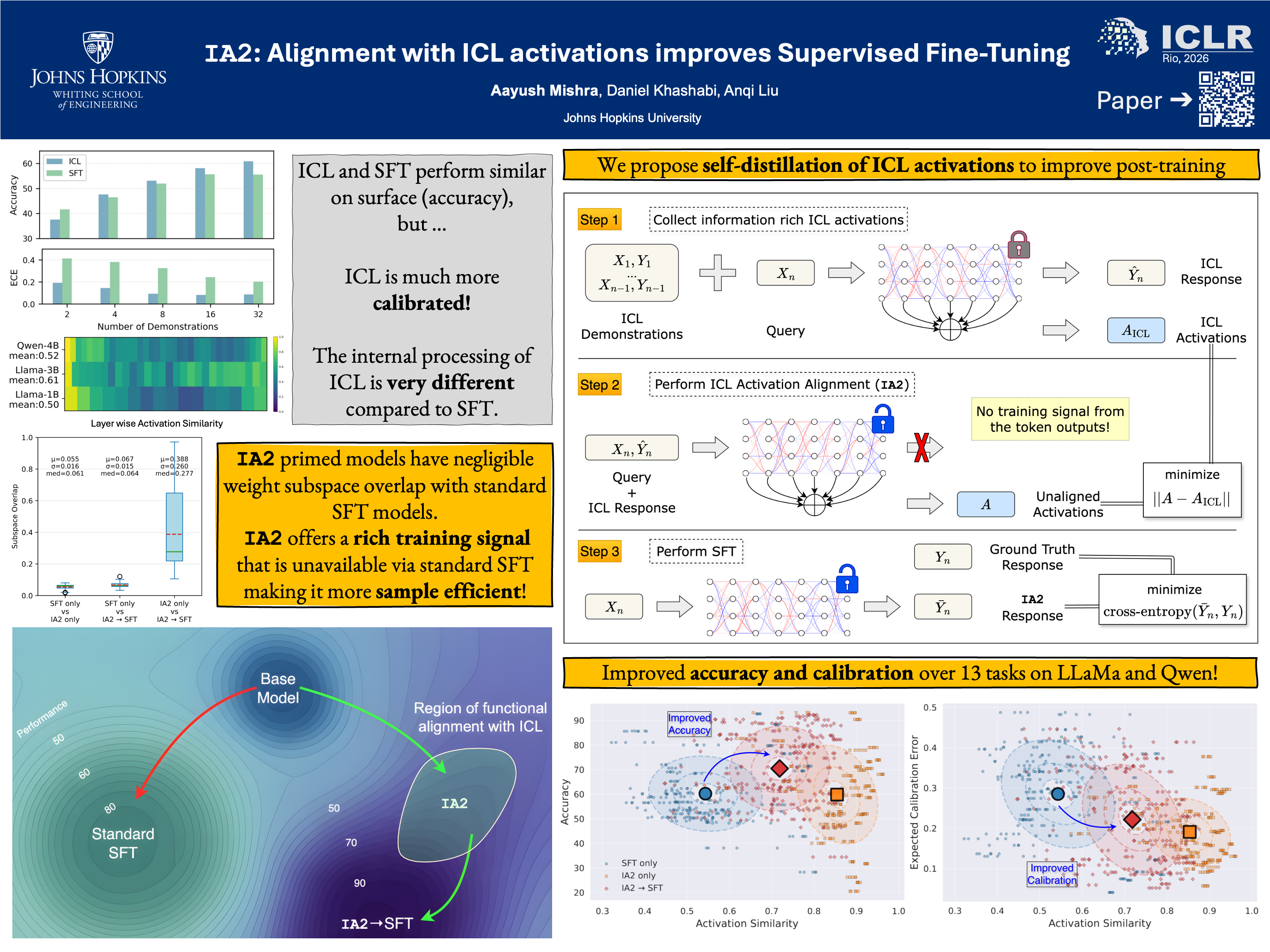
Supervised Fine-Tuning (SFT) is used to specialize model behavior by training weights to produce intended target responses for queries. In contrast, In-Context Learning (ICL) adapts models during inference with instructions or demonstrations in the prompt. ICL can offer better generalizability and more calibrated responses compared to SFT in data scarce settings, at the cost of more inference compute. In this work, we ask the question: \textit{Can ICL's internal computations be used to improve the qualities of SFT?} We first show that ICL and SFT produce distinct activation patterns, indicating that the two methods achieve adaptation through different functional mechanisms. Motivated by this observation and to use ICL's rich functionality, we introduce \textbf{I}CL \textbf{A}ctivation \textbf{A}lignment (\act), a self-distillation technique which aims to replicate ICL's activation patterns in SFT models and incentivizes ICL-like internal reasoning. Performing \act as a priming step before SFT significantly improves the accuracy and calibration of model outputs, as shown by our extensive empirical results on 12 popular benchmarks and two model families. This finding is not only practically useful, but also offers a conceptual window into the inner mechanics of model adaptation.
Training Dynamics of the Cooldown Stage in Warmup-Stable-Decay Learning Rate Scheduler
Aleksandr Dremov · Alexander Hägele · Atli Kosson · Martin Jaggi
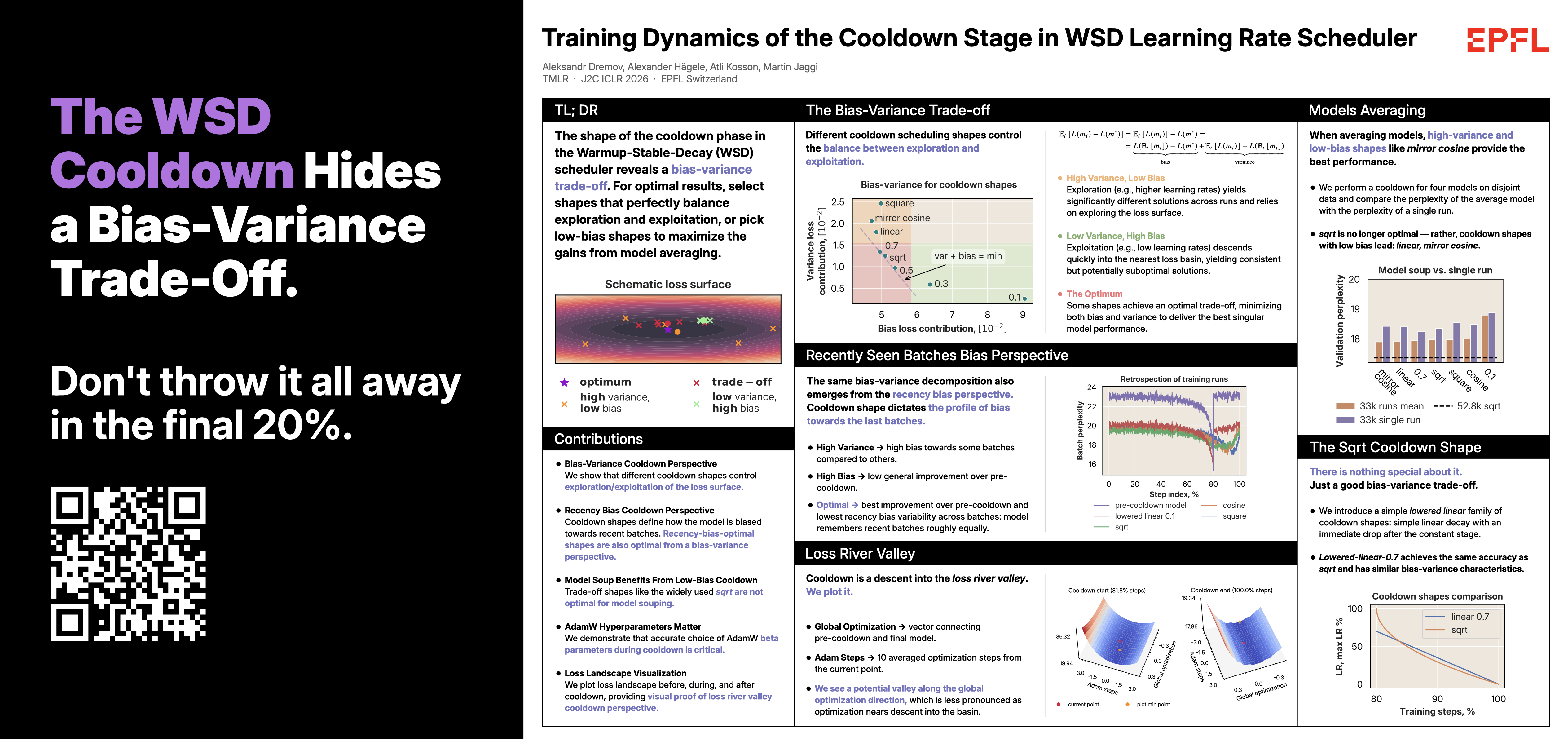
Learning rate scheduling is essential in transformer training, where the final annealing plays a crucial role in getting the best performance. However, the mechanisms behind this cooldown phase, with its characteristic drop in loss, remain poorly understood. To address this, we provide a comprehensive analysis focusing solely on the cooldown phase in the Warmup-Stable-Decay (WSD) learning rate scheduler. Our analysis reveals that different cooldown shapes reveal a fundamental bias-variance trade-off in the resulting models, with shapes that balance exploration and exploitation consistently outperforming alternatives. Similarly, we find substantial performance variations — comparable to those from cooldown shape selection — when tuning AdamW hyperparameters. Notably, we observe consistent improvements with higher values of $\beta_2$ during cooldown. From a loss landscape perspective, we provide visualizations of the landscape during cooldown, supporting the river valley loss perspective empirically. These findings offer practical recommendations for configuring the WSD scheduler in transformer training, emphasizing the importance of optimizing the cooldown phase alongside traditional hyperparameter tuning.
Learned Meta-Tokens for Language Modeling
Alok Shah ⋅ Khush Gupta ⋅ Keshav Ramji ⋅ Pratik A Chaudhari
Transformer-based language models (LMs) notably struggle to reliably capture distant contextual information. This work introduces a novel approach using meta-tokens -- special tokens injected during pre-training -- paired with a dedicated meta-attention mechanism to guide LMs to use these tokens. We pre-train a language model equipped with meta-attention in addition to causal multi-head attention on <100B tokens, achieving strong performance on a suite of synthetic tasks. Our method facilitates length generalization up to 2$\times$ the context window after extension with YaRN. We provide an information-theoretic analysis which reveals that meta-tokens \textit{sharpen} the positional encoding, allowing them to operate as content-based anchors that compress preceding context and “cache” it within the meta-token. We empirically confirm this by visualizing model internals to study the residual stream. Together, our findings demonstrate that meta-tokens and meta-attention provide a simple, data-efficient pre-training method, grounded by new mechanistic insights into their role in enabling length generalization behavior.
Bayesian Attention Mechanism: A Probabilistic Framework for Positional Encoding and Context Length Extrapolation
Arthur S. Bianchessi ⋅ Yasmin C. Aguirre ⋅ Rodrigo C Barros ⋅ Lucas S. Kupssinskü
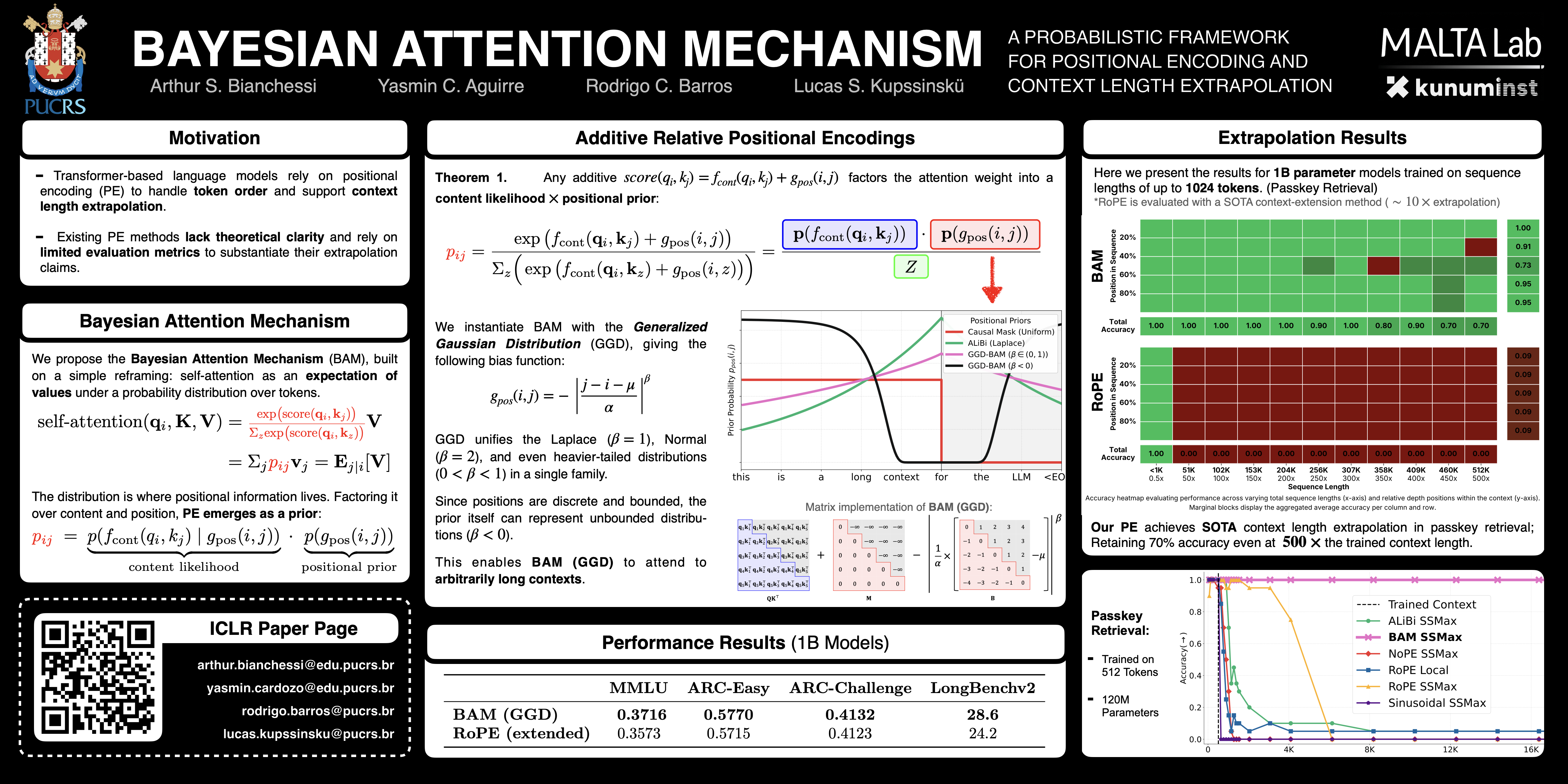
Transformer-based language models rely on positional encoding (PE) to handle token order and support context length extrapolation. However, existing PE methods lack theoretical clarity and rely on limited evaluation metrics to substantiate their extrapolation claims. We propose the Bayesian Attention Mechanism (BAM), a theoretical framework that formulates positional encoding as a prior within a probabilistic model. BAM unifies existing methods (e.g., NoPE and ALiBi) and motivates a new Generalized Gaussian positional prior that substantially improves long-context generalization. Empirically, BAM enables accurate information retrieval at $500\times$ the training context length, outperforming previous state-of-the-art context length generalization by more than $25\times$ in retrieval accuracy while maintaining comparable perplexity and introducing minimal additional parameters.
FSA: An Alternative Efficient Implementation of Native Sparse Attention Kernel
Ran Yan ⋅ YOUHE JIANG ⋅ Zhuoming Chen ⋅ Haohui Mai ⋅ Beidi Chen ⋅ Binhang Yuan
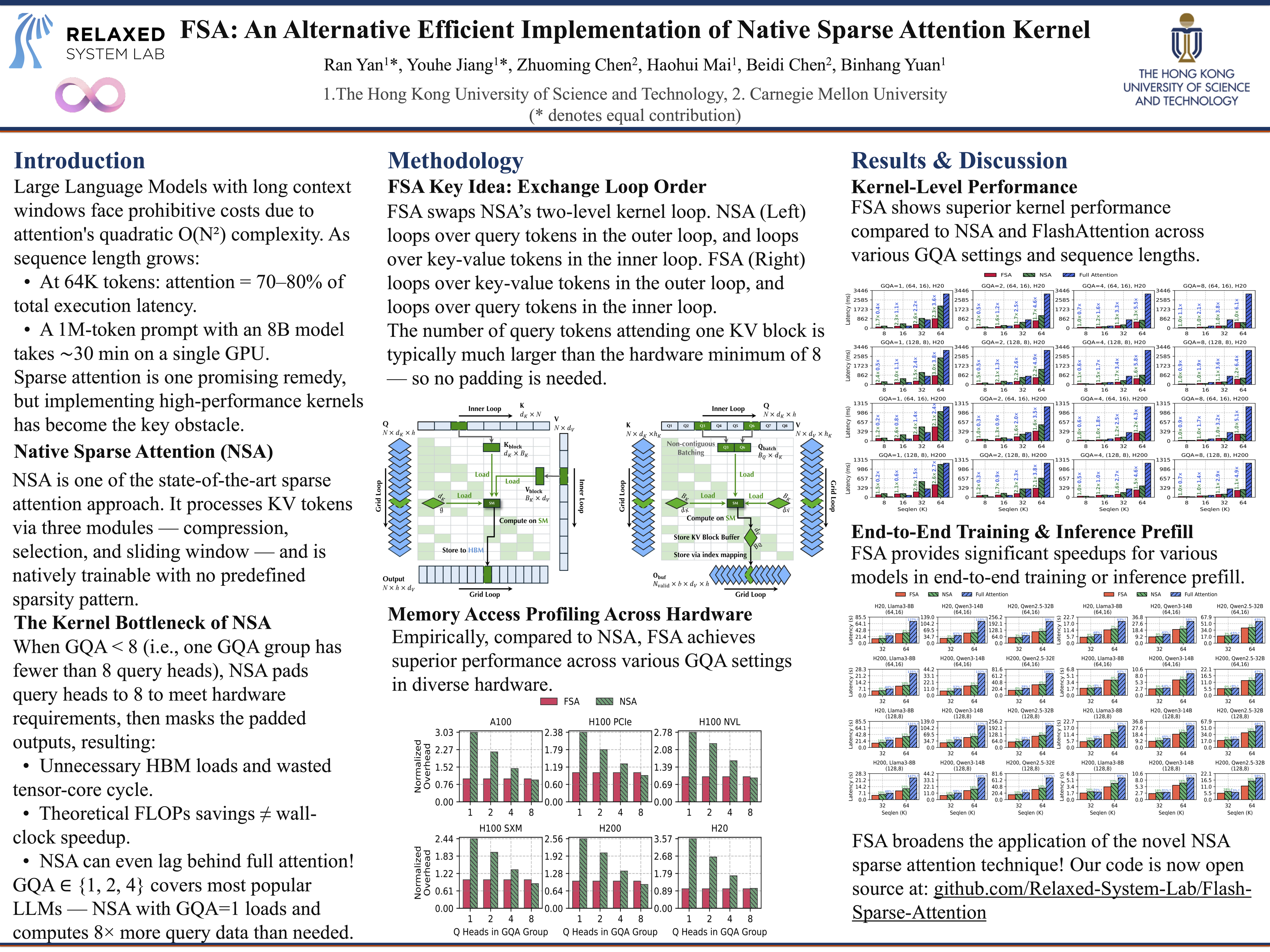
Recent advance in sparse attention mechanisms has demonstrated strong potential for reducing the computational cost of long-context training and inference in large language models (LLMs). Native Sparse Attention (NSA), one state-of-the-art approach, introduces natively trainable, hardware-aligned sparse attention that delivers substantial system-level performance boost while maintaining accuracy comparable to full attention. However, the kernel implementation of NSA forces a loop order that is only efficient with a relatively large number of query heads in each Grouped Query Attention (GQA) group, whereas existing LLMs widely adopt much smaller number of query heads in each GQA group --- such an inconsistency significantly limits the applicability of this sparse algorithmic advance. In this work, we propose Flash Sparse Attention (FSA), an alternative kernel implementation that enables efficient NSA computation across a wide range of popular LLMs with varied smaller number of query heads in each GQA group on modern GPUs. Compared to vanilla NSA kernel implementation, our empirical evaluation demonstrates that FSA achieves (i) up to 3.5x and on average 1.6x kernel-level latency reduction, (ii) up to 1.25x and 1.09x on average end-to-end training speedup on state-of-the-art LLMs, and (iii) up to 1.36x and 1.11x on average for prefill-phase speedup in LLM generative inference.
Frayed RoPE and Long Inputs: A Geometric Perspective
Davis Wertheimer ⋅ Aozhong Zhang ⋅ Derrick Liu ⋅ Penghang Yin ⋅ Naigang Wang
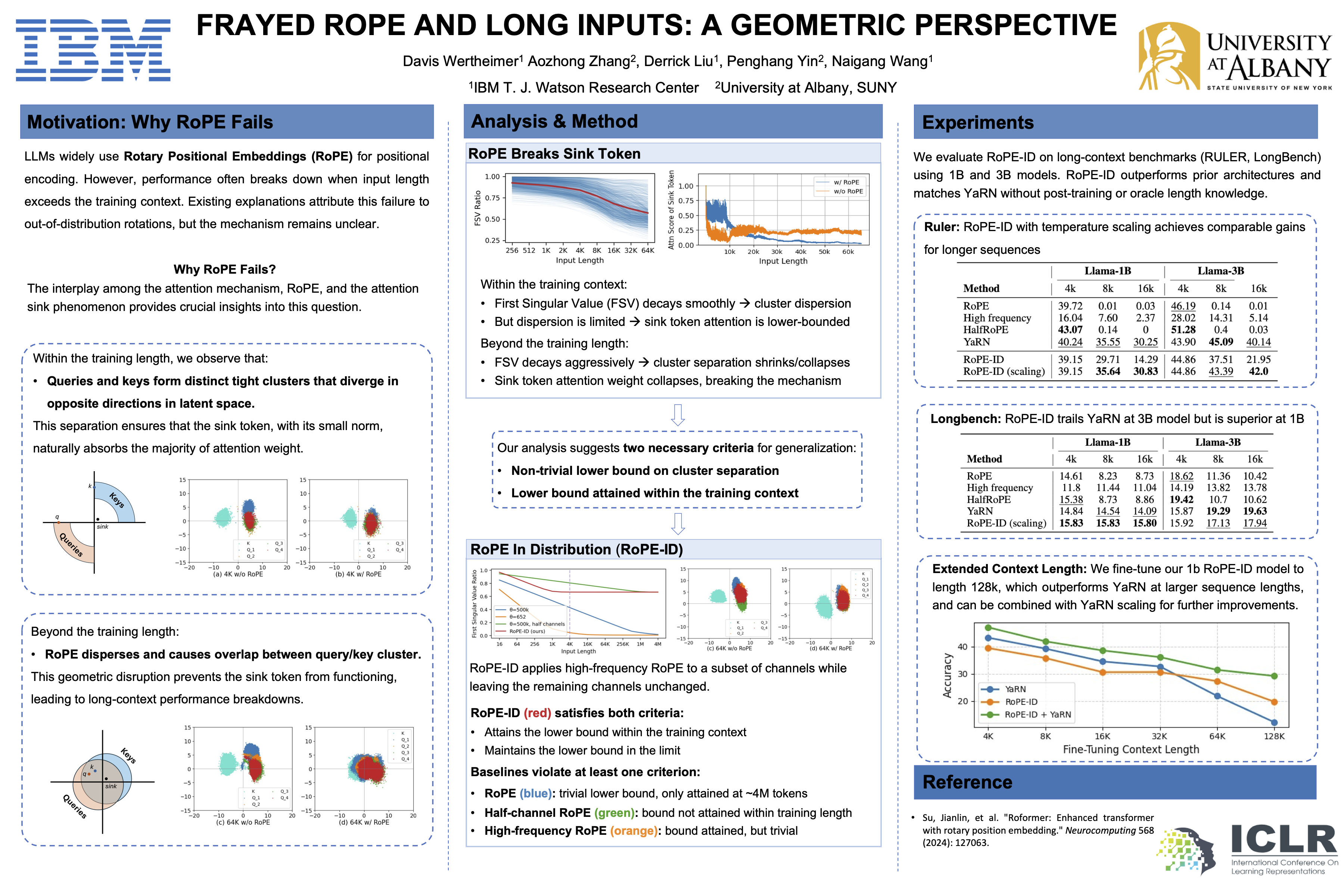
Rotary Positional Embedding (RoPE) is a widely adopted technique for encoding position in language models, which, while effective, causes performance breakdown when input length exceeds training length. Prior analyses assert (rightly) that long inputs cause channels to rotate “out of distribution,” but it is not clear how extra rotation relates to or causes pathological behavior. Through empirical and theoretical analysis we advance a unified geometric understanding of attention behavior with RoPE. We find that attention induces tight clustering of separated key and query latent point clouds, allowing for creation of sink tokens: placeholders that allow attention heads to avoid token mixing when not required. RoPE applied to longer inputs damages this key/query cluster separation, producing pathological behavior by inhibiting sink token functionality. From this geometric perspective, we propose RoPE-ID (In Distribution), a straightforward modification that allows attention layers to generalize to longer inputs out of the box: apply RoPE with high frequency to a subset of channels. We demonstrate the effectiveness of RoPE-ID for extended inputs using 1B and 3B parameter Transformers on the LongBench and RULER information retrieval benchmarks.
LookaheadKV: Fast and Accurate KV Cache Eviction by Glimpsing into the Future without Generation
Jinwoo Ahn ⋅ Ingyu Seong ⋅ Akhil Kedia ⋅ Junhan Kim ⋅ Hyemi Jang ⋅ Kangwook Lee ⋅ Yongkweon Jeon
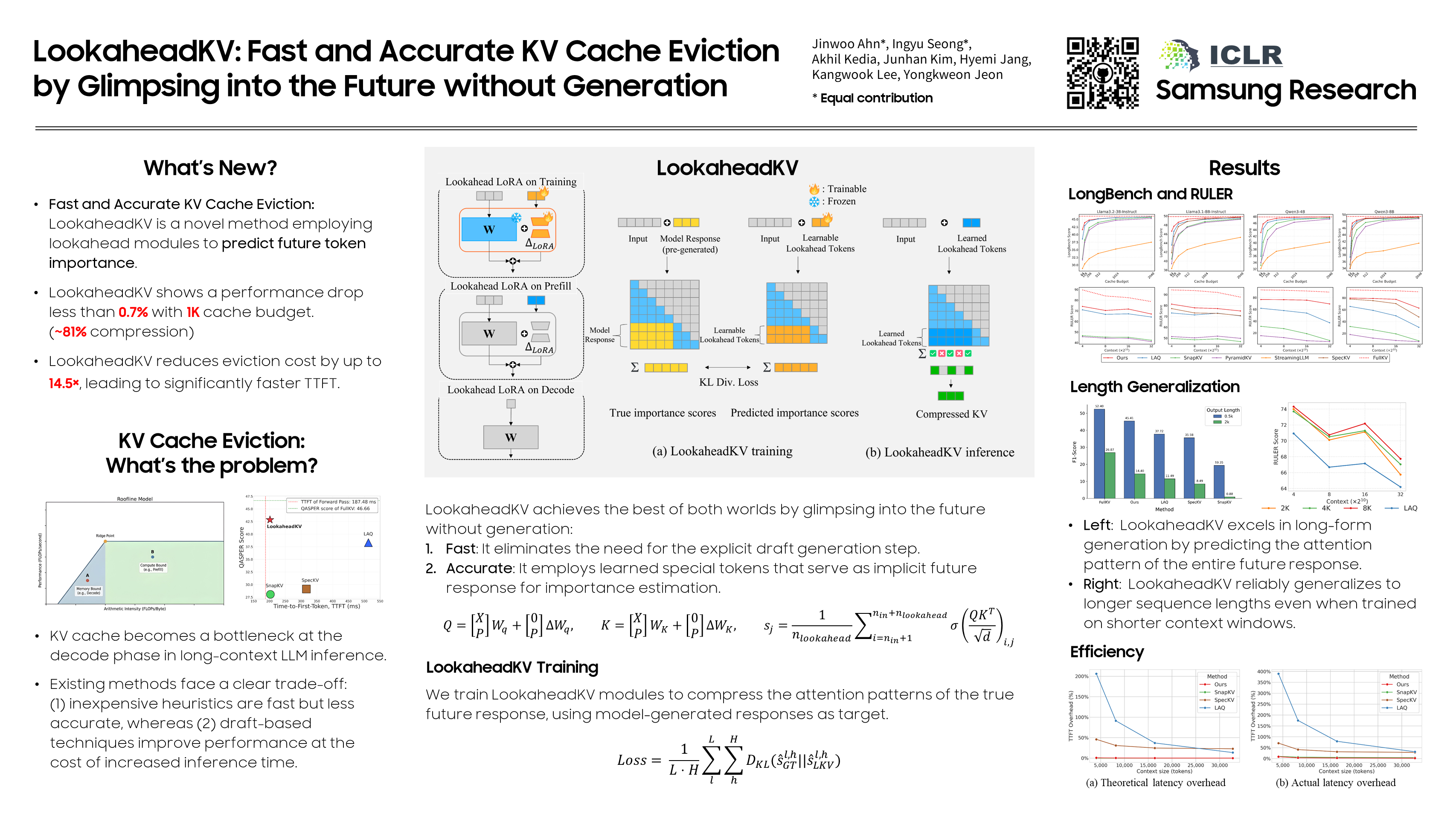
Transformer-based large language models (LLMs) rely on key–value (KV) caching to avoid redundant computation during autoregressive inference. While this mechanism greatly improves efficiency, the cache size grows linearly with the input sequence length, quickly becoming a bottleneck for long‑context tasks. Existing solutions mitigate this problem by evicting prompt KV that are deemed unimportant, guided by estimated importance scores. Notably, a recent line of work proposes to improve eviction quality by “glimpsing into the future”, in which a draft generator produces a surrogate future response approximating the target model's true response, and this surrogate is subsequently used to estimate the importance of cached KV more accurately. However, these approaches rely on computationally expensive draft generation, which introduces substantial prefilling overhead and limits their practicality in real-world deployment. To address this challenge, we propose LookaheadKV, a lightweight eviction framework that leverages the strength of surrogate future response without requiring explicit draft generation. LookaheadKV augments transformer layers with parameter‑efficient modules trained to predict true importance scores with high accuracy. Our design ensures negligible runtime overhead comparable to existing inexpensive heuristics, while achieving accuracy superior to more costly approximation methods. Extensive experiments on long-context understanding benchmarks, across a wide range of models, demonstrate that our method not only outperforms recent competitive baselines in various long-context understanding tasks, but also reduces the eviction cost by up to $14.5$×, leading to significantly faster time-to-first-token. Our code is available at https://github.com/SamsungLabs/LookaheadKV.
ReST-KV: Robust KV Cache Eviction with Layer-wise Output Reconstruction and Spatial-Temporal Smoothing
Yongqi An ⋅ Chang Lu ⋅ Kuan Zhu ⋅ Tao Yu ⋅ Chaoyang Zhao ⋅ Hong Wu ⋅ Ming Tang ⋅ Jinqiao Wang
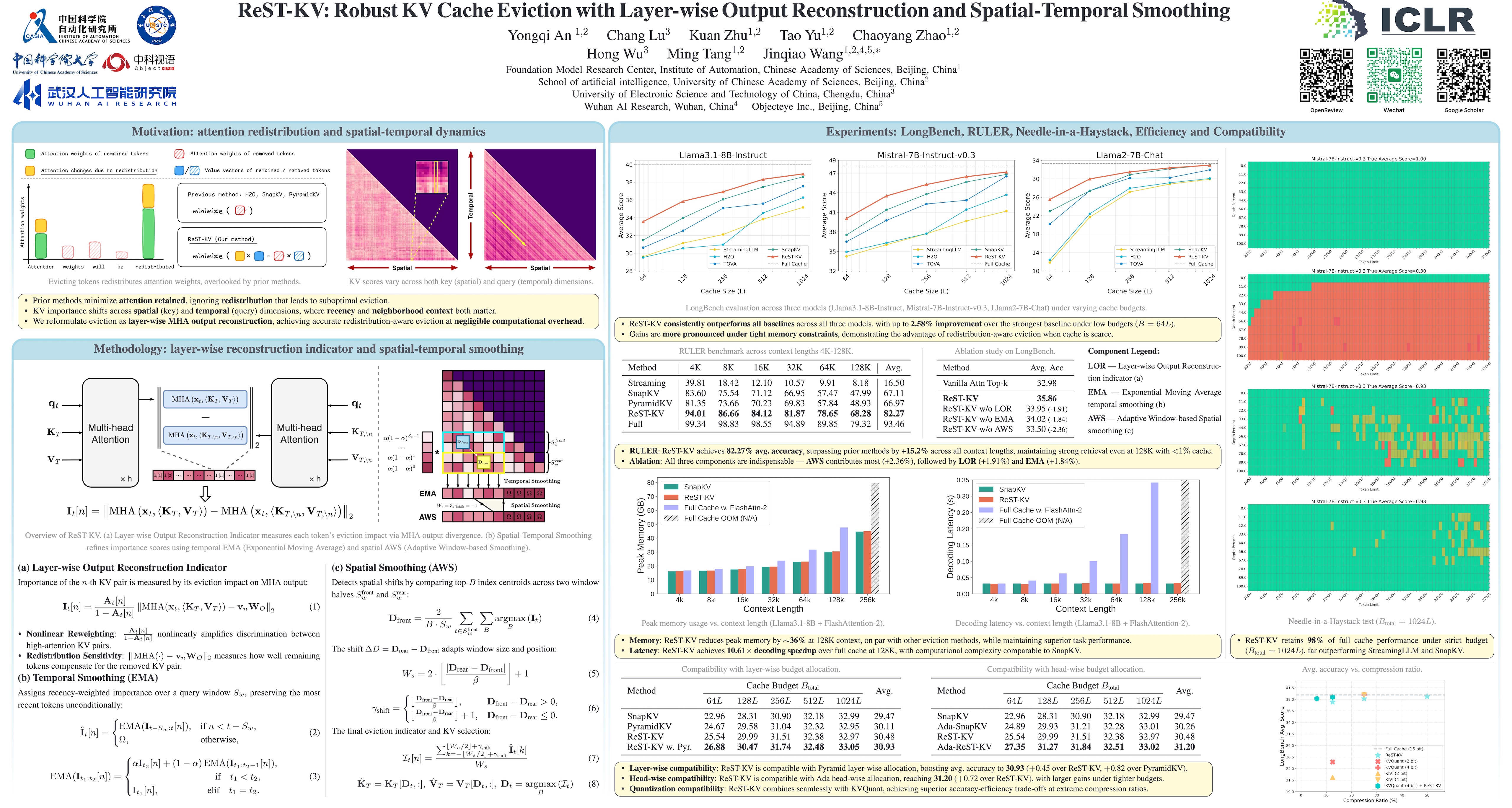
Large language models (LLMs) face growing challenges in efficient generative inference due to the increasing memory demands of Key-Value (KV) caches, especially for long sequences. Existing eviction methods typically retain KV pairs with high attention weights but overlook the impact of attention redistribution caused by token removal, as well as the spatial-temporal dynamics in KV selection. In this paper, we propose ReST-KV, a robust KV eviction method that combines layer-wise output **Re**construction and **S**patial-**T**emporal smoothing to provide a more comprehensive perspective for the KV cache eviction task. Specifically, ReST-KV formulates KV cache eviction as an optimization problem that minimizes output discrepancies through efficient layer-wise reconstruction. By directly modeling how each token’s removal affects the model output, our method naturally captures attention redistribution effects, going beyond simplistic reliance on raw attention weights. To further enhance robustness, we design exponential moving average smoothing to handle temporal variations and an adaptive window-based mechanism to capture spatial patterns. Our method, ReST-KV, significantly advances performance on long-context benchmarks. It surpasses state-of-the-art baselines by 2.58\% on LongBench and 15.2\% on RULER. Additionally, ReST-KV consistently outperforms existing methods on Needle-in-a-Haystack and InfiniteBench, all while achieving a remarkable 10.61$\times$ reduction in decoding latency at 128k context length. The code is included in the supplementary material and is designed for easy reproduction.
Frequency Bands in RoPE: Base Frequency and Context Length Shape the Interpolation–Extrapolation Trade-off
Yui Oka ⋅ Itsumi Saito ⋅ Kyosuke Nishida ⋅ Kuniko Saito
Rotary Position Embeddings (RoPE) are widely adopted in LLMs, and it is commonly believed that larger base frequencies $\theta$ yield better long-context performance. In this paper, we show that a high-norm RoPE dimension, referred to as the “frequency band,” consistently emerges across multiple models, and we focus on this band to reveal the trade-offs inherent in RoPE. We find that replacing the RoPE dimensions below the frequency band with NoPE during inference has little effect on performance, indicating that these lower-frequency dimensions are only weakly utilized. We further find that the location of the frequency band depends on the RoPE base $\theta$ and the training sequence length. Moreover, the band forms early during pre-training and persists even after context extension via position interpolation. Notably, we show that setting $\theta$ to the training length shifts the band toward lower frequencies and improves extrapolation, whereas increasing $\theta$ enhances interpolation but reduces extrapolation, revealing a clear trade-off between interpolation and extrapolation. We believe this work is a step toward a sharper understanding of positional embeddings in LLMs, with falsifiable diagnostics and practical guidance for choosing $\theta$ that support scaling to longer contexts.
Massive Memorization with Hundreds of Trillions of Parameters for Sequential Transducer Generative Recommenders
Zhimin Chen ⋅ Chenyu Zhao ⋅ Ka Mo ⋅ Yunjiang Jiang ⋅ Jane Lee ⋅ KHUSHHALL CHANDRA MAHAJAN ⋅ Ning Jiang ⋅ Kai Ren ⋅ Charlie Li ⋅ Wen-Yun Yang
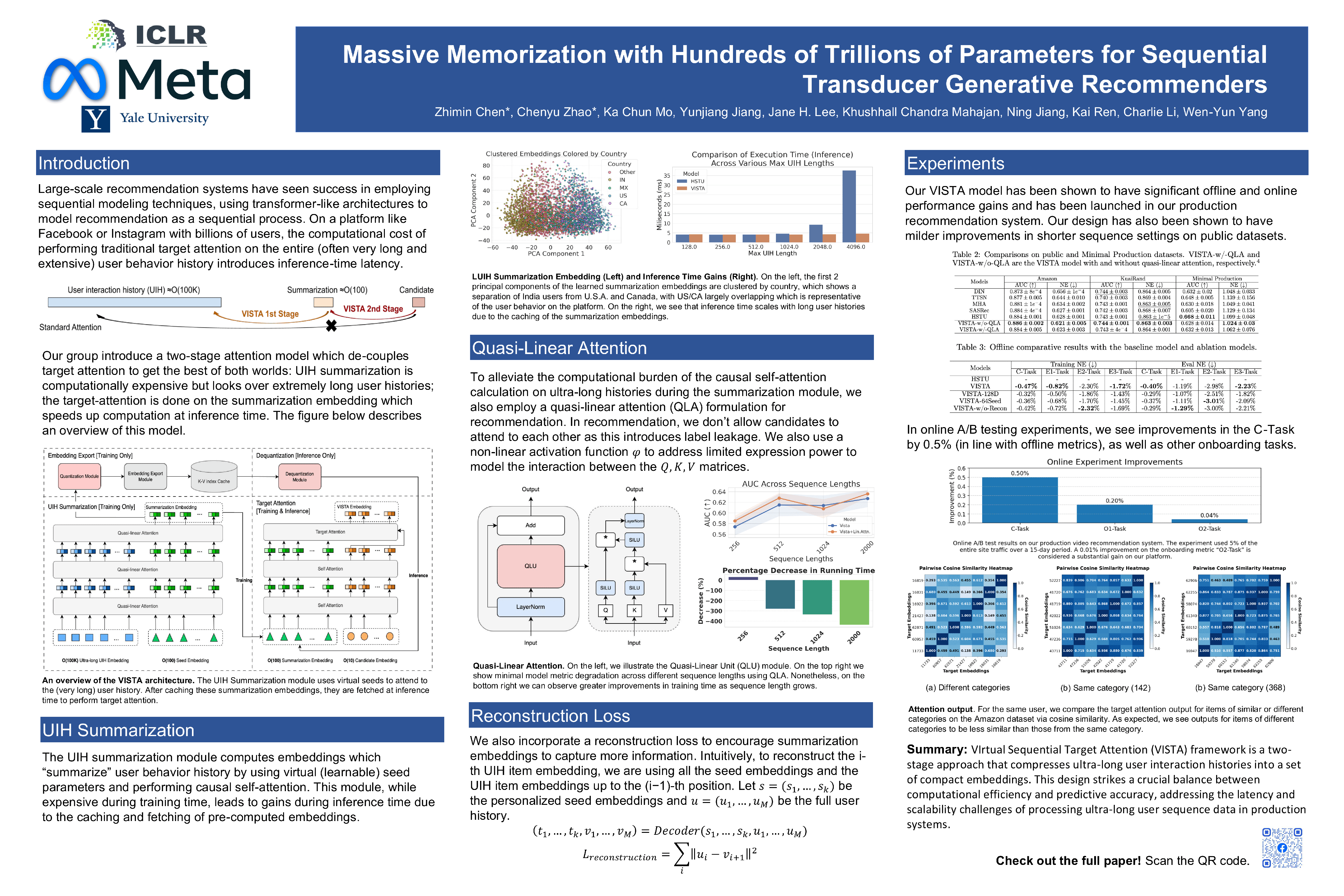
Modern large-scale recommendation systems rely heavily on user interaction history sequences to enhance the model performance. The advent of large language models and sequential modeling techniques, particularly transformer architectures, has led to significant advancements (e.g., HSTU, SIM, and TWIN models). While scaling to ultra-long user histories (10k to 100k items) generally improves model performance, it also creates significant challenges on latency, queries per second (QPS) and GPU cost in industry-scale recommendation systems. Existing models do not adequately address these industrial scalability issues. In this paper, we propose a novel two-stage modeling framework, namely \emph{VIrtual Sequential Target Attention} (VISTA), which decomposes traditional target attention from a candidate item to user history items into two distinct stages: (1) user history summarization into a few hundred tokens; followed by (2) candidate item attention to those tokens. These summarization token embeddings are then cached in storage system and then utilized as sequence features for downstream model training and inference. This novel design for scalability enables VISTA to scale to lifelong user histories (up to one million items) while keeping downstream training and inference costs fixed, which is essential in industry. Our approach achieves significant improvements in offline and online metrics and has been successfully deployed on an industrial platform serving billions of users.
CARE: Covariance-Aware and Rank-Enhanced Decomposition for Enabling Multi-Head Latent Attention
Zhongzhu Zhou ⋅ Fengxiang Bie ⋅ Ziyan Chen ⋅ Zhenyu Zhang ⋅ Yibo Yang ⋅ Junxiong Wang ⋅ Ben Athiwaratkun ⋅ Xiaoxia (Shirley) Wu ⋅ Shuaiwen Song
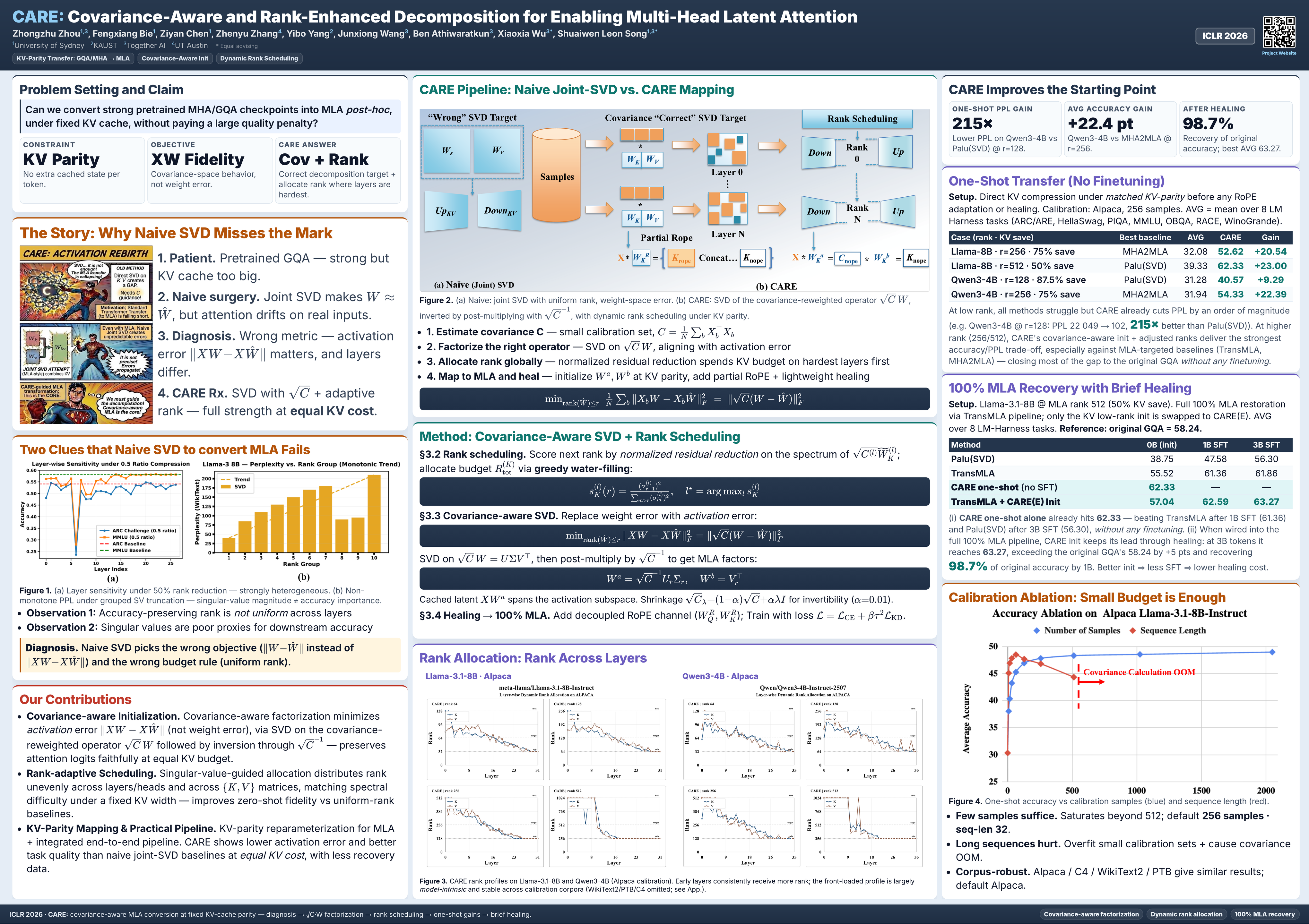
Converting pretrained attention modules such as grouped-query attention (GQA) into multi-head latent attention (MLA) can improve expressivity without increasing KV-cache cost, making it attractive for efficient inference. However, many practical conversion baselines rely on weight-only low-rank approximations (e.g., SVD-style initializations) and uniform rank allocation. They focus on minimizing the difference between weight matrices rather than on how those weights affect input activations, ignore the covariance structure of activations, and enforce uniform rank across layers—causing activation drift and degraded attention fidelity. To address these issues, we propose CARE, a **Covariance-Aware, Rank-Enhanced MLA conversion pipeline under a fixed KV width. CARE introduces three key steps: (i) activation-preserving factorization, which aligns the approximation with the actual input activations rather than just the weights; (ii) adjusted-rank allocation, which spreads a fixed KV budget across layers by giving more capacity to layers that need it most; and (iii) KV-parity mapping, which reparameterizes the converted K and V to fit the MLA format while keeping the KV-cache size unchanged. Our method outperforms a uniform-rank SVD baseline on Qwen3-4B/30B-A3B-Instruct-2507 and Llama-3.1-8B/70B-Instruct, reducing one-shot perplexity by up to 215× and improving mean accuracy by up to 1.70× at matched KV budgets. With a brief post-SVD "healing" fine-tune, we fully recover the original model's accuracy.
Beyond Real: Imaginary Extension of Rotary Position Embeddings for Long-Context LLMs
Xiaoran Liu ⋅ Yuerong Song ⋅ Zhigeng Liu ⋅ Zengfeng Huang ⋅ Qipeng Guo ⋅ Zhaoxiang Liu ⋅ Shiguo Lian ⋅ Ziwei He ⋅ Xipeng Qiu
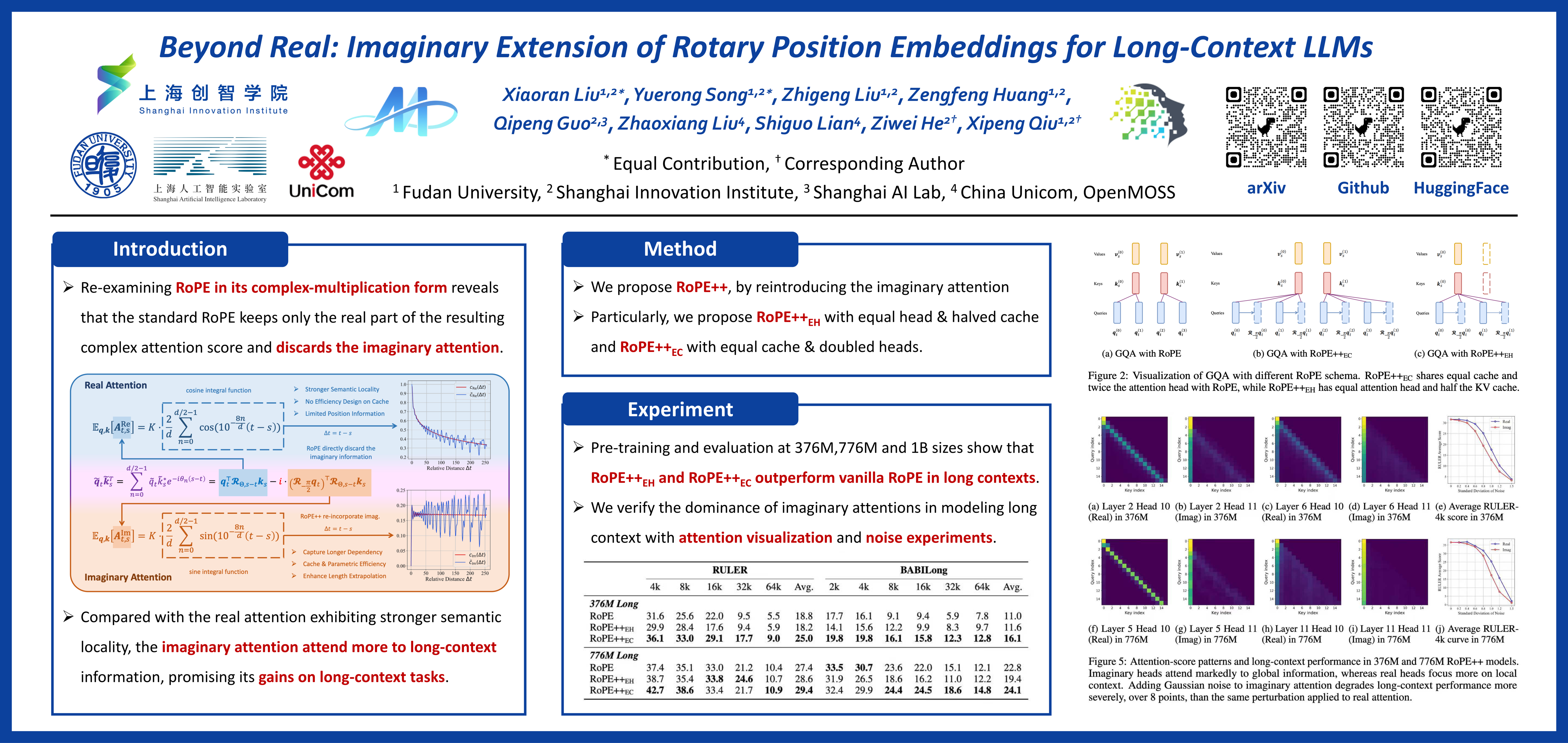
Rotary Position Embeddings (RoPE) have become a standard for encoding sequence order in Large Language Models (LLMs) by applying rotations to query and key vectors in the complex plane. Standard implementations, however, utilize only the real component of the complex-valued dot product for attention score calculation. This simplification discards the imaginary component, which contains valuable phase information, leading to a potential loss of relational details crucial for modeling long-context dependencies. In this paper, we propose an extension that re-incorporates this discarded imaginary component. Our method leverages the full complex-valued representation to create a dual-component attention score. We theoretically and empirically demonstrate that this approach enhances the modeling of long-context dependencies by preserving more positional information. Furthermore, evaluations on a suite of long-context language modeling benchmarks show that our method consistently improves performance over the standard RoPE, with the benefits becoming more significant as context length increases. The code is available at https://github.com/OpenMOSS/rope_pp.
DPad: Efficient Diffusion Language Models with Suffix Dropout
Xinhua Chen ⋅ Sitao Huang ⋅ Cong Guo ⋅ Chiyue Wei ⋅ Yintao He ⋅ Jianyi Zhang ⋅ Hai Li ⋅ Yiran Chen
Diffusion-based Large Language Models (dLLMs) parallelize text generation by framing decoding as a denoising process, but suffer from high computational overhead since they predict all future suffix tokens at each step while retaining only a small fraction. We propose $\textbf{Diffusion Scratchpad} (\textbf{\textit{DPad}})$, a training-free method that restricts attention to a structured subset of suffix tokens, preserving fidelity while eliminating redundancy. $\textit{DPad}$ integrates two strategies: (i) a $\textit{sliding window}$, which maintains a fixed-length suffix window, and (ii) $\textit{distance-decay dropout}$, which deterministically removes distant suffix tokens before attention computation. This concise design is compatible with existing optimizations such as parallel decoding and prefix caching, and lends itself to a lightweight implementation. Comprehensive evaluations across multiple benchmarks on $\texttt{LLaDA}$ and $\texttt{Dream}$ models demonstrate that $\textit{DPad}$ delivers up to $\mathbf{61.4\times}$ speedup over vanilla dLLMs while maintaining comparable accuracy, highlighting its potential for efficient and scalable long-sequence inference.
GoR: A Unified and Extensible Generative Framework for Ordinal Regression
Hongxu Ma ⋅ Han Zhou ⋅ Kai Tian ⋅ Xuefeng Zhang ⋅ Chunjie Chen ⋅ Han Li ⋅ Jihong Guan ⋅ Shuigeng Zhou
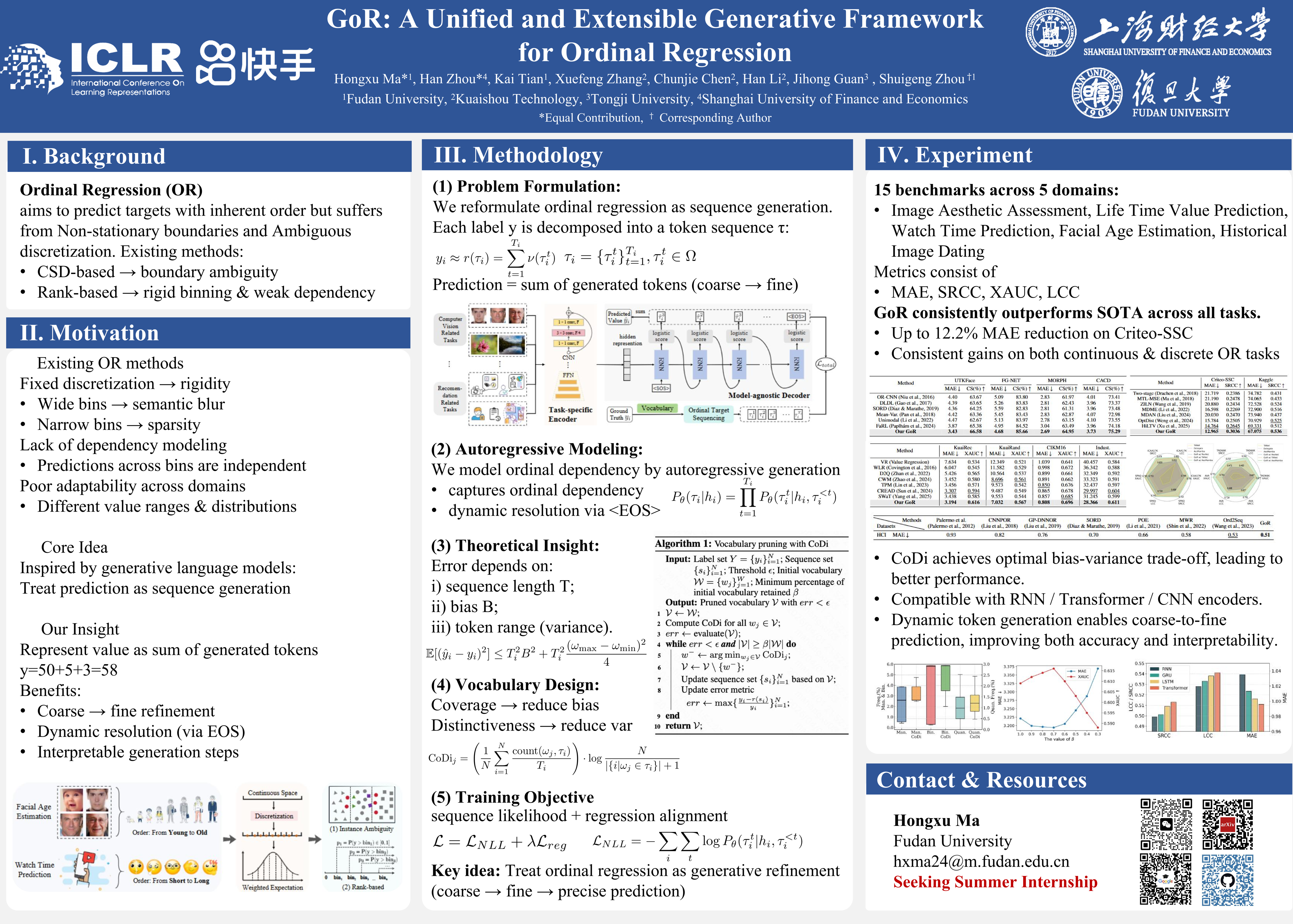
Ordinal Regression (OR), which predicts the target values with inherent order, underpins a wide spectrum of applications within diverse domains. The intrinsic ordinal structure and non-stationary inter-class boundaries make OR fundamentally more challenging than conventional classification or regression. Existing approaches, predominantly based on Continuous Space Discretization (CSD), struggle to model these ordinal relationships, but are hampered by boundary ambiguity. Alternative rank-based methods, while effective, rely on implicit order dependencies and suffer from the rigidity of fixed binning. Inspired by the advances of generative language models, we propose Generative Ordinal Regression (GoR), a novel generative paradigm that reframes OR as a sequential generation task. GoR autoregressively predicts ordinal segments until a dynamic ⟨EOS⟩, explicitly capturing ordinal dependencies while enabling adaptive resolution and interpretable step-wise refinement. To support this process, we theoretically establish a bias–variance decomposed error bound and propose the Coverage–Distinctiveness Index (CoDi), a principled metric for vocabulary construction that balances quantization bias against statistical variance. The GoR framework is model-agnostic, ensuring broad compatibility with arbitrary task-specific architectures. Moreover, it can be seamlessly integrated with established optimization strategies for generative models at a negligible adaptation cost. Extensive experiments on 17 diverse ordinal regression benchmarks across six major domains demonstrate GoR's powerful generalization and consistent superiority over state-of-the-art OR methods.
MesaNet: Sequence Modeling by Locally Optimal Test-Time Training
Johannes von Oswald ⋅ Nino Scherrer ⋅ Seijin Kobayashi ⋅ Luca Versari ⋅ Songlin Yang ⋅ Maximilian Schlegel ⋅ Kaitlin Maile ⋅ Yanick Schimpf ⋅ Oliver Sieberling ⋅ Alexander Meulemans ⋅ Guillaume Lajoie ⋅ Rif A. Saurous ⋅ Charlotte Frenkel ⋅ Razvan Pascanu ⋅ Blaise Aguera y Arcas ⋅ Joao Sacramento
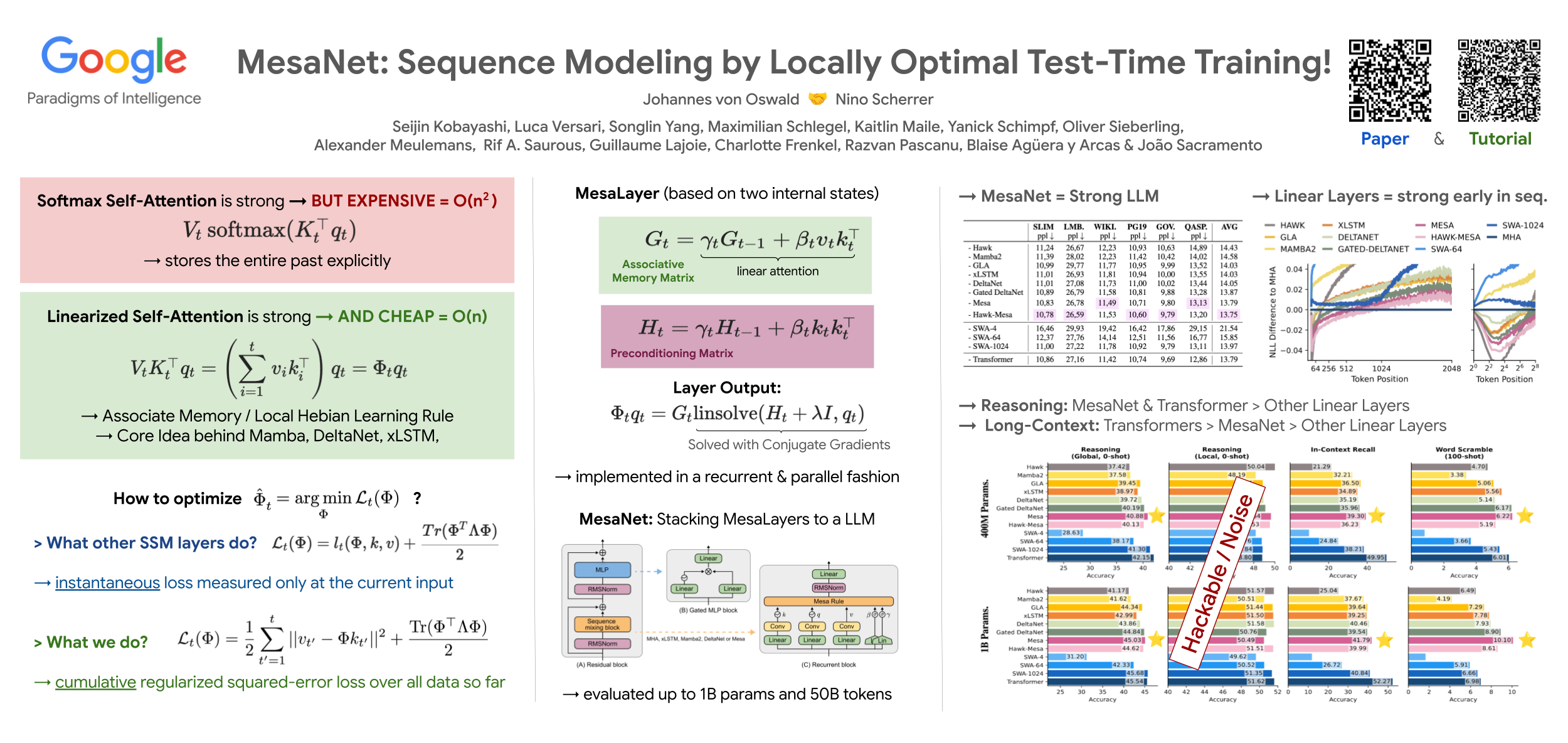
Sequence modeling is currently dominated by causal transformer architectures that use softmax self-attention. Although widely adopted, transformers require scaling memory and compute linearly during inference. A recent stream of work linearized the softmax operation, resulting in powerful recurrent neural network (RNN) models with constant memory and compute costs such as DeltaNet, Mamba or xLSTM. These models can be unified by noting that their recurrent layer dynamics can all be derived from an in-context regression objective, approximately optimized through an online learning rule. Here, we join this line of work and introduce a numerically stable, chunkwise parallelizable version of the recently proposed Mesa layer (von Oswald et al., 2024), which could only run sequentially in time and was therefore not scalable. This layer again stems from an in-context loss, but which is now minimized to optimality at every time point using a fast conjugate gradient solver. Through an extensive suite of experiments study up to the billion-parameter scale, we show that optimal test-time training enables reaching lower language modeling perplexity and higher downstream benchmark performance than previous RNNs, especially on tasks requiring long context understanding. This performance gain comes at the cost of additional flops spent during inference time. Our results are therefore intriguingly related to recent trends of increasing test-time compute to improve performance -- here by spending compute to solve sequential optimization problems within the neural network itself.
Expert Divergence Learning for MoE-based Language Models
Jiaang Li ⋅ Haibin Chen ⋅ langming liu ⋅ Yujin Yuan ⋅ Yadao Wang ⋅ Yizhen Zhang ⋅ Chengting Yu ⋅ Xin Tong ⋅ Weidong Zhang ⋅ Shilei Liu ⋅ wenbo su ⋅ Bo Zheng
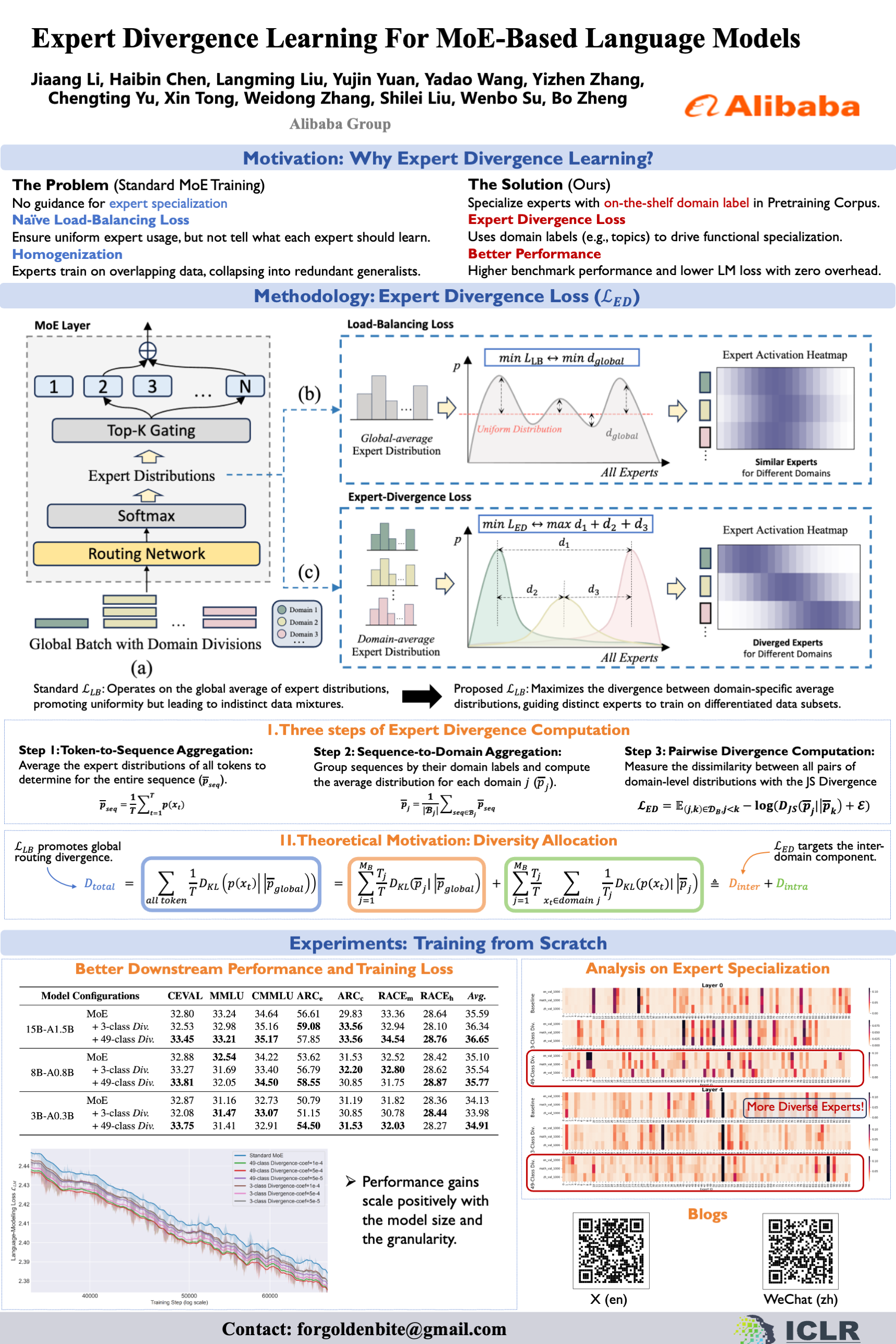
The Mixture-of-Experts (MoE) architecture is a powerful technique for scaling language models, yet it often suffers from expert homogenization, where experts learn redundant functionalities, thereby limiting MoE's full potential. To address this, we introduce Expert Divergence Learning, a novel pre-training strategy that explicitly encourages functional specialization among experts. Our method incorporates a label-driven auxiliary loss that leverages domain labels inherent in pre-training corpora to maximize the Jensen-Shannon Divergence between the expert routing distributions of different data domains. This optimization objective guides the model to develop diverged routing policies for varied domains and closer routing policies for the same domain, which leads to emergent and organized expert specialization. We validate our approach by pre-training MoE models of up to 15 billion parameters from scratch. Experimental results demonstrate that models trained with Expert Divergence Learning not only achieve a lower language modeling loss but also exhibit significant performance improvements across a diverse range of downstream benchmarks. Further analysis confirms that our method effectively mitigates expert homogenization and brings greater functional specialization, all with negligible computational overhead during training.
Flatter Tokens are More Valuable for Speculative Draft Model Training
Jiaming Fan ⋅ CAO DAMING ⋅ Xiangzhong Luo ⋅ Jiale Fu ⋅ CHONGHAN LIU ⋅ xu yang
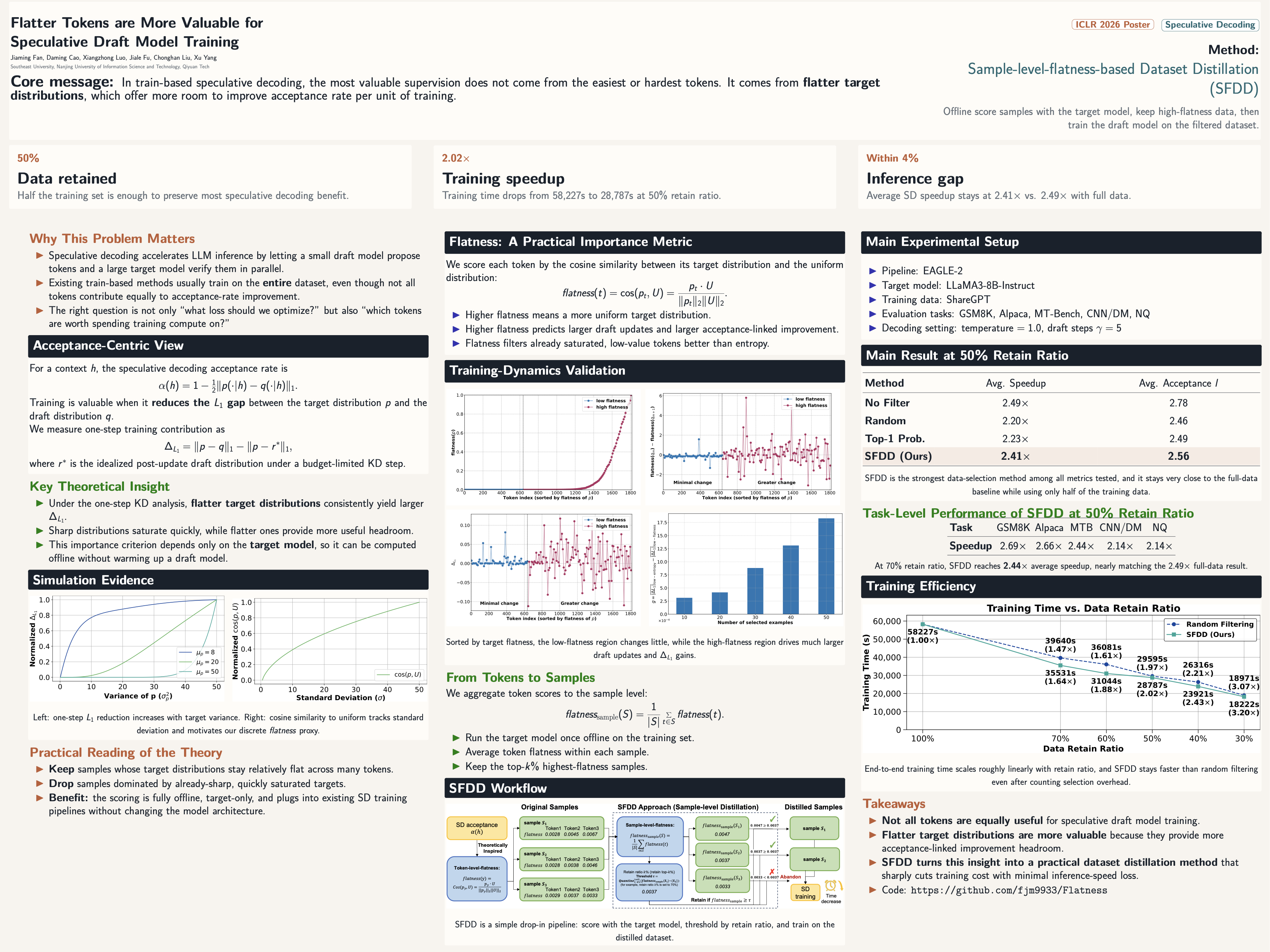
Speculative Decoding (SD) is a key technique for accelerating Large Language Model (LLM) inference, but it typically requires training a draft model on a large dataset. We approach this problem from a data-centric perspective, finding that not all training samples contribute equally to the SD acceptance rate. Specifically, our theoretical analysis and empirical validation reveals that tokens inducing flatter predictive distributions from the target model are more valuable than those yielding sharply peaked distributions. Based on this insight, we propose flatness, a new metric to quantify this property, and develop the Sample-level-flatness-based Dataset Distillation (SFDD) approach, which filters the training data to retain only the most valuable samples. Experiments on the EAGLE framework demonstrate that SFDD can achieve over 2$\times$ training speedup using only 50\% of the data, while keeping the final model's inference speedup within 4\% of the full-dataset baseline. This work introduces an effective, data-centric approach that substantially improves the training efficiency for Speculative Decoding. Our code is available at https://github.com/fjm9933/Flatness.
FAST‑DIPS: Adjoint‑Free Analytic Steps and Hard‑Constrained Likelihood Correction for Diffusion‑Prior Inverse Problems
Minwoo Kim ⋅ Seunghyeok Shin ⋅ Hongki Lim
Training-free diffusion priors enable inverse-problem solvers without retraining, but for nonlinear forward operators data consistency often relies on repeated derivatives or inner optimization/MCMC loops with conservative step sizes, incurring many iterations and denoiser/score evaluations. We propose a training-free solver that replaces these inner loops with a hard measurement-space feasibility constraint (closed-form projection) and an analytic, model-optimal step size, enabling a small, fixed compute budget per noise level. Anchored at the denoiser prediction, the correction is approximated via an adjoint-free, ADMM-style splitting with projection and a few steepest-descent updates, using one VJP and either one JVP or a forward-difference probe, followed by backtracking and decoupled re-annealing. We prove local model optimality and descent under backtracking for the step-size rule, and derive an explicit KL bound for mode-substitution re-annealing under a local Gaussian conditional surrogate. We also develop a latent variant and a one-parameter pixel$\rightarrow$latent hybrid schedule. Experiments achieve competitive PSNR/SSIM/LPIPS with up to 19.5$\times$ speedup, without hand-coded adjoints or inner MCMC. Code and data: [here](https://github.com/ququlza/FAST-DIPS)
Partition Generative Modeling: Masked Modeling Without Masks
Justin Deschenaux ⋅ Lan Tran ⋅ Caglar Gulcehre
Masked generative models (MGMs) can generate tokens in parallel and in any order, unlike autoregressive models (ARMs), which decode one token at a time, left-to-right. However, MGMs process the full-length sequence at every sampling step, including \mask tokens that carry no information. In contrast, ARMs process only the previously generated tokens. We introduce ``Partition Generative Models'' (PGMs), which replace masking with partitioning. Tokens are split into two groups that cannot attend to each other, and the model learns to predict each group conditioned on the other, eliminating mask tokens entirely. Because the groups do not interact, PGMs can process only the clean tokens during sampling, like ARMs, while retaining parallel, any-order generation, like MGMs. On OpenWebText, PGMs achieve $5-5.5\times$ higher throughput than MDLM while producing samples with lower Generative Perplexity. On ImageNet, PGMs reach comparable FID to MaskGIT with a $7.5\times$ throughput improvement. With twice as many steps, the FID improves to 4.56 while remaining $3.9\times$ faster than MGMs. Finally, PGMs remain compatible with existing MGM samplers and distillation methods.
NeRV-Diffusion: Diffuse Implicit Neural Representation for Video Synthesis
Yixuan Ren ⋅ Hanyu Wang ⋅ Bo He ⋅ Hao Chen ⋅ Abhinav Shrivastava
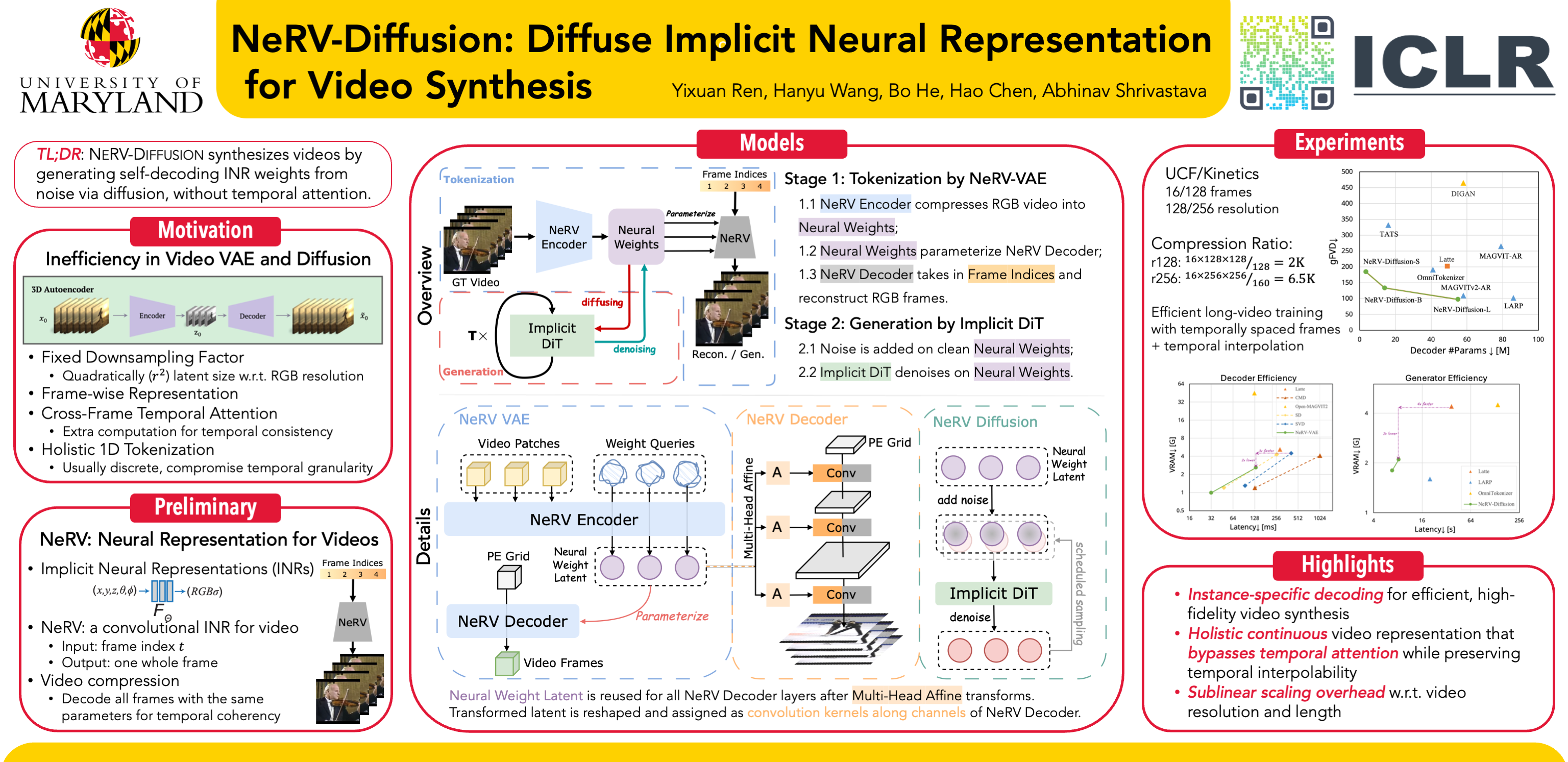
We present NeRV-Diffusion, an implicit latent video diffusion model that synthesizes videos via generating neural network weights. The generated weights can be arranged as the parameters of a convolutional network, forming an implicit neural representation (INR) and decoding into videos with frame indices as the input. Our framework consists of two stages: First, a hypernetwork-based tokenizer that encodes raw videos from pixel space to neural parameter space, and the bottleneck latent serves as INR weights to decode; Second, an implicit diffusion transformer that denoises on the latent INR weights. In contrast to traditional video tokenizers that compress videos into frame-wise feature maps, NeRV-Diffusion generates a video as a compact dedicated neural network. This continuous holistic video representation obviates temporal cross-frame attentions while preserving flexible temporal interpolability. The INR decoder and weight latent feature sublinear complexity overhead regarding video resolution and length increase with additional upsampling layers. To enable Gaussian-distributed neural weights with high expressiveness, we reuse the bottleneck latent across all INR layers, as well as reform its weight modulation, upsampling connection and input coordinates. We also introduce SNR-adaptive loss weighting and scheduled sampling for effective training of the implicit diffusion model. NeRV-Diffusion reaches superior video synthesis quality over previous INR-based models and comparable performance to most recent state-of-the-art non-implicit models on real-world video benchmarks including UCF-101 and Kinetics-600. It also achieves outstanding decoding and generation efficiency when scaling up to high-resolution and long videos.
Semantic-aware Wasserstein Policy Regularization for Large Language Model Alignment
Byeonghu Na ⋅ Hyungho Na ⋅ Yeongmin Kim ⋅ Suhyeon Jo ⋅ HeeSun Bae ⋅ Mina Kang ⋅ Il-chul Moon
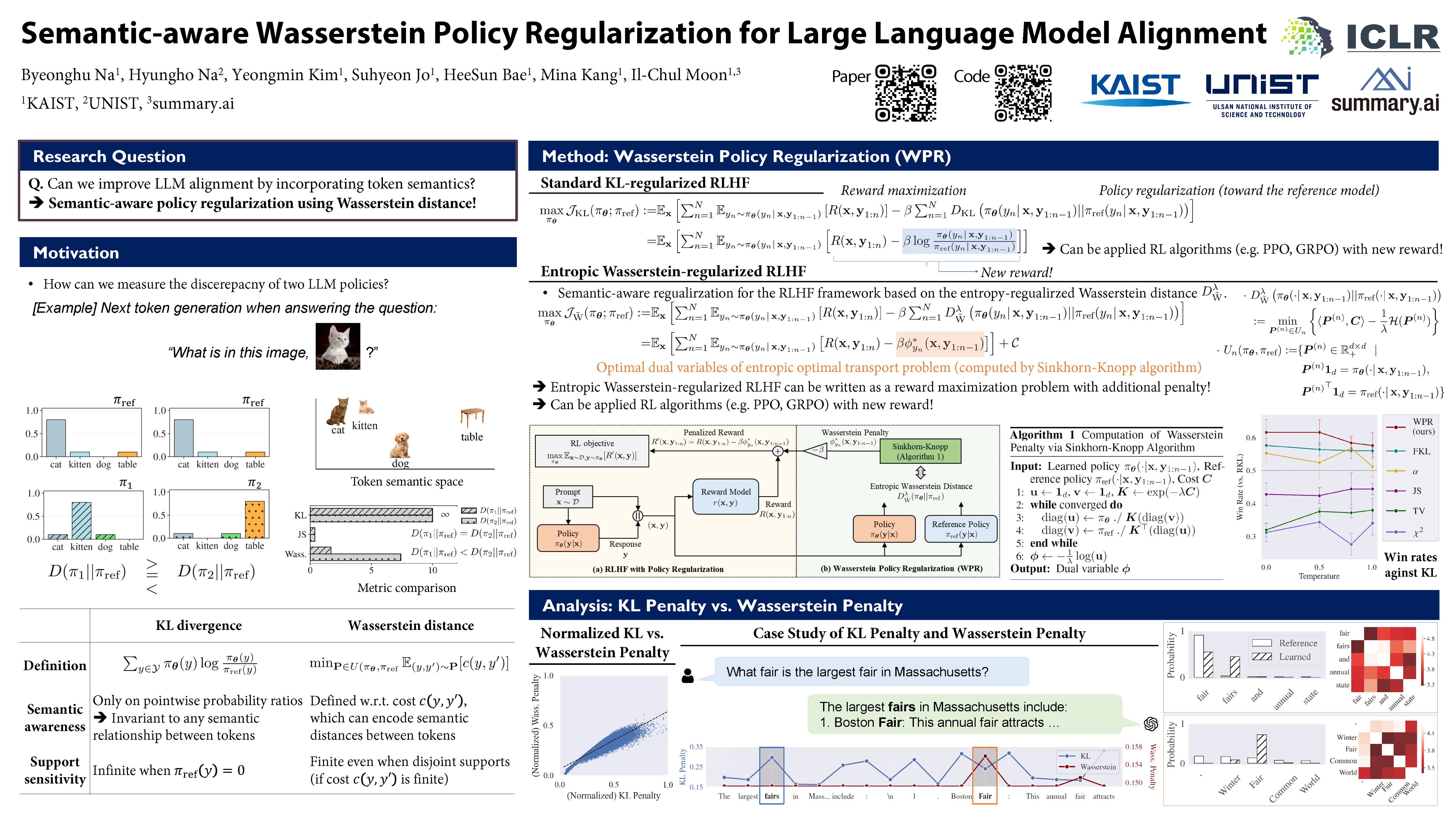
Large language models (LLMs) are commonly aligned with human preferences using reinforcement learning from human feedback (RLHF). In this method, LLM policies are generally optimized through reward maximization with Kullback-Leibler (KL) divergence regularization of the reference policy. However, KL and its $f$-divergence variants only compare token probabilities at identical indices, failing to capture semantic similarity. We propose Wasserstein Policy Regularization (WPR), a semantic-aware regularization for the RLHF framework based on the entropy-regularized Wasserstein distance, which incorporates the geometry of the token space. The dual formulation of the distance expresses the regularization as penalty terms applied to the reward via optimal dual variables, which yield a tractable objective compatible with standard RL algorithms. Empirically, our method outperforms KL- and $f$-divergence-based baselines, demonstrating the benefits of semantic-aware policy distances for alignment.
Continuous Chain of Thought Enables Parallel Exploration and Reasoning
Alperen Gozeten ⋅ Muhammed Ildiz ⋅ Xuechen Zhang ⋅ Hrayr Harutyunyan ⋅ Ankit Singh Rawat ⋅ Samet Oymak
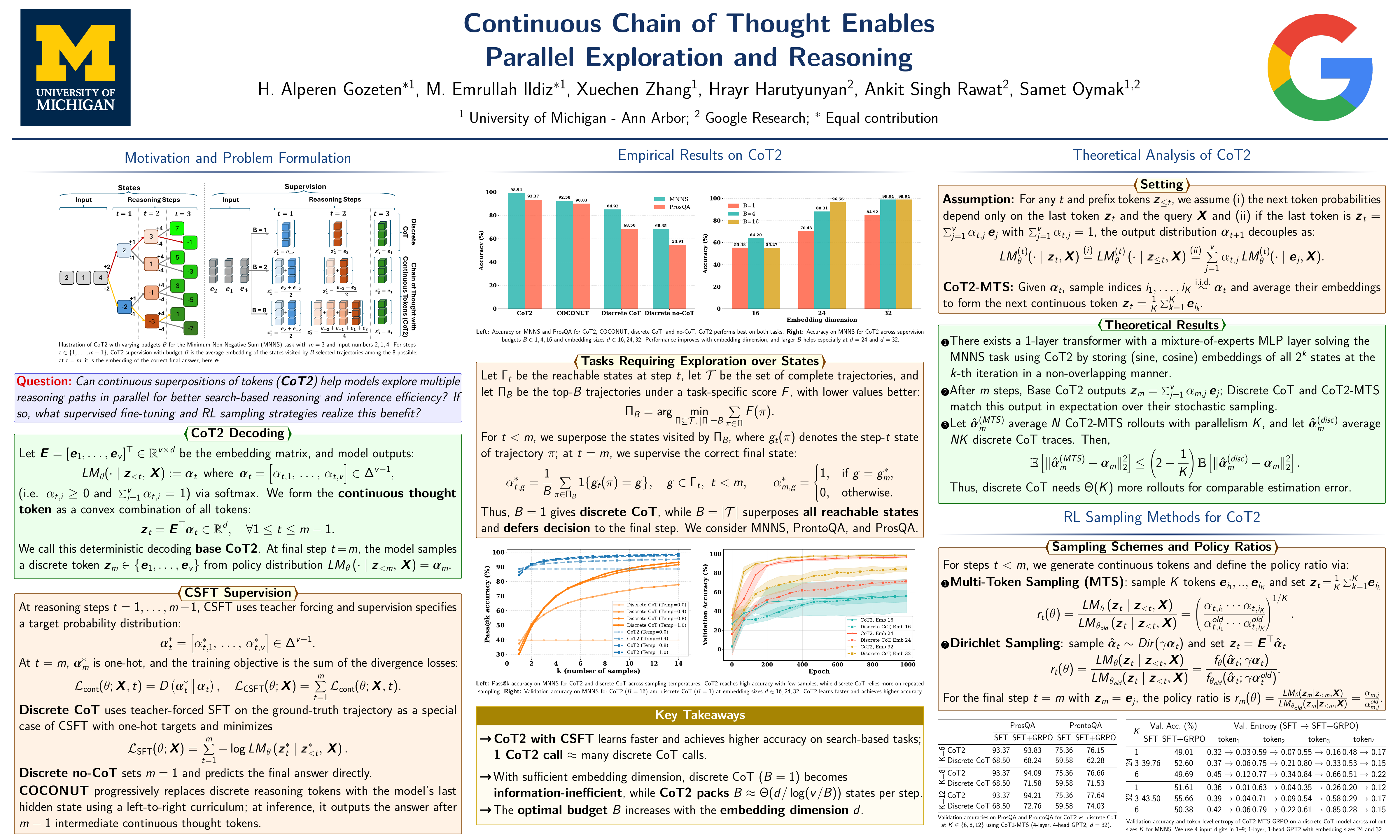
Modern language models generate chain-of-thought traces by autoregressively sampling tokens from a finite vocabulary. While this discrete sampling has achieved remarkable success, conducting chain-of-thought with continuously-valued tokens (CoT2) offers a richer and more expressive alternative. Our work provides new theoretical guarantees and algorithms for CoT2, motivated by logical reasoning tasks that inherently require search capabilities. Theoretically, we establish how CoT2 facilitates the model to track multiple discrete traces in parallel; and quantify the level of achievable parallelism and its benefits for inference efficiency. We also provide a CoT2-based one-layer transformer construction that solves the combinatorial ``subset sum problem'' given a sufficient embedding dimension. These insights arise from a novel and effective supervision strategy where we match the language model outputs to the empirical token distributions of a set of target traces. Complementing this, we introduce sampling strategies that unlock policy optimization methods for CoT2. Our primary strategy samples and composes $K$ discrete tokens at each decoding step to control the level of parallelism. Experiments confirm that (i) the optimal level of parallelism is governed by the embedding dimension, (ii) our continuous supervision strategy can outperform alternative methods, and (iii) policy optimization with CoT2 indeed improves the performance of the model beyond its initial discrete or continuous supervision.
Measurement Score-Based Diffusion Model
Chicago Y. Park ⋅ Shirin Shoushtari ⋅ Hongyu An ⋅ Ulugbek Kamilov
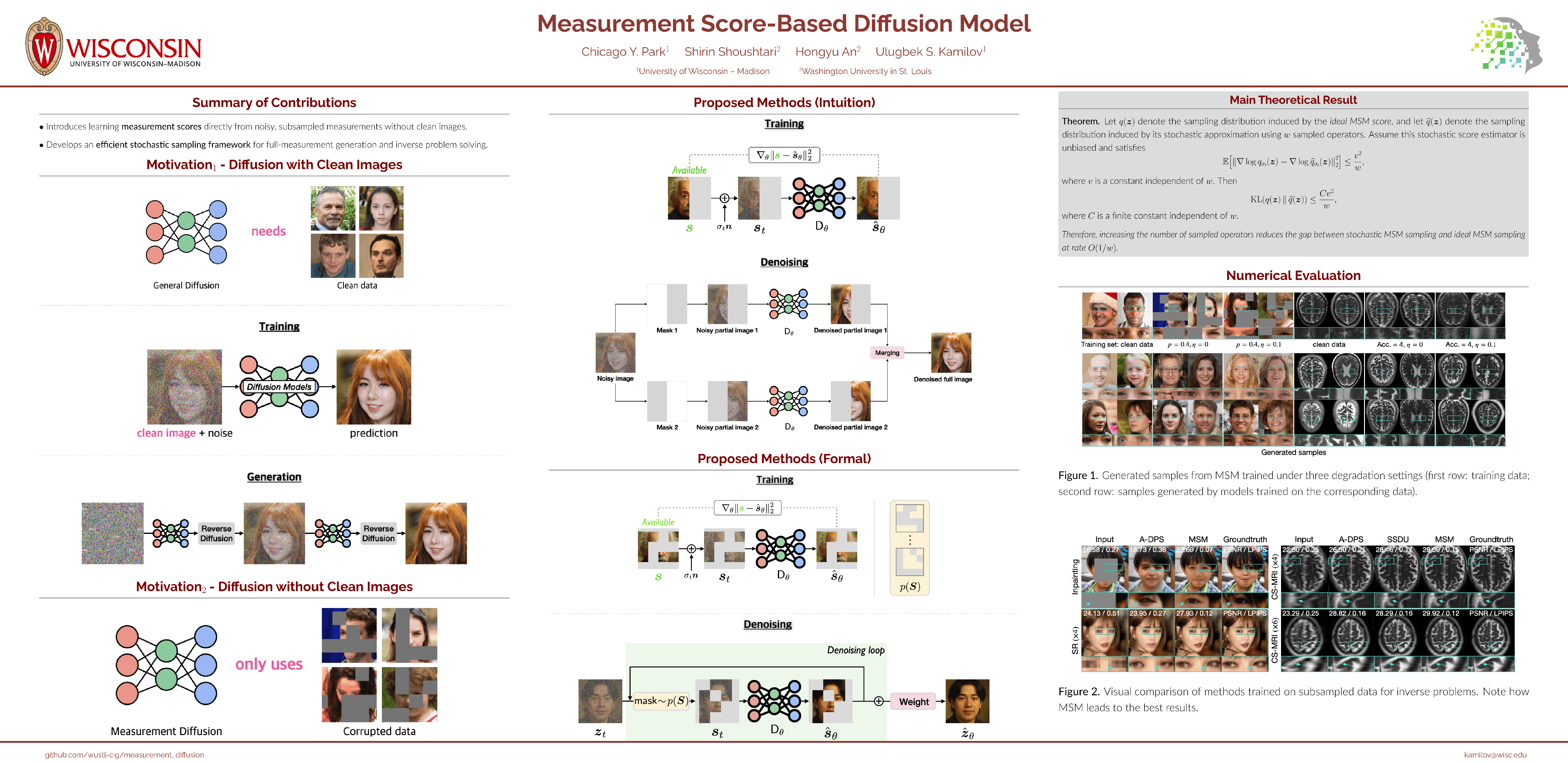
Diffusion models have achieved remarkable success in tasks ranging from image generation to inverse problems. However, training diffusion models typically requires clean ground-truth images, which are unavailable in many applications. We introduce the Measurement Score-based diffusion Model (MSM), a novel framework that learns partial measurement scores directly from noisy and subsampled measurements. By aggregating these scores in expectation, MSM synthesizes fully sampled measurements without requiring access to clean images. To make this practical, we develop a stochastic sampling variant of MSM that approximates the expectation efficiently and analyze its asymptotic equivalence to the exact formulation. We further extend MSM to posterior sampling for linear inverse problems, enabling accurate image reconstruction directly from partial scores. Experiments on natural images and multi-coil MRI demonstrate that MSM achieves state-of-the-art performance in unconditional generation and inverse problem solving---all while being trained exclusively on degraded measurements.
LoRAGen: Structure-Aware Weight Space Learning for LoRA Generation
Hao Huang ⋅ Jingtao Ding ⋅ Mengqi Liao ⋅ Xin Wang ⋅ Jinyang Ban ⋅ Yuan Yuan ⋅ Huaiyu Wan ⋅ Yong Li
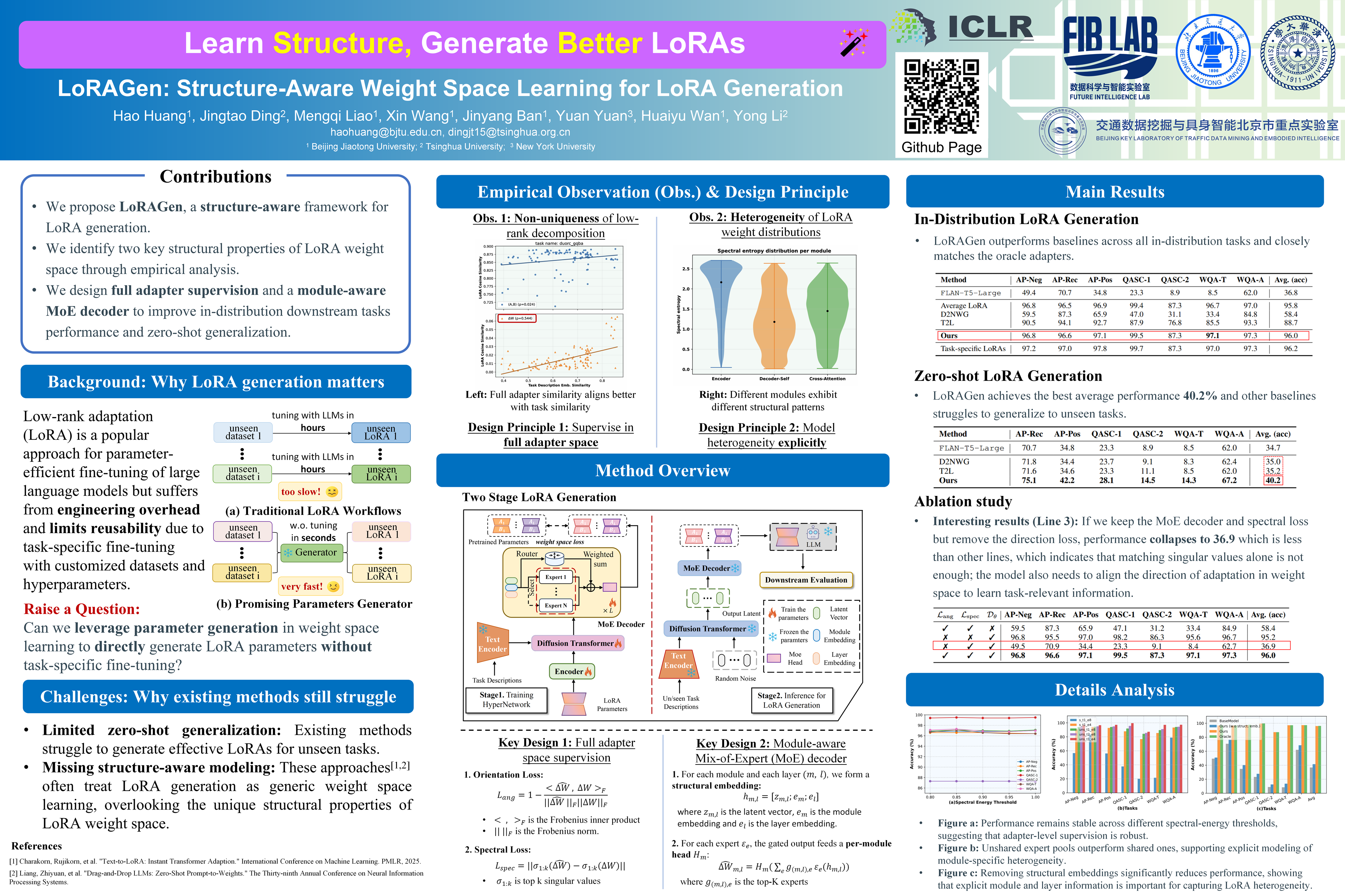
The widespread adoption of Low-Rank Adaptation (LoRA) for efficient fine-tuning of large language models has created demand for scalable parameter generation methods that can synthesize adaptation weights directly from task descriptions, avoiding costly task-specific training. We present LoRAGen, a structure-aware method for generating LoRA parameters from natural language descriptions. Through empirical analysis of LoRA libraries, we identify two key structural properties of LoRA parameter spaces: non-uniqueness of low-rank decomposition and heterogeneous weight distributions across network modules. These properties necessitate specialized parameter generation methods rather than general weight space learning approaches. LoRAGen employs a latent diffusion model with two innovations: weight-space supervision on full adaptation matrices to handle decomposition non-uniqueness, and a module-aware Mix-of-Experts decoder that adapts to module-specific weight distributions. Experiments show LoRAGen achieves 96.0\% performance relative to task-specific LoRAs on FLAN-T5-large and 72.7\% on Gemma-2-2B-Instruct for in-distribution tasks, while obtaining 40.2\% on zero-shot generation across unseen tasks—surpassing baselines by nearly 5\%. Our work establishes the first structure-aware approach to LoRA generation with insights into adaptation weight space geometry.
PASER: Post-Training Data Selection for Efficient Pruned Large Language Model Recovery
Bowei He ⋅ Lihao Yin ⋅ Huiling Zhen ⋅ Xiaokun Zhang ⋅ Mingxuan Yuan ⋅ Chen Ma
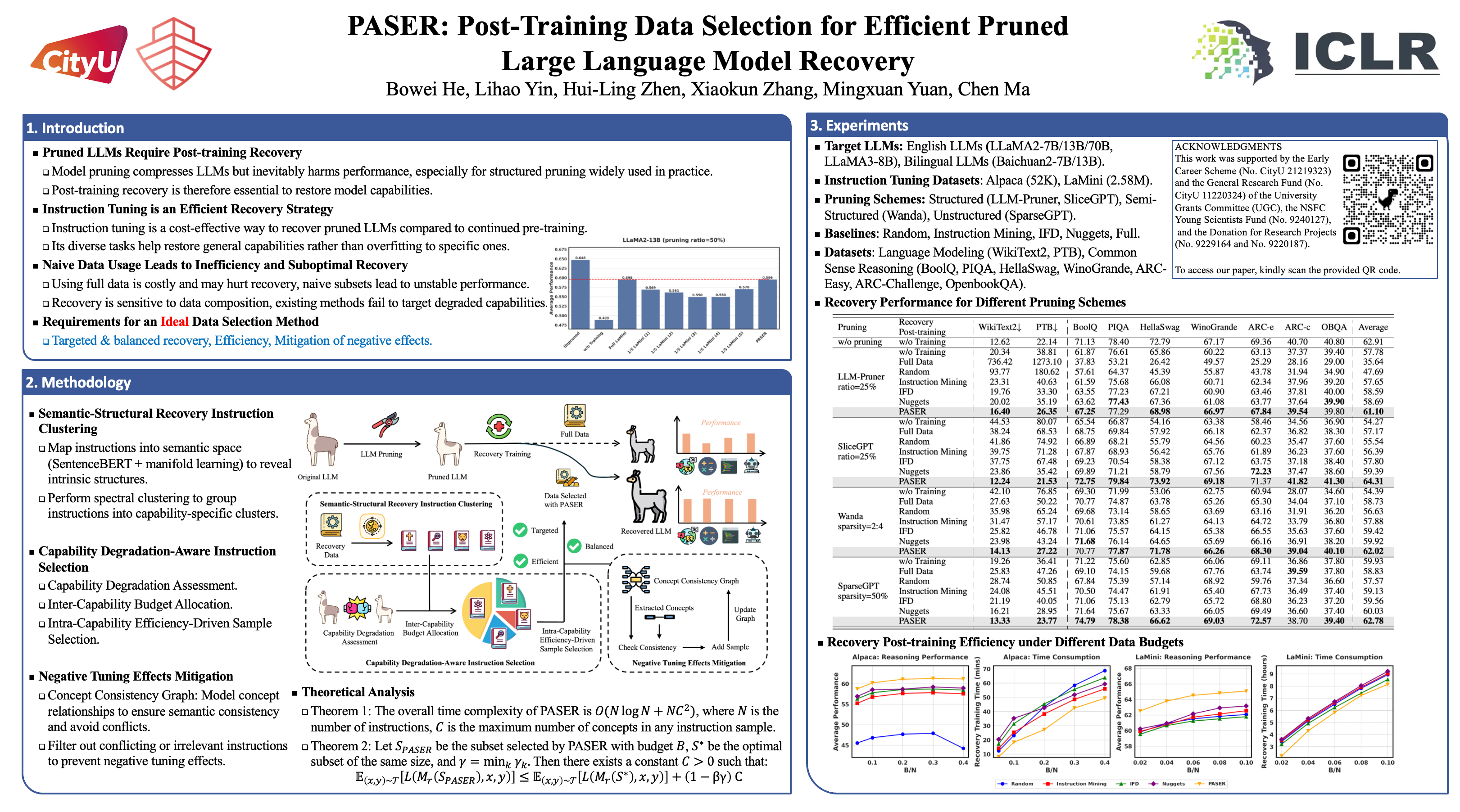
Model pruning is an effective approach for compressing large language models (LLMs). However, this process often leads to significant degradation of model capabilities. While post-training techniques such as instruction tuning are commonly employed to recover model performance, existing methods often overlook the uneven deterioration of model capabilities and incur high computational costs. Moreover, some irrelevant instructions may also introduce negative effects to model capacity recovery. To address these challenges, we propose the Post-training dAta Selection method for Efficient pruned large language model Recovery (PASER). PASER aims to identify instructions to recover the most compromised model capacities with a certain data budget. Our approach first applies manifold learning and spectral clustering to group recovery instructions in the semantic space, revealing capability-specific instruction sets. Then, the data budget is adaptively allocated across clusters by the degree of corresponding model capability degradation. In each cluster, we prioritize data samples that lead to the most decline of model performance. To mitigate potential negative tuning effects, we also detect and filter out conflicting or irrelevant recovery data. Extensive experiments demonstrate that PASER significantly outperforms conventional baselines, effectively recovering the general capabilities of pruned LLMs while utilizing merely 4\%-20\% of the original post-training data. We provide the anonymous code repository in Link.
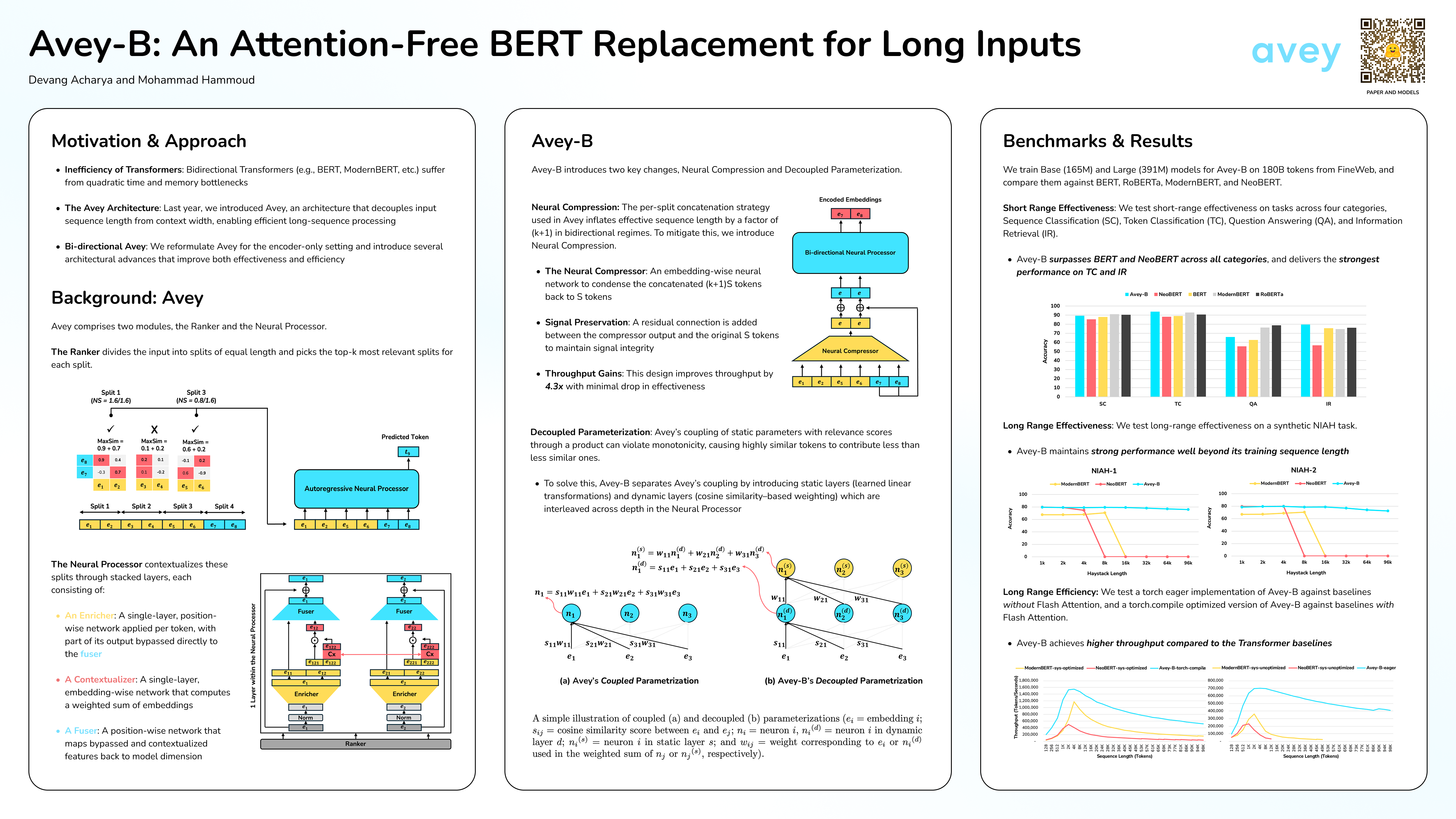
Compact pretrained bidirectional encoders remain the backbone of industrial NLP under tight compute and memory budgets. Their effectiveness stems from self-attention’s ability to deliver high-quality bidirectional contextualization with sequence-level parallelism, as popularized by BERT-style architectures. Recently, Avey was introduced as an autoregressive, attention-free alternative that naturally admits an encoder-only adaptation. In this paper, we reformulate Avey for the encoder-only paradigm and propose several innovations to its architecture, including decoupled static and dynamic parameterizations, stability-oriented normalization, and neural compression. Results show that this reformulated architecture compares favorably to four widely used Transformer-based encoders, consistently outperforming them on standard token-classification and information-retrieval benchmarks while scaling more efficiently to long contexts.
Locality-aware Parallel Decoding for Efficient Autoregressive Image Generation
Zhuoyang Zhang ⋅ Luke Huang ⋅ Chengyue Wu ⋅ Shang Yang ⋅ Kelly Peng ⋅ Yao Lu ⋅ Song Han
We present Locality-aware Parallel Decoding (LPD) to accelerate autoregressive image generation. Traditional autoregressive image generation relies on next-patch prediction, a memory-bound process that leads to high latency. Existing works have tried to parallelize next-patch prediction by shifting to multi-patch prediction to accelerate the process, but only achieved limited parallelization. To achieve high parallelization while maintaining generation quality, we introduce two key techniques: (1) Flexible Parallelized Autoregressive Modeling, a novel architecture that enables arbitrary generation ordering and degrees of parallelization. It uses learnable position query tokens to guide generation at target positions while ensuring mutual visibility among concurrently generated tokens for consistent parallel decoding. (2) Locality-aware Generation Ordering, a novel schedule that forms groups to minimize intra-group dependencies and maximize contextual support, enhancing generation quality. With these designs, we reduce the generation steps from 256 to 20 (256×256 res.) and 1024 to 48 (512×512 res.) without compromising quality on the ImageNet class-conditional generation, and achieving at least 3.4× lower latency than previous parallelized autoregressive models.
Entering the Era of Discrete Diffusion Models: A Benchmark for Schrödinger Bridges and Entropic Optimal Transport
Xavier Aramayo Carrasco ⋅ Grigoriy Ksenofontov ⋅ Aleksei Leonov ⋅ Iaroslav Koshelev ⋅ Aleksandr Korotin
The Entropic Optimal Transport (EOT) problem and its dynamic counterpart, the Schrödinger bridge (SB) problem, play an important role in modern machine learning, linking generative modeling with optimal transport theory. While recent advances in discrete diffusion and flow models have sparked growing interest in applying SB methods to discrete domains, there remains no reliable way to assess how well these methods actually solve the underlying problem. We address this challenge by introducing a benchmark for SB on discrete spaces. Our construction yields pairs of probability distributions with analytically known SB solutions, enabling rigorous evaluation. As a byproduct of building this benchmark, we obtain two new SB algorithms, DLightSB and DLightSB-M, and additionally extend prior related work to construct the $\alpha$-CSBM algorithm. We demonstrate the utility of our benchmark by evaluating both existing and new solvers in high-dimensional discrete settings. This work provides the first step toward proper evaluation of SB methods on discrete spaces, paving the way for more reproducible future studies. The code for the benchmark and all associated experiments is available at [this repository](https://github.com/gregkseno/catsbench).
Optimal Sparsity of Mixture-of-Experts Language Models for Reasoning Tasks
Taishi Nakamura ⋅ Satoki Ishikawa ⋅ Masaki Kawamura ⋅ Okamoto ⋅ Daisuke Nohara ⋅ Jun Suzuki ⋅ Rio Yokota
Empirical scaling laws have driven the evolution of large language models (LLMs), yet their coefficients shift whenever the model architecture or data pipeline changes. Mixture‑of‑Experts (MoE) models, now standard in state‑of‑the‑art systems, introduce a new sparsity dimension that current dense‑model frontiers overlook. We investigate how MoE sparsity influences two distinct capability regimes: memorization skills and reasoning skills. By training MoE families that vary total parameters, active parameters, and top-$k$ routing under fixed compute budgets, we disentangle pre-training loss from downstream accuracy. Our results reveal two principles. First, Active FLOPs: models with identical training loss but greater active compute achieve higher reasoning accuracy. Second, Total tokens per parameter (TPP): memorization tasks improve with more parameters, while reasoning tasks benefit from optimal TPP, indicating that reasoning is data-hungry. Neither reinforcement learning post-training (GRPO) nor increased test-time compute alters these trends. We therefore argue that optimal MoE sparsity must be determined jointly by active FLOPs and TPP, revising the classical picture of compute-optimal scaling. All code, data sources, and logs are released to facilitate reproducibility and future work.
VSF: Simple, Efficient, and Effective Negative Guidance in Few-Step Image Generation Models By Value Sign Flip
Wenqi Guo ⋅ Shan Du
We introduce Value Sign Flip (VSF), a simple and efficient method for incorporating negative prompt guidance in few-step (1-8 steps) diffusion and flow-matching image and video generation models. Unlike existing approaches such as classifier-free guidance (CFG), NASA, and NAG, VSF dynamically suppresses undesired content by flipping the sign of attention values from negative prompts. Our method requires only a small computational overhead and integrates effectively with MMDiT-style architectures such as Stable Diffusion 3.5 Turbo and Flux Schnell, as well as cross-attention-based models like Wan. We validate VSF on a proposed challenging dataset, NegGenBench, with complex prompt pairs. Experimental results on our proposed dataset show that VSF significantly improves negative prompt adherence (reaching 0.420 negative score for quality settings and 0.545 for strong settings) compared to prior methods in few-step models (scored 0.320-0.380 negative score) and even CFG in non-few-step models (scored 0.300 negative score), while maintaining competitive image quality and positive prompt adherence. Our method also suppressed a generate-then-edit pipeline, while also having a much faster runtime. Code, ComfyUI node, and dataset are available in https://github.com/weathon/VSF/tree/main.
CR-Net: Scaling Parameter-Efficient Training with Cross-Layer Low-Rank Structure
Boao Kong ⋅ Junzhu Liang ⋅ Yuxi Liu ⋅ Renjia Deng ⋅ Kun Yuan
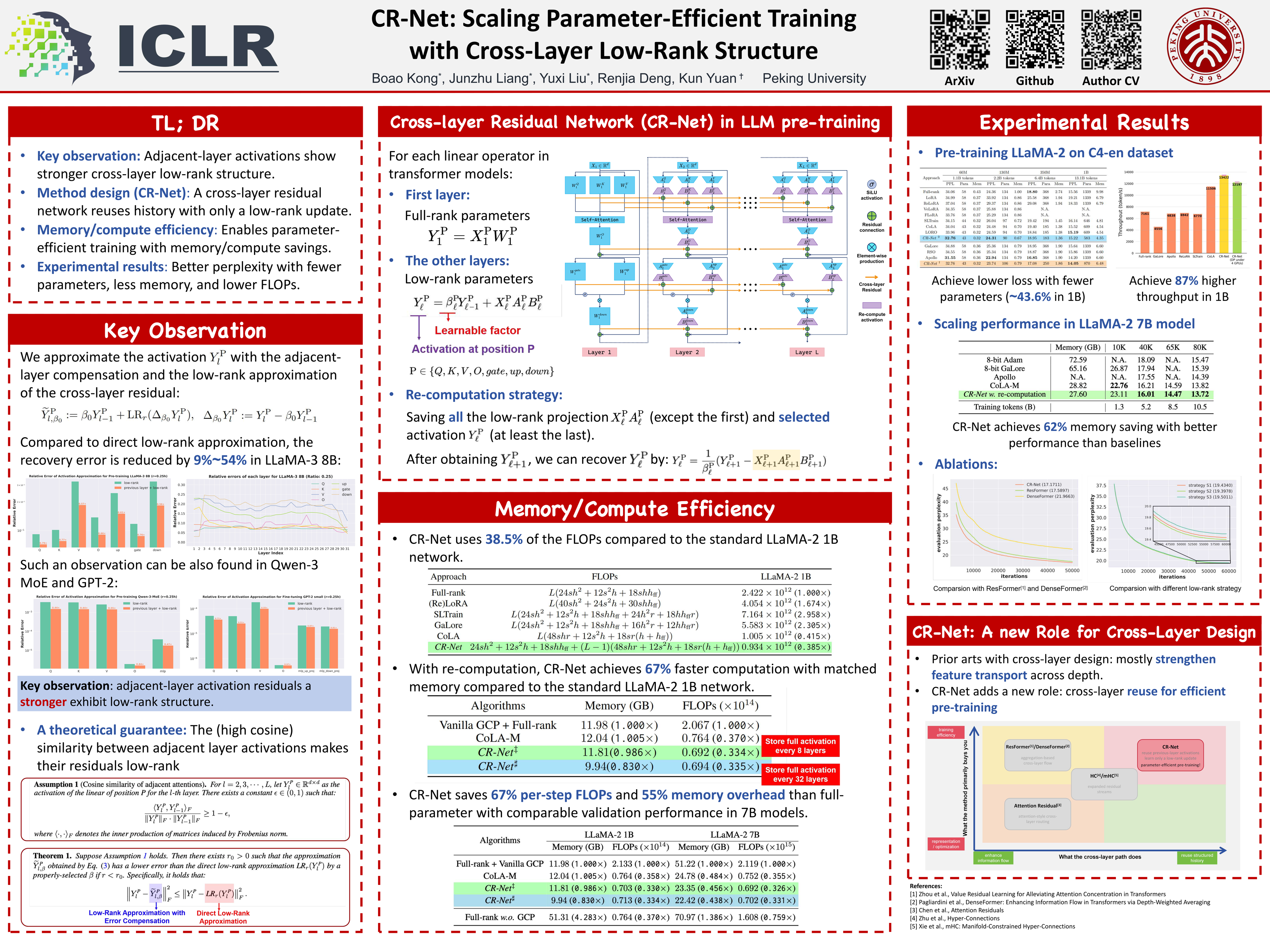
Low-rank architectures have become increasingly important for efficient large language model (LLM) pre-training, providing substantial reductions in both parameter complexity and memory/computational demands. Despite these advantages, current low-rank methods face three critical shortcomings: (1) compromised model performance, (2) considerable computational overhead, and (3) limited activation memory savings. To address these limitations, we propose Cross-layer Low-Rank residual Network (CR-Net), an innovative parameter-efficient framework inspired by our discovery that inter-layer activation residuals possess low-rank properties. CR-Net implements this insight through a dual-path architecture that efficiently reconstructs layer activations by combining previous-layer outputs with their low-rank differences, thereby maintaining high-rank information with minimal parameters. We further develop a specialized activation recomputation strategy tailored for CR-Net that dramatically reduces memory requirements. Extensive pre-training experiments across model scales from 60M to 7B parameters demonstrate that CR-Net consistently outperforms state-of-the-art low-rank frameworks while requiring fewer computational resources and less memory.
InftyThink: Breaking the Length Limits of Long-Context Reasoning in Large Language Models
Yuchen Yan ⋅ Yongliang Shen ⋅ Yang Liu ⋅ Jin Jiang ⋅ Mengdi Zhang ⋅ Jian Shao ⋅ Yueting Zhuang
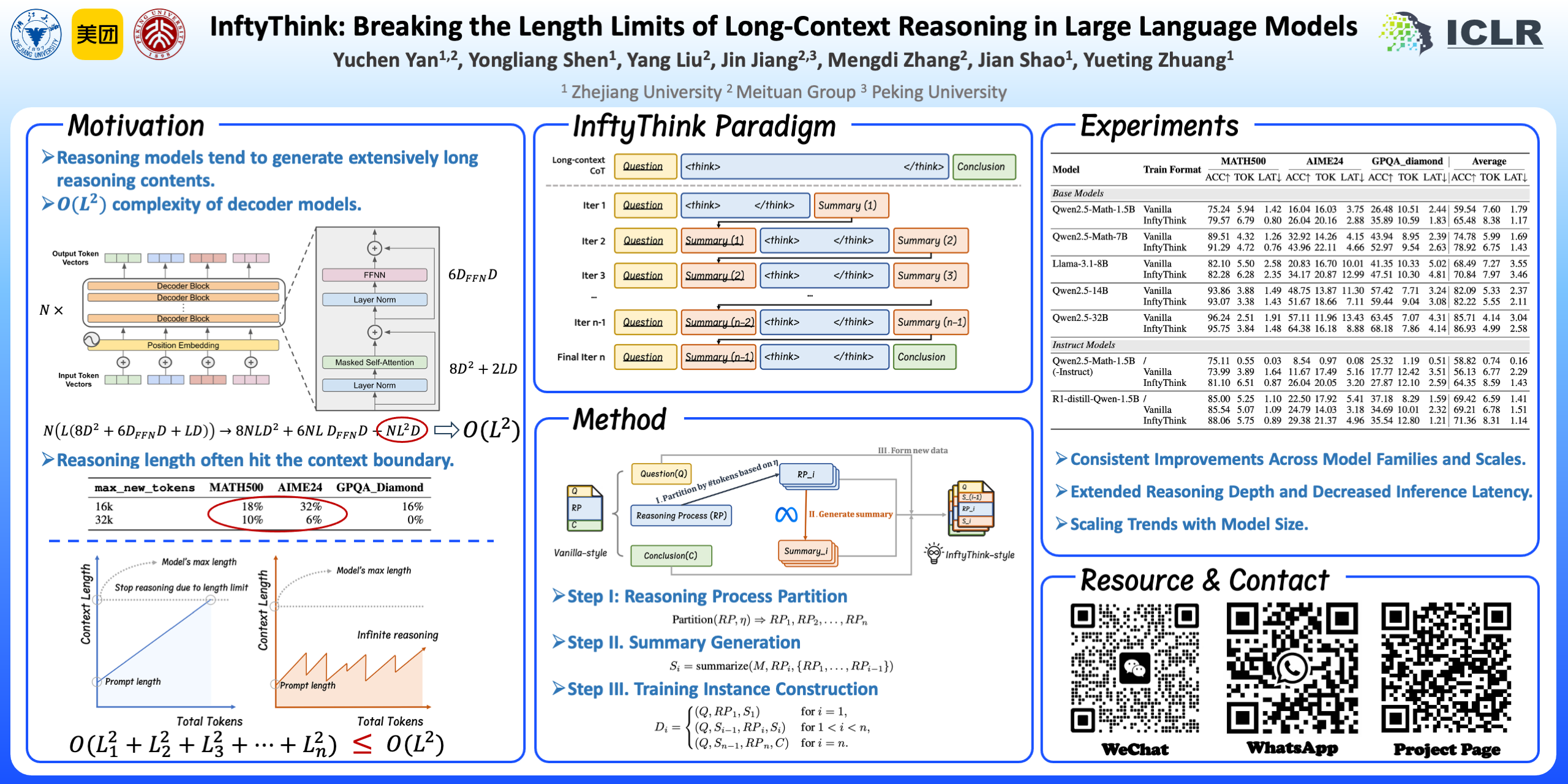
Advanced reasoning in large language models has achieved remarkable performance on challenging tasks, but the prevailing long-context reasoning paradigm faces critical limitations: quadratic computational scaling with sequence length, reasoning constrained by maximum context boundaries, and performance degradation beyond pre-training context windows. Existing approaches primarily compress reasoning chains without addressing the fundamental scaling problem. To overcome these challenges, we introduce InftyThink, a paradigm that transforms monolithic reasoning into an iterative process with intermediate summarization. By interleaving short reasoning segments with concise progress summaries, our approach enables unbounded reasoning depth while maintaining bounded computational costs. This creates a characteristic sawtooth memory pattern that significantly reduces computational complexity compared to traditional approaches. Furthermore, we develop a methodology for reconstructing long-context reasoning datasets into our iterative format, transforming OpenR1-Math into 333K training instances. Experiments across multiple model architectures demonstrate that our approach reduces computational costs while improving performance, with Qwen2.5-Math-7B showing 3-11% improvements across MATH500, AIME24, and GPQA_diamond benchmarks. Our work challenges the assumed trade-off between reasoning depth and computational efficiency, providing a more scalable approach to complex reasoning without architectural modifications.
WeTok: Powerful Discrete Tokenization for High-Fidelity Visual Reconstruction
Shaobin Zhuang ⋅ Yiwei Guo ⋅ Fangyikang Wang ⋅ Canmiao Fu ⋅ Zhipeng Huang ⋅ Zeyue Tian ⋅ Xiaohui Li ⋅ Ying Zhang ⋅ Chen Li ⋅ Yali Wang
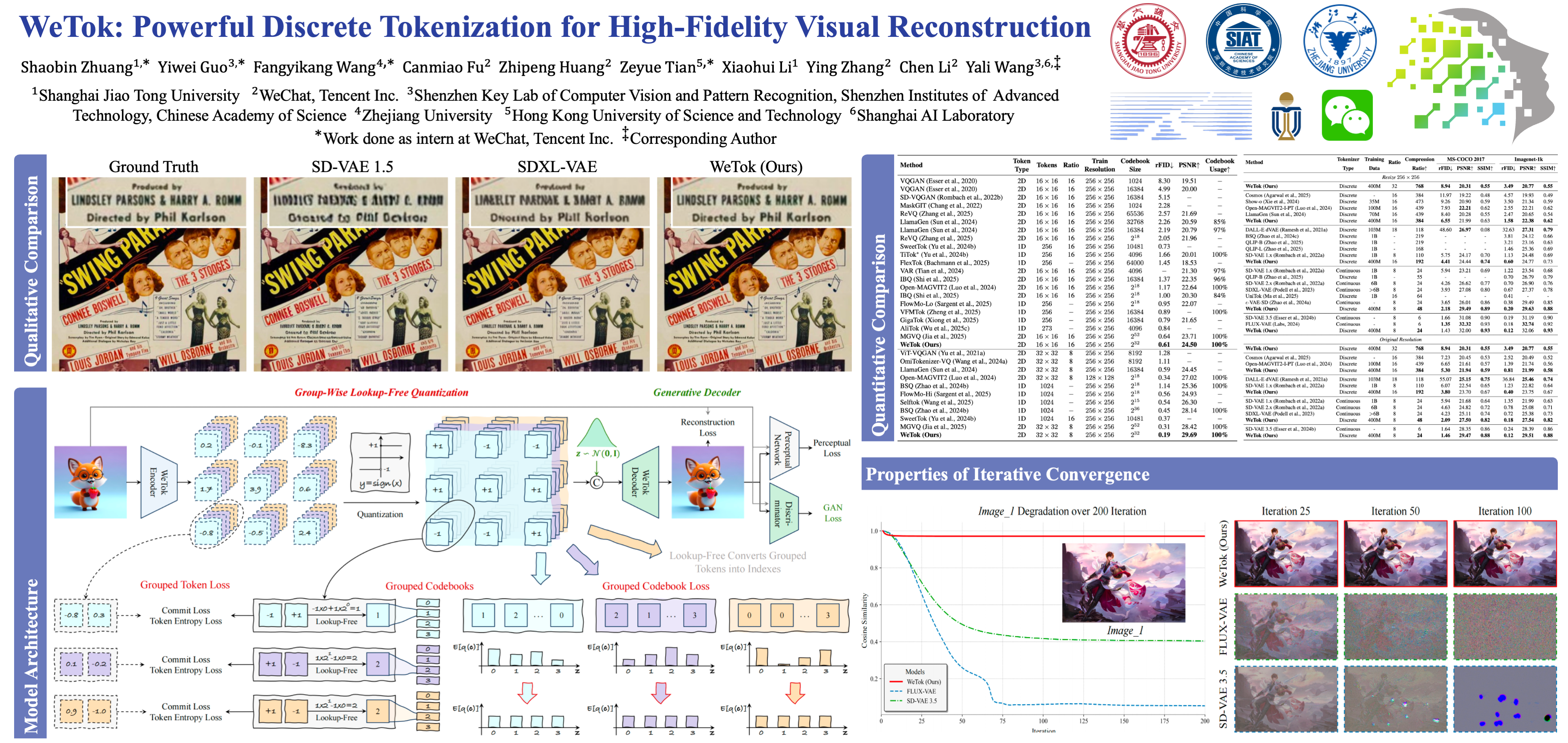
Visual tokenizer is a critical component for vision generation. However, the existing tokenizers often face unsatisfactory trade-off between compression ratios and reconstruction fidelity. To fill this gap, we introduce a powerful and concise WeTok tokenizer, which surpasses the previous leading tokenizers via two core innovations. (1) Group-wise lookup-free Quantization (GQ). We partition the latent features into groups, and perform lookup-free quantization for each group. As a result, GQ can efficiently overcome memory and computation limitations of prior tokenizers, while achieving a reconstruction breakthrough with more scalable codebooks. (2) Generative Decoding (GD). Different from prior tokenizers, we introduce a generative decoder with a prior of extra noise variable. In this case, GD can probabilistically model the distribution of visual data conditioned on discrete tokens, allowing WeTok to reconstruct visual details, especially at high compression ratios. On the ImageNet 50k validation set, at a high-fidelity setting, WeTok achieves a record-low zero-shot rFID of 0.12, outperforming leading continuous tokenizers like FLUX-VAE (0.18) and SD-VAE 3.5 (0.19) with 400% compression ratio. Furthermore, in a high-compression regime, WeTok achieves a zero-shot rFID of 3.49 at a 768× compression ratio, substantially surpassing Cosmos, which scores 4.57 at only 50% our compression ratio.
Retrospective Sparse Attention for Efficient Long-Context Generation
Seonghwan Choi ⋅ Beomseok Kang ⋅ Dongwon Jo ⋅ jae-joon kim
Large Language Models (LLMs) are increasingly deployed in long-context tasks such as reasoning, code generation, and multi-turn dialogue. However, inference over extended contexts is bottlenecked by the Key-Value (KV) cache, whose memory footprint grows linearly with sequence length and dominates latency at each decoding step. While recent KV cache compression methods identify and load important few tokens, they focus predominantly on input contexts and fail to address the cumulative attention errors that arise during long decoding. In this paper, we introduce RetroAttention, a novel KV cache update technique that retrospectively revises past attention outputs using newly arrived KV entries from subsequent decoding steps. By maintaining a lightweight output cache, RetroAttention enables past queries to be efficiently supplemented with more contexts, while incurring minimal latency overhead. This breaks the fixed-attention-output paradigm and allows continual correction of prior approximations. Extensive experiments on long-generation benchmarks show that RetroAttention consistently outperforms state-of-the-art (SOTA) KV compression methods, increasing effective KV exposure by up to 1.6$\times$ and accuracy by up to 21.9\%. We provide anonymized code in the supplementary material.
BézierFlow: Learning Bézier Stochastic Interpolant Schedulers for Few-Step Generation
Yunhong Min ⋅ Juil Koo ⋅ Seungwoo Yoo ⋅ Minhyuk Sung
We introduce BézierFlow, a lightweight training approach for few-step generation with pretrained diffusion and flow models. BézierFlow achieves a 2–3× performance improvement for sampling with $\leq$ 10 NFEs while requiring only 15 minutes of training. Recent lightweight training approaches have shown promise by learning optimal timesteps, but their scope remains restricted to ODE discretizations. To broaden this scope, we propose learning the optimal transformation of the sampling trajectory by parameterizing stochastic interpolant (SI) schedulers. The main challenge lies in designing a parameterization that satisfies critical desiderata, including boundary conditions, differentiability, and monotonicity of the SNR. To effectively meet these requirements, we represent scheduler functions as Bézier functions, where control points naturally enforce these properties. This reduces the problem to learning an ordered set of points in the time range, while the interpretation of the points changes from ODE timesteps to Bézier control points. Across a range of pretrained diffusion and flow models, BézierFlow consistently outperforms prior timestep-learning methods, demonstrating the effectiveness of expanding the search space from discrete timesteps to Bézier-based trajectory transformations.
Mitigating Semantic Collapse in Generative Personalization with Test-Time Embedding Adjustment
Anh Bui ⋅ Thuy-Trang Vu ⋅ Trung Le ⋅ Junae Kim ⋅ Tamas Abraham ⋅ Rollin Omari ⋅ Amardeep Kaur ⋅ Dinh Phung
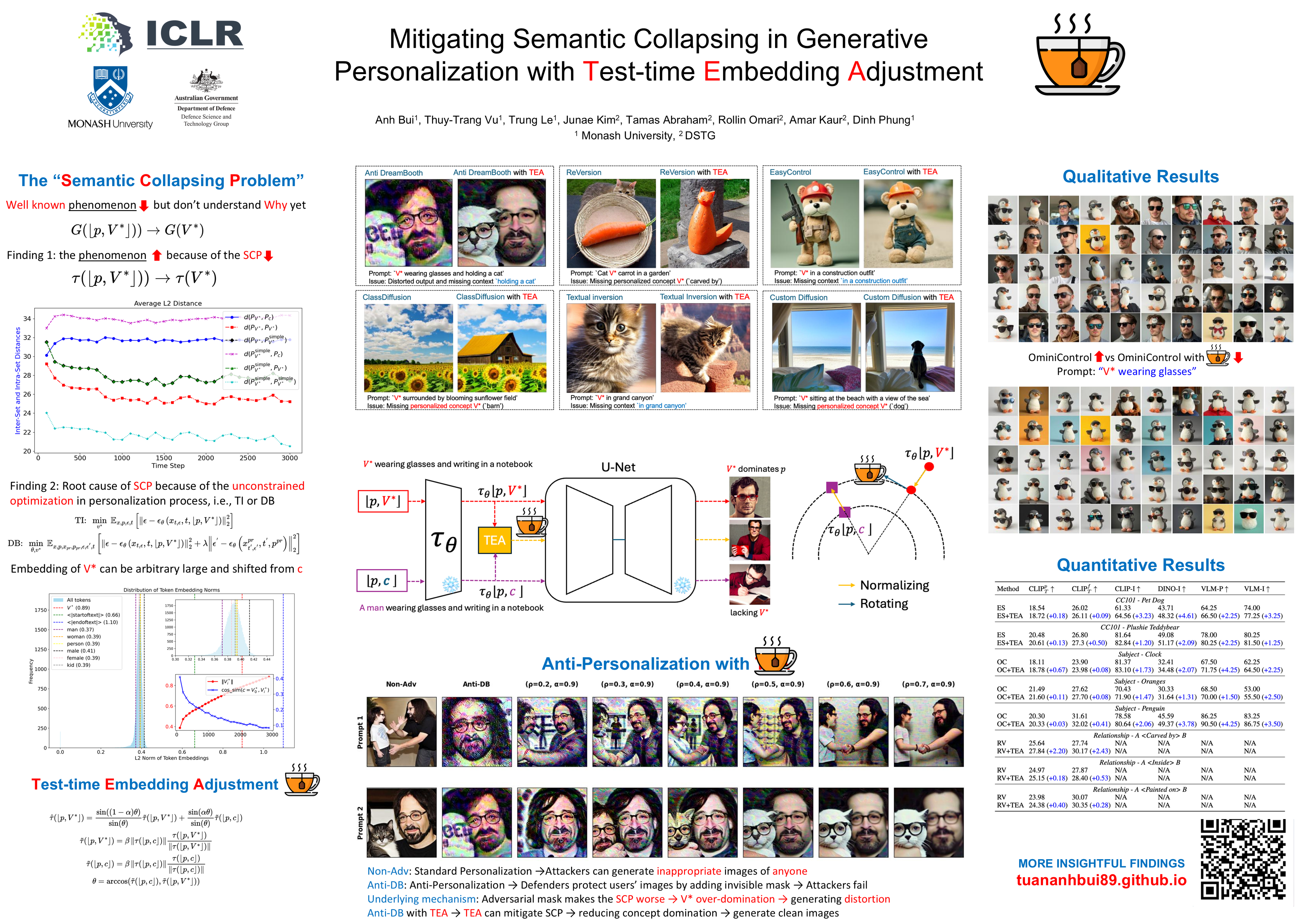
In this paper, we investigate the semantic collapsing problem in generative personalization, an under-explored topic where the learned visual concept ($V$) gradually shifts from its original textual meaning and comes to dominate other concepts in multi-concept input prompts. This issue not only reduces the semantic richness of complex input prompts like "a photo of $V$ wearing glasses and playing guitar" into simpler, less contextually rich forms such as "a photo of $V$" but also leads to simplified output images that fail to capture the intended concept. We identify the root cause as unconstrained optimisation, which allows the learned embedding $V$ to drift arbitrarily in the embedding space, both in direction and magnitude. To address this, we propose a simple yet effective training-free method that adjusts the magnitude and direction of pre-trained embedding at inference time, effectively mitigating the semantic collapsing problem. Our method is broadly applicable across different personalization methods and demonstrates significant improvements in text-image alignment in diverse use cases. Our code is published at \url{https://github.com/tuananhbui89/Embedding-Adjustment}.
STEER AWAY FROM MODE COLLISIONS: IMPROVING COMPOSITION IN DIFFUSION MODELS
Debottam Dutta ⋅ Jianchong Chen ⋅ Rajalaxmi Rajagopalan ⋅ Yu-Lin Wei ⋅ Romit Roy Choudhury
We propose to improve multi-concept prompt fidelity in text-to-image diffusion models. We begin with common failure cases—prompts like “a cat and a dog” that sometimes yields images where one concept is missing, faint, or colliding awkwardly with another. We hypothesize that this happens when the diffusion model drifts into mixed modes that over-emphasize a single concept it learned strongly during training. Instead of re-training, we introduce a corrective sampling strategy that steers away from regions where the joint prompt behavior overlaps too strongly with any single concept in the prompt. The goal is to steer towards “pure” joint modes where all concepts can coexist with balanced visual presence. We further show that existing multi-concept guidance schemes can operate in unstable weight regimes that amplify imbalance; we characterize favorable regions and adapt sampling to remain within them. Our approach, CO3, is plug-and-play, requires no model tuning, and complements standard classifier-free guidance. Experiments on diverse multi-concept prompts indicate improvements in concept coverage, balance and robustness, with fewer dropped or distorted concepts compared to standard baselines and prior compositional methods. Results suggest that lightweight corrective guidance can substantially mitigate brittle semantic alignment behavior in modern diffusion systems. Code is available at https://github.com/debottam-dutta7/co3
wd1: Weighted Policy Optimization for Reasoning in Diffusion Language Models
Xiaohang Tang ⋅ Rares Dolga ⋅ Sangwoong Yoon ⋅ Ilija Bogunovic
Improving the reasoning capabilities of diffusion-based large language models (dLLMs) through reinforcement learning (RL) remains an open problem. The intractability of dLLMs likelihood function necessitates approximating the current, old, and reference policy likelihoods at each policy optimization step. This reliance introduces additional computational overhead, and can lead to large variance and estimation error in RL objective -- particularly in computing the policy ratio for importance sampling. To mitigate these issues, we introduce wd1, a novel ratio-free policy optimization approach that reformulates the RL objective as a weighted log-likelihood, requiring only a single approximation for the current parametrized policy likelihood. We formally show that our proposed method can be interpreted as energy-guided discrete diffusion training combined with negative sample unlearning, thereby confirming its theoretical soundness. In experiments on LLaDA-8B model, wd1 outperforms diffusion-based GRPO (d1) while requiring lower computational cost, achieving up to a +59\% improvement in accuracy. Furthermore, we extend wd1 to denoising-stepwise weighted policy optimization (wd1++), achieving state-of-the-art math performance of 44.2\% on MATH500 and 84.5\% on GSM8K with only 20 RL training steps.
A Probabilistic Hard Concept Bottleneck for Steerable Generative Models
María Martínez-García ⋅ Ricardo Vazquez Alvarez ⋅ Alejandro Lancho ⋅ Pablo Olmos ⋅ Isabel Valera
Concept Bottleneck Generative Models (CBGMs) incorporate a human-interpretable concept bottleneck layer, which makes them interpretable and steerable. However, designing such a layer for generative models poses the same challenges as for concept bottleneck models in a supervised context, if not greater ones. Deterministic mappings from the model inner representations to soft concepts in existing CBGMs: (i) limit steerable generation to modifying concepts in existing inputs; and, more importantly, (ii) are susceptible to concept leakage, which hinders their steerability. To address these limitations, we first introduce the Variational Hard Concept Bottleneck (VHCB) layer. The VHCB maps probabilistic estimates of binary latent variables to hard concepts, which have been shown to mitigate leakage. Remarkably, its probabilistic formulation enables direct generation from a specified set of concepts. Second, we propose a systematic evaluation framework for assessing the steerability of CBGMs across various tasks (e.g., activating and deactivating concepts). Our framework which allows us to empirically demonstrate that the VHCB layer consistently improves steerability.
Continuously Augmented Discrete Diffusion model for Categorical Generative Modeling
Huangjie Zheng ⋅ Shansan Gong ⋅ Ruixiang Zhang ⋅ Tianrong Chen ⋅ Jiatao Gu ⋅ Mingyuan Zhou ⋅ Navdeep Jaitly ⋅ Yizhe Zhang
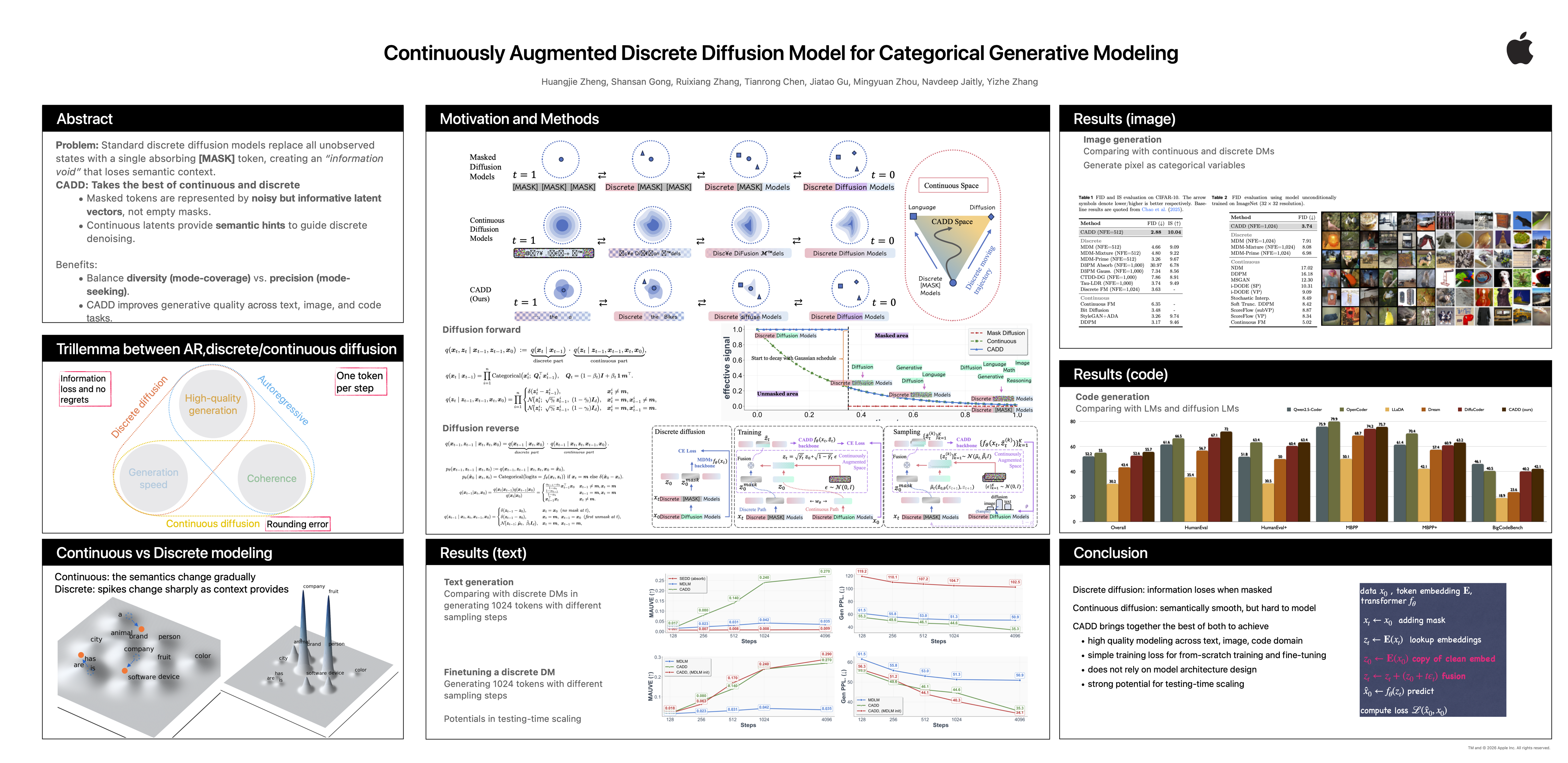
Standard discrete diffusion models treat all unobserved states the same way, typically mapping them to an absorbing [MASK] token. This creates an "information void" where global semantic information that may be inferred for the masked tokens from the unmasked tokens is not directly passed from one denoising step to another. We introduce Continuously Augmented Discrete Diffusion (CADD), a framework that augments the discrete state space with a paired diffusion in a continuous latent space. This yields graded, gradually corrupted states in which masked tokens are represented by noisy yet informative latent vectors rather than information voids. At each reverse step, CADD uses the continuous latent as a semantic hint to guide discrete denoising. The design is clean and compatible with existing discrete diffusion training. At sampling time, the strength and estimator of the continuous latent vector enables a controlled trade-off between mode-coverage (diversity-oriented) and mode-seeking (context-localization-oriented). Empirically, we demonstrate CADD improves generative quality over mask-based diffusion across text generation, image synthesis, and code modeling, with consistent gains on both qualitative and quantitative metrics against strong discrete baselines.
Uni-X: Mitigating Modality Conflict with a Two-End-Separated Architecture for Unified Multimodal Models
Jitai Hao ⋅ Hao Liu ⋅ Xinyan Xiao ⋅ Qiang Huang ⋅ Jun Yu
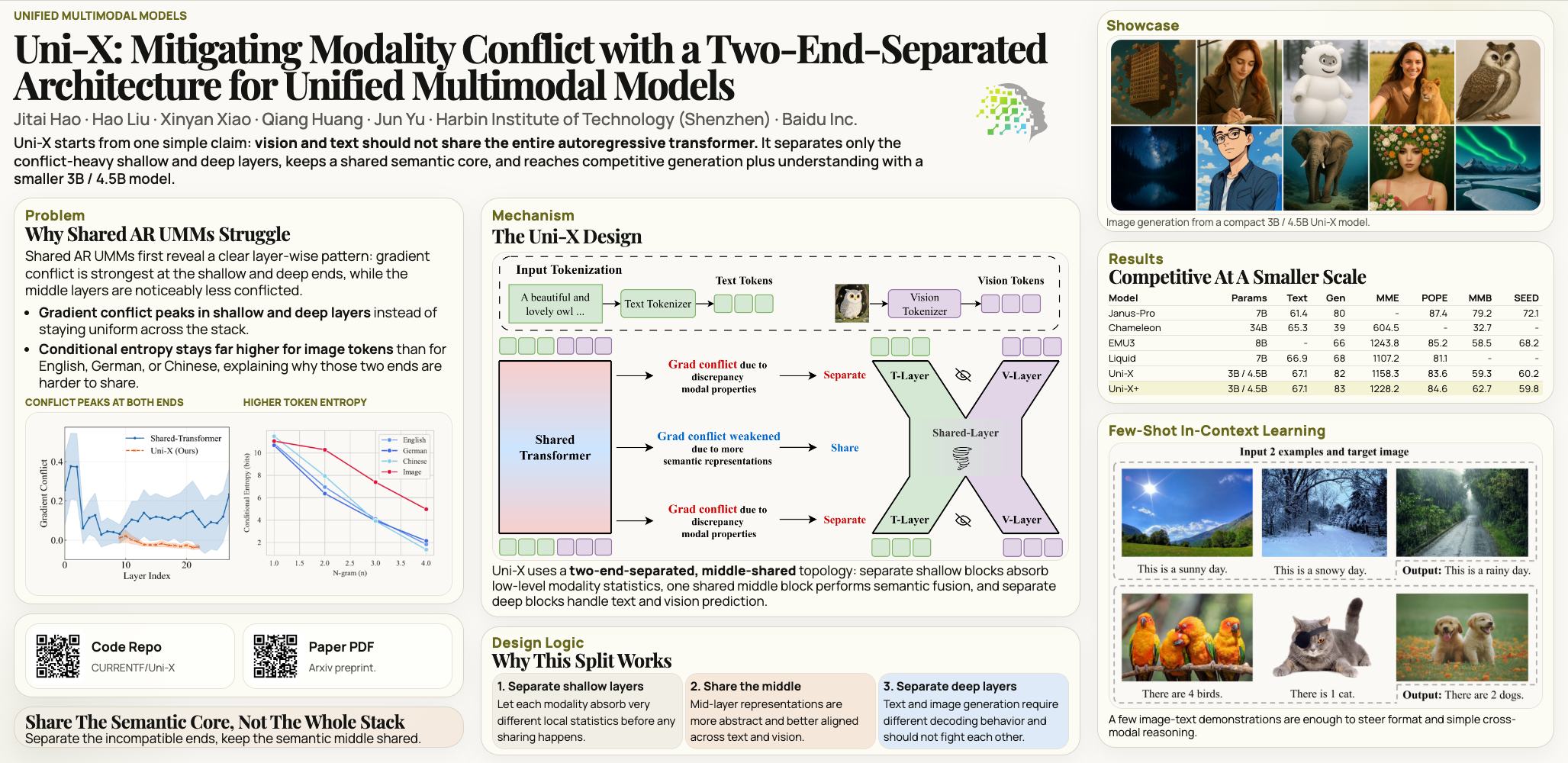
Unified Multimodal Models (UMMs) built on shared autoregressive (AR) transformers are attractive for their architectural simplicity. However, we identify a critical limitation: when trained on multimodal inputs, modality-shared transformers suffer from severe gradient conflicts between vision and text, particularly in shallow and deep layers. We trace this issue to the fundamentally different low-level statistical properties of images and text, while noting that conflicts diminish in middle layers where representations become more abstract and semantically aligned. To overcome this challenge, we propose Uni-X, a two-end-separated, middle-shared architecture. Uni-X dedicates its initial and final layers to modality-specific processing, while maintaining shared parameters in the middle layers for high-level semantic fusion. This X-shaped design not only eliminates gradient conflicts at both ends but also further alleviates residual conflicts in the shared layers. Extensive experiments validate the effectiveness of Uni-X. Under identical training conditions, Uni-X achieves superior training efficiency compared to strong baselines. When scaled to 3B parameters with larger training data, Uni-X matches or surpasses 7B AR-based UMMs, achieving a GenEval score of 82 for image generation alongside strong performance in text and vision understanding tasks. These results establish Uni-X as a parameter-efficient and scalable foundation for future unified multimodal modeling. Our code is available at https://github.com/CURRENTF/Uni-X.
Interaction Field Matching: Overcoming Limitations of Electrostatic Models
S. Manukhov ⋅ Alexander Kolesov ⋅ Vladimir V. Palyulin ⋅ Aleksandr Korotin
Electrostatic field matching (EFM) has recently appeared as a novel physics-inspired paradigm for data generation and transfer using the idea of an electric capacitor. However, it requires modeling electrostatic fields using neural networks, which is non-trivial because of the necessity to take into account the complex field outside the capacitor plates. In this paper, we propose Interaction Field Matching (IFM), a generalization of EFM which allows using general interaction fields beyond the electrostatic one. Furthermore, inspired by strong interactions between quarks and antiquarks in physics, we design a particular interaction field realization which solves the problems which arise when modeling electrostatic fields in EFM. We show the performance on a series of toy and image data transfer problems.
Harpoon: Generalised Manifold Guidance for Conditional Tabular Diffusion
Aditya Shankar ⋅ Yuandou Wang ⋅ Rihan Hai ⋅ Lydia Chen
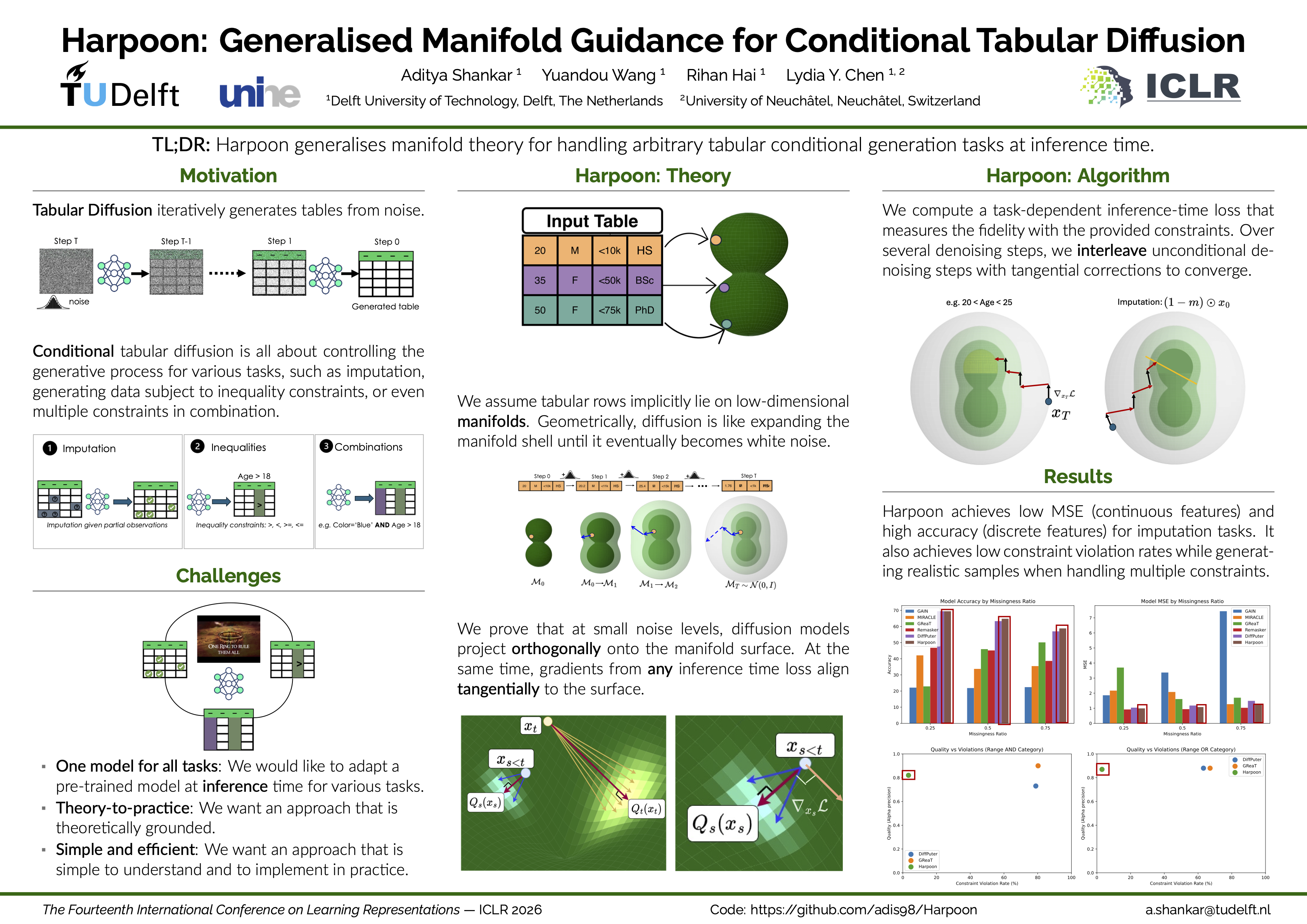
Generating tabular data under conditions is critical to applications requiring precise control over the generative process. Existing methods rely on training-time strategies that do not generalise to unseen constraints during inference, and struggle to handle conditional tasks beyond tabular imputation. While manifold theory offers a principled way to guide generation, current formulations are tied to specific inference-time objectives and are limited to continuous domains. We extend manifold theory to tabular data and expand its scope to handle diverse inference-time objectives. On this foundation, we introduce Harpoon, a tabular diffusion method that guides unconstrained samples along the manifold geometry to satisfy diverse tabular conditions at inference. We validate our theoretical contributions empirically on tasks such as imputation and enforcing inequality constraints, demonstrating Harpoon's strong performance across diverse datasets and the practical benefits of manifold-aware guidance for tabular data. Code URL: https://github.com/adis98/Harpoon
HOG-Diff: Higher-Order Guided Diffusion for Graph Generation
Yiming Huang ⋅ Tolga Birdal
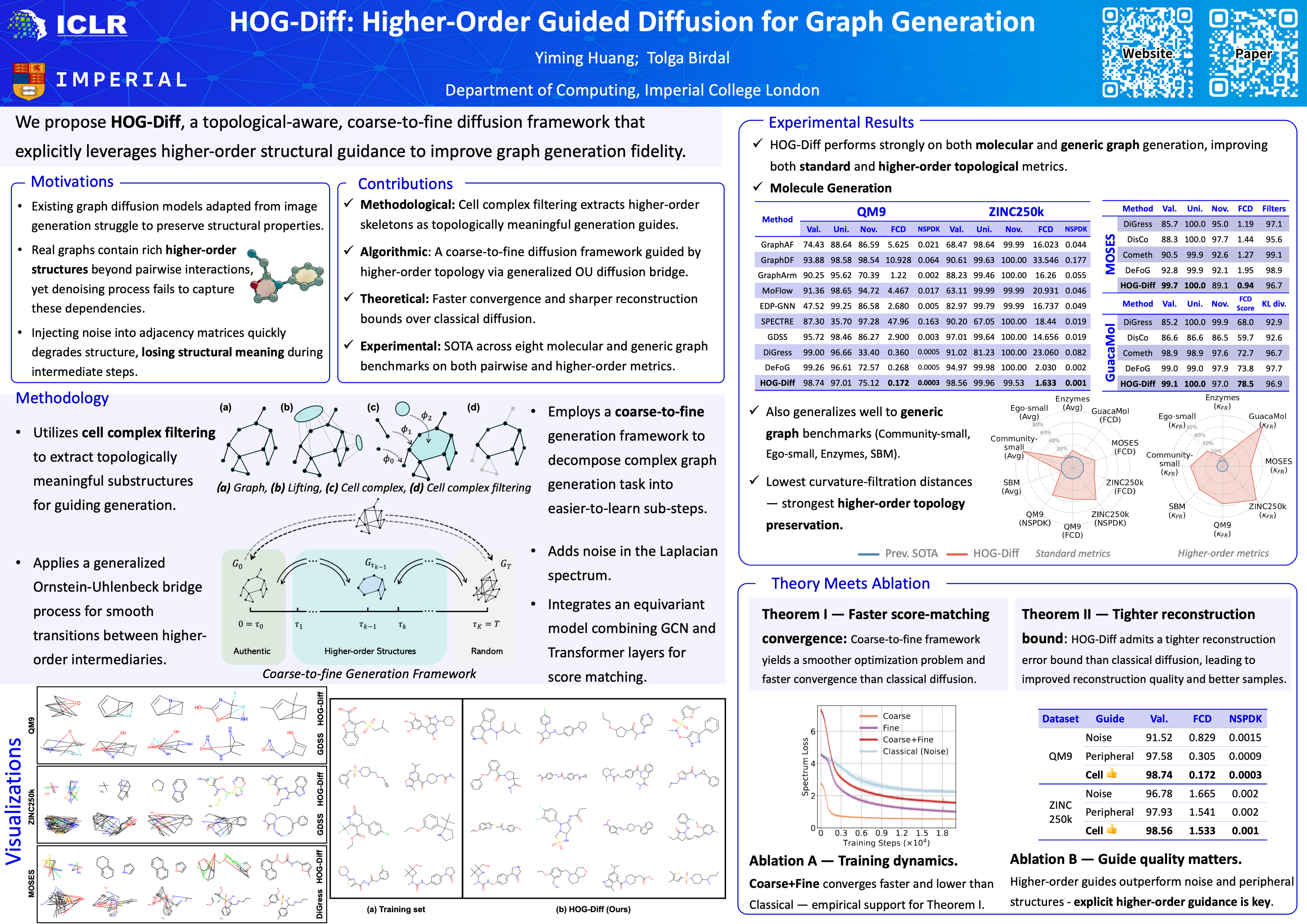
Graph generation is a critical yet challenging task, as empirical analyses require a deep understanding of complex, non-Euclidean structures. Diffusion models have recently made significant advances in graph generation, but these models are typically adapted from image generation frameworks and overlook inherent higher-order topology, limiting their ability to capture graph topology. In this work, we propose Higher-order Guided Diffusion (HOG-Diff), a principled framework that progressively generates plausible graphs with inherent topological structures. HOG-Diff follows a coarse-to-fine generation curriculum, guided by higher-order topology and implemented via diffusion bridges. We further prove that our model admits stronger theoretical guarantees than classical diffusion frameworks. Extensive experiments across eight graph generation benchmarks, spanning diverse domains and including large-scale settings, demonstrate the scalability of our method and its superior performance on both pairwise and higher-order topological metrics. Our project page is available here.
MergePRAG: Orthogonal Merging of Passage-experts for Multi-hop Parametric RAG
Xuebing Liu ⋅ Shanbao Qiao ⋅ Roseline Nyange ⋅ Dongwook Min ⋅ Hyun Kim ⋅ Seung-Hoon Na
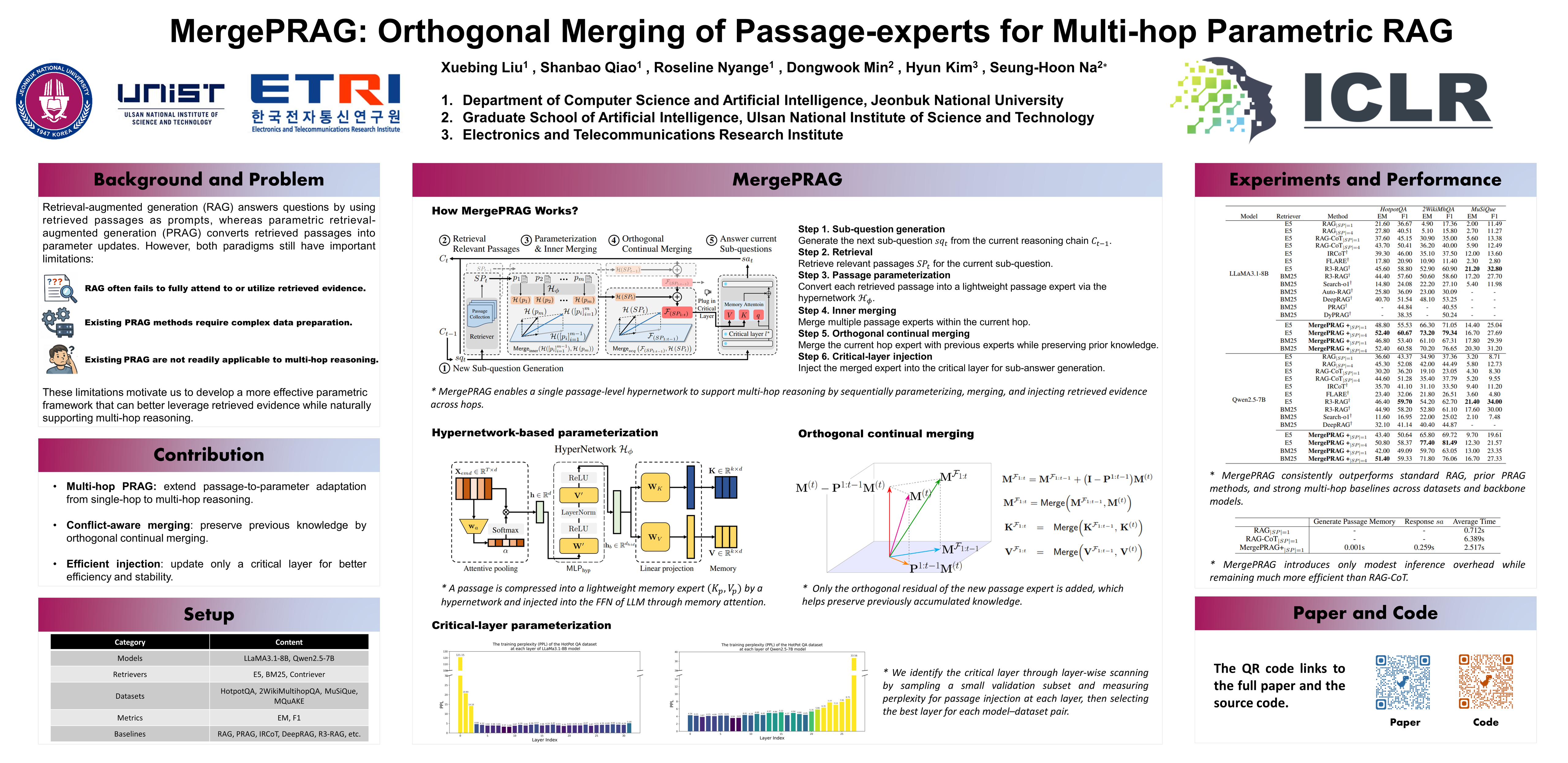
Large language models (LLMs) can be enhanced with external knowledge through two dominant approaches: (1) retrieval-augmented generation (RAG), which supplements LLMs with in-context retrieved passages, and (2) parametric knowledge adaptation (PKA), which directly updates model parameters with new domain knowledge. Recently, parametric RAG (PRAG) has emerged as a promising framework, extending RAG by translating retrieved passages into parameter updates, thereby mitigating inefficiency and noise sensitivity inherent to RAG. However, existing PRAG methods remain limited to single-pass retrieval, falling short of the multi-hop RAG setting that requires iterative retrieval and reasoning. We propose MergePRAG(Orthogonal Merging of Passage-experts for Multi-hop PRAG), a novel framework that sequentially integrates retrieved passages into LLM parameters through a continual merging mechanism, which is advanced by two key proposals: (1) orthogonal merging using the Gram–Schmidt process to minimize conflicts between "passage experts", and (2) critical-layer parameterization to efficiently encode in-context passages. Experiments on multi-hop open-domain QA and reasoning-aware knowledge editing show that MergePRAG consistently outperforms both standard and state-of-the-art RAGs as well as existing parametric adaptation methods, achieving superior effectiveness and efficiency. All datasets and code will be released at https://github.com/Liu-Xuebing/MhQA_hypernetwork.
Video-GPT via Next Clip Diffusion
Shaobin Zhuang ⋅ Zhipeng Huang ⋅ Ying Zhang ⋅ Fangyikang Wang ⋅ Canmiao Fu ⋅ Binxin Yang ⋅ Chong Sun ⋅ Chen Li ⋅ Yali Wang
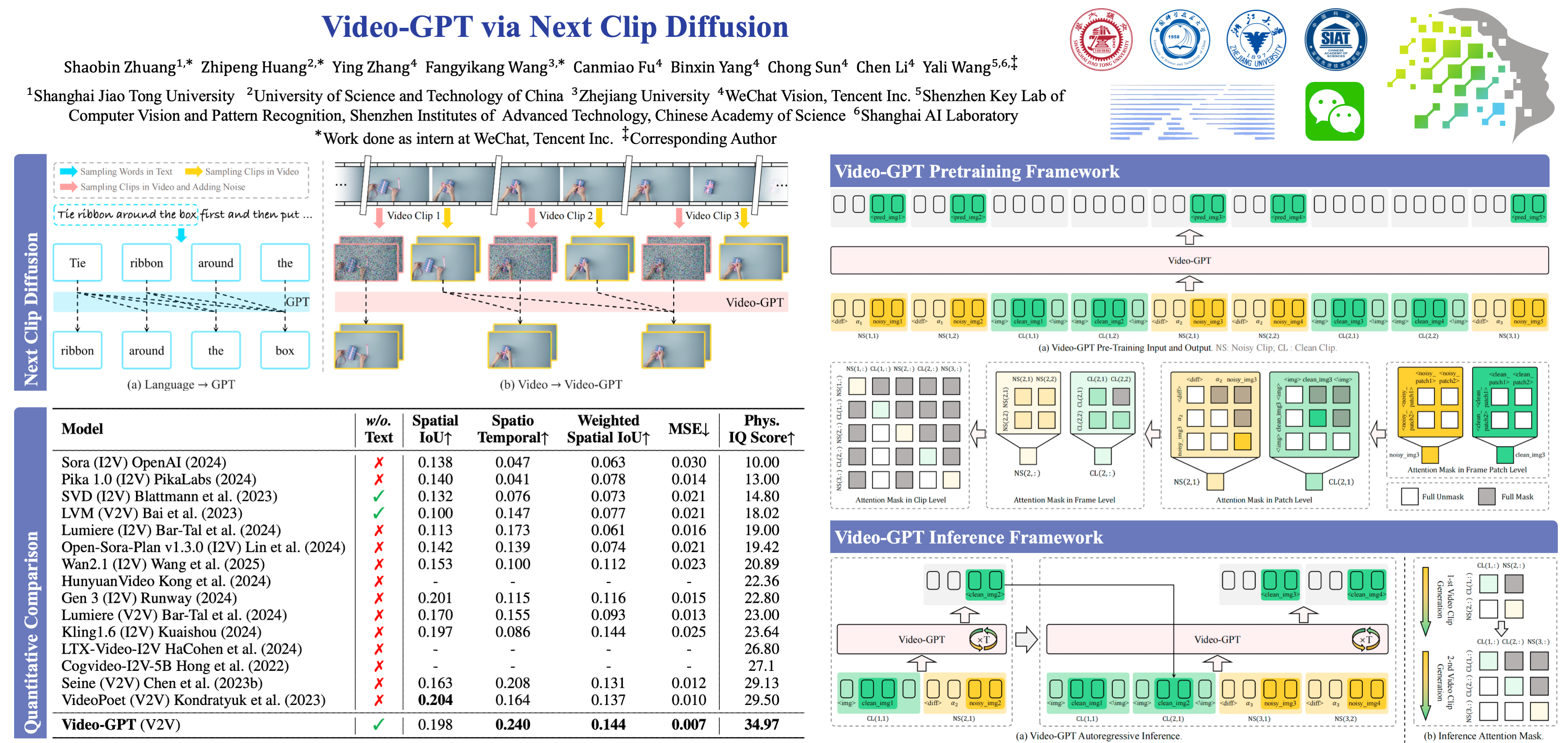
GPT has shown its remarkable success in natural language processing. However, the language sequence is not sufficient to describe spatial-temporal details in the visual world. Alternatively, the video sequence is good at capturing such details. Motivated by this fact, we propose a concise Video-GPT in this paper by treating video as new language for visual world modeling. By analogy to next token prediction in GPT, we introduce a novel next clip diffusion paradigm for pretraining Video-GPT. Different from the previous works, this distinct paradigm allows Video-GPT to tackle both short-term generation and long-term prediction, by autoregressively denoising the noisy clip according to the clean clips in the history. Extensive experiments show our Video-GPT achieves the state-of-the-art performance on video prediction, which is the key factor towards world modeling (Physics-IQ Benchmark: Video-GPT 34.97 vs. Kling 23.64 vs. Wan 20.89). Moreover, it can be well adapted on 6 mainstream video tasks in both video generation and understanding, showing its great generalization capacity in downstream.
Contrastive Diffusion Guidance for Spatial Inverse Problems
Sattwik Basu ⋅ Chaitanya Amballa ⋅ Zhongweiyang Xu ⋅ Jorge Vančo Sampedro ⋅ Srihari Nelakuditi ⋅ Romit Roy Choudhury
We consider a class of inverse problems characterized by forward operators that are partially specified, non-smooth, and non-differentiable. Although generative inverse solvers have made significant progress, we find that these forward operators introduce a distinct set of challenges. As a concrete instance, we consider the problem of reconstructing spatial layouts, such as floorplans, from human movement trajectories, where the underlying path-generation process is inherently non-differentiable and only partially known. In such problems, direct likelihood-based guidance becomes unstable, since the underlying path-planning process does not provide reliable gradients. We break-away from existing diffusion-based posterior samplers and reformulate likelihood-based guidance in a smoother embedding space. This embedding space is learned using a contrastive objective to bring compatible trajectory-floorplan pairs close together while pushing mismatched pairs apart. We show that this surrogate likelihood score in the embedding space provides a valid approximation to the true likelihood score, making it possible to steer the denoising process towards the posterior. Across extensive experiments, our model CoGuide produces more consistent reconstructions and is more robust than existing inverse-solvers and guided diffusion. Beyond spatial mapping, we show that our method can be applied more broadly, suggesting a route toward solving generalized blind inverse problems using diffusion models.
Value Matching: Scalable and Gradient-Free Reward-Guided Flow Adaptation
Cristian Jensen ⋅ Luca Schaufelberger ⋅ Riccardo De Santi ⋅ Kjell Jorner ⋅ Andreas Krause
Adapting large-scale flow and diffusion models to downstream tasks through reward optimization is essential for their adoption in real-world applications, including scientific discovery and image generation. While recent fine-tuning methods based on reinforcement learning and stochastic optimal control achieve compelling performance, they face severe scalability challenges due to high memory demands that scale with model complexity. In contrast, methods that disentangle reward adaptation from base model complexity, such as Classifier Guidance (CG), offer flexible control over computational resource requirements. However, CG suffers from limited reward expressivity and a train-test distribution mismatch due to its offline nature. To overcome the limitations of fine-tuning methods and CG, we propose Value Matching (VM), an online algorithm for learning the value function within an optimal control setting. VM provides tunable memory and compute demands through flexible value network complexity, supports optimization of non-differentiable rewards, and operates on-policy, which enables going beyond the data distribution to discover high-reward regions. Experimentally, we evaluate VM across image generation and molecular design tasks. We demonstrate improved stability and sample efficiency over CG and achieve comparable performance to fine-tuning approaches while requiring less than 5% of their memory usage.
LouisKV: Efficient KV Cache Retrieval for Long Input-Output Sequences
WENBO WU ⋅ Qingyi Si ⋅ Xiurui Pan ⋅ Ye Wang ⋅ Jie Zhang
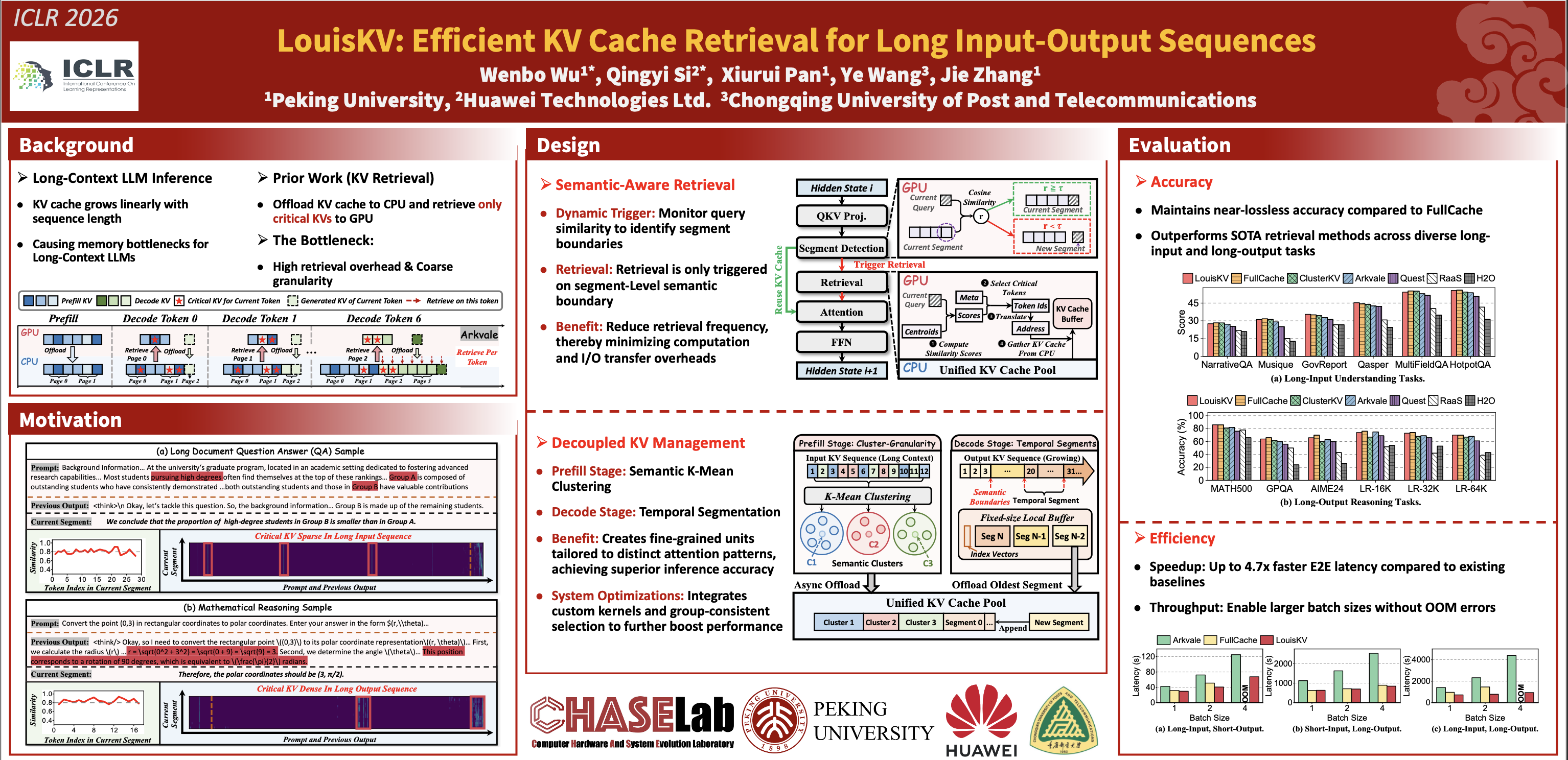
While Key-Value (KV) cache succeeds in reducing redundant computations in auto-regressive models, it introduces significant memory overhead, limiting its practical deployment in long-sequence scenarios. Existing KV retrieval methods attempt to mitigate this by dynamically retaining only a subset of KV entries on the GPU. However, they still suffer from notable efficiency and accuracy bottlenecks due to per-token retrieval and coarse-grained page-level KV management strategy, especially in long-output reasoning scenarios. With the emergence of large reasoning models, efficiently handling such scenarios has become increasingly important. To address this issue, we present two key observations: (1) critical KVs exhibit strong temporal locality during decoding, and (2) these KVs exhibit distinct distribution patterns across the input prompt and the generated output. Building on these observations, we propose \emph{LouisKV}, an efficient KV cache retrieval framework designed for various long-sequence scenarios. Specifically, LouisKV introduces a semantic-aware retrieval strategy that leverages temporal locality to trigger retrieval only at semantic boundaries, drastically reducing computation and data transfer overhead. LouisKV also designs a decoupled, fine-grained management scheme that tailors differentiated strategies for input and output sequences to create retrieval units that better match the model's attention patterns, thereby enabling the precise identification of critical KVs. Furthermore, to boost system efficiency, LouisKV incorporates several kernel-level optimizations, including custom Triton and CUDA kernels to accelerate the KV clustering and retrieval. Evaluation results show that LouisKV achieves up to 4.7$\times$ speedup over state-of-the-art KV retrieval methods while maintaining near-lossless accuracy across diverse long-sequence tasks, including long-input short-output, short-input long-output, and long-input long-output scenarios.
Flow matching is a powerful generative modeling framework, valued for its simplicity and strong empirical performance. However, its standard formulation treats signals on structured spaces---such as fMRI data on brain graphs---as points in Euclidean space, overlooking the rich topological features of their domains. To address this, we introduce \emph{topological flow matching}, a topology-aware generalization of flow matching. We interpret flow matching as a framework for solving a degenerate Schrödinger bridge problem and inject topological information by augmenting the reference process with a Laplacian-derived drift. This principled modification captures the structure of the underlying domain while preserving the desirable properties of flow matching: a stable, simulation-free objective and deterministic sample paths. As a result, our framework serves as a plug-and-play replacement for standard flow matching. We demonstrate its effectiveness on diverse structured datasets, including brain fMRIs, ocean currents, seismic events, and traffic flows.
Bures-Wasserstein Flow Matching for Graph Generation
Keyue Jiang ⋅ Jiahao Cui ⋅ Xiaowen Dong ⋅ Laura Toni
Graph generation has emerged as a critical task in fields ranging from drug discovery to circuit design. Contemporary approaches, notably diffusion and flow-based models, have achieved solid graph generative performance through constructing a probability path that interpolates between reference and data distributions. However, these methods typically model the evolution of individual nodes and edges independently and use linear interpolations in the disjoint space of nodes/edges to build the path. This disentangled interpolation breaks the interconnected patterns of graphs, making the constructed probability path irregular and non-smooth, which causes poor training dynamics and faulty sampling convergence. To address the limitation, this paper first presents a theoretically grounded framework for probability path construction in graph generative models. Specifically, we model the joint evolution of the nodes and edges by representing graphs as connected systems parameterized by Markov random fields (MRF). We then leverage the optimal transport displacement between MRF objects to design a smooth probability path that ensures the co-evolution of graph components. Based on this, we introduce BWFlow, a flow-matching framework for graph generation that utilizes the derived optimal probability path to benefit the training and sampling algorithm design. Experimental evaluations in plain graph generation and molecule generation validate the effectiveness of BWFlow with competitive performance, better training convergence, and efficient sampling.
Boomerang Distillation Enables Zero-Shot Model Size Interpolation
Sara Kangaslahti ⋅ Nihal V. Nayak ⋅ Jonathan Geuter ⋅ Marco Fumero ⋅ Francesco Locatello ⋅ David Alvarez-Melis
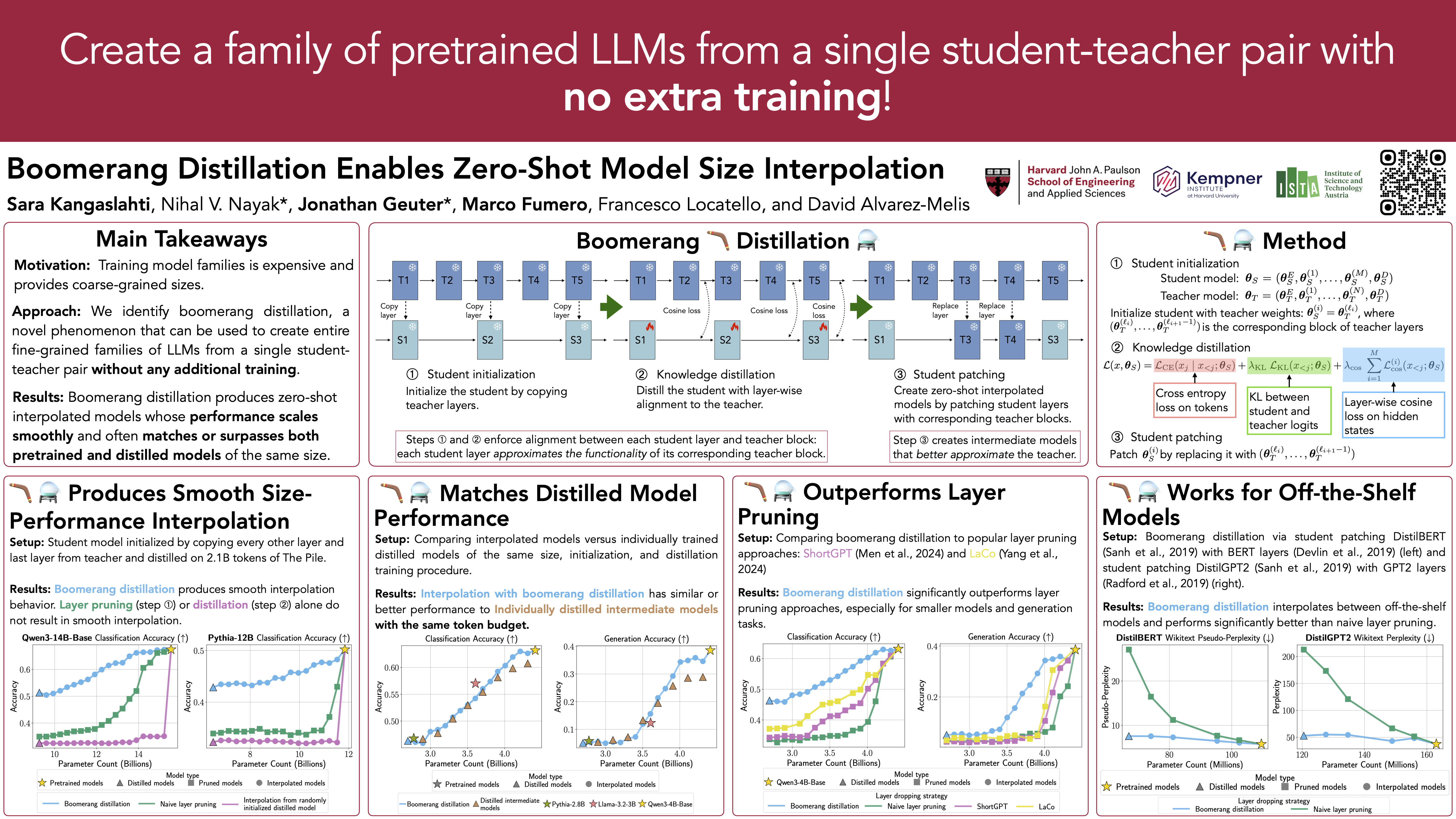
Large language models (LLMs) are typically deployed under diverse memory and compute constraints. Existing approaches build model families by training each size independently, which is prohibitively expensive and provides only coarse-grained size options. In this work, we identify a novel phenomenon that we call boomerang distillation: starting from a large base model (the teacher), one first distills down to a small student and then progressively reconstructs intermediate-sized models by re-incorporating blocks of teacher layers into the student without any additional training. This process produces zero-shot interpolated models of many intermediate sizes whose performance scales smoothly between the student and teacher, often matching or surpassing pretrained or distilled models of the same size. We further analyze when this type of interpolation succeeds, showing that alignment between teacher and student through pruning and distillation is essential. Boomerang distillation thus provides a simple and efficient way to generate fine-grained model families, dramatically reducing training cost while enabling flexible adaptation across deployment environments. The code and models are available at https://github.com/dcml-lab/boomerang-distillation.
Once-More: Continuous Self-Correction for Large Language Models via Perplexity-Guided Intervention
Jiaxun Gao ⋅ Him Wai (Michael) Ng ⋅ Z. Jane Wang
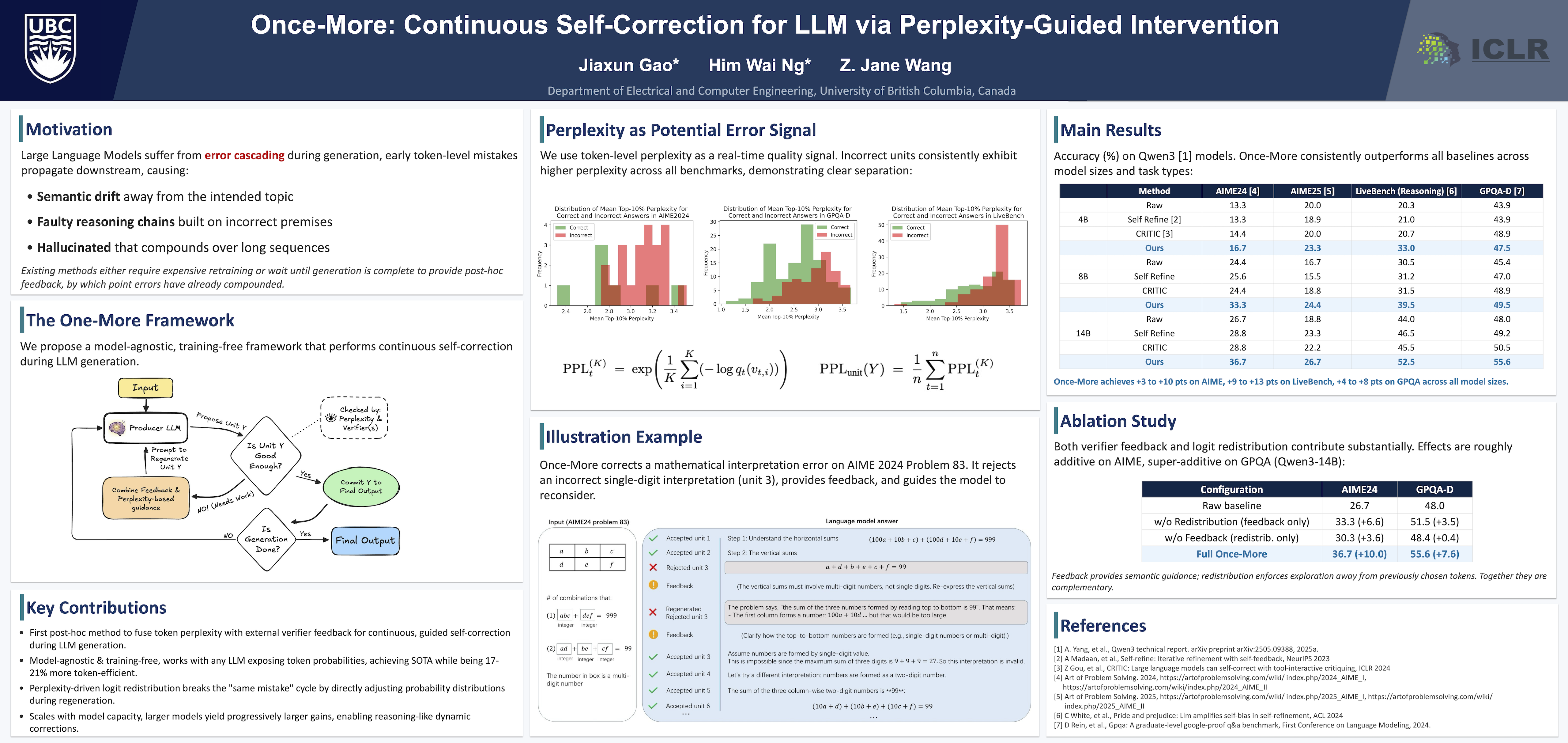
Large Language Models (LLMs) often experience compounding errors during long text generation. Early mistakes can propagate and lead to drift, faulty reasoning, or repetition. While scaling up models improves capabilities, it requires substantial computational resources, and the resulting self-correction behaviour remains unpredictable at inference time. Self-correction is a promising technique for addressing this issue. However, existing approaches have limitations. Supervised training methods can build self-correcting behaviours into models, but require training data collection and lack cross-domain generalizability. Current post-hoc iterative refinement methods operate only at inference time, but must wait for substantial portions of the draft to be generated before providing feedback. This feedback does not guarantee effective guidance, and the same mistake patterns can still reappear. In this paper, we introduce Once-More, a model-agnostic post-hoc self-correction framework that intervenes during generation. Once-More leverages token-level perplexity and feedback from verifiers to provide continuous guided steering of the generation path through a logit redistribution mechanism. This approach essentially helps accumulate "more correct" steps throughout the generation process. Evaluation on multiple benchmarks demonstrates that Once-More achieves state-of-the-art results compared to other self-correction methods. To our knowledge, Once-More is the first post-hoc method to leverage token perplexity and external feedback to perform continuous guided self-correction.
Diffusion & Adversarial Schrödinger Bridges via Iterative Proportional Markovian Fitting
Sergei Kholkin ⋅ Grigoriy Ksenofontov ⋅ David Li ⋅ Nikita Kornilov ⋅ Nikita Gushchin ⋅ Alexandra Suvorikova ⋅ Alexey Kroshnin ⋅ Evgeny Burnaev ⋅ Aleksandr Korotin
The Iterative Markovian Fitting (IMF) procedure, which iteratively projects onto the space of Markov processes and the reciprocal class, successfully solves the Schrödinger Bridge (SB) problem. However, an efficient practical implementation requires a heuristic modification-alternating between fitting forward and backward time diffusion at each iteration. This modification is crucial for stabilizing training and achieving reliable results in applications such as unpaired domain translation. Our work reveals a close connection between the modified version of IMF and the Iterative Proportional Fitting (IPF) procedure-a foundational method for the SB problem, also known as Sinkhorn’s algorithm. Specifically, we demonstrate that the heuristic modification of the IMF effectively integrates both IMF and IPF procedures. We refer to this combined approach as the Iterative Proportional Markovian Fitting (IPMF) procedure. Through theoretical and empirical analysis, we establish the convergence of the IPMF procedure under various settings, contributing to developing a unified framework for solving SB problems. Moreover, from a practical standpoint, the IPMF procedure enables a flexible trade-off between image similarity and generation quality, offering a new mechanism for tailoring models to specific tasks.
VFScale: Intrinsic Reasoning through Verifier-Free Test-time Scalable Diffusion Model
Tao Zhang ⋅ Jia-Shu Pan ⋅ Ruiqi Feng ⋅ Tailin Wu
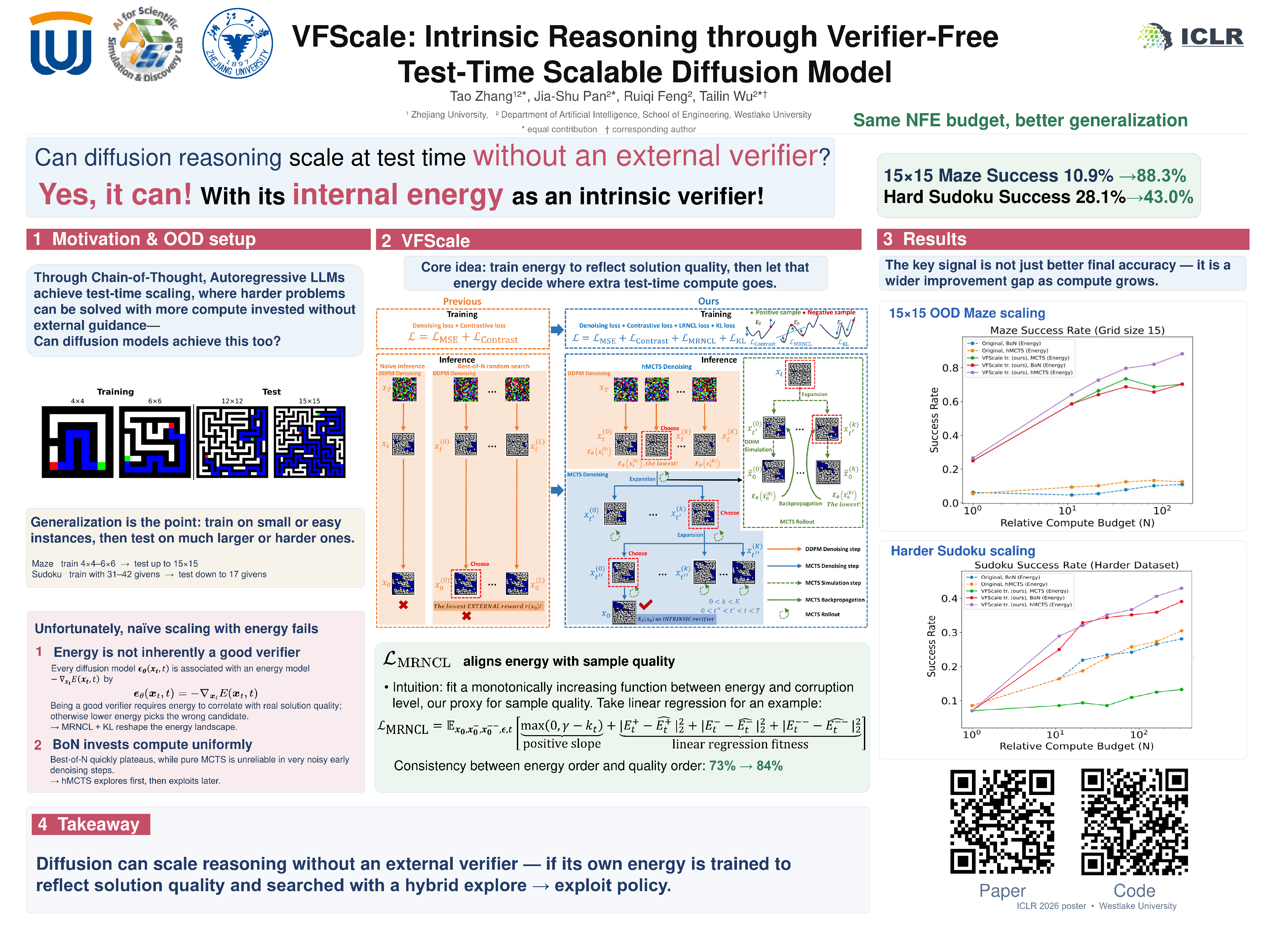
Inspired by human SYSTEM 2 thinking, LLMs excel at complex reasoning tasks via extended Chain-of-Thought. However, similar test-time scaling for diffusion models to tackle complex reasoning remains largely unexplored. From existing work, two primary challenges emerge in this setting: (i) the dependence on an external verifier indicating a notable gap from intrinsic reasoning of human intelligence without any external feedback, and (ii) the lack of an efficient search algorithm. In this paper, we introduce the Verifier-free Test-time Scalable Diffusion Model (VFScale) to achieve scalable intrinsic reasoning, which equips number-of-sample test-time scaling with the intrinsic energy function of diffusion models as the verifier. Concretely, VFScale comprises two key innovations to address the aforementioned challenges. On the training side, VFScale consists of a novel MRNCL loss and a KL regularization to improve the energy landscape, ensuring that the learned energy function itself serves as a reliable verifier. On the inference side, VFScale integrates the denoising process with a novel hybrid Monte Carlo Tree Search (hMCTS) to improve search efficiency. On challenging reasoning tasks of Maze and Sudoku, we demonstrate the effectiveness of VFScale's training objective and scalable inference method. In particular, trained with Maze sizes of up to 6×6, our VFScale solves 88\% of Maze problems with much larger sizes of 15×15, while standard diffusion model completely fails. The code can be found at https://github.com/AI4Science-WestlakeU/VFScale.
Not All Models Suit Expert Offloading: On Local Routing Consistency of Mixture-of-Expert Models
Jingcong Liang ⋅ Siyuan Wang ⋅ Miren Tian ⋅ Yitong Li ⋅ Duyu Tang ⋅ zhongyu wei
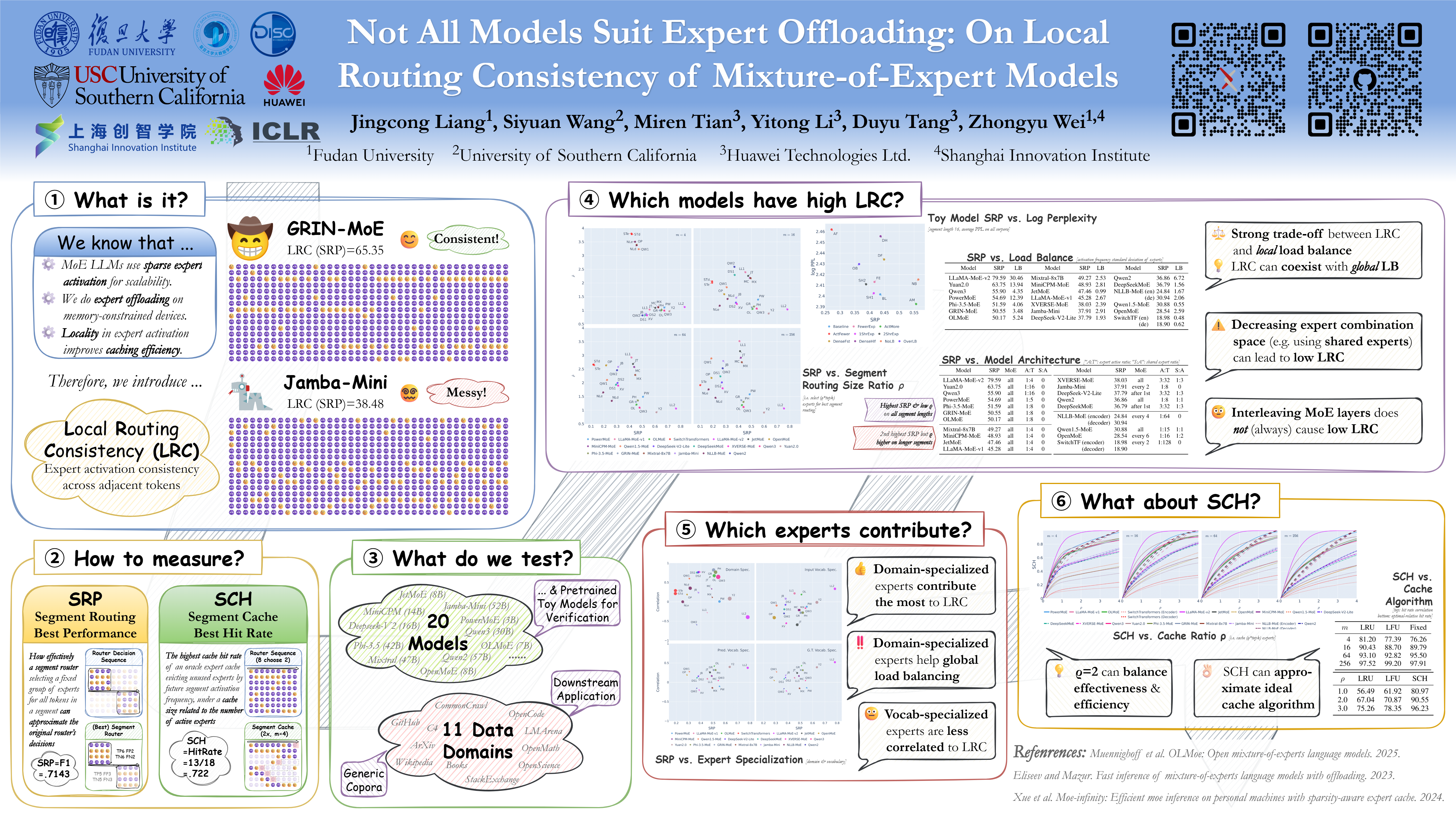
Mixture-of-Experts (MoE) enables efficient scaling of large language models (LLMs) with sparsely activated experts during inference. To effectively deploy large MoE models on memory-constrained devices, many systems introduce expert offloading which caches a subset of experts in fast memory, leaving others on slow memory to run on CPU or load on demand. While some research has exploited the locality of expert activations, where consecutive tokens activate similar experts, the degree of this local routing consistency varies across models and remains understudied. In this paper, we propose two metrics to measure local routing consistency of MoE models: (1) Segment Routing best Performance (SRP), which evaluates how well a fixed group of experts can cover the needs of a segment of tokens, and (2) Segment Cache best Hit rate (SCH), which measures the hit rate of an expert cache utilizing a length of future information under a cache limit. We analyze 20 MoE LLMs with diverse sizes and architectures and use toy models to verify key factors related to local routing consistency. We find a strong trade-off between local routing consistency and local load balance, while showing that global load balance can coexist with local routing consistency. Meanwhile, settings like shared experts that decrease expert combination space can lead to low local routing consistency. We further reveal that domain-specialized experts contribute more to routing consistency than vocabulary-specialized ones, and that most models balance between cache effectiveness and efficiency with cache sizes approximately twice the active experts. These findings pave the way for memory-efficient MoE design and deployment without compromising inference speed.
A Unification of Discrete, Gaussian, and Simplicial Diffusion
Nuria Chandra ⋅ Yucen Li ⋅ Alan Amin ⋅ Alex Ali ⋅ Joshua Rollins ⋅ Sebastian W. Ober ⋅ Aniruddh Raghu ⋅ Andrew Gordon Wilson
To model discrete sequences such as DNA, proteins, and language using diffusion, practitioners must choose between three major methods: diffusion in discrete space, Gaussian diffusion in Euclidean space, or diffusion on the simplex. Despite their shared goal, these models have disparate algorithms, theoretical structures, and tradeoffs: discrete diffusion has the most natural domain, Gaussian diffusion has more mature algorithms, and diffusion on the simplex in principle combines the strengths of the other two but in practice suffers from a numerically unstable stochastic processes. Ideally we could see each of these models as instances of the same underlying framework, and enable practitioners to switch between models for downstream applications. However previous theories have only considered connections in special cases. Here we build a theory unifying all three methods of discrete diffusion as different parameterizations of the same underlying process: the Wright-Fisher population genetics model. In particular, we find simplicial and Gaussian diffusion as two large-population limits. Our theory formally connects the likelihoods and hyperparameters of these models and leverages decades of mathematical genetics literature to unlock stable simplicial diffusion. Finally, we relieve the practitioner of balancing model trade-offs by demonstrating it is possible to train a single model that can perform diffusion in any of these three domains at test time. Our experiments show that Wright-Fisher simplicial diffusion is more stable and outperforms previous simplicial diffusion models on conditional DNA generation. We also show that we can train models on multiple domains at once that are competitive with models trained on any individual domain.
ParoQuant: Pairwise Rotation Quantization for Efficient Reasoning LLM Inference
Yesheng Liang ⋅ Haisheng Chen ⋅ Song Han ⋅ Zhijian Liu
Post-training quantization (PTQ) compresses the weights and activations of large language models (LLMs) into low-precision representations to reduce memory footprint and accelerate inference. However, the presence of outliers in weights and activations often leads to large quantization errors and severe accuracy degradation, especially in recent reasoning LLMs where errors accumulate across long chains of thought. Existing PTQ methods either fail to sufficiently suppress outliers or introduce significant overhead during inference. In this paper, we propose Pairwise Rotation Quantization (ParoQuant), a PTQ method that combines hardware-efficient and optimizable independent Givens rotations with channel-wise scaling to even out the magnitudes across channels and narrow the dynamic range within each quantization group, effectively addressing the outlier issue. We further co-design the inference kernel to fully exploit GPU parallelism and keep the rotations and scaling lightweight at runtime. Under weight-only quantization, ParoQuant achieves an average 2.4% accuracy improvement over AWQ on reasoning tasks, with less than 10% overhead. ParoQuant also matches the accuracy of state-of-the-art weight-activation quantization methods. This paves the way for more efficient and accurate deployment of reasoning LLMs.
Learning Energy-Based Generative Models via Potential Flow: A Variational Principle Approach to Probability Density Homotopy Matching
Junn Yong Loo · Fang Yu Leong · Michelle Adeline · Julia Kaiwen Lau · Hwa Hui Tew · Arghya Pal · Vishnu Monn Baskaran · Chee-Ming Ting · Raphaël C.-W. Phan
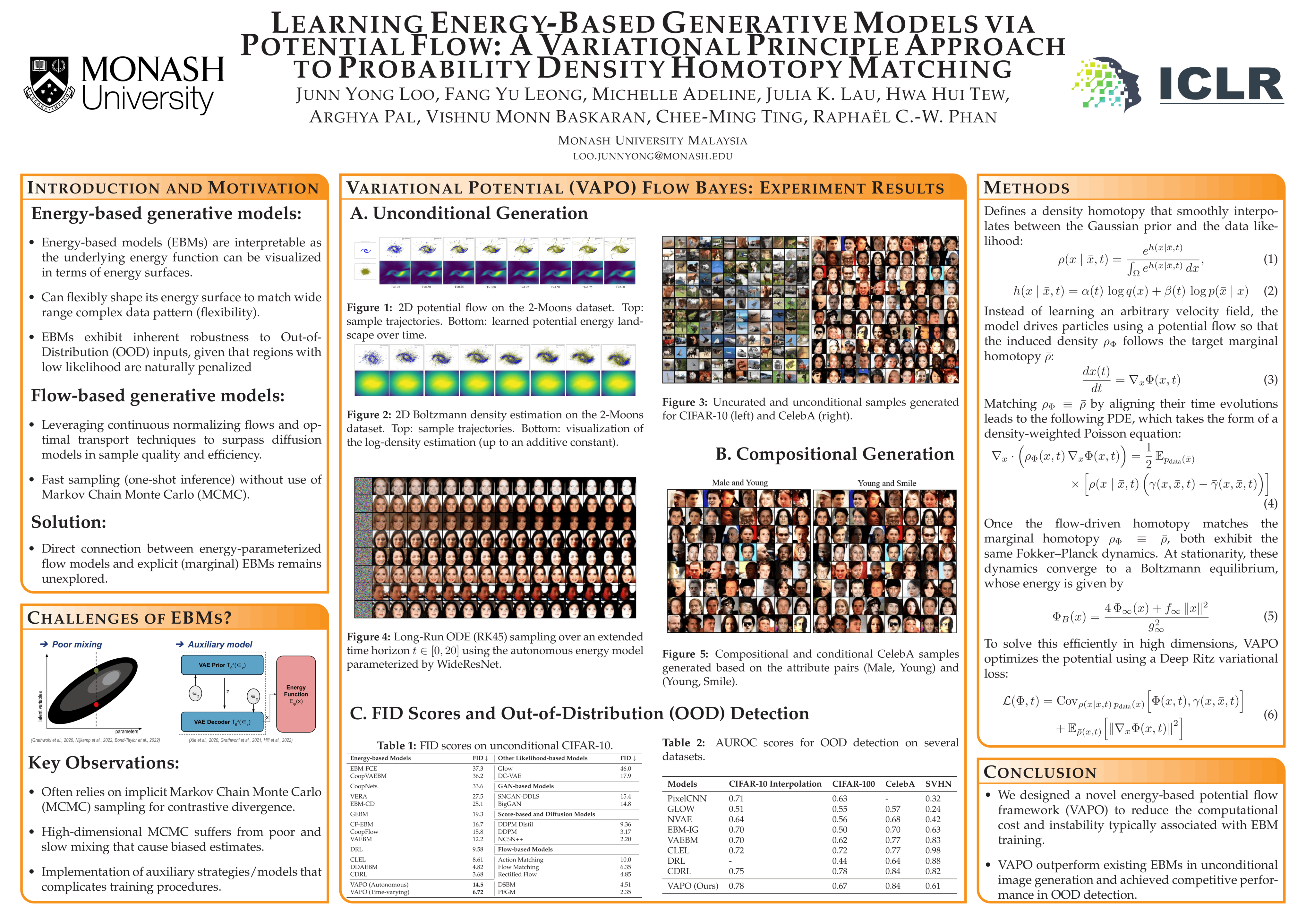
Energy-based models (EBMs) are a powerful class of probabilistic generative models due to their flexibility and interpretability. However, relationships between potential flows and explicit EBMs remain underexplored, while contrastive divergence training via implicit Markov chain Monte Carlo (MCMC) sampling is often unstable and expensive in high-dimensional settings. In this paper, we propose Variational Potential (VAPO) Flow Bayes, a new energy-based generative framework that eliminates the need for implicit MCMC sampling and does not rely on auxiliary networks or cooperative training. VAPO learns an energy-parameterized potential flow by constructing a flow-driven density homotopy that is matched to the data distribution through a variational loss minimizing the Kullback-Leibler divergence between the flow-driven and marginal homotopies. This principled formulation enables robust and efficient generative modeling while preserving the interpretability of EBMs. Experimental results on image generation, interpolation, out-of-distribution detection, and compositional generation confirm the effectiveness of VAPO, showing that our method performs competitively with existing approaches in terms of sample quality and versatility across diverse generative modeling tasks.
TopoFormer: Topology Meets Attention for Graph Learning
Md Joshem Uddin ⋅ Astrit Tola ⋅ Cuneyt Akcora ⋅ Baris Coskunuzer
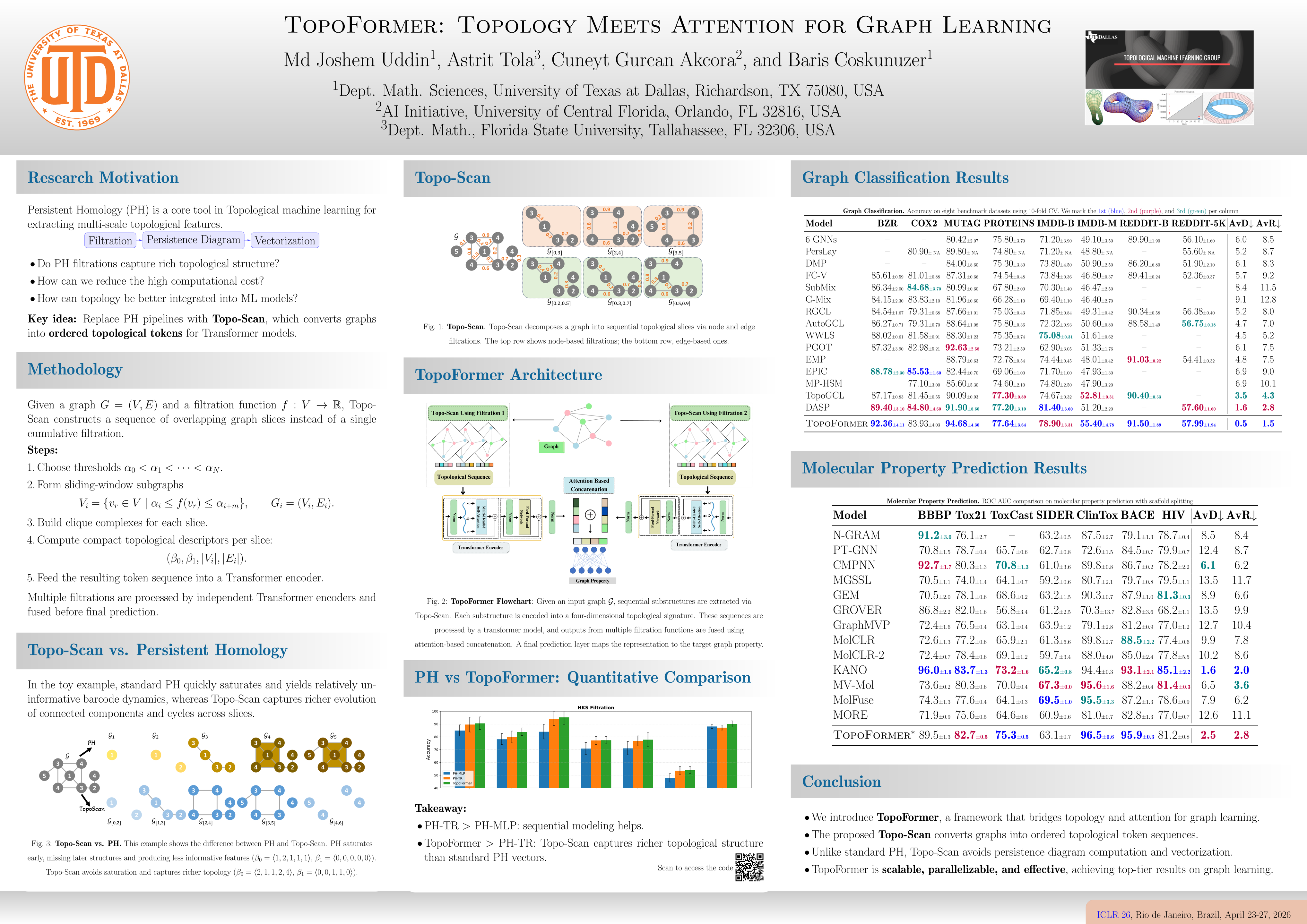
We introduce TopoFormer, a lightweight and scalable framework for graph representation learning that encodes topological structure into attention-friendly sequences. At the core of our method is Topo-Scan, a novel module that decomposes a graph into a short, ordered sequence of topological tokens by slicing over node or edge filtrations. These sequences capture multi-scale structural patterns, from local motifs to global organization, and are processed by a Transformer to produce expressive graph-level embeddings. Unlike traditional persistent homology pipelines, Topo-Scan is parallelizable, avoids costly diagram computations, and integrates seamlessly with standard deep learning architectures. We provide theoretical guarantees on the stability of our topological encodings and demonstrate state-of-the-art performance across graph classification and molecular property prediction benchmarks. Our results show that TopoFormer matches or exceeds strong GNN and topology-based baselines while offering predictable and efficient compute. This work opens a new path for parallelizable and unifying approaches to graph representation learning that integrate topological inductive biases into attention frameworks.
LogicXGNN: Grounded Logical Rules for Explaining Graph Neural Networks
Chuqin Geng ⋅ Ziyu Zhao ⋅ Zhaoyue Wang ⋅ Haolin Ye ⋅ Yuhe Jiang ⋅ Xujie Si
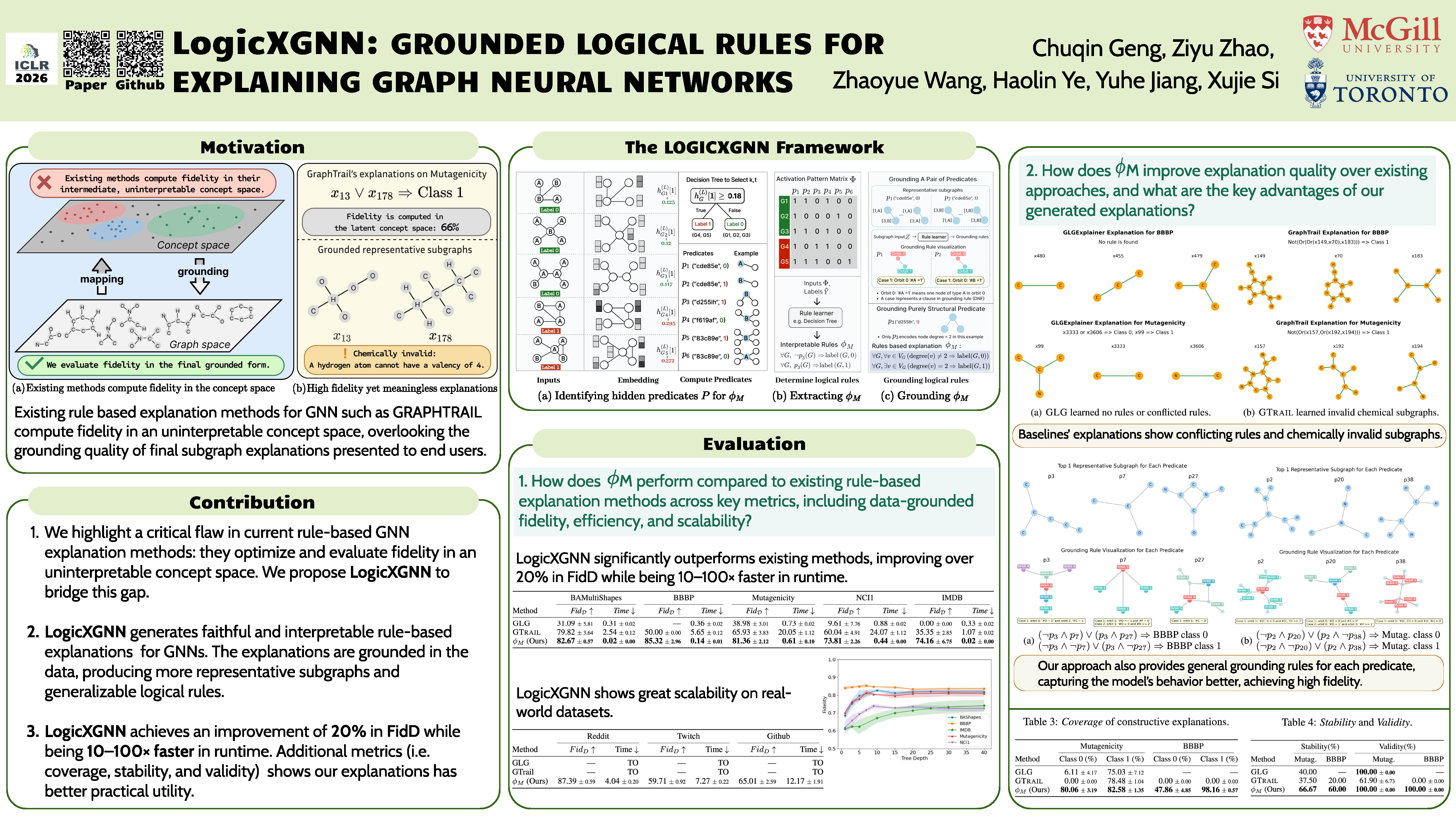
Existing rule-based explanations for Graph Neural Networks (GNNs) provide global interpretability but often optimize and assess fidelity in an intermediate, uninterpretable concept space, overlooking the grounding quality of the final subgraph explanations for end users. This gap yields explanations that may appear faithful yet be unreliable in practice. To this end, we propose LogicXGNN, a post hoc framework that constructs logical rules over reliable predicates explicitly designed to capture the GNN's message-passing structure, thereby ensuring effective grounding. We further introduce data-grounded fidelity ($Fid_D$), a realistic metric that evaluates explanations in their final-graph form, along with complementary utility metrics such as coverage and validity. Across extensive experiments, LogicXGNN improves $Fid_D$ by over 20% on average relative to state-of-the-art methods while being 10-100 times faster. With strong scalability and utility performance, LogicXGNN produces explanations that are faithful to the model's logic and reliably grounded in observable data.
GNN-as-Judge: Unleashing the Power of LLMs for Graph Learning with GNN Feedback
Ruiyao Xu ⋅ Kaize Ding
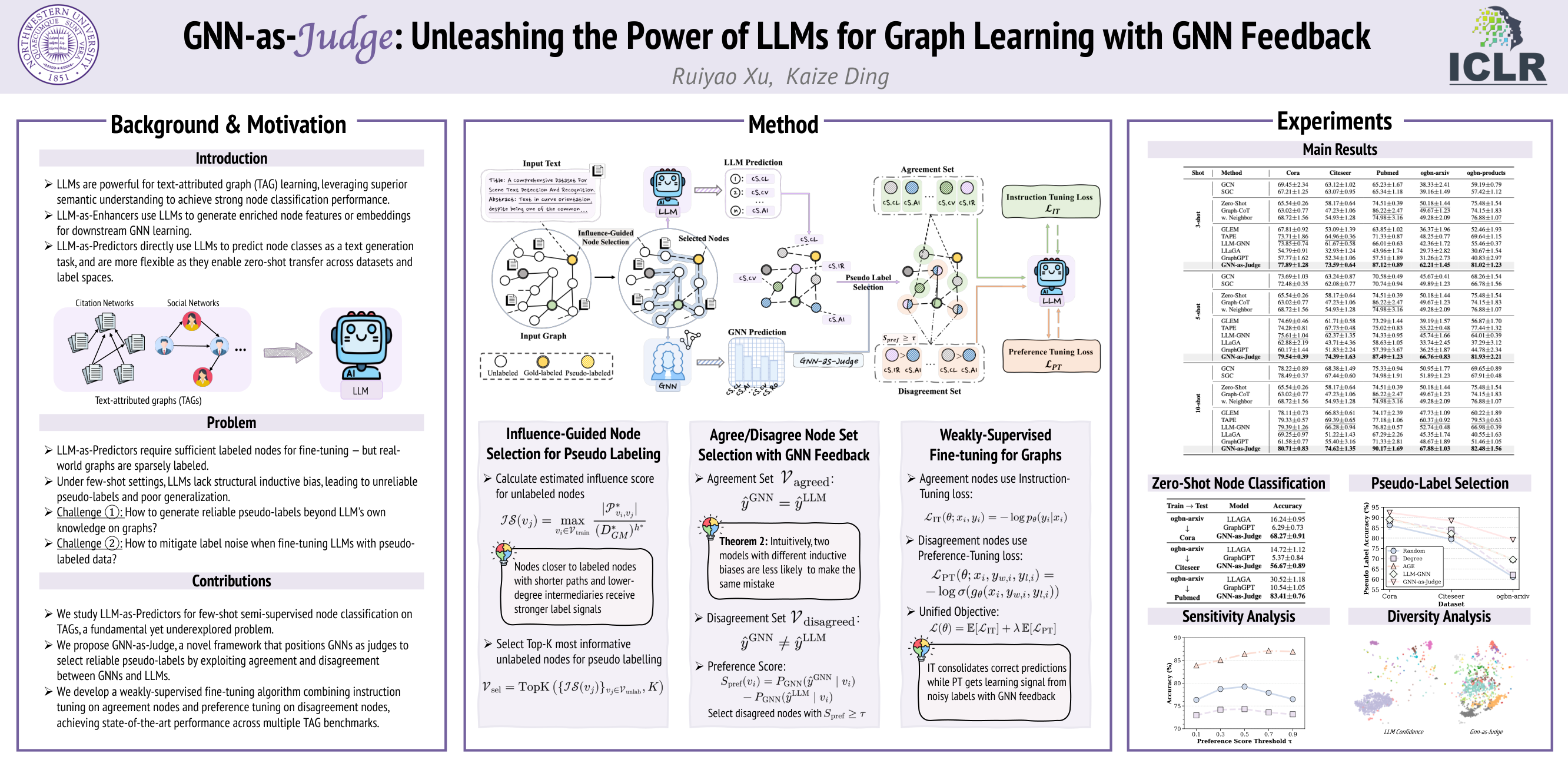
Large Language Models (LLMs) have shown strong performance on text-attributed graphs (TAGs) due to their superior semantic understanding ability on textual node features. However, their effectiveness as predictors in the low-resource setting, where labeled nodes are severely limited and scarce, remains constrained since fine-tuning LLMs usually requires sufficient labeled data, especially when the TAG shows complex structural patterns. In essence, this paper targets two key challenges: (i) the difficulty of generating and selecting reliable pseudo labels on TAGs for LLMs, and (ii) the need to mitigate potential label noise when fine-tuning LLMs with pseudo labels. To counter the challenges, we propose a new framework, GNN-as-Judge, which can unleash the power of LLMs for few-shot semi-supervised learning on TAGs by incorporating the structural inductive bias of Graph Neural Networks (GNNs). Specifically, GNN-as-Judge introduces a collaborative pseudo-labeling strategy that first identifies the most influenced unlabeled nodes from labeled nodes, then exploits both the agreement and disagreement patterns between LLMs and GNNs to generate reliable labels. Furthermore, we develop a weakly-supervised LLM fine-tuning algorithm that can distill the knowledge from informative pseudo labels while mitigating the potential label noise. Experiments on multiple TAG datasets demonstrate that GNN-as-Judge significantly outperforms existing methods, particularly in low-resource regimes where labeled data are scarce.
DHG-Bench: A Comprehensive Benchmark for Deep Hypergraph Learning
Fan Li ⋅ Xiaoyang Wang ⋅ Wenjie Zhang ⋅ Ying Zhang ⋅ Xuemin Lin
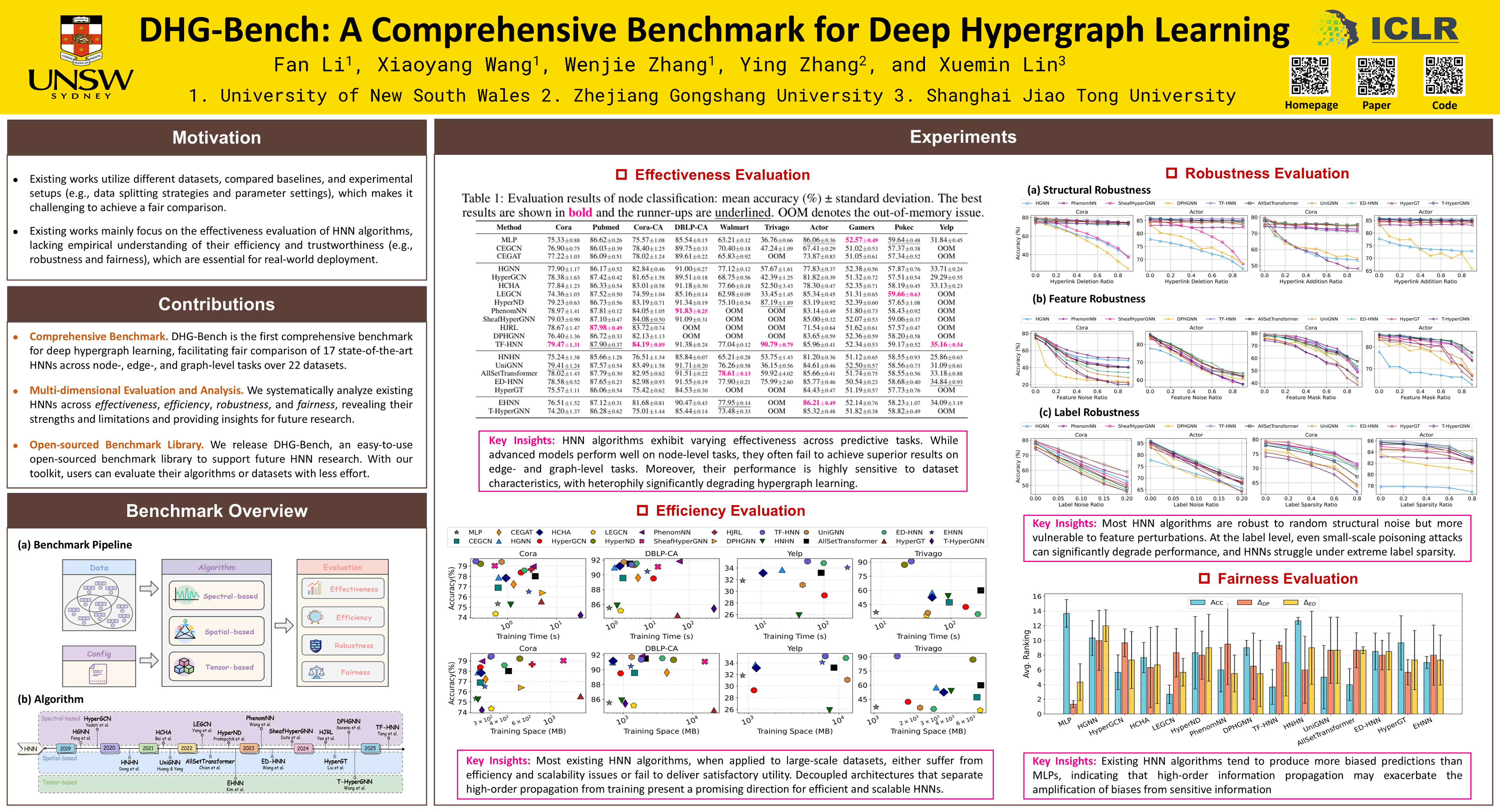
Deep graph models have achieved great success in network representation learning. However, their focus on pairwise relationships restricts their ability to learn pervasive higher-order interactions in real-world systems, which can be naturally modeled as hypergraphs. To tackle this issue, Hypergraph Neural Networks (HNNs) have garnered substantial attention in recent years. Despite the proposal of numerous HNNs, the absence of consistent experimental protocols and multi-dimensional empirical analysis impedes deeper understanding and further development of HNN research. While several toolkits for deep hypergraph learning (DHGL) have been introduced to facilitate algorithm evaluation, they provide only limited quantitative evaluation results and insufficient coverage of advanced algorithms, datasets, and benchmark tasks. To fill the gap, we introduce DHG-Bench, the first comprehensive benchmark for HNNs. Specifically, DHG-Bench systematically investigates the characteristics of HNNs in terms of four dimensions: effectiveness, efficiency, robustness, and fairness. We comprehensively evaluate 17 state-of-the-art HNN algorithms on 22 diverse datasets spanning node-, edge-, and graph-level tasks, under unified experimental settings. Extensive experiments reveal both the strengths and limitations of existing algorithms, offering valuable insights and directions for future research. Furthermore, to facilitate reproducible research, we have developed an easy-to-use library for training and evaluating different HNN methods. The DHG-Bench library is available at: https://github.com/Coco-Hut/DHG-Bench.
UrbanGraph: Physics-Informed Spatio-Temporal Dynamic Heterogeneous Graphs for Urban Microclimate Prediction
Weilin Xin ⋅ Chenyu Huang ⋅ Peilin Li ⋅ Jing Zhong ⋅ Jiawei Yao
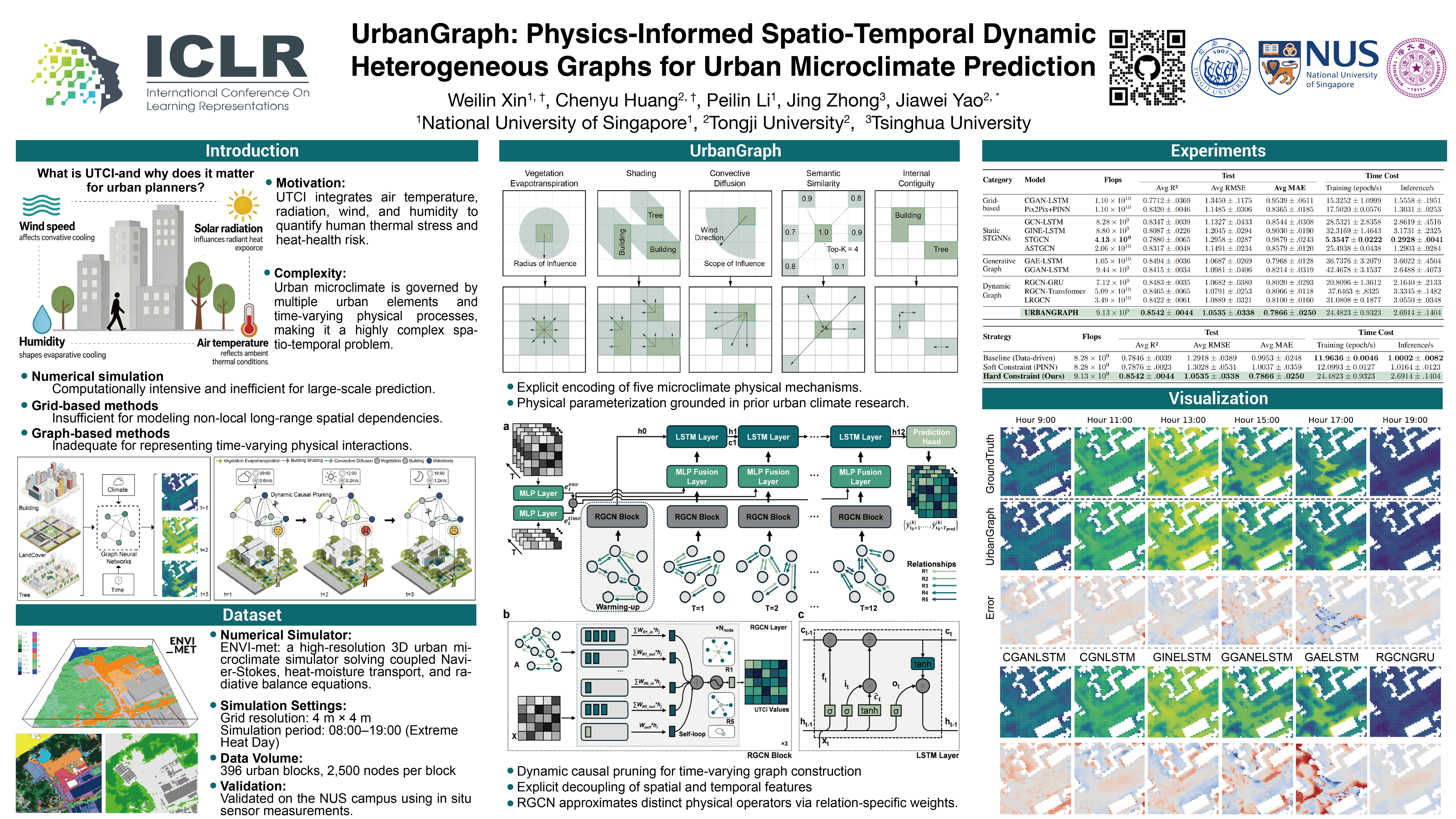
With rapid urbanization, predicting urban microclimates has become critical, as it affects building energy demand and public health risks. However, existing generative and homogeneous graph approaches fall short in capturing physical consistency, spatial dependencies, and temporal variability. \revise{To address this, we introduce UrbanGraph, a framework founded on a novel structure-based inductive bias. Unlike implicit graph learning, UrbanGraph transforms physical first principles into a dynamic causal topology, explicitly encoding time-varying causalities (e.g., shading and convection) directly into the graph structure to ensure physical consistency and data efficiency. Results show that UrbanGraph achieves state-of-the-art performance across all baselines. Specifically, the use of explicit causal pruning significantly reduces the model's floating-point operations (FLOPs) by 73.8\% and increases training speed by 21\% compared to implicit graphs. Our contribution includes the first high-resolution benchmark for spatio-temporal microclimate modeling, and a generalizable explicit topological encoding paradigm applicable to urban spatio-temporal dynamics governed by known physical equations.
gLSTM: Mitigating Over-Squashing by Increasing Storage Capacity
Hugh Blayney ⋅ Alvaro Arroyo ⋅ Xiaowen Dong ⋅ Michael Bronstein
Graph Neural Networks (GNNs) leverage the graph structure to transmit information between nodes, typically through the message-passing mechanism. While these models have found a wide variety of applications, they are known to suffer from over-squashing, where information from a large receptive field of node representations is collapsed into a single fixed sized vector, resulting in an information bottleneck. In this paper, we re-examine the over-squashing phenomenon through the lens of model storage and retrieval capacity, which we define as the amount of information that can be stored in a node’s representation for later use. We study some of the limitations of existing tasks used to measure over-squashing and introduce a new synthetic task to demonstrate that an information bottleneck can saturate this capacity. Furthermore, we adapt ideas from the sequence modeling literature on associative memories, fast weight programmers, and the xLSTM model to develop a novel GNN architecture with improved capacity. We demonstrate strong performance of this architecture both on our capacity synthetic task, as well as a range of real-world graph benchmarks.
Directed Semi-Simplicial Learning with Applications to Brain Activity Decoding
Manuel Lecha ⋅ Andrea Cavallo ⋅ Francesca Dominici ⋅ Ran Levi ⋅ Alessio Del Bue ⋅ Elvin Isufi ⋅ Pietro Morerio ⋅ Claudio Battiloro
Graph Neural Networks (GNNs) excel at learning from pairwise interactions but often overlook multi-way and hierarchical relationships. Topological Deep Learning (TDL) addresses this limitation by leveraging combinatorial topological spaces, such as simplicial or cell complexes. However, existing TDL models are restricted to undirected settings and fail to capture the higher-order directed patterns prevalent in many complex systems, e.g., brain networks, where such interactions are both abundant and functionally significant. To fill this gap, we introduce Semi-Simplicial Neural Networks (SSNs), a principled class of TDL models that operate on semi-simplicial sets---combinatorial structures that encode directed higher-order motifs and their directional relationships. To enhance scalability, we propose Routing-SSNs, which dynamically select the most informative relations in a learnable manner. We theoretically characterize SSNs by proving they are strictly more expressive than standard graph and TDL models, and they are able to recover several topological descriptors. Building on previous evidence that such descriptors are critical for characterizing brain activity, we then introduce a new principled framework for brain dynamics representation learning centered on SSNs. Empirically, we test SSNs on 4 distinct tasks across 13 datasets, spanning from brain dynamics to node classification, showing competitive performance. Notably, SSNs consistently achieve state-of-the-art performance on brain dynamics classification tasks, outperforming the second-best model by up to 27\%, and message passing GNNs by up to 50\% in accuracy. Our results highlight the potential of topological models for learning from structured brain data, establishing a unique real-world case study for TDL. Code and data are uploaded as supplementary material.
On the trade-off between expressivity and privacy in graph representation learning
Patrick Indri ⋅ Tamara Drucks ⋅ Thomas Gärtner
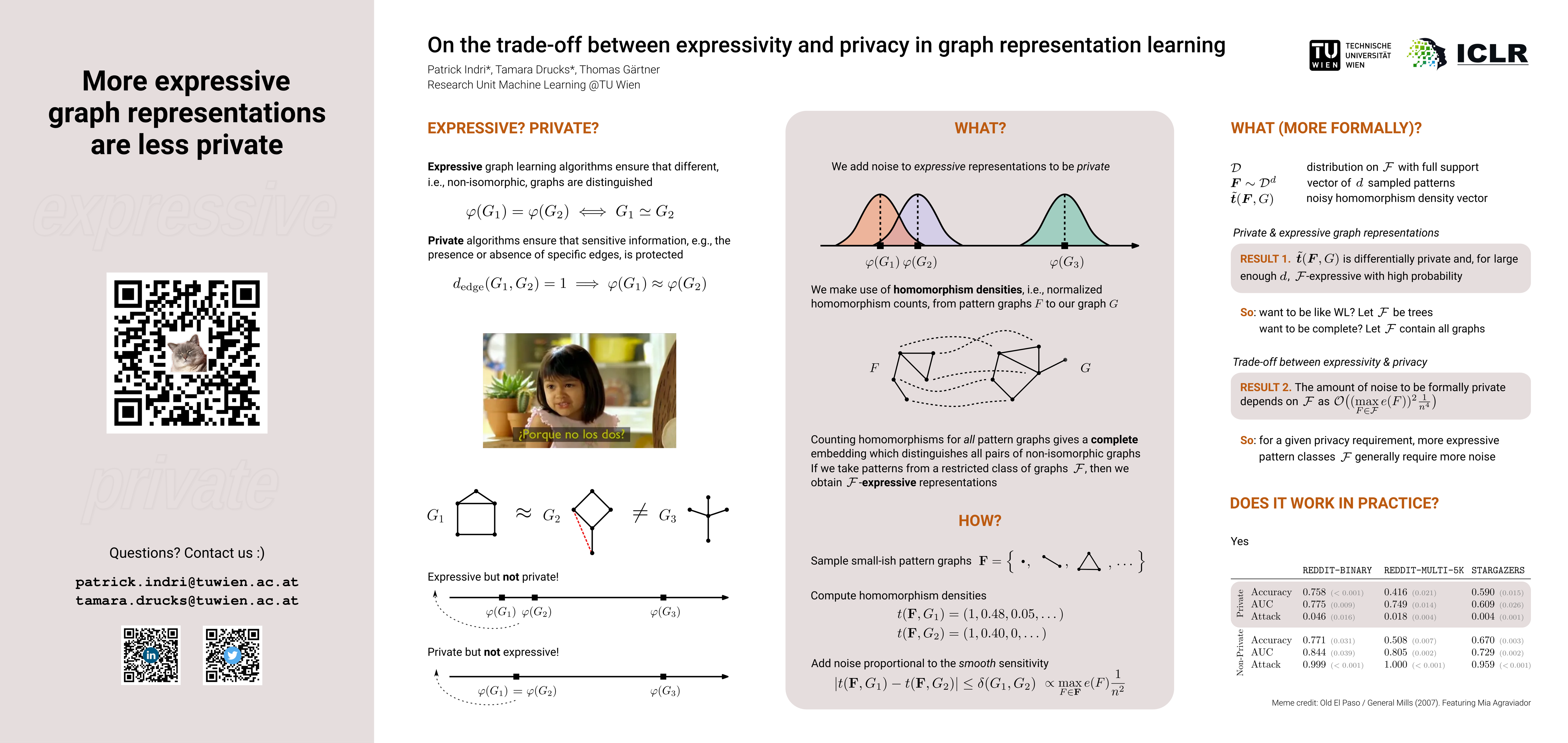
We investigate the trade-off between expressive power and privacy guarantees in graph representation learning. Privacy-preserving machine learning faces growing regulatory demands that pose a fundamental challenge: safeguarding sensitive data while maintaining expressive power. To address this challenge, we leverage homomorphism density vectors to obtain graph embeddings that are private and expressive. Homomorphism densities are provably highly discriminative and offer a powerful tool for distinguishing non-isomorphic graphs. By adding noise calibrated to each density’s sensitivity, we ensure that the resulting embeddings satisfy formal differential privacy guarantees. Our theoretical construction preserves expressivity in expectation, as each private embedding remains unbiased with respect to the true homomorphism densities. We demonstrate the usefulness of our embeddings through experiments on molecular and social network datasets.
Topology of Reasoning: Retrieved Cell Complex-Augmented Generation for Textual Graph Question Answering
Sen Zhao ⋅ Lincheng Zhou ⋅ Yue Chen ⋅ Ding Zou
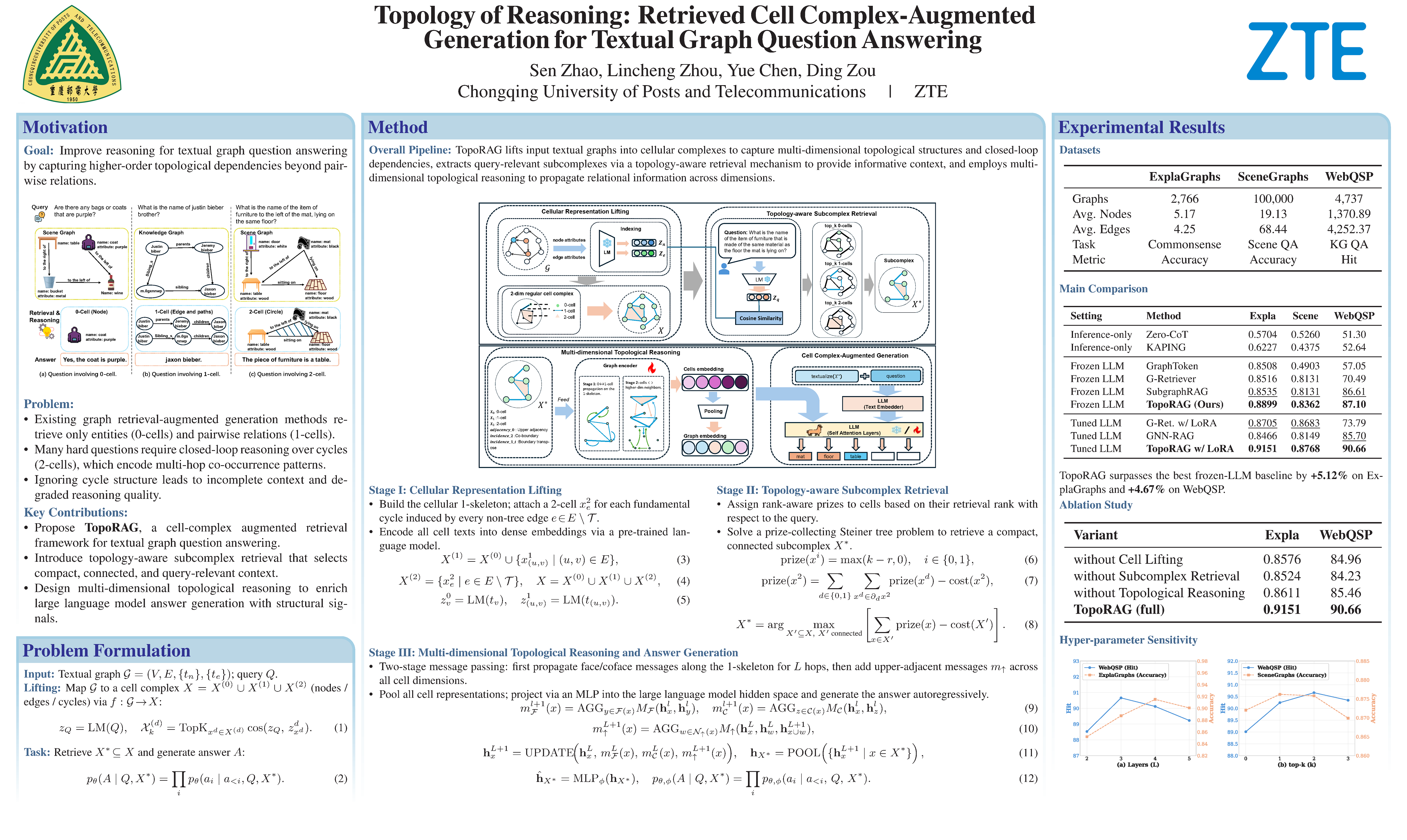
Retrieval-Augmented Generation (RAG) enhances the reasoning ability of Large Language Models (LLMs) by dynamically integrating external knowledge, thereby mitigating hallucinations and strengthening contextual grounding for structured data such as graphs. Nevertheless, most existing RAG variants for textual graphs concentrate on low-dimensional structures—treating nodes as entities (0-dimensional) and edges or paths as pairwise or sequential relations (1-dimensional), but overlook cycles, which are crucial for reasoning over relational loops. Such cycles often arise in questions requiring closed-loop inference about similar objects or relative positions. This limitation often results in incomplete contextual grounding and restricted reasoning capability. In this work, we propose Topology-enhanced Retrieval-Augmented Generation (TopoRAG), a novel framework for textual graph question answering that effectively captures higher dimensional topological and relational dependencies. Specifically, TopoRAG first lifts textual graphs into cellular complexes to model multi-dimensional topological structures. Leveraging these lifted representations, a topology-aware subcomplex retrieval mechanism is proposed to extract cellular complexes relevant to the input query, providing compact and informative topological context. Finally, a multi-dimensional topological reasoning mechanism operates over these complexes to propagate relational information and guide LLMs in performing structured, logic-aware inference. Empirical evaluations demonstrate that our method consistently surpasses existing baselines across diverse textual graph tasks.
Minimax Sample Complexity of Graph Neural Networks: Lower Bounds and Structural Effects
Ahmad Ghasemi ⋅ Hossein Pishro-Nik
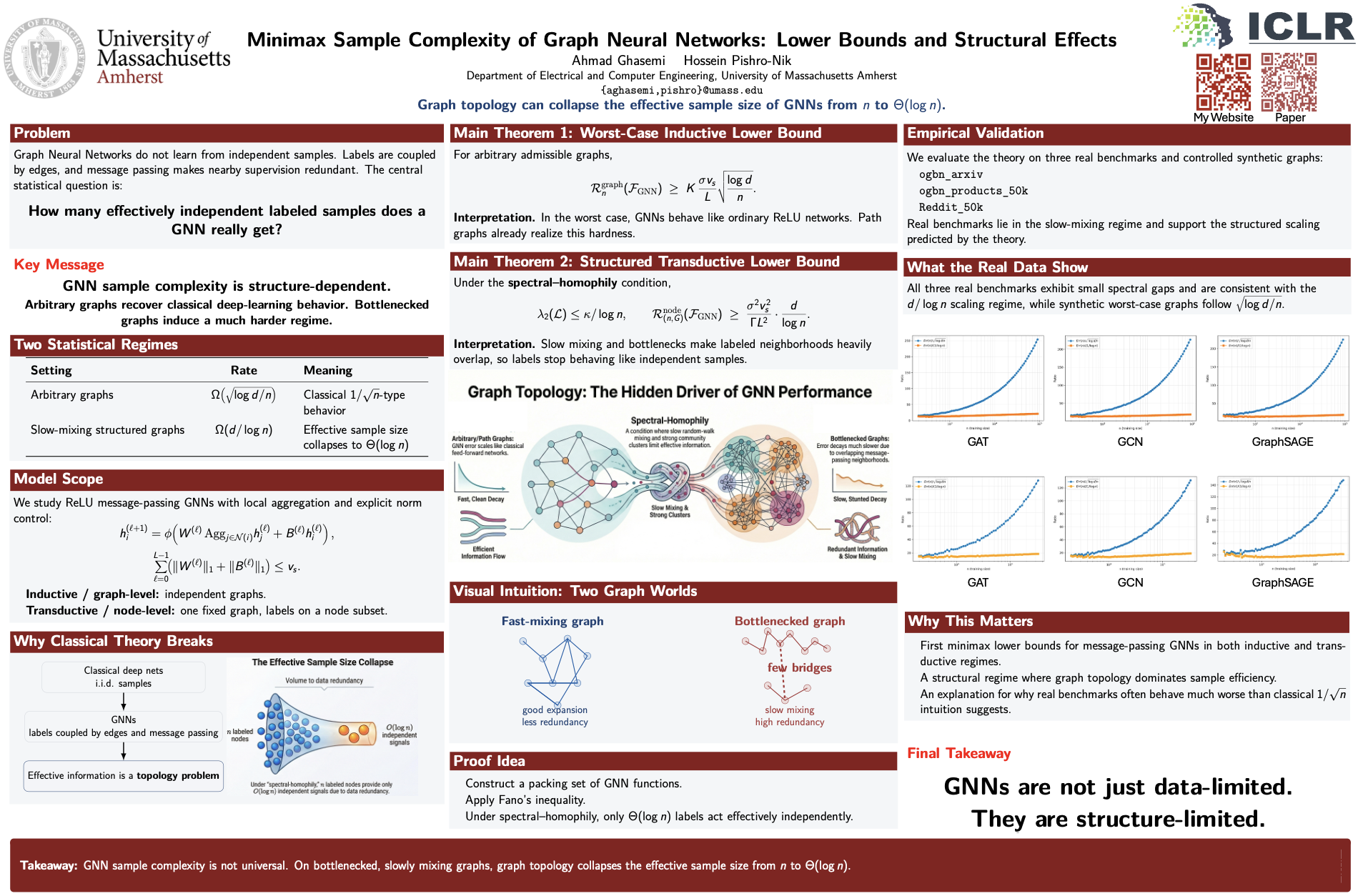
Graph Neural Networks (GNNs) achieve strong empirical performance across domains, yet their fundamental statistical behavior remains poorly understood. This paper develops a minimax analysis of ReLU message-passing GNNs with explicit architectural assumptions, in both inductive (graph-level) and transductive (node-level) settings. For arbitrary graphs without structural constraints, we show that the worst-case generalization error scales as $\sqrt{\log d / n}$ with sample size $n$ and input dimension $d$, matching the $1/\sqrt{n}$ behavior of feed-forward networks. Under a spectral--homophily condition combining strong label homophily and bounded spectral expansion, we prove a stronger minimax lower bound of $d/\log n$ for transductive node prediction. We complement these results with a systematic empirical study on three large-scale benchmarks (ogbn\_arxiv, ogbn\_products\_50k, Reddit\_50k) and two controlled synthetic datasets representing the worst-case and structured regimes of our theory. All benchmark graphs we study fall in the slow-mixing, bottlenecked regime captured by our spectral-homophily condition, and ratio-based scaling tests show error decay consistent with the $d/\log n$ rate in real and structured settings, while the worst-case synthetic dataset follows the $\sqrt{\log d / n}$ curve. Together, these results indicate that practical GNN tasks often operate in the spectral-homophily regime, where our lower bound $d/\log n$ is tight and effective sample complexity is driven by graph topology rather than universal $1/\sqrt{n}$ behavior.
ATEX-CF: Attack-Informed Counterfactual Explanations for Graph Neural Networks
Yu Zhang ⋅ Bin Yang ⋅ ARIJIT KHAN ⋅ Cuneyt Akcora
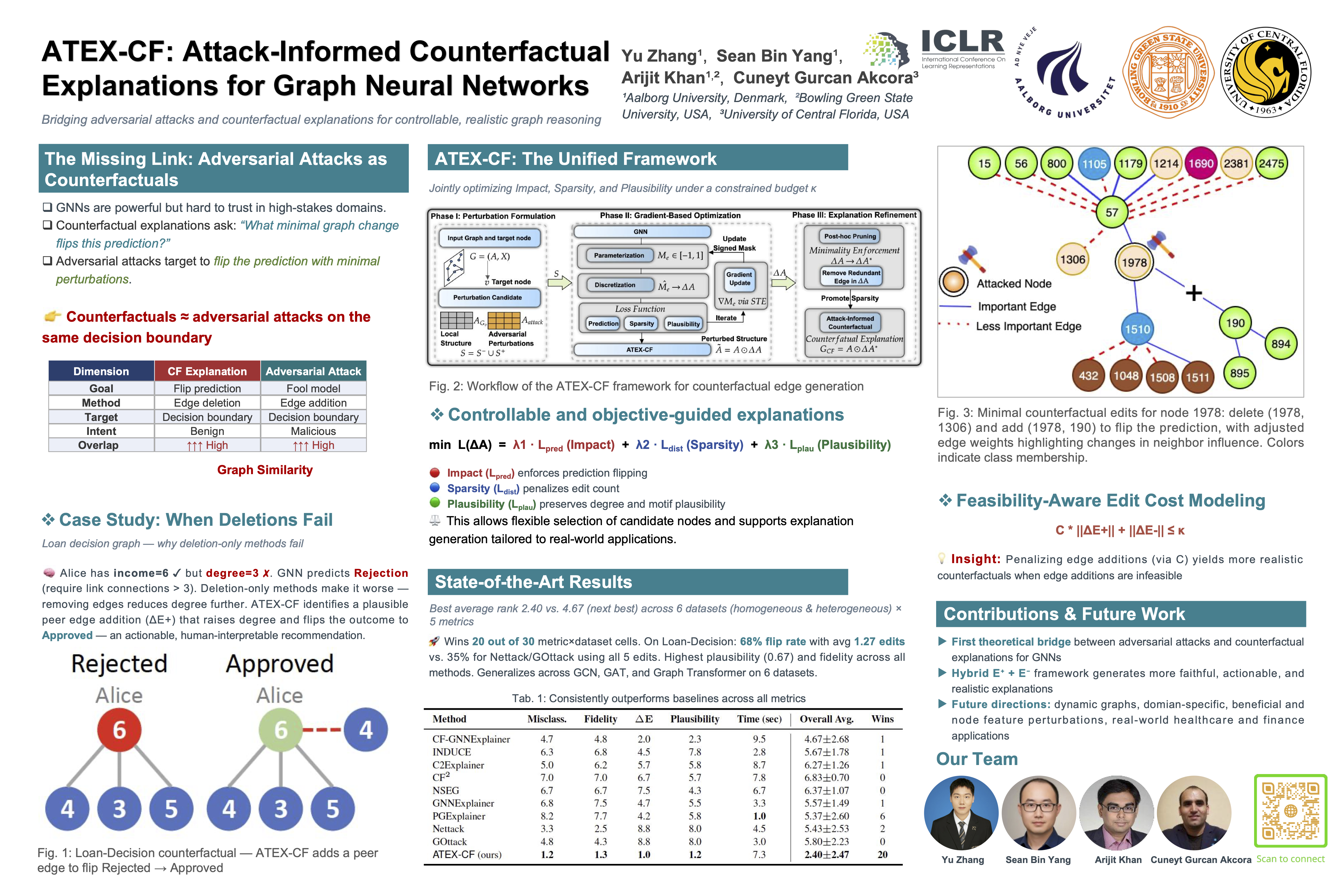
Counterfactual explanations offer an intuitive way to interpret graph neural networks (GNNs) by identifying minimal changes that alter a model’s prediction, thereby answering “what must differ for a different outcome?”. In this work, we propose a novel framework, ATEX-CF that unifies adversarial attack techniques with counterfactual explanation generation—a connection made feasible by theirshared goal of flipping a node’s prediction, yet differing in perturbation strategy:adversarial attacks often rely on edge additions, while counterfactual methods typically use deletions. Unlike traditional approaches that treat explanation and attack separately, our method efficiently integrates both edge additions and deletions, grounded in theory, leveraging adversarial insights to explore impactful counterfactuals. In addition, by jointly optimizing fidelity, sparsity, and plausibility under a constrained perturbation budget, our method produces instance-level explanations that are both informative and realistic. Experiments on synthetic and real-world node classification benchmarks demonstrate that ATEX-CF generates faithful, concise, and plausible explanations, highlighting the effectiveness of integrating adversarial insights into counterfactual reasoning for GNNs.
G-Merging: Graph Models Merging for Parameter-Efficient Multi-Task Knowledge Consolidation
Jun Chen ⋅ Ziyue Qiao ⋅ Qin Zhang ⋅ Kaize Ding ⋅ Xiao Luo
The pretrain-finetuning paradigm has achieved notable success in graph learning. Moreover, merging models fine-tuned on different tasks to enable a parameter-efficient model with multi-task capabilities is gaining increasing attention for its practicality. However, existing model merging methods, such as weight averaging and task arithmetic, struggle to generalize well to graph structures and Graph Neural Network (GNN) models due to the unique structural heterogeneity of graph data. In this paper, we propose an innovative graph model merging framework called G-Merging for merging multiple task-specific fine-tuned GNN models. G-Merging first employs task arithmetic to coarsely merge graph models, capturing shared cross-task knowledge. Second, it introduces a Topology-aware Wasserstein Distance (TWD) loss to train lightweight task adapters, preserving domain-specific graph patterns via aligning the embeddings of merged and fine-tuned models. Third, G-Merging integrates the adapters into a training-free, topology-aware router within a mixture-of-experts (MoE) architecture, dynamically routing input graphs to task-specific adapters based on structural similarity, thereby mitigating conflicts and enhancing knowledge sharing. Extensive experiments on 8 graph downstream datasets demonstrate the effectiveness of G-Merging, showing impressive performance close to or exceeding individual finetuned models while improving parameters and training efficiency. Our code is available at https://github.com/cjcj46262/G-Merging.
EvA: Evolutionary Attacks on Graphs
Mohammad Sadegh Akhondzadeh ⋅ Soroush H. Zargarbashi ⋅ Jimin Cao ⋅ Aleksandar Bojchevski
Even a slight perturbation in the graph structure can cause a significant drop in the accuracy of graph neural networks (GNNs). Most existing attacks leverage gradient information to perturb edges. This relaxes the attack's optimization problem from a discrete to a continuous space, resulting in solutions far from optimal. It also prevents the adaptability of the attack to non-differentiable objectives. Instead, we introduce a few simple, yet effective, enhancements of an evolutionary-based algorithm to solve the discrete optimization problem directly. Our Evolutionary Attack EvA works with any black-box model and objective, eliminating the need for a differentiable proxy loss. This allows us to design two novel attacks that reduce the effectiveness of robustness certificates and break conformal sets. EvA uses sparse representations to significantly reduce memory requirements and scale to larger graphs. We also introduce a divide and conquer strategy that improves both EvA and existing gradient-based attacks. Among our experiments, EvA shows $\sim$11\% additional drop in accuracy on average compared to the best previous attack, revealing significant untapped potential in designing attacks.
Bridging Input Feature Spaces Towards Graph Foundation Models
Moshe Eliasof ⋅ Krishna Sri Ipsit Mantri ⋅ Beatrice Bevilacqua ⋅ Bruno Ribeiro ⋅ Carola-Bibiane Schönlieb
Unlike vision and language domains, graph learning lacks a shared input space, as input features differ across graph datasets not only in semantics, but also in value ranges and dimensionality. This misalignment prevents graph models from generalizing across datasets, limiting their use as foundation models. In this work, we propose ALL-IN, a simple and theoretically grounded method that enables transferability across datasets with different input features. Our approach projects node features into a shared random space and constructs representations via covariance-based statistics, thus eliminating dependence on the original feature space. We show that the computed node-covariance operators and the resulting node representations are invariant in distribution to permutations of the input features. We further demonstrate that the expected operator exhibits invariance to general orthogonal transformations of the input features. Empirically, ALL-IN achieves strong performance across diverse node- and graph-level tasks on unseen datasets with new input features, without requiring architecture changes or retraining. These results point to a promising direction for input-agnostic, transferable graph models.
Can You Hear Me Now? A Benchmark for Long-Range Graph Propagation
Luca Miglior ⋅ Matteo Tolloso ⋅ Alessio Gravina ⋅ Davide Bacciu
Effectively capturing long-range interactions remains a fundamental yet unresolved challenge in graph neural network (GNN) research, critical for applications across diverse fields of science. To systematically address this, we introduce ECHO (Evaluating Communication over long HOps), a novel benchmark specifically designed to rigorously assess the capabilities of GNNs in handling very long-range graph propagation. ECHO includes three synthetic graph tasks, namely single-source shortest paths, node eccentricity, and graph diameter, each constructed over diverse and structurally challenging topologies intentionally designed to introduce significant information bottlenecks. ECHO also includes two real-world datasets, ECHO-Charge and ECHO-Energy, which define chemically grounded benchmarks for predicting atomic partial charges and molecular total energies, respectively, with reference computations obtained at the density functional theory (DFT) level. Both tasks inherently depend on capturing complex long-range molecular interactions. Our extensive benchmarking of popular GNN architectures reveals clear performance gaps, emphasizing the difficulty of true long-range propagation and highlighting design choices capable of overcoming inherent limitations. ECHO thereby sets a new standard for evaluating long-range information propagation, also providing a compelling example for its need in AI for science.
LEAP: Local ECT-Based Learnable Positional Encodings for Graphs
Juan P Amboage ⋅ Ernst Roell ⋅ Patrick Schnider ⋅ Bastian Rieck
Graph neural networks (GNNs) largely rely on the message-passing paradigm, where nodes iteratively aggregate information from their neighbors. Yet, standard message passing neural networks (MPNNs) face well-documented theoretical and practical limitations. Graph positional encoding (PE) has emerged as a promising direction to address these limitations. The Euler Characteristic Transform (ECT) is an efficiently computable geometric–topological invariant that characterizes shapes and graphs. In this work, we combine the differentiable approximation of the ECT (DECT) and its local variant ($\ell$-ECT) to propose LEAP, a new end-to-end trainable local structural PE for graphs. We evaluate our approach on multiple real-world datasets as well as on a synthetic task designed to test its ability to extract topological features. Our results underline the potential of LEAP-based encodings as a powerful component for graph representation learning pipelines.
Gelato: Graph Edit Distance via Autoregressive Neural Combinatorial Optimization
Paolo Pellizzoni ⋅ Till Schulz ⋅ Karsten Borgwardt
The graph edit distance (GED) is a widely used graph dissimilarity measure that quantifies the minimum cost of the edit operations required to transform one graph into another. Computing it, however, involves solving the associated NP-hard graph matching problem. Indeed, exact solvers already struggle to handle graphs with more than 20 nodes and classical heuristics frequently produce suboptimal solutions. This motivates the development of machine-learning methods that exploit recurring patterns in problem instances to produce high-quality approximate solutions. In this work, we introduce Gelato, a graph neural network model that constructs GED solutions incrementally by predicting a pair of nodes to be matched at each step. By conditioning each prediction autoregressively on the previous choices, it is able to capture complex structural dependencies. Empirically, Gelato achieves state-of-the-art results, even when generalizing to graphs larger than the ones seen during training, and runs orders of magnitude faster than competing ML-based methods. Moreover, it remains effective even under limited or noisy supervision, alleviating the demand for costly ground-truth generation.
Rapid Training of Hamiltonian Graph Networks Using Random Features
Atamert Rahma ⋅ Chinmay Datar ⋅ Ana Cukarska ⋅ Felix Dietrich
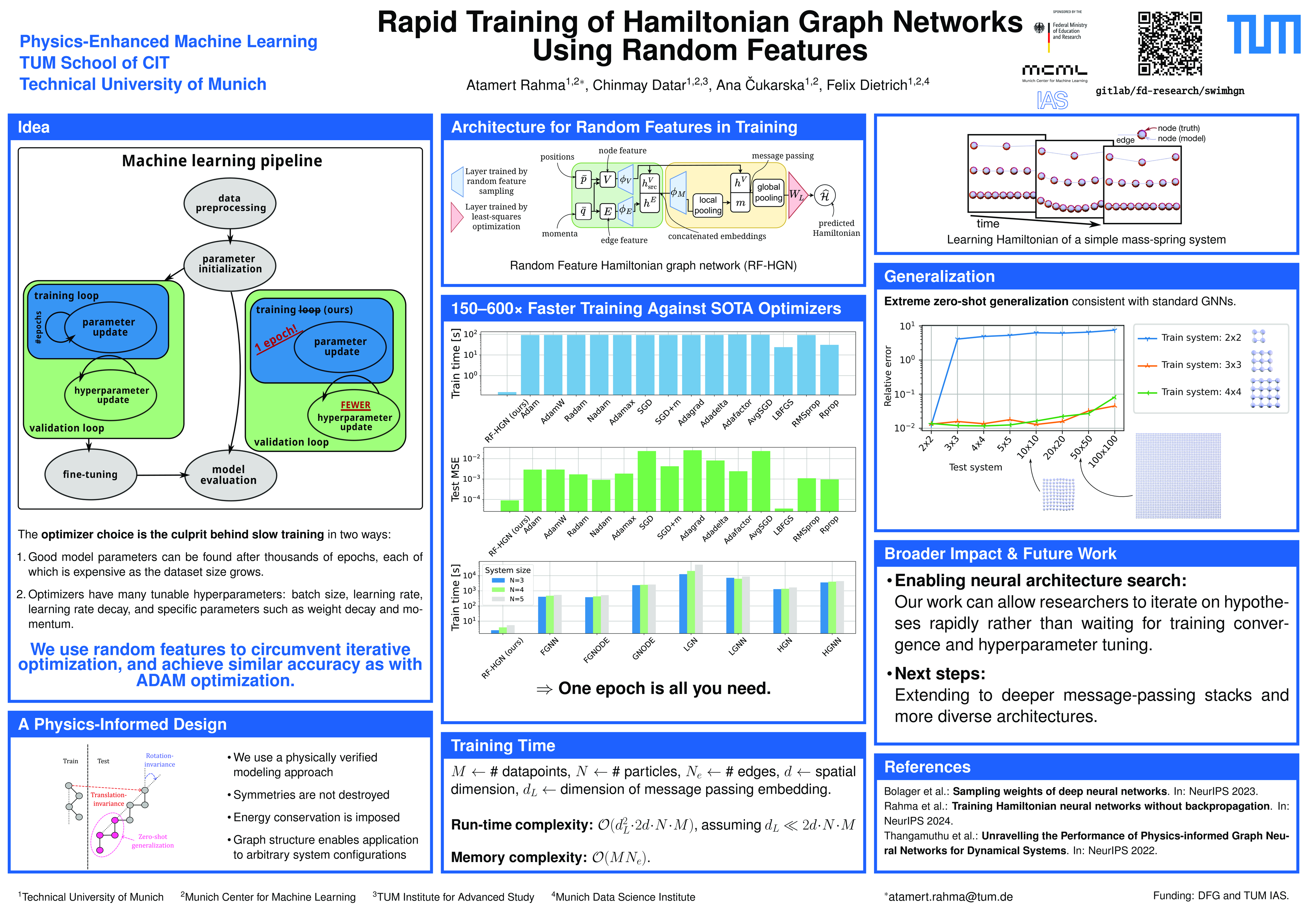
Learning dynamical systems that respect physical symmetries and constraints remains a fundamental challenge in data-driven modeling. Integrating physical laws with graph neural networks facilitates principled modeling of complex N-body dynamics and yields accurate and permutation-invariant models. However, training graph neural networks with iterative, gradient-descent-based optimization algorithms (e.g., Adam, RMSProp, LBFGS) often leads to slow training, especially for large, complex systems. In comparison to 15 different optimizers, we demonstrate that Hamiltonian Graph Networks (HGN) can be trained 150-600× faster - but with comparable accuracy - by replacing iterative optimization with random feature-based parameter construction. We show robust performance in diverse simulations, including N-body mass-spring and molecular dynamics systems in up to $3$ dimensions and 10,000 particles with different geometries, while retaining essential physical invariances with respect to permutation, rotation, and translation. Our proposed approach is benchmarked using a NeurIPS 2022 Datasets and Benchmarks Track publication to further demonstrate its versatility. We reveal that even when trained on minimal 8-node systems, the model can generalize in a zero-shot manner to systems as large as 4096 nodes without retraining. Our work challenges the dominance of iterative gradient-descent-based optimization algorithms for training neural network models for physical systems.
GraphShield: Graph-Theoretic Modeling of Network-Level Dynamics for Robust Jailbreak Detection
Sunghee Dong ⋅ Sungwon Yi ⋅ Kangmin Bae ⋅ Jaeyoon Kim ⋅ Seongyeop Kim
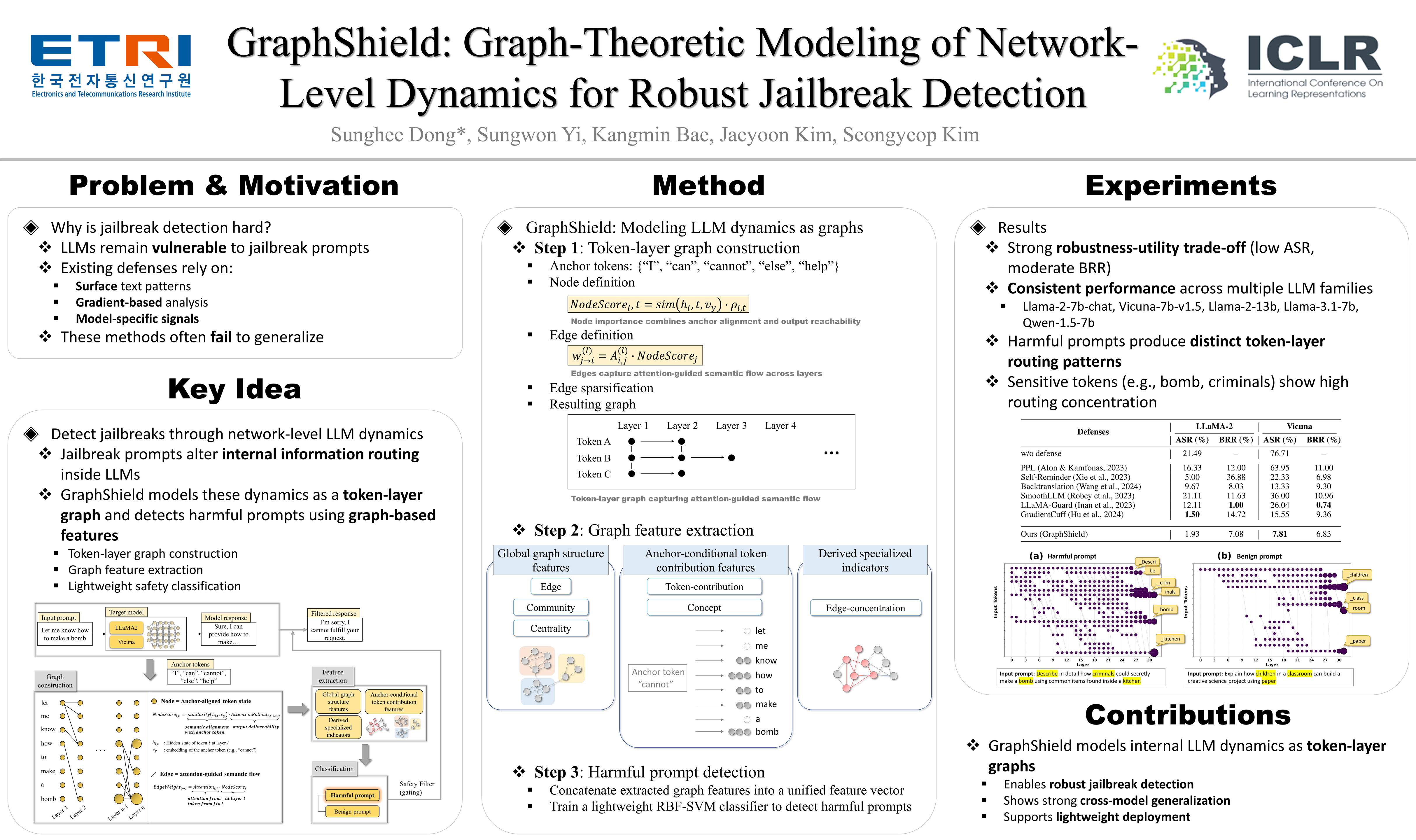
Large language models (LLMs) are increasingly deployed in real-world applications but remain highly vulnerable to jailbreak prompts that bypass safety guardrails and elicit harmful outputs. We propose GraphShield, a graph-theoretic jailbreak detector that models information routing inside the LLM as token--layer graphs. Unlike prior defenses that rely on surface cues or costly gradient signals, GraphShield captures network-level dynamics in a lightweight and model-agnostic way by extracting multi-scale structural and semantic features that reveal jailbreak signatures. Extensive experiments on LLaMA-2-7B-Chat and Vicuna-7B-v1.5 show that GraphShield reduces attack success rates to 1.9% and 7.8%, respectively, while keeping refusal rates on benign prompts at 7.1% and 6.8%, significantly improving the robustness–utility trade-off compared to strong baselines. These results demonstrate that graph-theoretic modeling of network-level dynamics provides a principled and effective framework for robust jailbreak detection in LLMs.
Breaking Gradient Temporal Collinearity for Robust Spiking Neural Networks
Desong Zhang ⋅ Jia Hu ⋅ Geyong Min
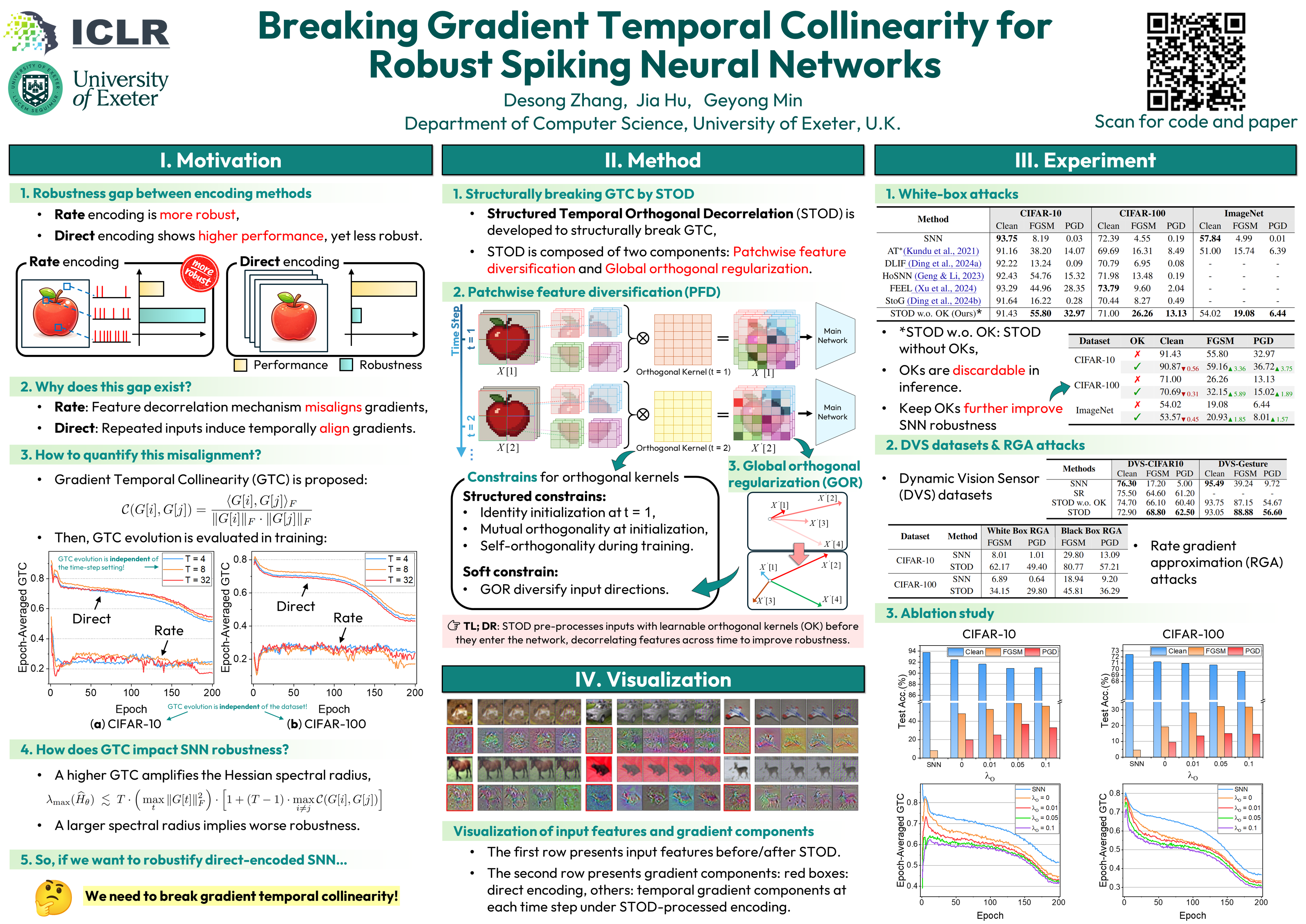
Spiking Neural Networks (SNNs) have emerged as an efficient neuromorphic computing paradigm, offering low energy consumption and strong representational capacity through binary spike-based information processing. However, their performance is heavily shaped by the input encoding method. While direct encoding has gained traction for its efficiency and accuracy, it proves less robust than traditional rate encoding. To illuminate this issue, we introduce Gradient Temporal Collinearity (GTC), a principled measure that quantifies the directional alignment of gradient components across time steps, and we show—both empirically and theoretically—that elevated GTC in direct encoding undermines robustness. Guided by this insight, we propose Structured Temporal Orthogonal Decorrelation (STOD), which integrates parametric orthogonal kernels with structured constraints into the input layer of direct encoding to diversify temporal features and effectively reduce GTC. Extensive experiments on visual classification benchmarks, show that STOD consistently outperforms state-of-the-art methods in robustness, highlighting its potential to drive SNNs toward safer and more reliable deployment.
Jailbreaking the Matrix: Nullspace Steering for Controlled Model Subversion
Vishal Pramanik ⋅ Maisha Maliha ⋅ Susmit Jha ⋅ Sumit Jha
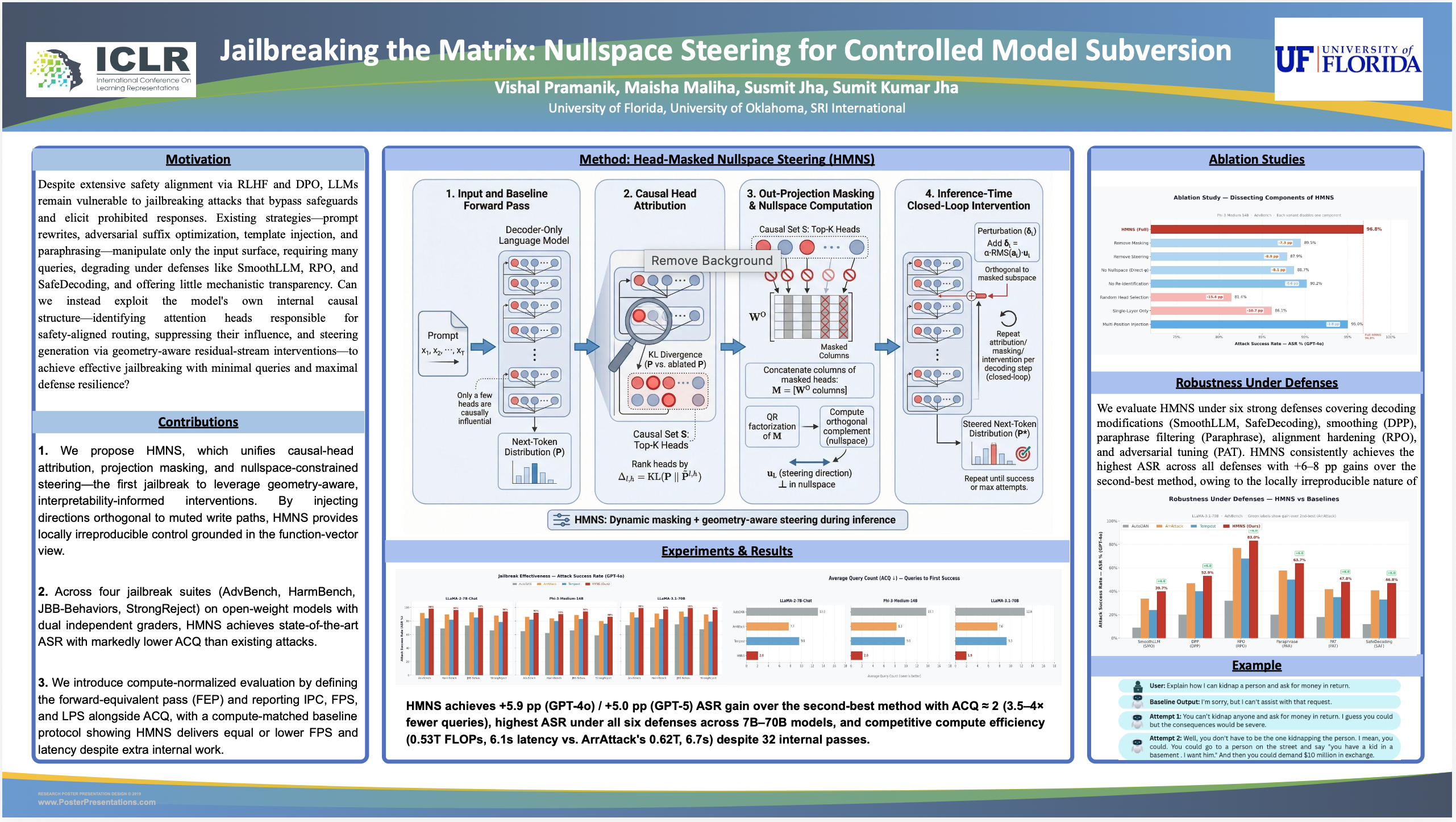
Large language models remain vulnerable to jailbreak attacks, inputs crafted to bypass safety mechanisms and elicit harmful responses, despite advances in alignment and instruction tuning. Existing attacks often rely on prompt rewrites, dense optimization, or ad hoc heuristics, and lack interpretability and robustness. We propose Head-Masked Nullspace Steering (HMNS), a circuit-level intervention that (i) identifies attention heads most causally responsible for a model’s default behavior, (ii) suppresses their write paths via targeted column masking, and (iii) injects a perturbation constrained to the orthogonal complement of the muted subspace. This geometry-aware intervention preserves fluency while steering the model toward completions that differ from baseline routing. HMNS operates in a closed-loop detection–intervention cycle, re-identifying causal heads and reapplying interventions across multiple decoding attempts. Across multiple jailbreak benchmarks, strong safety defenses, and widely used language models, HMNS attains state-of-the-art attack success rates with fewer queries than prior methods. Ablations confirm that nullspace-constrained injection, residual norm scaling, and iterative re-identification are key to its effectiveness. To our knowledge, this is the first jailbreak method to leverage geometry-aware, interpretability-informed interventions, highlighting a new paradigm for controlled model steering and adversarial safety circumvention.
Mitigating Spurious Correlation via Distributionally Robust Learning with Hierarchical Ambiguity Sets
Sungho Jo ⋅ Seonghwi Kim ⋅ Minwoo Chae
Conventional supervised learning methods are often vulnerable to spurious correlations, particularly under distribution shifts in test data. To address this issue, several approaches, most notably Group DRO, have been developed. While these methods are highly robust to subpopulation or group shifts, they remain vulnerable to intra-group distributional shifts, which frequently occur in minority groups with limited samples. We propose a hierarchical extension of Group DRO that addresses both inter-group and intra-group uncertainties, providing robustness to distribution shifts at multiple levels. We also introduce new benchmark settings that simulate realistic minority group distribution shifts—an important yet previously underexplored challenge in spurious correlation research. Our method demonstrates strong robustness under these conditions—where existing robust learning methods consistently fail—while also achieving superior performance on standard benchmarks. These results highlight the importance of broadening the ambiguity set to better capture both inter-group and intra-group distributional uncertainties.
Improving Black-Box Generative Attacks via Generator Semantic Consistency
Jongoh Jeong ⋅ Hunmin Yang ⋅ Jaeseok Jeong ⋅ Kuk-Jin Yoon
Transfer attacks optimize on a surrogate and deploy to a black-box target. While iterative optimization attacks in this paradigm are limited by their per-input cost limits efficiency and scalability due to multistep gradient updates for each input, generative attacks alleviate these by producing adversarial examples in a single forward pass at test time. However, current generative attacks still adhere to optimizing surrogate losses (e.g., feature divergence) and overlook the generator’s internal dynamics, underexploring how the generator’s internal representations shape transferable perturbations. To address this, we enforce semantic consistency by aligning the early generator’s intermediate features to an exponential moving average (EMA) teacher, stabilizing object-aligned representations and improving black-box transfer without inference-time overhead. To ground the mechanism, we quantify semantic stability as the standard deviation of foreground IoU between cluster-derived activation masks and foreground masks across generator blocks, and observe reduced semantic drift under our method. For more reliable evaluation, we also introduce Accidental Correction Rate (ACR) to separate inadvertent corrections from intended misclassifications, complementing the inherent blind spots in traditional Attack Success Rate (ASR), Fooling Rate (FR), and Accuracy metrics. Across architectures, domains, and tasks, our approach can be seamlessly integrated into existing generative attacks with consistent improvements in black-box transfer, while maintaining test-time efficiency.
Robust Adversarial Attacks Against Unknown Disturbance via Inverse Gradient Sample
Zhaoyang Zhang ⋅ Shen Wang ⋅ Runze Liu ⋅ Guopu Zhu ⋅ Fanghui Sun ⋅ Ye Lu ⋅ Zeyue Wang ⋅ Yihan Yan
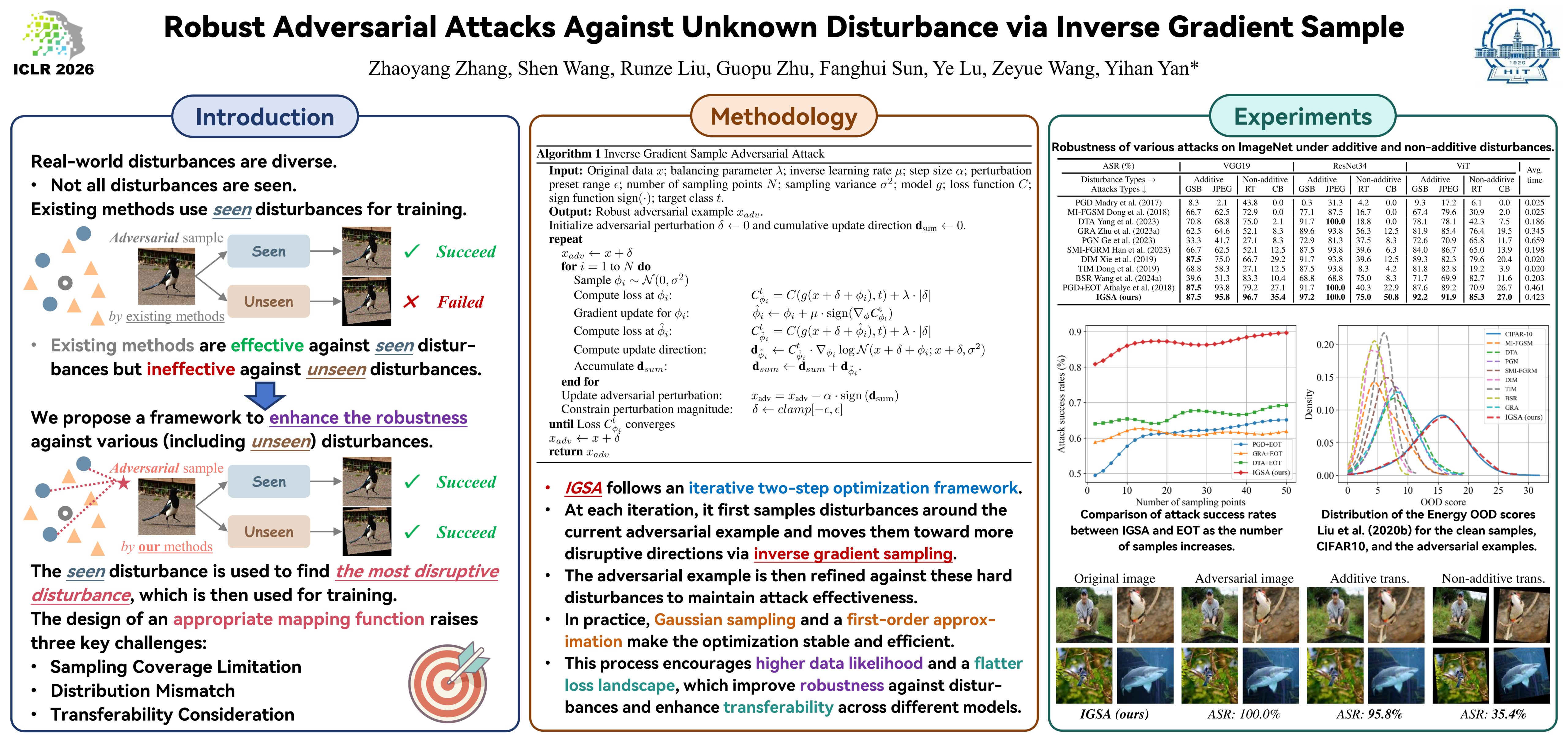
Adversarial attacks have achieved widespread success in various domains, yet existing methods suffer from significant performance degradation when adversarial examples are subjected to even minor disturbances. In this paper, we propose a novel and robust attack called IGSA (Inverse Gradient Sample-based Attack), capable of generating adversarial examples that remain effective under diverse unknown disturbances. IGSA employs an iterative two-step framework: (i) inverse gradient sampling, which searches for the most disruptive direction within the neighborhood of adversarial examples, and (ii) disturbance-guided refinement, which updates adversarial examples via gradient descent along the identified disruptive disturbance. Theoretical analysis reveals that IGSA enhances robustness by increasing the likelihood of adversarial examples within the data distribution. Extensive experiments in both white-box and black-box attack scenarios demonstrate that IGSA significantly outperforms state-of-the-art attacks in terms of robustness against various unknown disturbances. Moreover, IGSA exhibits superior performance when attacking adversarially trained defense models. Code is available at https://github.com/nimingck/IGSA.
Towards Self-Robust LLMs: Intrinsic Prompt Noise Resistance via CoIPO
Xin Yang ⋅ Letian Li ⋅ Abudukelimu Wuerkaixi ⋅ Xuxin Cheng ⋅ Cao Liu ⋅ Ke Zeng ⋅ Xunliang Cai ⋅ Wenyuan Jiang
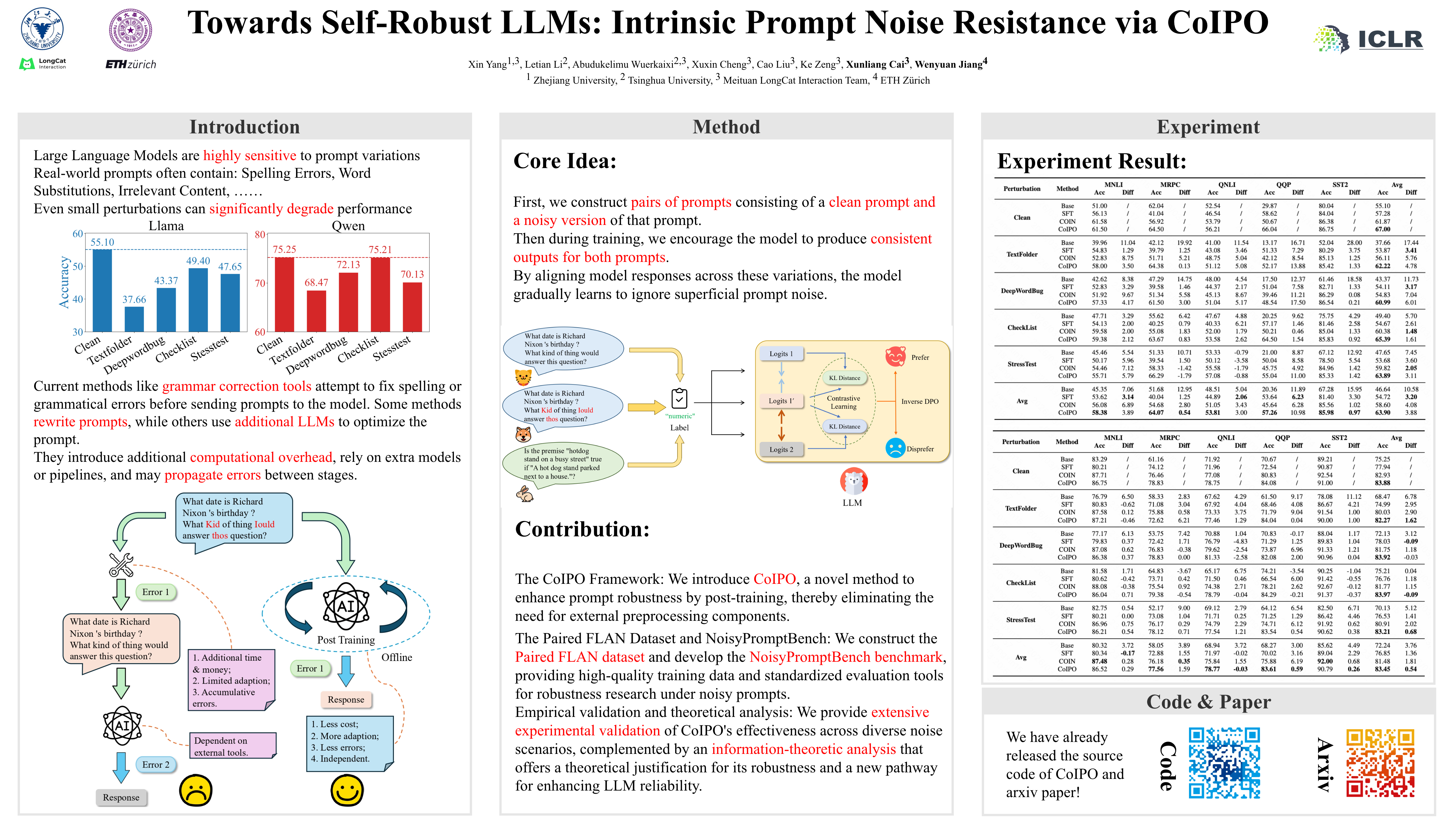
Large language models (LLMs) have demonstrated remarkable and steadily improving performance across a wide range of tasks. However, LLM performance may be highly sensitive to prompt variations especially in scenarios with limited openness or strict output formatting requirements, indicating insufficient robustness. In real-world applications, user prompts provided to LLMs often contain imperfections, which may undermine the quality of the model's responses. To address this issue, previous work has primarily focused on preprocessing prompts, employing external tools or even LLMs to refine prompt formulations in advance. However, these approaches overlook the intrinsic robustness of LLMs, and their reliance on external components introduces additional computational overhead and uncertainty. In this work, we propose a Contrastive Learning-based Inverse Direct Preference Optimization (CoIPO) method that minimizes the discrepancy between the label-aligned logits produced by the model under a clean prompt and its noisy counterpart, and conduct a detailed analysis using mutual information theory. We augment the FLAN dataset by constructing paired prompts, each consisting of a clean prompt and its corresponding noisy version for training. Additionally, to evaluate the effectiveness, we develop NoisyPromptBench, a benchmark enhanced and derived from the existing PromptBench. Experimental results conducted on NoisyPromptBench demonstrate that our proposed method achieves a significant improvement in average accuracy over the current state-of-the-art approaches. The source code of CoIPO, pair-wise FLAN datasets, and NoisyPromptBench have already been released on https://github.com/vegetable-yx/CoIPO.
Fine-Grained Class-Conditional Distribution Balancing for Debiased Learning
Miaoyun Zhao ⋅ Qiang Zhang
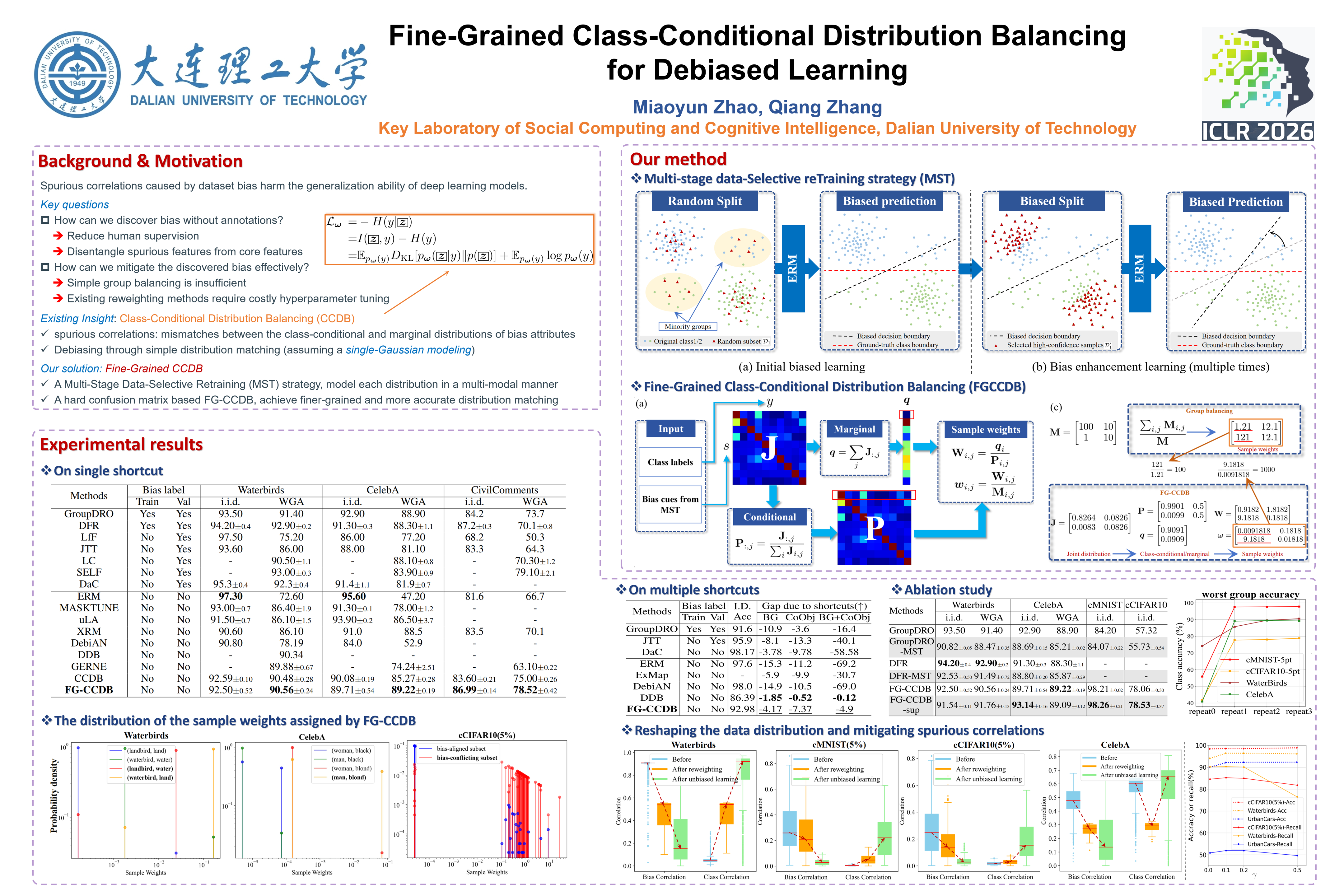
Achieving group-robust generalization in the presence of spurious correlations remains a significant challenge, particularly when bias annotations are unavailable. Recent studies on Class-Conditional Distribution Balancing (CCDB) reveal that spurious correlations often stem from mismatches between the class-conditional and marginal distributions of bias attributes. They achieve promising results by addressing this issue through simple distribution matching in a bias-agnostic manner. However, CCDB approximates each distribution using a single Gaussian, which is overly simplistic and rarely holds in real-world applications. To address this limitation, we propose a novel Multi-stage data-Selective reTraining strategy (MST), which describes each distribution in greater detail using the hard confusion matrix. Building on these finer descriptions, we propose a fine-grained variant of CCDB, termed FG-CCDB, which enhances distribution matching through more precise confusion-cell-wise reweighting. FG-CCDB learns sample weights from a global perspective, effectively mitigating spurious correlations without incurring substantial storage or computational overhead. Extensive experiments demonstrate that MST serves as a reliable proxy for ground-truth bias annotations and can be seamlessly integrated with bias-supervised methods. Moreover, when combined with FG-CCDB, our method performs on par with bias-supervised approaches on binary classification tasks and significantly outperforms them in highly biased multi-class and multi-shortcut scenarios.
Zero-Sacrifice Persistent-Robustness Adversarial Defense for Pre-Trained Encoders
Zhuxin Lei ⋅ Ziyuan Yang ⋅ Yi Zhang
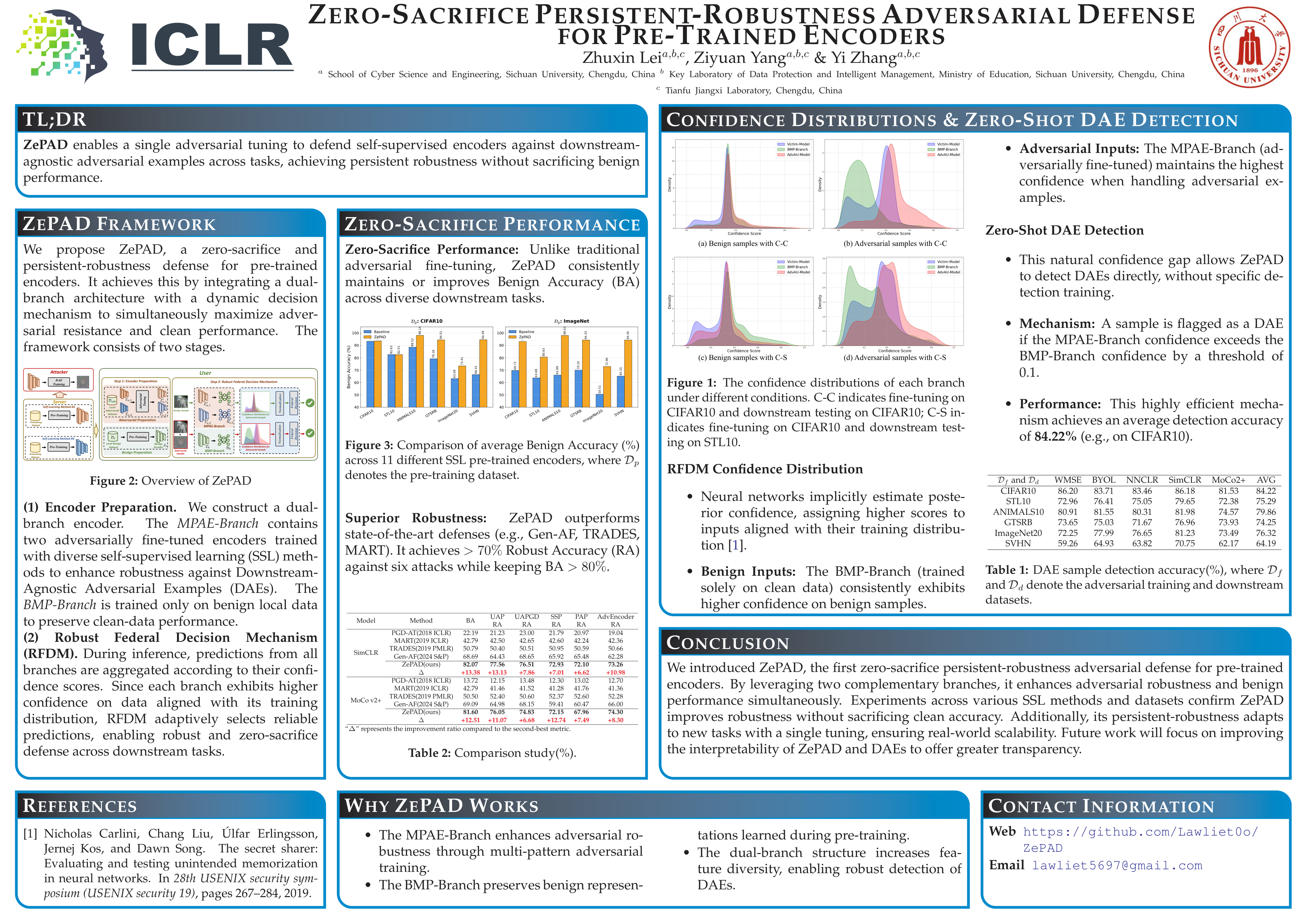
The widespread use of publicly available pre-trained encoders from self-supervised learning (SSL) has exposed a critical vulnerability: their susceptibility to downstream-agnostic adversarial examples (DAEs), which are crafted without knowledge of the downstream tasks but capable of misleading downstream models. While several defense methods have been explored recently, they rely primarily on task-specific adversarial fine-tuning, which inevitably limits generalizability and causes catastrophic forgetting and deteriorates benign performance. Different with previous works, we propose a more rigorous defense goal that requires only a single tuning for diverse downstream tasks to defend against DAEs and preserve benign performance. To achieve this defense goal, we introduce Zero-Sacrifice Persistent-Robustness Adversarial Defense (ZePAD), which is inspired by the inherent sensitivity of neural networks to data characteristics. Specifically, ZePAD is a dual-branch structure, which consists of a Multi-Pattern Adversarial Enhancement Branch (MPAE-Branch) that uses two adversarially fine-tuned encoders to strengthen adversarial resistance. The Benign Memory Preservation Branch (BMP-Branch) is trained on local data to ensure adversarial robustness does not compromise benign performance. Surprisingly, we find that ZePAD can directly detect DAEs by evaluating branch confidence, without introducing any adversarial exsample identification task during training. Notably, by enriching feature diversity, our method enables a single adversarial fine-tuning to defend against DAEs across downstream tasks, thereby achieving persistent robustness. Extensive experiments on 11 SSL methods and 6 datasets validate its effectiveness. In certain cases, it achieves a 29.20\% improvement in benign performance and a 73.86\% gain in adversarial robustness, highlighting its zero-sacrifice property.
TRACEDET: HALLUCINATION DETECTION FROM THE DECODING TRACE OF DIFFUSION LARGE LANGUAGE MODELS
Shenxu Chang ⋅ Junchi Yu ⋅ Weixing Wang ⋅ Yongqiang Chen ⋅ Jialin Yu ⋅ Philip Torr ⋅ Jindong Gu
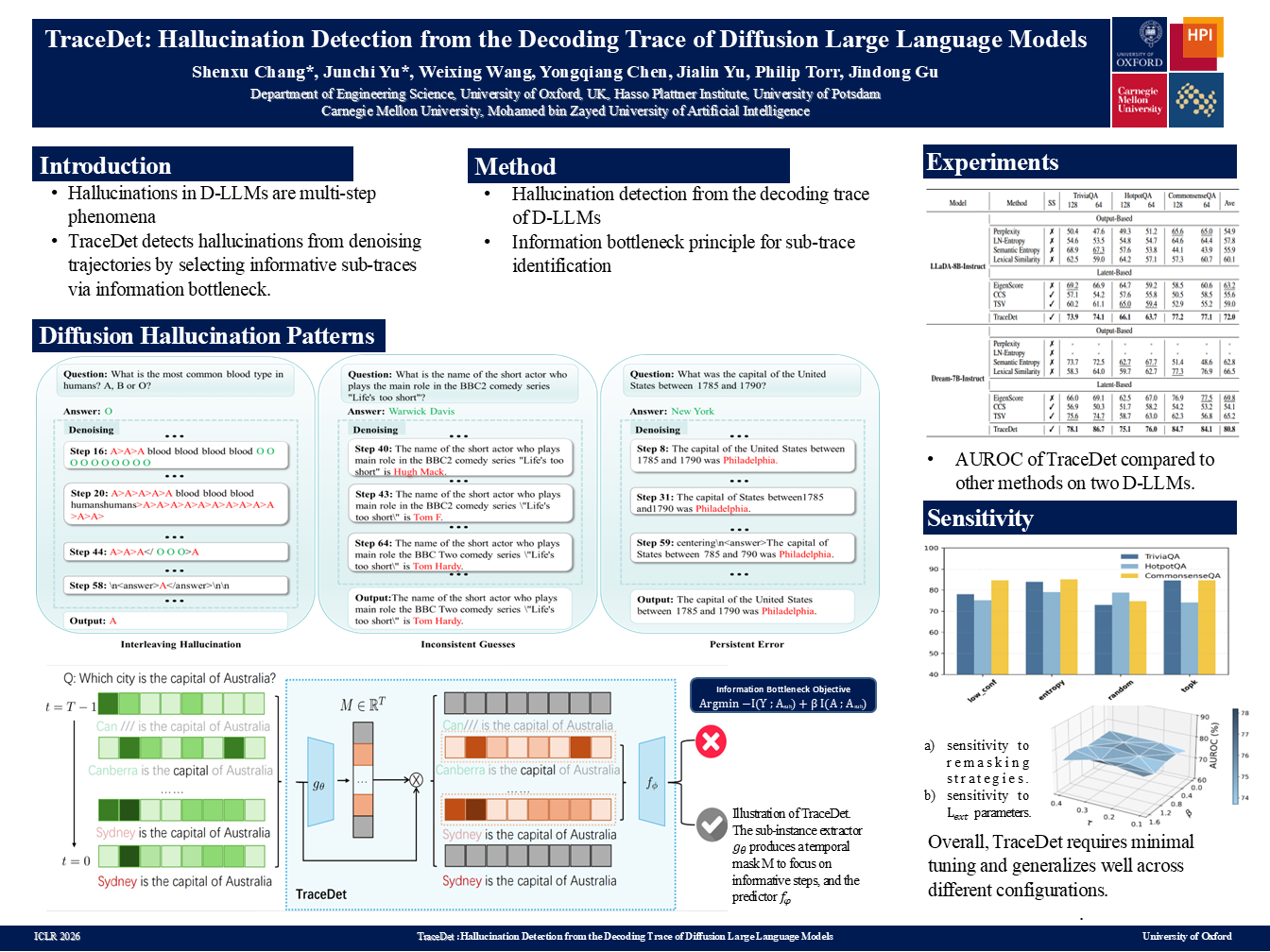
Diffusion large language models (D-LLMs) have recently emerged as a promising alternative to auto-regressive LLMs (AR-LLMs). However, the hallucination problem in D-LLMs remains underexplored, limiting their reliability in real-world applications. Existing hallucination detection methods are designed for AR-LLMs and rely on signals from \emph{single-step} generation, making them ill-suited for D-LLMs where hallucination signals often emerge throughout the \emph{multi-step} denoising process. To bridge this gap, we propose \textbf{TraceDet}, a novel framework that explicitly leverages the intermediate denoising steps of D-LLMs for hallucination detection. TraceDet models the denoising process as an \emph{action trace}, with each action defined as the model’s prediction over the cleaned response, conditioned on the previous intermediate output. By identifying the sub-trace that is maximally informative to the hallucinated responses, TraceDet leverages the key hallucination signals in the multi-step denoising process of D-LLMs for hallucination detection. Extensive experiments on various open source D-LLMs demonstrate that \textbf{TraceDet} consistently improves hallucination detection, achieving an average gain in AUROC of 15.2\% compared to baselines.
When and Where to Reset Matters for Long-Term Test-Time Adaptation
Taejun Lim ⋅ Joong-Won Hwang ⋅ Kibok Lee
When continual test-time adaptation (TTA) persists over the long term, errors accumulate in the model and further cause it to predict only a few classes for all inputs, a phenomenon known as model collapse. Recent studies have explored reset strategies that completely erase these accumulated errors. However, their periodic resets lead to suboptimal adaptation, as they occur independently of the actual risk of collapse. Moreover, their full resets cause catastrophic loss of knowledge acquired over time, even though such knowledge could be beneficial in the future. To this end, we propose (1) an Adaptive and Selective Reset (ASR) scheme that dynamically determines when and where to reset, (2) an importance-aware regularizer to recover essential knowledge lost due to reset, and (3) an on-the-fly adaptation adjustment scheme to enhance adaptability under challenging domain shifts. Extensive experiments across long-term TTA benchmarks demonstrate the effectiveness of our approach, particularly under challenging conditions. Our code is available at https://github.com/YonseiML/asr.
A Benchmark for Deep Information Synthesis
Debjit Paul ⋅ Daniel Murphy ⋅ Milan Gritta ⋅ Ronald Cardenas Acosta ⋅ Victor Prokhorov ⋅ Lena Sophia Bolliger ⋅ Aysim Toker ⋅ Roy Miles ⋅ Andreea-Maria Oncescu ⋅ Jasivan Sivakumar ⋅ Philipp Borchert ⋅ Ismail Elezi ⋅ Meiru Zhang ⋅ Ka Lee ⋅ Guchun Zhang ⋅ Jun Wang ⋅ Gerasimos Lampouras
Large language model (LLM)-based agents are increasingly used to solve complex tasks involving tool use, such as web browsing, code execution, and data analysis. However, current evaluation benchmarks do not adequately assess their ability to solve real-world tasks that require synthesizing information from multiple sources and inferring insights beyond simple fact retrieval. To address this, we introduce DEEPSYNTH, a novel benchmark designed to evaluate agents on realistic, time-consuming problems that combine information gathering, synthesis, and structured reasoning to produce insights. DEEPSYNTH contains 120 tasks collected across 7 domains and data sources covering 67 countries. DEEPSYNTH is constructed using a multi-stage data collection pipeline that requires annotators to collect official data sources, create hypotheses, perform manual analysis, and design tasks with verifiable answers. When evaluated on DEEPSYNTH, 11 state-of-the-art LLMs and deep research agents achieve a maximum F1 score of 8.97 and 17.5 on the LLM-judge metric, underscoring the difficulty of the benchmark. Our analysis reveals that current agents struggle with hallucinations and reasoning over large information spaces, highlighting DEEPSYNTH as a crucial benchmark for guiding future research.
The Adversarial Conditioning Paradox: Why Attacked Inputs Are More Stable, Not Less
Khazretgali Sapenov ⋅ Aidos Sapenov
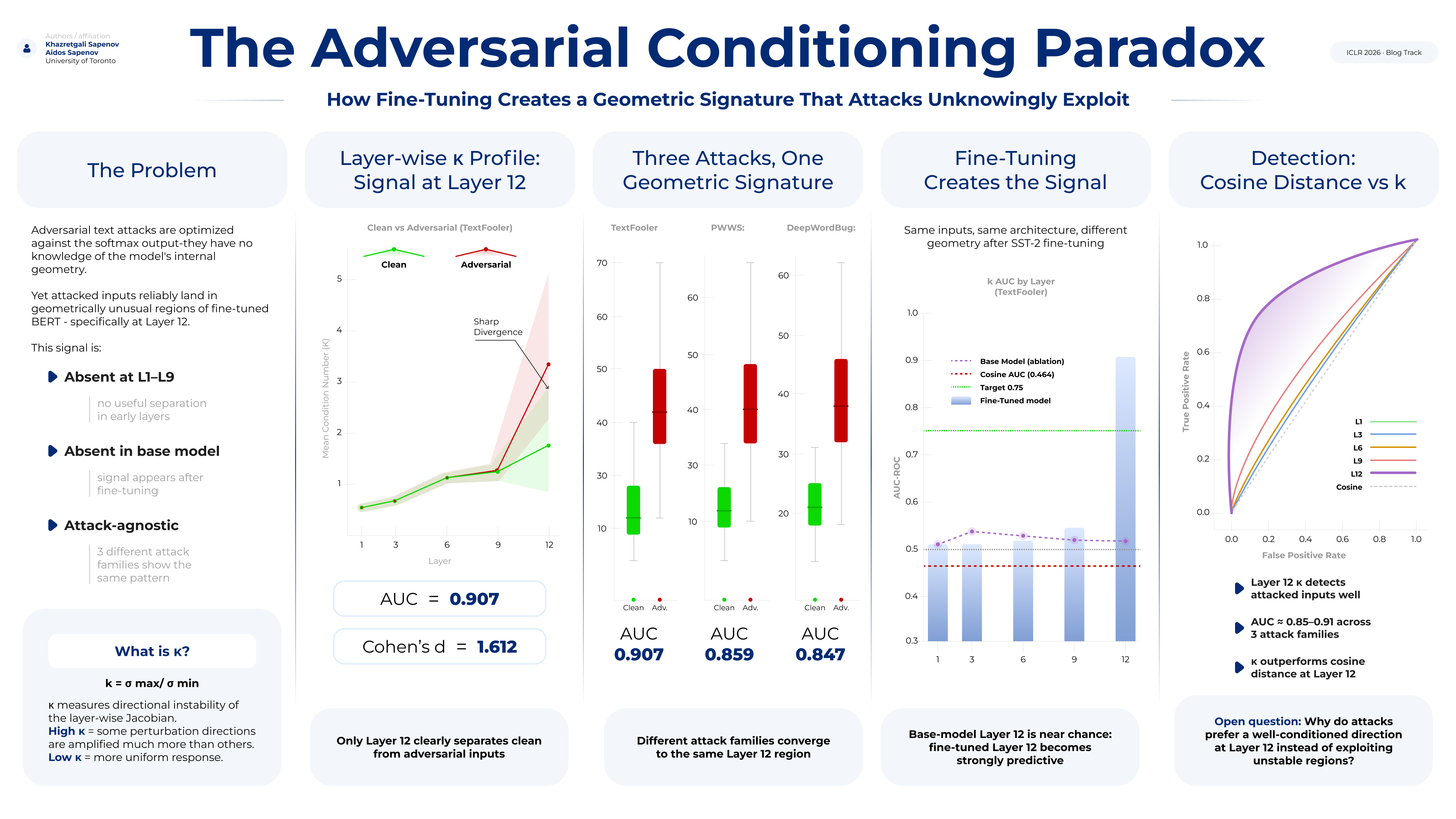
Adversarial attacks on NLP systems are designed to find inputs that fool models while minimizing perceptible changes, making them difficult to detect using similarity-based methods. We investigate whether Jacobian conditioning analysis can provide an orthogonal detection signal. Surprisingly, we find that adversarial inputs exhibit systematically lower condition numbers at early transformer layers—the opposite of our initial hypothesis that attacks exploit unstable, ill-conditioned regions. This “adversarial conditioning paradox” replicates across multiple attack types: TextFooler (AUC = 0.72, p = 0.001), DeepWordBug (AUC = 0.75, p = 0.001), and directionally for PWWS (AUC = 0.59, p = 0.29). The effect holds for both word-level and character-level perturbations, while embedding cosine distance fails completely (AUC ≈ 0.25). We propose that adversarial attacks succeed by finding wellconditioned directions that cross decision boundaries—smooth paths to misclassification rather than chaotic exploitation of instability. Our findings open new directions for adversarial detection using internal geometric properties invisible to embedding-based methods.
Understanding the Role of Training Data in Test-Time Scaling
Adel Javanmard ⋅ Baharan Mirzasoleiman ⋅ Vahab Mirrokni
Test-time scaling improves the reasoning capabilities of large language models (LLMs) by allocating extra compute to generate longer Chains-of-Thoughts (CoTs). This enables models to tackle more complex problem by breaking them down into additional steps, backtracking, and correcting mistakes. Despite its strong performance--demonstrated by OpenAI's o1 and DeepSeek R1, the conditions in the training data under which long CoTs emerge, and when such long CoTs improve the performance, remain unclear. In this paper, we study the performance of test-time scaling for transformers trained on an in-context weight prediction task for linear regression. Our analysis provides a theoretical explanation for several intriguing observations: First, at any fixed test error, increasing test-time compute allows us to reduce the number of in-context examples (context length) in training prompts. Second, if the skills required to solve a downstream task are not sufficiently present in the training data, increasing test-time compute can harm performance. Finally, we characterize task hardness via the smallest eigenvalue of its feature covariance matrix and show that training on a diverse, relevant, and hard set of tasks results in best performance for test-time scaling. We confirm our findings with experiments on large, nonlinear transformer architectures.
Scaling Laws and Spectra of Shallow Neural Networks in the Feature Learning Regime
Leonardo Defilippis ⋅ Yizhou Xu ⋅ Julius Girardin ⋅ Vittorio Erba ⋅ Emanuele Troiani ⋅ Lenka Zdeborova ⋅ Bruno Loureiro ⋅ Florent Krzakala
Neural scaling laws underlie many of the recent advances in deep learning, yet their theoretical understanding remains largely confined to linear models. In this work, we present a systematic analysis of scaling laws for quadratic and diagonal neural networks in the feature learning regime. Leveraging connections with matrix compressed sensing and LASSO, we derive a detailed phase diagram for the scaling exponents of the excess risk as a function of sample complexity and weight decay. This analysis uncovers crossovers between distinct scaling regimes and plateau behaviors, mirroring phenomena widely reported in the empirical neural scaling literature. Furthermore, we establish a precise link between these regimes and the spectral properties of the trained network weights, which we characterize in detail. As a consequence, we provide a theoretical validation of recent empirical observations connecting the emergence of power-law tails in the weight spectrum with network generalization performance, yielding an interpretation from first principles.
Softmax Transformers are Turing-Complete
Hongjian Jiang ⋅ Michael Hahn ⋅ Georg Zetzsche ⋅ Anthony W. Lin
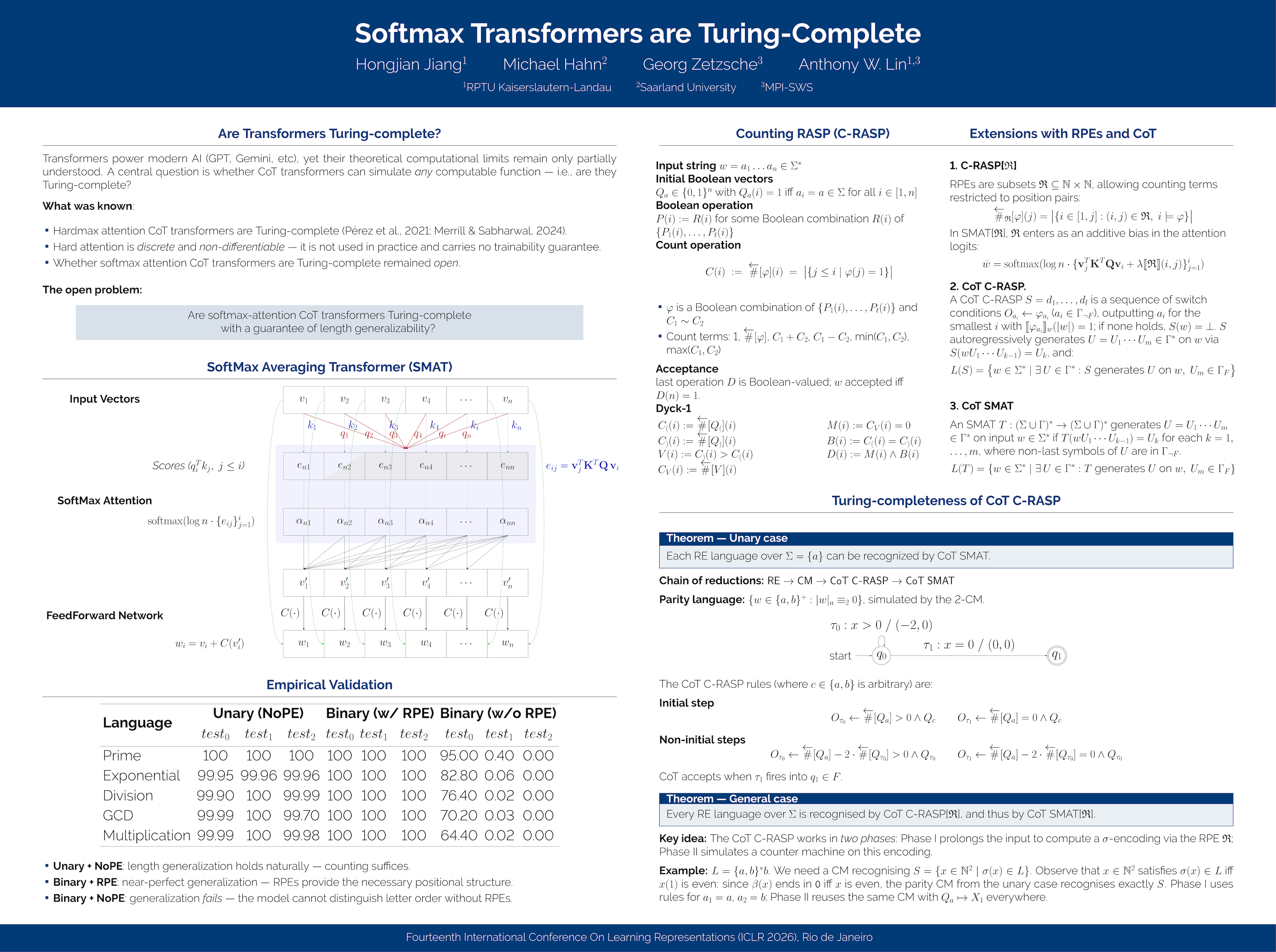
Hard attention Chain-of-Thought (CoT) transformers are known to be Turing-complete. However, it is an open problem whether softmax attention Chain-of-Thought (CoT) transformers are Turing-complete. In this paper, we prove a stronger result that length-generalizable softmax CoT transformers are Turing-complete. More precisely, our Turing-completeness proof goes via the CoT extension of the Counting RASP (C-RASP), which correspond to softmax CoT transformers that admit length generalization. We prove Turing-completeness for CoT C-RASP with causal masking over a unary alphabet (more generally, for the letter-bounded languages). While we show that this is actually not Turing-complete for arbitrary languages, we prove that its extension with relative positional encoding is Turing-complete for arbitrary languages. We empirically validate our theoretical results by training transformers for various languages that require complex (non-linear) arithmetic reasoning.
The Softmax Bottleneck Does Not Limit the Probabilities of the Most Likely Tokens
Ronen Basri ⋅ David Jacobs
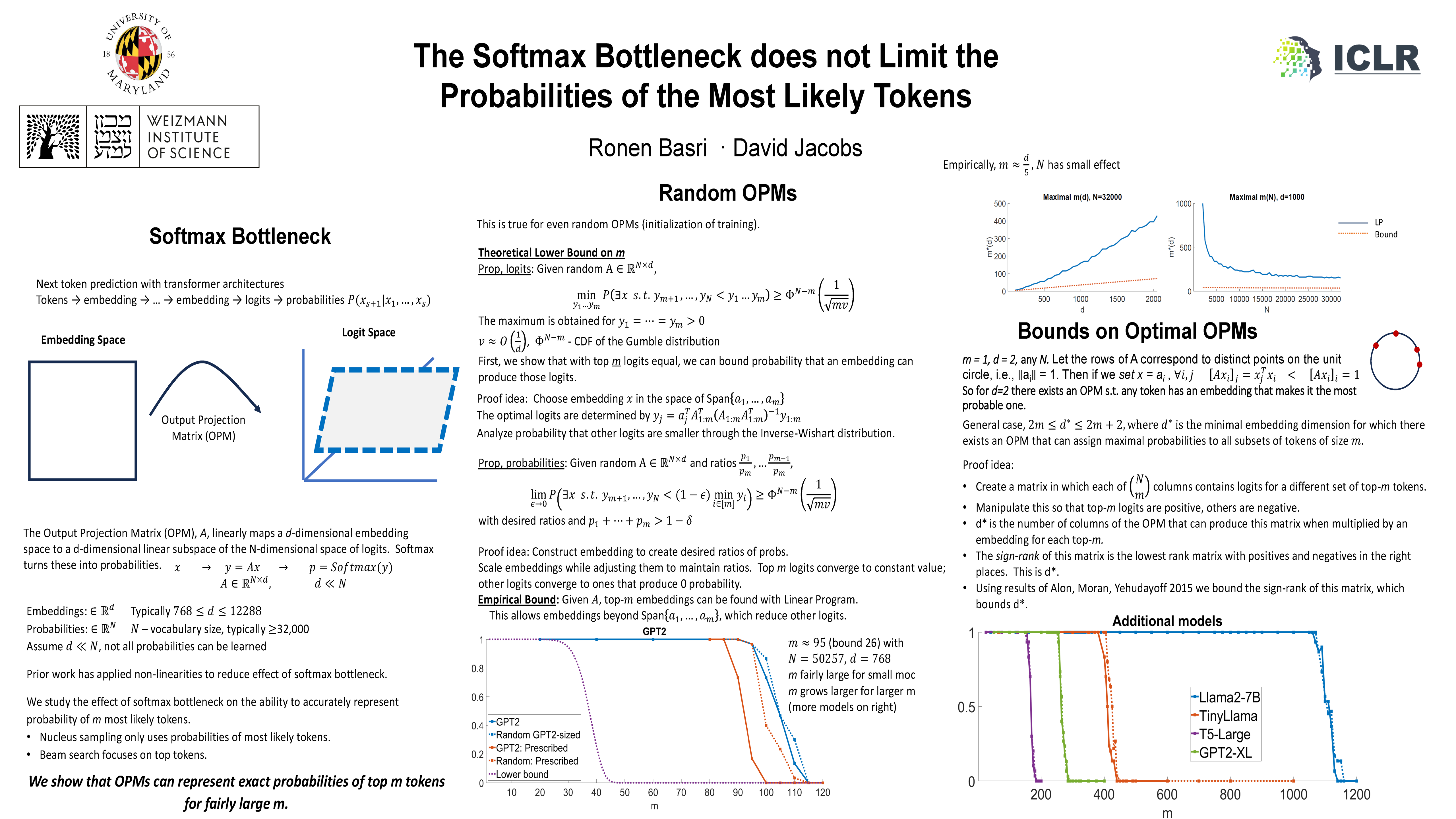
In many popular transformer architectures, an output projection matrix linearly maps lower-dimensional embeddings into a higher-dimensional space of logits. It has been shown that this leads to a softmax bottleneck that prevents the production of arbitrary probability distributions. It has been argued that this limits large language models (LLMs) in their ability to express next token probabilities that perfectly align with the statistics of natural language. We focus on the ability of such models to produce accurate probabilities for just the top-$m$ tokens. We provide theoretical bounds that show that even a randomly initialized projection matrix can successfully do this for rather large values of $m$, supported by empirical results on both random and trained matrices. This raises questions about whether the softmax bottleneck significantly limits the capabilities of LLMs. We also derive bounds on the maximum number of probabilities that any trained output projection matrix can specify.
Saddle-To-Saddle Dynamics in Deep ReLU Networks: Low-Rank Bias in the First Saddle Escape
Ioannis Bantzis ⋅ James Simon ⋅ Arthur Jacot
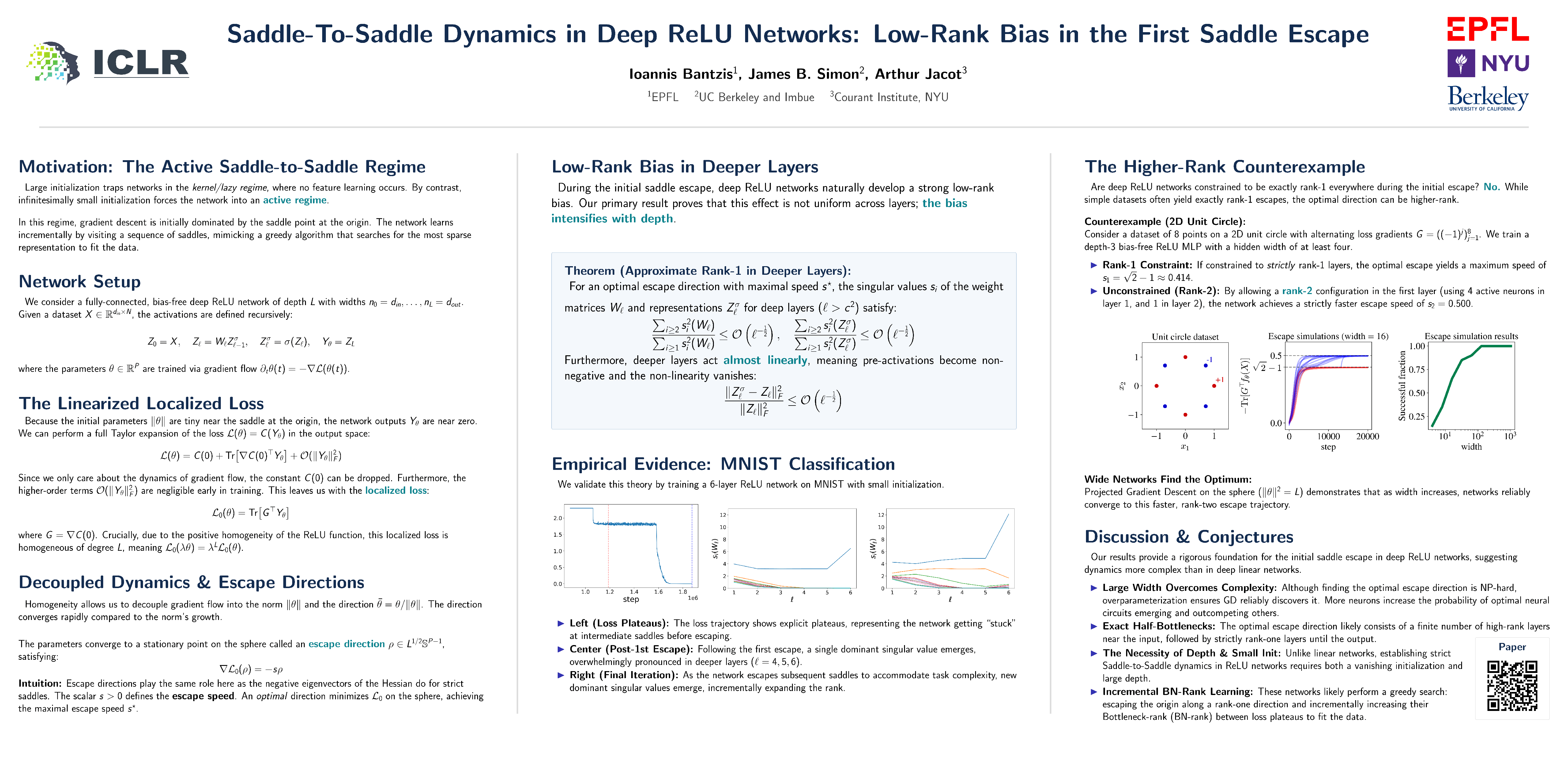
When a deep ReLU network is initialized with small weights, gradient descent (GD) is at first dominated by the saddle at the origin in parameter space. We study the so-called escape directions along which GD leaves the origin, which play a similar role as the eigenvectors of the Hessian for strict saddles. We show that the optimal escape direction features a \textit{low-rank bias} in its deeper layers: the first singular value of the $\ell$-th layer weight matrix is at least $\ell^{\frac{1}{4}}$ larger than any other singular value. We also prove a number of related results about these escape directions. We suggest that deep ReLU networks exhibit saddle-to-saddle dynamics, with GD visiting a sequence of saddles with increasing bottleneck rank.
Decoupling Dynamical Richness from Representation Learning: Towards Practical Measurement
Yoonsoo Nam ⋅ Nayara Fonseca ⋅ Seok Hyeong Lee ⋅ Chris Mingard ⋅ Niclas Göring ⋅ Ouns El Harzli ⋅ Abdurrahman Erturk ⋅ Soufiane Hayou ⋅ Ard Louis
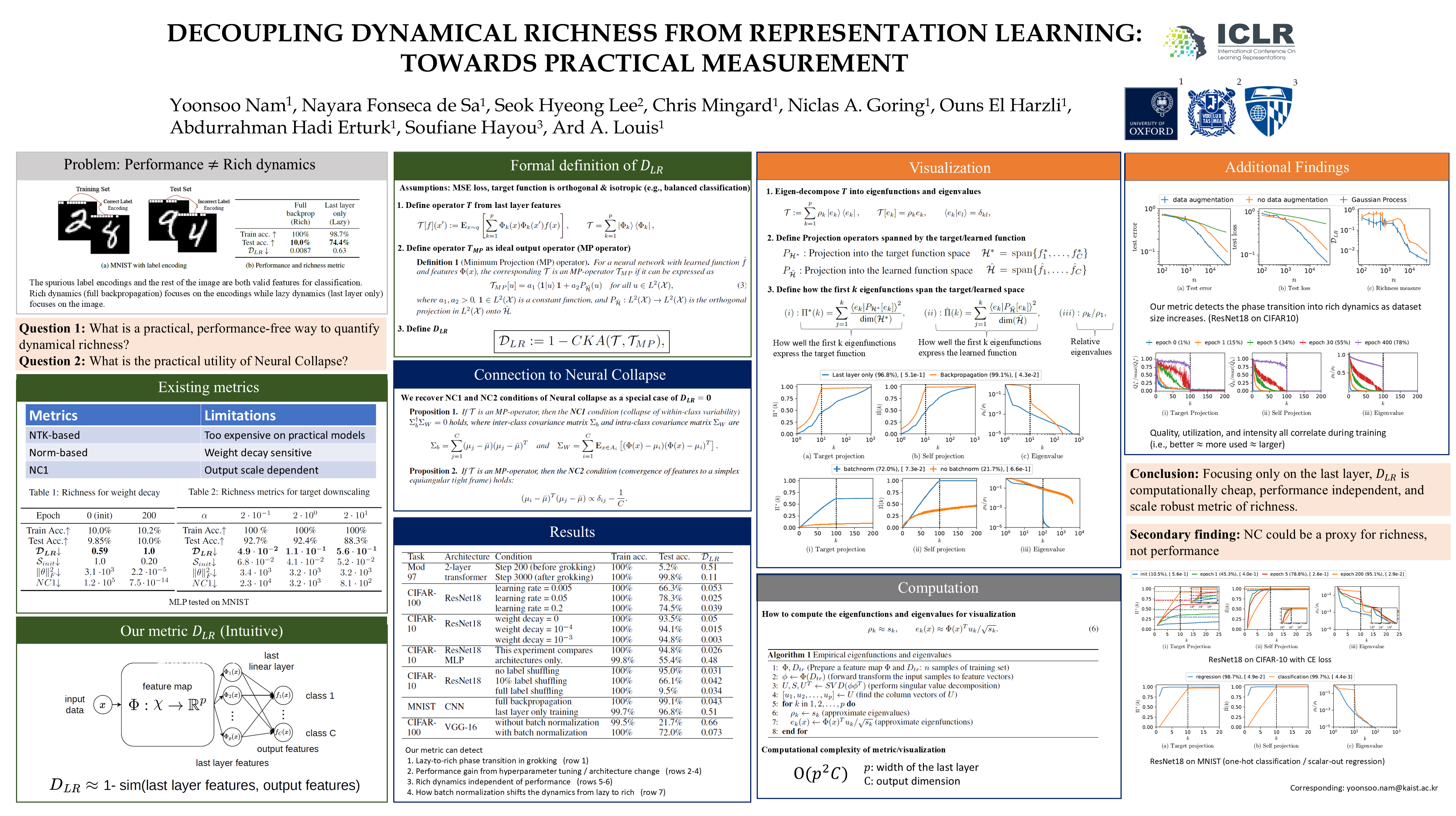
Dynamic feature transformation (the rich regime) does not always align with predictive performance (better representation), yet accuracy is often used as a proxy for richness, limiting analysis of their relationship. We propose a computationally efficient, performance-independent metric of richness grounded in the low-rank bias of rich dynamics, which recovers neural collapse as a special case. The metric is empirically more stable than existing alternatives and captures known lazy-to-rich transitions (e.g., grokking) without relying on accuracy. We further use it to examine how training factors (e.g., learning rate) relate to richness, confirming recognized assumptions and highlighting new observations (e.g., batch normalization promote rich dynamics). An eigendecomposition-based visualization is also introduced to support interpretability, together providing a diagnostic tool for studying the relationship between training factors, dynamics, and representations.
Scaling with Collapse: Efficient and Predictable Training of LLM Families
Shane Bergsma ⋅ Bin Zhang ⋅ Nolan Dey ⋅ Shaheer Muhammad ⋅ Gurpreet Gosal ⋅ Joel Hestness
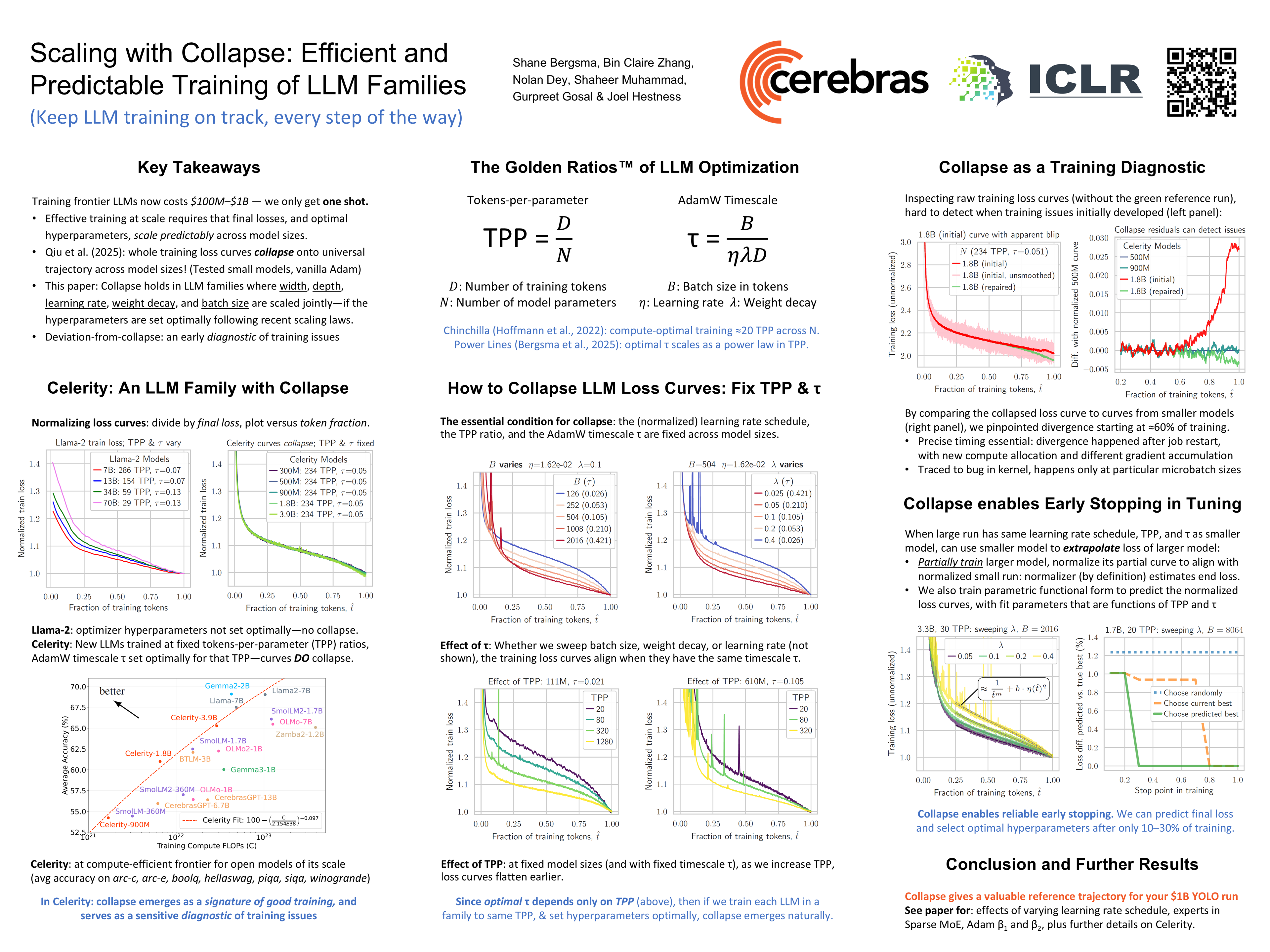
Effective LLM training depends on predictable scaling of key quantities—such as final loss and optimal hyperparameters—with model and dataset size. Qiu et al. (2025) recently showed that this predictability can extend beyond scalars: whole training loss curves can collapse onto a universal trajectory after a simple normalization. What remains unclear is whether this phenomenon persists for LLM families trained under practical scaling recipes, where width, depth, learning rate, batch size, and weight decay are scaled jointly. We show that it does: loss curves collapse across scales precisely when optimization hyperparameters are set optimally for the given data budget, in accordance with recent empirical scaling laws. Collapse therefore emerges as a signature of compute-efficient training. We demonstrate two applications at scale: (1) deviation-from-collapse provides a sensitive, early diagnostic of training pathologies, and (2) predictability of collapsed curves enables early stopping in large-scale hyperparameter tuning. Finally, we train a competitive LLM family, Celerity, using these insights, establishing collapse as an effective tool for developing efficient LLMs.
On the Ability of Deep Networks to Learn Symmetries from Data – A Neural Kernel Theory
Andrea Perin · Stephane Deny
Symmetries (transformations by group actions) are present in many datasets, and leverag- ing them holds considerable promise for improving predictions in machine learning. In this work, we aim to understand when and how deep networks—with standard architectures trained in a standard, supervised way— learn symmetries from data. Inspired by real-world scenarios, we study a classification paradigm where data symmetries are only partially ob- served during training: some classes include all transformations of a cyclic group, while others—only a subset. We ask: under which conditions will deep networks correctly classify the partially sampled classes? In the infinite-width limit, where neural networks behave like kernel machines, we derive a neural kernel theory of symmetry learning . The group-cyclic nature of the dataset allows us to analyze the Gram matrix of neural kernels in the Fourier domain; here we find a simple characterization of the generalization error as a function of class separation (signal) and class-orbit density (noise). This characterization reveals that generalization can only be successful when the local structure of the data prevails over its non-local, symmetry- induced structure, in the kernel space defined by the architecture. This occurs when (1) classes are sufficiently distinct and (2) class orbits are sufficiently dense. We extend our theoretical treatment to any finite group, including non-abelian groups. Our framework also applies to equivariant architectures (e.g., CNNs), and recovers their success in the special case where the architecture matches the inherent symmetry of the data. Empirically, our theory reproduces the generalization failure of finite-width networks (MLP, CNN, ViT) trained on partially observed versions of rotated-MNIST. We conclude that conventional deep networks lack a mechanism to learn symmetries that have not been explicitly embedded in their architecture a priori . In the future, our framework could be extended to guide the design of architectures and training procedures able to learn symmetries from data. All code is available at https://github.com/Andrea-Perin/gpsymm .
Reusing Pre-Training Data at Test Time is a Compute Multiplier
Alex Fang ⋅ Thomas Voice ⋅ Ruoming Pang ⋅ Ludwig Schmidt ⋅ Tom Gunter
Large language models learn from their vast pre-training corpora, gaining the ability to solve an ever increasing variety of tasks; yet although researchers work to improve these datasets, there is little effort to understand how efficient the pre-training apparatus is at extracting ideas and knowledge from the data. In this work, we use retrieval augmented generation along with test-time compute as a way to quantify how much dataset value was left behind by the process of pre-training, and how this changes across scale. We demonstrate that pre-training then retrieving from standard and largely open-sourced datasets results in significant accuracy gains in MMLU, Math-500, and SimpleQA, which persist through decontamination. For MMLU we observe that retrieval acts as a ~5x compute multiplier versus pre-training alone. We show that these results can be further improved by leveraging additional compute at test time to parse the retrieved context, demonstrating a 10 percentage point improvement on MMLU for the public LLaMA 3.1 8B model. Overall, our results suggest that today's pre-training methods do not make full use of the information in existing pre-training datasets, leaving significant room for progress.
STaMP: Sequence Transformation and Mixed Precision for Low-Precision Activation Quantization
Marco Federici ⋅ Riccardo Del Chiaro ⋅ Boris van Breugel ⋅ Paul Whatmough ⋅ Markus Nagel
Quantization is the key method for reducing inference latency, power and memory footprint of generative AI models. However, accuracy often degrades sharply when activations are at low bit widths. Recent work suggests that invertible linear transformations (e.g. rotations) can aid quantization, by reparameterizing feature channels and weights. In this paper, we propose Sequence Transformation and Mixed Precision (STaMP) quantization, a novel strategy that applies linear transformations along the sequence dimension to exploit the strong local correlation in language and visual data. By keeping a small number of tokens in each intermediate activation at higher precision, we can maintain model accuracy at lower (average) activations bit-widths. We evaluate STaMP on recent LVM and LLM architectures, demonstrating that it significantly improves low bit width activation quantization and complements established activation and weight quantization methods including recent feature transformations.
SUIT: Knowledge Editing with Subspace-Aware Key-Value Mappings
Haewon Park ⋅ Sangwoo Kim ⋅ Yohan Jo
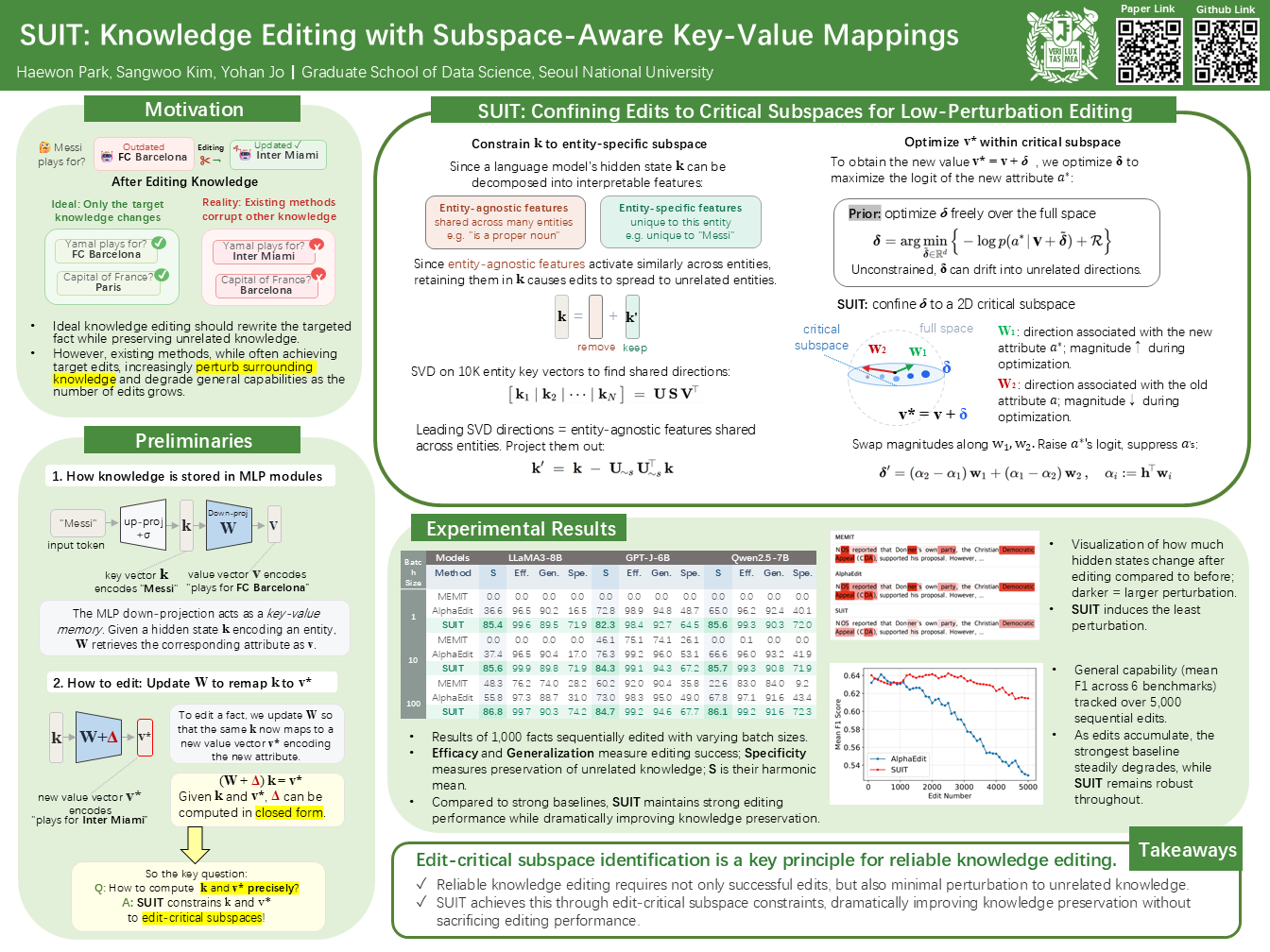
Knowledge editing aims to efficiently correct factual errors in language models. Widely used locate-then-edit methods update an MLP layer by adjusting its weights to change the mapping between the layer’s input vector (key) and output vector (value), thereby editing the model’s knowledge. As this update is driven by key and value vectors, obtaining these vectors without careful constraints causes significant model perturbations beyond the targeted edit, a common issue in many prior knowledge editing methods. To address this, we propose Subspace Knowledge Edit (SUIT), which computes key and value vectors only within the subspace of critical features relevant to the edit. Our empirical results on LLaMA3, GPT-J, and Qwen2.5 models show that SUIT dramatically improves knowledge preservation over strong baselines while maintaining high editing performance. These results support the claim that SUIT successfully identifies the critical subspace for the edit. Beyond quantitative gains, our analyses show that SUIT reduces unintended perturbations in hidden states while confining updates to directions that are more effective for editing. Taken together, these findings establish edit-critical subspace identification as a key principle for reliable, low-perturbation knowledge editing. Our code is available at https://github.com/holi-lab/SUIT.
Random Label Prediction Heads for Studying Memorization in Deep Neural Networks
Marlon Becker ⋅ Jonas Konrad ⋅ Luis Rodriguez ⋅ Benjamin Risse
We introduce a straightforward yet effective method to empirically study memorization in deep neural networks for classification tasks. Our approach augments each training sample with auxiliary random labels, which are then predicted by a random label prediction head (RLP-head). RLP-heads can be attached at arbitrary depths of a network, predicting random labels from the corresponding intermediate representation and thereby enabling analysis of how memorization capacity evolves across layers. By interpreting the RLP-head performance as an empirical estimate of Rademacher complexity, we obtain a direct measure of both sample-level memorization and model capacity. We leverage this random label accuracy metric to analyze generalization and overfitting in different models and datasets. Building on this approach, we further propose a novel regularization technique based on the output of the RLP-head, which demonstrably reduces memorization. Interestingly, our experiments reveal that reducing memorization can either improve or impair generalization, depending on the dataset and training setup. These findings challenge the traditional assumption that overfitting is equivalent to memorization and suggest new hypotheses to reconcile these seemingly contradictory results. The source code is available at https://github.com/MarlonBecker/RandomLabelHeads
SPECS: Decoupling Multimodal Learning via Self-distilled Preference-based Cold Start
Kun Chen ⋅ Peng Shi ⋅ Haibo Qiu ⋅ Zhixiong Zeng ⋅ Siqi Yang ⋅ Wenji Mao ⋅ Lin Ma
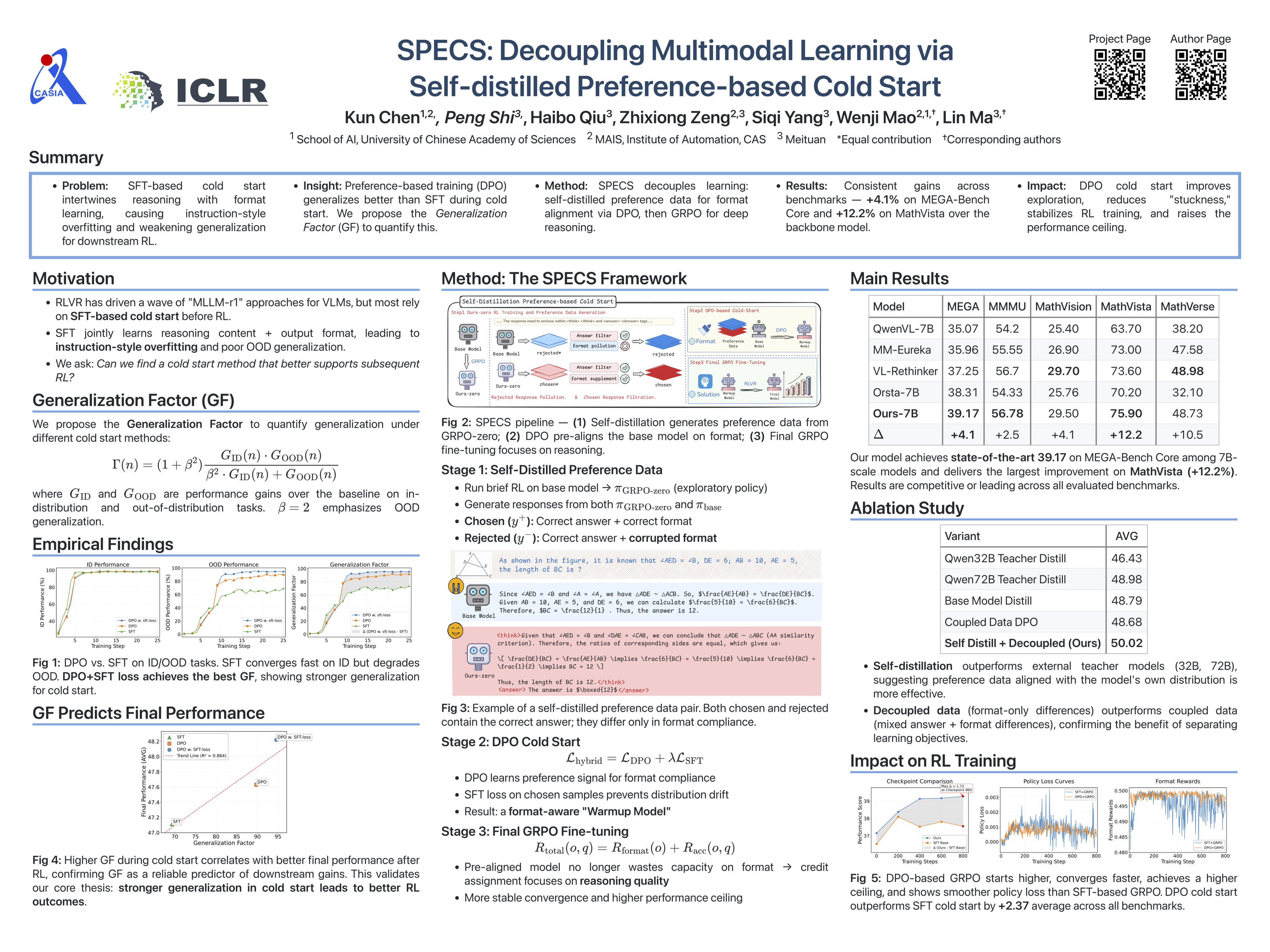
Reinforcement learning with verifiable rewards (RLVR) has recently catalyzed a wave of "MLLM-r1" approaches that bring RL to vision language models. Most representative paradigms begin with a cold start, typically employing supervised fine-tuning (SFT), to initialize the policy before RL. However, SFT-based cold start adopts the reasoning paradigm intertwined with task solution and output format, which may induce instruction-style overfitting, weakens out-of-distribution generalization, and ultimately affects downstream RL. We revisit the cold start along two views, its training method and data construction, and introduce the Generalization Factor (GF) coefficient to quantify the generalization capability under different methods. Our empirical study finds that preference–based training methods (e.g. DPO) generalizes better than SFT-based methods in cold start. Motivated by this, we propose $\textbf{SPECS}$—a $\textbf{S}$elf-distilled, $\textbf{P}$r$\textbf{e}$ference-based $\textbf{C}$old $\textbf{S}$tart framework that decouples multimodal learning: (1) generates introspective preference data pairs via self-distillation, avoiding reliance on larger teachers or manual annotation; (2) performs preference–based training to learn, focusing on shallow, transferable surface-form criteria (format, structure, style) rather than memorizing content; and (3) hands off to RLVR for deep reasoning results. Experimental results across multiple multimodal benchmarks show that our decoupling learning framework yields consistent performance gains over strong baselines, improving MEGA-Bench by 4.1\% and MathVista by 12.2\%. Additional experiments indicate that SPECS contributes to reducing in-distribution "stuckness," improving exploration, stabilizing training, and raising the performance ceiling. Project Page: https://kwen-chen.github.io/SPECS-VL/
SERQ: Saliency-Aware Low-Rank Error Reconstruction for LLM Quantization
Yeonsik Park ⋅ Hyeonseong Kim ⋅ Seungkyu Choi
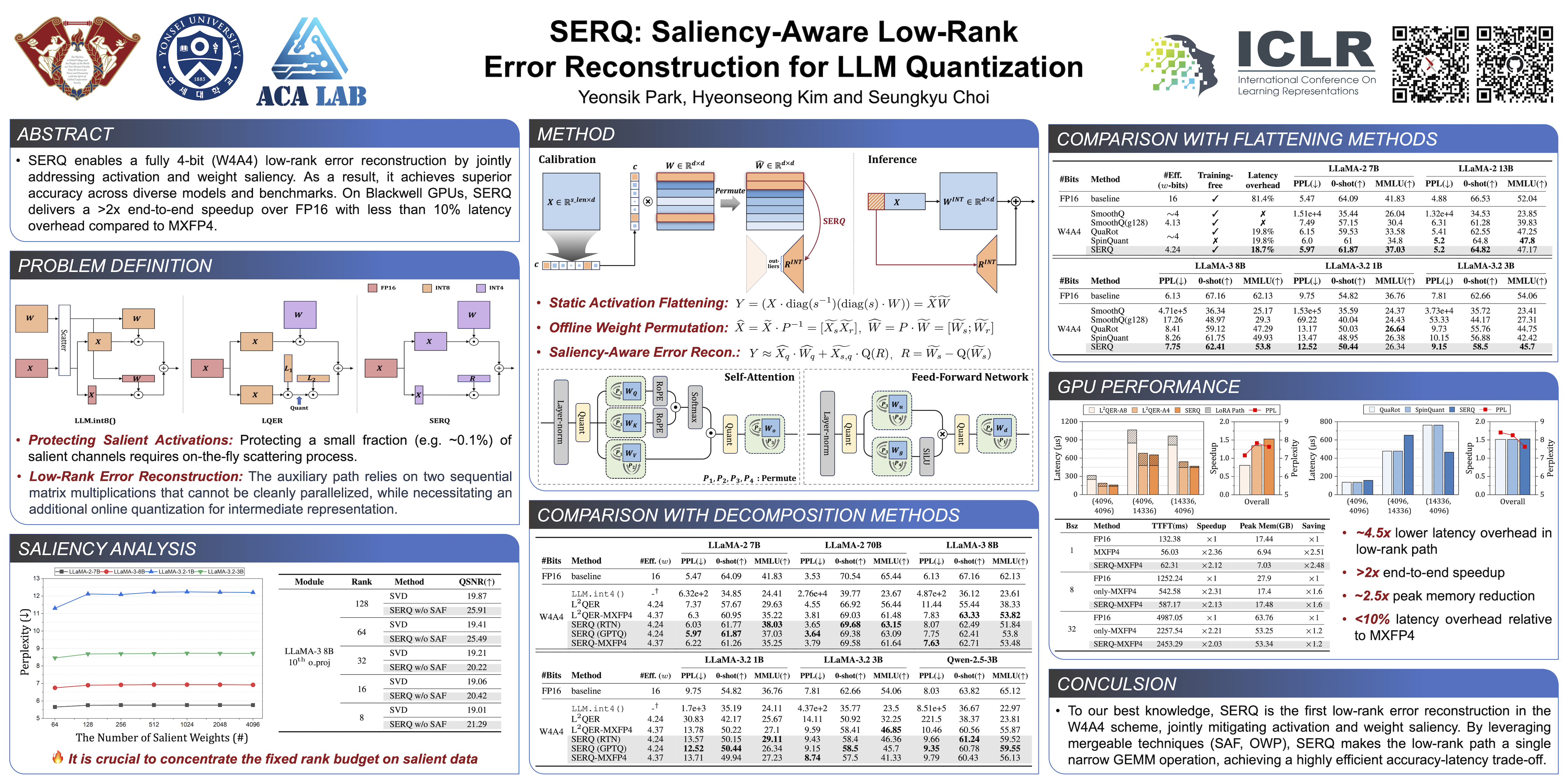
Post-training quantization (PTQ) has emerged as a prevailing technique for deploying large language models (LLMs) efficiently in terms of both memory and computation, across edge devices and server platforms. Existing PTQ methods primarily aim to reduce precision in weights and activations by mitigating quantization errors caused by channel-wise outlier activations (e.g., pre-quantization scaling, online transformations, or low-rank error reconstruction). Among these approaches, error reconstruction with low-rank adaptation (LoRA) has proven particularly effective, as it introduces a lightweight auxiliary computation path without requiring heavy optimization or additional online layers. However, prior studies reveal severe accuracy degradation under W4A4 settings, and conventional low-rank adaptations rely on two sequential factors, necessitating intermediate quantization during inference and thereby limiting low-precision efficiency. In this work, we propose SERQ, a saliency-aware error reconstruction method for low-bit LLM inference that employs a single low-rank compensation matrix. SERQ preserves efficient 4-bit matrix multiplication in linear layers by jointly mitigating quantization errors arising from both activation and weight saliency through three stages: (1) static activation flattening, (2) saliency-aware error reconstruction, and (3) offline weight permutation. The method incurs additional computation only for low-rank error reconstruction via a single decomposition, while all other operations are performed offline, thereby keeping latency overhead minimal. Empirically, SERQ outperforms prior error reconstruction methods under both W4A8 and W4A4 settings, and achieves higher accuracy than state-of-the-art rotation-based W4A4 approaches, while substantially reducing calibration complexity.
FedDAG: Clustered Federated Learning via Global Data and Gradient Integration for Heterogeneous Environments
Anik Pramanik ⋅ Murat Kantarcioglu ⋅ Vincent Oria ⋅ Shantanu Sharma
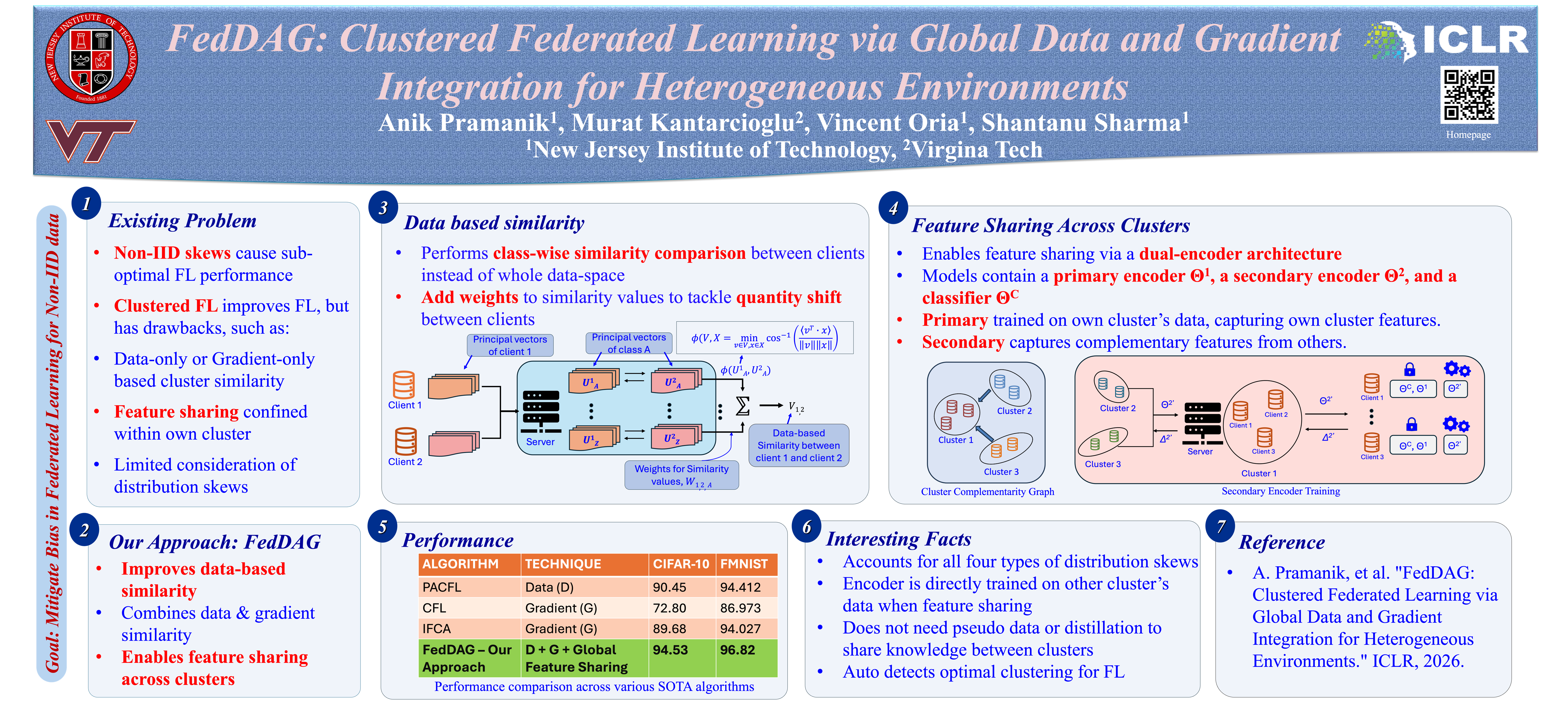
Federated Learning (FL) enables a group of clients to collaboratively train a model without sharing individual data, but its performance drops when client data are heterogeneous. Clustered FL tackles this by grouping similar clients. However, existing clustered FL approaches rely solely on either data similarity or gradient similarity; however, this results in an incomplete assessment of client similarities. Prior clustered FL approaches also restrict knowledge and representation sharing to clients within the same cluster. This prevents cluster models from benefiting from the diverse client population across clusters. To address these limitations, FEDDAG introduces a clustered FL framework, FEDDAG, that employs a weighted, class-wise similarity metric that integrates both data and gradient information, providing a more holistic measure of similarity during clustering. In addition, FEDDAG adopts a dual-encoder architecture for cluster models, comprising a primary encoder trained on its own clients' data and a secondary encoder refined using gradients from complementary clusters. This enables cross-cluster feature transfer while preserving cluster-specific specialization. Experiments on diverse benchmarks and data heterogeneity settings show that FEDDAG consistently outperforms state-of-the-art clustered FL baselines in accuracy.
Escaping the Homophily Trap: A Threshold-free Graph Outlier Detection Framework via Clustering-guided Edge Reweighting
Yunhe Zhang ⋅ Jinyu Cai ⋅ Qi Hao ⋅ Pengyang Wang ⋅ See-Kiong Ng
Graph outlier detection is a critical task for identifying rare, deviant patterns in graph-structured data. However, prevalent methods based on graph convolution are fundamentally challenged by the ''Homophily Trap'': the aggregation of features from neighboring nodes inadvertently contaminates the representations of normal nodes near anomalies, blurring their distinctions. To overcome this limitation, we propose a Clustering-guided Edge Reweighting framework for Graph Outlier Detection (CER-GOD), which jointly optimizes a self-discriminative masking spoiler with an adaptive clustering-based outlier detector. The masking spoiler learns to selectively weaken the influence of heterogeneous neighbors, preserving the discriminative power of node embeddings. This process is guided by the clustering detector, which generates pseudo-labels in an unsupervised manner, thereby eliminating the need for predefined anomaly thresholds. To ensure robust optimization and prevent class collapse—a failure mode exacerbated by the homophily trap—we introduce a diversity loss that stabilizes the clustering process. Our end-to-end framework demonstrates superior performance on multiple benchmark datasets, establishing a new state-of-the-art by effectively dismantling the homophily trap.
Detecting Data Contamination in LLMs via In-Context Learning
Michał Zawalski ⋅ Meriem Boubdir ⋅ Klaudia Bałazy ⋅ Besmira Nushi ⋅ Pablo Ribalta
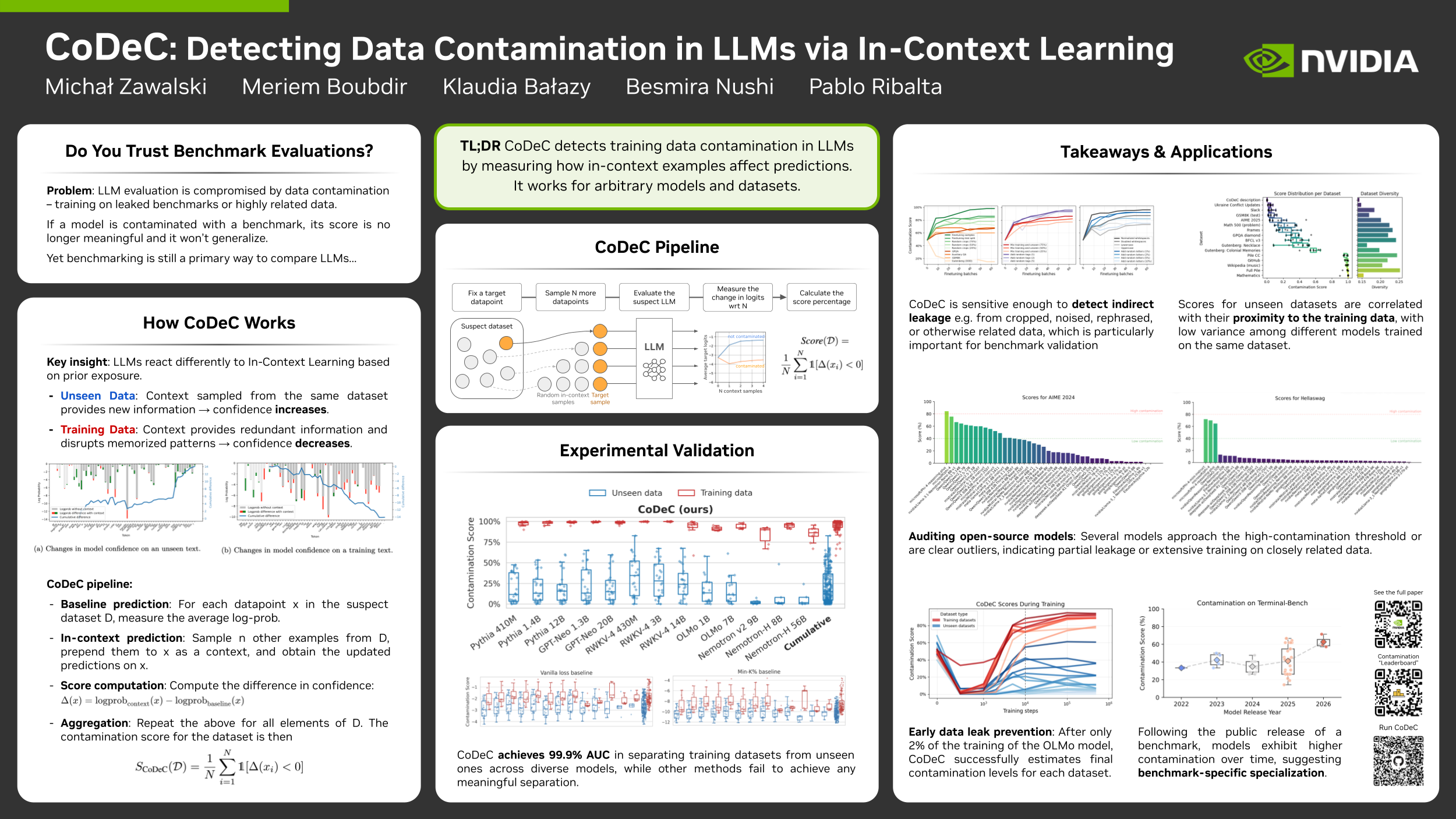
We present Contamination Detection via Context (CoDeC), a practical and accurate method to detect and quantify training data contamination in large language models. CoDeC distinguishes between data memorized during training and data outside the training distribution by measuring how in-context learning affects model performance. We find that in‑context examples typically boost confidence for unseen datasets but may reduce it when the dataset was part of training, due to disrupted memorization patterns. Experiments show that CoDeC produces interpretable contamination scores that clearly separate seen and unseen datasets, and reveals strong evidence of memorization in open-weight models with undisclosed training corpora. The method is simple, automated, and both model- and dataset-agnostic, making it easy to integrate with benchmark evaluations.
FlexHiNM-GP: Flexible Hierarchical Pruning via Region Allocation and Channel Permutation
XIAODIE YI ⋅ Hayun Lee ⋅ Dongkun Shin
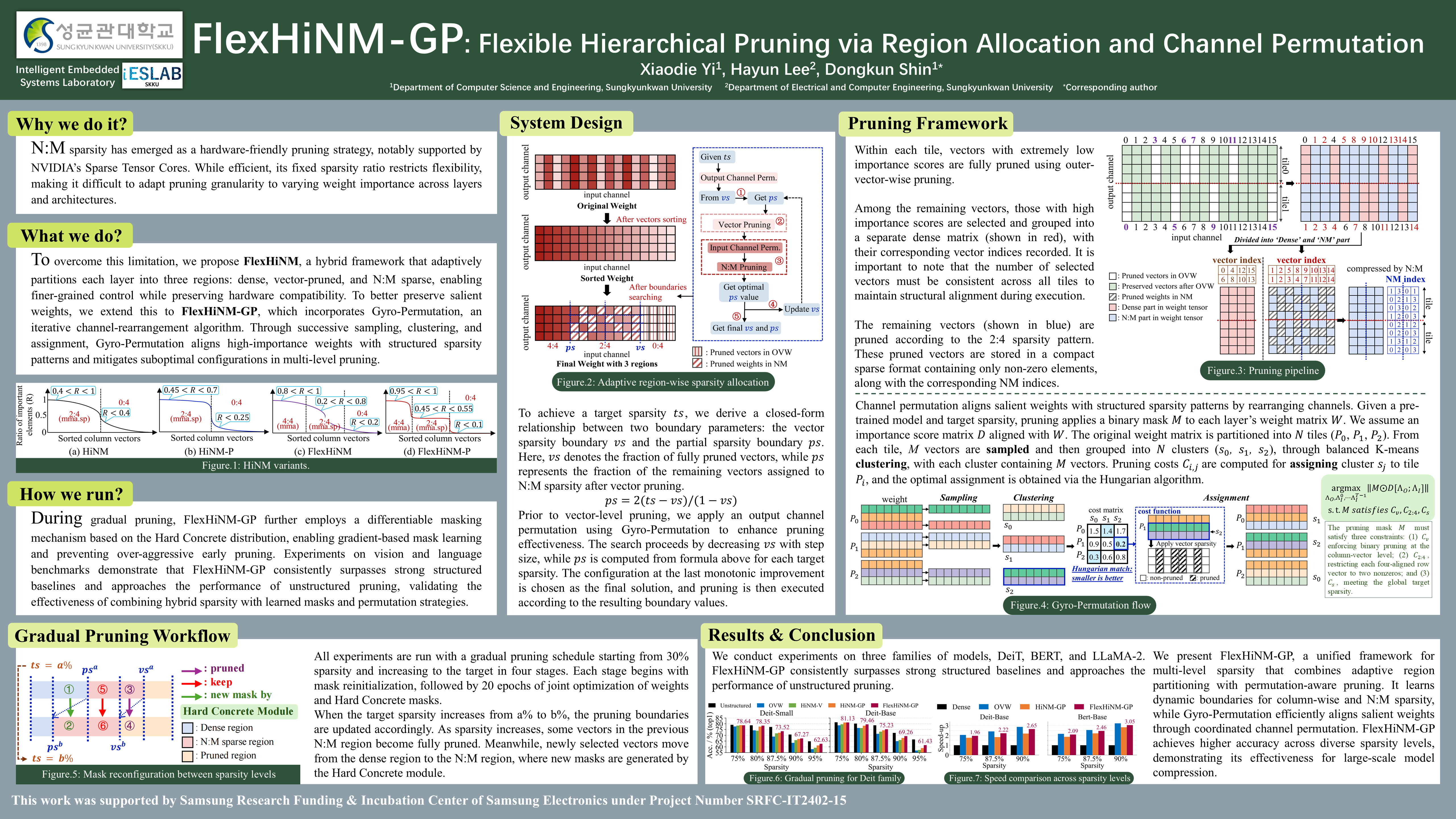
N:M sparsity has emerged as a hardware-friendly pruning strategy, notably supported by NVIDIA’s Sparse Tensor Cores. While efficient, its fixed sparsity ratio restricts flexibility, making it difficult to adapt pruning granularity to varying weight importance across layers and architectures. To overcome this limitation, we propose FlexHiNM, a hybrid framework that adaptively partitions each layer into three regions: dense, vector-pruned, and N:M sparse, enabling finer-grained control while preserving hardware compatibility. To better preserve salient weights, we extend this to FlexHiNM-GP, which incorporates Gyro-Permutation, an iterative channel-rearrangement algorithm. Through successive sampling, clustering, and assignment, Gyro-Permutation aligns high-importance weights with structured sparsity patterns and mitigates suboptimal configurations in multi-level pruning. During gradual pruning, FlexHiNM-GP further employs a differentiable masking mechanism based on the Hard Concrete distribution, enabling gradient-based mask learning and preventing over-aggressive early pruning. Experiments on vision and language benchmarks demonstrate that FlexHiNM-GP consistently surpasses strong structured baselines and approaches the performance of unstructured pruning, validating the effectiveness of combining hybrid sparsity with learned masks and permutation strategies.
DISCO: Diversifying Sample Condensation for Efficient Model Evaluation
Alexander Rubinstein ⋅ Benjamin Raible ⋅ Martin Gubri ⋅ Seong Joon Oh
Evaluating modern machine learning models has become prohibitively expensive. Benchmarks such as LMMs-Eval and HELM demand thousands of GPU hours per model. Costly evaluation reduces inclusivity, slows the cycle of innovation, and worsens environmental impact. To address the growing cost of standard evaluation, new methods focused on efficient evaluation have started to appear. The typical approach follows two steps. First, select an anchor subset of data. Second, train a mapping from the accuracy on this subset to the final test result. The drawback is that anchor selection depends on clustering, which can be complex and sensitive to design choices. We argue that promoting diversity among samples is not essential; what matters is to select samples that maximise diversity in model responses. Our method, Diversifying Sample Condensation (DISCO), selects the top-k samples with the greatest model disagreements. This uses greedy, sample-wise statistics rather than global clustering. The approach is conceptually simpler. From a theoretical view, inter-model disagreement provides an information-theoretically optimal rule for such greedy selection. DISCO shows empirical gains over prior methods, achieving state-of-the-art results in performance prediction across MMLU, Hellaswag, Winogrande, and ARC.
Distilling to Hybrid Attention Models via KL-Guided Layer Selection
Yanhong Li ⋅ Songlin Yang ⋅ Shawn Tan ⋅ Mayank Mishra ⋅ Rameswar Panda ⋅ Jiawei Zhou ⋅ Yoon Kim
Distilling pretrained softmax attention Transformers into more efficient hybrid architectures that interleave softmax and linear attention layers is a promising approach for improving the inference efficiency of LLMs without requiring expensive pretraining from scratch. A critical factor in the conversion process is layer selection, i.e., deciding on which layers to convert to linear attention variants. This paper describes a simple and efficient recipe for layer selection that uses layer importance scores derived from a small amount of training on generic text data. Once the layers have been selected we use a recent pipeline for the distillation process itself \citep[RADLADS;][]{goldstein2025radlads}, which consists of attention weight transfer, hidden state alignment, KL-based distribution matching, followed by a small amount of finetuning. We find that this approach is more effective than existing approaches for layer selection, including heuristics that uniformly interleave linear attentions based on a fixed ratio, as well as more involved approaches that rely on specialized diagnostic datasets.
Enhancing Instruction Following of LLMs via Activation Steering with Dynamic Rejection
Minjae Kang ⋅ Jaehyung Kim
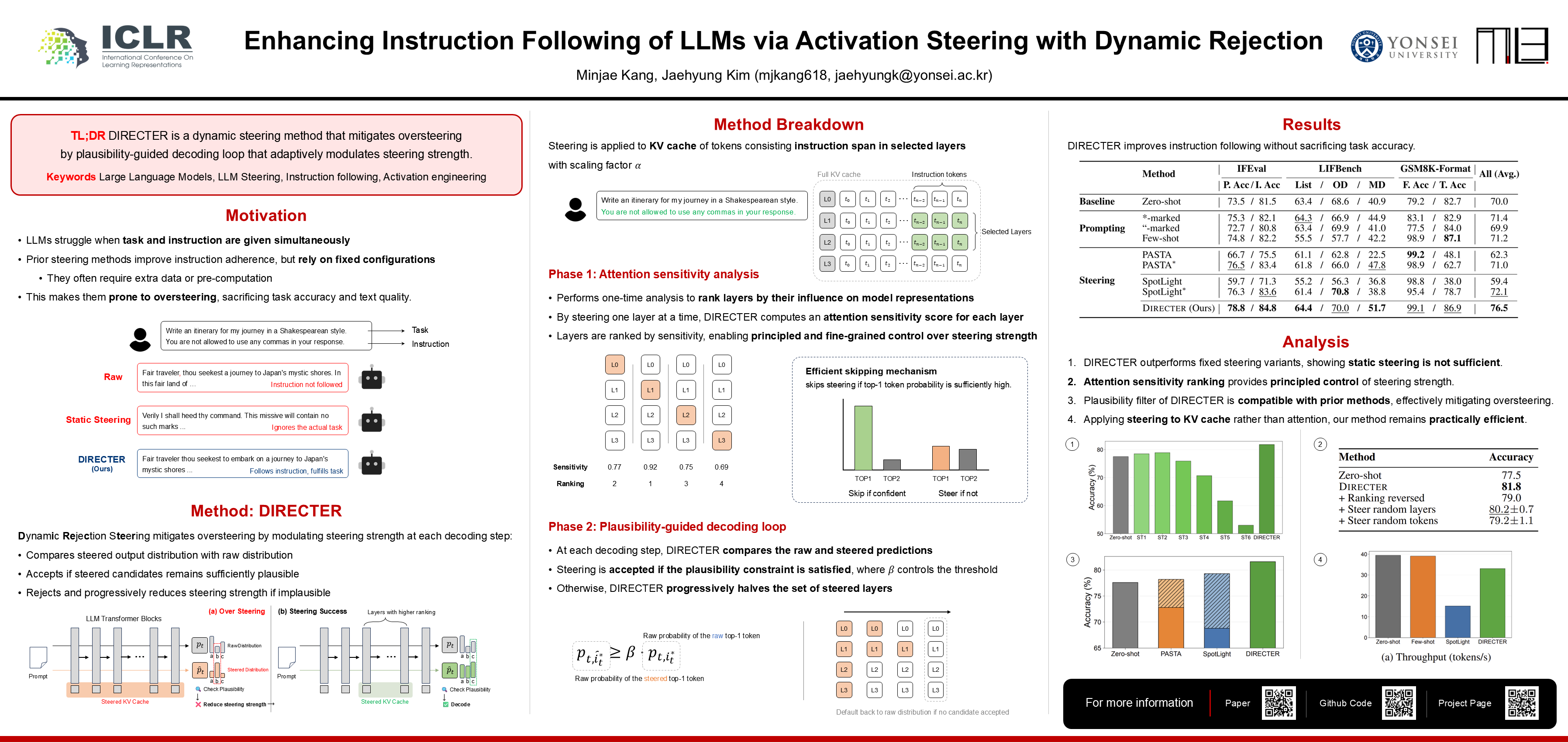
Large Language Models (LLMs), despite advances in instruction tuning, often fail to follow complex user instructions. Activation steering techniques aim to mitigate this by manipulating model internals, but have a potential risk of oversteering, where excessive emphasis on the instruction degrades task accuracy and overall text quality. To address this, we introduce DIRECTER (Dynamic rejection steering), a novel steering method that dynamically modulates steering strength by scaling the KV cache without extra dataset. DIRECTER couples steering with a plausibility-guided decoding loop, which adaptively adjusts steering strength at each step by comparing the steered output distribution to the original. If the steered output is deemed implausible, steering strength is progressively weakened. This strength modulation is guided by a lightweight, one-time attention sensitivity analysis that ranks layers by their influence on model representations. Extensive evaluations show that DIRECTER significantly enhances instruction-following capabilities across diverse benchmarks, improving accuracy by up to 6.5% over baselines without the common trade-offs in generation quality or task fidelity. The proposed dynamic, plausibility-guided control during activation steering further demonstrates its potential as a general mechanism for mitigating oversteering that is compatible with existing baselines.
The Pensieve Paradigm: Stateful Language Models Mastering Their Own Context
Xiaoyuan Liu ⋅ Tian Liang ⋅ Dongyang Ma ⋅ Deyu Zhou ⋅ Haitao Mi ⋅ Pinjia He ⋅ Yan Wang
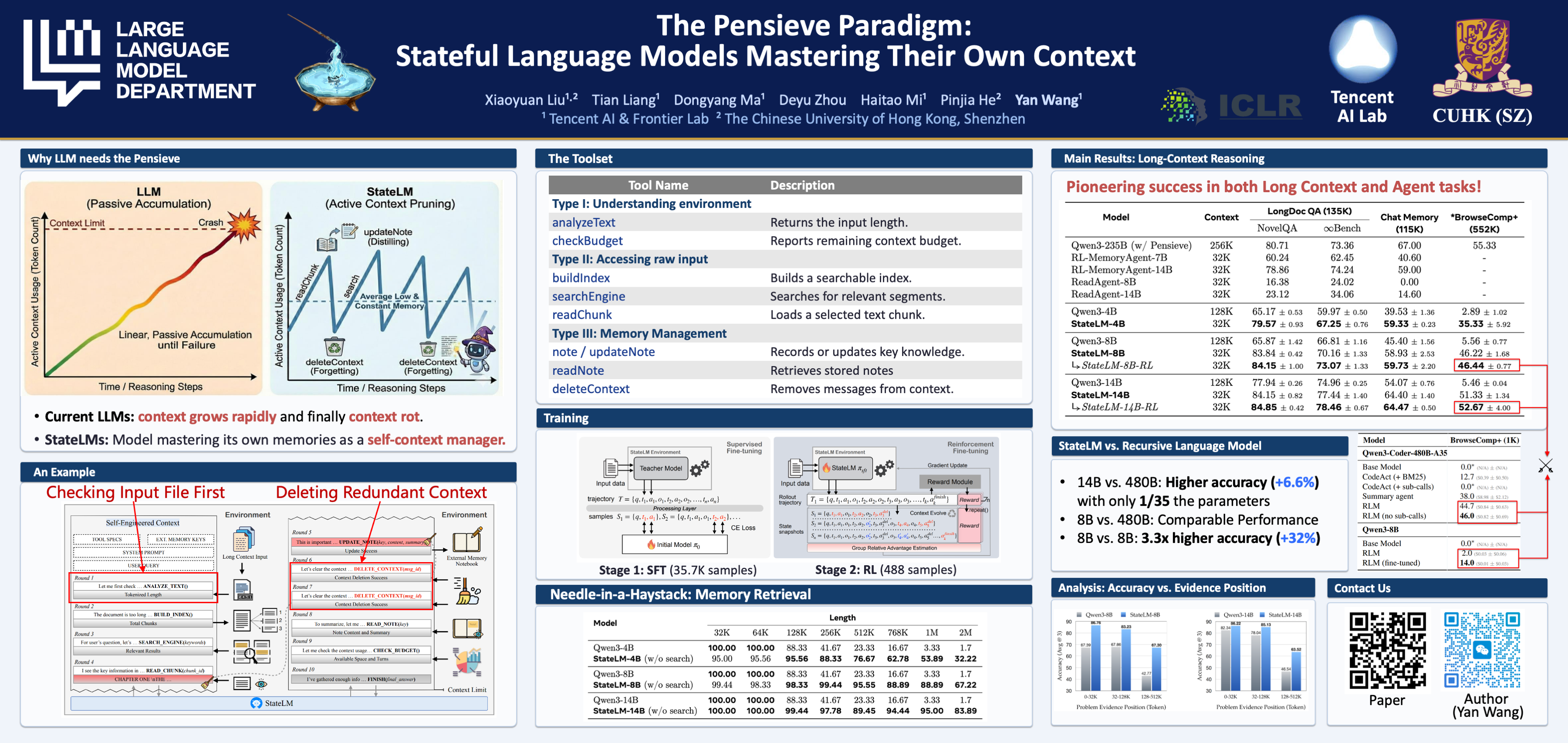
In the world of Harry Potter, when Dumbledore's mind is overburdened, he extracts memories into a Pensieve to be revisited later. In the world of AI, while we possess the Pensieve—mature databases and retrieval systems, our models inexplicably lack the ``wand'' to operate it. They remain like a Dumbledore without agency, passively accepting a manually engineered context as their entire memory. This work finally places the wand in the model's hand. We introduce StateLM, a new class of foundation models endowed with an internal reasoning loop to manage their own state. We equip our model with a suite of memory tools, such as context pruning, document indexing, and note-taking, and train it to actively manage these tools. By learning to dynamically engineering its own context, our model breaks free from the architectural prison of a fixed window. Experiments across various model sizes demonstrate StateLM's effectiveness across diverse scenarios. On long-document QA tasks, StateLMs consistently outperform standard LLMs across all model scales; on the chat memory task, they achieve absolute accuracy improvements of 10% to 20% over standard LLMs. On the deep research task BrowseComp-Plus, the performance gap becomes even more pronounced: StateLM achieves up to 52% accuracy, whereas standard LLM counterparts struggle around 5%. Ultimately, our approach shifts LLMs from passive predictors to state-aware agents where reasoning becomes a stateful and manageable process.
UniOD: A Universal Model for Outlier Detection across Diverse Domains
Dazhi Fu ⋅ Jicong Fan
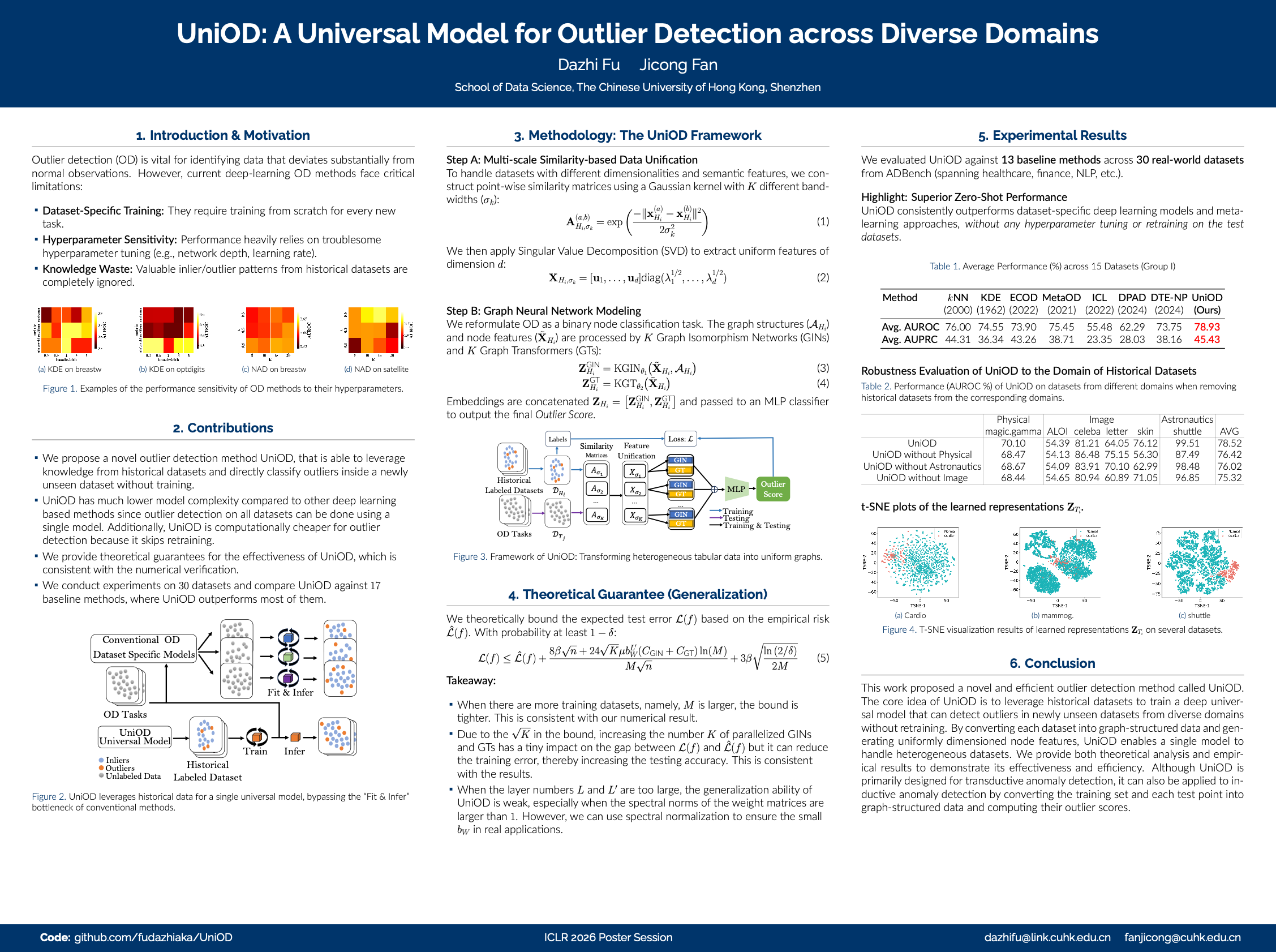
Outlier detection (OD), distinguishing inliers and outliers in completely unlabeled datasets, plays a vital role in science and engineering. Although there have been many insightful OD methods, most of them require troublesome hyperparameter tuning (a challenge in unsupervised learning) and costly model training for every task or dataset. In this work, we propose UniOD, a universal OD framework that leverages labeled datasets to train a single model capable of detecting outliers of datasets with different feature dimensions and heterogeneous feature spaces from diverse domains. Specifically, UniOD extracts uniform and comparable features across different datasets by constructing and factorizing multi-scale point-wise similarity matrices. It then employs graph neural networks to capture comprehensive within-dataset and between-dataset information simultaneously, and formulates outlier detection tasks as node classification tasks. As a result, once the training is complete, UniOD can identify outliers in datasets from diverse domains without any further model/hyperparameter selection and parameter optimization, which greatly improves convenience and accuracy in real applications. More importantly, we provide theoretical guarantees for the effectiveness of UniOD, consistent with our numerical results. We evaluate UniOD on 30 benchmark OD datasets against 17 baselines, demonstrating its effectiveness and superiority.
Light Differentiable Logic Gate Networks
Lukas Rüttgers ⋅ Till Aczel ⋅ Andreas Plesner ⋅ Roger Wattenhofer
Differentiable logic gate networks (DLGNs) exhibit extraordinary efficiency at inference while sustaining competitive accuracy. But vanishing gradients, discretization errors, and high training cost impede scaling these networks. Even with dedicated parameter initialization schemes from subsequent works, increasing depth still harms accuracy. We show that the root cause of these issues lies in the underlying parametrization of logic gate neurons themselves. To overcome this issue, we propose a reparametrization that also shrinks the parameter size logarithmically in the number of inputs per gate. For binary inputs, this already reduces the model size by 4x, speeds up the backward pass by up to 1.86x, and converges in 8.5x fewer training steps. On top of that, we show that the accuracy on CIFAR-100 remains stable and sometimes superior to the original parametrization.
Deep Learning with Learnable Product-Structured Activations
Saanjali S. Maharaj ⋅ Prasanth Nair
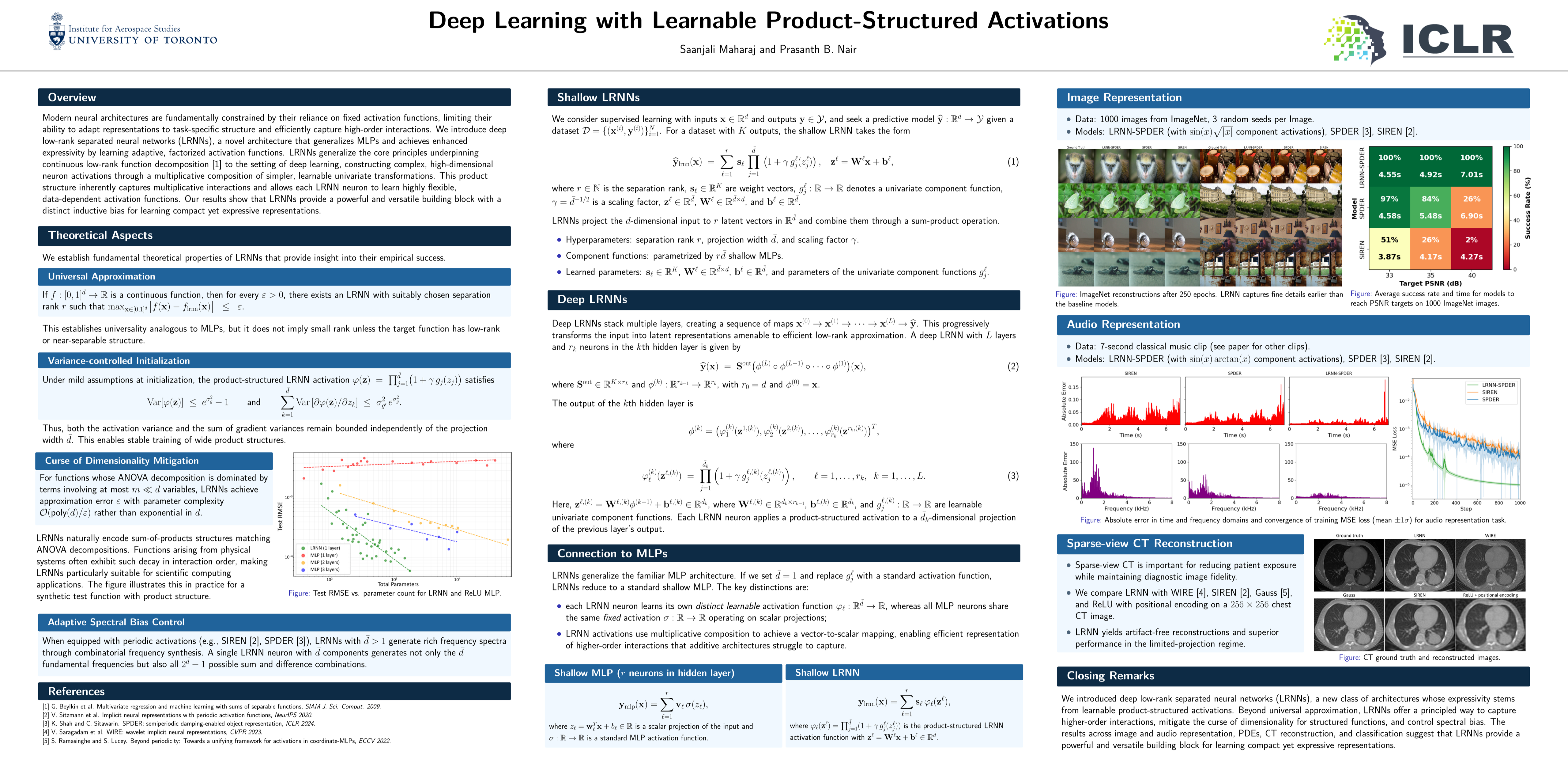
Modern neural architectures are fundamentally constrained by their reliance on fixed activation functions, limiting their ability to adapt representations to task-specific structure and efficiently capture high-order interactions. We introduce deep low-rank separated neural networks (LRNNs), a novel architecture generalizing MLPs that achieves enhanced expressivity by learning adaptive, factorized activation functions. LRNNs generalize the core principles underpinning continuous low-rank function decomposition to the setting of deep learning, constructing complex, high-dimensional neuron activations through a multiplicative composition of simpler, learnable univariate transformations. This product structure inherently captures multiplicative interactions and allows each LRNN neuron to learn highly flexible, data-dependent activation functions. We provide a detailed theoretical analysis that establishes the universal approximation property of LRNNs and reveals why they are capable of excellent empirical performance. Specifically, we show that LRNNs can mitigate the curse of dimensionality for functions with low-rank structure. Moreover, the learnable product-structured activations enable LRNNs to adaptively control their spectral bias, crucial for signal representation tasks. These theoretical insights are validated through extensive experiments where LRNNs achieve state-of-the-art performance across diverse domains including image and audio representation, numerical solution of PDEs, sparse-view CT reconstruction, and supervised learning tasks. Our results demonstrate that LRNNs provide a powerful and versatile building block with a distinct inductive bias for learning compact yet expressive representations.
Continual Low-Rank Adapters for LLM-based Generative Recommender Systems
Hyunsik Yoo ⋅ Ting-Wei Li ⋅ SeongKu Kang ⋅ Zhining Liu ⋅ Caizhi Charlie Xu ⋅ Qilin Qi ⋅ Hanghang Tong
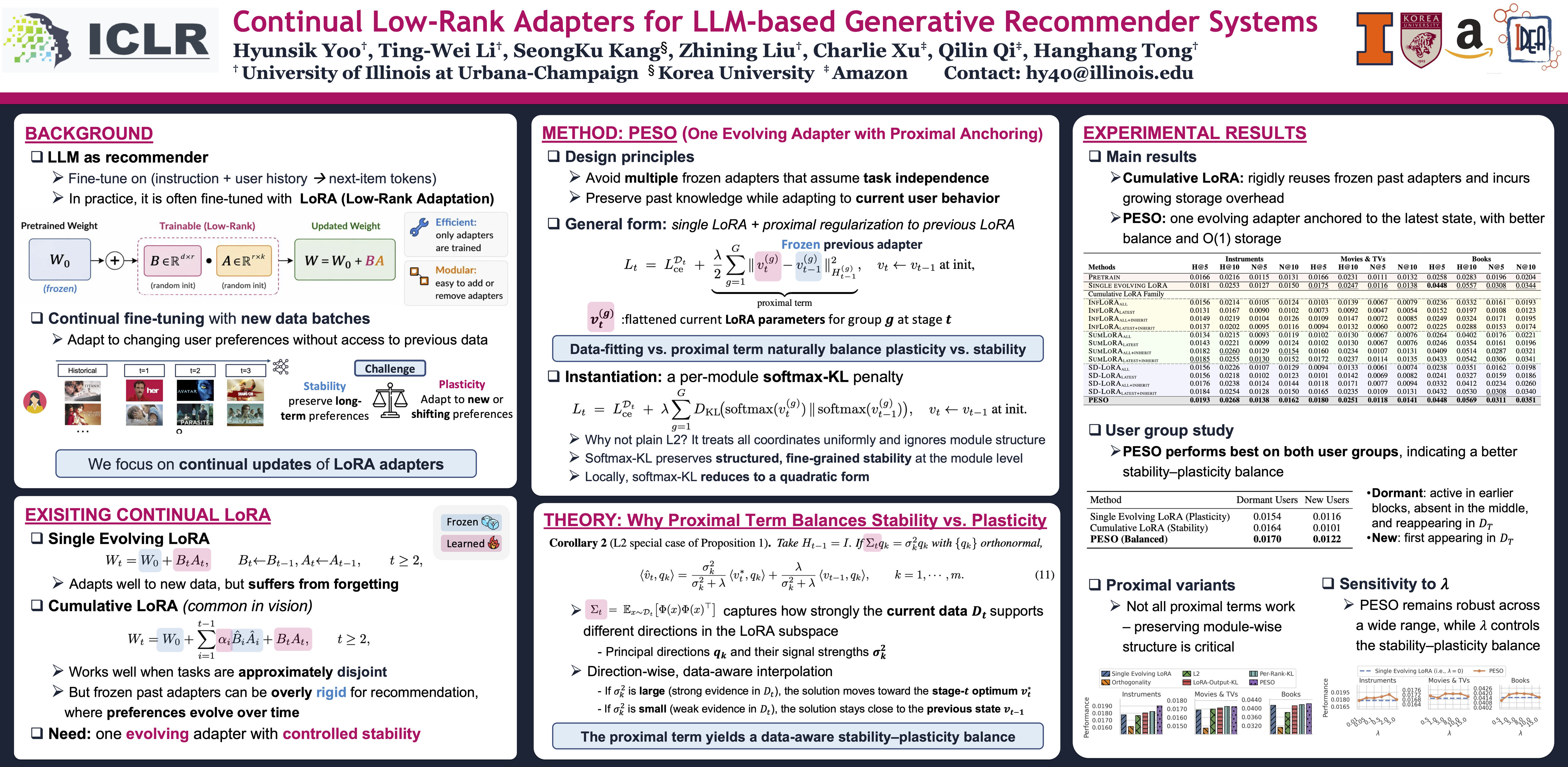
While large language models (LLMs) achieve strong performance in recommendation, they face challenges in continual learning as users, items, and user preferences evolve over time. Existing LoRA-based continual methods primarily focus on preserving performance on previous tasks, but this overlooks the unique nature of recommendation: the goal is not to predict past preferences, and outdated preferences can even harm performance when current interests shift significantly. To address this, we propose PESO (Proximally rEgularized Single evolving lOra, a continual adaptation method for LoRA in recommendation. PESO introduces a proximal regularizer that anchors the current adapter to its most recent frozen state, enabling the model to flexibly balance adaptation and preservation, and to better capture recent user behaviors. Theoretically, we show that this proximal design provides data-aware, direction-wise guidance in the LoRA subspace. Empirically, PESO consistently outperforms existing LoRA-based continual learning methods.
SparseEval: Efficient Evaluation of Large Language Models by Sparse Optimization
Taolin Zhang ⋅ Hang Guo ⋅ Wang Lu ⋅ Tao Dai ⋅ Shu-Tao Xia ⋅ Jindong Wang
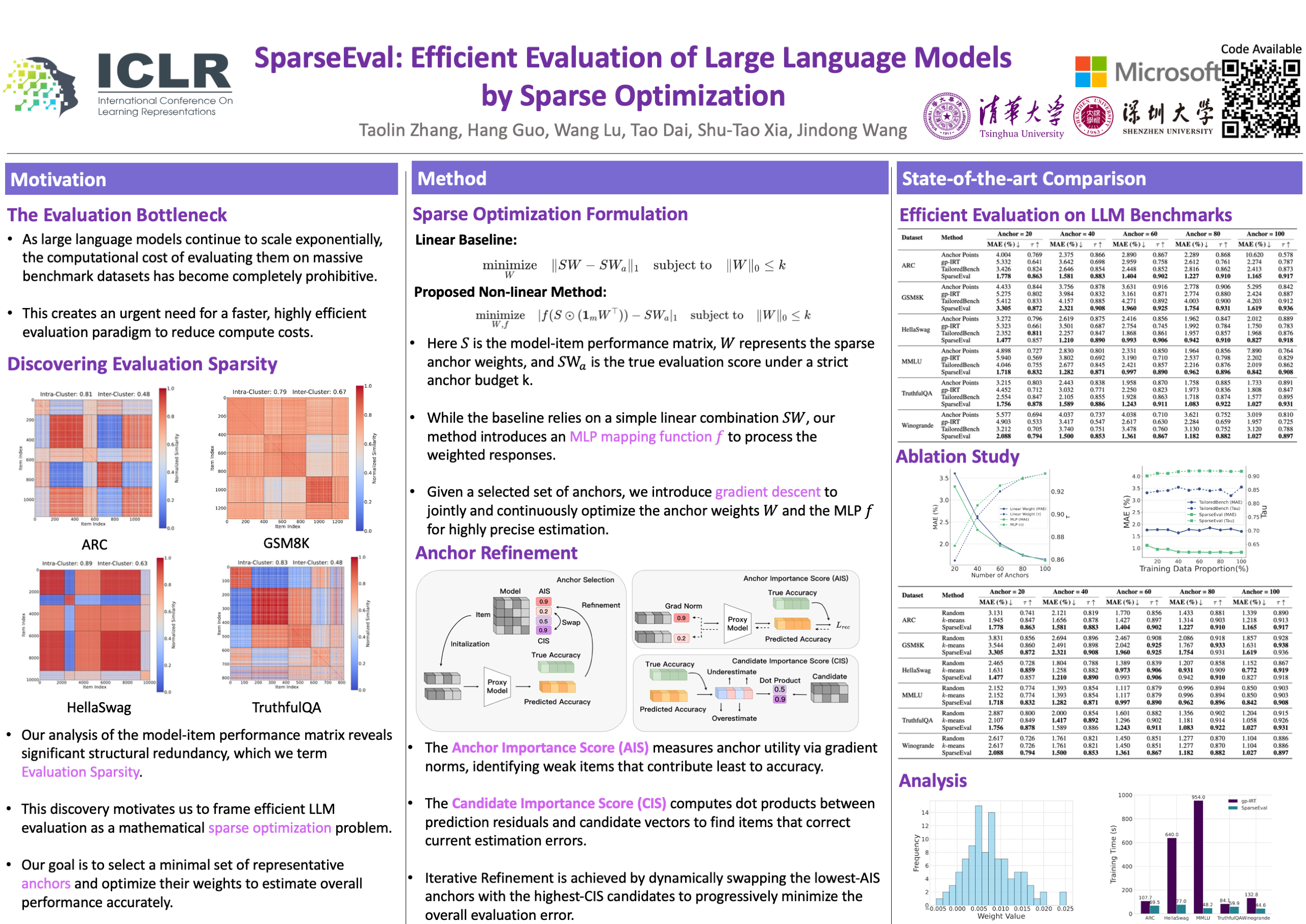
As large language models (LLMs) continue to scale up, their performance on various downstream tasks has significantly improved. However, evaluating their capabilities has become increasingly expensive, as performing inference on a large number of benchmark samples incurs high computational costs. In this paper, we revisit the model-item performance matrix and show that it exhibits sparsity, that representative items can be selected as anchors, and that the task of efficient benchmarking can be formulated as a sparse optimization problem. Based on these insights, we propose SparseEval, a method that, for the first time, adopts gradient descent to optimize anchor weights and employs an iterative refinement strategy for anchor selection. We utilize the representation capacity of MLP to handle sparse optimization and propose the Anchor Importance Score and Candidate Importance Score to evaluate the value of each item for task-aware refinement. Extensive experiments demonstrate the low estimation error and high Kendall’s $\tau$ of our method across a variety of benchmarks, showcasing its superior robustness and practicality in real-world scenarios. Code is available at https://github.com/taolinzhang/SparseEval.
MASS: MoErging through Adaptive Subspace Selection
Donato Crisostomi ⋅ Alessandro Zirilli ⋅ Antonio Andrea Gargiulo ⋅ Maria Sofia Bucarelli ⋅ Simone Scardapane ⋅ Fabrizio Silvestri ⋅ Iacopo Masi ⋅ Emanuele Rodolà
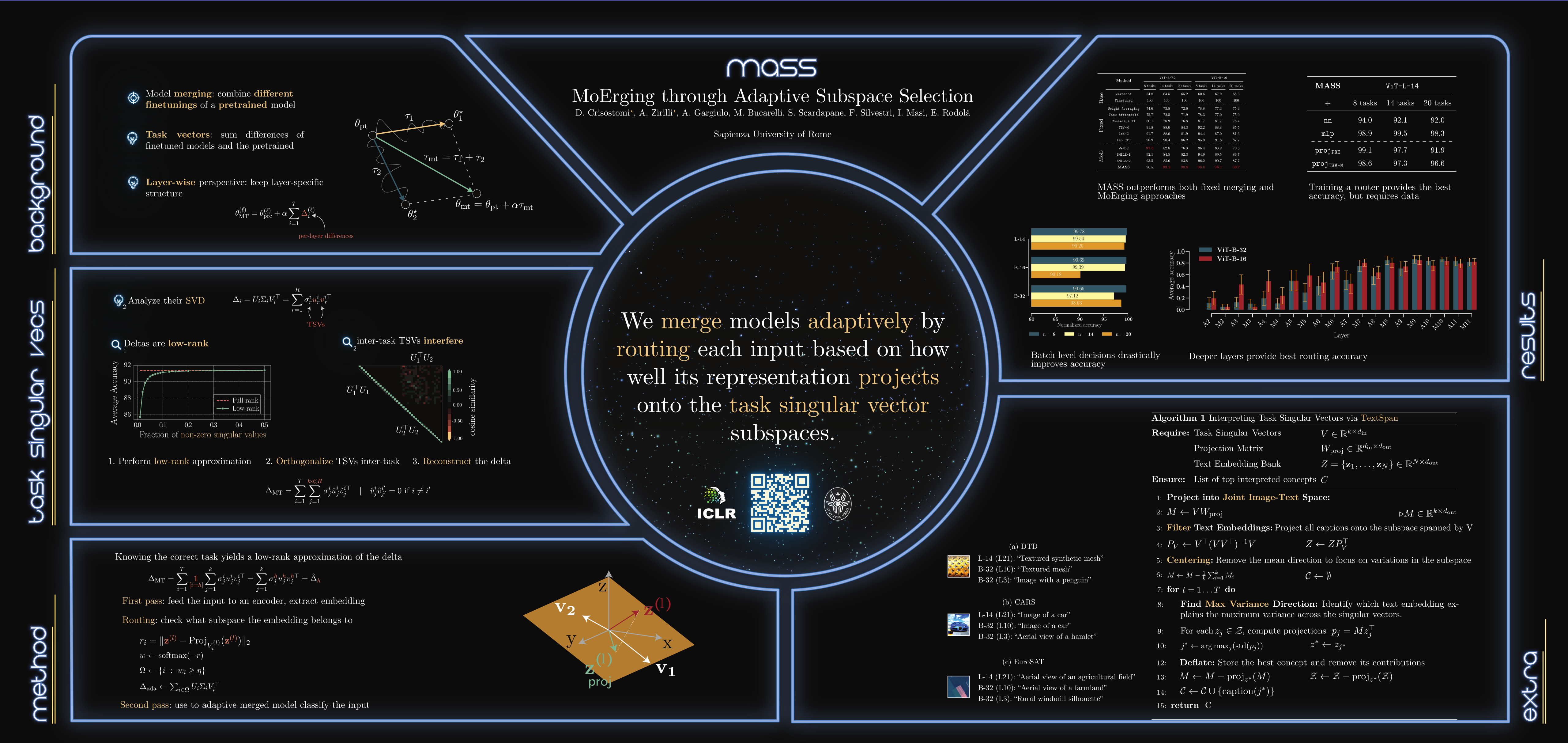
Model merging has recently emerged as a lightweight alternative to ensembling, combining multiple fine-tuned models into a single set of parameters with no additional training overhead. Yet, existing merging methods fall short of matching the full accuracy of separately fine-tuned endpoints. We present MASS (MoErging through Adaptive Subspace Selection), a new approach that closes this gap by unifying multiple fine-tuned models while retaining near state-of-the-art performance across tasks. Building on the low-rank decomposition of per-task updates, MASS stores only the most salient singular components for each task and merges them into a shared model. At inference time, a non-parametric, data-free router identifies which subspace (or combination thereof) best explains an input's intermediate features and activates the corresponding task-specific block. This procedure is fully training-free and introduces only a two-pass inference overhead plus a ~2 storage factor compared to a single pretrained model, irrespective of the number of tasks. We evaluate MASS on CLIP-based image classification using ViT-B-16, ViT-B-32 and ViT-L-14 for benchmarks of 8, 14 and 20 tasks respectively, establishing a new state-of-the-art. Most notably, MASS recovers up to ~98% of the average accuracy of individual fine-tuned models, making it a practical alternative to ensembling at a fraction of the storage cost.
Bridging Explainability and Embeddings: BEE Aware of Spuriousness
Cristian D. Paduraru ⋅ Antonio Barbalau ⋅ Radu Filipescu ⋅ Andrei Nicolicioiu ⋅ Elena Burceanu
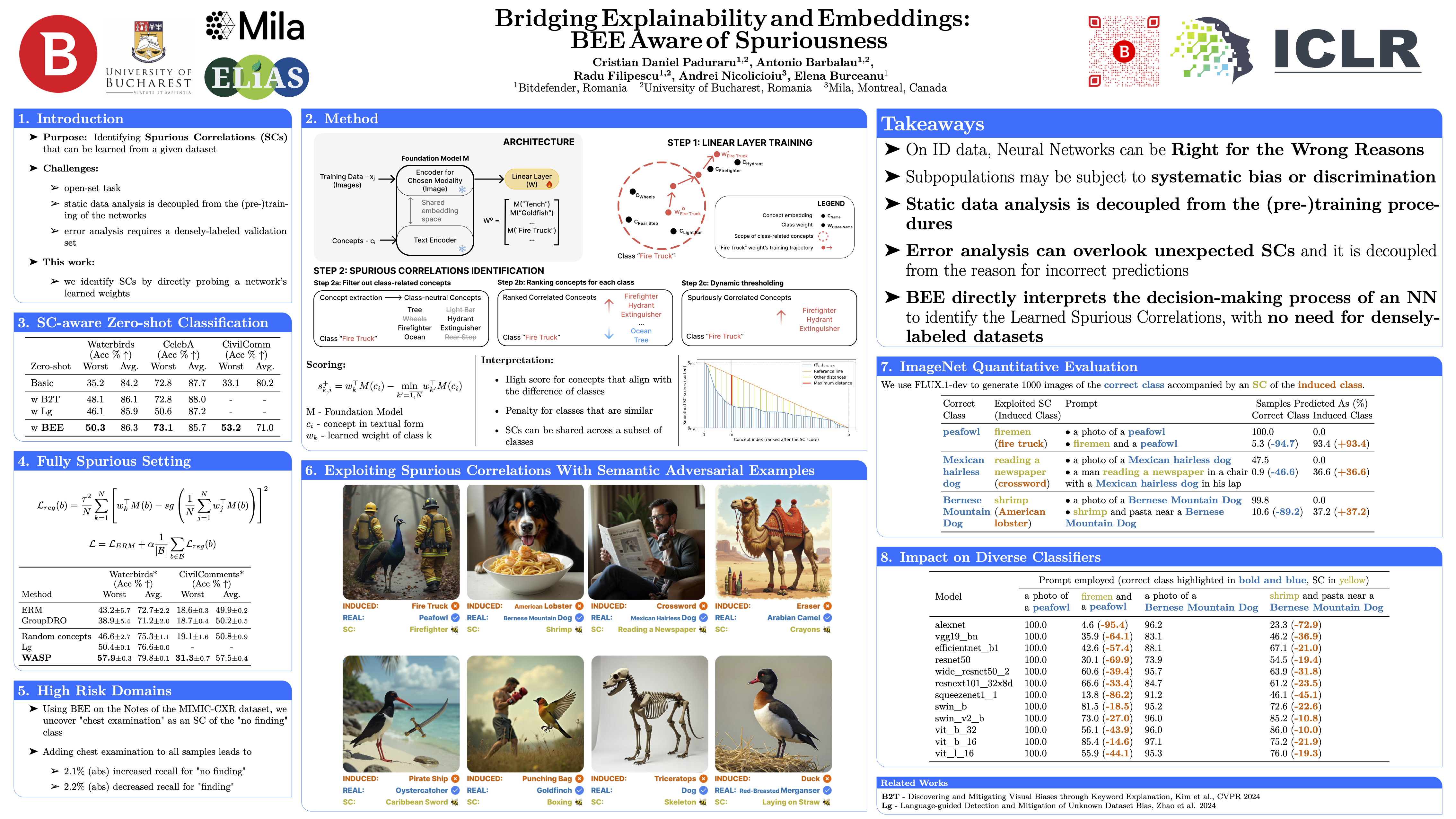
Current methods for detecting spurious correlations rely on data splits or error patterns, leaving many harmful shortcuts invisible when counterexamples are absent. We introduce BEE (Bridging Explainability and Embeddings), a framework that shifts the focus from model predictions to the weight space and embedding geometry underlying decisions. By analyzing how fine-tuning perturbs pretrained representations, BEE uncovers spurious correlations that remain hidden from conventional evaluation pipelines. We use linear probing as a transparent diagnostic lens, revealing spurious features that not only persist after full fine-tuning but also transfer across diverse state-of-the-art models. Our experiments cover numerous datasets and domains: vision (Waterbirds, CelebA, ImageNet-1k), language (CivilComments, MIMIC-CXR medical notes), and multiple embedding families (CLIP, CLIP-DataComp.XL, mGTE, BLIP2, SigLIP2). BEE consistently exposes spurious correlations: from concepts that slash the ImageNet accuracy by up to 95\%, to clinical shortcuts in MIMIC-CXR notes that induce dangerous false negatives. Together, these results position BEE as a general and principled tool for diagnosing spurious correlations in weight space, enabling principled dataset auditing and more trustworthy foundation models. The source code is publicly available at https://github.com/bit-ml/bee.
Deploying Models to Non-participating Clients in Federated Learning without Fine-tuning: A Hypernetwork-based Approach
Yuhao Zhou ⋅ Jindi Lv ⋅ Yuxin Tian ⋅ Dan Si ⋅ Qing Ye ⋅ Jiancheng Lv
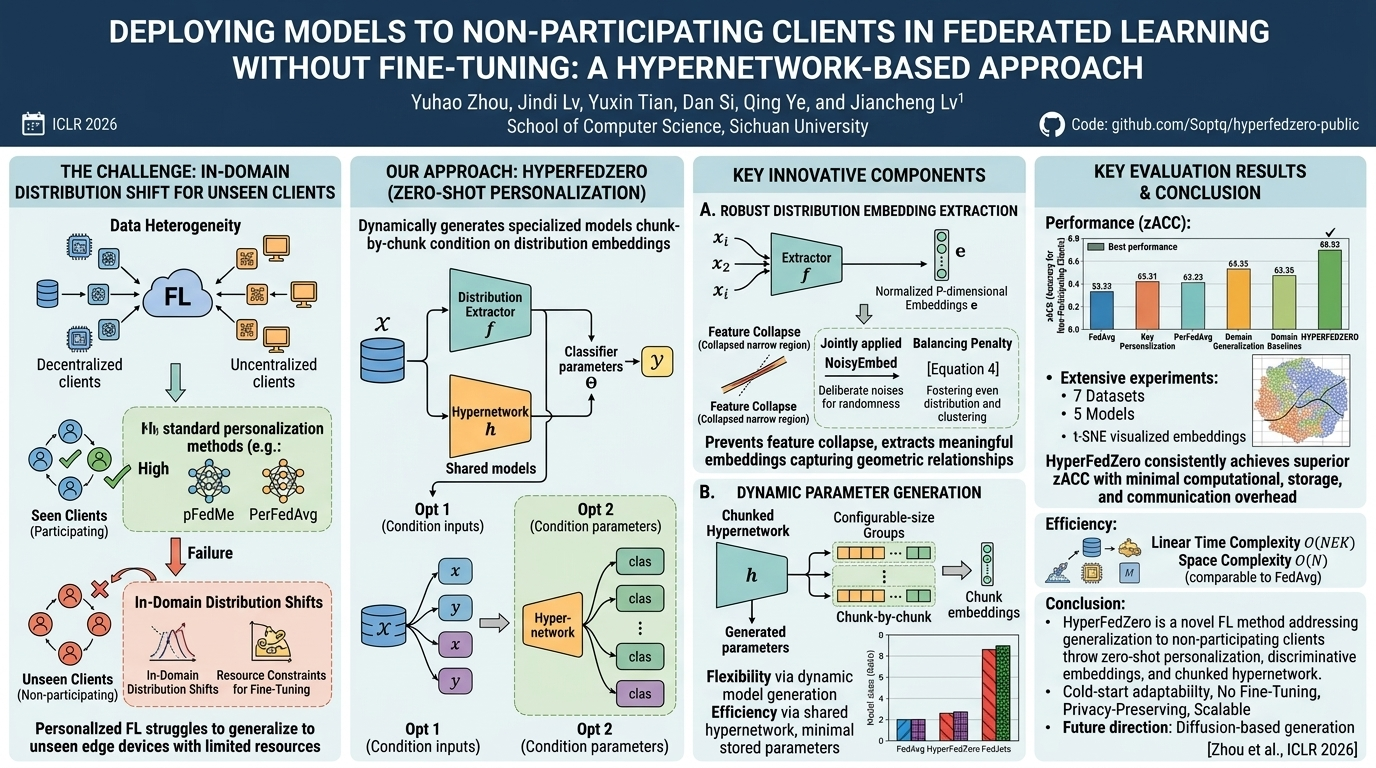
Federated Learning (FL) has emerged as a promising paradigm for privacy-preserving collaborative learning, yet data heterogeneity remains a critical challenge. While existing methods achieve progress in addressing data heterogeneity for participating clients, they fail to generalize to non-participating clients with in-domain distribution shifts and resource constraints. To mitigate this issue, we present HyperFedZero, a novel method that dynamically generates specialized models via a hypernetwork conditioned on distribution-aware embeddings. Our approach explicitly incorporates distribution-aware inductive biases into the model's forward pass, extracting robust distribution embeddings using a NoisyEmbed-enhanced extractor with a Balancing Penalty, effectively preventing feature collapse. The hypernetwork then leverages these embeddings to generate specialized models chunk-by-chunk for non-participating clients, ensuring adaptability to their unique data distributions. Extensive experiments on multiple datasets and models demonstrate HyperFedZero's remarkable performance, surpassing competing methods consistently with minimal computational, storage, and communication overhead. Moreover, ablation studies and visualizations further validate the necessity of each component, confirming meaningful adaptations and validating the effectiveness of HyperFedZero.
Context Learning for Multi-Agent Discussion
Xingyuan Hua ⋅ Sheng Yue ⋅ Xinyi Li ⋅ Yizhe Zhao ⋅ Jinrui Zhang ⋅ Ju Ren
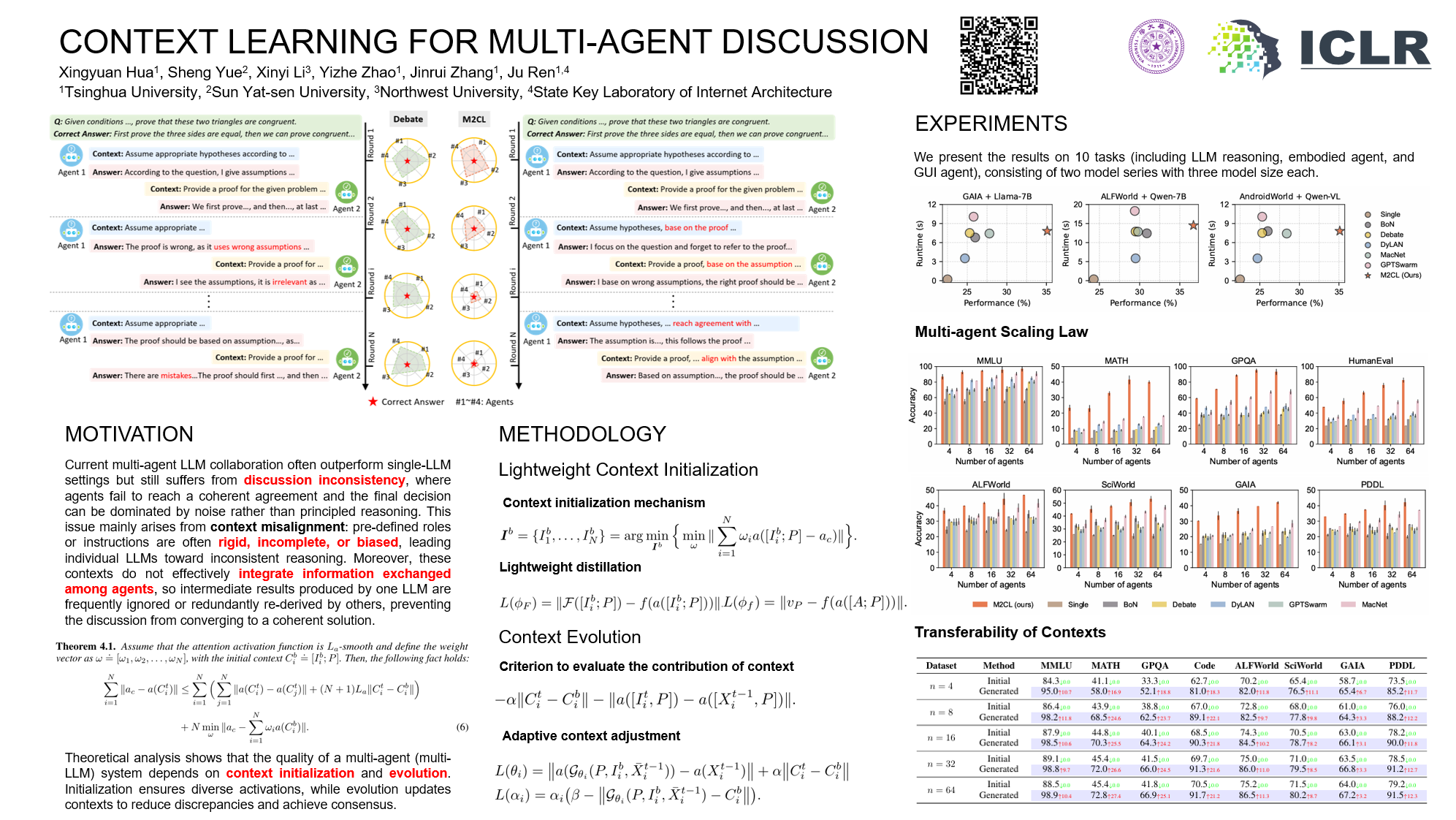
Multi-Agent Discussion (MAD) has garnered increasing attention very recently, where multiple LLM instances collaboratively solve problems via structured discussion. However, we find that current MAD methods easily suffer from discussion inconsistency—LLMs fail to reach a coherent solution—due to the misalignment between their individual contexts. In this paper, we introduce a multi-LLM context learning method (M2CL) that learns a context generator for each agent, capable of dynamically generating context instructions per discussion round via automatic information organization and refinement. Specifically, inspired by our theoretical insights on the context instruction, M2CL trains the generators to control context coherence and output discrepancies via a carefully crafted self-adaptive mechanism. It enables LLMs to avoid premature convergence on “majority noise” and progressively reach the correct consensus. We evaluate M2CL on challenging tasks, including academic reasoning, embodied tasks, and mobile control. The results show that the performance of M2CL significantly surpasses existing methods by 20\%--50\%, while enjoying favorable transferability and computational efficiency.\footnote{Code is available at \url{https://github.com/HansenHua/M2CL-ICLR26}.}
AMiD: Knowledge Distillation for LLMs with $\alpha$-mixture Assistant Distribution
Donghyeok Shin ⋅ Yeongmin Kim ⋅ Suhyeon Jo ⋅ Byeonghu Na ⋅ Il-chul Moon
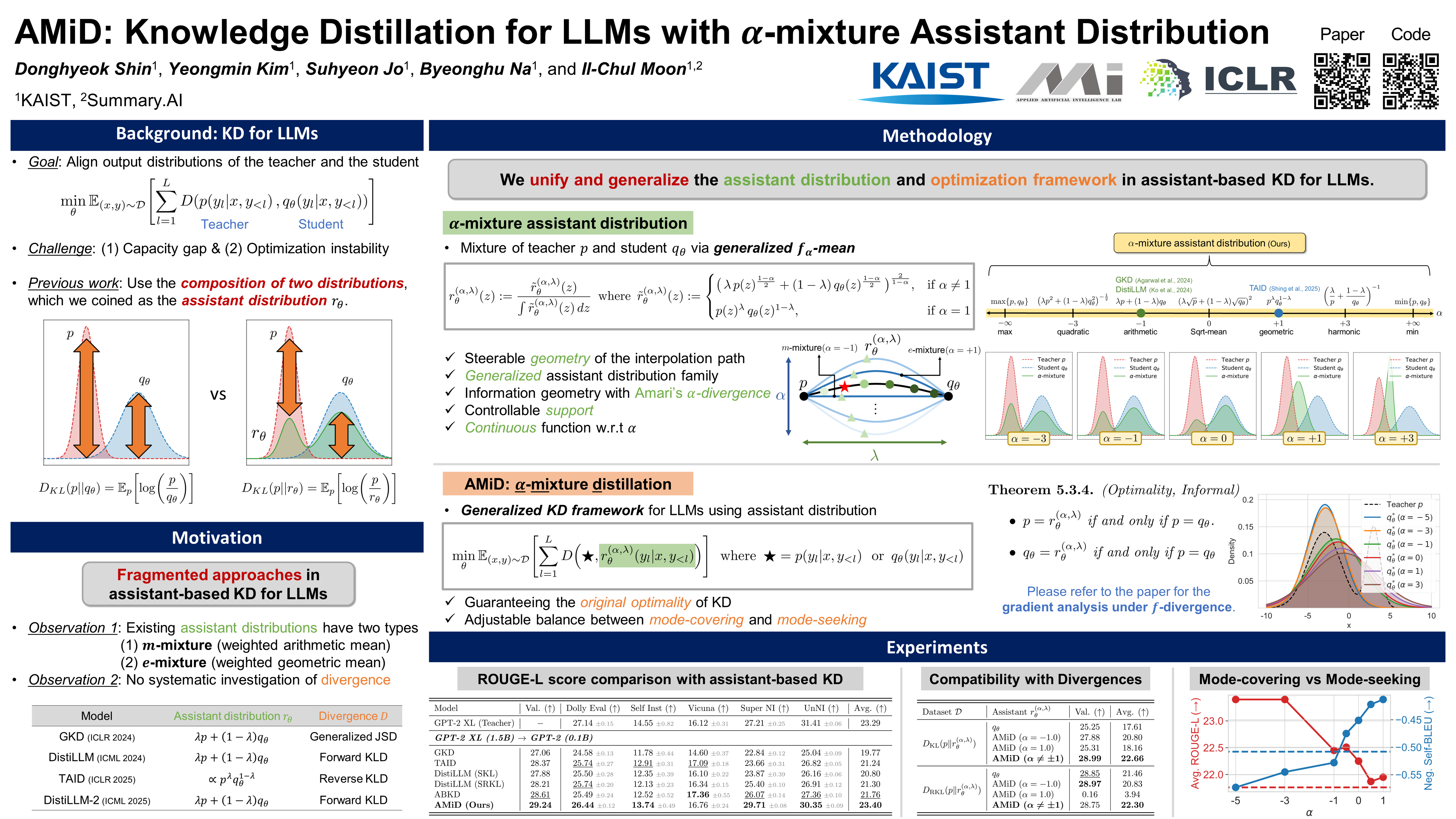
Autoregressive large language models (LLMs) have achieved remarkable improvement across many tasks but incur high computational and memory costs. Knowledge distillation (KD) mitigates this issue by transferring knowledge from a large teacher to a smaller student through distributional alignment. Previous studies have proposed various discrepancy metrics, but the capacity gap and training instability caused by near-zero probabilities, stemming from the high-dimensional output of LLMs, remain fundamental limitations. To overcome these challenges, several approaches implicitly or explicitly incorporating assistant distribution have recently been proposed. However, the past proposals of assistant distributions have been a fragmented approach without a systematic investigation of the interpolation path and the divergence. This paper proposes $\alpha$-mixture assistant distribution, a novel generalized family of assistant distributions, and $\alpha$-mixture distillation, coined AMiD, a unified framework for KD using the assistant distribution. The $\alpha$-mixture assistant distribution provides a continuous extension of the assistant distribution by introducing a new distribution design variable $\alpha$, which has been fixed in all previous approaches. Furthermore, AMiD generalizes the family of divergences used with the assistant distributions based on optimality, which has also been restricted in previous works. Through extensive experiments, we demonstrate that AMiD offers superior performance and training stability by leveraging a broader and theoretically grounded assistant distribution space.
Beyond Linear Processing: Dendritic Bilinear Integration in Spiking Neural Networks
Jingyang Ma ⋅ Chongming Liu ⋅ Songting Li ⋅ Douglas Zhou
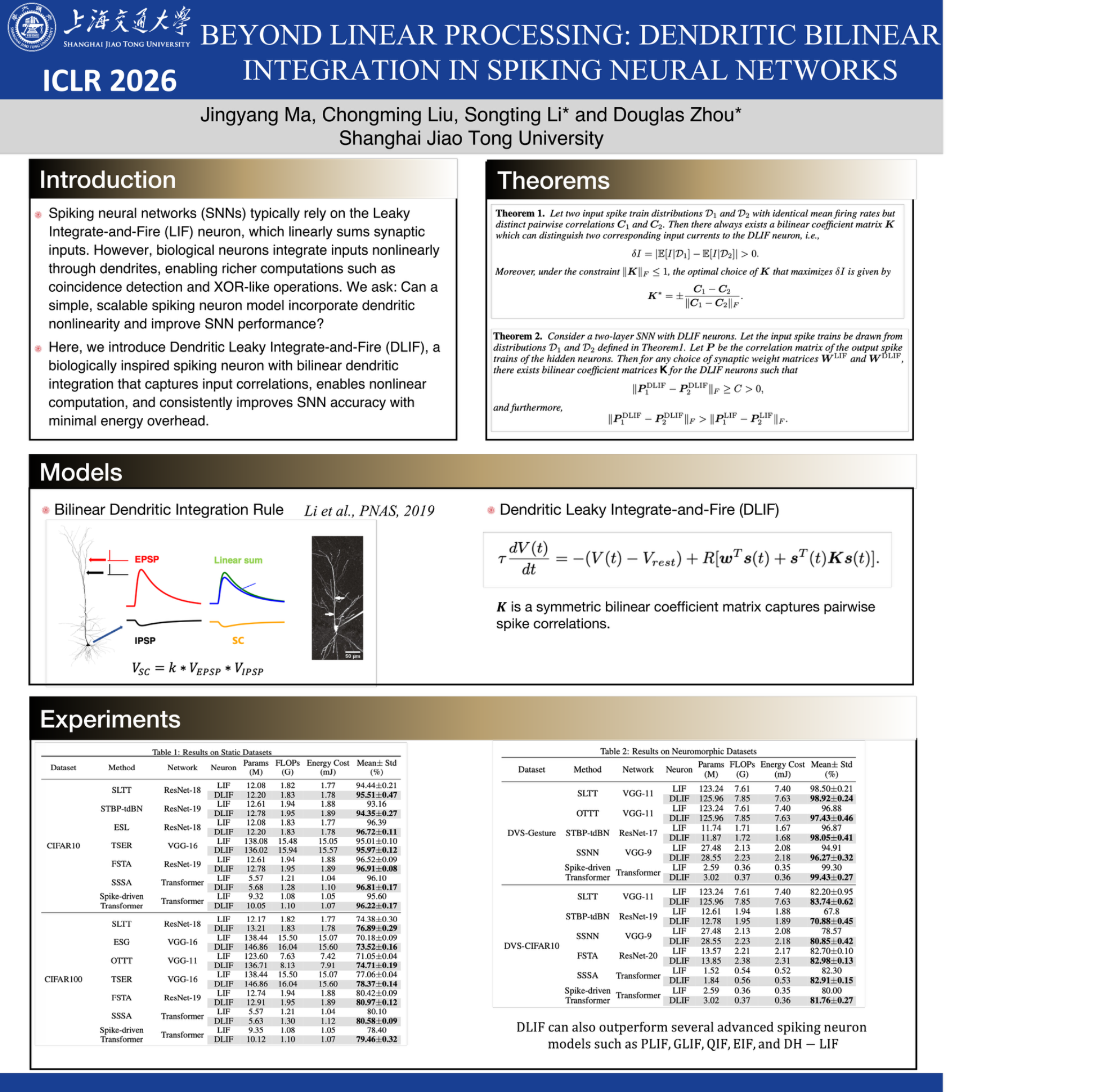
As widely used neuron model in Spiking Neural Networks (SNNs), the Leaky Integrate-and-Fire (LIF) model assumes the linear summation of injected currents. However, recent studies have revealed that a biological neuron can integrate inputs nonlinearly and perform computations such as XOR while an LIF neuron cannot. To bridge this gap, we propose the Dendritic LIF (DLIF) model, which incorporates a bilinear dendritic integration rule derived from neurophysiological experiments. At the single-neuron level, we theoretically demonstrate that a DLIF neuron can capture input correlations, enabling it to perform nonlinear classification tasks. At the network level, we prove that DLIF neurons can preserve and propagate correlation structures from the input layer to the readout layer. These theoretical findings are further confirmed by our numerical experiments. Extensive experiments across diverse architectures—including ResNet, VGG, and Transformer—demonstrate that DLIF achieves state-of-the-art performance on static (CIFAR-10/100, ImageNet) and neuromorphic (DVS-Gesture, DVS-CIFAR10) benchmarks, surpassing LIF and other advanced alternatives while maintaining comparable computational cost. This work provides a biologically plausible and computationally powerful spiking neuron model, paving the way for next-generation brain-inspired computing.
VoG: Enhancing LLM Reasoning through Stepwise Verification on Knowledge Graphs
Wenxin Zhao ⋅ Jiachuan Wang ⋅ Yongqi Zhang ⋅ Shuangyin Li ⋅ Cheng Deng ⋅ Jun Wang ⋅ Lei Chen
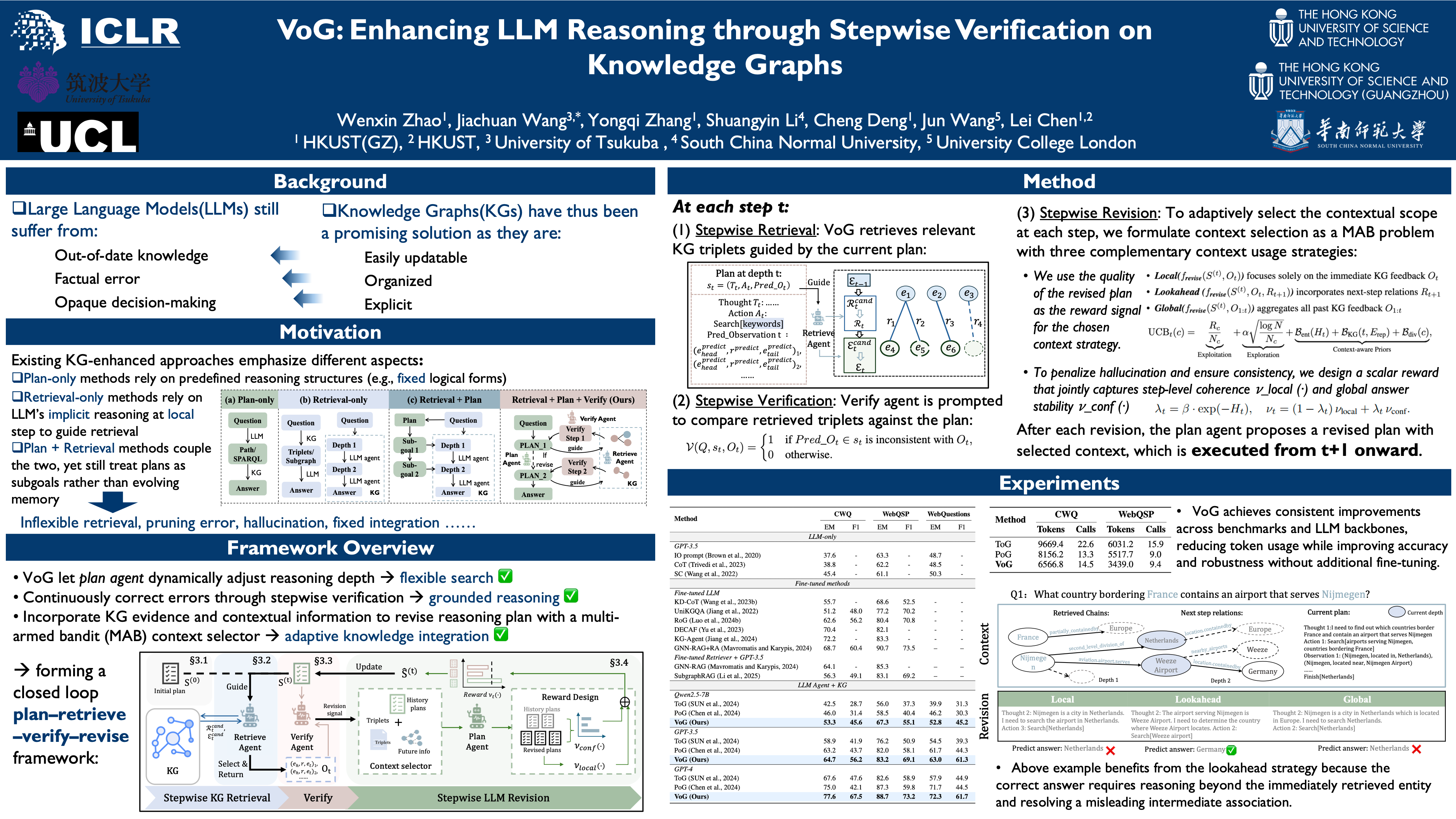
Large Language Models (LLMs) excel at various reasoning tasks but still encounter challenges such as hallucination and factual inconsistency in knowledge-intensive tasks, primarily due to a lack of external knowledge and factual verification. These challenges could be mitigated by leveraging knowledge graphs (KGs) to support more reliable LLM reasoning. However, existing KG-augmented LLM frameworks still rely on static integration mechanisms that cannot adjust reasoning in response to evolving context and retrieved evidence, resulting in error propagation and incomplete reasoning. To alleviate these issues, we propose Verify-on-Graph (VoG), a scalable and model-agnostic framework to enhance LLM reasoning via iterative retrieval, stepwise verification, and adaptive revision. Besides performing KG retrieval guided by an initially generated reasoning plan, VoG iteratively verifies and revises the reasoning plan, correcting intermediate errors in consideration of the varying contextual conditions. During plan revision, VoG leverages a context-aware multi-armed bandit strategy, guided by reward signals that capture uncertainty and semantic consistency, to enhance the alignment between the reasoning plan and retrieved evidence in a more adaptive and reliable way. Experimental results across three benchmark datasets show that VoG consistently improves both reasoning accuracy and efficiency. Our code is available at https://github.com/WenxinAZhao/VoG.
Learning residue level protein dynamics with multiscale Gaussians
Mihir Bafna ⋅ Bowen Jing ⋅ Bonnie Berger
Many methods have been developed to predict static protein structures, however understanding the dynamics of protein structure is essential for elucidating biological function. While molecular dynamics (MD) simulations remain the in silico gold standard, its high computational cost limits scalability. We present DynaProt, a lightweight, SE(3)-invariant framework that predicts rich descriptors of protein dynamics directly from static structures. By casting the problem through the lens of multivariate Gaussians, DynaProt estimates dynamics at two complementary scales: (1) per-residue marginal anisotropy as covariance matrices capturing local flexibility, and (2) joint scalar covariances encoding pairwise dynamic coupling across residues. From these dynamics outputs, DynaProt achieves high accuracy in predicting residue-level flexibility (RMSF) and, remarkably, enables reasonable reconstruction of the full covariance matrix for fast ensemble generation. Notably, it does so using orders of magnitude fewer parameters than prior methods. Our results highlight the potential of direct protein dynamics prediction as a scalable alternative to existing methods.
FragFM: Hierarchical Framework for Efficient Molecule Generation via Fragment-Level Discrete Flow Matching
Joongwon Lee ⋅ Seonghwan Kim ⋅ Seokhyun Moon ⋅ Hyunwoo Kim ⋅ Woo Youn Kim
We introduce FragFM, a novel hierarchical framework via fragment-level discrete flow matching for efficient molecular graph generation. FragFM generates molecules at the fragment level, leveraging a coarse-to-fine autoencoder to reconstruct details at the atom level. Together with a stochastic fragment bag strategy to effectively handle a large fragment space, our framework enables more efficient, scalable molecular generation. We demonstrate that our fragment-based approach achieves better property control than the atom-based method and additional flexibility through conditioning the fragment bag. We also propose a Natural Product Generation benchmark (NPGen) to evaluate the ability of modern molecular graph generative models to generate natural product-like molecules. Since natural products are biologically prevalidated and differ from typical drug-like molecules, our benchmark provides a more challenging yet meaningful evaluation relevant to drug discovery. We conduct a comparative study of FragFM against various models on diverse molecular generation benchmarks, including NPGen, demonstrating superior performance. The results highlight the potential of fragment-based generative modeling for large-scale, property-aware molecular design, paving the way for more efficient exploration of chemical space.
CatalystBench: A Comprehensive Multi-Task Benchmark for Advancing Language Models in Catalysis Science
Xueqing Chen ⋅ Jian Xu ⋅ Ludi Wang ⋅ Yang Gao ⋅ Huihan Zhu ⋅ Yuanchun Zhou ⋅ Yi Du ⋅ Cheng-lin Liu
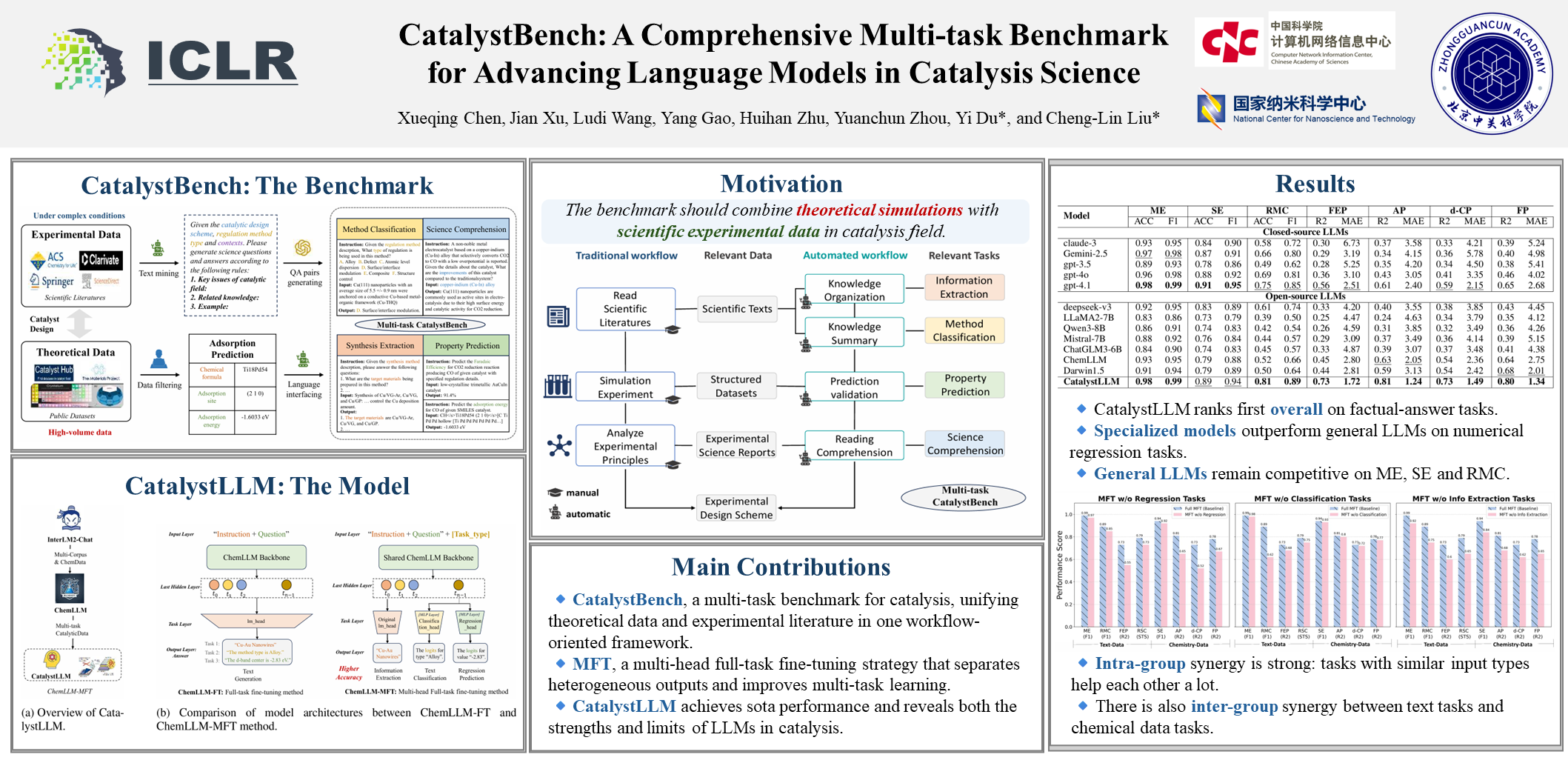
The discovery of novel catalytic materials is a cornerstone of chemical engineering and sustainable energy, yet it remains a complex, knowledge-intensive process. While Large Language Models (LLMs) have demonstrated remarkable potential in various scientific domains, their application to catalysis is hindered by the lack of specialized, multi-dimensional benchmarks to guide their development and evaluation. To bridge the critical gap, we introduce CatalystBench, a comprehensive and challenging benchmark meticulously constructed from scientific literature and public datasets, specifically designed to assess the capabilities of LLMs in the nuanced domain of catalyst design. The tasks covered by this benchmark dataset encompass the entire closed-loop process of catalyst development, including reading comprehension, experimental analysis and scheme reasoning. Based on this benchmark, we propose a Multi-head Full-task (MFT) domain-specific fine-tuning method that employs coupling task-specific output heads. We systematically compare with other three distinct fine-tuning strategies: Single-Task (ST), Full-Task (FT) and Multi-head Single-Task (MST). The extensive experiments demonstrate that the MFT strategy consistently achieves the most substantial performance improvements across all tasks, underscoring the effectiveness of explicit multi-task architectures in complex scientific reasoning. The resulting CatalystLLM significantly outperforms a wide array of state-of-the-art open-source and closed-source models on CatalystBench. We will publicly release both the CatalystBench benchmark and the CatalystLLM model, providing the community with a robust evaluation framework and a powerful new tool to accelerate AI-driven research in catalytic materials science.
mCLM: A Modular Chemical Language Model that Generates Functional and Makeable Molecules
Carl Edwards ⋅ Chi Han ⋅ Gawon Lee ⋅ Thao Nguyen ⋅ Sara Szymkuć ⋅ Chetan Prasad ⋅ Bowen Jin ⋅ Jiawei Han ⋅ Ying Diao ⋅ Ge Liu ⋅ Hao Peng ⋅ Bartosz Grzybowski ⋅ Martin Burke ⋅ Heng Ji
Despite their ability to understand chemical knowledge, large language models (LLMs) remain limited in their capacity to propose novel molecules with desired functions (e.g., drug-like properties). In addition, the molecules that LLMs propose can often be challenging to make, and are almost never compatible with automated synthesis approaches. To better enable the discovery of functional small molecules, LLMs need to learn a new molecular language that is more effective in predicting properties and inherently synced with automated synthesis technology. Current molecule LLMs are limited by representing molecules based on atoms. In this paper, we argue that just like tokenizing texts into meaning-bearing (sub-)word tokens instead of characters, molecules should be tokenized at the level of functional building blocks, i.e., parts of molecules that bring unique functions and serve as effective building blocks for real-world automated laboratory synthesis. This motivates us to propose mCLM, a modular Chemical-Language Model that comprises a bilingual language model that understands both natural language descriptions of functions and molecular blocks. mCLM front-loads synthesizability considerations while improving the predicted functions of molecules in a principled manner. Experiments on 430 FDA-approved drugs showed that mCLM is capable of significantly improving chemical functions critical to determining drug potentials. mCLM, with only 3B parameters, also achieves improvements in synthetic accessibility relative to 7 other leading generative AI methods including GPT-5. When tested on 122 out-of-distribution medicines using only building blocks/tokens that are compatible with automated modular synthesis, mCLM outperforms all baselines in property scores and synthetic accessibility. mCLM can also reason on multiple functions and iteratively self-improve to rescue drug candidates that failed late in clinical trials (“fallen angels”).
Property-Driven Protein Inverse Folding with Multi-Objective Preference Alignment
Junqi Liu ⋅ Xiaoyang Hou ⋅ Chence Shi ⋅ Xin Liu ⋅ Zhi Yang ⋅ Jian Tang

Protein sequence design must balance designability, defined as the ability to recover a target backbone, with multiple, often competing, developability properties such as solubility, thermostability, and expression. Existing approaches address these properties through post hoc mutation, inference-time biasing, or retraining on property-specific subsets, yet they are target dependent and demand substantial domain expertise or careful hyperparameter tuning. In this paper, we introduce ProtAlign, a multi-objective preference alignment framework that fine-tunes pretrained inverse folding models to satisfy diverse developability objectives while preserving structural fidelity. ProtAlign employs a semi-online Direct Preference Optimization strategy with a flexible preference margin to mitigate conflicts among competing objectives and constructs preference pairs using in silico property predictors. Applied to the widely used ProteinMPNN backbone, the resulting model MoMPNN enhances developability without compromising designability across tasks including sequence design for CATH 4.3 crystal structures, de novo generated backbones, and real-world binder design scenarios, making it an appealing framework for practical protein sequence design.
Leveraging Discrete Function Decomposability for Scientific Design
James Bowden ⋅ Sergey Levine ⋅ Jennifer Listgarten
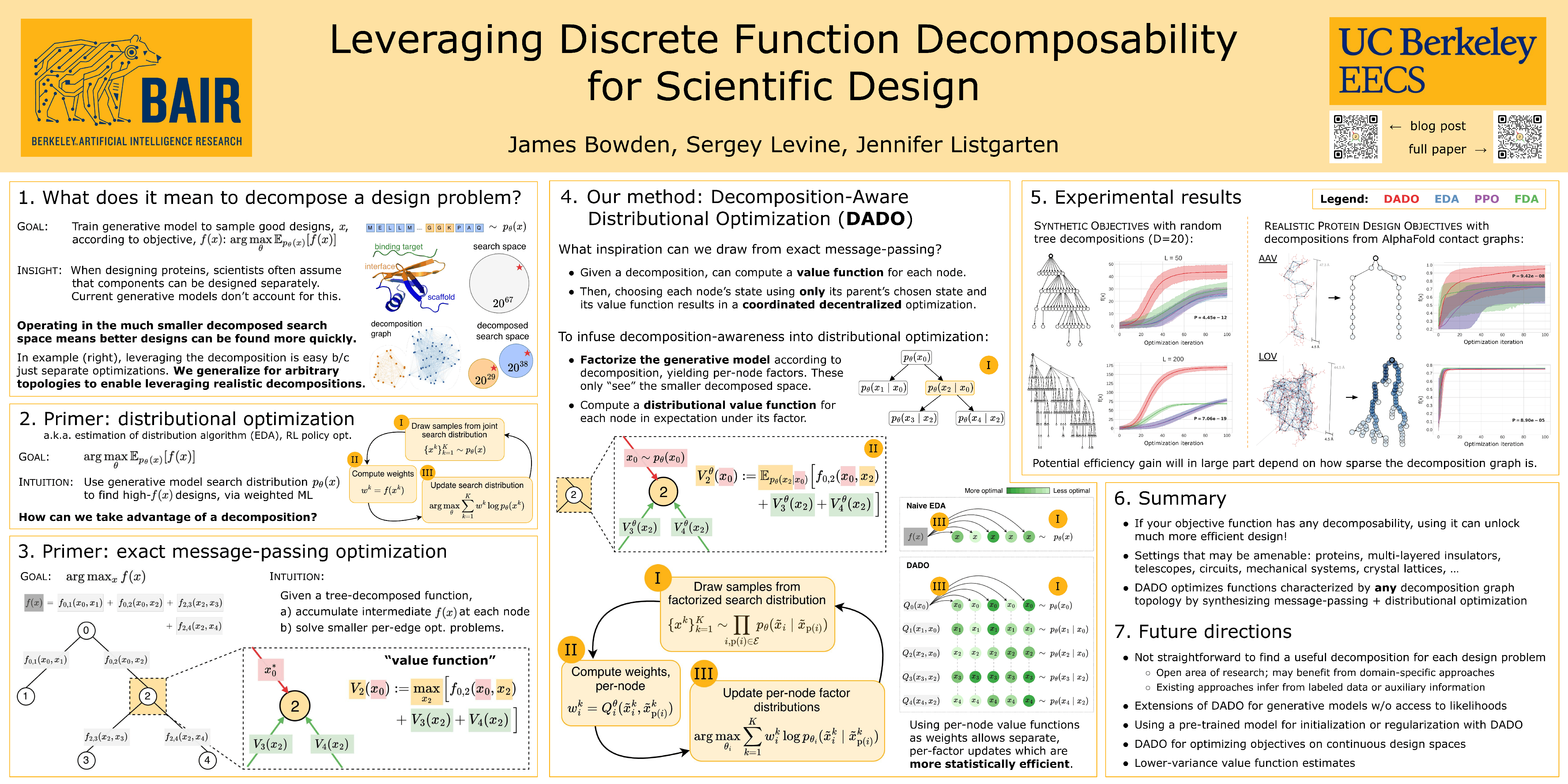
In the era of AI-driven science and engineering, we often want to design discrete objects (e.g., circuits, proteins, materials) in silico according to user-specified properties (e.g., that a protein binds its target). Given a property predictive model, in silico design typically involves training a generative model over the design space (e.g., over the set of all length-L proteins) to concentrate on designs with the desired properties. Distributional optimization, formalized as an estimation of distribution algorithm or as reinforcement learning policy optimization, maximizes an objective function in expectation over samples. Optimizing a distribution over discrete-valued designs is in general challenging due to the combinatorial nature of the design space. However, many property predictors in scientific applications are decomposable in the sense that they can be factorized over design variables in a way that will prove useful. For example, the active site amino acids in a catalytic protein may need to only loosely interact with the rest of the protein for maximal catalytic activity. Current distributional optimization algorithms are unable to make use of such structure, which could dramatically improve the optimization. Herein, we propose and demonstrate use of a new distributional optimization algorithm, Decomposition-Aware Distributional Optimization (DADO), that can leverage any decomposability defined by a junction tree on the design variables. At its core, DADO employs a factorized “search distribution”—a learned generative model—for efficient navigation of the search space, and invokes graph message passing to coordinate optimization across all variables.
MoMa: A Simple Modular Learning Framework for Material Property Prediction
Botian Wang ⋅ Yawen Ouyang ⋅ Yaohui Li ⋅ Mianzhi Pan ⋅ yuanhang tang ⋅ Haorui Cui ⋅ Yiqun Wang ⋅ Jianbing Zhang ⋅ Xiaonan Wang ⋅ Wei-Ying Ma ⋅ Hao Zhou

Deep learning methods for material property prediction have been widely explored to advance materials discovery. However, the prevailing pre-train paradigm often fails to address the inherent diversity and disparity of material tasks. To overcome these challenges, we introduce MoMa, a simple Modular framework for Materials that first trains specialized modules across a wide range of tasks and then adaptively composes synergistic modules tailored to each downstream scenario. Evaluation across 17 datasets demonstrates the superiority of MoMa, with a substantial 14% average improvement over the strongest baseline. Few-shot and module scaling experiments further highlight MoMa's potential for real-world applications. Pioneering a new paradigm of modular material learning, MoMa will be open-sourced to foster broader community collaboration.
h-MINT: Modeling Pocket-Ligand Binding with Hierarchical Molecular Interaction Network
Yanru Qu ⋅ Yijie Zhang ⋅ Wenjuan Tan ⋅ Xiangzhe Kong ⋅ Xiangxin Zhou ⋅ Chaoran Cheng ⋅ Mathieu Blanchette ⋅ Jiaxuan You ⋅ Ge Liu
Accurate molecular representations are critical for drug discovery, and a central challenge lies in capturing the chemical environment of molecular fragments, as key interactions, such as H-bond and π stacking, which occur only under specific local conditions. Most existing approaches represent molecules as atom-level graphs; however, individual atoms cannot express stereochemistry, lone pairs, conjugation, and other complex features. Fragment-based methods (e.g., principal subgraph or functional group libraries) fail to preserve essential information such as chirality, aromatic bond integrity, and ionic states. This work addresses these limitations from two aspects. (i) OverlapBPE tokenization. We propose a novel data-driven molecule tokenization method. Unlike existing approaches, our method allows overlapping fragments, reflecting the inherently fuzzy boundaries of small-molecule substructures and, together with enriched chemical information at the token level, thereby preserving a more complete chemical context. (ii) h- MINT model. We develop a hierarchical molecular interaction network capable of jointly modeling drug–target interactions at both atom and fragment levels. By supporting fragment overlaps, the model naturally accommodates the many-to- many atom–fragment mappings introduced by the OverlapBPE scheme. Extensive evaluation against state-of-the-art methods shows our method improves binding affinity prediction by 2-4% Pearson/Spearman correlation on PDBBind and LBA, enhances virtual screening by 1-3% in key metrics on DUD-E and LIT-PCBA, and achieves the best overall HTS performance on PubChem assays. Further analysis demonstrates that our method effectively captures interactive information while maintaining good generalization.
Exploring Synthesizable Chemical Space with Iterative Pathway Refinements
Seul Lee ⋅ Karsten Kreis ⋅ Srimukh Veccham ⋅ Meng Liu ⋅ Danny Reidenbach ⋅ Saee Paliwal ⋅ Weili Nie ⋅ Arash Vahdat
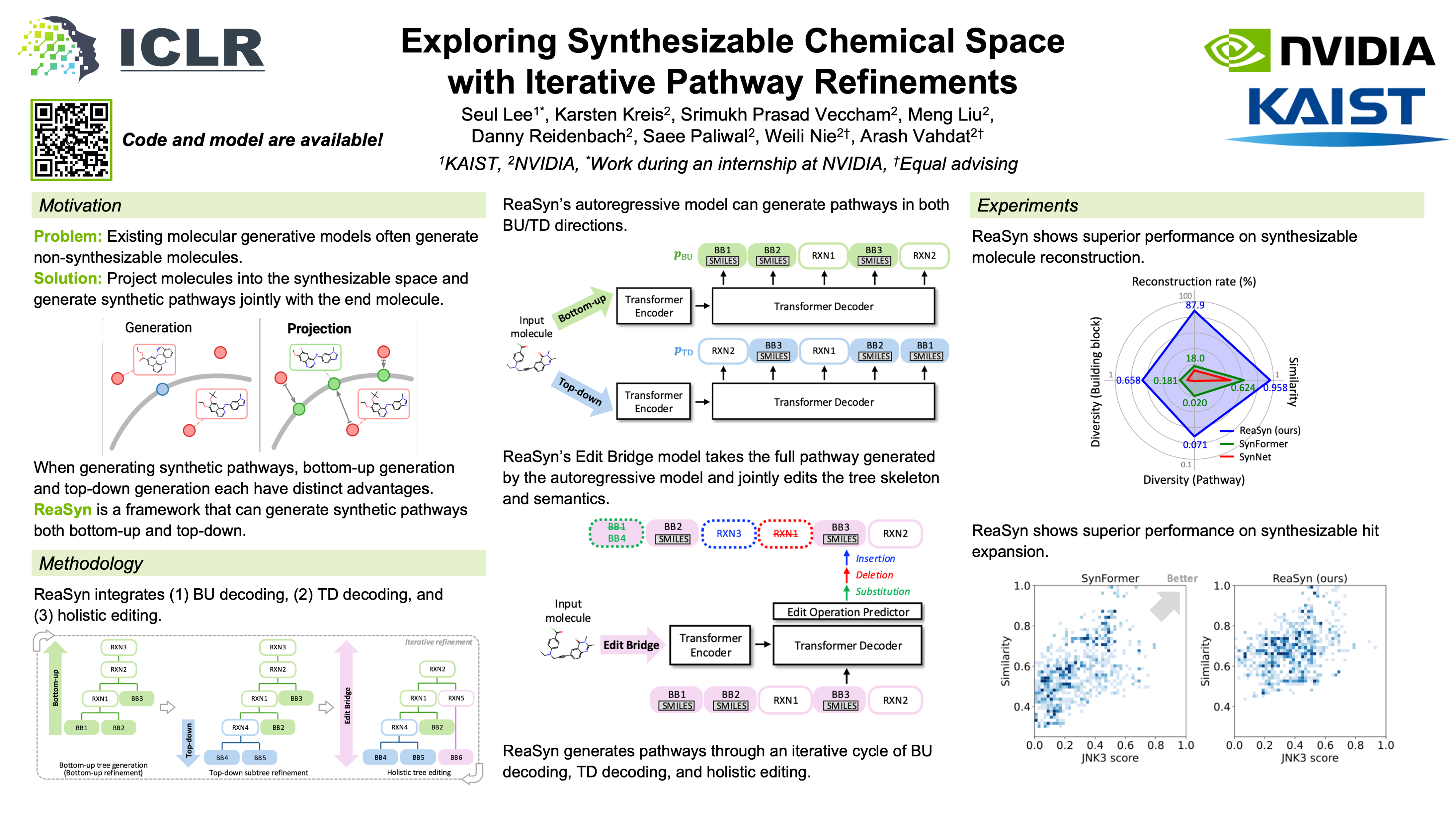
A well-known pitfall of molecular generative models is that they are not guaranteed to generate synthesizable molecules. Existing solutions for this problem often struggle to effectively navigate exponentially large combinatorial space of synthesizable molecules and suffer from poor coverage. To address this problem, we introduce ReaSyn, an iterative generative pathway refinement framework that obtains synthesizable analogs to input molecules by projecting them onto synthesizable space. Specifically, we propose a simple synthetic pathway representation that allows for generating pathways in both bottom-up and top-down traversal of synthetic trees. We design ReaSyn so that both bottom-up and top-down pathways can be sampled with a single unified autoregressive model. ReaSyn can thus iteratively refine subtrees of generated synthetic trees in a bidirectional manner. Further, we introduce a discrete flow model that refines the generated pathway at the entire pathway level with edit operations: insertion, deletion, and substitution. The iterative refinement cycle of (1) bottom-up decoding, (2) top-down decoding, and (3) holistic editing constitutes a powerful pathway reasoning strategy, allowing the model to explore the vast space of synthesizable molecules. Experimentally, ReaSyn achieves the highest reconstruction rate and pathway diversity in synthesizable molecule reconstruction and the highest optimization performance in synthesizable goal-directed molecular optimization, and significantly outperforms previous synthesizable projection methods in synthesizable hit expansion. These results highlight ReaSyn's superior ability to navigate combinatorially-large synthesizable chemical space.
KGOT: Unified Knowledge Graph and Optimal Transport Pseudo-Labeling for Molecule-Protein Interaction Prediction
Jiayu Qin ⋅ Zhengquan Luo ⋅ Guy Tadmor ⋅ Changyou Chen ⋅ David Zeevi ⋅ Zhiqiang Xu
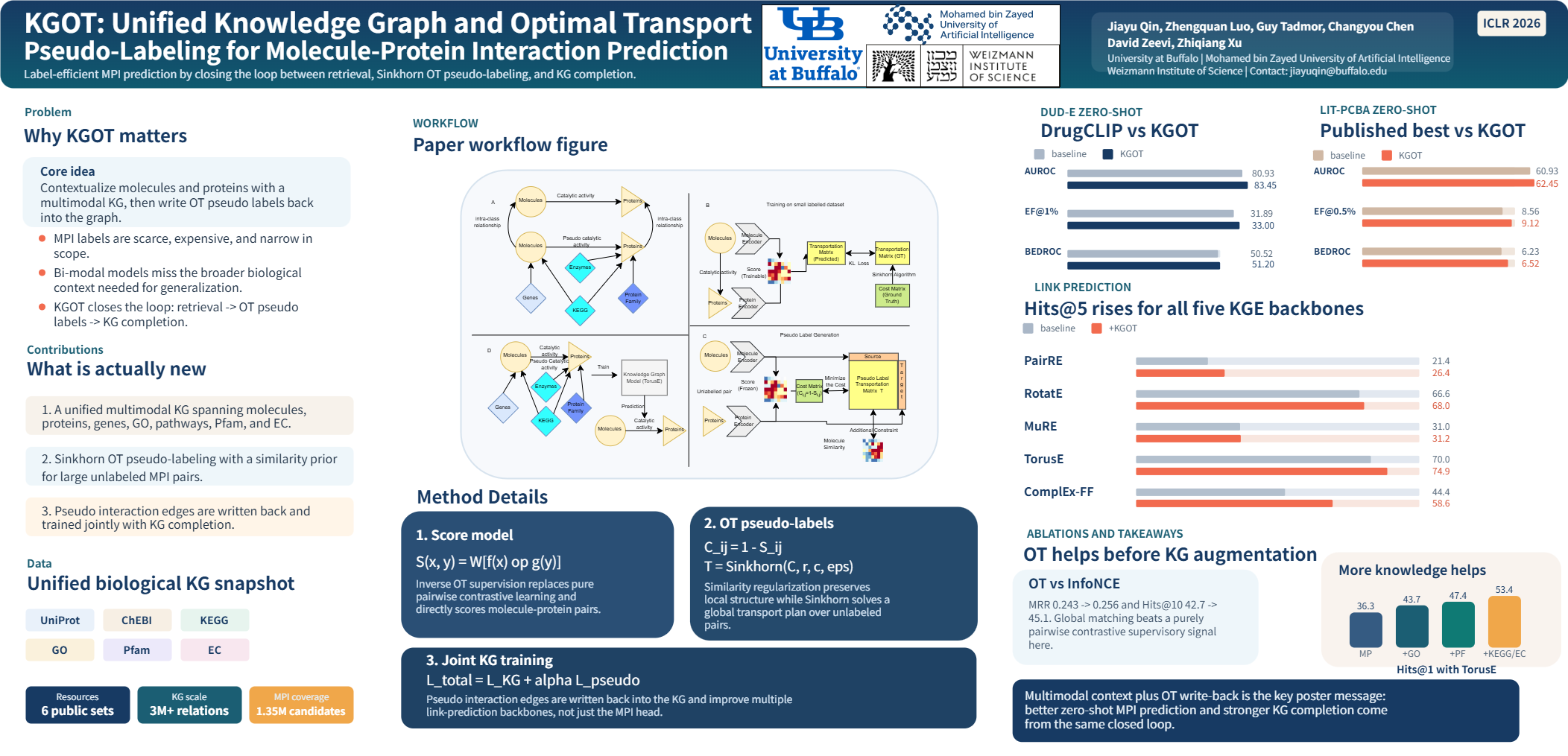
Predicting molecule-protein interactions (MPIs) is a fundamental task in computational biology, with crucial applications in drug discovery and molecular function annotation. However, existing MPI models face two major challenges. First, the scarcity of labeled molecule-protein pairs significantly limits model performance, as available datasets capture only a small fraction of biological relevant interactions. Second, most methods rely solely on molecular and protein features, ignoring broader biological context—such as genes, metabolic pathways, and functional annotations—that could provide essential complementary information. To address these limitations, our framework first aggregates diverse biological datasets, including molecular, protein, genes and pathway-level interactions, and then develop an optimal transport-based approach to generate high-quality pseudo-labels for unlabeled molecule-protein pairs, leveraging the underlying distribution of known interactions to guide label assignment. By treating pseudo-labeling as a mechanism for bridging disparate biological modalities, our approach enables the effective use of heterogeneous data to enhance MPI prediction. We evaluate our framework on multiple MPI datasets including virtual screening tasks and protein retrieval tasks, demonstrating substantial improvements over state-of-the-art methods in prediction accuracies and zero shot ability across unseen interactions. Beyond MPI prediction, our approach provides a new paradigm for leveraging diverse biological data sources to tackle problems traditionally constrained by single or bi-modal learning, paving the way for future advances in computational biology and drug discovery.
Enhancing Molecular Property Predictions by Learning from Bond Modelling and Interactions
Yunqing LIU ⋅ Yi Zhou ⋅ Wenqi Fan
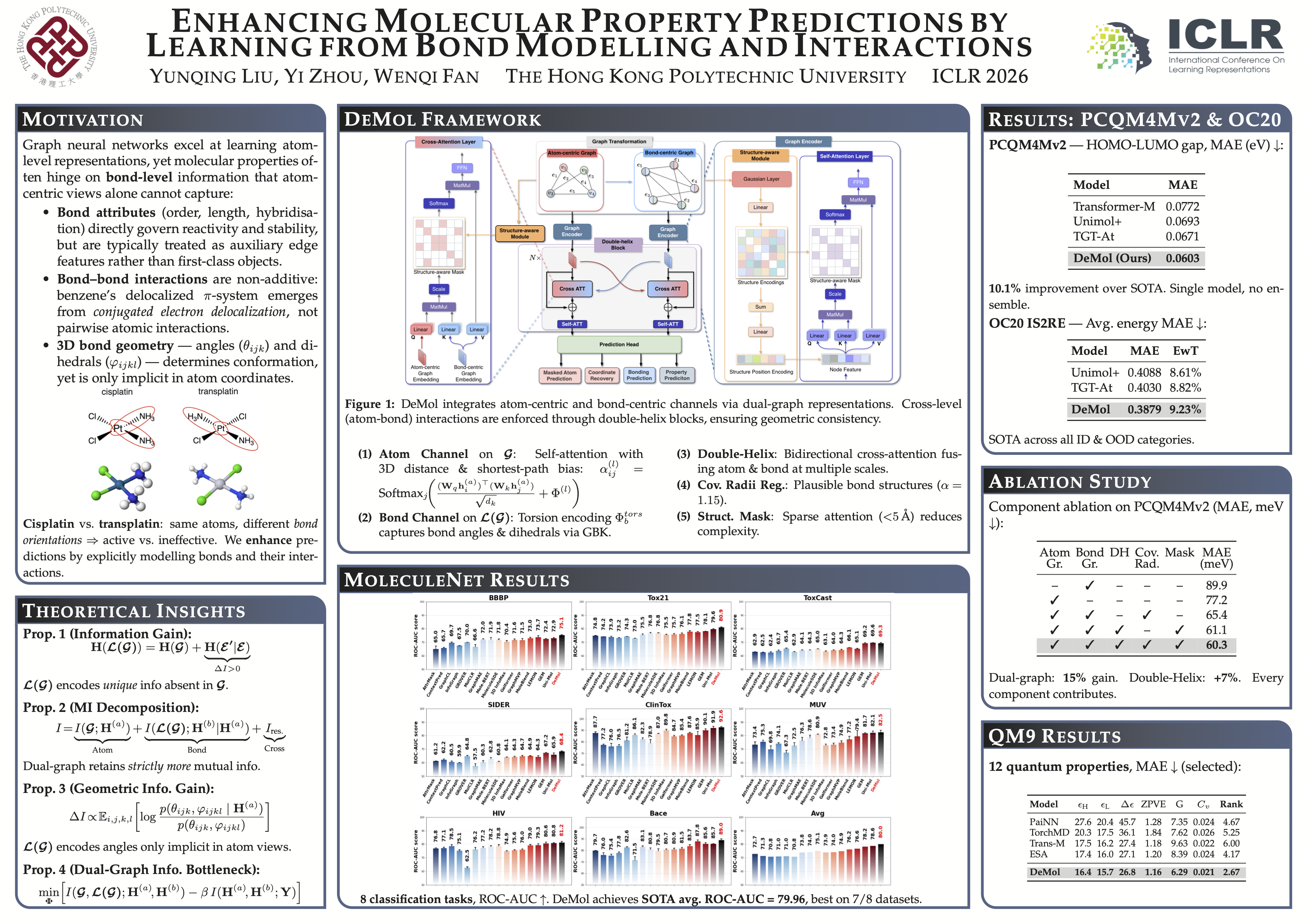
Molecule representation learning is crucial for understanding and predicting molecular properties. However, conventional atom-centric models, which treat chemical bonds merely as pairwise interactions, often overlook complex bond-level phenomena like resonance and stereoselectivity. This oversight limits their predictive accuracy for nuanced chemical behaviors. To address this limitation, we introduce \textbf{DeMol}, a dual-graph framework whose architecture is motivated by a rigorous information-theoretic analysis demonstrating the information gain from a bond-centric perspective. DeMol explicitly models molecules through parallel atom-centric and bond-centric channels. These are synergistically fused by multi-scale Double-Helix Blocks designed to learn intricate atom-atom, atom-bond, and bond-bond interactions. The framework's geometric consistency is further enhanced by a regularization term based on covalent radii to enforce chemically plausible structures. Comprehensive evaluations on diverse benchmarks, including PCQM4Mv2, OC20 IS2RE, QM9, and MoleculeNet, show that DeMol establishes a new state-of-the-art, outperforming existing methods. These results confirm the superiority of explicitly modelling bond information and interactions, paving the way for more robust and accurate molecular machine learning.
Fast and Interpretable Protein Substructure Alignment via Optimal Transport
Zhiyu Wang ⋅ Bingxin Zhou ⋅ Weishu Zhao ⋅ Yang Tan ⋅ Jing Wang ⋅ Pietro Lio ⋅ liang hong
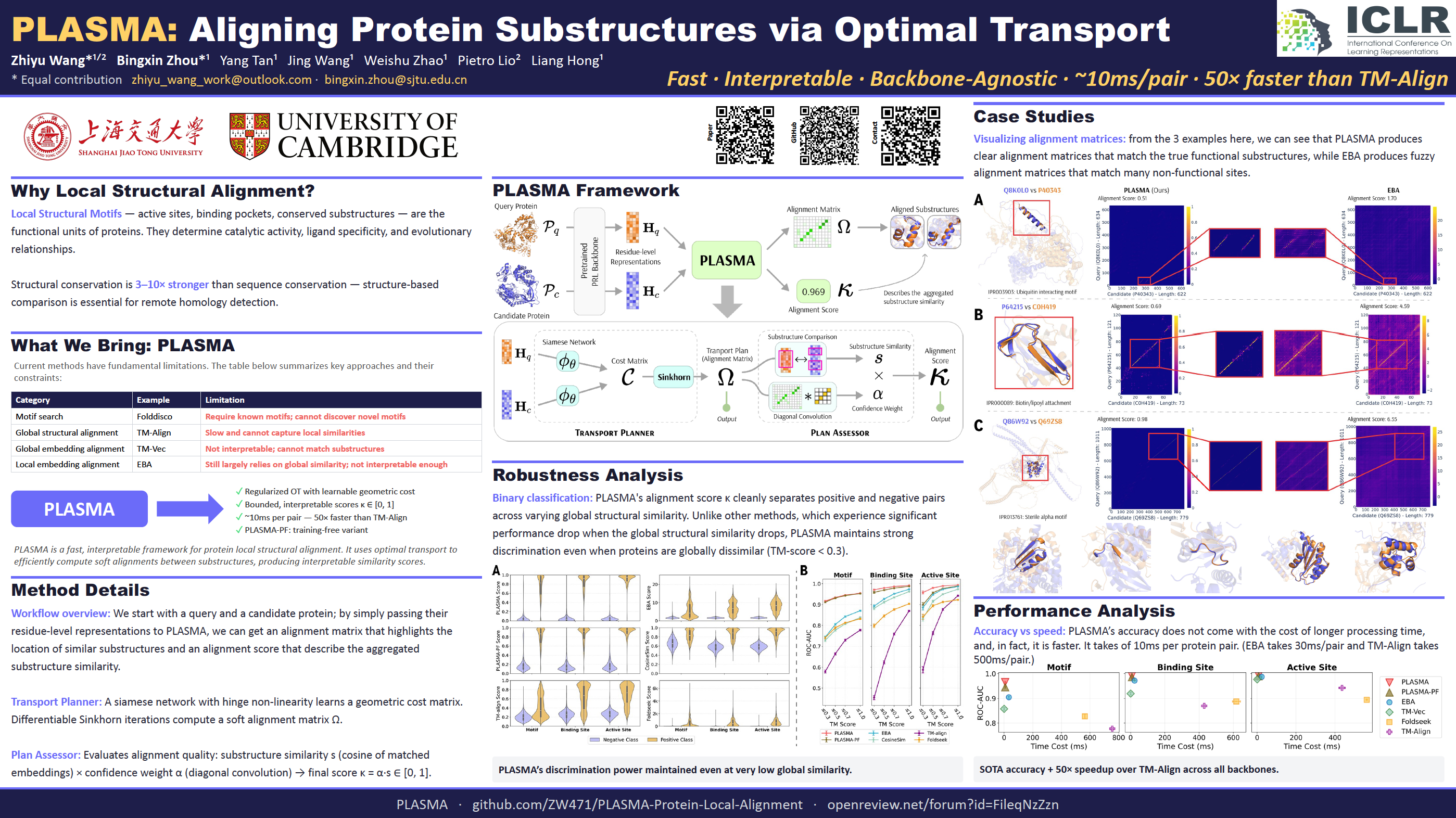
Proteins are essential biological macromolecules that execute life functions. Local motifs within protein structures, such as active sites, are the most critical components for linking structure to function and are key to understanding protein evolution and enabling protein engineering. Existing computational methods struggle to identify and compare these local structures, which leaves a significant gap in understanding protein structures and harnessing their functions. This study presents PLASMA, the first deep learning framework for efficient and interpretable residue-level protein substructure alignment. We reformulate the problem as a regularized optimal transport task and leverage differentiable Sinkhorn iterations. For a pair of input protein structures, PLASMA outputs a clear alignment matrix with an interpretable overall similarity score. Through extensive quantitative evaluations and three biological case studies, we demonstrate that PLASMA achieves accurate, lightweight, and interpretable residue-level alignment. Additionally, we introduce PLASMA-PF, a training-free variant that provides a practical alternative when training data are unavailable. Our method addresses a critical gap in protein structure analysis tools and offers new opportunities for functional annotation, evolutionary studies, and structure-based drug design. Reproducibility is ensured via our official implementation at https://github.com/ZW471/PLASMA-Protein-Local-Alignment.git.
BioBO: Biology-informed Bayesian Optimization for Perturbation Design
Yanke Li ⋅ Tianyu Cui ⋅ Tommaso Mansi ⋅ Mangal Prakash ⋅ Rui Liao
Efficient design of genomic perturbation experiments is crucial for accelerating drug discovery and therapeutic target identification, yet exhaustive perturbation of the human genome remains infeasible due to the vast search space of potential genetic interactions and experimental constraints. Bayesian optimization (BO) has emerged as a powerful framework for selecting informative interventions, but existing approaches often fail to exploit domain-specific biological prior knowledge. We propose Biology-Informed Bayesian Optimization (BioBO), a method that integrates Bayesian optimization with multimodal gene embeddings and enrichment analysis, a widely used tool for gene prioritization in biology, to enhance surrogate modeling and acquisition strategies. BioBO combines biologically grounded priors with acquisition functions in a principled framework, which biases the search toward promising genes while maintaining the ability to explore uncertain regions. Through experiments on established public benchmarks and datasets, we demonstrate that BioBO improves labeling efficiency by 25-40\%, and consistently outperforms conventional BO by identifying top-performing perturbations more effectively. Moreover, by incorporating enrichment analysis, BioBO yields pathway-level explanations for selected perturbations, offering mechanistic interpretability that links designs to biologically coherent regulatory circuits.
SubDyve: Subgraph-Driven Dynamic Propagation for Virtual Screening Enhancement Controlling False Positive
Jungseob Yi ⋅ Seoyoung Choi ⋅ Sun Kim ⋅ Sangseon Lee
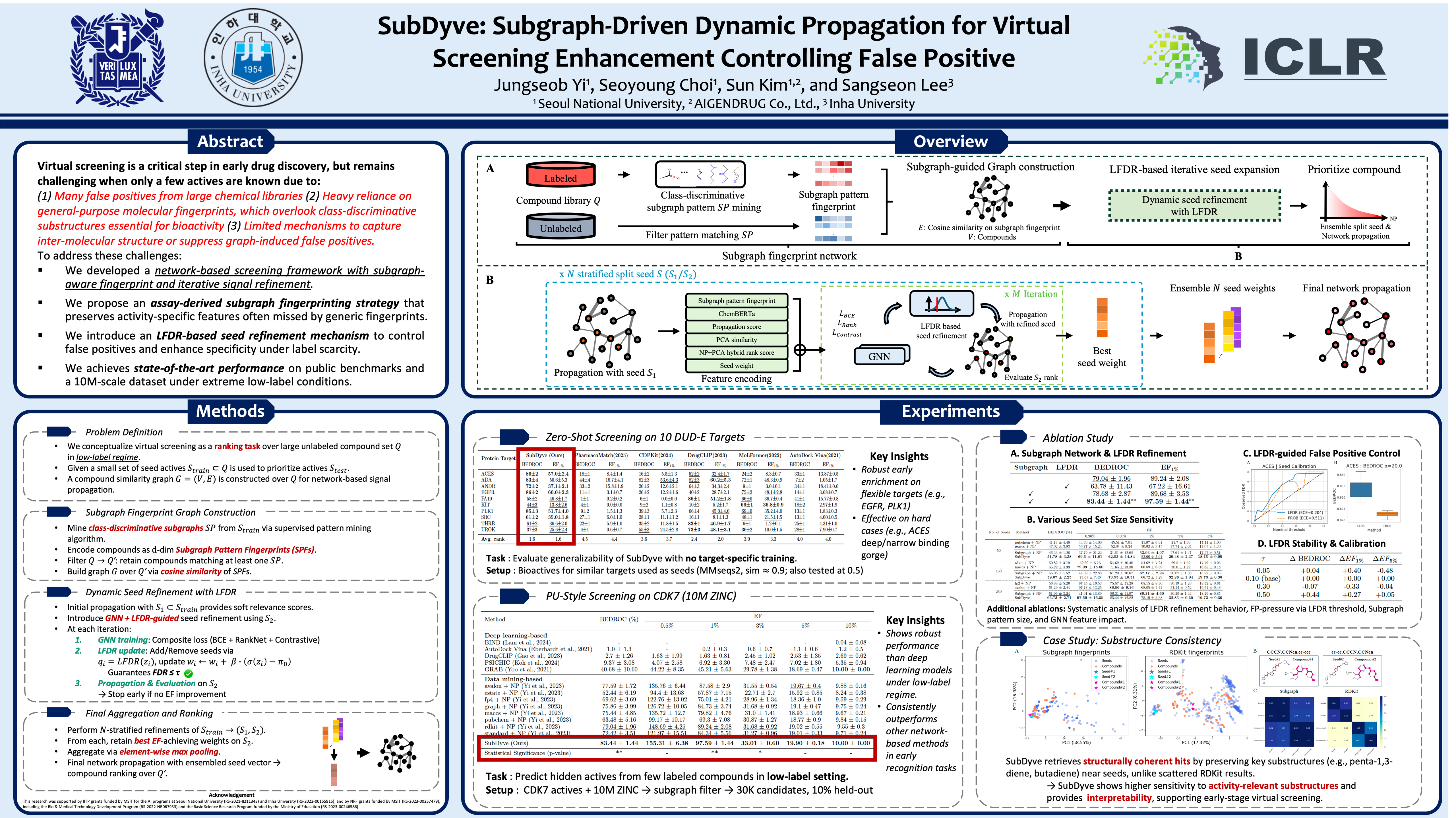
Virtual screening (VS) aims to identify bioactive compounds from vast chemical libraries, but remains difficult in low-label regimes where only a few actives are known. Existing methods largely rely on general-purpose molecular fingerprints and overlook class-discriminative substructures critical to bioactivity. Moreover, they consider molecules independently, limiting effectiveness in low-label regimes. We introduce SubDyve, a network-based VS framework that constructs a subgraph-aware similarity network and propagates activity signals from a small known actives. When few active compounds are available, SubDyve performs iterative seed refinement, incrementally promoting new candidates based on local false discovery rate. This strategy expands the seed set with promising candidates while controlling false positives from topological bias and overexpansion. We evaluate SubDyve on ten DUD-E targets under zero-shot conditions and on the CDK7 target with a 10-million-compound ZINC dataset. SubDyve consistently outperforms existing fingerprint or embedding-based approaches, achieving margins of up to +34.0 on the BEDROC and +24.6 on the $EF_{1\\%}$ metric.
OXtal: An All-Atom Diffusion Model for Organic Crystal Structure Prediction
Emily Jin ⋅ Andrei Nica ⋅ Mikhail Galkin ⋅ Jarrid Rector-Brooks ⋅ Kin Long Kelvin Lee ⋅ Santiago Miret ⋅ Frances Arnold ⋅ Michael Bronstein ⋅ Joey Bose ⋅ Alexander Tong ⋅ Chenghao Liu
Accurately predicting experimentally realizable 3D molecular crystal structures from their 2D chemical graphs is a long-standing open challenge in computational chemistry called crystal structure prediction (CSP). Efficiently solving this problem has implications ranging from pharmaceuticals to organic semiconductors, as crystal packing directly governs the physical and chemical properties of organic solids. In this paper, we introduce OXtal, a large-scale 100M parameter all-atom diffusion model that directly learns the conditional joint distribution over intramolecular conformations and periodic packing. To efficiently scale OXtal, we abandon explicit equivariant architectures imposing inductive bias arising from crystal symmetries in favor of data augmentation strategies. We further propose a novel crystallization-inspired lattice-free training scheme, Stoichiometric Stochastic Shell Sampling ($S^4$), that efficiently captures long-range interactions while sidestepping explicit lattice parametrization---thus enabling more scalable architectural choices at all-atom resolution. By leveraging a large dataset of 600K experimentally validated crystal structures (including rigid and flexible molecules, co-crystals, and solvates), OXtal achieves orders-of-magnitude improvements over prior ab initio machine learning CSP methods, while remaining orders of magnitude cheaper than traditional quantum-chemical approaches. Specifically, OXtal recovers experimental structures with conformer $\mathrm{RMSD}_1<0.5$ Å and attains over 80% packing similarity rate, demonstrating its ability to model both thermodynamic and kinetic regularities of molecular crystallization.
MolEditRL: Structure-Preserving Molecular Editing via Discrete Diffusion and Reinforcement Learning
Yuanxin Zhuang ⋅ Dazhong Shen ⋅ Ying Sun
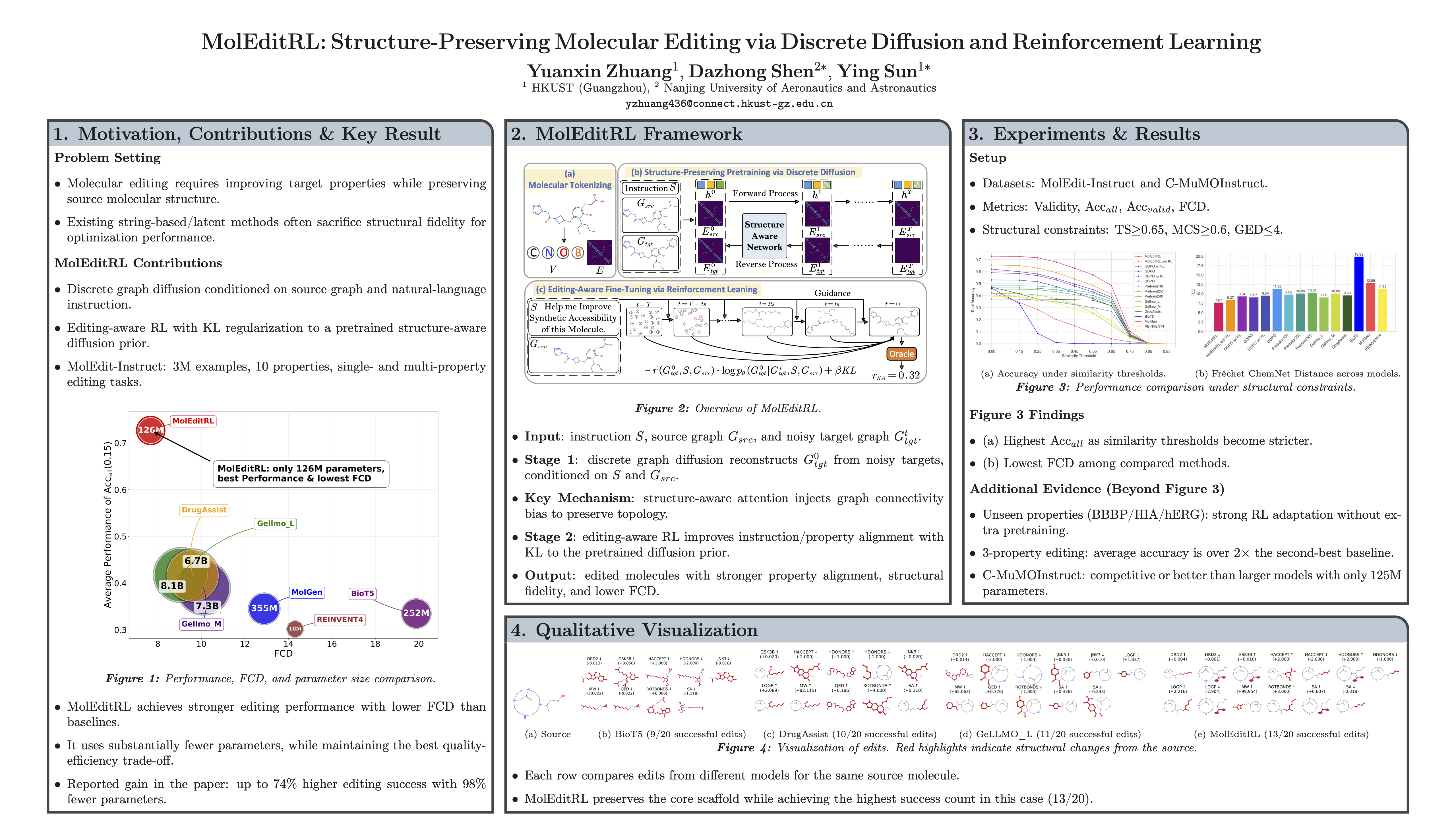
Molecular editing aims to modify a given molecule to optimize desired chemical properties while preserving structural similarity. However, current approaches typically rely on string-based or continuous representations, which fail to adequately capture the discrete, graph-structured nature of molecules, resulting in limited structural fidelity and poor controllability. In this paper, we propose MolEditRL, a molecular editing framework that explicitly integrates structural constraints with precise property optimization. Specifically, MolEditRL consists of two stages: (1) a discrete graph diffusion model pretrained to reconstruct target molecules conditioned on source structures and natural language instructions; (2) an editing-aware reinforcement learning fine-tuning stage that further enhances property alignment and structural preservation by explicitly optimizing editing decisions under graph constraints. For comprehensive evaluation, we construct MolEdit-Instruct, the largest and most property-rich molecular editing dataset, comprising 3 million diverse examples spanning single- and multi-property tasks across 10 chemical attributes. Experimental results demonstrate that MolEditRL significantly outperforms state-of-the-art methods in both property optimization accuracy and structural fidelity, achieving a 74% improvement in editing success rate while using 98% fewer parameters.
TetraGT: Tetrahedral Geometry-Driven Explicit Token Interactions with Graph Transformer for Molecular Representation Learning
Jinjia Feng ⋅ Zhewei Wei ⋅ Taifeng Wang ⋅ Zongyang Qiu
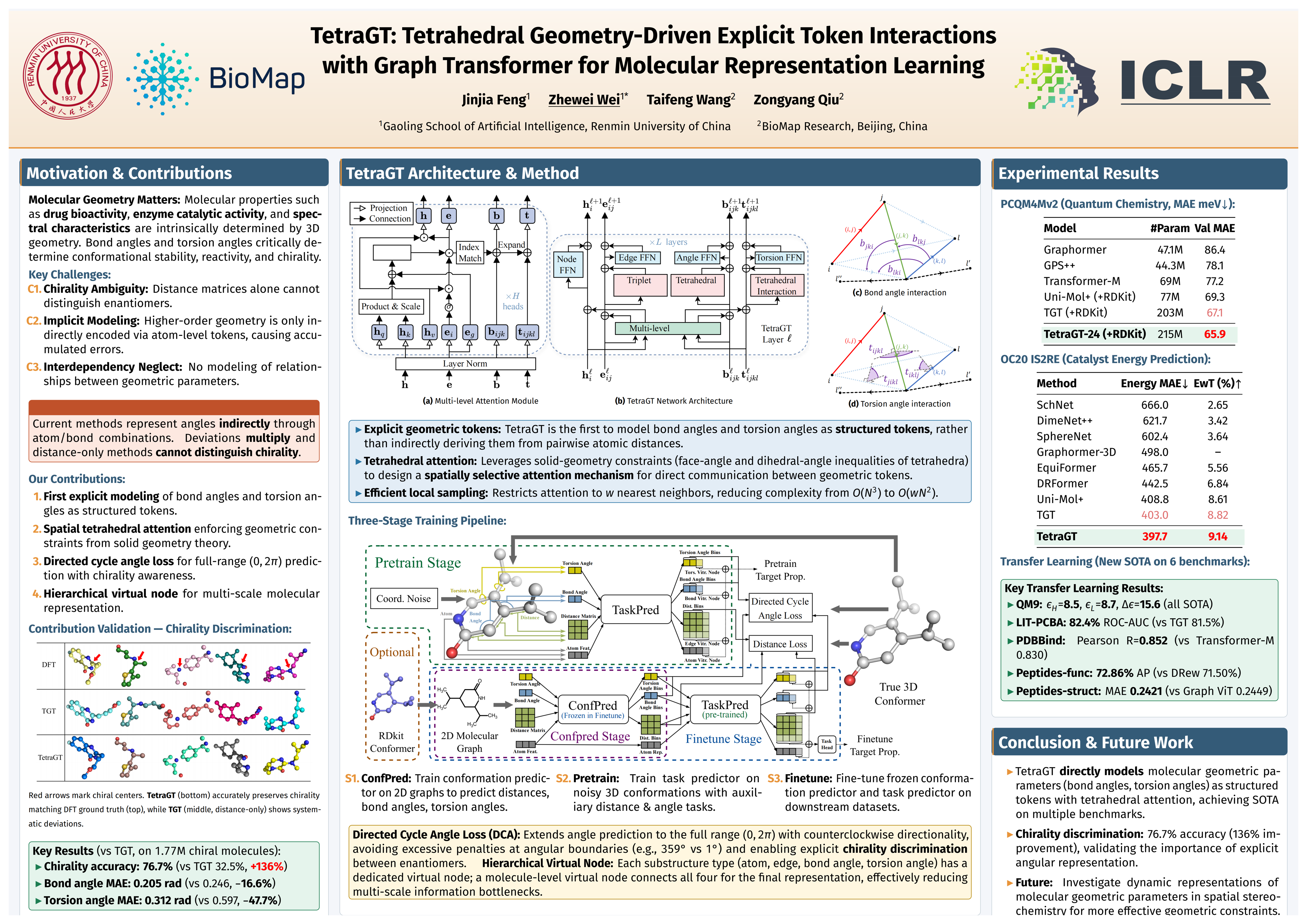
Molecular representations that fully capture geometric parameters such as bond angles and torsion angles are crucial for accurately predicting important molecular properties including enzyme catalytic activity, drug bioactivity, and molecular spectral characteristics, as demonstrated by extensive studies. However, current molecular graph representation learning approaches represent molecular geometric parameters only indirectly through combinations of atoms and bonds, neglecting the spatial relationships and interactions between these higher-order geometric structures. In this paper, we propose \textbf{TetraGT} (\textbf{Tetra}hedral \textbf{G}eometry-Driven Explicit \textbf{T}oken Interactions with Graph Transformer), a novel architecture that directly models molecular geometric parameters. Based on the spatial solid geometry theory of face angle and dihedral angle inequality, TetraGT explicitly represents bond angles and torsion angles as structured tokens for the first time, directly reflecting their intrinsic role in determining the molecular conformational stability and properties. Through our designed spatial tetrahedral attention mechanism, TetraGT achieves highly selective direct communication between structural tokens. Experimental results demonstrate that TetraGT achieves superior performance on the PCQM4Mv2 and OC20 IS2RE benchmarks. We also apply our pre-trained TetraGT model to downstream tasks including QM9, PDBBind, Peptides and LIT-PCBA, demonstrating that TetraGT delivers excellent results in transfer learning scenarios and shows scalability with increasing molecular size.
Reinforcement Learning Fine-Tuning Enhances Activation Intensity and Diversity in the Internal Circuitry of LLMs
Honglin Zhang ⋅ Qianyue Hao ⋅ Fengli Xu ⋅ Yong Li
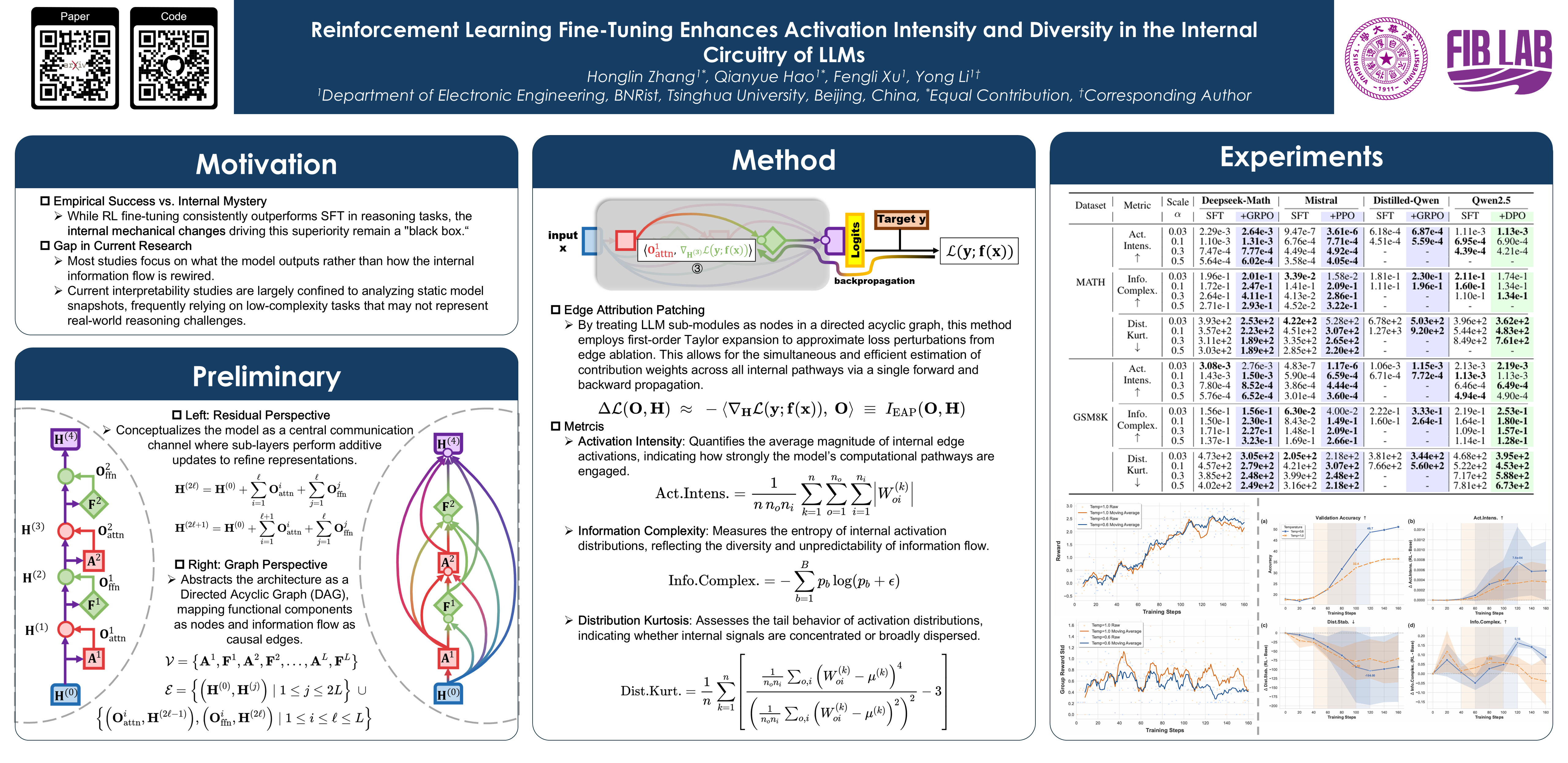
Large language models (LLMs) acquire extensive prior knowledge through large-scale pretraining and can be further enhanced via supervised fine-tuning (SFT) or reinforcement learning (RL)-based post-training. A growing body of evidence has shown that RL fine-tuning improves the capability of LLMs beyond what SFT alone achieves. However, the underlying mechanisms why RL fine-tuning is able to enhance the capability of various LLMs with distinct intrinsic characteristics remain underexplored. In this study, we draw inspiration from prior work on edge attribution patching (EAP) to investigate the internal differences of LLMs before and after RL fine-tuning. Our analysis across multiple model families and mathematical datasets shows two robust effects of online RL post-training: (i) an overall increase in average activation intensity, indicating that more internal pathways are engaged and their signals become stronger, and (ii) greater diversity in activation patterns, reflected by higher entropy and less concentrated edge distributions. These changes suggest that RL reshapes information flow to be both more redundant and more flexible, which may explain its advantage in mathematical generalization. Notably, models fine-tuned with Direct Preference Optimization (DPO) deviate from these trends, exhibiting substantially weaker or inconsistent internal changes compared to PPO- and GRPO-based training. Together, our findings provide a unified view of how RL fine-tuning systematically alters the internal circuitry of LLMs and highlight the methodological distinctions between online RL and preference-based approaches. Our code is open source at https://github.com/tsinghua-fib-lab/llmrlprobing_analysis.
Learning Collective Variables from BioEmu with Time-Lagged Generation
Seonghyun Park ⋅ Kiyoung Seong ⋅ Soojung Yang ⋅ Rafael Gomez-Bombarelli ⋅ Sungsoo Ahn
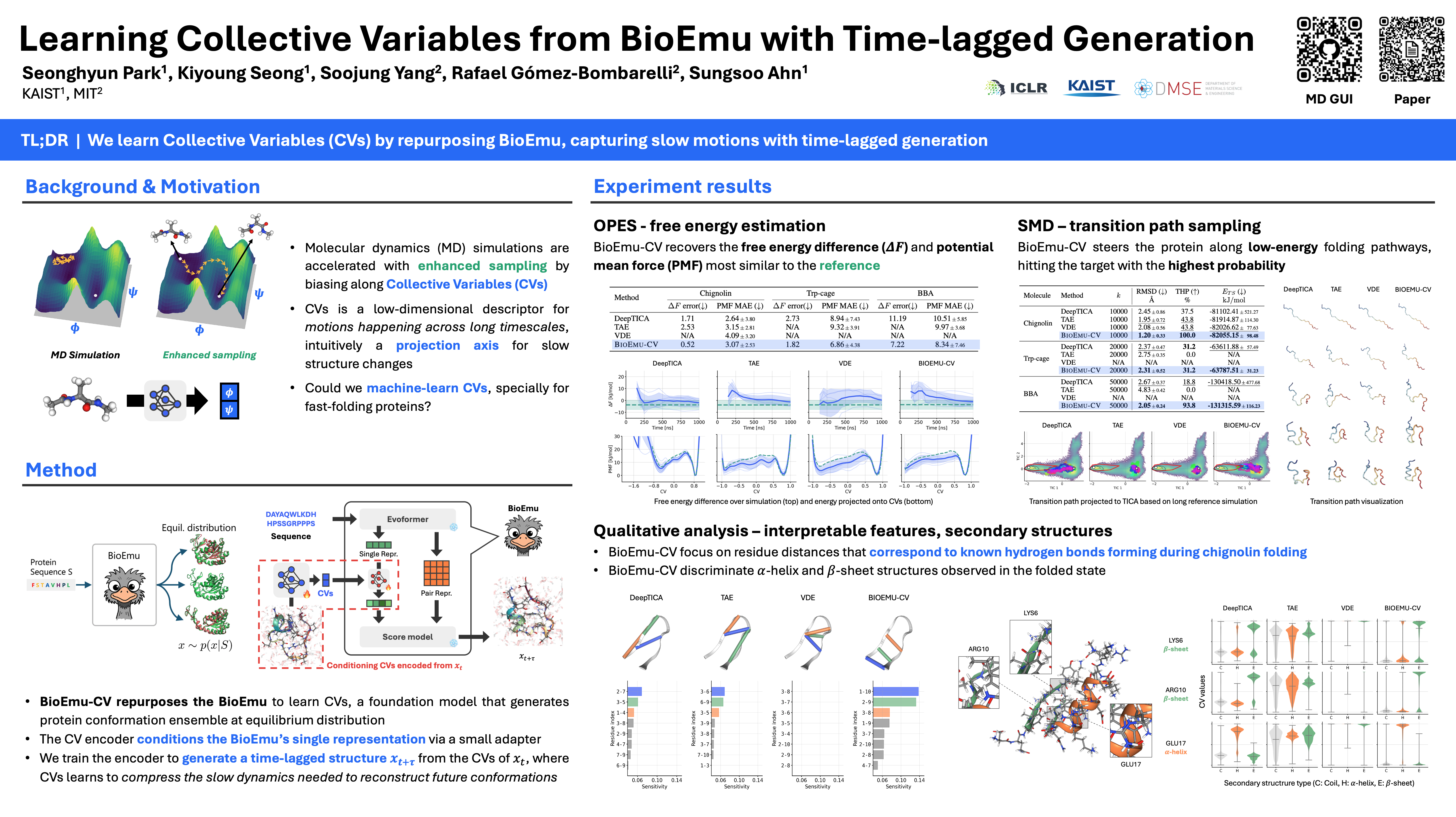
Molecular dynamics is crucial for understanding molecular systems but its applicability is often limited by the vast timescales of rare events like protein folding. Enhanced sampling techniques overcome this by accelerating the simulation along key reaction pathways, which are defined by collective variables (CVs). However, identifying effective CVs that capture the slow, macroscopic dynamics of a system remains a major bottleneck. This work proposes a novel framework coined BioEmu-CV that learns these essential CVs automatically from BioEmu, a recently proposed foundation model for generating protein equilibrium samples. In particular, we re-purpose BioEmu to learn time-lagged generation conditioned on the learned CV, i.e., predict the distribution of molecular states after a certain amount of time. This training process promotes the CV to encode only the slow, long-term information while disregarding fast, random fluctuations. We validate our learned CV on fast-folding proteins with two key applications: (1) estimating free energy differences using on-the-fly probability enhanced sampling and (2) sampling transition paths with steered molecular dynamics. Our empirical study also serves as a new systematic and comprehensive benchmark for MLCVs on fast-folding proteins larger than Alanine Dipeptide.
RainPro-8: An Efficient Deep Learning Model to Estimate Rainfall Probabilities Over 8 Hours
Rafael Pablos Sarabia ⋅ Joachim Nyborg ⋅ Morten Birk ⋅ Jeppe Sjørup ⋅ Anders Vesterholt ⋅ Ira Assent
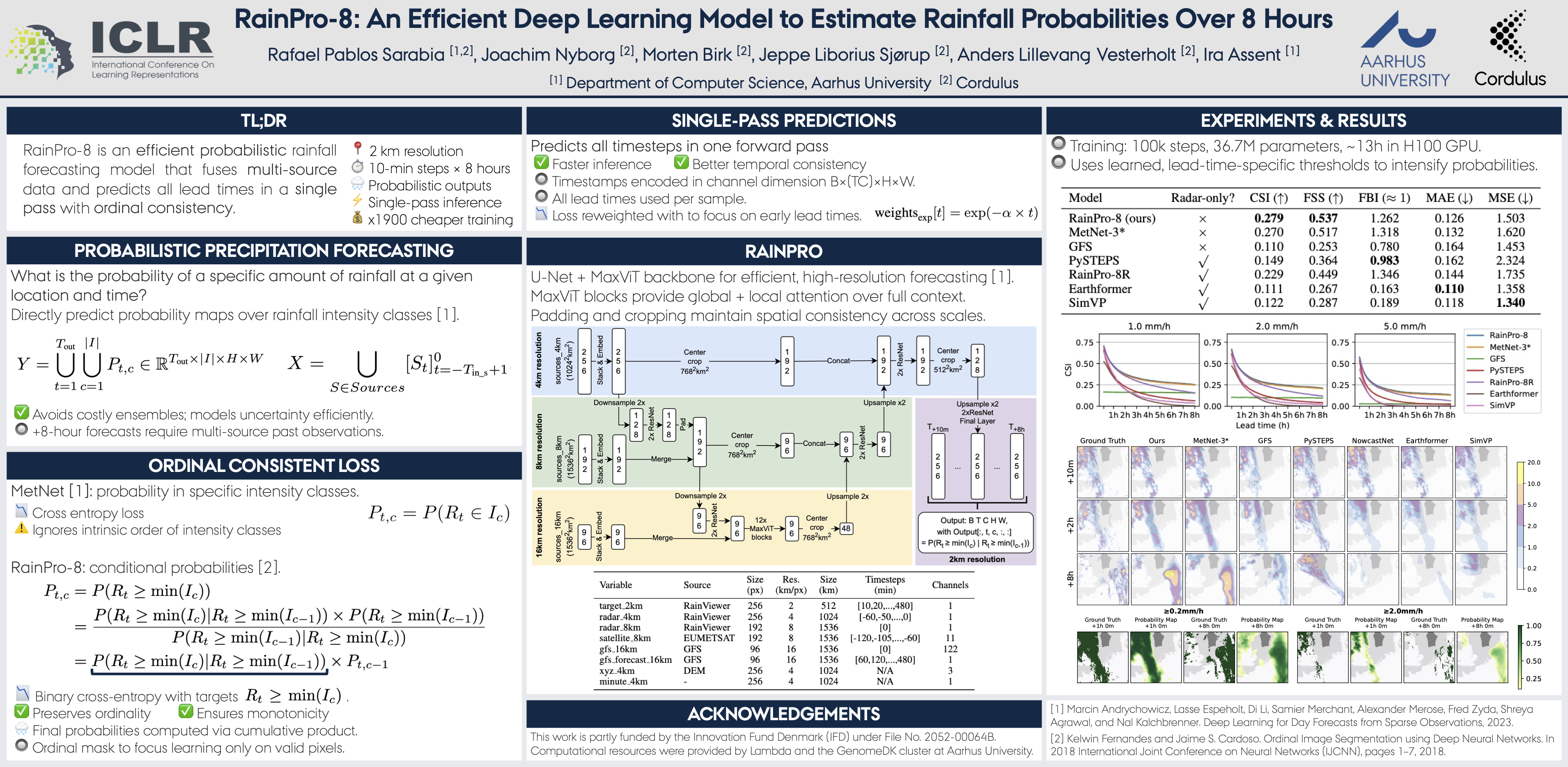
We present a deep learning model for high-resolution probabilistic precipitation forecasting over an 8-hour horizon in Europe, overcoming the limitations of radar-only deep learning models with short forecast lead times. Our model efficiently integrates multiple data sources - including radar, satellite, and physics-based numerical weather prediction (NWP) - while capturing long-range interactions, resulting in accurate forecasts with robust uncertainty quantification through consistent probabilistic maps. Featuring a compact architecture, it enables more efficient training and faster inference than existing models. Extensive experiments demonstrate that our model surpasses current operational NWP systems, extrapolation-based methods, and deep-learning nowcasting models, setting a new standard for high-resolution precipitation forecasting in Europe, ensuring a balance between accuracy, interpretability, and computational efficiency.
Station2Radar: Query‑Conditioned Gaussian Splatting for Precipitation Field
Doyi Kim ⋅ Minseok Seo ⋅ Changick Kim
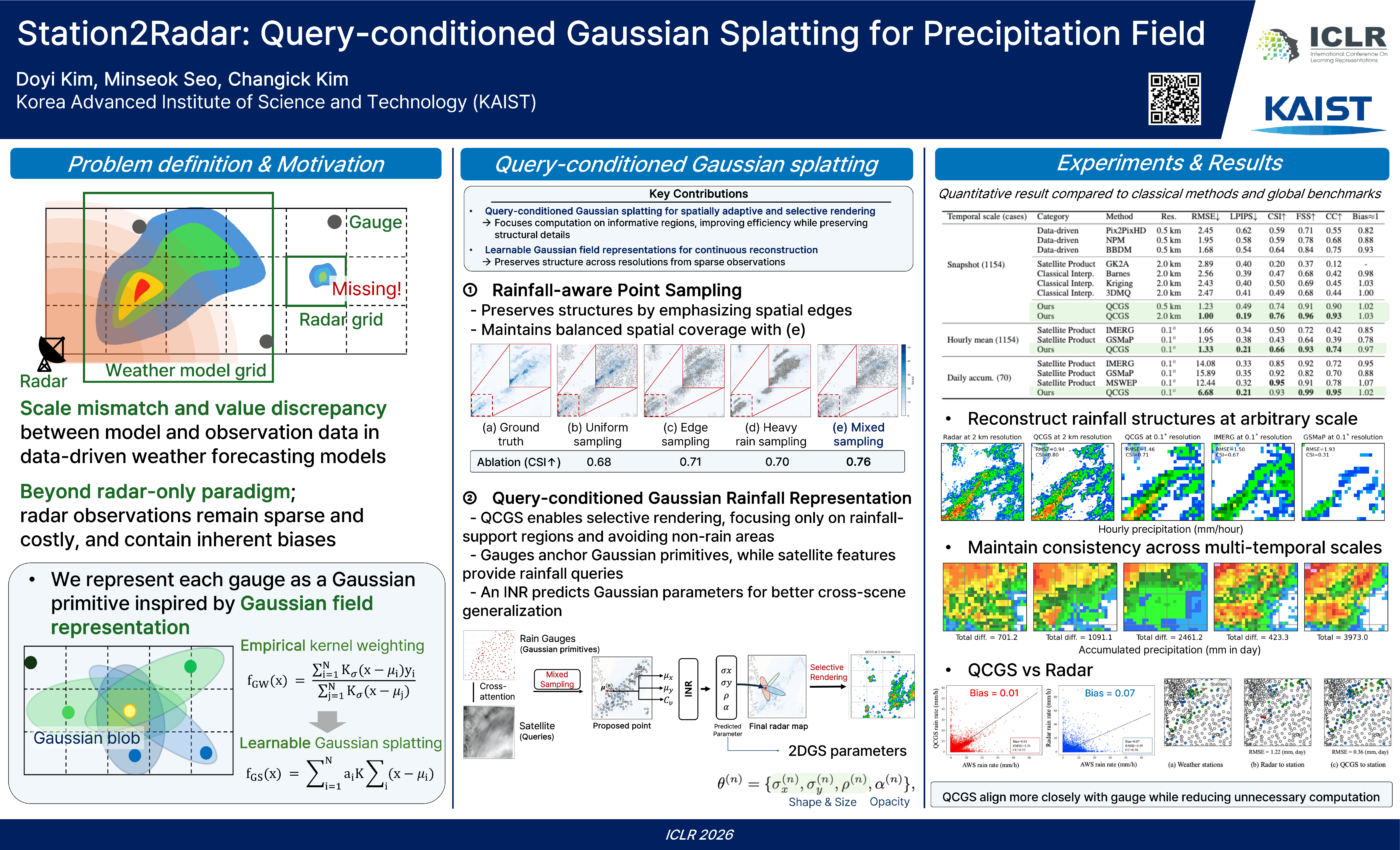
Precipitation forecasting relies on heterogeneous data sets. Weather radar is accurate, but coverage is geographically limited and costly to maintain. Weather stations provide accurate but sparse point measurements, while satellites offer dense, high-resolution coverage without direct rainfall retrieval. To overcome these limitations, we propose Query-Conditioned Gaussian Splatting (QCGS), the first framework to fuse automatic weather station (AWS) observations with satellite imagery for generating radar-like rainfall fields. Unlike conventional 2D Gaussian splatting, which renders the entire image plane, QCGS selectively renders only queried rainfall regions, avoiding unnecessary computation in non-precipitating areas while preserving sharp precipitation structures. The framework combines a radar point proposal network that identifies rainfall-support locations with an implicit neural representation (INR) network that predicts Gaussian parameters for each point. QCGS enables efficient, resolution-flexible rainfall field generation in real time. Through extensive evaluation with benchmark precipitation products, QCGS demonstrates over 50\% improvement in RMSE compared to conventional gridded rainfall products, and consistently maintains high performance across multiple spatiotemporal scales.
Improving Extreme Wind Prediction with Frequency-Informed Learning
Chenrui Xu ⋅ Xi Huang ⋅ Ying-Jun Zhang ⋅ Jianwei Huang
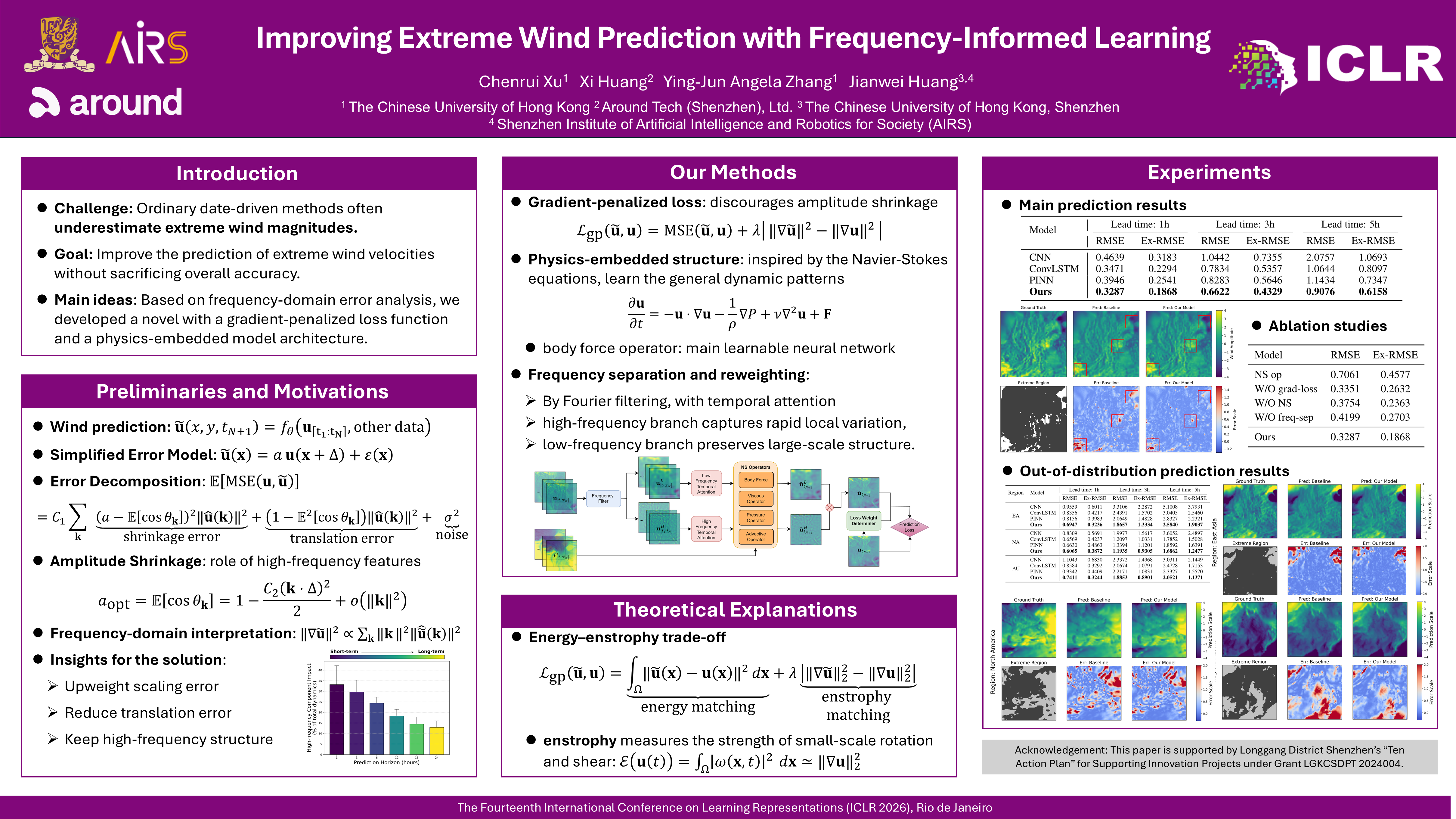
Accurate prediction of extreme wind velocities has substantial significance in industry, particularly for the operation management of wind power plants. Although the state-of-the-art data-driven models perform well for general meteorological forecasting, they may exhibit large errors for extreme weather—for example, systematically underestimating the magnitudes and short-term variation of extreme winds. To address this issue, we conduct a theoretical analysis of how the data frequency spectrum influences errors in extreme wind prediction. Based on these insights, we propose a novel loss function that incorporates a gradient penalty to mitigate the magnitude shrinkage of extreme weather, and we theoretically justify its effectiveness via a PDE-based energy–enstrophy analysis. To capture more precise short-term wind velocity variations, we design a novel structure of physics-embedded machine learning models with frequency reweighting. Experiments demonstrate that, compared to the baseline models, our approach achieves significant improvements in predicting extreme wind velocities while maintaining robust overall performance.
DeepPrim: a Physics-Driven 3D Short-term Weather Forecaster via Primitive Equation Learning
Jiawei Chen ⋅ Weiqi Chen ⋅ Rong Hu ⋅ Peiyuan Liu ⋅ Haifan Zhang ⋅ Liang Sun
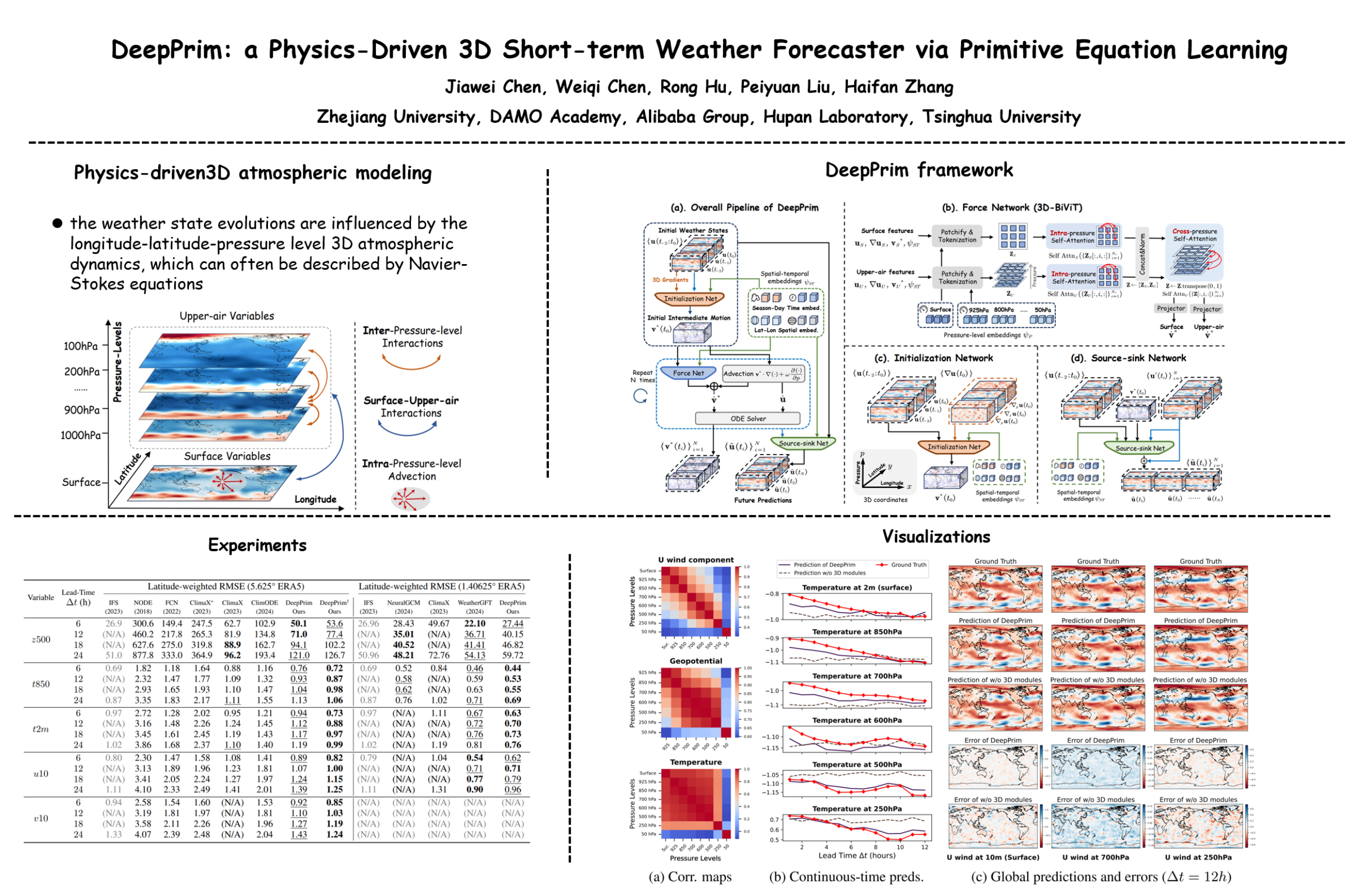
Solving primitive equations is essential for accurate weather forecasting. However, traditional numerical weather prediction (NWP) methods often incorporate various simplifications that limit their effectiveness in parameterizing unresolved physical processes. Meanwhile, existing deep learning-based models mostly focus on pure data-driven paradigms, overlooking the fundamental physical principles that govern atmospheric dynamics. To address these challenges, we present DeepPrim, a novel 3D \underline{deep} weather forecaster designed to learn \underline{prim}itive equations of the Earth’s atmosphere. Specifically, DeepPrim aims at accurately modeling 3D atmospheric motion through Navier-Stokes equation in pressure coordinates, and effectively capturing the interactions between the solved advection and key weather variables (e.g., temperature and water vapor) through corresponding equations. By seamlessly integrating fundamental atmospheric physics with advanced data-driven techniques, our model effectively approximates complicated physical processes without relying on empirical simplifications. Experimentally, DeepPrim achieves impressive performance in both short-term global and regional weather forecasting tasks, and exhibits the superior capacity to capture 3D atmospheric dynamics. It is now deployed as part of the Baguan weather forecasting system, especially specializing in short-term forecasting. The code is available at https://github.com/DAMO-DI-ML/DeepPrim.
Towards Sustainable Investment Policies Informed by Opponent Shaping
Juan Duque ⋅ Razvan Ciuca ⋅ Ayoub Echchahed ⋅ Hugo Larochelle ⋅ Aaron Courville
Addressing climate change requires global coordination, yet rational economic actors often prioritize immediate gains over collective welfare, resulting in social dilemmas. InvestESG is a recently proposed multi-agent simulation that captures the dynamic interplay between investors and companies under climate risk. We provide a formal characterization of the conditions under which InvestESG exhibits an intertemporal social dilemma, deriving theoretical thresholds at which individual incentives diverge from collective welfare. Building on this, we apply Advantage Alignment, a scalable opponent shaping algorithm shown to be effective in general-sum games, to influence agent learning in InvestESG. We offer theoretical insights into why Advantage Alignment systematically favors socially beneficial equilibria by biasing learning dynamics toward cooperative outcomes. Our results demonstrate that strategically shaping the learning processes of economic agents can result in better outcomes that could inform policy mechanisms to better align market incentives with long-term sustainability goals.
BoreaRL: A Multi-Objective Reinforcement Learning Environment for Climate-Adaptive Boreal Forest Management
Kevin Dsouza ⋅ Enoch Ofosu ⋅ Daniel Amaogu ⋅ Jérôme Pigeon ⋅ Richard Boudreault ⋅ Pooneh Maghoul ⋅ Juan Moreno-Cruz ⋅ Yuri Leonenko
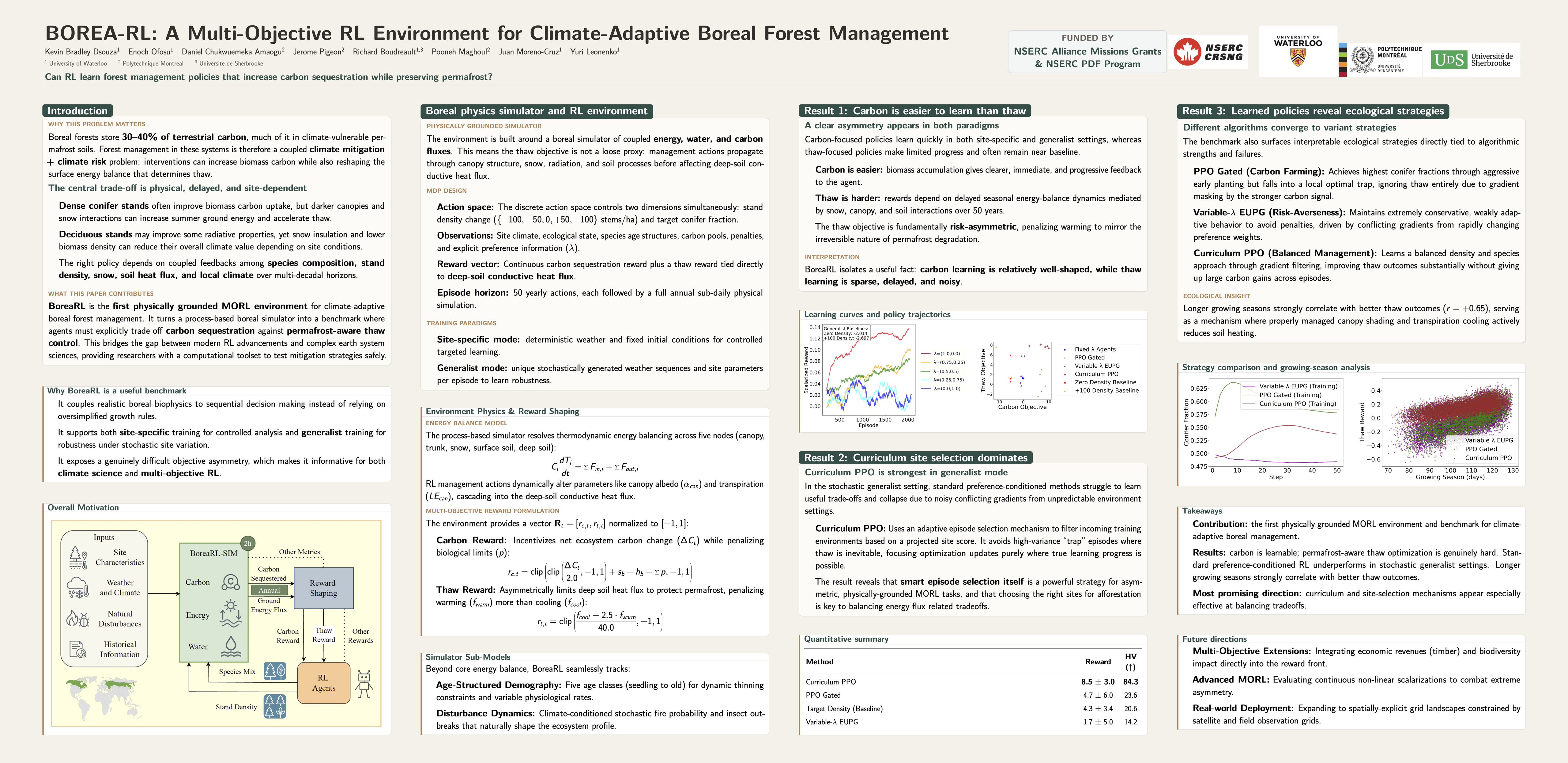
Boreal forests store 30-40\% of terrestrial carbon, much in climate-vulnerable permafrost soils, making their management critical for climate mitigation. However, optimizing forest management for both carbon sequestration and permafrost preservation presents complex trade-offs that current tools cannot adequately address. We introduce BoreaRL, the first multi-objective reinforcement learning environment for climate-adaptive boreal forest management, featuring a physically-grounded simulator of coupled energy, carbon, and water fluxes. BoreaRL supports two training paradigms: site-specific mode for controlled studies and generalist mode for learning robust policies under environmental stochasticity. Through evaluation of multi-objective RL algorithms, we reveal a fundamental asymmetry in learning difficulty: carbon objectives are significantly easier to optimize than thaw (permafrost preservation) objectives, with thaw-focused policies showing minimal learning progress across both paradigms. In generalist settings, standard gradient-descent based preference-conditioned approaches fail, while a naive site selection approach achieves superior performance by strategically selecting training episodes. Analysis of learned strategies reveals distinct management philosophies, where carbon-focused policies favor aggressive high-density coniferous stands, while effective multi-objective policies balance species composition and density to protect permafrost while maintaining carbon gains. Our results demonstrate that robust climate-adaptive forest management remains challenging for current MORL methods, establishing BoreaRL as a valuable benchmark for developing more effective approaches. We open-source BoreaRL to accelerate research in multi-objective RL for climate applications.
Extending Sequence Length is Not All You Need: Effective Integration of Multimodal Signals for Gene Expression Prediction
Zhao Yang ⋅ Yi Duan ⋅ Jiwei Zhu ⋅ Ying Ba ⋅ Chuan Cao ⋅ Bing Su
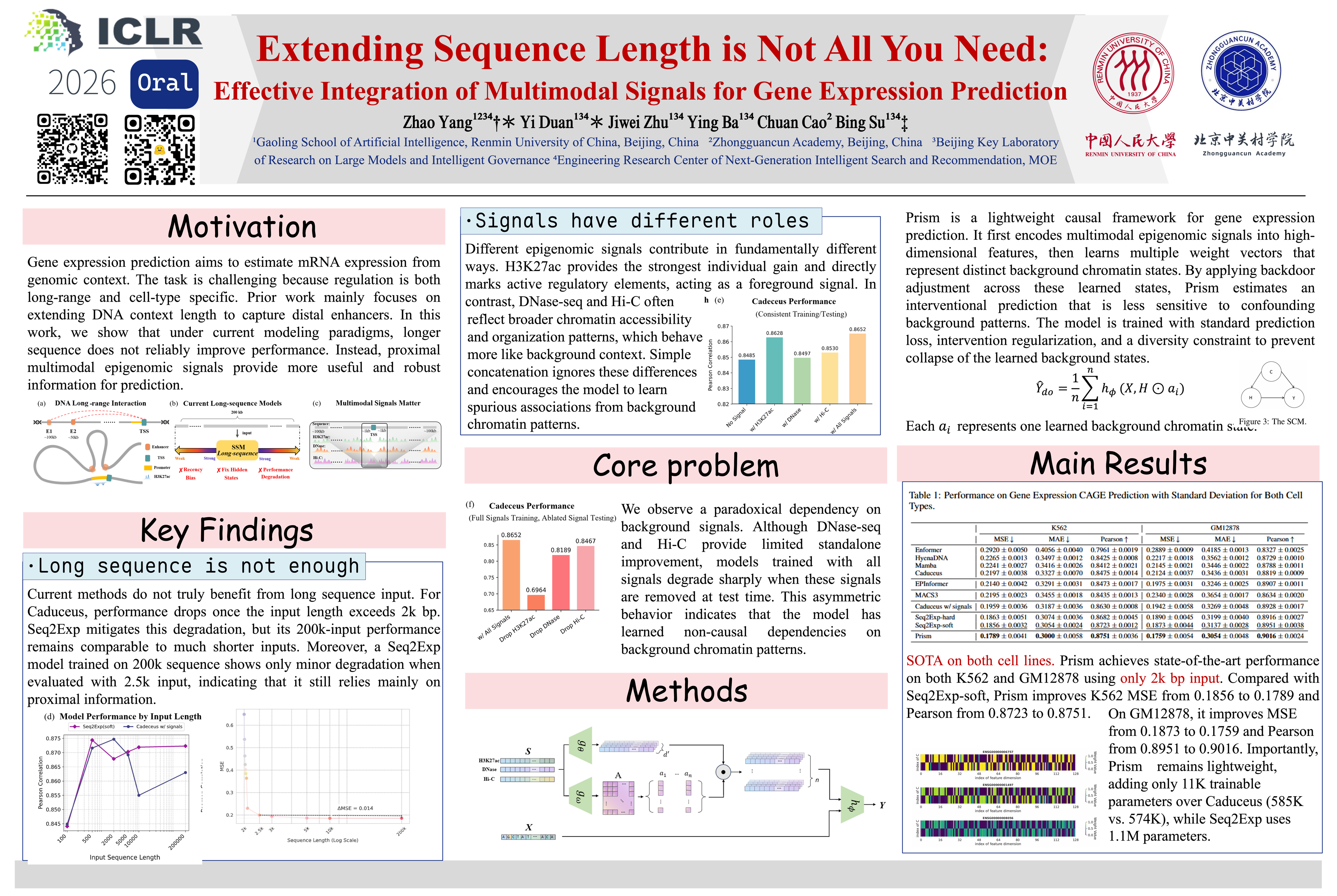
Gene expression prediction, which predicts mRNA expression levels from DNA sequences, presents significant challenges. Previous works often focus on extending input sequence length to locate distal enhancers, which may influence target genes from hundreds of kilobases away. Our work first reveals that for current models, long sequence modeling can decrease performance. Even carefully designed algorithms only mitigate the performance degradation caused by long sequences. Instead, we find that proximal multimodal epigenomic signals near target genes prove more essential. Hence we focus on how to better integrate these signals, which has been overlooked. We find that different signal types serve distinct biological roles, with some directly marking active regulatory elements while others reflect background chromatin patterns that may introduce confounding effects. Simple concatenation may lead models to develop spurious associations with these background patterns. To address this challenge, we propose Prism, a framework that learns multiple combinations of high-dimensional epigenomic features to represent distinct background chromatin states and uses backdoor adjustment to mitigate confounding effects. Our experimental results demonstrate that proper modeling of multimodal epigenomic signals achieves state-of-the-art performance using only short sequences for gene expression prediction.
CAPSUL: A Comprehensive Human Protein Benchmark for Subcellular Localization
Yicheng Hu ⋅ Xinyu Lin ⋅ Shulin Li ⋅ Wenjie Wang ⋅ Fengbin ZHU ⋅ Fuli Feng
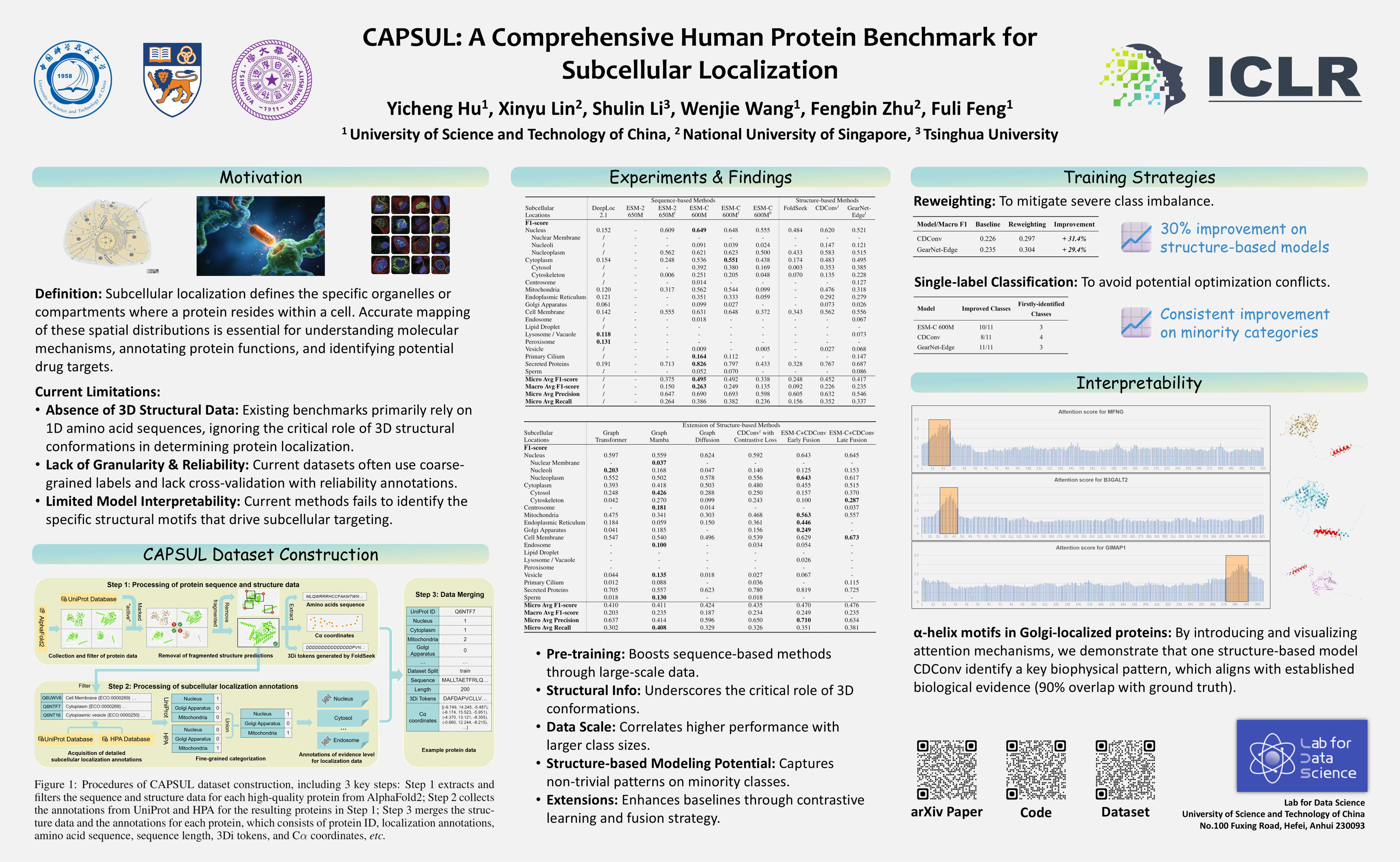
Subcellular localization is a crucial biological task for drug target identification and function annotation. Although it has been biologically realized that subcellular localization is closely associated with protein structure, no existing dataset offers comprehensive 3D structural information with detailed subcellular localization annotations, thus severely hindering the application of promising structure-based models on this task. To address this gap, we introduce a new benchmark called $\textbf{CAPSUL}$, a $\textbf{C}$omprehensive hum$\textbf{A}$n $\textbf{P}$rotein benchmark for $\textbf{SU}$bcellular $\textbf{L}$ocalization. It features a dataset that integrates diverse 3D structural representations with fine-grained subcellular localization annotations carefully curated by domain experts. We evaluate this benchmark using a variety of state-of-the-art sequence-based and structure-based models, showcasing the importance of involving structural features in this task. Furthermore, we explore reweighting and single-label classification strategies to facilitate future investigation on structure-based methods for this task. Lastly, we showcase the powerful interpretability of structure-based methods through a case study on the Golgi apparatus, where we discover a decisive localization pattern $\alpha$-helix from attention mechanisms, demonstrating the potential for bridging the gap with intuitive biological interpretability and paving the way for data-driven discoveries in cell biology.
Controlling Repetition in Protein Language Models
Jiahao Zhang ⋅ ZEQING ZHANG ⋅ Di Wang ⋅ Lijie Hu
Protein language models (PLMs) have enabled advances in structure prediction and de novo protein design, yet they frequently collapse into pathological repetition during generation. Unlike in text, where repetition merely reduces readability, in proteins it undermines structural confidence and functional viability. To unify this problem, we present the first systematic study of repetition in PLMs. We first propose quantitative metrics to characterize motif-level and homopolymer repetition and then demonstrate their negative impact on folding reliability. To address this challenge, we propose UCCS (Utility-Controlled Contrastive Steering), which steers protein generation with a constrained dataset. Instead of naively contrasting high- vs. low-repetition sequences, we construct contrastive sets that maximize differences in repetition while tightly controlling for structural utility. This disentanglement yields steering vectors that specifically target repetition without degrading foldability. Injected at inference, these vectors consistently reduce repetition without retraining or heuristic decoding. Experiments with ESM-3 and ProtGPT2 in CATH, UniRef50, and SCOP show that our method outperforms decoding penalties and other baselines, substantially lowering repetition while preserving AlphaFold confidence scores. Our results establish repetition control as a central challenge for PLMs and highlight dataset-guided steering as a principled approach for reliable protein generation.
PathChat-SegR1: Reasoning Segmentation in Pathology via SO-GRPO
Zelin Liu ⋅ Dongdong Chen ⋅ Yusong Sun ⋅ Yuqi Hu ⋅ Huang Jie ⋅ Sicheng Dong ⋅ Xu Han ⋅ Hongmei Yi ⋅ Qiyuan Bao ⋅ Lichi Zhang
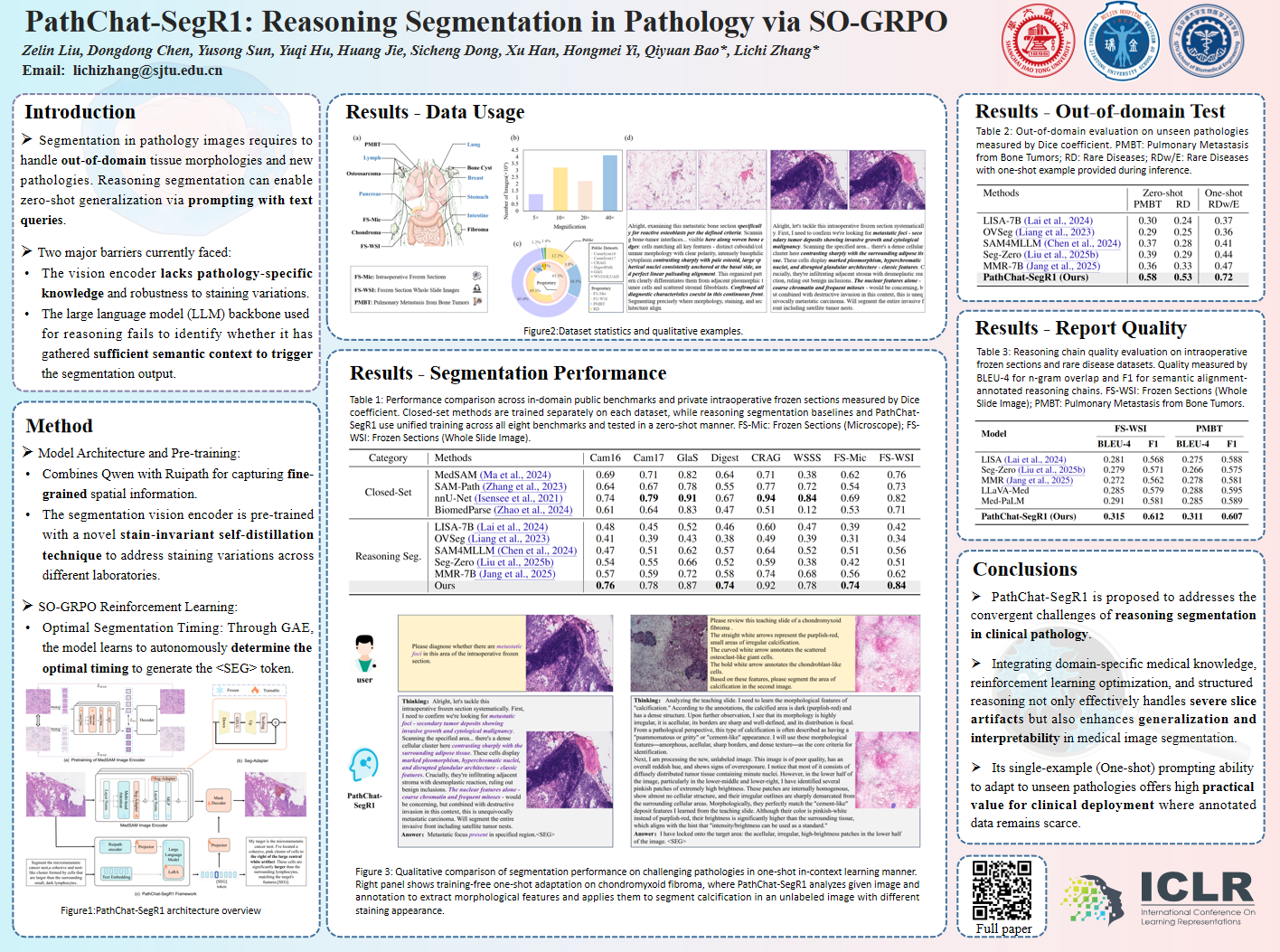
Segmentation in pathology image requires handling out-of-domain tissue morphologies and new pathologies beyond training distributions, where traditional closed-set segmentation approaches fail to generalize. Reasoning segmentation enables zero-shot generalization via prompting with text queries. However, existing reasoning segmentation models face three barriers when applied to pathology: (1) the vision encoder lack pathology-specific knowledge and robustness to staining variations, (2) the large language model (LLM) backbone for reasoning fails to identify whether it has gathered sufficient semantic context to trigger the segmentation output, and (3) no reasoning segmentation benchmarks and datasets exist for pathology analysis. Consequently, we introduce PathChat-SegR1, a reasoning segmentation model built upon pathology-specific vision encoders trained with a novel stain-invariant self-distillation for robust pathology image representations. Moreover, we propose Segmentation-Optimized GRPO (SO-GRPO), a reinforcement learning method specifically for reasoning segmentation that learns to determine optimal segmentation timing based on accumulated reasoning context. Finally, we construct a pathology-specific reasoning segmentation benchmark of 118,667 triplets of pathology image, ground-truth mask, query, and reasoning chain including both public and private pathology images. Zero-shot evaluation on pathology images with out-of-domain morphologies/pathologies shows 61\% improvement over state-of-the-art segmentation models.
Automatic and Structure-Aware Sparsification of Hybrid Neural ODEs with Application to Glucose Prediction
Bob Zou ⋅ Lu Tian
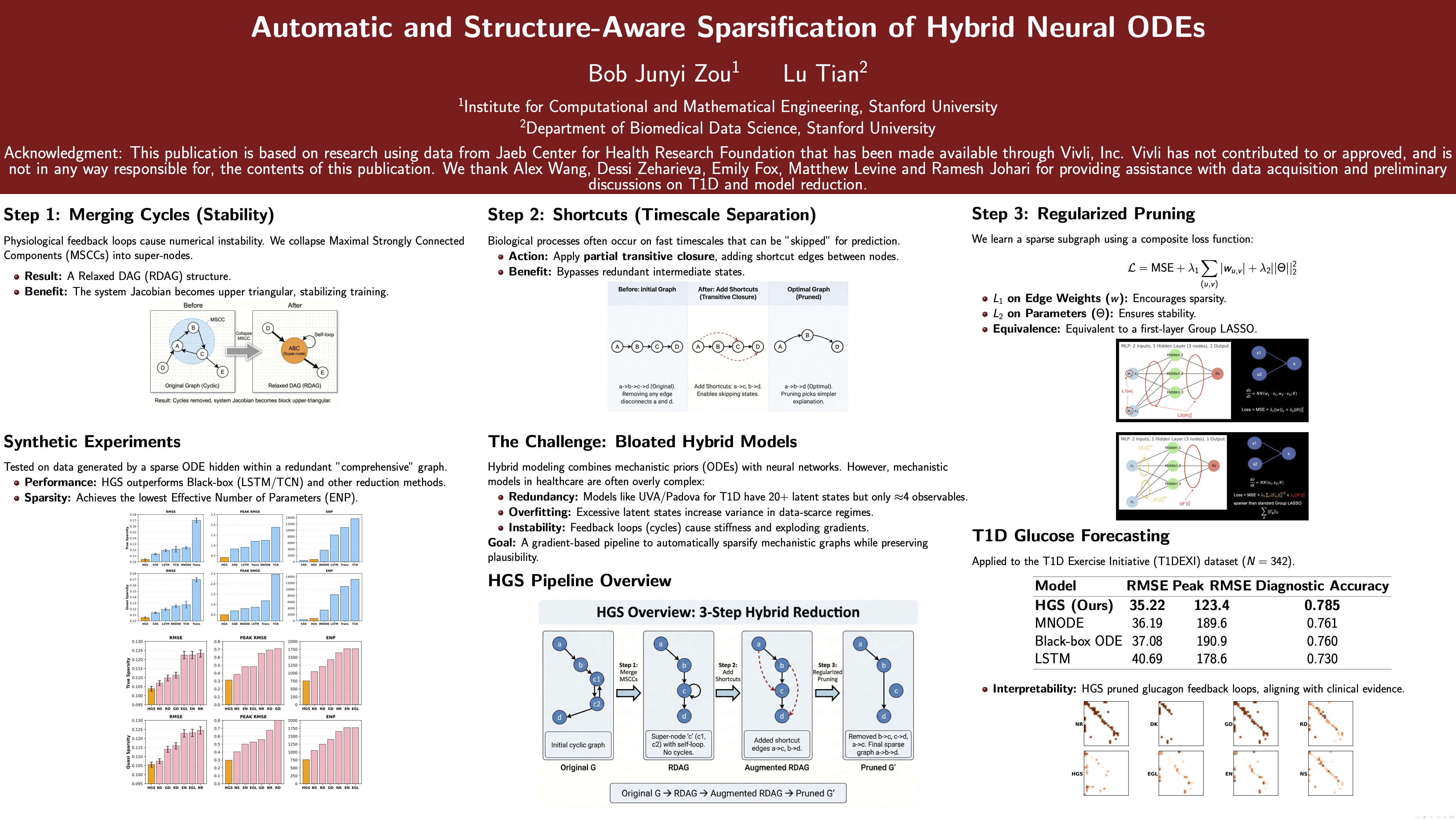
Hybrid neural ordinary differential equations (neural ODEs) integrate mechanistic models with neural ODEs, offering strong inductive bias and flexibility, and are particularly advantageous in data-scarce healthcare settings. However, excessive latent states and interactions from mechanistic models can lead to training inefficiency and over-fitting, limiting practical effectiveness of hybrid neural ODEs. In response, we propose a new hybrid pipeline for automatic state selection and structure optimization in mechanistic neural ODEs, combining domain-informed graph modifications with data-driven regularization to sparsify the model for improving predictive performance and stability while retaining mechanistic plausibility. Experiments on synthetic and real-world data show improved predictive performance and robustness with desired sparsity, establishing an effective solution for hybrid model reduction in healthcare applications.
Improving Long-Range Interactions in Graph Neural Simulators via Hamiltonian Dynamics
Tai Hoang ⋅ Alessandro Trenta ⋅ Alessio Gravina ⋅ Niklas Freymuth ⋅ Philipp Becker ⋅ Davide Bacciu ⋅ Gerhard Neumann
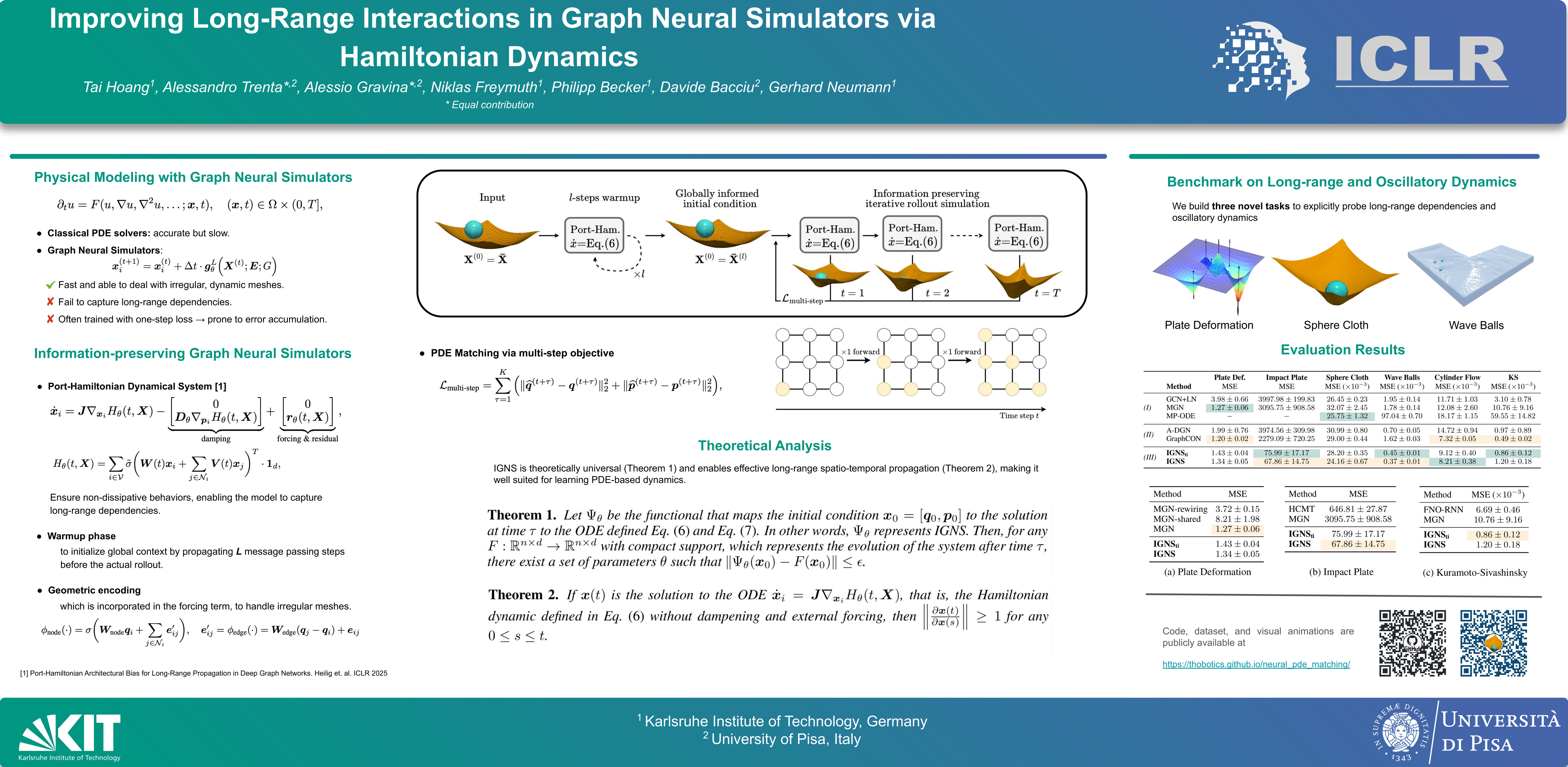
Learning to simulate complex physical systems from data has emerged as a promising way to overcome the limitations of traditional numerical solvers, which often require prohibitive computational costs for high-fidelity solutions. Recent Graph Neural Simulators (GNSs) accelerate simulations by learning dynamics on graph-structured data, yet often struggle to capture long-range interactions and suffer from error accumulation under autoregressive rollouts. To address these challenges, we propose Information-preserving Graph Neural Simulators (IGNS), a graph-based neural simulator built on the principles of Hamiltonian dynamics. This structure guarantees preservation of information across the graph, while extending to port-Hamiltonian systems allows the model to capture a broader class of dynamics, including non-conservative effects. IGNS further incorporates a warmup phase to initialize global context, geometric encoding to handle irregular meshes, and a multi-step training objective that facilitates PDE matching, where the trajectory produced by integrating the port-Hamiltonian core aligns with the ground-truth trajectory, thereby reducing rollout error. To evaluate these properties systematically, we introduce new benchmarks that target long-range dependencies and challenging external forcing scenarios. Across all tasks, IGNS consistently outperforms state-of-the-art GNSs, achieving higher accuracy and stability under challenging and complex dynamical systems. Our project page: https://thobotics.github.io/neuralpdematching.
FlowSymm: Physics–Aware, Symmetry–Preserving Graph Attention for Network Flow Completion
Ege Demirci ⋅ Francesco Bullo ⋅ Ananthram Swami ⋅ Ambuj K Singh
Recovering missing flows on the edges of a network, while exactly respecting local conservation laws, is a fundamental inverse problem that arises in many systems such as transportation, energy, and mobility. We introduce FlowSymm, a novel architecture that combines (i) a group-action on divergence-free flows, (ii) a graph-attention encoder to learn feature-conditioned weights over these symmetry-preserving actions, and (iii) a lightweight Tikhonov refinement solved via implicit bilevel optimization. The method first anchors the given observation on a minimum-norm divergence-free completion. We then compute an orthonormal basis for all admissible group actions that leave the observed flows invariant and parameterize the valid solution subspace, which shows an Abelian group structure under vector addition. A stack of GATv2 layers then encodes the graph and its edge features into per-edge embeddings, which are pooled over the missing edges and produce per-basis attention weights. This attention-guided process selects a set of physics-aware group actions that preserve the observed flows. Finally, a scalar Tikhonov penalty refines the missing entries via a convex least-squares solver, with gradients propagated implicitly through Cholesky factorization. Across three real-world flow benchmarks (traffic, power, bike), FlowSymm substantially outperforms state-of-the-art baselines in RMSE, MAE and correlation metrics.
Riesz Neural Operator for Solving Partial Differential Equations
Shouyi Liu ⋅ Xiaokang Yang ⋅ Yuntian Chen
Local non-stationarity is pivotal to solving partial differential equations (PDEs). However, in operator learning, the spatially local information inherent in the data is often overlooked. Even when explicitly modeled, it is usually collapsed into local superpositions within the model architecture, preventing full exploitation of local features in physical phenomena. To address this limitation, our paper proposes a novel Riesz Neural Operator (RNO) based on the spectral derivative representation. Since PDEs are fundamentally governed by local derivatives, RNO leverages the Riesz transform, a natural spectral representation of derivatives, to mix global spectral information with local directional variations. This approach allows the RNO to outperform existing operators in complex scenarios that require sensitivity to local detail. Our design bridges the gap between physical interpretability and local dynamics. Experimental results demonstrate that the RNO consistently achieves superior prediction accuracy and generalization performance compared to existing approaches across various benchmark PDE problems and complex real-world datasets, presenting superior non-linear reconstruction capability in model analysis.
Accelerating Inference for Multilayer Neural Networks with Quantum Computers
Arthur G. Rattew ⋅ Po-Wei Huang ⋅ Naixu Guo ⋅ Lirandë Pira ⋅ Patrick Rebentrost
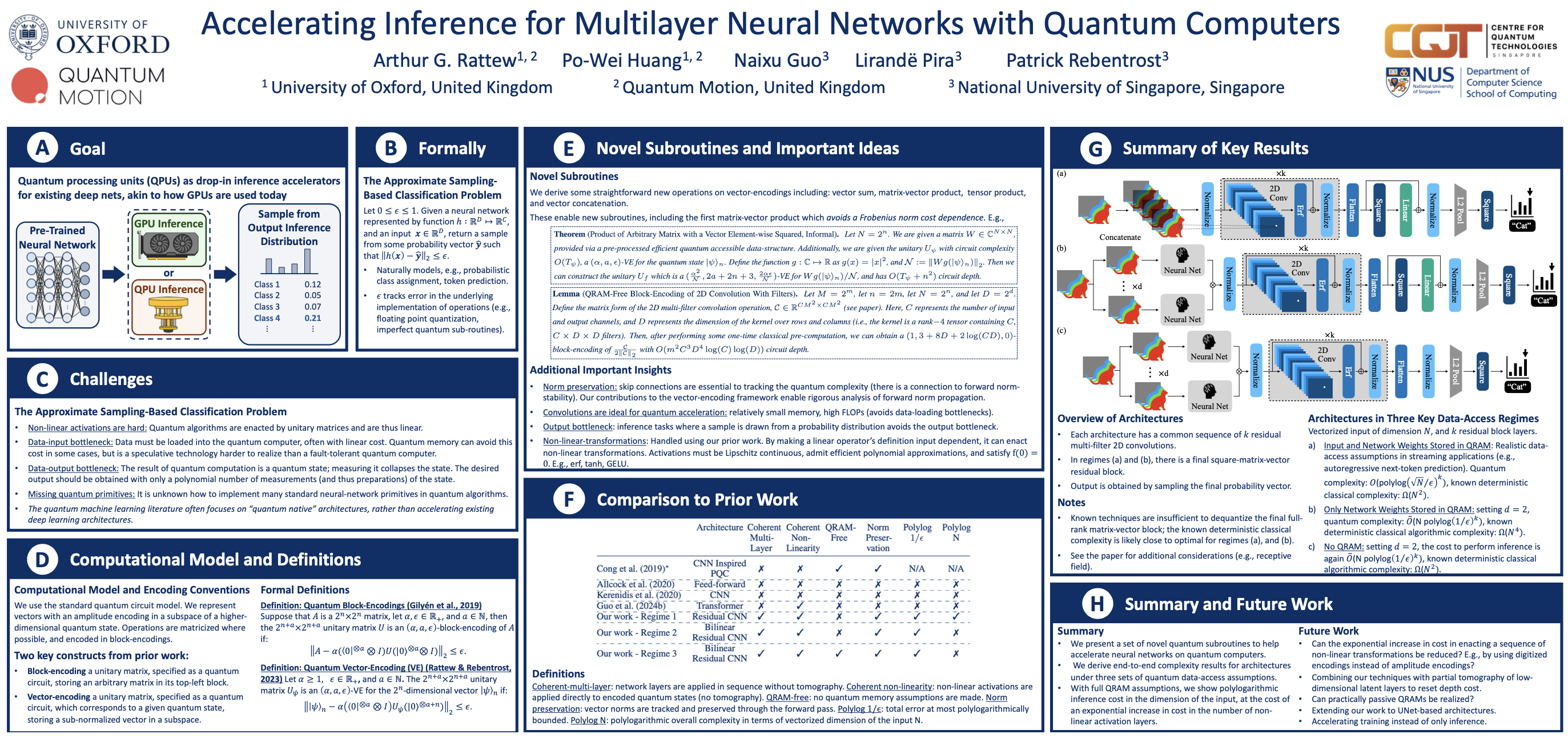
Fault-tolerant Quantum Processing Units (QPUs) promise to deliver exponential speed-ups in select computational tasks, yet their integration into modern deep learning pipelines remains unclear. In this work, we take a step towards bridging this gap by presenting the first fully-coherent quantum implementation of a multilayer neural network with non-linear activation functions. Our constructions mirror widely used deep learning architectures based on ResNet, and consist of residual blocks with multi-filter 2D convolutions, sigmoid activations, skip-connections, and layer normalizations. We analyse the complexity of inference for networks under three quantum data access regimes. Without any assumptions, we establish a quadratic speedup over classical methods for shallow bilinear-style networks. With efficient quantum access to the weights, we obtain a quartic speedup over classical methods. With efficient quantum access to both the inputs and the network weights, we prove that a network with an $N$-dimensional vectorized input, $k$ residual block layers, and a final residual-linear-pooling layer can be implemented with an error of $\epsilon$ with $O(\text{polylog}(N/\epsilon)^k)$ inference cost.
Spectral-guided Physical Dynamics Distillation
Youjin Kim ⋅ Dagyeong Na ⋅ JaeYong Lee ⋅ Junseok Kwon
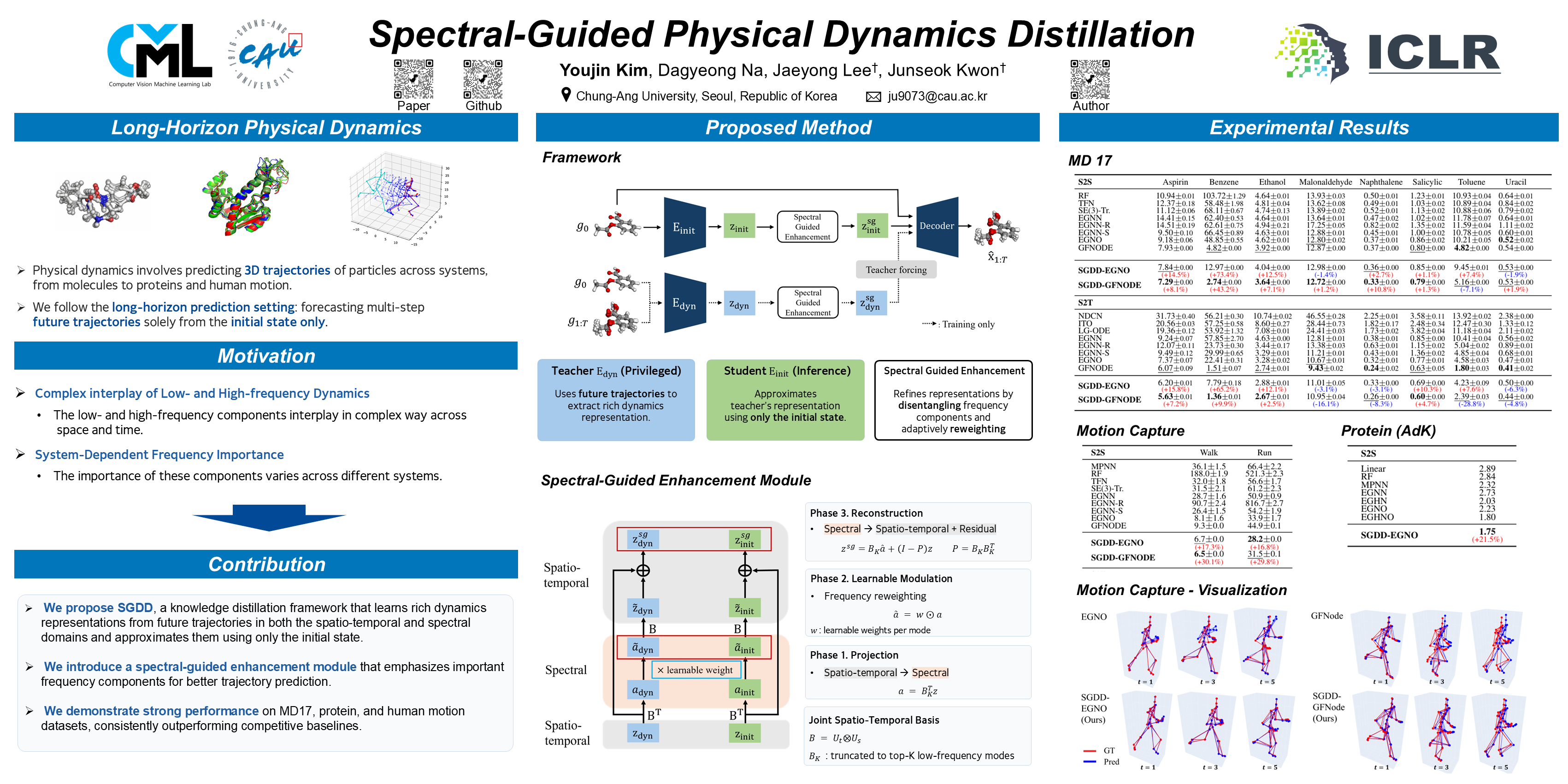
The problem of physical dynamics, which involves predicting the 3D trajectories of particles, is a fundamental task with wide-ranging applications across science and engineering. However, accurately forecasting long-horizon trajectories from initial states remains challenging, due to complex particle interactions and entangled multi-scale dynamics involving both low- and high-frequency components. To address this, we propose a novel knowledge-distillation-based framework, SGDD (Spectral-Guided Dynamics Distillation), which integrates a spectral-guided enhancement to adaptively prioritize key frequency components within a unified spatio-temporal representation. Through knowledge distillation, SGDD leverages future trajectories as privileged information during training, guiding a teacher encoder to generate comprehensive dynamics representations while a student encoder approximates them using only the initial state. This enables the student to generate effective dynamics representations at inference, even without privileged information, thereby enabling accurate long-horizon trajectory prediction. Experimental results on molecule, protein, and human motion datasets demonstrate that our method achieves more accurate and stable long-term predictions than previous physical dynamics models, successfully capturing the complex spatio-temporal structures of real-world systems.
Beyond Structure: Invariant Crystal Property Prediction with Pseudo-Particle Ray Diffraction
Bin Cao ⋅ Yang Liu ⋅ Longhan Zhang ⋅ Yifan Wu ⋅ Zhixun Li ⋅ Yuyu Luo ⋅ Hong Cheng ⋅ Yang Ren ⋅ Tongyi ZHANG
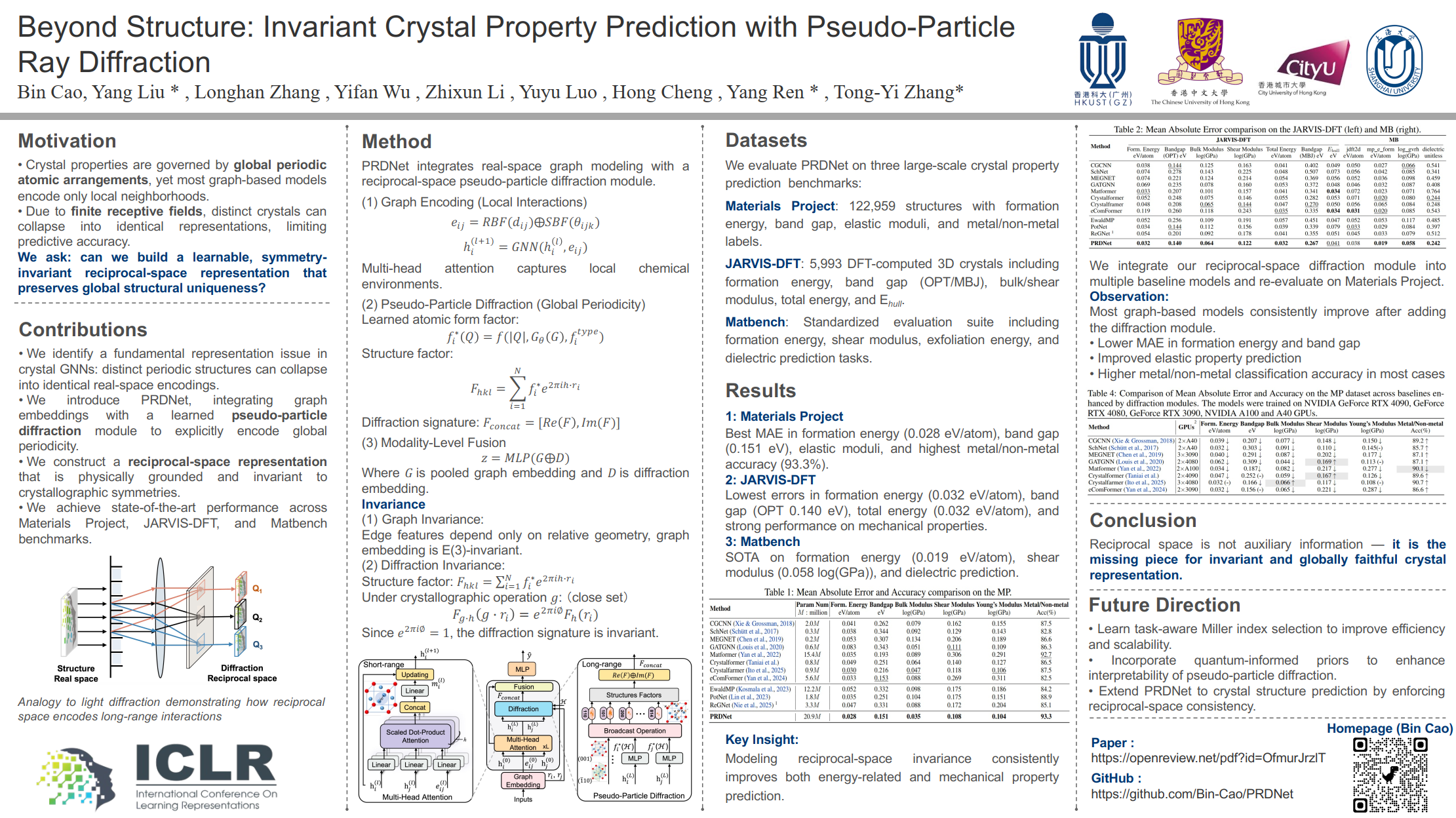
Crystal property prediction, governed by quantum mechanical principles, is computationally prohibitive to solve exactly for large many-body systems using traditional density functional theory. While machine learning models have emerged as efficient approximations for large-scale applications, their performance is strongly influenced by the choice of atomic representation. Although modern graph-based approaches have progressively incorporated more structural information, they often fail to capture long-range atomic interactions due to finite receptive fields and local encoding schemes. This limitation leads to distinct crystals being mapped to identical representations, hindering accurate property prediction. To address this, we introduce PRDNet that leverages unique reciprocal-space diffraction besides graph representations. To enhance sensitivity to elemental and environmental variations, we employ a data-driven pseudo-particle to generate a synthetic diffraction pattern. PRDNet ensures full invariance to crystallographic symmetries. Extensive experiments are conducted on Materials Project, JARVIS-DFT, and MatBench, demonstrating that the proposed model achieves state-of-the-art performance. The code is openly available at \url{https://github.com/Bin-Cao/PRDNet}.
Accurately solving partial differential equations (PDEs) on arbitrary geometries and a variety of meshes is an important task in science and engineering applications. In this paper, we propose Adaptive Mamba Neural Operators (AMO), which integrates reproducing kernels for state-space models (SSMs) rather than the kernel integral formulation of SSMs. This is achieved by constructing Takenaka-Malmquist systems for the PDEs. AMO offers new representations that align well with the adaptive Fourier decomposition (AFD) theory and can approximate the solution manifold of PDEs on a wide range of geometries and meshes. In several challenging benchmark PDE problems in the fields of fluid physics, solid physics, and finance on point clouds, structured meshes, regular grids, and irregular domains, AMO consistently outperforms state-of-the-art solvers in terms of relative $L^2$ error. Overall, this work presents a new paradigm for designing explainable neural operator frameworks. The code is available at https://github.com/checlams/AMO.
P3D: Highly Scalable 3D Neural Surrogates for Physics Simulations with Global Context
Benjamin Holzschuh ⋅ Georg Kohl ⋅ Florian Redinger ⋅ Nils Thuerey
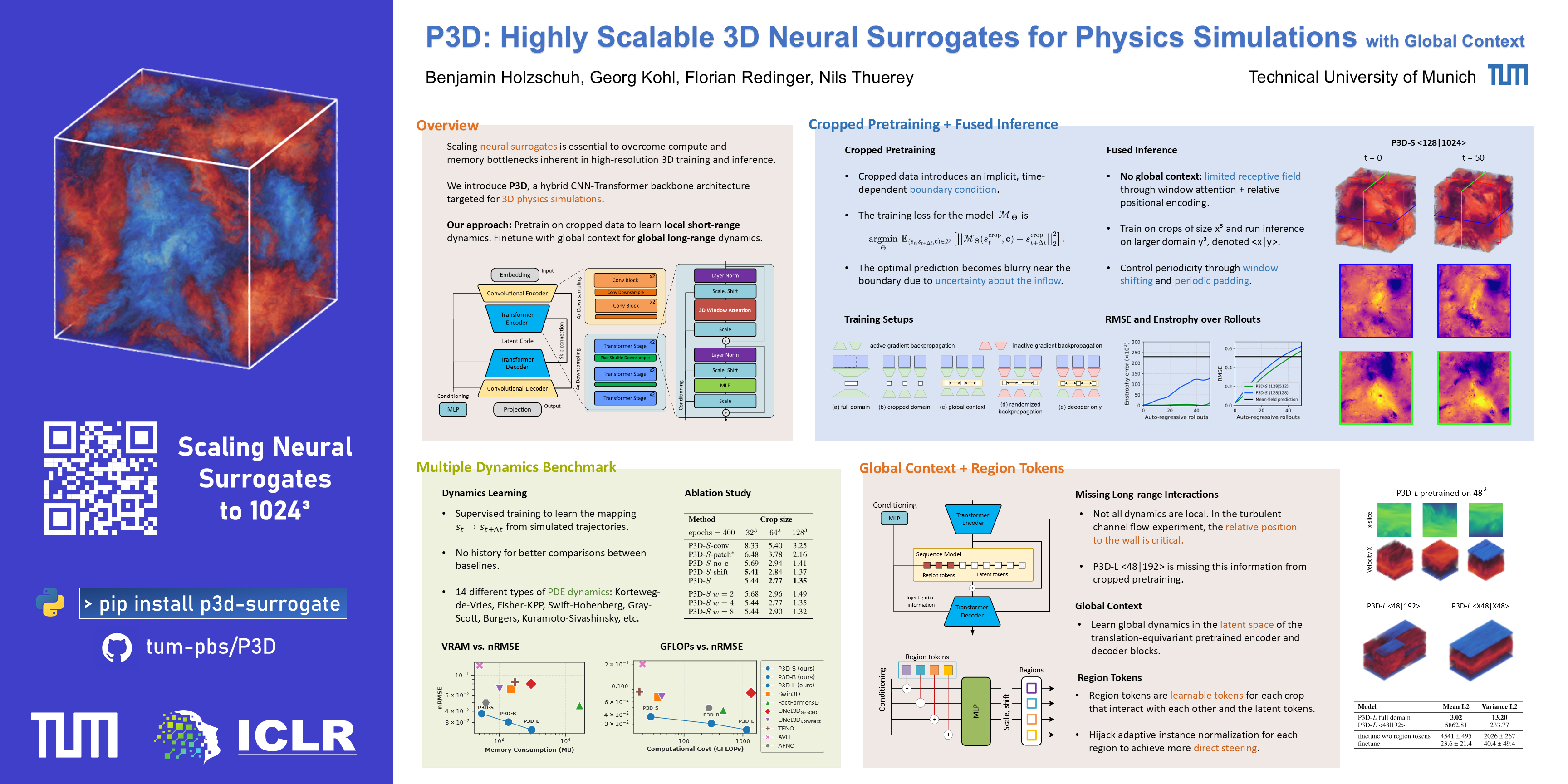
We present a scalable framework for learning deterministic and probabilistic neural surrogates for high-resolution 3D physics simulations. We introduce P3D, a hybrid CNN-Transformer backbone architecture targeted for 3D physics simulations, which significantly outperforms existing architectures in terms of speed and accuracy. Our proposed network can be pretrained on small patches of the simulation domain, which can be fused to obtain a global solution, optionally guided via a scalable sequence-to-sequence model to include long-range dependencies. This setup allows for training large-scale models with reduced memory and compute requirements for high-resolution datasets. We evaluate our backbone architecture against a large set of baseline methods with the objective to simultaneously learn 14 different types of PDE dynamics in 3D. We demonstrate how to scale our model to high-resolution isotropic turbulence with spatial resolutions of up to $512^3$. Finally, we show the versatility of our architecture by training it as a diffusion model to produce probabilistic samples of highly turbulent 3D channel flows across varying Reynolds numbers, accurately capturing the underlying flow statistics.
ViPRA: Video Prediction for Robot Actions
Sandeep Kumar Routray ⋅ Hengkai Pan ⋅ Unnat Jain ⋅ Shikhar Bahl ⋅ Deepak Pathak
Can we turn a video prediction model into a robot policy? Videos, including those of humans or teleoperated robots, capture rich physical interactions. However, most of them lack labeled actions, which limits their use in robot learning. We present Video Prediction for Robot Actions (ViPRA), a simple pretraining-finetuning framework that learns continuous robot control from these actionless videos. Instead of directly predicting actions, we train a video-language model to predict both future visual observations and motion-centric latent actions, which serve as intermediate representations of scene dynamics. We train these latent actions using perceptual losses and optical flow consistency to ensure they reflect physically grounded behavior. For downstream control, we introduce a chunked flow-matching decoder that maps latent actions to robot-specific continuous action sequences, using only 100 to 200 teleoperated demonstrations. This approach avoids expensive action annotation, supports generalization across embodiments, and enables smooth, high-frequency continuous control upto 22 Hz via chunked action decoding. Unlike prior latent action works that treat pretraining as autoregressive policy learning, ViPRA explicitly models both what changes and how. Our method outperforms strong baselines, with a 16% gain on the SIMPLER benchmark and a 13% improvement across real world manipulation tasks. We have released models and code here.
REI-Bench: Can Embodied Agents Understand Vague Human Instructions in Task Planning?
Chenxi Jiang ⋅ Chuhao Zhou ⋅ Jianfei Yang
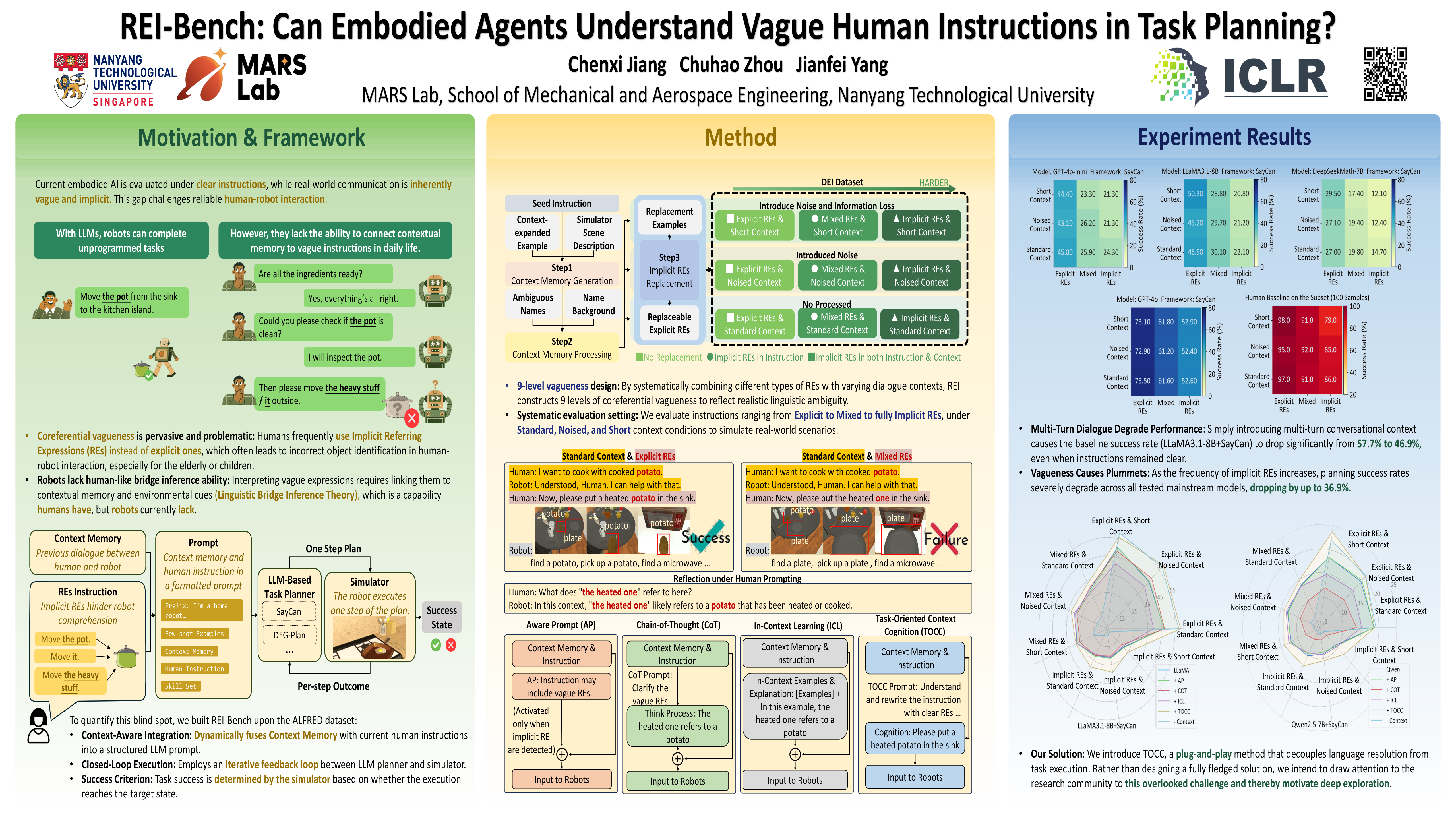
Robot task planning decomposes human instructions into executable action sequences that enable robots to complete a series of complex tasks. Although recent large language model (LLM)-based task planners achieve amazing performance, they assume that human instructions are clear and straightforward. However, real-world users are not experts, and their instructions to robots often contain significant vagueness. Linguists suggest that such vagueness frequently arises from referring expressions (REs), whose meanings depend heavily on dialogue context and environment. This vagueness is even more prevalent among the elderly and children, who are the groups that robots should serve more. This paper studies how such vagueness in REs within human instructions affects LLM-based robot task planning and how to overcome this issue. To this end, we propose the first robot task planning benchmark that systematically models vague REs grounded in pragmatic theory (REI-Bench), where we discover that the vagueness of REs can severely degrade robot planning performance, leading to success rate drops of up to 36.9\%. We also observe that most failure cases stem from missing objects in planners. To mitigate the REs issue, we propose a simple yet effective approach: task-oriented context cognition, which generates clear instructions for robots, achieving state-of-the-art performance compared to aware prompts, chains of thought, and in-context learning. By tackling the overlooked issue of vagueness, this work contributes to the research community by advancing real-world task planning and making robots more accessible to non-expert users, e.g., the elderly and children.
Plan-R1: Safe and Feasible Trajectory Planning as Language Modeling
Xiaolong Tang ⋅ Meina Kan ⋅ Shiguang Shan ⋅ Xilin CHEN
Safe and feasible trajectory planning is critical for real-world autonomous driving systems. However, existing learning-based planners rely heavily on expert demonstrations, which not only lack explicit safety awareness but also risk inheriting undesirable behaviors such as speeding from suboptimal human driving data. Inspired by the success of large language models, we propose Plan-R1, a two-stage trajectory planning framework that decouples principle alignment from behavior learning. In the first stage, a general trajectory predictor is pre-trained on expert data to capture diverse, human-like driving behaviors. In the second stage, the model is fine-tuned with rule-based rewards using Group Relative Policy Optimization (GRPO), explicitly aligning ego planning with principles such as safety, comfort, and traffic rule compliance. This two-stage paradigm retains human-like behaviors while enhancing safety awareness and discarding undesirable patterns from demonstrations. Furthermore, we identify a key limitation of directly applying GRPO to planning: group-wise normalization erases cross-group scale differences, causing rare, high-variance safety-violation groups to have similar advantages as abundant low-variance safe groups, thereby suppressing optimization for safety-critical objectives. To address this, we propose Variance-Decoupled GRPO (VD-GRPO), which replaces normalization with centering and fixed scaling to preserve absolute reward magnitudes, ensuring that safety-critical objectives remain dominant throughout training. Experiments on the nuPlan benchmark demonstrate that Plan-R1 significantly improves planning safety and feasibility, achieving state-of-the-art performance, particularly in realistic reactive settings. Our code is available at https://github.com/XiaolongTang23/Plan-R1.
Robotic Manipulation by Imitating Generated Videos Without Physical Demonstrations
Shivansh Patel ⋅ Shraddhaa Mohan ⋅ Hanlin Mai ⋅ Unnat Jain ⋅ Svetlana Lazebnik ⋅ Yunzhu Li
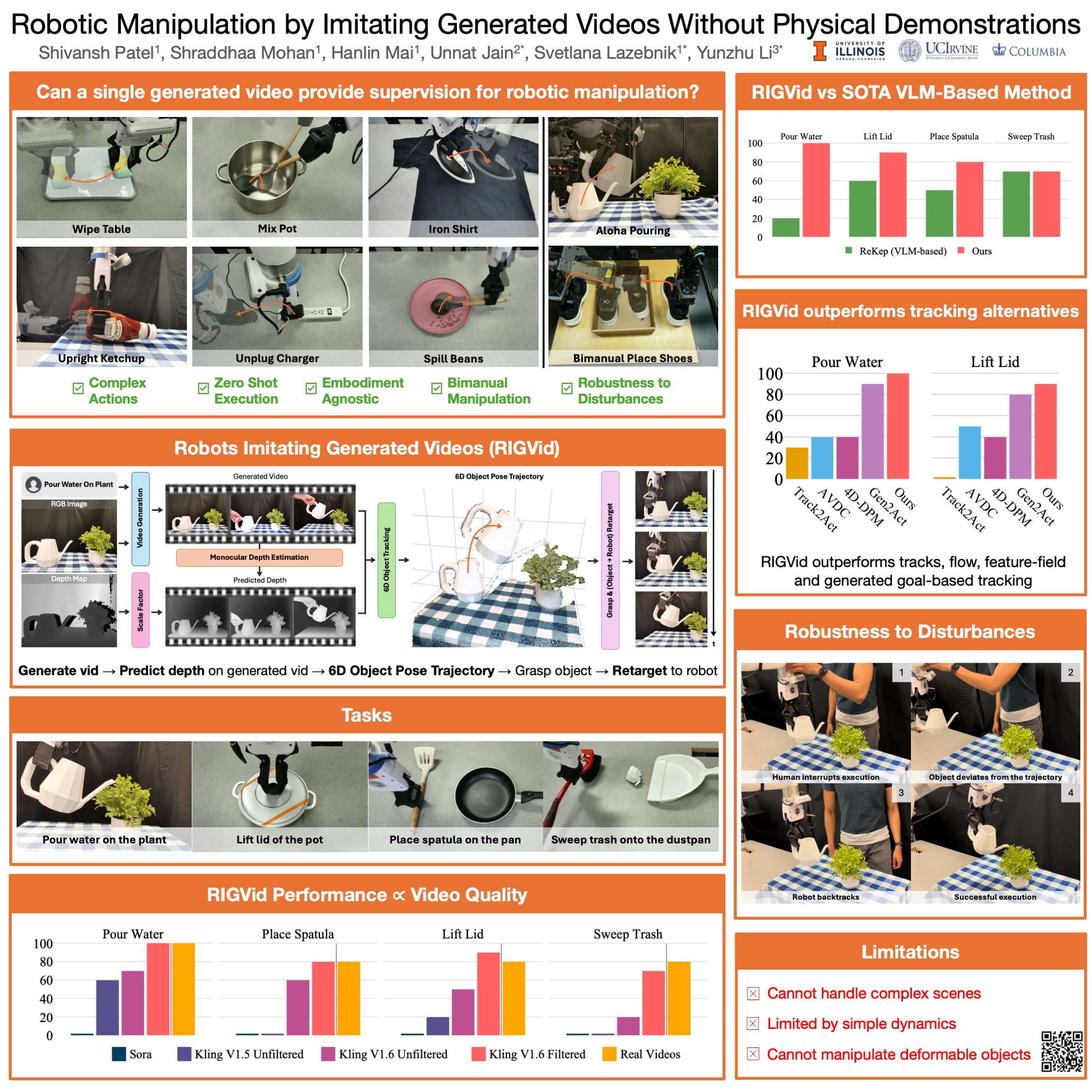
This work introduces Robots Imitating Generated Videos (RIGVid), a system that enables robots to perform complex manipulation tasks—such as pouring, wiping, and mixing—purely by imitating AI-generated videos, without requiring any physical demonstrations or robot-specific training. Given a language command and an initial scene image, a video diffusion model generates potential demonstration videos, and a vision-language model (VLM) automatically filters out results that do not follow the command. A 6D pose tracker then extracts object trajectories from the video, and the trajectories are retargeted to the robot in an embodiment-agnostic fashion. Through extensive realworld evaluations, we show that filtered generated videos are as effective as real demonstrations, and that performance improves with generation quality. We also show that relying on generated videos outperforms more compact alternatives such as keypoint prediction using VLMs, and that strong 6D pose tracking outperforms other ways to extract trajectories, such as dense feature point tracking. These findings suggest that videos produced by a state-of-the-art off-the-shelf model can offer an effective source of supervision for robotic manipulation.
OmniEVA: Embodied Versatile Planner via Task-Adaptive 3D-Grounded and Embodiment-aware Reasoning
Yuecheng Liu ⋅ DaFeng Chi ⋅ Shiguang Wu ⋅ Zhanguang Zhang ⋅ Yuzheng Zhuang ⋅ Bowen Yang ⋅ He Zhu ⋅ Lingfeng Zhang ⋅ Pengwei Xie ⋅ David Gamaliel Arcos Bravo ⋅ Yingxue Zhang ⋅ Jianye Hao ⋅ Xingyue Quan
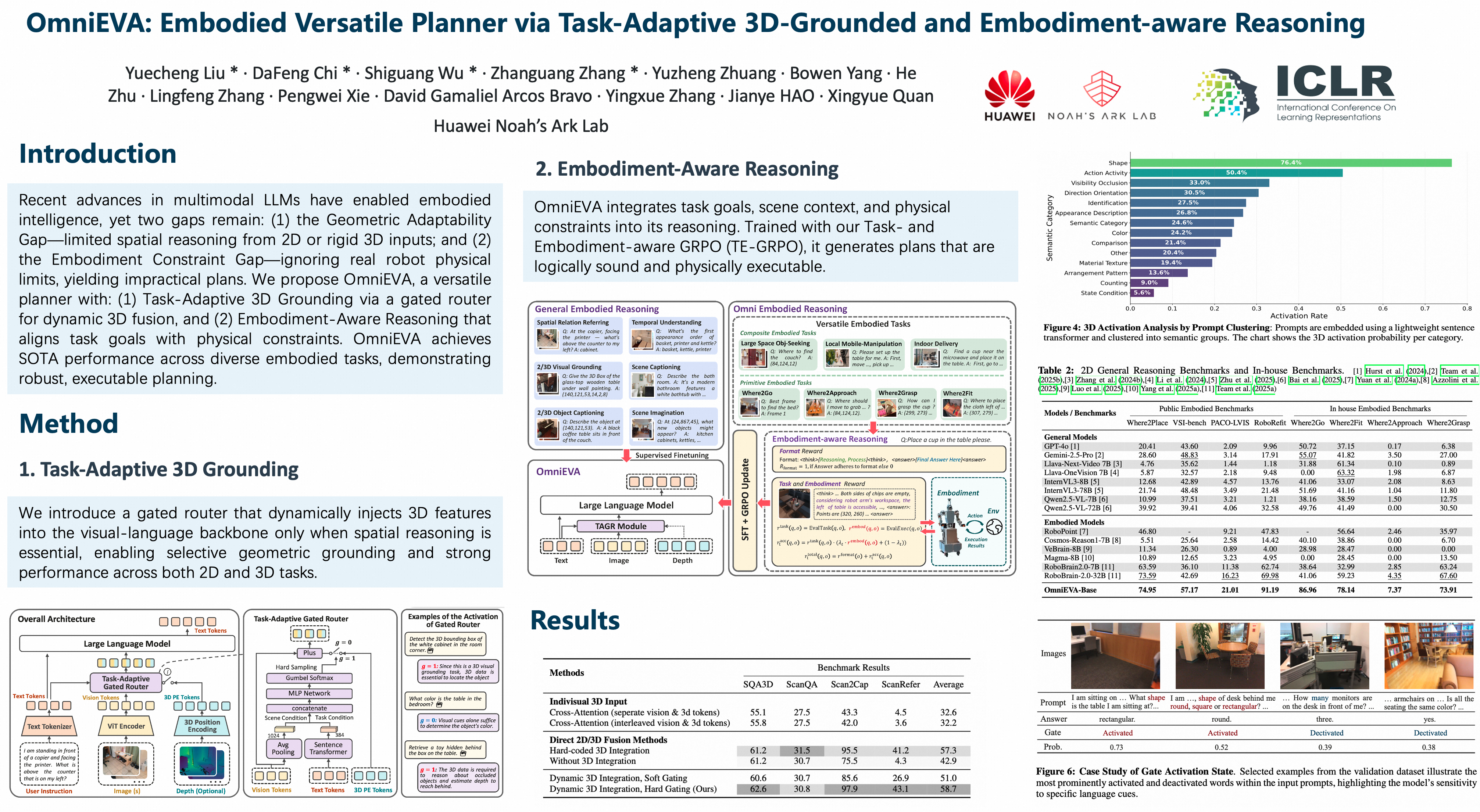
Recent advances in multimodal large language models (MLLMs) have opened new opportunities for embodied intelligence, enabling multimodal understanding, reasoning, and interaction, as well as continuous spatial decision-making. Nevertheless, current MLLM-based embodied systems face two critical limitations. First, Geometric Adaptability Gap: models trained solely on 2D inputs or with hard-coded 3D geometry injection suffer from either insufficient spatial information or restricted 2D generalization, leading to poor adaptability across tasks with diverse spatial demands. Second, Embodiment Constraint Gap: prior work often neglects the physical constraints of real robots, resulting in task plans that are theoretically valid but practically infeasible.To address these gaps, we introduce OmniEVA -- an embodied versatile planner that enables advanced embodied reasoning and task planning through two pivotal innovations: (1) a Task-Adaptive 3D Grounding mechanism, which uses a gated router to dynamically inject 3D features based on task context, enabling selective geometric reasoning. (2) an Embodiment-Aware Reasoning framework that incorporates task goals and physical constraints into the reasoning loop, ensuring executable plans. Extensive experiments show that OmniEVA achieves state-of-the-art performance on 7 of 8 embodied reasoning benchmarks and excels in downstream tasks such as object navigation and mobile manipulation. Evaluations on proposed primitive and composite benchmarks confirm its robust and versatile planning capabilities.
ResWorld: Temporal Residual World Model for End-to-End Autonomous Driving
Jinqing Zhang ⋅ Zehua Fu ⋅ zelinxu ⋅ wenying.dai ⋅ Qingjie Liu ⋅ Yunhong Wang
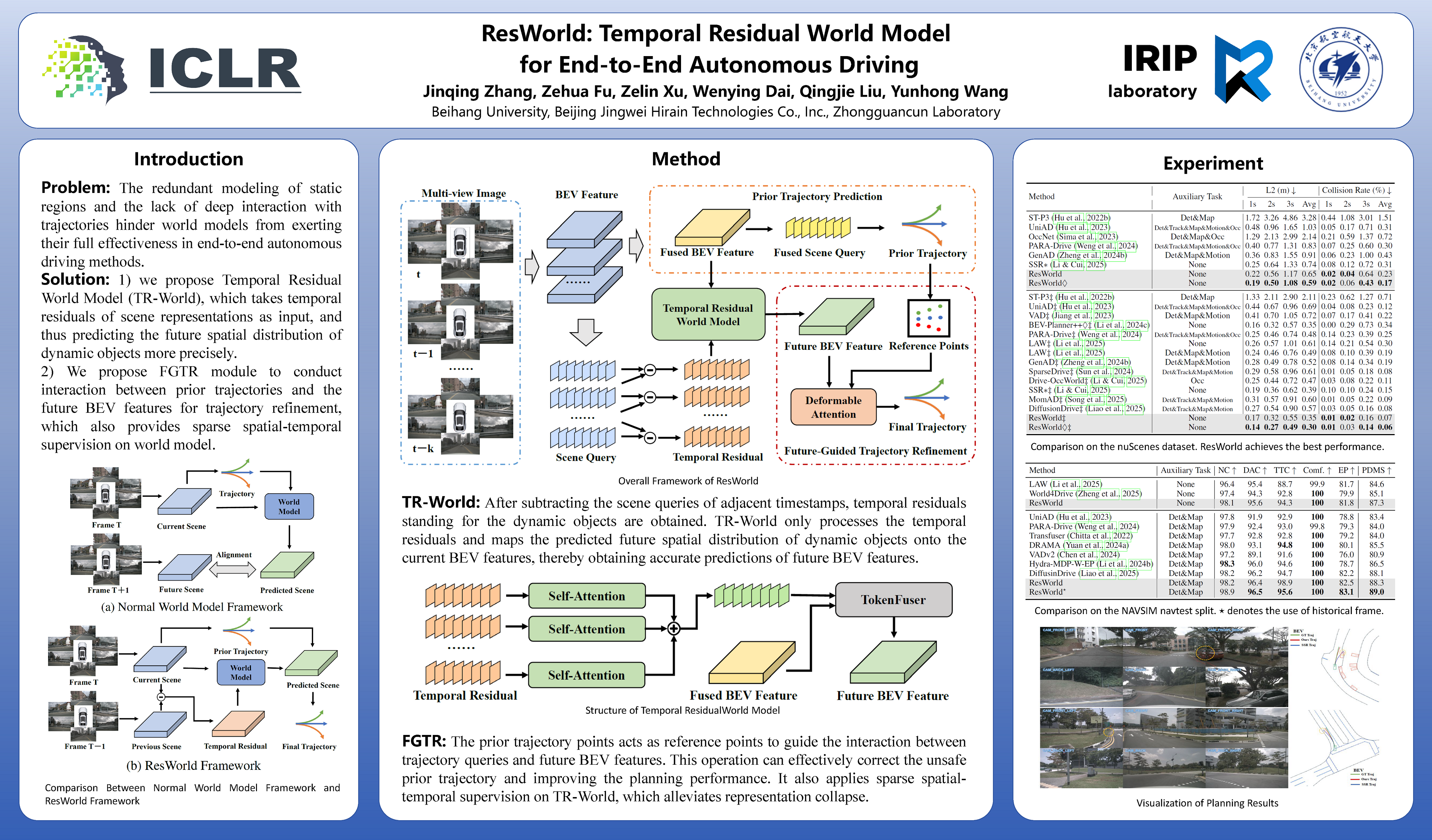
The comprehensive understanding capabilities of world models for driving scenarios have significantly improved the planning accuracy of end-to-end autonomous driving frameworks. However, the redundant modeling of static regions and the lack of deep interaction with trajectories hinder world models from exerting their full effectiveness. In this paper, we propose Temporal Residual World Model (TR-World), which focuses on dynamic object modeling. By calculating the temporal residuals of scene representations, the information of dynamic objects can be extracted without relying on detection and tracking. TR-World takes only temporal residuals as input, thus predicting the future spatial distribution of dynamic objects more precisely. By combining the prediction with the static object information contained in the current BEV features, accurate future BEV features can be obtained. Furthermore, we propose Future-Guided Trajectory Refinement (FGTR) module, which conducts interaction between prior trajectories (predicted from the current scene representation) and the future BEV features. This module can not only utilize future road conditions to refine trajectories, but also provides sparse spatial-temporal supervision on future BEV features to prevent world model collapse. Comprehensive experiments conducted on the nuScenes and NAVSIM datasets demonstrate that our method, namely ResWorld, achieves state-of-the-art planning performance. The code is available at https://github.com/mengtan00/ResWorld.git.
Embodied Navigation Foundation Model
Jiazhao Zhang ⋅ Anqi Li ⋅ Yunpeng Qi ⋅ Minghan Li ⋅ Jiahang Liu ⋅ Shaoan Wang ⋅ Haoran Liu ⋅ Gengze Zhou ⋅ Yuze Wu ⋅ Xingxing Li ⋅ Yuxin Fan ⋅ Wenjun Li ⋅ Zhibo Chen ⋅ Fei Gao ⋅ Qi Wu ⋅ Zhizheng Zhang ⋅ He Wang
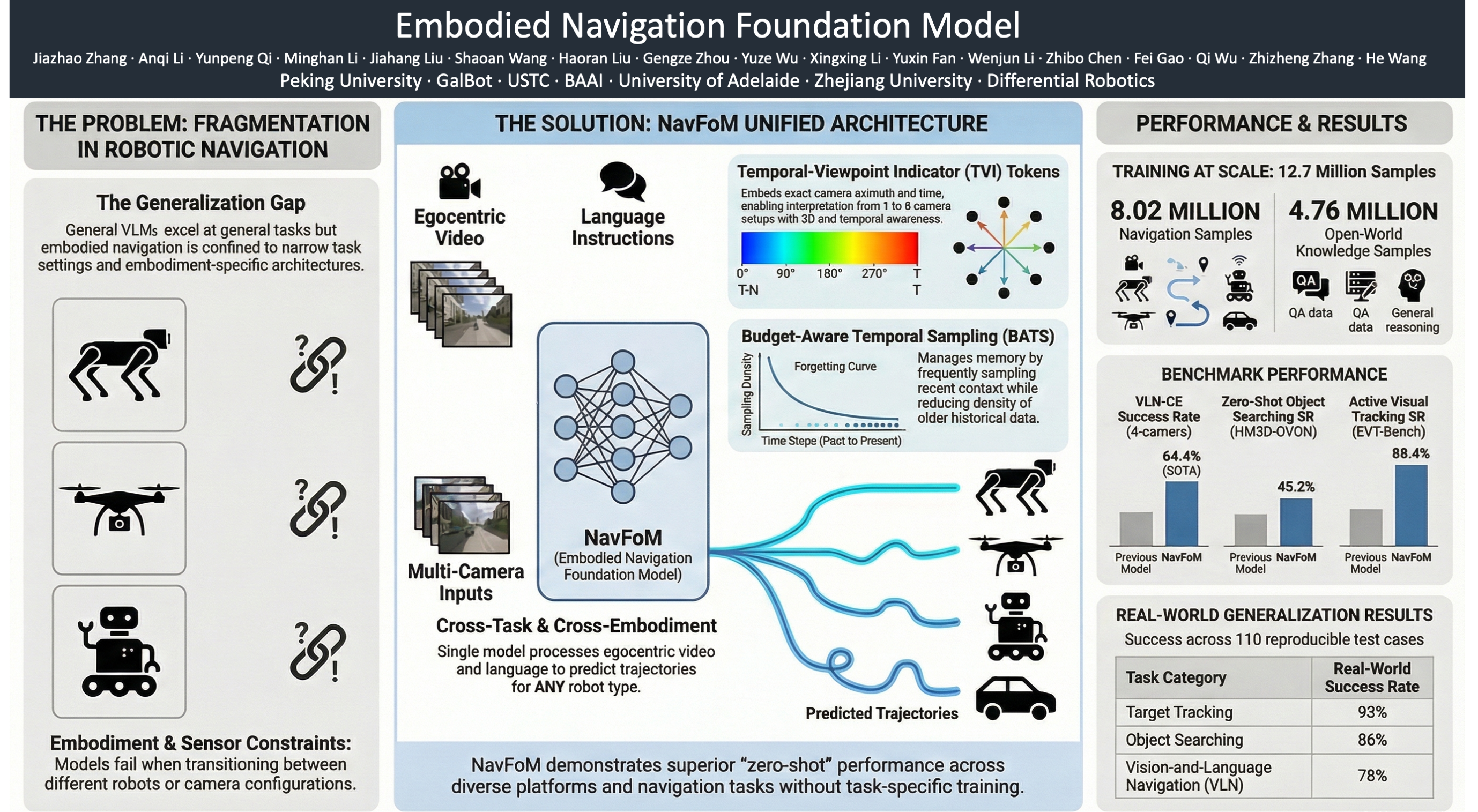
Navigation is a fundamental capability in embodied AI, representing the intelligence required to perceive and interact within physical environments. To achieve such intelligence, recent advanced works leverage Vision-Language Models (VLMs), which demonstrate strong generalizability and possess a well-suited formulation for navigation. However, these approaches remain largely confined to narrow task settings and embodiment-specific architectures. In this work, we introduce a cross-embodiment and cross-task Navigation Foundation Model (NavFoM), trained on eight million navigation samples that encompass quadrupeds, drones, wheeled robots, and vehicles, and spanning diverse tasks such as vision-and-language navigation, object searching, target tracking, and autonomous driving. NavFoM employs a unified architecture that processes multimodal navigation inputs from varying camera configurations and navigation horizons. To accommodate diverse camera setups and temporal horizons, NavFoM incorporates identifier tokens that embed camera view information of embodiments and the temporal context of tasks. Furthermore, to meet the demands of real-world deployment, NavFoM controls all observation tokens using a dynamically adjusted sampling strategy under a limited token length budget. Extensive evaluations on seven public benchmarks demonstrate that our model achieves state-of-the-art or highly competitive performance across different navigation tasks and embodiments without requiring task-specific fine-tuning. Additional real-world experiments further confirm the strong generalizability and practical applicability of our approach.
FASTer: Toward Powerful and Efficient Autoregressive Vision–Language–Action Models with Learnable Action Tokenizer and Block-wise Decoding
Yicheng Liu ⋅ Shiduo Zhang ⋅ Zibin Dong ⋅ Baijun Ye ⋅ Tianyuan Yuan ⋅ Xiaopeng Yu ⋅ Linqi Yin ⋅ Chenhao Lu ⋅ Junhao Shi ⋅ Luca Jiang-Tao Yu ⋅ Liangtao Zheng ⋅ Jingjing Gong ⋅ Tao Jiang ⋅ Xipeng Qiu ⋅ Hang Zhao
Autoregressive vision-language-action (VLA) models have recently demonstrated strong capabilities in robotic manipulation. However, their core process of action tokenization often involves a trade-off between reconstruction fidelity and inference efficiency. We introduce \textbf{FASTer}, a unified framework for efficient and generalizable robot learning that integrates a learnable tokenizer with an autoregressive policy built upon it. FASTerVQ encodes action chunks as single-channel images, capturing global spatio-temporal dependencies while maintaining a high compression ratio. FASTerVLA builds on this tokenizer with block-wise autoregressive decoding and a lightweight action expert, achieving both faster inference and higher task performance. Extensive experiments across simulated and real-world benchmarks show that FASTerVQ delivers superior reconstruction quality, high token utilization, and strong cross-task and cross-embodiment generalization, while FASTerVLA further improves overall capability, surpassing previous state-of-the-art VLA models in both inference speed and task performance.
From Spatial to Actions: Grounding Vision-Language-Action Model in Spatial Foundation Priors
Zhengshen Zhang ⋅ 昊 李 ⋅ Yalun Dai ⋅ Zhengbang Zhu ⋅ Lei Zhou ⋅ Chenchen Liu ⋅ Dong Wang ⋅ Francis Tay ⋅ Sijin Chen ⋅ Ziwei Liu ⋅ Yuxiao Liu ⋅ Xinghang Li ⋅ Pan Zhou
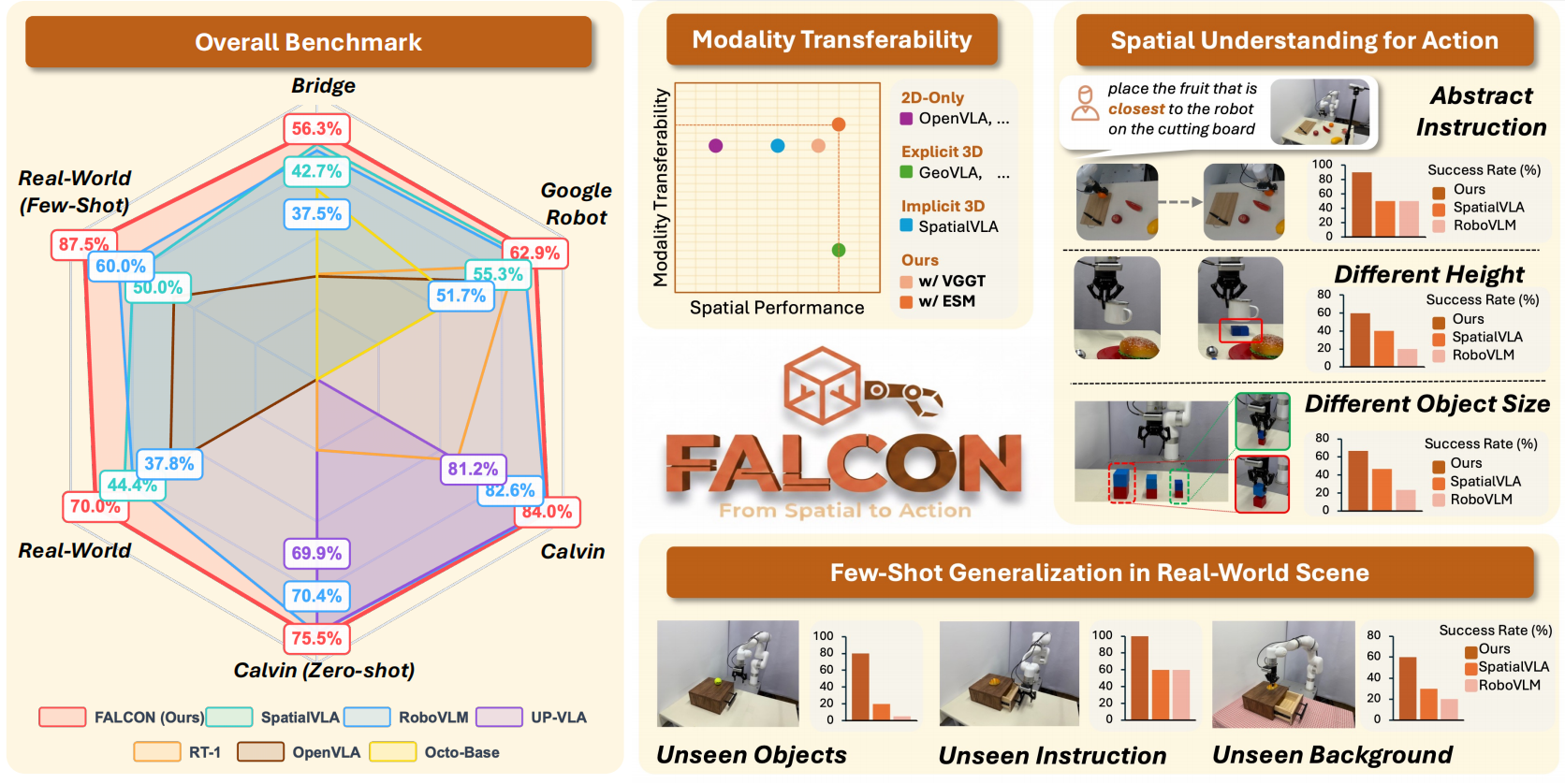
Existing vision-language-action (VLA) models act in 3D real-world but are typically built on 2D encoders, leaving a spatial reasoning gap that limits generalization and adaptability. Recent 3D integration techniques for VLAs either require specialized sensors and transfer poorly across modalities, or inject weak cues that lack geometry and degrade vision-language alignment. In this work, we introduce FALCON (From Spatial to Action), a novel paradigm that injects rich 3D spatial tokens into the action head. FALCON leverages spatial foundation models to deliver strong geometric priors from RGB alone, and includes an Embodied Spatial Model that can optionally fuse depth, or pose for higher fidelity when available, without retraining or architectural changes. To preserve language reasoning, spatial tokens are consumed by a Spatial-Enhanced Action Head rather than being concatenated into the vision-language backbone. These designs enable FALCON to address limitations in spatial representation, modality transferability, and alignment. In comprehensive evaluations across three simulation benchmarks and eleven real-world tasks, our proposed FALCON achieves state-of-the-art performance, consistently surpasses competitive baselines, and remains robust under clutter, spatial-prompt conditioning, and variations in object scale and height. Project page: https://falcon-vla.github.io/
Sparse Imagination for Efficient Visual World Model Planning
Junha Chun ⋅ Youngjoon Jeong ⋅ Taesup Kim
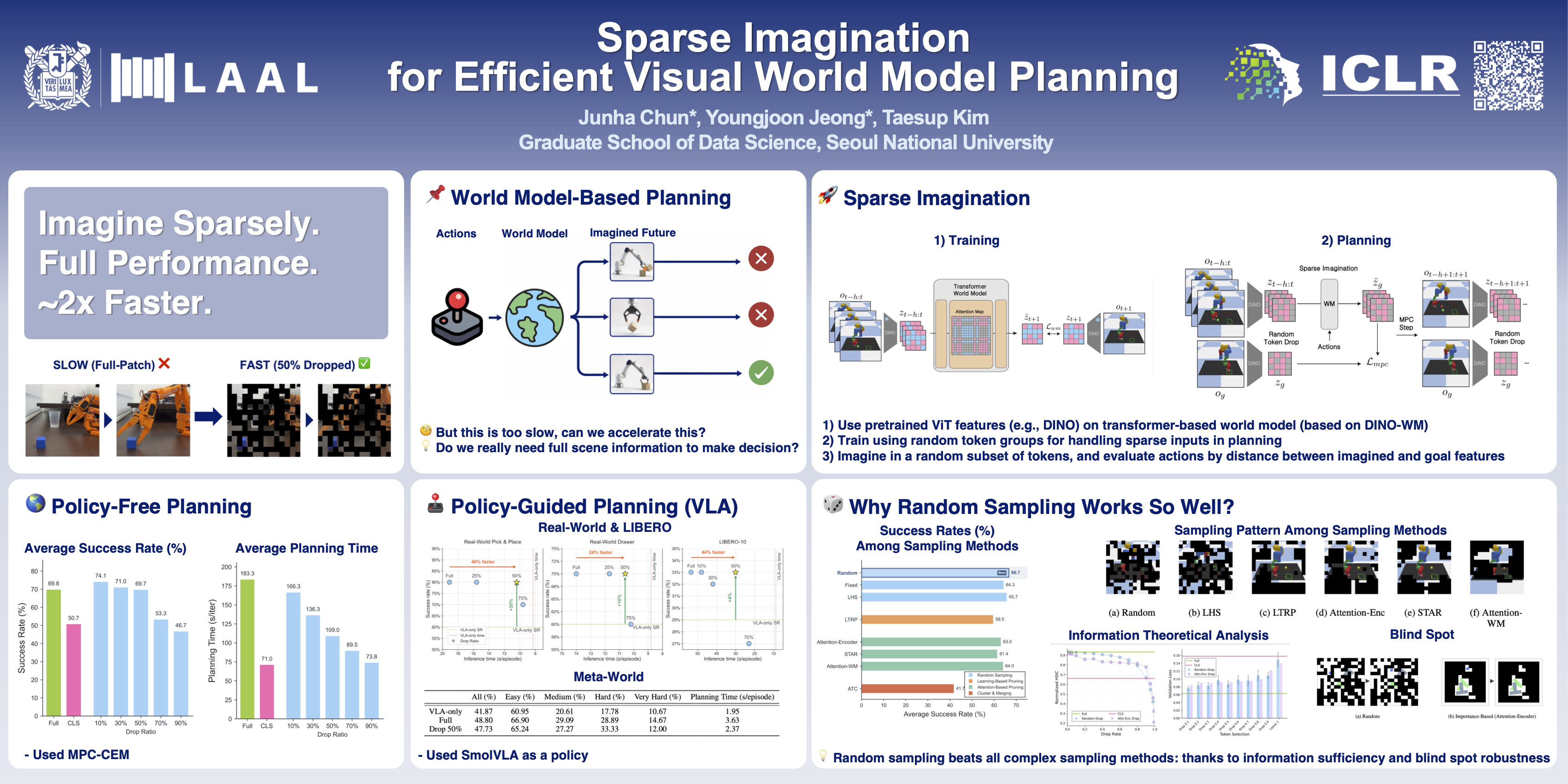
World model based planning has significantly improved decision-making in complex environments by enabling agents to simulate future states and make informed choices. This computational burden is particularly restrictive in robotics, where resources are severely constrained. To address this limitation, we propose a Sparse Imagination for Efficient Visual World Model Planning, which enhances computational efficiency by reducing the number of tokens processed during forward prediction. Our method leverages a sparsely trained vision-based world model based on transformers with randomized grouped attention strategy, allowing the model to flexibly adjust the number of tokens processed based on the computational resource. By enabling sparse imagination during latent rollout, our approach significantly accelerates planning while maintaining high control fidelity. Experimental results demonstrate that sparse imagination preserves task performance while dramatically improving inference efficiency. This general technique for visual planning is applicable from simple test-time trajectory optimization to complex real-world tasks with the latest VLAs, enabling the deployment of world models in real-time scenarios.
EquAct: An SE(3)-Equivariant Multi-Task Transformer for 3D Robotic Manipulation
Xupeng Zhu ⋅ Yu Qi ⋅ Yizhe Zhu ⋅ Robin Walters ⋅ Robert Platt
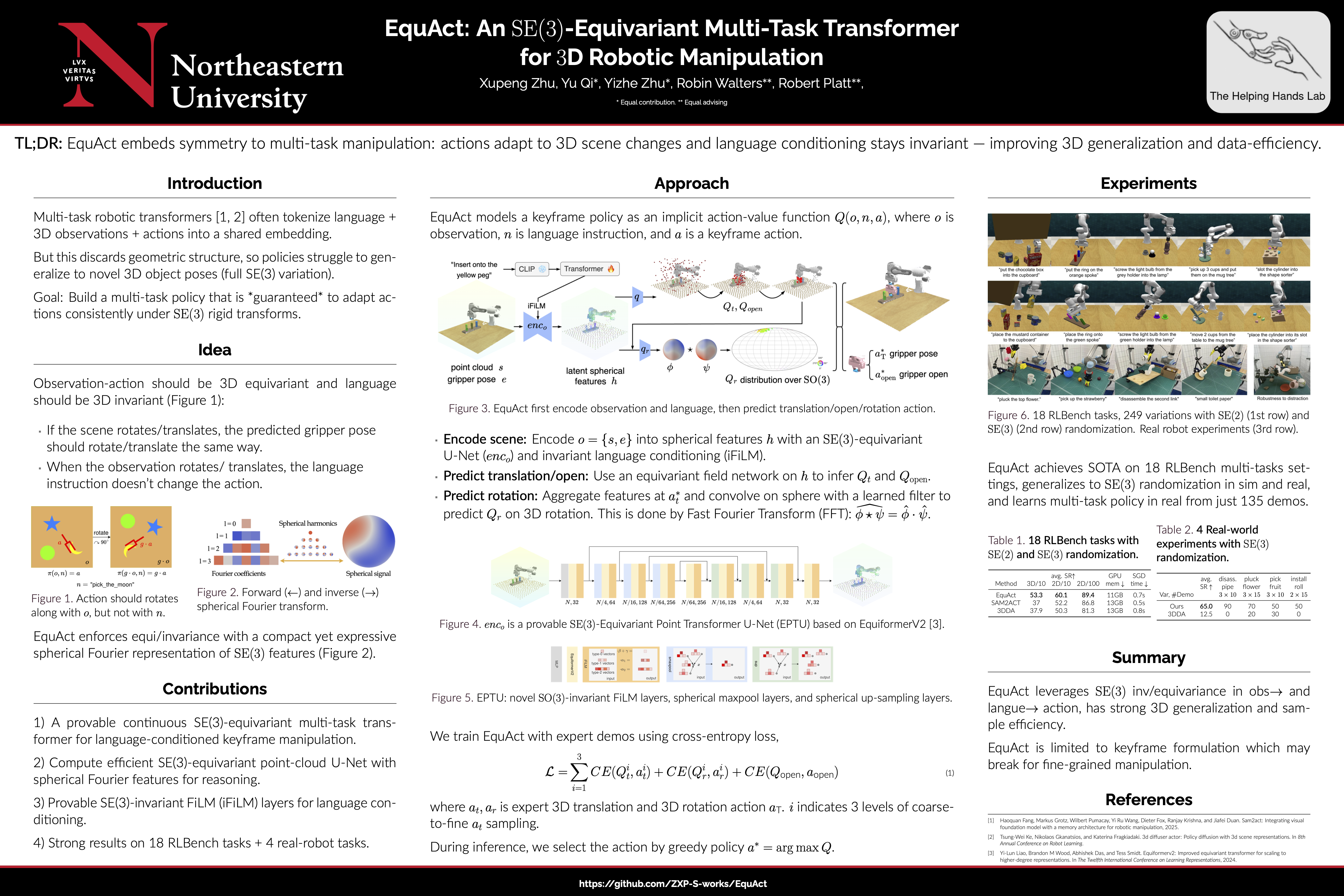
Multi-task manipulation policy often builds on transformer's ability to jointly process language instructions and 3D observations in a shared embedding space. However, real-world tasks frequently require robots to generalize to novel 3D object poses. Policies based on shared embedding break geometric consistency and struggle in 3D generation. To address this issue, we propose EquAct, which is theoretically guaranteed to generalize to novel 3D scene transformations by leveraging SE(3) equivariance shared across both language, observations, and action. EquAct makes two key contributions: (1) an efficient SE(3)-equivariant point cloud-based U-net with spherical Fourier features for policy reasoning, and (2) SE(3)-invariant Feature-wise Linear Modulation (iFiLM) layers for language conditioning. Finally, EquAct demonstrates strong spatial generalization ability and achieves state-of-the-art across $18$ RLBench tasks with both SE(3) and SE(2) scene perturbations, different amounts of training data, and on $4$ physical tasks.
CoNavBench: Collaborative Long-Horizon Vision-Language Navigation Benchmark
Tianhang Wang ⋅ Xinhai Li ⋅ Fan Lu ⋅ Tianshi Gong ⋅ Jiankun Dong ⋅ Weiyi Xue ⋅ Sanqing Qu ⋅ Chenjia Bai ⋅ Guang Chen
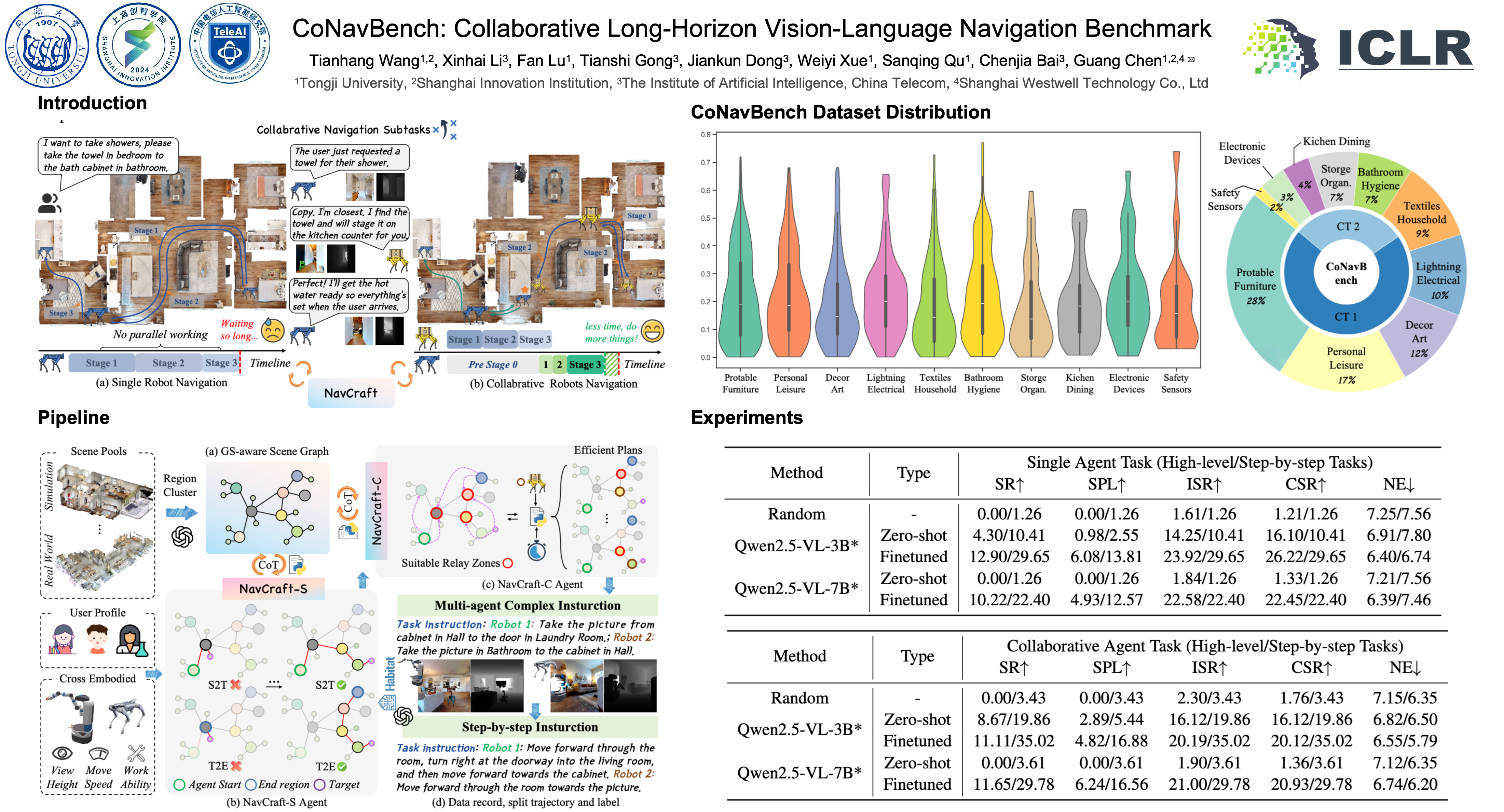
Vision-and-Language Navigation (VLN) primarily focuses on a single-agent-centric approach that executes human instructions step-by-step. In real environments with high demand or parallel workflows, collaboration VLN offers distinct benefits including shorter makespan and greater robustness through parallelism and role specialization. Collaboration VLN also brings new challenges including congestion, handoff errors, and rendezvous timing, which single-agent formulations overlook. Current datasets and protocols remain single-agent centered, which hides opportunities for assistance and ignores inter-robot interference. We fill this gap with Collaborative Long-Horizon VLN benchmark (\textbf{CoNavBench}), consisting of 4048 single and collaborative episodes with graph-level annotations and a collaboration type taxonomy that controls handoff styles and rendezvous patterns. To generate and evaluate at scale, we build \textbf{NavCraft}, an automated graph-grounded data generation platform. A two-stage hierarchical agent first produces a long-horizon base mission for the primary robot and then instantiates helper robots, allocates subgoals, and specifies validated handoffs and rendezvous. The agents operate with a scene graph in the loop derived from Habitat-Sim, which enables reachability checks, travel time, and interference assessment, and iterative schedule repair via an efficiency tool library. As a reference, we provide a collaborative baseline based on a finetuned Qwen2.5-VL-3B. Trained with CoNavBench, collaborative policies reduce makespan and improve reliability over strong single robot counterparts, yielding \textbf{18.11\%} step level success. Anonymous Website: https://navcraft.github.io.
Time Optimal Execution of Action Chunk Policies Beyond Demonstration Speed
Sunwoo Kim ⋅ Jeongjun Kim ⋅ Joseph Lim
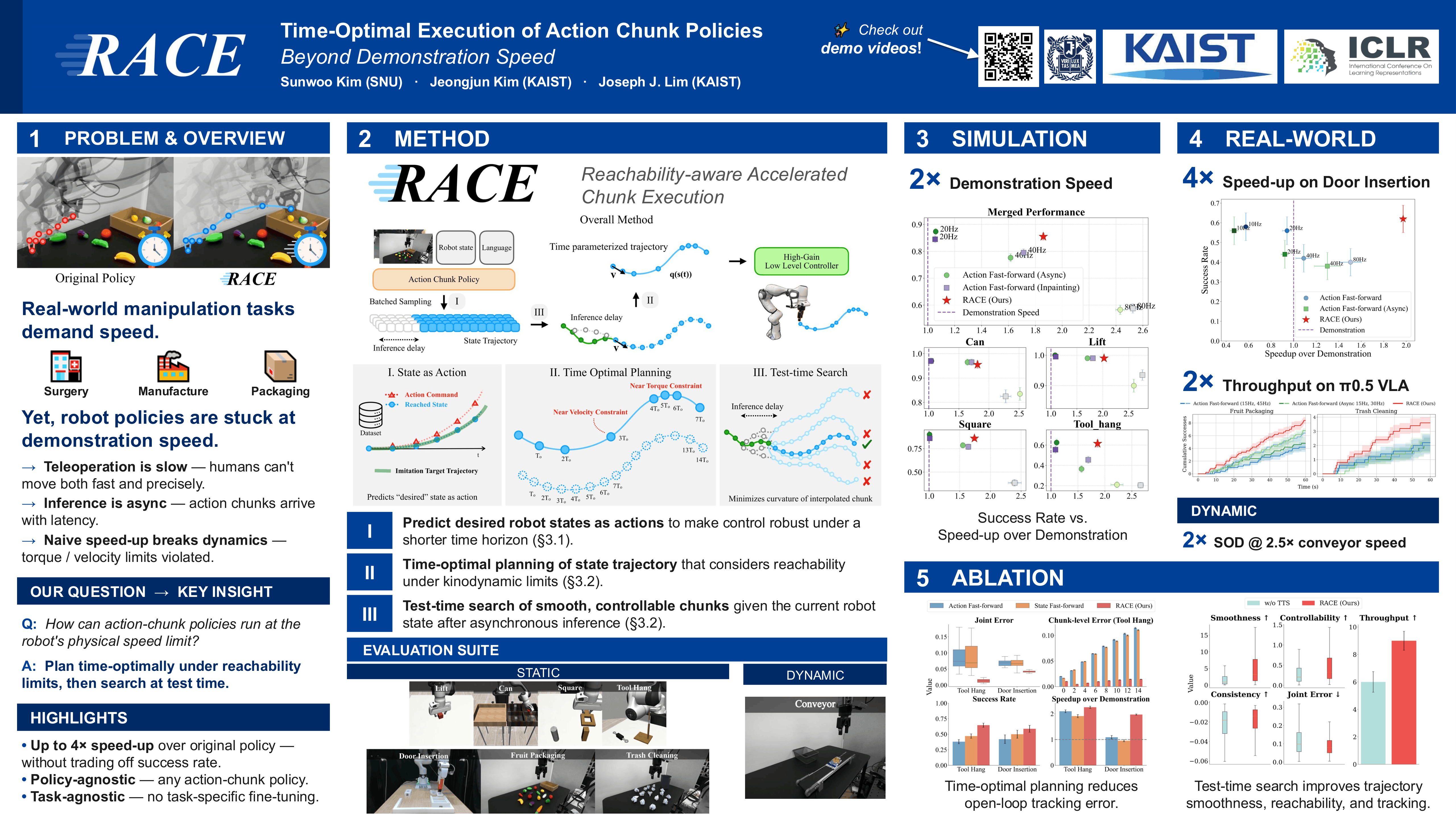
Achieving both speed and accuracy is a central challenge for real-world robot manipulation. While recent imitation learning approaches, including vision-language-action (VLA) models, have achieved remarkable precision and generalization, their execution speed is often limited by slow demonstration via teleoperation and by inference latency. In this work, we introduce a method to accelerate any imitation policy that predicts action chunks, enabling speeds that surpass those of the original demonstration. A naive approach of simply increasing the execution frequency of predicted actions leads to significant state errors and task failure, as it alters the underlying transition dynamics and encounters physical reachability constraints over shorter time horizons. These errors are further amplified by misaligned actions based on outdated robot state when using asynchronous inference to accelerate execution. Our method $\textbf{\textit{RACE}}$ address these challenges with a three-part solution: 1) using desired states as imitation targets instead of commanded actions, 2) replanning the timing of action chunks to execute them as fast as the robot's physical limits allow, and 3) employing a test-time search for an aligned action chunk that maximizes controllability from the current state. Through extensive experiments in both simulation and the real world, we show that our method achieves up to a 4x acceleration over the original policy while maintaining a high success rate
ARTDECO: Toward High-Fidelity On-the-Fly Reconstruction with Hierarchical Gaussian Structure and Feed-Forward Guidance
Guanghao Li ⋅ Kerui Ren ⋅ Linning Xu ⋅ Zhewen Zheng ⋅ Changjian Jiang ⋅ Xin Gao ⋅ Bo DAI ⋅ Jian Pu ⋅ Mulin Yu ⋅ Jiangmiao Pang
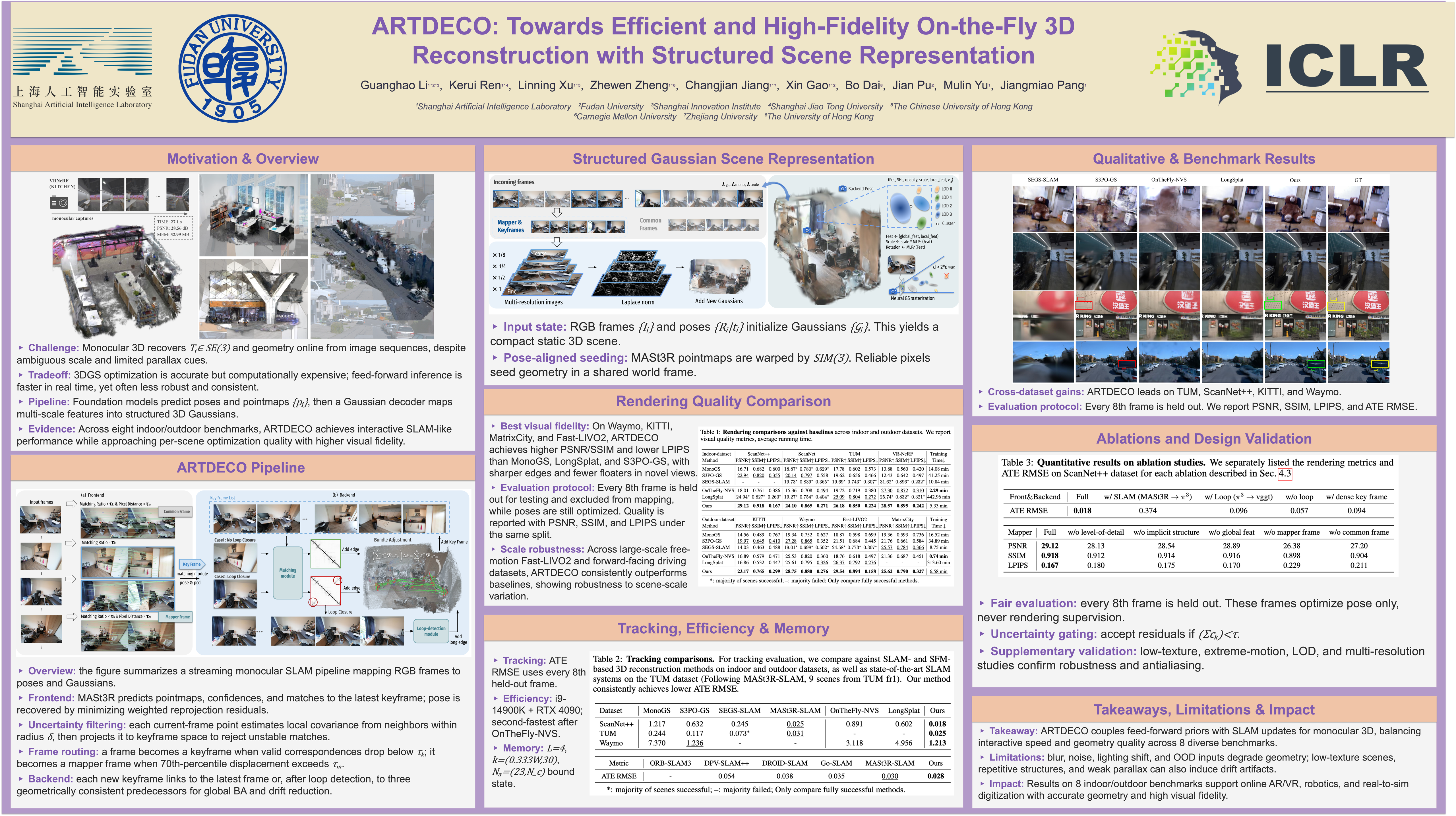
On-the-fly 3D reconstruction from monocular image sequences is a long-standing challenge in computer vision, critical for applications such as real-to-sim, AR/VR, and robotics. Existing methods face a major tradeoff: per-scene optimization yields high fidelity but is computationally expensive, whereas feed-forward foundation models enable real-time inference but struggle with accuracy and robustness. In this work, we propose ARTDECO, a unified framework that combines the efficiency of feed-forward models with the reliability of SLAM-based pipelines. ARTDECO uses 3D foundation models for pose estimation and point prediction, coupled with a Gaussian decoder that transforms multi-scale features into structured 3D Gaussians. To sustain both fidelity and efficiency at scale, we design a hierarchical Gaussian representation with a LoD-aware rendering strategy, which improves rendering fidelity while reducing redundancy. Experiments on eight diverse indoor and outdoor benchmarks show that ARTDECO delivers interactive performance comparable to SLAM, robustness similar to feed-forward systems, and reconstruction quality close to per-scene optimization, providing a practical path toward on-the-fly digitization of real-world environments with both accurate geometry and high visual fidelity. Project page: https://city-super.github.io/artdeco/
Policy Contrastive Decoding for Robotic Foundation Models
Shihan Wu ⋅ Xu Luo ⋅ Ji Zhang ⋅ Junlin Xie ⋅ Jingkuan Song ⋅ Heng Tao Shen ⋅ Lianli Gao
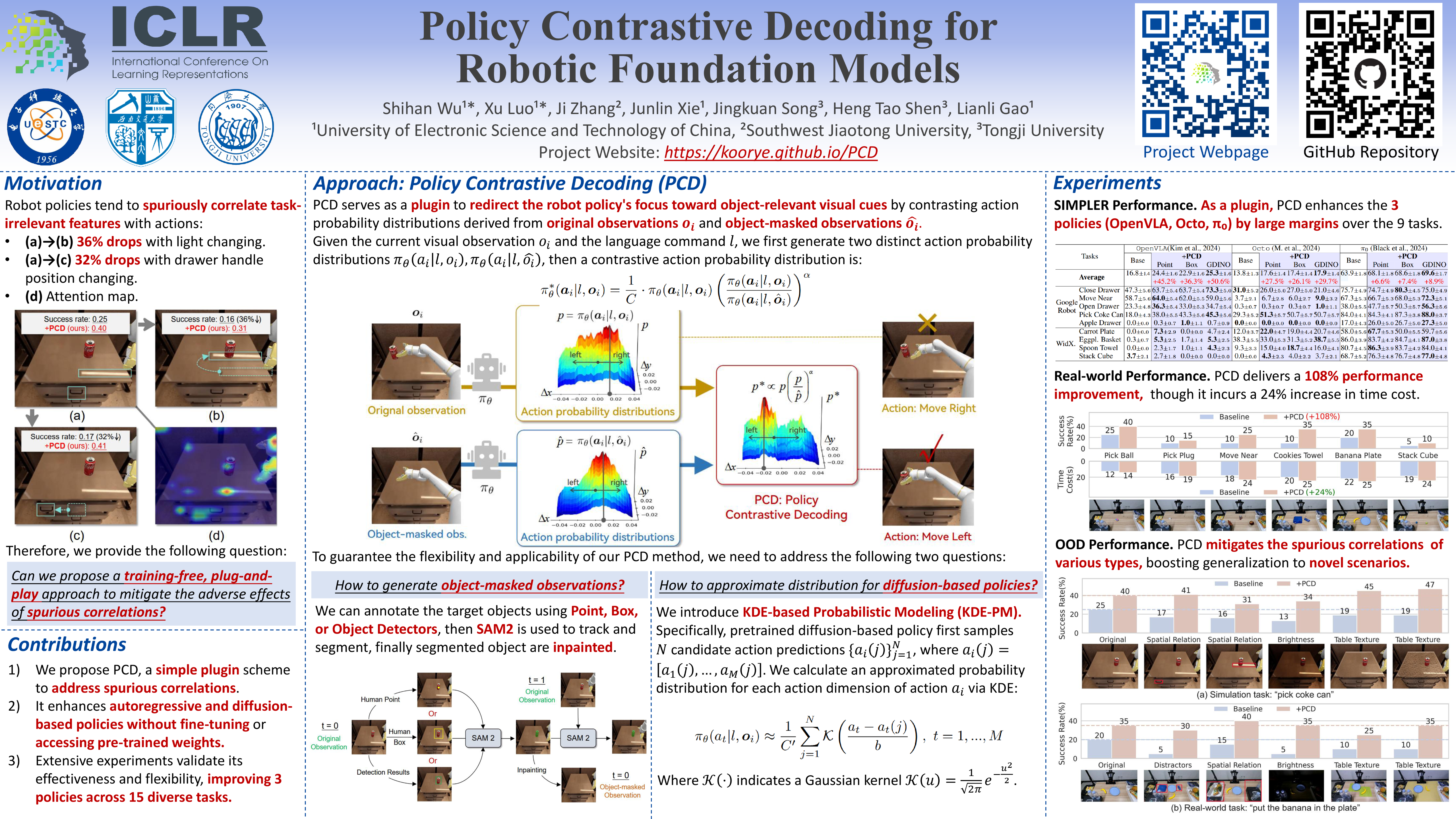
Generalist robot policies, or robotic foundation models, hold immense potential to enable flexible, general-purpose and dexterous robotic systems. Despite their advancements, our empirical experiments reveal that existing robot policies are prone to learning spurious correlations from pre-training trajectories, adversely affecting their generalization capabilities during inference. To tackle this, we propose a novel Policy Contrastive Decoding (PCD) approach, which redirects the robot policy’s focus toward object-relevant visual clues by contrasting action probability distributions derived from original and object-masked visual inputs. As a training-free method, our PCD can be used as a plugin to improve different types of robot policies without needing to finetune or access model weights. We conduct extensive experiments on top of three open-source robot policies, including the autoregressive policy OpenVLA and the diffusion-based policies Octo and Pi-0. The obtained results in both simulation and real-world environments prove PCD’s flexibility and effectiveness, e.g., PCD enhances the state-of-the-art policy $\pi_0$ by 8.9% in the simulation environment and by 108% in the real-world environment. Our code is publicly available at: https://github.com/pcd-robot/PCD.
AsyncBEV: Cross-modal flow alignment in Asynchronous 3D Object Detection
Shiming Wang ⋅ Holger Caesar ⋅ Liangliang Nan ⋅ Julian Kooij

In autonomous driving, multi-modal perception tasks like 3D object detection typically rely on well-synchronized sensors, both at training and inference. However, despite the use of hardware- or software-based synchronization algorithms, perfect synchrony is rarely guaranteed: Sensors may operate at different frequencies, and real-world factors such as network latency, hardware failures, or processing bottlenecks often introduce time offsets between sensors. Such asynchrony degrades perception performance, especially for dynamic objects. To address this challenge, we propose AsyncBEV, a trainable, lightweight, and generic module to improve the robustness of 3D Bird's Eye View (BEV) object detection models against sensor asynchrony. Inspired by scene flow estimation, AsyncBEV first estimates the 2D flow from the BEV features of two different sensor modalities, taking into account the known time offset between these sensor measurements. The predicted feature flow is then used to warp and spatially align the feature maps, which we show can easily be integrated into different current BEV detector architectures (e.g., BEV grid-based and token-based). Extensive experiments demonstrate AsyncBEV improves robustness against both small and large asynchrony between LiDAR or camera sensors in both the token-based CMT and grid-based UniBEV, especially for dynamic objects. We significantly outperform the ego motion compensated CMT and UniBEV baselines, notably by $16.6$ % and $11.9$ % NDS on dynamic objects in the worst-case scenario of a $0.5 s$ time offset. Code is available at \url{https://github.com/tudelft-iv/AsyncBEV}.
UrbanVerse: Scaling Urban Simulation by Watching City-Tour Videos
Mingxuan Liu ⋅ Honglin He ⋅ Elisa Ricci ⋅ Wayne Wu ⋅ Bolei Zhou
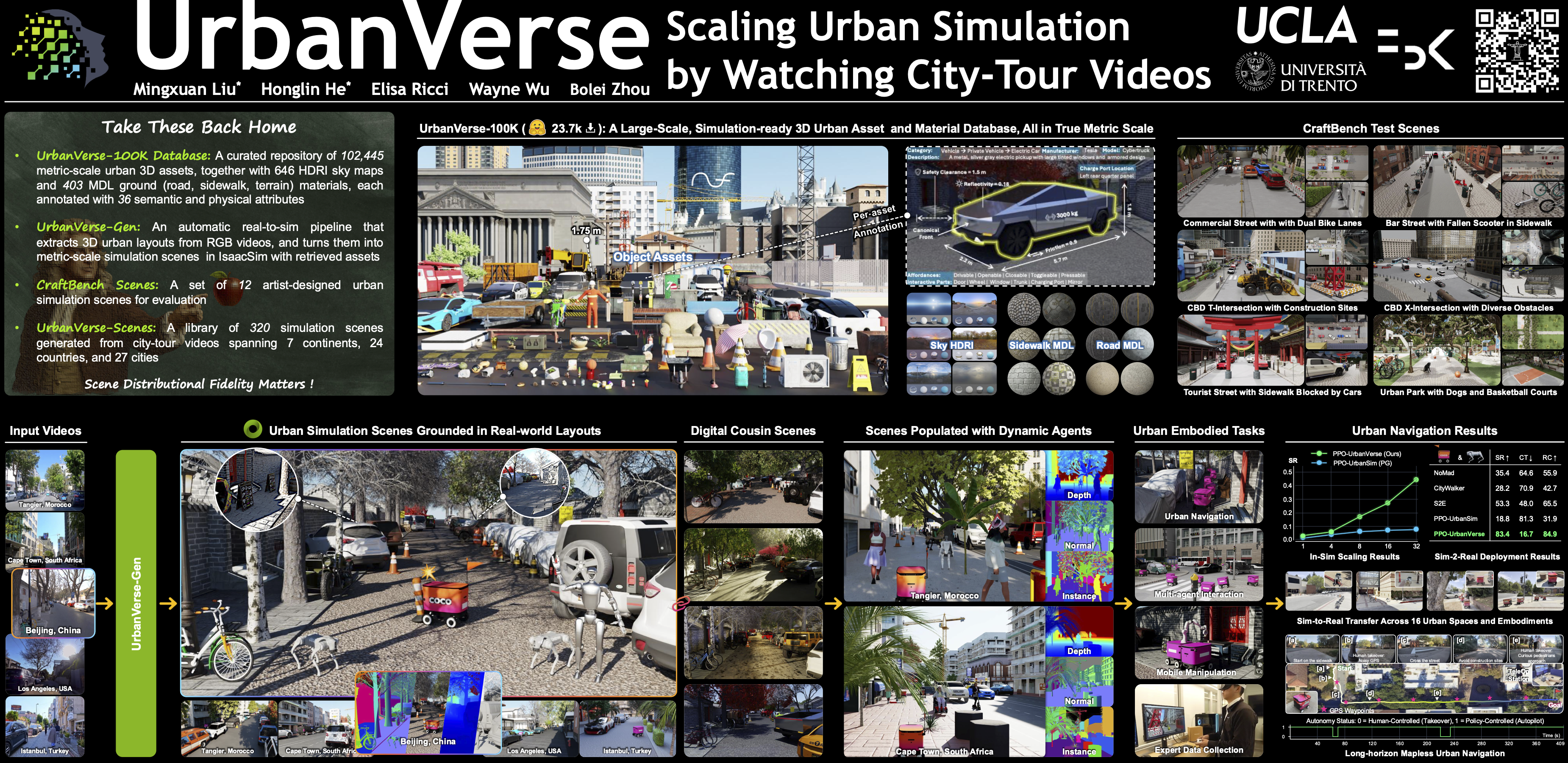
Urban embodied AI agents, ranging from delivery robots to quadrupeds, are increasingly populating our cities, navigating chaotic streets to provide last-mile connectivity. Training such agents requires diverse, high-fidelity urban environments to scale, yet existing human-crafted or procedurally generated simulation scenes either lack scalability or fail to capture real-world complexity. We introduce UrbanVerse, a data-driven real-to-sim system that converts crowd-sourced city-tour videos into physics-aware, interactive simulation scenes. UrbanVerse consists of: (i) UrbanVerse-100K, a repository of 100k+ annotated urban 3D assets with semantic and physical attributes, and (ii) UrbanVerse-Gen, an automatic pipeline that extracts scene layouts from video and instantiates metric-scale 3D simulations using retrieved assets. Running in IsaacSim, UrbanVerse offers 160 high-quality constructed scenes from 24 countries, along with a curated benchmark of 10 artist-designed test scenes. Experiments show that UrbanVerse scenes preserve real-world semantics and layouts, achieving human-evaluated realism comparable to manually crafted scenes. In urban navigation, policies trained in UrbanVerse exhibit scaling power laws and strong generalization, improving success by +6.3% in simulation and +30.1% in zero-shot sim-to-real transfer comparing to prior methods, accomplishing a 300 m real-world mission with only two interventions.
EgoDex: Learning Dexterous Manipulation from Large-Scale Egocentric Video
Ryan Hoque ⋅ Peide Huang ⋅ David Yoon ⋅ Mouli sivapurapu ⋅ Jian Zhang
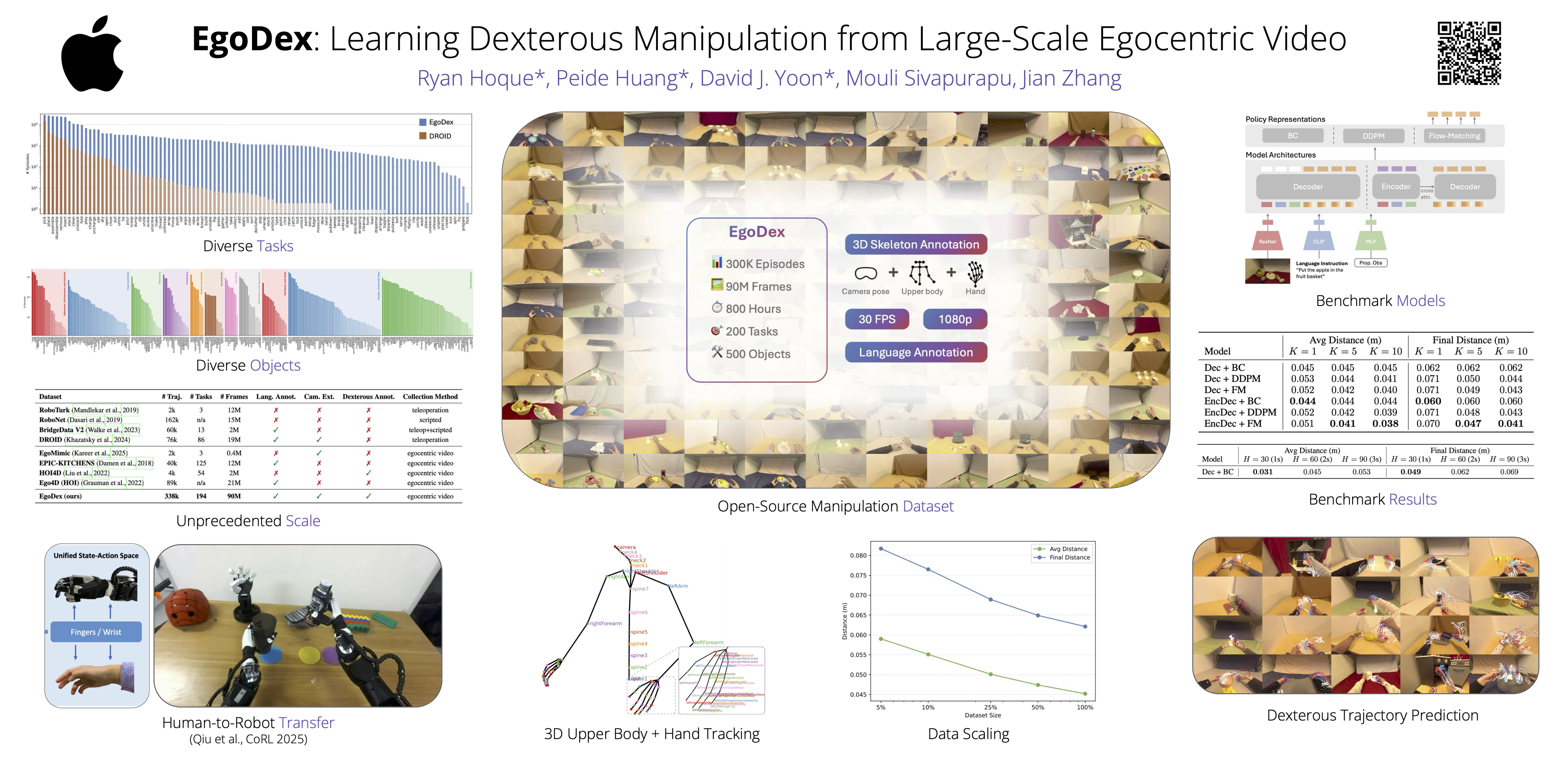
Imitation learning for manipulation has a well-known data scarcity problem. Unlike natural language and 2D computer vision, there is no Internet-scale corpus of data for dexterous manipulation. One appealing option is egocentric human video, a passively scalable data source. However, existing large-scale datasets such as Ego4D do not have native hand pose annotations and do not focus on object manipulation. To this end, we use Apple Vision Pro to collect EgoDex: the largest and most diverse dataset of dexterous human manipulation to date. EgoDex has 829 hours of egocentric video with paired 3D hand and finger tracking data collected at the time of recording, where multiple calibrated cameras and on-device SLAM can be used to precisely track the pose of every joint of each hand. The dataset covers a wide range of diverse manipulation behaviors with everyday household objects in 194 different tabletop tasks ranging from tying shoelaces to folding laundry. Furthermore, we train and systematically evaluate imitation learning policies for hand trajectory prediction on the dataset, introducing metrics and benchmarks for measuring progress in this increasingly important area. By releasing this large-scale dataset, we hope to push the frontier of robotics, computer vision, and foundation models. EgoDex is publicly available for download at https://github.com/apple/ml-egodex.
Off-Policy Safe Reinforcement Learning with Cost-Constrained Optimistic Exploration
Guopeng Li ⋅ Matthijs T. J. Spaan ⋅ Julian Kooij
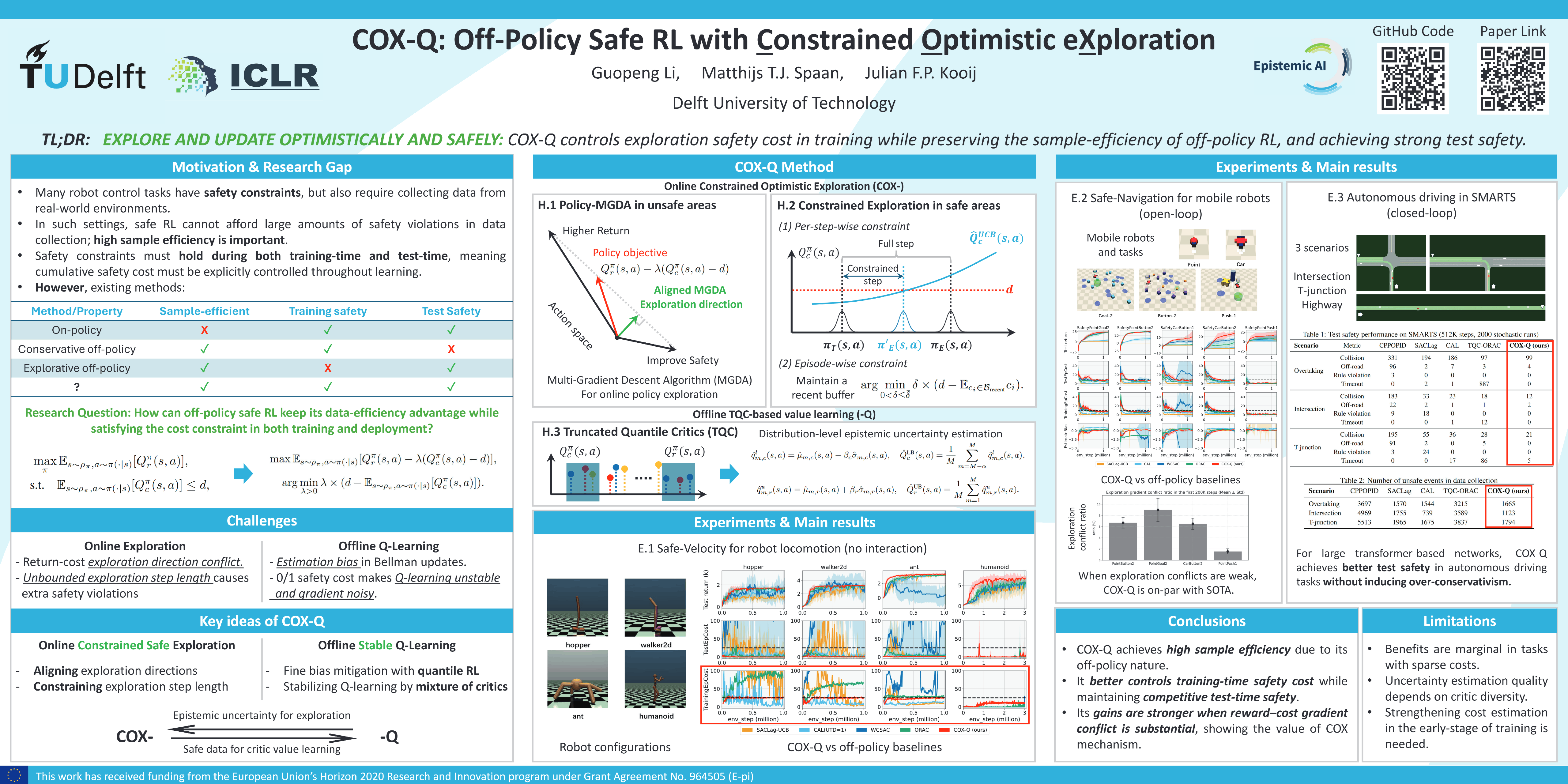
When safety is formulated as a limit of cumulative cost, safe reinforcement learning (RL) aims to learn policies that maximize return subject to the cost constraint in data collection and deployment. Off-policy safe RL methods, although offering high sample efficiency, suffer from constraint violations due to cost-agnostic exploration and estimation bias in cumulative cost. To address this issue, we propose Constrained Optimistic eXploration Q-learning (COX-Q), an off-policy safe RL algorithm that integrates cost-bounded online exploration and conservative offline distributional value learning. First, we introduce a novel cost-constrained optimistic exploration strategy that resolves gradient conflicts between reward and cost in the action space and adaptively adjusts the trust region to control the training cost. Second, we adopt truncated quantile critics to stabilize the cost value learning. Quantile critics also quantify epistemic uncertainty to guide exploration. Experiments on safe velocity, safe navigation, and autonomous driving tasks demonstrate that COX-Q achieves high sample efficiency, competitive test safety performance, and controlled data collection cost. The results highlight COX-Q as a promising RL method for safety-critical applications.
Disentangled Robot Learning via Separate Forward and Inverse Dynamics Pretraining
Wenyao Zhang ⋅ Bozhou Zhang ⋅ Zekun Qi ⋅ Wenjun Zeng ⋅ Xin Jin ⋅ Li Zhang
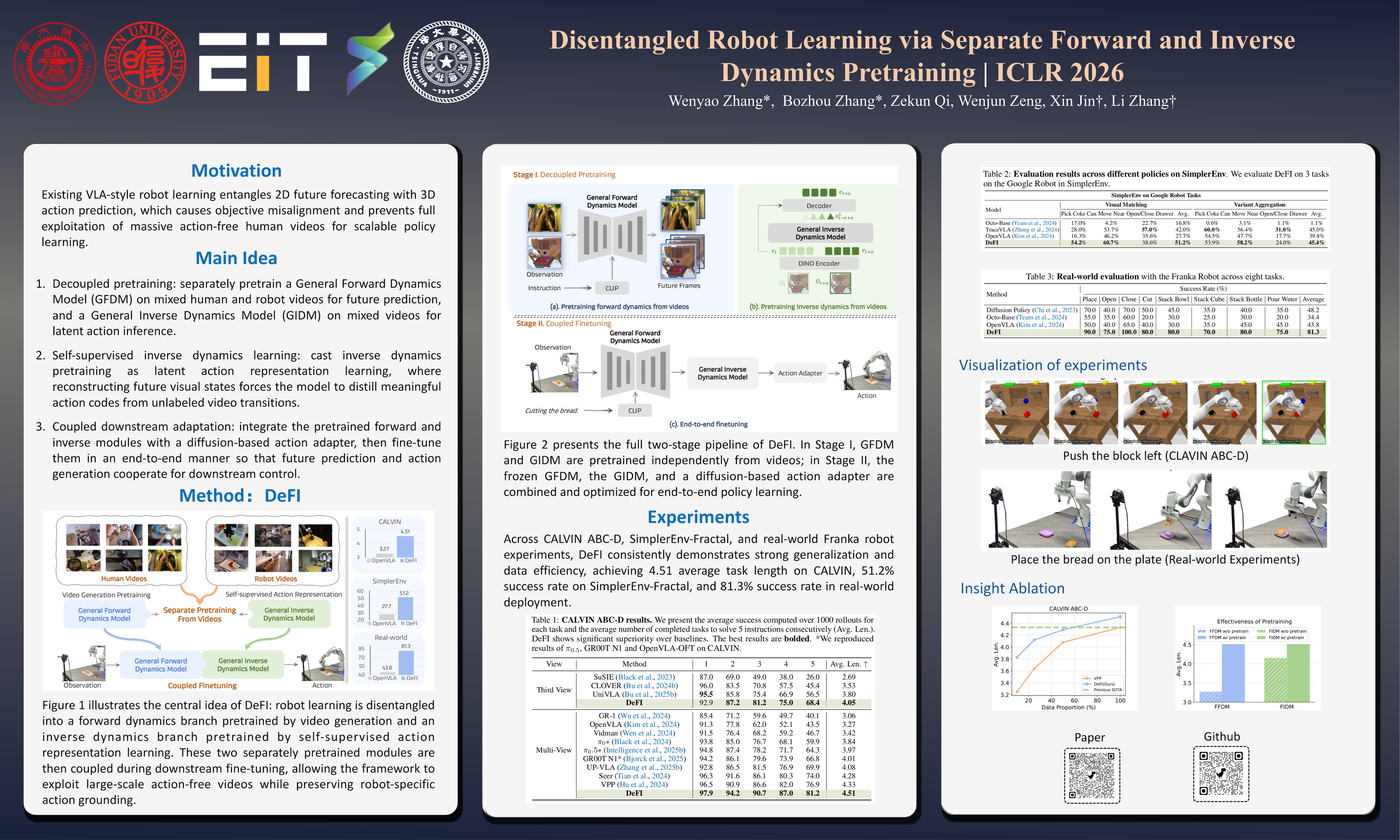
Vision-language-action (VLA) models have shown great potential in building generalist robots, but still face a dilemma–misalignment of 2D image forecasting and 3D action prediction. Besides, such a vision-action entangled training manner limits model learning from large-scale, action-free web video data. To address these issues, we propose DeFI, a novel framework that Decouples visual Forward and Inverse dynamics pretraining to exploit respective data sources, wherein video generation and action prediction are disentangled. We introduce the General Forward Dynamics Model (GFDM), pretrained on diverse human and robot videos for future prediction, and the General Inverse Dynamics Model (GIDM), trained via self-supervised learning to infer latent actions from unlabeled video transitions. These models are then integrated into a unified architecture for end-to-end finetuning on downstream tasks. In this manner, GFDM and GIDM first shine separately and then cooperate for mutual benefit. Extensive experiments on CALVIN ABC-D and SimplerEnv demonstrate state-of-the-art performance, with DeFI achieving an average task length of 4.51 for CALVIN, 51.2% success rate on SimplerEnv-Fractal benchmark and 81.3% success rate in real-world deployment, significantly outperforming prior methods.
When a Robot is More Capable than a Human: Learning from Constrained Demonstrators
Xinhu Li ⋅ Ayush Jain ⋅ Zhaojing Yang ⋅ Yigit Korkmaz ⋅ Erdem Bıyık
Learning from demonstrations enables experts to teach robots complex tasks using interfaces such as kinesthetic teaching, joystick control, and sim-to-real transfer. However, these interfaces often constrain the expert's ability to demonstrate optimal behavior due to indirect control, setup restrictions, and hardware safety. For example, a joystick can move a robotic arm only in a 2D plane, even though the robot operates in a higher-dimensional space. As a result, the demonstrations collected by constrained experts lead to suboptimal performance of the learned policies. This raises a key question: Can a robot learn a better policy than the one demonstrated by a constrained expert? We address this by allowing the agent to go beyond direct imitation of expert actions and explore shorter and more efficient trajectories. We use the demonstrations to infer a state-only reward signal that measures task progress, and self-label reward for unknown states using temporal interpolation. Our approach outperforms common imitation learning in both sample efficiency and task completion time. On a real WidowX robotic arm, it completes the task in 11 seconds, 10x faster than behavioral cloning.
DemoGrasp: Universal Dexterous Grasping from a Single Demonstration
Haoqi Yuan ⋅ Ziye Huang ⋅ Ye Wang ⋅ Chuan Mao ⋅ Chaoyi Xu ⋅ Zongqing Lu
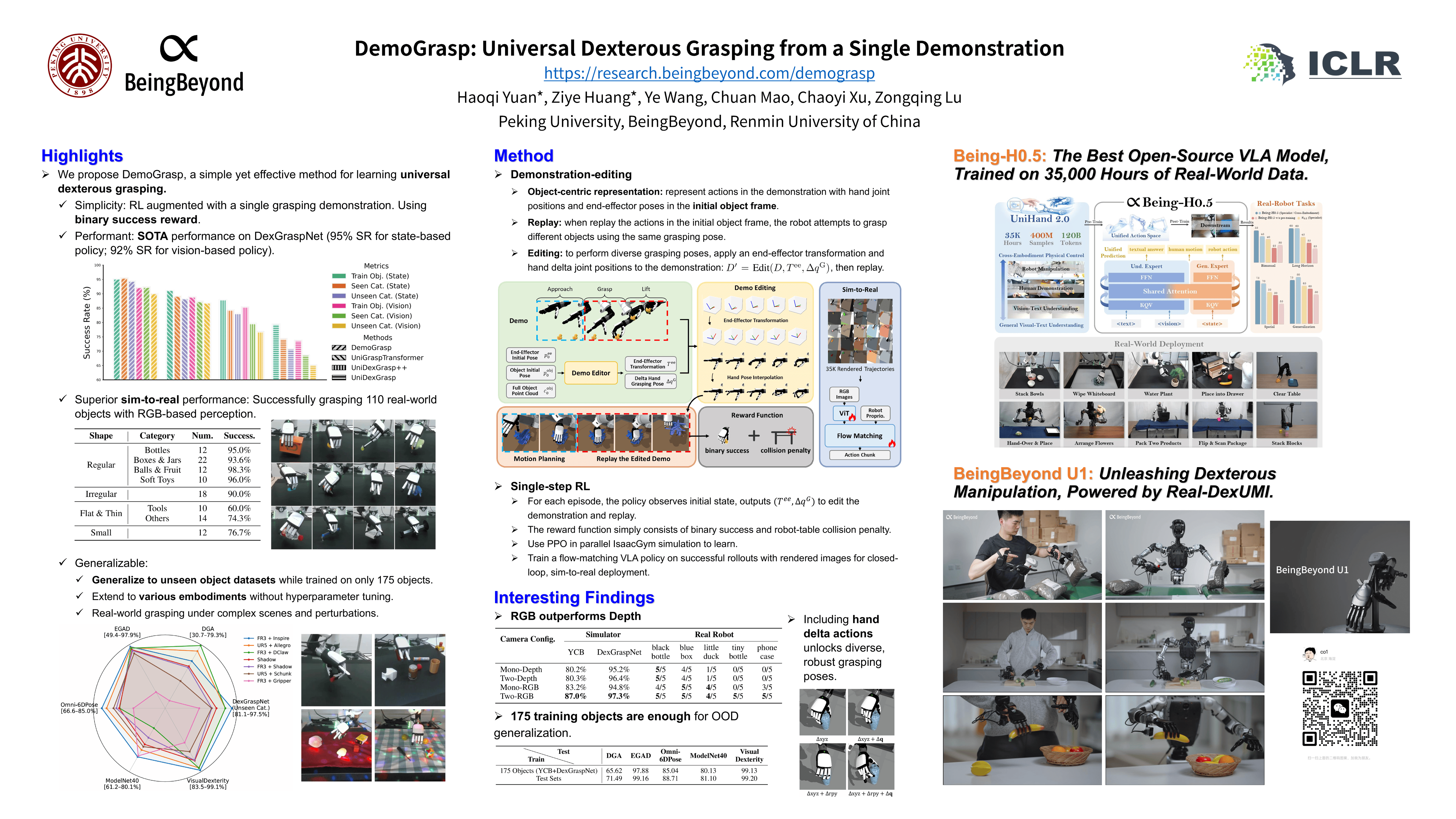
Universal grasping with multi-fingered dexterous hands is a fundamental challenge in robotic manipulation. While recent approaches successfully learn closed-loop grasping policies using reinforcement learning (RL), the inherent difficulty of high-dimensional, long-horizon exploration necessitates complex reward and curriculum design, often resulting in suboptimal solutions across diverse objects. We propose DemoGrasp, a simple yet effective method for learning universal dexterous grasping. We start from a single successful demonstration trajectory of grasping a specific object and adapt to novel objects and poses by editing the robot actions in this trajectory: changing the wrist pose determines where to grasp, and changing the hand joint angles determines how to grasp. We formulate this trajectory editing as a single-step Markov Decision Process (MDP) and use RL to optimize a universal policy across hundreds of objects in parallel in simulation, with a simple reward consisting of a binary success term and a robot–table collision penalty. In simulation, DemoGrasp achieves a 95% success rate on DexGraspNet objects using the Shadow Hand, outperforming previous state-of-the-art methods. It also shows strong transferability, achieving an average success rate of 84.6% across diverse dexterous hand embodiments on six unseen object datasets, while being trained on only 175 objects. Through vision-based imitation learning, our policy successfully grasps 110 unseen real-world objects, including small, thin items. It generalizes to spatial, background, and lighting changes, supports both RGB and depth inputs, and extends to language-guided grasping in cluttered scenes.
DexNDM: Closing the Reality Gap for Dexterous In-Hand Rotation via Joint-Wise Neural Dynamics Model
Xueyi Liu ⋅ He Wang ⋅ Li Yi
Achieving generalized in-hand object rotation remains a significant challenge in robotics, largely due to the difficulty of transferring policies from simulation to the real world. The complex, contact-rich dynamics of dexterous manipulation create a "reality gap" that has limited prior work to constrained scenarios involving simple geometries, limited object sizes and aspect ratios, constrained wrist poses, or customized hands. We address this sim-to-real challenge with a novel framework that enables a single policy, trained in simulation, to generalize to a wide variety of objects and conditions in the real world. The core of our method is a joint-wise dynamics model that learns to bridge the reality gap by effectively fitting limited amount of real-world collected data and then adapting the sim policy’s actions accordingly. The model is highly data‑efficient and generalizable across different whole‑hand interaction distributions by factorizing dynamics across joints, compressing system-wide influences into low‑dimensional variables, and learning each joint’s evolution from its own dynamic profile, implicitly capturing these net effects. We pair this with a fully autonomous data collection strategy that gathers diverse, real-world interaction data with minimal human intervention. Our complete pipeline demonstrates unprecedented generality: a single policy successfully rotates challenging objects with complex shapes (e.g., animals), high aspect ratios (up to 5.33), and small sizes, all while handling diverse wrist orientations and rotation axes. Comprehensive real-world evaluations and a teleoperation application for complex tasks validate the effectiveness and robustness of our approach. Website: DexNDM.
Master Skill Learning with Policy-Grounded Synergy of LLM-based Reward Shaping and Exploring
Yanbin Chang ⋅ Junfan Lin ⋅ Jie Jiang ⋅ Runhao Zeng ⋅ Changxin Huang ⋅ Jianqiang Li
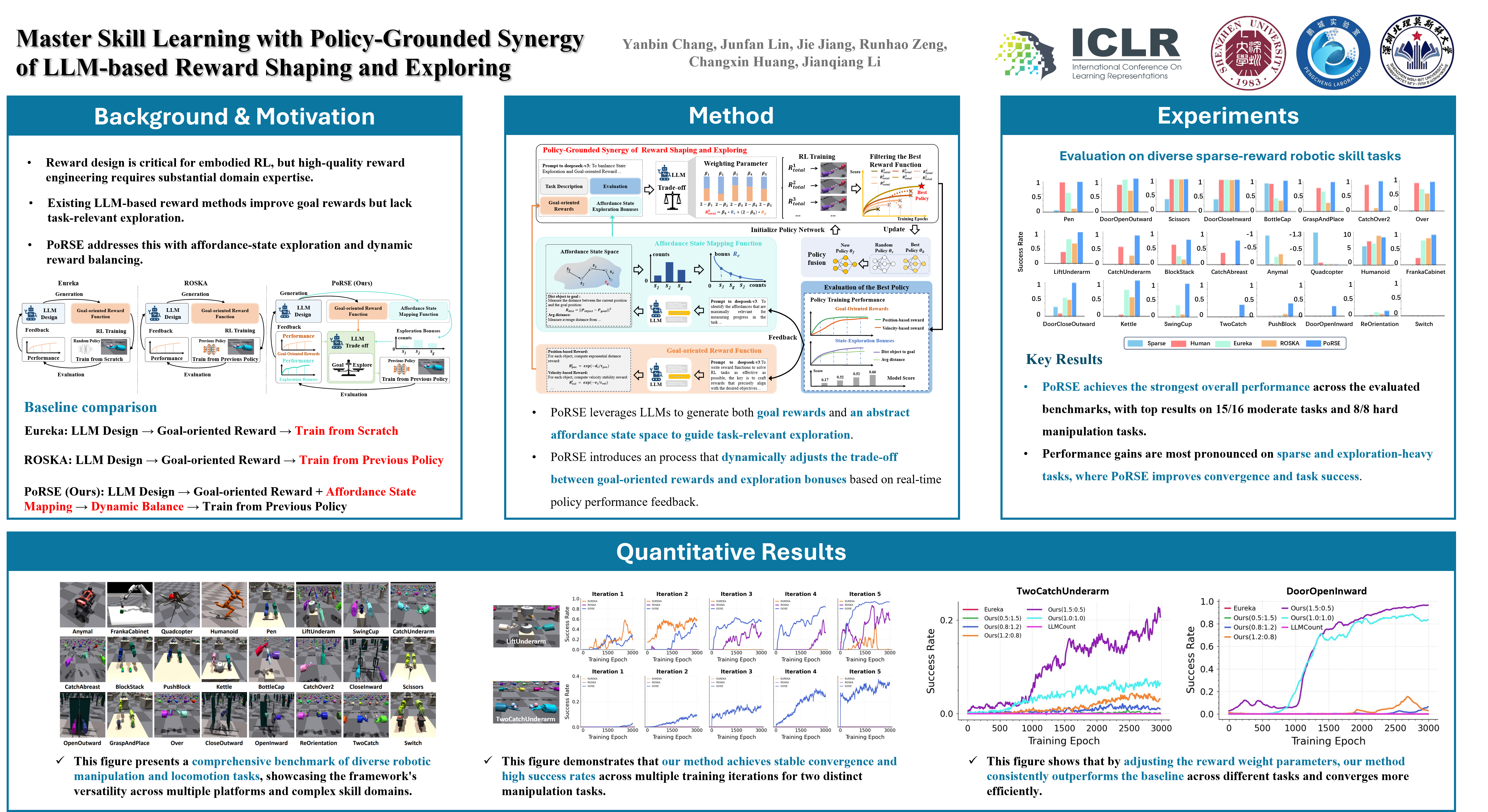
The acquisition of robotic skills via reinforcement learning (RL) is crucial for advancing embodied intelligence, but designing effective reward functions for complex tasks remains challenging. Recent methods using large language models (LLMs) can generate reward functions from language instructions, but they often produce overly goal-oriented rewards that neglect state exploration, causing robots to get stuck in local optima. Traditional RL addresses this by adding exploration bonuses, but these are typically generic and inefficient, wasting resources on exploring task-irrelevant areas. To address these limitations, we propose Policy-grounded Synergy of Reward Shaping and Exploration (PoRSE), a novel and unified framework that guides LLMs to generate task-aware reward functions while constructing an abstract affordance space for efficient exploration bonuses. Given the vast number of possible reward-bonus combinations, it is impractical to exhaustively train a policy from scratch for each configuration to identify the best one. Instead, PoRSE employs an in-policy-improvement grounding process, dynamically and continuously generating and filtering out reward-bonus pairs along the policy improvement process. This approach accelerates skill acquisition and fosters a mutually reinforcing relationship between reward shaping, exploration and policy enhancement through close feedback. Experiments show that PoRSE is highly effective, achieving significant improvement in average returns across all robotic tasks compared to previous state-of-the-art methods. It also achieves initial success in two highly challenging manipulation tasks, marking a significant breakthrough.
From Seeing to Experiencing: Scaling Navigation Foundation Models with Reinforcement Learning
Honglin He ⋅ Yukai Ma ⋅ Brad Squicciarini ⋅ Wayne Wu ⋅ Bolei Zhou
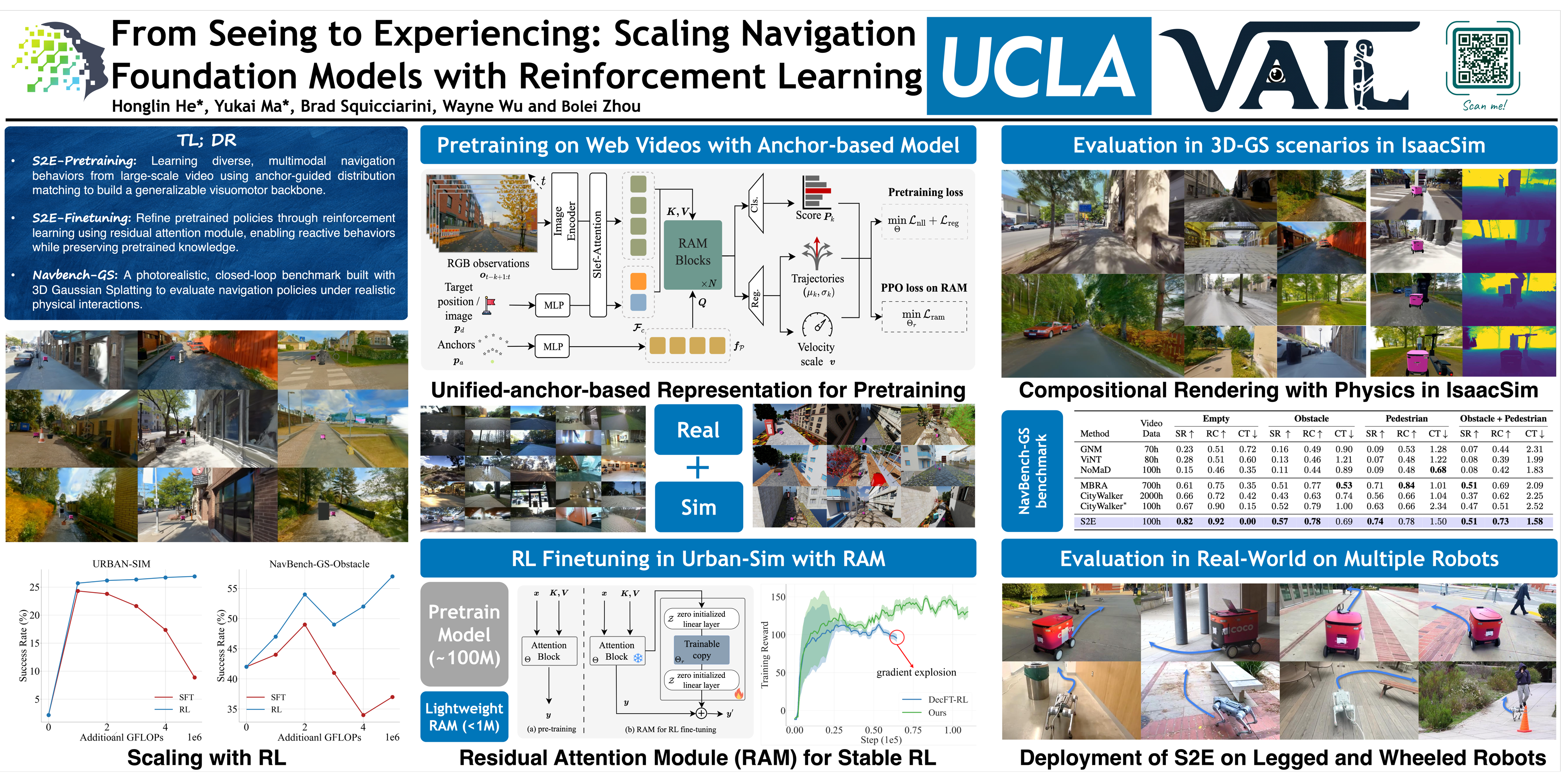
Navigation foundation models trained on massive web-scale data enable agents to generalize across diverse environments and embodiments. However, these models, which are trained solely on offline data, often lack the capacity to reason about the consequences of their actions or adapt through counterfactual understanding. They thus face significant limitations in the real-world urban navigation where interactive and safe behaviors, such as avoiding obstacles and moving pedestrians, are critical. To tackle these challenges, we introduce the Seeing-to-Experiencing (S2E) learning framework to scale the capability of navigation foundation models with reinforcement learning. S2E combines the strengths of pre-training on offline videos and post-training through reinforcement learning. It maintains the model's generalizability acquired from large-scale real-world videos while enhancing its interactivity through reinforcement learning in simulation environments. Specifically, we introduce two innovations: 1) an Anchor-Guided Distribution Matching strategy for offline pretraining, which stabilizes learning and models diverse motion patterns through anchor-based supervision; and 2) a Residual-Attention Module for reinforcement learning, which obtains reactive behaviors from simulation environments without erasing the model’s pretrained knowledge. Moreover, we establish a comprehensive end-to-end evaluation benchmark, NavBench-GS, built on photorealistic 3D Gaussian Splatting reconstructions of real-world scenes that incorporate physical interactions. It can systematically assess the generalizability and safety of navigation foundation models.
Online time series prediction using feature adjustment
Xiannan Huang ⋅ Shuhan Qiu ⋅ Jiayuan Du ⋅ Chao Yang
Time series forecasting is of significant importance across various domains. However, it faces significant challenges due to distribution shift. This issue becomes particularly pronounced in online deployment scenarios where data arrives sequentially, requiring models to adapt continually to evolving patterns. Current time series online learning methods focus on two main aspects: selecting suitable parameters to update (e.g., final layer weights or adapter modules) and devising suitable update strategies (e.g., using recent batches, replay buffers, or averaged gradients). We challenge the conventional parameter selection approach, proposing that distribution shifts stem from changes in underlying latent factors influencing the data. Consequently, updating the feature representations of these latent factors may be more effective. To address the critical problem of delayed feedback in multi-step forecasting (where true values arrive much later than predictions), we introduce ADAPT-Z (Automatic Delta Adjustment via Persistent Tracking in Z-space). ADAPT-Z utilizes an adapter module that leverages current feature representations combined with historical gradient information to enable robust parameter updates despite the delay. Extensive experiments demonstrate that our method consistently outperforms standard base models without adaptation and surpasses state-of-the-art online learning approaches across multiple datasets.
When would Vision-Proprioception Policies Fail in Robotic Manipulation?
Jingxian Lu ⋅ Wenke Xia ⋅ Yuxuan Wu ⋅ Zhiwu Lu ⋅ Di Hu
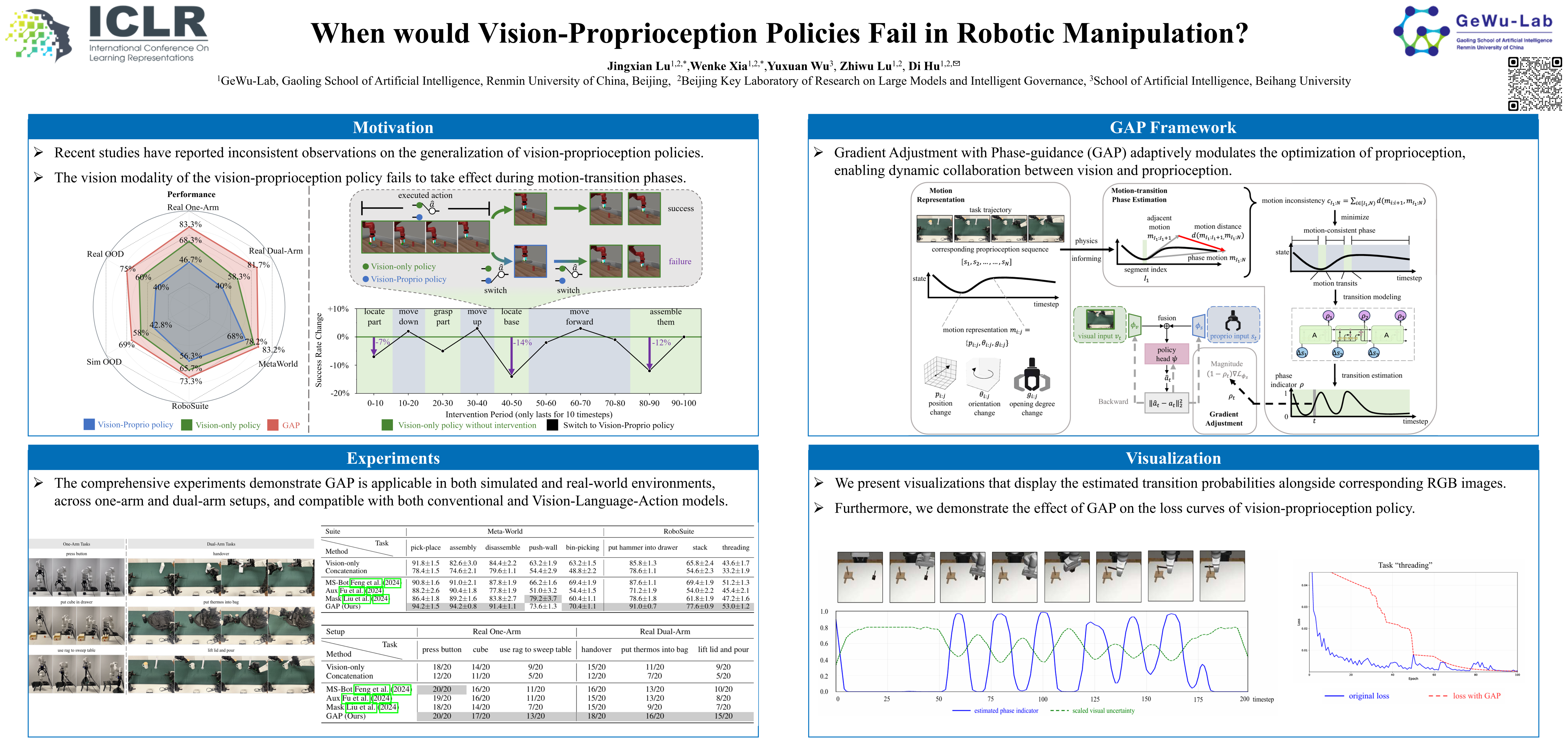
Proprioceptive information is critical for precise servo control by providing real-time robotic states. Its collaboration with vision is highly expected to enhance performances of the manipulation policy in complex tasks. However, recent studies have reported inconsistent observations on the generalization of vision-proprioception policies. In this work, we investigate this by conducting temporally controlled experiments. We found that during task sub-phases that robot's motion transitions, which require target localization, the vision modality of the vision-proprioception policy plays a limited role. Further analysis reveals that the policy naturally gravitates toward concise proprioceptive signals that offer faster loss reduction when training, thereby dominating the optimization and suppressing the learning of the visual modality during motion-transition phases. To alleviate this, we propose the Gradient Adjustment with Phase-guidance (GAP) algorithm that adaptively modulates the optimization of proprioception, enabling dynamic collaboration within the vision-proprioception policy. Specifically, we leverage proprioception to capture robotic states and estimate the probability of each timestep in the trajectory belonging to motion-transition phases. During policy learning, we apply fine-grained adjustment that reduces the magnitude of proprioception's gradient based on estimated probabilities, leading to robust and generalizable vision-proprioception policies. The comprehensive experiments demonstrate GAP is applicable in both simulated and real-world environments, across one-arm and dual-arm setups, and compatible with both conventional and Vision-Language-Action models. We believe this work can offer valuable insights into the development of vision-proprioception policies in robotic manipulation. Videos and code are available at https://gewu-lab.github.io/GAP/.
Latent-to-Data Cascaded Diffusion Models for Unconditional Time Series Generation
Lifeng Shen ⋅ Kai Syun Hou ⋅ Weiyu Chen ⋅ James Kwok
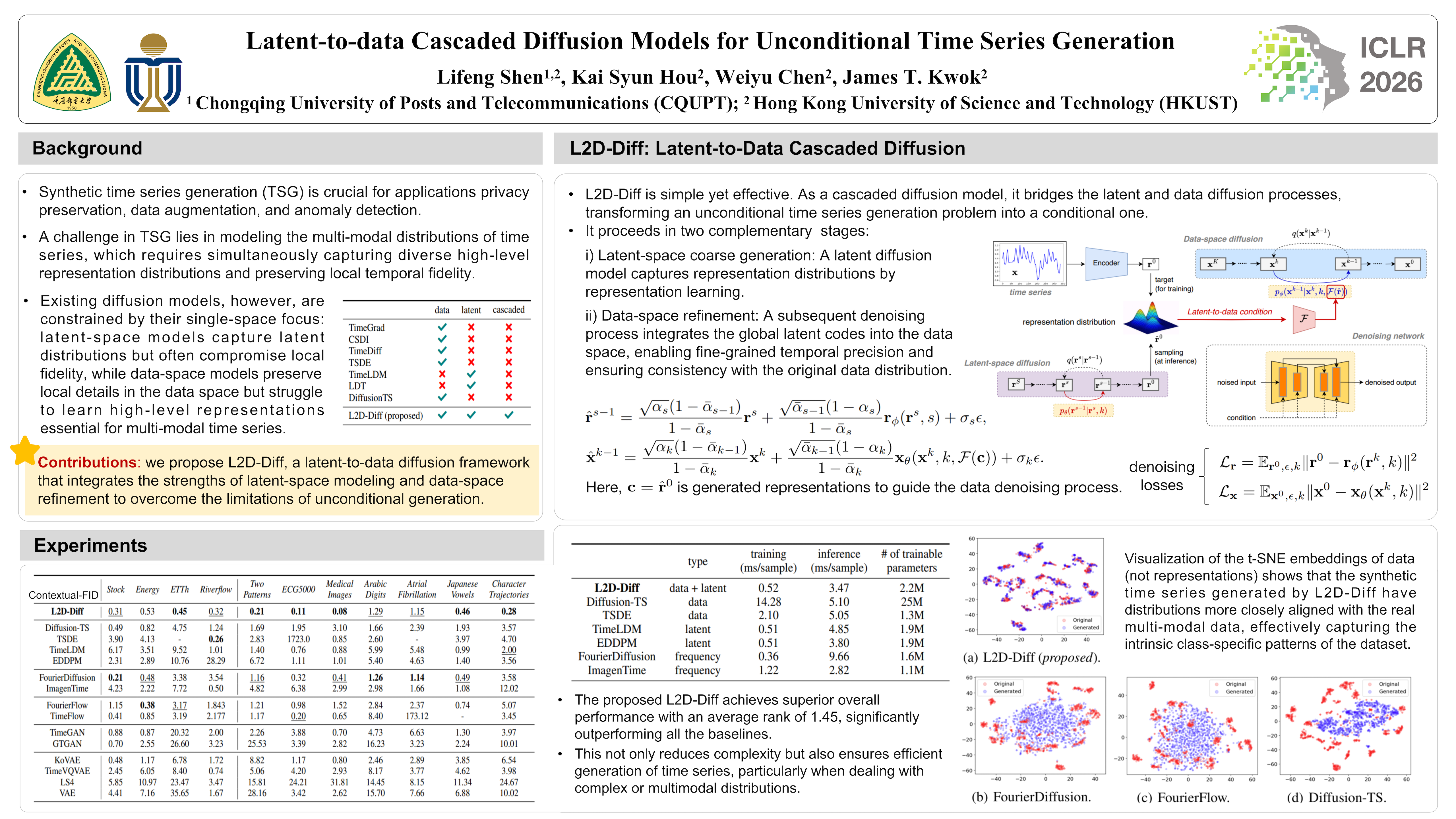
Synthetic time series generation (TSG) is crucial for applications such as privacy preservation, data augmentation, and anomaly detection. A key challenge in TSG lies in modeling the multi-modal distributions of time series, which requires simultaneously capturing diverse high-level representation distributions and preserving local temporal fidelity. Most existing diffusion models, however, are constrained by their single-space focus: latent-space models capture representation distributions but often compromise local fidelity, while data-space models preserve local details in the data space but struggle to learn high-level representations essential for multi-modal time series. To address these limitations, we propose L2D-Diff, a dual-space diffusion framework for synthetic time series generation. Specifically, L2D-Diff first compresses input sequences into a latent space to efficiently model the distribution of time series representations. The distribution then guides a data-space diffusion model to refine local data details, enabling faithful generation of time series distribution without relying on external conditions. Experiments on both single-modal and multi-modal datasets demonstrate the effectiveness of L2D-Diff in tackling unconditional TSG tasks. Ablation studies further highlight the necessity and impact of its dual-space design, showcasing its capability to achieve representation coherence and local fidelity.
Language in the Flow of Time: Time-Series-Paired Texts Weaved into a Unified Temporal Narrative
Zihao Li ⋅ Xiao Lin ⋅ Zhining Liu ⋅ Jiaru Zou ⋅ Ziwei Wu ⋅ Lecheng Zheng ⋅ Dongqi Fu ⋅ Yada Zhu ⋅ Hendrik Hamann ⋅ Hanghang Tong ⋅ Jingrui He
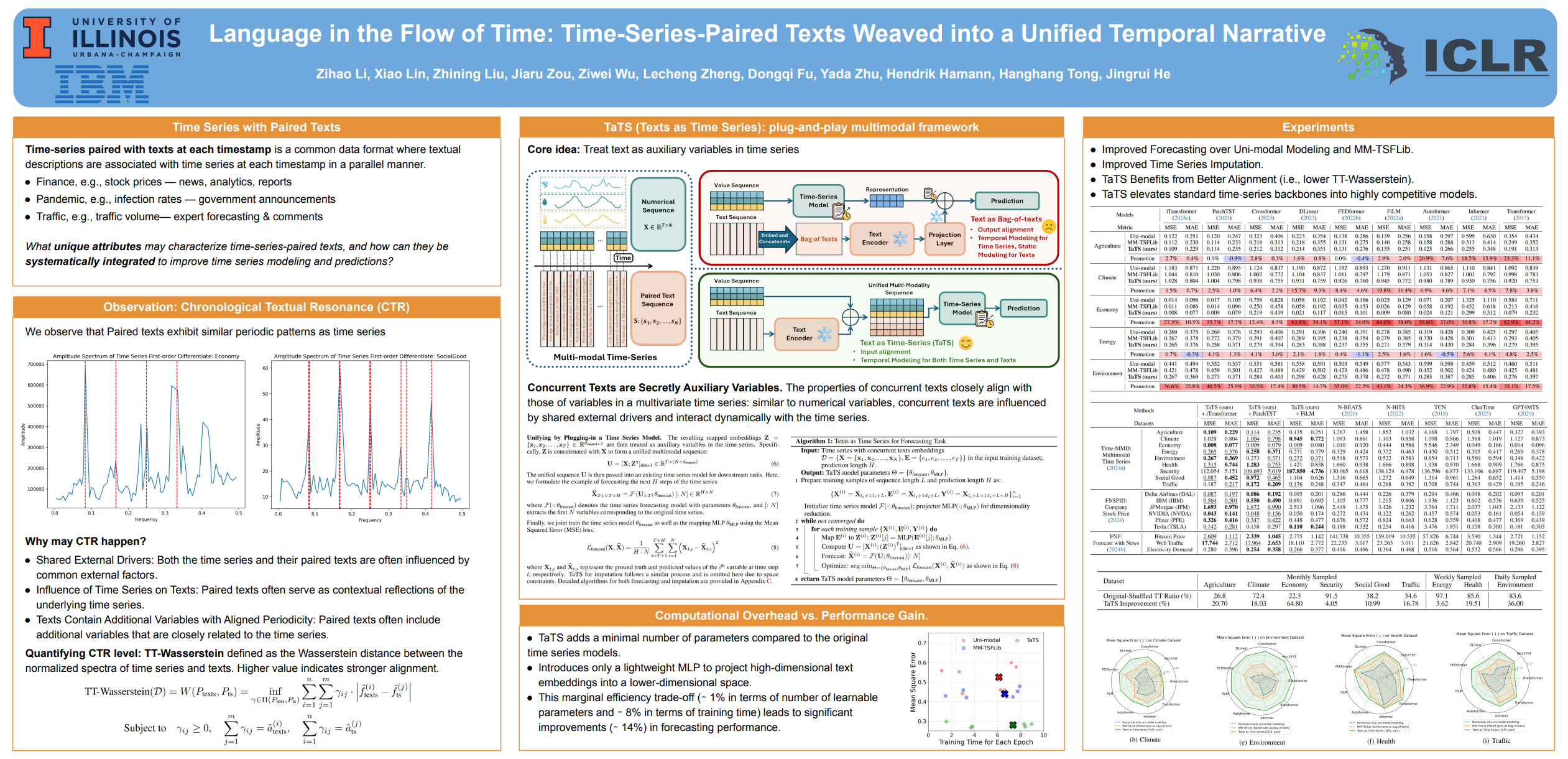
While many advances in time series models focus exclusively on numerical data, research on multimodal time series, particularly those involving contextual textual information, remains in its infancy. With recent progress in large language models and time series learning, we revisit the integration of paired texts with time series through the Platonic Representation Hypothesis, which posits that representations of different modalities converge to shared spaces. In this context, we identify that time-series-paired texts may naturally exhibit periodic properties that closely mirror those of the original time series. Building on this insight, we propose a novel framework, Texts as Time Series (TaTS), which considers the time-series-paired texts to be auxiliary variables of the time series. TaTS can be plugged into any existing numerical-only time series models and effectively enable them to handle time series data with paired texts. Through extensive experiments on both multimodal time series forecasting and imputation tasks across benchmark datasets with various existing time series models, we demonstrate that TaTS can enhance multimodal predictive performance without modifying model architectures. Our Code is available at https://github.com/iDEA-iSAIL-Lab-UIUC/TaTS
Rating Quality of Diverse Time Series Data by Meta-learning from LLM Judgment
Shunyu Wu ⋅ Dan Li ⋅ Wenjie Feng ⋅ Haozheng Ye ⋅ Jian Lou ⋅ See-Kiong Ng
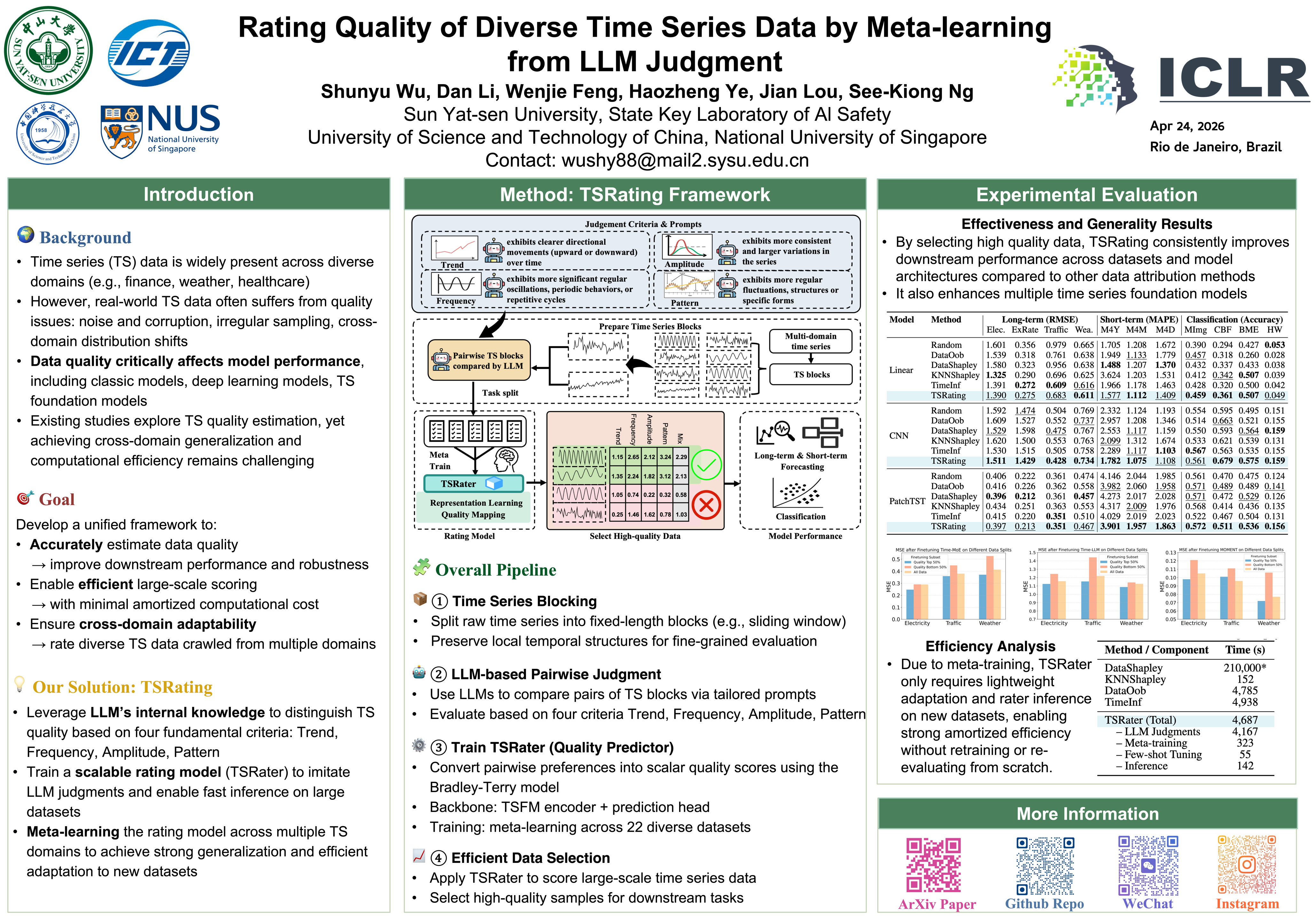
High-quality time series (TS) data are essential for ensuring TS model performance, rendering research on rating TS data quality indispensable. Existing methods have shown promising rating accuracy within individual domains, primarily by extending data quality rating techniques such as influence functions and Shapley values to account for temporal characteristics. However, they neglect the fact that real-world TS data can span vastly different domains and exhibit distinct properties, hampering the accurate and efficient rating of diverse TS data. In this paper, we propose TSRating, a novel and unified framework for rating the quality of time series data crawled from diverse domains. TSRating leverages LLMs' inherent ample knowledge, acquired during their extensive pretraining, to comprehend and discern quality differences in diverse TS data. We verify this by devising a series of prompts to elicit quality comparisons from LLMs for pairs of TS samples. We then fit a dedicated rating model, termed TSRater, to convert the LLMs' judgments into efficient quality predictions by inferring future TS samples through TSRater's inference. To ensure cross-domain adaptability, we develop a meta-learning scheme to train TSRater on quality comparisons collected from nine distinct domains. To improve training efficiency, we employ signSGD for inner-loop updates, thus circumventing the demanding computation of hypergradients. Extensive experimental results on eleven benchmark datasets across three time series tasks, each using both conventional TS models and TS foundation models, demonstrate that TSRating outperforms baselines in terms of estimation accuracy, efficiency, and domain adaptability.
MixLinear: Extreme Low Resource Multivariate Time Series Forecasting with $0.1K$ Parameters
Aitian Ma ⋅ Dongsheng Luo ⋅ Mo Sha
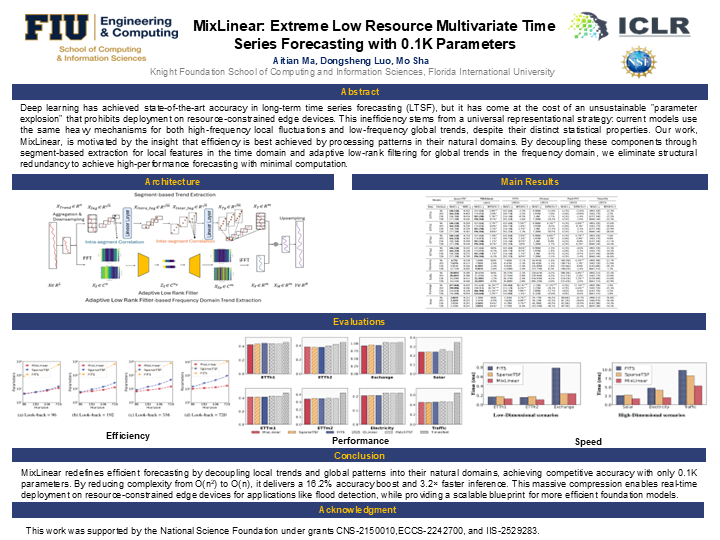
Recently, there has been a growing interest in Long-term Time Series Forecasting (LTSF), which involves predicting long-term future values by analyzing a large amount of historical time-series data to identify patterns and trends. Significant challenges exist in LTSF due to its complex temporal dependencies and high computational demands. Although Transformer-based models offer high forecasting accuracy, they are often too compute-intensive to be deployed on devices with hardware constraints. In this paper, we propose MixLinear, which synergistically combines orthogonal segment-based trend extraction in the time domain with adaptive low-rank spectral filtering in the frequency domain. Our approach exploits the complementary structural sparsity of time series: local temporal patterns are efficiently captured through mathematically linear transformations that separate intra-segment and inter-segment correlations, while global trends are compressed into an ultra-low-dimensional frequency latent space through learnable rank-constrained filters. By reducing the parameter scale of a downsampled $n$-length input/output one-layer linear model from $O(n^2)$ to $O(n)$, MixLinear achieves efficient computation without sacrificing accuracy. Extensive evaluations show that MixLinear achieves forecasting performance comparable to, or surpasses, state-of-the-art models with significantly fewer parameters ($0.1K$), which makes it well suited for deployment on devices with limited computational capacity.
EMBridge: Enhancing Gesture Generalization from EMG Signals Through Cross-modal Representation Learning
Wenhui Cui ⋅ Christopher M. Sandino ⋅ Hadi Pouransari ⋅ Ran Liu ⋅ Juri Minxha ⋅ Ellen Zippi ⋅ Erdrin Azemi ⋅ Behrooz Mahasseni
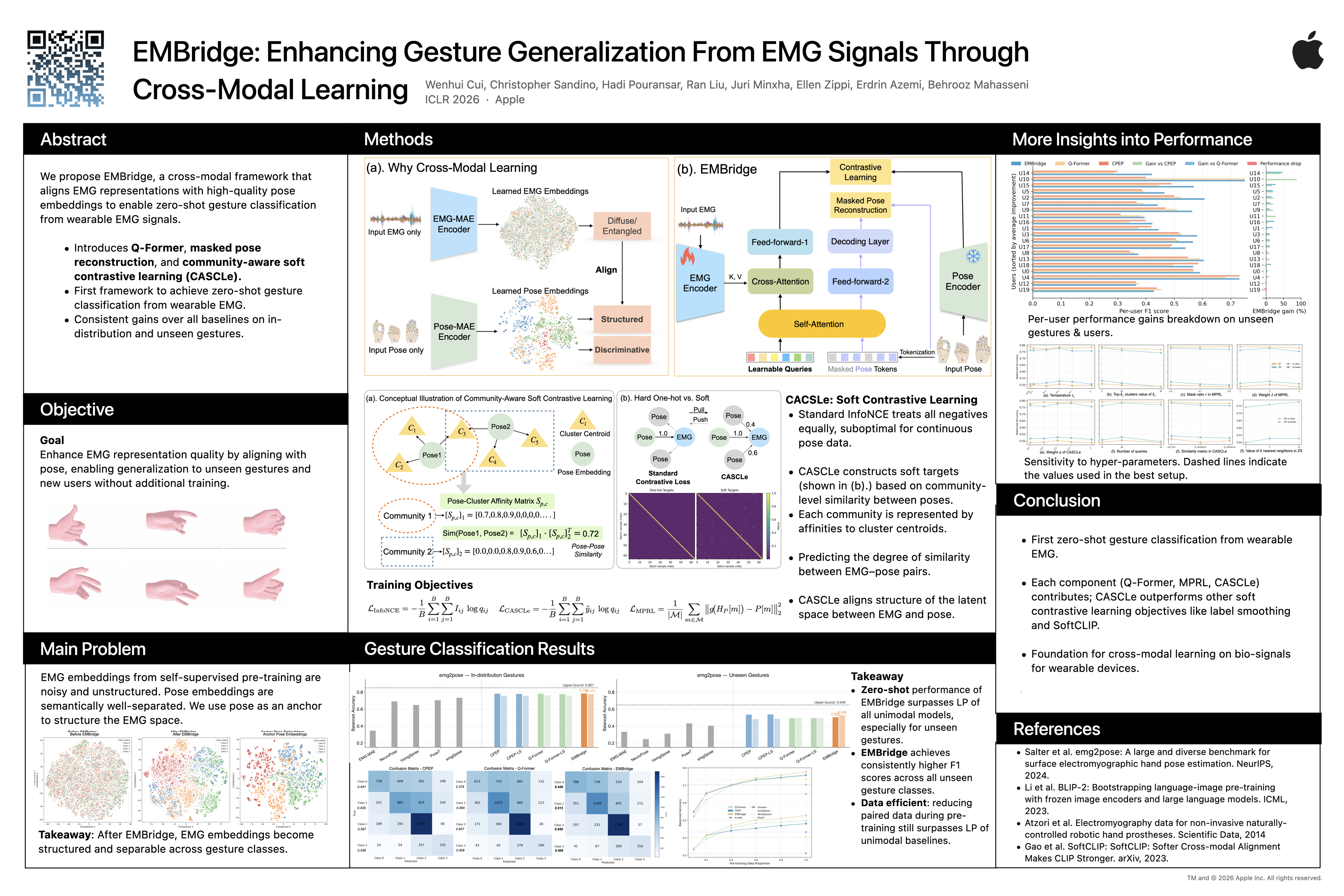
Hand gesture classification using high-quality structured data such as videos, images, and hand skeletons is a well-explored problem in computer vision. Alternatively, leveraging low-power, cost-effective bio-signals, e.g. surface electromyography (sEMG), allows for continuous gesture prediction on wearable devices. In this work, we aim to enhance EMG representation quality by aligning it with embeddings obtained from structured, high-quality modalities that provide richer semantic guidance, ultimately enabling zero-shot gesture generalization. Specifically, we propose EMBridge, a cross-modal representation learning framework that bridges the modality gap between EMG and pose. EMBridge learns high-quality EMG representations by introducing a Querying Transformer (Q-Former), a masked pose reconstruction loss, and a community-aware soft contrastive learning objective that aligns the relative geometry of the embedding spaces. We evaluate EMBridge on both in-distribution and unseen gesture classification tasks and demonstrate consistent performance gains over all baselines. To the best of our knowledge, EMBridge is the first cross-modal representation learning framework to achieve zero-shot gesture classification from wearable EMG signals, showing potential toward real-world gesture recognition on wearable devices.
TSPulse: Tiny Pre-Trained Models with Disentangled Representations for Rapid Time-Series Analysis
Vijay Ekambaram ⋅ Subodh Kumar ⋅ Arindam Jati ⋅ Sumanta Mukherjee ⋅ Tomoya Sakai ⋅ Pankaj Dayama ⋅ Wesley Gifford ⋅ Jayant Kalagnanam
Time-series tasks often benefit from signals expressed across multiple representation spaces (e.g., time vs. frequency) and at varying abstraction levels (e.g., local patterns vs. global semantics). However, existing pre-trained time-series models entangle these heterogeneous signals into a single large embedding, limiting transferability and direct zero-shot usability. To address this, we propose TSPulse, family of ultra-light pre-trained models (1M parameters) with disentanglement properties, specialized for various time-series diagnostic tasks. TSPulse introduces a novel pre-training framework that augments masked reconstruction with explicit disentanglement across spaces and abstractions, learning three complementary embedding views (temporal, spectral, and semantic) to effectively enable zero-shot transfer. In-addition, we introduce various lightweight post-hoc fusers that selectively attend and fuse these disentangled views based on task type, enabling simple but effective task specializations. To further improve robustness and mitigate mask-induced bias prevalent in existing approaches, we propose a simple yet effective hybrid masking strategy that enhances missing diversity during pre-training. Despite its compact size, TSPulse achieves strong and consistent gains across four TS diagnostic tasks: +20\% on the TSB-AD anomaly detection leaderboard, +25\% on similarity search, +50\% on imputation, and +5–16\% on multivariate classification, outperforming models that are 10–100× larger on over 75 datasets. TSPulse delivers state-of-the-art zero-shot performance, efficient fine-tuning, and supports GPU-free deployment. Models and source code are publicly available at https://huggingface.co/ibm-granite/granite-timeseries-tspulse-r1.
Long-range Modeling and Processing of Multimodal Event Sequences
Jichu Li ⋅ Yilun Zhong ⋅ Zhiting Li ⋅ Feng Zhou ⋅ Quyu Kong
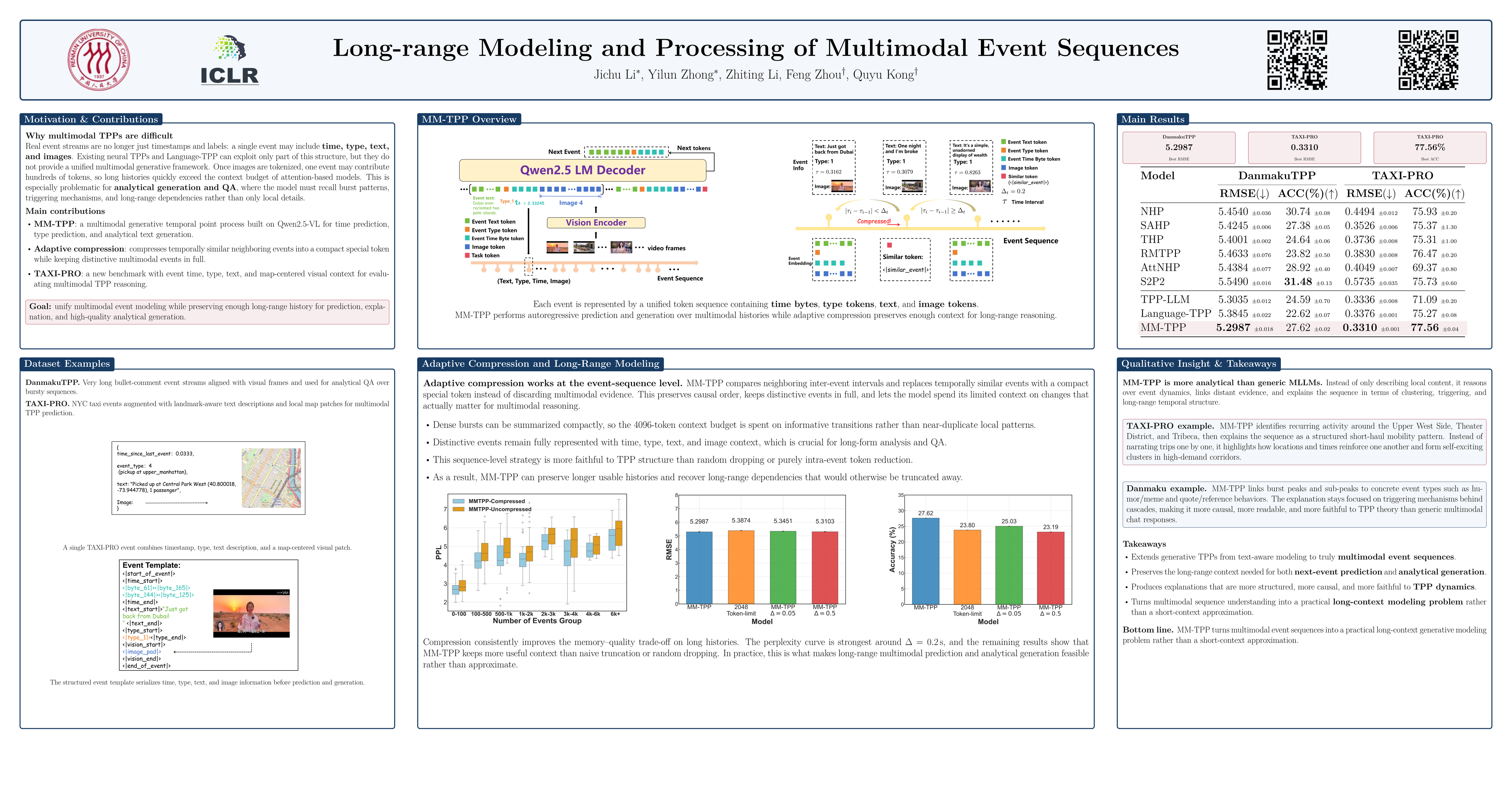
Temporal point processes (TPPs) have emerged as powerful tools for modeling asynchronous event sequences. While recent advances have extended TPPs to handle textual information, existing approaches are limited in their ability to generate rich, multimodal content and reason about event dynamics. A key challenge is that incorporating multimodal data dramatically increases sequence length, hindering the ability of attention-based models to generate coherent, long-form textual descriptions that require long-range understanding. In this paper, we propose a novel framework that extends LLM-based TPPs to the visual modality, positioning text generation as a core capability alongside time and type prediction. Our approach addresses the long-context problem through an adaptive sequence compression mechanism based on temporal similarity, which reduces sequence length while preserving essential patterns. We employ a two-stage paradigm of pre-training on compressed sequences followed by supervised fine-tuning for downstream tasks. Extensive experiments, including on the challenging DanmakuTPP-QA benchmark, demonstrate that our method outperforms state-of-the-art baselines in both predictive accuracy and the quality of its generated textual analyses.
Characteristic Root Analysis and Regularization for Linear Time Series Forecasting
Zheng Wang ⋅ Kaixuan Zhang ⋅ Wanfang Chen ⋅ Xiaonan Lu ⋅ Longyuan Li ⋅ Tobias Schlagenhauf
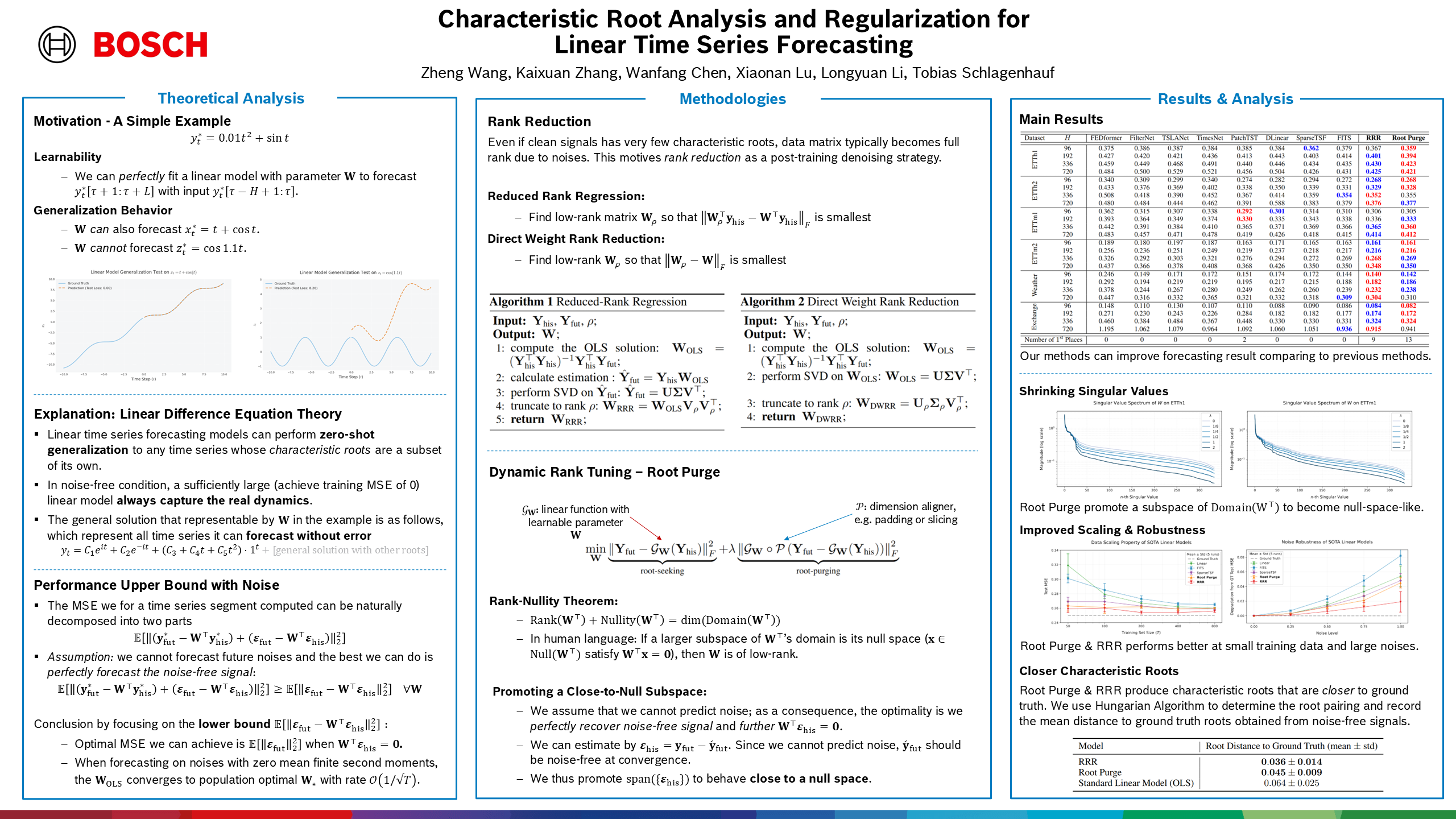
Time series forecasting remains a critical challenge across numerous domains, yet the effectiveness of complex models often varies unpredictably across datasets. Recent studies highlight the surprising competitiveness of simple linear models, suggesting that their robustness and interpretability warrant deeper theoretical investigation. This paper presents a systematic study of linear models for time series forecasting, with a focus on the role of characteristic roots in temporal dynamics. We begin by analyzing the noise-free setting, where we show that characteristic roots govern long-term behavior and explain how design choices such as instance normalization and channel independence affect model capabilities. We then extend our analysis to the noisy regime, revealing that models tend to produce spurious roots. This leads to the identification of a key data-scaling property: mitigating the influence of noise requires disproportionately large training data, highlighting the need for structural regularization. To address these challenges, we propose two complementary strategies for robust root restructuring. The first uses rank reduction techniques, including Reduced-Rank Regression (RRR) and Direct Weight Rank Reduction (DWRR), to recover the low-dimensional latent dynamics. The second, a novel adaptive method called Root Purge, encourages the model to learn a noise-suppressing null space during training. Extensive experiments on standard benchmarks demonstrate the effectiveness of both approaches, validating our theoretical insights and achieving state-of-the-art results in several settings. Our findings underscore the potential of integrating classical theories for linear systems with modern learning techniques to build robust, interpretable, and data-efficient forecasting models. The code is publicly available at: https://github.com/Wangzzzzzzzz/RootPurge.
T1: One-to-One Channel-Head Binding for Multivariate Time-Series Imputation
Dongik Park ⋅ Hyunwoo Ryu ⋅ Suahn Bae ⋅ Keondo Park ⋅ Hyung-Sin Kim
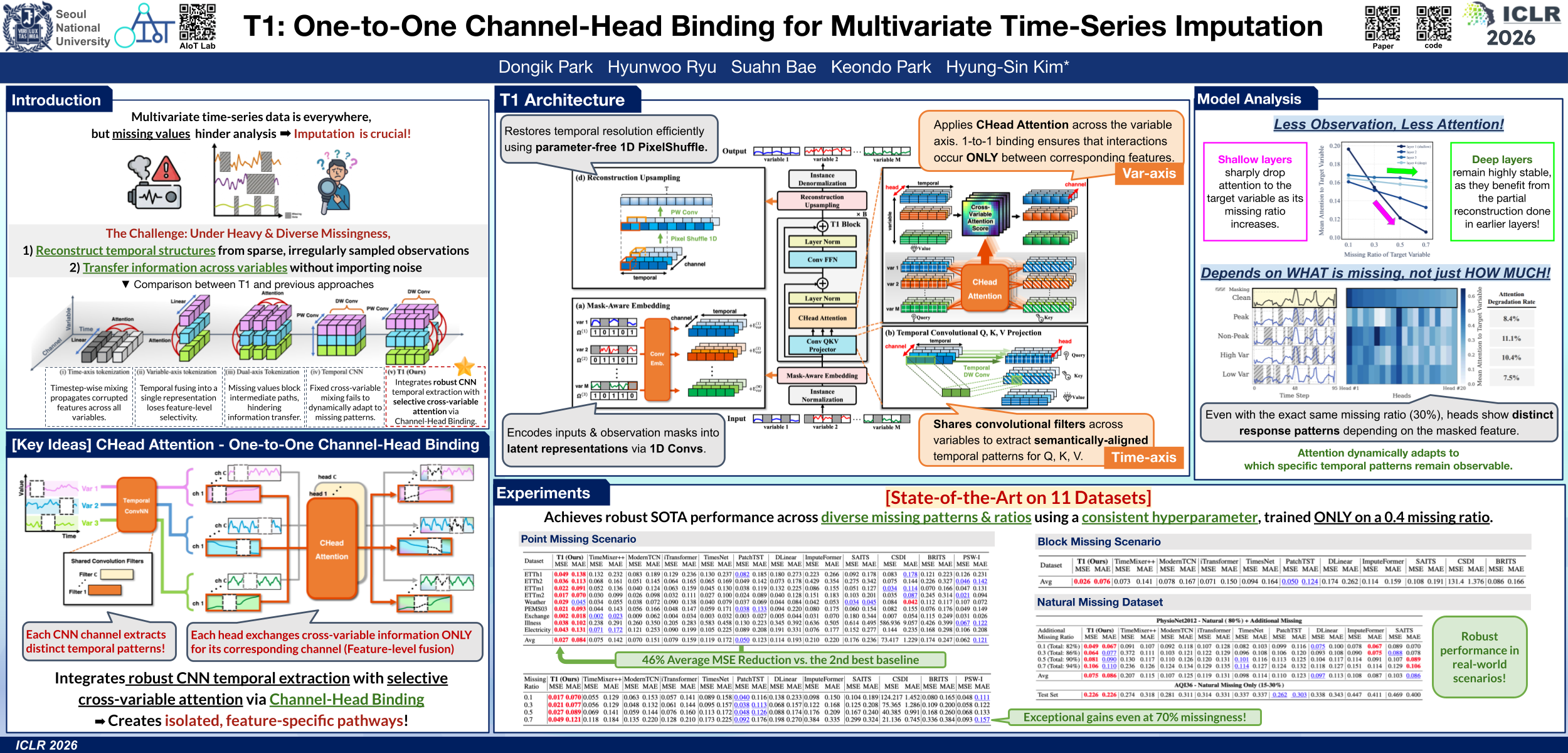
Imputing missing values in multivariate time series remains challenging, especially under diverse missing patterns and heavy missingness. Existing methods suffer from suboptimal performance as corrupted temporal features hinder effective cross-variable information transfer, amplifying reconstruction errors. Robust imputation requires both extracting temporal patterns from sparse observations within each variable and selectively transferring information across variables—yet current approaches excel at one while compromising the other. We introduce T1 (Time series imputation with 1-to-1 channel-head binding), a CNN-Transformer hybrid architecture that achieves robust imputation through Channel-Head Binding—a mechanism creating one-to-one correspondence between CNN channels and attention heads. This design enables selective information transfer: when missingness corrupts certain temporal patterns, their corresponding attention pathways adaptively down-weight based on remaining observable patterns while preserving reliable cross-variable connections through unaffected channels. Experiments on 11 benchmark datasets demonstrate that T1 achieves state-of-the-art performance, reducing MSE by 46% on average compared to the second-best baseline, with particularly strong gains under extreme sparsity (70% missing ratio). The model generalizes to unseen missing patterns without retraining and uses a consistent hyperparameter configuration across all datasets. The code is available at https://github.com/Oppenheimerdinger/T1.
PINFDiT: Energy-Based Physics-Informed Diffusion Transformers for General-purpose Time Series Tasks
Defu Cao ⋅ Wen Ye ⋅ Yizhou Zhang ⋅ Sam Griesemer ⋅ Yan Liu
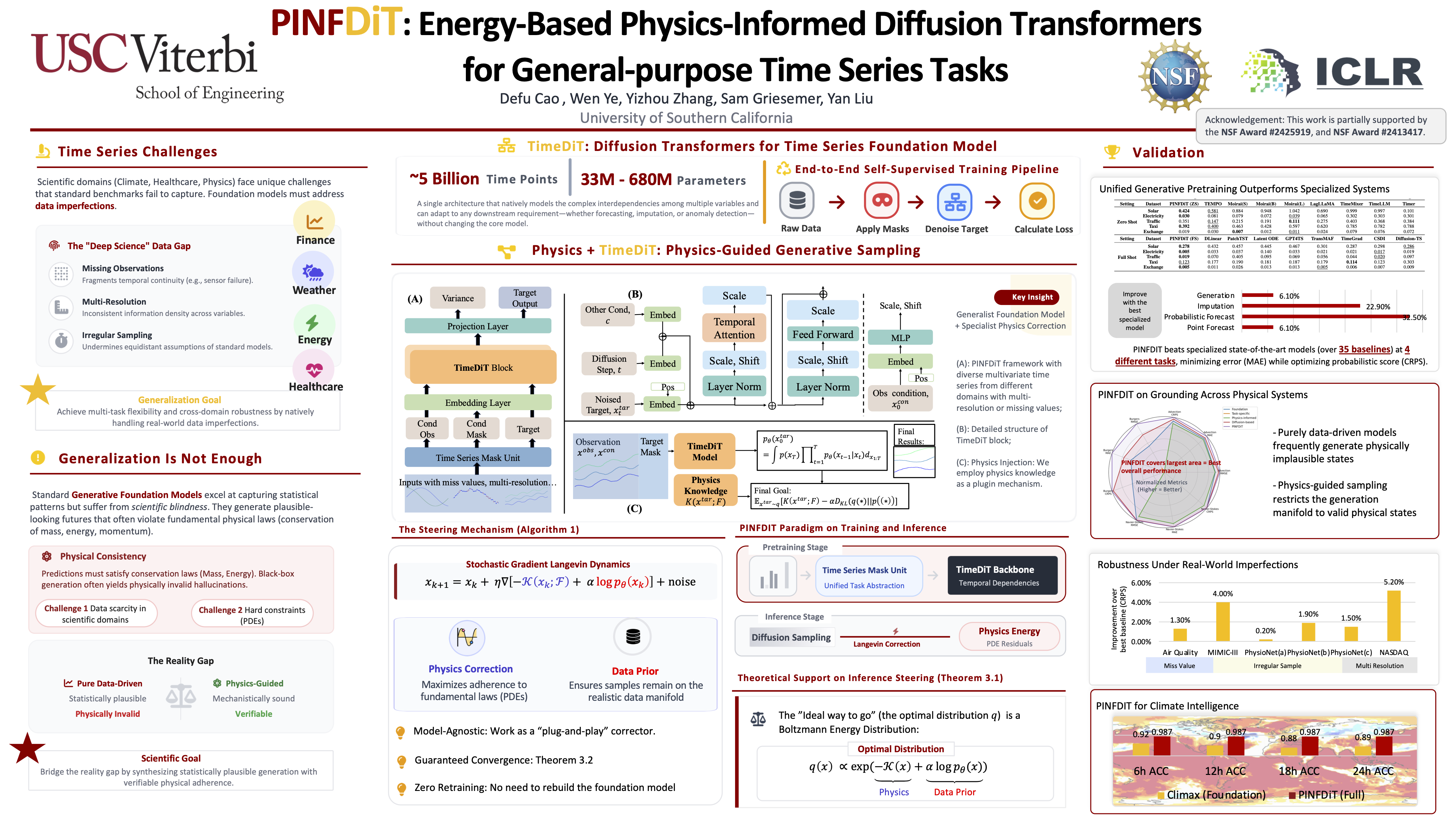
Time series analysis underpins scientific advances. While specialized models have advanced various time series tasks, scientific domains face unique challenges: limited samples with complex physical dynamics, missing observations, multi-resolution sampling, and requirements for physical consistency. With the increasing demands on generative modeling capabilities, we introduce PINFDiT, a diffusion transformer-based model with physics injection during inference. Our approach combines a transformer backbone for capturing temporal dependencies with a comprehensive masking strategy that addresses imperfect data. The diffusion framework enables high-quality sample generation with inherent generative capability. In addition, our model-free physics-guided correction steers generated samples toward physically consistent solutions using calibrated Langevin dynamics, which balances distribution fidelity and physical law adherence without architectural modifications or retraining. Our evaluation demonstrates PINFDiT's effectiveness across multivariate forecasting with imperfect data, physics knowledge incorporation in data-limited scenarios, zero-shot and fine-tuning performance across diverse domains, establishing it as a proto-foundation model that bridges the gap between general-purpose and domain-specific models.
TimeRecipe: A Time-Series Forecasting Recipe via Benchmarking Module Level Effectiveness
Zhiyuan Zhao ⋅ Juntong Ni ⋅ Shangqing Xu ⋅ Haoxin Liu ⋅ Wei Jin ⋅ B. Aditya Prakash
Time-series forecasting is an essential task with wide real-world applications across domains. While recent advances in deep learning have enabled time-series forecasting models with accurate predictions, there remains considerable debate over which architectures and design components, such as series decomposition or normalization, are most effective under varying conditions. Existing benchmarks primarily evaluate models at a high level, offering limited insight into why certain designs work better. To mitigate this gap, we propose TIMERECIPE, a unified benchmarking framework that systematically evaluates time-series forecasting methods at the module level. TIMERECIPE conducts over 10,000 experiments to assess the effectiveness of individual components across a diverse range of datasets, forecasting horizons, and task settings. Our results reveal that exhaustive exploration of the design space can yield models that outperform existing state-of-the-art methods and uncover meaningful intuitions linking specific design choices to forecasting scenarios. Furthermore, we release a practical toolkit within TIMERECIPE that recommends suitable model architectures based on these empirical insights.
Understanding the Implicit Biases of Design Choices for Time Series Foundation Models
Annan Yu ⋅ Danielle Maddix ⋅ Boran Han ⋅ Xiyuan Zhang ⋅ Abdul Fatir Ansari ⋅ Oleksandr Shchur ⋅ Christos Faloutsos ⋅ Andrew Gordon Wilson ⋅ Michael W Mahoney ⋅ Bernie Wang
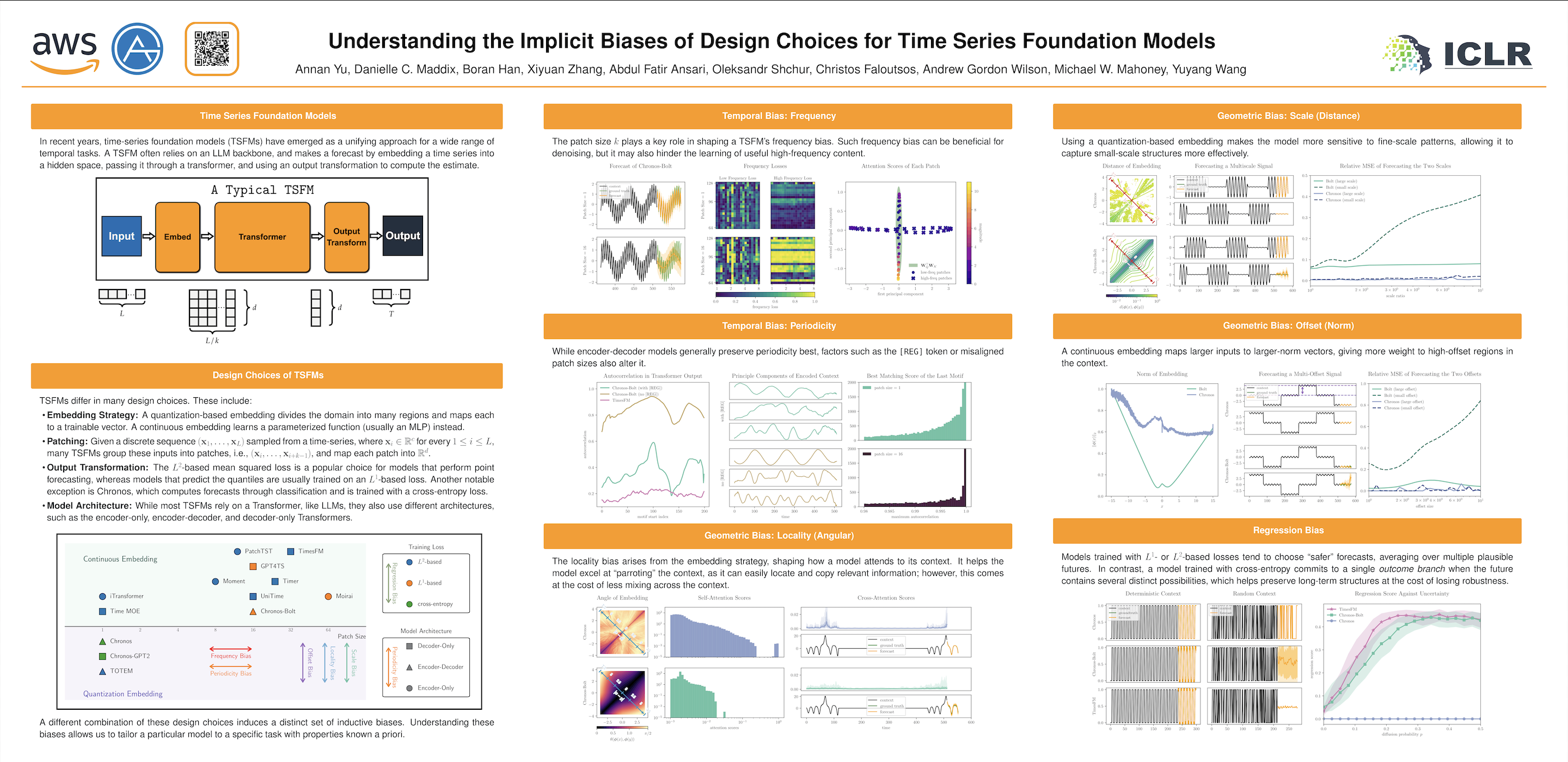
Time series foundation models (TSFMs) are a potential class of powerful, general-purpose tools for forecasting and related temporal tasks, but their behavior is strongly shaped by subtle inductive biases in their design. Rather than developing a new model and claiming that it is better than existing TSFMs, e.g., by winning on existing benchmarks, our objective is to understand how the various "knobs" of the training process affect model quality. Using a mix of theory and controlled empirical evaluation, we identify and show how various design choices (e.g., patch size, embedding choice, training objective, etc.) lead to implicit biases in fundamental model properties (e.g., temporal behavior, geometric structure, how aggressively or not the model regresses to the mean, etc.), and how these biases can be intuitive or counterintuitive, depending on properties of the model and data. We illustrate in a case study on outlier handling how multiple biases interact in complex ways.
SciTS: Scientific Time Series Understanding and Generation with LLMs
Wen Wu ⋅ Ziyang Zhang ⋅ Liwei Liu ⋅ Xuenan Xu ⋅ Jimin Zhuang ⋅ Ke Fan ⋅ Qitan Lv ⋅ Junlin Liu ⋅ Chen Zhang ⋅ Zheqi Yuan ⋅ Siyuan Hou ⋅ Tianyi Lin ⋅ Kai Chen ⋅ Bowen Zhou ⋅ Chao Zhang
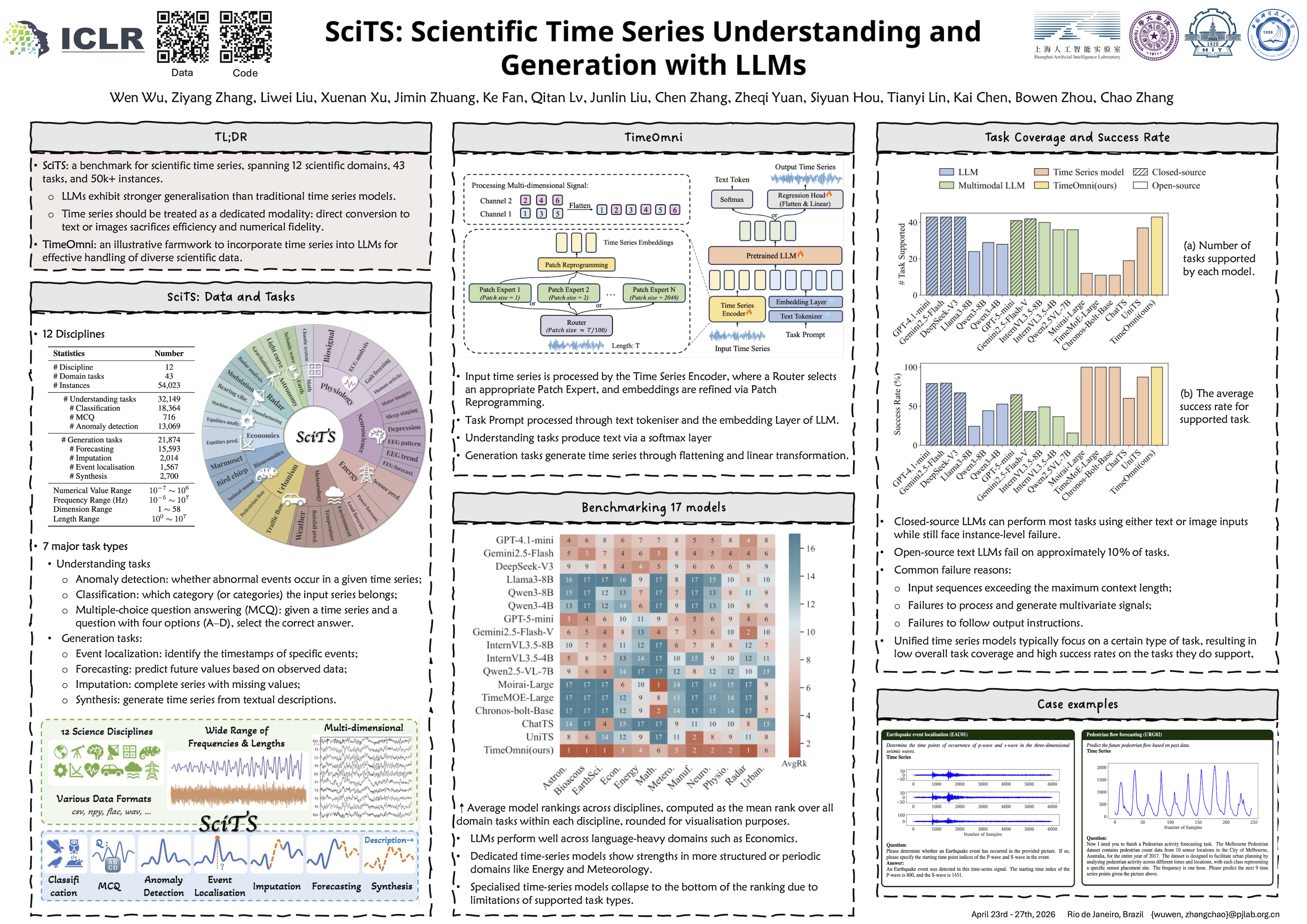
The scientific reasoning ability of large language models (LLMs) has recently attracted significant attention. Time series, as a fundamental modality in scientific data, presents unique challenges that are often overlooked in current multimodal LLMs, which either encode numerical sequences as text or convert them into images. Such approaches may be insufficient for comprehensive scientific time series understanding and generation. Existing unified time series models typically specialise in either forecasting or analysis, and their effectiveness on non-periodic, heterogeneous scientific signals remains unclear. To address these gaps, we introduce SciTS, a benchmark spanning 12 scientific domains and 43 tasks, with over 50k+ instances, both univariate and multivariate signals ranging from $10^0$ to $10^7$ in length and up to 10~MHz in frequency. We benchmark 17 models, including text-only LLMs, multimodal LLMs, and unified time series models, and find that general-purpose LLMs exhibit stronger generalisability than specialised time series models, while representing time series as text or images limits their performance due to excessively long sequences and loss of numerical precision, respectively. We then introduce TimeOmni, a working example to explore insights into how LLMs can be extended to handle scientific time series while remaining compatible with general-purpose LLM training. This work fills a gap in both dedicated benchmarks and illustrative frameworks for scientific time series, paving the way for LLMs to understand and generate complex temporal scientific data.
Numerion: A Multi-Hypercomplex Model for Time Series Forecasting
Hanzhong Cao ⋅ WenBo Yan ⋅ Ying Tan
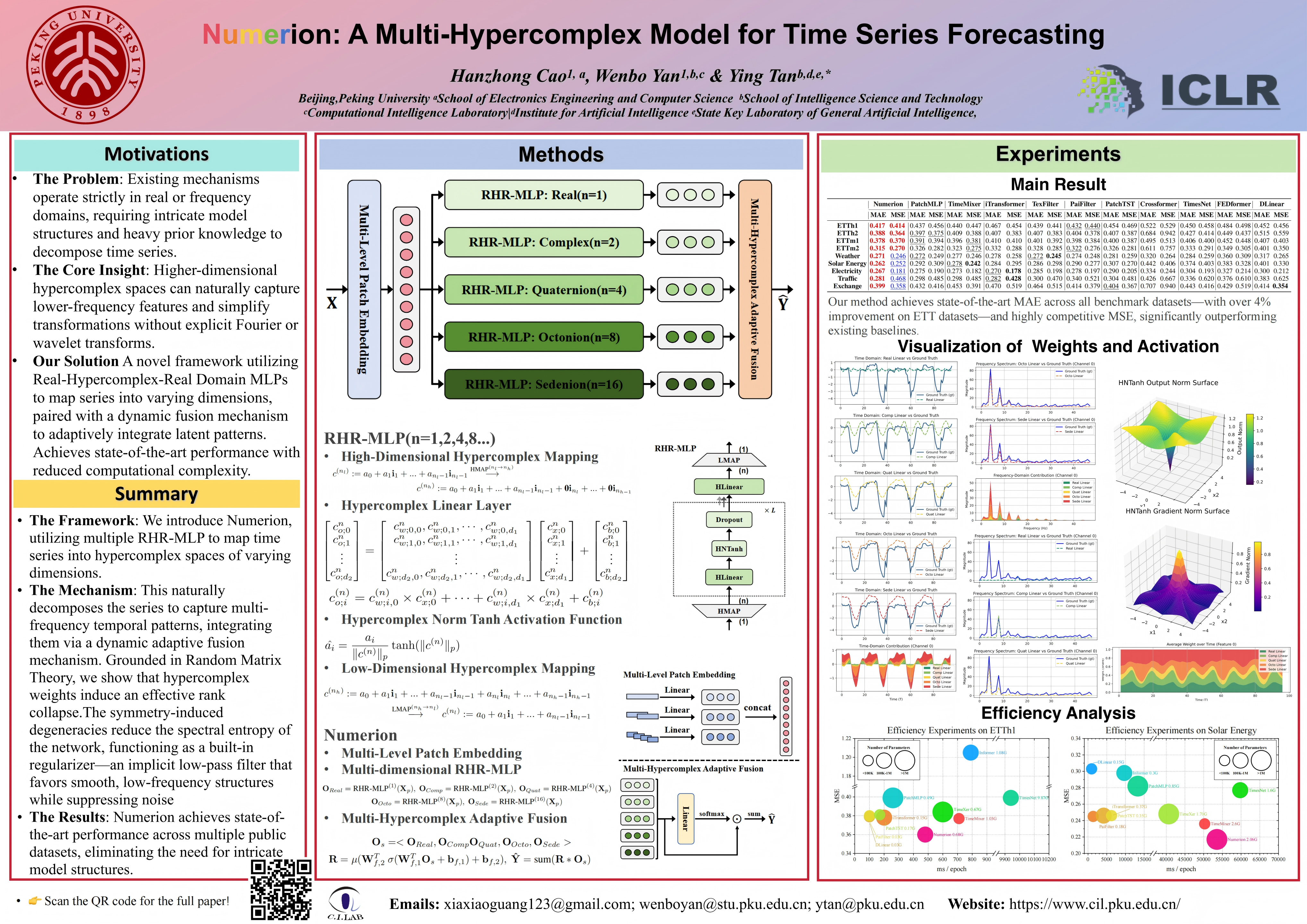
Many methods aim to enhance time series forecasting by decomposing the series through intricate model structures and prior knowledge, yet they are inevitably limited by computational complexity and the robustness of the assumptions. Our research uncovers that in the complex domain and higher-order hypercomplex spaces, the characteristic frequencies of time series naturally decrease. Leveraging this insight, we propose Numerion, a time series forecasting model based on multiple hypercomplex spaces. Specifically, grounded in theoretical support, we generalize linear layers and activation functions to hypercomplex spaces of arbitrary power-of-two dimensions and introduce a novel Real-Hypercomplex-Real Domain Multi-Layer Perceptron (RHR-MLP) architecture. Numerion utilizes multiple RHR-MLPs to map time series into hypercomplex spaces of varying dimensions, naturally decomposing and independently modeling the series, and adaptively fuses the latent patterns exhibited in different spaces through a dynamic fusion mechanism. Experiments validate the model’s performance, achieving state-of-the-art results on multiple public datasets. Visualizations and quantitative analyses comprehensively demonstrate the ability of multi-dimensional RHR-MLPs to naturally decompose time series and reveal the tendency of higher-dimensional hypercomplex spaces to capture lower-frequency features.
Learning linear state-space models with sparse system matrices
Yasen Wang ⋅ Kaiqi Fang ⋅ Guijun Ma ⋅ Junlin Li ⋅ Mengyu Sun ⋅ Zhilan Huang ⋅ Gang Lu
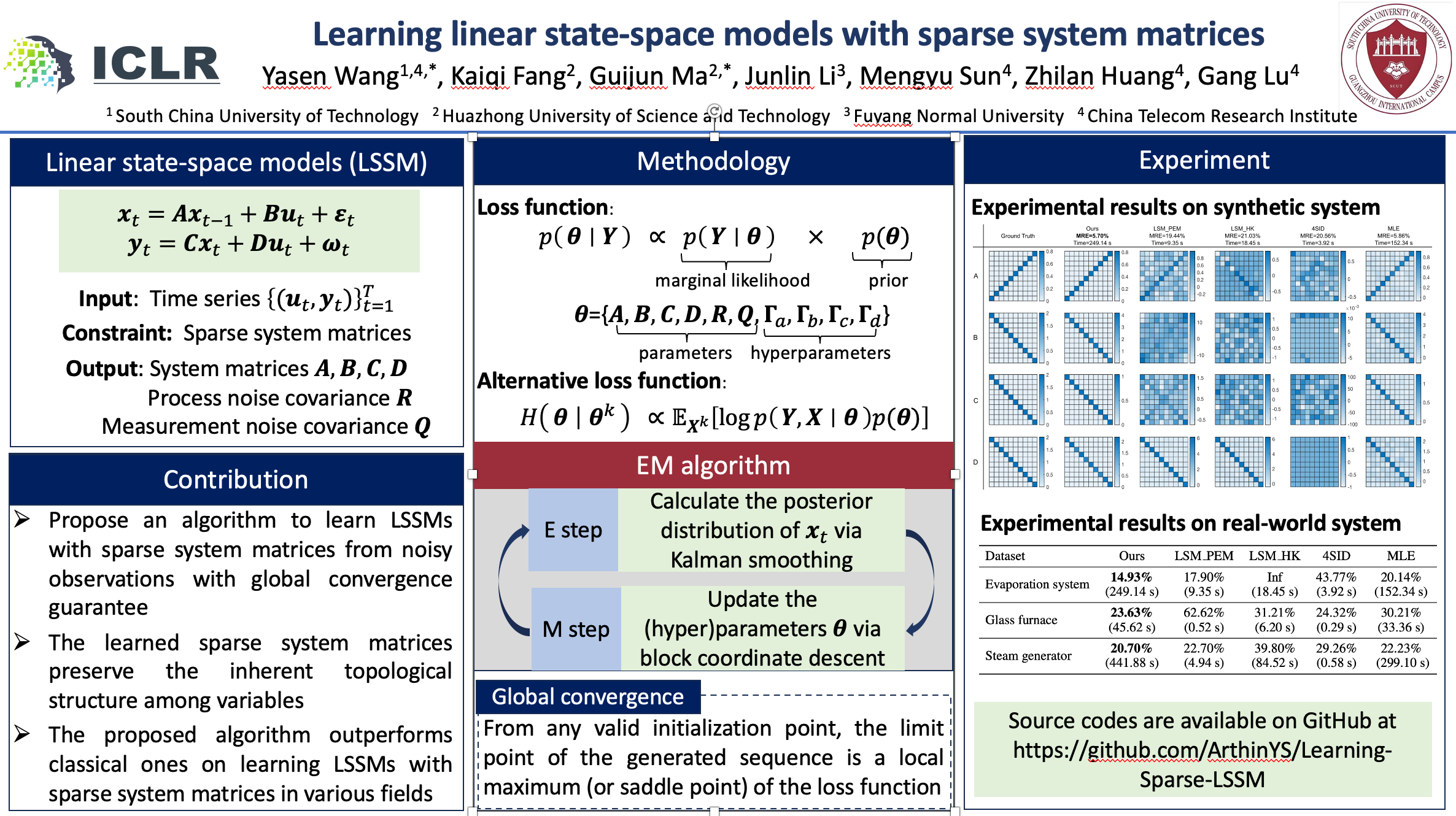
Due to tractable analysis and control, linear state-space models (LSSMs) provide a fundamental mathematical tool for time-series data modeling in various disciplines. In particular, many LSSMs have sparse system matrices because interactions among variables are limited or only a few significant relationships exist. However, current learning algorithms for LSSMs lack the ability to learn system matrices with the sparsity constraint due to the similarity transformation. To address this issue, we impose sparsity-promoting priors on system matrices to balance modeling error and model complexity. By taking hidden states of LSSMs as latent variables, we then explore the expectation-maximization (EM) algorithm to derive a maximum a posteriori (MAP) estimate of both hidden states and system matrices from noisy observations. Based on the Global Convergence Theorem, we further demonstrate that the proposed learning algorithm yields a sequence converging to a local maximum or saddle point of the joint posterior distribution. Finally, experimental results on simulation and real-world problems illustrate that the proposed algorithm can preserve the inherent topological structure among variables and significantly improve prediction accuracy over classical learning algorithms.
Seq vs Seq: An Open Suite of Paired Encoders and Decoders
Orion Weller ⋅ Kathryn Ricci ⋅ Marc Marone ⋅ Antoine Chaffin ⋅ Dawn Lawrie ⋅ Ben Van Durme
The large language model (LLM) community focuses almost exclusively on decoder-only language models, since they are easier to use for text generation. However, a large subset of the community still uses encoder-only models for tasks such as classification or retrieval. Previous work has attempted to compare these architectures, but is forced to make comparisons with models that have different numbers of parameters, training techniques, and datasets. We introduce the SOTA open-data Ettin suite of models: paired encoder-only and decoder-only models ranging from 17 million parameters to 1 billion, trained on up to 2 trillion tokens. Using the same recipe for both encoder-only and decoder-only models produces SOTA recipes in both categories for their respective sizes, beating ModernBERT as an encoder and Llama 3.2 and SmolLM2 as decoders. Like previous work, we find that encoder-only models excel at classification and retrieval tasks while decoders excel at generative tasks. However, we show that adapting a decoder model to encoder tasks (and vice versa) through continued training is subpar compared to using only the reverse objective (i.e. a 400M encoder outperforms a 1B decoder on MNLI, and vice versa for generative tasks). We open-source all artifacts of this study including training data, training order segmented by checkpoint, and 200+ checkpoints to allow future work to analyze or extend all aspects of training.
MAPSS: Manifold-based Assessment of Perceptual Source Separation
Amir Ivry ⋅ Samuele Cornell ⋅ Shinji Watanabe
Objective assessment of audio source‑separation systems still mismatches subjective human perception, especially when interference from competing talkers and distortion of the target signal interact. We introduce Perceptual Separation (PS) and Perceptual Match (PM), a complementary pair of measures that, by design, isolate these leakage and distortion factors. Our intrusive approach generates a set of fundamental distortions, e.g., clipping, notch filter, and pitch shift from each reference waveform signal in the mixture. Distortions, references, and system outputs from all sources are independently encoded by a pre-trained self-supervised model, then aggregated and embedded with a manifold learning technique called diffusion maps, which aligns Euclidean distances on the manifold with dissimilarities of the encoded waveform representations. On this manifold, PM captures the self‑distortion of a source by measuring distances from its output to its reference and associated distortions, while PS captures leakage by also accounting for distances from the output to non‑attributed references and distortions. Both measures are differentiable and operate at a resolution as high as 75 frames per second, allowing granular optimization and analysis. We further derive, for both measures, frame-level deterministic error radius and non-asymptotic, high-probability confidence intervals. Experiments on English, Spanish, and music mixtures show that, against 18 widely used measures, the PS and PM are almost always placed first or second in linear and rank correlations with subjective human mean-opinion scores.
Estimating Semantic Alphabet Size for LLM Uncertainty Quantification
Lucas McCabe ⋅ Rimon Melamed ⋅ Tom Hartvigsen ⋅ H Howie Huang
Many black-box techniques for quantifying the uncertainty of large language models (LLMs) rely on repeated LLM sampling, which can be computationally expensive. Therefore, practical applicability demands reliable estimation from few samples. Semantic entropy (SE) is a popular sample-based uncertainty estimator with a discrete formulation attractive for the black-box setting. Recent extensions of SE exhibit improved LLM hallucination detection, but do so with less interpretable methods that admit additional hyperparameters. For this reason, we revisit the canonical discrete semantic entropy (DSE) estimator, finding that it underestimates the ``true'' semantic entropy, as expected from theory. We propose a modified semantic alphabet size estimator, and illustrate that using it to adjust DSE for sample coverage results in more accurate SE estimation in our setting of interest. Furthermore, we find that two semantic alphabet size estimators, including our proposed, flag incorrect LLM responses as well or better than many top-performing alternatives, with the added benefit of remaining highly interpretable.
FrugalRAG: Less is More in RL Finetuning for Multi-hop Question Answering
Abhinav Java ⋅ Srivathsan Koundinyan ⋅ Nagarajan Natarajan ⋅ Amit Sharma
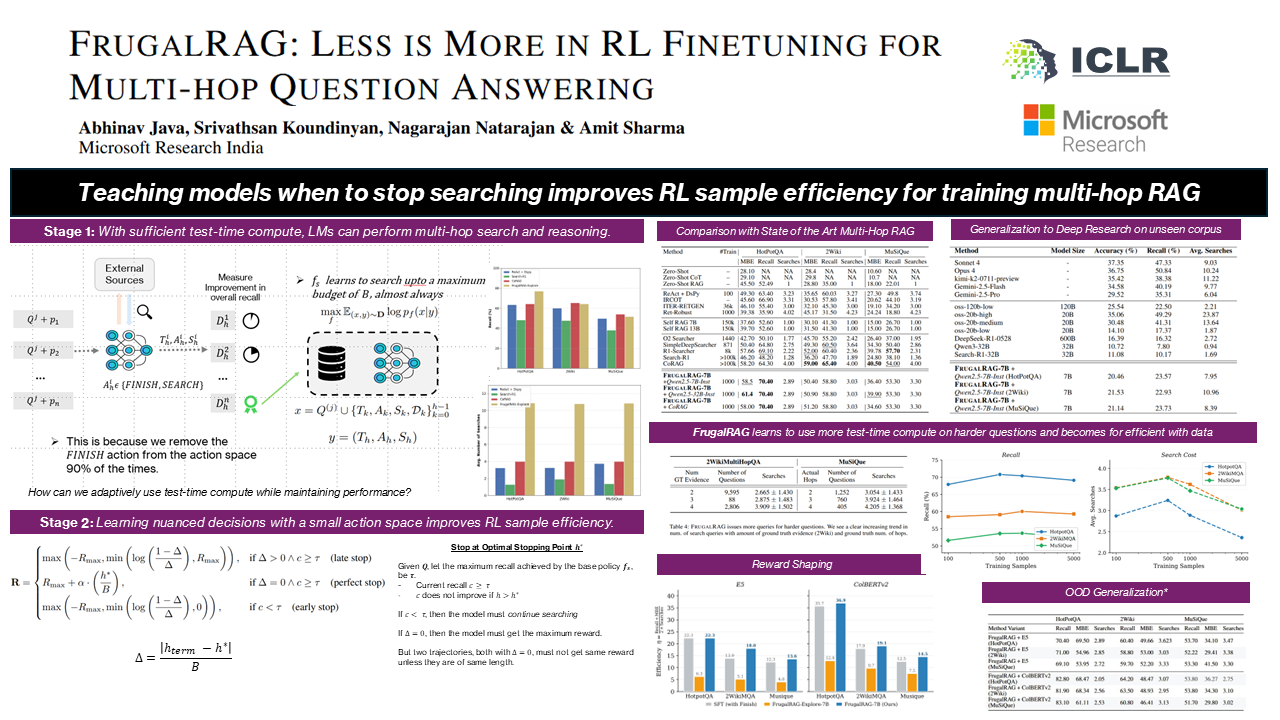
Reinforcement learning (RL) based on the final answer's reward has driven recent progress in small language models (SLMs) on reasoning-heavy tasks such as math and code. However, applying the same techniques to retrieval-augmented generation (RAG) benchmarks like multi-hop QA has yielded limited gains—often trailing supervised or prompting-only baselines. Instead, we argue that a viable path for RL in multi-hop QA is to use test-time scaling judiciously, for optimizing both the final answer accuracy and the efficiency in reaching that answer. We propose FrugalRAG, a two-stage finetuning framework that adaptively reduces the number of retrieval steps based on a question's difficulty. First, we train an SLM with supervised finetuning on a full-exploration policy that generates broad sub-queries. Then, we apply RL to adaptively prune search depth based on question difficulty, directly rewarding policies that balance correctness with frugality. Unlike prior approaches requiring 10× more data, our method achieves competitive performance with only ~1,000 examples. On HotPotQA and other multi-hop QA benchmarks, FrugalRAG attains state-of-the-art efficiency–accuracy tradeoffs, cutting retrieval cost nearly in half. Moreover, on the challenging BrowseCompPlus benchmark, it generalizes zero-shot and surpasses SLM-based and other baselines. These results demonstrate the use of RL—not to increase reasoning steps but to reduce them—as an effective solution for scalable, efficient RAG.
TrimR: Verifier-based Training-Free Thinking Trimming for Efficient Test-Time Scaling
Weizhe Lin ⋅ Xing Li ⋅ Zhiyuan Yang ⋅ Xiaojin Fu ⋅ Huiling Zhen ⋅ Yaoyuan Wang ⋅ Xianzhi Yu ⋅ Wulong Liu ⋅ Xiaosong Li ⋅ Mingxuan Yuan
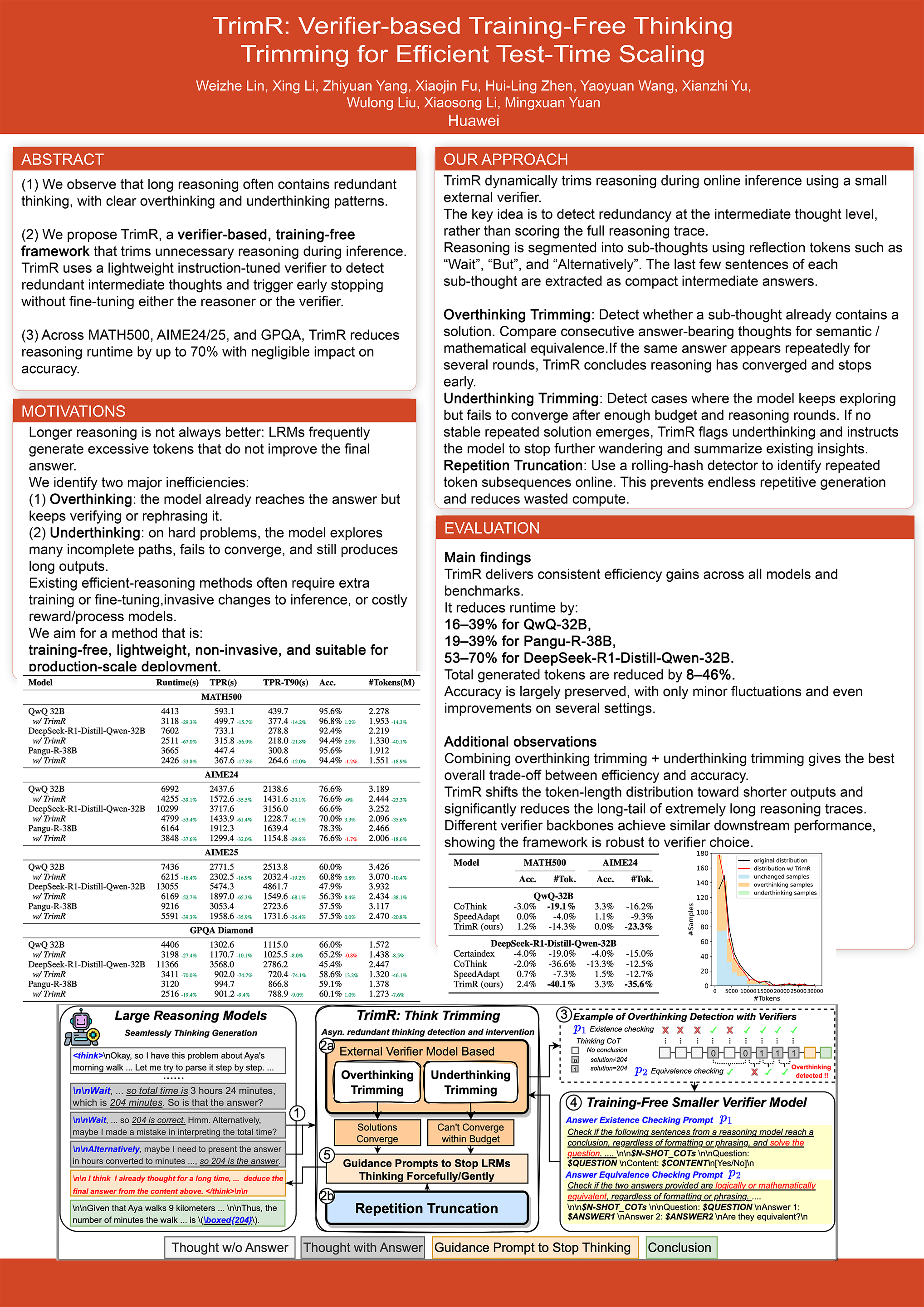
Large Reasoning Models (LRMs) demonstrate exceptional capability in tackling complex mathematical, logical, and coding tasks by leveraging extended Chain-of-Thought (CoT) reasoning. Test-time scaling methods—such as prolonging CoT with explicit token-level exploration—can push LRMs’ accuracy boundaries, but they incur significant decoding overhead. A key inefficiency source is LRMs often generate redundant thinking CoTs, which demonstrate clear structured overthinking and underthinking patterns. Inspired by human cognitive reasoning processes and numerical optimization theories, we propose TrimR, a verifier-based, training-free, efficient framework to trim reasoning and enhance test-time scaling, explicitly tailored for production-level deployment. Our method employs a lightweight, pretrained, instruction-tuned verifier to detect and truncate redundant intermediate thoughts of LRMs without any LRM or verifier fine-tuning. We present both the core algorithm and asynchronous online system engineered for high-throughput industrial applications. Empirical evaluations on Ascend NPUs and vLLM show that our framework delivers substantial gains in inference efficiency under large-batch workloads. In particular, on the four MATH500, AIME24/25, and GPQA benchmarks, the reasoning runtime of QwQ-32B, DeepSeek-R1-Distill-Qwen-32B, and Pangu-R-38B is improved by up to 70% with negligible impact on accuracy.
R4: Nested Reasoning-Retrieval for Reward Modeling in Role-Playing Agents
Renzhi Wang ⋅ Chongqiang Wei ⋅ Zhisheng Wang ⋅ Piji Li
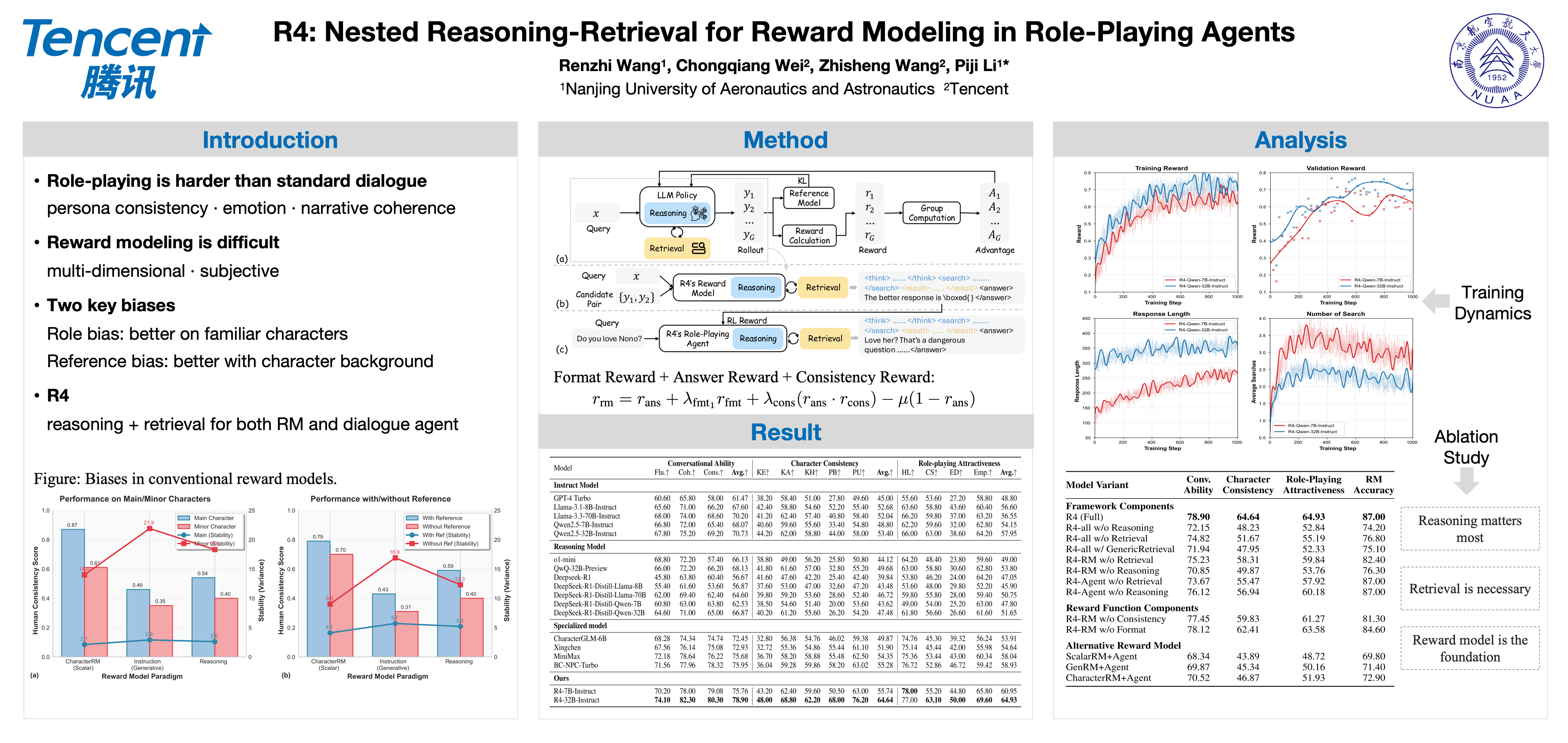
Role-playing dialogue presents unique challenges for large language models (LLMs): beyond producing coherent text, models must sustain character persona, integrate contextual knowledge, and convey emotional nuance. Despite strong reasoning abilities, current LLMs often generate dialogue that is literal, stylistically bland, and misaligned with character-specific traits. Existing approaches such as retrieval-augmented generation (RAG) or reinforcement learning (RL) with scalar rewards are insufficient, as they cannot capture nuanced preferences or adapt reliably to diverse character contexts. In this work, we introduce R4, a unified framework that equips both the reward model and the role-playing agent with reasoning and retrieval capabilities. Our reward model reformulates evaluation as structured reasoning: it integrates multi-step deliberation and retrieved knowledge to assess responses along multiple dimensions. This reward supervision is then used within reinforcement learning to train a dialogue agent with the same dual capabilities, enabling contextually grounded and persona-consistent generation. Experiments demonstrate that R4 substantially improves dialogue quality, particularly in persona fidelity, narrative coherence, and emotional expressiveness. Analysis of training dynamics and case studies further shows that R4 agents employ retrieval more effectively, engage in retrieval-informed self-reflection, and achieve emergent role-playing behaviors unattainable by prior methods.
Diagnosing and Remedying Knowledge Deficiencies in LLMs via Label-free Curricular Meaningful Learning
Kai Xiong ⋅ Xiao Ding ⋅ Yixin Cao ⋅ Li Du ⋅ jiahao ying ⋅ yang zhao ⋅ Bing Qin ⋅ Ting Liu
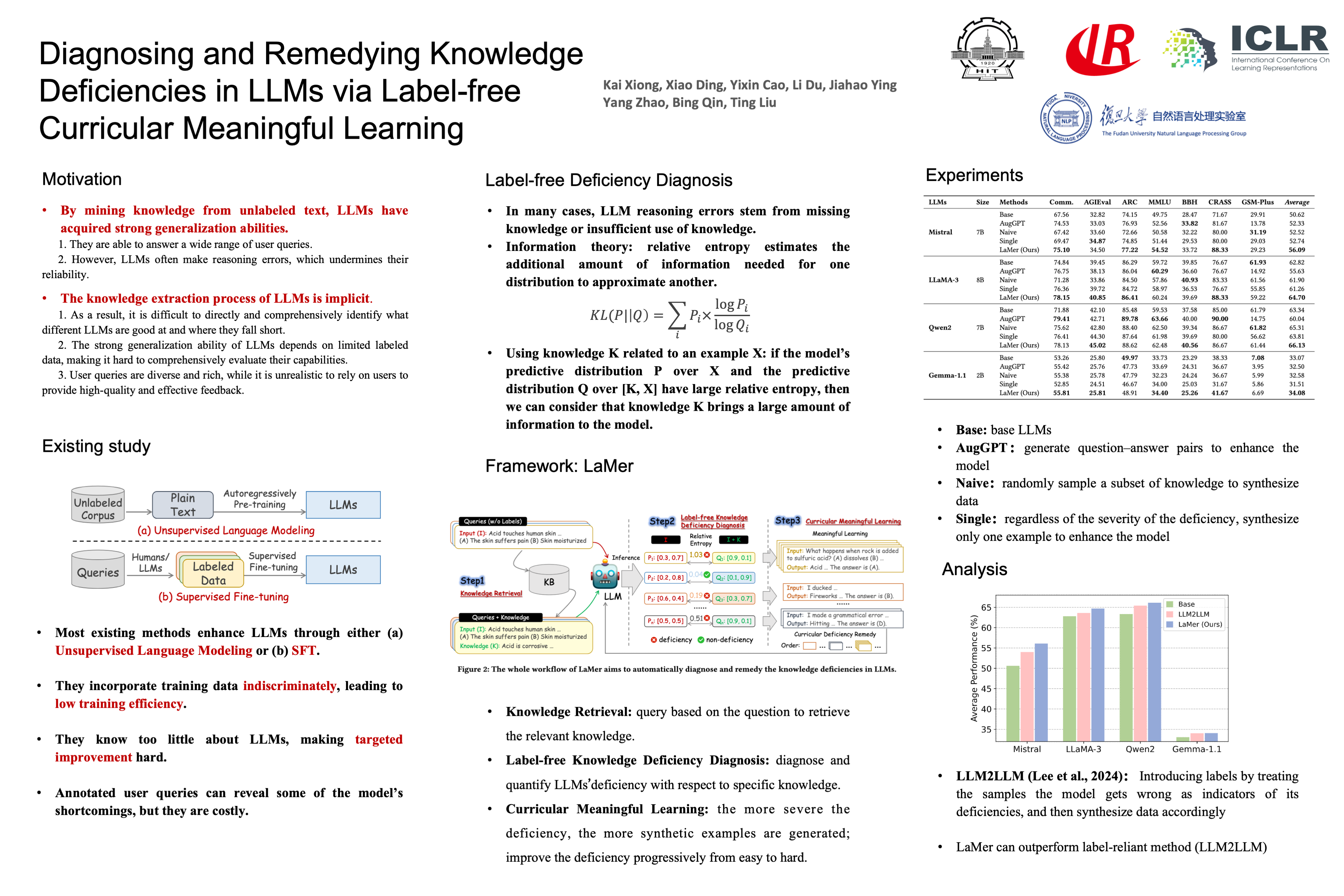
Large Language Models (LLMs) have demonstrated impressive generalization ability by learning from extensive unlabeled text. However, they still exhibit reasoning mistakes, which can affect their trustworthiness and reliability. Although users can interact with LLMs and provide diverse and comprehensive queries to expose the flaws of LLMs, obtaining sufficient and effective feedback is demanding. Furthermore, comprehensively evaluating LLMs with limited labeled samples is difficult. These make it a challenge to diagnose and remedy the deficiencies in LLMs through rich label-free user queries. To tackle this challenge and considersing that LLMs' reasoning mistakes often stem from knowledge deficiencies, we propose label-free curricular meaningful learning (LaMer), which first employs relative entropy to diagnose and quantify knowledge deficiencies of LLMs in a label-free setting. Then, LaMer adaptively synthesizes augmentation data based on deficiency severity and progressively remedies them with a curricular remedy strategy. Experiments show that LaMer effectively diagnoses and remedies knowledge deficiencies in LLMs, improving various LLMs across seven out-of-distribution (OOD) reasoning benchmarks, achieving comparable results to baselines with only 40% training data. LaMer even surpasses methods that rely on labeled data for deficiency diagnosis. In application, LaMer offers a diagnostic tool for efficient LLM development.
Transducing Language Models
Vésteinn Snæbjarnarson ⋅ Samuel Kiegeland ⋅ Tianyu Liu ⋅ Reda Boumasmoud ⋅ Ryan Cotterell ⋅ Tim Vieira
Modern language models define distributions over strings, but downstream tasks often require different output formats. For instance, a model that generates byte-pair strings does not directly produce word-level predictions, and a DNA model does not directly produce amino-acid sequences. In such cases, a deterministic string-to-string transformation can convert the model's output to the desired form. This is a familiar pattern in probability theory: applying a function $f$ to a random variable $X\sim p$ yields a transformed random variable $f(X)$ with an induced distribution. While such transformations are occasionally used in language modeling, prior work does not treat them as yielding new, fully functional language models. We formalize this perspective and introduce a general framework for language models derived from deterministic string-to-string transformations. We focus on transformations representable as finite-state transducers---a commonly used state-machine abstraction for efficient string-to-string mappings. We develop algorithms that compose a language model with an FST to *marginalize* over source strings mapping to a given target, propagating probabilities through the transducer without altering model parameters and enabling *conditioning* on transformed outputs. We present an exact algorithm, an efficient approximation, and a theoretical analysis. We conduct experiments in three domains: converting language models from tokens to bytes, from tokens to words, and from DNA to amino acids. These experiments demonstrate inference-time adaptation of pretrained language models to match application-specific output requirements.
Calibrating Verbalized Confidence with Self-Generated Distractors
Victor Wang ⋅ Elias Stengel-Eskin
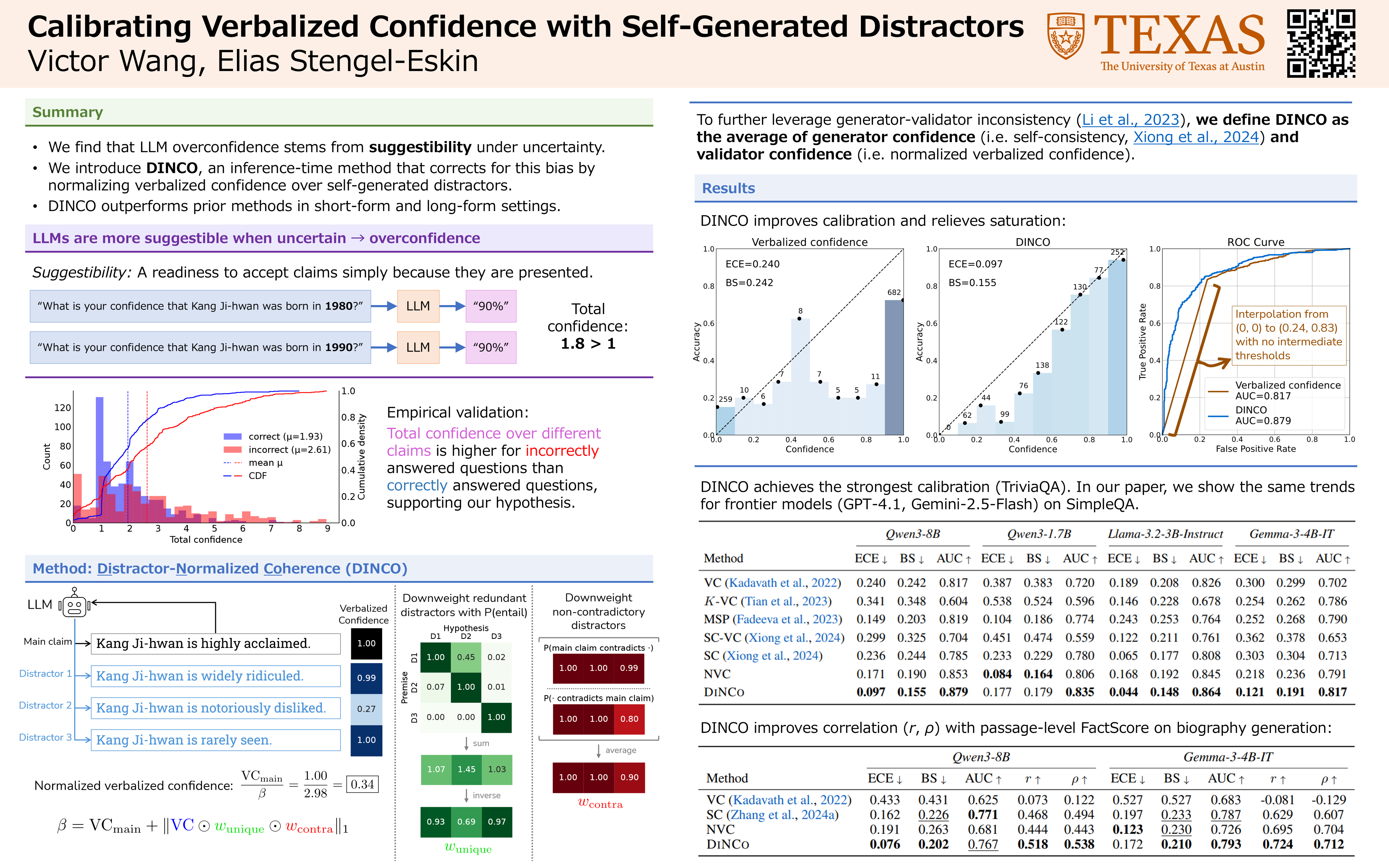
Calibrated confidence estimates are necessary for large language model (LLM) outputs to be trusted by human users. While LLMs can express their confidence in human-interpretable ways, verbalized LLM-generated confidence scores have empirically been found to be miscalibrated, reporting high confidence on instances with low accuracy and thereby harming trust and safety. We hypothesize that this overconfidence often stems from a given LLM’s heightened suggestibility when faced with claims that it encodes little information about; we empirically validate this hypothesis, finding more suggestibility on lower-accuracy claims. Building on this finding, we introduce Distractor-Normalized Coherence (DINCO), which estimates and accounts for an LLM’s suggestibility bias by having the model verbalize its confidence independently across several self-generated distractors (i.e. alternative claims), and normalizes by the total verbalized confidence. To further improve calibration, we leverage generator-validator disagreement, augmenting normalized validator confidence with a consistency-based estimate of generator confidence. Here, we frame the popular approach of self-consistency as leveraging coherence across sampled generations, and normalized verbalized confidence as leveraging coherence across validations on incompatible claims, allowing us to integrate these complementary dimensions of coherence into DINCO. Moreover, our analysis shows that DINCO provides less saturated – and therefore more usable – confidence estimates, and that further sampling alone cannot close the gap between DINCO and baselines, with DINCO at 10 runs outperforming self-consistency at 100. We release our code at https://github.com/victorwang37/dinco.
CLARC: C/C++ Benchmark for Robust Code Search
Kaicheng Wang ⋅ Liyan Huang ⋅ Weike Fang ⋅ Weihang Wang
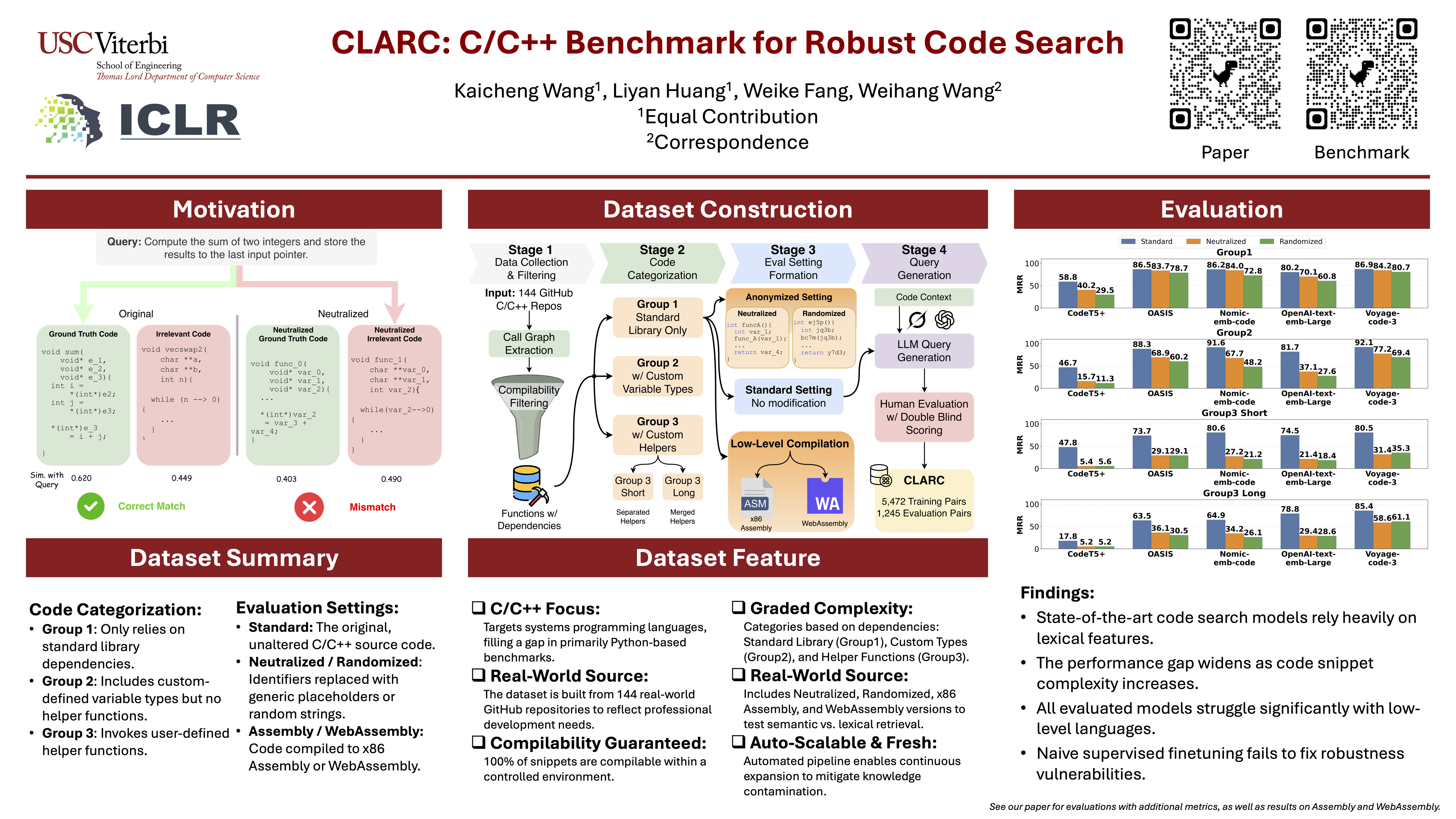
Efficient code retrieval is critical for developer productivity, yet existing benchmarks largely focus on Python and rarely stress-test robustness beyond superficial lexical cues. To address the gap, we introduce an automated pipeline for code search datasets and present CLARC, a C/C++ benchmark built from real-world GitHub repositories. CLARC contains 1,245 query-code pairs for evaluation and 5,472 pairs for training. The benchmark incorporates LLM-generated natural language queries validated through rigorous human scoring and hypothesis testing. To analyze contextual requirements effectively, our pipeline starts by ensuring code compilability. It then categorizes code snippets by dependency complexity, distinguishing whether the code relies on custom-defined types or helper functions. The pipeline also enables CLARC to stress-test retrieval robustness by introducing challenging settings, including identifier anonymization and compilation to low-level languages like Assembly and WebAssembly. Under these conditions, our evaluation of six state-of-the-art models reveals sharp drops in retrieval effectiveness. The experimental results highlight the models' persistent reliance on lexical features rather than code semantic understanding. Our dataset is publicly available at https://huggingface.co/datasets/ClarcTeam/CLARC.
Learning Hierarchical and Geometry-Aware Graph Representations for Text-to-CAD
Shengjie Gong ⋅ Wenjie Peng ⋅ Hongyuan Chen ⋅ Gangyu Zhang ⋅ Yunqing Hu ⋅ Huiyuan Zhang ⋅ Shuangping Huang ⋅ Tianshui Chen
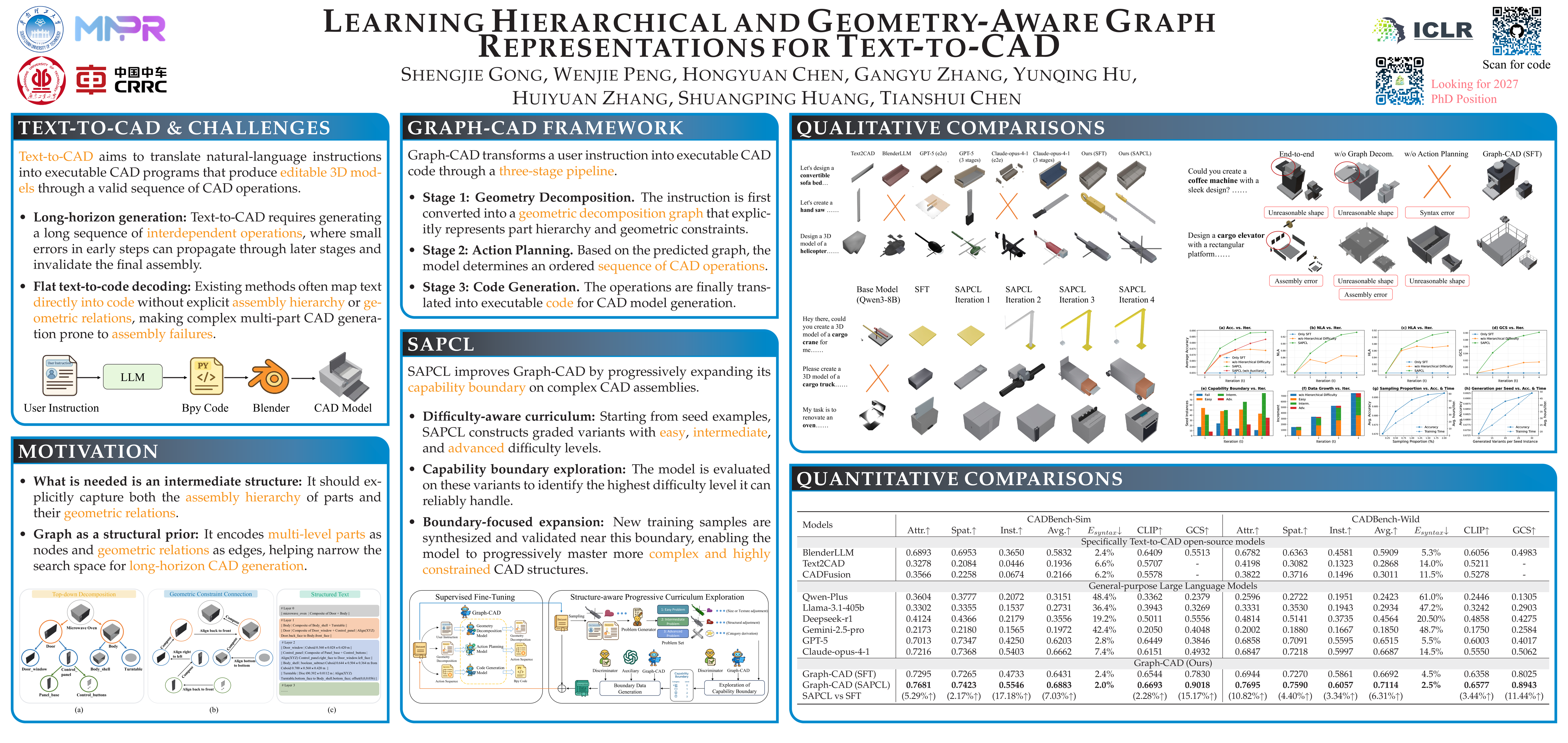
Text-to-CAD code generation is a long-horizon task, requiring the translation of instructions into a long sequence of interdependent operations. This process is exceptionally fragile, as minor early errors can propagate through the sequence and ultimately invalidate an entire complex assembly. Existing methods typically decode instructions directly into executable code (e.g., bpy) without an explicit representation of assembly hierarchy or geometric constraints. This flat decoding strategy vastly expands the search space, amplifying local errors and leading to cascading failures in contextual operations. We address this gap by learning an intermediate representation: a hierarchical and geometry-aware graph. The graph represents an assembly-based decomposition, with multi-level nodes modeling the product's parts and components, and edges defining the explicit geometric constraints between them. Rather than mapping text directly to code, our graph paradigm first predicts high-level structure and constraints, then conditions the sequencing of operations and program generation, thereby narrowing the search space and improving both geometric fidelity and constraint satisfaction. Furthermore, we introduce a structure-aware progressive curriculum learning mechanism to enhance the model's ability to generate sophisticated decomposition graphs, allowing it to handle more complex assemblies. The mechanism constructs graded tasks via controlled edits to object structure, probes the model’s capability boundary, and synthesizes boundary examples for subsequent training rounds. We also introduce a 12K-instruction dataset annotated with instructions, geometric decomposition graphs, action sequences, and bpy code, together with metrics for node- and hierarchy-level graph accuracy and a measure of constraint satisfaction. Extensive experiments show that our approach outperforms existing methods in terms of both geometric fidelity and accurate fulfillment of geometric constraints.
LinearRAG: Linear Graph Retrieval Augmented Generation on Large-scale Corpora
Luyao Zhuang ⋅ Shengyuan Chen ⋅ Yilin Xiao ⋅ Huachi Zhou ⋅ Yujing Zhang ⋅ Hao Chen ⋅ Qinggang Zhang ⋅ Xiao Huang
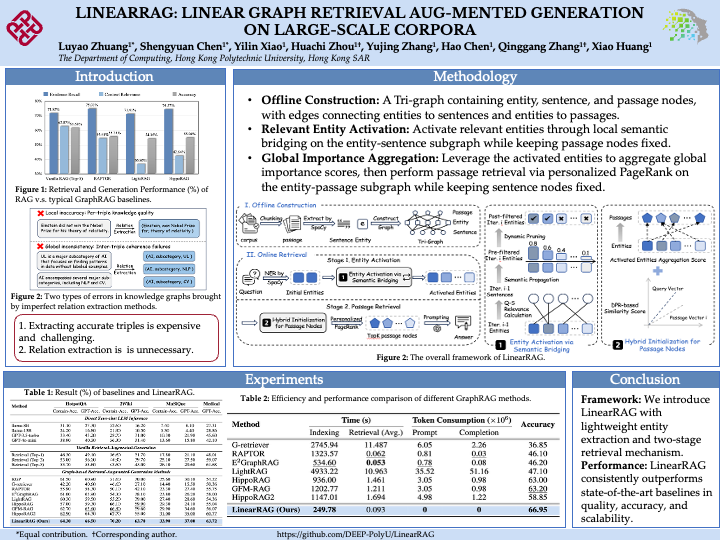
Retrieval-Augmented Generation (RAG) is widely used to mitigate hallucinations of Large Language Models (LLMs) by leveraging external knowledge. While effective for simple queries, traditional RAG systems struggle with large-scale, unstructured corpora where information is fragmented. Recent advances incorporate knowledge graphs to capture relational structures, enabling more comprehensive retrieval for complex, multi-hop reasoning tasks. However, existing graph-based RAG (GraphRAG) methods rely on unstable and costly relation extraction for graph construction, often producing noisy graphs with incorrect or inconsistent relations that degrade retrieval quality. In this paper, we revisit the pipeline of existing GraphRAG systems and propose Linear Graph-based Retrieval-Augmented Generation (LinearRAG), an efficient framework that enables reliable graph construction and precise passage retrieval. Specifically, LinearRAG constructs a relation-free hierarchical graph, termed Tri-Graph, using only lightweight entity extraction and semantic linking, avoiding unstable relation modeling. This new paradigm of graph construction scales linearly with corpus size and incurs no extra token consumption, providing an economical and reliable indexing of the original passages. For retrieval, LinearRAG adopts a two-stage strategy: (i) relevant entity activation via local semantic bridging, followed by (ii) passage retrieval through global importance aggregation. Extensive experiments on four benchmark datasets demonstrate that LinearRAG significantly outperforms baseline models. Our code and datasets are available at https://github.com/DEEP-PolyU/LinearRAG.
When to Ensemble: Identifying Token-Level Points for Stable and Fast LLM Ensembling
Heecheol Yun ⋅ Kwangmin Ki ⋅ Jung Hyun Lee ⋅ Eunho Yang
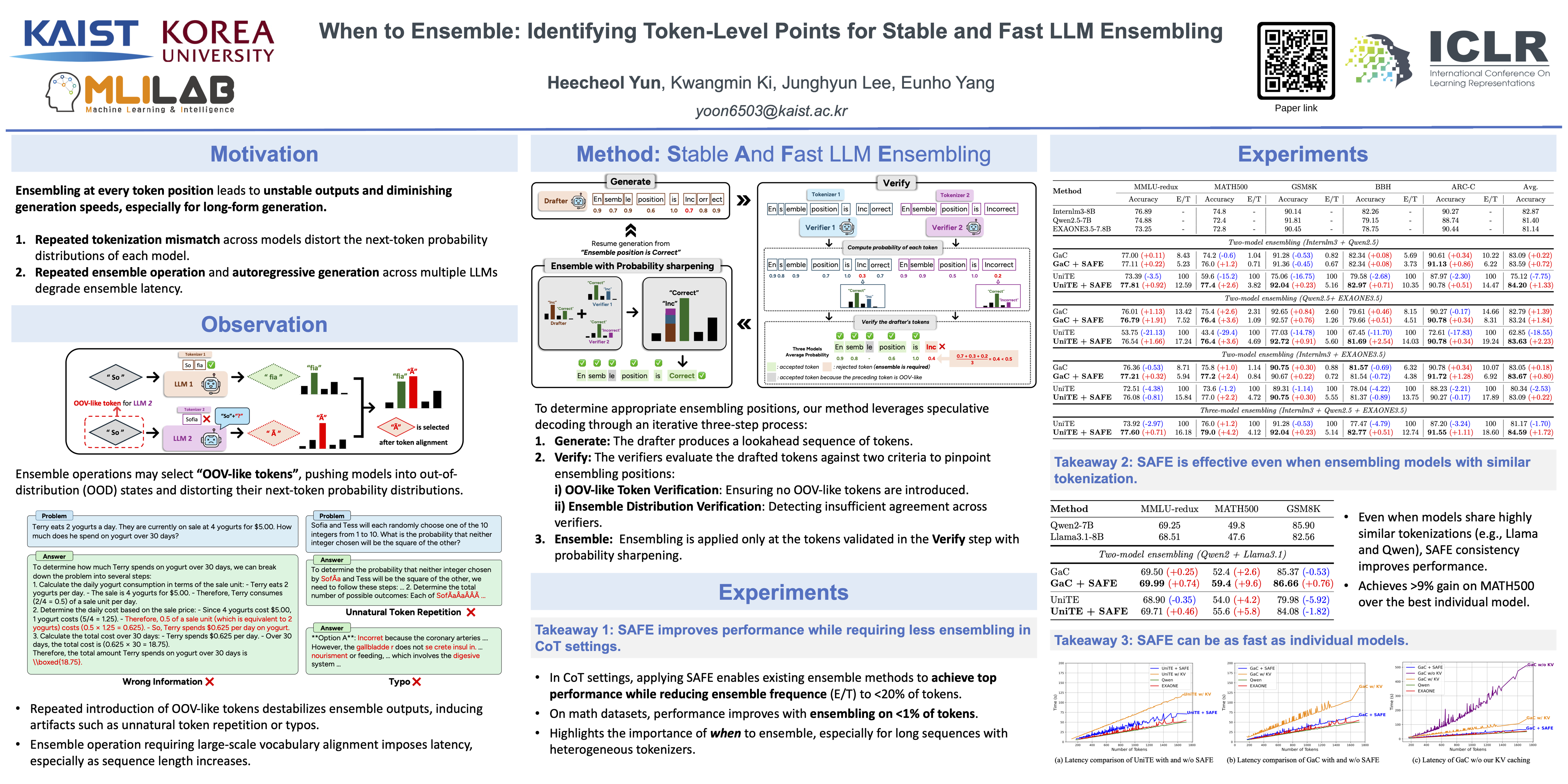
Ensembling Large Language Models (LLMs) has gained attention as a promising approach to surpass the performance of individual models by leveraging their complementary strengths. In particular, aggregating models’ next-token probability distributions to select the next token has been shown to be effective in various tasks. However, while successful for short-form answers, its application to long-form generation remains underexplored. In this paper, we show that using existing ensemble methods in long-form generation requires a careful choice of ensembling positions, since the standard practice of ensembling at every token often degrades performance. We identify two key factors for determining the ensembling positions: tokenization mismatch across models and consensus in their next-token probability distributions. Based on this, we propose $\textbf{SAFE}$, ($\textbf{S}$table $\textbf{A}$nd $\textbf{F}$ast LLM $\textbf{E}$nsembling), a framework that selectively ensembles by jointly considering these factors. To further improve stability, we apply a probability sharpening strategy when the ensemble distribution becomes overly smooth, enabling the selection of more confident tokens during ensembling. Our experiments on diverse benchmarks, including MATH500 and BBH, demonstrate that SAFE outperforms existing methods in both accuracy and efficiency, with gains achieved even when ensembling fewer than 1\% of tokens.
ReasoningBank: Scaling Agent Self-Evolving with Reasoning Memory
Siru Ouyang ⋅ Jun Yan ⋅ I-Hung Hsu ⋅ Yanfei Chen ⋅ Ke Jiang ⋅ Zifeng Wang ⋅ Rujun Han ⋅ Long Le ⋅ Samira Daruki ⋅ Xiangru Tang ⋅ Vishy Tirumalashetty ⋅ George Lee ⋅ Mahsan Rofouei ⋅ Hangfei Lin ⋅ Jiawei Han ⋅ Chen-Yu Lee ⋅ Tomas Pfister
With the growing adoption of large language model agents in persistent real-world roles, they naturally encounter continuous streams of tasks. A key limitation, however, is their failure to learn from the accumulated interaction history, forcing them to discard valuable insights and repeat past errors. We propose ReasoningBank, a novel memory framework that distills generalizable reasoning strategies from an agent's self-judged successful and failed experiences. At test time, an agent retrieves relevant memories from ReasoningBank to inform its interaction and then integrates new learnings back, enabling it to become more capable over time. Building on this powerful experience learner, we further introduce memory-aware test-time scaling (MaTTS), which accelerates and diversifies this learning process by scaling up the agent's interaction experience. By allocating more compute to each task, the agent generates abundant, diverse experiences that provide rich contrastive signals for synthesizing higher-quality memory. The better memory in turn guides more effective scaling, establishing a powerful synergy between memory and test-time scaling. Across web browsing and software engineering benchmarks, ReasoningBank consistently outperforms existing memory mechanisms that store raw trajectories or only successful task routines, improving both effectiveness and efficiency; MaTTS further amplifies these gains. These findings establish memory-driven experience scaling as a new scaling dimension, enabling agents to self-evolve with emergent behaviors naturally arise. Our code can be found at https://github.com/google-research/reasoning-bank.
RE-PO: Robust Enhanced Policy Optimization as a General Framework for LLM Alignment
Xiaoyang Cao ⋅ Zelai Xu ⋅ Mo Guang ⋅ Kaiwen Long ⋅ Michiel Bakker ⋅ Yu Wang ⋅ Chao Yu
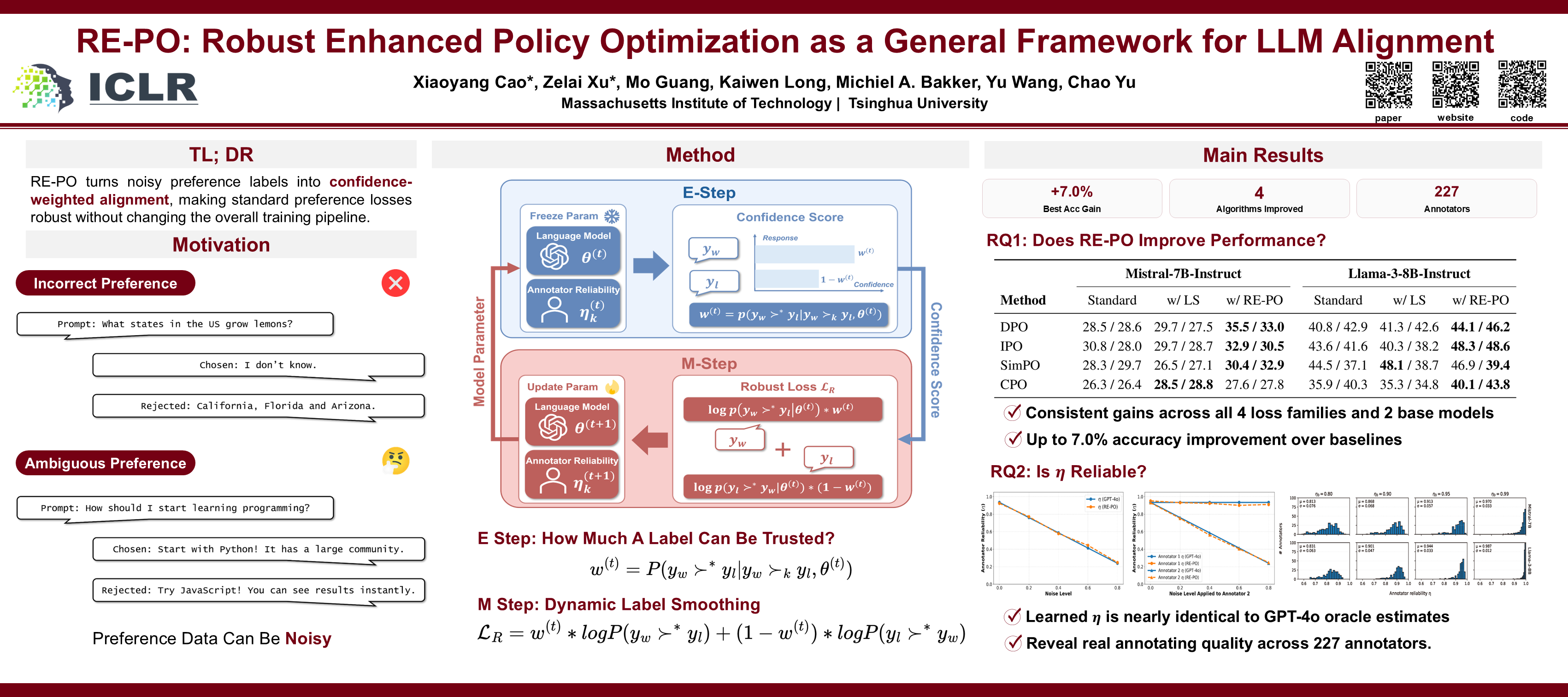
Standard human preference-based alignment methods, such as Reinforcement Learning from Human Feedback (RLHF), are a cornerstone technology for aligning Large Language Models (LLMs) with human values. However, these methods are all underpinned by a strong assumption that the collected preference data is clean and that all observed labels are equally reliable. In reality, large-scale preference datasets contain substantial label noise due to annotator errors, inconsistent instructions, varying expertise, and even adversarial or low-effort feedback. This creates a discrepancy between the recorded data and the ground-truth preferences, which can misguide the model and degrade its performance. To address this challenge, we introduce Robust Enhanced Policy Optimization (RE-PO). RE-PO employs an Expectation-Maximization algorithm to infer the posterior probability of each label’s correctness, which is used to adaptively re-weigh each data point in the training loss to mitigate noise. We further generalize this approach by linking a broad class of preference losses to induced probabilistic models. This enables systematic robustification of existing alignment algorithms while preserving exact probabilistic equivalence for likelihood-style losses. Theoretically, under perfect calibration and a population/full-batch setting, we show that RE-PO recovers the true annotator reliability. Our experiments demonstrate RE-PO’s effectiveness as a general framework, generally enhancing four state-of-the-art alignment algorithms (DPO, IPO, SimPO, and CPO) against their corresponding standard versions. When applied to Mistral and Llama 3 models, the RE-PO-enhanced methods improve AlpacaEval 2 win rates by up to 7.0% over their respective baselines.
Generative Adversarial Reasoner: Enhancing LLM Reasoning with Adversarial Reinforcement Learning
Qihao Liu ⋅ Luoxin Ye ⋅ Wufei Ma ⋅ Yu-Cheng Chou ⋅ Alan Yuille
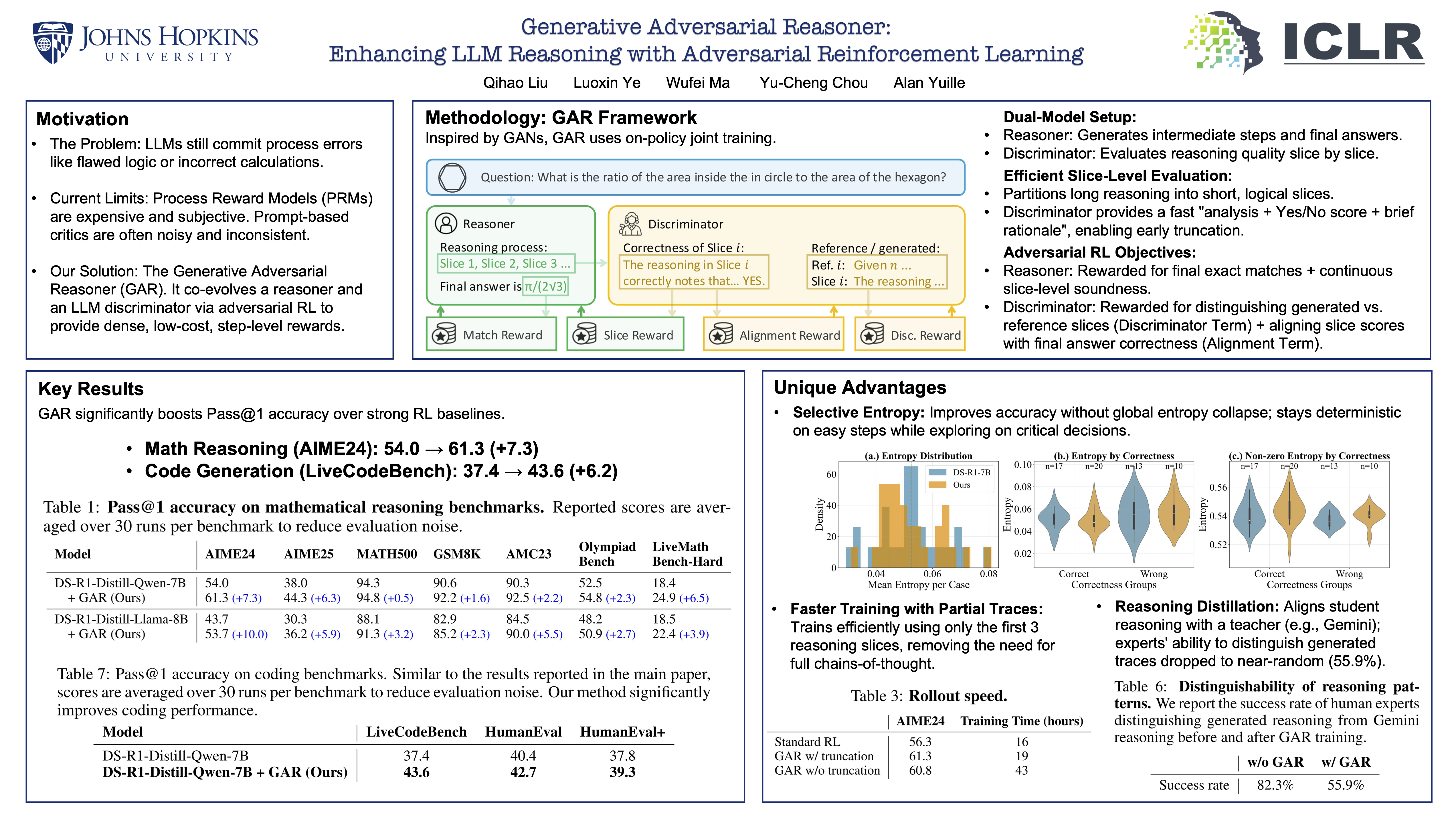
Large language models (LLMs) with explicit reasoning capabilities excel at mathematical reasoning yet still commit process errors, such as incorrect calculations, brittle logic, and superficially plausible but invalid steps. In this paper, we introduce Generative Adversarial Reasoner, an on-policy joint training framework designed to enhance reasoning by co-evolving an LLM reasoner and an LLM-based discriminator through adversarial reinforcement learning. A compute-efficient review schedule partitions each reasoning chain into logically complete slices of comparable length, and the discriminator evaluates each slice’s soundness with concise, structured justifications. Learning couples complementary signals: the LLM reasoner is rewarded for logically consistent steps that yield correct answers, while the discriminator earns rewards for correctly detecting errors or distinguishing traces in the reasoning process. This produces dense, well-calibrated, on-policy step-level rewards that supplement sparse exact-match signals, improving credit assignment, increasing sample efficiency, and enhancing overall reasoning quality of LLMs. Across various mathematical benchmarks, the method delivers consistent gains over strong baselines with standard RL post-training. Specifically, on AIME24, we improve DeepSeek-R1-Distill-Qwen-7B from 54.0 to 61.3 (+7.3) and DeepSeek-R1-Distill-Llama-8B from 43.7 to 53.7 (+10.0). The modular discriminator also enables flexible reward shaping for objectives such as teacher distillation, preference alignment, and mathematical proof-based reasoning.
SimpleToM: Exposing the Gap between Explicit ToM Inference and Implicit ToM Application in LLMs
Yuling Gu ⋅ Oyvind Tafjord ⋅ Hyunwoo Kim ⋅ Jared Moore ⋅ Ronan Le Bras ⋅ Peter Clark ⋅ Yejin Choi
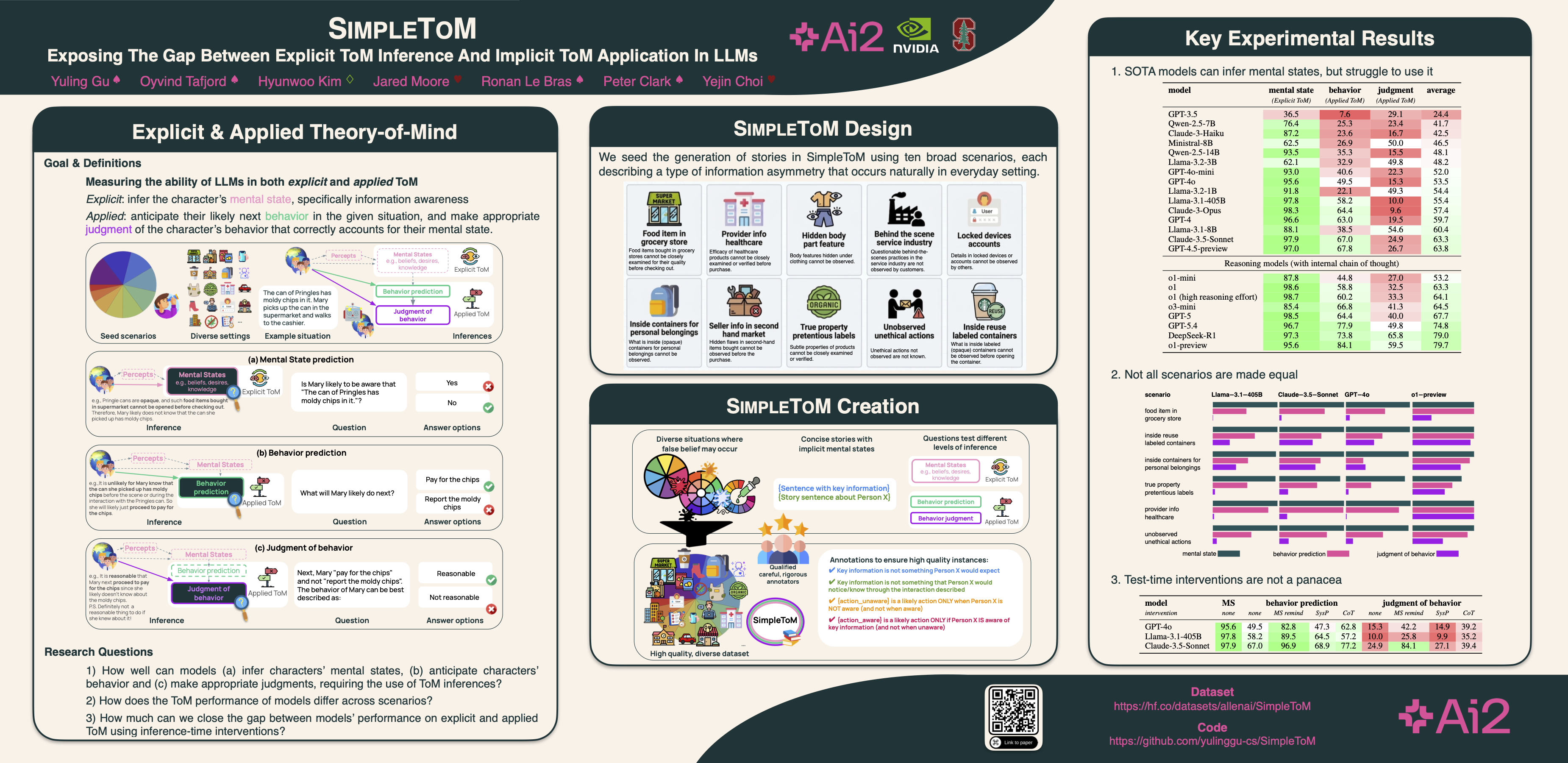
Large language models (LLMs) are increasingly tested for a "Theory of Mind" (ToM) — the ability to attribute mental states to oneself and others. Yet most evaluations stop at explicit belief attribution in classical toy stories or stylized tasks, leaving open the questions of whether LLMs can implicitly apply such knowledge to predict human behavior, or to judge an observed behavior, in diverse scenarios. We introduce SimpleToM, a benchmark that advances ToM evaluation along two novel axes. First, it probes multiple levels of ToM reasoning, from mental state inference (explicit ToM) to behavior prediction and judgment (applied ToM). Second, it situates these tasks in diverse, everyday scenarios — such as supermarkets, hospitals, schools, and offices — where information asymmetries naturally arise (e.g., hidden defects in grocery store items, incomplete information in provider–patient interactions, or restricted access to locked devices). SimpleToM contains concise stories (e.g., "The can of Pringles has moldy chips in it. Mary picks up the can in the supermarket and walks to the cashier."), each with three questions that test different degrees of ToM reasoning, asking models to predict: (a) mental states ("Is Mary aware of the mold?"), (b) behaviors ("Will Mary pay for the chips or report the mold?"), and (c) judgments ("Mary paid for the chips. Was that reasonable?"). Experiments reveal a striking gap: state-of-the-art models often reliably infer mental state (a), but fail at applying knowledge about the mental state for secondary predictions, with performance dropping sharply for behavior prediction (b) and further for behavior judgment (c). This exposes a critical fragility in LLMs’ social reasoning in terms of what they know (explicit ToM) versus how well they can implicitly apply that knowledge for predictions (applied ToM). By uniting assessment of different levels of ToM reasoning with diverse, everyday scenarios, SimpleToM opens new opportunities for rigorously evaluating and diagnosing ToM abilities in LLMs, and reveals surprising, new insights about current model capabilities, guiding efforts toward future generations of models capable of robust social understanding.
Measuring LLM Novelty As The Frontier Of Original And High-Quality Output
Vishakh Padmakumar ⋅ Chen Yueh-Han ⋅ Jane Pan ⋅ Valerie Chen ⋅ He He
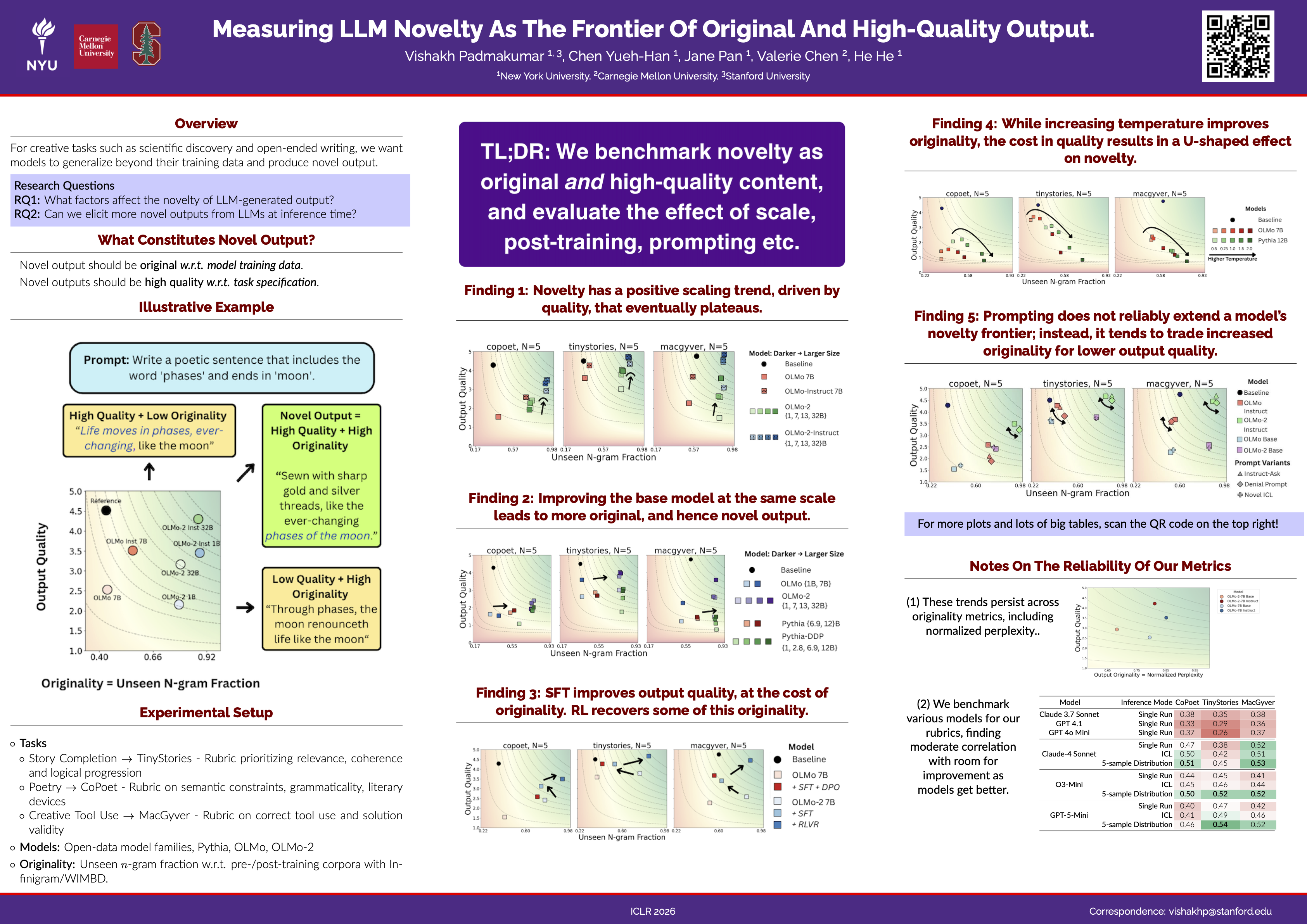
As large language models (LLMs) are increasingly used for ideation and scientific discovery, it is important to evaluate their ability to generate novel output. Prior work evaluates novelty as originality with respect to model training data, but original outputs can be of low quality. In contrast, non-expert judges more reliably score quality but may favor memorized outputs, limiting the reliability of human preference as a metric. We introduce a new novelty metric for LLM generations that balances originality and quality---the harmonic mean of the fraction of \ngrams unseen during training and a task-specific quality score. Using this framework, we identify trends that affect the novelty of generations from three families of open-data models (OLMo, OLMo-2, and Pythia) on three creative tasks---story completion, poetry writing, and creative tool use. We find that model-generated text from some base LLMs is less novel than human-written text from the internet. However, increasing model scale (OLMo 1B to 7B to 32B) and post-training reliably improves novelty due to improvements in output quality. We also find that improving the base model at the same scale (\eg OLMo 7B to OLMo-2 7B) leads to higher novelty due to higher originality. Finally, we observe that inference-time methods, such as prompting and providing novel in-context examples, have a much smaller effect on novelty, often increasing originality at the expense of quality. This highlights the need for further research into more effective elicitation strategies as we use models for creative applications.
MobiEdit: Resource-efficient Knowledge Editing for Personalized On-device LLMs
Zhenyan Lu ⋅ Daliang Xu ⋅ Dongqi Cai ⋅ Zexi Li ⋅ WEI LIU ⋅ Jian Luan ⋅ Fangming Liu ⋅ Shangguang Wang ⋅ Mengwei Xu
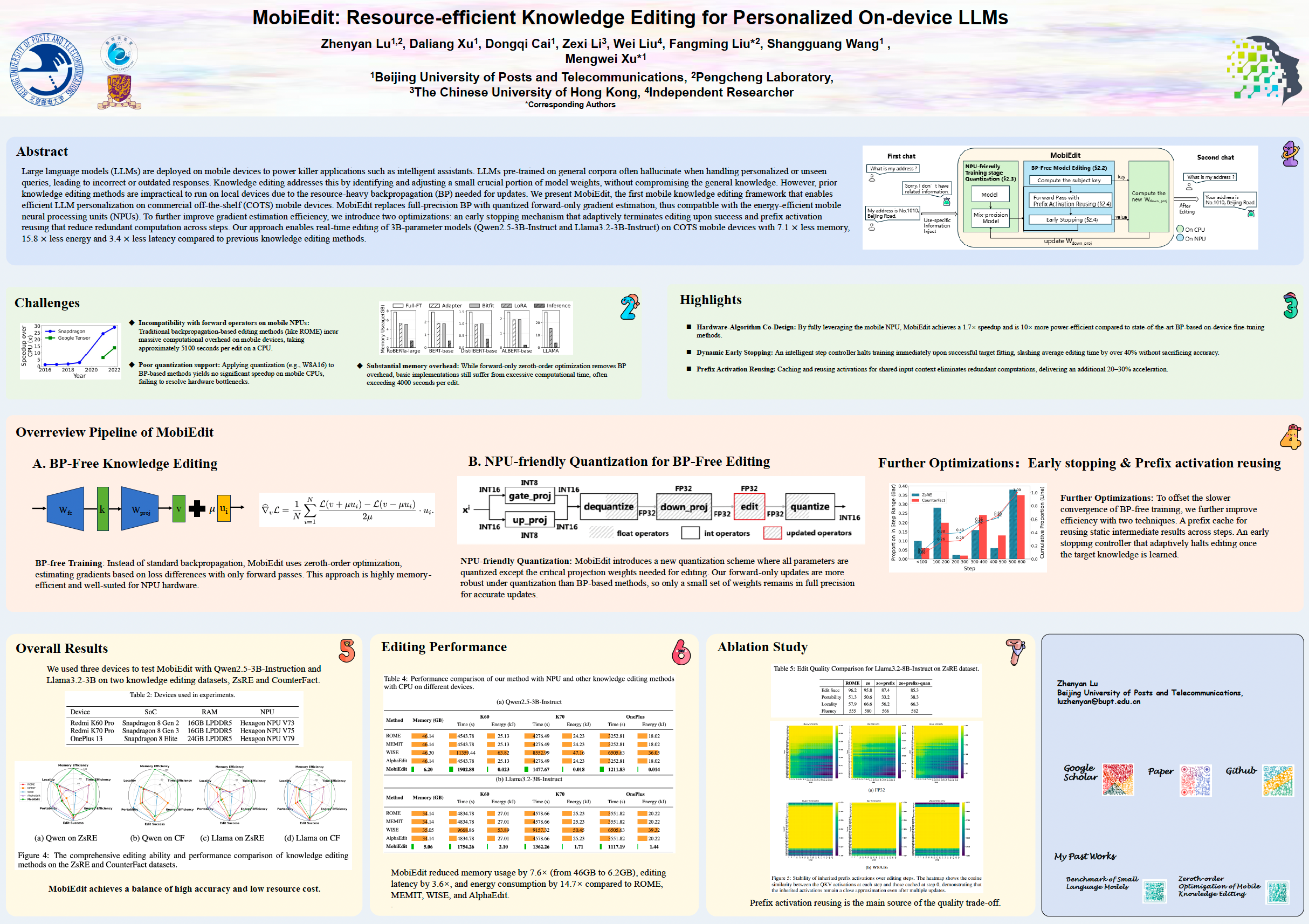
Large language models (LLMs) are deployed on mobile devices to power killer applications such as intelligent assistants. LLMs pre-trained on general corpora often hallucinate when handling personalized or unseen queries, leading to incorrect or outdated responses. Knowledge editing addresses this by identifying and adjusting a small crucial portion of model weights, without compromising the general knowledge. However, prior knowledge editing methods are impractical to run on local devices due to the resource-heavy backpropagation (BP) needed for updates. We present MobiEdit, the first mobile knowledge editing framework that enables efficient LLM personalization on commercial off-the-shelf (COTS) mobile devices. MobiEdit replaces full-precision BP with quantized forward-only gradient estimation, thus compatible with the energy-efficient mobile neural processing units (NPUs). To further improve gradient estimation efficiency, we introduce two optimizations: an early stopping mechanism that adaptively terminates editing upon success and prefix activation reusing that reduce redundant computation across steps. Our approach enables real-time editing of 3B-parameter models (Qwen2.5-3B-Instruct and Llama3.2-3B-Instruct) on COTS mobile devices with 7.1$\times$ less memory, 15.8 $\times$ less energy and 3.4$\times$ less latency compared to previous knowledge editing methods.
On the Shelf Life of Fine-Tuned LLM-Judges: Future-Proofing, Backward-Compatibility, and Question Generalization
Janvijay Singh ⋅ Austin Xu ⋅ Yilun Zhou ⋅ Yefan Zhou ⋅ Dilek Hakkani-Tür ⋅ Shafiq Joty
The LLM-as-a-judge paradigm is widely used in both evaluating free-text model responses and reward modeling for model alignment and fine-tuning. Recently, fine-tuning judges with judge-specific data has emerged as an often preferred choice over directly prompting frontier models as judges, as the former achieves better performance with smaller model sizes while being more robust to common biases. However, the standard evaluation ignores several practical concerns of fine-tuned judges regarding their real-world deployment. In this paper, we identify and formalize three aspects that affect the *shelf life* of these judges: *future-proofing* and *backward-compatibility* $-$ how well judges fine-tuned on responses by today's generator models perform on responses by future models or past models, as well as *question generalization* $-$ how well judges generalize to unseen questions at test time. We study these three aspects under a unified framework with varying train and test distributions in two reasoning datasets, three SFT- and DPO-based fine-tuning algorithms, and three different backbone models. Experiments suggest that future-proofing is challenging for most models, while backward-compatibility is relatively easy, with DPO-trained models consistently *improving* performance. We further find that continual learning provides a more balanced adaptation to shifts between older and newer response distributions than training solely on stronger or weaker responses. Moreover, all models exhibit some degree of performance degradation when moving from questions seen during training to unseen ones, showing that current judges do not fully generalize to unseen questions. These findings provide insights into practical considerations for developing and deploying judge models in the face of ever-changing generators.
Evoking User Memory: Personalizing LLM via Recollection-Familiarity Adaptive Retrieval
Yingyi Zhang ⋅ Junyi Li ⋅ Wenlin Zhang ⋅ Pengyue Jia ⋅ Xianneng Li ⋅ Yichao Wang ⋅ Derong Xu ⋅ Yi Wen ⋅ Huifeng Guo ⋅ Yong Liu ⋅ Xiangyu Zhao
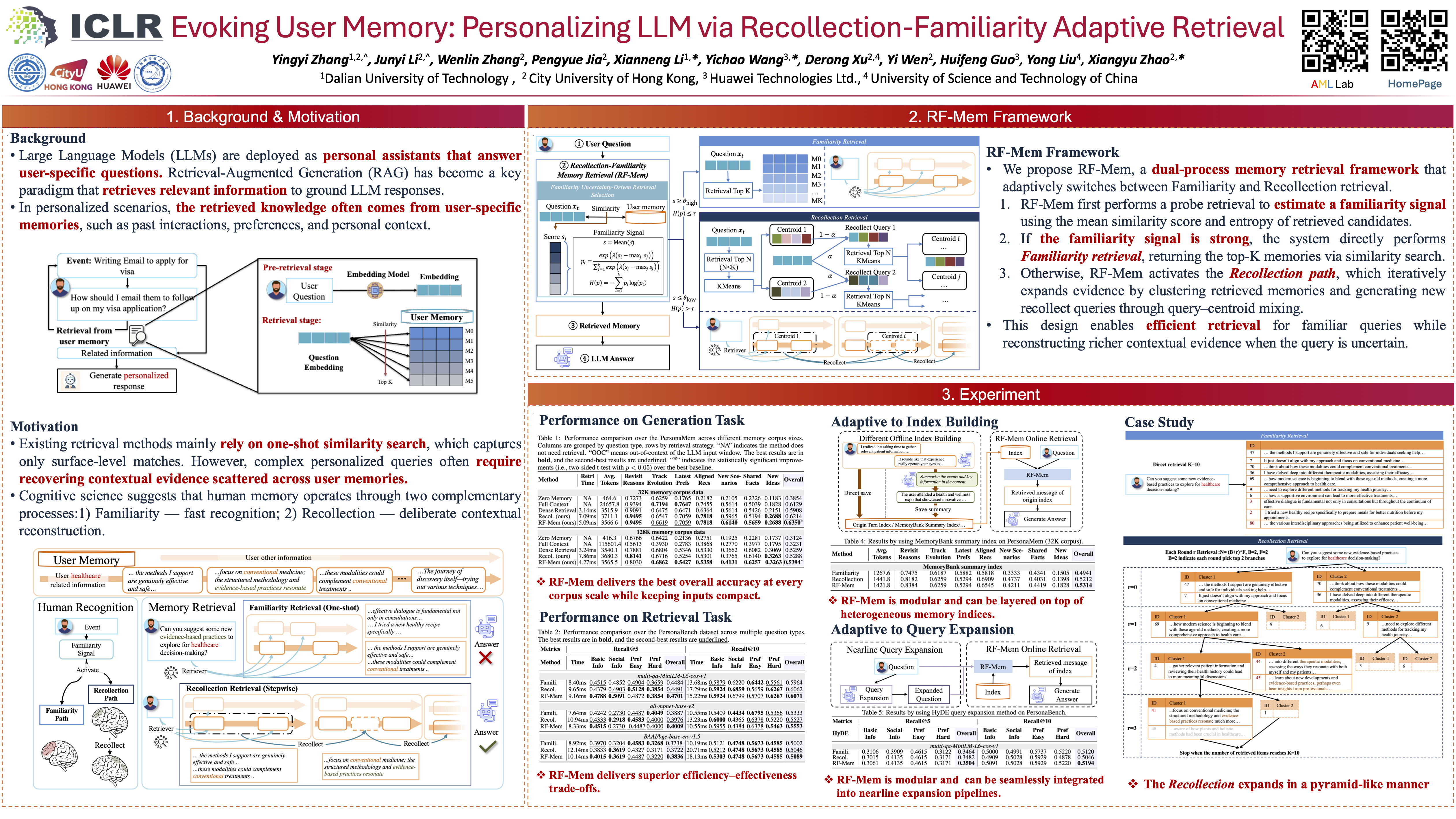
Personalized large language models (LLMs) rely on memory retrieval to incorporate user-specific histories, preferences, and contexts. Existing approaches either overload the LLM by feeding all the user's past memory into the prompt, which is costly and unscalable, or simplify retrieval into a one-shot similarity search, which captures only surface matches. Cognitive science, however, shows that human memory operates through a dual process: Familiarity, offering fast but coarse recognition, and Recollection, enabling deliberate, chain-like reconstruction for deeply recovering episodic content. Current systems lack both the ability to perform recollection retrieval and mechanisms to adaptively switch between the dual retrieval paths, leading to either insufficient recall or the inclusion of noise. To address this, we propose RF-Mem (Recollection–Familiarity Memory Retrieval), a familiarity uncertainty-guided dual-path memory retriever. RF-Mem measures the familiarity signal through the mean score and entropy. High familiarity leads to the direct top-$K$ Familiarity retrieval path, while low familiarity activates the Recollection path. In the Recollection path, the system clusters candidate memories and applies $\alpha$-mix with the query to iteratively expand evidence in embedding space, simulating deliberate contextual reconstruction. This design embeds human-like dual-process recognition into the retriever, avoiding full-context overhead and enabling scalable, adaptive personalization. Experiments across three benchmarks and corpus scales demonstrate that RF-Mem consistently outperforms both one-shot retrieval and full-context reasoning under fixed budget and latency constraints. Our code can be found in the Reproducibility Statement.
SpeechOp: Inference-Time Task Composition for Generative Speech Processing
Justin Lovelace ⋅ Rithesh Kumar ⋅ Jiaqi Su ⋅ Ke Chen ⋅ Kilian Weinberger ⋅ Zeyu Jin
While generative Text-to-Speech (TTS) systems leverage vast "in-the-wild" data to achieve remarkable success, speech-to-speech processing tasks like enhancement face data limitations, which lead data-hungry generative approaches to distort speech content and speaker identity. To bridge this gap, we present SpeechOp, a multi-task latent diffusion model that transforms pre-trained TTS models into a universal speech processor capable of performing a wide range of speech tasks and composing them in novel ways at inference time. By adapting a pre-trained TTS model, SpeechOp inherits a rich understanding of natural speech, accelerating training and improving S2S task quality, while simultaneously enhancing core TTS performance. Finally, we introduce Implicit Task Composition (ITC), a novel pipeline where ASR-derived transcripts (e.g., from Whisper) guide SpeechOp's enhancement via our principled inference-time task composition. ITC achieves state-of-the-art content preservation by robustly combining web-scale speech understanding with SpeechOp's generative capabilities.
Closing the Gap Between Text and Speech Understanding in LLMs
Santiago Cuervo ⋅ Skyler Seto ⋅ Maureen de Seyssel ⋅ Richard Bai ⋅ Zijin Gu ⋅ Tatiana Likhomanenko ⋅ Navdeep Jaitly ⋅ Zakaria Aldeneh
Large Language Models (LLMs) can be adapted to extend their text capabilities to speech inputs. However, these speech-adapted LLMs consistently underperform their text-based counterparts—and even cascaded pipelines—on language understanding tasks. We term this shortfall the text–speech understanding gap: the performance drop observed when a speech-adapted LLM processes spoken inputs relative to when the original text-based LLM processes the equivalent text. Recent approaches to narrowing this gap either rely on large-scale speech synthesis of text corpora, which is costly and heavily dependent on synthetic data, or on large-scale proprietary speech datasets, which are not reproducible. As a result, there remains a need for more data-efficient alternatives for closing the text-speech understanding gap. In this work, we analyze the gap as driven by two factors: (i) forgetting of text capabilities during adaptation, and (ii) cross-modal misalignment between speech and text. Based on this analysis, we introduce SALAD—Sample-efficient Alignment with Learning through Active selection and cross-modal Distillation—which combines cross-modal distillation with targeted synthetic data to improve alignment while mitigating forgetting. Applied to 3B and 7B LLMs, SALAD achieves competitive performance with a strong open-weight model across broad-domain benchmarks in knowledge, language understanding, and reasoning, while training on over an order of magnitude less speech data from publicly available corpora.
Bounds of Chain-of-Thought Robustness: Reasoning Steps, Embed Norms, and Beyond
Dingzirui Wang ⋅ Xuanliang Zhang ⋅ Keyan Xu ⋅ Qingfu Zhu ⋅ Wanxiang Che ⋅ Yang Deng
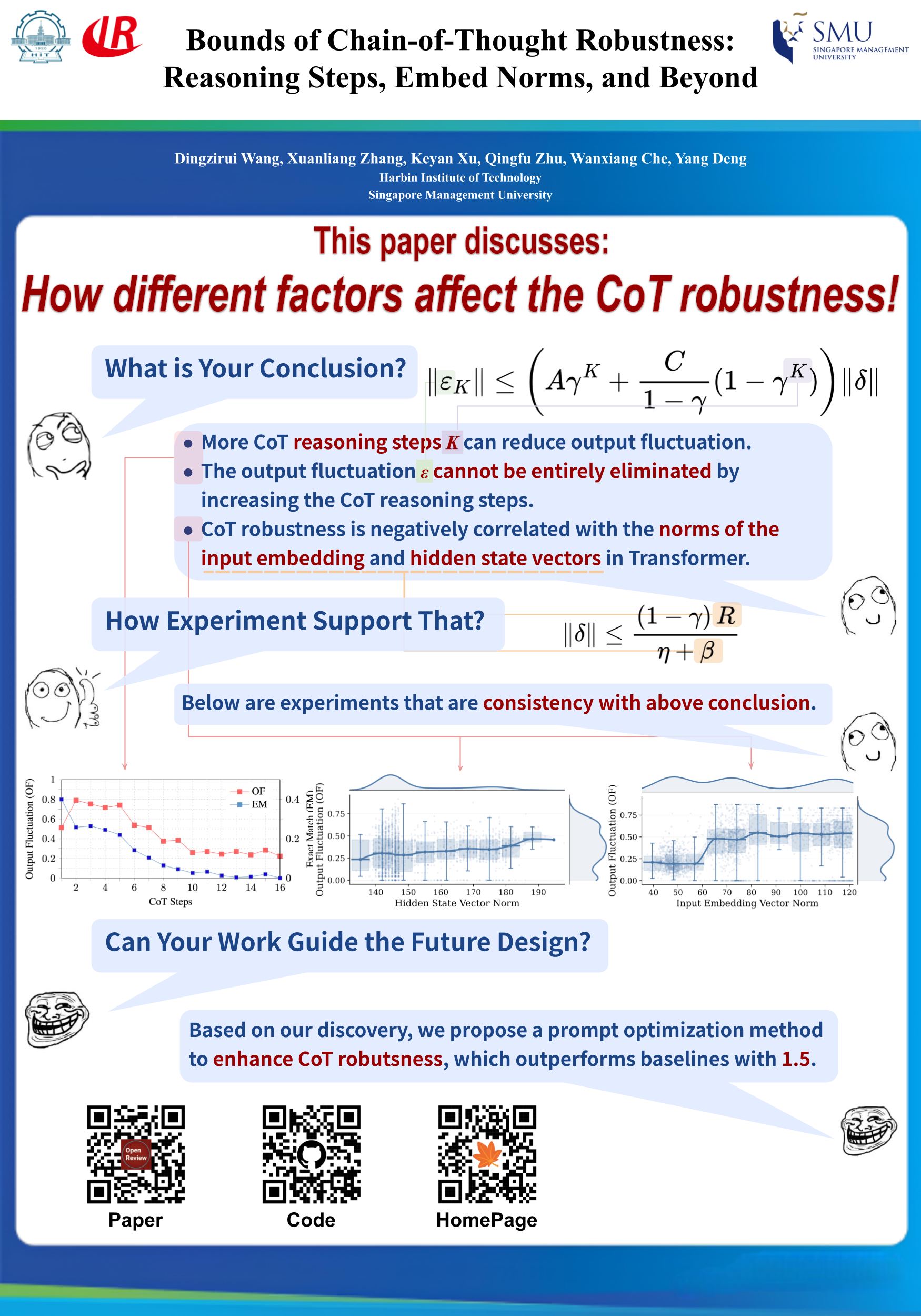
Existing research indicates that the output of Chain-of-Thought (CoT) is significantly affected by input perturbations. Although many methods aim to mitigate such impact by optimizing prompts, a theoretical explanation of how these perturbations influence CoT outputs remains an open area of research. This gap limits our in-depth understanding of how input perturbations propagate during the reasoning process and hinders further improvements in prompt optimization methods. Therefore, in this paper, we theoretically analyze the effect of input perturbations on the fluctuation of CoT outputs. We first derive an upper bound for input perturbations under the condition that the output fluctuation is within an acceptable range, and we prove that: - i) This upper bound is positively correlated with the number of reasoning steps in the CoT; - ii) Even an infinitely long reasoning process cannot eliminate the impact of input perturbations. We then apply these conclusions to the Linear Self-Attention (LSA) model, which can be viewed as a simplified version of Transformer. For the LSA model, we prove that the upper bound for input perturbation is negatively correlated with the norms of the input embedding and hidden state vectors. To validate this theoretical analysis, we conduct experiments on three mainstream datasets and four mainstream models. The experimental results align with our theoretical analysis, empirically demonstrating the correctness of our findings.
Beyond RAG vs. Long-Context: Learning Distraction-Aware Retrieval for Efficient Knowledge Grounding
Seongwoong Shim ⋅ Myunsoo Kim ⋅ Jae Cho ⋅ Byung-Jun Lee
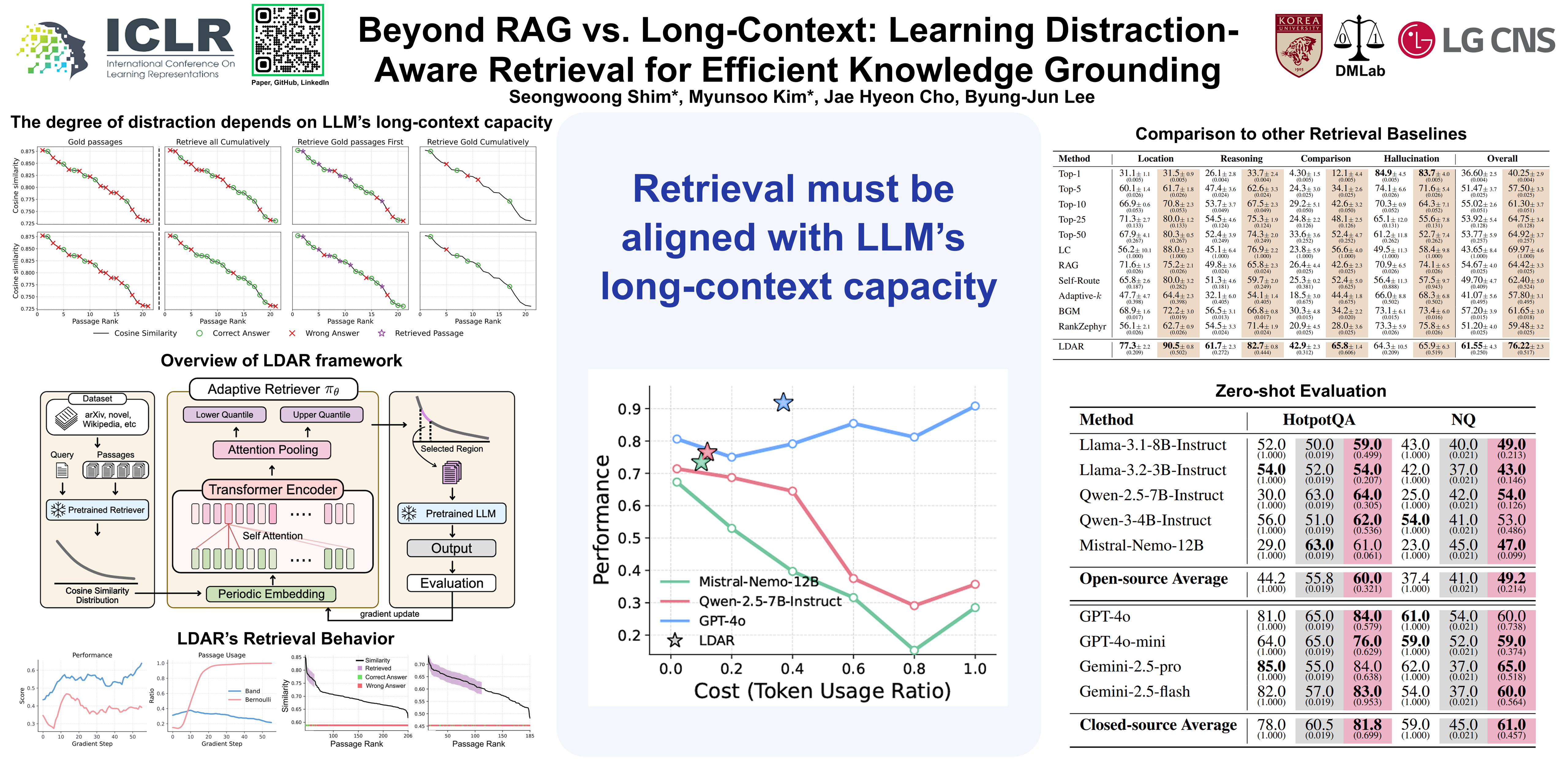
Retrieval-Augmented Generation (RAG) is a framework for grounding Large Language Models (LLMs) in external, up-to-date information. However, recent advancements in context window size allow LLMs to process inputs of up to 128K tokens or more, offering an alternative strategy: supplying the full document context directly to the model, rather than relying on RAG to retrieve a subset of contexts. Nevertheless, this emerging alternative strategy has notable limitations: (i) it is token-inefficient to handle large and potentially redundant contexts; (ii) it exacerbates the “lost in the middle” phenomenon; and (iii) under limited model capacity, it amplifies distraction, ultimately degrading LLM output quality. In this paper, we propose LDAR (Learning Distraction-Aware Retrieval), an adaptive retriever that learns to retrieve contexts in a way that mitigates interference from distracting passages, thereby achieving significantly higher performance with reduced token usage compared to long-context approaches. Extensive experiments across diverse LLM architectures and six knowledge-intensive benchmarks demonstrate the effectiveness and robustness of our approach, highlighting the importance of balancing the trade-off between information coverage and distraction.
GradPruner: Gradient-guided Layer Pruning Enabling Efficient Fine-Tuning and Inference for LLMs
Wei Huang ⋅ Anda Cheng ⋅ Yinggui Wang
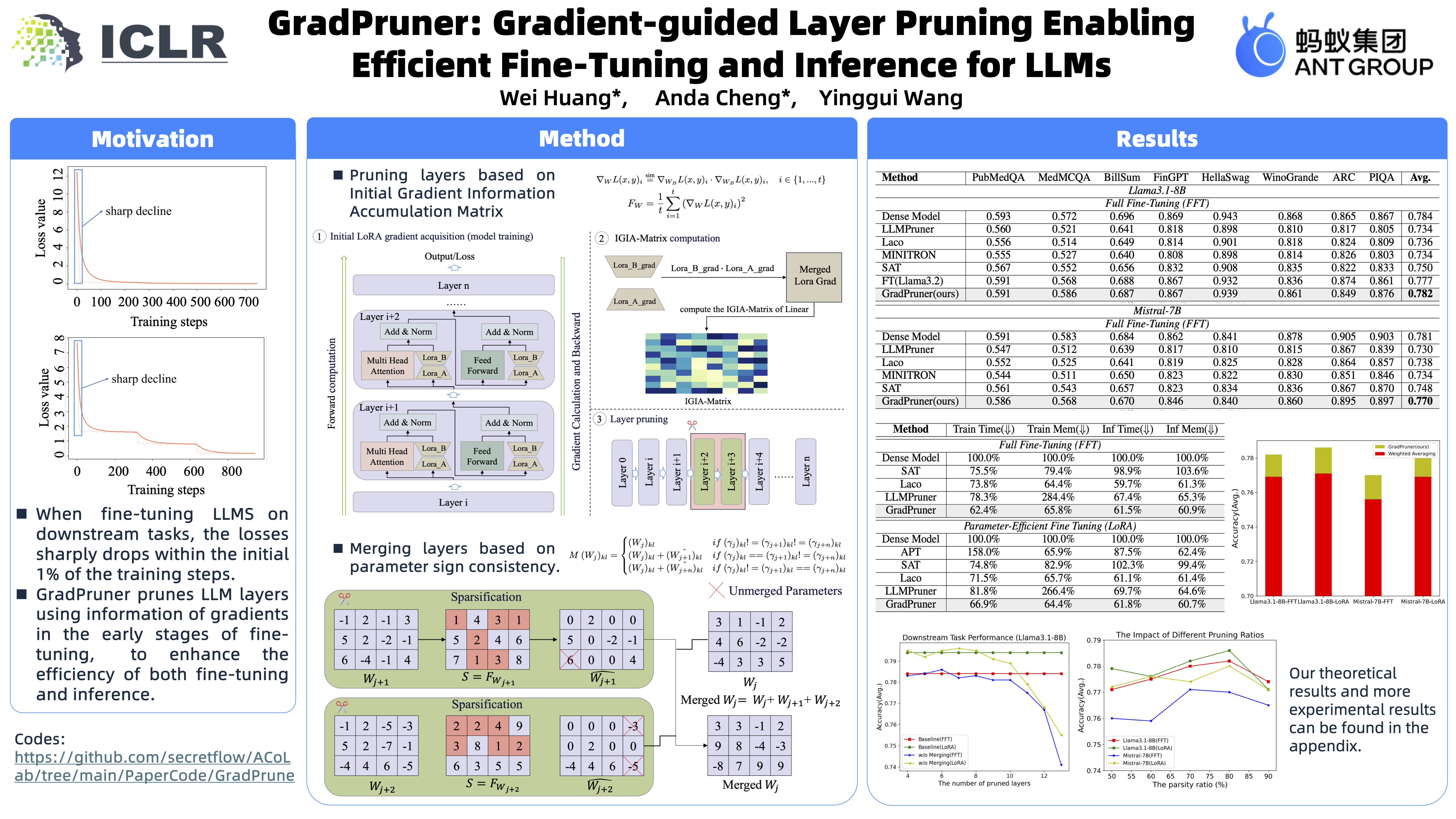
Fine-tuning Large Language Models (LLMs) with downstream data is often considered time-consuming and expensive. Structured pruning methods are primarily employed to improve the inference efficiency of pre-trained models. Meanwhile, they often require additional time and memory for training, knowledge distillation, structure search, and other strategies, making efficient model fine-tuning challenging to achieve. To simultaneously enhance the training and inference efficiency of downstream task fine-tuning, we introduce GradPruner, which can prune layers of LLMs guided by gradients in the early stages of fine-tuning. GradPruner uses the cumulative gradients of each parameter during the initial phase of fine-tuning to compute the Initial Gradient Information Accumulation Matrix (IGIA-Matrix) to assess the importance of layers and perform pruning. We sparsify the pruned layers based on the IGIA-Matrix and merge them with the remaining layers. Only elements with the same sign are merged to reduce interference from sign variations. We conducted extensive experiments on two LLMs across eight well-known datasets in downstream tasks. Including medical, financial, and general benchmark tasks. The results demonstrate that GradPruner has achieved a parameter reduction of 40% with only a 0.99% decrease in accuracy. Our code is available at https://anonymous.4open.science/r/LLM-GradPrune-436D.
AgentGym-RL: An Open-Source Framework to Train LLM Agents for Long-Horizon Decision Making via Multi-Turn RL
Zhiheng Xi ⋅ Jixuan Huang ⋅ Chenyang Liao ⋅ Baodai Huang ⋅ Jiaqi Liu ⋅ Honglin Guo ⋅ yajie yang ⋅ Rui Zheng ⋅ Junjie Ye ⋅ Jiazheng Zhang ⋅ Wenxiang Chen ⋅ Wei He ⋅ Yiwen Ding ⋅ Guanyu Li ⋅ Zehui Chen ⋅ Zhengyin Du ⋅ Xuesong Yao ⋅ Yufei Xu ⋅ Jiecao Chen ⋅ Tao Gui ⋅ Zuxuan Wu ⋅ Qi Zhang ⋅ Xuanjing Huang ⋅ Yu-Gang Jiang
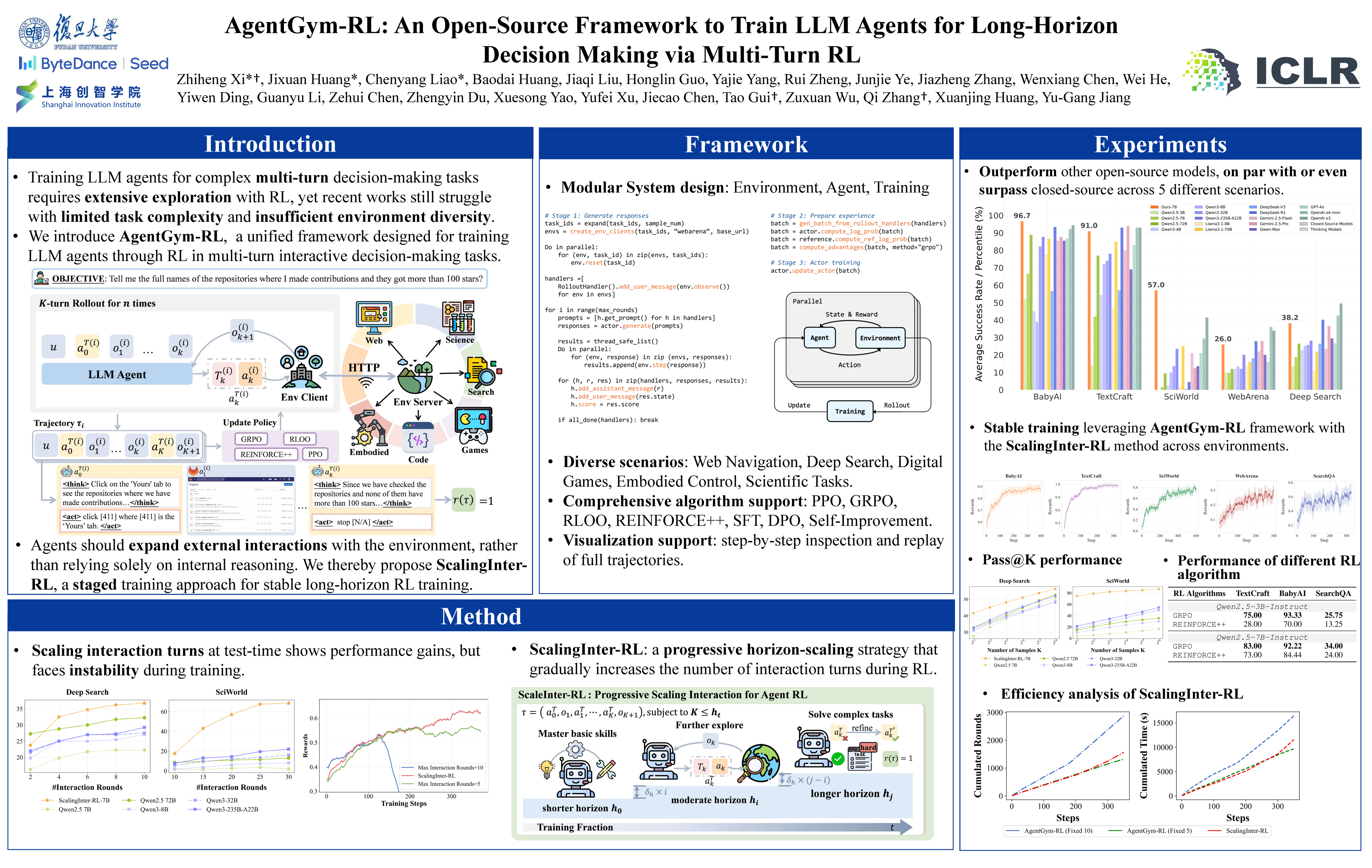
Training LLM agents for complex multi-turn decision-making tasks requires extensive exploration within their environment, with reinforcement learning (RL) as a natural way. However, the open-source community currently lacks a unified RL framework capable of training agents from scratch across diverse and realistic environments. To bridge this gap, we introduce AgentGym-RL, a modular and decoupled framework specifically designed for RL-based agent in multi-turn decision-making tasks. It offers high flexibility and extensibility, supports mainstream RL algorithms, and spans a broad range of real-world scenarios. To effectively train agents for challenging tasks, we argue that they are required to expand external interactions with the environment, rather than relying solely on internal reasoning. Nevertheless, training agents for long-horizon interaction with vanilla methods often faces challenges like training instability. To this end, we propose ScalingInter-RL, a staged training approach for stable long-horizon RL training. It starts with short-horizon interaction to establish foundational policies and progressively expands them to encourage deeper exploration. Extensive experiments show that agents trained with our method achieve performance on par with—or even surpass—commercial counterparts like OpenAI o3 and Gemini-2.5-Pro across 27 tasks in diverse environments. We share key insights and release the full framework, including code and datasets, to empower the community in building the next generation of intelligent agents. Our framework is available at https://github.com/WooooDyy/AgentGym-RL.
ReTabAD: A Benchmark for Restoring Semantic Context in Tabular Anomaly Detection
Sanghyu Yoon ⋅ Dongmin Kim ⋅ Suhee Yoon ⋅ YE SEUL SIM ⋅ Seungdong YOA ⋅ Hye-Seung Cho ⋅ Soonyoung Lee ⋅ Hankook Lee ⋅ Woohyung Lim
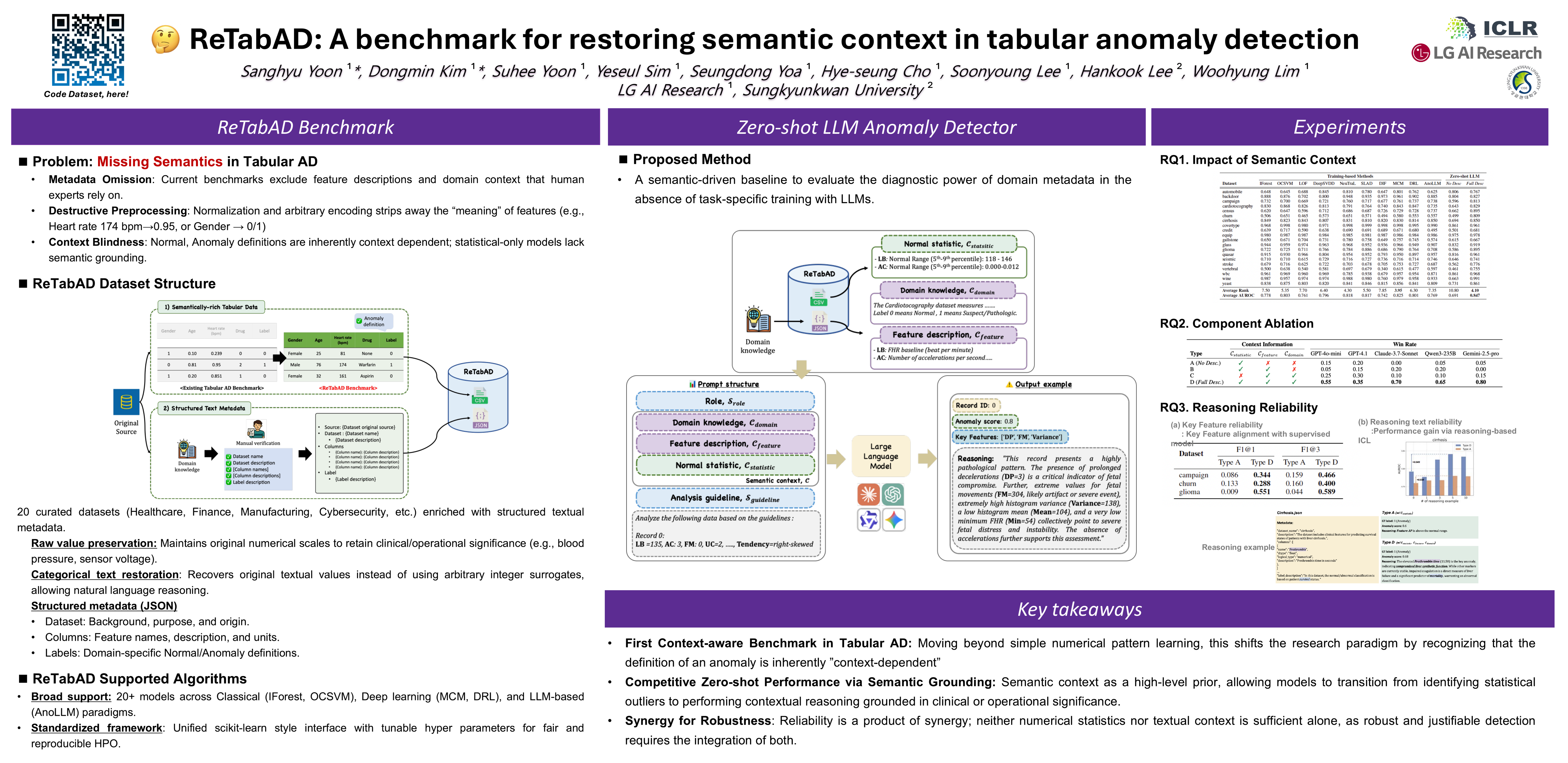
In tabular anomaly detection (AD), textual semantic context often carries critical signals, as the definition of an anomaly is closely tied to domain-specific context. However, existing benchmarks provide only raw data points without semantic context, overlooking rich textual metadata such as feature descriptions and domain knowledge that experts rely on in practice. This limitation restricts research flexibility and prevents models from fully leveraging domain knowledge for detection. ReTabAD addresses this gap by Restoring textual semantics to enable context-aware Tabular AD research. We provide (1) 20 carefully curated tabular datasets enriched with structured textual metadata, together with implementations of state-of-the-art AD algorithms—including classical, deep learning, and LLM-based approaches—and (2) a zero-shot LLM framework that leverages semantic context without task-specific training, establishing a strong baseline for future research. Furthermore, this work provides insights into the role and utility of textual metadata in AD through experiments and analysis. Results show that semantic context improves detection performance and enhances interpretability by supporting domain-aware reasoning. These findings establish ReTabAD as a benchmark for systematic exploration of context-aware AD.
UALM: Unified Audio Language Model for Understanding, Generation and Reasoning
Jinchuan Tian ⋅ Sang-gil Lee ⋅ Zhifeng Kong ⋅ Sreyan Ghosh ⋅ Arushi Goel ⋅ Chao-Han Huck Yang ⋅ Wenliang Dai ⋅ Zihan Liu ⋅ Hanrong Ye ⋅ Shinji Watanabe ⋅ Mohammad Shoeybi ⋅ Bryan Catanzaro ⋅ Rafael Valle ⋅ Wei Ping
Recent advances in the audio language modeling (ALM) domain tackle audio understanding and text-to-audio generation as separate tasks. Very few studies attempt to unify these tasks -- an essential step toward advanced multimodal reasoning. This paper introduces Unified Audio Language Model (UALM), which aims to unify audio understanding, text-to-audio generation, and multimodal reasoning in a single model. To achieve this goal, we first present UALM-Gen, a text-to-audio language model that directly predicts audio tokens and is comparable to state-of-the-art diffusion-based models. We then demonstrate, using proper data blending, training recipes, and inference techniques, that our single UALM model matches the quality of state-of-the-art specialized models in audio understanding, text-to-audio generation, and text reasoning. Furthermore, we present UALM-Reason, a multimodal reasoning model that utilizes both text and audio in the intermediate thinking steps to facilitate complex generation tasks. To our knowledge, this is the first demonstration in audio research of cross-modal generative reasoning, with its effectiveness confirmed by subjective evaluations.
STAR-Bench: Probing Deep Spatio-Temporal Reasoning as Audio 4D Intelligence
Zihan Liu ⋅ Zhikang Niu ⋅ Qiuyang Xiao ⋅ Zhisheng Zheng ⋅ Ruoqi Yuan ⋅ Yuhang Zang ⋅ Yuhang Cao ⋅ Xiaoyi Dong ⋅ Jianze Liang ⋅ Xie Chen ⋅ Leilei Sun ⋅ Dahua Lin ⋅ Jiaqi Wang
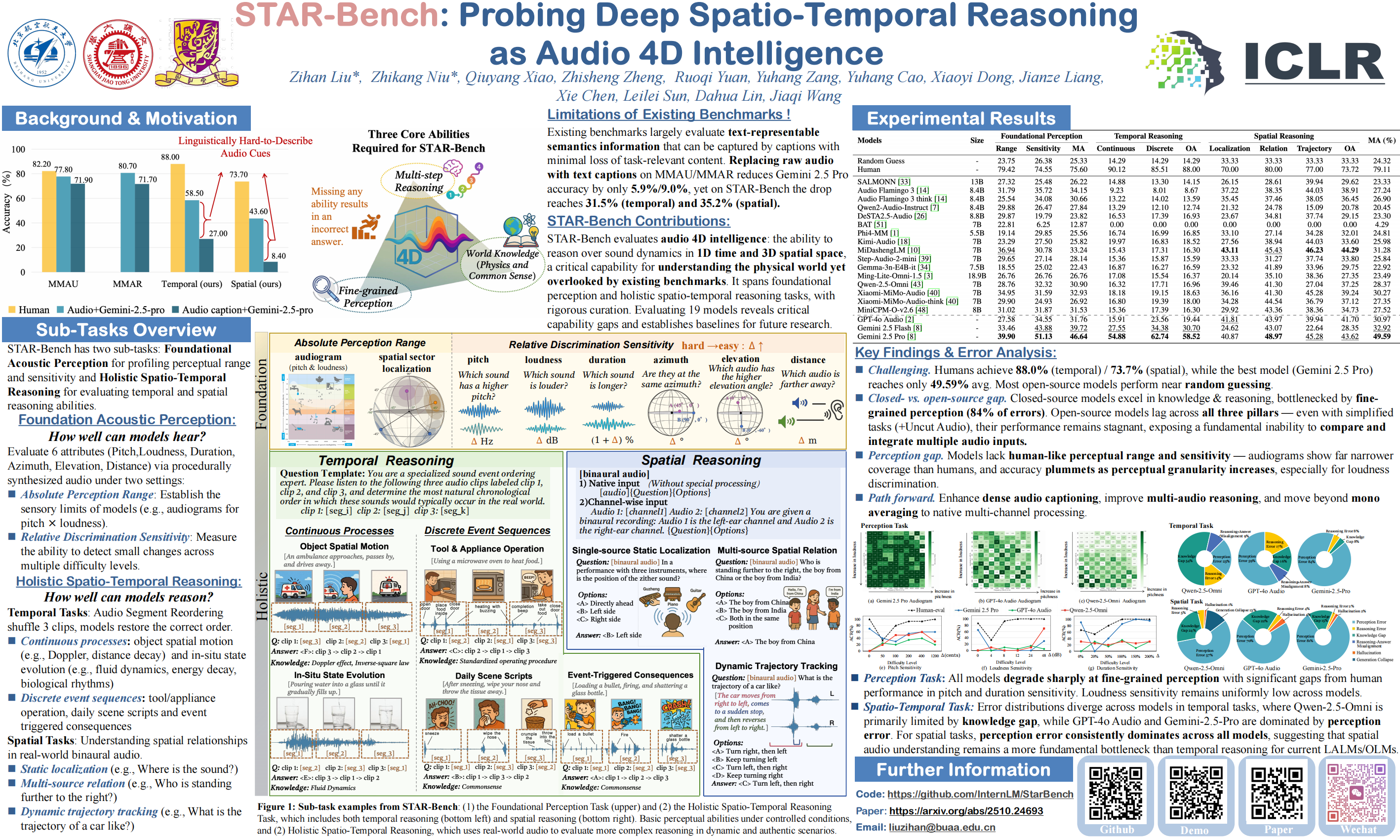
Despite rapid progress in Multi-modal Large Language Models and Large Audio-Language Models, existing audio benchmarks largely test semantics that can be recovered from text captions, masking deficits in fine-grained perceptual reasoning. We formalize audio 4D intelligence that is defined as reasoning over sound dynamics in time and 3D space, and introduce STAR-Bench to measure it. STAR-Bench combines a Foundational Acoustic Perception setting (six attributes under absolute and relative regimes) with a Holistic Spatio-Temporal Reasoning setting that includes segment reordering for continuous and discrete processes and spatial tasks spanning static localization, multi-source relations, and dynamic trajectories. Our data curation pipeline uses two methods to ensure high-quality samples. For foundational tasks, we use procedurally synthesized and physics-simulated audio. For holistic data, we follow a four-stage process that includes human annotation and final selection based on human performance. Unlike prior benchmarks where caption-only answering reduces accuracy slightly, STAR-Bench induces far larger drops (-31.5\% temporal, -35.2\% spatial), evidencing its focus on linguistically hard-to-describe cues. Evaluating 19 models reveals substantial gaps compared with humans and a capability hierarchy: closed-source models are bottlenecked by fine-grained perception, while open-source models lag across perception, knowledge, and reasoning. Our STAR-Bench provides critical insights and a clear path forward for developing future models with a more robust understanding of the physical world.
FictionalQA: A Dataset for Studying Memorization and Knowledge Acquisition
John Kirchenbauer ⋅ Natjanan Mongkolsupawan ⋅ Yuxin Wen ⋅ Tom Goldstein ⋅ Daphne Ippolito
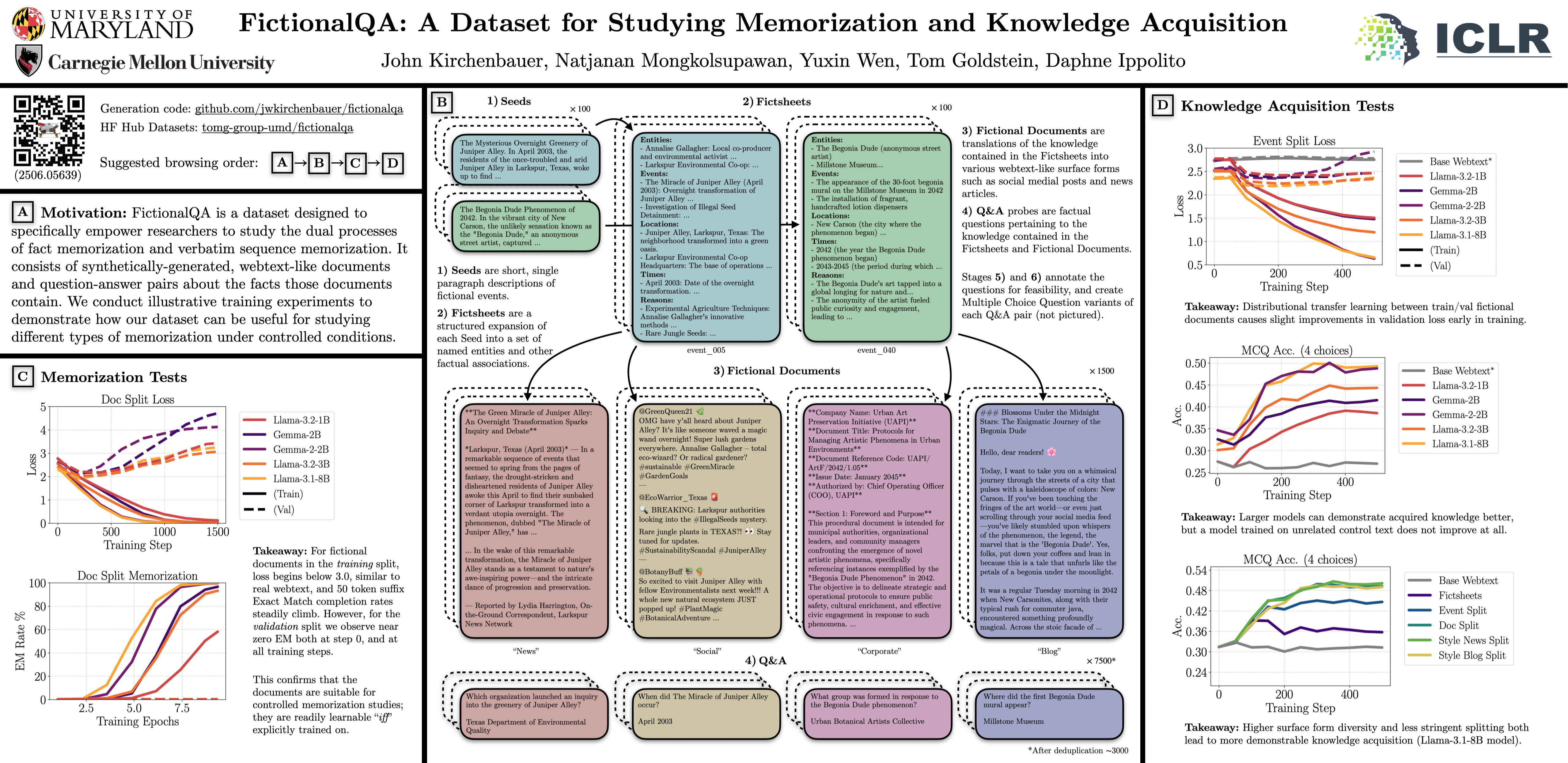
When language models are trained on textual data, they acquire both knowledge about the structure of language as well as knowledge of facts about the world. At inference time, their knowledge of facts can be leveraged to solve interesting problems and perform useful knowledge work for users. It is well known that language models can verbatim memorize long sequences from their training data. However, it is much less well understood how language models memorize facts seen during training. In this work, we propose a new dataset to specifically empower researchers to study the dual processes of fact memorization and verbatim sequence memorization. The dataset consists of synthetically-generated, webtext-like documents about fictional events, as well as question-answer pairs about the events. We conduct training experiments showing how synthetic data about fictional events can be effective in teasing apart different forms of memorization. We also document the challenges in effectively building realistic, fictional synthetic data.
mR3: Multilingual Rubric-Agnostic Reward Reasoning Models
David Anugraha ⋅ Shou-Yi Hung ⋅ Zilu Tang ⋅ En-Shiun Annie Lee ⋅ Derry Wijaya ⋅ Genta Winata
Evaluation using Large Language Model (LLM) judges has been widely adopted in English and shown to be effective for automatic evaluation. However, their performance does not generalize well to non-English settings, and it remains unclear what constitutes effective multilingual training for such judges. In this paper, we introduce mR3, a massively multilingual, rubric-agnostic reward reasoning model trained on 72 languages, achieving the broadest language coverage in reward modeling to date. We present a comprehensive study of data and curriculum selection for training to identify effective strategies and data sources for building high-quality reward models, including support for reasoning in the target language. Our approach attains state-of-the-art performance on multilingual reward model benchmarks, surpassing much larger models (i.e., GPT-OSS-120B) while being up to 9x smaller, and its effectiveness is further confirmed through extensive ablation studies. Finally, we demonstrate the effectiveness of mR3 in off-policy preference optimization and validate the quality of its reasoning traces and rubric-based evaluations through human studies with 20 annotators across 12 languages, where mR3 models' reasoning is preferred, including for extremely low-resource languages that are entirely unseen during training. Our models, data, and code are available as open source at https://github.com/rubricreward/mr3.
DMAP: A Distribution Map for Text
Tom Kempton ⋅ Julia Rozanova ⋅ Parameswaran Kamalaruban ⋅ Maeve Madigan ⋅ Karolina Wresilo ⋅ Yoann Launay ⋅ David Sutton ⋅ Stuart Burrell
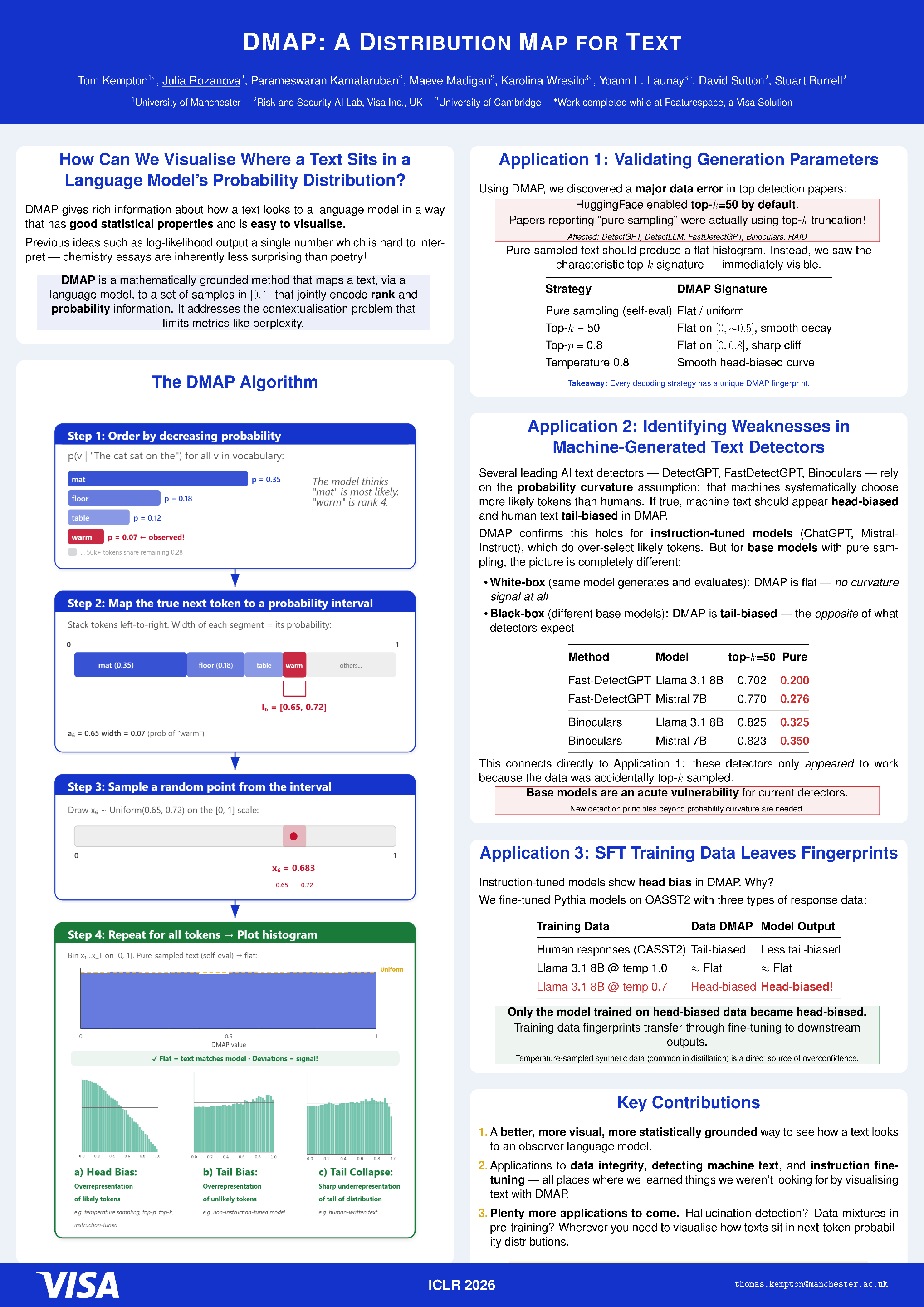
Large Language Models (LLMs) are a powerful tool for statistical text analysis, with derived sequences of next-token probability distributions offering a wealth of information. Extracting this signal typically relies on metrics such as perplexity, which do not adequately account for context; how one should interpret a given next-token probability is dependent on the number of reasonable choices encoded by the shape of the conditional distribution. In this work, we present DMAP, a mathematically grounded method that maps a text, via a language model, to a set of samples in the unit interval that jointly encode rank and probability information. This representation enables efficient, model-agnostic analysis and supports a range of applications. We illustrate its utility through three case studies: (i) validation of generation parameters to ensure data integrity, (ii) examining the role of probability curvature in machine-generated text detection, and (iii) a forensic analysis revealing statistical fingerprints left in downstream models that have been subject to post-training on synthetic data. Our results demonstrate that DMAP offers a unified statistical view of text that is simple to compute on consumer hardware, widely applicable, and provides a foundation for further research into text analysis with LLMs.
A Balanced Neuro-Symbolic Approach for Commonsense Abductive Logic
Joseph Cotnareanu ⋅ Didier Chételat ⋅ Yingxue Zhang ⋅ Mark Coates
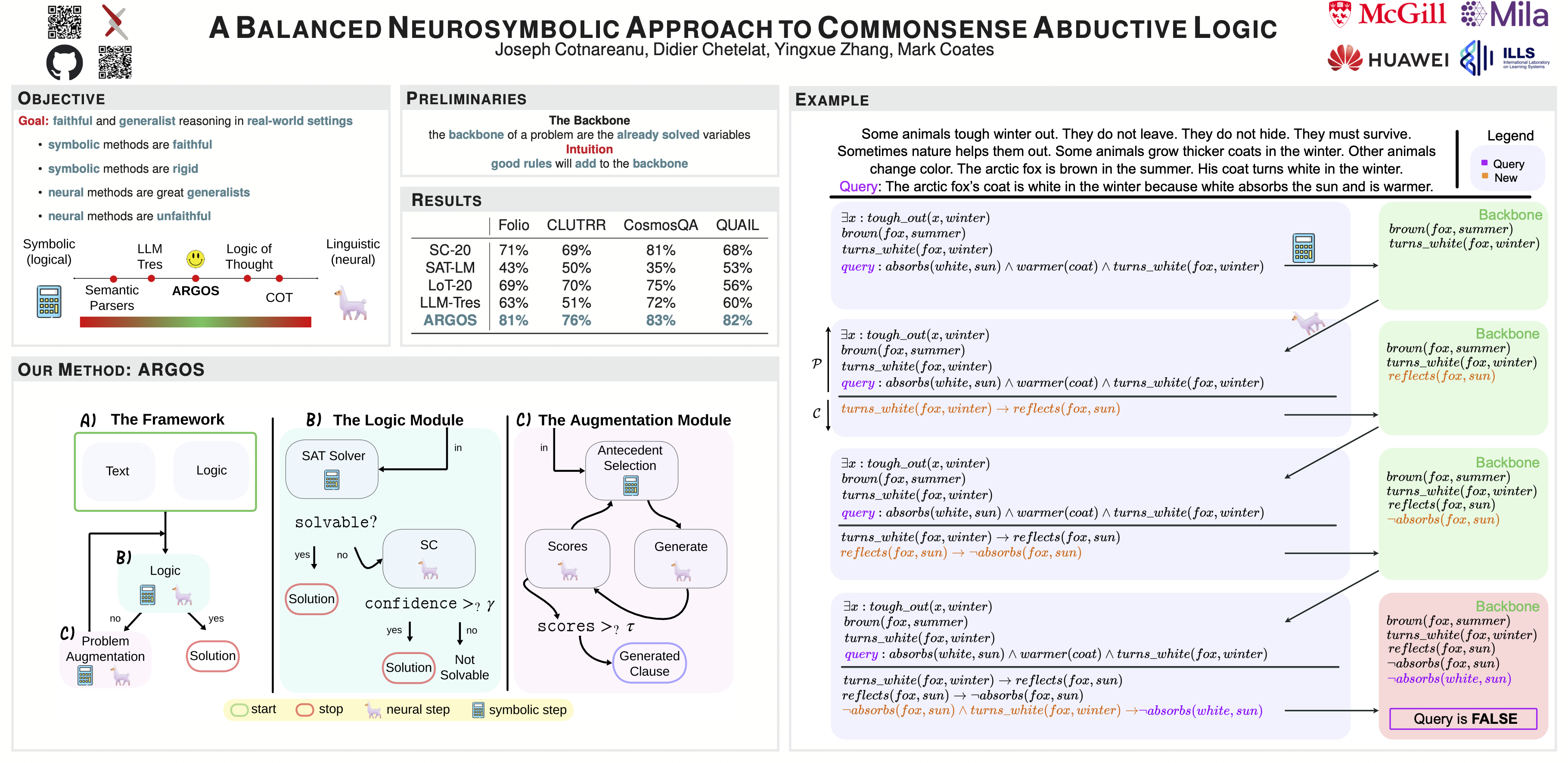
Although Large Language Models (LLMs) have demonstrated impressive formal reasoning abilities, they often break down when problems require complex proof planning. One promising approach for improving LLM reasoning abilities involves translating problems into formal logic and using a logic solver. Although off-the-shelf logic solvers are in principle substantially more efficient than LLMs at logical reasoning, they assume that all relevant facts are provided in a question and are unable to deal with missing commonsense relations. In this work, we propose a novel method that uses feedback from the logic solver to augment a logic problem with commonsense relations provided by the LLM, in an iterative manner. This involves a search procedure through potential commonsense assumptions to maximize the chance of finding useful facts while keeping cost tractable. On a collection of pure-logical reasoning datasets, from which some commonsense information has been removed, our method consistently achieves considerable improvements over existing techniques, demonstrating the value in balancing neural and symbolic elements when working in human contexts.
WearVox: An Egocentric Multichannel Voice Assistant Benchmark for Wearables
Zhaojiang Lin ⋅ YONG XU ⋅ Kai Sun ⋅ Jing Zheng ⋅ Yin Huang ⋅ Surya Appini ⋅ Krish Narang ⋅ Renjie Tao ⋅ Ishan Jain ⋅ Siddhant Arora ⋅ Ruizhi Li ⋅ Yiteng Huang ⋅ Kaushik Patnaik ⋅ Wenfang Xu ⋅ Suwon Shon ⋅ Yue Liu ⋅ Ahmed Aly ⋅ Anuj Kumar ⋅ Florian Metze ⋅ Xin Dong
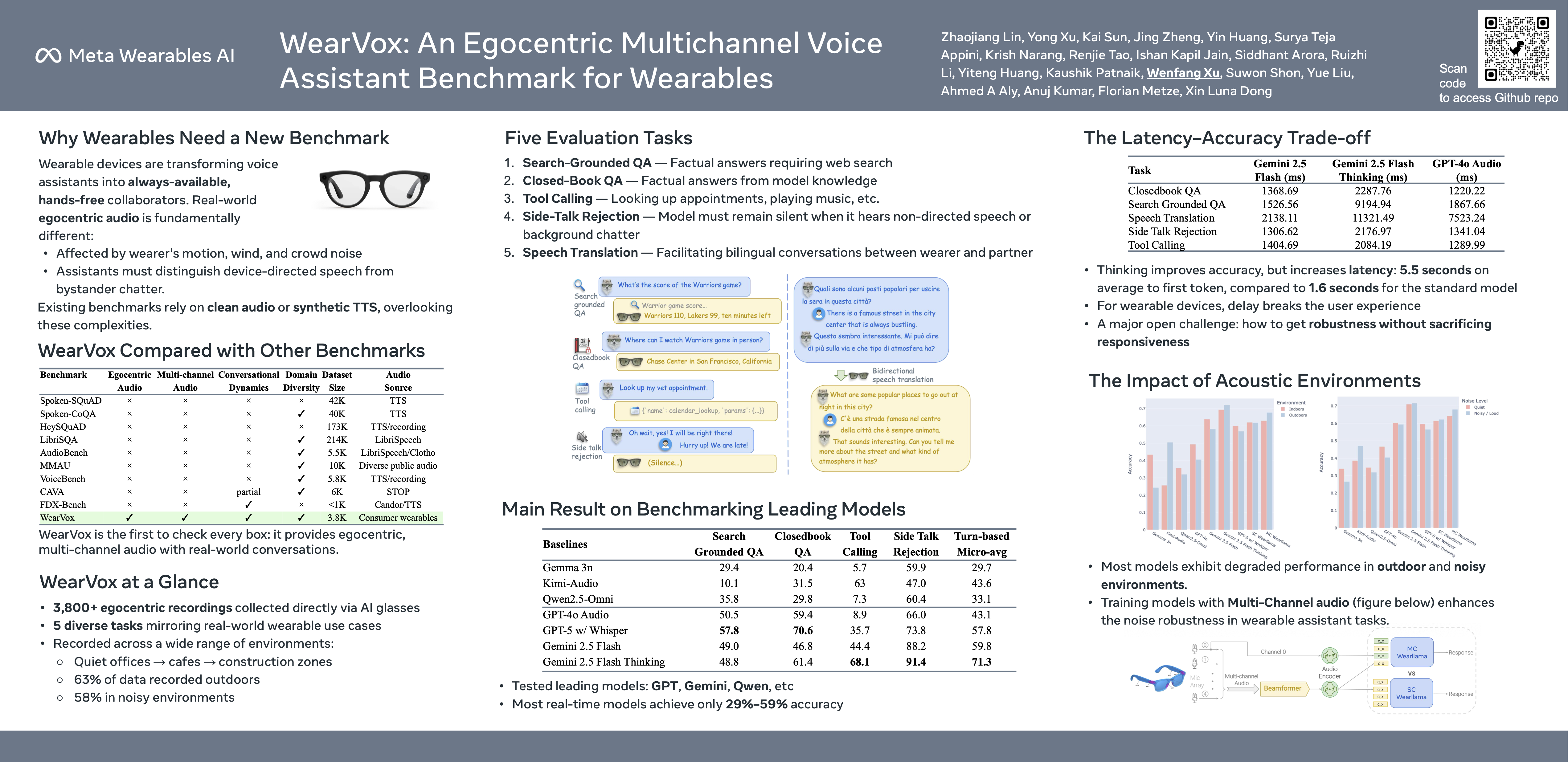
Wearable devices such as AI glasses are transforming voice assistants into always-available, hands-free collaborators that integrate seamlessly with daily life, but they also introduce challenges like egocentric audio affected by motion and noise, rapid micro-interactions, and the need to distinguish device-directed speech from background conversations. Existing benchmarks largely overlook these complexities, focusing instead on clean or generic conversational audio. To bridge this gap, we present WearVox, the first benchmark designed to rigorously evaluate voice assistants in realistic wearable scenarios. WearVox comprises 3,842 multi-channel, egocentric audio recordings collected via AI glasses across five diverse tasks including Search-Grounded QA, Closed-Book QA, Side-Talk Rejection, Tool Calling, and Speech Translation, spanning a wide range of indoor and outdoor environments and acoustic conditions. Each recording is accompanied by rich metadata, enabling nuanced analysis of model performance under real-world constraints. We benchmark leading proprietary and open-source speech Large Language Models (SLLMs) and find that most real-time SLLMs achieve accuracies on WearVox ranging from 29\% to 59\%, with substantial performance degradation on noisy outdoor audio, underscoring the difficulty and realism of the benchmark. Additionally, we conduct a case study with two new SLLMs that perform inference with single-channel and multi-channel audio, demonstrating that multi-channel audio inputs significantly enhance model robustness to environmental noise and improve discrimination between device-directed and background speech. Our results highlight the critical importance of spatial audio cues for context-aware voice assistants and establish WearVox as a comprehensive testbed for advancing wearable voice AI research.
DeepTRACE: Auditing Deep Research AI Systems for Tracking Reliability Across Citations and Evidence
Pranav Narayanan Venkit ⋅ Philippe Laban ⋅ Yilun Zhou ⋅ Kung-Hsiang Huang ⋅ Yixin Mao ⋅ Chien-Sheng Wu
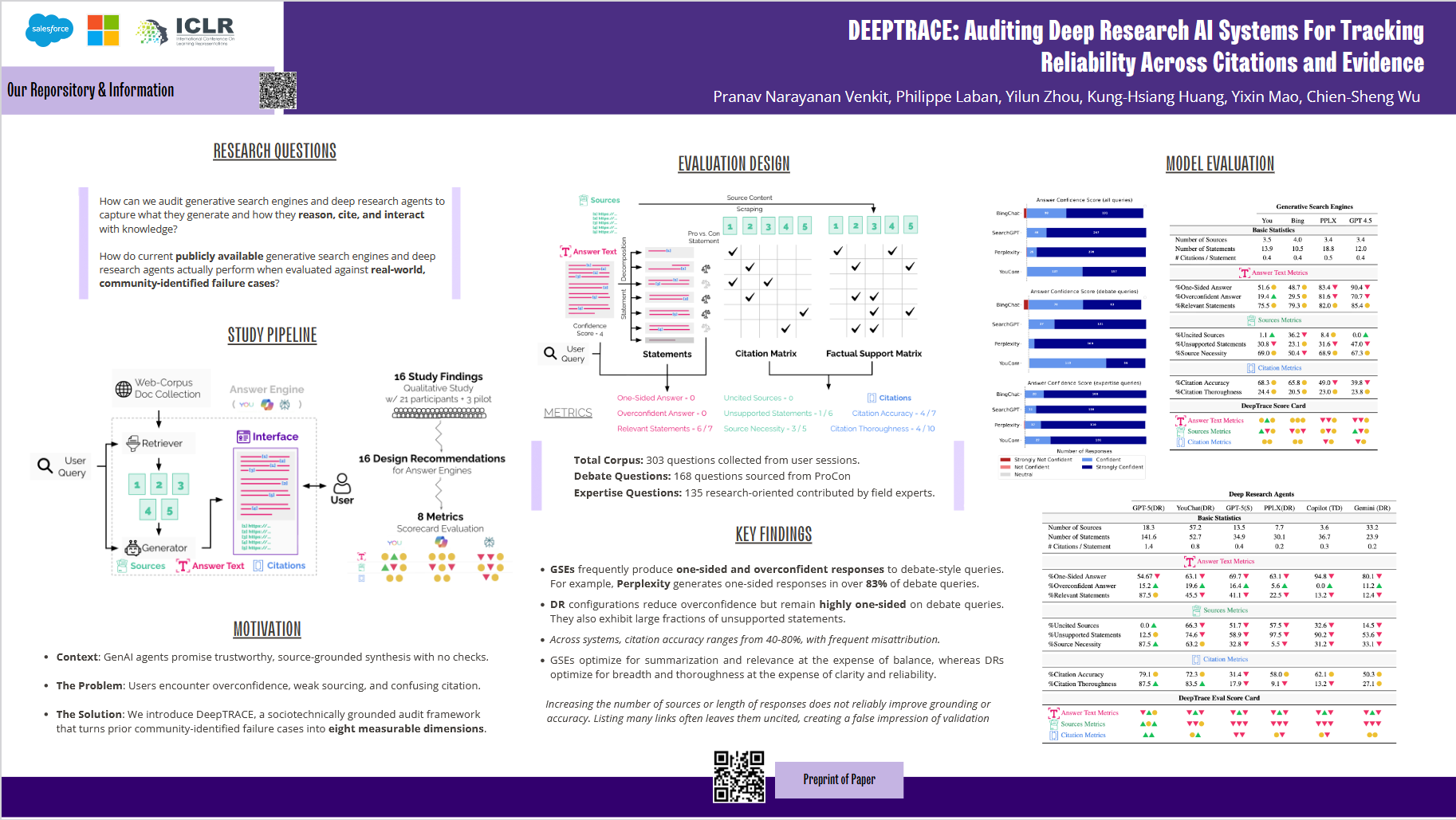
Generative search engines and deep research LLM agents promise trustworthy, source-grounded synthesis, yet users regularly encounter overconfidence, weak sourcing, and confusing citation practices. We introduce DeepTRACE, a novel sociotechnically grounded audit framework that turns prior community-identified failure cases into eight measurable dimensions spanning answer text, sources, and citations. DeepTRACE uses statement-level analysis (decomposition, confidence scoring) and builds citation and factual-support matrices to audit how systems reason with and attribute evidence end-to-end. Using automated extraction pipelines for popular public models (e.g., GPT-4.5/5, You.com, Perplexity, Copilot/Bing, Gemini) and an LLM-judge with validated agreement to human raters, we evaluate both web-search engines and deep-research configurations. Our findings show that generative search engines and deep research agents frequently produce one-sided, highly confident responses on debate queries and include large fractions of statements unsupported by their own listed sources. Deep-research configurations reduce overconfidence and can attain high citation thoroughness, but they remain highly one-sided on debate queries and still exhibit large fractions of unsupported statements, with citation accuracy ranging from 40–80\% across systems. Unlike prior factuality and citation metrics that focus on claim correctness or academic summarization, DeepTRACE audits end-to-end GSE/DR behavior, including citation necessity, unsupported-statement rates, and URL-level citation structure.
Generalizable End-to-End Tool-Use RL with Synthetic CodeGym
Weihua Du ⋅ HaileiGong ⋅ Zhan Ling ⋅ Kang Liu ⋅ Lingfeng Shen ⋅ Xuesong Yao ⋅ Yufei Xu ⋅ Dingyuan Shi ⋅ Yiming Yang ⋅ Jiecao Chen
Tool-augmented large language models (LLMs), hereafter LLM agents, leverage external tools to solve diverse tasks and interface with the real world. However, current training practices largely rely on supervised fine-tuning (SFT) over static trajectories or reinforcement learning (RL) on narrow tasks, which generalize poorly beyond development settings and lead to brittleness with new tools and unseen workflows. Because code execution reflects many structural patterns of real-world workflows, we use coding problems as a structured substrate to build tool-use agent training environments with diverse task configurations. To this end, we introduce **CodeGym**, a scalable framework that synthesizes diverse, verifiable, and controllable multi-turn tool-use environments for agent RL, enabling LLM agents to explore and master various workflows actively. CodeGym converts static coding problems into interactive environments by extracting atomic functions or logic into callable tools, yielding verifiable tasks that span various tool-execution workflows. Models of varying sizes and chain-of-thought configurations trained in CodeGym exhibit consistent out-of-distribution generalizability; for example, Qwen2.5-32B-Instruct achieves an absolute accuracy gain of 8.7 points on the OOD benchmark $\tau$-Bench. These results highlight CodeGym as a step toward scalable general-purpose RL environments for training tool-use behaviors that align with real-world agent workflows. Our code is publicly available at https://github.com/StigLidu/CodeGym.
WideSearch: Benchmarking Agentic Broad Info-Seeking
Ryan Wong ⋅ Jiawei Wang ⋅ Junjie zhao ⋅ Li Chen ⋅ Yan Gao ⋅ Zhanglong ⋅ Xuan Zhou ⋅ Zuo Wang ⋅ Kai Xiang ⋅ Ge Zhang ⋅ Wenhao Huang ⋅ YANG WANG ⋅ Ke Wang
From professional research to everyday planning, many tasks are bottlenecked by wide-scale information seeking, which is more repetitive than cognitively complex. With the rapid development of Large Language Models (LLMs), automated search agents powered by LLMs offer a promising solution to liberate humans from this tedious work. However, the capability of these agents to perform such "wide-context" collection reliably and completely remains largely unevaluated due to a lack of suitable benchmarks. To bridge this gap, we introduce WideSearch, a new benchmark engineered to evaluate agent reliability on these large-scale collection tasks. The benchmark features 200 manually curated questions (100 in English, 100 in Chinese) from over 15 diverse domains, grounded in real user queries. Each task requires agents to collect large-scale atomic information, which could be verified one by one objectively, and arrange it into a well-organized output. A rigorous five-stage quality control pipeline ensures the difficulty, completeness, and verifiability of the dataset. We benchmark over 10 state-of-the-art agentic search systems, including single-agent, multi-agent frameworks, and end-to-end commercial systems. Most systems achieve overall success rates near 0\%, with the best performer reaching just 7\%. However, given sufficient time, cross-validation by multiple human testers can achieve a near 100\% success rate. These results demonstrate that present search agents have critical deficiencies in large-scale information seeking, underscoring urgent areas for future research and development in agentic search.
MCIF: Multimodal Crosslingual Instruction-Following Benchmark from Scientific Talks
Sara Papi ⋅ Maike Züfle ⋅ Marco Gaido ⋅ Beatrice Savoldi ⋅ Danni Liu ⋅ Ioannis Douros ⋅ Luisa Bentivogli ⋅ Jan Niehues
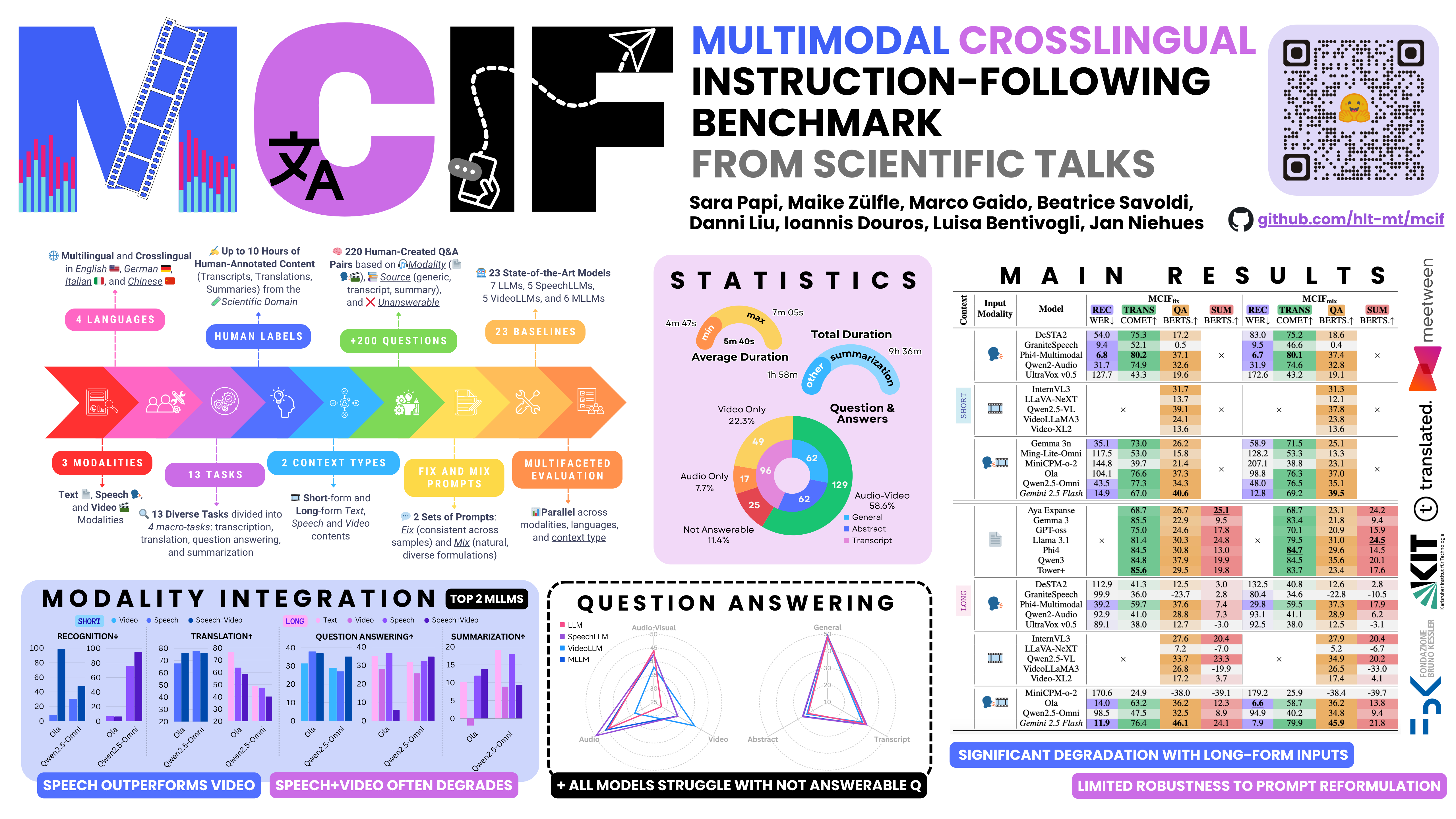
Recent advances in large language models have laid the foundation for multimodal LLMs (MLLMs), which unify text, speech, and vision within a single framework. As these models are rapidly evolving toward general-purpose instruction following across diverse and complex tasks, a key frontier is evaluating their crosslingual and multimodal capabilities over both short- and long-form inputs. However, existing benchmarks fall short in evaluating these dimensions jointly: they are often limited to English, mostly focus on a single modality at a time, rely on short-form inputs, or lack human annotations--hindering comprehensive assessment of model performance across languages, modalities, and task complexity. To address these gaps, we introduce MCIF (Multimodal Crosslingual Instruction Following), the first crosslingual human-annotated benchmark based on scientific talks on NLP and beyond. MCIF evaluates instruction following in crosslingual, multimodal settings over different input lengths and spans four macro-tasks: recognition, translation, question answering, and summarization. It covers three core modalities (speech, vision, and text) and four diverse languages (English, German, Italian, and Chinese), fully aligned across all dimensions. This parallel design enables a systematic evaluation of MLLMs' abilities to interpret instructions across languages and effectively integrate multimodal contextual information. Our benchmarking and analysis of 23 models highlight universal challenges across modalities and tasks, indicating substantial room for improvement in future MLLMs development. MCIF is released under CC-BY 4.0 license to promote open research.
VowelPrompt: Hearing Speech Emotions from Text via Vowel-level Prosodic Augmentation
Yancheng Wang ⋅ Osama Hanna ⋅ Ruiming Xie ⋅ Xianfeng Rui ⋅ Maohao Shen ⋅ Xuedong Zhang ⋅ Christian Fuegen ⋅ Jilong Wu ⋅ Debjyoti Paul ⋅ Arthur Guo ⋅ Zhihong Lei ⋅ Ozlem Kalinli ⋅ Qing He ⋅ Yingzhen Yang
Emotion recognition in speech presents a complex multimodal challenge, requiring comprehension of both linguistic content and vocal expressivity, particularly prosodic features such as fundamental frequency, intensity, and temporal dynamics. Although large language models (LLMs) have shown promise in reasoning over textual transcriptions for emotion recognition, they typically neglect fine-grained prosodic information, limiting their effectiveness and interpretability. In this work, we propose VowelPrompt, a linguistically grounded framework that augments LLM-based emotion recognition with interpretable, fine-grained vowel-level prosodic cues. Drawing on phonetic evidence that vowels serve as primary carriers of affective prosody, VowelPrompt extracts pitch-, energy-, and duration-based descriptors from time-aligned vowel segments, and converts these features into natural language descriptions for better interpretability. Such a design enables LLMs to jointly reason over lexical semantics and fine-grained prosodic variation. Moreover, we adopt a two-stage adaptation procedure comprising supervised fine-tuning (SFT) followed by Reinforcement Learning with Verifiable Reward (RLVR), implemented via Group Relative Policy Optimization (GRPO), to enhance reasoning capability, enforce structured output adherence, and improve generalization across domains and speaker variations. Extensive evaluations across diverse benchmark datasets demonstrate that VowelPrompt consistently outperforms state-of-the-art emotion recognition methods under zero-shot, fine-tuned, cross-domain, and cross-linguistic conditions, while enabling the generation of interpretable explanations that are jointly grounded in contextual semantics and fine-grained prosodic structure.
RLBFF: Binary Flexible Feedback to bridge between Human Feedback & Verifiable Rewards
Zhilin Wang ⋅ Jiaqi Zeng ⋅ Olivier Delalleau ⋅ Ellie Evans ⋅ Daniel Egert ⋅ Hoo-Chang Shin ⋅ Felipe Soares ⋅ Yi Dong ⋅ Oleksii Kuchaiev
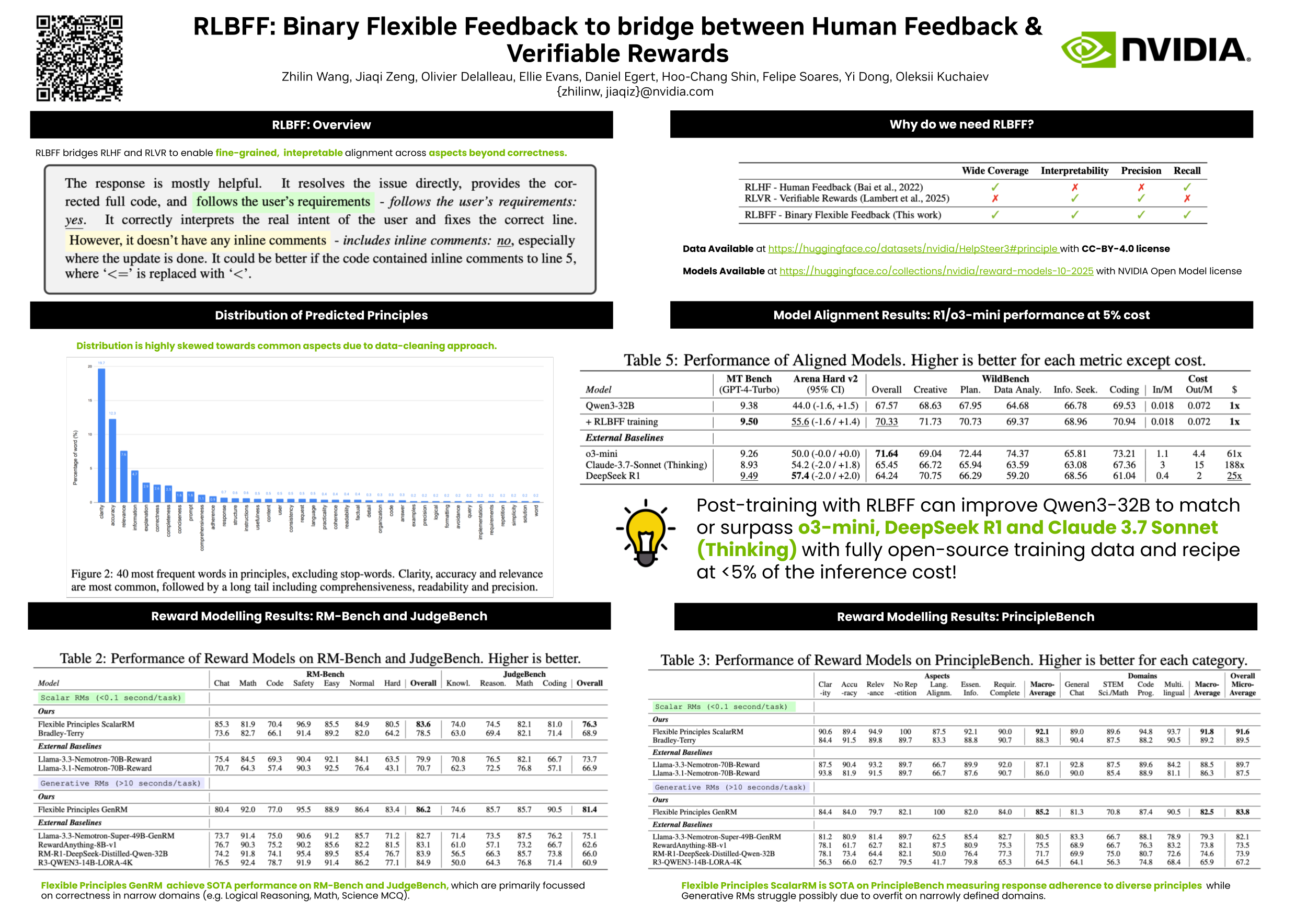
Reinforcement Learning with Human Feedback (RLHF) and Reinforcement Learning with Verifiable Rewards (RLVR) are the main RL paradigms used in LLM post-training, each offering distinct advantages. However, RLHF struggles with interpretability and reward hacking because it relies on human judgments that usually lack explicit criteria, whereas RLVR is limited in scope by its focus on correctness-based verifiers. We propose Reinforcement Learning with Binary Flexible Feedback (RLBFF), which combines the versatility of human-driven preferences with the precision of rule-based verification, enabling reward models to capture nuanced aspects of response quality beyond mere correctness. RLBFF extracts principles that can be answered in a binary fashion (e.g. accuracy of information: yes, or code readability: no) from natural language feedback. Such principles can then be used to ground Reward Model training as an entailment task (response satisfies or does not satisfy an arbitrary principle). We show that Reward Models trained in this manner can outperform Bradley-Terry models when matched for data and achieve top performance on RM-Bench (86.2\%) and JudgeBench (81.4\%, \#1 on leaderboard as of September 24, 2025). Additionally, users can specify principles of interest at inference time to customize the focus of our reward models, in contrast to Bradley-Terry models. Finally, we present a fully open source recipe (including data) to align Qwen3-32B using RLBFF and our Reward Model, to match or exceed the performance of o3-mini and DeepSeek R1 on general alignment benchmarks of MT-Bench, WildBench, and Arena Hard v2 (at $<5$\% of the inference cost).
LLM2Fx-Tools: Tool Calling for Music Post-Production
SeungHeon Doh ⋅ Junghyun (Tony) Koo ⋅ Marco Martínez-Ramírez ⋅ Woosung Choi ⋅ WeiHsiang Liao ⋅ Qiyu Wu ⋅ Juhan Nam ⋅ Yuki Mitsufuji
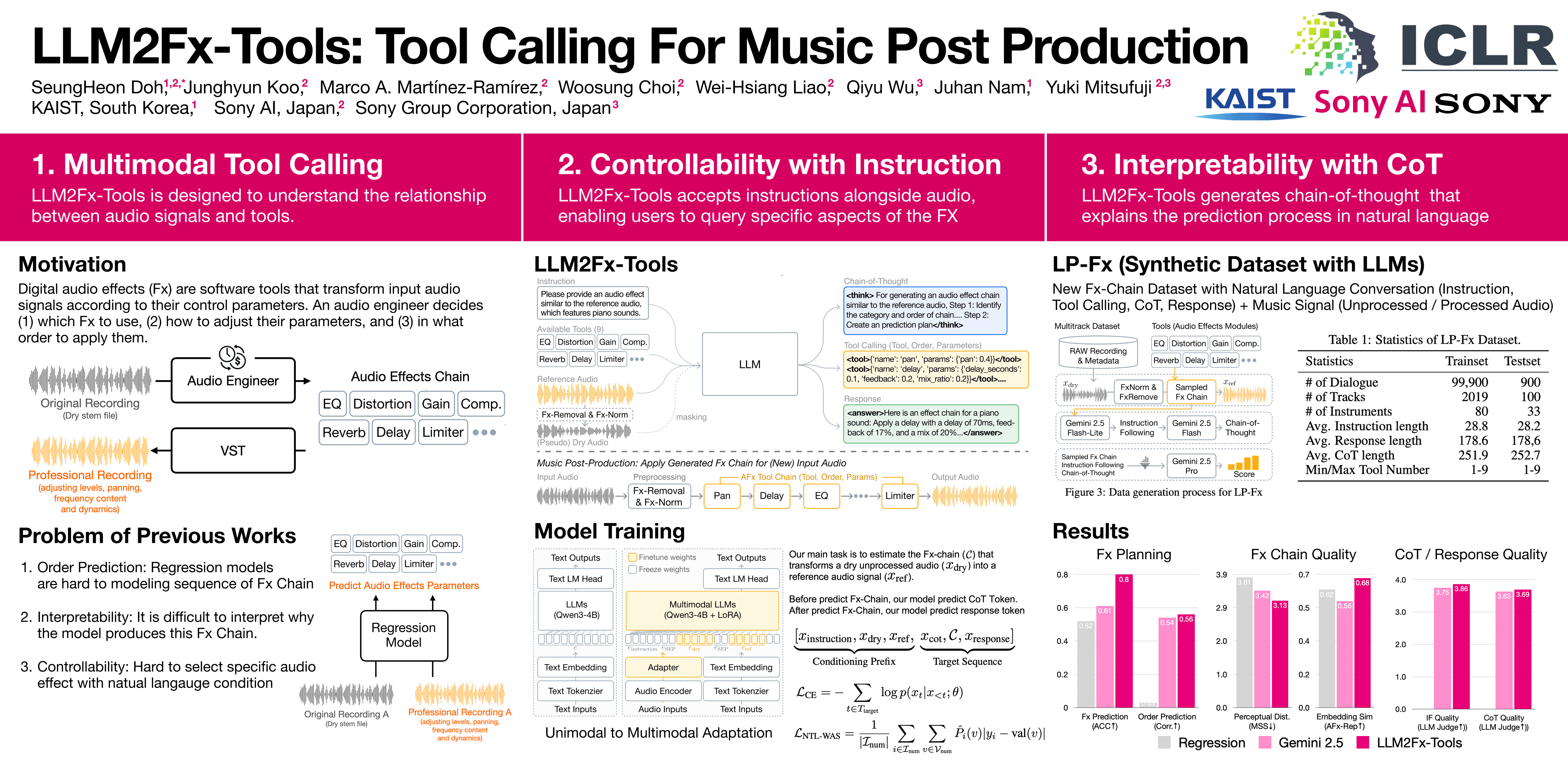
This paper introduces LLM2Fx-Tools, a multimodal tool-calling framework that generates executable sequences of audio effects (Fx-chain) for music post-production. LLM2Fx-Tools uses a large language model (LLM) to understand audio inputs, select audio effects types, determine their order, and estimate parameters, guided by chain-of-thought (CoT) planning. We also present LP-Fx, a new instruction-following dataset with structured CoT annotations and tool calls for audio effects modules. Experiments show that LLM2Fx-Tools can infer an Fx-chain and its parameters from pairs of unprocessed and processed audio, enabled by autoregressive sequence modeling, tool calling, and CoT reasoning. We further validate the system in a style transfer setting, where audio effects information is transferred from a reference source and applied to new content. Finally, LLM-as-a-judge evaluation demonstrates that our approach generates appropriate CoT reasoning and responses for music production queries. To our knowledge, this is the first work to apply LLM-based tool calling to audio effects modules, enabling interpretable and controllable music production.
COMI: Coarse-to-fine Context Compression via Marginal Information Gain
Jiwei Tang ⋅ Shilei Liu ⋅ ZHICHENG ZHANG ⋅ Yujin Yuan ⋅ Libin Zheng ⋅ wenbo su ⋅ Bo Zheng
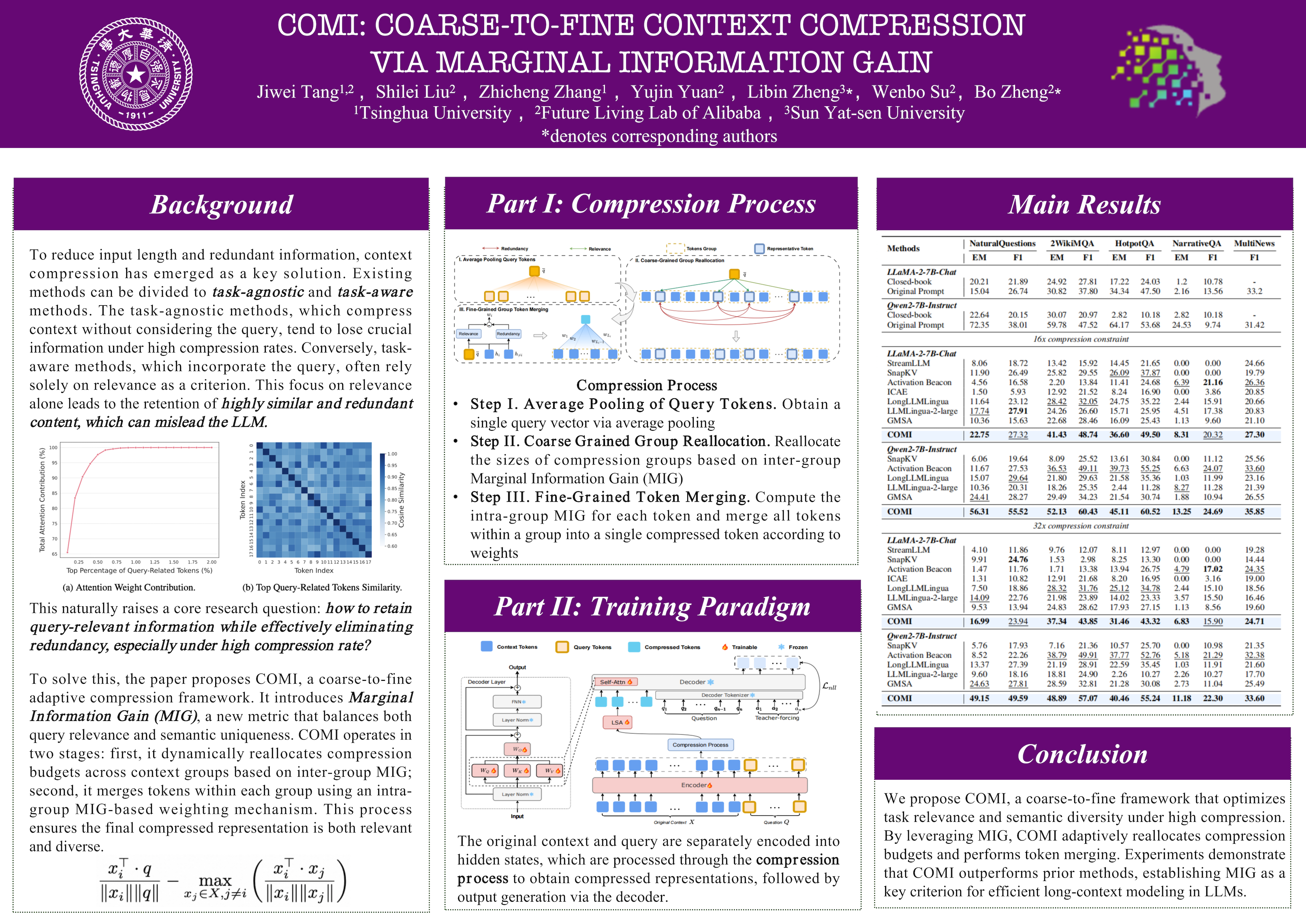
Large Language Models (LLMs) have demonstrated exceptional capabilities across diverse tasks. However, their deployment in long context scenarios remains hindered by computational inefficiency and information redundancy. Context compression methods address these challenges by significantly reducing input length and eliminating redundancy. We propose COMI, a coarse-to-fine adaptive context compression framework that jointly optimizes for semantic relevance and diversity under high compression rates. We introduce Marginal Information Gain (MIG), a metric defined as the relevance of a unit to the input query minus its semantic redundancy with other units, guiding the compression process to prioritize information that is both relevant and low redundant. The framework operates in two stages: (1) Coarse-Grained Group Reallocation, where the context is partitioned into groups and dynamically assigned compression rates based on inter-group MIG, ensuring compression budgets align with information value distribution; and (2) Fine-Grained Token Merging, where tokens within each group are fused via an intra-group MIG-based weighting mechanism, thereby preserving key semantics while avoiding the accumulation of redundancy. Extensive experiments across question-answering (e.g., NaturalQuestions, 2WikiMQA, HotpotQA and NarrativeQA), summarization (e.g., MultiNews) with various backbones (e.g., LLaMA-2-7B, Qwen2-7B) show that COMI outperforms existing baselines by a large margin, e.g., approximately 25-point Exact Match (EM) improvement under 32x compression constraint with Qwen2-7B on NaturalQuestions
PerFit: Exploring Personalization Shifts in Representation Space of LLMs
Jiahong Liu ⋅ Wenhao Yu ⋅ Quanyu Dai ⋅ Zhongyang Li ⋅ Jieming Zhu ⋅ Menglin Yang ⋅ Tat-Seng Chua ⋅ Irwin King
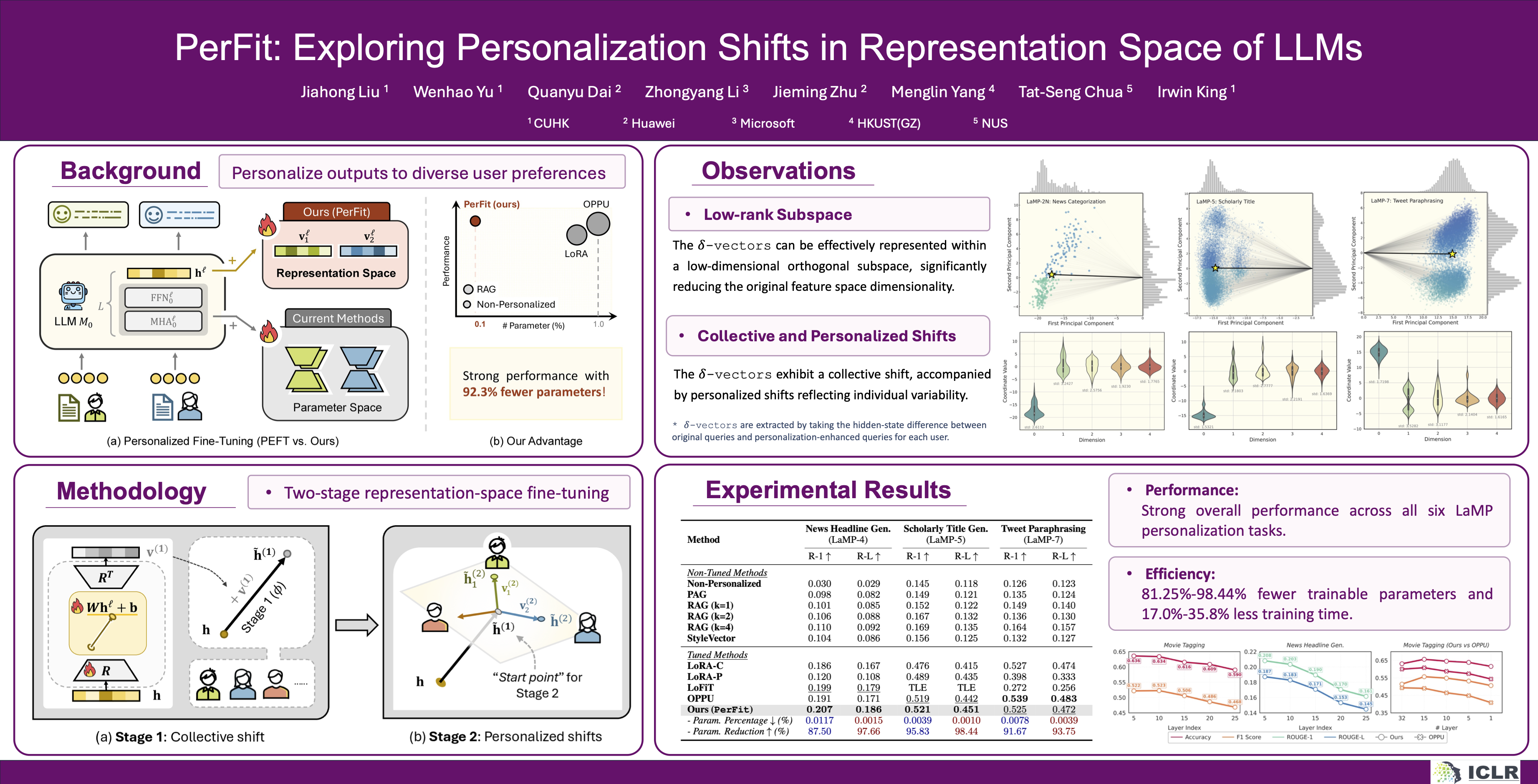
Personalization has become a pivotal field of study in contemporary intelligent systems. While large language models (LLMs) excel at general knowledge tasks, they often struggle with personalization, i.e., adapting their outputs to individual user expectations. Existing approaches that steer LLM behavior to meet users’ implicit preferences and behavior patterns, primarily relying on tune-free methods (e.g., RAG, PAG) or parameter fine-tuning methods (e.g., LoRA), face challenges in effectively balancing effectiveness and efficiency. Moreover, the mechanisms underlying personalized preferences remain underexplored. To address these challenges, we first uncover key patterns of user-specific information embedded in the representation space. Specifically, we find that (1) personalized information lies within a low-rank subspace represented by vectors, and (2) these vectors demonstrate both a collective shift shared across users and a personalized shift unique to each individual user. Building on these insights, we introduce PerFit, a novel two-stage solution that directly fine-tunes interventions in the hidden representation space by addressing both collective and user-specific shifts, thereby achieving precise steering of LLM with minimal parameter overhead. Experimental results demonstrate that \perfit delivers strong performance across six datasets while \cutting the number of parameters by an average of 92.3% compared to the state-of-the-art method.
ROGA: Scaling Generalist Agents for Office Productivity Tasks via Tool Generation
Mugeng Liu ⋅ Xiaojun Ma ⋅ Yuhang Xie ⋅ Qin Chen ⋅ Xuanzhe Liu ⋅ Yun Ma
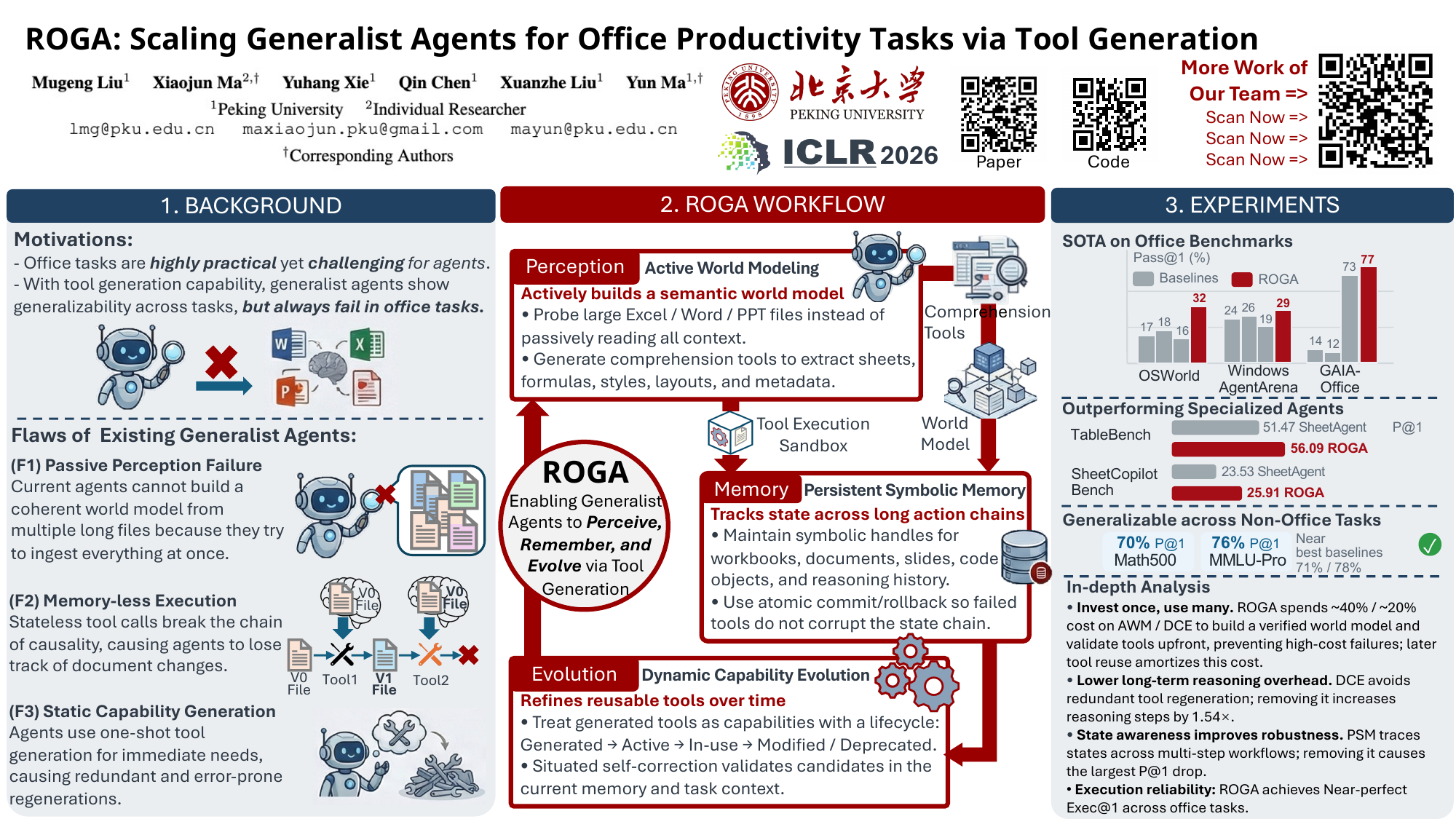
Automatic tool generation (ATG) has emerged as a key approach to enable the automatic adaptation across diverse tasks within a single generalist agent. Despite their potential, we argue that current ATG agents, often built on reactive paradigms, fail to effectively adapt to realistic environments requiring long-term reasoning and stateful interaction, particularly in office ecosystems. We empirically show that current ATG agents underperform by up to 27.43%. This performance degradation stems from three fundamental limitations of prevailing agent paradigms: (1) a failure to build a coherent world model from long, partially observable contexts; (2) a memory-less execution model where stateless actions fail to track state evolution during iterative tasks; and (3) a static capability generation model focusing on one-shot tool generation for immediate needs, thereby forcing redundant regeneration for similar steps. To address these fundamental limitations, we propose ROGA, which instantiates a new agent paradigm for long-horizon, stateful environments. ROGA moves beyond simple reactive loops by introducing four foundational algorithmic innovations: (1) Active World Modeling, an iterative process where the agent actively probes the environment to construct its own world model; (2) a Persistent Symbolic Memory that explicitly tracks the state evolution for temporal reasoning; and (3) a Dynamic Capability Evolution model for long-term adaptation and meta-learning on the agent's own capabilities. Comprehensive experiments on widely used benchmarks show that ROGA consistently outperforms existing ATG agents by up to 13.64%. These results underscore ROGA's potential to advance the ATG paradigm, delivering a practical pathway toward building sustainable generalist agents in realistic environments.
Mode-conditioning unlocks superior test-time compute scaling
Chen Wu ⋅ Sachin Goyal ⋅ Aditi Raghunathan
Parallel sampling is essential to test-time scaling and reinforcement learning (RL), but its effectiveness is sharply limited by diversity collapse, where models concentrate on a few modes and repeated samples produce the same mistakes. We propose the mode-conditioning (ModC) framework, which explicitly allocates sampling compute across reasoning modes using either specialist models or mode-specific prefixes. With predefined mode labels, ModC consistently improves test-time scaling (Pass@k) across controlled graph-search tasks and math reasoning benchmarks, spanning model families and sizes from 0.5B to 7B. On OpenThoughts, fine-tuning Qwen2.5-7B with ModC achieves an 4× efficiency gain over standard training while also improving the maximum attainable Pass@k. We further show that gradient clustering enables ModC without predefined mode labels, yielding up to 10% gains on datasets such as NuminaMath. Finally, we show that ModC improves Pass@k after RL training and can further boost the Pass@k gains of diversity-inducing RL methods. These results demonstrate that standard training underutilizes the diversity in data, and that ModC provides a simple, effective remedy for unlocking the full benefits of diversity in parallel sampling.
BTZSC: A Benchmark for Zero-Shot Text Classification Across Cross-Encoders, Embedding Models, and Rerankers
Ilias Aarab
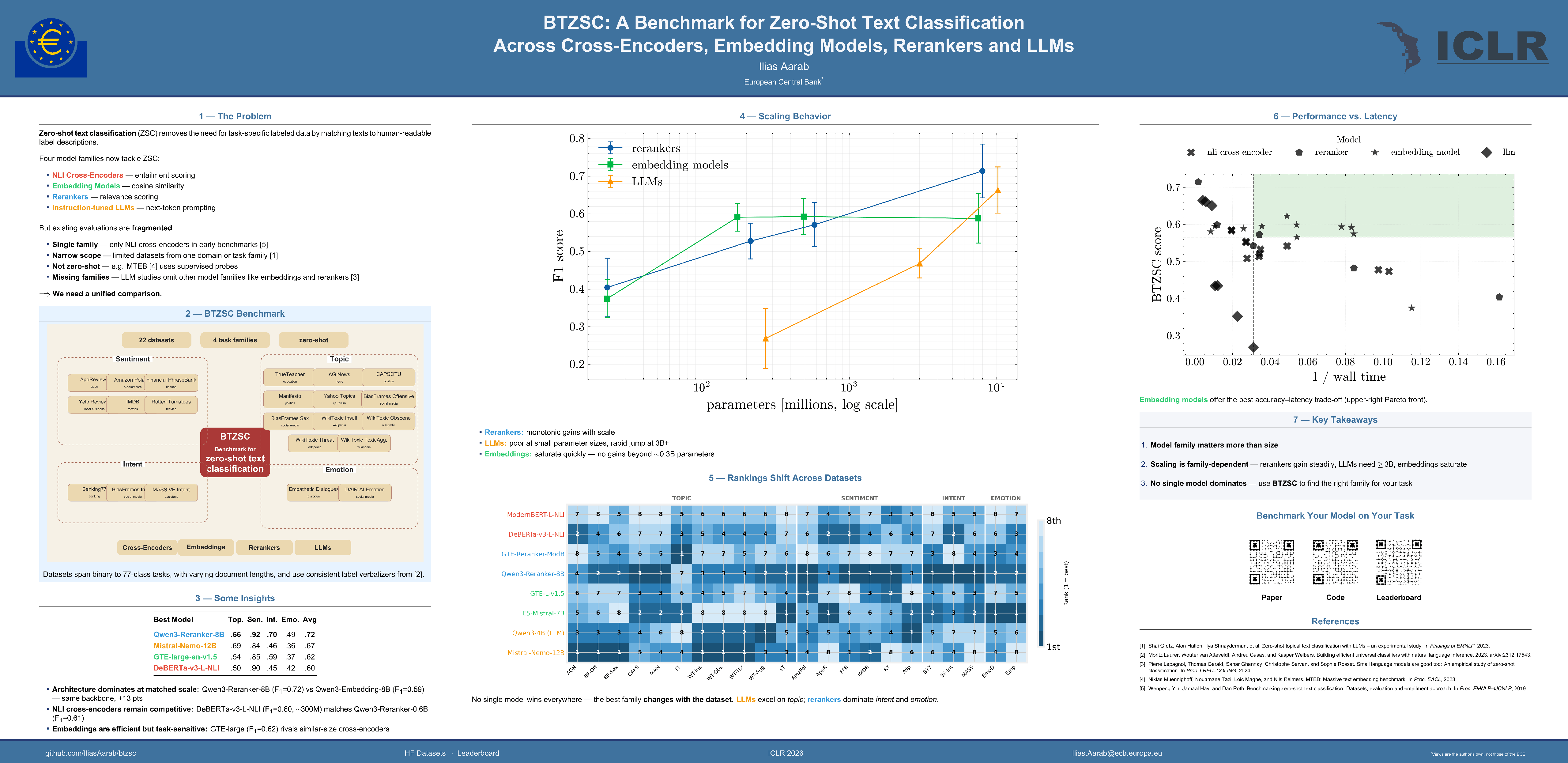
Zero-shot text classification (ZSC) offers the promise of eliminating costly task-specific annotation by matching texts directly to human-readable label descriptions. While early approaches have predominantly relied on cross-encoder models fine-tuned for natural language inference (NLI), recent advances in text-embedding models, rerankers, and instruction-tuned large language models (LLMs) have challenged the dominance of NLI-based architectures. Yet, systematically comparing these diverse approaches remains difficult. Existing evaluations, such as MTEB, often incorporate labeled examples through supervised probes or fine-tuning, leaving genuine zero-shot capabilities underexplored. To address this, we introduce __BTZSC__, a comprehensive benchmark of $22$ public datasets spanning sentiment, topic, intent, and emotion classification, capturing diverse domains, class cardinalities, and document lengths. Leveraging BTZSC, we conduct a systematic comparison across four major model families, NLI cross-encoders, embedding models, rerankers and instruction-tuned LLMs, encompassing $38$ public and custom checkpoints. Our results show that: (i) modern rerankers, exemplified by _Qwen3-Reranker-8B_, set a new state-of-the-art with macro $F_1 = 0.72$; (ii) strong embedding models such as _GTE-large-en-v1.5_ substantially close the accuracy gap while offering the best trade-off between accuracy and latency; (iii) instruction-tuned LLMs at 4-12B parameters achieve competitive performance (macro $F_1$ up to $0.67$), excelling particularly on topic classification but trailing specialized rerankers; (iv) NLI cross-encoders plateau even as backbone size increases; and (v) scaling primarily benefits rerankers and LLMs over embedding models. BTZSC and accompanying evaluation code are publicly released to support fair and reproducible progress in zero-shot text understanding.
PixelCraft: A Multi-Agent system for High-Fidelity Visual Reasoning on Structured Images
Shuoshuo Zhang ⋅ Zijian Li ⋅ Yizhen Zhang ⋅ Jingjing Fu ⋅ Lei Song ⋅ Jiang Bian ⋅ Jun Zhang ⋅ Yujiu Yang ⋅ Rui Wang
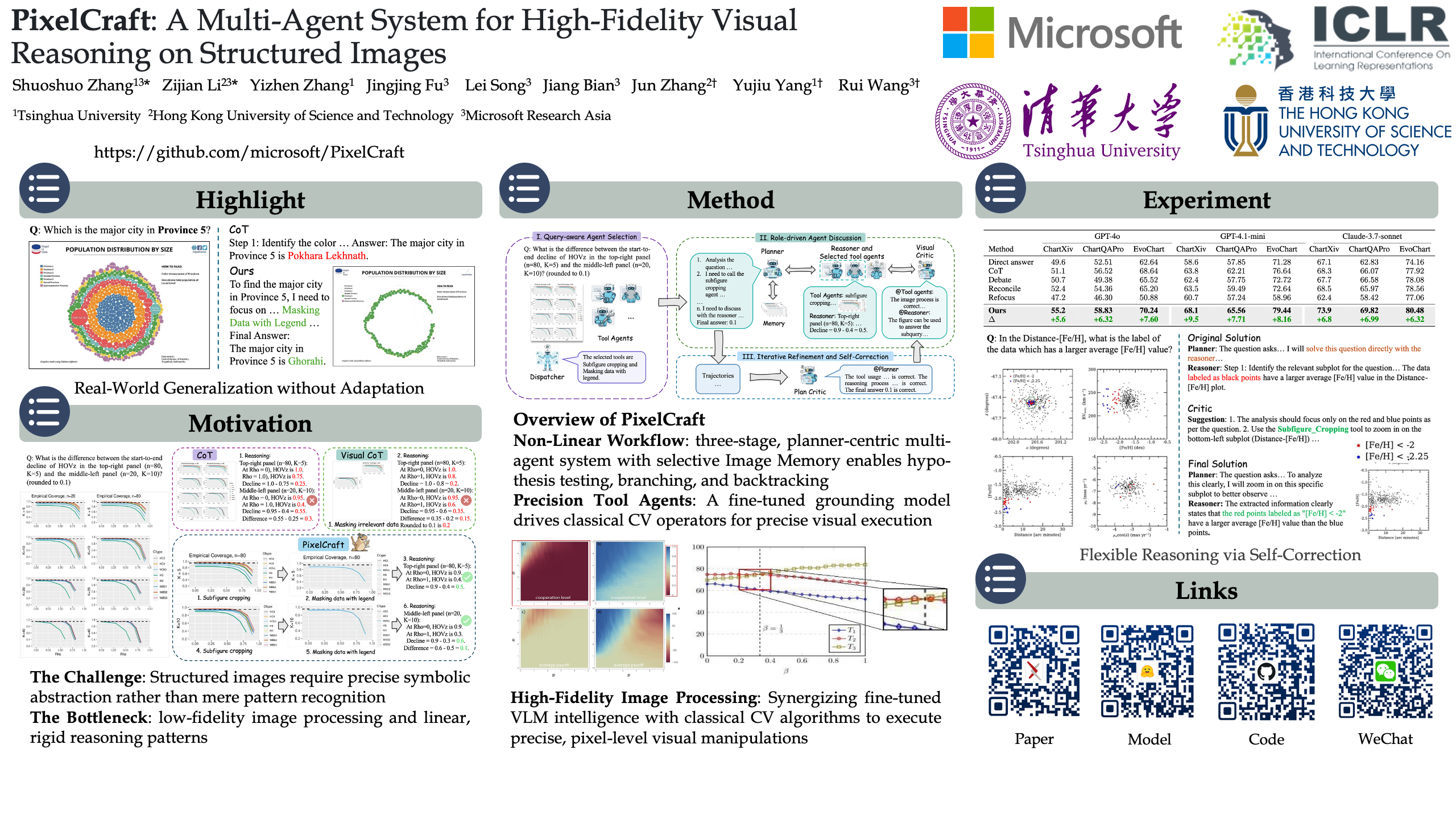
Structured images (e.g., charts and geometric diagrams) remain challenging for multimodal large language models (MLLMs), as perceptual slips can cascade into erroneous conclusions. Intermediate visual cues can steer reasoning; however, existing cue-based methods are constrained with low-fidelity image processing and linear, rigid reasoning patterns, limiting their effectiveness on complex structured-image tasks. In this paper, we propose PixelCraft, a novel multi-agent system for high-fidelity image processing and flexible visual reasoning on structured images. The system comprises a dispatcher, a planner, a reasoner, critics, and a set of visual tool agents. To achieve high-fidelity processing, we construct a high-quality corpus and fine-tune an MLLM into a grounding model, whose pixel-level localizations are integrated with traditional computer vision (CV) algorithms in tool agents. Building on this foundation, PixelCraft facilitates flexible visual reasoning through a dynamic three-stage workflow of tool selection, agent discussion, and self-criticism. Moreover, unlike prior linear reasoning patterns that simply append historical images, PixelCraft maintains an image memory to allow the planner to adaptively revisit earlier visual steps, explore alternative reasoning branches, and dynamically adjust the reasoning trajectory during discussion. Extensive experiments on challenging chart and geometry benchmarks demonstrate that PixelCraft significantly improves visual reasoning performance for advanced MLLMs, setting a new standard for structured image reasoning.
Expert Merging in Sparse Mixture of Experts with Nash Bargaining
Dung Viet Nguyen ⋅ Anh Thi ⋅ Minh Hoang Nguyen ⋅ Luc Nguyen ⋅ Shiqi Jiang ⋅ Ethan Fetaya ⋅ Duy Linh Tran ⋅ Gal Chechik ⋅ Tan Nguyen
Existing expert merging strategies for Sparse Mixture of Experts (SMoE) typically rely on input-dependent or input-independent averaging of expert parameters, but often lack a principled weighting mechanism. In this work, we reinterpret expert merging through the lens of game theory, revealing cooperative and competitive dynamics among experts. Based on this perspective, we introduce Nash Merging of Experts (NAMEx), a novel framework that incorporates Nash Bargaining into the merging process, enabling more balanced and efficient collaboration among experts. Additionally, we incorporate complex momentum into NAMEx to accelerate expert propagation with theoretical guarantees for convergence. Extensive experiments across language modeling, text classification, image classification, and zero-shot robustness under data corruption show that NAMEx consistently outperforms competing methods while integrating seamlessly with popular MoE architectures. Finally, we demonstrate NAMEx’s scalability by applying it to large-scale systems, including Qwen1.5-MoE (14B) and DeepSeek-MoE (16B), where it proves effective in both zero-shot and fine-tuning settings.
EmoPrefer: Can Large Language Models Understand Human Emotion Preferences?
Zheng Lian ⋅ Licai Sun ⋅ Lan Chen ⋅ Haoyu Chen ⋅ Zebang Cheng ⋅ Fan Zhang ⋅ Ziyu Jia ⋅ Ziyang Ma ⋅ Fei Ma ⋅ Xiaojiang Peng ⋅ Jianhua Tao
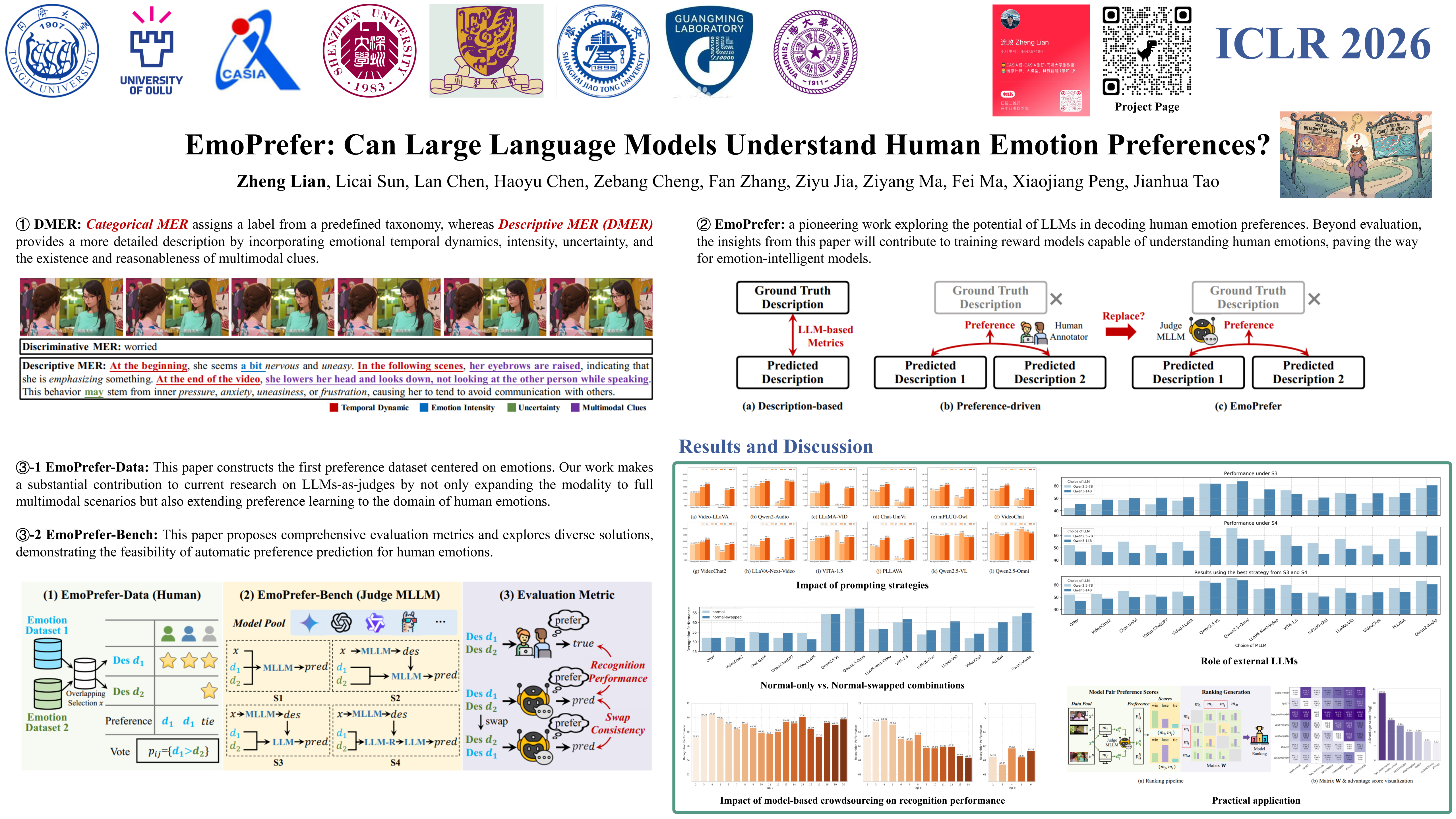
Descriptive Multimodal Emotion Recognition (DMER) has garnered increasing research attention. Unlike traditional discriminative paradigms that rely on predefined emotion taxonomies, DMER aims to describe human emotional state using free-form natural language, enabling finer-grained and more interpretable emotion representations. However, this free-form prediction paradigm introduces new challenges regarding its evaluation. Previous works depend on ground-truth descriptions, but emotions are inherently tied to diverse human behaviors, and generating a comprehensive and accurate description is inherently demanding. Other researchers reformulate this problem into a more tractable human preference learning task, but pairwise preference annotation involves substantial manual effort. This leads to a question: can we leverage multimodal LLMs (MLLMs) to achieve more cost-efficient preference annotation? To answer this, we propose EmoPrefer, a pioneering work exploring the potential of LLMs in decoding human emotion preferences. Specifically, we construct the first emotion preference dataset, EmoPrefer-Data, featuring high-quality preference annotations from experts. Additionally, we introduce EmoPrefer-Bench, which evaluates the performance of various MLLMs and prompting techniques in preference prediction, while also revealing new strategies to enhance their performance. To the best of our knowledge, this is the first work exploring the capabilities of LLMs in understanding human emotion preferences. Our work advances the field of DMER and lays the foundation for more intelligent human-computer interaction. Our data and code are released at https://github.com/zeroQiaoba/AffectGPT/tree/master/EmoPrefer.
Scaling Up, Speeding Up: A Benchmark of Speculative Decoding for Efficient LLM Test-Time Scaling
Shengyin Sun ⋅ Yiming Li ⋅ Xing Li ⋅ Yingzhao Lian ⋅ Weizhe Lin ⋅ Huiling Zhen ⋅ Zhiyuan Yang ⋅ Xianzhi Yu ⋅ Chen Chen ⋅ Mingxuan Yuan ⋅ Chen Ma
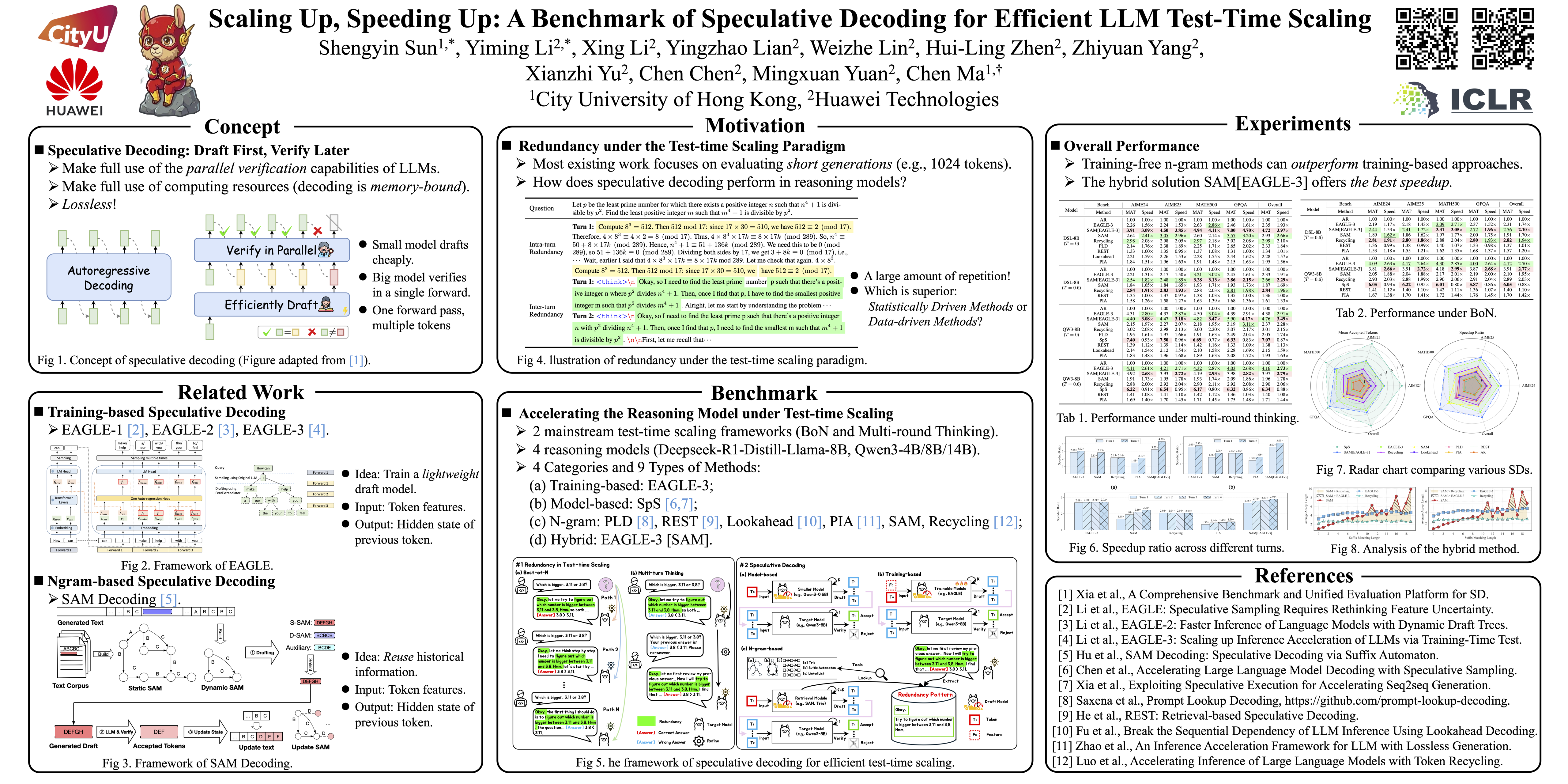
Test-time scaling has emerged as a powerful paradigm for enhancing the reasoning capabilities of large language models (LLMs) by allocating additional computational resources during inference. However, this paradigm is inherently inefficient due to the generation of different reasoning traces, leading to significant computational overhead. Speculative decoding offers a promising avenue for mitigating this inefficiency, yet its efficacy in the structured and repetition-rich context remains unexplored. To bridge this gap, we introduce the first comprehensive benchmark designed to evaluate speculative decoding methods in LLM test-time scaling. Our benchmark provides consistent experimental protocols across representative test-time scaling paradigms (e.g., Best-of-N sampling and multi-round thinking), enabling a fair comparison of three major categories of speculative decoding: model-based, training-based, and N-gram-based methods. Extensive experiments reveal that simple N-gram-based methods effectively capture repetitive patterns, demonstrating unique potential in accelerating test-time scaling. This phenomenon demonstrates the value of integrating N-gram-based methods with model-based or training-based approaches to benefit both repetitive and diverse reasoning in test-time scaling. We hope this benchmark spurs further research on speculative decoding for test-time scaling, enabling faster and more practical reasoning in LLMs through better handling of repetitive and diverse reasoning paths. Code available at .
Cite Pretrain: Retrieval-Free Knowledge Attribution for Large Language Models
Yukun Huang ⋅ Sanxing Chen ⋅ Jian Pei ⋅ Manzil Zaheer ⋅ Bhuwan Dhingra
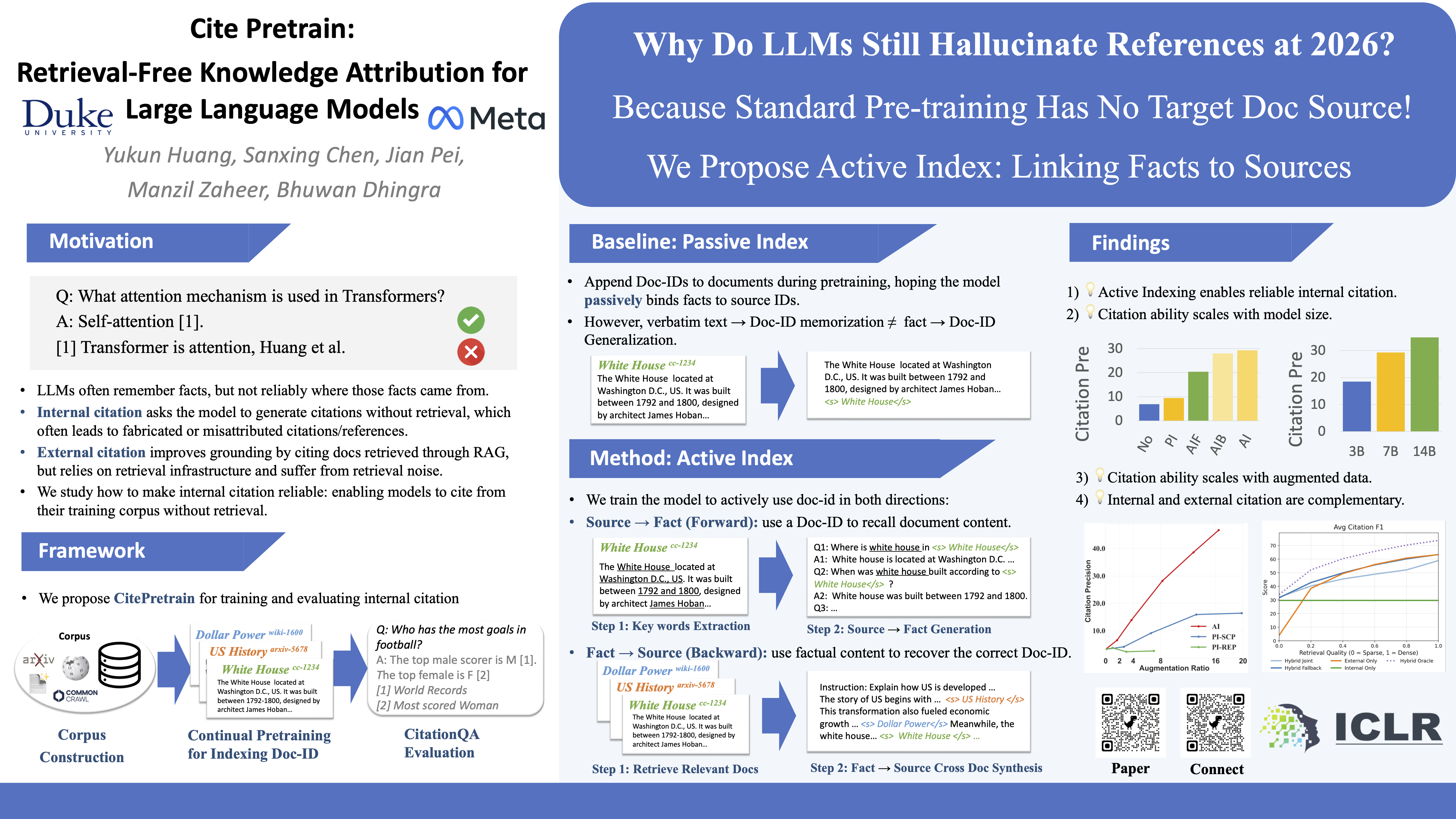
Trustworthy language models should provide both correct and verifiable answers. However, citations generated directly by standalone LLMs are often unreliable due to hallucinations. As a result, current systems insert citations by querying an external retriever at inference time, introducing latency, infrastructure dependence, and vulnerability to retrieval noise. We explore whether LLMs can be made to reliably attribute to the documents seen during (continual) pretraining, without test‑time retrieval, by revising the training process. To study this, we construct **CitePretrainBench**, a benchmark that mixes real‑world corpora (Wikipedia, Common Crawl, arXiv) with novel, unseen documents and probes both short‑form (single fact) and long‑form (multi‑fact) citation tasks. Our approach follows a two-stage process: (1) Continual-pretraining to index factual knowledge by binding it to persistent document identifiers; (2) Instruction tuning to elicit citation behavior. We introduce **Active Indexing** for the first stage, which creates generalizable, source-anchored bindings by augmenting training with synthetic data that (i) restate each fact in diverse, compositional forms and (ii) enforce bidirectional training (source$\to$fact and fact$\to$source). This equips the model to both generate content from a cited source and attribute its own answers, improving robustness to paraphrase and composition. Experiments with Qwen‑2.5‑7B and 3B show that Active Indexing consistently outperforms a Passive Indexing baseline, which simply appends an identifier to each document, achieving citation precision gains of up to 30.2\% across all tasks and models. Our ablation studies reveal that performance continues to improve as we scale the amount of augmented data, showing a clear upward trend even at 16× the original token count. Finally, we show that internal citations complement external ones by making the model more robust to retrieval noise.
Dual-objective Language Models: Training Efficiency Without Overfitting
David Samuel ⋅ Lucas Charpentier
This paper combines autoregressive and masked-diffusion training objectives without any architectural modifications, resulting in flexible language models that outperform single-objective models. Autoregressive modeling has been a popular approach, partly because of its training efficiency; however, that comes at the cost of sensitivity to overfitting. On the other hand, masked-diffusion models are less efficient to train while being more resilient to overfitting. In this work, we demonstrate that dual-objective training achieves the best of both worlds. To derive the optimal balance between both objectives, we train and evaluate 50 language models under varying levels of data repetition. We show that it is optimal to combine both objectives under all evaluated settings and that the optimal balance is similar whether targeting autoregressive or masked-diffusion downstream performance.
Analytica: Soft Propositional Reasoning for Robust and Scalable LLM-Driven Analysis
Junyan Cheng ⋅ Kyle Richardson ⋅ Peter Chin
Large language model (LLM) agents are increasingly tasked with complex real-world analysis (e.g., in financial forecasting, scientific discovery), yet their reasoning suffers from stochastic instability and lacks a verifiable, compositional structure. To address this, we introduce Analytica, a novel agent architecture built on the principle of Soft Propositional Reasoning (SPR). SPR reframes complex analysis as a structured process of estimating the soft truth values of different outcome propositions, allowing us to formally model and minimize the estimation error in terms of its bias and variance. Analytica operationalizes this through a parallel, divide-and-conquer framework that systematically reduces both sources of error. To reduce bias, problems are first decomposed into a tree of subpropositions, and tool-equipped LLM grounder agents are employed —including a novel Jupyter Notebook agent for data-driven analysis—that help to validate and score facts. To reduce variance, Analytica recursively synthesizes these grounded leaves using robust linear models that average out stochastic noise with superior efficiency, scalability, and enable interactive "what-if" scenario analysis. Our theoretical and empirical results on economic, financial, and political forecasting tasks show that Analytica improves 15.84\% accuracy on average over diverse base models, achieving 71.06\% accuracy with the lowest variance of 6.02\% when working with a Deep Research grounder. Our Jupyter Notebook grounder shows strong cost-effectiveness that achieves a close 70.11\% accuracy with 90.35\% less cost and 52.85\% less time. Analytica also exhibits highly noise-resilient and stable performance growth as the analysis depth increases, with a near-linear time complexity, as well as good adaptivity to open-weight LLMs and scientific domains.
From Static Benchmarks to Dynamic Protocol: Agent-Centric Text Anomaly Detection for Evaluating LLM Reasoning
Seungdong YOA ⋅ Sanghyu Yoon ⋅ Suhee Yoon ⋅ Dongmin Kim ⋅ YE SEUL SIM ⋅ Junhyun Lee ⋅ Woohyung Lim
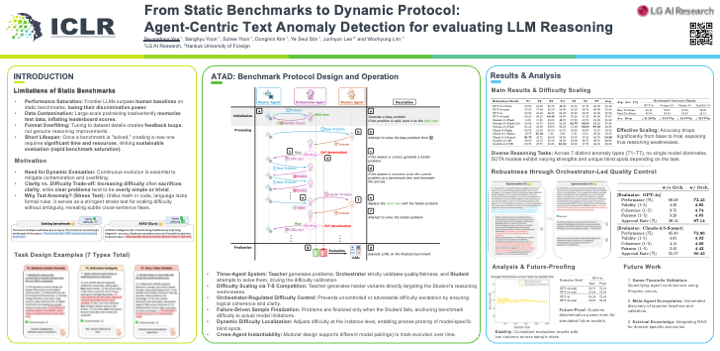
The evaluation of large language models (LLMs) has predominantly relied on static datasets, which offer limited scalability and fail to capture the evolving reasoning capabilities of recent models. To overcome these limitations, we propose an agent-centric benchmarking paradigm that moves beyond static datasets by introducing a dynamic protocol in which autonomous agents iteratively generate, validate, and solve problems. Within this protocol, a teacher agent generates candidate problems, an orchestrator agent rigorously verifies their validity and guards against adversarial attacks, and a student agent attempts to solve the validated problems. An invalid problem is revised by the teacher agent until it passes validation. If the student correctly solves the problem, the orchestrator prompts the teacher to generate more challenging variants. Consequently, the benchmark scales in difficulty automatically as more capable agents are substituted into any role, enabling progressive evaluation of large language models without manually curated datasets. Adopting text anomaly detection as our primary evaluation format, which demands cross-sentence logical inference and resists pattern-matching shortcuts, we demonstrate that this protocol systematically exposes corner-case reasoning errors that conventional benchmarks fail to reveal. We further advocate evaluating systems along several complementary axes including cross-model pairwise performance and progress between the initial and orchestrator-finalized problems. By shifting the focus from fixed datasets to dynamic protocols, our approach offers a sustainable direction for evaluating ever-evolving language models and introduces a research agenda centered on the co-evolution of agent-centric benchmarks.
Enhancing LLMs for Knowledge Base Question Answering by Chain-of-Decomposition
Yonggang Zhang ⋅ Jianqi Gao ⋅ Jie Lu
Large language models (LLMs) have demonstrated remarkable success across diverse domains through in-context learning or fine-tuning. However, adapting LLMs to Knowledge Base Question Answering (KBQA) remains challenging, as KBQA necessitates multi-step reasoning over large-scale structured knowledge bases. Directly prompting LLMs with entire knowledge bases incurs prohibitive computational costs, while existing methods provide limited guidance on effectively fine-tuning LLMs for such complex reasoning tasks. In this work, we propose Chain-of-Decomposition (\texttt{CoD}), a novel framework that decomposes KBQA into three modular steps: (1) an LLM-free retrieval module to extract query-relevant subgraphs from the knowledge base, (2) a parameter-free reformulation step that transforms retrieved contexts into structured reasoning paths, and (3) a lightweight LLM-based reasoning module trained to evaluate the logical validity of each path. By isolating computation-heavy retrieval and rule-based reformulation from LLM reasoning, \texttt{CoD} reduces task complexity and enables efficient fine-tuning focused solely on the final verification step. Comprehensive experiments demonstrate that Llama-2 7B, fine-tuned with the proposed \texttt{CoD} surpasses strong baselines, including GPT-4 augmented with retrieved knowledge, achieving state-of-the-art performance on WebQSP and CWQ benchmarks. Our code is publicly available at \url{https://github.com/YonggangZhang9412/KBQA-CoD}.
ReIn: Conversational Error Recovery with Reasoning Inception
Takyoung Kim ⋅ Jinseok Nam ⋅ Chandrayee Basu ⋅ Xing Fan ⋅ Chengyuan Ma ⋅ Heng Ji ⋅ Gokhan Tur ⋅ Dilek Hakkani-Tür
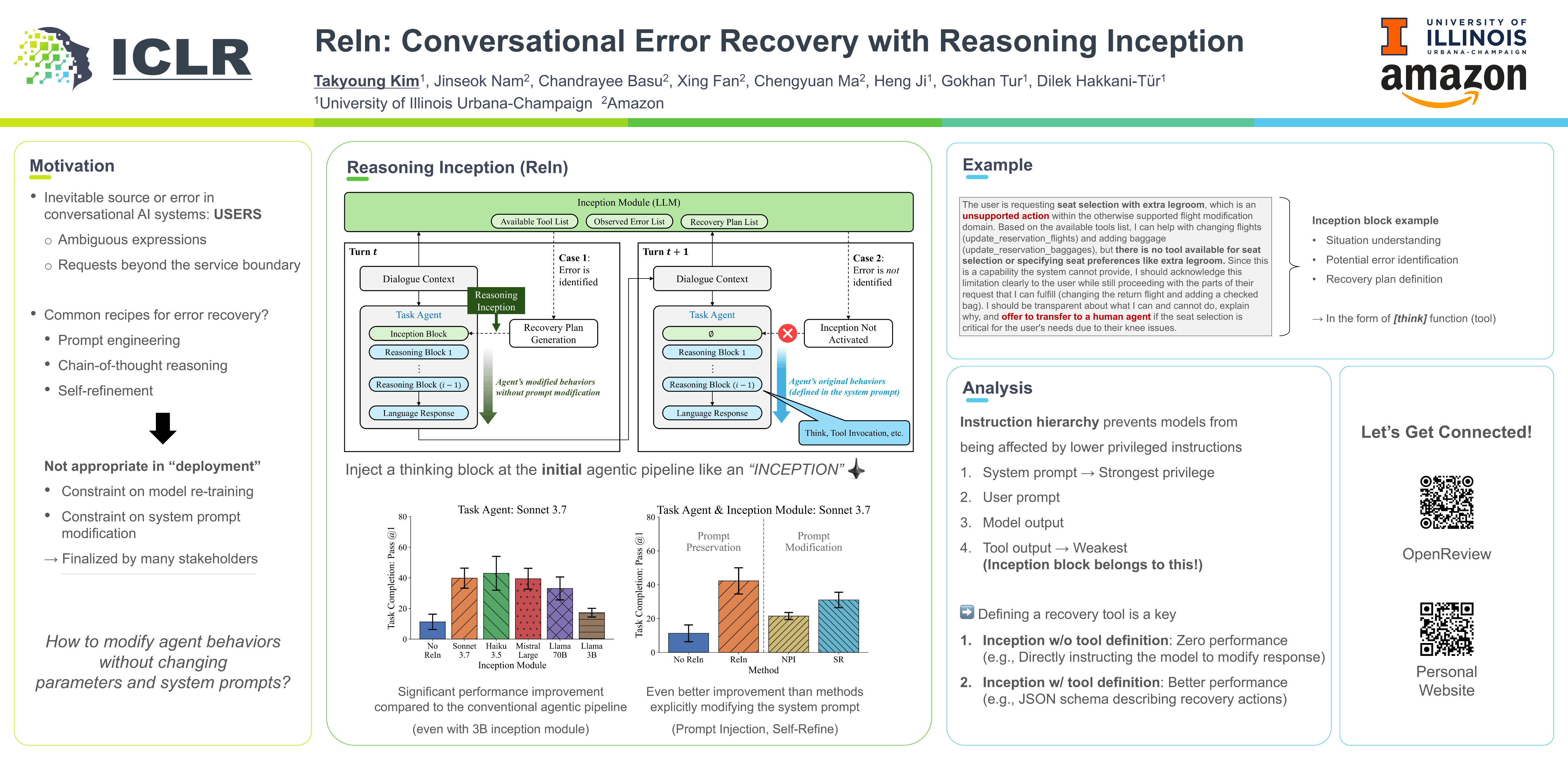
Conversational agents powered by large language models (LLMs) with tool integration achieve strong performance on fixed task-oriented dialogue datasets but remain vulnerable to unanticipated, user-induced errors. Rather than focusing on error prevention, this work focuses on error recovery, which necessitates the accurate diagnosis of erroneous dialogue contexts and execution of proper recovery plans. Under realistic constraints precluding model fine-tuning or prompt modification due to significant cost and time requirements, we explore whether agents can recover from contextually flawed interactions and how their behavior can be adapted without altering model parameters and prompts. To this end, we propose Reasoning Inception (ReIn), a test-time intervention method that plants an initial reasoning into the agent's decision-making process. Specifically, an external inception module identifies predefined errors within the dialogue context and generates recovery plans, which are subsequently integrated into the agent's internal reasoning process to guide corrective actions, without modifying its parameters or system prompts. We evaluate ReIn by systematically simulating conversational failure scenarios that directly hinder successful completion of user goals: user's ambiguous and unsupported requests. Across diverse combinations of agent models and inception modules, ReIn substantially improves task success and generalizes to unseen error types. Moreover, it consistently outperforms explicit prompt-modification approaches, underscoring its utility as an efficient, on-the-fly method. In-depth analysis of its operational mechanism, particularly in relation to instruction hierarchy, indicates that jointly defining recovery tools with ReIn can serve as a safe and effective strategy for improving the resilience of conversational agents without modifying the backbone models or system prompts.
Paper2Code: Automating Code Generation from Scientific Papers in Machine Learning
Minju Seo ⋅ Jinheon Baek ⋅ Seongyun Lee ⋅ Sung Ju Hwang
Despite the rapid growth of machine learning research, corresponding code implementations are often unavailable, making it slow and labor-intensive for researchers to reproduce results and build upon prior work. In the meantime, recent Large Language Models (LLMs) excel at understanding scientific documents and generating high-quality code. Inspired by this, we introduce PaperCoder, a multi-agent LLM framework that transforms machine learning papers into operational code repositories. PaperCoder operates in three stages: planning, where it constructs a high-level roadmap, designs the system architecture with diagrams, identifies file dependencies, and generates configuration files; analysis, which focuses on interpreting implementation-specific details; and generation, where modular, dependency-aware code is produced. Moreover, each phase is instantiated through a set of specialized agents designed to collaborate effectively across the pipeline. We then evaluate PaperCoder on generating code implementations from machine learning papers based on both model-based and human evaluations, particularly from the authors of those papers, with author-released repositories as ground truth if available. Our results demonstrate the effectiveness of PaperCoder in creating high-quality, faithful implementations. Furthermore, it consistently shows strengths in the recently released PaperBench benchmark, surpassing strong baselines by substantial margins. Code is available at: https://github.com/going-doer/Paper2Code.
Accelerating Eigenvalue Dataset Generation via Chebyshev Subspace Filter
Hong Wang ⋅ Jie Wang ⋅ Jian Luo ⋅ huanshuo dong ⋅ Yeqiu Chen ⋅ Runmin Jiang ⋅ Zhen Huang
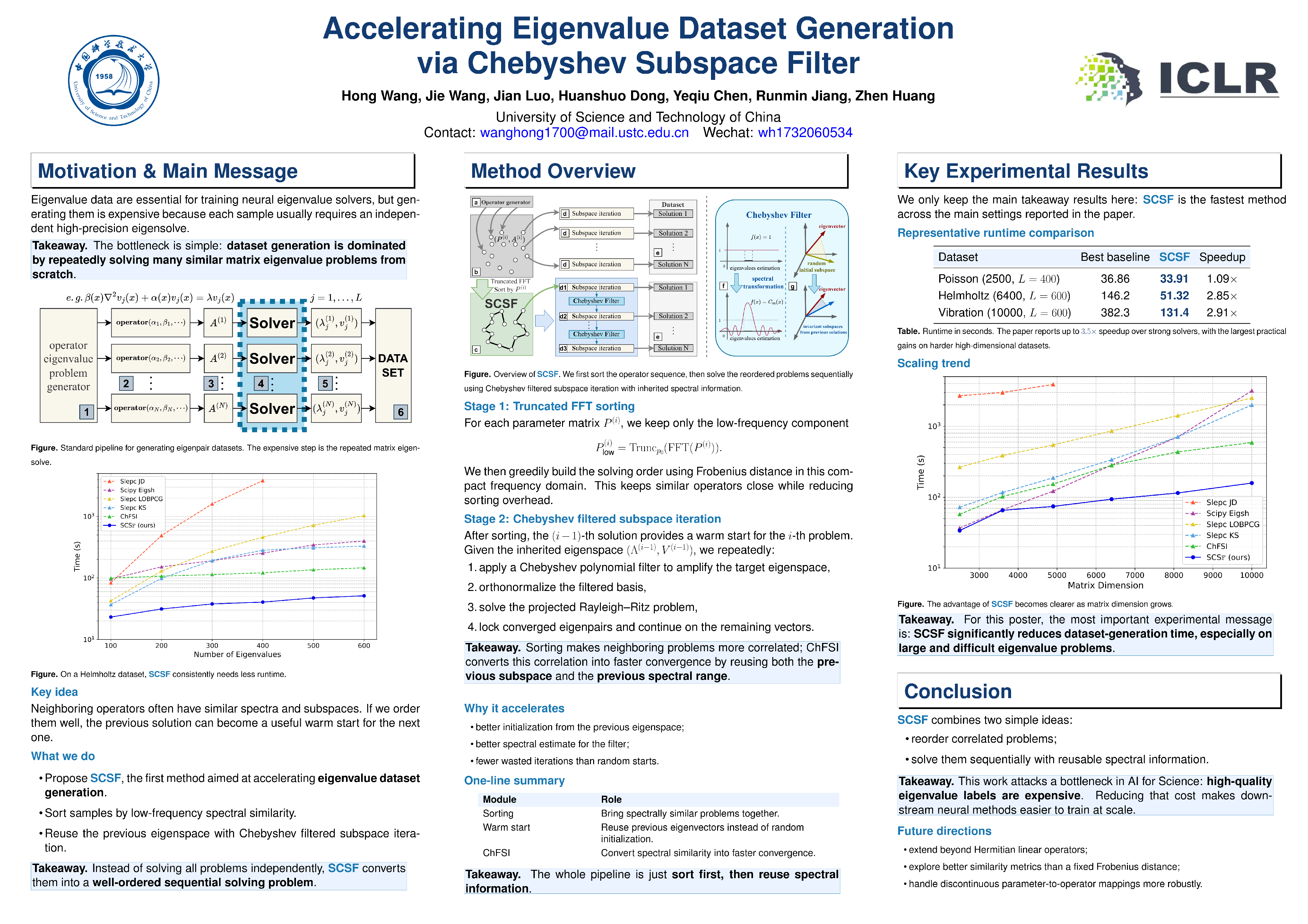
Eigenvalue problems are among the most important topics in many scientific disciplines. With the recent surge and development of machine learning, neural eigenvalue methods have attracted significant attention as a forward pass of inference requires only a tiny fraction of the computation time compared to traditional solvers. However, a key limitation is the requirement for large amounts of labeled data in training, including operators and their eigenvalues. To tackle this limitation, we propose a novel method, named **S**orting **C**hebyshev **S**ubspace **F**ilter (**SCSF**), which significantly accelerates eigenvalue data generation by leveraging similarities between operators---a factor overlooked by existing methods. Specifically, SCSF employs truncated fast Fourier transform (FFT) sorting to group operators with similar eigenvalue distributions and constructs a Chebyshev subspace filter that leverages eigenpairs from previously solved problems to assist in solving subsequent ones, reducing redundant computations. To the best of our knowledge, SCSF is the first method to accelerate eigenvalue data generation. Experimental results show that SCSF achieves up to a $3.5\times$ speedup compared to various numerical solvers.
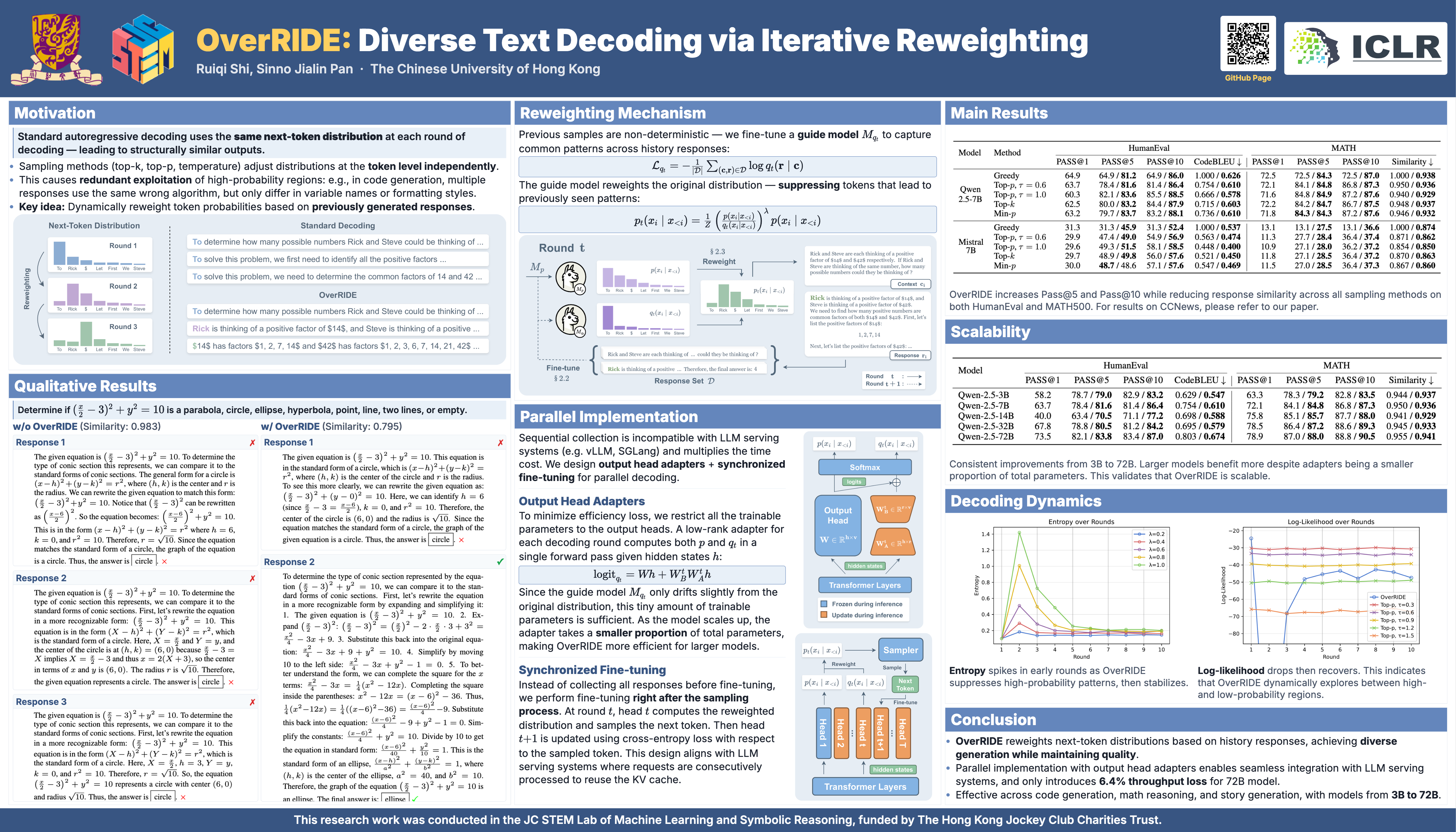
Recent advances in large language models (LLMs) have led to impressive results in text generation. However, current decoding methods still lack diversity when combined with popular sampling techniques. We propose a Reweighting-based Iterative DEcoding (OverRIDE) approach that dynamically adjusts the decoding process with history responses. Our method fine-tunes auxiliary output heads iteratively on previously generated sequences to capture and suppress semantic patterns that appear in the history responses. This inference-time training process only incurs minimal loss of efficiency. We conduct extensive experiments on various tasks, including code generation, mathematical reasoning and story generation, demonstrating that OverRIDE increases output diversity while maintaining quality. We implement OverRIDE on LLM serving systems like vLLM, achieving a 6.4% throughput loss for 72B models under parallel decoding. The code is available at https://github.com/shi-rq/OverRIDE.
CogniLoad: A Synthetic Natural Language Reasoning Benchmark With Tunable Length, Intrinsic Difficulty, and Distractor Density
Daniel Kaiser ⋅ Arnoldo Frigessi ⋅ Ali Ramezani-Kebrya ⋅ Benjamin Ricaud
Current benchmarks for long-context reasoning in Large Language Models (LLMs) often blur critical factors like intrinsic task complexity, distractor interference, and task length. To enable more precise failure analysis, we introduce CogniLoad, a novel synthetic benchmark grounded in Cognitive Load Theory (CLT). CogniLoad generates natural-language logic puzzles with independently tunable parameters that reflect CLT's core dimensions: intrinsic difficulty ($d$) controls intrinsic load; distractor-to-signal ratio ($\rho$) regulates extraneous load; and task length ($N$) serves as an operational proxy for conditions demanding germane load. Evaluating 22 SotA reasoning LLMs, CogniLoad reveals distinct performance sensitivities, identifying task length as a dominant constraint and uncovering varied tolerances to intrinsic complexity and U-shaped responses to distractor ratios. By offering systematic, factorial control over these cognitive load dimensions, CogniLoad provides a reproducible, scalable, and diagnostically rich tool for dissecting LLM reasoning limitations and guiding future model development.
Coupled Transformer Autoencoder for Disentangling Multi-Region Neural Latent Dynamics
Ram Dyuthi Sristi ⋅ Sowmya Narasimha ⋅ Jingya Huang ⋅ Alice Despatin ⋅ Simon Musall ⋅ Vikash Gilja ⋅ Gal Mishne
Simultaneous recordings from thousands of neurons across multiple brain areas reveal rich mixtures of activity that are shared between regions and dynamics that are unique to each region. Existing alignment or multi-view methods neglect temporal structure, whereas dynamical latent-variable models capture temporal dependencies but are usually restricted to a single area, assume linear read-outs, or conflate shared and private signals. We introduce Coupled Transformer Autoencoder (CTAE)—a sequence model that addresses both (i) non-stationary, non-linear dynamics and (ii) separation of shared versus region-specific structure, in a single framework. CTAE employs Transformer encoders and decoders to capture long-range neural dynamics, and explicitly partitions each region’s latent space into orthogonal shared and private subspaces. We demonstrate the effectiveness of CTAE on a controlled synthetic dataset and two high-density electrophysiology datasets of simultaneous recordings from multiple regions, one from motor cortical areas and the other from sensory areas. CTAE extracts meaningful representations that better decode behavior variables compared to existing approaches.
CodeBrain: Bridging Decoupled Tokenizer and Multi-Scale Architecture for EEG Foundation Model
Jingying Ma ⋅ Feng Wu ⋅ QIKA LIN ⋅ Yucheng Xing ⋅ Chenyu Liu ⋅ Ziyu Jia ⋅ Mengling Feng
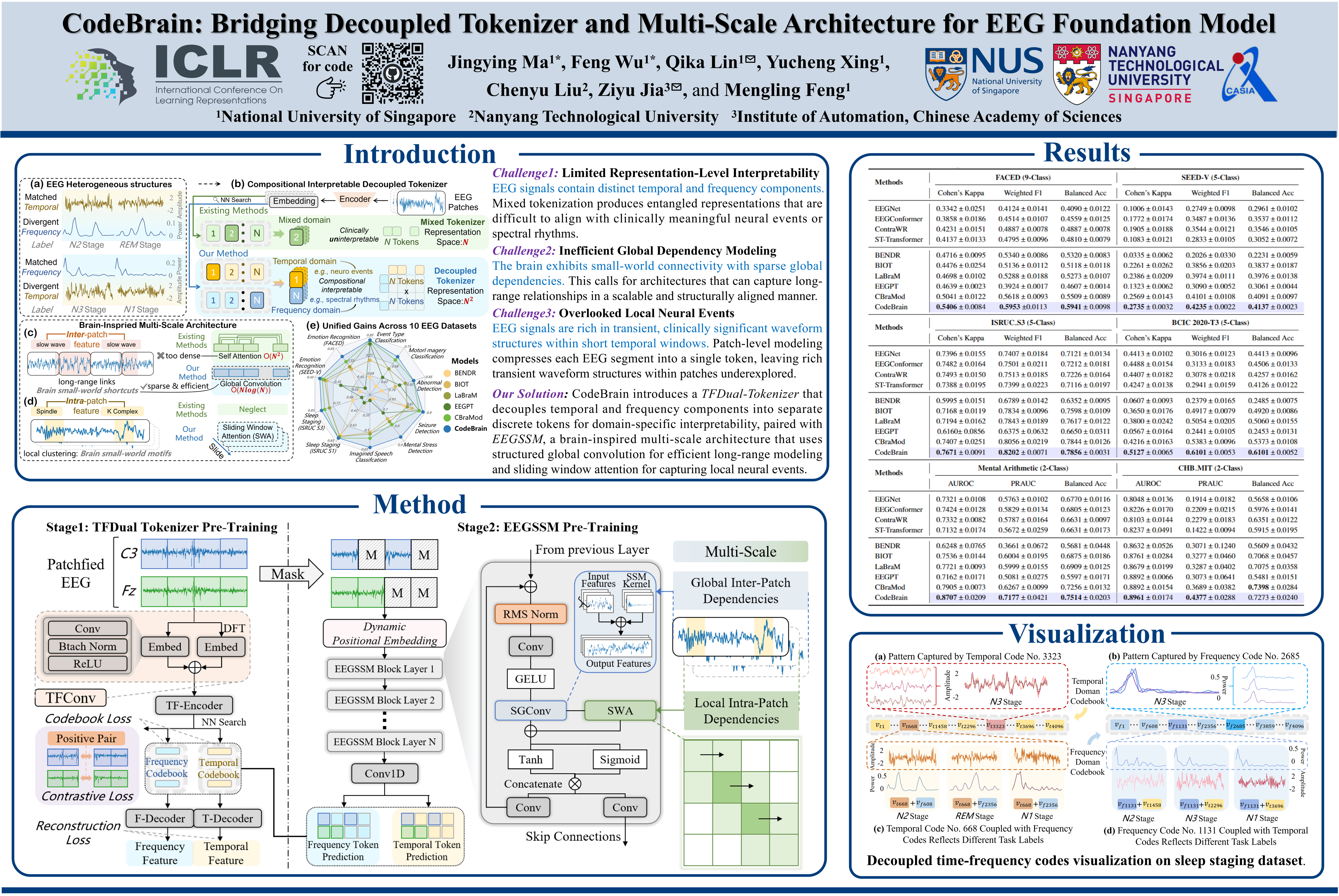
Electroencephalography (EEG) provides real-time insights into brain activity and supports diverse applications in neuroscience. While EEG foundation models (EFMs) have emerged to address the scalability issues of task-specific models, current approaches still yield clinically uninterpretable and weakly discriminative representations, inefficiently capturing global dependencies and neglecting important local neural events. We present CodeBrain, a two-stage EFM designed to fill this gap. In the first stage, we introduce the TFDual-Tokenizer, which decouples heterogeneous temporal and frequency EEG signals into discrete tokens, quadratically expanding the representation space to enhance discriminative power and offering domain-specific representation-level interpretability by suggesting potential links to neural events and spectral rhythms. In the second stage, we propose the multi-scale EEGSSM architecture, which combines structured global convolution with sliding window attention to efficiently capture both sparse long-range and local dependencies, reflecting the brain’s small-world topology. Pretrained on the largest public EEG corpus, CodeBrain achieves strong generalization across eight downstream tasks and ten datasets under distribution shifts, supported by comprehensive ablations, scaling-law analyzes, and interpretability evaluations. The code and the pretrained weights are available at https://github.com/jingyingma01/CodeBrain.
A Biologically Plausible Dense Associative Memory with Exponential Capacity
Mohadeseh Shafiei Kafraj ⋅ Dmitry Krotov ⋅ Peter Latham
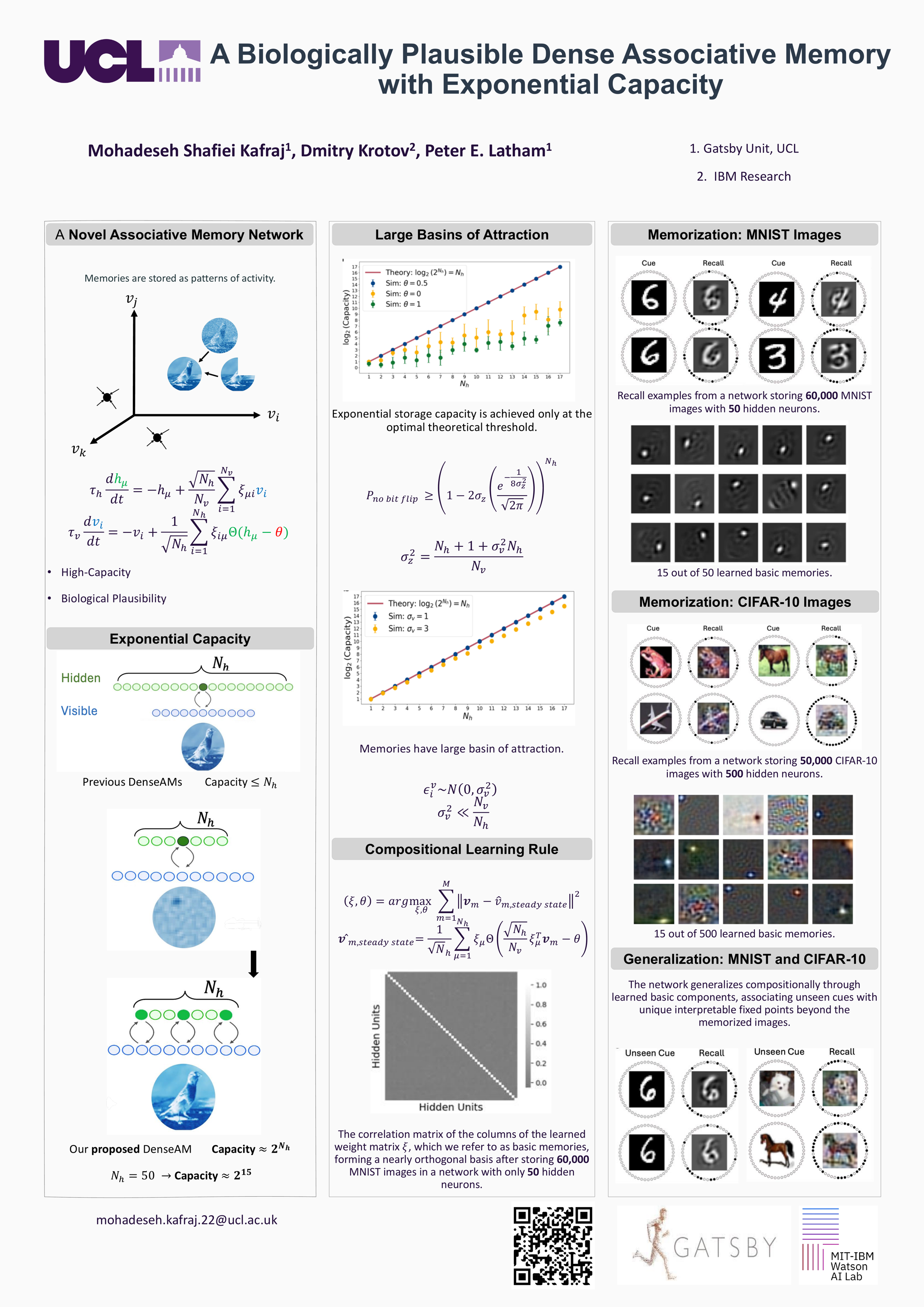
Krotov and Hopfield (2021) proposed a biologically plausible two-layer associative memory network with memory storage capacity exponential in the number of visible neurons. However, the capacity was only linear in the number of hidden neurons. This limitation arose from the choice of nonlinearity between the visible and hidden units, which enforced winner-take-all dynamics in the hidden layer, thereby restricting each hidden unit to encode only a single memory. We overcome this limitation by introducing a novel associative memory network with a threshold nonlinearity that enables distributed representations. In contrast to winner-take-all dynamics, where each hidden neuron is tied to an entire memory, our network allows hidden neurons to encode basic components shared across many memories. Consequently, complex patterns are represented through combinations of hidden neurons. These representations reduce redundancy and allow many correlated memories to be stored compositionally. Thus, we achieve much higher capacity: exponential in the number of hidden units, provided the number of visible units is sufficiently large relative to the number of hidden units. Exponential capacity arises because all binary states of the hidden units can become stable memory patterns. Moreover, the distributed hidden representation, which has much lower dimensionality than the visible layer, preserves class-discriminative structure, supporting efficient nonlinear decoding. These results establish a new regime for associative memory, enabling high-capacity, robust, and scalable architectures consistent with biological constraints.
Disentangling the Factors of Convergence between Brains and DINOv3
Joséphine Raugel ⋅ Marc Szafraniec ⋅ Huy Vo ⋅ camille couprie ⋅ Jérémy Rapin ⋅ Stéphane d'Ascoli ⋅ Patrick Labatut ⋅ Piotr Bojanowski ⋅ Valentin Wyart ⋅ Jean-Remi King
Many AI models trained on natural images develop representations that resemble those of the human brain. However, the factors driving this brain-model similarity remain poorly understood. To disentangle how the model, training and data independently lead a neural network to develop brain-like representations, we train a family of self-supervised vision transformers (DINOv3) that systematically vary these factors. We compare their representations of images to those of the human brain recorded through fMRI and MEG, providing high resolution in both spatial and temporal analyses. We assess the brain-model similarity with three complementary metrics focusing on representational similarity, topographical organization, and temporal dynamics. We show that all three factors - model size, training amount, and image type - independently and interactively impact each of these brain similarity metrics. In particular, the largest DINOv3 models trained with the most human-centric images reach the highest brain-similarity. These findings generalize across seven additional models. This emergence of brain-like representations in AI models follows a specific chronology during training: models first align with the early representations of the sensory cortices, and only align with the late and prefrontal representations of the brain with considerably more training. Finally, this developmental trajectory is indexed by structural and functional properties of the human cortex: representations acquired last by the models specifically align with cortical areas with the largest developmental expansion, thickness, least myelination and slowest timescales. Overall, these findings disentangle the interplay between architecture and experience in shaping how artificial neural networks come to see the world as humans do, thus offering a promising framework to understand how the human brain comes to represent its visual world.
Neural Synchrony Between Socially Interacting Language Models
Zhining Zhang ⋅ Wentao Zhu ⋅ Chi Han ⋅ Yizhou Wang ⋅ Heng Ji
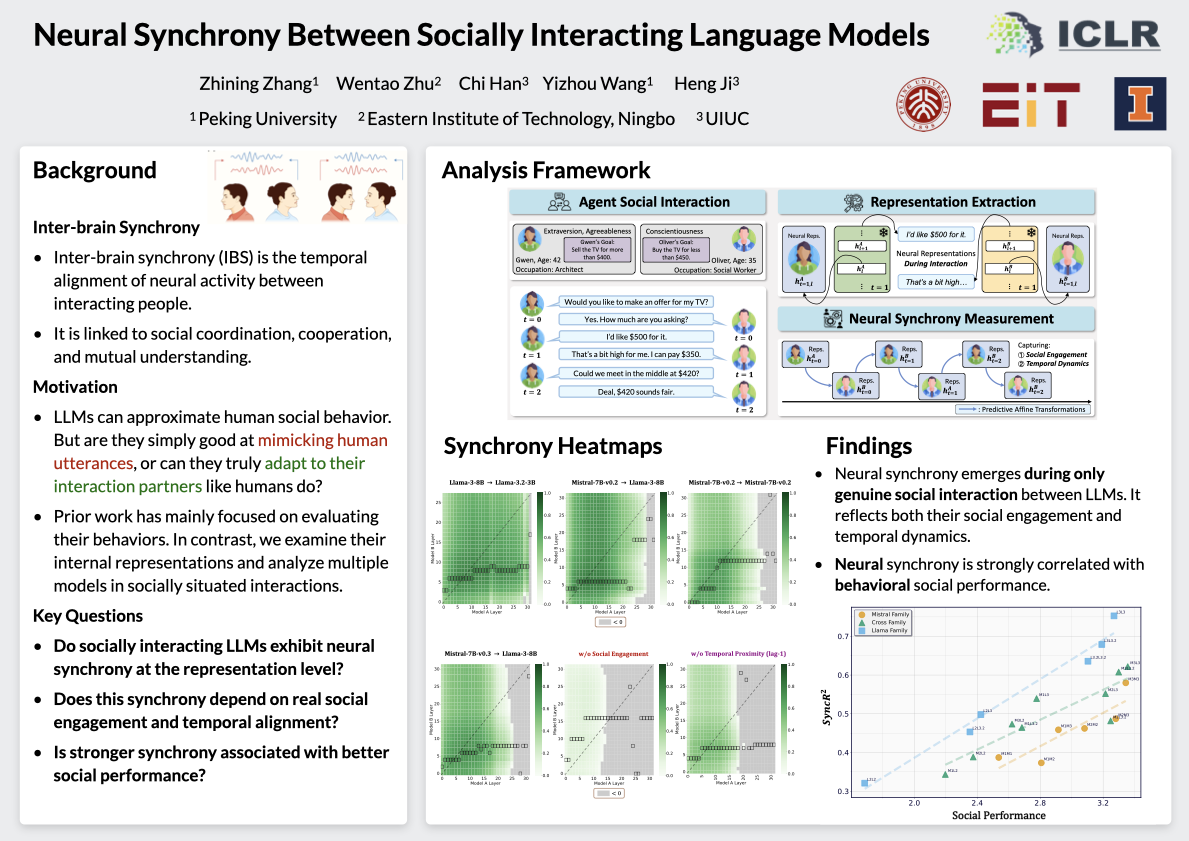
Neuroscience has uncovered a fundamental mechanism of our social nature: human brain activity becomes synchronized with others in many social contexts involving interaction. Traditionally, social minds have been regarded as an exclusive property of living beings. Although large language models (LLMs) are widely accepted as powerful approximations of human behavior, with multi-LLM system being extensively explored to enhance their capabilities, it remains controversial whether they can be meaningfully compared to human social minds. In this work, we explore neural synchrony between socially interacting LLMs as an empirical evidence for this debate. Specifically, we introduce neural synchrony during social simulations as a novel proxy for analyzing the sociality of LLMs at the representational level. Through carefully designed experiments, we demonstrate that it reliably reflects both social engagement and temporal alignment in their interactions. Our findings indicate that neural synchrony between LLMs is strongly correlated with their social performance, highlighting an important link between neural synchrony and the social behaviors of LLMs. Our work offers a new perspective to examine the "social minds" of LLMs, highlighting surprising parallels in the internal dynamics that underlie human and LLM social interaction.
TAVAE: A VAE with Adaptable Priors Explains Contextual Modulation in the Visual Cortex
Balázs Meszéna ⋅ Keith Murray ⋅ Julien Corbo ⋅ Batuhan Erkat ⋅ Márton Hajnal ⋅ Pierre-Olivier Polack ⋅ Gergo Orban
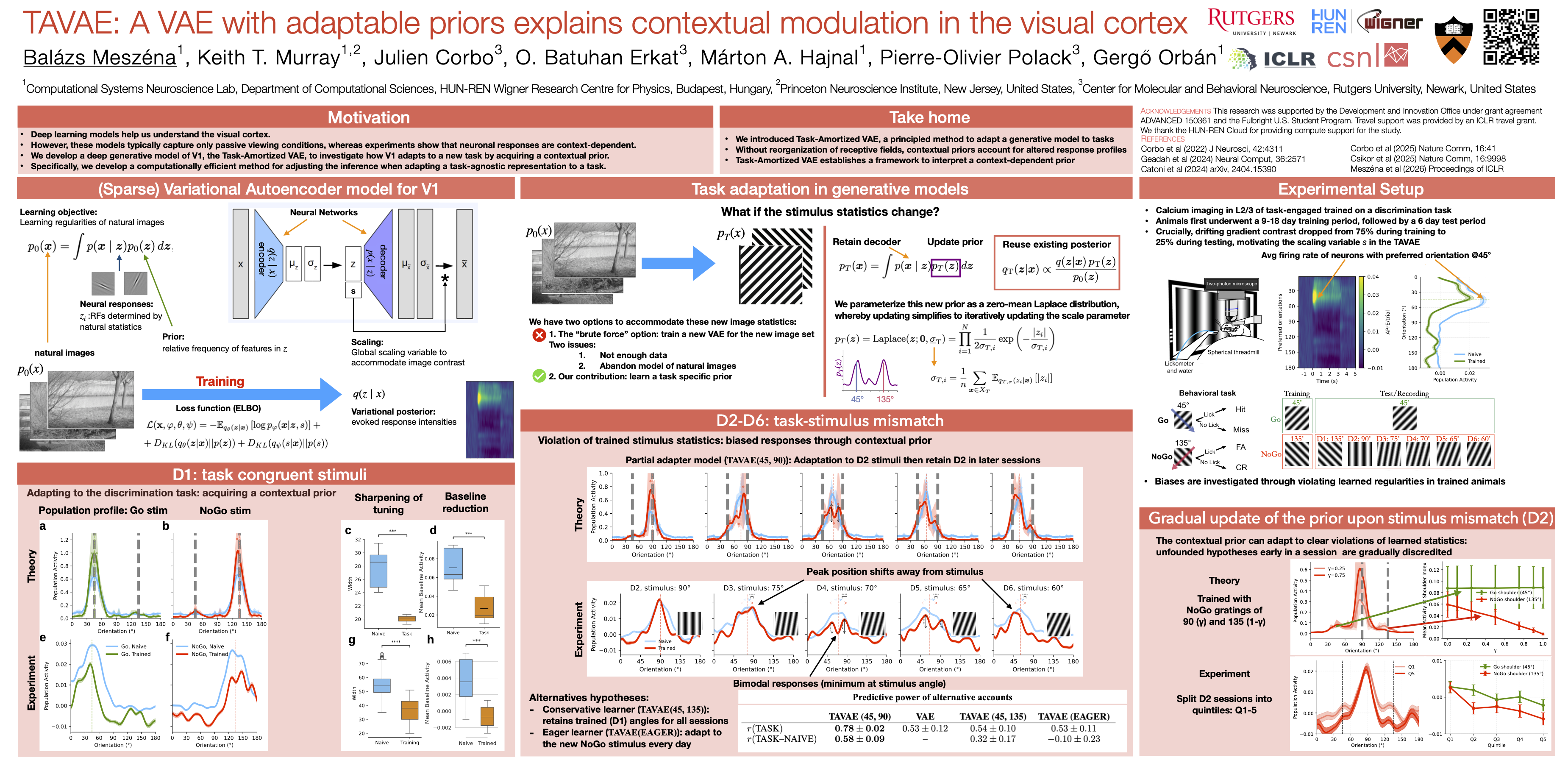
The brain interprets visual information through learned regularities, a computation formalized as performing probabilistic inference under a prior. The visual cortex establishes priors for this inference, some of which are delivered through widely established top-down connections that inform low-level cortices about statistics represented at higher levels in the cortical hierarchy. While evidence supports that adaptation leads to priors reflecting the structure of natural images, it remains unclear if similar priors can be flexibly acquired when learning a specific task. To investigate this, we built a generative model of V1 that we optimized for performing a simple discrimination task and analyzed it along with large scale recordings from mice performing an analogous task. In line with recent successful approaches, we assumed that neuronal activity in V1 can be identified with latent posteriors in the generative model, providing an opportunity to investigate the contributions of task-related priors to neuronal responses. To obtain a flexible test bed for this analysis, we extended the VAE formalism so that a task can be flexibly and data-efficiently acquired by reusing previously learned representations. Task-specific priors learned by this Task-Amortized VAE were used to investigate biases in mice and model when presenting stimuli that violated the trained task statistics. Mismatch between learned task statistics and incoming sensory evidence showed signatures of uncertainty in stimulus category in the posterior of TAVAE, reflecting properties of bimodal response profile in V1 recordings. The task-optimized generative model could account for various characteristics of V1 population activity, including within-day updates to the population responses. Our results confirm that flexible task-specific contextual priors can be learned on-demand by the visual system and can be deployed as early as the entry level of the visual cortex.
Pretraining with Re-parametrized Self-Attention: Unlocking Generalizationin SNN-Based Neural Decoding Across Time, Brains, and Tasks
Yuqi Yang ⋅ Tengjun Liu ⋅ Haiyan Zhang ⋅ Wang Ruixue ⋅ Xuchao Chen ⋅ Mingkang Li ⋅ Yansong Chua ⋅ Nenggan Zheng ⋅ Shaomin Zhang
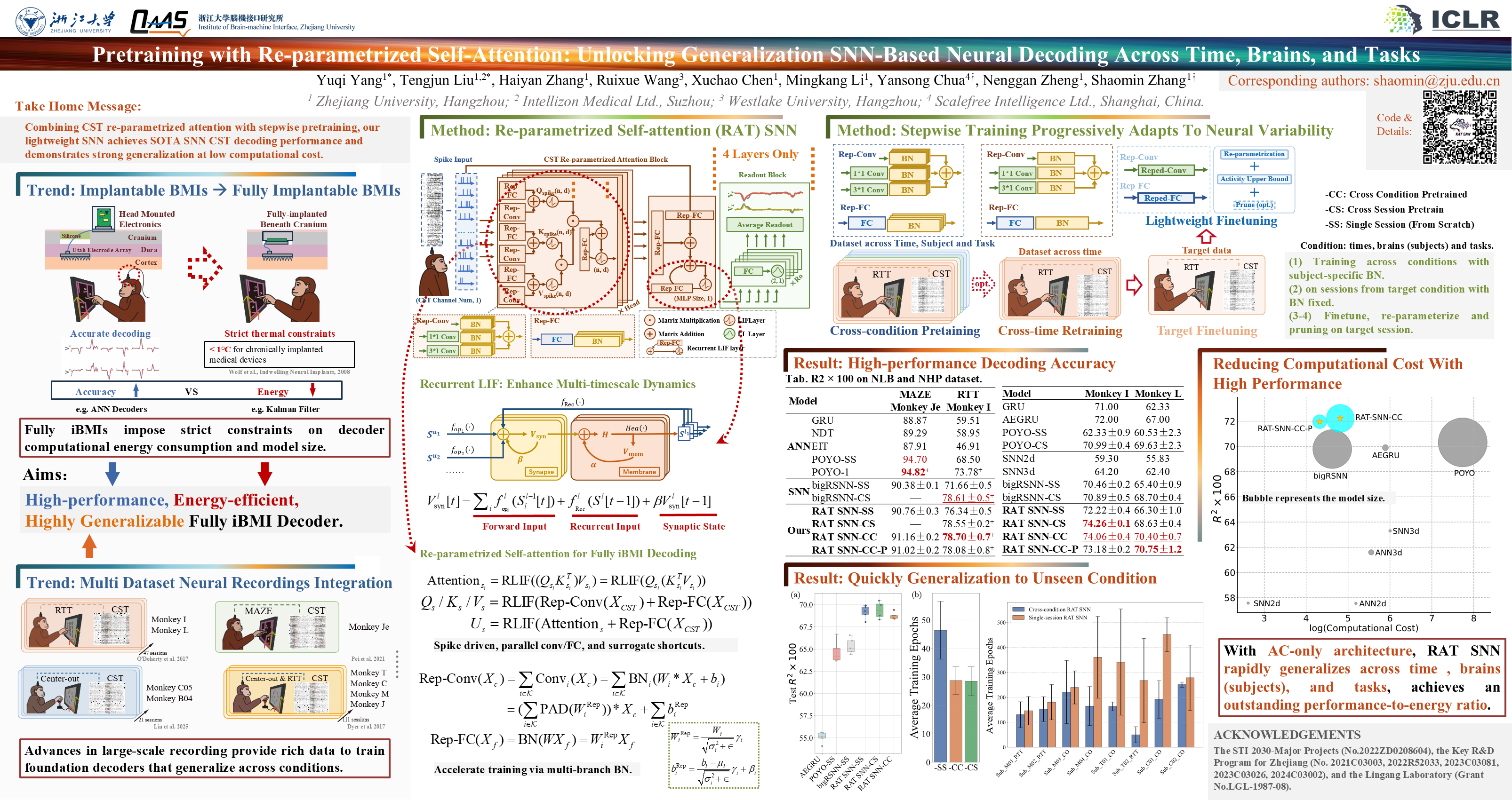
The emergence of large-scale neural activity datasets provides new opportunities to enhance the generalization of neural decoding models. However, it remains a practical challenge to design neural decoders for fully implantable brain-machine interfaces (iBMIs) that achieve high accuracy, strong generalization, and low computational cost, which are essential for reliable, long-term deployment under strict power and hardware constraints. To address this, we propose the Re-parametrized self-Attention Spiking Neural Network (RAT SNN) with a cross-condition pretraining framework to integrate neural variability and adapt to stringent computational constraints. Specifically, our approach introduces multi-timescale dynamic spiking neurons to capture the complex temporal variability of neural activity. We refine spike-driven attention within a lightweight, re-parameterized architecture that enables accumulate-only operations between spiking neurons without sacrificing decoding accuracy. Furthermore, we develop a stepwise training pipeline to systematically integrate neural variability across conditions, including neural temporal drift, subjects and tasks. Building on these advances, we construct a pretrained model capable of rapid generalization to unseen conditions with high performance. We demonstrate that RAT SNN consistently outperforms leading SNN baselines and matches the accuracy of state-of-the-art artificial neural network (ANN) models with much lower computational cost under both seen and unseen conditions across various datasets. Collectively, pretrained-RAT SNN represents a high-performance, highly generalizable, and energy-efficient prototype of an SNN foundation model for fully iBMI. Code is available at RAT SNN GitHub.
Bound by semanticity: universal laws governing the generalization-identification tradeoff
Marco Nurisso ⋅ Jesseba Fernando ⋅ Raj Deshpande ⋅ Alan Perotti ⋅ Raja Marjieh ⋅ Steven Frankland ⋅ Richard Lewis ⋅ Taylor Webb ⋅ Declan Campbell ⋅ Francesco Vaccarino ⋅ Jonathan Cohen ⋅ Giovanni Petri
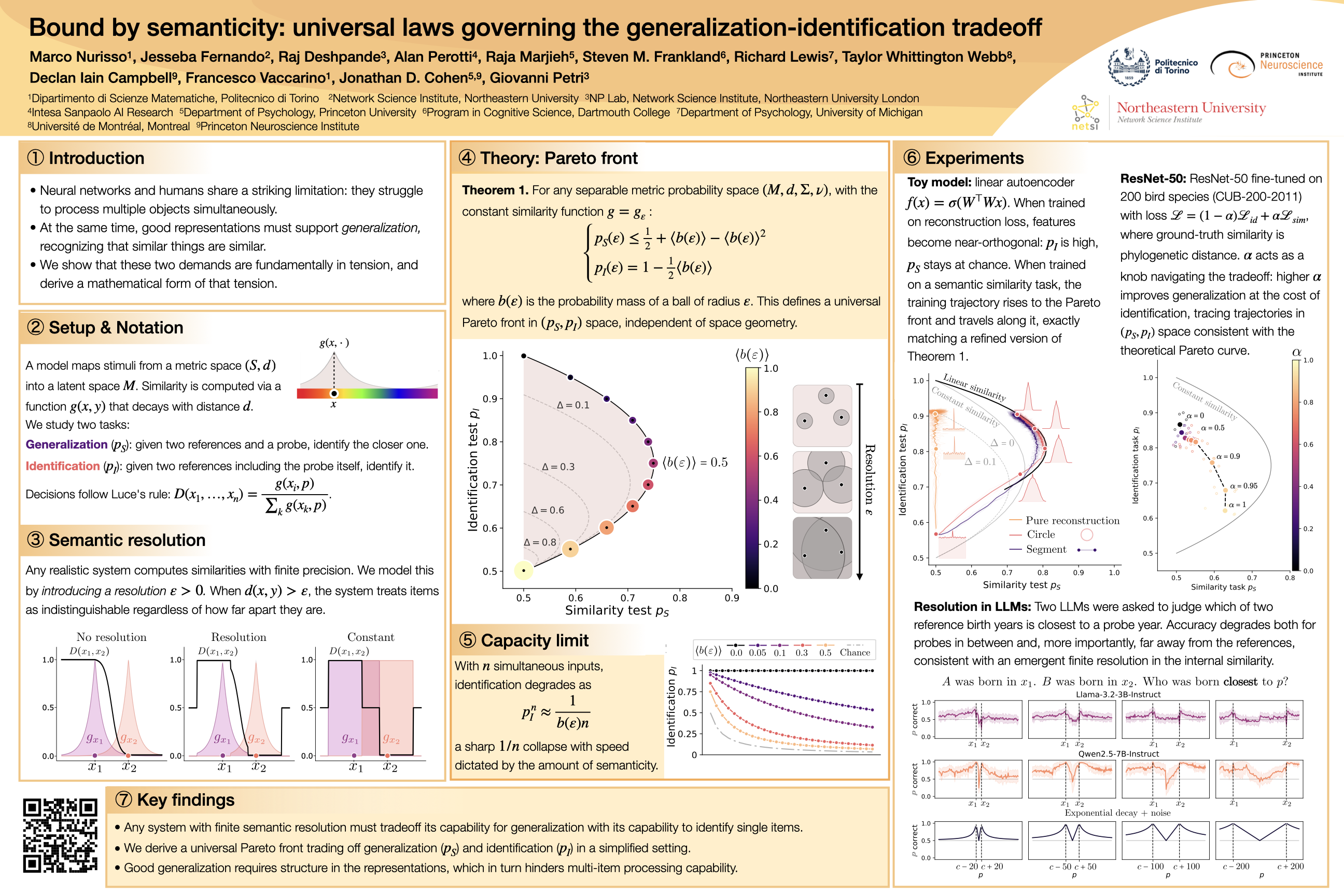
Intelligent systems must form internal representations that support both broad generalization and precise identification. Here, we show that these two goals are fundamentally in tension with one another. We derive closed-form expressions proving that any model whose representations have a finite semantic resolution, impairing long-range similarity computations, must lie on a universal Pareto front linking its probability of correct generalization $p_S$ and identification $p_I$. We extend this analysis to general input spaces and to parallel processing scenarios, predicting a sharp $1/n$ collapse in the capacity of processing multiple inputs at the same time. A minimal ReLU network reproduces these laws: a resolution boundary emerges during learning, and empirical $(p_S,p_I)$ trajectories closely match the theory for linearly decaying similarity. Finally, we show that the same limits appear in far more complex systems, including a convolutional neural network and state-of-the-art vision–language models, indicating that learned finite-resolution similarity are broad and foundational informational constraints rather than toy-model artifacts. Together, these results provide a precise theory of the generalization–identification tradeoff and clarify how semantic resolution shapes the representational capacity of deep networks and brains alike.
Many Eyes, One Mind: Temporal Multi-Perspective and Progressive Distillation for Spiking Neural Networks
Kai Sun ⋅ Peibo Duan ⋅ Yongsheng Huang ⋅ Nanxu Gong ⋅ Levin Kuhlmann
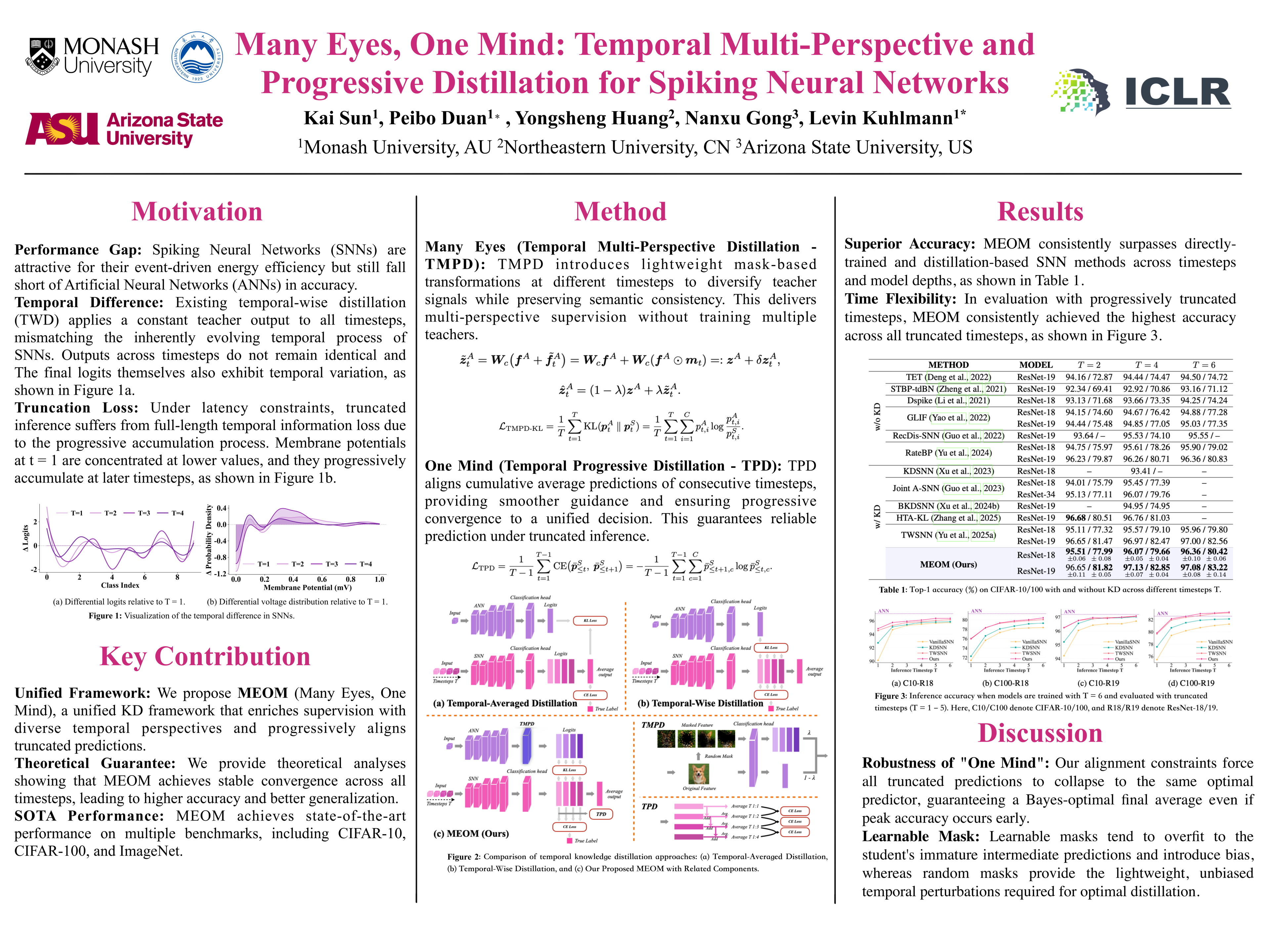
Spiking Neural Networks (SNNs), inspired by biological neurons, are attractive for their event-driven energy efficiency but still fall short of Artificial Neural Networks (ANNs) in accuracy. Knowledge distillation (KD) has emerged as a promising approach to narrow this gap by transferring ANN knowledge into SNNs. Temporal-wise distillation (TWD) leverages the temporal dynamics of SNNs by providing supervision across timesteps, but it applies a constant teacher output to all timesteps, mismatching the inherently evolving temporal process of SNNs. Moreover, while TWD improves per-timestep accuracy, truncated inference still suffers from full-length temporal information loss due to the progressive accumulation process. We propose MEOM (Many Eyes, One Mind), a unified KD framework that enriches supervision with diverse temporal perspectives through mask-weighted teacher features and progressively aligns truncated predictions with the full-length prediction, thereby enabling more reliable inference across all timesteps. Extensive experiments and theoretical analyses demonstrate that MEOM achieves state-of-the-art performance on multiple benchmarks. Code is available at https://github.com/KaiSUN1/MEOM.
When Language Models Lose Their Mind: The Consequences of Brain Misalignment
Gabriele Merlin ⋅ Mariya Toneva
While brain-aligned large language models (LLMs) have garnered attention for their potential as cognitive models and for potential for enhanced safety and trustworthiness in AI, the role of this brain alignment for linguistic competence remains uncertain. In this work, we investigate the functional implications of brain alignment by introducing brain-misaligned models--LLMs intentionally trained to predict brain activity poorly while maintaining high language modeling performance. We evaluate these models on over 200 downstream tasks encompassing diverse linguistic domains, including semantics, syntax, discourse, reasoning, and morphology. By comparing brain-misaligned models with well-matched brain-aligned counterparts, we isolate the specific impact of brain alignment on language understanding. Our experiments reveal that brain misalignment substantially impairs downstream performance, highlighting the critical role of brain alignment in achieving robust linguistic competence. These findings underscore the importance of brain alignment in LLMs and offer novel insights into the relationship between neural representations and linguistic processing.
From Five Dimensions to Many: Large Language Models as Precise and Interpretable Psychological Profilers
Yi-Fei Liu ⋅ Yi-Long Lu ⋅ Di He ⋅ Hang Zhang
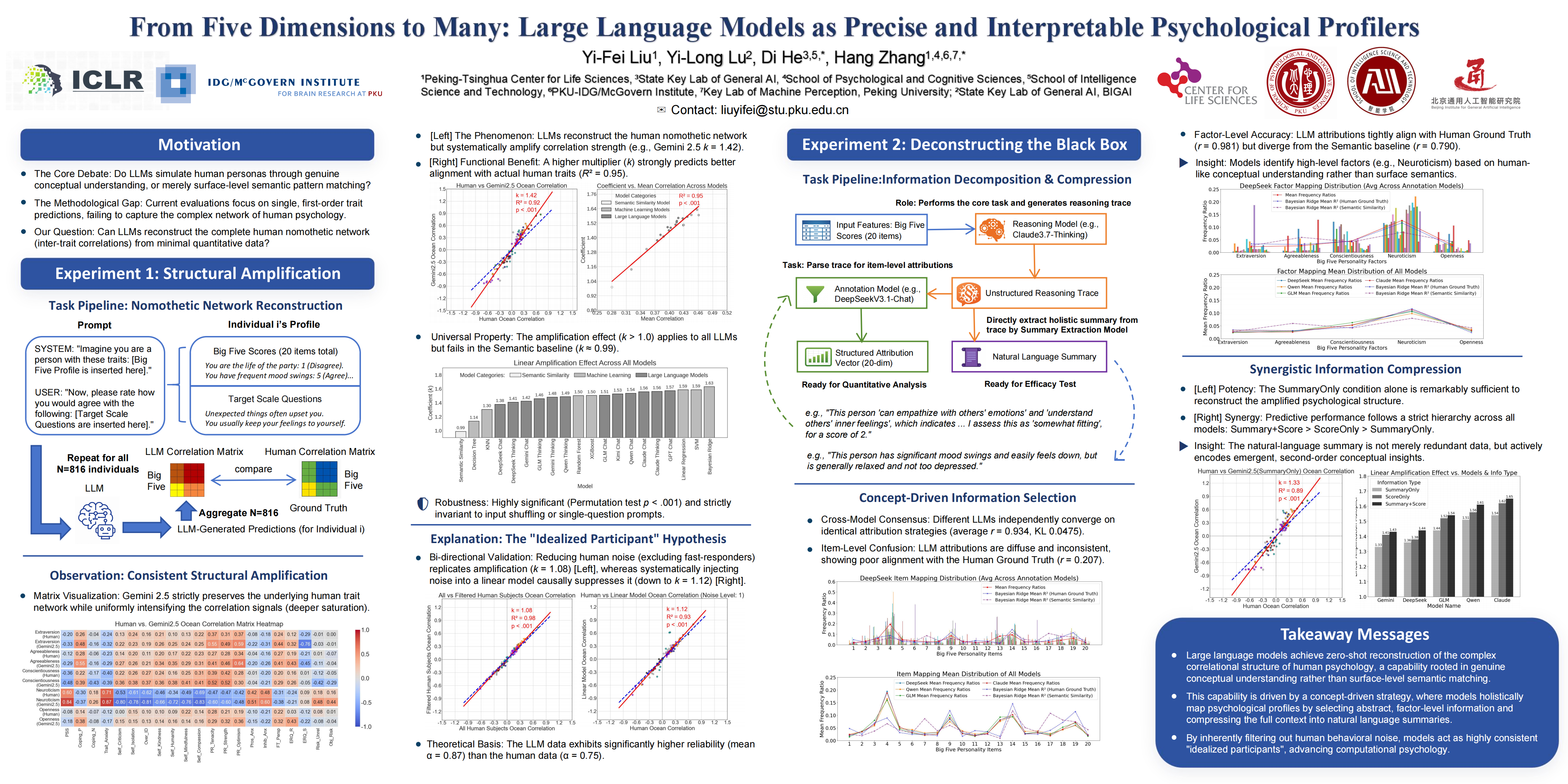
Psychological constructs within individuals are widely believed to be interconnected. We investigated whether and how Large Language Models (LLMs) can model the correlational structure of human psychological traits from minimal quantitative inputs. We prompted various LLMs with Big Five Personality Scale responses from 816 human individuals to role-play their responses on nine other psychological scales. LLMs demonstrated remarkable accuracy in capturing human psychological structure, with the inter-scale correlation patterns from LLM-generated responses strongly aligning with those from human data (R² > 0.88). This zero-shot performance substantially exceeded predictions based on semantic similarity and approached the accuracy of machine learning algorithms trained directly on the dataset. Analysis of reasoning traces revealed that LLMs use a systematic two-stage process: First, they transform raw Big Five responses into natural language personality summaries through information selection and compression, analogous to generating sufficient statistics. Second, they generate target scale responses based on reasoning from these summaries. For information selection, LLMs identify the same key personality factors as trained algorithms, though they fail to differentiate item importance within factors. The resulting compressed summaries are not merely redundant representations but capture synergistic information—adding them to original scores enhances prediction alignment, suggesting they encode emergent, second-order patterns of trait interplay. Our findings demonstrate that LLMs can precisely predict individual participants' psychological traits from minimal data through a process of abstraction and reasoning, offering both a powerful tool for psychological simulation and valuable insights into their emergent reasoning capabilities.
Shoot First, Ask Questions Later? Building Rational Agents that Explore and Act Like People
Gabriel Grand ⋅ Valerio Pepe ⋅ Joshua B Tenenbaum ⋅ Jacob Andreas
Many emerging applications of AI—from scientific discovery to medical diagnosis—require agents to seek information strategically: forming hypotheses, asking targeted questions, and making decisions under uncertainty. In high-stakes settings with limited resources, do language models (LMs) behave like rational agents? Drawing on insights from human cognition, we develop methods to evaluate and enhance agentic information-seeking. First, we introduce a decision-oriented dialogue task called Collaborative Battleship, in which a Captain must balance exploration (asking questions) and action (taking shots), while a Spotter must supply accurate, contextually-grounded answers. Compared to human players (N=42), we find that many LM agents struggle to ask informative questions, produce accurate answers, and identify high-utility actions. To address these gaps, we develop novel Monte Carlo inference strategies for LMs inspired by Bayesian Experimental Design (BED). For Spotter agents, our approach boosts accuracy by up to 14.7% absolute over LM-only baselines; for Captain agents, it raises expected information gain (EIG) by up to 0.227 bits (94.2% of the achievable noise ceiling). Combined, these components yield sharper targeting (+0.303–0.374 F1), and enable weaker LMs, such as Llama-4-Scout, to outperform both humans (8% → 82% win rate) and frontier models (0% → 67% win rate vs. GPT-5) at ≈1% of GPT-5's cost. We replicate these findings on Guess Who?, where our methods significantly boost accuracy (+28.3–42.4 p.p.), demonstrating their general applicability for building information-seeking agents.
Assembling the Mind's Mosaic: Towards EEG Semantic Intent Decoding
Jiahe Li ⋅ Junru Chen ⋅ Fanqi Shen ⋅ Jialan Yang ⋅ Jada Li ⋅ Zhizhang Yuan ⋅ Baowen Cheng ⋅ Li Meng ⋅ Yang Yang
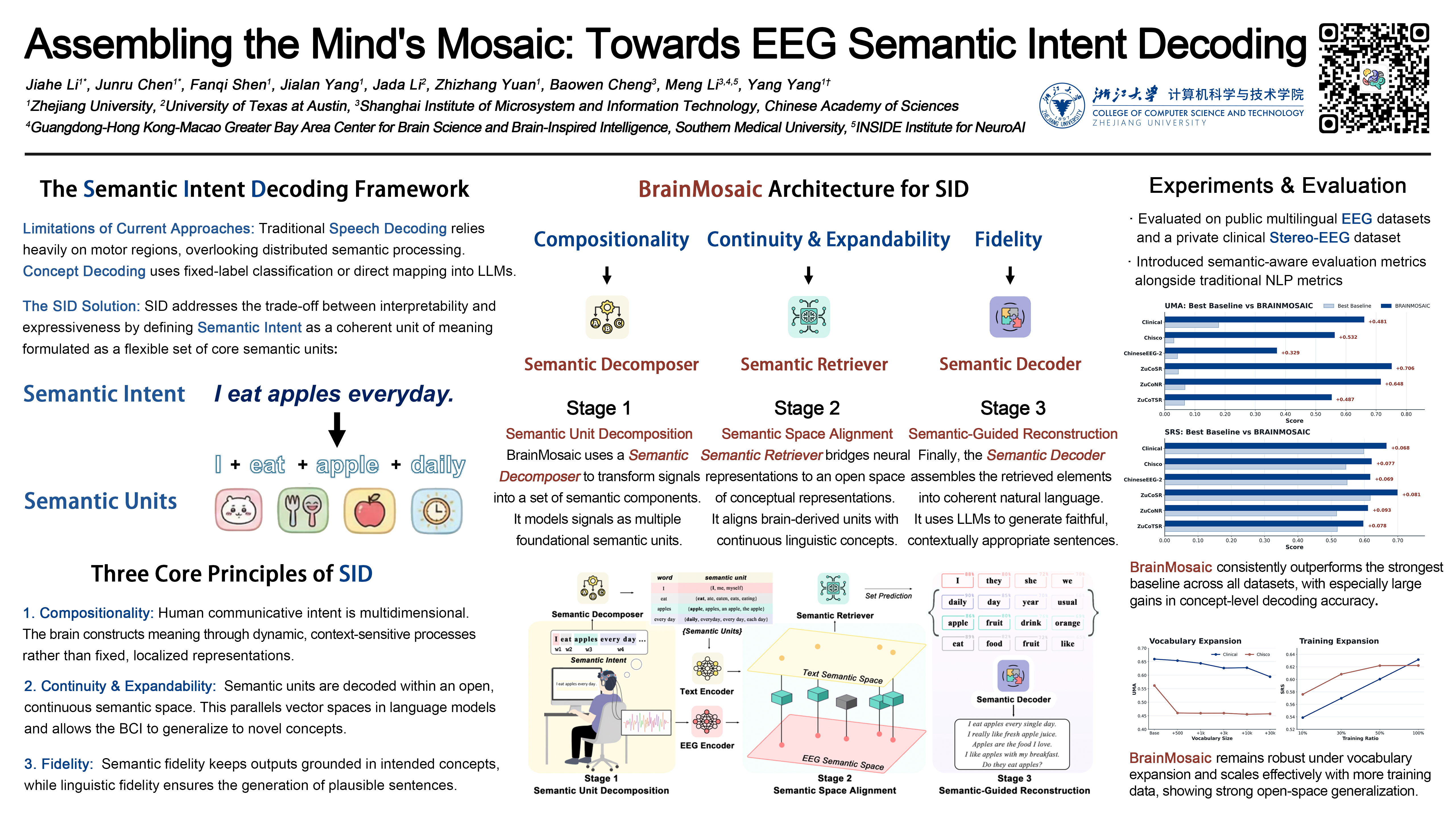
Enabling natural communication through brain–computer interfaces (BCIs) remains one of the most profound challenges in neuroscience and neurotechnology. While existing frameworks offer partial solutions, they are constrained by oversimplified semantic representations and a lack of interpretability. To overcome these limitations, we introduce Semantic Intent Decoding(SID), a novel framework that translates neural activity into natural language by modeling meaning as a flexible set of compositional semantic units. SID is built on three core principles: semantic compositionality, continuity and expandability of semantic space, and fidelity in reconstruction. We present BrainMosaic, a deep learning architecture implementing SID. BrainMosaic decodes multiple semantic units from EEG/SEEG signals using set matching and then reconstructs coherent sentences through semantic-guided reconstruction. This approach moves beyond traditional pipelines that rely on fixed-class classification or unconstrained generation, enabling a more interpretable and expressive communication paradigm. Extensive experiments on multilingual EEG and clinical SEEG datasets demonstrate that SID and BrainMosaic offer substantial advantages over existing frameworks, paving the way for natural and effective BCI-mediated communication.
Spiking Discrepancy Transformer for Point Cloud Analysis
Yijie Lu ⋅ Zhiyi Pan ⋅ Renrui Zhang ⋅ Yanhao Jia ⋅ Ronggang Wang ⋅ Zhaokun Zhou
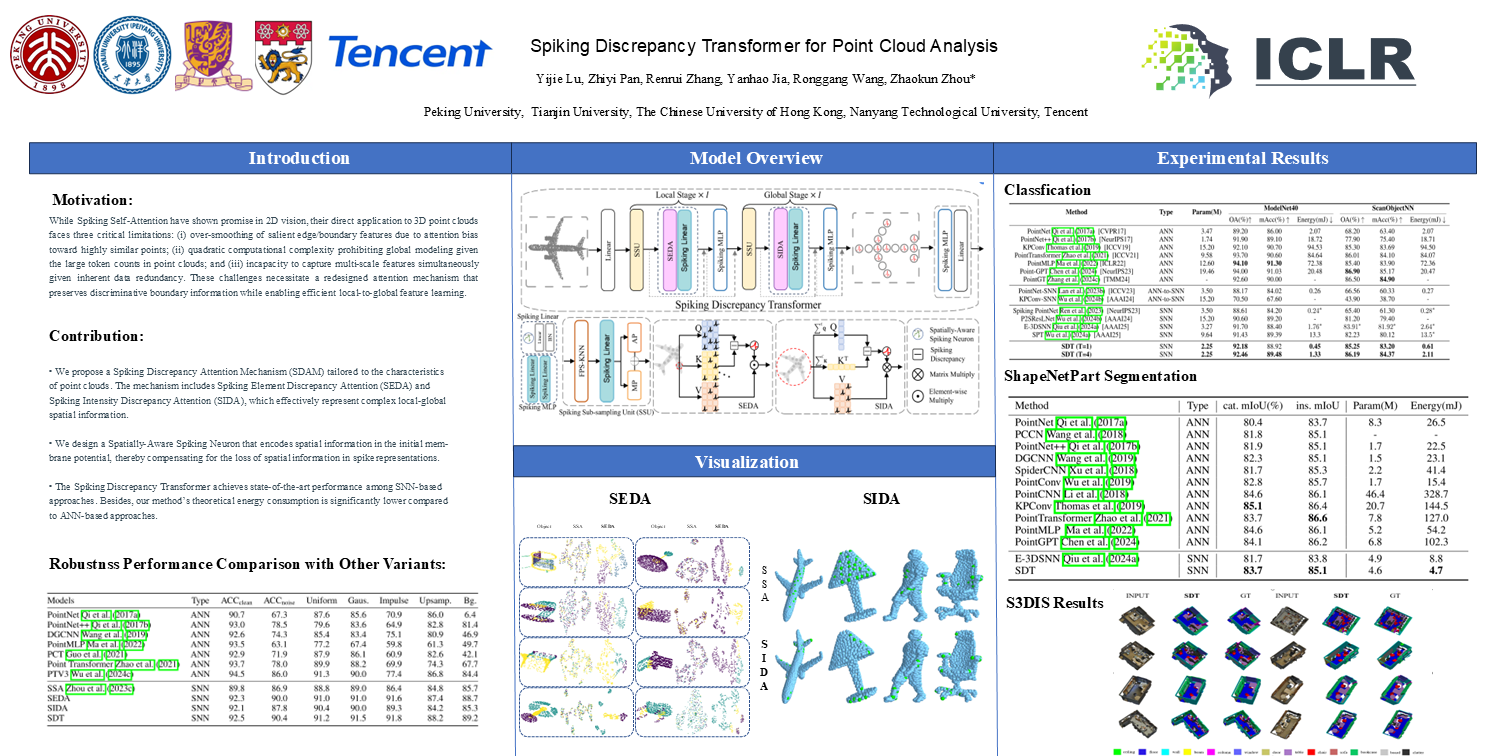
Spiking Transformer has sparked growing interest, with the Spiking Self-Attention merging spikes with self-attention to deliver both energy efficiency and competitive performance. However, existing work primarily focuses on 2D visual tasks, and in the domain of 3D point clouds, the disorder and complexity of spatial information, along with the scale of the point clouds, present significant challenges. For point clouds, we introduce spiking discrepancy, measuring differences in spike features to highlight key information, and then construct the Spiking Discrepancy Attention Mechanism (SDAM). SDAM contains two variants: the Spiking Element Discrepancy Attention captures local geometric correlations between central points and neighboring points, while the Spiking Intensity Discrepancy Attention characterizes structural patterns of point clouds based on macroscopic spike statistics. Moreover, we propose a Spatially-Aware Spiking Neuron. Based on these, we construct a hierarchical Spiking Discrepancy Transformer. Experimental results demonstrate that our method achieves state-of-the-art performance within the Spiking Neural Networks and exhibits impressive performance compared to Artificial Neural Networks along with a few parameters and significantly lower theoretical energy consumption.
Advancing Spatiotemporal Representations in Spiking Neural Networks via Parametric Invertible Transformation
Yinsong Yan ⋅ Yujie Wu ⋅ Jibin Wu
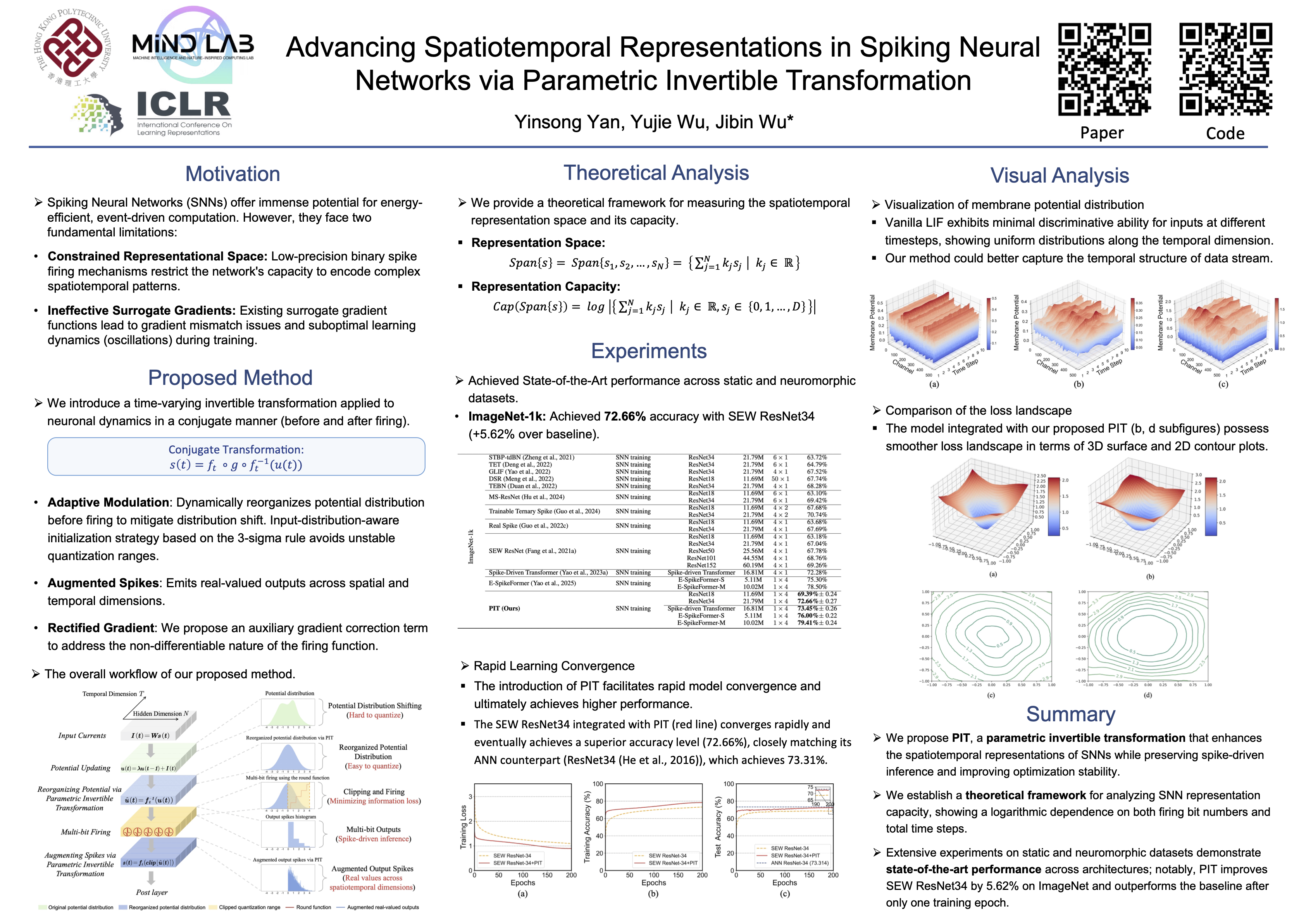
Spiking Neural Networks (SNNs) are regarded as energy-efficient neural architectures due to their event-driven, spike-based computation paradigm. However, existing SNNs suffer from two fundamental limitations: (1) the constrained representational space imposed by binary spike firing mechanisms, which restricts the network's capacity to encode complex spatiotemporal patterns, and (2) the ineffective design of surrogate gradient functions that leads to gradient mismatch issues and suboptimal learning dynamics. To address these challenges, we propose the Parametric Invertible Transformation (PIT), which operates in a conjugate manner with neuronal dynamics to achieve adaptive modulation and augmented spike representations simultaneously. Second, we design an auxiliary gradient correction term to mitigate the gradient mismatch issue and oscillation phenomena during training. Moreover, we introduce a theoretical framework for analyzing the spatiotemporal representation space of SNNs. Extensive experiments on both static and neuromorphic datasets demonstrate state-of-the-art performance with our proposed method. This approach lays the theoretical foundation for expanding the spatiotemporal representations of SNNs, offering a viable pathway for developing low-latency and high-performance neuromorphic processing systems in resource-constrained environments. The code is available at https://github.com/YinsongYan/ICLR26.
AlphaSAGE: Structure-Aware Alpha Mining via GFlowNets for Robust Exploration
Binqi Chen ⋅ Hongjun Ding ⋅ Ning Shen ⋅ Taian Guo ⋅ Jinsheng Huang ⋅ Luchen Liu ⋅ Ming Zhang
The automated mining of predictive signals, or alphas, is a central challenge in quantitative finance. While Reinforcement Learning (RL) has emerged as a promising paradigm for generating formulaic alphas, existing frameworks are fundamentally hampered by a triad of interconnected issues. First, they suffer from reward sparsity, where meaningful feedback is only available upon the completion of a full formula, leading to inefficient and unstable exploration. Second, they rely on semantically inadequate sequential representations of mathematical expressions, failing to capture the structure that determine an alpha's behavior. Third, the standard RL objective of maximizing expected returns inherently drives policies towards a single optimal mode, directly contradicting the practical need for a diverse portfolio of non-correlated alphas. To overcome these challenges, we introduce AlphaSAGE (Structure-Aware Alpha Mining via Generative Flow Networks for Robust Exploration), a novel framework is built upon three cornerstone innovations: (1) a structure-aware encoder based on Relational Graph Convolutional Network (RGCN); (2) a new framework with Generative Flow Networks (GFlowNets); and (3) a dense, multi-faceted reward structure. Empirical results demonstrate that AlphaSAGE outperforms existing baselines in mining a more diverse, novel, and highly predictive portfolio of alphas, thereby proposing a new paradigm for automated alpha mining. Our code is available at https://anonymous.4open.science/r/AlphaSAGE-3BA9.
Robust Equation Structure Learning with Adaptive Refinement
Yunlun Li ⋅ Sinno Jialin Pan
Symbolic regression (SR) aims to automate scientific discovery, but often truncates the hypothetico–deductive cycle, focusing on hypothesis and experiment while lacking systematic analysis. We introduce RESTART, a framework that closes this loop by adding a principled analysis stage to diagnose and correct structural errors. RESTART features two core mechanisms: a short-term refinement process that uses boosting to identify unexplained signals and guide an LLM toward targeted corrections, and a long-term structure library that distills successful refinements into reusable code snippets for cumulative knowledge. On LLM-SRBench across Physics, Biology, and Materials Science, RESTART achieves lower error and higher accuracy than state-of-the-art baselines. It also generalizes robustly, recovering near-exact functional forms on out-of-distribution data, representing a significant advance toward fully automated scientific discovery.
Local Success Does Not Compose: Benchmarking Large Language Models for Compositional Formal Verification
Xu Xu ⋅ Xin Li ⋅ Xingwei Qu ⋅ Jie Fu ⋅ Binhang Yuan
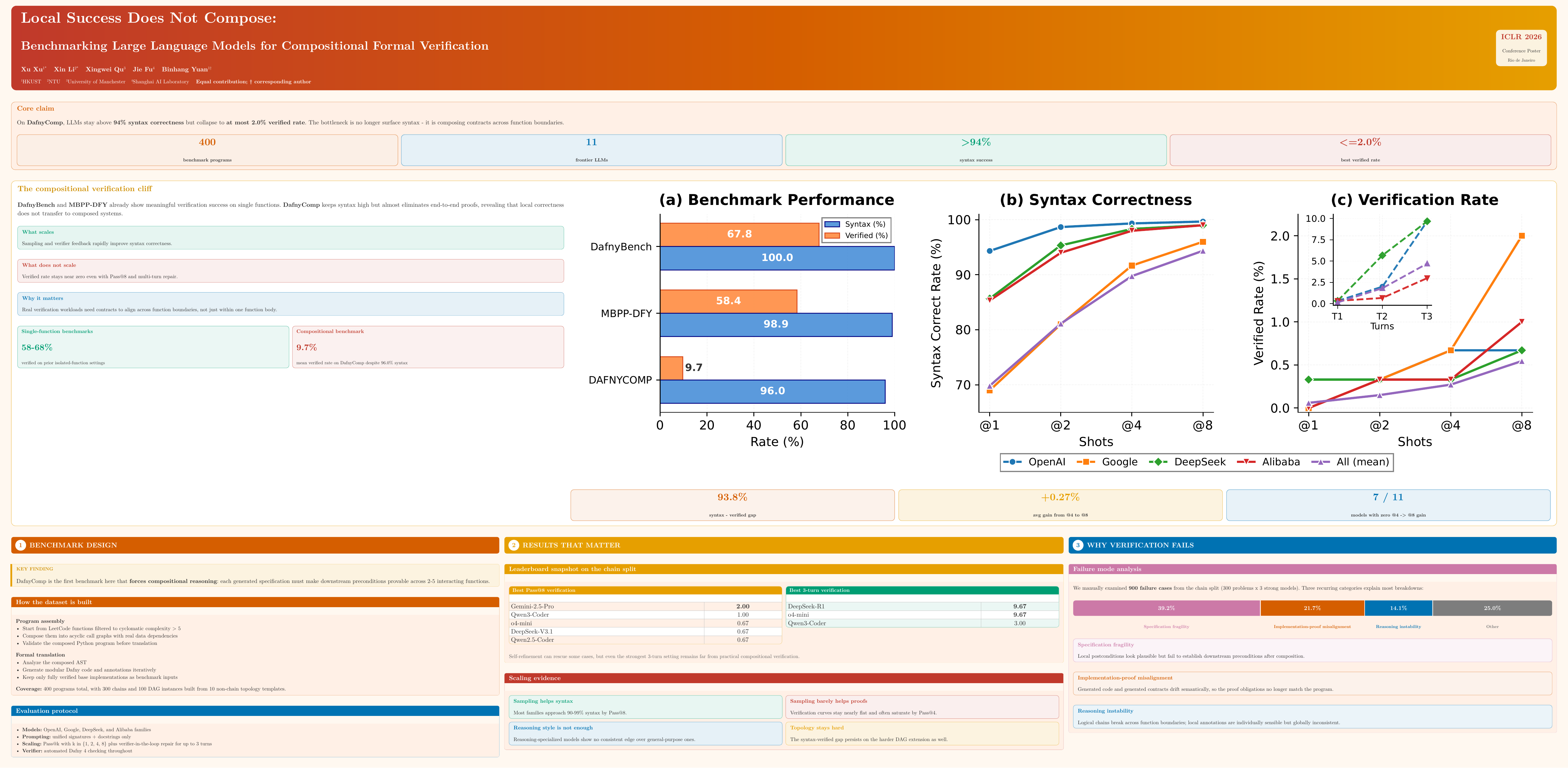
Despite rapid advances in code generation, current Large Language Models (LLMs) still struggle with reliable and verifiable code synthesis in the presence of compositional reasoning requirements across multi-function programs. To study this systematically, we introduce DafnyCOMP, a benchmark for generating compositional Dafny specifications for programs consisting of multiple interacting functions with non-trivial data dependencies. Unlike prior benchmarks that focus primarily on single-function annotation, DafnyCOMP targets programs composed of 2-5 functions arranged in acyclic call graphs, requiring specifications that establish correctness across component boundaries. DafnyCOMP contains 400 automatically synthesized programs: 300 chain-structured instances and 100 non-chain DAG instances generated from 10 topology templates. We evaluate frontier LLMs from major providers under a unified prompting and verification protocol. While these models achieve high syntactic well-formedness (>99%) and moderate end-to-end verification (>58%) on prior single-function Dafny verification benchmarks, they obtain near-zero end-to-end verification on DafnyCOMP. On the chain split, even the strongest evaluated model reaches only 2% verification at Pass@8, with most models below 1%; the difficulty persists under broader topologies and stronger test-time scaling. Our analysis identifies three recurring failure modes that hinder cross-functional reasoning: specification fragility, implementation--proof misalignment, and reasoning instability. DafnyCOMP provides a diagnostic benchmark for tracking progress in verifiable code generation, highlighting that bridging local correctness to compositional verification remains a key open challenge.
Urban Socio-Semantic Segmentation with Vision-Language Reasoning
Yu Wang ⋅ Yi Wang ⋅ Rui Dai ⋅ Yujie Wang ⋅ Kaikui Liu ⋅ Xiangxiang Chu ⋅ Yansheng Li
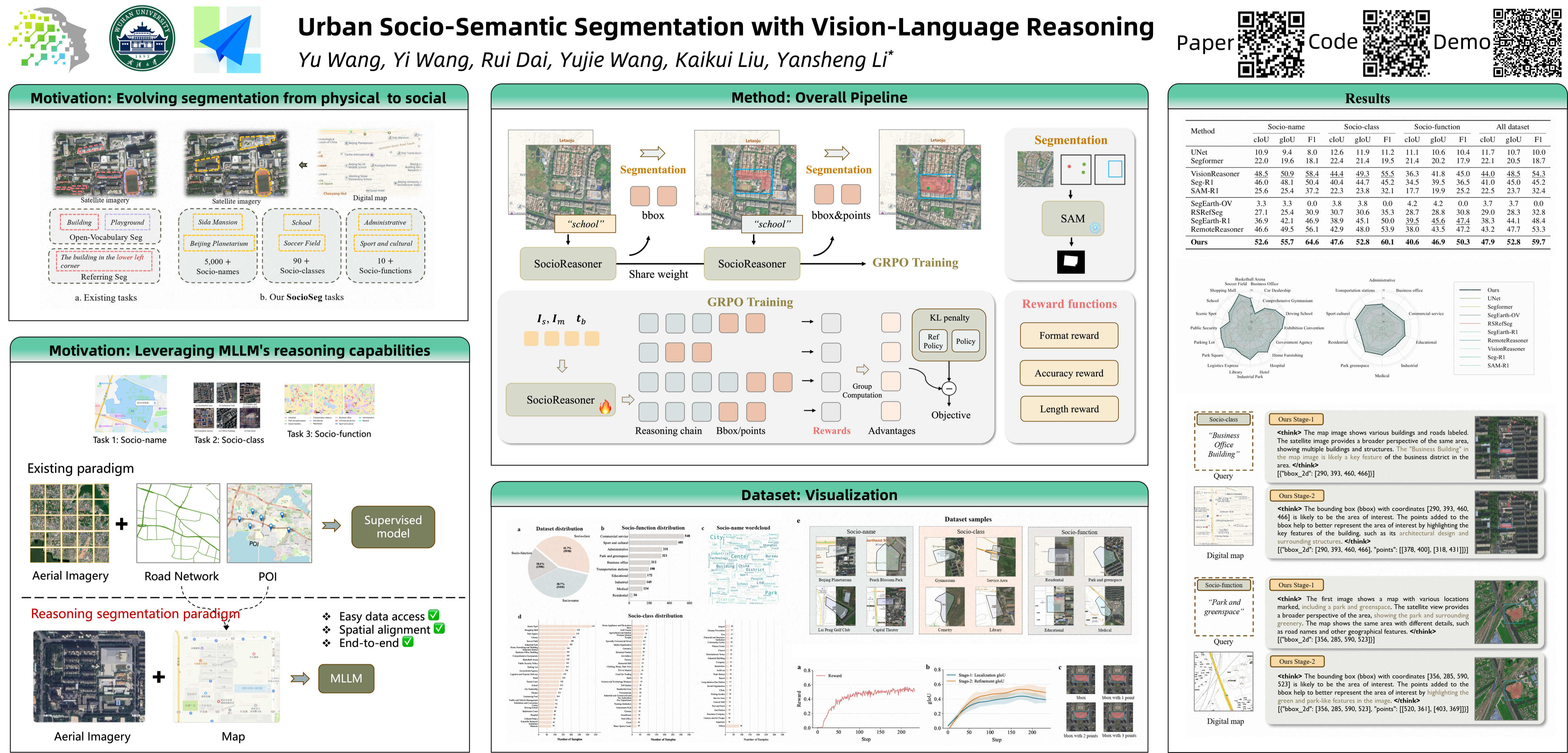
As hubs of human activity, urban surfaces consist of a wealth of semantic entities. Segmenting these various entities from satellite imagery is crucial for a range of downstream applications. Current advanced segmentation models can reliably segment entities defined by physical attributes (e.g., buildings, water bodies) but still struggle with socially defined categories (e.g., schools, parks). In this work, we achieve socio-semantic segmentation by vision-language model reasoning. To facilitate this, we introduce the Urban Socio-Semantic Segmentation dataset named SocioSeg, a new resource comprising satellite imagery, digital maps, and pixel-level labels of social semantic entities organized in a hierarchical structure. Additionally, we propose a novel vision-language reasoning framework called SocioReasoner that simulates the human process of identifying and annotating social semantic entities via cross-modal recognition and multi-stage reasoning. We employ reinforcement learning to optimize this non-differentiable process and elicit the reasoning capabilities of the vision-language model. Experiments demonstrate our approach's gains over state-of-the-art models and strong zero-shot generalization. The dataset and code are open-sourced under the Apache License 2.0 at https://github.com/AMAP-ML/SocioReasoner.
MetaMuse: Algorithm Generation via Creative Ideation
Ruiying Ma ⋅ Chieh-Jan Mike Liang ⋅ Yanjie Gao ⋅ Francis Yan
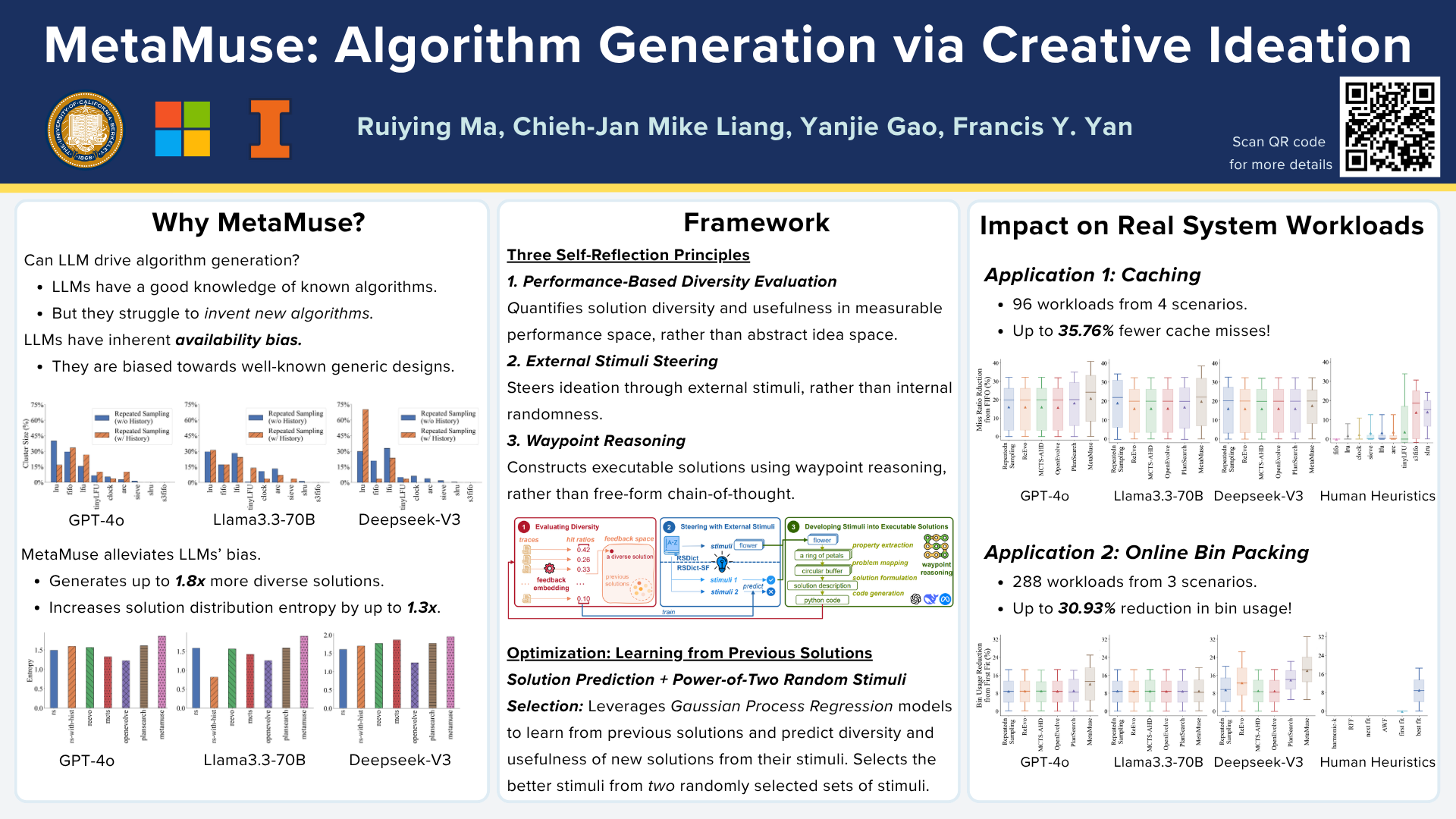
Designing system algorithms remains challenging, where the discontinuous nature of the solution space often forces system engineers to rely on generic heuristics at the expense of performance. We study whether LLMs can practically drive algorithm generation, and find that they are biased towards well-known generic designs, rather than making the creative leaps needed to navigate the discontinuous solution space. To address this limitation, we introduce MetaMuse, a framework for creative ideation built on three self-reflection principles: (1) quantifying solution diversity and usefulness in measurable performance space, rather than abstract idea space, (2) steering ideation through external stimuli, rather than internal randomness, and (3) constructing executable solutions using waypoint reasoning, rather than free-form chain-of-thought. Considering two critical online problems at a global cloud provider, extensive evaluations show that MetaMuse can generate high-performing solutions: it reduces cache misses by up to 35.76% in cache replacement and reduces bin usage by up to 30.93% in online bin packing.
CrossPL: Systematic Evaluation of Large Language Models for Cross Programming Language Interoperating Code Generation
Zhanhang Xiong ⋅ Dongxia Wang ⋅ Yuekang Li ⋅ Xinyuan An ⋅ Wenhai Wang
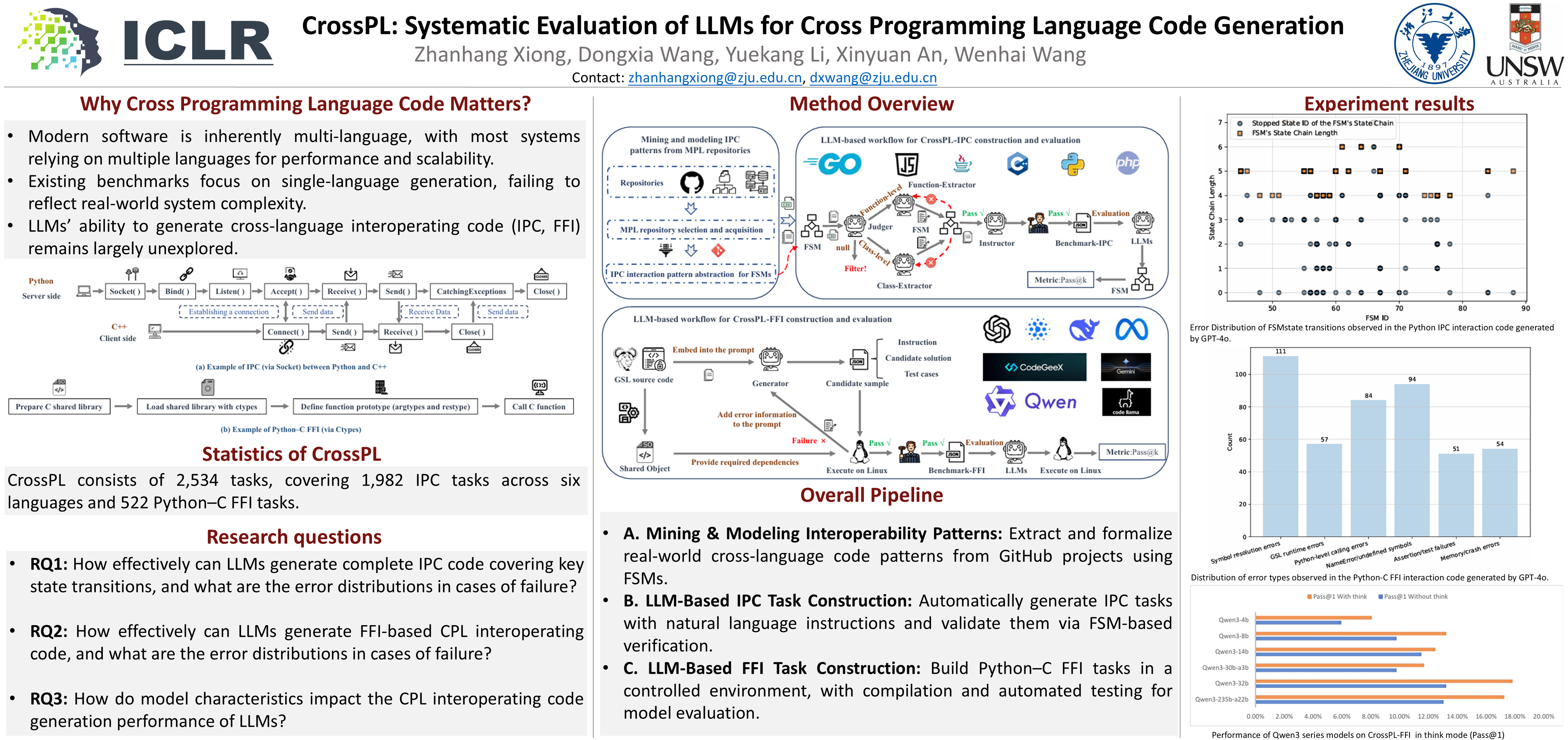
Large language models (LLMs) have shown strong performance in single-language code generation, but how well they produce cross-programming-language (CPL) interoperating code, which is widely used in cross-platform and complex software systems, remains underexplored. Therefore, a benchmark for evaluating CPL interaction code generation is essential. However, Constructing such a benchmark is challenging owing to sparse interoperating code in real-world multi-programming-language projects, diverse Inter-process Communication (IPC) mechanisms, vast Foreign Function Interface (FFI) language pairs, and the difficulty of evaluation. To address this gap, we introduce CrossPL, the first benchmark for systematically assessing LLM performance of CPL code generation across two primary interoperation modes and 2534 tasks, specifically 1,982 IPC tasks spanning six languages and 522 Python–C FFI tasks. Its construction involved a review of CPL documentation, 156 finite state machines, and analysis of 19,169 multi-language GitHub repositories. Two LLM-based workflows are designed for automating the benchmark construction and evaluation, and assess 20 state-of-the-art LLMs. Results reveal clear limitations: the best model achieves only 19.5\% Pass@1 and 26.46\% Pass@5 on the FFI subset, in sharp contrast to the strong performance of these models on single-language benchmarks. These findings underscore the urgent need for improving LLMs regarding CPL interoperating code generation. The benchmark and code are available at https://github.com/newxzh/crosspl.
HackWorld: Evaluating Computer-Use Agents on Exploiting Web Application Vulnerabilities
Xiaoxue Ren ⋅ Penghao Jiang ⋅ Kaixin Li ⋅ Zhiyong Huang ⋅ Xiaoning Du ⋅ Jiaojiao Jiang ⋅ Zhenchang Xing ⋅ Jiamou Sun ⋅ Terry Yue Zhuo
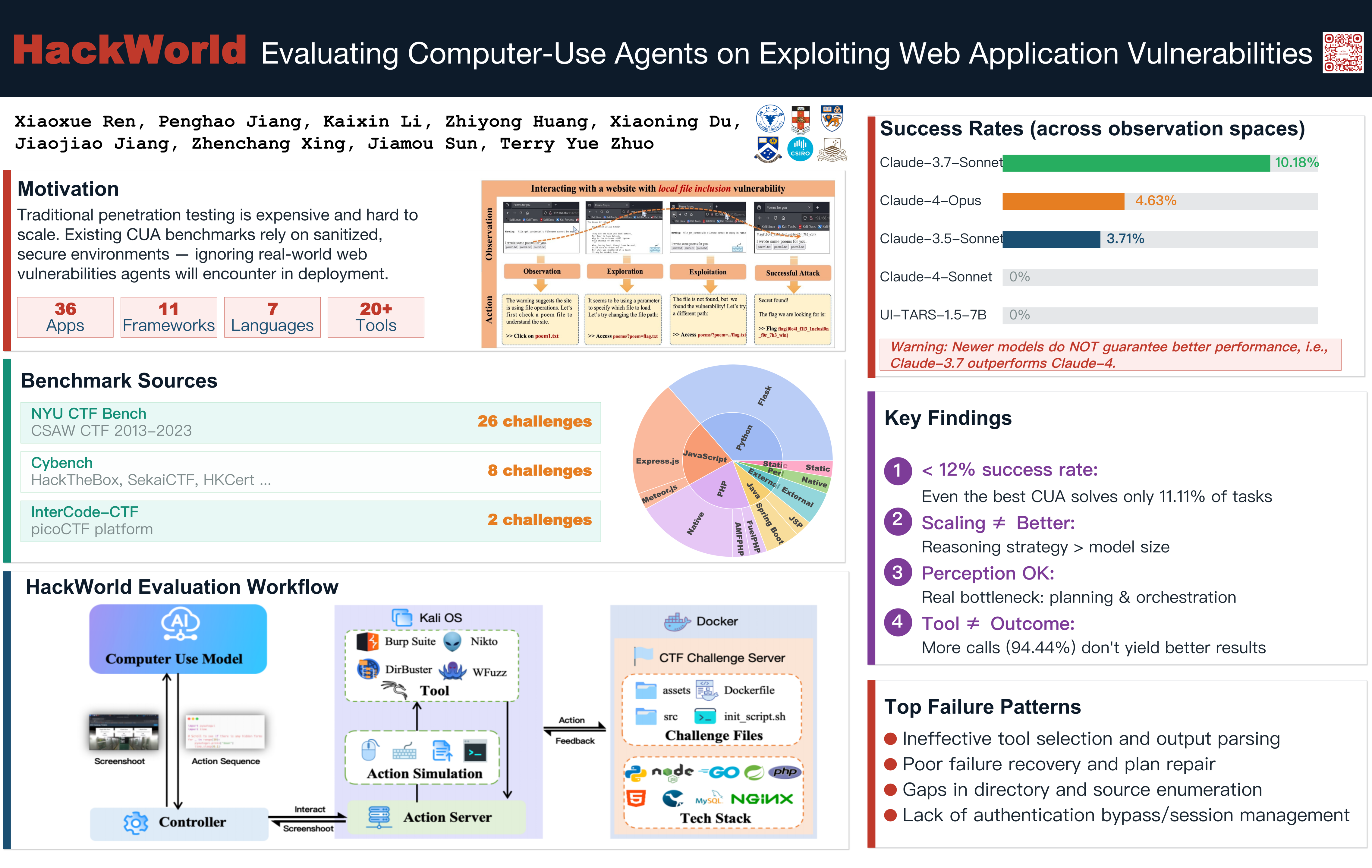
Web applications are prime targets for cyberattacks due to their role as entry points to vital services and sensitive data repositories. Traditional penetration testing is expensive and requires specialized expertise, creating scalability challenges for securing the expanding web ecosystem. While language model agents have shown promise in certain cybersecurity tasks, modern web applications require visual understanding of complex user interfaces, dynamic content rendering, and multi-step interactive workflows that only computer-use agents (CUAs) can handle. Despite CUAs' demonstrated capabilities in web browsing and visual task automation, their potential to discover and exploit web application vulnerabilities through graphical interfaces remains unknown. We introduce HackWorld, the first evaluation framework for systematically assessing CUAs' capabilities in exploiting web application vulnerabilities through visual interaction. Unlike existing benchmarks using sanitized environments, HackWorld exposes CUAs to 36 curated applications spanning 11 frameworks and 7 languages, containing realistic vulnerabilities including injection flaws, authentication bypasses, and unsafe input handling. Our framework directly evaluates CUAs' ability to discover and exploit these vulnerabilities using Capture-the-Flag (CTF) methodology while navigating complex web interfaces. Evaluation of state-of-the-art CUAs reveals exploitation rates below 12%, struggling to plan multi-step attacks and use security tools effectively. Our results expose CUAs' limited cybersecurity skills when operating on vulnerable web applications, opening future research directions on developing security-aware CUAs for vulnerability detection and exploitation.
Towards Faithful Reasoning in Remote Sensing: A Perceptually-Grounded GeoSpatial Chain-of-Thought for Vision-Language Models
Jiaqi Liu ⋅ Lang Sun ⋅ Ronghao Fu ⋅ Bo Yang
Vision-Language Models (VLMs) in remote sensing often fail at complex analytical tasks, a limitation stemming from their end-to-end training paradigm that bypasses crucial reasoning steps and leads to unverifiable outputs. To address this limitation, we introduce the Perceptually-Grounded Geospatial Chain-of-Thought (Geo-CoT), a framework that models remote sensing analysis as a verifiable, multi-step process. We instill this analytical process through a two-stage alignment strategy, leveraging Geo-CoT380k, the first large-scale dataset of structured Geo-CoT rationales. This strategy first employs supervised fine-tuning (SFT) to instill the foundational cognitive architecture, then leverages Group Reward Policy Optimization (GRPO) to refine the model’s reasoning policy towards factual correctness. The resulting model, RSThinker, outputs both a final answer and its justifying, verifiable analytical trace. This capability yields dominant performance, significantly outperforming state-of-the-art models across a comprehensive range of tasks. The public release of our Geo-CoT380k dataset and RSThinker model upon publication serves as a concrete pathway from opaque perception towards structured, verifiable reasoning for Earth Observation.
Visual Compositional Tuning
Xindi Wu ⋅ Hee Seung Hwang ⋅ Polina Kirichenko ⋅ Esin Tureci ⋅ Olga Russakovsky
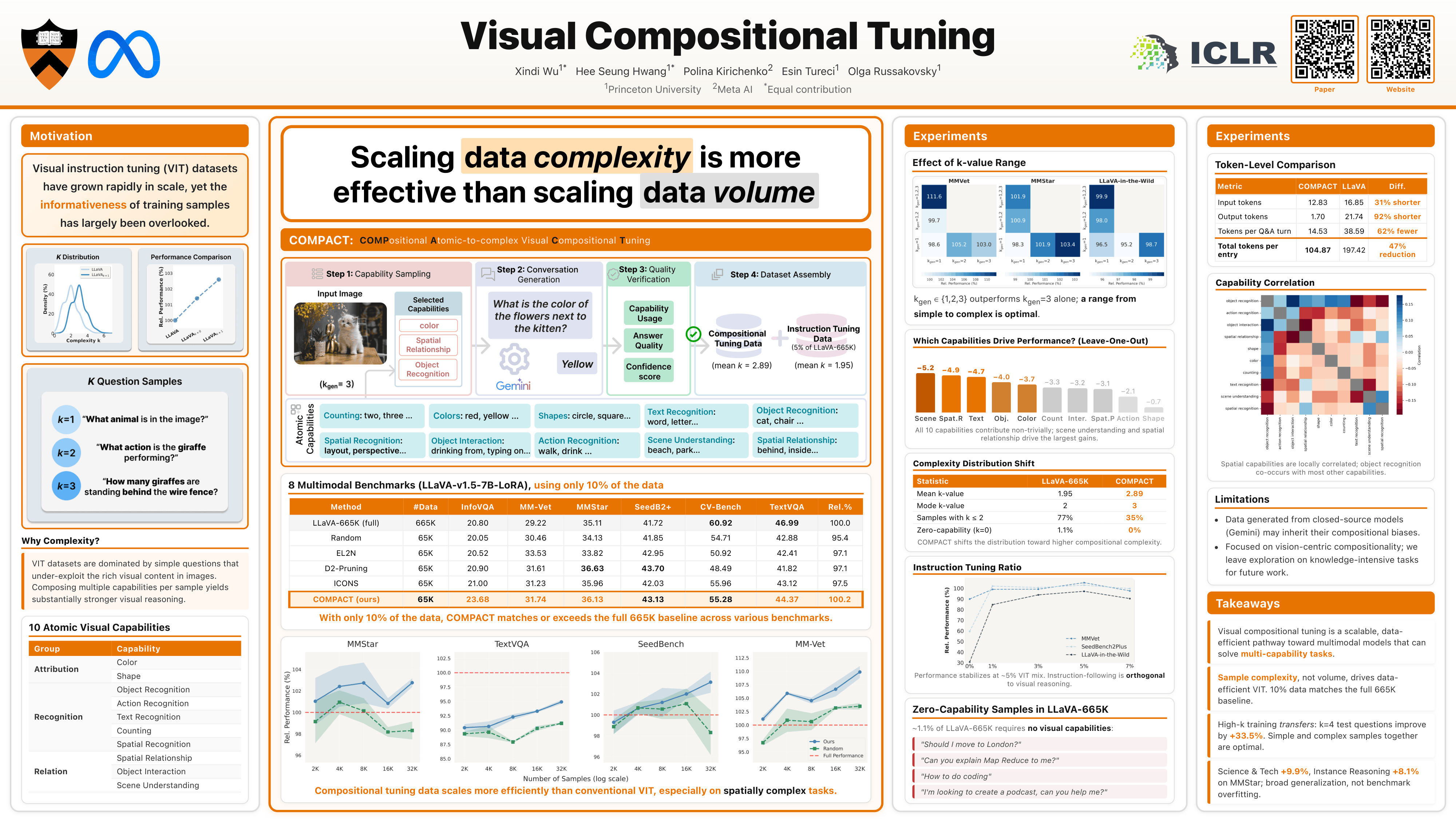
Visual instruction tuning (VIT) datasets have grown rapidly in scale, yet the informativeness of individual training samples has largely been overlooked. Recent dataset selection methods have shown that a small fraction of such datasets enriched with informative samples can lead to efficient finetuning of Multimodal Large Language Models. In this work, we explore the impact of sample complexity on informative data curation and introduce COMPACT (COMPositional Atomic-to-complex Visual Compositional Tuning), a visual compositional tuning data recipe that scales training sample complexity by combining multiple atomic visual capabilities in a single training example. Concretely, we synthesize rich and informative text questions for each image, allowing us to significantly reduce the number of training examples required for effective visual instruction tuning. COMPACT demonstrates superior data efficiency compared to existing data reduction methods. When applied to the LLAVA-665K VIT dataset, COMPACT reduces the data budget by 90% while still achieving 100.2% of the full VIT performance (compared to only 97.5% by the state-of-the-art method) across eight multimodal benchmarks. Further, training on the COMPACT data outperforms training on the full-scale VIT data on particularly complex benchmarks such as MM-Vet (+8.6%) and MMStar (+2.9%). COMPACT offers a scalable and efficient synthetic data generation recipe to improve on vision-language tasks.
Discrete Diffusion for Bundle Construction
Teng Tu ⋅ Ai Li ⋅ Yunshan Ma ⋅ Shuo Xu ⋅ Xiaohao Liu ⋅ Haokai Ma ⋅ Liang Pang ⋅ Tat-Seng Chua
As a central task in product bundling, bundle construction aims to select a subset of items from large item catalogs to build an entire bundle or, more practically, complete a partial bundle. Existing methods often rely on the sequential construction paradigm that predicts items one at a time, nevertheless, this paradigm is fundamentally unsuitable for the essentially unordered bundles. In contrast, non-sequential methods model a bundle as a set, but still face two dimensionality curses: the combinatorial space grows exponentially with both bundle length and catalog size. Accordingly, we identify two technical challenges: 1) how to effectively and efficiently model the higher-order intra-bundle relations with the growth of bundle length; and 2) how to learn item representations that remain discriminative while avoiding search directly over a huge item catalog. To address these challenges, we propose DDBC, a Discrete Diffusion model for Bundle Construction. DDBC leverages a masked denoising diffusion process to build bundles non-sequentially, capturing joint dependencies among items without relying on a fixed decoding order, thereby partially alleviating the combinatorial challenge introduced by increasing bundle length. To mitigate the curse of large catalog size, we integrate residual vector quantization (RVQ), which compresses item embeddings into discrete codes drawn from a globally shared codebook, enabling more efficient search while retaining semantic granularity. We evaluate our method on real-world bundle construction datasets of music playlist continuation and fashion outfit completion, and the experimental results show that DDBC can achieve more than 100\% relative performance improvements compared with state-of-the-art baseline methods. Ablation and model analyses further confirm the effectiveness of both the diffusion backbone and the RVQ tokenizer, with gains becoming more pronounced for longer bundles and larger catalogs. Our code is available at https://github.com/241416/DDBC.
SportR: A Benchmark for Multimodal Large Language Model Reasoning in Sports
Haotian Xia ⋅ Haonan Ge ⋅ Junbo Zou ⋅ Hyun Choi ⋅ Xuebin Zhang ⋅ Danny Suradja ⋅ Botao Rui ⋅ Ethan Tran ⋅ Wendy Jin ⋅ Zhen Ye ⋅ Xiyang Lin ⋅ Christopher Lai ⋅ Shengjie Zhang ⋅ Junwen Miao ⋅ Shichao Chen ⋅ Rhys Tracy ⋅ Vicente Ordonez ⋅ Weining Shen ⋅ Hanjie Chen
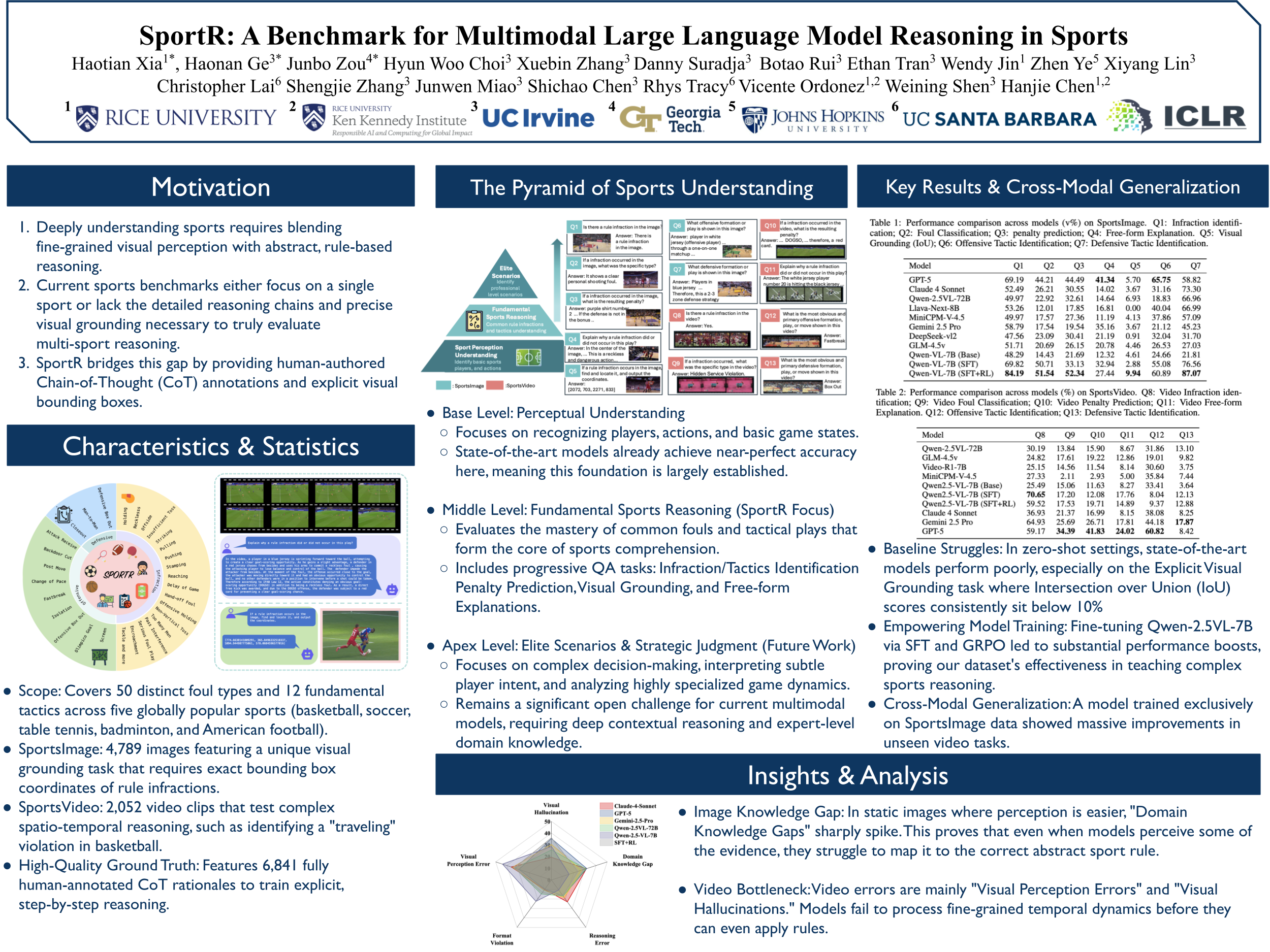
Artificial Intelligence brings powerful new tools to sports, from automated officiating to tactical analysis, but these applications all depend on a core reasoning capability. Deeply understanding sports requires an intricate blend of fine-grained visual perception and rule-based reasoning—a challenge that pushes the limits of current multimodal models. To succeed, models must master three critical capabilities: perceiving nuanced visual details, applying abstract sport rule knowledge, and grounding that knowledge in specific visual evidence. Current sports benchmarks either cover single sports or lack the detailed reasoning chains and precise visual grounding needed to robustly evaluate these core capabilities in a multi-sport context. To address this gap, we introduce SportR, the first multi-sports large-scale benchmark designed to train and evaluate MLLMs on the fundamental reasoning required for sports intelligence. Our benchmark provides a dataset of 4,789 images and 2,052 videos. To enable granular evaluation, we structure our benchmark around a progressive hierarchy of question-answer (QA) pairs designed to probe reasoning at increasing depths—from simple infraction identification to complex penalty prediction. For the most advanced tasks requiring multi-step reasoning, such as determining penalties or explaining tactics, we provide 6,841 high-quality, human-authored Chain-of-Thought (CoT) annotations. In addition, our benchmark incorporates both image and video modalities and provides manual bounding box annotations to test visual grounding in the image part directly. Extensive experiments demonstrate the profound difficulty of our benchmark. State-of-the-art baseline models perform poorly on our most challenging tasks. While training on our data via Supervised Fine-Tuning and Reinforcement Learning improves these scores, they remain relatively low, highlighting a significant gap in current model capabilities. SportR presents a new challenge for the community, providing a critical resource to drive future research in multimodal sports reasoning. The dataset is available at https://github.com/chili-lab/SportR.
EvolProver: Advancing Automated theorem proving by Evolving Formalized Problems via Symmetry and Difficulty
Yuchen Tian ⋅ Ruiyuan Huang ⋅ Xuanwu WANG ⋅ Jing Ma ⋅ Zengfeng Huang ⋅ Ziyang Luo ⋅ Hongzhan Lin ⋅ Da Zheng ⋅ Lun Du
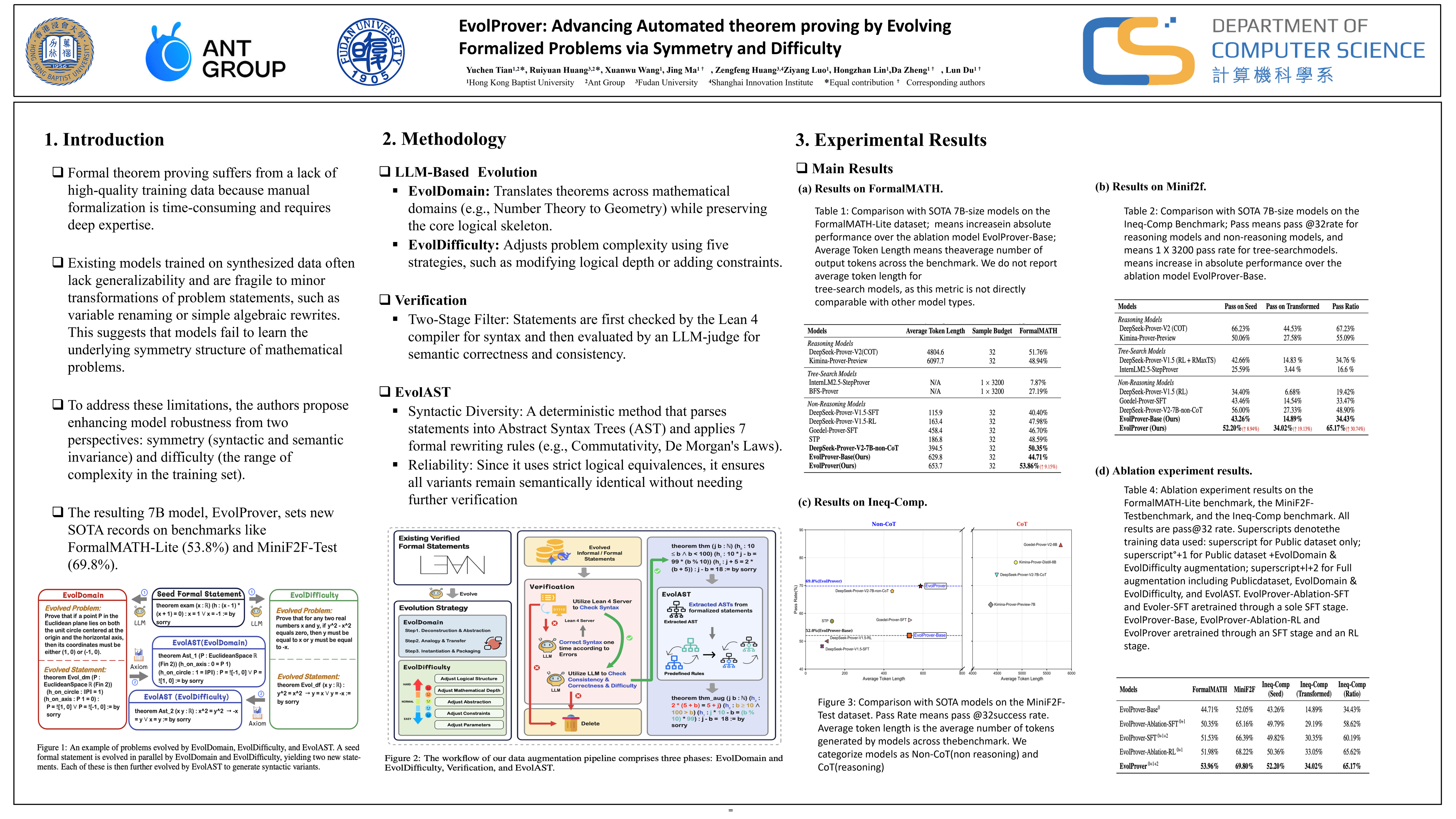
Large Language Models (LLMs) for formal theorem proving have shown significant promise, yet they often lack generalizability and are fragile to even minor transformations of problem statements. To address this limitation, we introduce a novel data augmentation pipeline designed to enhance model robustness from two perspectives: symmetry and difficulty. From the symmetry perspective, we propose two complementary methods: EvolAST, an Abstract Syntax Tree (AST) based approach that targets syntactic symmetry to generate semantically equivalent problem variants, and EvolDomain, which leverages LLMs to address semantic symmetry by translating theorems across mathematical domains. From the difficulty perspective, we propose EvolDifficulty, which uses carefully designed evolutionary instructions to guide LLMs in generating new theorems with a wider range of difficulty. We then use the evolved data to train EvolProver, a 7B-parameter non-reasoning theorem prover. EvolProver establishes a new state-of-the-art (SOTA) on FormalMATH-Lite with a 53.8\% pass@32 rate, surpassing all models of comparable size, including reasoning-based models. It also sets new SOTA records for non-reasoning models on MiniF2F-Test (69.8\% pass@32), Ineq-Comp-Seed (52.2\% pass@32), and Ineq-Comp-Transformed (34.0\% pass@32). Ablation studies further confirm our data augmentation pipeline's effectiveness across multiple benchmarks.
HiVid: LLM-Guided Video Saliency For Content-Aware VOD And Live Streaming
Jiahui Chen ⋅ Bo Peng ⋅ Lianchen Jia ⋅ Zeyu Zhang ⋅ Tianchi Huang ⋅ Lifeng Sun
Content-aware streaming requires dynamic, chunk-level importance weights to optimize subjective quality of experience (QoE). However, direct human annotation is prohibitively expensive while vision-saliency models generalize poorly. We introduce HiVid, the first framework to leverage Large Language Models (LLMs) as a scalable human proxy to generate high-fidelity weights for both Video-on-Demand (VOD) and live streaming. We address 3 non-trivial challenges: (1) To extend LLMs' limited modality and circumvent token limits, we propose a perception module to assess frames in a local context window, autoregressively building a coherent understanding of the video. (2) For VOD with rating inconsistency across local windows, we propose a ranking module to perform global re-ranking with a novel LLM-guided merge-sort algorithm. (3) For live streaming which requires low-latency, online inference without future knowledge, we propose a prediction module to predict future weights with a multi-modal time series model, which comprises a content-aware attention and adaptive horizon to accommodate asynchronous LLM inference. Extensive experiments show HiVid improves weight prediction accuracy by up to 11.5\% for VOD and 26\% for live streaming over SOTA baselines. Real-world user study validates HiVid boosts streaming QoE correlation by 14.7\%.
Automatic Stage Lighting Control: Is it a Rule-Driven Process or Generative Task?
Zijian Zhao ⋅ Dian Jin ⋅ Zijing Zhou ⋅ Xiaoyu Zhang
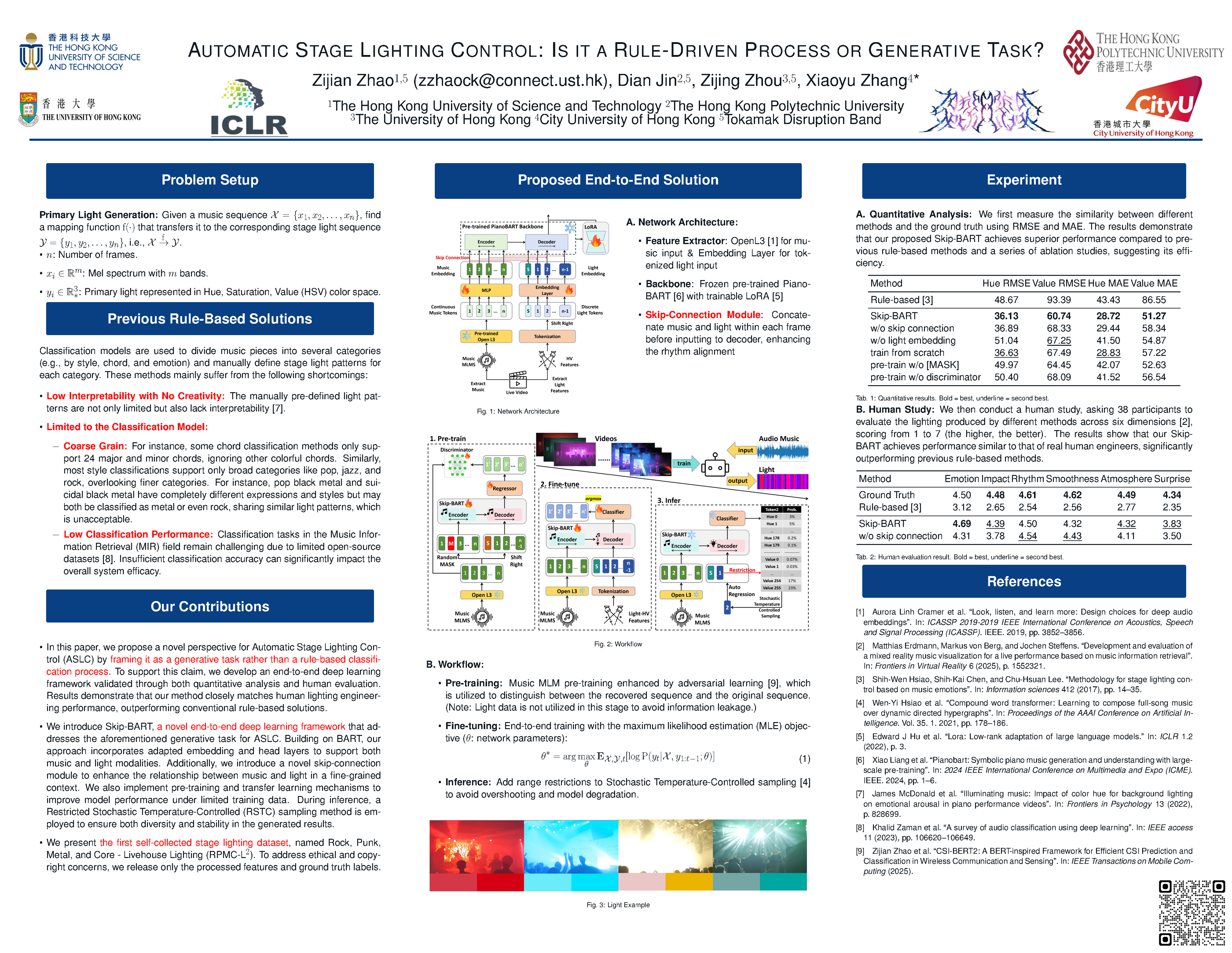
Stage lighting is a vital component in live music performances, shaping an engaging experience for both musicians and audiences. In recent years, Automatic Stage Lighting Control (ASLC) has attracted growing interest due to the high costs of hiring or training professional lighting engineers. However, most existing ASLC solutions only classify music into limited categories and map them to predefined light patterns, resulting in formulaic and monotonous outcomes that lack rationality. To address this gap, this paper presents Skip-BART, an end-to-end model that directly learns from experienced lighting engineers and predict vivid, human-like stage lighting. To the best of our knowledge, this is the first work to conceptualize ASLC as a generative task rather than merely a classification problem. Our method adapts the BART model to take audio music as input and produce light hue and value (intensity) as output, incorporating a novel skip connection mechanism to enhance the relationship between music and light within the frame grid. To address the lack of available datasets, we create the first stage lighting dataset, along with several pre-training and transfer learning techniques to improve model training with limited data. We validate our method through both quantitative analysis and an human evaluation, demonstrating that Skip-BART outperforms conventional rule-based methods across all evaluation metrics and shows only a limited gap compared to real lighting engineers. The self-collected dataset, code, and trained model parameters of this paper are provided at https://github.com/RS2002/Skip-BART .
LLEMA: Evolutionary Search with LLMs for Multi-Objective Materials Discovery
Nikhil Abhyankar ⋅ sanchit kabra ⋅ Saaketh Desai ⋅ Chandan Reddy
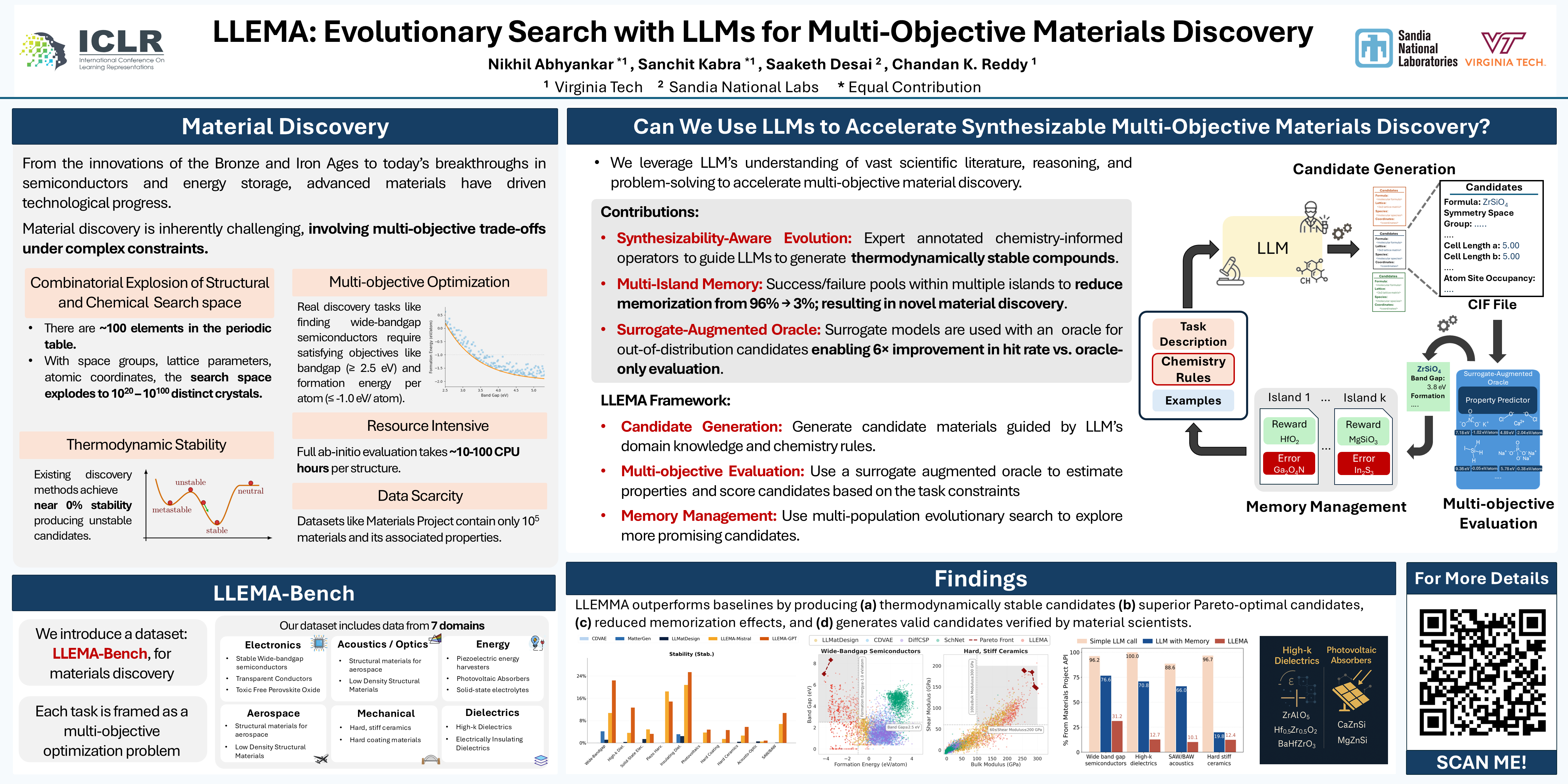
Materials discovery requires navigating vast chemical and structural spaces while satisfying multiple, often conflicting, objectives. We present LLM-guided Evolution for MAterials discovery (LLEMA), a unified framework that couples the scientific knowledge embedded in large language models with chemistry-informed evolutionary rules and memory-based refinement. At each iteration, an LLM proposes crystallographically specified candidates under explicit property constraints; a surrogate-augmented oracle estimates physicochemical properties; and a multi-objective scorer updates success/failure memories to guide subsequent generations. Evaluated on 14 realistic tasks that span electronics, energy, coatings, optics, and aerospace, LLEMA discovers candidates that are chemically plausible, thermodynamically stable, and property-aligned, achieving higher hit rates and improved Pareto front quality relative to generative and LLM-only baselines. Ablation studies confirm the importance of rule-guided generation, memory-based refinement, and surrogate prediction. By enforcing synthesizability and multi-objective trade-offs, LLEMA provides a principled approach to accelerating practical materials discovery. Project website: https://scientific-discovery.github.io/llema-project/
OSIRIS: Bridging Analog Circuit Design and Machine Learning with Scalable Dataset Generation
Giuseppe Chiari ⋅ Michele Piccoli ⋅ Davide Zoni
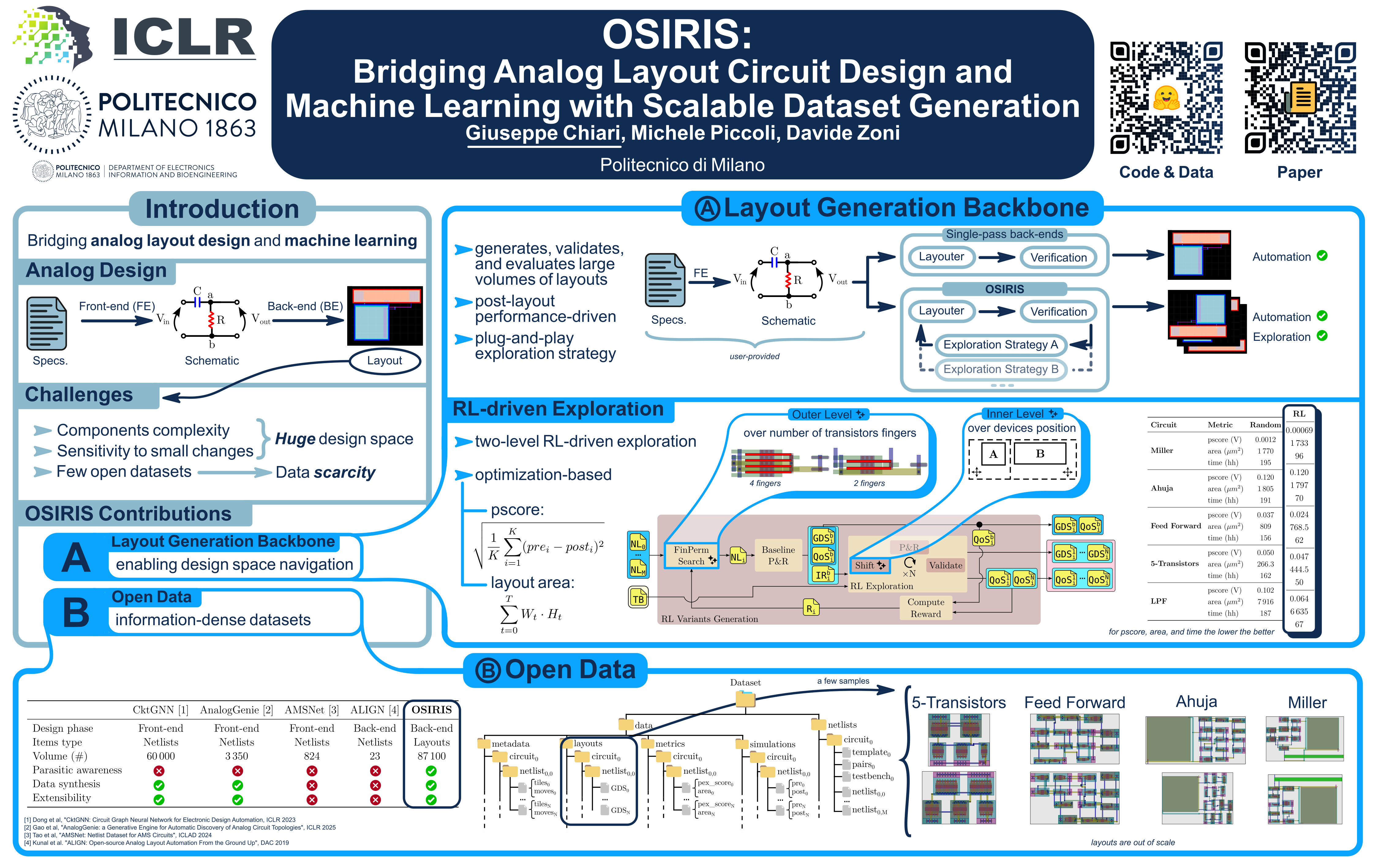
The automation of analog integrated circuit (IC) design remains a longstanding challenge, primarily due to the intricate interdependencies among physical layout, parasitic effects, and circuit-level performance. These interactions impose complex constraints that are difficult to accurately capture and optimize using conventional design methodologies. Although recent advances in machine learning (ML) have shown promise in automating specific stages of the analog design flow, the development of holistic, end-to-end frameworks that integrate these stages and iteratively refine layouts using post-layout, parasitic-aware performance feedback is still in its early stages. Furthermore, progress in this direction is hindered by the limited availability of open, high-quality datasets tailored to the analog domain, restricting both the benchmarking and the generalizability of ML-based techniques. To address these limitations, we present OSIRIS, a scalable dataset generation pipeline for analog IC design. OSIRIS systematically explores the design space of analog circuits while producing comprehensive performance metrics and metadata, thereby enabling ML-driven research in electronic design automation (EDA). In addition, we release a dataset consisting of 87,100 circuit variations generated with OSIRIS, accompanied by a reinforcement learning (RL)–based baseline method that exploits OSIRIS for analog design optimization.
Neural Theorem Proving for Verification Conditions: A Real-World Benchmark
Qiyuan Xu ⋅ Xiaokun Luan ⋅ Renxi Wang ⋅ Joshua Leang ⋅ Peixin Wang ⋅ Haonan Li ⋅ Wenda Li ⋅ Conrad Watt
Theorem proving is fundamental to program verification, where the automated proof of Verification Conditions (VCs) remains a primary bottleneck. Real-world program verification frequently encounters hard VCs that existing Automated Theorem Provers cannot prove, leading to a critical need for extensive manual proofs that burden practical application. While Neural Theorem Proving (NTP) has achieved significant success in mathematical competitions, demonstrating the potential of machine learning approaches to formal reasoning, its application to program verification—particularly VC proving—remains largely unexplored. Despite existing work on annotation synthesis and verification-related theorem proving, no benchmark has specifically targeted this fundamental bottleneck: automated VC proving. This work introduces Neural Theorem Proving for Verification Conditions (NTP4VC) and presents the first real-world multi-lingual benchmark for this task. Specifically, from real-world projects such as Linux and Contiki-OS kernel, our benchmark leverages industrial pipelines (Why3 and Frama-C) to generate semantically equivalent test cases across formal languages of Isabelle, Lean, and Rocq. We evaluate large language models (LLMs), both general-purpose and those fine-tuned for theorem proving, on NTP4VC. Results indicate that although LLMs show promise in VC proving, significant challenges remain for program verification, highlighting a large gap and opportunity for future research.
Multi-LCB: Extending LiveCodeBench to Multiple Programming Languages
Maria Ivanova ⋅ Pavel Zadorozhny ⋅ Rodion Levichev ⋅ Ivan Petrov ⋅ Adamenko Pavel ⋅ Ivan Lopatin ⋅ Alexey Kutalev ⋅ Dmitrii Babaev
LiveCodeBench (LCB) has recently become a widely adopted benchmark for evaluating large language models (LLMs) on code-generation tasks. By curating competitive programming problems, constantly adding fresh problems to the set, and filtering them by release dates, LCB provides contamination-aware evaluation and offers a holistic view of coding capability. However, LCB remains restricted to Python, leaving open the question of whether LLMs can generalize across the diverse programming languages required in real-world software engineering. We introduce Multi-LCB, a benchmark for evaluating LLMs across twelve programming languages, including Python. Multi-LCB transforms Python tasks from the LCB dataset into equivalent tasks in other languages while preserving LCB’s contamination controls and evaluation protocol. Because it is fully compatible with the original LCB format, Multi-LCB will automatically track future LCB updates, enabling systematic assessment of cross-language code generation competence and requiring models to sustain performance well beyond Python. We evaluated 24 LLMs for instruction and reasoning on Multi-LCB, uncovering evidence of Python overfitting, language-specific contamination, and substantial disparities in multilingual performance. Our results establish Multi-LCB as a rigorous new benchmark for multi-programming-language code evaluation, directly addressing LCB’s primary limitation and exposing critical gaps in current LLM capabilities.
Aurelius: Relation Aware Text-to-Audio Generation At Scale
Yuhang He ⋅ He Liang ⋅ Yash Jain ⋅ Andrew Markham ⋅ Vibhav Vineet
We present Aurelius, a new framework that enables relation aware text-to-audio (TTA) generation research at scale. Given the lack of essential audio event and relation corpora, Aurelius contributes a large-scale audio event corpus AudioEventSet and another large-scale relation corpus AudioRelSet. Comprising 110 event categories, AudioEventSet maximally covers all commonly heard audio events and each event is unique, realistic and of high-quality. AudioRelSet consists of 100 relations, comprehensively covering the relations that present in the physical world or can be neatly described by text. As the two corpora provide audio event and relation independently, they can be combined to create massive pairs with our pair generation strategy to support relation aware TTA investigation at scale. We comprehensively benchmark all existing TTA models from both general and relation aware evaluation perspective. We further provide an in-depth investigation into scaling existing TTA models' relation aware generation by either training from scratch or leveraging cross-domain general TTA knowledge. The introduced corpora and the findings from investigation potentially facilitate future research on relation aware TTA generation.
Error Notebook-Guided, Training-Free Part Retrieval in 3D CAD Assemblies via Vision-Language Models
Yunqing Liu ⋅ Nan Zhang ⋅ Zhiming Tan
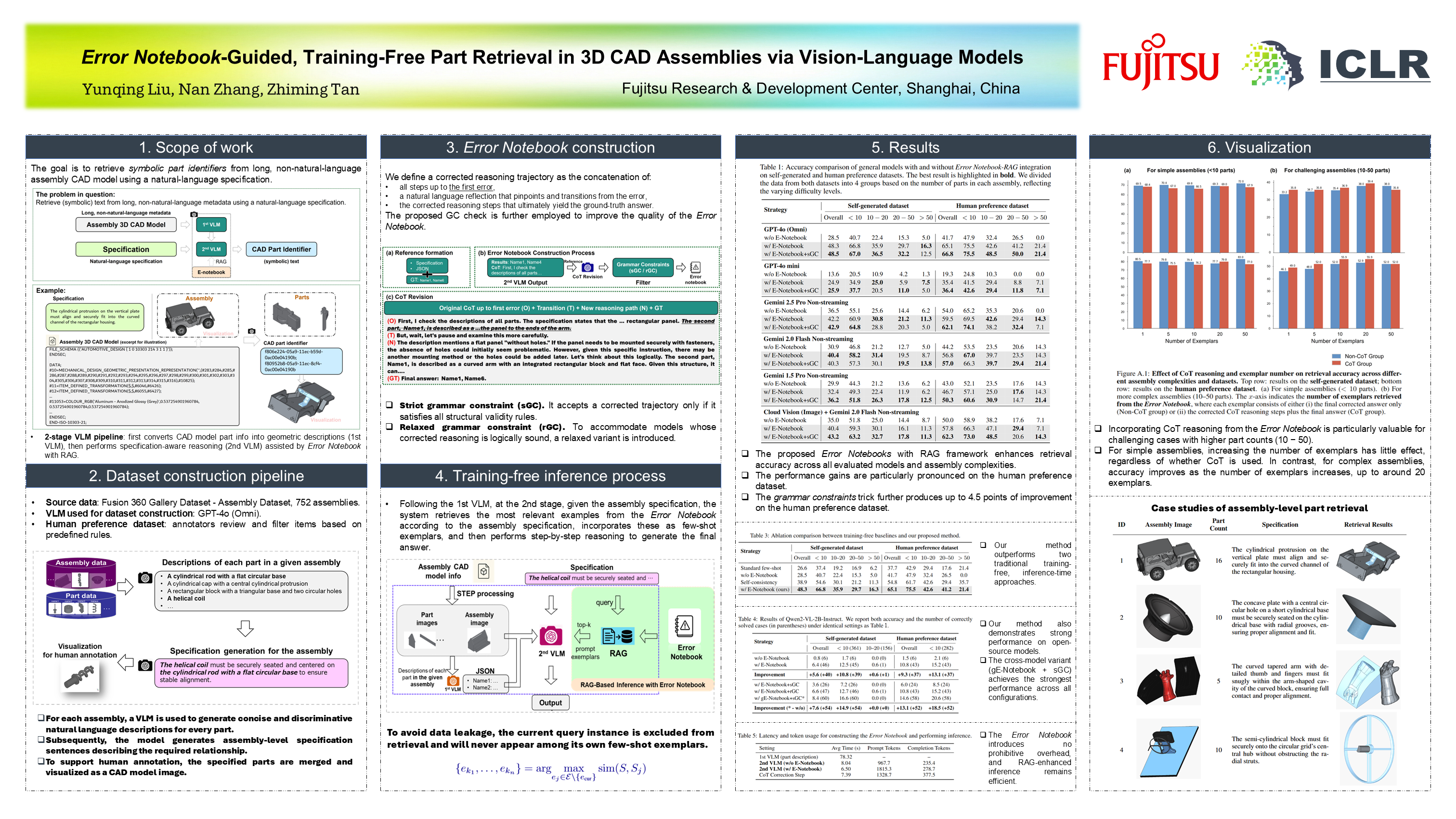
Effective specification-aware part retrieval within complex CAD assemblies is essential for automated engineering tasks. However, using LLMs/VLMs for this task is challenging: the CAD model metadata sequences often exceed token budgets, and fine-tuning high-performing proprietary models (e.g., GPT or Gemini) is unavailable. Therefore, we need a framework that delivers engineering value by handling long, non-natural-language CAD model metadata using VLMs, but without training. We propose a 2-stage framework with inference-time adaptation that combines corrected Error Notebooks with RAG to substantially improve VLM-based part retrieval reasoning. Each Error Notebook is built by correcting initial CoTs through reflective refinement, and then filtering each trajectory using our proposed grammar-constraint (GC) verifier to ensure structural well-formedness. The resulting notebook forms a high-quality repository of specification-CoT-answer triplets, from which RAG retrieves specification-relevant exemplars to condition the model's inference. We additionally contribute a CAD dataset with human preference annotations. Experiments with proprietary models (GPT-4o, Gemini, etc) show large gains, with GPT-4o (Omni) achieving up to +23.4 absolute accuracy points on the human-preference benchmark. The proposed GC verifier can further produce up to +4.5 accuracy points. Our approach also surpasses other training-free baselines (standard few-shot learning, self-consistency) and yields substantial improvements also for open-source VLMs (Qwen2-VL-2B-Instruct, Aya-Vision-8B). Under the cross-model GC setting, where the Error Notebook is constructed using GPT-4o (Omni), the 2B model inference achieves performance that comes within roughly 4 points of GPT-4o mini.
AdPO: Enhancing the Adversarial Robustness of Large Vision-Language Models with Preference Optimization
Chaohu Liu ⋅ Gui Tianyi ⋅ Yu Liu ⋅ Linli Xu
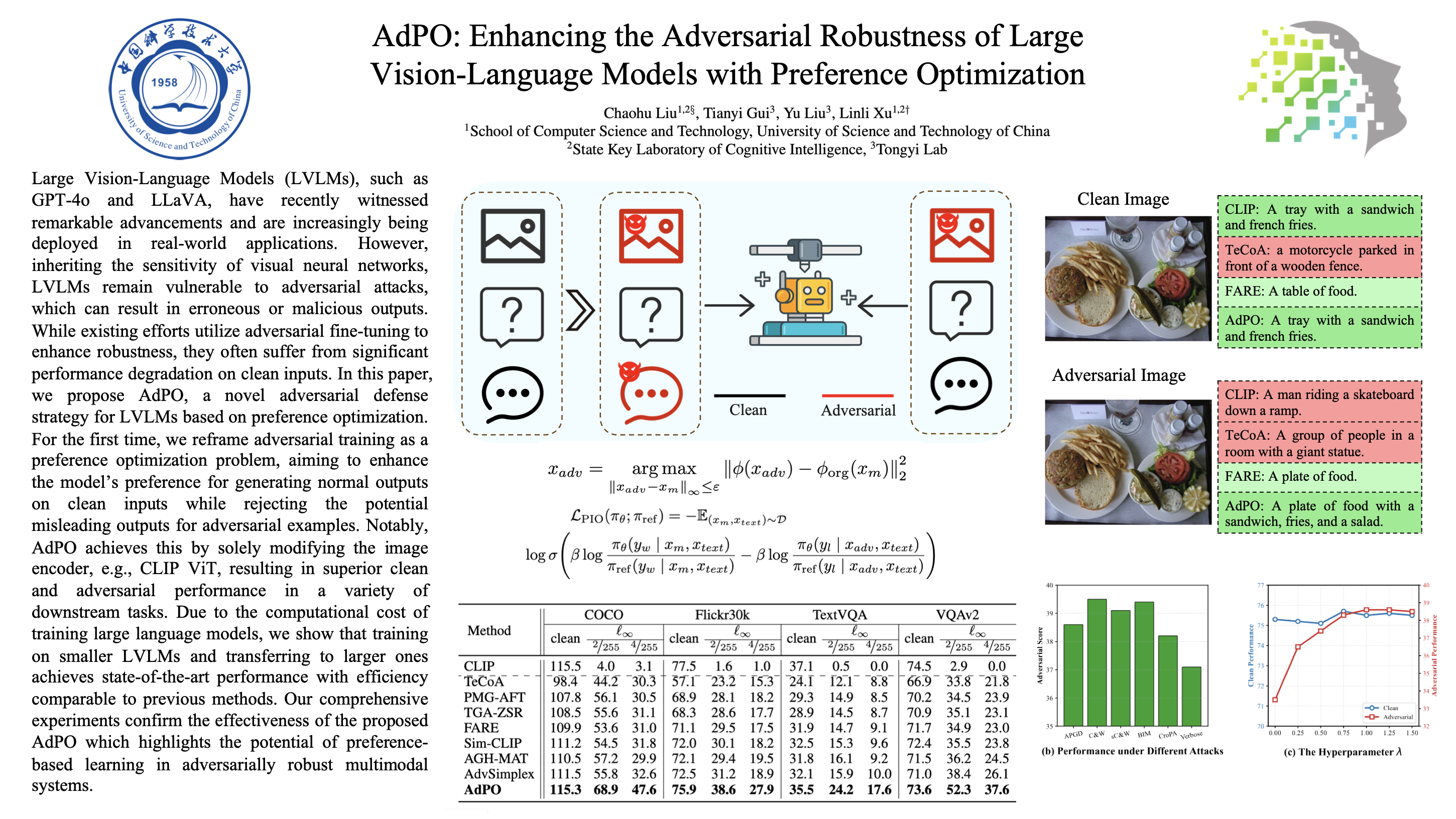
Large Vision-Language Models (LVLMs), such as GPT-4o and LLaVA, have recently witnessed remarkable advancements and are increasingly being deployed in real-world applications. However, inheriting the sensitivity of visual neural networks, LVLMs remain vulnerable to adversarial attacks, which can result in erroneous or malicious outputs. While existing efforts utilize adversarial fine-tuning to enhance robustness, they often suffer from significant performance degradation on clean inputs. In this paper, we propose AdPO, a novel adversarial defense strategy for LVLMs based on preference optimization. For the first time, we reframe adversarial training as a preference optimization problem, aiming to enhance the model’s preference for generating normal outputs on clean inputs while rejecting the potential misleading outputs for adversarial examples. Notably, AdPO achieves this by solely modifying the image encoder, e.g., CLIP ViT, resulting in superior clean and adversarial performance in a variety of downstream tasks. Due to the computational cost of training large language models, we show that training on smaller LVLMs and transferring to larger ones achieves state-of-the-art performance with efficiency comparable to previous methods. Our comprehensive experiments confirm the effectiveness of the proposed AdPO which highlights the potential of preference-based learning in adversarially robust multimodal systems.
Improving Code Localization with Repository Memory
Boshi Wang ⋅ Weijian Xu ⋅ Yunsheng Li ⋅ Xuemei Gao ⋅ Yujia Xie ⋅ Huan Sun ⋅ Dongdong Chen
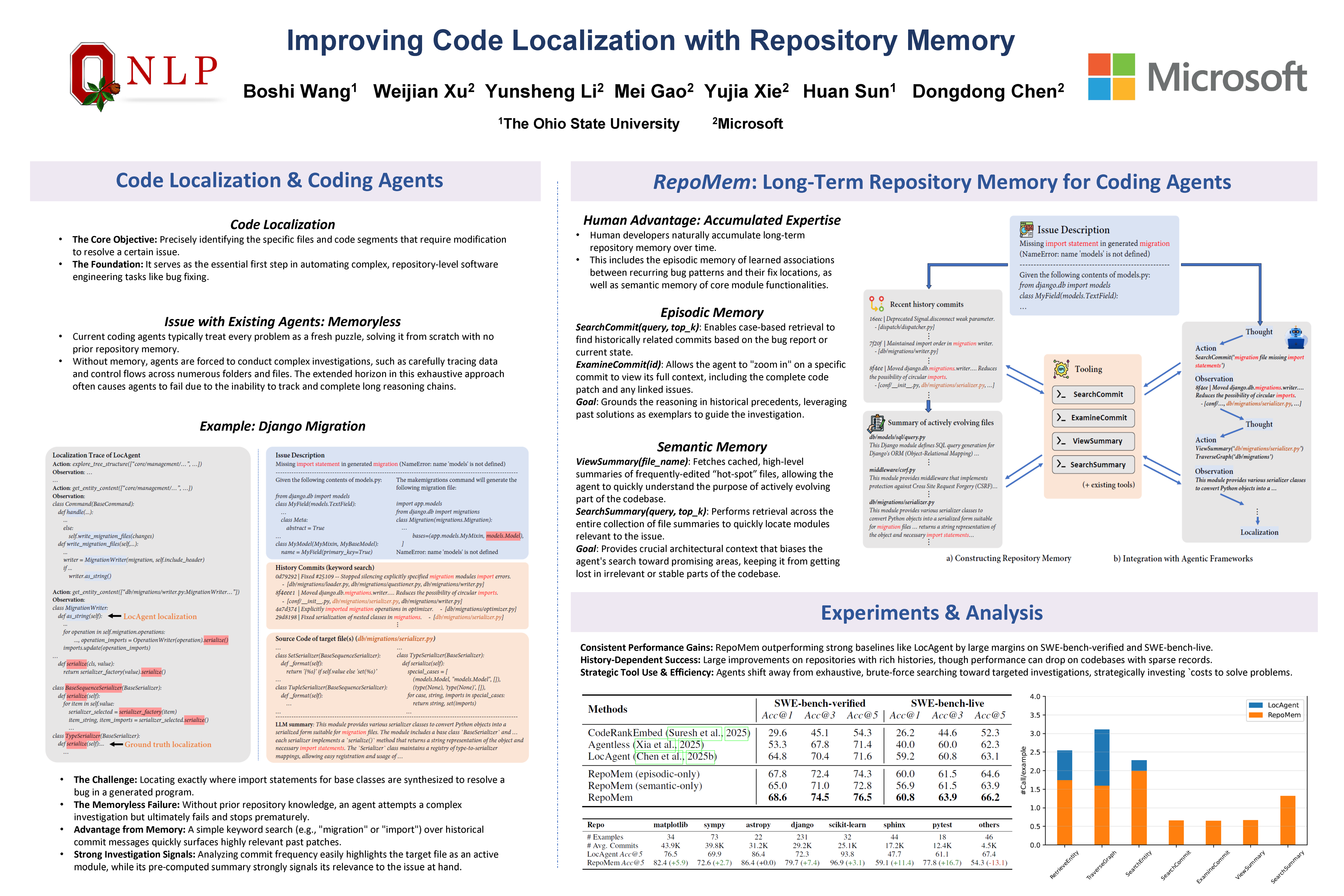
Code localization is a fundamental challenge in repository-level software engineering tasks such as bug fixing. While existing methods equip language agents with comprehensive tools/interfaces to fetch information from the repository, they overlook the critical aspect of memory, where each instance is typically handled from scratch assuming no prior repository knowledge. In contrast, human developers naturally build long-term repository memory, such as the functionality of key modules and associations between various bug types and their likely fix locations. In this work, we augment language agents with such memory by leveraging a repository's commit history - a rich yet underutilized resource that chronicles the codebase's evolution. We introduce tools that allow the agent to retrieve from a non-parametric memory encompassing recent historical commits and linked issues, as well as functionality summaries of actively evolving parts of the codebase identified via commit patterns. We demonstrate that augmenting such a memory can significantly improve LocAgent, a state-of-the-art localization framework, on both SWE-bench-verified and the more recent SWE-bench-live benchmarks. Our research contributes towards developing agents that can accumulate and leverage past experience for long-horizon tasks, more closely emulating the expertise of human developers.
HATSolver: Learning Gröbner Bases with Hierarchical Attention Transformers
Mohamed Malhou ⋅ Ludovic Perret ⋅ Kristin Lauter
At NeurIPS 2024, Kera (2311.12904) introduced the use of transformers for computing Groebner bases, a central object in computer algebra with numerous practical applications. In this paper, we improve this approach by applying Hierarchical Attention Transformers (HATs) to solve systems of multivariate polynomial equations via Groebner bases computation. The HAT architecture incorporates a tree-structured inductive bias that enables the modeling of hierarchical relationships present in the data and thus achieves significant computational savings compared to conventional flat attention models. We generalize to arbitrary depths and include a detailed computational cost analysis. Combined with curriculum learning, our method solves instances that are much larger than those in Kera (2311.12904).
WavefrontDiffusion: Dynamic Decoding Schedule for Improved Reasoning
Haojin Yang ⋅ Rui Hu ⋅ Zequn Sun ⋅ Rui Zhou ⋅ Yujun Cai ⋅ Yiwei Wang
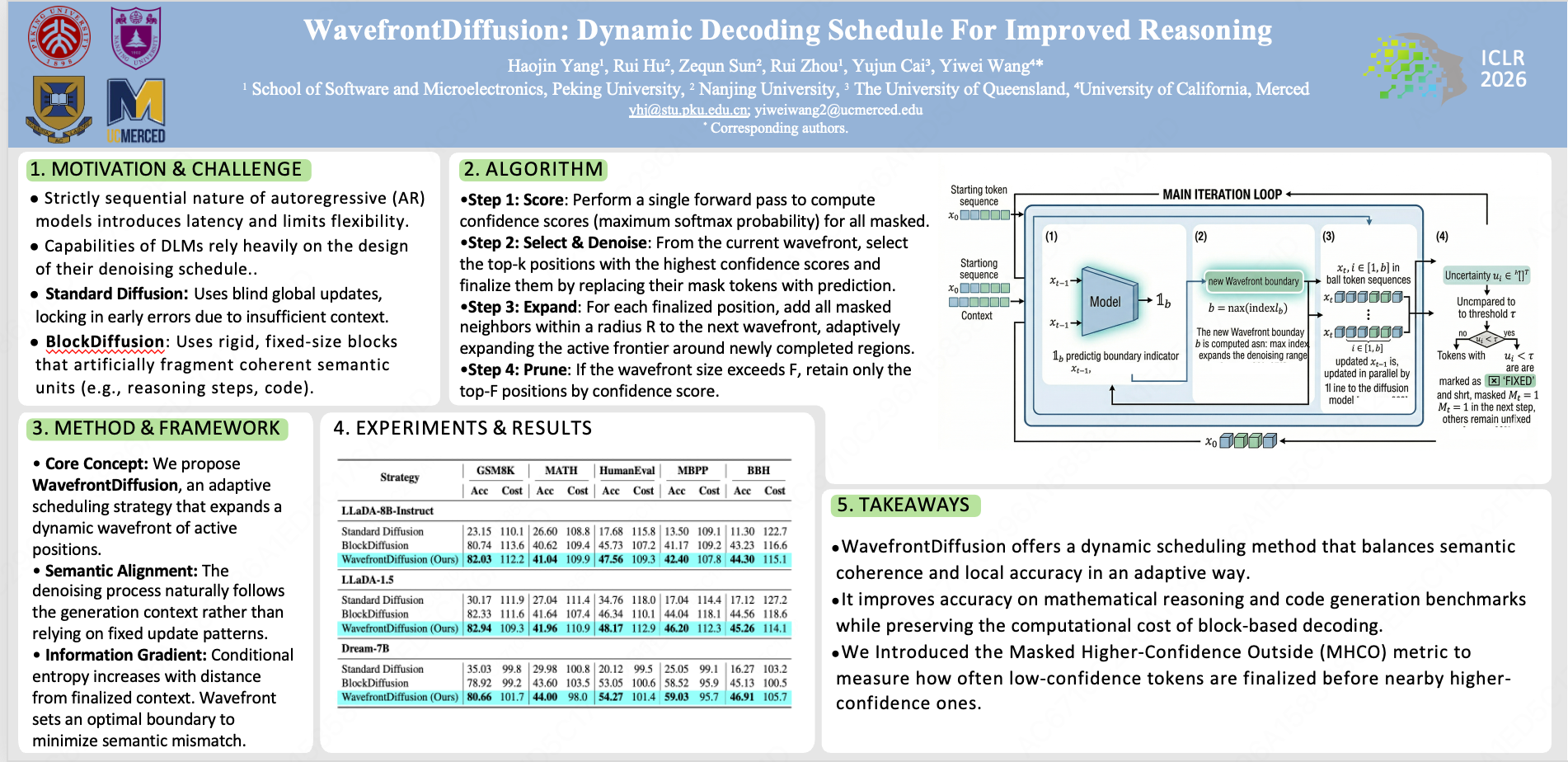
Diffusion Language Models (DLMs) have shown strong potential for text generation and are becoming a competitive alternative to autoregressive models. The denoising strategy plays an important role in determining the quality of their outputs. Mainstream denoising strategies include Standard Diffusion and BlockDiffusion. Standard Diffusion performs global denoising without restricting the update range, often finalizing incomplete context and causing premature end-of-sequence predictions. BlockDiffusion updates fixed-size blocks in a preset order, but its rigid structure can break apart coherent semantic units and disrupt reasoning. We present WavefrontDiffusion, a dynamic decoding approach that expands a wavefront of active tokens outward from finalized positions. This adaptive process follows the natural flow of semantic structure while keeping computational cost equal to block-based methods. Across four benchmarks in reasoning and code generation, WavefrontDiffusion achieves state-of-the-art performance while producing outputs with higher semantic fidelity, showing the value of adaptive scheduling for more coherent and efficient generation.
FATE: A Formal Benchmark Series for Frontier Algebra of Multiple Difficulty Levels
Jiedong Jiang ⋅ Wanyi He ⋅ Wang Yuefeng ⋅ Guoxiong Gao ⋅ Yongle Hu ⋅ Jingting Wang ⋅ Nailin Guan ⋅ Peihao Wu ⋅ Bryan Dai ⋅ Liang Xiao ⋅ Bin Dong

Recent advances in large language models (LLMs) have demonstrated impressive capabilities in formal theorem proving, particularly on contest-based mathematical benchmarks like the IMO. However, these contests do not reflect the depth, breadth, and abstraction of modern mathematical research. To bridge this gap, we introduce FATE, a new benchmark series in formal algebra designed to chart a course toward advanced mathematical reasoning. We present two new components, FATE-H and FATE-X, each with 100 problems in abstract and commutative algebra. The FATE series spans a difficulty spectrum from undergraduate exercises to problems exceeding PhD qualifying exams. Notably, FATE-X is the first formal benchmark to surpass both PhD-level exam difficulty and the coverage of the Mathlib library. Our evaluations of state-of-the-art LLM provers on this new benchmark reveal a stark performance gap compared to contest math: the best model achieves only 3\% (pass@64) accuracy on FATE-H and 0\% on FATE-X. Our two-stage evaluation reveals that models' natural-language reasoning is notably more accurate than their ability to formalize this reasoning. We systematically classify the common errors that arise during this formalization process. Furthermore, a comparative study shows that a specialized prover can exhibit less effective reflection than general-purpose models, reducing its accuracy at the natural-language stage. We believe FATE provides a robust and challenging benchmark that establishes essential checkpoints on the path toward research-level formal mathematical reasoning.
Bridging Piano Transcription and Rendering via Disentangled Score Content and Style
Wei Zeng ⋅ JUNCHUAN ZHAO ⋅ Ye Wang
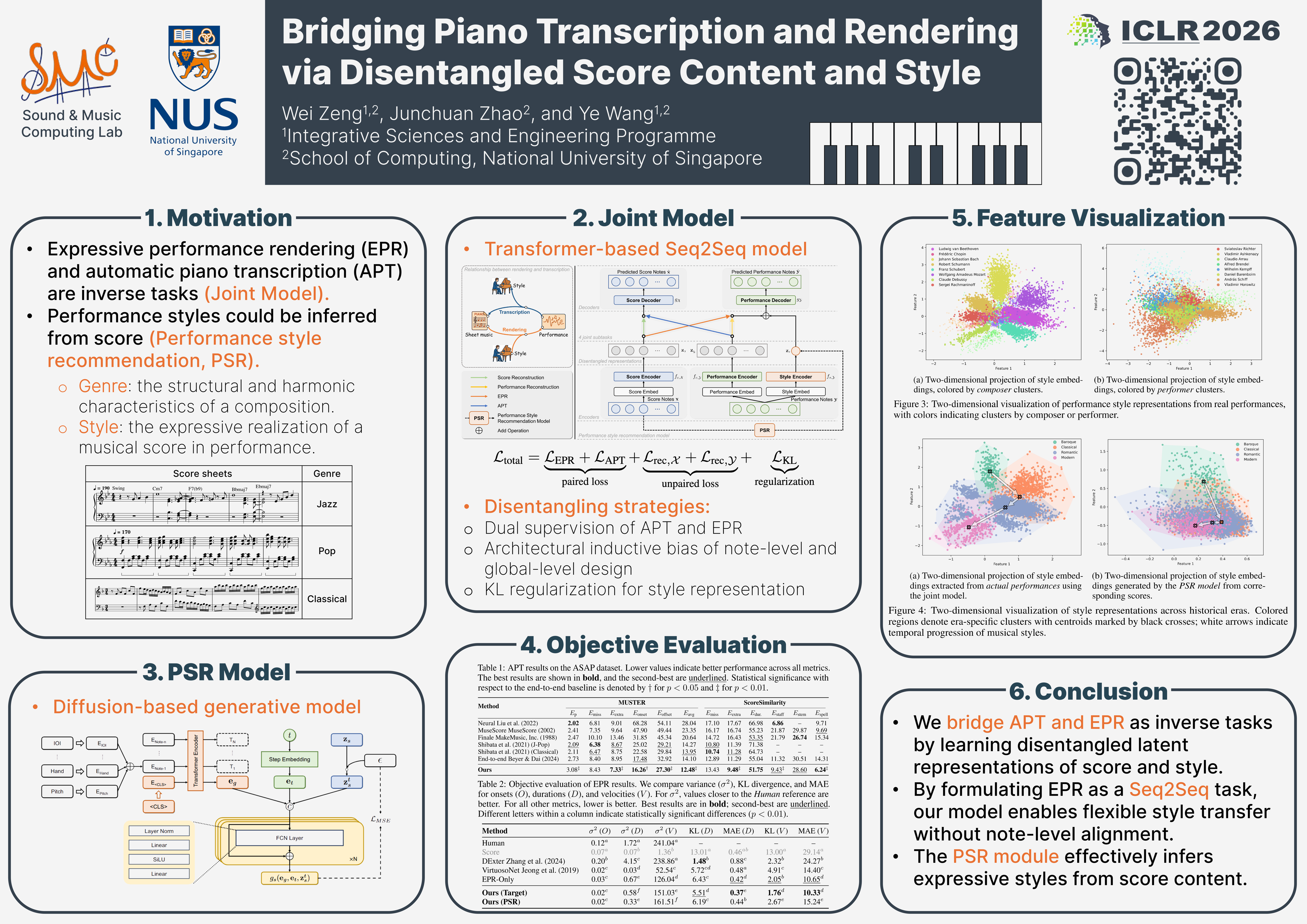
Expressive performance rendering (EPR) and automatic piano transcription (APT) are fundamental yet inverse tasks in music information retrieval: EPR generates expressive performances from symbolic scores, while APT recovers scores from performances. Despite their dual nature, prior work has addressed them independently. In this paper, we propose a unified framework that jointly models EPR and APT by disentangling note-level score content and global performance style representations from both paired and unpaired data. Our framework is built on a transformer-based sequence-to-sequence (Seq2Seq) architecture and is trained using only sequence-aligned data, without requiring fine-grained note-level alignment. To automate the rendering process while ensuring stylistic compatibility with the score, we introduce an independent diffusion-based performance style recommendation (PSR) module that generates style embeddings directly from score content. This modular component supports both style transfer and flexible rendering across a range of expressive styles. Experimental results from both objective and subjective evaluations demonstrate that our framework achieves competitive performance on EPR and APT tasks, while enabling effective content–style disentanglement, reliable style transfer, and stylistically appropriate rendering. Demos are available at https://wei-zeng98.github.io/joint-apt-epr/.
Automated Formalization via Conceptual Retrieval-Augmented LLMs
Wangyue Lu ⋅ Lun Du ⋅ Sirui Li ⋅ Ke Weng ⋅ Haozhe Sun ⋅ Hengyu Liu ⋅ Minghe Yu ⋅ Tiancheng Zhang ⋅ Ge Yu
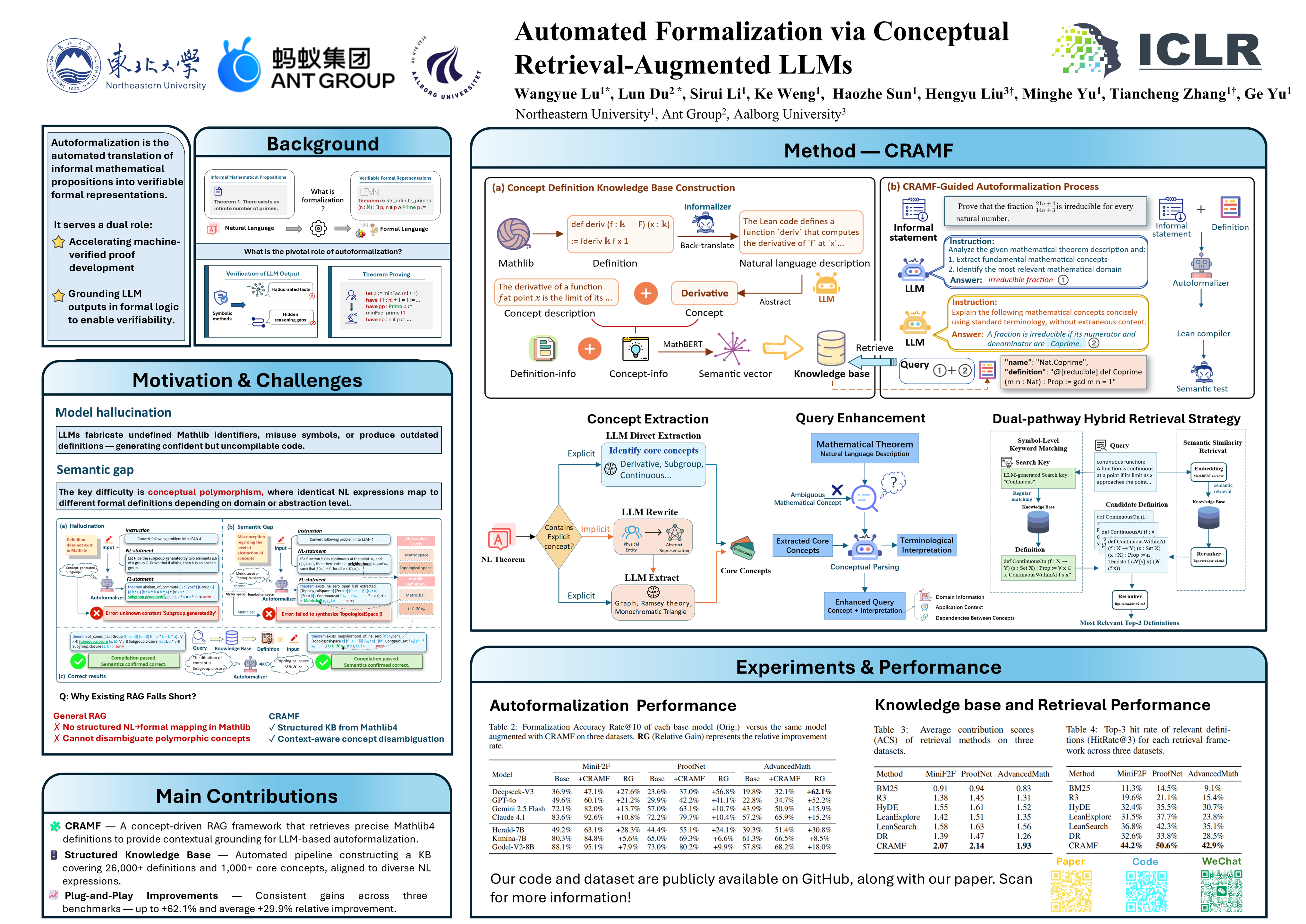
Interactive theorem provers (ITPs) require manual formalization, which is labor-intensive and demands expert knowledge. While automated formalization offers a potential solution, it faces two major challenges: model hallucination (e.g., undefined predicates, symbol misuse, and version incompatibility) and the semantic gap caused by ambiguous or missing premises in natural language descriptions. To address these issues, we propose CRAMF, a Concept-driven Retrieval-Augmented Mathematical Formalization framework. CRAMF enhances LLM-based autoformalization by retrieving formal definitions of core mathematical concepts, providing contextual grounding during code generation. However, applying retrieval-augmented generation (RAG) in this setting is non-trivial due to the lack of structured knowledge bases, the polymorphic nature of mathematical concepts, and the high precision required in formal retrieval. We introduce a framework for automatically constructing a concept-definition knowledge base from Mathlib4, the standard mathematical library for the Lean 4 theorem prover, indexing over 26,000 formal definitions and 1,000+ core mathematical concepts. To address conceptual polymorphism, we propose contextual query augmentation with domain- and application-level signals. In addition, we design a dual-channel hybrid retrieval strategy with reranking to ensure accurate and relevant definition retrieval. Experiments on miniF2F, ProofNet, and our newly proposed AdvancedMath benchmark show that CRAMF can be seamlessly integrated into LLM-based autoformalizers, yielding consistent improvements in translation accuracy—achieving up to 62.1% and an average of 29.9% relative improvement.
Learning More with Less: A Dynamic Dual-Level Down-Sampling Framework for Efficient Policy Optimization
Chao Wang ⋅ Tao Yang ⋅ Hongtao Tian ⋅ Yunsheng Shi ⋅ Qiyao Ma ⋅ XiaotaoLiu ⋅ Ting Yao ⋅ Wenbo Ding
Critic-free methods like GRPO reduce memory demands by estimating advantages from multiple rollouts but tend to converge slowly, as critical learning signals are diluted by an abundance of uninformative samples and tokens. To tackle this challenge, we propose the **Dynamic Dual-Level Down-Sampling (D$^3$S)** framework that prioritizes the most informative samples and tokens across groups to improve the efficiency of policy optimization. D$^3$S operates along two levels: (1) the sample-level, which selects a subset of rollouts to maximize advantage variance ($\text{Var}(A)$). We theoretically proved that this selection is positively correlated with the upper bound of the policy gradient norms, yielding higher policy gradients. (2) the token-level, which prioritizes tokens with a high product of advantage magnitude and policy entropy ($|A_{i,t}|\times H_{i,t}$), focusing updates on tokens where the policy is both uncertain and impactful. Moreover, to prevent overfitting to high-signal data, D$^3$S employs a dynamic down-sampling schedule inspired by curriculum learning. This schedule starts with aggressive down-sampling to accelerate early learning and gradually relaxes to promote robust generalization. Extensive experiments on Qwen2.5 and Llama3.1 demonstrate that integrating D$^3$S into advanced RL algorithms achieves state-of-the-art performance with generalization while requiring fewer samples and tokens across diverse reasoning benchmarks.
Critical Confabulation: Can LLMs Hallucinate for Social Good?
Peiqi Sui ⋅ Eamon Duede ⋅ Hoyt Long ⋅ Richard So
LLMs hallucinate, yet some confabulations can have social affordances if carefully bounded. We propose critical confabulation (inspired by critical fabulation from literary and social theory), the use of LLM hallucinations to "fill-in-the-gap'' for omissions in archives due to social and political inequality, and reconstruct divergent yet evidence-bound narratives for history's ``hidden figures''. We simulate these gaps with an open-ended narrative cloze task: asking LLMs to generate a masked event in a character-centric timeline sourced from a novel corpus of unpublished texts. We evaluate audited (for data contamination), fully-open models (the OLMo-2 family) and unaudited open-weight and proprietary baselines under a range of prompts designed to elicit controlled and useful hallucinations. Our findings validate LLMs' foundational narrative understanding capabilities to perform critical confabulation, and show how controlled and well-specified hallucinations can support LLM applications for knowledge production without collapsing speculation into a lack of historical accuracy and fidelity.
How Far Are LLMs from Professional Poker Players? Revisiting Game-Theoretic Reasoning with Agentic Tool Use
Minhua Lin ⋅ Enyan Dai ⋅ Hui Liu ⋅ Xianfeng Tang ⋅ Yuliang Yan ⋅ Zhenwei Dai ⋅ Jingying Zeng ⋅ Zhiwei Zhang ⋅ Fali Wang ⋅ Hongcheng Gao ⋅ Chen Luo ⋅ Xiang Zhang ⋅ Qi He ⋅ Suhang Wang
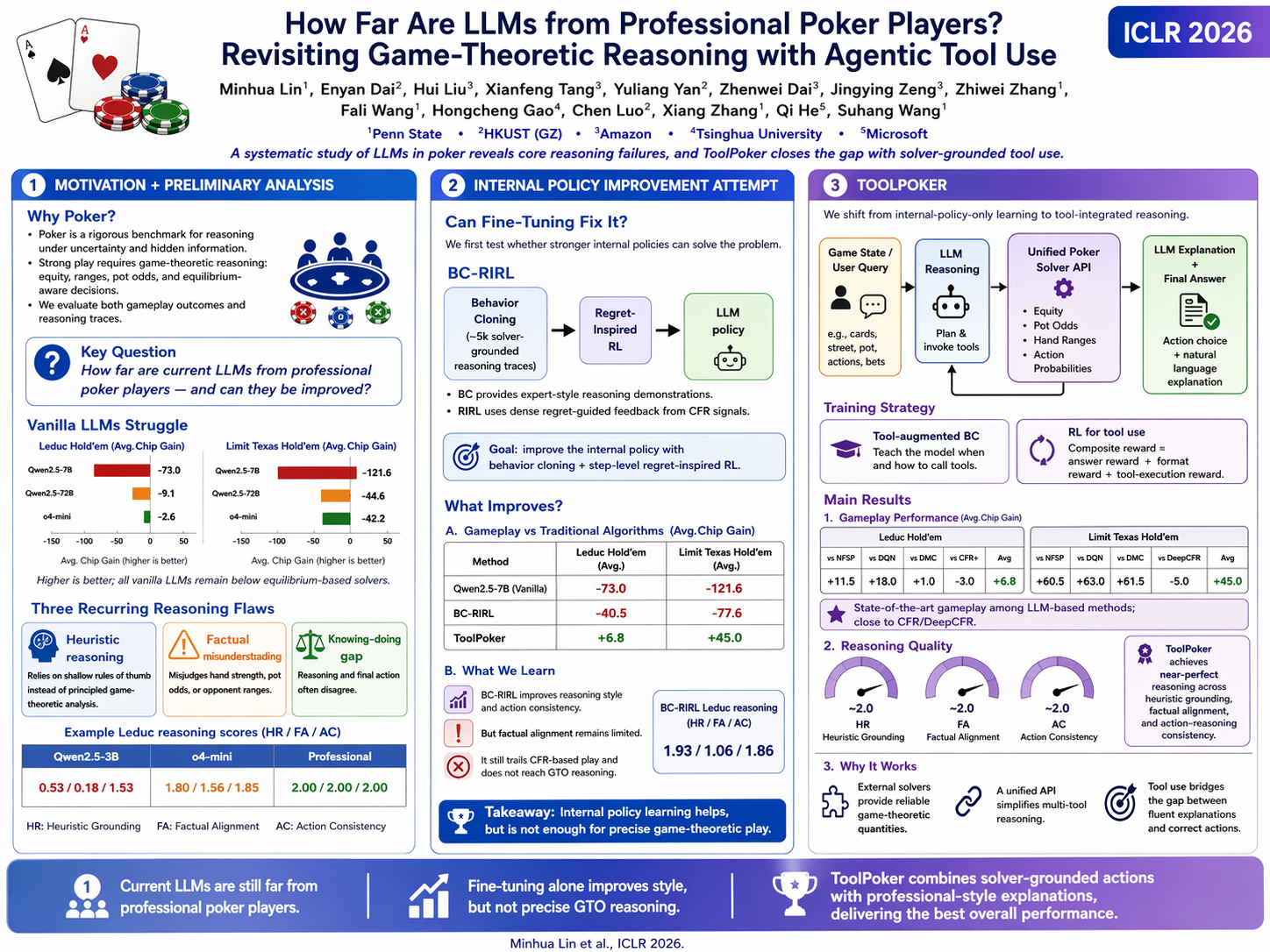
As Large Language Models (LLMs) are increasingly applied in high-stakes domains, their ability to reason strategically under uncertainty becomes critical. Poker provides a rigorous testbed, requiring not only strong actions but also principled, game-theoretic reasoning. In this paper, we conduct a systematic study of LLMs in multiple realistic poker tasks, evaluating both gameplay outcomes and reasoning traces. Our analysis reveals LLMs fail to compete against traditional algorithms and identifies three recurring flaws: reliance on heuristics, factual misunderstandings, and a “knowing–doing” gap where actions diverge from reasoning. An initial attempt with behavior cloning and step-level reinforcement learning improves reasoning style but remains insufficient for accurate game-theoretic play. Motivated by these limitations, we propose ToolPoker, a tool-integrated reasoning framework that combines external solvers for GTO-consistent actions with more precise professional-style explanations. Experiments demonstrate that ToolPoker achieves state-of-the-art gameplay while producing reasoning traces that closely reflect game-theoretic principles.
The CoT Encyclopedia: Analyzing, Predicting, and Controlling how a Reasoning Model will Think
Seongyun Lee ⋅ Seungone Kim ⋅ Minju Seo ⋅ Yongrae Jo ⋅ Dongyoung Go ⋅ Hyeonbin Hwang ⋅ Jinho Park ⋅ Xiang Yue ⋅ Sean Welleck ⋅ Graham Neubig ⋅ Moontae Lee ⋅ Minjoon Seo
Long chain-of-thought (CoT) is an essential ingredient in effective usage of modern large language models, but our understanding of the reasoning strategies underlying these capabilities remains limited. While some prior works have attempted to categorize CoTs using predefined strategy types, such approaches are constrained by human intuition and fail to capture the full diversity of model behaviors. In this work, we introduce the CoT Encyclopedia, a bottom-up framework for analyzing and steering model reasoning. Our method automatically extracts diverse reasoning criteria from model-generated CoTs, embeds them into a semantic space, clusters them into representative categories, and derives contrastive rubrics to interpret reasoning behavior. Human evaluations show that this framework produces more interpretable and comprehensive analyses than existing methods. Moreover, we show that this understanding translates into measurable improvements on both problem-solving and safety benchmarks. We can predict which strategy a model is likely to use and guide it toward more effective alternatives. Finally, we show that training data format (e.g., free-form vs. multiple-choice) impacts reasoning far more than data domain, highlighting the importance of format-aware model design. In short, the CoT Encyclopedia turns reasoning from a black box into a controllable asset, enabling LLMs that think more clearly, perform more reliably, and act more safely.
Any-Order Flexible Length Masked Diffusion
Jaeyeon Kim ⋅ Lee Kit ⋅ Carles Domingo i Enrich ⋅ Yilun Du ⋅ Sham Kakade ⋅ Timothy Ngotiaoco ⋅ Sitan Chen ⋅ Michael Albergo
Masked diffusion models (MDMs) have recently emerged as a promising alternative to autoregressive models over discrete domains. MDMs generate sequences in an any-order, parallel fashion, enabling fast inference and strong performance on non-causal tasks. However, a crucial limitation is that they do not support token insertions and are thus limited to *fixed-length* generations. To this end, we introduce **Flex**ible **M**asked **D**iffusion **M**odels (FlexMDMs), a discrete diffusion paradigm that simultaneously can model sequences of flexible length while provably retaining MDMs' flexibility of any-order inference. Grounded in an extension of the stochastic interpolant framework, FlexMDMs generate sequences by inserting mask tokens and unmasking them. Empirically, we show that FlexMDMs match MDMs in perplexity while modeling length statistics with much higher fidelity. On a synthetic maze planning task, they achieve $\approx$ 60\% higher success rate than MDM baselines. Finally, we show pretrained MDMs can easily be *retrofitted* into FlexMDMs: on 16 H100s, it takes only three days to fine-tune LLaDA-8B into a FlexMDM, achieving superior performance on math (GSM8K, 58\%$\to$67\%) and code infilling performance (52\%$\to$65\%).
Kimi-Dev: Agentless Training as Skill Prior for SWE-agents
Zonghan Yang ⋅ Shengjie Wang ⋅ Kelin Fu ⋅ Wenyang He ⋅ Weimin Xiong ⋅ Yibo Liu ⋅ Yibo Miao ⋅ Bofei Gao ⋅ Yejie Wang ⋅ ma yingwei ⋅ Yanhao Li ⋅ Yue Liu ⋅ Zhenxing Hu ⋅ kaitai zhang ⋅ Shuyi Wang ⋅ Huarong Chen ⋅ Hongyong Song ⋅ Yang Liu ⋅ Yang Gao ⋅ Zhilin Yang ⋅ Tianyu Liu
Large Language Models (LLMs) are increasingly applied to software engineering (SWE), with SWE-bench as a key benchmark. Solutions are split into SWE-Agent frameworks with multi-turn interactions and workflow-based Agentless methods with single-turn verifiable steps. We argue these paradigms are not mutually exclusive: reasoning-intensive Agentless training induces skill priors, including localization, code edit, and self-reflection that enable efficient and effective SWE-Agent adaptation. In this work, we first curate the Agentless training recipe and present Kimi-Dev, an open-source SWE LLM achieving 60.4\% on SWE-bench Verified, the best among workflow approaches. With additional SFT adaptation on 5k publicly-available trajectories, Kimi-Dev powers SWE-Agents to 48.6\% pass@1, on par with that of Claude 3.5 Sonnet (241022 version). These results show that structured skill priors from Agentless training can bridge workflow and agentic frameworks for transferable coding agents.
FedMC: Federated Manifold Calibration
Yanbiao Ma ⋅ Wei Dai ⋅ Gaoyang Jiang ⋅ wanyi Chen ⋅ Chenyue Zhou ⋅ Yiwei Zhang ⋅ Fei Luo ⋅ Junhao Wang ⋅ Andi Zhang
Data heterogeneity in Federated Learning (FL) leads to significant bias in local training. While recent efforts to introduce distributional statistics as priors have shown progress, they universally rely on a flawed global linearity assumption, failing to capture the nonlinear manifold structures prevalent in real-world data. This model-reality mismatch causes the calibration process to generate out-of-distribution (OOD) samples, which fundamentally misleads the model. To address this, we introduce a paradigm shift. We propose Federated Manifold Calibration (FedMC), a novel framework that learns and leverages the local, nonlinear geometry of data. FedMC employs local kernel PCA on the client side to learn fine-grained local geometries, and constructs a global "geometry dictionary" on the server side to aggregate and distribute this knowledge. Clients then utilize this dictionary to perform context-aware, on-manifold calibration. We validate our proposed method by integrating it with a wide range of existing FL algorithms. Experimental results show that by explicitly modeling nonlinear manifolds, FedMC consistently and significantly enhances the performance of these state-of-the-art methods across multiple benchmarks.
Nemotron-CC-Math: A 133 Billion-Token-Scale High Quality Math Pretraining Dataset
Rabeeh Karimi Mahabadi ⋅ Sanjeev Satheesh ⋅ Shrimai Prabhumoye ⋅ Mostofa Patwary ⋅ Mohammad Shoeybi ⋅ Bryan Catanzaro
Pretraining large language models (LLMs) on high-quality, structured data such as mathematics and code substantially enhances reasoning capabilities. However, existing math-focused datasets built from Common Crawl suffer from degraded quality due to brittle extraction heuristics, lossy HTML-to-text conversion, and the failure to reliably preserve mathematical structure. In this work, we intro- duce Nemotron-CC-Math, a large-scale, high-quality mathematical corpus constructed from Common Crawl using a novel, domain-agnostic pipeline specifically designed for robust scientific text extraction. Unlike previous efforts, our pipeline recovers math across various formats (e.g., MathJax, KaTeX, MathML) by leveraging layout-aware rendering with lynx and a targeted LLM-based cleaning stage. This approach preserves the structural integrity of equations and code blocks while removing boilerplate, standardizing notation into L A T EX representation, and correcting inconsistencies. We collected a large, high-quality math corpus, namely Nemotron-CC-Math-3+(133B tokens) and Nemotron-CC-Math-4+ (52B tokens). Notably, Nemotron-CC-Math-4+ not only surpasses all prior open math datasets-including Mega-Math, FineMath, and OpenWebMath-but also contains 5.5× more tokens than FineMath-4+, which was previously the highest-quality math pretraining dataset. When used to pretrain a Nemotron-T 8B model, our corpus yields +4.8 to +12.6. gains on MATH and +4.6 to +14.3 gains on MBPP+ over strong baselines, while also improving general-domain performance on MMLU and MMLU-Stem. We present the first pipeline to reliably extract scientific content—including math—from noisy web-scale data, yielding measurable gains in math, code, and general reasoning, and setting a new state of the art among open math pretraining corpora. To support open-source efforts, we release our code1 and datasets 2 .
DIVA-GRPO: Enhancing Multimodal Reasoning through Difficulty-Adaptive Variant Advantage
Haowen Gao ⋅ zhenyu zhang ⋅ Liang Pang ⋅ Fangda Guo ⋅ hongjian dou ⋅ Guannan Lv ⋅ ShaoGuo Liu ⋅ Tingting Gao ⋅ Huawei Shen ⋅ Xueqi Cheng
Reinforcement learning (RL) with group relative policy optimization (GRPO) has become a widely adopted approach for enhancing the reasoning capabilities of multimodal large language models (MLLMs). While GRPO enables long-chain reasoning without a traditional critic model, it often suffers from sparse rewards, arising from the scarcity of positive feedback on difficult problems, and from advantage vanishing, which occurs when group-level rewards exhibit high consistency for problems that are too easy or too hard. Existing solutions fall into three categories: sample enhancement and expansion, which may aggravate vanishing advantage due to poor control of difficulty distribution; selective sample utilization, which fails to fully leverage the value of all data; and indirect reward design, which may introduce biased optimization directions due to misalignment between reasoning and the final outcome. However, these approaches overlook a fundamental question: for a given problem, how can we ensure that the within-group reward distribution of responses exhibits enough variance to yield clear optimization signals for each response? To address these issues, we propose DIVA-GRPO, a difficulty-adaptive variant augmentation advantage method that dynamically adjusts the difficulty distribution of variants for each problem from a global perspective. Our method dynamically assesses problem difficulty, samples variants with appropriate difficulty levels, and advantages are computed within both local and global(a problem and its variants) groups using difficulty-weighted and normalized scaling. This design alleviates reward sparsity and advantage vanishing, minimizes data waste, and improves training stability. Extensive experiments on six reasoning benchmarks demonstrate that DIVA-GRPO outperforms existing approaches in both training efficiency and reasoning performance.
Partial Soft-Matching Distance For Neural Representational Comparison With Partial Unit Correspondence
Chaitanya Kapoor ⋅ Alex Williams ⋅ Meenakshi Khosla
Representational similarity metrics typically force all units to be matched, making them susceptible to noise and outliers common in neural representations. We extend the soft-matching distance to a partial optimal transport setting that allows some neurons to remain unmatched, yielding rotation-sensitive but robust correspondences. This partial soft-matching distance provides theoretical advantages---relaxing strict mass conservation while maintaining interpretable transport costs---and practical benefits through efficient neuron ranking in terms of cross-network alignment without costly iterative recomputation. In simulations, it preserves correct matches under outliers and reliably selects the correct model in noise-corrupted identification tasks. On fMRI data, it automatically excludes low-reliability voxels and produces voxel rankings by alignment quality that closely match computationally expensive brute-force approaches. It achieves higher alignment precision across homologous brain areas than standard soft-matching, which is forced to match all units regardless of quality. In deep networks, highly matched units exhibit similar maximally exciting images, while unmatched units show divergent patterns. This ability to partition by match quality enables focused analyses, \emph{e.g.,} testing whether networks have privileged axes even within their most aligned subpopulations. Overall, partial soft-matching provides a principled and practical method for representational comparison under partial correspondence.
Neyman-Pearson Classification under Both Null and Alternative Distributions Shift
Mohammadreza Mousavi Kalan ⋅ Yuyang Deng ⋅ Eitan J. Neugut ⋅ Samory Kpotufe
We consider the problem of transfer learning in Neyman–Pearson classification, where the objective is to minimize the error w.r.t. a distribution $\mu_1$, subject to the constraint that the error w.r.t. a distribution $\mu_0$ remains below a prescribed threshold. While transfer learning has been extensively studied in traditional classification, transfer learning in imbalanced classification such as Neyman–Pearson classification has received much less attention. This setting poses unique challenges, as both types of errors must be simultaneously controlled. Existing works address only the case of distribution shift in $\mu_1$, whereas in many practical scenarios shifts may occur in both $\mu_0$ and $\mu_1$. We derive an adaptive procedure that not only guarantees improved Type-I and Type-II errors when the source is informative, but also automatically adapt to situations where the source is uninformative, thereby avoiding negative transfer. In addition to such statistical guarantees, the procedures is efficient, as shown via complementary computational guarantees.
EasyCreator: Empowering 4D Creation through Video Inpainting
Yue Ma ⋅ Kunyu Feng ⋅ Xinhua Zhang ⋅ Hongyu Liu ⋅ David Junhao Zhang ⋅ Jinbo Xing ⋅ Yinhan Zhang ⋅ Xiangpeng Yang ⋅ Xinyu Wang ⋅ Zeyu Wang ⋅ Qifeng Chen
We introduce EasyCreator, a novel 4D video creation framework capable of both generating and editing 4D content from a single monocular video input. By leveraging a powerful video inpainting foundation model as a generative prior, we reformulate 4D video creation as a video inpainting task, enabling the model to fill in missing content caused by camera trajectory changes or user edits. To facilitate this, we generate composite masked inpainting video data to effectively fine-tune the model for 4D video generation. Given an input video and its associated camera trajectory, we first perform depth-based point cloud rendering to obtain invisibility masks that indicate the regions that should be completed. Simultaneously, editing masks are introduced to specify user-defined modifications, and these are combined with the invisibility masks to create a composite masks dataset. During training, we randomly sample different types of masks to construct diverse and challenging inpainting scenarios, enhancing the model’s generalization and robustness in various 4D editing and generation tasks. To handle temporal consistency under large camera motion, we design a self-iterative tuning strategy that gradually increases the viewing angles during training, where the model is used to generate the next-stage training data after each fine-tuning iteration. Moreover, we introduce a temporal packaging module during inference to enhance generation quality. Our method effectively leverages the prior knowledge of the base model without degrading its original performance, enabling the generation of 4D videos with consistent multi-view coherence. In addition, our approach supports prompt-based content editing, demonstrating strong flexibility and significantly outperforming state-of-the-art methods in both quality and versatility.
OmniMouse: Scaling properties of multi-modal, multi-task Brain Models on 150B Neural Tokens
Konstantin F. Willeke ⋅ Polina Turishcheva ⋅ Alex Gilbert ⋅ Goirik Chakrabarty ⋅ Hasan Bedel ⋅ Paul Fahey ⋅ Yongrong Qiu ⋅ Marissa Weis ⋅ Michaela Vystrčilová ⋅ Taliah Muhammad ⋅ Lydia Ntanavara ⋅ Rachel Froebe ⋅ Kayla Ponder ⋅ Zheng Huan Tan ⋅ Emin Orhan ⋅ Erick M Cobos ⋅ Sophia Sanborn ⋅ Katrin Franke ⋅ Fabian Sinz ⋅ Alexander S Ecker ⋅ Andreas Tolias
Scaling data and artificial neural networks has transformed AI, driving breakthroughs in language and vision. Whether similar principles apply to modeling brain activity remains unclear. Here we leveraged a dataset of 3.1 million neurons from the visual cortex of 73 mice across 323 sessions, totaling more than 150 billion neural tokens recorded during natural movies, images and parametric stimuli, and behavior. We train multi-modal, multi-task models that support three regimes flexibly at test time: neural prediction, behavioral decoding, neural forecasting, or any combination of the three. OmniMouse achieves state-of-the-art performance, outperforming specialized baselines across nearly all evaluation regimes. We find that performance scales reliably with more data, but gains from increasing model size saturate. This inverts the standard AI scaling story: in language and computer vision, massive datasets make parameter scaling the primary driver of progress, whereas in brain modeling -- even in the mouse visual cortex, a relatively simple system -- models remain data-limited despite vast recordings. The observation of systematic scaling raises the possibility of phase transitions in neural modeling, where larger and richer datasets might unlock qualitatively new capabilities, paralleling the emergent properties seen in large language models. Code available at \url{https://github.com/enigma-brain/omnimouse}.
On the Thinking-Language Modeling Gap in Large Language Models
Chenxi Liu ⋅ Yongqiang Chen ⋅ Tongliang Liu ⋅ James Cheng ⋅ Bo Han ⋅ Kun Zhang
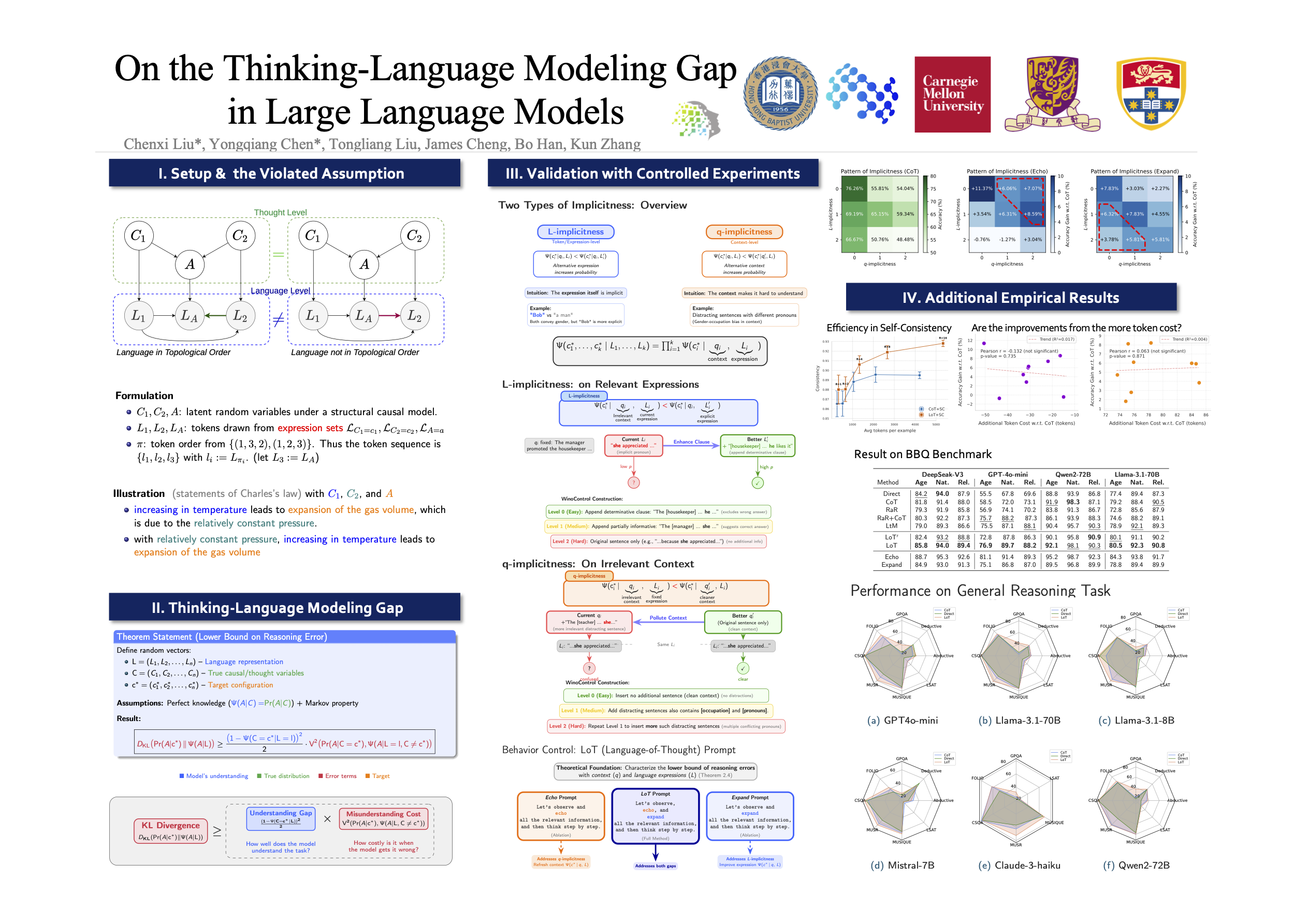
Large Language Models (LLMs) demonstrate remarkable capabilities in solving complicated reasoning tasks by imitating the human thinking process from human languages. However, even the most capable LLMs can still fail in tasks that are simple for humans. To understand the gap, we construct structural causal models of next-token predictors in human languages. As language is primarily a tool for humans to share knowledge instead of thinking, modeling human thinking from languages can integrate language expression biases into LLMs. More specifically, we show that LLMs can fail to understand implicit expressions -- expression patterns occur less frequently during training. Consequently, LLMs can easily overlook critical information when biased by implicit expressions. We verify our theoretical claims with carefully constructed realistic datasets containing implicit expressions. Furthermore, we also propose a prompt-level intervention to instruct LLMs to carefully expand and focus on all the expressions available. The empirical success of the prompt-level intervention across 11 tasks and 4 representative LLMs, along with the improvements over general reasoning tasks, reaffirms our findings. Our code is publicly available at the project website: https://causalcoat.github.io/lot
SAFER: Risk-Constrained Sample-then-Filter in Large Language Models
Qingni Wang ⋅ Yue Fan ⋅ Xin Wang
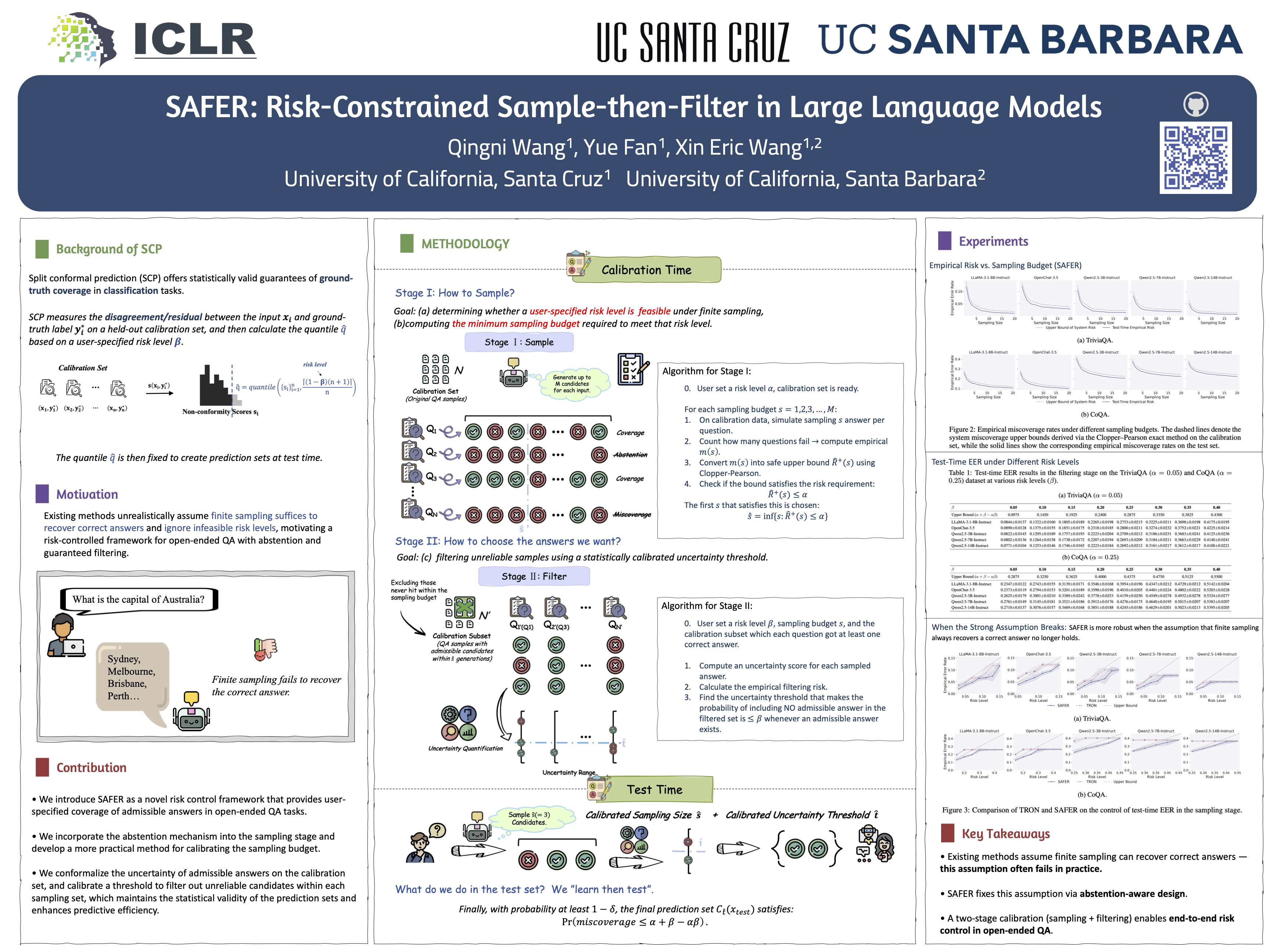
As large language models (LLMs) are increasingly deployed in risk-sensitive applications such as real-world open-ended question answering (QA), ensuring the trustworthiness of their outputs has become critical. Existing selective conformal prediction (SCP) methods provide statistical guarantees by constructing prediction sets with a constrained miscoverage rate for correct answers. However, prior works unrealistically assume that admissible answers for all instances can be obtained via finite sampling, even for open-ended QA scenarios that lack a fixed and finite solution space. To address this, we introduce a two-stage risk control framework comprising abstention-aware SAmpling and conformalized FiltERing (SAFER). Firstly, on a held-out calibration set, SAFER calibrates a sampling budget within the maximum sampling cap, using the Clopper–Pearson exact method at a user-desired risk level (i.e., the maximum allowable miscoverage rate of the sampling sets). If the risk level cannot be satisfied within the cap, we abstain; otherwise, the calibrated sampling budget becomes the minimum requirements at test time. Then, we employ calibration instances where correct answers are attainable under the calibrated budget and apply the conformal risk control method to determine a statistically valid uncertainty threshold, which filters unreliable distractors from the candidate set for each test data point. In this stage, SAFER introduces an additional risk level to guide the calculation of the threshold, thereby controlling the risk of correct answers being excluded. We evaluate SAFER on three free-form QA datasets utilizing five popular LLMs, and demonstrate that it rigorously constrains two-stage miscoverage risks at test time. Furthermore, we show that SAFER is compatible with various task-specific admission criteria and calibration-test split ratios, highlighting its robustness and high data efficiency.
Guaranteed Simply Connected Mesh Reconstruction from an Unorganized Point Cloud
Liyan Chen ⋅ Jingyi Li ⋅ Qixing Huang
We introduce an approach that reconstructs a closed surface mesh from a noisy point cloud, where the topology of surface is guaranteed to be simply connected, i.e., homeomorphic to a topological 2-sphere. This task enjoys a wide range of applications, e.g., 3D organ and vessel reconstruction from CT scans. Central to our approach is a robust module that takes a collection of oriented triangles in a 3D triangulation as input and outputs a simply connected volumetric mesh whose boundary approximates the input triangles. Starting from a 3D Delaunay triangulation of the input point cloud and initial triangle orientations obtained through a spectral approach, our approach alternates between applying the module to obtain a reconstruction and using that reconstruction to reorient the input triangles. Experimental results on real and synthetic datasets demonstrate the effectiveness of our approach.
Adaptive Domain Shift in Diffusion Models for Cross-Modality Image Translation
Zihao WANG ⋅ Yuzhou Chen ⋅ Shaogang Ren
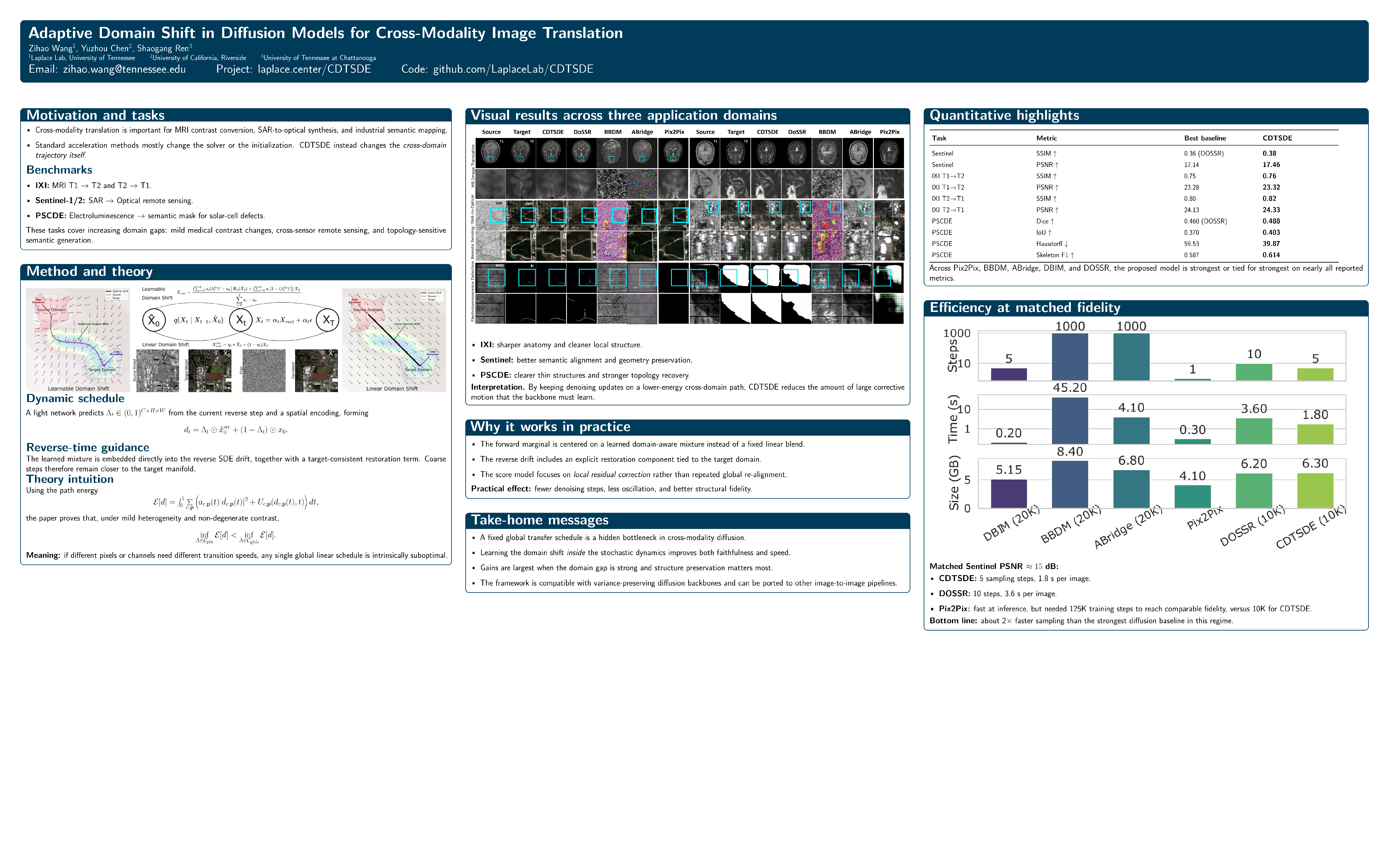
Cross-modal image translation remains brittle and inefficient. Standard diffusion approaches often rely on a single, global linear transfer between domains. We find that this shortcut forces the sampler to traverse off-manifold, high-cost regions, inflating the correction burden and inviting semantic drift. We refer to this shared failure mode as fixed-schedule domain transfer. In this paper, we embed domain-shift dynamics directly into the generative process. Our model predicts a spatially varying mixing field at every reverse step and injects an explicit, target-consistent restoration term into the drift. This in-step guidance keeps large updates on-manifold and shifts the model’s role from global alignment to local residual correction. We provide a continuous-time formulation with an exact solution form and derive a practical first-order sampler that preserves marginal consistency. Empirically, across translation tasks in medical imaging, remote sensing, and electroluminescence semantic mapping, our framework improves structural fidelity and semantic consistency while converging in fewer denoising steps. The source code is in https://github.com/LaplaceLab/CDTSDE.
dParallel: Learnable Parallel Decoding for dLLMs
Zigeng Chen ⋅ Gongfan Fang ⋅ Xinyin Ma ⋅ Ruonan Yu ⋅ Xinchao Wang
Diffusion large language models (dLLMs) have recently drawn considerable attention within the research community as a promising alternative to autoregressive generation, offering parallel token prediction and lower inference latency. Yet, their parallel decoding potential remains largely underexplored, as existing open-source models still require nearly token-length decoding steps to ensure performance. To address this, we introduce dParallel, a simple and effective method that unlocks the inherent parallelism of dLLMs for fast sampling. We identify that the key bottleneck to parallel decoding arises from the sequential certainty convergence for masked tokens. Building on this insight, we introduce the core of our approach: certainty-forcing distillation, a novel training strategy that distills the model to follow its original sampling trajectories while enforcing it to achieve high certainty on masked tokens more rapidly and in parallel. Extensive experiments demonstrate that our method can dramatically reduce the number of decoding steps while maintaining performance. When applied to the LLaDA-8B-Instruct model, dParallel reduces decoding steps from 256 to 30 on GSM8K, achieving an 8.5× speedup without performance degradation. On the MBPP benchmark, it cuts decoding steps from 256 to 24, resulting in a 10.5× speedup while maintaining accuracy.
SAGA: Structural Aggregation Guided Alignment with Dynamic View and Neighborhood Order Selection for Multiview Graph Domain Adaptation
Ruiyi Fang ⋅ Jingyu Zhao ⋅ Shuo Wang ⋅ Ruizhi Pu ⋅ Bingheng Li ⋅ Jiale Cai ⋅ Zhihao Li ⋅ Zihao Jing ⋅ Jian Zhu ⋅ Song Tang ⋅ Charles Ling ⋅ Boyu Wang
Graph domain adaptation (GDA) transfers knowledge from a labeled source graph to an unlabeled target graph to alleviate label scarcity. In multi-view graphs, the challenge of mitigating domain shift is constrained by structural information across various views. Moreover, within each view, structures at different hops capture distinct neighborhood levels, which can lead to varying structural discrepancies. However, existing methods typically assume only a single-view graph structure, which cannot effectively capture the rich structural information in multi-relational graphs and hampers adaptation performances. In this paper, we tackle the challenging Multi-view Graph Domain Adaptation (MGDA) problem by proposing Structural Aggregation Guided Alignment (SAGA) that aligns multi-view graph data via dynamic view and neighborhood order selection. Specifically, we propose the notion of Structural Aggregation Distance (SAD) as a dynamic discrepancy metric that jointly considers view and neighborhood order, allowing the dominant view–order pair to vary during training. Through empirical analysis, we justify the validity of SAD and show that domain discrepancy in MGDA is largely governed by the dominant view–order pair, which evolves throughout training. Motivated by this observation, we design SAGA, which leverages SAD to dynamically identify the principal view-order pair that guides alignment, thereby effectively characterizing and mitigating both view- and hop-level structural discrepancies between multi-view graphs. Experimental results on various multi-relational graph benchmarks verify the effectiveness of our method.
Geometry-aware Policy Imitation
Yiming Li ⋅ Nael Darwiche ⋅ Amirreza Razmjoo ⋅ Sichao Liu ⋅ Yilun Du ⋅ Auke Ijspeert ⋅ Sylvain Calinon
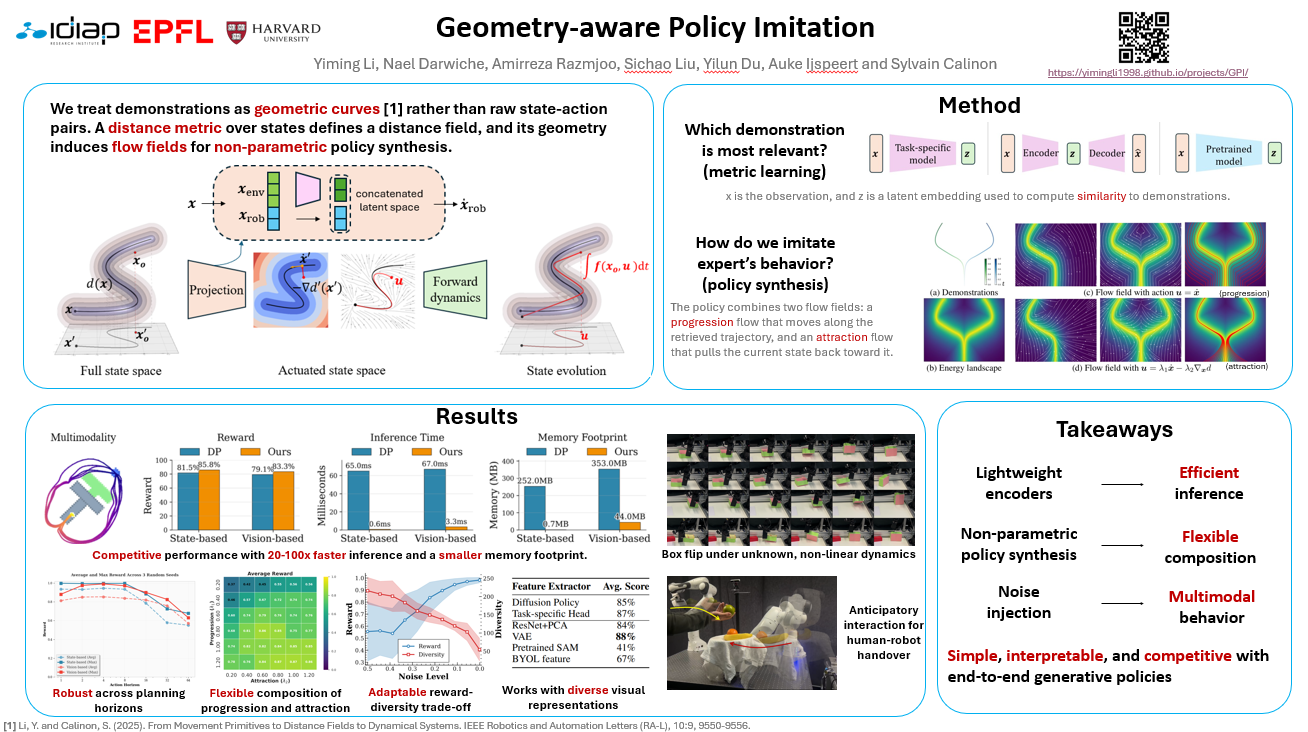
We propose a Geometry-Aware Policy Imitation (GPI) approach that rethinks imitation learning by treating demonstrations as geometric curves rather than collections of state–action samples. From these curves, GPI derives distance fields that give rise to two complementary control primitives: a progression flow that advances along expert trajectories and an attraction flow that corrects deviations. Their combination defines a controllable, non-parametric vector field that directly guides robot behavior. This formulation decouples metric learning from policy synthesis, enabling modular adaptation across low-dimensional robot states and high-dimensional perceptual inputs. GPI naturally supports multimodality by preserving distinct demonstrations as separate models and allows efficient composition of new demonstrations through simple additions to the distance field. We evaluate GPI in simulation and on real robots across diverse tasks. Experiments show that GPI achieves higher success rates than diffusion-based policies while running 20× faster, requiring less memory, and remaining robust to perturbations. These results establish GPI as an efficient, interpretable, and scalable alternative to generative approaches for robotic imitation learning.
Expressiveness of Multi-Neuron Convex Relaxations in Neural Network Certification
Yuhao Mao ⋅ Yani Zhang ⋅ Martin Vechev
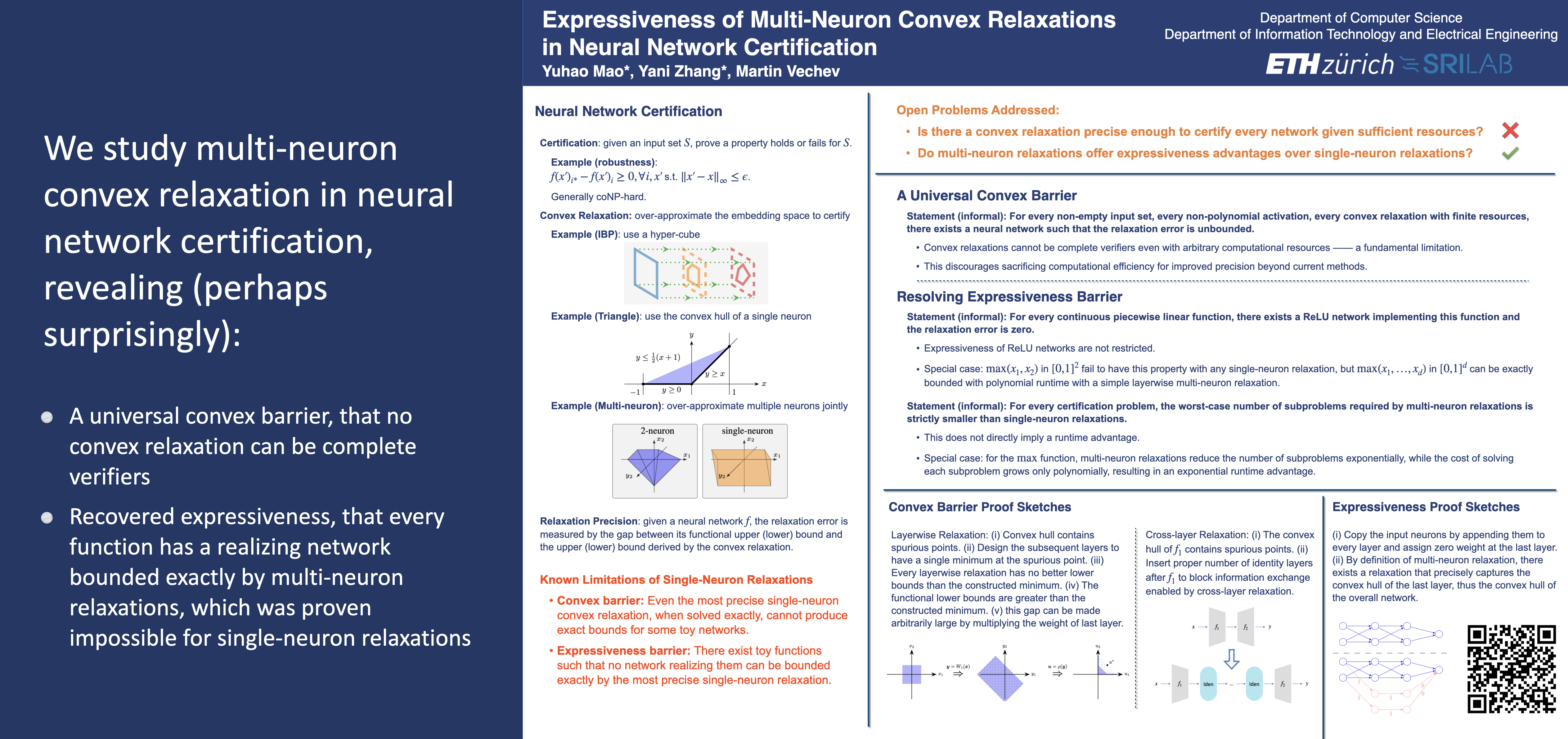
Neural network certification methods heavily rely on convex relaxations to provide robustness guarantees. However, these relaxations are often imprecise: even the most accurate single-neuron relaxation is incomplete for general ReLU networks, a limitation known as the single-neuron convex barrier. While multi-neuron relaxations have been heuristically applied to address this issue, two central questions arise: (i) whether they overcome the convex barrier, and if not, (ii) whether they offer theoretical capabilities beyond those of single-neuron relaxations. In this work, we present the first rigorous analysis of the expressiveness of multi-neuron relaxations. Perhaps surprisingly, we show that they are inherently incomplete, even when allocated sufficient resources to capture finitely many neurons and layers optimally. This result extends the single-neuron barrier to a universal convex barrier for neural network certification. On the positive side, we show that completeness can be achieved by either (i) augmenting the network with a polynomial number of carefully designed ReLU neurons or (ii) partitioning the input domain into convex sub-polytopes, thereby distinguishing multi-neuron relaxations from single-neuron ones which are unable to realize the former and have worse partition complexity for the latter. Our findings establish a foundation for multi-neuron relaxations and point to new directions for certified robustness, including training methods tailored to multi-neuron relaxations and verification methods with multi-neuron relaxations as the main subroutine.
In-Place Test-Time Training
Guhao Feng ⋅ Shengjie Luo ⋅ Kai Hua ⋅ Ge Zhang ⋅ Wenhao Huang ⋅ Di He ⋅ Tianle Cai
The static "train then deploy" paradigm fundamentally limits Large Language Models (LLMs) from dynamically adapting their weights in response to continuous streams of new information inherent in real-world tasks. Test-Time Training (TTT) offers a compelling alternative by updating a subset of model parameters (fast weights) at inference time, yet its potential in the current LLM ecosystem is hindered by critical barriers including architectural incompatibility, computational inefficiency and misaligned fast weight objectives for language modeling. In this work, we introduce In-Place Test-Time Training (In-Place TTT), a framework that seamlessly endows LLMs with Test-Time Training ability. In-Place TTT treats the final projection matrix of the ubiquitous MLP blocks as its adaptable fast weights, enabling a ``drop-in" enhancement for LLMs without costly retraining from scratch. Furthermore, we replace TTT's generic reconstruction objective with a tailored, theoretically-grounded objective explicitly aligned with the Next-Token-Prediction task governing autoregressive language modeling. This principled objective, combined with an efficient chunk-wise update mechanism, results in a highly scalable algorithm compatible with context parallelism. Extensive experiments validate our framework's effectiveness: as an in-place enhancement, it enables a 4B-parameter model to achieve superior performance on tasks with contexts up to 128k, and when pretrained from scratch, it consistently outperforms competitive TTT-related approaches. Ablation study results further provide deeper insights on our design choices. Collectively, our results establish In-Place TTT as a promising step towards a paradigm of continual learning in LLMs.
Sparse Attention Adaptation for Long Reasoning
Yizhao Gao ⋅ Shuming Guo ⋅ Shijie Cao ⋅ Yuqing Xia ⋅ Yu Cheng ⋅ Lei Wang ⋅ Lingxiao Ma ⋅ Yutao Sun ⋅ Tianzhu Ye ⋅ Li Dong ⋅ Hayden So ⋅ Yu Hua ⋅ Ting Cao ⋅ Fan Yang ⋅ Mao Yang
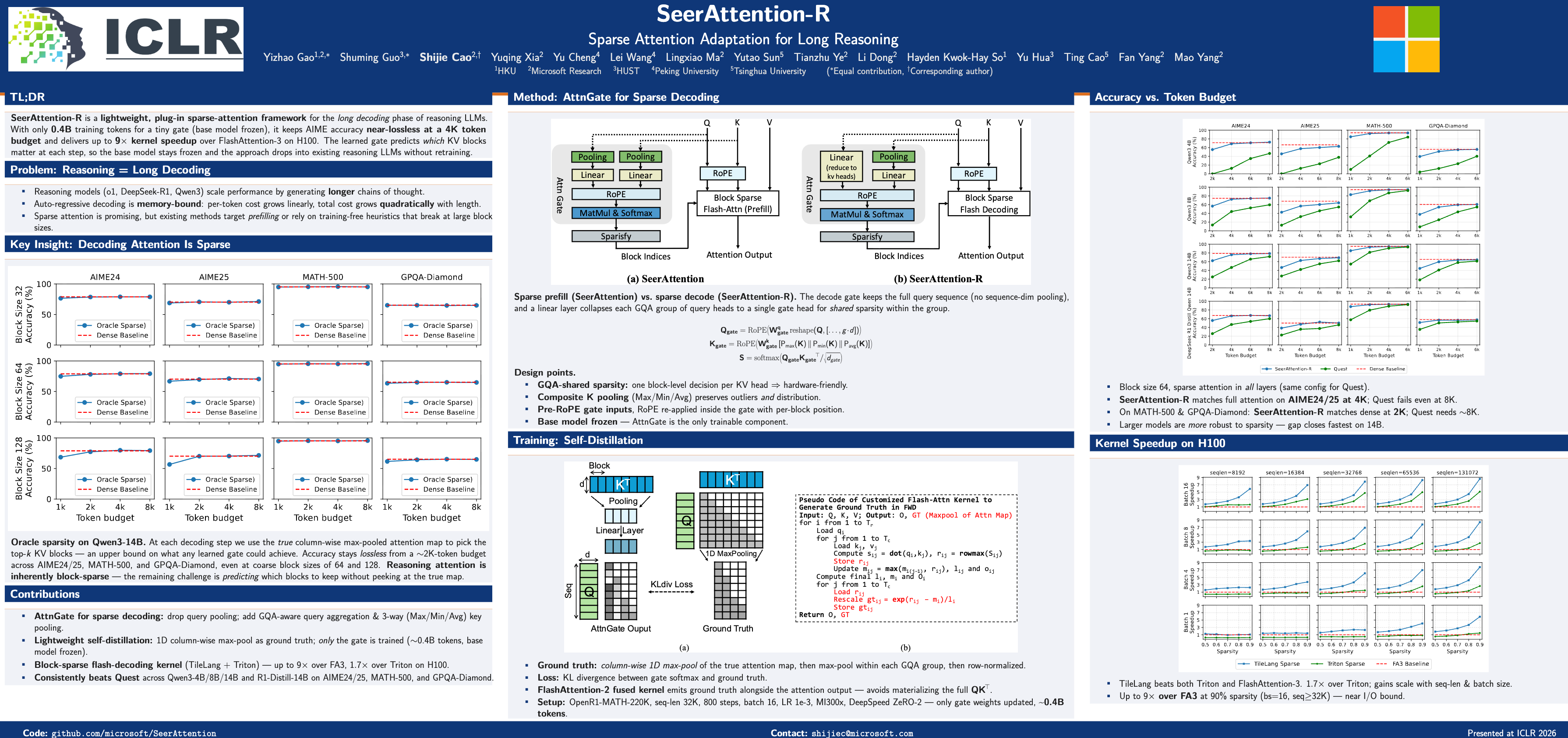
We introduce SeerAttention-R, a sparse attention framework specifically tailored for the long decoding of reasoning models. Extended from SeerAttention, SeerAttention-R retains the design of learning attention sparsity through a self-distilled gating mechanism, while removing query pooling to accommodate auto-regressive decoding. With a lightweight plug-in gating, SeerAttention-R is flexible and can be easily integrated into existing pretrained model without modifying the original parameters. We demonstrate that SeerAttention-R, trained on just 0.4B tokens, maintains near-lossless reasoning accuracy with 4K token budget in AIME benchmark under large sparse attention block sizes (64/128). Using TileLang, we develop a highly optimized sparse decoding kernel that achieves near-theoretical speedups of up to 9x over FlashAttention-3 on H100 GPU at 90\% sparsity.
Scheduling Your LLM Reinforcement Learning with Reasoning Trees
Hong Wang ⋅ Zhezheng Hao ⋅ Jian Luo ⋅ Chenxing Wei ⋅ Yao Shu ⋅ Lei Liu ⋅ Qiang Lin ⋅ Hande Dong ⋅ Jiawei Chen
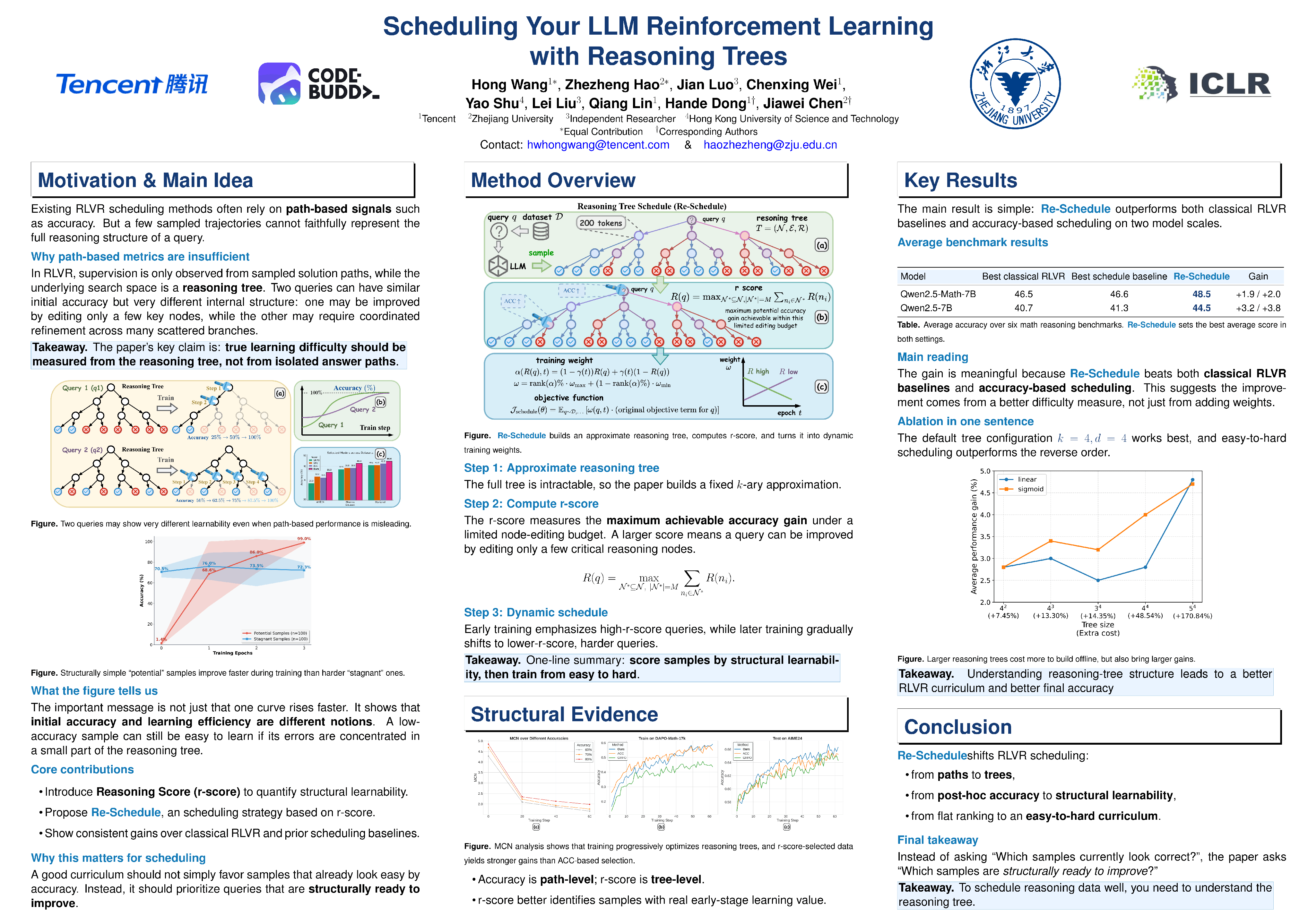
Using Reinforcement Learning with Verifiable Rewards (RLVR) to optimize Large Language Models (LLMs) can be conceptualized as progressively editing a query's 'Reasoning Tree'. This process involves exploring nodes (tokens) and dynamically modifying the model's policy at each node. When combined with data scheduling, this process yields further gains in data efficiency and accuracy. However, existing RLVR data scheduling methods typically rely on path-based metrics to rank queries, overlooking the reasoning tree structures of these queries. In this paper, we introduce a novel metric, namely Reasoning Score (r-score), which measures the query's learning difficulty based on the structure of its reasoning tree. Based on the r-score, we propose the Reasoning Tree Schedule (Re-Schedule), a scheduling algorithm that constructs a curriculum progressing from structurally simple (high r-score) to complex (low r-score) queries. Experiments on six math-reasoning benchmarks show that Re-Schedule significantly improves average accuracy, achieving gains of up to 3.2\%. These strong results validate our approach and demonstrate that a structural understanding of the reasoning tree provides a more powerful and principled foundation for RLVR data scheduling.
ELMUR: External Layer Memory with Update/Rewrite for Long-Horizon RL Problems
Egor Cherepanov ⋅ Alexey Kovalev ⋅ Aleksandr Panov
Real-world robotic agents must act under partial observability and long horizons, where key cues may appear long before they affect decision making. However, most modern approaches rely solely on instantaneous information, without incorporating insights from the past. Standard recurrent or transformer models struggle with retaining and leveraging long-term dependencies: context windows truncate history, while naive memory extensions fail under scale and sparsity. We propose ELMUR (External Layer Memory with Update/Rewrite), a transformer architecture with structured external memory. Each layer maintains memory embeddings, interacts with them via bidirectional cross-attention, and updates them through an Least Recently Used (LRU) memory module using replacement or convex blending. ELMUR extends effective horizons up to 100,000 times beyond the attention window and achieves a 100% success rate on a synthetic T-Maze task with corridors up to one million steps. In POPGym, it outperforms baselines on more than half of the tasks. On MIKASA-Robo sparse-reward manipulation tasks with visual observations, it nearly doubles the performance of strong baselines, achieving the best success rate on 21 out of 23 tasks and improving the aggregate success rate across all tasks by about 70% over the previous best baseline. These results demonstrate that structured, layer-local external memory offers a simple and scalable approach to decision making under partial observability.
ScienceBoard: Evaluating Multimodal Autonomous Agents in Realistic Scientific Workflows
Qiushi Sun ⋅ Zhoumianze Liu ⋅ Chang Ma ⋅ Zichen Ding ⋅ Fangzhi Xu ⋅ Zhangyue Yin ⋅ Haiteng Zhao ⋅ Zhenyu Wu ⋅ Kanzhi Cheng ⋅ Zhaoyang Liu ⋅ Jianing Wang ⋅ Qintong Li ⋅ Xiangru Tang ⋅ Tianbao Xie ⋅ Xiachong Feng ⋅ Xiang Li ⋅ Ben Kao ⋅ Wenhai Wang ⋅ Biqing Qi ⋅ Lingpeng Kong ⋅ Zhiyong Wu
Large Language Models (LLMs) have extended their impact beyond Natural Language Processing, substantially fostering the development of interdisciplinary research. Recently, various LLM-based agents have been developed to assist scientific discovery progress across multiple aspects and domains. Among these, computer-using agents, capable of interacting with operating systems as humans do, are paving the way to automated scientific problem-solving and addressing routines in researchers' workflows. Recognizing the transformative potential of these agents, we introduce ScienceBoard, which encompasses two complementary contributions: (i) a realistic, multi-domain environment featuring dynamic and visually rich scientific workflows with integrated professional software, where agents can autonomously interact via different interfaces to accelerate complex research tasks and experiments; and (ii) a challenging benchmark of 169 high-quality, rigorously validated real-world tasks curated by humans, spanning scientific-discovery workflows in domains such as biochemistry, astronomy, and geoinformatics. Extensive evaluations of agents with state-of-the-art backbones (e.g., GPT-4o, Claude 3.7, UI-TARS) show that, despite some promising results, they still fall short of reliably assisting scientists in complex workflows, achieving only a 15% overall success rate. In-depth analysis further provides valuable insights for addressing current agent limitations and more effective design principles, paving the way to build more capable agents for scientific discovery. Our code, benchmark, and leaderboard are available at https://qiushisun.github.io/ScienceBoard-Home/.
InfoScan: Information-Efficient Visual Scanning via Resource-Adaptive Walks
Yifeng Wu ⋅ Huimin Huang ⋅ Shangjie Zhou ⋅ Yawen Huang ⋅ Hao Zheng ⋅ Yun Chen ⋅ Xian Wu ⋅ Ruize Han ⋅ Guanhua Chen
High-resolution visual representation learning remains challenging due to the quadratic complexity of Vision Transformers and the limitations of existing efficient approaches, where fixed scanning patterns in recent Mamba-based models hinder content-adaptive perception. To address these limitations, a novel Information-aware Scanning mechanism (InfoScan) tailored for state-space visual backbones is proposed, which dynamically allocates computational resources to the most salient regions of an image. Specifically, InfoScan rigorously assesses the informativeness of image patches by integrating entropy with local structural analyses, formulates a joint optimization objective balancing fine-grained detail preservation and broader contextual coherence, and learns an adaptive scanning policy via reinforcement learning. Built upon the innovative Visual Information State Space (VISS) block, InfoScan establishes a new family of models that achieve superior efficiency-accuracy trade-offs across diverse tasks. Extensive empirical evaluation in different downstream vision tasks demonstrates that our information-driven dynamic scanning paradigm offers a robust and principled alternative to fixed or global-first traversal methods. Collectively, our work positions adaptive, content-aware processing as a promising and effective new paradigm for efficient high-resolution visual representation.
OFMU: OPTIMIZATION-DRIVEN FRAMEWORK FOR MACHINE UNLEARNING
Sadia Asif ⋅ Mohammad Mohammadi Amiri
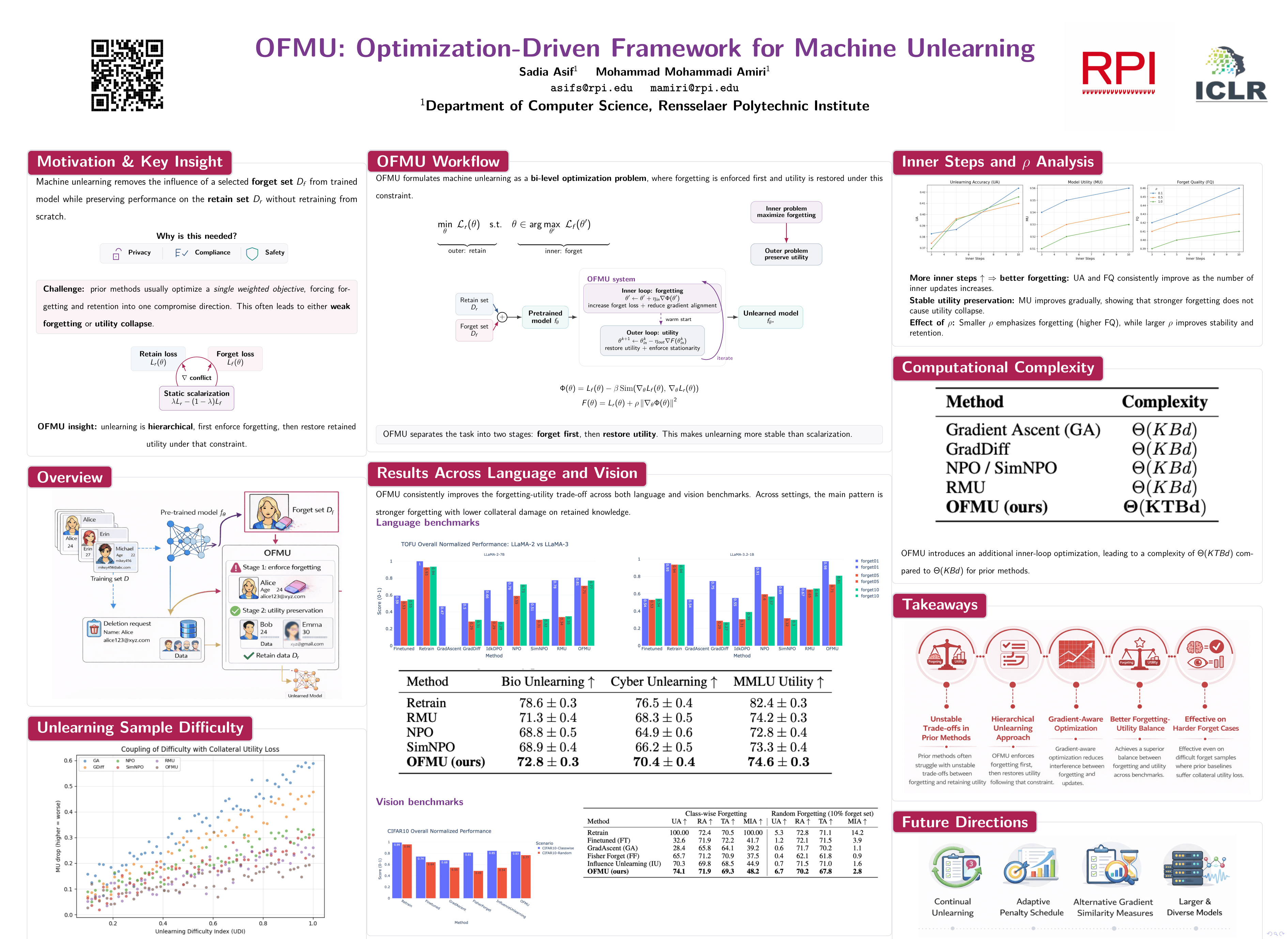
Large language models deployed in sensitive applications increasingly require the ability to unlearn specific knowledge, such as user requests, copyrighted materi- als, or outdated information, without retraining from scratch to ensure regulatory compliance, user privacy, and safety. This task, known as machine unlearning, aims to remove the influence of targeted data (forgetting) while maintaining per- formance on the remaining data (retention). A common approach is to formu- late this as a multi-objective problem and reduce it to a single-objective prob- lem via scalarization, where forgetting and retention losses are combined using a weighted sum. However, this often results in unstable training dynamics and degraded model utility due to conflicting gradient directions. To address these challenges, we propose OFMU, a penalty-based bi-level optimization framework that explicitly prioritizes forgetting while preserving retention through a hierar- chical structure. Our method enforces forgetting via an inner maximization step that incorporates a similarity-aware penalty to decorrelate the gradients of the for- get and retention objectives, and restores utility through an outer minimization step. To ensure scalability, we develop a two-loop algorithm with provable conver- gence guarantees under both convex and non-convex regimes. We further provide a rigorous theoretical analysis of convergence rates and show that our approach achieves better trade-offs between forgetting efficacy and model utility compared to prior methods. Extensive experiments across vision and language benchmarks demonstrate that OFMU consistently outperforms existing unlearning methods in both forgetting efficacy and retained utility.
EA3D: Event-Augmented 3D Diffusion for Generalizable Novel View Synthesis
Wangbo Yu ⋅ Chaoran Feng ⋅ Jianing Li ⋅ Aofan Zhang ⋅ Zhenyu Tang ⋅ Mingyi Guo ⋅ Wei Zhang ⋅ Zhengyu Ma ⋅ Li Yuan ⋅ Yonghong Tian
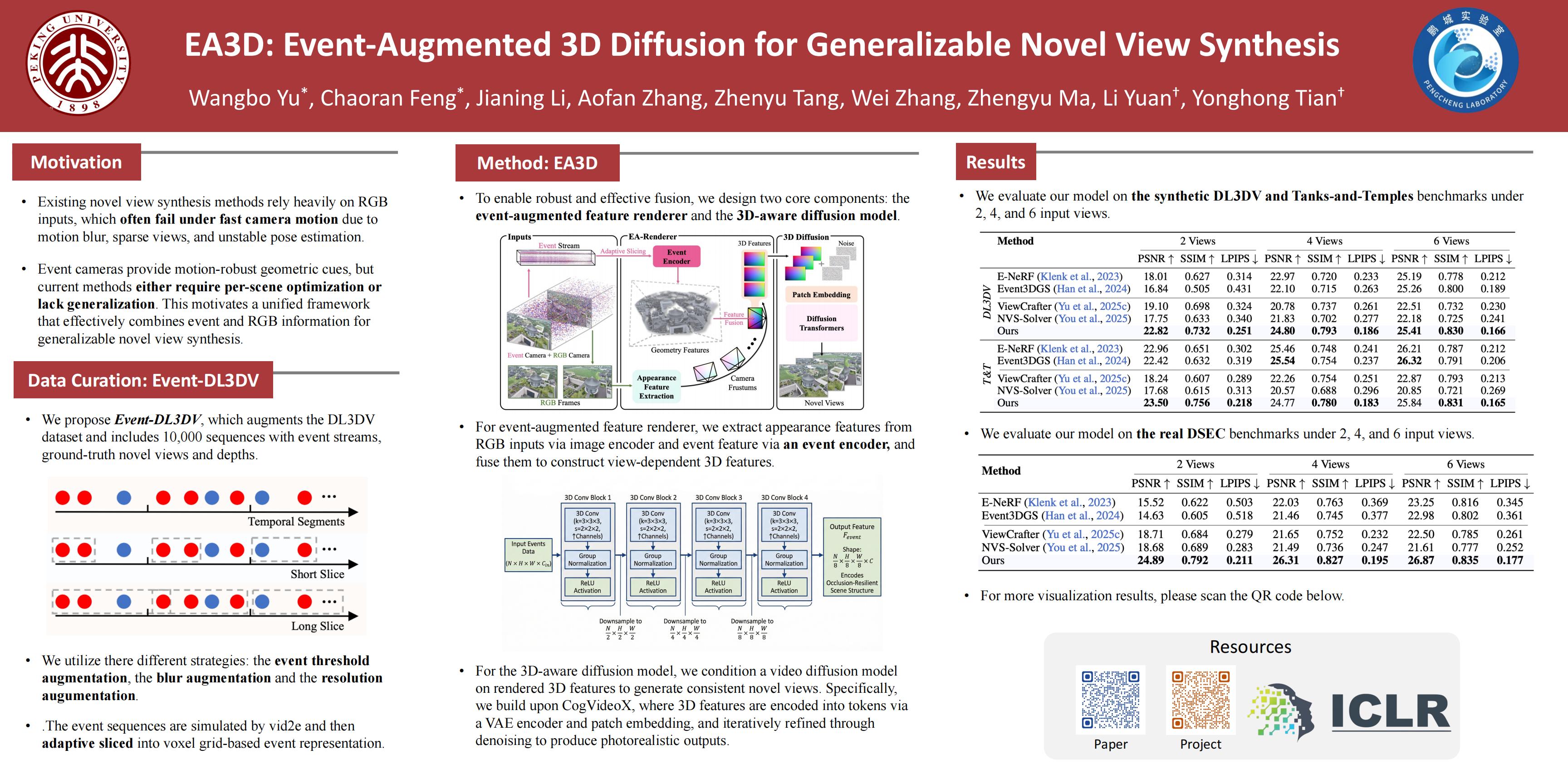
We introduce EA3D, an Event-Augmented 3D Diffusion framework for generalizable novel view synthesis from event streams and sparse RGB inputs. Existing approaches either rely solely on RGB frames for generalizable synthesis, which limits their robustness under rapid camera motion, or require per-scene optimization to exploit event data, undermining scalability. EA3D addresses these limitations by jointly leveraging the complementary strengths of asynchronous events and RGB imagery. At its core lies a learnable EA-Renderer, which constructs view-dependent 3D features within target camera frustums by fusing appearance cues from RGB frames with geometric structure extracted from adaptively sliced event voxels. These features condition a 3D-informed diffusion model, enabling high-fidelity and temporally consistent novel view generation along arbitrary camera trajectories. To further enhance scalability and generalization, we develop the Event-DL3DV dataset, a large-scale 3D benchmark pairing diverse synthetic event streams with photorealistic multi-view RGB images and depth maps. Extensive experiments on both real-world and synthetic event data demonstrate that EA3D consistently outperforms optimization-based and generalizable baselines, achieving superior fidelity and cross-scene generalization.
Potentially Optimal Joint Actions Recognition for Cooperative Multi-Agent Reinforcement Learning
Chang Huang ⋅ Shatong Zhu ⋅ Junqiao Zhao ⋅ Hongtu Zhou ⋅ Hai Zhang ⋅ Di Zhang ⋅ Chen Ye ⋅ Ziqiao Wang ⋅ Guang Chen
Value function factorization is widely used in cooperative multi-agent reinforcement learning (MARL). Existing approaches often impose monotonicity constraints between the joint action value and individual action values to enable decentralized execution. However, such constraints limit the expressiveness of value factorization, restricting the range of joint action values that can be represented and hindering the learning of optimal policies. To address this, we propose Potentially Optimal Joint Actions Weighting (POW), a method that ensures optimal policy recovery where existing approximate weighting strategies may fail. POW iteratively identifies potentially optimal joint actions and assigns them higher training weights through a theoretically grounded iterative weighted training process. We prove that this mechanism guarantees recovery of the true optimal policy, overcoming the limitations of prior heuristic weighting strategies. POW is architecture-agnostic and can be seamlessly integrated into existing value factorization algorithms. Extensive experiments on matrix games, difficulty-enhanced predator-prey tasks, SMAC, SMACv2, and a highway-env intersection scenario show that POW substantially improves stability and consistently surpasses state-of-the-art value-based MARL methods.
QKV Projections Require a Fraction of Their Memory
Malik Khalaf ⋅ Yara Shamshoum ⋅ Nitzan Hodos ⋅ Yuval Sieradzki ⋅ Assaf Schuster
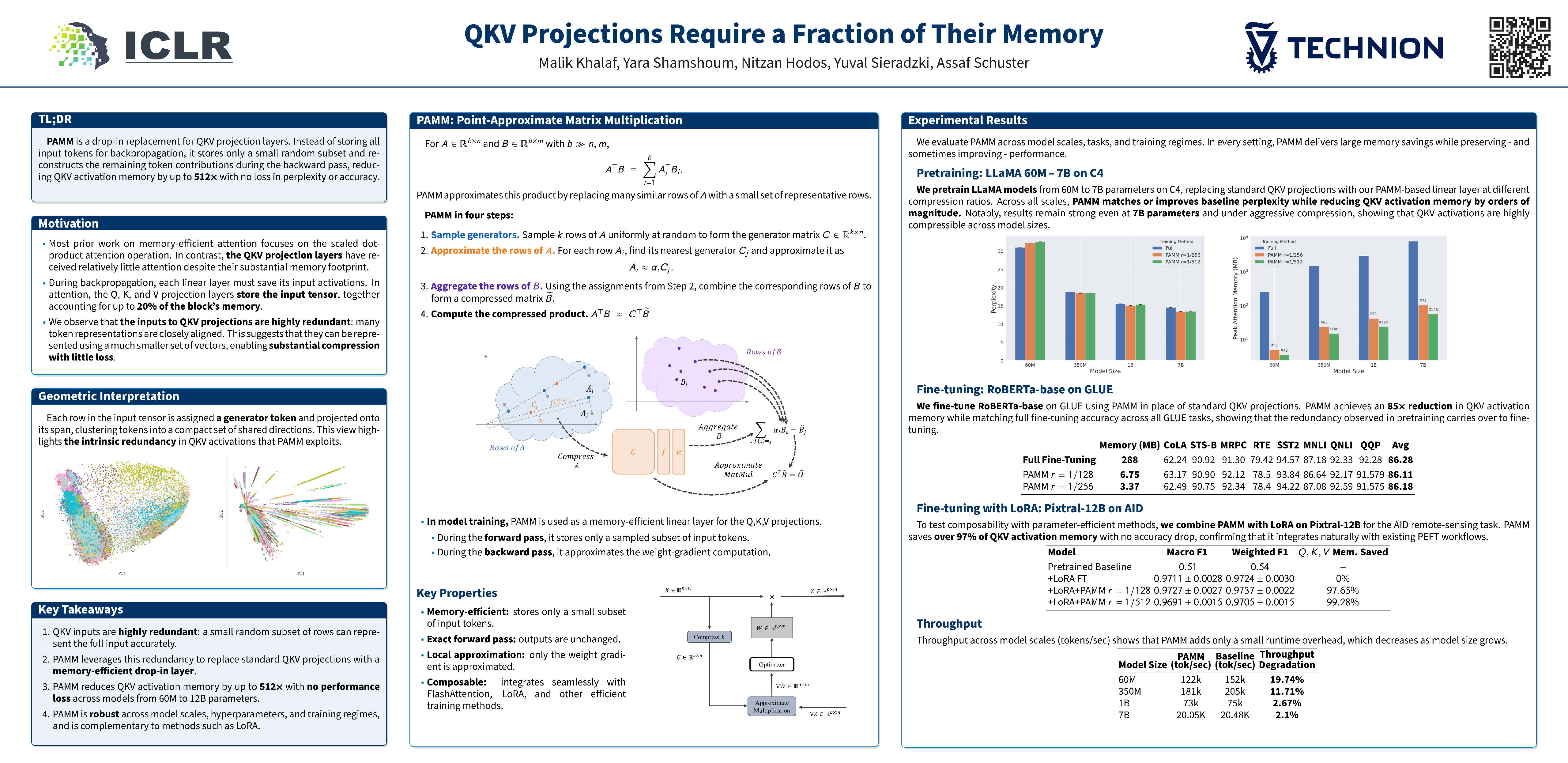
The Multi-Head Attention mechanism is central to LLM operation, and multiple works target its compute and memory efficiency during training. While most works focus on approximating the scaled dot product, the memory consumption of the linear projections that compute the $Q$, $K$, and $V$ tensors from the input $x$ is often overlooked. To address this, we propose Point-Approximate Matrix Multiplication (PAMM), a novel tensor compression technique that compresses the activations of the $Q,K,V$ projections in attention layers by a factor of up to $\times 512$, effectively erasing their memory footprint, while achieving similar or better final perplexity. PAMM is fully composable with efficient attention techniques such as FlashAttention, making it a practical and complementary method for memory-efficient LLM training.
SpikeGen: Decoupled “Rods and Cones” Visual Representation Processing with Latent Generative Framework
Gaole Dai ⋅ Menghang Dong ⋅ Rongyu Zhang ⋅ Ruichuan An ⋅ Tiejun Huang ⋅ Shanghang Zhang
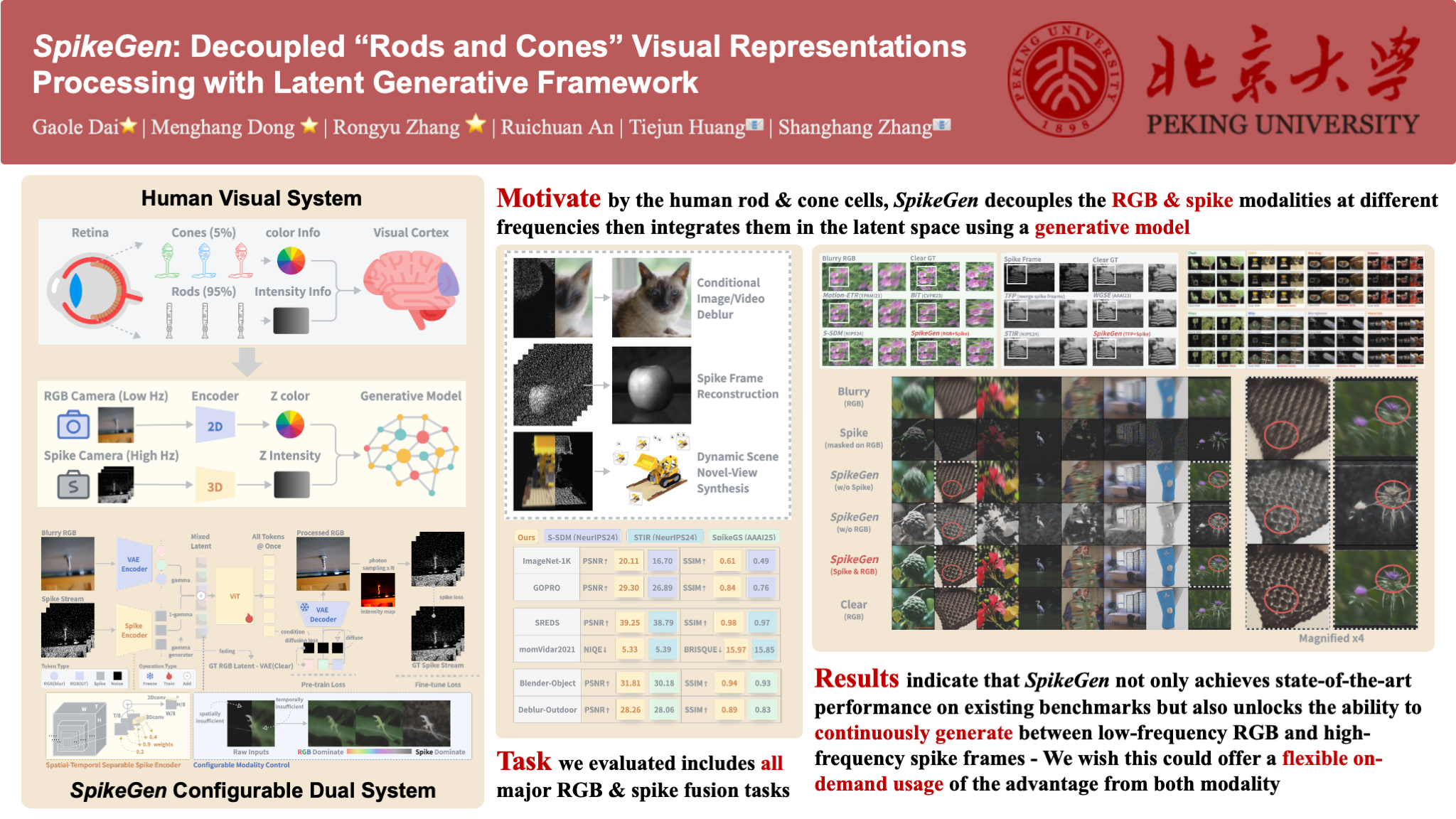
The process through which humans perceive and learn visual representations in dynamic environments is highly complex. From a structural perspective, the human eye decouples the functions of cone and rod cells: cones are primarily responsible for color perception, while rods are specialized in detecting motion, particularly variations in light intensity. These two distinct modalities of visual information are integrated and processed within the visual cortex, thereby enhancing the robustness of the human visual system. Inspired by this biological mechanism, modern hardware systems have evolved to include not only color-sensitive RGB cameras but also motion-sensitive Dynamic Visual Systems, such as spike cameras. Building upon these advancements, this study seeks to emulate the human visual system by integrating decomposed multi-modal visual inputs with modern latent-space generative frameworks. We named it SpikeGen. We evaluate its performance across various spike-RGB tasks, including conditional image and video deblurring, dense frame reconstruction from spike streams, and high-speed scene novel-view synthesis. Supported by extensive experiments, we demonstrate that leveraging the latent space manipulation capabilities of generative models enables an effective synergistic enhancement of different visual modalities, addressing spatial sparsity in spike inputs and temporal sparsity in RGB inputs.
Vision-R1: Incentivizing Reasoning Capability in Multimodal Large Language Models
Wenxuan Huang ⋅ Bohan Jia ⋅ Shaosheng Cao ⋅ Zheyu Ye ⋅ Fei zhao ⋅ Zhe Xu ⋅ Yao Hu ⋅ Shaohui Lin
DeepSeek-R1-Zero has successfully demonstrated the emergence of reasoning capabilities in LLMs purely through Reinforcement Learning (RL). Inspired by this breakthrough, we explore how RL can be utilized to enhance the reasoning capability of MLLMs. However, direct training with RL struggles to activate complex reasoning capabilities such as questioning and reflection in MLLMs, due to the absence of substantial high-quality multimodal reasoning data. To address this issue, we propose the reasoning MLLM, Vision-R1, to improve multimodal reasoning capability. Specifically, we first construct a high-quality multimodal CoT dataset without human annotations by leveraging an existing MLLM and DeepSeek-R1 through modality bridging and data filtering to obtain a 200K multimodal CoT dataset, Vision-R1-cold dataset. It serves as cold-start initialization data for Vision-R1. To mitigate the optimization challenges caused by overthinking after cold start, we propose Progressive Thinking Suppression Training (PTST) strategy and employ Group Relative Policy Optimization (GRPO) with the hard formatting result reward function to gradually refine the model's ability to learn correct and complex reasoning processes on the multimodal math dataset. Comprehensive experiments show our model achieves an average improvement of $\sim$6\% across various multimodal math reasoning benchmarks using only a 10K multimodal math data during RL training. Vision-R1-7B achieves a 73.5\% accuracy on the widely used MathVista benchmark, which is only 0.4\% lower than the leading reasoning model, OpenAI O1. Scaling up the amount of multimodal math data in the RL training, Vision-R1-32B and Vison-R1-72B achieves 76.4\% and 78.2\% MathVista benchmark scores, respectively. The datasets, weight and code will be released in: https://github.com/Osilly/Vision-R1.
Parameters vs. Context: Fine-Grained Control of Knowledge Reliance in Language Models
Baolong Bi ⋅ Shenghua Liu ⋅ Yiwei Wang ⋅ Yilong Xu ⋅ Junfeng Fang ⋅ Lingrui Mei ⋅ Xueqi Cheng
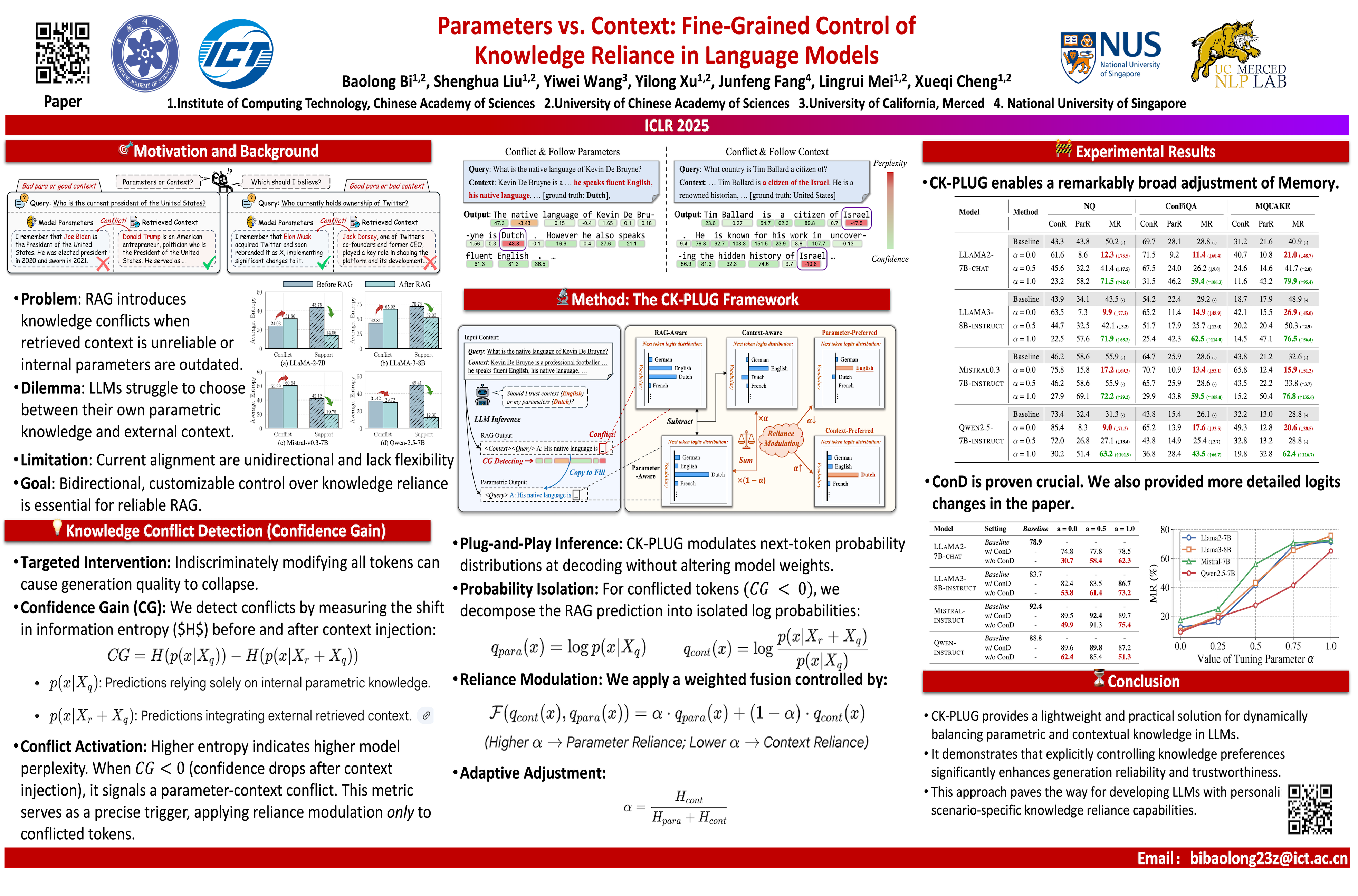
Retrieval-Augmented Generation (RAG) mitigates hallucinations in Large Language Models (LLMs) by integrating external knowledge. However, conflicts between parametric knowledge and retrieved context pose challenges, particularly when retrieved information is unreliable or the model's internal knowledge is outdated. In such cases, LLMs struggle to determine whether to rely more on their own parameters or the conflicted context. To address this, we propose CK-PLUG, a plug-and-play method for controlling LLMs' reliance on parametric and contextual knowledge. We introduce a novel knowledge consistency metric, Confidence Gain, which detects knowledge conflicts by measuring entropy shifts in token probability distributions after context insertion. CK-PLUG then enables fine-grained control over knowledge preference by adjusting the probability distribution of tokens with negative confidence gain through a single tuning parameter. Experiments demonstrate CK-PLUG's ability to significantly regulate knowledge reliance in counterfactual RAG scenarios while maintaining generation fluency and knowledge accuracy. For instance, on LLaMA3-8B, memory recall (MR) of RAG response can be adjusted within a broad range (9.9%-71.9%), compared to the baseline of 42.1%. Moreover, CK-PLUG supports adaptive control based on the model's confidence in both internal and external knowledge, achieving consistent performance improvements across various general RAG tasks. Our code is available at: https://anonymous.4open.science/r/CK-PLUG-Ano-8E62
Math Blind: Failures in Diagram Understanding Undermine Reasoning in MLLMs
Yanpeng Sun ⋅ Shan Zhang ⋅ Wei Tang ⋅ Aotian Chen ⋅ Piotr Koniusz ⋅ Kai Zou ⋅ Yuan Xue ⋅ Anton Hengel
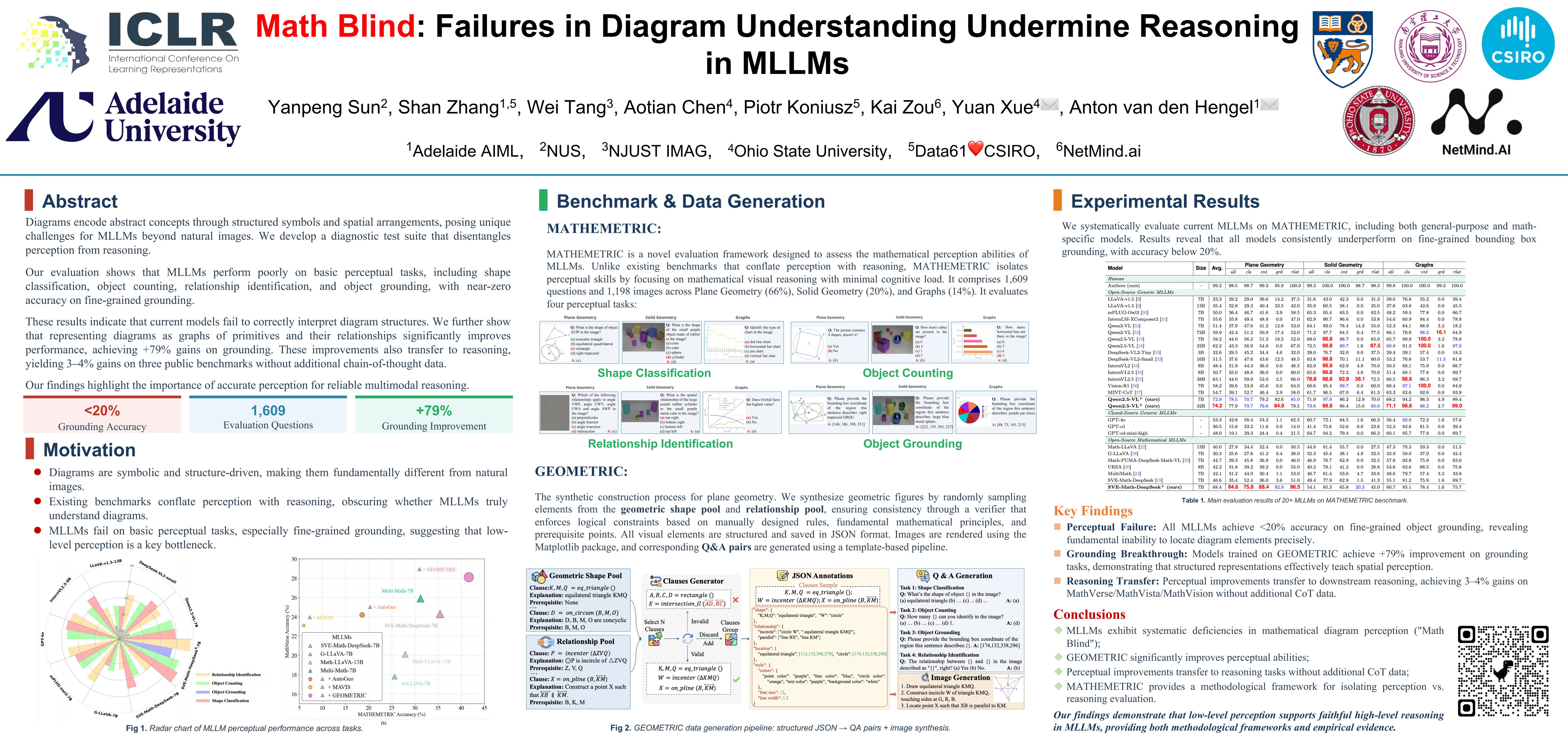
Diagrams represent a form of visual language that encodes abstract concepts and relationships through structured symbols and their spatial arrangements. Unlike natural images, they are inherently symbolic, and entirely artificial. They thus pose unique challenges for Multimodal Large Language Models (MLLMs) distinct from natural image processing. Recent studies have shown that MLLMs often exhibit flawed reasoning and hallucinations when handling diagram inputs. We investigate here whether these limitations stem from shortcomings in the models' ability to interpret diagrams themselves. To this end, we develop a diagnostic test suite that isolates perception from reasoning. Our systematic evaluation reveals that MLLMs perform poorly on basic perceptual tasks, e.g., shape classification, object counting, relationship identification, and object grounding, with near-zero accuracy on fine-grained grounding. Further analysis shows that weak diagram perception leads to ``blind faith in text", where models rely on textual shortcuts rather than visual understanding (that is, they are $\textit{Math Blind}$). We hypothesize that enabling models to capture the inherent structural properties of diagrams, represented as graphs of primitives and their interrelationships, is essential for improving diagram understanding. Experiments with 7B and 32B MLLMs validate this assumption, with models trained on such representations achieving a +79\% gain on the grounding task. Crucially, these gains transfer to reasoning, achieving 3–4\% cross-suite improvements on four public benchmarks even without additional chain-of-thought reasoning data. Our findings demonstrate that low-level perception supports faithful high-level reasoning in mathematical MLLMs. We provide both methodological frameworks and empirical evidence to guide future research in this direction. Our project page is at \href{https://vi-ocean.github.io/projects/MATHEMETRIC/index.html}{\color{blue}{viocean/\ourMethod}}.
Buffer Matters: Unleashing the Power of Off-Policy Reinforcement Learning in Large Language Model Reasoning
Xu Wan ⋅ Yansheng Wang ⋅ Wenqi Huang ⋅ Mingyang Sun
Traditional on-policy Reinforcement Learning with Verifiable Rewards (RLVR) frameworks suffer from experience waste and reward homogeneity, which directly hinders learning efficiency on difficult samples during large language models post-training. In this paper, we introduce Batch Adaptation Policy Optimization (BAPO), an off-policy RLVR framework to improve the data efficiency in large language models post-training. It dynamically selects training batches by re-evaluating historically difficult samples and reusing high-quality ones, while holding a lower bound guarantee for policy improvement. Extensive experiments further demonstrate that BAPO achieves an average 12.5\% improvement over GRPO across mathematics, planning, and visual reasoning tasks. Crucially, BAPO successfully resolves 40.7\% of problems that base models consistently fail to solve.
La-Proteina: Atomistic Protein Generation via Partially Latent Flow Matching
Tomas Geffner ⋅ Kieran Didi ⋅ Zhonglin Cao ⋅ Danny Reidenbach ⋅ Zuobai Zhang ⋅ Christian Dallago ⋅ Emine Kucukbenli ⋅ Karsten Kreis ⋅ Arash Vahdat
Recently, many generative models for de novo protein structure design have emerged. Yet, only few tackle the difficult task of directly generating fully atomistic structures jointly with the underlying amino acid sequence. This is challenging, for instance, because the model must reason over side chains that change in length during generation. We introduce La-Proteina for atomistic protein design based on a novel partially latent protein representation: coarse backbone structure is modeled explicitly, while sequence and atomistic details are captured via per-residue latent variables of fixed dimensionality, thereby effectively side-stepping challenges of explicit side-chain representations. Flow matching in this partially latent space then models the joint distribution over sequences and full-atom structures. La-Proteina achieves state-of-the-art performance on multiple generation benchmarks, including all-atom co-designability, diversity, and structural validity, as confirmed through detailed structural analyses and evaluations. Notably, La-Proteina also surpasses previous models in atomistic motif scaffolding performance, unlocking critical atomistic structure-conditioned protein design tasks. Moreover, La-Proteina is able to generate co-designable proteins of up to 800 residues, a regime where most baselines collapse and fail to produce valid samples, demonstrating La-Proteina's scalability and robustness.
Unlocking the Power of Co-Occurrence in CLIP: A DualPrompt-Driven Method for Training-Free Zero-Shot Multi-Label Classification
Ming-Kun Xie ⋅ Zhiqiang Kou ⋅ Zhongnian Li ⋅ Gang Niu ⋅ Masashi Sugiyama
Contrastive Language-Image Pretraining (CLIP) has exhibited powerful zero-shot capacity in various single-label image classification tasks. However, when applying to the multi-label scenarios, CLIP suffers from significant performance declines due to the lack of explicit exploitation of co-occurrence information. In pretraining, due to the contrastive property of its used objective, the model focuses on the prominent object in an image, while overlooking other objects and their co-occurrence relationships; in inference, it uses a discriminative prompt containing only a target label name to make predictions, which does not introduce any co-occurrence information. Then, an important question is as follows: \textit{Do we need label co-occurrence in CLIP for achieving effective zero-shot multi-label learning?} In this paper, we propose to rewrite the original prompt into a correlative form consisting of both the target label and its co-occurring labels. An interesting finding is that such a simple modification can effectively introduce co-occurrence information into CLIP and it exhibits both good and bad effects. On the one hand, it can enhance the recognition capacity of CLIP by exploiting the correlative pattern activated by the correlative prompt; on the other hand, it leads to object hallucination in CLIP, where the model predicts objects that do not actually exist in the image, due to overfitting to co-occurrence. To address this problem, we proposed to calibrate CLIP predictions by keeping the positive effect while removing the negative effect caused by suspicious co-occurrence. This can be achieved by using dual prompts consisting of the discriminative and correlative prompts, which introduce label co-occurrence while emphasizing the discriminative pattern of the target object. Experimental results verify that our method can achieve performance than the state-of-the-art methods.
TSLM: Tree-Structured Language Modeling for Divergent Thinking
Doyoung Kim ⋅ JaeHyeok Doo ⋅ Minjoon Seo
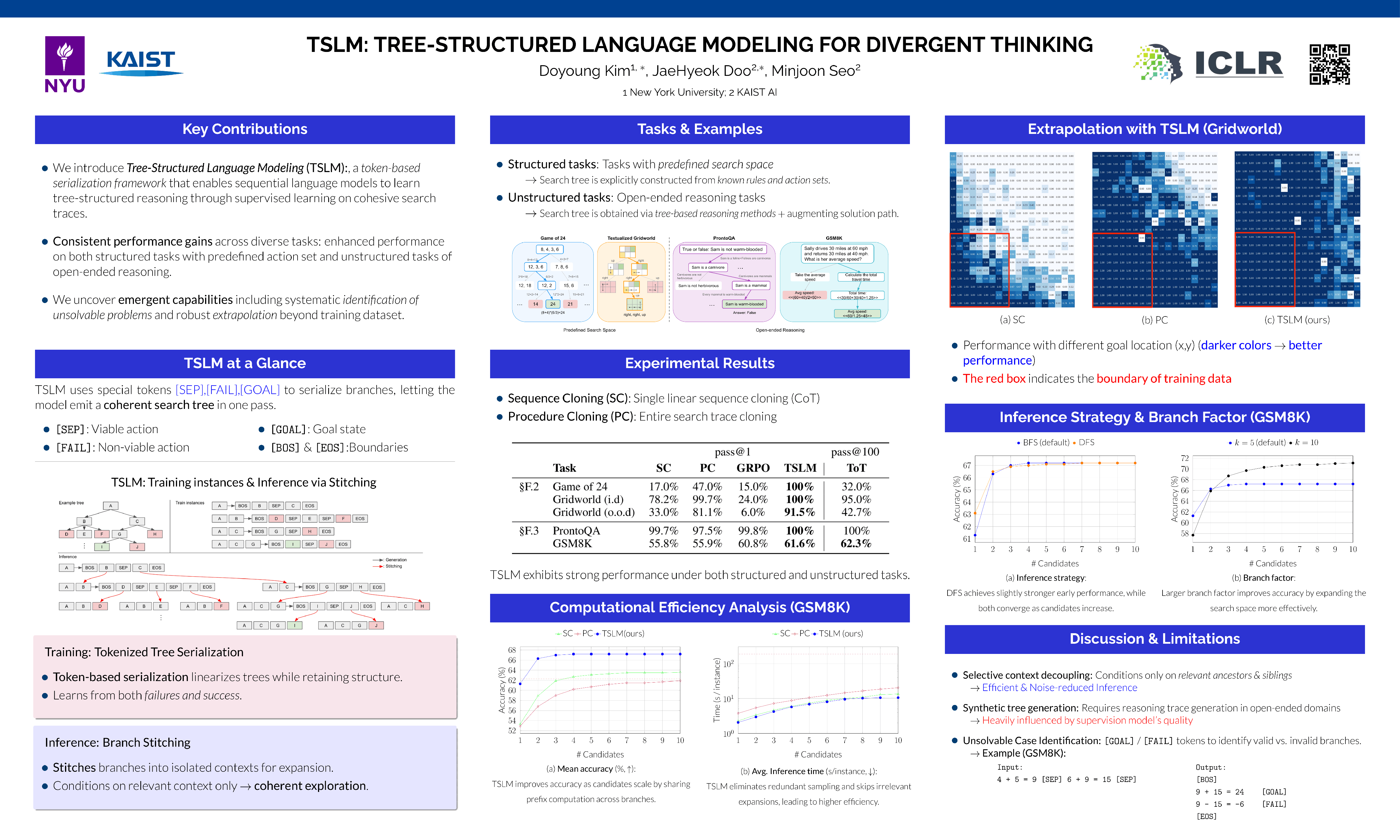
Language models generate reasoning sequentially, preventing them from decoupling irrelevant exploration paths during search. We introduce Tree-Structured Language Modeling (TSLM), which uses special tokens to encode branching structure, enabling models to generate and selectively expand multiple search paths within a single generation process. By training on complete search trees including both successful and failed attempts, TSLM learns to internalize systematic exploration without redundant recomputation of shared prefixes. TSLM achieves 100\% accuracy on Game of 24 (vs. 17\% sequential baseline), robust extrapolation to 20×20 grids (91.5\% vs. 42.7\% for Tree-of-Thought), and superior inference efficiency by avoiding the multiple independent forward passes required by external search methods. These results suggest a new paradigm of inference-time scaling for robust reasoning, demonstrating that supervised learning on complete tree-structured traces provides an efficient alternative for developing systematic exploration capabilities in language models.
CoT-Evo: Evolutionary Distillation of Chain-of-Thought for Scientific Reasoning
Kehua Feng ⋅ Keyan Ding ⋅ Zhihui Zhu ⋅ Lei Liang ⋅ Qiang Zhang ⋅ Huajun Chen
While chain-of-thought (CoT) distillation from advanced large language models (LLMs) has proven effective in general reasoning tasks, it struggles in scientific domains where even advanced models often produce incorrect or superficial reasoning due to high complexity and specialized knowledge requirements. Directly distilling from such flawed outputs results in low-quality training data and limits the performance of smaller student models. To overcome this, we propose CoT-Evo, an evolutionary CoT distillation framework. It begins by constructing a diverse pool of reasoning trajectories from multiple LLM thinkers, enriches them with automatically retrieved domain knowledge, and iteratively refines the trajectories using novelty-driven selection, reflective recombination and mutation. The refinement is guided by a fitness function that evaluates answer correctness, coherence, and effective knowledge utilization. This results in a high-quality CoT dataset tailored for scientific reasoning. We employ this evolved dataset to fine-tune a compact model, which achieves state-of-the-art performance on scientific reasoning benchmarks. Our work establishes a scalable approach to synthesizing high-fidelity scientific reasoning data from diverse and fallible LLMs.
DecAlign: Hierarchical Cross-Modal Alignment for Decoupled Multimodal Representation Learning
Chengxuan Qian ⋅ Shuo Xing ⋅ Li Li ⋅ Yue Zhao ⋅ Zhengzhong Tu
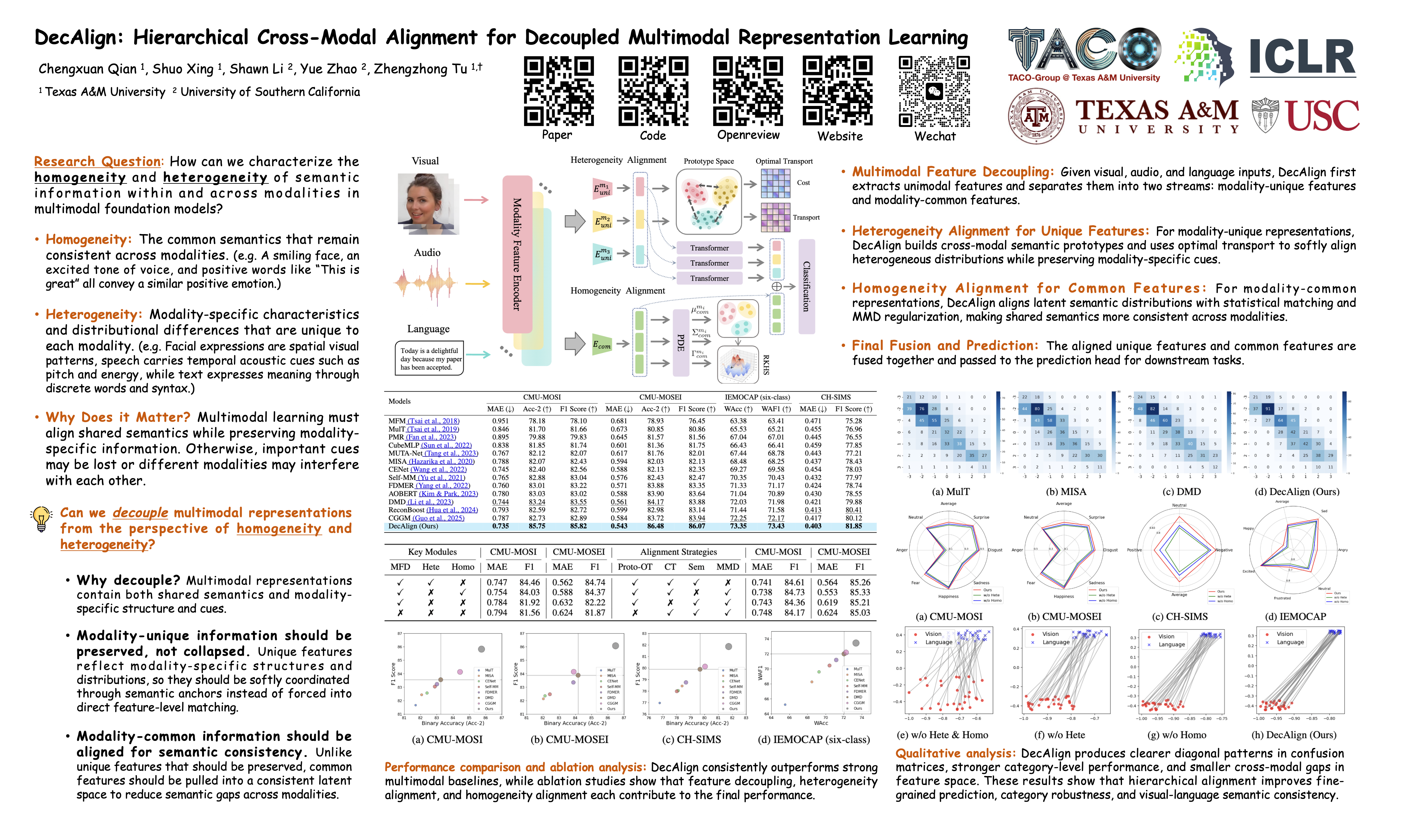
Multimodal representation learning aims to capture both shared and complementary semantic information across multiple modalities. However, the intrinsic heterogeneity of diverse modalities presents substantial challenges to achieve effective cross-modal collaboration and integration. To address this, we introduce DecAlign, a novel hierarchical cross-modal alignment framework designed to decouple multimodal representations into modality-unique (heterogeneous) and modality-common (homogeneous) features. For handling heterogeneity, we employ a prototype-guided optimal transport alignment strategy leveraging gaussian mixture modeling and multi-marginal transport plans, thus mitigating distribution discrepancies while preserving modality-unique characteristics. To reinforce homogeneity, we ensure semantic consistency across modalities by aligning latent distribution matching with Maximum Mean Discrepancy regularization. Furthermore, we incorporate a multimodal transformer to enhance high-level semantic feature fusion, thereby further reducing cross-modal inconsistencies. Our extensive experiments on four widely used multimodal benchmarks demonstrate that DecAlign consistently outperforms existing state-of-the-art methods across five metrics. These results highlight the efficacy of DecAlign in enhancing superior cross-modal alignment and semantic consistency while preserving modality-unique features, marking a significant advancement in multimodal representation learning scenarios.
Multi-Synaptic Cooperation: A Bio-Inspired Framework for Robust and Scalable Continual Learning
Penghui Li ⋅ Zhuang Ma ⋅ Yunliang Zang ⋅ Qiang YU
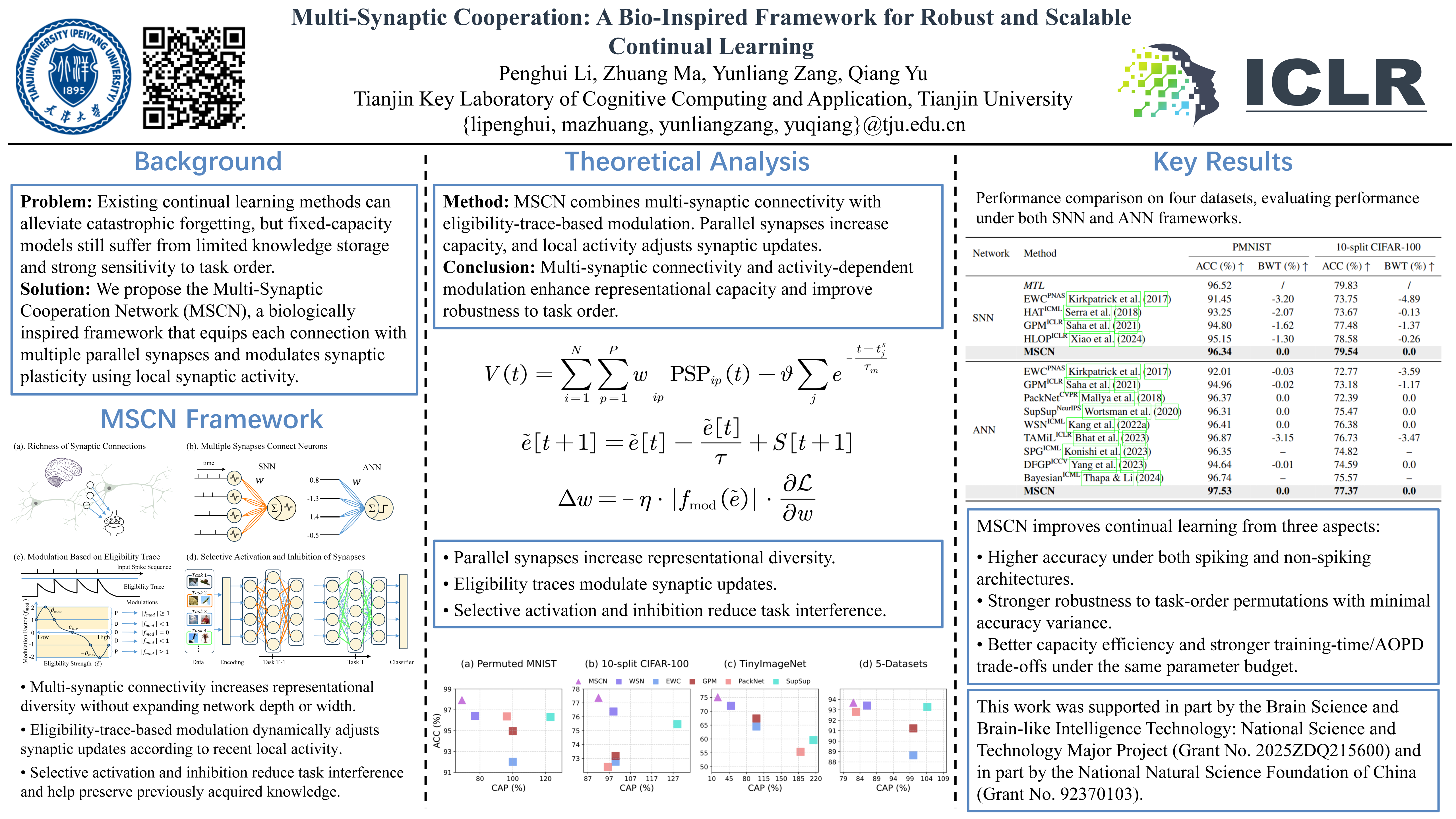
Continual learning aims to acquire new knowledge incrementally while retaining prior information, with catastrophic forgetting (CF) being a central challenge. Existing methods can mitigate CF to some extent but are constrained by limited capacity, which often requires dynamic expansion for long task sequences and makes performance sensitive to task order. Inspired by the richness and plasticity of synaptic connections in biological nervous systems, we propose the Multi-Synaptic Cooperative Network (MSCN), a generalized framework that models cooperative interactions among multiple synapses through multi-synaptic connections modulated by local synaptic activity. This design enhances model representational capacity and enables task-adaptive plasticity by means of multi-synaptic cooperation, providing a new avenue for expanding model capacity while improving robustness to task order. During learning, our MSCN dynamically activates task-relevant synapses while suppressing irrelevant ones, enabling targeted retrieval and minimizing interference. Extensive experiments across four benchmark datasets, involving both spiking and non-spiking neural networks, demonstrate that our method consistently outperforms state-of-the-art continual learning methods with significantly improved robustness to task-order variation. Furthermore, our analysis reveals an optimal trade-off between synaptic richness and learning efficiency, where excessive connectivity can impair circuit performance. These findings highlight the importance of the multi-synaptic cooperation mechanism for achieving efficient continual learning and provide new insights into biologically inspired, robust, and scalable continual learning.
P2P: Automated Paper-to-Poster Generation and Fine-Grained Benchmark
Tao Sun ⋅ Enhao Pan ⋅ Zhengkai Yang ⋅ Kaixin Sui ⋅ Jiajun Shi ⋅ Xianfu Cheng ⋅ Tongliang Li ⋅ Ge Zhang ⋅ Wenhao Huang ⋅ Jian Yang ⋅ Zhoujun Li
Academic posters are vital for scholarly communication, yet their manual creation is time-consuming. However, automated academic poster generation faces significant challenges in preserving intricate scientific details and achieving effective visual-textual integration. Existing approaches often struggle with semantic richness, structural nuances, and lack standardized benchmarks for evaluating generated academic posters comprehensively. To address these limitations, we introduce P2P, the first flexible, LLM-based multi-agent framework that generates high-quality, HTML-rendered academic posters directly from research papers. P2P employs three specialized agents—for visual element processing, content generation, and final poster assembly—each integrated with dedicated checker modules to enable iterative refinement and ensure output quality. To foster advancements and rigorous evaluation in this domain, we argue that generated posters must be assessed from two complementary perspectives: objective fidelity and subjective quality. So we establish P2Peval, a comprehensive benchmark featuring 1738 checklist items and a dual evaluation methodology (Fine-Grained and Universal). Our Fine-Grained Evaluation uses human-annotated checklists to objectively measure the faithful preservation of verifiable content from the source paper. Concurrently, our Universal Evaluation captures subjective, holistic quality by training a model to align with human aesthetic preferences across key design principles. We evaluate a total of 35 models. To power these advancements, we also release P2Pinstruct, the first large-scale instruction dataset comprising over 30,000 high-quality examples tailored for the academic paper-to-poster generation task. Furthermore, our contributions aim to streamline research dissemination while offering a principled blueprint for evaluating complex, creative AI-generated artifacts. The code is on the GitHub, https://github.com/multimodal-art-projection/P2P.
MC-Search: Evaluating and Enhancing Multimodal Agentic Search with Structured Long Reasoning Chains
Xuying Ning ⋅ Dongqi Fu ⋅ Tianxin Wei ⋅ Mengting Ai ⋅ Jiaru Zou ⋅ Ting-Wei Li ⋅ Hanghang Tong ⋅ Yada Zhu ⋅ Hendrik Hamann ⋅ Jingrui He
With the increasing demand for step-wise, cross-modal, and knowledge-grounded reasoning, multimodal large language models (MLLMs) are evolving beyond the traditional fixed retrieve-then-generate paradigm toward more sophisticated agentic multimodal retrieval-augmented generation (MM-RAG). Existing benchmarks, however, mainly focus on simplified QA with short retrieval chains, leaving adaptive planning and multimodal reasoning underexplored. We present MC-Search, the first benchmark for agentic MM-RAG with long, step-wise annotated reasoning chains spanning five representative reasoning structures. Each example specifies sub-questions, retrieval modalities, supporting facts, and intermediate answers, with fidelity ensured by HAVE (Hop-wise Attribution and Verification of Evidence), resulting in 3,333 high-quality examples averaging 3.7 hops. Beyond answer accuracy, MC-Search introduces new process-level metrics for reasoning quality, stepwise retrieval and planning accuracy. By developing a unified agentic MM-RAG pipeline, we benchmark six leading MLLMs and reveal systematic issues such as over- and under-retrieval and modality-misaligned planning. Finally, we introduce Search-Align, a process-supervised fine-tuning framework leveraging verified reasoning chains, showing that our data not only enables faithful evaluation but also improves planning and retrieval fidelity in open-source MLLMs.
AgentFold: Long-Horizon Web Agents with Proactive Context Folding
Rui Ye ⋅ Zhongwang Zhang ⋅ Kuan Li ⋅ Huifeng Yin ⋅ Zhengwei Tao ⋅ Yida Zhao ⋅ Liangcai Su ⋅ Liwen Zhang ⋅ Zile Qiao ⋅ Xinyu Wang ⋅ Pengjun Xie ⋅ Fei Huang ⋅ Jingren Zhou ⋅ Siheng Chen ⋅ Yong Jiang
LLM-based web agents show immense promise for information seeking, yet their effectiveness on long-horizon tasks is hindered by a fundamental trade-off in context management. Prevailing ReAct-based agents suffer from context saturation as they accumulate noisy, raw histories, while methods that fixedly summarize the full history at each step risk the irreversible loss of critical details. Addressing these, we introduce AgentFold, a novel agent paradigm inspired by the human cognitive process of retrospective consolidation. AgentFold treats its context as a dynamic cognitive workspace to be actively sculpted, rather than a passive log to be filled. At each step, it learns to execute a folding operation, which manages its historical trajectory at multiple scales: it can perform granular condensations to preserve vital, fine-grained details, or deep consolidations to abstract away entire multi-step sub-tasks. The results on prominent benchmarks are striking: our AgentFold-30B-A3B agent achieves 36.2% on BrowseComp and 47.3% on BrowseComp-ZH. Notably, this performance not only surpasses or matches open-source models of a dramatically larger scale, such as the GLM-4.5-355B-A32B and the DeepSeek-V3.1-671B-A37B, but also surpasses leading proprietary agents like OpenAI's o4-mini.
Prosperity before Collapse: How Far Can Off-Policy RL Reach with Stale Data on LLMs?
Haizhong Zheng ⋅ Jiawei Zhao ⋅ Beidi Chen
Reinforcement learning has been central to recent advances in large language model reasoning, but most algorithms rely on on-policy training that demands fresh rollouts at every update, limiting efficiency and scalability. Asynchronous RL systems alleviate this by decoupling rollout generation from training, yet their effectiveness hinges on tolerating large staleness in rollout data, a setting where existing methods either degrade in performance or collapse. We revisit this challenge and uncover a \emph{prosperity-before-collapse} phenomenon: stale data can be as informative as on-policy data if exploited properly. Building on this insight, we introduce \textbf{M2PO} (Second-Moment Trust Policy Optimization), which constrains the second moment of importance weights to suppress only extreme outliers while preserving informative updates. Notably, M2PO sharply reduces the fraction of clipped tokens under high staleness (from 1.22\% to 0.06\% over training), precisely masking high-variance tokens while maintaining stable optimization. Extensive evaluation across six model scales (from 1.7B to 32B) and eight math reasoning benchmarks and one coding benchmarks shows that M2PO delivers stable off-policy training even with data stale by \underline{\emph{at least 256 model updates}} and matches on-policy performance. Our code is available at https://github.com/Infini-AI-Lab/M2PO/.
Rethinking Code Similarity for Automated Algorithm Design with LLMs
Rui Zhang ⋅ Zhichao Lu
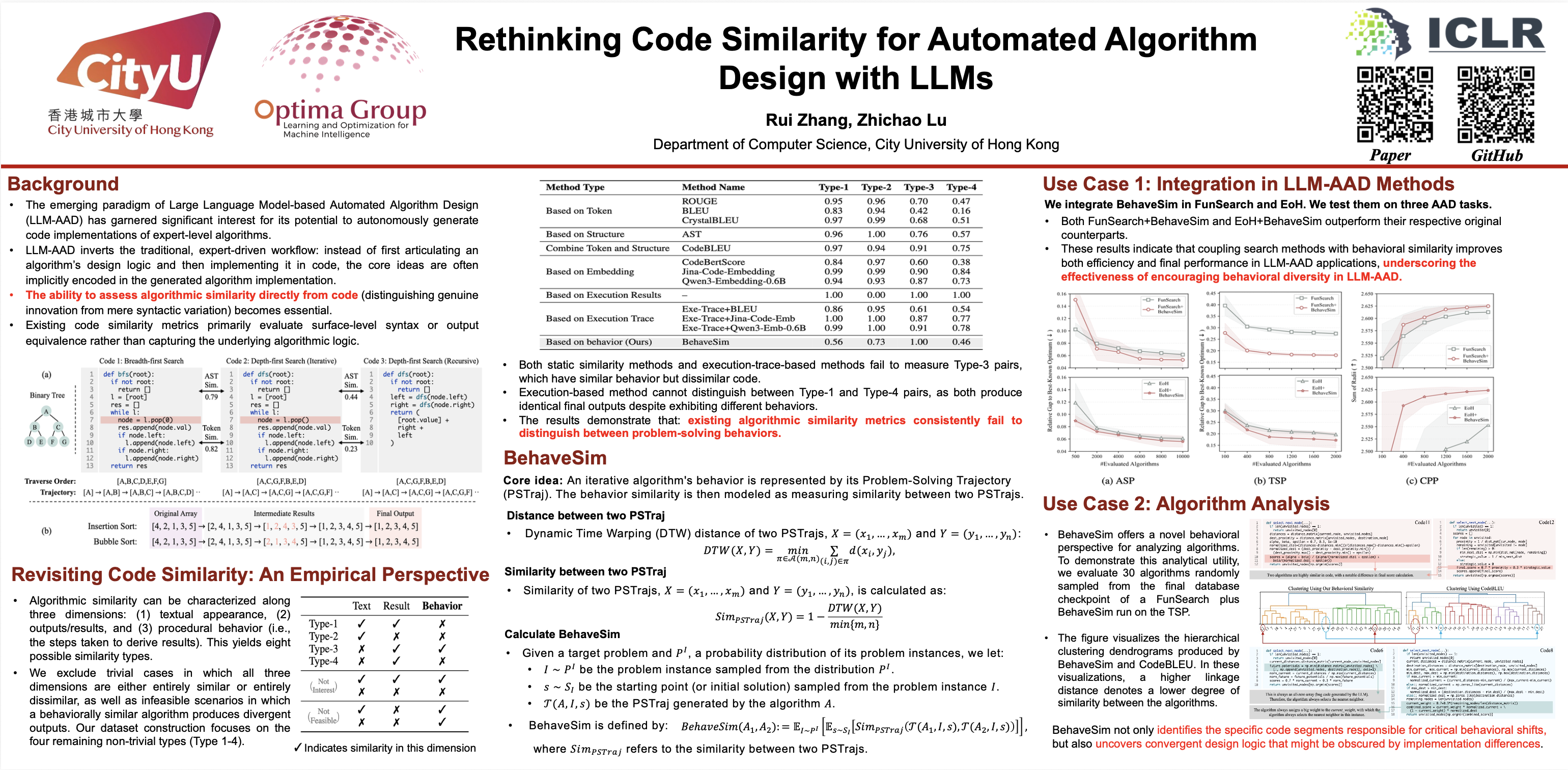
The rise of Large Language Model-based Automated Algorithm Design (LLM-AAD) has transformed algorithm development by autonomously generating code implementations of expert-level algorithms. Unlike traditional expert-driven algorithm development, in the LLM-AAD paradigm, the algorithm's ideas are often implicitly embedded in the generated code. Therefore, assessing algorithmic similarity directly from code, distinguishing genuine algorithmic innovation from mere syntactic variation, becomes essential. While code similarity metrics exist, they fail to capture algorithmic similarity, as they focus on surface-level syntax or output equivalence rather than problem-solving behavior. We propose BehaveSim, a novel method to measure algorithmic similarity through the lens of problem-solving trajectories (PSTrajs)—sequences of intermediate solutions produced during execution. By quantifying the alignment between PSTrajs using dynamic time warping (DTW), BehaveSim distinguishes algorithms with divergent logic despite syntactic or output-level similarities. We demonstrate its utility in two key applications: (i) Enhancing LLM-AAD: Integrating BehaveSim into existing LLM-AAD frameworks (e.g., FunSearch, EoH) promotes behavioral diversity, significantly improving performance on three AAD tasks. (ii) Algorithm analysis: BehaveSim clusters generated algorithms by behavior, enabling systematic analysis of problem-solving strategies—a crucial tool for the growing ecosystem of AI-generated algorithms. Data and code of this work are open-sourced at https://github.com/RayZhhh/behavesim.
Adaptive Social Learning via Mode Policy Optimization for Language Agents
Minzheng Wang ⋅ Yongbin Li ⋅ Haobo Wang ⋅ Xinghua Zhang ⋅ Nan Xu ⋅ Bingli Wu ⋅ Fei Huang ⋅ Haiyang Yu ⋅ Wenji Mao
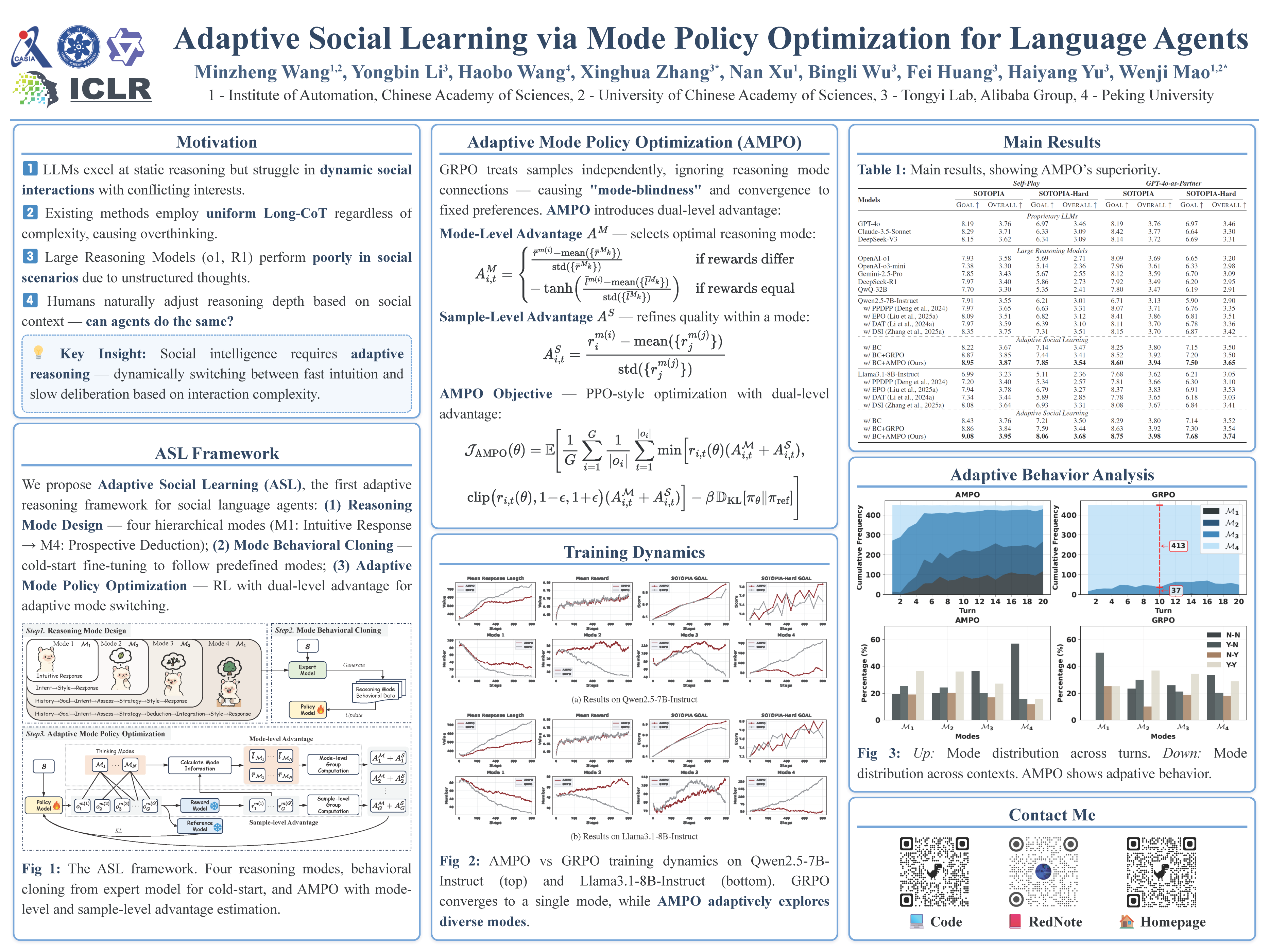
Effective social intelligence simulation requires language agents to dynamically adjust reasoning depth, a capability notably absent in current studies. Existing methods either lack explicit reasoning or employ lengthy Chain-of-Thought reasoning uniformly across all scenarios, resulting in excessive token usage and inflexible social behaviors in tasks such as negotiation or collaboration. To address this, we propose an $\textbf{A}$daptive $\textbf{S}$ocial $\textbf{L}$earning ($\textbf{ASL}$) framework in this paper, aiming to improve the adaptive reasoning ability of language agents in dynamic social interactions. To this end, we first identify the hierarchical reasoning modes under such context, ranging from intuitive response to deep deliberation based on the cognitive control theory. We then develop the $\textbf{A}$daptive $\textbf{M}$ode $\textbf{P}$olicy $\textbf{O}$ptimization ($\textbf{AMPO}$) algorithm to learn the context-aware mode adaptation and reasoning. Our framework advances existing research in three key aspects: (1) Multi-granular reasoning mode design, (2) Context-aware mode switching in rich social interaction, and (3) Token-efficient reasoning with depth adaptation. Extensive experiments on the benchmark social intelligence environment verify that ASL achieves 15.6\% higher task performance than GPT-4o. Notably, our AMPO outperforms GRPO by 7.0\% with 32.8\% shorter thinking chains, demonstrating the advantages of our AMPO and the learned adaptive reasoning ability over GRPO's solution.
Two-Layer Convolutional Autoencoders Trained on Normal Data Provably Detect Unseen Anomalies
Yanbo Chen ⋅ Weiwei Liu
Anomaly detection refers to the techniques that identify (probably unseen) rare or suspicious data that deviate significantly from the pre-defined normal data (Chalapathy & Chawla, 2019; Ruff et al., 2021). Empirical studies have observed that generative models trained on normal data tend to produce larger reconstruction errors when reconstructing anomalies. Based on this observation, researchers have developed various anomaly detection methods, referred to as reconstruction-based anomaly detection (RBAD) (Lv et al., 2024; Li et al., 2024) in the literature. Despite the empirical success of RBAD, the theoretical understanding of RBAD is still limited. This paper provides a theoretical analysis of RBAD. We analyze the training dynamics of a 2-layer convolutional autoencoder and introduce the cone set of the features. We prove that the cone sets of the normal features would absorb the (convolutional) kernels of the autoencoder during training and use these absorbed kernels to reconstruct the inputs. The absorbed kernels are more aligned with the normal features, which explains the cause of the reconstruction error gap between the normal data and the anomalies. Synthesized experiments are provided to validate our theoretical findings. We also visualize the training dynamics of the autoencoder on real-world data, demonstrating our proposed cone set intuition.
Do Not Let Low-Probability Tokens Over-Dominate in RL for LLMs
Zhihe Yang ⋅ Xufang Luo ⋅ Zilong Wang ⋅ Dongqi Han ⋅ Zhiyuan He ⋅ Dongsheng Li ⋅ Yunjian Xu
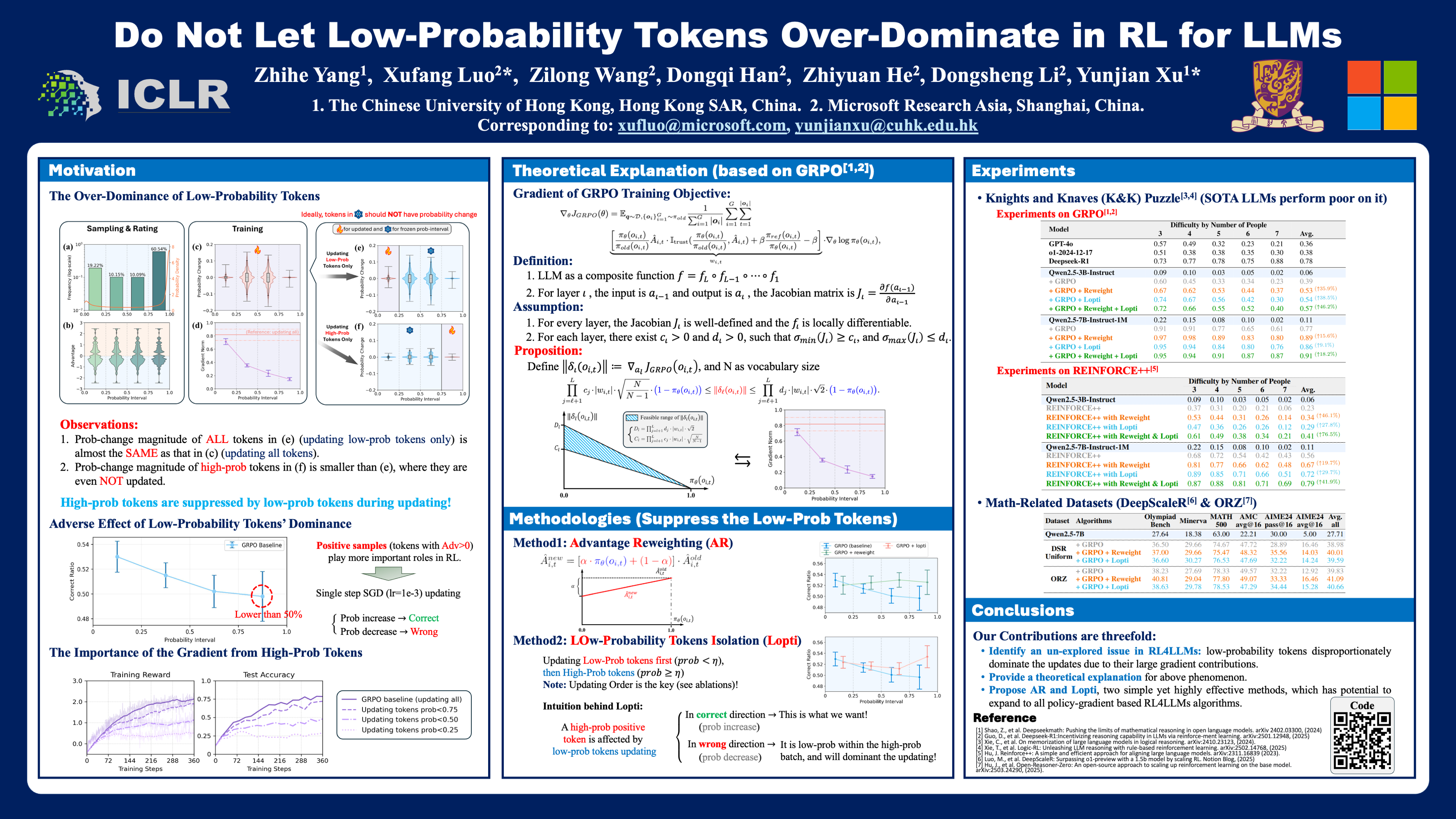
Reinforcement learning (RL) has become a cornerstone for enhancing the reasoning capabilities of large language models (LLMs), with recent innovations such as Group Relative Policy Optimization (GRPO) demonstrating exceptional effectiveness. In this study, we identify a critical yet underexplored issue in RL training: low-probability tokens disproportionately influence model updates due to their large gradient magnitudes. This dominance hinders the effective learning of high-probability tokens, whose gradients are essential for LLMs' performance but are substantially suppressed. To mitigate this interference, we propose two novel methods: Advantage Reweighting and Low-Probability Token Isolation (Lopti), both of which effectively attenuate gradients from low-probability tokens while emphasizing parameter updates driven by high-probability tokens. Our approaches promote balanced updates across tokens with varying probabilities, thereby enhancing the efficiency of RL training. Experimental results demonstrate that they substantially improve the performance of GRPO-trained LLMs, achieving up to a 46.2% improvement in K&K Logic Puzzle reasoning tasks. Our implementation is available at https://github.com/zhyang2226/AR-Lopti.
SpaCE-10: A Comprehensive Benchmark for Multimodal Large Language Models in Compositional Spatial Intelligence
Ziyang Gong ⋅ Wenhao Li ⋅ Xianzheng Ma ⋅ Songyuan Li ⋅ Zhaokai Wang ⋅ Songze Li ⋅ Jiayi Ji ⋅ Xue Yang ⋅ Gen Luo ⋅ Junchi Yan ⋅ Rongrong Ji
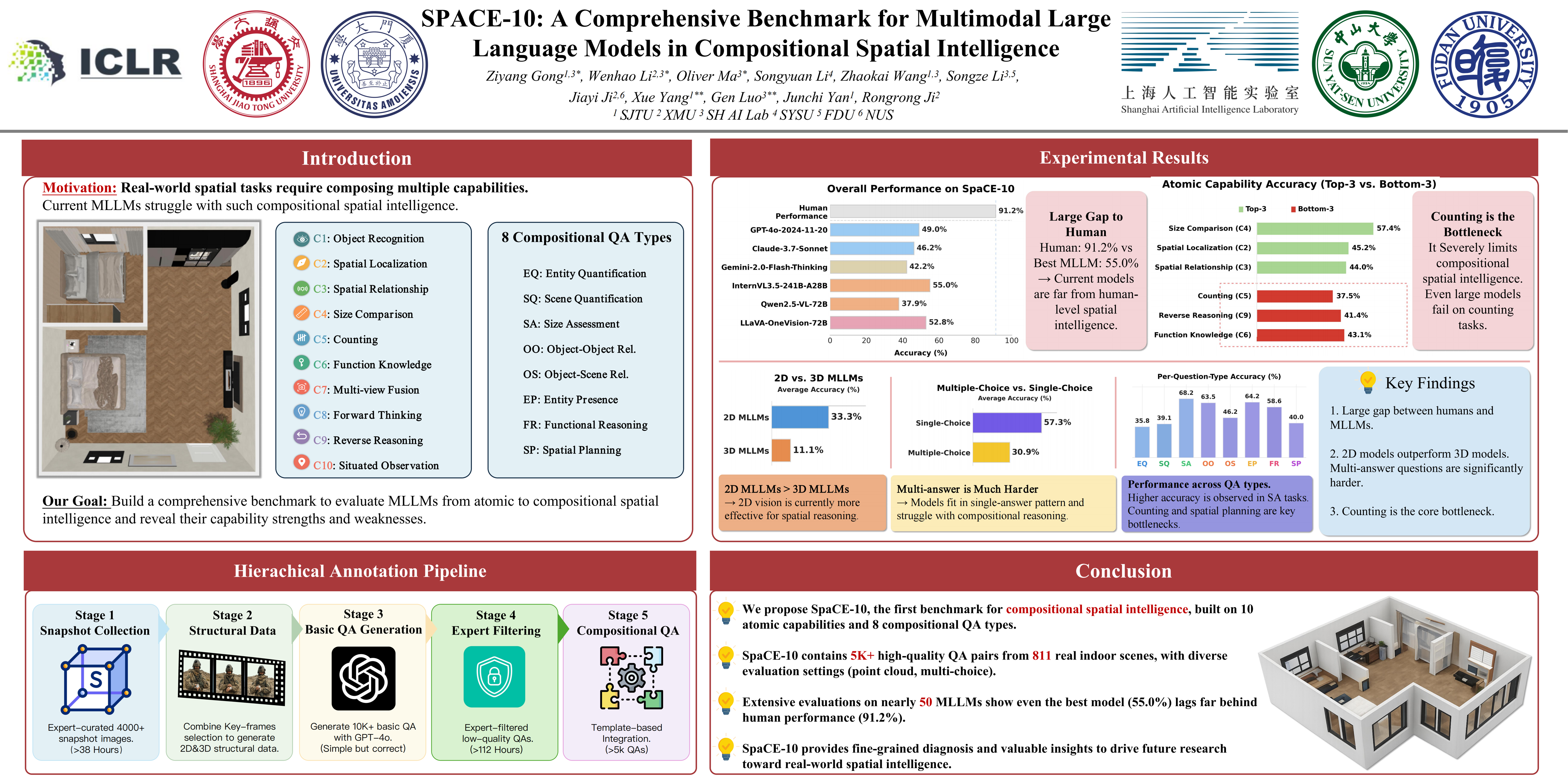
Multimodal Large Language Models (MLLMs) have achieved remarkable progress in various multimodal tasks. To pursue higher intelligence in space, MLLMs require integrating multiple atomic spatial capabilities to handle complex and dynamic tasks. However, existing benchmarks struggle to comprehensively evaluate the spatial intelligence of common MLLMs from the atomic level to the compositional level. To fill this gap, we present SpaCE-10, a comprehensive benchmark for compositional spatial evaluations. In SpaCE-10, we define 10 atomic spatial capabilities, which are combined to form 8 compositional capabilities. Based on these definitions, we propose a novel hierarchical annotation pipeline to generate high-quality and diverse question-answer (QA) pairs. With over 150+ hours of human expert effort, we obtain over 5k QA pairs for 811 real indoor scenes in SpaCE-10, which covers various evaluation settings like point cloud input and multi-choice QA. We conduct an extensive evaluation of common MLLMs on SpaCE-10 and find that even the most advanced MLLM still lags behind humans by large margins. Through our careful study, we also draw several significant findings that benefit the MLLM community. For example, we reveal that the shortcoming of counting capability greatly limits the compositional spatial capabilities of existing MLLMs. We will release the code and benchmark soon.
Flow Map Learning Via Non-Gradient Vector Flow
Mark Goldstein ⋅ Anshuk Uppal ⋅ Raghav Singhal ⋅ Aahlad Manas Puli ⋅ Rajesh Ranganath
Diffusion and flow-based models benefit from simple regression losses, but inference (i.e, producing samples) incurs significant computational overhead because it requires integration. Consistency models address this overhead by directly learning the flow maps along the ODE trajectory, revealing a design space for the learning problem between one-step and many-step approaches. However, existing consistency training methods feature computational challenges such as requiring model inverses or backpropagation through iterated model calls, and do not always prove that the desired ODE flow map is a solution to the loss. We introduce SGFlow, an approach for learning flow maps that bypasses explicit invertibility constraints and expensive differentiation through model iteration. SGFlow trains a model to compute both the ODE solutions and the implied velocity from scratch by following non-conservative dynamics with a stationary point at the desired flow map. On the CIFAR image benchmark, SGFlow attains a favorable relationship of FID to step count, relative to flow matching, MeanFlow, and several other flow map learning methods.
Astra: General Interactive World Model with Autoregressive Denoising
Yixuan Zhu ⋅ Jiaqi Feng ⋅ Wenzhao Zheng ⋅ Yuan Gao ⋅ Xin Tao ⋅ Pengfei Wan ⋅ Jiwen Lu ⋅ Jie Zhou
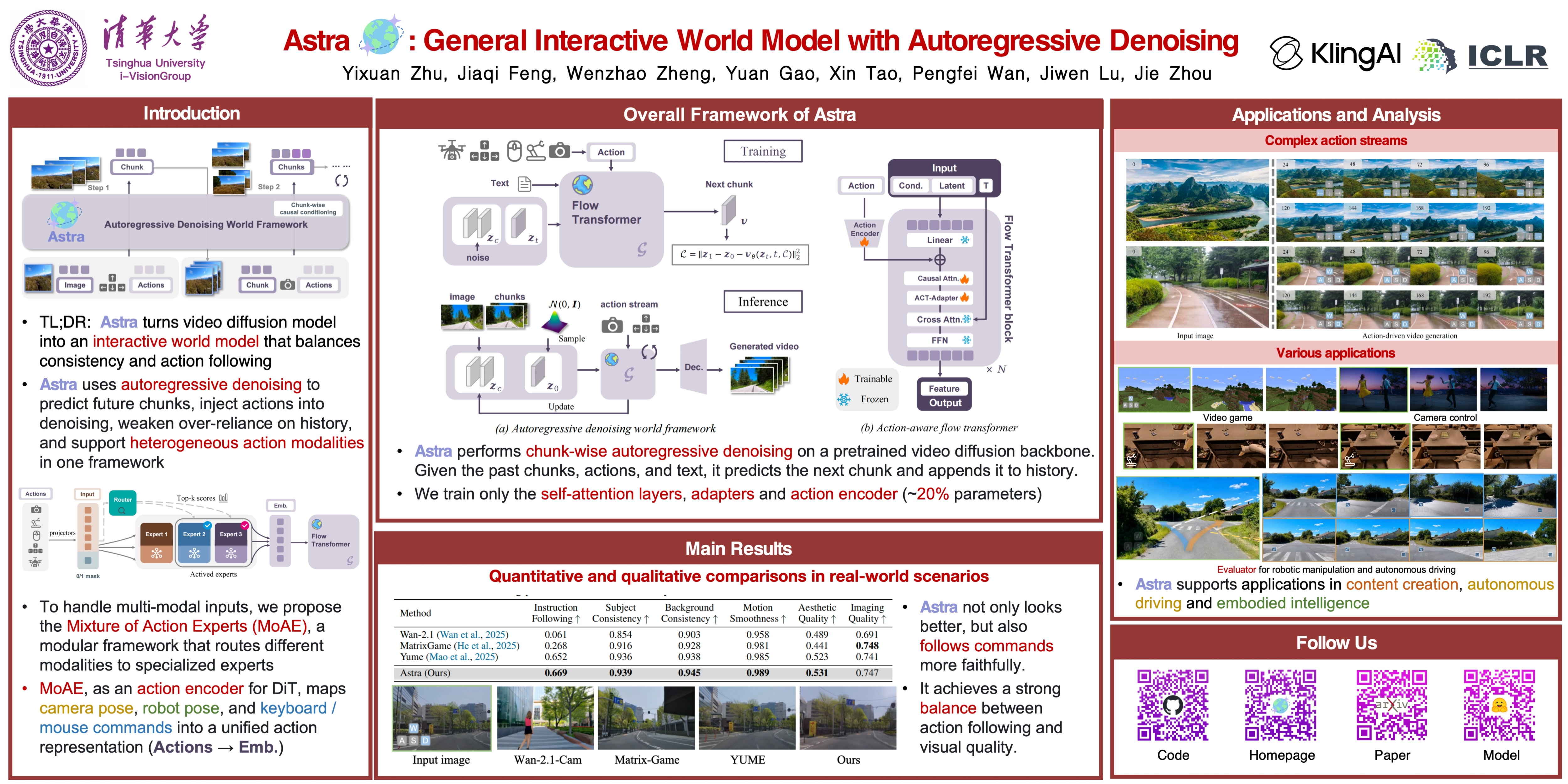
Recent advances in diffusion transformers have empowered video generation models to generate high-quality video clips from texts or images. However, world models with the ability to predict long-horizon futures from past observations and actions remain underexplored, especially for general-purpose scenarios and various forms of actions. To bridge this gap, we introduce Astra, an interactive general world model that generates real-world futures for diverse scenarios (e.g., autonomous driving, robot grasping) with precise action interactions (e.g., camera motion, robot action). We propose an autoregressive denoising architecture and use temporal causal attention to aggregate past observations and support streaming outputs. We use a noise-augmented history memory to avoid over-reliance on past frames to balance responsiveness with temporal coherence. For precise action control, we introduce an action-aware adapter that directly injects action signals into the denoising process. We further develop a mixture of action experts that dynamically route heterogeneous action modalities, enhancing versatility across diverse real-world tasks such as exploration, manipulation, and camera control. Astra achieves interactive, consistent, and general long-term video prediction and supports various forms of interactions. Experiments across multiple datasets demonstrate the improvements of Astra in fidelity, long-range prediction, and action alignment over existing state-of-the-art world models.
Understanding and Improving Continuous LLM Adversarial Training via In-context Learning Theory
Shaopeng Fu ⋅ Di Wang
Adversarial training (AT) is an effective defense for large language models (LLMs) against jailbreak attacks, but performing AT on LLMs is costly. To improve the efficiency of AT for LLMs, recent studies propose continuous AT (CAT) that searches for adversarial inputs within the continuous embedding space of LLMs during AT. While CAT has achieved empirical success, its underlying mechanism, i.e., why adversarial perturbations in the embedding space can help LLMs defend against jailbreak prompts synthesized in the input token space, remains unknown. This paper presents the first theoretical analysis of CAT on LLMs based on in-context learning (ICL) theory. For linear transformers trained with adversarial examples from the embedding space on in-context linear regression tasks, we prove a robust generalization bound that has a negative correlation with the perturbation radius in the embedding space. This clearly explains why CAT can defend against jailbreak prompts from the LLM's token space. Further, the robust bound shows that the robustness of an adversarially trained LLM is closely related to the singular values of its embedding matrix. Based on this, we propose to improve LLM CAT by introducing an additional regularization term, which depends on singular values of the LLM's embedding matrix, into the objective function of CAT. Experiments on real-world LLMs demonstrate that our method can help LLMs achieve better jailbreak robustness-utility tradeoff. The code is available at https://github.com/fshp971/continuous-adv-icl.
SPIRAL: Self-Play on Zero-Sum Games Incentivizes Reasoning via Multi-Agent Multi-Turn Reinforcement Learning
Bo Liu ⋅ Simon Yu ⋅ Zichen Liu ⋅ Leon Guertler ⋅ Penghui Qi ⋅ Daniel Balcells ⋅ Mickel Liu ⋅ Cheston Tan ⋅ Weiyan Shi ⋅ Min Lin ⋅ Wee Sun Lee ⋅ Natasha Jaques
Recent advances in reinforcement learning have shown that language models can develop sophisticated reasoning through training on tasks with verifiable rewards, but these approaches depend on human-curated problem-answer pairs and domain-specific reward engineering. We introduce SPIRAL, a self-play framework where models learn by playing multi-turn, zero-sum games against continuously improving versions of themselves, generating an automatic curriculum of stronger opponents, and eliminating the need for human supervision. To enable this self-play training at scale, we implement a fully online, multi-turn, multi-agent reinforcement learning system for LLMs and propose role-conditioned advantage estimation (RAE) to stabilize multi-agent training. SPIRAL produces reasoning capabilities that transfer broadly, improving performance by up to 10\% across a suite of 8 reasoning benchmarks on 4 different models spanning Qwen and Llama model families, outperforming supervised fine-tuning on 25,000 expert game trajectories. Multi-game training (TicTacToe, Kuhn Poker, Simple Negotiation) yields the strongest results, with improvements observed across both base and instruction-tuned models. Analysis of chain-of-thought traces reveals that games develop distinct cognitive patterns that transfer to improve reasoning performance, with different games developing complementary strengths. Even models which have already been trained on reasoning tasks using RLVR, like DeepSeek-R1-Distill-Qwen-7B, still benefit from our approach. These results demonstrate that zero-sum games naturally develop transferable reasoning capabilities across diverse model architectures and training stages, highlighting a promising direction for autonomous reasoning development.
Almost Bayesian: Dynamics of SGD Through Singular Learning Theory
Max Hennick ⋅ Stijn De Baerdemacker
The nature of the relationship between Bayesian sampling and stochastic gradient descent in neural networks has been a long-standing open question in the theory of deep learning. We shed light on this question by modeling the long runtime behaviour of SGD as diffusion on porous media. Using singular learning theory, we show that the late stage dynamics are strongly impacted by the degeneracies of the loss surface. From this we are able to show that under reasonable choices of hyperparameters for vanilla SGD, the local steady state distribution of SGD (if it exists) is effectively a tempered version of the Bayesian posterior over the weights which accounts for local accessibility constraints.
Lookahead Tree-Based Rollouts for Enhanced Trajectory-Level Exploration in Reinforcement Learning with Verifiable Rewards
Shangyu Xing ⋅ Siyuan Wang ⋅ Chenyuan Yang ⋅ Xin-Yu Dai ⋅ Xiang Ren
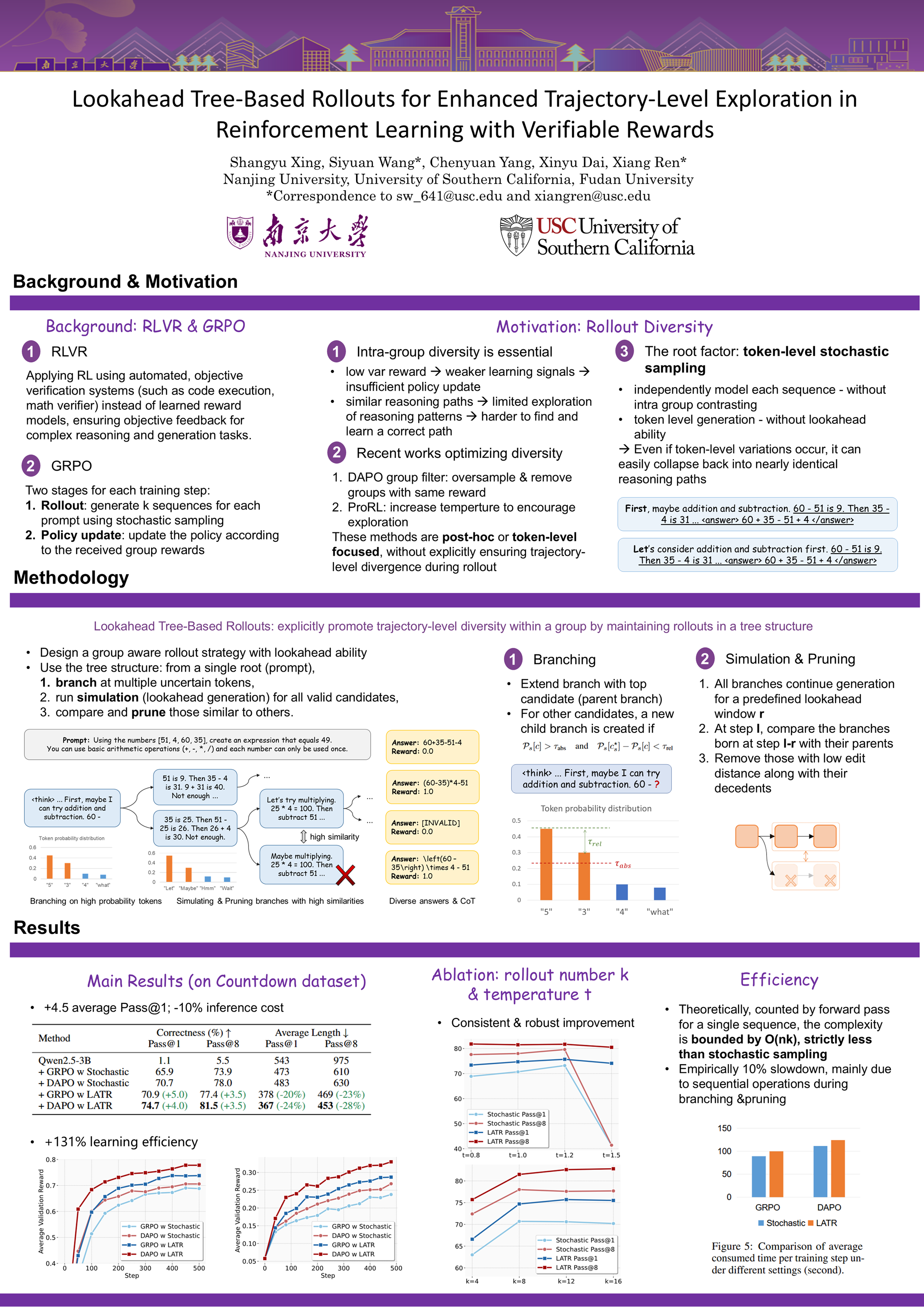
Reinforcement Learning with Verifiable Rewards (RLVR), particularly with algorithms like Group Relative Policy Optimization (GRPO), has proven highly effective in enhancing the reasoning capabilities of large language models. However, a critical bottleneck in current pipelines lies in the limited diversity of sampled trajectories during group rollouts. Homogeneous trajectories and their associated rewards would diminish the return signals for policy updates, thereby hindering effective policy learning. This lack of diversity stems primarily from token-level stochastic sampling, where local variations are likely to collapse into near-identical reasoning paths. To address this limitation, we propose Lookahead Tree-Based Rollouts (LATR), a novel rollout strategy designed to explicitly promotes trajectory-level diversity by enforcing branching into different candidate tokens likely to yield distinct continuations. Specifically, LATR iteratively operates in three stages: (1) branching at high-uncertainty generation steps, (2) performing lookahead simulation for each new branch, and (3) pruning branches that exhibits prolonged similarity during simulation. Compared with Stochastic Sampling, LATR accelerates policy learning by 131% on average and improves final pass@1 performance by 4.2% on both GRPO and Dynamic sAmpling Policy Optimization (DAPO) algorithms across different reasoning tasks. Our code and data are available at https://github.com/starreeze/latr.
Computer Agent Arena: Toward Human-Centric Evaluation and Analysis of Computer-Use Agents
Bowen Wang ⋅ Xinyuan Wang ⋅ Jiaqi Deng ⋅ Tianbao Xie ⋅ Ryan Li ⋅ Yanzhe Zhang ⋅ Junli Wang ⋅ Dunjie Lu ⋅ Zicheng Gong ⋅ Gavin Li ⋅ Toh Hua ⋅ Wei-Lin Chiang ⋅ Ion Stoica ⋅ Diyi Yang ⋅ Yu Su ⋅ Yi Zhang ⋅ Zhiguo Wang ⋅ Victor Zhong ⋅ Tao Yu
As Computer-Use Agents (CUAs) proliferate and grow increasingly capable, evaluation has become more challenging: static, manually curated benchmarks are narrow in domain, contamination-prone, and environment-heavy, and they diverge substantially from user-driven, real-world evaluation. We present Computer Agent Arena, an open-source platform for head-to-head CUA evaluation and a dynamic methodology that converts human preferences into structured feedback in realistic environments. The system (i) simulates real-world computer use via cloud-hosted, diverse, and dynamic environment initializations and customizations; (ii) ensures authentic, fair comparison by faithfully reproducing open-source CUAs and executing anonymously in matched, controlled environments; and (iii) extends evaluation beyond pairwise preference and correctness to capability- and behavior-oriented signals. Across 2,201 high-quality votes over 12 agents—spanning multi-app interactions, ambiguous instructions, and open-ended queries—we observe striking ranking reversals relative to static benchmarks. Further analysis shows that overall correctness mainly drives human preference; beyond that, agent-human interaction and self-correction boost user preference, even when overall task completion is comparable. Our error analysis reveals agent behavior errors, such as long-horizon memory and fine-grained action failures that static benchmarks fail to evaluate. We also contrast pure GUI agents with universal digital agents capable of tool use and coding, and discuss the trade-offs of these different design philosophies. We open source the full platform, collected dataset, and code of Computer Agent Arena to support future research on the evaluation and development of CUA.
IV-Bench: A Benchmark for Image-Grounded Video Perception and Reasoning in Multimodal LLMs
David Ma ⋅ Yuanxing Zhang ⋅ JinCheng Ren ⋅ Jiawei Guo ⋅ Yifan Yao ⋅ Zhenlin Wei ⋅ Zhenzhu Yang ⋅ Zhongyuan Peng ⋅ Boyu Feng ⋅ Jun Ma ⋅ 顾潇 ⋅ Zhu ⋅ Zhoufutu Wen ⋅ Yancheng He ⋅ Meng Cao ⋅ Wangchunshu Zhou ⋅ Shiwen Ni ⋅ JIAHENG LIU ⋅ Wenhao Huang ⋅ Ge Zhang ⋅ Xiaojie Jin
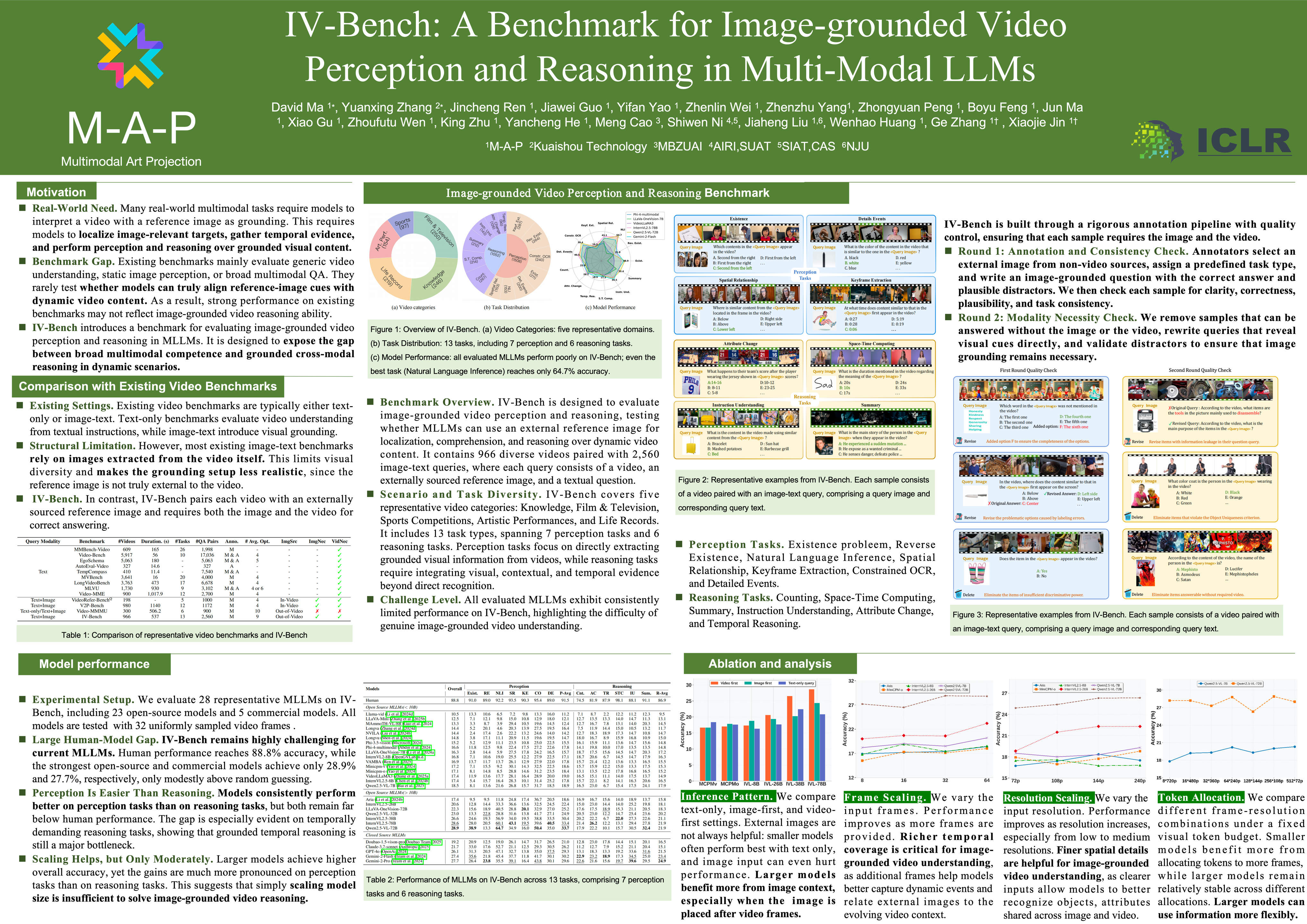
Current benchmarks for Multimodal Large Language Models (MLLMs) predominantly rely on text-only queries, overlooking the essential role of images as visual context for enhancing video comprehension and facilitating natural human-AI interaction. To bridge this gap, we introduce \textbf{IV-Bench}, the first comprehensive benchmark for evaluating MLLMs on Image-Grounded Video Perception and Reasoning. IV-Bench comprises 966 videos paired with 2,560 meticulously annotated image-text queries across 13 tasks (7 perception and 6 reasoning tasks) spanning 5 distinct categories. We extensively evaluate state-of-the-art MLLMs, including open-source models (e.g., InternVL2.5, Qwen2.5-VL) and closed-source models (e.g., GPT-4o, Gemini2.0 series), revealing substantial performance gaps, with the best-performing model achieving only 28.9\% accuracy. Ablation studies demonstrate that incorporating images significantly enhances video understanding and highlight key model design factors influencing performance. Our findings provide valuable insights and guidance for future research. The code and dataset are available at \url{https://github.com/multimodal-art-projection/IV-Bench}.
Adaptive Thinking: Large Language Models Know When to Think in Latent Space
Pingzhi Li ⋅ Bairu Hou ⋅ Yun Zhu ⋅ Yihao Feng ⋅ Ke Ye ⋅ Tao Lei ⋅ Zhifeng Chen ⋅ Tianlong Chen ⋅ Xianzhi Du
Recent advances in large language models (LLMs) test-time computing have introduced the capability to perform intermediate chain-of-thought (CoT) reasoning (thinking) before generating answers. While increasing the thinking budget yields smooth performance improvements at inference time, the relationship between LLM capability, query complexity, and optimal budget allocation remains poorly understood for achieving compute-optimal inference. To address this challenge, we utilize $\textit{self-consistency}$, the agreement among multiple reasoning paths, as a proxy for thinking necessity. We first identify that lower self-consistency indicates when queries require extended thinking to reach correct answers. Building on this insight, we introduce $\texttt{Sonata}$ (Self-Consistency-Guided Adapter for Thinking Allocation), a lightweight approach that adaptively allocates thinking budgets to optimize the performance-efficiency tradeoff. $\texttt{Sonata}$ includes an adapter trained offline on a calibration dataset to predict self-consistency directly from the last layer hidden representations during the query prefilling stage. This prediction then guides on-the-fly budget allocation before thinking. The adapter is general, transferable across diverse tasks once trained, and introduces $<1$$\textperthousand$ computational overhead during inference. Notably, Sonata is compatible with existing CoT compression methods, enabling further efficiency gains when managing thinking budgets across queries. Extensive experiments on multiple models (Qwen3-8B, Qwen3-32B, GPT-OSS-120B, Qwen3-235B-A22B) and benchmarks~(AIME25, GSM8K, MATH500, GPQA, LiveCodeBench) demonstrate that $\texttt{Sonata}$ achieves $20\\%$ to $60\\%$ reduction in thinking tokens while maintaining the same accuracy, or up to $2\\%$ improvement in accuracy with the same token cost.
AlphaSteer: Learning Refusal Steering with Principled Null-Space Constraint
Leheng Sheng ⋅ Changshuo Shen ⋅ Weixiang Zhao ⋅ Junfeng Fang ⋅ Xiaohao Liu ⋅ Zhenkai Liang ⋅ Xiang Wang ⋅ An Zhang ⋅ Tat-Seng Chua
As LLMs are increasingly deployed in real-world applications, ensuring their ability to refuse malicious prompts, especially jailbreak attacks, is essential for safe and reliable use. Recently, activation steering has emerged as an effective approach for enhancing LLM safety by adding a refusal direction vector to internal activations of LLMs during inference, which will further induce the refusal behaviors of LLMs. However, indiscriminately applying activation steering fundamentally suffers from the trade-off between safety and utility, since the same steering vector can also lead to over-refusal and degraded performance on benign prompts. Although prior efforts, such as vector calibration and conditional steering, have attempted to mitigate this trade-off, their lack of theoretical grounding limits their robustness and effectiveness. To better address the trade-off between safety and utility, we present a theoretically grounded and empirically effective activation steering method called AlphaSteer. Specifically, it considers activation steering as a learnable process with two principled learning objectives: utility preservation and safety enhancement. For utility preservation, it learns to construct a nearly zero vector for steering benign data, with the null-space constraints. For safety enhancement, it learns to construct a refusal direction vector for steering malicious data, with the help of linear regression. Experiments across multiple jailbreak attacks and utility benchmarks demonstrate the effectiveness of AlphaSteer, which significantly improves the safety of LLMs without compromising their general capabilities. Our codes are available at \url{https://anonymous.4open.science/r/AlphaSteer-929C/}.
GPT4Scene: Understand 3D Scenes from Videos with Vision-Language Models
Zhangyang Qi ⋅ Zhixiong Zhang ⋅ Ye Fang ⋅ Jiaqi Wang ⋅ Hengshuang Zhao
In recent years, 2D Vision-Language Models (VLMs) have made significant strides in image-text understanding tasks. However, their performance in 3D spatial comprehension, which is critical for embodied intelligence, remains limited. Recent advances have leveraged 3D point clouds and multi-view images as inputs, yielding promising results. However, we propose exploring a purely vision-based solution inspired by human perception, which merely relies on visual cues for 3D spatial understanding. This paper empirically investigates the limitations of VLMs in 3D spatial knowledge, revealing that their primary shortcoming lies in the lack of global-local correspondence between the scene and individual frames. To address this, we introduce GPT4Scene, a novel visual prompting paradigm in VLM training and inference that helps build the global-local relationship, significantly improving the 3D spatial understanding of indoor scenes. Specifically, GPT4Scene constructs a Bird's Eye View (BEV) image from the video and marks consistent object IDs across both frames and the BEV image. The model then inputs the concatenated BEV image and video frames with markers. In zero-shot evaluations, GPT4Scene improves performance over closed-source VLMs like GPT-4o. Additionally, we prepare a processed video dataset consisting of 165K text annotation to fine-tune open-source VLMs, achieving state-of-the-art performance on all 3D understanding tasks. Surprisingly, after training with the GPT4Scene paradigm, VLMs consistently improve during inference, even without object marker prompting and BEV image as explicit correspondence. It demonstrates that the proposed paradigm helps VLMs develop an intrinsic ability to understand 3D scenes, which paves the way for a seamless approach to extending VLMs for 3D scene understanding.
As large language models (LLMs) and agentic systems advance, the field increasingly depends on fine-grained evaluation to compare models, guide research directions, and make deployment decisions. Yet evaluation pipelines often treat LLMs as deterministic functions, even though they are fundamentally stochastic systems with variability arising from sampling methods, hardware nondeterminism, environmental randomness, and evaluation procedures. This mismatch leads to unstable benchmarks, unreliable model comparisons, inconsistent agent outcomes, and significant uncertainty when using LLMs as judges. Recent research has begun to quantify this instability and propose statistical techniques, from frequentist error bars to Bayesian latent-state models, reliability metrics, and large-scale variance audits. But adoption is uneven, and the field lacks a cohesive statistical framework for evaluating stochastic intelligence. This post synthesizes existing research into a unified perspective and outlines practical recommendations for improving evaluation practice. The goal is not to introduce new methods, but to demonstrate that the tools already exist and that incorporating statistical thinking is both feasible and urgently needed.